Train Stations as Places for Community Wellbeing - By Village Well - July 2006 - VicHealth
←
→
Page content transcription
If your browser does not render page correctly, please read the page content below

Train Stations as

Places for Community
      Wellbeing
      By Village Well - July 2006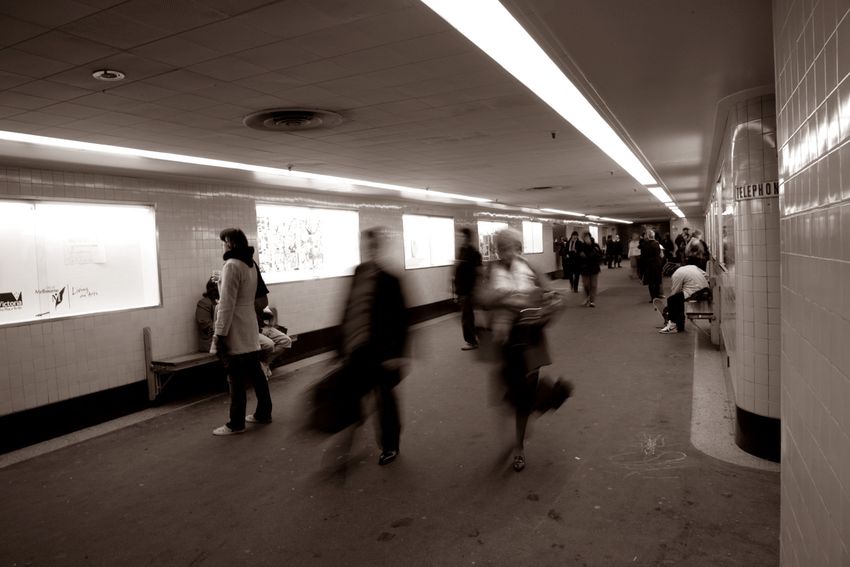
Level 4, 247 Flinders Lane, Melbourne Victoria 3000 | Phone: 03 9650 0080 | Fax: 03 9650 0477
Email: info@villagewell.org | www.villagewell.org
Flinders Street Station Mural Detail. Artist Mirka Mora, 1985

                      Magic Words
                      After Naluniaq

                      ...That was the time when words were like magic.
                      The human mind had mysterious powers.
                      A word spoken by chance
                      might have strange consequences.
                      It would suddenly come alive
                      and what people wanted to happen could happen –
                      all you had to do was say it.
                      Nobody could explain this:
                      that’s the way it was.

                      A poem from the New York Subway’s ‘Poetry in Motion’
                      program, part of their Art in Transit division.
                      Translated from the Inuit by Edward Field
Contents                              Platform for Art Exhibition Space, Degraves Subway, Flinders Street Station.

  Executive Summary                                                           1

  1. Introduction                                                             11
         1.1 Scope                                                            11
         1.2 Background                                                       12
         1.3 The Role of Rail                                                 13
         1.4 Rail in Melbourne Today                                          13

  2. Stakeholders                                                             15
         2.1 Jurisdiction                                          15
         2.2 Stakeholders with an Interest in Station Environments 15
         2.3 Relevant Government Policy                            17

  3. Current Issues for Communities Around Train Stations 19
         3.1 Introduction                                                     19
         3.2 Safety                                                           19
         3.3 Station Environments                                             20

  4. Case Studies                                                             21
         4.1 International Projects                                           21
         4.2 National Projects                                                22
         4.3 Melbourne                                                        27

  5. Conclusions                                                              39
         5.1 Opportunities Relating to Existing Programs                      39
         5.2 Risks                                                            40
         5.3 Evaluations and Conclusions                                      41

  6. Background                                                               43

  7. Bibliography                                                             45

  Appendices                                                                  47
Executive Summary
  Background                                                Perception and Practice
  In 2002 VicHealth developed focus on                      The key issues affecting public perception of
  enhancement of the built environment in order to          railway stations as positive places that were
  promote health and wellbeing. Some of this work           identified by this project include:
  involved utilization of the arts medium to create
  public spaces which enhanced social connection            • Public perceptions of safety
  and inclusion, a fundamental determinant of               • Crime, violence and anti-social behaviour at train
  mental health. A range of local governments were          stations and their surrounds
  resourced to undertake “place making” activity            • Poor built environment and urban design.
  with some of this work being connected to public          • The lack of a comprehensive cross-government
  transport facilities. The learnings resulting from        policy on station environments
  this activity were documented in “Health in public        • The lack of funding for development of these
  spaces: Promoting mental Health and Wellbeing             facilities
  through the Art and Environment Scheme”.                  • Communication difficulties between stakeholders
  (VicHealth 2004) and have stimulated on-going             • Privatisation of the rail system
  VicHealth interest in this area.

                                                                                                                   Train Stations as Places for Community Wellbeing
                                                            In order to combat these negative aspects a
  Consequently, in 2006 VicHealth commissioned              number of approaches to the development of
  development of a scoping paper focusing on                railway stations have been designed to:
  existing arts practice designed to develop railway
  stations as community hubs. This document is a            • reduce vandalism
  result of the scoping exercise undertaken.                • increase feelings of security for passengers
                                                            • reduce car dependence
                                                            • increase civic pride and engagement
  Context                                                   • take pressure off city parking
                                                            • increase incidental exercise
  Train stations are a key public space and piece
                                                            • provide viable options for people without access
  of infrastructure in a community. They are vital
                                                            to vehicles;
  to many people to enable them to engage in
                                                            • create community environments which are safe
  work and social commitments. For young people
                                                            and responsive to community needs.
  and those without cars they can be essential in
  reducing their social isolation and ability to maintain                                                          1
  community links. Unfortunately for many people            Policy Context
  they are also places mixed with feelings of fear
  and frustration. This document investigates the           Planning and policy makers in Victoria have
  possibility of railway stations becoming places that      acknowledged negative aspects of our railway
  are inclusive, safe, facilitate social inclusion and      facilities and there are increasing examples of a
  cohesion and contribute to the development of             response to these issues. These include:
  strong communities.
                                                            •         Policy for city growth, planning and built
  In particular this document 1) investigates               form is covered by Melbourne 2030, Planning for
  the relationship between community cultural               Sustainable Growth through the Department of
  development, railways stations and community              Sustainability and Environment. This document
  wellbeing, 2) showcases current cultural activity         concentrates on the integration of land-use and
  designed to enhance railway stations in order             transport planning and has direct relevance to
  to increase public transport utilisation and              the projects and directions represented in this
  3) considers the many social, economic and                paper. One of its primary goals is to improve the
  environmental issues that contribute to successful        quality and accessibility of the Victorian public
  ‘place making’ railway stations.                          transport system in order to increase the use of
                                                            public transport. The Transit Cities Program, part
                                                            of Melbourne 2030; the ‘program aims to create
                                                            safe, vibrant, communities centred around public
                                                            transport’ (DSE, 2006). The transport node is the
                                                            focus for the development and ‘ideally becomes
                                                            the community ‘heart’... where people shop, work,
                                                            meet, relax and live’ (DSE, 2006).
•          There are a number of social strategies
                                                   such as A Fairer Victoria (State Government, 2005),
                                                                                                              Place Making and Railway
                                                   where the role of public transport is seen as a key        Stations
                                                   factor in creating a more equitable society through
                                                   providing mobility and opportunity.                        Place making focuses on developing public spaces
                                                   •          The Equal Opportunity Commission                into places that have meaning for people, give
                                                   Victoria, recognizing the importance of public             them pleasure to be in, and that resonate with
                                                   transport as a site for reducing racial discrimination.    feeling and memory (Yencken, 1995). Specifically,
                                                   In 2005 they joined with Connex, Yarra Trams and           place making:
                                                   Metlink for a campaign to promote cultural diversity
                                                   on Melbourne public transport. The campaign                •         aims to achieve enhanced civic
                                                   promoted racial and religious tolerance through            engagement, social and economic development,
                                                   advertisements that portray people from different          cultural understanding, and deepen people’s
                                                   cultural backgrounds in familiar situations - using        relationship to the environment via participatory
                                                   public transport.                                          processes and creative outcomes.
                                                   •          The mission of Arts Victoria, the State
                                                   Government’s arts implementation and advisory              •        strives to enable people to experience the
                                                   body, is to ‘increase the availability and accessibility   public environment as a place where they belong,
                                                   of the arts to the public’ (Arts Victoria website).        where they participate in the public and cultural life
                                                   Railway stations have been the site of some                of the community.
Train Stations as Places for Community Wellbeing

                                                   community arts activity with ample opportunity
                                                   existing to extend this work over time.                    •        is based on a community development
                                                                                                              framework that attempts to achieve multiple
                                                   •          The Victorian Government Transport and          outcomes through a range of strategic initiatives.
                                                   Liveability Statement released in May 2006 also            Community development is a process by
                                                   sets a context in which to progress development            which people work toward achieving a local
                                                   of public transport facilities as vibrant and healthy      collaboratively based vision or project.
                                                   community hubs.
                                                                                                              Railway stations as sites for place making and
                                                   While these discrete government policies and               community development have natural synergies
                                                   strategies provide direction to enhance positive           that many of the researched projects identified in
                                                   civic qualities such as social equity, public transport    this paper have capitalised on.
                                                   nodes and their importance within the built fabric,
                                                   and arts practices in the public realm, there is no        While art and artistic practices have been
                                                   activity addressing the experience people have of          incorporated into the design, retrofits and even
2
                                                   railway stations themselves.                               exhibition programs of railways stations across the
                                                                                                              world the integration of community engagement in
                                                   This could be partly due to the fact that these            these processes has a relatively short and humble
                                                   strategies have coincided with a period of                 history. Both processes are valued, however, this
                                                   economic change that has led to the Melbourne              paper suggests that while the former does give
                                                   public transport network being privatised with             pleasure it is the latter that helps give meaning
                                                   reduced staffing levels leaving many of our                 to those spaces that act as gateways to many
                                                   stations unmanned. This reduction in on-site               of our communities. Public transport is a crucial
                                                   custodianship of stations has meant that there is          aspect of any city or town that strives to be socially
                                                   no authority charged with looking after stations as        equitable and environmentally responsible as it is
                                                   a site for anything other than waiting, embarking          acknowledged that:
                                                   or disembarking from a train. The managing of
                                                   stations as ‘places’ – places of meaning, social           •        Access to public transport reduces
                                                   interaction, engagement, learning, or other positive       dependence on private vehicles, which
                                                   experiences, is an opportunity currently not               are problematic due to their high resource
                                                   exploited.                                                 consumption, air pollution including greenhouse
                                                                                                              gas emissions, their need for large amounts of
                                                   Whilst there is emerging policy and activity in this       space for parking and roads, and their tendency to
                                                   area, there is clear potential to combine resources        decrease social interaction
                                                   to explore the positive impacts that fully developed
                                                   railway stations can have on the lives of individuals,     •         Public transport nodes are natural
                                                   families and our community in general.                     gathering points which many people in social need
                                                                                                              access, and so it is a natural point for provision of
                                                                                                              information and services
•        Public transport is a place of incidental
human interaction, including cross-cultural and
                                                         The Focus Of Current Practice
cross-generational interaction, which, if positive,      The activity presented in this report indicates
can help to create a sense of inclusion and              that a ‘community development through the arts’
belonging, benefiting mental health                       approach can be utilised to respond to and resolve
                                                         issues of community wellbeing. This report details
•        Public transport encourages incidental          projects from a range of cities and towns across
exercise as people often access stations by              Europe, the United States and Australia, where, in
walking or cycling, benefiting physical health            many cases the wider social and community goals
                                                         of these programs aim:
•          In places where public transport is not
privatised, railway stations are publicly-owned          • To humanise unattractive or soulless station
civic places that government authorities and             environments
the community may feel a sense of obligation to          • To replace or discourage graffiti and vandalism
and ownership of, and may use these spaces to            with validated creative expression
achieve civic pride and community expression.            • To support social programs such as freedom
This is also the case in some areas where the            from discrimination, cultural exchange and support
private company is willing to share ownership with       for vulnerable groups within society
the community, for example The Stationeers see           • To foster community custodianship in stations
Chapter 4.                                               both staffed and unstaffed

                                                                                                                Train Stations as Places for Community Wellbeing
                                                         • To enhance the journey of the rail users
The Role of Community Arts                               • To reduce violence and other forms of crime.

Implementation of community arts processes,              For the purposes of this report, a worldwide
alongside other strategies, can assist development       scan of railway station revitalisation projects that
of railway stations as places of inclusion rather than   utilised community arts practices was undertaken.
isolation and fear.                                      The natural synergies between public transport,
                                                         community development and environmental
‘Through design and art, a public space can              responsibilities have been widely identified,
be filled with meaning. It can be endowed with            and almost all of the projects selected as case
a sense of occasion so that it is a place of             studies have aims that span this range. Through
significance for the people who use it. Thus, a           community involvement in arts projects, most of
well-designed public space can make a positive           the projects aim to specifically:
contribution to the mental health and wellbeing of a
community’.(VicHealth 2004)                              • Increase safety and deter crime                      3
                                                         • Increase patronage thereby enhancing the
By engaging the community in creative processes          viability of public transport and reducing the
and outcomes where they can express and ‘co-             environmental impact of car use
create’ meaning in a station environment, it has         • Increase positive social interaction
been shown that the level of care for the station        • Increase an ethic of care and custodianship
and environs generally improves. Community               • Enhance the physical environment
engagement through arts processes has been               • Reflect the ‘sense of place’ – the history, context
found to create more personal, humanised spaces          and stories of the station and surrounds
where people feel a sense of belonging that often        • Reflect the local community and the various
fosters an ethic of care towards others in that          users of the station
environment, positively impacting on mental health       • A sense of pride ( individual and civic)
and increasing perceptions of safety.                    • Create positive relationships between the station,
                                                         public transport users and the local community.
                                                         • Enhance community health and wellbeing
                                                         through creation of safe, supportive and inclusive
                                                         environments.

                                                         The 21 projects, including 5 international, 5
                                                         interstate and 11 Melbourne projects, have
                                                         been selected for their demonstration of diverse,
                                                         inspiring and innovative ways of engaging
                                                         communities in railway stations and their environs.
Conclusion
                                                   All the international and interstate case studies
                                                   of community arts and involvement programs
                                                   discussed in this paper are managed by a
                                                   government owned and managed rail authority.
                                                   Here in Melbourne, with our privatised system,
                                                   the research suggests that it may be more difficult
                                                   to deliver a program with a rich suite of aims
                                                   around community engagement. However, what
                                                   challenges the research is the sheer number and
                                                   diversity of community engagement projects
                                                   already existing within the Melbourne rail network,
                                                   including significant projects form both Metlink
                                                   and the Stationeers programs, both of which are
                                                   ultimately government funded via the providers.
                                                   While none of these projects have the scope or
                                                   image of some of the non-Melbourne programs,
                                                   they represent in combination, an enormous
                                                   amount of goodwill and hard work, and the
                                                   flourishing of diverse senses of custodianship.
Train Stations as Places for Community Wellbeing

                                                   It is evident that there are a range of overseas
                                                   and interstate models that have delivered exciting
                                                   and inspiring projects. The dissemination of this
                                                   research could be used as a tool to help expand
                                                   the vision amongst all key stakeholders and lead
                                                   the way to action of benefit to all.

4
Summary of Art and Community Engagement Projects
PROJECT & INITIATOR & FUNDING AIMS SUMMARY
LOCATION PARTNERS
International
* Platform for Art, London Corporate Public art program aims to showcase and celebrate
London, England Underground sponsorship the rich and vibrant London art scene, to create
an environment for positive impact and to enhance
and enrich the journeys of the passengers. Platform
for Art includes both permanent installations as
well as changing exhibitions. Both installations and
exhibitions include community engagement, ranging
from schools, elderly and youth ethnic groups, and
employ community artists in theatre, photography,
visual arts and music.
www.tfl.gov.uk/tube/arts/platform-for-art
Train Stations as Places for Community Wellbeing
Train Stations as Places for Community Wellbeing
* Adopt- Lancashire Lancashire This model is tailored to the village setting, with
a-Station, County Council, County Council, a focus on encouraging local people to use train
Lancashire, Northern Rail Northern Rail, services more by encouraging community members
England local business to beautify their station, creating a more welcoming
environment.
www.lancscc.net/environment/train/crp/adopt.asp
* Adopt-a- Chicago Transit Corporate The Chicago Transit Authority’s model, adapted to
Station, Chicago, Authority sponsorship the high use urban environment, has a corporate
U.S.A. engagement strategy to achieve wins for the
community and the rail users. Adopting organisations
are offered an opportunity to enhance and revitalise
the appearance of stations by commissioning
local artists to create pieces that reflect the local
5 community. 5
www.transitchicago.com
Art in Transit, Metropolitan Metropolitan Encourages the use of public transit by presenting
New York, U.S.A. Transport Transport visual and performing arts projects in subway and
Authority Authority commuter rail stations.
* TriMet Public TriMet, a TriMet The program is based around a recently installed light
Art Program, municipal rail system. The TriMet program promotes transit use
Portland, U.S.A. corporation of and community pride by integrating permanent and
the State of temporary art works into the transit stops, celebrating
Oregon the contributions of public transportation and
recognising the cultural and environmental richness
of the region. Content of the artwork is arrived at
through processes of community consultation.
www.trimet.org/publicart/index.htm
* Fruitvale, U.S.A. The Unity Developers, Fruitvale is an example of a transit-oriented
Council, a not for The Unity development (TOD) project lobbied for and achieved
profit community Council by the community, the aims were to strengthen
group existing community institutions and catalyse
neighbourhood revitalisation, improve perception and
reality of safety and to beautify a blighted area around
an existing station, and it has been measurably
successful. Whilst not a discrete ‘art’ project, the
level of community engagement and ownership
is evidently high, and the new pedestrian plaza
adjacent to the station is a hub where many creative
endeavours take place.
www.unitycouncil.orgMontreal, Canada City of Montreal Cityof Montreal To become the most beautiful subway and the
longest art gallery in the world, with Montreal cultural
themes.
“El Subte Vive” Metrovias, the Metrovias To humanise the system and create, for the benefit
Cultural Program, company who of the passengers, a spirit- and heart-touching
Buenos Aires, manage the environment. The stations are almost free of
Argentina subway advertising, but instead contain a large number of
murals. Includes a “Film in the Subway” series.
Australian
* Building Better Transperth Public Transport This program represents a significant investment in a
Train Stations, Authority new rail system, and contemporary understandings
Perth, W.A. of community engagement and expression are
integral to the role-out of their system. As the crucial
nodes within their transit oriented developments,
they are keen to ensure their stations are welcoming,
inclusive environments that include community-input
Train Stations as Places for Community Wellbeing
Train Stations as Places for Community Wellbeing
public art and other community facilities such as the
Fremantle Bicycle Workshop.
www.newmetrorail.wa.gov.au/NMR/Documents/
Resources/Publications/On%20Track/
OnTrack%202005-07.pdf
* Adopt-a- Transadelaide Transadelaide, In 1994 the State Government transportation
Station, Adelaide with Work for in-kind authority Transadelaide, with in-kind sponsorship
the Dole, Lions, sponsorship from multiple community partners, worked to
Rotary, Apex, from partners actively combat graffiti and vandalism by giving
Freemasons, individuals and community groups the opportunity
high schools, to ‘adopt’ their local tram stop or railway station.
Neighbourhood Noticable improvements to the station environments,
Watch, church including murals and retrofitting heritage stations
groups for community use, have encouraged increased
6 6
patronage over the twelve years of the project.
www.transadelaide.com.au/community/adopt_
station.htm
* Adopt-a- Queensland Rail, Queensland In conjunction with Griffith University, Queensland
Station, Brisbane Griffith University Rail, Griffith Rail initiated artistic installations to improve the South
University Bank site to generate a stronger sense of connection
and ownership with the community. The artwork
was created through a process of community
engagement in the history of the site. Queensland
Rail also have a successful mural program, which
works predominantly with schools.
www3.griffith.edu.au/01/ocp/abstract.php?id=401&
mode=PROJ&title=Adopt%20a%20Station
Action Stations, Keep Australia Blacktown Piloted in Doonside as part of Blacktown Council’s
Sydney Beautiful, City Council Community Pride Program. Involves volunteers
Rail, Blacktown constructing planter boxes on railway station
Council platforms and landscaping leading to a noticeable
improvement of the station and surrounds.
* These projects are discussed in detail in Chapter 4Current Practice in rarely exploited. As this report will show, this is in
contrast to many places around the world where
Melbourne the enhancement of public transport has included
a vision for and a roll-out of innovative community
In 1999, Melbourne’s public transport network was engagement strategies that incorporate artistic and
privatised, which included reductions in staffing cultural practices.
levels, leaving many of our 209 metropolitan
stations unmanned. This lack of on-site
custodianship of stations means that there is no
authority charged with looking after stations as
‘places’. Emerging Trends in the
Melbourne Context
In the course of this research, ten of Melbourne’s
municipal councils were contacted to find out Melbourne’s stationmasters once had a custodial
whether they had engaged with railway stations role, and in the course of this research it was
as sites for Community Arts projects. While the revealed how much they are missed, as many that
findings across the councils ranged from a number were interviewed expressed their disappointment
of creative projects at stations to none at all, there at the mechanised, impersonal stations we
was a consensus amongst those interviewed that predominantly have today. However, it is perhaps
stations are important public spaces that hold a this sense of loss, combined with Melbourne’s
Train Stations as Places for Community Wellbeing
Train Stations as Places for Community Wellbeing
variety of meanings for people both positive and creative sensibility, that has spurred some of the
negative, and that, in general, art projects have emerging activities around stations. In various
a positive role in strengthening the positive and ways, it appears that community groups, artists
diminishing the negative perceptions of public and individuals, traders, councils and service
places. providers are filling the void in custodianship with
new ways of belonging to and caring for stations
A common sentiment expressed by council and station visitors, which this report documents.
officers was that working with railway stations in
any capacity is complicated by the fact that there
are so many authorities who have jurisdiction over
different aspects of the station and its environs.
Depending on the project, Connex, Victrack, Melbourne Projects
Metlink, DOI, Vicroads, Heritage Victoria, private
landowners and various departments within local The following projects are by no means a
government may all have responsibility for an area complete list of arts and community projects on
7
of land or function of the station and may need to the Melbourne rail network. These are the projects 7
be consulted. There were reports of confusion over uncovered in the course of the research and find
which authority could give permission for a project, adequate information on, through contacting
and who would be responsible for maintenance. individual councils, the service providers and
through site visits. There is currently no central
The Department of Infrastructure has attempted registry of community engagement or community
to clarify this situation with the appointment of arts projects in Melbourne.
a Local Government Relationships Manager
within the Public Transport Division in 2005. This
position is responsible for addressing a very wide
range of issues including graffiti management,
traffic engineering requirements, and negotiations
between Connex, Victrack, communities and
councils. As this position is required to deal
with multiple stakeholders working towards
diverse outcomes, it cannot work solely within a
community development framework. Neither does
this position have the power to address the issue
which the research has revealed as a key barrier to
community engagement in railway stations at this
time, that of limited possibilities of custodianship
due to the privatised management of stations.
Except for a handful of inspiring examples, stations
as sites of meaning, positive social interaction,
community engagement, learning, or other
beneficial experiences, are opportunities currentlyPROJECT & INITIATOR & FUNDERS AIMS SUMMARY
LOCATION PARTNERS
* The Keep Australia Department of Initiated by Keep Australia Beautiful Victoria
Stationeers, 60 Beautiful Victoria, Infrastructure (KABV), has been running since 1994, with
station groups DOI, Connex funding from the Department of Infrastructure, and
throughout promotes the railway station as the gateway to the
Victoria community. It aims to foster mental and physical
health, community satisfaction, safer and cleaner
stations, less vandalism, and the environmental
benefits of encouraging people out of their cars
and onto public transport. They achieve these
aims through assisting communities to get actively
involved in their local station, including art projects,
and working bees for litter collection, painting
and planting. Currently there are over twenty
metropolitan stations with Stationeers groups,
including partnerships with community groups
such as disabled support programs and historical
Train Stations as Places for Community Wellbeing
Train Stations as Places for Community Wellbeing
societies.
www.kabv.org.au
* Friends of Community Kingston City Operating since 2002 and the most active of the
Mentone Station members, later Council Stationeers groups, their mission is ‘to protect,
and Gardens, partnered with enhance and develop the Mentone Station, its
Mentone Station Stationeers associated gardens and local environment as a
source of community pride in consultation with
stakeholders’. The Friends have achieved great
success in improving the experience of the station
and environs, becoming true ‘custodians’ of the
site. They initiated schools students painting
murals at the station, and historical posters in the
station waiting room.
www.kingston.vic.gov.au/ Page/Page.asp?Page_
8 Id=1568&h 8
* Noble Park Community Building Pride of Place This 2004 project aimed to create a vibrant
Pride of Place Demonstration program (DSE) precinct via public art and design projects that
Project, Noble Projects (CBDP) directly engage the community, enhance safety
Park Station of the Office of and security, enhance the image of Noble Park,
Community Building improve access to the precinct, and explore ways
in the Department of linking the north & south retail precinct. It was
of Premier largely successful in achieving these aims via
and Cabinet, an intensive community engagement process,
and numerous covered in detail in this report. North & south retail
community partners precinct.
* Mural, City of Yarra with Crime Prevention A 2004 initiative the project aimed to reduce
Richmond Connex, Vic Track, Victoria the amount of ‘tagging’ in the area creating a
Station local trader better environment for traders and public; and
provide aerosol artists with the opportunity to
create quality public artwork. It has reduced
the amount of unwanted graffiti, and has had
community-building outcomes including linking up
neighbouring traders with local artists.
* Graffiti Mural, City of Port Phillip City of Port Phillip A 2005 initiative of the City of Port Phillip and
St Kilda Junction and Metlink, and Metlink Metlink, with Whitelion, local artists and the
underpass Whitelion Indigenous community. By engaging with often
marginalised aerosol artists, some of whom were
street kids or drug users, it aimed to legitimate
the skills of these artists and engage them in an
inclusive and supported experience, as well as
reduce the amount of tagging.(continued)
* Moving Galleries, Committee for Arthur Robinson, A 2006 student art and community-sourced poetry
student art and Melbourne, Brite Solutions, on 40 Melbourne trains, was an initiative of the
community- with Connex, Hothouse Committee for Melbourne, working with Connex,
sourced poetry rookuTroupe, Design, rookuTroupe, and Arts Education Victoria. It aimed
on 40 Melbourne Arts Education Tattersalls, CPR to enhance the experience of public transport, with
trains Victoria Communications an emphasis on accessibility and inclusion.
www.melbourne.org.au/moving_galleries.
Mural, Burnley Metlink and Metlink and To create for young people a sense of pride in their
Station Whitelion Whitelion community, ‘ownership’ of public transport network
and reduction in anti-social graffiti.
Sculpture, Clayton Kingston Council Kingston Council To create art based on the history of the area
Railway Reserve viewable for passengers in the trains and those
passing in cars.
Public Art project, Maribyrnong Maribyrnong Entitled ‘The West Welcomes Refugees’, based
railway bridge near Council Council on piece of graffiti written on rail bridge, aims to
Footscray Station engage artist, and via this the broader community,
with this theme. To be installed in 2005 in location
where graffiti was first written.
Train Stations as Places for Community Wellbeing
Train Stations as Places for Community Wellbeing
‘Where Have Monash Council Dulux Paints To tell the stories of the people and place of
we Come From, Oakleigh through community participation in public
Where are we art.
Going?’; Mural,
Oakleigh Station
Nuts and Bolts, Hobsons Bay Hobsons Bay To tell the stories of the industrial past of Newport
underpass art City Council City Council and the work of Newport people.
installation,
Newport Station
Mural by Mirka Ministry of Ministry of Features images of local characters and stories,
Mora, Flinders Transport, with Transport plus mythological imagery.
Street Station, Ministry of Arts
1985 assistance
9 9
* Platform 2, Platform Artists Arts Victoria, Located at Flinders Street Station Degraves
Flinders Street Group Australia Underpass since 1994. It provides an exhibition
Station Degraves Council, City of outlet for a diversity of artists, focusing on those
Underpass Melbourne who address context, location and the audience.
www.platform.org.au
* enterTRAINment, City of Darebin Crime Prevention A program of live music by local musicians on
Epping Line with the cities Victoria the Epping Line between 1992 and 1999, was
of Banyule and funded by Crime Prevention Victoria and was run
Whittlesea, in conjunction with Darebin Council. It aimed to
Crime Prevention provide entertainment, information and a positive
Victoria,Victorian environment for passengers using the train and rail
Police, stations in Darebin on targeted nights of the year.
Neighbourhood www.crimeprevention.vic.gov.au/
Watch Preston, CA256C7B00823407/page/Community+Safety-
Hillside Trains. EnterTRAINment?OpenDocument&1=0-
Community+Safety~&2=0-EnterTRAINment~&3=~
* Garden of Tenant Self-funded, from A not-for-profit foundation that includes businesses
Eden, Albert Park the enterprises, who together inspire and promote visions for
Railway Station plus local, state sustainable urban communities. They are funded
and federal via local, state and federal government programs
government that they run on site, and also self-funded from the
enterprises which include a café, yoga classes, a
nursery and art gallery.* Mart 130, café Tenant Self-funded, from Aimed to fill a gap in the community while
at Middle Park the enterprises, enhancing an unused heritage building. It does
Railway Station plus local, state both very successfully, providing a comfortable
and federal environment for locals and transit users, with an
government historical ambience. It re-ignites custodianship of a
railway station using a business model of pride and
service building.
* Railway Café, Tenant Self-funded, Aimed to provide a service for commuters and a
Windsor Station from the valued local resource through retrofitting a heritage
enterprise station. The building has a soulful interior and
strong sense of place including poetry on the walls,
a community noticeboard, books, games and
historical rail memorabilia.
Bar at Middle Tenant Self-funded, To provide an entertainment venue while retrofitting
Brighton Railway from the and enhancing a heritage station.
Station enterprise
* These projects are discussed in detail in Chapter 4
Train Stations as Places for Community Wellbeing
Train Stations as Places for Community Wellbeing
10 101. Introduction
1.1 Scope space for social interaction, community information
exchange, activity and expression Further, by
In 2002 VicHealth developed focus on revitalising train stations as community hubs a
enhancement of the built environment in order to new form of community asset is created. The
promote health and wellbeing. Some of this work Purple Sage Project, which undertook an extensive
involved utilization of the arts medium to create community engagement regarding the impact of
public spaces which enhanced social connection privatisation on communities, identifies community
and inclusion, a fundamental determinant of assets as local schools, libraries, town halls and
mental health. A range of local governments were parklands. They ‘contribute to feelings of security,
resourced to undertake “place making” activity shared wellbeing, orientation and belonging’ and
with some of this work being connected to public ‘hold enormous historical, cultural, emotionally and
transport facilities. The learnings resulting from spiritual value (Victorian Women’s Trust et.al. 1990)
this activity were documented in “Health in public
spaces: Promoting mental Health and Wellbeing Currently, many train stations are not being utilised
through the Art and Environment Scheme”. for the benefit of the communities that interact in
(VicHealth 2004) and have stimulated on-going and around them, and instead negatively affect
VicHealth interest in this area. community wellbeing. Empty and isolated train
stations have been rated as one of the three most
Train Stations as Places for Community Wellbeing
Consequently, in 2006 VicHealth commissioned feared places for Melbourne travellers (PTUA,
development of a scoping paper focusing on 2002). According to the Victorian Police Corporate
existing arts practice designed to develop railway Statistics (Houlihan, 2006), nine people were
stations as community hubs. This document is a raped, 168 were sexually assaulted and 870 were
result of the scoping exercise undertaken. physically assaulted on or near Melbourne’s public
transport in the 2004-05 financial year. A ‘large
proportion of property crime occurs when premises
are unoccupied or unsupervised’ (CPT, 2006).
1.2 Background Automobile damage and theft are two examples
of property crime that occurs at Melbourne’s train
Community is defined as a ‘social construct stations, with 1200 cars being stolen and 1500
incorporating four elements: people, meanings, being broken into in train station car parks in the
practice and spatial configuration’ (Black, 2005). last year (Houlihan, 2006).
Community, for the purpose of this paper, refers
to both communities within a geographical locality According to the Transport and Liveability, The 11
to train stations and the commuter community as Path to a Sustainable Victoria report, issued by
we explore how train stations can contribute to the the Coalition for People’s Transport (2006), the
wellbeing of both these communities. development of activity areas in and around train
stations will reduced isolation and property crime
Throughout the world, railway stations are during off peak periods. Passive surveillance is
important places within cities and neighbourhoods. created through increased social interaction and
They are places where people gather, wait, meet, pedestrian activity. Like the Purple Sage Project,
and begin and end journeys. Stations are part of this report also highlights the value of social capital
many people’s experience of the public realm, and for ‘fostering prosperous and resilient communities’
so the quality of that experience can have impacts and that a ‘great deal of social interaction can
on people’s daily lives. Those without access to be incidental and occur in public spaces’ (CPT,
cars are dependant on public transport, and may 2006, p.15). Considering Melbourne has one of
need to use it regardless of the impact it has on the world’s largest rail networks with 15 lines, the
their sense of wellbeing, including young people, potential for train stations to deliver community
the elderly, and migrant populations. All of these wellbeing across Melbourne is an exciting
groups are vulnerable segments of the community. challenge.
A public transport system that engages and
communicates with its users through inclusion,
inspiration, beauty and creativity has the potential
to positively impact on people’s mental health and
wellbeing.
As train stations are a central feature in many
communities, they hold the potential to impact
personal and collective wellbeing by providing
equitable access to public transport services and a1.3 The Role of Rail 1.4 Rail in Melbourne Today
Railway technology quickly developed to became Planning and policy makers in Melbourne
the primary people-moving system of the have taken note of these issues, and a range
nineteenth century industrial city, and the stations of Government strategies are currently being
reflected this civic significance in the attention developed. In planning for city growth and built
given to their architecture. For many travellers of form we have Melbourne 2030, Planning for
the time, stations were the impressive gateways Sustainable Growth. Public transport has had a
into the city or the neighbourhood, the first and last number of upgrades since the 1970’s, and recently
point of call, and the comfort of passengers and received significant attention in the form of the
the experience of the station was given substantial 2006 Transport Liveability Statement. In addition,
consideration. Some of the most beautiful buildings there are a number of social strategies including
of the nineteenth and early twentieth centuries A Fairer Victoria (State Government, 2005), as
were railway stations and in many of these art was well as Arts Victoria, the State Government’s
utilised to decorate, inspire and communicate. arts implementation and advisory body, whose
Art expressed pride and prestige, reflecting the mission includes to ‘Increase the availability and
importance of this mode of travel for the city and its accessibility of the arts to the public’ (Arts Victoria
people. From the art nouveau whimsy of the Paris website).
Metro, the elaborate ‘Palaces for the People’ of
the Soviet’s Moscow subway, to New York’s Grand While these discrete government policies and
Train Stations as Places for Community Wellbeing
Central Station and intricate subway mosaics, strategies attempt to enhance positive civic
station art and architecture have become icons of qualities including social equity, public transport
design and have graced the lives of millions. nodes and their importance within the built fabric;
and arts practices in the public realm, there
Melbourne, a city founded at the height of the appear to be few strategies that draw together
industrial era, had an extensive rail system these interconnected issues by addressing
built into its earliest fabric, including many fine the experience people have of railway stations
station buildings. Flinders Street Station is one of themselves. This could be partly due to the
Melbourne’s signature buildings and throughout the fact that these strategies have coincided with
suburbs there are beautiful stations from a range policies of economic rationalisation that led to
of architectural eras. While there may be very few the Melbourne public transport network being
– if any – examples of discrete ‘artworks’ within the privatised, and included a reduction in staffing
city’s early stations, the architecture itself was often levels that has left many of our stations unmanned.
highly decorative, with much detail to capture the This lack of on-site custodianship of stations
12 imagination. The vast stained glass piece at the means that there is no authority charged with
entry to Flinders Street Station is perhaps our most looking after the station as a site for anything other
memorable example. than waiting, embarking or disembarking from a
train. The managing of stations as ‘places’ – places
Over the course of the twentieth century of meaning, social interaction, engagement,
Melbourne, like many cities of the world particularly learning, or other positive experiences, is an
those in the United States, was dramatically opportunity currently not exploited. As this report
changed by the widespread introduction of the will show, this is in contrast to many places around
car. Rail use dropped off, and stations were the world, including places in Australia, where the
no longer the ‘gateways’ they had once been. enhancement of public transport has included
Government infrastructure funding was redirected innovative community engagement strategies that
to prioritise the car, and railway stations were incorporate artistic and cultural practices. These
neglected. This is in contrast with other countries, strategies aim to enrich peoples experience of
in Europe for example, where the car made less the public realm and with the people with whom
inroads into the historical urban fabric, and rail they share their city, and make for safer, cared-for
use did not significantly decline. These cities can environments, and a healthier population.
now be seen to have distinct advantages with
regard to a number of important contemporary Melbourne in the twenty first century is a city
issues, including environmental, social and health experiencing something of an artistic and cultural
(Engwicht, 1992). renaissance; it feels to be a ‘city of passion and
creativity’ (City of Melbourne’s Arts Strategy 2004-
2007). It also has a populace with an engaged
and proprietary sense of their public transport
system. It is not without significance that the 2006
Commonwealth Games Opening Ceremony began
with a winged W-Class tram flying into the MCG,
and spilling out with tram conductors. This poeticand quirky beginning was not without poignancy,
as many Melbournians still mourn the loss of our
tram conductors, who were always more than
just ticket sellers, instead they could be seen
to have held custodianship of part of the public
realm. Stationmasters had a similar role, and in the
course of this research it was revealed how much
they are missed, as many that were interviewed
expressed their disappointment at the mechanised,
impersonal stations we predominantly have today.
However, it is perhaps this sense of loss combined
with Melbourne’s creative sensibility that has
spurred some of the emerging activities around
stations. In various ways it appears that community
groups, artists and individuals, traders and councils
are filling the void of custodianship with new ways
of belonging to and caring for stations and stations
visitors, which this report documents in Chapter
4. It must also be said that there are logistical
and institutional barriers to this type of naturally
Train Stations as Places for Community Wellbeing
occurring custodianship, outlined in Chapter 3.
13Train Stations as Places for Community Wellbeing
142. Stakeholders
2.1 Jurisdiction reported that there are not the resources to do
this. They do not currently have a policy on art or
There are a number of authorities charged with community projects at stations.
maintaining and managing stations and their
surrounds. With the introduction of franchisees
to operate the tram and train networks in 1999, Metlink
the number of stakeholders increased, with new Metlink was created by the Victorian Government
players including Connex, Yarra Trams and the to bring together network-wide functions under
marketing and promotions company Metlink. direct contract to the State. Metlink is a non-profit
company, wholly-owned by the metropolitan
Department of Infrastructure (DOI) train and tram franchisees, but providing services
DOI is the government department in charge of to all operators (including V/Line and the Bus
all policy development, infrastructure including Association of Victoria) and to the State under the
rail, and decisions regarding service delivery. They Metlink Services Agreement.
set the terms of and manage the contracts of the
service providers, and are also involved in across- Metlink’s overarching objective is to increase public
government projects relating to planning and transport patronage and fare revenue through
improvements in network-wide products and
Train Stations as Places for Community Wellbeing
development.
marketing.
Relevant divisions within DOI include:
• Public Transport Division (key branch: Market As part of this, Metlink is responsible for the
Development, including the Local Government following functions:
Relationships Manager.) • passenger information (including a website, call
• Planning and Policy Division (key branch: centre and the Met Shop)
Integrated Planning) • marketing and communications
• signage and branding
• revenue collection and distribution
VicTrack • ticketing and revenue protection
VicTrack is the government agency that holds • public transport policy and advocacy
ownership of all stations, tracks, and the areas of • data collection and analysis
land within the railway easement. Currently they
lease the railway track and stations to the Director DOI Market Development Branch ensures Metlink
of Public Transport, who in turn sub-leases the are meeting their obligations under the Metlink 15
assets to Connex. In addition to maintaining Services Agreement.
these assets for the benefit of the public transport
system, VicTrack is responsible for raising revenue
by lease or sale of land that is excess to the needs
of the rail network. Permission from VicTrack must
be sought by the local council or the community if 2.2 Stakeholders with
they wish to install artwork or use stations in any
way, or if they wish to lease or manage areas within an Interest in Station
the railway easements. Environments
Connex 2.2.1 Government Stakeholders
A private international company, Connex is the
rail service provider in Melbourne. The company Department of Sustainability and Environment
manages the railway stations, providing staff, The State Government department responsible
cleaning and maintenance as required by their for policy and planning in the built and natural
service agreements with the Director of Public environment. (See section on Relevant Government
Transport. It has a marketing division, that is Policy, page 17).
responsible for the arrangements with non-profit
organisations that approach the, looking for
sponsorship such as placing information posters Local Government
at stations. Permission must be sought for art or As key public spaces, often located at the
community projects at stations or on trains, or heart of the towns and villages of a municipality,
for being on the station for purposes other than local governments recognise the importance of
waiting for or disembarking from a train. Connex appealing, cared-for and well-managed stations.
does not seek art or community projects, it is A number of councils have already undertakingcommunity art project at stations or on VicTrack 2.2.2 Other Stakeholders
property, and many have an interest in further
engaging in such activity. The following table includes academic, community,
professional and industry stakeholders.
Department for Victorian Communities (DVC)
The Department for Victorian Communities works Organisation Role Area of interest and/or
with local people throughout Victoria with the activity
mutual goal of strengthening communities. They
Academic:
advocate that successful community strengthening
happens when government investments are linked GAMUT/ Research Four year international research
to local knowledge and community decision- University of project in the area of Governance
making. (See section on Relevant Government Melbourne and Management of Urban Transit
Policy, page 17). (GAMUT)
Monash Research Professor of Public Transport
University Grahame Currie has a research
Heritage Victoria
interest
Referral authority on heritage station
redevelopment. RMIT University Research Department of Planning and
Environment students and staff
Train Stations as Places for Community Wellbeing
assisted with this research and
Arts Victoria have expressed an ongoing
Arts Victoria is the Government body charged interest
with advising on and implementing arts policy, Community:
developing the arts and cultural industries across
the State, and ensuring access for all Victorians. Keep Australia Advisory Stationeers – Right on Track
Their mission includes building audiences and Beautiful Victoria community engagement project
encouraging participation, both of which have the Public Inform Advocacy
potential to be achieved through community arts Transport Users
engagement within the station environment. Association
Environment Inform Advocacy
Victoria
Regional Management Forums
A cross-sector government initiative to promote Friends of the Inform Advocacy
integrated planning, headed by DVC. As public Earth
16
transportation service and nodes impact across a Victorian Council Advisory Advocacy
range of government departments, the Regional of Social Services
Management Forums have an interest in this area.
Bicycle Vic Advisory Advocacy
CERES Advisory Advocacy
Police Community
As railway stations are places with issues of Environment
perception and reality of anti-social behaviour, Park
crime and violence, police have an ongoing interest
Committee for Inform Advocacy
in eliminating such behaviours, and run a number
Melbourne
of public transport-centred campaigns to this
effect. Professional:
Planning Institute Advisory Planning, Health and Wellbeing
of Australia Project
Crime Prevention Victoria
The agency responsible for implementation of Australian Advisory Transport Indicators Project
the Victorian Government’s crime and violence Institute of Urban
prevention strategies. Studies
Cultural Advisory Development of Arts and Culture
Development
Network
Industry:
Bus Association Advisory Bus interface with Station2.3 Relevant Government Over 100 of these Activity Centres as classed
as being Principle, Major or Specialised Activity
Policy Centres (DSE, 2003). Most of these are located
near established train stations, so it is important
There are a number of existing government that the design of these train stations be carefully
policies that support the potential for railway considered. As part of the Melbourne 2030
stations to become innovative community hubs. policy, the Department of Sustainability and
These policies have been developed at the State Environment provides a set of design guidelines
Government level and do not necessarily represent for Activity Centres which are integrated into the
all rail related policy, as mentioned later in this planning schemes in each municipality (DSE,
paper, some local governments are involved in 2005).
station revitalisation through their cultural policies.
Transit Cities
Melbourne 2030 The Transit Cities Program has been developed by
Melbourne 2030 is a “strategic plan prepared to the Department of Sustainability and Environment,
manage growth and change across metropolitan in partnership with local councils, government
Melbourne and its surrounding region” (DSE, authorities, developers and the community, to
2005a). implement the Melbourne 2030 Strategy. Using
Transit Oriented Design principles, which creates
Train Stations as Places for Community Wellbeing
One of the primary goals of this policy is to improve mixed-use developments around public transport
the quality and accessibility of the Victorian public services, the ‘program aims to create safe, vibrant,
transport system in order to increase the use of communities centred around public transport’
public transport within the state, particularly in (DSE, 2006). Nine metropolitan and four regional
urban and suburban areas (DSE, 2003). The aim centres were selected. The transport mode, either
of the policy is to have public transport’s share of train, light rail or bus terminus is the focus for the
motorised trips within Melbourne increase from the development and ‘ideally becomes the community
current level of 9% to 20% by 2020 (DSE, 2003). ‘heart’... where people shop, work, meet, relax and
live’ (DSE, 2006).
A key part of achieving this goal is maximising
the use of Activity Centres (DSE, 2005). Activity
Centres are hubs of activity in urban settings A Fairer Victoria
that are used by people every day to shop, work A Fairer Victoria is the Victorian Government’s
and perform other daily tasks (DSE, 2003). They social policy action plan. The plan sets out 85
vary greatly in size and usage, however one actions the Government will take within fourteen
17
characteristic that they all share is that they are major strategies to address disadvantage in
based around public transport services, including Victoria. (A Fairer Victoria 2006)
train stations (DSE, 2003).
These actions aim to improve access to services,
There are about 1000 Activity Centres nominated reduce barriers to opportunity, strengthen
across Melbourne that are subject to a set of assistance for disadvantaged groups and places,
Performance Criteria listed within the Melbourne and ensure that people get the help they need at
2030 Policy (DSE, 2003). This is a list of 18 criteria critical times in their lives. The actions comprise
that cover social, economic and environmental new initiatives and reforms to the delivery of
considerations to be taken into account when services.
designing and developing these Activity Centres.
They include such things as ensuring that these ‘A Fairer Victoria’ includes specific strategies for
centres: increasing support for mental health services with a
- Improve the liveability (that is, the safety, stronger focus on prevention and early intervention.
convenience, comfort and aesthetics) of the area, Strategies for building stronger communities
- Increase opportunities for social interaction and include expanding the Neighbourhood Renewal
provide a focus for the community; program and improving community transport
- Meet the needs of all segments of the services. There are also strategies for involving
population; communities in decisions affecting their lives
- Contribute to the area’s natural, cultural and and making it easier to work with Government.
historical heritage; and The report promises to implement new ways of
- Contribute to economic competitiveness of the working directly with communities, giving groups
network centres that provide wide community and communities a greater say in determining their
benefit. (DSE, 2003) futures. Specific strategies include investing $9.4
million to streamline support for community groups,
promote greater business involvement in the
community and establishing a new think tank toYou can also read


