Treatment Algorithm for Multiple Sclerosis Disease-modifying Therapies - NHS England Reference: 170079ALG
←
→
Page content transcription
If your browser does not render page correctly, please read the page content below
Treatment Algorithm for
Multiple Sclerosis
Disease-modifying
Therapies
NHS England Reference: 170079ALG

Date Published: 4 September 2018
Gateway reference: 07603
Treatment Algorithm for Multiple Sclerosis Disease-modifying Therapies                                                           4 September 2018

Treatment Algorithm for Multiple Sclerosis Disease-modifying
Therapies
Contents
1.     Purpose of this algorithm .................................................................................................................... 3
2.     Principles of organisation of MS disease-modifying therapy services ......................................... 3
3.     Definitions .............................................................................................................................................. 4
4.     Starting criteria common to all DMTs ................................................................................................ 4
5.     Suggested common stopping criteria for all DMTs ......................................................................... 5
6.     General principles of drug switching ................................................................................................. 5
7.     Inappropriate DMTs ............................................................................................................................. 5
8.     Treatment algorithm for single clinical episode with radiological activity ..................................... 6
9.     Treatment algorithm for first-line therapy of relapsing-remitting MS ............................................ 7
10. Treatment algorithm for intolerance to first line therapy ................................................................ 8
11. Treatment algorithm for second-line therapy of RRMS, with disease activity on first line
therapy ........................................................................................................................................................... 9
12. Treatment algorithm for disease activity on second-line therapy ............................................... 10
13. Treatment algorithm for relapsing progressive multiple sclerosis .............................................. 11
Addendum 1: Table of drug authorisation, NICE indication and NHS England positioning ........... 12
Addendum 2: Indications not currently approved by NHS England, but considered by the
committee .................................................................................................................................................... 15
Addendum 3: Authors of the algorithm ................................................................................................... 16
Addendum 4: Voting of membership ....................................................................................................... 17
Appendix 1: Acronyms and abbreviations .............................................................................................. 22

                                                                                 2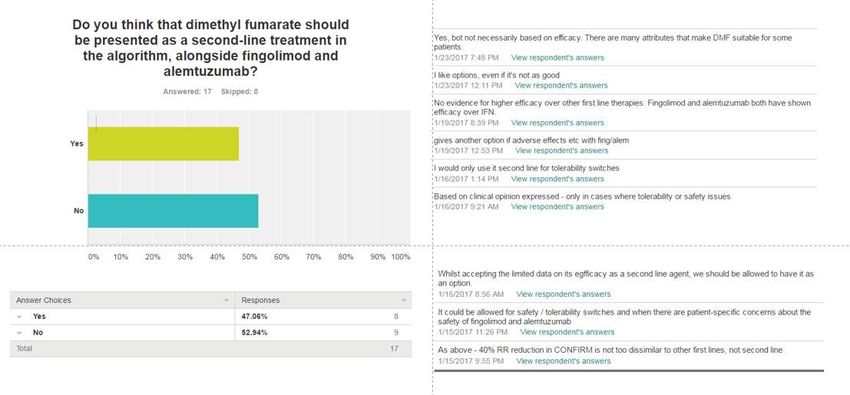
Treatment Algorithm for Multiple Sclerosis Disease-modifying Therapies                        4 September 2018

1. Purpose of this algorithm
The purpose of this algorithm is to provide a framework to aid decision-making for multiple
sclerosis (MS) specialists and patients, to help reduce excessive variation in practice, and ensure
safe and effective prescribing. It is understood that there may be situations where there is no
single ‘right’ or ‘wrong’ therapeutic approach, and different experts may reasonably hold different
views.
This algorithm is constrained by the regulatory status, NICE approvals and commissioning status,
of the disease-modifying drugs licensed for MS in England. Other guidance on disease-modifying
drugs in MS, such as the Association of British Neurologists’ guidelines1 are different in scope
and may make recommendations applying to the devolved administrations, outside the
geographical and National Institute for Health and Care Excellence (NICE) constraints applying
to NHS England.
NHS England’s Neuroscience Clinical Reference Group (CRG) will review this algorithm to reflect
any new NICE Technology Appraisal Guidance or approvals within 3 months of guidance
publication.

2. Principles of organisation of MS disease-modifying therapy
   services
The patient should be at the centre of any service for disease-modifying therapies. These
services should be organised to optimise timely and equitable access of people with MS to
disease-modifying therapies (DMTs).
Every region should make all licensed MS drugs available to all people with MS in that region. It
is expected that all DMT prescribers in a region will participate in a network of audit, quality
control and education.
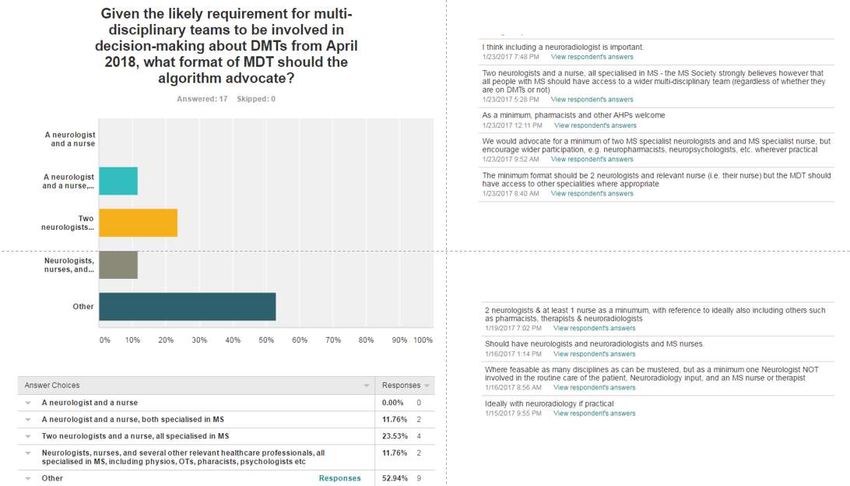
The minimum team for any prescribing service is a MS specialist consultant neurologist and a
MS specialist nurse, working with support from a specialist MS centre and its multi-disciplinary
team.
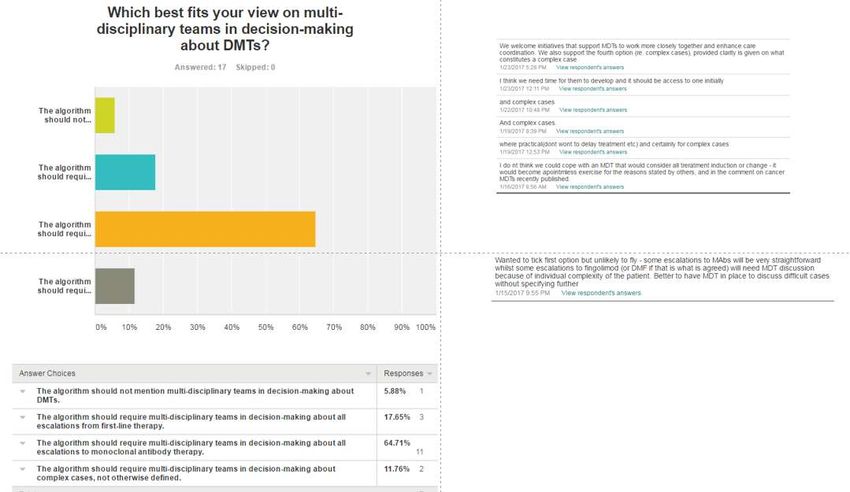
Complex cases or those where higher-risk DMTs (for instance cladribine and the monoclonal
antibody therapies) are proposed, should be discussed at a multi-disciplinary team (MDT)
meeting, defined as a minimum of at least two MS specialist consultant neurologists plus at least
one specialist MS nurse, with access to neuro-radiology expertise. Ideally the MDT would also
incorporate additional specialist healthcare professionals, including a neuropharmacist.
At each prescribing centre, there should be an individual or team responsible for the governance
of safety monitoring.
Services should be organised to facilitate collection of data for mandatory requirements (for
instance, annual Expanded Disability Status Scale (EDSS) for reporting on a web-based clinical
decision support system) and voluntary MS registers.
This treatment algorithm applies to all age groups, including children. Children may receive
DMTs if;
    (i)      they are licensed for children,
             or
    (ii)     they have a recognised dose for children (for instance are cited in the British National
             Formulary)

1
 Scolding N, Barnes D, Cader S, Chataway J, Chaudhuri A, Coles A, Giovannoni G, Miller D, Rashid W, Schmierer K,
Shehu A, Silber E, Young C, Zajicek J. Association of British Neurologists: revised (2015) guidelines for prescribing
disease-modifying treatments in multiple sclerosis. Pract Neurol. 2015 Aug;15(4):273-9

                                                           3
Treatment Algorithm for Multiple Sclerosis Disease-modifying Therapies 4 September 2018
OR: if neither of the previous two criteria apply
(iii) the child is post-pubescent. The management of pre-pubescent children with MS
should be discussed at the meetings of the national network of paediatric MS centres.
3. Definitions
The definitions below are taken from the Clinical Commissioning Policy for the use of Disease
Modifying Therapies for patients with Multiple Sclerosis, published by NHS England in 2014.
They represent useful explanations of terms used by the regulatory authorities, which were
translated into NICE approvals. However, there is no difference in biological significance between
relapses causing differing varying degrees of disability; all indicate disease activity.
Clinically significant relapse: All relapses are clinically significant, but in usual practice
relapses contributing to the eligibility for Disease Modifying Therapies are:
Any motor relapse
Any brainstem relapse
A sensory relapse if it leads to functional impairment
Relapse leading to sphincter dysfunction
Optic neuritis
Intrusive pain lasting more than 48 hours.
Disabling relapse: A disabling relapse is defined as any relapse which fulfils one or more of the
following criteria:
Affects the patient’s social life or occupation, or is otherwise considered disabling by the
patient
Affects the patient’s activities of daily living as assessed by an appropriate method
Affects motor or sensory function sufficiently to impair the capacity or reserve to care for
themselves or others
Needs treatment/hospital admission.
Highly active disease: Patients with an unchanged or increased relapse rate or ongoing severe
relapses compared with the previous year despite treatment with beta interferon.2 The NICE
appraisal on cladribine offers a slightly different definition: “defined as 1 relapse in the previous
year and magnetic resonance imaging (MRI) evidence of disease activity.” [From NICE Technical
Advice (TA) 254: Fingolimod for the treatment of highly active relapsing- remitting multiple
sclerosis]
Rapidly evolving severe (RES) relapsing–remitting disease: Defined by two or more
disabling relapses in one year and one or more gadolinium-enhancing lesions on brain MRI or a
significant increase in T2 lesion load compared with a previous MRI. [From NICE Technical
Advice (TA) 127: Natalizumab for the treatment of adults with highly active relapsing-remitting
multiple sclerosis]
4. Starting criteria common to all DMTs
In general, treatment should be recommended as soon as a patient becomes eligible. For a
patient to be eligible for any DMT, they must fulfil the following criteria:
Sustained disability due to multiple sclerosis is less than Expanded Disability Status Scale
(EDSS) 7.0, i.e. at least ambulant with two crutches. (Patients experiencing a relapse
2
We note that later definitions of Highly Active Disease incorporate the requirement for a certain number of T2
lesions. We do not think this is necessary.
4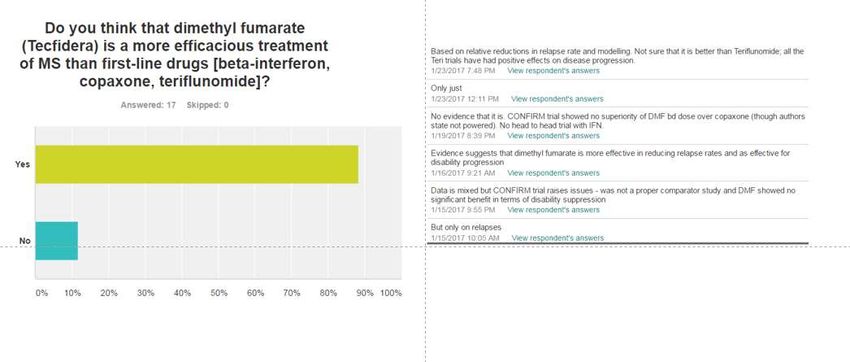
Treatment Algorithm for Multiple Sclerosis Disease-modifying Therapies 4 September 2018
may transiently have disability greater than EDSS 7.0; if they recover to a sustained
EDSS less than 7.0, they are eligible for DMTs)
No evidence of non-relapsing progressive multiple sclerosis.
It is important that, at the start of treatment, the patient understands that treatment may be
stopped if it is ineffective, intolerable adverse events arise, the patient becomes pregnant or they
develop progressive disease or fixed disability above EDSS 6.5.
5. Suggested common stopping criteria for all DMTs
The current DMT should be stopped if any of the following criteria are met:
1. No reduction in frequency or severity of relapses compared with pre-treatment phase
following adequate exposure to the DMTs (which varies for each DMT, but should be a
minimum of 6 months)
2. Intolerable adverse effects of the drug
3. Development of inability to walk (EDSS 7.0), persistent for more than 6 months due to MS
4. Confirmed secondary progressive disease with an observable increase in disability for
more than a 12 month period, in the absence of relapse activity, and an EDSS of 6.0 or
greater (except for the rare phenotype of “relapsing-progressive multiple sclerosis”
detailed in section 13).
Criteria 1 and 2 might lead to switching to alternative DMTs. Criteria 3 and 4 will lead to stopping
all DMTs.
Past criteria have included pregnancy, breast feeding or attempting conception, but increasing
evidence shows that some DMTs may be considered safe in these situations.
Stopping DMTs should lead to continued care within the MS team or transfer of care to services
which can provide appropriate support, such as neuro-rehabilitation.
If a drug is stopped for a reason other than intolerance or lack of efficacy, then it may be
restarted at a later date, even though the patient may not have “requalified” through new lesions.
This may apply, for instance, to people who come off a drug during pregnancy or to take an
experimental drug in a trial.
6. General principles of drug switching
Switching can be done for reasons of intolerance (which includes burdensome modes of
administration), or disease activity. None of the drugs promise 100% efficacy and some patients
and physicians may choose to tolerate some disease activity without changing drugs.
Disease activity should prompt consideration of switching only if there has been adequate
exposure, with good adherence, to the DMT (which varies for each DMT, but should be a
minimum of 6 months).
Evidence for disease activity that should prompt consideration of switching for all DMTs is clinical
relapses; MRI evidence of disease activity usefully supplements this assessment. NICE has
approved the use of alemtuzumab based on radiological disease activity alone; we suggest this
means 2 or more new MS lesions on MRI over a year.
7. Inappropriate DMTs
Corticosteroids and plasma exchange have roles in the treatment of acute relapses of
multiple sclerosis, but do not have long-term disease-modifying efficacy.
Intravenous immunoglobulin has no place in the treatment of multiple sclerosis.
5Treatment Algorithm for Multiple Sclerosis Disease-modifying Therapies 4 September 2018
8. Treatment algorithm for single clinical episode with radiological
activity
Single clinical episode
without MRI abnormalities No treatment [note 1]
allowing the diagnosis of MS
Single clinical episode with No treatment [note 1]
MRI abnormalities fulfilling Interferon beta 1a or glatiramer
the McDonald criteria for acetate[note 2]
relapsing remitting MS Alemtuzumab [note 3]
Notes:
1. Trials of first-line therapies in people with the original definition of Clinically Isolated
Syndrome (CIS) at high risk of conversion have NOT shown a convincing long-term effect
on the accumulation of disability. In 2018, NICE concluded that it was “unable to make
recommendations for treating clinically isolated syndrome because the diagnostic criteria
for multiple sclerosis and clinically isolated syndrome have changed and the treatment
pathway has evolved”. These new diagnostic criteria are the 2010 and 2017 Mc Donald
criteria.
2. Under 2018 NICE guidance: interferon beta 1a and glatiramer acetate can be offered to
people with “relapsing-remitting” multiple sclerosis under the new diagnostic criteria.
3. In exceptional circumstances, where clinical or radiological markers indicate a poor
prognosis for rapidly developing permanent disability, alemtuzumab may be considered
after a single clinical episode with MRI activity. Physicians and patients should weigh up
the considerable risks and burden of monitoring associated with this drug, against the
potential benefit.
6Treatment Algorithm for Multiple Sclerosis Disease-modifying Therapies 4 September 2018
9. Treatment algorithm for first-line therapy of relapsing-remitting
multiple sclerosis (RRMS)
Interferon beta 1a and 1b (Extavia)
Dimethyl fumarate [note 5]
RRMS: 2 significant relapses
Glatiramer acetate
in last 2 years
Teriflunomide
Alemtuzumab [note 7]
RRMS: 1 relapse in last 2 years AND Interferon beta 1a and glatiramer
radiological activity acetate [note 6]
Alemtuzumab [note 7]
Alemtuzumab [note 8]
Rapidly evolving severe MS Cladribine [note 8]
Natalizumab
Notes:
4. For RRMS (that is not rapidly evolving severe (RES) RRMS), beta-interferon, glatiramer
acetate and teriflunomide are effective and safe.
5. There is some evidence that dimethyl fumarate may be more effective at suppressing
relapses than beta-interferon, glatiramer and teriflunomide.
6. The clinical commissioning policy for the use of Disease Modifying Therapies for patients
with Multiple Sclerosis, published by NHS England in 2014 allowed the use of beta-
interferon in “patients with only a single major relapse in the preceding two years, but
combined with MRI evidence of continuing disease activity”. The NICE 2018 guidance
suggests glatiramer acetate may also be used in this context.
7. For RRMS (that is not RES), alemtuzumab is an option that may be considered, but we
note it is considerably more high-risk than the other options. It should be used only when
the patient and MS specialists accept the significant risks and burden of monitoring.
8. Alemtuzumab and cladribine may be considered - by some patients and physicians - a
safer option than natalizumab when John Cunningham (JC) virus serology is high-index
positive.
7Treatment Algorithm for Multiple Sclerosis Disease-modifying Therapies 4 September 2018
10. Treatment algorithm for intolerance to first line therapy
First line drug Alternative
First line drug
[note 9]
Interferon beta 1a and
1b (Extavia) Interferon beta 1a and
RRMS: 2 significant relapses 1b (Extavia)
in last 2 years Dimethyl fumarate
Glatiramer acetate Dimethyl fumarate
Teriflunomide Glatiramer acetate
Alemtuzumab Teriflunomide
RRMS: 1 relapse in last 2 Interferon beta 1a Interferon beta 1a
years AND radiological Glatiramer acetate Glatiramer acetate
activity Alemtuzumab
Alemtuzumab
Alemtuzumab Cladribine
Rapidly evolving severe MS Cladribine Fingolimod [note 10]
Natalizumab Natalizumab
Notes:
9. If a patient satisfies the eligibility criteria for a first-line therapy, and then is relapse-free on
a drug to which he/she becomes intolerant, they may be switched to another DMT even
though their relapses may now fall outside the eligibility window.
10. NHS England 2014 policy states that fingolimod can be used as an alternative to
natalizumab for those patients receiving natalizumab who are at high risk of developing
progressive multifocal leukoencephalopathy (PML) as defined by the following:
(i) JCV exposure indicated by anti-JCV antibody positive status,
(ii) Receiving an immunosuppressant prior to receiving natalizumab, or
(iii) Natalizumab treatment duration of >2 years. If patients develop a severe adverse
effect to natalizumab (e.g. anaphylaxis), and they have not previously received
fingolimod, then it may be appropriate to use fingolimod.
8Treatment Algorithm for Multiple Sclerosis Disease-modifying Therapies 4 September 2018
11. Treatment algorithm for second-line therapy of RRMS, with
disease activity on first line therapy
First line drug Second line drug
Alemtuzumab No evidence base
Disease activity on first-line
therapy [note 11]
Beta-Interferon Alemtuzumab [note 11]
Dimethyl fumarate Cladribine[note 12]
Glatiramer acetate Fingolimod [note 13]
Teriflunomide
If the patient develops RES
Alemtuzumab Alemtuzumab
Rapidly evolving Cladribine Cladribine
severe MS Natalizumab Natalizumab
11. Definition of disease activity: treatment failure may be indicated by either clinical or
radiological relapse-related changes, after significant exposure to the treating drug, with
changes indicating a poor prognosis for future disability. For instance, alemtuzumab is
specifically licensed for “active disease defined by clinical or imaging features”.
12. For cladribine, NICE specifically defined treatment failure as “1 relapse in the previous
year and MRI evidence of disease activity.”
13. For fingolimod: under previous guidance, fingolimod may be given if patients have an
unchanged or increased relapse rate or ongoing severe relapses compared with the
previous year despite treatment with beta interferon or glatiramer acetate. This is now
extended to include disease activity on teriflunomide and dimethyl fumarate (DMF).
9Treatment Algorithm for Multiple Sclerosis Disease-modifying Therapies 4 September 2018
12. Treatment algorithm for disease activity on second-line therapy
Second line drug Third line treatment
No change [note 16]
Alemtuzumab Alemtuzumab
Disease activity on Cladribine
second-line therapy Cladribine
Fingolimod
Autologous haematopoietic
stem cell treatment [note 14]
Alemtuzumab
If the patient
Natalizumab [note 15]
develops RES
No change [note 16]
Natalizumab Alemtuzumab
Rapidly evolving severe MS Alemtuzumab Cladribine
Cladribine Natalizumab
Autologous haematopoietic
stem cell treatment [note 14]
14. Autologous haematopoietic stem cell treatment for autoimmunity is commissioned at
specialised centres and is currently being offered to some people with MS in some parts
of the UK. But there is not yet an adequately controlled trial of its efficacy relative to other
potent therapies. We recommend that it is made available equitably to all people with MS,
but we propose that it should only be considered for people with relapsing disease (not
progressive) who have failed high-activity licensed disease-modifying therapies, and are
prepared to accept the significant risks of the procedure and are eligible under European
Group for Blood and Marrow Transplantation (EBMT) guidelines. We recommend that this
treatment is offered only by units with expertise both in the management of aggressive
multiple sclerosis and the use of autologous haematopoietic stem treatment.
15. The risk of PML on natalizumab is likely to be increased after alemtuzumab or cladribine,
given the prolonged lymphopenia induced by these drugs. But, where the patient is
negative for JC serology, this may rarely be appropriate.
16. After considering all these options, it may be appropriate to continue the second-line
therapy, despite evidence of disease activity. None of the drugs promise 100% efficacy
and some patients and physicians may choose to tolerate some disease activity without
changing drugs.
10Treatment Algorithm for Multiple Sclerosis Disease-modifying Therapies 4 September 2018
13. Treatment algorithm for relapsing progressive multiple sclerosis
Only interferon beta 1b (Extavia) is approved by NICE for relapsing-progressive disease, under
these criteria (NHS England 2014 policy):
Starting Criteria
All of the following criteria must be met. The patient:
has had at least two disabling relapses in two years
is able to walk 10m or more (EDSS less than 7.0)
has had minimal increase in disability due to progression over the past 2 years
is aged over 18 years
has no contra-indications.
We recommend that patients fulfilling these criteria are investigated for MRI evidence of disease
activity. If a high load of active inflammation is seen, the classification of “progressive relapsing”
should be reconsidered by the MDT.
Stopping Criteria
One or more of the following criteria are met:
No reduction in frequency or severity of relapses compared with pre-treatment phase
following a minimum 6 month period of beta interferon treatment
Intolerable adverse effects of the drug
Development of inability to walk, persistent for more than 6 months, unless unable to walk
for reasons other than MS
Stopping criteria should be made known to patients and agreed before treatment is
begun.
11Treatment Algorithm for Multiple Sclerosis Disease-modifying Therapies 4 September 2018
Addendum 1: Table of drug authorisation, NICE indication and NHS
England positioning
Drug Marketing Authorisation NICE indication NHS ENGLAND 2014 policy
interferon-1a AVONEX is indicated for the treatment [ID1809 NICE] All of the following criteria must be
of: I(i) Patients diagnosed with met. The patient: (i) has had at least
relapsing multiple sclerosis (MS). In Interferon beta-1a [AVONEX and 2 clinically significant relapses in
clinical trials, this was characterised REBIF] is recommended as an previous 2 years; (ii) is able to walk
by two or more acute exacerbations option for treating multiple 10m or more**; (iii) is not pregnant or
(relapses) in the previous three years sclerosis, only if the person has attempting conception.
without evidence of continuous relapsing–remitting multiple
progression between relapses; sclerosis. Neurologists may, in certain other
AVONEX slows the progression of circumstances where the evidence
disability and decreases the frequency for efficacy is less secure, also
of relapses; (ii) Patients with a single consider advising treatment after
demyelinating event with an active discussion with the patient
inflammatory process, if it is severe concerning the risks and benefits.
enough to warrant treatment with For example;: (i) Patients within 12
intravenous corticosteroids, if months of a clinically significant
alternative diagnoses have been clinically isolated syndrome when
excluded, and if they are determined MRI evidence predicts a high
to be at high risk of developing likelihood of recurrent episodes (i.e.
clinically definite multiple sclerosis development of MS); (ii) patients with
(see section 5.1). only a single major relapse in the
preceding two years, but combined
REBIF is indicated for the treatment of with MRI evidence of continuing
relapsing multiple sclerosis. In clinical disease activity (i.e. meet the revised
trials, this was characterised by two or McDonald criteria for MS); (iii)
more acute exacerbations in the individuals aged less than 18 with
previous two years. NICE is not currently in a position relapsing remitting MS
to make recommendations on
PLEGRIDY is indicated in adult ** For patients who can walk
PLEGRIDY pegylated interferon
patients for the treatment of relapsing between 10 and 99 m (aided or
beta-1a.
remitting multiple sclerosis unaided, EDSS 6.0 to 6.5), treatment
with DMTs is permitted bur
recommended less strongly than for
patients able to walk more than
100m unaided (EDSS 5.5 or less).
interferon -1b BETAFERON is indicated for the BETAFERON is not As per interferon-1a guidance, but
treatment of (i) patients with a single recommended also permits the use of interferon-1b
demyelinating event with an active in relapsing-progressive disease.
inflammatory process, if it is severe
enough to warrant treatment with
intravenous corticosteroids, if
alternative diagnoses have been
excluded, and if they are determined
to be at high risk of developing
clinically definite multiple sclerosis; (ii)
patients with relapsing-remitting
multiple sclerosis and two or more
relapses within the last two years. (iii)
patients with secondary progressive
multiple sclerosis with active disease,
evidenced by relapses.
EXTAVIA is indicated for the treatment
of (i) Patients with a single EXTAVIA is recommended as an
demyelinating event with an active option for treating multiple
inflammatory process, if it is severe sclerosis, only if the person has
enough to warrant treatment with relapsing–remitting multiple
intravenous corticosteroids, if sclerosis and has had 2 or more
alternative diagnoses have been relapses within the last 2 years or
excluded, and if they are determined the person has secondary
to be at high risk of developing progressive multiple sclerosis with
clinically definite multiple sclerosis; (ii) continuing relapses
Patients with relapsing remitting
multiple sclerosis and two or more
relapses within the last two years; (iii)
Patients with secondary progressive
12Treatment Algorithm for Multiple Sclerosis Disease-modifying Therapies 4 September 2018
multiple sclerosis with active disease,
evidenced by relapses.
Glatiramer COPAXONE and BRABIO are Glatiramer acetate is As per interferon-beta guidance, but
acetate indicated for for the treatment of recommended as an option for must be able to walk 100m or more
relapsing forms of multiple sclerosis treating multiple sclerosis, only if
(MS) (see section 5.1 for important the person has relapsing–remitting
information on the population for multiple sclerosis. (N.b.
which efficacy has been established). “Stakeholders consider glatiramer
Neither are indicated in primary or acetate to be the safest drug for
secondary progressive MS anyone who is planning to become
pregnant”.)
teriflunomide AUBAGIO is indicated for the [TA303] Published date: 22
treatment of adult patients with January 2014 Last updated: 01
relapsing remitting multiple sclerosis June 2014:
(MS).
Teriflunomide is recommended as
an option for treating adults with
active relapsing–remitting multiple
sclerosis (normally defined as 2
clinically significant relapses in the
previous 2 years), only if
they do not have highly active or
rapidly evolving severe relapsing–
remitting multiple sclerosis
dimethyl Tecfidera is indicated for the treatment [TA320] Published date: 27
fumarate of adult patients with relapsing August 2014: Dimethyl fumarate is
remitting multiple sclerosis recommended as an option for
treating adults with active
relapsing‑remitting multiple
sclerosis (normally defined as 2
clinically significant relapses in the
previous 2 years), only if
they do not have highly active or
rapidly evolving severe
relapsing‑remitting multiple
sclerosis
fingolimod Gilenya is indicated as single disease [TA254] Published date: 25 April Fingolimod is recommended as an
modifying therapy in highly active 2012: option for the treatment of highly
relapsing remitting multiple sclerosis active multiple sclerosis:
for the following adult patient groups: Fingolimod is recommended as an
option for the treatment of highly Patients have an unchanged or
- Patients with highly active disease active multiple sclerosis: increased relapse rate or ongoing
despite a full and adequate course of severe relapses compared with the
treatment with at least one disease Patients have an unchanged or previous year despite treatment with
modifying therapy increased relapse rate or ongoing beta interferon* or glatiramer acetate
severe relapses compared with
or the previous year despite OR
treatment with beta interferon* or
- Patients with rapidly evolving severe glatiramer acetate As an alternative to natalizumab for
relapsing remitting multiple sclerosis those patients receiving natalizumab
defined by 2 or more disabling who are at high risk of developing
relapses in one year, and with 1 or progressive multifocal
more Gadolinium enhancing lesions leukoencephalopathy (PML) as
on brain MRI or a significant increase defined by the following:
in T2 lesion load as compared to a
previous recent MRI. o JCV exposure indicated by anti-
JCV antibody positive status
o Receiving an immunosuppressant
prior to receiving natalizumab
o Natalizumab treatment duration of
>2 years
natalizumab Patients aged 18 years and over with [TA127] Published date: 22 For patients who
highly active disease activity despite a August 2007: rapidly evolving
full and adequate course of treatment severe relapsing–remitting has had two or more
with at least one disease modifying multiple sclerosis (RES). RES is disabling relapses in the
therapy (DMT), a beta-interferon or defined by two or more disabling past year
glatiramer acetate. relapses in 1 year, and one or has one or more
more gadolinium-enhancing gadolinium-enhancing
These patients may be defined as lesions on MRI or increase
13Treatment Algorithm for Multiple Sclerosis Disease-modifying Therapies 4 September 2018
those who have failed to respond to a lesions on brain magnetic in T2 lesion load
full and adequate course (normally at resonance imaging (MRI) or a compared with previous
least one year of treatment) of beta- significant increase in T2 lesion MRI unless comparator
interferon or glatiramer acetate. load compared with a previous MRI is unavailable or
Patients should have had at least 1 MRI assessment of gadolinium-
relapse in the previous year while on enhancement is unreliable
therapy, and have at least 9 as the patient is treated
T2‑hyperintense lesions in cranial with steroids at around the
Magnetic Resonance Image (MRI) or time of scan.
at least 1 Gadolinium‑enhancing has had no previous
lesion. A “non-responder” could also disease modifying therapy
be defined as a patient with an OR is receiving treatment
unchanged or increased relapse rate with beta interferon and
or ongoing severe relapses, as does not meet the agreed
compared to the previous year. stopping criteria.
*As per NICE Technology Appraisal
Guidance 127 patients with high
or disease activity taking beta interferon
or glatiramer acetate but do not fulfil
the RES criteria will not be routinely
Adult Patients aged 18 years and over funded for natalizumab.
with rapidly evolving severe relapsing
remitting multiple sclerosis defined by
2 or more disabling relapses in one
year, and with 1 or more Gadolinium
enhancing lesions on brain MRI or a
significant increase in T2 lesion load
as compared to a previous recent MRI
alemtuzumab LEMTRADA is indicated for adult [TA312] Published date: 28 May NHS England will fund up to three
patients with relapsing remitting 2014: Alemtuzumab is cycles of alemtuzumab. Any furteh4r
multiple sclerosis (RRMS) with active recommended as an option, within cycles would need to be approved by
disease defined by clinical or imaging its marketing authorisation, for NICE under a review of TA312.
features treating adults with active
relapsing–remitting multiple
sclerosis.
cladribine MAVENCLAD is indicated for the Cladribine tablets are
treatment of adult patients with highly recommended as an option for
active relapsing multiple sclerosis treating highly active multiple
(MS) as defined by clinical or imaging sclerosis in adults, only if the
features person has: (1) rapidly evolving
severe relapsing–remitting
multiple sclerosis, that is, at least
2 relapses in the previous year
and at least 1 T1 gadolinium-
enhancing lesion at baseline MRI
or (2) relapsing–remitting multiple
sclerosis that has responded
inadequately to treatment with
disease-modifying therapy,
defined as 1 relapse in the
previous year and MRI evidence
of disease activity.
14Treatment Algorithm for Multiple Sclerosis Disease-modifying Therapies 4 September 2018
Addendum 2: Indications not currently approved by NHS England, but
considered by the authors
The following use of DMTs is not currently funded and was considered by the authors of this
algorithm. If an individual or institution or company wish for these to be considered, they
would need to follow NHS England’s policy proposition route or ask NICE to re-evaluate their
guidance.
1. Although not licensed for use in the clinically isolated syndrome, we note trial data
supporting glatiramer and teriflunomide’s use in this context, in order to reduce
subsequent relapse rate (but without an effect on disability accumulation). The committee
were divided on the usefulness of these drugs in the clinically isolated syndrome.
2. Fingolimod has a licence for first-line use in RES, but is not approved for NICE for this
indication. However it is being used first line in Scotland and in Wales for rapidly evolving
severe multiple sclerosis. Outside the EU, it is being used as first-line therapy for regular
RRMS. We propose that NHS England consider fingolimod for first-line therapy of RES.
3. NICE guidance for teriflunomide and DMF specifies they are not indicated for RES, but
some of the committee requested a “de-escalation” from natalizumab to these agents
when there is intolerance to natalizumab, for patients with RES.
4. DMF is currently being used, in some regions, for people who have shown break through
disease on other first-line therapies, although it is not approved for this indication. A
number of the group propose that NHS England adopt the use of DMF for disease activity
on first-line therapy.
5. One option for people with RES and disease activity on natalizumab, for risk-averse
patients for instance, is to “de-escalate” by using a drug of lesser efficacy. Fingolimod,
dimethyl fumarate and teriflunomide might be useful in this context, but they are not
approved for this use. We propose that NHS England consider permitting fingolimod and
dimethyl fumarate for treatment of RES, after natalizumab.
15Treatment Algorithm for Multiple Sclerosis Disease-modifying Therapies 4 September 2018
Addendum 3: Authors of the algorithm
Attendees at a meeting on the 12th December 2016
Alasdair Coles (Chair), Neurologist
Sian Price Neurologist
Gavin Giovannoni Neurologist
Brendan Mclean Neurologist
Neil Scolding Neurologist
Neil Robertson Neurologist
Claire McCarthy Neurologist
Jo Sopala MS Trust
Sorrel Bickley MS Society
Malcolm Qualie NHS England
Mandy Matthews South Worcestershire CCG
Adrian Williams Neurology CRG
Samantha Colhoun Specialist MS Nurse
Jeremy Robson Neurology Pharmacist
Rachel Dorsey Neurology Pharmacist
Members of the MS Advisory Group of the ABN, who commented on the algorithm
Waqar Rashid Neurologist
Robert Brenner Neurologist
Adnan Al-Araji Neurologist
Bruno Gran Neurologist
16Treatment Algorithm for Multiple Sclerosis Disease-modifying Therapies 4 September 2018
Addendum 4: Voting of membership
17Treatment Algorithm for Multiple Sclerosis Disease-modifying Therapies 4 September 2018
18Treatment Algorithm for Multiple Sclerosis Disease-modifying Therapies 4 September 2018
19Treatment Algorithm for Multiple Sclerosis Disease-modifying Therapies 4 September 2018
20Treatment Algorithm for Multiple Sclerosis Disease-modifying Therapies 4 September 2018
21Treatment Algorithm for Multiple Sclerosis Disease-modifying Therapies 4 September 2018
Appendix 1: Acronyms and abbreviations
ABN The Association of British Neurologists
CIS Clinically Isolated Syndrome refers to a first episode of neurologic symptoms that
lasts for at least 24 hours and is caused by inflammation or demyelination (loss of the
myelin that covers nerve cells) in the central nervous system
CRG Clinical Reference Group
DMT Disease Modifying Therapies – can reduce how many relapses someone has and
how serious they are
EDSS Expanded Disability Status Scale – a method of quantifying disability in multiple
sclerosis and monitoring changes in disability over time
JC virus John Cunningham (JC) virus is a common infection completely unrelated to MS but
which is normally kept under control by the immune system
MDT Multi-disciplinary team
MRI Magnetic resonance imaging
MS Multiple Sclerosis involves an immune-mediated process in which an abnormal
response of the body’s immune system is directed against the central nervous
system.
NICE The National Institute for Health and Care Excellence
NICE TA NICE technology appraisal guidance
PML Progressive Multifocal Leukoencephalopathy – a rare viral disease of the brain
RES Rapidly evolving severe relapsing-remitting MS
RRMS Relapsing-remitting MS
22You can also read


