UC Pasifika Strategy 2014-2018 - www.canterbury.ac.nz/pacificstudents - University of Canterbury
←
→
Page content transcription
If your browser does not render page correctly, please read the page content below
UC Pasifika Strategy
2014–2018

www.canterbury.ac.nz/pacificstudents
People of the sea
We who are free
Free to choose,
free to be
Le Atua we have,
Le Atua we receive
We have arrived but
the journey goes on
From this generation
to the next generation
We dream, we strive
– we are strong
Le Atua we have,
Le Atua we receive
Jackie Leota and Igelese Ete
Contents

2   Vice-Chancellor’s Foreword   8    Our VALUES             16   3. Challenge          27 Key Performance Indicators
3   Our VISION                   11   Five Strategic Goals   18   4. Concentrate        32 Appendices
4   Our JOURNEY                  12   1. Connect             20   5. Contribute
6   Our ASPIRATIONS              14   2. Confidence          22   Implementation Plan
Vice-Chancellor’s Foreword
             Talofa lava, Malo e lelei, Kia orana, Ni sa     globally aware citizens who have the ability to
             bula vinaka, Halo olaketa, Namaste, Kam na      be leaders in their fields of endeavour.
             mauri, Fakaalofa lahi atu, Ia orana, Mahalo,
                                                             The UC Pasifika Strategy cements our
             Malo ni, Kia ora and warm Pasifika greetings.
                                                             commitment to supporting and graduating
             It is with great pleasure that I present the    the next generation of leaders of Pasifika
             University of Canterbury’s Pasifika Strategy    descent. It also reinforces our vision of
             2014–2018.                                      a campus community that is culturally
                                                             inclusive and responsive, and in which
             This strategy has been developed in             students and staff value diversity and
             consultation with the Pasifika community        respect individual differences that enrich
             and is fully supported by the University        the University community and learning
             Council, which approved the strategy on 24      experience.
             September 2014. It outlines the University’s
             approach to supporting the educational          We all have a part to play in raising Pasifika
             aspirations of Pasifika learners, who have      success at the University of Canterbury.
             been identified by the Tertiary Education       Through our teaching, learning and research
             Commission as a priority learner group.         practices, we can ensure the continued and
                                                             increased involvement of Pasifika learners
             The University of Canterbury’s goal is          in creating, transferring and applying
             to ensure that we provide a learning            knowledge to all aspects of society.
             environment that encourages the
             participation and educational success of        I encourage you all to support the objectives
             all students in all areas of study, providing   of this document and think about how you or
              them with the skills to fully contribute       your department can make a difference.
              to the social and economic wellbeing of
                                                             Dr Rod Carr
               their communities. We also want all our
                                                             Vice-Chancellor
               graduates to be culturally competent and
Our VISION

UC Pasifika aspirations                          UC an innovative                                UC a culturally diverse                        UC graduates take the
and educational                                  Pasifika-inspired                               and distinctive student                        lead in a changing
excellence                                       learning environment                            experience                                     multicultural world
By 2020, the University of Canterbury will be    Pasifika teaching and learning practices        The University of Canterbury will champion     University of Canterbury graduates will be
recognised both nationally and internationally   and pedagogies will be recognised and valued,   the creation of a diverse campus community     celebrated and valued locally, nationally and
for its excellence and innovation in advancing   and Pasifika research will contribute to the    where our staff, campus facilities, student    internationally for their bicultural knowledge,
the educational aspirations and outcomes of      creation, dissemination and application         experience and online learning environment     cultural competence and leadership attributes
Pasifika people.                                 of new fields of knowledge to promote           will be culturally inclusive, responsive and   that will contribute to the advancement of all
                                                 understanding about Pasifika ways of            enriching.                                     communities.
                                                 knowing across all disciplines.

                                                                                                                                                                     www.canterbury.ac.nz 3
Our JOURNEY
                                   Aotearoa New Zealand today stands proud                           and 18% by 2050. Growth projections for the Pacific youth
                                                                                                     population are even higher, and Pacific peoples will comprise
                                   as a Pacific country. Recognition of our
                                                                                                     an increasing proportion of our nation’s youth and its future
                                   Pacific context and the unique contribution                       student body, workforce, taxpayer base, voters and consumers.
                                   Pasifika communities have made to the                             Approximately 25,000 Pacific people live in the South
                                   demographic pattern, political, social and                        Island, of whom 63% live in the Canterbury region. Pacific
                                   cultural fabric of New Zealand society                            communities have lived in the Canterbury region for
                                                                                                     almost a century. Christchurch’s post-World War Two Pacific
                                   signals a rising awareness of our identity
                                                                                                     population increased in the 1950s and, by the 1960s, there
                                   as a bicultural country in a multicultural                        were enough Pacific people living in Christchurch to form
                                   Pacific nation. When New Zealand takes                            church communities. These communities continued to flourish
                                   to the global stage, Pacific aesthetics and                       as new and targeted employment opportunities attracted
                                                                                                     another wave of Pacific people to the city in the 1990s and,
                                   culture are quite clearly interwoven into                         again, following the 2010 and 2011 earthquakes to assist with
                                   contemporary New Zealand society.                                 the Christchurch rebuild.
                                   New Zealand is home to the largest diverse Pacific population     The unique relationship between Māori and Pasifika people
                                   in the world, encompassing many ethnicities of which the          acknowledges the common ancestry, shared indigenous
                                   seven largest ethnic groups are from Samoa, Cook Islands,         journeys and knowledge construction systems that connect
                                   Tonga, Niue, Fiji, Tokelau and Tuvalu. The people of the Cook     Pasifika people to Māori. These connections build special
                                   Islands, Tokelau and Niue are New Zealand citizens, therefore     relationships between Pasifika and tangata whenua of
                                   the term “Pacific people” does not necessarily mean “migrant”     Aotearoa and, importantly, the need to foster and strengthen
                                   because most Pacific peoples are New Zealand citizens by          this relationship. Pasifika recognises the inherent rights of
                                   right or by birth in New Zealand, Cook Islands, Niue or Tokelau   Māori under Te Tiriti o Waitangi as tangata whenua. The
                                   (Statistics New Zealand). Sixty per cent of Pacific people are    University of Canterbury will contribute to the development
                                   born in New Zealand and an increasing number of Pacific           of indigenous Pasifika knowledge, partnership and relevant
                                   youth are also Māori. The Pacific population in New Zealand       engagement between Pasifika and Māori to enrich common
                                   is projected to grow from the current 7% to 10% by 2026,          and distinct interests.

4 UC Pasifika Strategy 2014–2018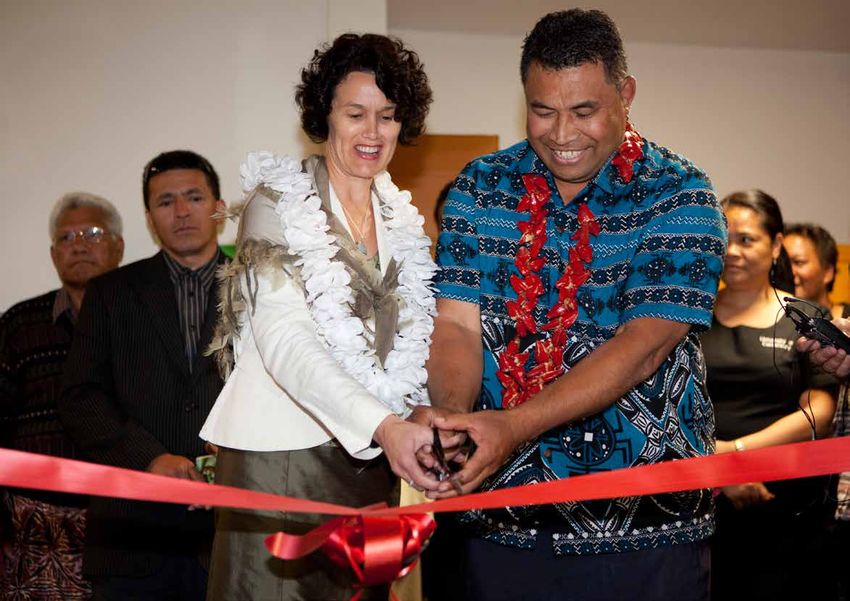
Recognition of these relationships, both in New Zealand and        has often acted as a catalyst for engagement and dialogue         improving Pacific achievement and employment prospects”,
in the Pacific region, is based on a multi-layered history of      between the University and Pasifika communities. The              outlines the role tertiary providers must play to raise Pasifika
connection and has been recognised by the New Zealand              Centre has developed deep connections with our local Pacific      success at all levels to ensure Pasifika people are involved in
Government in its responses to the disparities in education        communities and maintains links with many of its successful       creating knowledge, transferring knowledge and applying that
and in other government sectors. The role Pasifika New             graduates and associates, such as well-known political author     knowledge through all parts of the economy and society. The
Zealanders will play in the future will be significant and         and historian Dr Malama Meleisia, who was also the Centre’s       University of Canterbury’s response to the government’s vision
warrants the need for tertiary providers to take specific action   first appointed Pacific Director in 1987. The Macmillan Brown     and goals for Pasifika is outlined in the UC Investment Plan
to increase Pasifika success in education. This is where the       Centre for Pacific Studies has been a sanctuary for nurturing     2013–2015 and Statement of Strategic Intent.
biggest gains for Pasifika people will be made. New Zealand’s      and developing some of New Zealand’s well established and         The Pasifika Strategy is an expansion of our aspirations for
on-going social development and economic success will              internationally recognised artists such as Fatu Feu’u, Michael    Pasifika people and their communities. It sets out five strategic
depend on that of its young people, who will increasingly be of    Tuffery, John Pule, Andy Leleisi’uao, Emma Kesha, Siaosi          goals for achieving these aspirations, and the intention that
Māori and Pasifika descent.                                        Mulipola, David Fane, Tusiata Avia, Sheyne Tuffery and award-     all UC graduates will contribute to the social and economic
The University of Canterbury has a proud history of producing      winning playwright, journalist and actor, Victor Rodger. Many     wellbeing of all communities in New Zealand. Achieving
successful Pasifika leaders across a number of fields. Notable     remain in close contact with the Centre and return often as       this will require a University-wide culturally responsive and
alumni include the former Prime Minster of Tonga, Dr Feleti        guest lecturers and presenters to mentor and inspire some of      collaborative approach.
Sevele; the President of Kiribati, Anote Tong; Samoa’s Supreme     our emerging Pasifika artists and leaders.
Court Judge Justice Vui Clarence Nelson, who was recently          Our commitment to growing and graduating the next
appointed to the United Nations’ Committee on the Rights           generation of global leaders of Pasifika descent is linked to
of the Child; the New Zealand Ministry of Education’s Senior       New Zealand’s long-standing relationship with its Pacific
Pasifika Manager, Dr Lesieli Tongati’o; and highly regarded and    neighbours and the commitment to Pasifika New Zealanders.
distinguished academic leaders such as education experts           The special significance of this relationship is highlighted
Associate Professor Dr Airini and Dr Tanya Wendt Samu from         in the Ministry of Education Pasifika Plan 2013–2017 and the
the University of Auckland.                                        Tertiary Education Strategy 2014–2019 (TES), which set out the
The prestigious Macmillan Brown Centre for Pacific Studies         current, medium and long-term strategic direction for the
is one of the earliest Pacific studies centres to be established   tertiary education sector and identifies Pasifika learners as a
in New Zealand. Established to promote and advance the             priority group. The “Tertiary Education Commission Pasifika
scholarship and understandings of Pacific peoples, the centre      Framework 2013–2017: A tertiary-wide sector approach to

                                                                                                                                                                            www.canterbury.ac.nz 5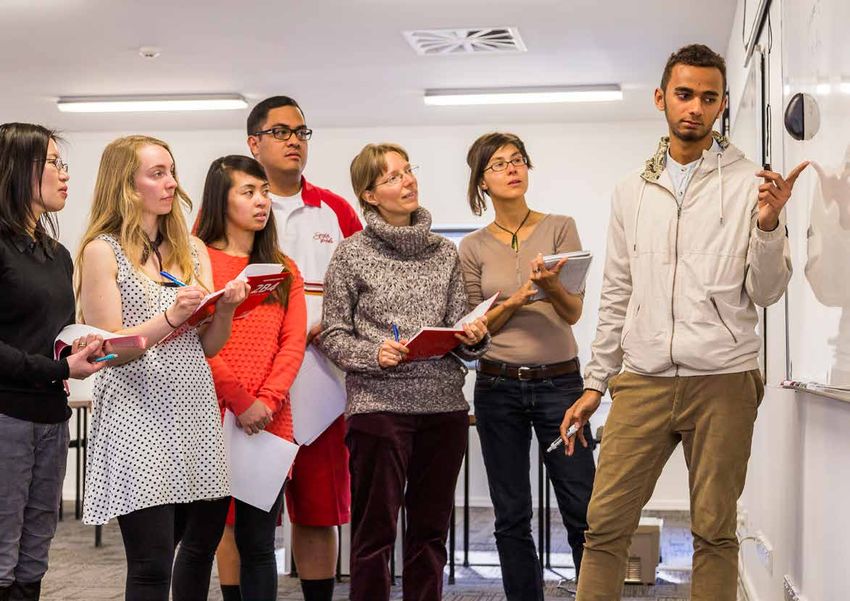
Our ASPIRATIONS
The University of Canterbury’s connections with strategic
stakeholders will be celebrated for its approach in fostering                                                T
and enhancing quality relationships, shared knowledge and                                                N EC
                                                                                                       N
                                                                                                  CO
mutual respect with Pasifika communities.
UC will respond to the cultural needs and aspirations of
Pasifika peoples, culturally and educationally, to ensure
access to opportunities, successful transition and confident
engagement in higher education.
UC will rise to the challenge of enabling Pasifika learners
to achieve at unprecedented levels, and with retention and
success rates that are on par with the highest achieving
groups. Meeting this challenge will create an opportunity for
all students to fully contribute to the social and economic
wellbeing of all communities. This will support high earning,                  ence                                              E
productive graduate pathways that will lead to greater Pasifika          fid                                                R AT
                                                                                                   E                       T
leadership in high growth and high demand labour market            con                        E NG                      CEN
sectors.                                                                                     L                        N
                                                                                           AL                    CO
UC will concentrate on promoting and supporting excellence                            CH
in teaching and learning, and research by and about Pasifika
people in a way that values and contributes to Pasifika cultural
knowledge, identity, community aspirations and world views.

                                                                                                    te
                                                                                                  bu
                                                                                             ri
                                                                                      cont

6 UC Pasifika Strategy 2014–2018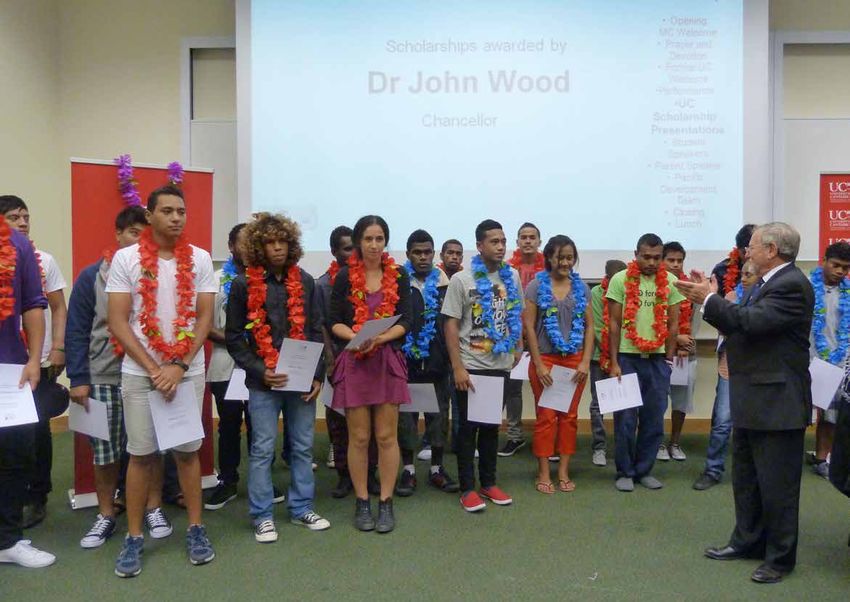
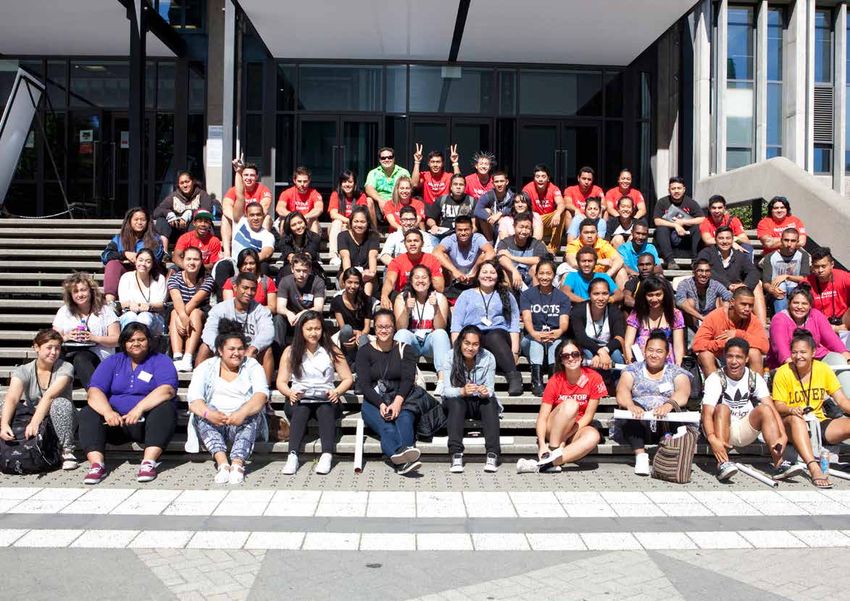
First-year Pasifika students
with their Pasifika mentors
at the First-year Pasifika
Orientation programme –
Get Fresh, February 2014

Our VALUES

8 UC Pasifika Strategy 2014–2018
Our ancestors have spoken;
Awake!
Lead our people, come alive,
search for knowledge, truth
and justice.
To bring success and prosperity
to our land.
To bring good fortune to
our people and give our people
courage and strength to
go forward.

Takiora Ingram, Cook Islands

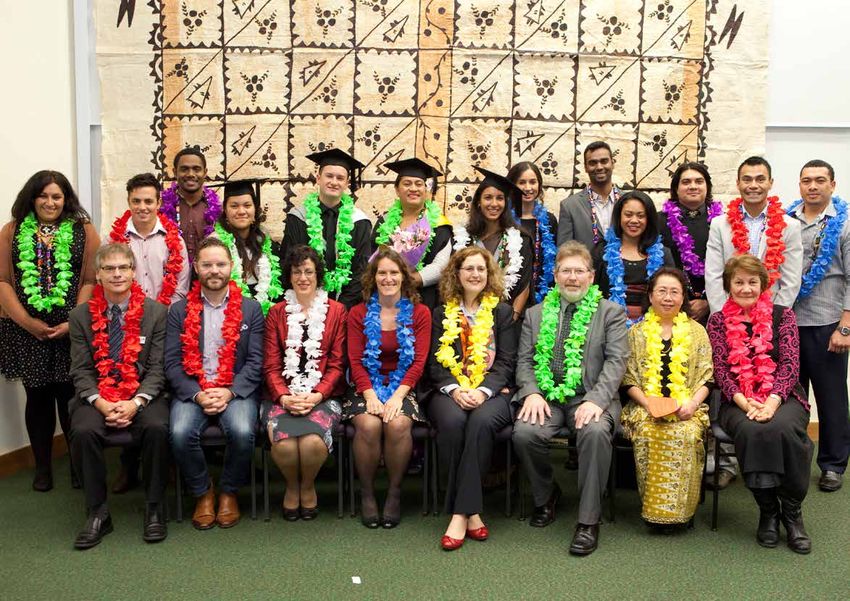
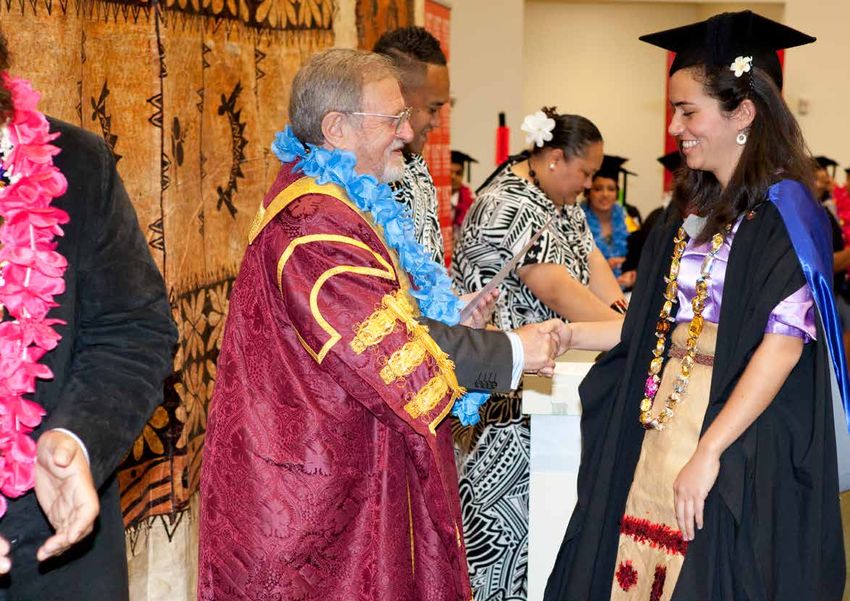
                                         Pasifika Graduation
     10 UC Pasifika Strategy 2014–2018   Celebration, April 2013
Five Strategic Goals
ECT
O NN
C
ence E
fid R AT
con NGE ENT
LLE NC
A CO
CH
te
i bu
r
cont1. Connect
A fia vave oo lou va’a, Connect with key stakeholders to foster quality relationships, shared knowledge and
mutual respect.
alo na’o oe, ae a fia tuli
mamao le taunu’uga, The University of Canterbury will
tatou alo alo faatasi. 1.1. Engage effectively and appropriately with Pasifika families and communities, including key Pasifika advisory groups,
committees and Pasifika staff for input and partnership on Pasifika development and success at UC.
If you wish to go fast, 1.2. Ensure high engagement with local secondary schools and participation in relevant youth programmes, cultural events
go alone; if you want to and projects to connect with local Pasifika students and their families, and promote opportunities available at UC.
go far, go together. 1.3. Participate in high profile community events and youth programmes in priority regions outside Canterbury to create
engagement opportunities and attract Pasifika students, including international students, to UC.
1.4. Develop links with international stakeholders and explore partnership opportunities with universities in the South Pacific
Samoan Proverb region to attract postgraduate students and emerging academics.
1.5. Foster and strengthen the unique relationship between Pasifika and Māori to support common and distinct interests,
enhance areas of strength and promote collaboration for mutual benefit.
12 UC Pasifika Strategy 2014–2018Opening of the College of Education Pasifika Talanoa Centre
2. Confidence

Fakamalolo ke he tau                Respond to the cultural needs and educational aspirations of Pasifika people to strengthen
                                    access and transition opportunities, and enhance confident engagement in tertiary study.
amaamanakiaga, ke mafola
ai e tau matakainaga.               The University of Canterbury will
Strengthen all endeavours
                                    1.6.    Ensure Pasifika aspirations and values are visible in the University’s learning environment, campus culture, service delivery
                                            and brand identity.
and the community will              1.7.    Ensure UC’s outreach and transition initiatives are inclusive and responsive to Pasifika students in ways that will attract,
benefit.                                    engage and increase their ongoing success at UC.
                                    1.8.    Strengthen its dedicated focus on Pasifika students through the work of the Pacific Development Team to appropriately and
                                            effectively transition, develop and support students successfully through the provision of advice, engagement programmes,
Niuean Proverb                              advocacy support and pastoral care services, from pre-enrolment to alumni.
                                    1.9.    Create visible and accessible Pasifika spaces and facilities on campus to attract and welcome Pasifika students and staff,
                                            their families and communities to UC.
                                    1.10.   Profile Pasifika staff achievements and visiting academics in UC internal and external communications, online news
                                            announcements, media articles and publications to promote UC as the University of choice for Pasifika students and staff.
                                    1.11.   Continue to offer Pasifika scholarships to address participation barriers, attract talented students and promote high demand
                                            career pathways and leadership development opportunities.

14 UC Pasifika Strategy 2014–2018
Presentation of UC Emerging Leaders Scholarships and NZ Aid Scholarships at the annual Pasifika Welcome Day, March 2013
3. Challenge

A Oohe o kahi nana o                Rise to the challenge of empowering Pasifika learners to achieve at unprecedented levels and
                                    succeed on a par with the highest achieving groups.
luna o ka pali; iho mai a
lalo nei. Oike i ke au nui          The University of Canterbury will
ke au iki, he alo a he alo.         1.12.   Demonstrate a high level strategic commitment, led by the Senior Management Team, to build and integrate an institution-
                                            wide response to actively prioritise and improve educational performance outcomes that align with Tertiary Education
The top of the cliff is not                 Commission objectives for Pasifika learners.

the place to look at us;            1.13.   Ensure all Colleges, faculties and service areas incorporate the Pasifika strategy into their strategic and operational plans to
                                            become more responsive to the learning needs and aspirations of Pasifika learners. Additionally, College policies, actions and
come down here and                          decisions relating to enrolment processes, recruitment and retention practices should reflect a good understanding of the
learn of the big and little                 Tertiary Education Strategy in relation to Pasifika learners.

currents, face to face.
                                    1.14.   Ensure UC policies and processes, data analysis and performance reporting regarding student information, participation,
                                            retention, achievement, completion and progression incorporates a strong focus on Pasifika goals and outcomes to monitor
                                            UC’s progression against government expectations and targets.

Hawaiian Proverb                    1.15.   Provide best practice guidance and cultural competence training to staff on how to engage effectively with Pasifika learners
                                            and their communities.
                                    1.16.   Actively encourage and support the recruitment and retention of Pasifika staff, and provide mentoring and professional
                                            development training to increase Pasifika leadership capacity and career progression pathways within and beyond the
                                            University.
                                    1.17.   Profile our Pasifika role models across UC and collaboratively celebrate our efforts and successes in the community to boost
                                            the achievement, completion and progression outcomes of Pasifika learners at UC.

16 UC Pasifika Strategy 2014–2018
College Deans and Heads with the successful recipients of the 2014 College Pasifika Achievers Awards
4. Concentrate

E laga kita ko te fanau, te         Concentrate on growing and promoting academic excellence in teaching and learning, and
                                    research by and about Pasifika people.
lumanaki o fenua.
                                    The University of Canterbury will
Our endeavours are for              1.18.   Ensure our teaching and learning strategies, practices and environment will enhance Pasifika teaching expertise, engagement and
the children, the future                    learning outcomes.

of the nation.                      1.19.   Support the Macmillan Brown Centre for Pacific Studies to build quality capacity in Pacific research, scholarship, creative work and
                                            teaching capability across UC.
                                    1.20.   Offer effective and relevant courses by and about Pasifika peoples, and support the inclusion of Pasifika content and perspectives
Tokelauan Proverb                           in curricula to enhance an understanding of Pasifika cultural knowledge and values that will broaden the learning experience and
                                            lead to new research and graduate pathways.
                                    1.21.   Encourage, support and celebrate collaborative research by and for Pasifika people, and encourage the use of Pasifika values,
                                            epistemologies and methodologies in carrying out research.
                                    1.22.   Encourage research that promotes and improves outcomes for Pasifika people, and support staff and postgraduate students
                                            engaged in Pasifika research.
                                    1.23.   Strengthen national and international research networks and partnerships to support Pasifika research, curricula and content
                                            development.

18 UC Pasifika Strategy 2014–2018
Associate Professor Dr Manulani Meyer presenting at the annual UC Pasifika Research Symposium, September 2014
5. Contribute
Ala i sia, ala i kolonga.           UC graduates will be prepared to contribute to the aspirations of Pasifika communities and
                                    become leaders in a changing global world.
Skillful on the mound
(Sia), skillful in the hut          The University of Canterbury will
(Kolonga).                          1.24.   Ensure UC students have the opportunity to engage with Pasifika communities to enhance their learning, develop cultural
                                            competence and contribute confidently to different community aspirations.

The ability to successfully         1.25.   Celebrate cultural diversity and promote engagement opportunities with Pasifika communities through work integrated learning
                                            experiences, community outreach projects and extracurricula assessments.
function in multiple                1.26.   Create activities, events and spaces on campus where students and staff are encouraged to engage in the unique cultural
contexts; skillful,                         attributes of New Zealand and the Pacific.

adaptable and functional            1.27.   Equip students to become successful and influential graduates that go on to make a difference in their fields of expertise, in their

in more than one
                                            communities and inspire future students.

environment increases
                                    1.28.   Engage with Pasifika alumni to profile their successes and promote career and leadership opportunities in all workforce sectors
                                            with a particular focus on science, engineering, education and health.
survival.

Tongan Proverb

20 UC Pasifika Strategy 2014–2018
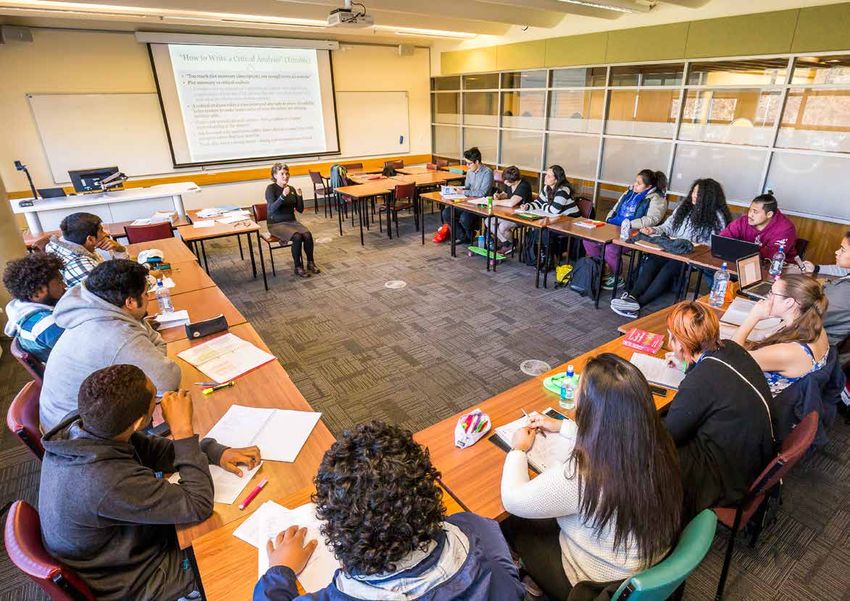
Solomon Islands student, John Wopereis, teaching as a Pacific Language Consultant for postgraduate linguistics field methods class, LING407, August 2014
Implementation Plan
The implemetation plan highlights a number of critical                 The Pasifika Strategy Advisory Group (PaSAG) will work closely               Ownership of the Pasifika Strategy belongs to the University
actions under each goal that need to occur in order to achieve         with Colleges and service areas to develop steps, timeframes                 Council. Implementation of the strategy will be reviewed yearly
our strategic goals and meet agreed targets. UC will need to           and delivery accountabilities for achieving each action. PaSAG               by Council. Half-yearly progress reports will be provided to the
demonstrate a significant institution-wide response to lifting         will monitor and review the implementation plan process.                     Vice-Chancellor and Senior Management Team.
Pasifika success and achieve parity in achievement outcomes.                                                                                        Actions highlighted in red are already in progress.

  KEY ACTIONS                                        2014                                           2015                                     2016                        2017                         2018
  Strategic Goals             Responsibility         Actions to be implemented by 2016                                                       Actions to be implemented by 2018

  Goal 1:                     Council                • The Pasifika Strategy is owned by Council, and SMT will be responsible for ensuring
                                                       it is well communicated, profiled and implemented across the University.
                                                                                                                                             • The Pasifika Strategy Advisory Group (PaSAG) will review and report on all
                                                                                                                                               actions completed by 2016. A final report will be released in 2019 when KPI
  Connect                     SMT/PVCs
                                                     • The Pasifika Strategy 2014–2018 will be endorsed by the College faculties and
                                                                                                                                               outcomes have been confirmed by TEC (VC).
                              DSSAC
  CONNECT with key                                     approved by SMT and Council in 2014 (VC, PVCs).                                       • An annual Pasifika community fono with the VC is held to showcase and
  stakeholders to foster      DLR                                                                                                              celebrate successful collaboration, achievements and mutually beneficial
                                                     • Quarterly meetings of the UC Pasifika Peoples Advisory Committee (PPAC) will be
  quality relationships,                                                                                                                       partnerships between the University and the Pasifika community (VC/SMT).
                                                       held and minutes of meetings will be included in SMT agenda papers (VC).
  shared knowledge and                                                                                                                       • More Pasifika art and cultural materials will be displayed in student and
  mutual respect.                                    • The Pasifika Strategy Advisory Group (PaSAG) will monitor, advise and report on the
                                                                                                                                               staff spaces across campus (DLR/MBL).
                                                       implementation of the Pasifika Strategy (VC/DSSAC).
                                                     • UC will continue to sponsor the Christchurch sPACIFICally Pacific Cultural Festival
                                                       and participate in local school community events (DSSAC).
                                                     • The Pasifika Lali Room will continue to be a place for Pasifika community
                                                       gatherings, to appropriately welcome and engage prospective students, families,
                                                       community leaders, staff and visitors to UC (DLR).
                                                     • UC will connect and collaborate with universities in the South Pacific through the
                                                       work of the Pacific Liaison Officer, Colleges and the Macmillan Brown Centre for
                                                       Pacific Studies (DSSAC/PVCs/MBC).
                                                     • SMT will strengthen and protect collaboration between Māori and Pasifika
                                                       (VC/SMT).

22 UC Pasifika Strategy 2014–2018
KEY ACTIONS 2014 2015 2016 2017 2018
Strategic Goals Responsibility Actions to be implemented by 2016 Actions to be implemented by 2018
Goal 2: SMT/PVCs • SMT will approve the allocation of one 3 year Pasifika PhD Scholarship in 2015 to an
eligible student with an annual or bi-annual consideration to re-allocate at least one
• Enrolment and scholarship information sessions and workshops will be held
to increase the number of quality scholarship applications (DSSAC).
Confidence DSSAC
Pasifika PhD Scholarship in each funding round.
• A well-coordinated cohesive structure for attracting, transitioning,
DHR
Respond to the cultural • UC and College strategic plans, recruitment and retention strategies, policies and supporting and retaining Pasifika international students, particularly
needs and educational DLR processes incorporate the Pasifika Strategy (SMT, PVCs and service directors). Pasifika NZ Aid students, will include cultural competence training for all
aspirations of Pasifika staff involved in this process (DSSAC).
• Local and national marketing campaigns include Pasifika as a target audience,
people to strengthen and recruitment and outreach initiatives include Pasifika staff and students in the • Allocated Emerging Leaders Scholarships for Pasifika first-year students will
access and transition development and delivery, particularly in high growth regions (DSSAC/PVCs). increase from six to 10 by 2018 (DSSAC).
opportunities, and
enhance CONFIDENT • Recognised as a specialist service, the Pacific Development Team will be widely • Plans for a dedicated Pasifika design facility and spaces, accessible by all
engagement in tertiary promoted, supported, resourced and easily accessible to advocate for and respond students, staff and visitors on campus will remain part of the ongoing
studies. effectively to the diverse multi-layered needs of Pasifika learners (DSSAC). campus remediation and development discussions, and UC’s 10 Year
Campus Master Plan (DLR).
• Pasifika scholarship recipients are invited to participate in and contribute to the
development and delivery of UC student leadership programmes (DSSAC/PVCs).
• Dedicated Pasifika spaces on campus for students will be provided to welcome,
transition and support students, and community access to available spaces will be
supported to strengthen community engagement and connections (DSSAC/DLR).
• Pasifika staff and student achievements, community news stories and language
week celebrations will be regular items in all UC online communications and feature
in relevant publications and promotional materials (DSSAC).
• UC will remain a member of the Association of Pasifika Staff in Tertiary Education,
and staff are supported to attend the annual conference and participate in other
local and national tertiary education fono’s (VC/HR).
www.canterbury.ac.nz 23KEY ACTIONS 2014 2015 2016 2017 2018
Strategic Goals Responsibility Actions to be implemented by 2016 Actions to be implemented by 2018
Goal 3: SMT • Where relevant, College committees, boards, service groups and working parties
looking at student engagement and retention, teaching and learning, and equity
• College Pasifika Achievement Awards for continuing students will increase
in number and value to encourage and celebrate academic excellence. These
Challenge DVCA
and diversity matters will have a Pasifika representative (SMT/PVCs). awards are presented by each College at the Annual Pasifika Achievers
PVCs Evening in April (PVCs).
Rise to the CHALLENGE • Pasifika staff are developed to strengthen Pasifika leadership capacity and achieve
of empowering Pasifika DSSAC the desired outcomes of the Pasifika Strategy (PVCs and service directors). • A Pasifika scholarships programme will be developed to increase
learners to achieve at DHR postgraduate numbers, create new scholarships, and provide academic
• The PD&R and staff development process will encourage and incentivise tutors
unprecedented levels and mentoring and post-doctoral opportunities for early career academics
and teaching staff to become more culturally responsive and competent in
succeed on a par with the (SSAC/PVCs/MBC).
understanding Pasifika diversity, cultural realities, challenges and expectations
highest achieving groups. (DVCA/PVCs/HR). • The Pasifika Staff Recruitment and Development Plan will include succession
planning, internal and external exchanges and academic pathway
• Institutional reporting will include analysis and reporting on Pasifika to strengthen
opportunities to encourage and mentor postgraduate students and staff
inclusive evidence-based teaching and learning practices (DVCA).
into tutoring and teaching roles (HR).
• Events such as the Pasifika Welcome Day, Pasifika Graduation and community
evenings are held to profile our Pasifika role models and celebrate their success with
families and communities (SSAC).
• Targeted follow-up strategies to encourage and increase qualification completions
and improve first-year retention rates will be implemented with the help of student
reporting and survey data and information (DVCA-ADG).
• A Pasifika Staff Recruitment and Development Plan is drafted for incorporation
into the HR recruitment process, staff induction and PD&R process to support the
retention, development and recruitment of Pasifika staff (HR).
24 UC Pasifika Strategy 2014–2018KEY ACTIONS 2014 2015 2016 2017 2018
Strategic Goals Responsibility Actions to be implemented by 2016 Actions to be implemented by 2018
Goal 4: DVCR • A stocktake of Pasifika courses, content and teaching practices will be updated and
reviewed (DVCA-UCTLC).
• All UC qualifications and degrees will include a cultural competence
component with service learning opportunities developed in collaboration
Concentrate DVCA
• A Pasifika research stocktake will be undertaken and will be included as part of the
with Pasifika communities (DVCA/PVCs).
MBC
CONCENTRATE on growing University’s Annual Report (DVCR). • The development of Pasifika relevant courses and content, assessments
and promoting academic and tutorials will be supported by HODs, College Teaching and Learning
• A Pasifika Research Protocol will be developed (DVCR).
excellence in teaching and Committees (DVCA-UCTL).
learning, and research by • The Pasifika Postgraduate Network will continue to provide support and advice to
• Celebrate, incentivise and promote innovative teaching practices that foster
and about Pacific people. students with the support of the Postgraduate Office (PDT/DVCR/MBC).
an environment of belonging that is affirming and open to diverse cultures
• The National Inter-university Talanoa Research Grid will be held by video conference as part of the UC Teaching and Learning Week (DVCA).
each month for postgraduate students to present their research to other Pasifika
• The development of a Library Services Pasifika Collections Plan or
postgraduate students and academic staff at other universities, including USP, NUS
statement in the UC Library Policy to identify how much Pasifika content
and ANU (DVCR/MBC/PDT).
material exists and is easily accessible for resourcing undergraduate and
• The Pasifika Research Symposium will continue to showcase Pasifika research to postgraduate studies. The collections will be more visible and celebrated in
students, staff and community (DVCR/MBC/PDT). key parts of the University to coincide with significant community events
• Profile and develop MBC research initiatives and activities in consultation and and celebrations (DLR).
partnership with Pasifika communities to attract and support students.
Goal 5: DCV (A) • The development of the Graduate Profile and the Co-curricular Transcript includes
service learning opportunities for encouraging all students to engage with Pasifika
• The Pasifika alumni database will be kept up to date to develop a targeted
campaign effort to seek fundraising support for special projects – i.e. Pasifika
Contribute SSAC
communities (DVCA/SSAC). Fale or Centre (DSSAC).
PVCs
UC graduates will be • Internship programmes will proactively engage with Pasifika communities to • Pasifika alumni will connect with non-Christchurch based prospective
prepared to CONTRIBUTE include and increase integrated service learning opportunities for students (PVCs). students and distance learners prior to commencing their studies (DSSAC).
to the aspirations of • Community engagement success stories and experiences will be shared with all
Pasifika communities students and staff in all UC communications and publications (SSAC).
and become leaders in a
changing global world. • Pasifika leaders, academics and successful alumni will be sought and utilised as
guest lecturers and tutors in relevant core courses (PVCs).
• UC alumni fundraising efforts will include a Pasifika campaign to raise funds for
outreach, scholarships and retention services.
www.canterbury.ac.nz 25ENG117 Pasifika tutorial – The first Pasifika tutorial class established for a 100-level degree course, 2014
Key Performance Indicators
KPI 1: Increase Total Pasifika student enrolments
  Priority Learner Group – Pasifika
                                                                     Actuals                                                  Target
  TOTAL domestic students

  Impact                         Input commitments                   2010              2011       2012          2013          2014             2015          2016            2017             2018

  An increase in overall         Total full-time equivalent          301               228        237           244           277              296           319             343              368
  Pasifika student EFTS          students

                                 Percentage of all EFTS              2.1%              1.8%       1.9%          2.1%          2.5%             2.6%          2.7%            2.8%             2.9%

Total Pasifika domestic EFTS are expected to increase at a greater growth rate than the overall 10 year growth plan. In 2013, Pasifika people made up 4% (14,000) of the Canterbury population.
Approximately half are under the age of 20 and more than 60% are New Zealand born. TEC has set a Pasifika participation target of 8.2% for the university sector as a whole.

KPI 2: Increase first-year Pasifika student enrolments
  Priority Learner Group – Pasifika
                                                                                        Actuals                                         Target
  FIRST YEAR domestic undergraduate students

  Impact                   Input commitments                                            2010      2011     2012          2013           2014          2015          2016           2017           2018

  An increase in           First-year domestic                New Pasifika EFTS         77        57       62            79             83            93            100            107            114
  first year Pasifika      undergraduate Pasifika
  student EFTS             enrolments as a proportion
                           of first-year domestic
                           undergraduate enrolments
                                                              Percentage of all EFTS    2.1%      2.1%     2.3%          3.0%           3.2%          3.3%          3.4%           3.5%           3.6%

Growth targets for Pasifika first-year students are above the overall first-year growth rates, which are based on the 10 year growth model.

                                                                                                                                                                                   www.canterbury.ac.nz 27
KPI 3: Increase Pasifika international student enrolments
Pasifika international (full fee) Actuals Target
Impact Input commitments 2010 2011 2012 2013 2014 2015 2016 2017 2018
An increase in NEW Pasifika EFTS 09 15 14 28 28 29 31 32 34
Pasifika international
enrolments
TOTAL Pasifika EFTS 40 36 46 65 65 68 72 76 80
Actuals are based on the forecasts from UC’s longer term plan. UC international Pasifika students made up 14% (the third highest) of the total number of international Pasifika student EFTS across
universities in 2013. A coordinated, cohesive and inclusive approach to improve the transition, engagement and support experience of international Pasifika students will help to ensure an increase
in future international enrolments from the Pacific Islands. The UC International Growth Strategy (March 2014) aims to improve success rates of students on NZ Aid scholarships through early alert
support systems and a well-planned induction and acculturation process.
KPI 4: Increase Pasifika postgraduate and PhD enrolments
Pasifika PhD enrolments Actuals Target
Impact Input commitments 2010 2011 2012 2013 2014 2015 2016 2017 2018
An increase Total Pasifika postgraduate headcount 56 47 55 62 65 65 67 67 68
in Pasifika
Percentage of total UC postgraduates 1.8% 1.6% 1.7% 2.0%
postgraduate
and PhD
enrolments TOTAL Pasifika PhD headcount 11 12 13 13 14 14 15 15 16
Total UC PhD headcount 895 912 995 1008
The commitment to grow the number of Pasifika postgraduate students will require an intentional focus on developing and increasing Pasifika academic staff numbers to attract greater numbers and
provide highly sought after supervision expertise, mentoring and support.
28 UC Pasifika Strategy 2014–2018KPI 5: Improve the educational performance of priority learner groups
Educational Performance Indicators for TEC Actuals Target
Increase in the educational
performance of Pasifika SAC-eligible Output commitments 2011 2012 2013 2014 2015 2016 2017 2018
(domestic) students
KPI (5a) Pasifika course completions 73% 69% 74% 75% 78% 82% 85% 89%
Increased successful course completions by priority
learner groups. All SAC eligible students 88% 87% 87% 87% 88% 89% 89% 89%
University sector overall 86% 86% 86%
National Pasifika average 71% 72% 70%
KPI (5b) Pasifika qualification completions 59% 75% 51% 52% 55% 58% 65% 70%
Increased successful qualification completions by
priority learner groups. All SAC eligible students 76% 85% 88% 76% 76% 75% 74% 74%
University sector overall 75% 80% 81%
National Pasifika average 54% 60% 59%
KPI (5c) Pasifika retention rates 64% 78% 78% 78% 79% 82% 84% 86%
Increased retention of priority learner groups
All SAC eligible students 81% 87% 86% 84% 84% 85% 86% 86%
University sector overall 79% 82% 84%
National Pasifika average 73% 76% 77%
Course completion rates for Pasifika have increased from 2012 to 2013 and the retention rate has held steady, retaining the gains achieved in 2012. The significant spike in qualification completions for
2012 is due to the significant drop in enrolment numbers following the 2010/2011 earthquakes. Qualification completions are expected to recover over the next few years, as the recent intake begins to
complete their qualifications. UC’s performance in course completions for 2013 exceeded the national Pasifika average by 4%.
www.canterbury.ac.nz 29KPI 6: Increase Pasifika staff numbers
Pasifika Staff Actual Target
Impact Input commitments Dec 11 Dec 12 Dec 13 Dec 14 Dec 15 Dec 16 Dec 17 Dec 18
Pasifika staff Pasifika academic staff Total continuing and 5 4 4 4 4 5 6 7
(annualised FTEs) fixed-term
% of all UC academic staff 0.61% 0.54% 0.57% 0.55% 0.53% 0.66% 0.78% 0.9%
Pasifika general staff Total continuing and 16 18 16 17 18 18 19 19
fixed-term
% of all UC general staff 1.29% 1.51% 1.41% 1.46% 1.54% 1.54% 1.62% 1.61%
TOTAL Pasifika staff Total continuing and 21 22 20 21 22 23 25 26
fixed-term
% of all UC staff 1.02% 1.13% 1.08% 1.11% 1.15% 1.19% 1.29% 1.33%
UC aims to grow Pasifika staff FTEs to 3% by 2030. UC’s commitment to foster and develop academic teaching opportunities for Pasifika will be outlined in the HR Pasifika Staff Recruitment Plan.
The plan will identify four to five key actions that will help to progressively increase the number of Pasifika staff and achieve our long-term targets. For example, the commitment to grow the number
of Pasifika staff FTEs will require a focus on growing the number of Pasifika postgraduate students with pathway opportunities to staircase students into teaching roles.
30 UC Pasifika Strategy 2014–2018Pro-Vice-Chancellor Professor Gail Gillon and Le Alii’ee Tufulasi Taleni at the opening of the College of Education Pasifika Talanoa Centre, 2011
Appendices
Appendix 1: Tertiary Education                                     of Pasifika learners to their studies and their connection       demand. Poorly performing TEOs can expect to lose funding
Commission – Guidance for Pasifika
                                                                   to their communities. Other models of engaging Pasifika          over time. The TEC will base decisions for future funding
                                                                   community buy-in should be explored and supported as             rounds on data about graduate outcomes, Educational
                                                                   alternatives to traditional practices.                           Performance Indicator data and other TEO information on
1. TEC Strategic Priority 3: Boosting achievement of                                                                                successful outcomes.
Māori and Pasifika                                                 Indicators of success
                                                                                                                                    The TEC Pasifika Framework sets out clear expectations for
The Pasifika Education Plan 2013–2017 puts Pasifika learners,      • TEOs set and achieve appropriate performance targets for       TEOs to obtain meaningful and substantial improvements
families and communities at the centre of the education              Pasifika learners
                                                                                                                                    in participation and achievement outcomes for Pasifika,
system, where they can demand better outcomes. The Pasifika        • TEOs set appropriate targets around increasing the number of   particularly at higher levels. To support this, university
Education Plan sets a target of Pasifika student participation       Pasifika teaching staff in their organisations                 investment plans should:
and a goal of achieving at all levels at least on a par with
                                                                   • TEOs offer learning and research opportunities that engage     • Demonstrate a focus on effectively engaging with Pasifika
other students in tertiary education. This is part of achieving
                                                                     Pasifika learners as Pasifika within tertiary education          learners, families and communities
the government’s goal of creating the conditions for strong,
vibrant and successful Pasifika communities that can help          • TEOs engage Pasifika communities in the mentoring and          • Set out strategies to improve performance on the transitions
build a more productive and competitive economy for all              pastoral care of Pasifika learners.                              of Pasifika learners from secondary to tertiary, as well as
New Zealanders.                                                                                                                       transitions into higher levels of education
                                                                   Tertiary Education Strategy 2014–2019
Tertiary education organisations (TEOs) need to better support                                                                      • Include relevant, accessible pathways and staircasing
Pasifika students to move into tertiary education (including       2. How TEC wants tertiary providers to respond to the TES          opportunities that match Pasifika learners’ needs and interests
from school), progress to higher levels of study, and complete     priorities: Boosting achievement for Pasifika learners           • Set out strategies for increasing the participation and success
the qualifications that they start. Better information and         Māori and Pasifika learners should be participating and            of Pasifika learners in qualifications linked to jobs in higher
support for students, their families and communities is            achieving in tertiary education at least on par with other         learning, higher skill, high growth industry sectors, such as
needed to lift participation and achievement levels, as are        learners. The TEC introduced hard-wired plan commitments           engineering and business management
learning opportunities that help to engage Pasifika with their     for all TEOs in 2012, and these performance expectations         • Include challenging performance commitment targets to
cultures. This can be supported by strong Pasifika participation   will continue to rise until we achieve planned performance         improve Pasifika participation and achievement at all levels, in
representation within the tertiary teaching community.             commitments against the success indicators for Māori and           line with previously agreed pathways
Ultimately, this learning should support successful economic,      Pasifika in the Tertiary Education Strategy. The TEC expects     • Clearly define the actions planned for obtaining educational
social and cultural outcomes, including good employment            TEOs to review, evaluate and demonstrate how successful            participation and achievement parity for Pasifika learners at
outcomes.                                                          equity initiatives are being scaled up.                            all levels.
Culturally responsive provision will ensure better engagement      Funding shifts between providers in 2015 and 2016 will be        TEC General Plan Guidance for 2015–2016
and greater success for Pasifika learners. Formally engaging       informed by how well TEOs are responding to the needs of
Pasifika communities in tertiary education programmes can          Māori and Pasifika learners. High performing TEOs can expect
add a cultural dimension that will strengthen the commitment       to be eligible for funding increases when there is unmet

32 UC Pasifika Strategy 2014–2018
Appendix 2: UC Pasifika Strategy The functions of PaSAG are to: Membership is made up of the following representatives:
Advisory Group (PaSAG) • review the Pacific Plan 2011–2013 and develop a Pasifika Strategy
for the University of Canterbury;
• Director of Pasifika Development
• Director of the Macmillan Brown Centre for Pacific Studies
Mandate • provide strategic advice on policy development, issues and • Macmillan Brown Library representative
matters relating to Pasifika aspirations and advancement;
The Pasifika Strategy Advisory Group (PaSAG) was established • Learning Resources representative
in May 2013 to develop and monitor the implementation of • advise on the inclusion and consideration given to Pasifika
in relevant sections of the University’s Strategic Plan, College • Pasifika staff representative
the UC Pasifika Strategy. PaSAG provides strategic advice and
recommendations to the Vice-Chancellor on the progress of plans, and University-wide policies and practices to support • Pasifika student representatives x 2
the UC Pasifika Strategy and other matters relating to Pasifika Pasifika aspirations and development needs; • College of Arts representatives x 2
students, staff and the wider community. Meetings are held • advise and report on the University’s overall progress and • College of Education representatives x 2
every 6–8 weeks and are chaired by the Director of Pasifika achievements towards its strategic objectives for Pasifika;
• College of Business and Law representative
Development. • advise on operational and academic matters relevant to the
• College of Science representative
delivery of strategic objectives for Pasifika peoples;
• College of Engineering representative
• monitor the implementation process of the Pasifika Strategy to
ensure its long-term success and incorporation into all areas, at • Pasifika community representatives x 2
all levels in the University; • Māori/Ngāi Tahu representative
• contribute to strategic University proposals or submissions
to government and relevant stakeholders on policy matters
regarding Pasifika peoples;
• strengthen the University’s links and connections with the
Pasifika community in Christchurch.
www.canterbury.ac.nz 33Appendix 3: Acknowledgements -- Caroline Syddall, Research Services Librarian,
Macmillan Brown Library
A special thank-you to all those who participated in
consultation meetings, community updates, workshop
The development of this strategy involved valuable input -- Eruera Tarena, Manager, Te Tapuae o Rehua presentations and submitted their feedback in writing.
from a wide range of individuals, groups and organisations. (Māori/Ngāi Tahu representative) Thank you for your contribution and time given to the process
The advice and assistance from the following contributors is and development of this very important work. We look
-- Amanaki Misa, Regional Manager, Ministry of Pacific Island
particularly acknowledged: forward to your continued support and participation in the
Affairs (community representative)
• Current members of the Pasifika Strategy Advisory Group: implementation phase.
-- Sam Utai, Senior Lecturer, Christchurch Polytechnic
-- Yvonne Crichton-Hill, Head of Department and (community representative) Liz Keneti
Senior Lecturer, Department of Social Work Director of Pasifika Development
-- Josiah Tualamali’i, Pasifika student representative
-- Tara Ross, Programme Head and Senior Lecturer,
• Senior Management Team
School of Journalism
• Pacific Development Team
-- Tufulasi Taleni, Pasifika Advisor, Education Plus
• College of Education Pasifika Success Group
-- Selai Nakaroti, Professional Placement Administrator,
College of Education • Lynn McClelland, Director of Student Services
and Communications
-- Professor Janinka Greenwood, Associate Dean of
Postgraduate Studies • Darryn Russell, Assistant Vice-Chancellor Māori
-- Natalie Baird, Senior Lecturer, College of Business and Law • Bruce White, Deputy Registrar
-- Tracey Robinson, Senior Academic Advisor, College of Science • Rob Porter, Senior Reporting Analyst, Student and
HR Reporting Team
-- Siale Faitotonu, Civil Lab Technician, College of Engineering
• Stacey Doornenbal, Senior Communications Advisor,
-- Lynsey Talagi, Scholarships Advisor
Student Services and Communications Team
34 UC Pasifika Strategy 2014–2018Appendix 4: Key Contacts
For advice and assistance
For advice and assistance with: Liz Keneti Phone: 03 364 2987 ext 4824
Director, Pasifika Development Email: liz.keneti@canterbury.ac.nz
Developing action plans to support the implementation of the Pasifika
http://www.canterbury.ac.nz/pacificstudents/
Strategy in your College or department;
Recruiting, supporting and developing Pasifika staff; Your College or service representative on the Pasifika
Developing cultural awareness regarding Pasifika learners. Strategy Advisory Group can also provide advice and
assistance.
For information, advice and assistance with how to engage and support Pacific Development Team Phone: 03 364 2987 ext 3061
Pasifika learners Email: pasifika@canterbury.ac.nz or bernard.mackenzie@canterbury.ac.nz
Website: http://www.canterbury.ac.nz/pacificstudents/
Facebook: https://www.facebook.com/UC.Pacific.Development.Team
For advice and information on how to attract and recruit Pasifika students and Sia Evalu Phone: 03 364 2987 ext 7594
connect with Pasifika communities Pacific Liaison Officer Email: sia.evalu@canterbury.ac.nz or liaison@canterbury.ac.nz
Website: http://www.canterbury.ac.nz/liaison/
Visits schools in Christchurch, Northland, Auckland and Wellington
To engage with community leaders and groups contact Phone: 03 364 2987 ext 4824
Liz Keneti, Director, Pasifika Development. Email: liz.keneti@canterbury.ac.nz
http://www.canterbury.ac.nz/pacificstudents/
For information and advice about Pasifika research, support for Pasifika Professor Steven Ratuva Phone: 03 364 2957 ext 6957
postgraduate students, and general advice on Pasifika protocols and practices. Director of the Macmillan Brown Centre for Pacific Studies Email: kirsty.ameriks@canterbury.ac.nz
Website: http://www.pacs.canterbury.ac.nz/
www.canterbury.ac.nz 35Relevant Committees and Advisory Groups
Pasifika Peoples Advisory Committees Chair: Lynn McClelland Phone: 03 364 3841 ext 3841
Email: lynn.mcclelland@canterbury.ac.nz
Director, Student Services and Communications on behalf of the VC
http://www.canterbury.ac.nz/ssac/people/
Pasifika Strategy Advisory Group (PaSAG) Chair: Liz Keneti Phone: 03 364 2987 ext 4824
Director of Pasifika Development Email: liz.keneti@canterbury.ac.nz
http://www.canterbury.ac.nz/pacificstudents/
Macmillan Brown Centre Academic Advisory Group Chair: To be advised Phone: 03 364 2957 ext 6957
Email: kirsty.ameriks@canterbury.ac.nz
http://www.pacs.canterbury.ac.nz/
Central Equity and Diversity Committee Chair: Dr Jim Dragna Phone: 03 364 2987, ext 3452 or 03 364 3452
Student Success Manager Email: jim.dragna@canterbury.ac.nz
http://www.canterbury.ac.nz/ssac/people/success/
College Advisory Groups and Committees
College of Arts Pacific Working Group Chair: To be advised Details to be advised
Pasifika Education Plus Advisory Group Chair: Leali’ie’e Tufulasi Taleni Phone: 03 367 0787
Pasifika Success Email: tufulasi.taleni@canterbury.ac.nz
Education Plus, College of Education http://www.edplus.canterbury.ac.nz/pasifika/
College of Education Pasifika Success Group Chair: Barry Brooker Phone: 03 343 7721
Student Experience Manager Email: barry.brooker@canterbury.ac.nz
http://www.education.canterbury.ac.nz/
College of Business and Law Equity and Diversity Committee Chair: Colleen Mills Phone: 03 364 2987 ext 8618
Associate Professor of Management Email: colleen.mills@canterbury.ac.nz
http://www.mang.canterbury.ac.nz/
36 UC Pasifika Strategy 2014–2018Pasifika Staff at UC Liz Keneti, Director of Pasifika Development Le allii’ee Tufulasi Taleni, Pasifika Advisor Caroline Syddall, Research Services Librarian Student Services and Communications Education Plus, College of Education Macmillan Brown Library, Learning Resources Professor Steven Ratuva, Director Jo Togiaso, Senior Tutor Lynsey Talagi, Scholarships Advisor Macmillan Brown Centre for Pacific Studies School of Teacher Education, College of Education Scholarships Office, Student Services and Communications Yvonne Crichton-Hill, HOD and Senior Lecturer Siale Faitotonu, Lab technician Sia Evalu, Liaison Officer Department of Social Work, College of Arts Civil Engineering, College of Engineering Liaison Office, Student Services and Communications Tara Ross, Head of Journalism and Senior Lecturer Moseses Fifita, Lab technician Pauline Luafutu-Simpson, Pacific Advisor Media and Communications, College of Arts Civil Engineering, College of Engineering Pacific Development Team, Student Services and Communications Moka Ritchie, Lecturer Selai Nakaroti, Professional Practice Administrator (Primary), Danielle O’Halloran, Pacific Advisor School of Law, College of Business and Law Centre for Professional Practice and Partnerships, College of Education Pacific Development Team, Student Services and Communications Sofia Daly, Teacher Marion Macneil, Academic Manager Ashalyna Noa, Pacific Advisor Certificate in University Preparation, Bridging Programmes College of Education Pacific Development Team, Student Services and Communications Dr Abby Suzoko, Kaiarahi Māori Shonam Kumar, Pay and HR Administrator Riki Welsh, Pacific Advisor Office of the Assistant Vice-Chancellor Māori Human Resources Pacific Development Team, Student Services and Communications
Pacific Development Team
Student Services and Communications

Telephone +64 3 364-2987 ext 3671

University of Canterbury
Te Whare Wānanga o Waitaha
Private Bag 4800
Christchurch 8140
New Zealand

www.canterbury.ac.nz/pacificstudents
www.facebook.com/UC.Pacific.Development.Team
You can also read


