INFORMATION BOOKLET 2021 - FOR PARENTS OF INTERNATIONAL STUDENTS 31 Fifth Avenue Tauranga - 29-017-2021 Cathy
←
→
Page content transcription
If your browser does not render page correctly, please read the page content below
2021
  INFORMATION
     BOOKLET
    FOR PARENTS OF
INTERNATIONAL STUDENTS
         31 Fifth Avenue
            Tauranga
         Ph (07) 578 6222
      office@tauranga.school.nz
       www.tauranga.school.nz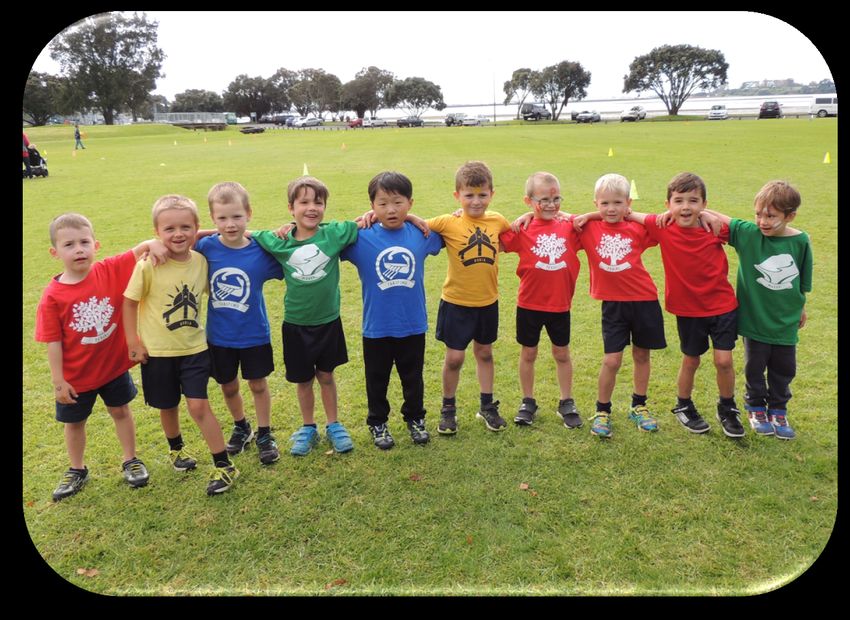
Welcome
Welcome to Tauranga Primary School.

With a proud history as the first school in Tauranga, we are committed to equipping our
learners with the necessary skills, knowledge and dispositions to thrive in learning and life.

We are dedicated to providing a world class quality education for your child(ren) and
enjoy a reputation as a leading primary school in Tauranga. At TPS we individualise
learning for each student. Class teachers know and care for every student in their class.
Specialist ESOL teaching is provided for International Students to accelerate the
development of their skills to speak and communicate effectively in English. Pastoral care
for your child(ren) is important to us, we work hard to ensure your child and you are happy
and well support for your time in Tauranga, New Zealand. We support our International
Students to develop friendships and enjoy the healthy outdoor environment in New
Zealand.

The principle of ‘learning to learn’ is central to our
philosophy of teaching and learning at Tauranga
Primary School.      We have defined learning as:
Learning is engaging in an ongoing process of making
connections, discovery, and challenge; building
knowledge and skills to make meaning of our world.
The Tauranga Primary School Learning Model is taught
and referred to across all year groups. We use the
Learning Model to make learning visible by explicitly
teaching the process of how to learn, and build
learner dispositions and capacity; so that our learners
can acquire the knowledge and skills to make
meaning of their world.

We look forward to getting to know you as one of our TPS school families.

          Fiona Hawes                               Cathy Ediker
          PRINCIPAL                                 Deputy Principal &
          principal@tauranga.school.nz              International Student Director
                                                    dp@tauranga.school.nz

                                   Tauranga Primary School | International Student Handbook   2
T.P.S History
                                 Tauranga Primary School, as it is today, has arisen
                                 from a series of interesting happenings
                                 commencing as the first school with the
                                 establishment of a Missionary School in 1835 by
                                 Sarah Wade, the wife of the Rev. R. W. Wade on a
                                 site where 'The Elms' now stands.

The school was responsible for educating 30 local children. In 1836 Archdeacon
Brown arrived and so the permanent establishment of Tauranga District School
began.

Bishop Selwyn produced the plans for an imposing two storied gable building, with
a belfry, to become a 'Mission Training Institute' for 60 young Maori children, to be
trained in various crafts and agriculture. This building was opened in 1860.

With a growing conflict between Maori and Europeans the Institute was closed in
1863 and was used as a hospital during the Gate Pa Battles. After the hospital closed
the Institute was turned back into a School (approx. 1886) with Mrs Dalziell as the
teacher, and a roll of 50 pupils. On Monday 9 January 1871, The Central Education
Board took over the operation of the School, paying Mrs Dalziell £40 per year, and
expecting the community to match this figure.

In 1872, the school was moved onto land between St Johns Street and 10th Avenue.
Three further rooms were built and both Maori and European children were taught.

In 1880 a second site closer to town was purchased, on the corner of Harrington
Street and Cameron Road, where the current Court House is situated. This No.2
school was built at a cost of £1,070.

In 1904, at a cost of 432 pounds, the No 2 School was moved to its current location
and the No.1 school buildings were sold. The Tauranga District School and its roll
continued to grow, and in 1920 the Junior school was relocated onto land bordering
5th and 6th Avenues. In 1958 Tauranga Boys’ College was built, and the school was
renamed Tauranga School.

Now, in the 21st Century, Tauranga Primary School is a learning environment" where
research based teaching practice provides high quality education for our students.
The school ground include modern classrooms, well-equipped library, technology
suite, swimming pool, adventure playgrounds and school hall to support the
teaching and learning programmes.

                                Tauranga Primary School | International Student Handbook   3
CONDITIONS OF ACCEPTANCE
It is Tauranga Primary School’s policy that it will only enrol long term International
Students who reside with their parents or a legal guardian. All students must have the
appropriate medical insurance and student visa before enrolment can commence.

APPLICATION REQUIREMENTS

1.    Enrolment Eligibility
Tauranga Primary School is able to offer placements for a number of international
students. Each enrolment application will be considered on an individual basis, taking
into account the school’s existing student demand, class sizes and available resources.

2.    Student Visa
a)    All International Students, whether previously enrolled at another school or not,
      must obtain a student visa to attend Tauranga Primary School. A student visa is
      particular to that student and that school. Tauranga Primary School must be
      named on the student visa.
b)    Students from visa wavier countries are eligible for a short-term visitors visa and
      may study for up to three months under this visa. However, for longer periods of
      tuition, they must obtain a student visa before the expiry of their visitor visa. To
      see if you are eligible for a short-term visitor visa please visit
      http://glossary.immigration.govt.nz/VisaFreeCountries.htm
c)    Passports of students and parents will be checked for immigration status and
      must be provided to Tauranga Primary School as required. (A photocopy of the
      passport and visa will also be taken prior to the commencement of any tuition.)

3.     Student Details and Accommodations
International Student enrolment is subject to the parent living and continuing to live
with the student in New Zealand. Tauranga Primary School must be provided with the
personal details, full name, current address and telephone number, and
accommodation situation of the student. Should a student be found not living with a
parent, the school is required to notify the Immigration Service and the student visa
may be revoked.

Tauranga Primary must also be provided with emergency contact details of a family
member from their country of origin. Any changes in personal details, either in New
Zealand or overseas, must be communicated to the school as soon as possible.

Homestay accommodation may also be organised by Tauranga Primary School for
short term group students. Group students aged 10 years and above may reside in
such organised accommodation arrangements. Group students under the age of 10
years must reside with a legal or biological parent within the same homestay
residence.

                                Tauranga Primary School | International Student Handbook   4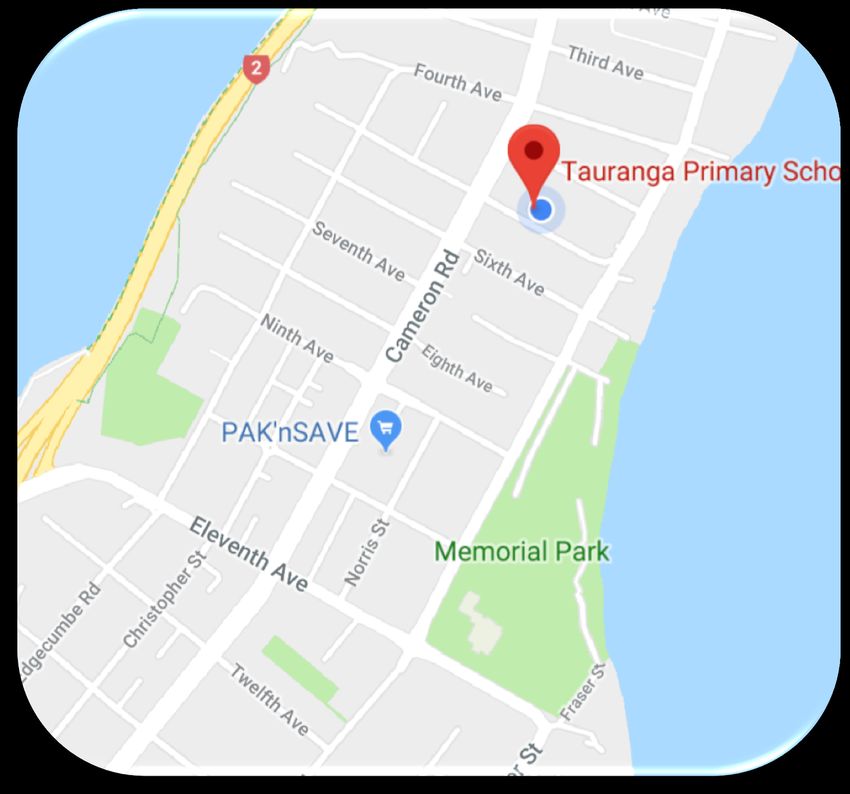
4.     Insurance
All International Students must have appropriate travel and medical insurance.
Insurance cover must be translated in English for the school and must meet the
minimal cover standards as outlined by the Code of Practice for the Pastoral Care of
International Students. The guidelines for ‘appropriate insurance’ can be accessed
on http://www.nzqa.govt.nz/assets/Providers-and-partners/Guidelines-for-insurance-
NZQA-2013.pdf
Insurance in New Zealand may be terminated due to non-disclosure of personal
details. Should, for any reason, the international student have insurance terminated,
the student will be required to be absent from school until appropriate replacement
insurance is obtained. International students without insurance are unable to be
enrolled at Tauranga Primary School.

TERMINATION OF AGREEMENT
1. The school's responsibility for the student ends on their last day of enrolment.
2. Either party may terminate this agreement at any time upon 2 weeks’ written
   notice being given to the other party. If the agreement is terminated, the Fee
   Protection and Refund Policy will apply.

COST OF TUITION
The current International Student School Fee for the school year will be NZ $12,250
(including GST) per annum to be paid in advance of commencing tuition. Where the
period of tuition is for less than one term, a higher weekly fee may be charged. This fee
is inclusive of English tuition, stationery and any incidental costs associated with the
school programmes. This fee does not cover the cost of the camp (Year 4,5 and 6
students), school uniform, sports teams, photos and other non-educational school
based activities.

An administration fee of $200 and a registration fee of $285 (including GST) is charged
to each student to assist with the initial enrolment process. A non-refundable deposit
of $1,000 (including GST) and the administration fee of $285 is payable to secure a
place at Tauranga Primary School.

REFUND CONDITIONS
Fee refunds
If a student withdraws from their course of study before the completion date, they may
be eligible for a refund of tuition fees. The school will always investigate requests for a
refund and act fairly. Refer to the Fee Protection and Refund Policy.

FEE PROTECTION
Fees paid by international students are secure and protected against the possibility of
an interruption to the course. Our school’s internal procedures to monitor income and
expenditure ensure that money is controlled appropriately.

The conditions of the Fee Protection and Refund Policy must be accepted and signed
before enrolment begins. The School holds sufficient reserves to be able to refund the
Student’s fees if the School is unable to provide, or continue, the course of tuition.

                                Tauranga Primary School | International Student Handbook   5
The Code of Practice for the Pastoral Care of International Students

When students from other countries come to study in New Zealand, it is important that
those students are well informed, safe and properly cared for. New Zealand
educational providers have an important responsibility for international students’
welfare.

The Code of Practice is a document providing a framework for service delivery by
educational providers and their agents to international students. The Code sets out
the minimum standards of advice and care that are expected of educational
providers with respect to international students. The Code applies to pastoral care and
provision of information only, and not to academic standards.

The Code applies to all education providers in New Zealand with students enrolled on
an international study visa. The Code is mandatory to these providers and must be
signed by them. You can request a copy of the Code from your New Zealand
educational     provider.      The   Code      is  also   available    online   from
http://www.education.govt.nz/ministry-of-education/legislation/regulations-to-
support-international-students/#education

The Code sets standards for educational providers to ensure that:
•   High professional standards are maintained
•   The recruitment of international students is undertaken in an ethical and
    responsible manner
•   Information supplied to international students is comprehensive, accurate and up-
    to-date
•   Students are provided with information prior to entering into any commitments
•   Contractual dealings with international students are conducted in an ethical and
    responsible manner
•   The particular needs of the international students are recognised
•   International students under the age of 18 are in safe accommodation
•   All providers have fair and equitable internal procedures for the resolution of
    international student grievances

How do I know if an educational provider has signed the Code?
The New Zealand Ministry of Education will maintain a registrar of all signatories to the
Code. If the educational provider that you are seeking to enrol with is not a signatory
to the Code, you will not be granted a student visa from the New Zealand Immigration
Service and you will not be able to study at that institution.

                                Tauranga Primary School | International Student Handbook   6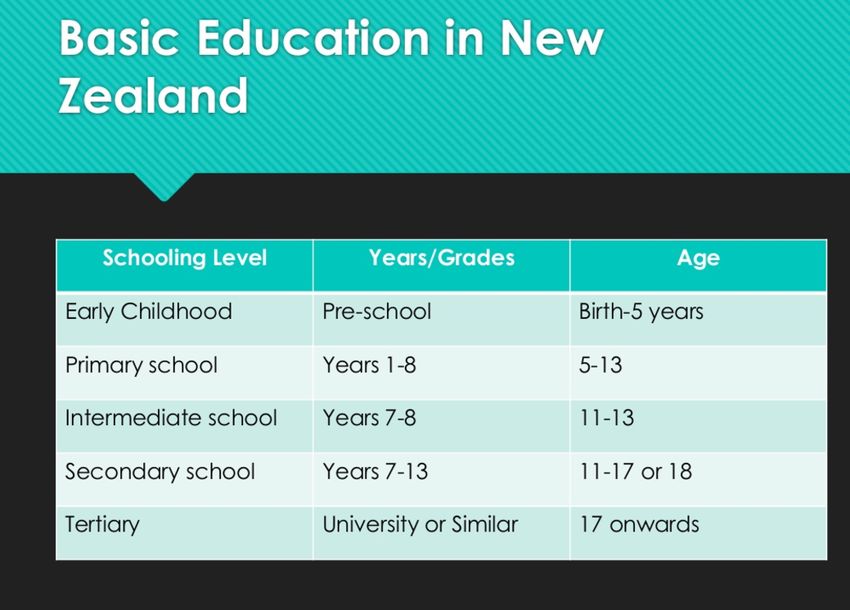
INTERNATIONAL STUDENTS
                               What to do if you have a problem

       Problems with school

         § Talk to your classroom teacher

         § Talk to Director of International        Cathy Ediker – Office   dp@tauranga.school.nz
           Students

         § Talk to Principal                        Mrs Fiona Hawes - principal@tauranga.school.nz
         § Talk to Agent

       Problems with enrolment

         § Talk to Director of International       Cathy Ediker – Office - dp@tauranga.school.nz
           Students
         § Talk to Agent

         § New Zealand Immigration Service         Phone 0508 855 8855      www.immigration.govt.nz/contact

       Problems with health

         § Talk to Director of International Students        Cathy Ediker – Office - dp@tauranga.school.nz
         § Talk to Agent

         § See the public health nurse                       Ask at the office for an appointment

       Problems with homestay – Group Students

         § Talk to Director of International Students       Cathy Ediker - dp@tauranga.school.nz

         § Talk to Principal                                Ask at the office to see Mrs Fiona Hawes

If y
       If you have a complaint that can’t be resolved at school, school can help you to
       contact NZQA about your problem. See your NZQA “How to make a complaint”
       brochure, and talk to the International Student Director.

       If you have a complaint about Tauranga Primary School breaching the Education
       (Pastoral Care of International Students) Code of Practice 2016, follow Tauranga
       Primary School’s format complaint process first. If this does not resolve your complaint,
       you can contact the New Zealand Qualification Authority (NZQA) by phone on 0800
       697 296 or email qadrisk@nzqa.govt.nz Or, if it is a financial or contractual dispute, you
       can contact FairWay Resolution by phone on 0800 77 44 22. More information is
       available on the FairWay Resolution website:
       https://www.fairwayresolution.com/got-a-dispute/istudent-complaints

                                               Tauranga Primary School | International Student Handbook       7
TAURANGA PRIMARY SCHOOL

How do I contact the New Zealand Qualification Authority

                              • Contact by phone or post

•   NZQA Call Centre is open Monday - Friday, 8.00 am - 5.00 pm
Free phone in NZ:                     0800 697 296

Telephone:                            +64 (4) 463 3000

Fax:                                  +64 (4) 463 3112

Postal address:                       PO Box 160
                                      Wellington 6140
                                      New Zealand

A copy of the International Student Contract Dispute Resolution Scheme may be accessed
at: http://www.education.govt.nz/assets/Documents/Ministry/consultations/Draft-
International-Student-Contract-Dispute-Resolution.pdf

Quality Assurance

The school is signatory to the Education (Pastoral Care of International Students (Code of
Practice 2016 (the code) established under section 238F of the Education Act 1989. The school
has attested that it complies with all aspects of the code.

At the time of this review there were thirteen international students attending the school.

The school has comprehensive systems and processes to support the wellbeing and learning
of international students. Students’ cultures are valued through the inclusive learning
environments. Induction and orientation for students and parents is well considered to promote
their positive involvement in school activities. There are effective systems for identifying and
responding to individual learning needs, including regular access to English language learning
programmes.

                                                               Education Review Office 2019

                               Cathy Ediker
                               Deputy Principal
                               International Student Director
                               dp@tauranga.school.nz

                                  Tauranga Primary School | International Student Handbook    8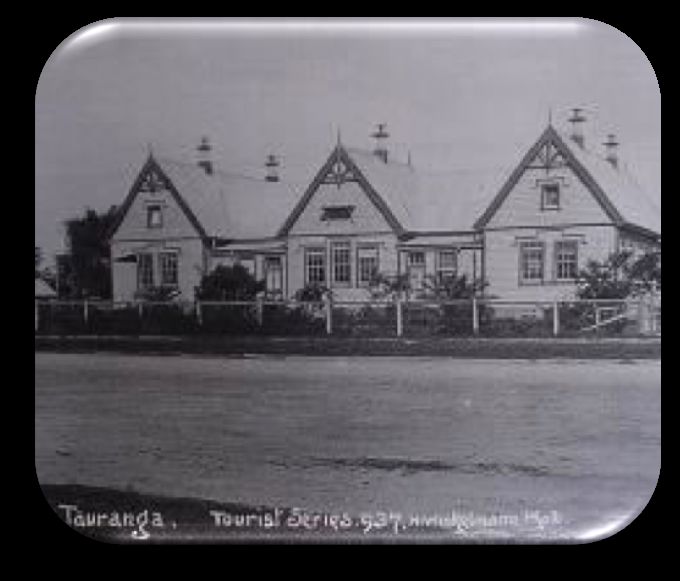
School Hours
8:30 – 8:45 am           Playground Open & Road Patrol (Cameron Rd)

8:50 – 10:00 am          Learning Block 1
10:00 – 10:20 am         Morning Tea

10:20 – 11:30 am         Learning Block 2
11:30 – 11:40 am         Brain Break

11:40 – 12:50 pm         Learning Block 3
12:50 – 1:45 pm          Lunch Time

1:45 – 3:00 pm           Learning Block 4

2.50pm                   Students in Year 1 and 2 can be collected from their class
3:00 pm                  Classes end for all students

Note: School does not close early in wet weather, or on the last day of terms except
for the last day of Term 4 (December).

PLEASE NOTE: No child is permitted to leave the school grounds during school time
or the lunch hour unless collected by a parent/caregiver. Children leaving school
during the day must be signed out and back again at the office.

It is desirable that children arrive at school between 8:30am and 8:40 am. This
enables them to deposit school bags in the cloak bay, and provides for a well-
organised start to the day at 8:50am.

All children who walk home should be home by 3:30pm at the latest. Children are
not detained for any reason after school. However, some school sports practices
may occur at this time.

All children should be collected by 3:10pm at the latest, any children remaining after
this time need to wait in the office for collection. No supervision is provided after
3:15pm, as teachers have other commitments after that time, and the office is
closed at 3:30pm.

                    OFFICE HOURS 8:30AM - 3:30PM
                           Phone: 578 6222
                               Tauranga Primary School | International Student Handbook   9
2021 TERM DATES

Auckland Anniversary:          1st February
Teacher Only Days:             2nd and 3rd February
School Office Opens:           2nd February 9-3pm

                          Term 1:
    Thursday 4th February – Friday 16th April             11 weeks

        Waitangi Day - 8th February (School Closed)
       19th March – Teacher Only Day (School Closed)
         Easter - 2nd, 5th & 6th April (School Closed)

                          Term 2:
      Tuesday 3rd May – Friday 9th July               10 weeks

        Queen’s Birthday - 7th June (School Closed)
        2nd July – Teacher Only Day (School Closed)

                          Term 3:
    Monday 26th July – Friday 1st October 10 weeks
   27th August – Teacher Only Day – (School Closed)

                          Term 4:
Monday 18th October - Thursday 16th December                      9 weeks

     Labour Day - 25th October (School Closed)

                   Tauranga Primary School | International Student Handbook 10
TAURANGA PRIMARY SCHOOL
General Information
NZ SCHOOL SYSTEM
Early childhood
Early childhood education provides education and care for children before they
are old enough to go to school.
New Zealand has more than 4000 licensed early childhood education services
available, including kindergartens, childcare centres, play centres, home-based
care and playgroups.
Primary Schools
Primary school students study subjects guided by New Zealand National Curriculum:
English, the arts, health and physical education, languages, mathematics and
statistics, science, social sciences and technology.
Students’ abilities in reading, writing and maths are regularly assessed against
expectations for their age level, as set out in the New Zealand Curriculum.
Intermediate schools
Intermediate schools are a bridge between primary school and secondary school.
Primary education starts at Year 1 and continues through to Year 8. Years 7 and 8
are offered either at a primary school or at a separate intermediate school.
Tauranga Primary School | International Student Handbook 11Secondary Schools
New Zealand has three types of secondary schools:
• state schools, where 85% of Kiwi children go
• state-integrated schools, which may be run by a religious faith or use specialist
teaching methods
• private schools.
Students at secondary schools - also known as high schools or colleges - work towards
the National Certificate of Educational Achievement (NCEA). Secondary schools also
offer some vocational subjects, such as tourism and computing.
Tertiary Education
New Zealand has eight state-funded universities, 16 Institutes of Technology and
Polytechnics (ITPs) and about 550 Private Training Establishments (PTEs), which include
English language schools.
Choose the type of institution that’s best for your career path:
• Universities offer higher degree-level education. Programmes are research-led
and generally academic rather than vocational. In the 2015/16 QS World
University Rankings, all eight of New Zealand’s universities were in the top 100 in
at least one subject.
• ITPs and a few larger PTEs offer vocational degree-level education.
• PTEs tend to offer specific vocational programmes, mainly at certificate and
diploma level.
Visit this website for more information.
https://www.studyinnewzealand.govt.nz/why-nz/education-system
Tauranga Primary School | International Student Handbook 12Behaviour Management at Tauranga Primary School
- The TPS Way -
To keep our students mindful of The TPS Way and thus to keep our school a safe place
where everyone can learn we do the following things.
As staff of TPS we have a collective responsibility for all our students.
• We understand that everyone is a learner and we are all learning new skills and
strategies, so that we can make meaning of our world and be a positive
contributor.
• It is our professional responsibility to coach positive strategies and skills to
manage challenging behaviour.
• We teach, model and refer to The TPS Way (our school wide expectations)
frequently in the course of our teaching and learning programmes.
• We provide praise for:
o Practising new learning (behaviour and academic based).
o Accomplishing new learning, following the TPS Way and meeting goals.
• We talk to students with respect
• We encourage a Growth Mindset e.g. your haven’t learned that YET; we praise
effort and strategy use, recognising that mistakes are an opportunity to learn.
When We Follow The TPS Way
We are becoming a great future citizen of the world. We will:
• Feel good because we have made a positive contribution to school life.
• Receive verbal praise, from our peers and/or from adults.
• Receive non-verbal reinforcement – smile, wink, high five, hand shake.
• Feel happy and safe
• Make friends, and enjoy our time at school.
When we don’t Follow The TPS Way
We need to understand and explain how our actions have affected others.
• We may have to have “Time Out” to think about the consequences of our
actions or to “cool off”.
• We may need to apologise to others affected by our actions.
• We need to understand what other choices we had in the situation.
• We may need coaching and help to learn how to make positive choices
when faced with a challenge.
• We may need more support and practise in how to follow the TPS Way.
If our actions are more serious we may need:
• To repair relationships and have time out of the playground
• The school to contact parents to discuss and help resolve issues
• To attend a meeting at school with parents, so that we can work out an
individual behaviour plan
• Extra support from school and home
• The involvement of external agencies such as the Resource Teacher
Learning and Behaviour service.
• To be stood down or suspended from school
Tauranga Primary School | International Student Handbook 13HOME/SCHOOL COMMUNICATION
The school places an emphasis on building good home and school relationships. We
believe that when working in partnership with parents we can make the greatest
impact on student outcomes.
The school has an 'open' policy towards parents who are welcome to visit school and
discuss concerns with the staff. All we ask is that you make an appointment.
Any concern about children at school is our business and concern, no matter how
'trivial' it may appear. If you have a concern please first discuss it with the child's
teacher. If you need to take the matter further, please then see the senior teacher in
charge of the syndicate, the Deputy Principal and then the Principal (in that order).
ABSENCES
An explanation is required from a parent / caregiver whenever their child is absent
from school.
To report an absence parents/caregivers can
• send an email via our website: www.tauranga.school.nz or
• phone the Absence line on our school phone: 578 6222 (option #2), or
• text our school mobile: 0274 187 182.
The information will be relayed to the class teacher.
If no notification has been received, parents/caregivers will either receive an
automated text message or a phone call as a reminder.
If you wish to take your children on an extended holiday during term time, then it is a
Ministry of Education requirement that you write to the principal prior to the holiday,
seeking permission to remove them from school.
ADDITIONAL OPPORTUNITIES FOR STUDENTS
A variety of opportunities are available for those children with specific learning needs
and/or abilities. For example:
Future Problem Solving Reading Recovery
Resource Teacher Literacy English as a Second Language
Perceptual Motor Programme Choir / School Band
Sport Leaders Class councillors
Kapa Haka Movie Makers group
House Leaders Librarians
School Musical (every 3 years) Sport Teams
International Competitions and Assessments for Schools (ICAS)
AFTER SCHOOL
Year 1 and 2 students can be collected from 2.50pm, this is to ease the traffic
congestion around our school. The final school bell goes at 3pm. There is always
congestion around the school gate, please obey road rules and do not double park
or park on yellow lines. This is dangerous, not only to your child but to other school
children. Please use the crossings and do not encourage your child to run across the
road to meet you. Children are not allowed to play on the playground until they
have been picked up, so that parents can supervise their play.
Any children not collected by 3:10 must come to the office and wait there for their
parents. If you know you may be late or if you are caught up in traffic, please phone
the office. Parents/caregivers of any children still at school by 3:15 will be contacted.
Tauranga Primary School | International Student Handbook 14ESOL
All international students are provided additional ESOL tuition, which focuses on
accelerating their English language acquisition. The children will be regularly withdrawn
in small groups from their classes for English lessons. Children sometimes miss out on their
ESOL lesson due to class events, where they are unable to be excused.
EMERGENCY CONTACTS
In NZ dial 111 for any emergency service such as police, ambulance or fire engine.
If the situation is not life threatening, please use the contact numbers below:
Police: 07 577 4300 We ask that in the event of an
emergency that families also let the
Tauranga Central Police Station International Student Director know, so
Monmouth Street that the school is able to support families
as required.
For healthcare services you may visit:
Tauranga Hospital
829 Cameron Road
Phone: 07 579 8000
Tauranga Hospital has a 24 hour
Accident and Emergency department.
Please note that waiting times are very
long in the A&E department.
In NZ people generally locate a doctor close to their homes to visit if they are feeling unwell.
However, international students and their families find that this is not possible for them, as
they do not have a visa that lasts for two years. Most international student families from
Tauranga Primary School us the 2nd Avenue Health Centre as a ‘walk in’ service. However,
international families must pay for this service and claim back any expenses from their
medical insurance provider.
2. 2nd Avenue Health Centre
3. 19 Second Ave
Tauranga
Phone: 07 577 0100 – Medical
07 571 1230 - Dental
Please note that the medical centre
is open 7 days from 8am to 9pm. Outside of
these hours please visit Tauranga Hospital.
Tauranga Primary School | International Student Handbook 15TAURANGA PRIMARY SCHOOL EMERGENCY PROCEDURES
Tauranga Primary School has several procedures in place, so that the school is able to
respond to a range of incidents, such as earthquakes, floods, etc.
Each class has an ‘Emergency Procedures’ booklet, which you are welcome to view.
If children need to be collected by parents due to any critical incident, the school will
contact you by phone or email. Children are to be collected from their classroom. The
class teacher will release the student upon contact from parents or legal guardians.
In the case of a bomb threat, the school will evacuate to Memorial Park and children
can be collected from class teachers by an appropriate adult.
4.
Tauranga Primary School | International Student Handbook 16HOUSES
The House system builds our school culture and encourages a sense of team and
healthy competition. We have several House Spirit days during the year, where
students are encouraged to wear the colour of their house to school.
Takitimu ( Blue)
Takitimu was a sacred waka that sailed through the Pacific as part of the
7 canoe migration to Aotearoa. Takitimu was led by Tamatea, and first
landed up north before coming to Tauranga. Tamatea chose to stay here
in Tauranga and is buried on Mauao.
Puriri (Red)
Puriri is a native evergreen tree. TPS has two Puriri trees on site. With one
of the two trees planted on the 12 May 1937 by the Tauranga District High
School Principal, Mr A Bell and Head Prefects Lyn Christian and Gordon
Riggir to commemorate the coronation of King George 6.
Huria (Yellow)
Huria is the local Marae affiliated to Tauranga Primary School. Dr Maharaia
Winiata, a prominent Māori leader, from Huria, was a past student of
Tauranga Primary School.
Mauao (Green).
Mauao is an extinct volcanic cone at the end of a peninsula and the town
of Mount Maunganui, by the eastern entrance to the Tauranga Harbour in
New Zealand. Mauao is our mountain.
Tauranga Primary School | International Student Handbook 17LIBRARY
The library books are to be enjoyed. We like children to take them home but ask that
you see they are well cared for. Damage and losses are costly, and we require
parents to pay where books are lost or abused. Classes are taken to the school library
regularly to learn library skills, and select books to take home to read.
LOST PROPERTY
On the Junior site, outside Room 12, lost property items are displayed, and outside the
Caretakers room on the senior site. Please remind your children to check these
regularly, and you may also want to check yourself from time to time.
Any unclaimed, unnamed uniform items will be washed and re-sold by the school
after the end of each term.
LUNCHES
We encourage packed lunches from home to include healthy eating choices, as we
know this supports optimum learning in the classroom. We have three opportunities
for children to eat in the day (morning tea, fruit break and lunchtime). Please only
send water to school in drink bottles, and save juice for treats at home. Juice and
fizzy drinks will be held by the teacher and returned home at the end of the day.
There are drinking fountains at school, should your child forget their drink bottle.
MEDICAL
Accidents and illnesses of a minor nature are treated at school. Our policy is to
contact parents / guardians to take home children who are too ill to return to the
classroom. Serious head clashes / injuries will be reported to the parents / caregivers
concerned.
If a child needs to take medication please fill in the Administration of Medication form
(available from the office or on our website) and hand it, along with the medicine, to
the office. A fridge is available to keep the medication cool.
Our Administration Staff try their best to ensure all children requiring medicine receive
it, but they cannot be held responsible for any missed. We suggest that a note is put
in the child’s lunch box to remind them to come for their medicine.
We do have Pamol available on site to administer but this will only be given with
parental permission.
MINDFULNESS
All of our classes practice Mindfulness. Mindfulness was researched and designed by
the Mental Health Foundation of NZ. It is a programme that develops skills and
dispositions that help us to pay attention to the present, be able to focus on what is
important, and utilise positive strategies to cope with life’s ups and downs. Mindfulness
is a quiet time where children focus on their breathing, and pay attention to what is
presently occurring, with kindness and curiosity.
MONEY AT SCHOOL
Children are not encouraged to have money at school but if they do have to bring
some, it must be in a sealed envelope and handed to the teacher for safekeeping.
Tauranga Primary School | International Student Handbook 18
5.NOTICES
When a notice is sent home requesting payment for sports teams, etc. we ask that
money is paid online via the School Shop, or be sent to school in an envelope with the
child's name, room number and details of what the payment is for. Please also enclose
any return slips and return to school as soon as possible. The teacher will put it in the
class moneybag, which is then sent to the office.
Accounts can be paid direct via our School Shop – to register follow the link on the
school website - or by EFTPOS at the office.
NEWSLETTERS
Newsletters are fortnightly, on a Wednesday, and are emailed out to all TPS families
and put on the school website. Any families without an email address can collect
a newsletter from the office.
Important dates, for the coming weeks, are also included in each newsletter. Other
notices are also put onto our website in case you have lost a notice, or spare copies
are available from the office.
PARKING / ROAD SAFETY / ROAD PATROL
When visiting the school for any reason Arundel Street, 5th Avenue and 6th Avenue
are the safest parking places, but please be aware of restricted time parking on 5th
& 6th Avenues. 5th Avenue, on the opposite side of Cameron Road, guarantees a
park. The school crossing on Cameron Road is patrolled from 8.30-8.45am each
morning, and a teacher is on duty to supervise the crossing after school.
Parents who use 5th Avenue when bringing their children to school are requested
to continue along 5th Avenue after dropping off or collecting children, rather than
undertaking 'U' turns.
Please park your car away from the school entrances, yellow lines and disabled
parking space. No parking is permitted on the grass, as it is dangerous for children
walking in between the cars.
Drivers must not get out of their cars if using the 5 minute drop off & pick up zones in
Arundel Street, 5th and 6th Avenues. Tauranga Council staff regularly patrol these
areas and issue tickets.
When collecting your children please do not call to them from across the road. We
have crossing points and we expect children to observe the road safety rules and
put them into practise. As concerned parents we ask you to actively support road
safety rules.
Our Concern Is For Your Child's Safety
PARENT HELPERS
We have a strong belief that it takes a whole community to educate our children.
Learning happens at any time, in any place and from anyone. We value parents
as partners in learning. Strong engagement and contributions from families and
whanau can only result in positive outcomes, both academically and socially, for
our learners. There are many ways you can be involved in our school:
Parent help in the class School trips Camps (years 4,5 & 6)
Library assistance Volunteer Reader Board of Trustees
Friends of the School (FOTS) Sausage sizzles Disco
Sport coaching Special projects
Tauranga Primary School | International Student Handbook 19SPORTS (Out of School)
The following out-of-school sports teams are organised by the school (depending on
numbers) for children in Year 3 and upward:
Touch Rugby Volleyball
Flippaball Netball
Miniball Hockey
Cricket Softball
Other sports are organised by clubs or community organisations, e.g. Football
(Soccer) and Rugby.
SWIMMING
Children are expected to take part in the school’s aquatic programme that aims to
develop confidence in the water, water survival techniques, and progress in swimming
proficiency. All children are expected to participate unless a note with a valid reason
is received from parents / caregivers.
TOYS
We do not encourage children to bring toys (including collectable cards) to school.
No responsibility will be taken for toys - expensive or otherwise.
UNIFORM
Please ensure that all garments and other belongings are named. It is much easier to
find the owner of misplaced clothing if it is named. All children must wear the agreed
school uniform items.
During Terms 1 and 4 sunhats must be worn at all times when children are outside.
Jewellery is not allowed other than watches, Taonga (must be worn under clothing)
and plain ear studs.
The school uniform is available for purchase from our school office. Plain navy tracksuit
pants for winter are not sold via the school, but can be purchased from any shop. Plain
navy bucket or wide brim hats are compulsory in terms 1 and 4.
7.
Tauranga Primary School | International Student Handbook 20TPS Polo $32
Short $30
Skort $32
$50
Fleece
Logo hats
Sunhat $18 Beanie $12
Optional items
House T-shirt $16
Puriri . Huria . Mauao . Takitimu .
Optional item
TPS Sport
T-shirt $26.50
Only required if
playing in a TPS
sport team
Optional item
TPS Jacket $65
Optional item
Taslon 100%
Polyester, with
fleece lining
TPS School Uniform
Tauranga Primary School | International Student Handbook 21School payments through School Shop
SCHOOL SHOP - this is our preferred method of payment for your child’s school
expenses, including sports fees and sausage sizzles, Frosty Fridays, Donuts, Camps
Year 4,5,6. We encourage you to set up your family account. You will be able to
view fees, make payments, obtain receipts, register for sports teams, support
fundraisers and complete permission forms.
Just click on the School Shop link on the school website (www.tauranga.school.nz) to
set up your account using the email address you have provided the school.
For account queries please contact the school office. office@tauranga.school.nz
Tauranga Primary School | International Student Handbook 22You can also read


