Undergraduate Academic Programs - End of Year Report 2019-2020 - Susan E. Ebeler
←
→
Page content transcription
If your browser does not render page correctly, please read the page content below

UC DAVIS COLLEGE OF AGRICULTURAL AND ENVIRONMENTAL SCIENCES

                                        End of year Report [2019-2020]

Undergraduate Academic Programs
        End of Year Report 2019-2020
UC DAVIS COLLEGE OF AGRICULTURAL AND ENVIRONMENTAL SCIENCES

                                                                         End of year Report [2019-2020]

Executive Summary
In 2019-20, the CA&ES Undergraduate Academic Program (UAP) team completed their second annual
end-of-year assessment of selected UAP programs. UAP programs were mapped to the four student-
centered learning outcomes that we identified for our unit. A four-year cycle of assessment was also
developed so that a subset of programs mapping to each learning outcome will be assessed each year
and so that all programs are assessed at least once in the four-year cycle. Several key learnings emerged
from this year’s assessments:

Student Learning Outcome #1. Students will create an integrated course of study in
alignment with their academic, professional, and personal goals.
UAP Academic Probation Webinars, schedule checks with international students, and guest speakers
and panels in Aggie Ambassador classes offer many CA&ES students opportunities to better understand
academic requirements and policies, to develop academic plans with advisors, and to participate in
academic, professional, and/or co-curricular activities that align with their educational goals. All of these
are areas that are subsets of this learning outcome.

    •    350 students increased their understanding of probation policies in Academic Probation
         webinars. There was an average increase of ~18% in the percentage of students that were able
         to correctly answer questions about probation policies after attending, compared to pre-
         webinar responses.
    • Fall quarter schedule checks with 233 international students provided a way to support
         students in building balanced course loads and in creating connections with academic advisors.
         Approximately 60% of the advisor recommendations to modify course selections and/or overall
         course load were followed by incoming students in 2019-20.
    • 154 students participated in Aggie Ambassadors classes over three quarters in 2019-20. The
         classes provided opportunities to learn from faculty, graduate students, college administrators,
         alumni and employers. These speakers and panel discussions were effective ways to learn about
         different career pathways and career opportunities, to learn about a diverse array of
         agricultural, environmental, and human/social science fields, and to understand more about the
         college. For the 10 speakers and panel discussions, students gave these activities high overall
         average ratings ranging from 3.35 - 4.0 (out of 4.0) during the 2019-20 academic year.
Several key themes emerged from the questions students asked during the Probation webinars,
providing an opportunity to enhance future program content to better address these topics and to
provide example case scenarios so that students can gain a deeper understanding of the policies.
Changes to Aggie Advising during new student orientation beginning in summer 2020 will allow
international student schedule checks to be more proactive and personalized than in the past, so that
students can better understand reasoning behind advisor recommendations for balanced schedules.
Finally, adjustments to assessment survey questions and mechanisms for administering survey
questions (paper vs on-line) are needed in the future across all programs to ensure alignment with
learning outcomes and to achieve higher response rates.
UC DAVIS COLLEGE OF AGRICULTURAL AND ENVIRONMENTAL SCIENCES

                                                                        End of year Report [2019-2020]

Student Learning Outcome #2. Students will cultivate relationships with faculty, staff
advisors, and peers that enhance their educational experience.
UAP programs assessed during 2019-20 provided opportunities for students to build relationships with
advising resources and others in the campus community. Three hundred forty-seven (347) incoming
Exploratory and International students attended an advising workshop during their first year on
campus. Participants in both of these programs identified a variety of campus resources as useful to
them, including Dean’s Office and Major advisors, online tools such as MyDegree and Oasis, and
departmental websites. Academic advisors (Dean’s Office, major advisors, peer advisors, faculty
advisors) were most frequently listed as a resource that students would recommend to others. Slice of
Advising is a unique UAP program that provides students an opportunity to meet with advisors
alongside other students in an informal setting while sharing a meal together (which helps to address
food insecurity challenges for many students); a total of 451 students participated in person or remotely
in 2019-20 (includes Facebook Live participants in spring 2020). Feedback from focus groups with Slice
of Advising participants reinforced that outcomes related to SLO#2 were achieved:

    •    “[Slice of Advising] made me like the College of Ag because I felt like they were trying to connect
         with students. It feels smaller because of these types of events.”
    • “[Slice of Advising was] not intimidating, [it was] casual, come when you are able, relaxed… less
         pressure than an individual appointment.”
    • “Peer reassurance [during Slice of Advising] was nice.”
Assessment of these programs has revealed that, particularly for international students, additional touch
points throughout the academic year might be useful for helping students to further develop
relationships with advising resources in UAP and the college. Some students indicated that scheduling
Slice of Advising events to overlap with the 20 min noon passing period might provide an opportunity
for more students to participate. In all cases, the timing of assessments for these should be considered
so that they occur closer to or during these events whenever possible. This should increase response
rates and increase student recall of information from the events.

Student Learning Outcome #3. Students will improve their local area, campus, home
region, and/or global communities.
Six different UAP-led service projects (attended by 65 students) and three Slice of Advising events (451
students participated in person or remotely) provided CA&ES students with opportunities to cultivate
leadership skills, engage in community development and service, expand their knowledge and
experiences of worldviews, and/or understand themselves as part of a larger community. These
outcomes are all subsets of SLO#3. Student feedback from focus groups and surveys affirmed that these
learning outcomes are being met:

    •   “[I] improved my teamwork and communication skills which (are) applicable to almost
        everything.”—Community Harvest, Service event participant
    •   “I gained newfound respect for all the work people put in to give food out.”—Community
        Harvest, Service event participant
UC DAVIS COLLEGE OF AGRICULTURAL AND ENVIRONMENTAL SCIENCES

                                                                       End of year Report [2019-2020]

    •   “[By participating in this event I felt] a sense of community. I think it’s important to feel you
        belong somewhere.”—Marriot Park Clean-up, Service event participant
    • “[Slice of Advising provided opportunities] for older students to share wisdom and help younger
        people.” –Slice of Advising participant
    • “[I] got to talk about what advisors did before working at Davis.”—Slice of Advising participant
Student assistants have been key to identifying and organizing quarterly service projects and we greatly
value their insight and perspectives when coordinating and assessing these activities. During the
evaluation of these programs, particularly Slice of Advising we observed that that the language used in
assessment surveys/focus groups may need to be better defined and operationalized in order to develop
assessment questions that can be more closely linked to the learning outcomes.

Student Learning Outcome #4. Students will analyze their skills and abilities
necessary to achieve their goals.
UAP’s Aggie Ambassador officer team development, Academic Probation webinars, and Subject to
Dismissal advising each offer diverse and valuable ways for students to meet the outcomes of SLO#4.
These integrated and holistic student support programs provide opportunities for students to assess
their own strengths and abilities, carry out advisor recommendations, and intentionally reflect on their
own personal development.

    •   Following written self-reflections, Ambassador Officers met with UAP staff and were able to
        clearly communicate areas of growth and strategies for achieving their academic/personal
        goals. Eight officers served during the 2019-20 academic year.
    • 350 participants in Probation webinars, identified factors that might be impacting their grades
        and they were able to develop strategies to address these challenges.
    • Holistic advising practices during subject to dismissal advising empowered self-efficacy for
        many students.
Our assessments also identified opportunities for additional evaluation approaches. For example, use of
focus groups and more open-ended questions and feedback surveys may allow us to better understand
the social-emotional supports that can lead to improved student outcomes. Different approaches to
evaluating these programs could highlight additional ways to more effectively empower students and
enhance self-efficacy.

COVID-19
While COVID-19 campus closures required rapid adjustments to many programs in spring 2020,
creative ways to engage students in webinars and on-line forums also emerged. Some programs have
been offered remotely for many years (e.g., Academic Probation webinars), and we were grateful to be
able to use knowledge from these experiences during the transition to fully remote activities. For
example, webinars can provide ‘safe’ anonymity for students who may be concerned about sharing their
anxieties and academic challenges with others, including advisors. On the other hand, disparities in the
availability of technology for our students, Zoom fatigue and challenges with creating engaging activities
and events pushed us to constantly seek out and experiment with new ways of interacting with students
remotely (e.g., recordings, frequent and diverse polls and surveys during Zoom events, partnerships
UC DAVIS COLLEGE OF AGRICULTURAL AND ENVIRONMENTAL SCIENCES

                                                                     End of year Report [2019-2020]

with other campus units including SHCS counselors, Craft Center, Library, etc.). Active and intentional
assessment throughout this time provided us with opportunities to learn from our experiences and to
adapt these lessons to continue some newly-learned best practices to improve our student support once
in-person programming can be re-introduced.

The process of collectively working together to assess our programs has given the UAP team invaluable
opportunities to build our individual skills and strengths and to share and celebrate our successes. It
also has provided a framework for our goal of continuous reflection and motivation for improvements of
our programs and services to ensure that our work is guided by our overall mission, vision, and values.

We are proud to present these reports as a snapshot of the many and diverse ways that UAP supports
students and pursues the achievement of our Student Learning Outcomes.

                                                                                    CA&ES
                                                                                    Undergraduate
                                                                                    Academic Programs
                                                                                    December 2020
UC DAVIS COLLEGE OF AGRICULTURAL AND ENVIRONMENTAL SCIENCES

                                                                     End of year Report [2019-2020]

Table of Contents

Undergraduate Academic Programs                                                                    1

Executive Summary                                                                                  2
Table of Contents                                                                                  6
Student Learning Outcomes                                                                          9
Holistic Advising, Leadership, Engagement, and Outreach Work in the College of Agricultural and
Environmental Sciences (CA&ES) at UC Davis                                                        10
Overview                                                                                          10
UAP Vision, Mission, Values                                                                       11
Assessment and Program Evaluation                                                                 12
UAP Student Learning Outcomes                                                                     12
UAP Assessment Cycle                                                                              13
Academic Probation Webinars                                                                       17
  Overview                                                                                        17
  Student Learning Outcomes                                                                       17
  Goals                                                                                           18
  Assessment                                                                                      18
  Program Limitations and Challenges                                                              26
  Recommendations for Future                                                                      26
International Student Schedule Checks                                                             27
  Overview                                                                                        27
  Student Learning Outcomes                                                                       28
  Goals                                                                                           28
  Assessment                                                                                      28
  Program Limitations and Challenges                                                              32
  Recommendations for Future                                                                      32
Aggie Ambassadors: Class Speakers                                                                 33
  Overview                                                                                        33
  Student Learning Outcomes                                                                       34
  Goals                                                                                           34
  Assessment                                                                                      35

                                                                                                  6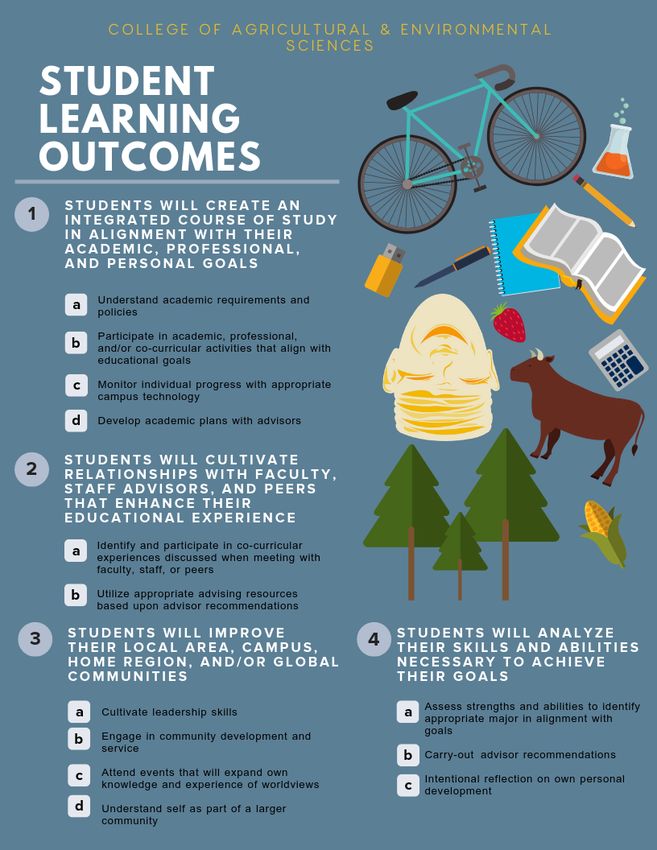
UC DAVIS COLLEGE OF AGRICULTURAL AND ENVIRONMENTAL SCIENCES

                                                             End of year Report [2019-2020]

  Program Limitations and Challenges                                                    38
  Recommendations for Future                                                            40
Exploratory/Undeclared Workshops                                                        43
  Overview                                                                              43
  Student Learning Outcomes                                                             43
  Goals                                                                                 44
  Assessment                                                                            44
  Program Limitations and Challenges                                                    49
  Recommendations for Future                                                            49
  References                                                                            50
International Academic Advising Workshops                                               51
  Overview                                                                              51
  Student Learning Outcomes                                                             51
  Goals                                                                                 51
  Assessment                                                                            52
  Results                                                                               52
  Program Limitations and Challenges                                                    53
  Recommendations for Future                                                            54
Slice of Advising                                                                       55
  Student Learning Outcomes                                                             55
  Goals                                                                                 56
  Assessment                                                                            56
  Program Limitations and Challenges                                                    57
  Recommendations for Future                                                            58
Quarterly Service Projects                                                              60
  Overview                                                                              60
  Student Learning Outcomes                                                             61
  Goals                                                                                 61
  Assessment                                                                            61
  Program Evaluation for Service Projects during 2019-2020                              62
  Program Limitations and Challenges                                                    63
  Recommendations for Future                                                            63
Slice of Advising                                                                       65
  Overview                                                                              65

                                                                                         7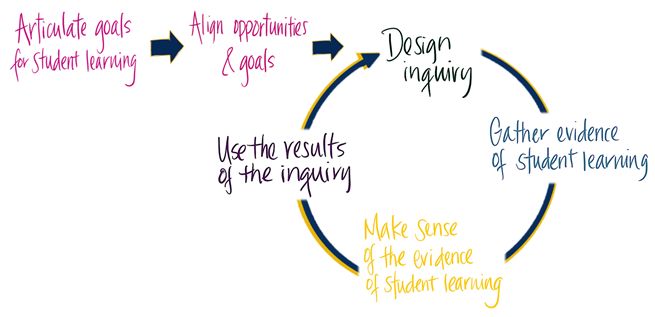
UC DAVIS COLLEGE OF AGRICULTURAL AND ENVIRONMENTAL SCIENCES

                                                               End of year Report [2019-2020]

  Student Learning Outcomes                                                               65
  Goals                                                                                   66
  Assessment                                                                              67
  Discussion                                                                              71
  Program Limitations and Challenges                                                      72
  Recommendations for Future                                                              73
World Ag Expo                                                                             74
  Overview                                                                                74
  Student Learning Outcomes                                                               74
  Demographics                                                                            74
  Assessment                                                                              75
  Program Limitations and Challenges                                                      76
  Recommendations for Future                                                              76
Aggie Ambassador Officer Team                                                             78
  Overview                                                                                78
  Student Learning Outcomes                                                               78
  Goals                                                                                   78
  Assessment                                                                              78
  Program Limitations and Challenges                                                      80
  Recommendations for Future                                                              80
Academic Probation Webinars                                                               81
  Overview                                                                                81
  Student Learning Outcomes                                                               81
  Goals                                                                                   82
  Assessment                                                                              82
  Program Limitations and Challenges                                                      84
Subject to Dismissal Advising                                                             85
  Overview                                                                                85
  Student Learning Outcomes                                                               86
  Goals                                                                                   86
  Assessment                                                                              86
  Program Limitations and Challenges                                                      88
  Recommendations for Future                                                              89

                                                                                           8
UC DAVIS COLLEGE OF AGRICULTURAL AND ENVIRONMENTAL SCIENCES
End of year Report [2019-2020]
9UC DAVIS COLLEGE OF AGRICULTURAL AND ENVIRONMENTAL SCIENCES
End of year Report [2019-2020]
Holistic Advising, Leadership, Engagement, and Outreach
Work in the College of Agricultural and Environmental
Sciences (CA&ES) at UC Davis
Overview
The Undergraduate Academic Programs Unit (UAP) in the College of Agricultural and Environmental
Sciences (CA&ES) aims to provide an integrated and holistic framework for supporting our diverse
student population. Within our unit we engage students in a variety of ways, striving to be thoughtful,
intentional, innovative, and inclusive in our approaches. Our support is also comprehensive, starting
from pre-matriculation/recruitment to graduation and beyond and includes one-on-one advising
appointments, leadership opportunities, outreach and engagement activities, and service-learning
programs.
As we seek to empower students through our holistic and learning-centered student support
approaches (Wilcox, 2016), UAP has also worked to model an organizational culture of empowerment
where each member of UAP is encouraged to grow, learn, reflect and lead the unit in a variety of areas
that match their individual interest and expertise. This shared-leadership culture reflects the values of
our unit and has provided unique opportunities for our team to learn more about the ways we work
together to support our students and advance the mission and vision of UAP and the college. In 2018 we
engaged with the UC Davis Graduate School of Management to assess our leadership culture and to
provide our team with baseline measurements of individual, team and leadership perspectives related
to aspects of collaboration, empowerment, and motivation within a shared leadership framework. Over
the past two years, repeated measurements have shown significant increases in trust and collaboration
among team members. While we have made many intentional efforts to enhance teamwork and trust,
our assessment program and process has been integral in fostering a culture that prioritizes
collaboration and teamwork.
This report marks our second end-of-year assessment and the process of collectively working together
to assess our programs and has given the UAP team invaluable opportunities to build individual skills
and strengths and to share and celebrate their successes with each other and with college leadership.
This year brought many challenges as well as moments of inspiration as COVID-19 shifted the
Undergraduate Academic Programs (UAP) operations to completely virtual. UAP quickly pivoted to
provide creative and impactful remote programs and services to students across the College. This report
has provided a framework for continuous reflection and motivation for improvements of our programs
and services to ensure that our work is guided by our overall mission, vision, and values.
10UC DAVIS COLLEGE OF AGRICULTURAL AND ENVIRONMENTAL SCIENCES
End of year Report [2019-2020]
UAP Vision, Mission, Values
Vision
We will be leaders in the creation of a community of support that engages and empowers all students to
succeed academically and beyond.
Mission
UAP invests in students holistically from recruitment to graduation with strategic outreach, thoughtful
advising, and innovative programming experiences. We support and challenge students to develop
meaningful connections and build community while empowering them to achieve their educational
goals. UAP uses inclusive and collaborative approaches to immerse students in the college’s mission to
understand agricultural, environmental, and social sustainability through research, education, and
public engagement opportunities.
UAP also works with all academic advisors embedded in all departments throughout the college. Therefore, we found it important to
also develop a specific academic advising mission for CA&ES:
CA&ES College-wide Advising Mission
Academic advising in the College of Agricultural and Environmental Sciences (CA&ES) facilitates a network of support connecting
students with faculty, staff, and peer advisors. Students and advisors have a shared responsibility to develop partnerships where
students are mentored in their academic exploration and pursuit of goals by advisors who provide guidance and knowledge. We
provide undergraduates support in decision-making from their time as a prospective student through graduation.
Values
Diversity: We recognize that our student population has varied backgrounds, academic interests, and
post-graduation goals. We seek to empower each student to uniquely contribute to our college and
university.
Innovation: Excellence in student learning and research motivates staff and faculty to continually
challenge and reevaluate existing student success practices. We understand that student services should
be dynamic and individualized, in order to best serve our student population.
Respect: We are committed to creating an inclusive environment, so students feel comfortable asking
questions and engaging in dialogue.
Integrity: We provide students with intentional, accurate advising and meaningful skill-building
leadership and engagement opportunities. Students are expected to synthesize information, reflect on
experiences, and think critically to make educated decisions.
Awareness: We interact in a way which we are aware of students' academic, mental, and physical
health. By maintaining campus partnerships, we direct students to available resources to meet varying
needs.
We know when we are moving towards our vision and living out our mission and values through
assessing our unit-level student learning outcomes.
11UC DAVIS COLLEGE OF AGRICULTURAL AND ENVIRONMENTAL SCIENCES
End of year Report [2019-2020]
Assessment and Program Evaluation
Our current assessment and program evaluation plan reflects the shared leadership culture we have
established within UAP. Members were split in four different teams with each team responsible for
assessing and evaluating specific programs, projects, and activities, based on Student Learning
Outcomes.
These specific reports include a description, goals, connection to unit-level student learning outcomes,
demographics, various measures, limitations and challenges, and future recommendations. These
elements show our ability to review the work we have done, determine whether we achieved the goals
that were set, show how we achieved those goals (or not), and consider ways in which we can improve.
This is in alignment with the Assessment Cycle outlined by Undergraduate Education at UC Davis
(Student Learning Outcomes, Office of Undergraduate Education, assessment.ucdavis.edu).
UAP Student Learning Outcomes
As a unit, UAP has created Student Learning Outcomes for students in our college. The programs that
were assessed for each learning outcome during this academic year and that are included in this report
are summarized here:
Student Learning Outcome #1: Students will create an integrated course of study in alignment with their
academic, professional, and personal goal
• Academic Probation Webinars
• Aggie Ambassadors: Class Speakers
• International Academic Advising Workshops
12UC DAVIS COLLEGE OF AGRICULTURAL AND ENVIRONMENTAL SCIENCES
End of year Report [2019-2020]
Student Learning Outcome #2: Students will cultivate relationships with faculty, staff advisors, and peers
that enhance their educational experience
• Exploratory/Undeclared Workshops
• Slice of advising
• International Academic Advising Workshops
Student Learning Outcome #3: Students will improve their local area, campus, home region, and/or
global communities
• Quarterly Service Projects
• Slice of Advising
• World Ag Expo
Student Learning Outcome #4: Students will analyze their skills and abilities necessary to achieve their
goals
• Academic Probation Webinars
• Aggie Ambassador Officer Team
• Subject to Dismissal Advising
UAP Assessment Cycle
One of the biggest changes in to our 2019-20 End of Year of Assessment Report (compared to 2018-19)
was to center the assessment of each individual program/activity on our student learning outcomes. In
addition, we developed a four-year assessment cycle, so that each program is not evaluated every year,
but at least once in the four-year cycle. The intention of a four-year cycle is to provide a more
sustainable approach to assessment and program improvement. Therefore, while this report reflects
only a subset of our activities during the past year, we are better able to link individual program goals
with our student-centered learning outcomes and to determine where gaps in our student support
programs may occur. An additional outcome of our updated assessment approach this year has been
recognition that some programs were not mapped to our learning outcomes, particularly in the area of
student outreach. We have also been able to better identify areas where there may be a mismatch
between program goals and learning outcomes and/or areas and programs where learning outcomes
may be difficult to measure.
In fall quarter 2020 several members of the team attended the IUPUI Assessment Institute and are
sharing learnings with the team for incorporation into assessments for the coming year. Through our
13UC DAVIS COLLEGE OF AGRICULTURAL AND ENVIRONMENTAL SCIENCES
End of year Report [2019-2020]
shared leadership framework, we continue to identify ways to share assessment approaches with each
other, collaborate to assess programs, and identify ways to share assessment outcomes for enhanced
impact. During the 2020-21 academic year we intend to have more frequent and intentional discussions
and updates of our program assessment activities as this was identified by many as an area for
improvement in our process during the past year.
Overall, our assessment process has been a successful way to demonstrate evidence of the effectiveness
of UAP programs, identify opportunities for program improvement, enhance leadership development
and a sense of teamwork within UAP, and engage staff, faculty, college leadership, and students in a cycle
of continuous improvement. The intentionality behind our work demonstrates the dedication we have
towards continual improvement. This ultimately impacts retention, four-year graduate rates and most
importantly—our ability to actively engage with students to support them in reaching their unique and
individual goals.
Outcomes/Impact from 2018-19 End-of-Year Report (link here)
Our first assessment report in 2018-2019 identified several successes in our approaches for
providing holistic student support. For example, through assessment of our one-on-one advising and our
workshops, webinars, and unique student-centered events, we identified repeat visits/ interactions with
our team as a critical hallmark of our student learning-centered approach. Depending on the
event/workshop, >82% of attendees had follow-up one-on-one appointments with advisors after
attending a workshop or event, and ~60% of our one-on-one advising appointments are repeat
appointments. Surveys further indicated that students felt connected to our college and gained a sense
of community with peers, staff, and faculty through these events/workshops; this is a key learning
outcome for our unit. Connections to the institution and building a sense of community are also key
drivers for student retention and academic success and we have observed a significant decrease in
students in academic difficulty in the past two years. While many factors may account for this
decrease, our assessment process provides insight into areas that may be impacting academic success
and helps us to improve our programming and/or to develop programs to fill gaps when they are
identified.
Through intentional reflection as part of the assessment process, we identified ways to improve our
programs for the future. For example, observations that some students appeared confused by the goals
of our ‘Office Hours with the Associate Dean’ events led to reframing/renaming this event to ‘Ask Me
Anything’ and using advertising to emphasize that college leadership is available to answer general
questions about the college, not just specific academic planning questions. Student feedback also
indicated that some workshops could be more effective by incorporating additional hands-on activities.
By assessing the messages received through our advising email account we are able to track common
student questions and better connect students to advisors and campus resources. Through surveys and
student feedback in webinars and events we obtained rich information on key factors that affect student
academic success in our college (e.g., time management). As a result, we have made efforts to
incorporate resources and information about these factors into our activities.
As noted previously, the process of collectively working together to assess our programs has provided
the UAP team opportunities to strengthen accountability and to engage in thoughtful reflection on
learning outcomes and goals for our programs while also providing motivation for continual
improvement. UAP members identified a need for enhanced training on assessment and ways to
14UC DAVIS COLLEGE OF AGRICULTURAL AND ENVIRONMENTAL SCIENCES
End of year Report [2019-2020]
evaluate our programs. Team members selected an external facilitator and we dedicated staff
development time to work with the facilitator to develop a shared understanding of the assessment
cycle, to brainstorm and learn about a variety of assessment approaches for our different activities, and
to map our student learning-centered activities to our specific learning outcomes. The UAP team then
came together to revise our assessment plan so that individual activities within UAP will be assessed for
specific student learning outcomes on a four year cycle. This helps to further stream-line our assessment
processes and ensures a more sustainable approach to assessment and program improvement.
Information from our program assessments and program outcomes was shared with college and
campus leadership. Faculty, staff, and students associated with our UAP programs shared their
enthusiasm for assessing program outcomes in order to improve future programming. Our compiled
report was used by a campus writing class to provide undergraduate students with experience in editing
and revising technical reports for diverse audiences. We also continue to improve the assessment
process and to have unit-wide conversations on best practices for assessing our programs, on the
individual and group roles we play in assessment and evaluation, and on ways to communicate the
impact of our work to our various stakeholders.
15End of year Report [2019-2020]
Student Learning Outcome #1
Students will create an integrated course
of study in alignment with their academic,
professional, and personal goals
16UC DAVIS COLLEGE OF AGRICULTURAL AND ENVIRONMENTAL SCIENCES
End of year Report [2019-2020]
Student Learning Outcome 1
Academic Probation Webinars
Prepared By: Greg Anderson, Alina Bara, Clarissa Mark
“I learned that I am not alone. I have resources and faculty to assist me with my challenges!”
“What I learned was to not be afraid to reach out to sources that are there to help. It’s best to
start improving now and get help when needed for study habits”
-Student Feedback, Fall & Winter 2020 Webinars
Overview
After each quarter concludes, the Dean’s Office messages students who are in an Academic Probation
status based on their most recent academic outcomes. Students enter into an Academic Probation status
as a result of their recent quarter or UC cumulative Grade Point Average being below 2.0 but above 1.5.
Academic Probation will also occur when students do not maintain an average of 12 or more units per
full-time quarter of enrollment. In an effort to support students in returning to good academic standing,
probation webinars are offered to all of these students as a way to anonymously attend and identify
strategies for improvement.
The Dean’s Office acknowledges that there are often times many circumstances impacting a student’s
academic success. In an effort to support students on academic probation at the start of the quarter, two
to three on-line webinars are offered to students within the college to attend. The webinars provide an
interactive environment to review academic probation definitions, discuss how to get back in good
academic standing, review campus resources, and help students set goals for the quarter and beyond.
The CA&ES UAP has offered the Academic Probation on-line webinars since 2018 .
Prior to these webinars, students on academic probation were messaged about their academic standing
and were directed to first meet with a major advisor, followed by coming to the Dean’s Office for an
advising appointment once the Dean’s Office completed the Subject to Disqualification process.
Sometimes, students were not seen by an advisor until the third week of instruction. As a result, their
options for the quarter were more limited. In an effort to be proactive and offer support at the very
beginning of the quarter, the multiple opportunities of participating in an interactive webinar, students
were able to receive information on academic policy, review academic probation definitions, and test
their knowledge about what does it mean to be placed on probation for grades and /or for minimum
progress. In-person advising with both a Dean’s Office and major advisor, following the webinar, is
encouraged. All student’s files are noted for their attendance in OASIS, the advising portal.
Student Learning Outcomes
Probation Webinars meet the following Student Learning Outcomes, those that are italicized were
addressed in this section of the report.
1. Students will create an integrated course of student in alignment with their academic, professional,
and personal goals, (a) student understands academic requirements and policies.
2. Student will cultivate relationships with faculty, staff advisors, and peers that enhance their
educational experience, (b) Utilize appropriate advising resources based upon advisor
recommendations
17UC DAVIS COLLEGE OF AGRICULTURAL AND ENVIRONMENTAL SCIENCES
End of year Report [2019-2020]
Student Learning Outcome 1
4. Students will analyze their skills and abilities necessary to achieve their goals, (a) Assess
strengths and abilities to identify appropriate major in alignment with goals [Note: This SLO is
assessed in a separate section of this report.]
Goals
• Advisors create group advising opportunities for students, in webinar format, to discuss
academic probation policies and campus resources.
• Advisors create learning outcomes for the webinar to assess students’ knowledge pre-and-post
webinar.
• Students will have an understating why they were placed on academic probation
• Students will be able to define academic probation and good standing.
Assessment
When students were unsuccessful at achieving the required grade point average or maintaining an
average of 12 units during one or more quarters, it was important for the academic advisors to create a
platform where students felt open to share their challenges and ask questions freely, while keeping their
anonymity, if desired.
Each webinar ran for 50 minutes and was hosted by two Dean’s Office Academic Advisors with two or
three additional academic advisors, answering Q&A live. During the webinars, UAP advisors sought to
demystify academic probation while leading a discussion of GPA and unit specific requirements and
helping students identify campus resources to aid in their return to good academic standing. Presenters
used different polling questions to evaluate students’ understanding of academic requirements and
policies at the start and /or at the end of the webinar. The webinars served as a resource to students
who were placed on academic probation; in-person advising appointments following the webinar were
strongly encouraged.
Our primary sources of data were collected from the interactive polls provided throughout the webinar,
with pre- and post-webinar questions in Fall 2019 and questions about probation status for both grades
and minimum progress, in Winter and Spring 2020. During the webinar, students engaged with the
advisors by using the Q&A function in Zoom to ask clarifying or specific case scenario questions. Without
asking for students’ personal information, UAP advisors answered all their questions, some in private
chat and some were answered live. Answering questions live in the webinar was particularly beneficial
when multiple students asked similar questions. If students did share their personal information or if
the question required a rather comprehensive response with possible campus referrals and follow-up
steps, students were strongly encouraged to follow-up with our Office and to schedule an advising
appointment.
In addition to poll data found in the tables below, some of the common questions students asked via
Q&A function, during the Fall 2019, Winter and Spring 2020 webinars, are as follow:
• “What happens when the GPA is below 1.5?”
• “When is the probation status removed?”
• “Where and when can I go to discuss my AP status in person?”
18UC DAVIS COLLEGE OF AGRICULTURAL AND ENVIRONMENTAL SCIENCES
End of year Report [2019-2020]
Student Learning Outcome 1
• “Do workload units count for minimum progress?”
• “I learned that you’re not allowed to change to pass/no pass if you are not in good academic
standing. Is this true?”
• “Is there a max # of quarters a student can be on academic probation in their time at UCD? How
does this impact a student’s track to graduate?”
• “I took 12 units last quarter and received a D for one class. Is this why I’m on academic
probation?”
• “Does being on academic probation affect financial aid?”
• “What happens if you take a part-time quarter this quarter? Are you still able to get back into
good standing by Spring?”
• “If I am planning to retake a class, I got a D or F in over the summer do I still need to take 12
units?”
• “Does a failed class count towards Minimum Progress?”
• “If I satisfy the passing 12 unit minimum on average currently, but I am on academic probation
because of the 1.5-2.0 GPA bracket from Fall quarter, do I go back to good academic standing as
long as I get above a 2.0 in Winter quarter?”
Looking at the type of questions students submitted through the Q&A function, we were shown that
students have shared questions on a few over-arching topics:
• Impact of workload units on minimum progress
• Questions about repeat units and how they impact overall GPA and minimum progress
• Impact of academic probation on time to degree
Based upon analysis of the student questions, we propose that future webinars include more specific
information and possible case scenarios relating to the above topics. We believe that by presenting
specific case scenarios, students will gain a deeper understanding of overall probation requirements and
possibly get clarification about their own specific situation.
At the end of Fall 2019, 461 students were placed on Academic Probation (for qualitative and
quantitative reasons). Out of the 461 students, a total of 155 students (roughly 34%) attended the live
webinars offered on January 3rd, 8th & 30th.
At the end of Winter 2020, 435 students were placed on academic probation (for qualitative and
quantitative reasons). Out of the 435 students a total of 121 students (roughly 27%) attended the live
webinars offered on April 2nd, 8th and 21st.
At the end of Spring 2020, 197 students were placed on academic probation (for qualitative and
quantitative reasons). Out of the 197 students a total of 74 students (roughly 38%) attended the live
webinars offered on June 25th and July 8th.
19UC DAVIS COLLEGE OF AGRICULTURAL AND ENVIRONMENTAL SCIENCES
End of year Report [2019-2020]
Student Learning Outcome 1
Figure 1: Number of attendees per academic quarter
We analyzed data collected from different questions that were asked in a form of a poll, during the
webinars. These polls were live and results were shared anonymously to viewers (students were not
required to answer the questions, but rather they were encouraged to do so). Some participants shared
they were unable to see or participate in the live polls. This may have been a result of slow internet, pop-
up blockers or other technology limitations. A few students called into the webinar instead of watching
the webinar from a computer or smart device, which made it harder to participate in polls. Facilitators
did their best to share information verbally and fully covered the information presented via slides or on
the screen to create an inclusive learning environment.
The polling questions used during the webinar are as follows:
FALL 2019:
Pre and post-test question: In order to be in good academic standing for minimum progress a student
must:
Answer: (b) maintain an average of at least 12 units in all full time quarters
WINTER 2020
Question 1: In order to be in good academic standing for minimum progress a student must:
20UC DAVIS COLLEGE OF AGRICULTURAL AND ENVIRONMENTAL SCIENCES
End of year Report [2019-2020]
Student Learning Outcome 1
Answer (b) maintain an average of at least 12 units in all full time quarters
Question 2: A student is on academic probation on the basis of GPA when the quarter &/or cumulative
UC grade point average (GPA) is:
Answer (b) below 2.00 but above 1.50
SPRING 2020
Question 1: In order to be in good academic standing for minimum progress a student must:
Answer (b) maintain an average of at least 12 units in all full time quarters
Question 2: A student is on academic probation on the basis of GPA when the quarter &/or cumulative
UC grade point average (GPA) is:
Answer (b) below 2.00 but above 1.50
FALL 2019
At the start of the academic year, we wanted to poll students’ understating of academic probation status.
By asking the same pre- and post-webinar question “In order to be in good academic standing for
minimum progress a student must…” we were able to assess students’ level of understating of the term
“academic probation” vs. “good standing” at the beginning of the webinar, and again at the end of the
webinar. Please see below tables (Table 1 & 2 ).
In Fall 2019, an average of 79% of students had an understanding of academic probation for minimum
progress at the beginning of the webinar. That number went up to an average of 98% at the end of the
webinar. We saw that students were engaged during our interactive program, paid attention to the
presentation and used the Q&A function to ask clarifying questions.
Table 1: Pre-test question: In order to be in good academic standing for minimum progress a student
must:
• Answer (b) maintain an average of at least 12 units in all full-time quarters
DATE Number of Number of Correct Answers Incorrect
Attendees Respondents Answers
Webinar One 34 27 21 (78%) 6 (22%)
Friday, JAN 3
Webinar Two 47 35 27 (77%) 8 (23%)
Wednesday, JAN 8
Webinar Three 74 53 44 (83%) 9 (17%)
Thursday, JAN 30
21UC DAVIS COLLEGE OF AGRICULTURAL AND ENVIRONMENTAL SCIENCES
End of year Report [2019-2020]
Student Learning Outcome 1
Table 2: Post-test question: In order to be in good academic standing for minimum progress a student
must:
• Answer (b) maintain an average of at least 12 units in all full-time quarters
DATE Number of Number of Correct Answers Incorrect
Attendees Respondents Answers
Webinar One 34 28 28 (100%) 0 (0%)
Friday, JAN 3
Webinar Two 47 31 30 (97%) 1 (3%)
Wednesday, JAN 8
Webinar Three 74 50 48 (96%) 2 (4%)
Thursday, JAN 30
WINTER 2020
After looking at the data collected in the Fall quarter, the assessment workgroup in collaboration with
the probation workgroup, decided to add a question about probation for qualitative reasons, to better
assess students’ understanding of the probation status as a whole, and requirements to get back into
good academic standing. This time the two poll questions were asked at the end of the webinar and they
were:
• In order to be in good academic standing for minimum progress a student must…
• A student is on academic probation on the basis of GPA when the quarter &/or cumulative UC
grade point average (GPA) is…
After attending the webinar, an average of 97% of students understood the terms of academic probation
for minimum progress and an average of 96% of students understood the terms of academic probation
constraints, the presenters were not able to survey students’ understanding of academic probation for
grades on the April 8th webinar. Not having the complete data makes it difficult to fully assess
effectiveness of this specific webinar and compare the collected data with the other two Winter
seminars offered on APR 2nd and APR 21st. for grades. Due to technology the
Please see below tables (Table 3 & 4). Students were engaged during our interactive program, paid
attention to the presentation and used the Q&A function to ask clarifying questions.
22UC DAVIS COLLEGE OF AGRICULTURAL AND ENVIRONMENTAL SCIENCES
End of year Report [2019-2020]
Student Learning Outcome 1
Table 3: Question 1: In order to be in good academic standing for minimum progress a student must:
• Answer (b) maintain an average of at least 12 units in all full-time quarters
DATE Number of Number of Correct Answers Incorrect
Attendees Respondents Answers
Webinar One 67 52 50 (96%) 2 (4%)
Thursday, APR 2
Webinar Two 26 21 20 (95%) 1 (5%)
Wednesday, APR 8
Webinar Three 34 22 22 (100%) 0 (0%)
Thursday, APR 21
Table 4: Question 2: A student is on academic probation on the basis of GPA when the quarter &/or
cumulative UC grade point average (gpa) is:
• Answer (b) below 2.00 but above 1.50
DATE Number of Number of Correct Answers Incorrect Answers
Attendees Respondents
Webinar One 67 59 57 (97%) 2 (3%)
Thursday, APR 2
Webinar Two 26 No data No data No data
Wednesday, APR 8
Webinar Three 34 20 19 (95%) 1 (5%)
Thursday, APR 21
As we moved along with the webinars, advisors realized that the poll questions were somewhat surface
level questions. In an effort to assess students’ understanding of probation status more in-depth, the
assessment workgroup in collaboration with the probation workgroup, added a pilot exit poll on the
April 21st webinar. At the end of the webinar, before logging out, students were asked to optionally take
one additional survey to help us build a more robust probation webinar in the future. The questions
23UC DAVIS COLLEGE OF AGRICULTURAL AND ENVIRONMENTAL SCIENCES
End of year Report [2019-2020]
Student Learning Outcome 1
asked were pulled from real case scenarios of students’ circumstances on probation for both grades and
minimum progress. Out of 34 attendees, ten students opted to take the survey. Please See below:
QUESTION Good Academic Subject to Correct Incorrect
Academic Probation dismissal answers answers
Standing
Student A has an overall GPA of 1 9 0 9 (90%) 1 (10%)
2.375 and their GPA last quarter
was 1.686. They are currently
averaging 12.5 units per full time
quarter. This student is:
Student B has an overall GPA of 1 9 0 0 (0%) 10 (100%)
3.147 and their GPA last quarter
was 1.450. They are currently
average 14 units per full time
quarter. This student is:
Student C has an overall GPA of 9 1 0 9 (90%) 1 (10%)
2.025 and their GPA last quarter
was 2.550. They are currently
averaging 13.2 units per full time
quarter. This student is:
Student D has an overall GPA of 2 8 0 8 (80%) 2 (20%)
3.250 and their GPA last quarter
was 3.175. They are currently
averaging 11.5 units per full time
quarter. This student is:
While none of the questions were answered correctly by all students, in general, the majority of students
seemed to understand the detailed requirements of academic probation for grades and minimum
progress.
Question Two, in particular was answered incorrectly by 100% of students, but that is because the
information about Subject to Dismissal (SD, GPA below 1.5 per quarter) was not covered during the
webinar. The Subject to Dismissal term was mentioned occasionally, but was not covered fully, as the
webinar discussion was mainly focusing on academic probation policies and requirements. The
24UC DAVIS COLLEGE OF AGRICULTURAL AND ENVIRONMENTAL SCIENCES
End of year Report [2019-2020]
Student Learning Outcome 1
assessment group will revise these additional poll questions for future webinars to align with material
covered during the webinar.
SPRING 2020
After attending the webinar, 100% of students understood the academic probation policies with respect
to both grades and minimum progress. The webinar was presented very similar with the ones offered in
the Winter quarter. We were pleasantly surprised to find that all students had an understanding of
academic probation policies, at the end of the webinar. Due to various constraints, the presenters were
not able to survey students’ understanding of academic probation for grades on the July 8th webinar.
Not having the complete data makes it difficult to fully assess the effectiveness this specific webinar and
compare the collected data with the other Spring seminar offered on June 25 th. Please see below tables
(Table 5 & 6)
Table 5: Question 1: In order to be in good academic standing for minimum progress a student must:
• Answer (b) maintain an average of at least 12 units in all full-time quarters
DATE Number of Number of Correct Answers Incorrect
Attendees Respondents Answers
Thursday, JUN 25 17 16 16 (100%) 0 (0%)
Wednesday, JUL 8 39 No data No data No data
Table 6: Question 2: A student is on academic probation on the basis of GPA when the quarter &/or
cumulative UC grade point average (gpa) is:
• Answer (b) below 2.00 but above 1.50
DATE Number of Number of Correct Answers Incorrect
Attendees Respondents Answers
Thursday, JUN 25 17 15 15 (100%) 0 (0%)
Wednesday, JUL 8 39 No data No data No data
25UC DAVIS COLLEGE OF AGRICULTURAL AND ENVIRONMENTAL SCIENCES
End of year Report [2019-2020]
Student Learning Outcome 1
Program Limitations and Challenges
Roughly 33% of students who were placed on Academic Probation (for grades and /or minimum
progress) attended the academic probation webinars. It would be helpful to use a greater number of
student responses to get a better sense of what type of information our students need to better
understand the academic probation policies.
A few participants noted that they were not able to view/participate in the polls.
Another limitation was the webinar duration, 50 minutes seems to not be enough time to discuss
probation specific policies and help students create a plan to help them return into good academic
standing.
There were challenges with consistency with assessment since the poll questions differed from quarter
to quarter.
Initial poll questions were somewhat basic questions, and the data collected does not fully reflect the
level of students’ understating of the academic probation status details and policies.
Recommendations for Future
Content changes can be made to the presentation to aid in student learning. Specifically, the
development of case studies highlighting more specific information and academic policy will provide
participants with another avenue to develop understanding. These case studies could include examples
relating to repeat units, workload units/classes, and other examples relating to academic standing. The
case studies could also be used to inform poll questions throughout the webinar. Other content changes
could include the use of breakout rooms for students to ask questions in smaller group settings.
Improvements can be made to the surveys and questions to create better alignment with student
learning outcomes. Utilizing consistent pre and post-webinar surveys will help assess student learning
more effectively over time. After the webinar is complete, an informative flyer of graphic could be sent
to students as a reference for key takeaways of webinar information. This flyer could be developed from
the questions asked throughout the polls.
Utilizing student feedback and panels can help create more intentional marketing for the webinar to
ensure that targeted students understand the information presented and the value of attendance.
26UC DAVIS COLLEGE OF AGRICULTURAL AND ENVIRONMENTAL SCIENCES
End of year Report [2019-2020]
Student Learning Outcome 1
International Student Schedule Checks
Prepared By: Greg Anderson, Alina Bara, Clarissa Mark
“The CA&ES Dean’s Office is here to support you in achieving your goals. As professional
advisors, we make recommendations for your first quarter classes based on your registered (not
waitlisted) classes. We reviewed your Fall 2019 schedule and have the following
recommendations…”
—UAP Dean’s Office message to international students
Overview
Each year, international students begin their enrollment at UC Davis and many have not had the
opportunity to attend Orientation, where they would receive advising about Fall Quarter enrollment. In
addition, students may begin their enrollment coming from educational systems that are far different
from UC Davis and US educational systems.
To ensure that incoming International students are set up for a successful Fall Quarter, advisors perform
schedule checks after course registration, but before the start of the schedule. Advisors look for
enrollment issues that might cause difficulties later:
• Student is enrolled in less than 12 total units, which would not satisfy visa or minimum progress
requirements
• Student is enrolled in more than 15 total units
• Student is enrolled in unbalanced schedule (e.g. 15 units of all STEM coursework)
• For first-years, student is enrolled in upper-division coursework
• Student is enrolled in graduate-level coursework
• Student is enrolled in courses not recommended for first-quarter students (e.g. courses that
require extensive English writing)
The specific recommendations that are provided to incoming students is based on either Dean’s Office
advising experiences in situations of total units and balanced schedules, as well as recommendations
against graduate-level coursework and upper-division coursework for first year students.
Recommendations against specific course enrollment comes from advice provided by major advisors
and advisors in other colleges over time.
UAP has been performing International Student Schedule Checks for the past 4 years. The future of these
Schedule Checks may look different as UC Davis transitions to an online pre-Orientation program that is
available to all students, domestic and international alike, as well as an in-person Orientation that occurs
the week immediately preceding Fall Quarter.
Messages about schedule checks also provide students opportunities to begin developing a relationship
with UAP as a source for quality academic advising. In addition, the messaging encourages students to
think in a metacognitive way about their course enrollment strategies.
27UC DAVIS COLLEGE OF AGRICULTURAL AND ENVIRONMENTAL SCIENCES
End of year Report [2019-2020]
Student Learning Outcome 1
Student Learning Outcomes
International Student Checks meets the following Student Learning Outcomes, those that are italicized
were addressed in this section of the report.
1 Students will create an integrated course of student in alignment with their academic, professional,
and personal goals, (c) Monitor individual progress with appropriate campus technology, (d)
Develop academic plans with advisors
4. Students will analyze their skills and abilities necessary to achieve their goals, (b) Execute
advisor recommendations
Goals
• Provide suggestions for building a balanced course load
• Encourage students to think about how enrolled courses impact each other and student’s future
goals
• Create initial line of communication between CA&ES UAP and students prior to their arrival on
campus
By proactively reaching out to incoming International Students, our Office begins to develop
relationships with students regarding their course planning. Ideally, this email will serve to increase
trust in the Undergraduate Academic Programs team and encourage students to contact our Office with
additional questions around course planning. It is important for students to develop balanced course
loads that will help students achieve the multitude of their goals – meeting graduation requirements,
including major requirements, preparing for graduate school or careers, and taking classes that are
personally fulfilling. By providing feedback on this balance, UAP encourages students to think
metacognitively about whether future courses are balanced and aligned with these goals.
Assessment
In previous years, International Student Schedule Checks have been implemented, but have not been
actively assessed to confirm the effectiveness of the program. The data below was gathered and
manually analyzed to provide feedback on the 2019-20 program.
In 2019, the International Student Schedule Check team (Brad Horton, Tracy Diesslin, and Greg
Anderson) reviewed the schedules for a total of 233 students, including 154 incoming first-years and 79
incoming transfer students. We provided 187 recommendations, though some students received
multiple recommendations.
28UC DAVIS COLLEGE OF AGRICULTURAL AND ENVIRONMENTAL SCIENCES
End of year Report [2019-2020]
Student Learning Outcome 1
Table 7: Recommendations for schedule changes
Total Recommendations
187
Recommendations Followed
119 63.64%
Recommendations Not Followed
68 36.36%
1st Year Recommendations 173
108 62.43%
Recommendations Followed
Recommendations Not Followed 65 37.57%
Transfer Recommendations 24
Recommendations Followed 11 45.83%
13 54.17%
Recommendations Not Followed
Of the 173 First Year Recommendations, 60 students received one recommendation to change their
schedule, 46 students received two recommendations, seven students received three recommendations.
40 First-Year students had acceptable schedules and did not receive any recommendations. Of the 24
Transfer Recommendations, 14 students received one recommendation and five students received two
recommendations. 58 Transfer students had acceptable schedules and did not receive any
recommendations.
Figure 2: Recommendations for schedule changes for 1 st year students
29You can also read


