Middle School Curriculum 2022 - Years 7, 8, 9 and 10 - Scots College
←
→
Page content transcription
If your browser does not render page correctly, please read the page content below
1

Middle School
Curriculum 2022

Years 7, 8, 9 and 10
2

Curriculum
Handbook 2022                                                                              Contents
The curriculum handbook is an                                                              Introduction................................................................. 4
essential pathway for your child’s                                                         IB Learner Profile....................................................... 5
academic future – it provides                                                              What is the MYP?....................................................... 6
information on curriculum areas,                                                           Interdisciplinary Teaching and Learning................ 7
subject choices and teaching and                                                           Homework Guidelines............................................... 8
learning across the Middle School.                                                         Dual Qualification Pathway....................................... 9
                                                                                           Middle School Curriculum and where it leads..... 10
The handbook also provides an up-to-date explanation of the IB Middle Years
Programme and the pathways that lead from this into the Senior School.                     Course Descriptions
The Middle School academic framework delivers a diverse range of curriculum areas          Drama........................................................................ 12
based on global standards and the desire to develop internationally minded young           Music.......................................................................... 14
students.                                                                                  Visual Arts................................................................. 16

Compulsory language learning and a diverse ‘Arts’ and ‘Technology’ focus set               Film............................................................................. 18
Middle School students up to make well-informed decisions on their future academic         Design & Visual Communication, Digital
pathways. It is important that families and their children spend time discussing the       Technology and Materials Design Technology.... 19
appropriate courses for their future aspirations. As a general rule of thumb, courses      Humanities................................................................ 25
should be chosen which leave doors open as young students are likely to change their       Business Studies....................................................... 28
goals as they move through the Middle School and set themselves up for the Senior          Enterprise Studies.................................................... 29
School.
                                                                                           English........................................................................ 30
The curriculum handbook outlines the Learner Profile attributes, the Year 10               Chinese, French, Spanish, Te Reo M ori
Community Project and it also offers a detailed explanation into each curriculum area      and English Language B.......................................... 34
so both students and parents gain a greater insight into the teaching and learning         Mathematics.............................................................. 37
within these disciplines. If you require further details and professional advice related   PE & Health............................................................... 40
to your child’s academic decision making please don’t hesitate to contact Kate Bondett
                                                                                           Science....................................................................... 43
(MYP Coordinator).
                                                                                           Special Character Religious Education................ 46
Matt Allen                                                                                 Year 10 Community Project.................................... 47
Principal, Middle School
                                                                                           A&A Programme (Able & Ambitious) .................. 48
July 2021
                                                                                           Learning Support Overview................................... 49
                                                                                           Middle School Contacts.......................................... 50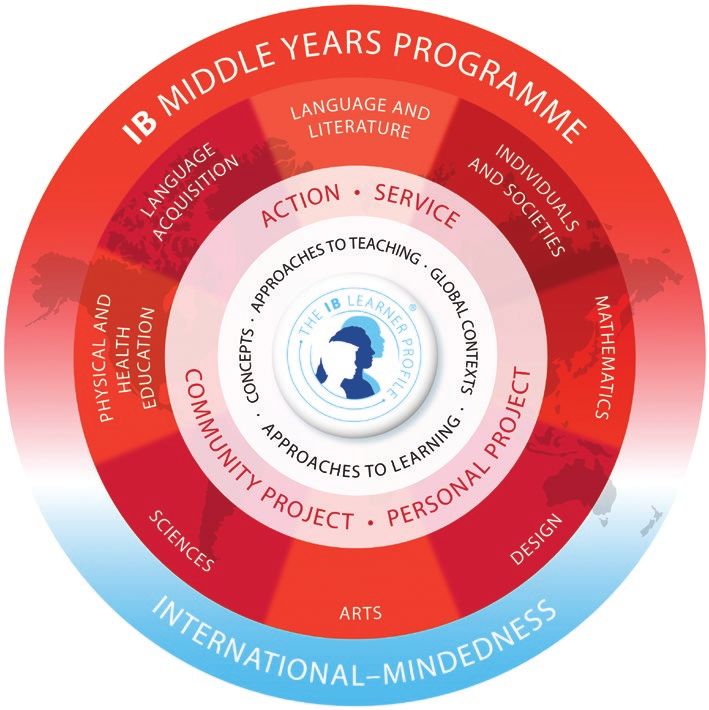
4                                                                                                                                                                                                 5

Introduction                                                                               IB Learner Profile
Our Middle Years Programme (MYP)                                                           The profile aims to develop learners who are:
curriculum framework provides
                                                                                           Inquirers                                            Open-minded
academic challenges that encourage                                                         We nurture our curiosity, developing skills for      We critically appreciate our own cultures and
students to embrace and understand                                                         inquiry and research. We know how to learn           personal histories, as well as the values and
the connections between learning                                                           independently and with others. We learn with         traditions of others. We seek and evaluate a
                                                                                           enthusiasm and sustain our love of learning          range of points of view, and we are willing to
areas and the real world.                                                                  throughout life.                                     grow from the experience.

                                                                                           Knowledgeable                                        Caring
The curriculum further challenges students to become internationally minded and
                                                                                           We develop and use conceptual understanding,         We show empathy, compassion and respect. We
reflective thinkers. A focus on approaches to learning skills throughout the programme     exploring knowledge across a range of                have a commitment to service, and we act to
ensures your children are ready for the rapidly changing 21st Century world.               disciplines. We engage with issues and ideas that    make a positive difference in the lives of others
                                                                                           have local and global significance.                  and in the world around us.
The heart of the programme revolves around five key elements which:
• Encourage international mindedness in students to develop a foundation in their own      Thinkers                                             Risk-takers
                                                                                           We use critical and creative thinking skills to      We approach uncertainty with forethought
  language and culture.
                                                                                           analyse and take responsible action on complex       and determination; we work independently
• Encourage a positive attitude to learning by challenging students to solve problems,     problems. We exercise initiative in making           and cooperatively to explore new ideas and
  show creativity and resourcefulness, and participate actively in their communities.      reasoned, ethical decisions.                         innovative strategies. We are resourceful and
                                                                                                                                                resilient in the face of challenges and change.
• Reflect real life by providing a framework that allows students to see the connections   Communicators
  among the subjects themselves, and between the subjects and real issues.                 We express ourselves confidently and creatively      Balanced
                                                                                           in more than one language and in many ways.          We understand the importance of balancing
• Supports the development of communication skills to encourage inquiry,
                                                                                           We collaborate effectively, listening carefully to   different aspects of our lives—intellectual,
  understanding, language acquisition, and to allow student reflection and expression.     the perspectives of other individuals and groups.    physical, and emotional—to achieve well-being
• Emphasise, through the learner profile, the development of the whole student –                                                                for ourselves and others. We recognise our
                                                                                           Principled                                           interdependence with other people and with the
  physically, intellectually, emotionally and ethically.                                   We act with integrity and honesty, with a strong     world in which we live.
                                                                                           sense of fairness and justice, and with respect
The culmination of the MYP programme is the Year 10 Community Project. Working
                                                                                           for the dignity and rights of people everywhere.     Reflective
in small groups students are expected to identify a community need and take action to      We take responsibility for our actions and their     We thoughtfully consider the world and our own
either bring change themselves, raise money to finance change carried out by others,       consequences.                                        ideas and experience. We work to understand
raise awareness of the issue or provide an analysis of how this issue can be alleviated.                                                        our strengths and weaknesses in order to
Past projects include encouraging healthy eating at Kahurangi School, maintaining bike                                                          support our learning and personal development.
trails and starting a beach clean up.

Kate Bondett
MYP Coordinator
July 2021
6                                                                                                                                                                                                                 7

                                                                                                              Interdisciplinary
What is the MYP?                                                                                              Teaching and Learning
The Middle Years Programme (MYP) for students aged 11-16 is now                                               Interdisciplinary Teaching and Learning, a vital component of the Middle
offered by over 850 IB World Schools. At Scots we run the MYP in Years                                        Years Programme and a wonderful opportunity for students, is becoming
7-10. The MYP is especially designed to help adolescents adjust to life                                       more prominent in the Middle School.
in the 21st century. It is a difficult time for these young people as they                                                                                         In 2022, all students from years 7-10 will
                                                                                                              Interdisciplinary teaching and learning is
learn to cope with a constantly changing and increasingly interconnected                                      characterised by a genuine need for distinct         participate in an interdisciplinary unit which
world. The MYP provides them with the knowledge and skills they need                                          disciplinary knowledge or skills from two            bring together skills from all learning areas. We
as they grow, helping the students to find a sense of belonging. The MYP                                      subjects, to be taught together. Just like the       hope these learning opportunities will allow
                                                                                                              workplace, knowledge does not sit in discrete        students to explore authentic real-world contexts
emphasises and builds on the IB Learner Profile. The key ideas behind the                                     silos, it is used seamlessly together to work        which draw deeply on learning from different
MYP are;                                                                                                      towards a goal or outcome. We try, using the         learning areas.
                                                                                                              MYP interdisciplinary framework, to give
Holistic Learning                                        Communication                                        students an opportunity to experience the need
Whilst maintaining excellent standards of                Good command of one’s own language enables           for subjects to work together to achieve a result.
teaching and learning in across a wide and               clear expression of ideas, attitudes and feelings.
balanced range of traditional subjects, the              The learning of other languages extends the
MYP also has an extra emphasis on the                    student’s ability to communicate and it teaches
interrelatedness of the subjects. This encourages        appreciation of different cultures and ways of
the student to consider issues and problems from         thinking. Good communication is also about
a variety of points of view. The students learn          listening to others and understanding variations
to combine relevant knowledge, experience and            and nuance. The MYP also encourages students
critical thinking to solve real problems.                to explore various modes of expression.

Intercultural Awareness                                  MYP Programme Model
The MYP develops students’ attitudes,
knowledge and skills as they learn about their
own and others’ cultures. MYP teaching and
learning encourages tolerance, respect and
empathy. This is an essential part of education
to create a better and more peaceful world in the
future.

Scots College is authorised to deliver the MYP and
is an IB World School.

More information about MYP is available at www.ibo.org
8                                                                                                                                                                    9

Homework Guidelines in the                                                                                   Dual Qualification
Middle School 2022                                                                                           Pathway

To allow students the time to experiment and           the world of fiction encourages empathy and                         Years 1-6
challenge themselves with new activities the           understanding that will improve the character of
Middle School have a homework policy that              our students as well. We are not saying that they                               PYP
sees all MYP assessments completed during              have to read every day but we think they should
class time, and that most subjects will not set        do it on all the days they eat!                                       Primary Years Programme
homework. We believe this gives students and           We recommend students become members of
opportunity to work on becoming the All-Round          their local libraries and making a fortnightly trip
Character.                                             to the library part of your family routine will
                                                                                                                           Years 7-10
                                                       contribute hugely to the success of this new
Is there any Homework?
                                                       initiative. We’d love the whole family to join in
Yes, homework is based around reading, spelling,
                                                       the reading as a way to counteract some of the                                     MYP
mathematics and second language study.
We envision students having over an hour of            concerns we have about the amount of time                                 Middle Years Programme
                                                       students are spending on screens.
homework each night but a significant chunk of
this is to be spent reading. Students may also use     Academic Competitions
the time to catch up on missed lessons or spend        We encourage students to become involved
homework time acting on teacher feedback to                                                                                Year 11
                                                       in academic competitions like the spelling bee
improve an assessment grade for any subject.           and challenge themselves to follow their own
Year 10 students also undertake the MYP                interests in investigating the world around them
Community Project where they identify a                as they do through the popular Science Badge
                                                                                                                                  Year 11 Programme
problem, analyse it and then take action to            programme.
mitigate that problem.
                                                       Leaving time for cultural pursuits,
Science homework will consist of 2-3                   sport and leisure
consolidation tasks for each unit of work. In                                                                Year 12
                                                       A key aim of the College is the creation of the
addition, students can expect two reflective           “All-Round Character”. The Middle School
tasks per year in which they must consider how         Homework policy aims to allow students the                      NCEA                              IB
scientific learning has been applied to a problem
and the implication of the use of that scientific
                                                       time to play sport, develop a love of reading,                  Level 2                   Diploma Programme
                                                       follow hobbies, learn instruments and generally
learning.                                              maintain their own health whilst still reinforcing
                                                       the academic work done in class.
Why do we push reading?
Reading, even in the digital age, is crucial to                                                              Year 13
                                                       How much homework will my child get?
learning. We want our students to expand their         Students will receive over an hour of homework
vocabularies (hence the spelling lists students        each night but a significant chunk of this is to be             NCEA                              IB
will be bringing home) so that when new
material is introduced to them as they move into
                                                       spent reading.                                                  Level 3                   Diploma Programme
the Senior School they will have the language
skills to make the most of their ability. We also
believe that the ability to enter imaginatively into
10                                                                                                                                                                                            11

Middle School Curriculum
and where it leads

               Year 7             Year 8             Year 9             Year 10            Year 11                 Year 12              Year 13              IB Diploma Programme
                                                                                                                   Level 2 (NCEA)       Level 3 (NCEA)       Year 12 & 13 (2 year course)
 Arts          Visual Arts        Visual Arts        Visual Arts        Visual Arts        Foundation Art          Applied Art /        Applied Art /        Visual Arts
                                                                                                                   Studio Art /         Studio Art /
                                                     Film               Film                                       Industry Art         Industry Art
               Drama / Music      Drama / Music      Drama / Music      Drama / Music      Drama / Music / Film    Drama / Music /      Drama / Music        Music / Film
                                                                                                                   Film and Media
                                                                                                                   Studies
 Design        Materials Design   Materials Design   Materials Design   Materials Design   Biomimicry / DVC        Construction /       Construction /
               Technology /       Technology /       Technology /       Technology /       (aka Graphics) /        Materials Design     Materials Design
               DVC (aka           DVC (aka           DVC (aka           DVC (aka           Integrated Design       Technology /         Technology /
               Graphics) /        Graphics) /        Graphics) /        Graphics) /        Challenge / Materials   DVC (aka             DVC (aka
               Digital            Digital            Digital            Digital            Design Technology       Graphics)            Graphics)
               Technology         Technology         Technology         Technology
                                                                                           Computer Science        Digital Technology   Digital Technology   Computer Science

 Individuals   Humanities         Humanities         Humanities         Humanities         Geography / History     Classical Studies    Classical Studies    Classical Studies / Environmental
 & Societies                                                                               / Humanities            / Geography /        / Geography /        Systems & Societies / Geography /
                                                     Business Studies   Enterprise
                                                                                                                   History              History              History / Psychology
                                                                        Studies            Commerce /
                                                                                           Consumer & Business     Economics /          Economics /          Economics / Business & Management
                                                                                           Law / Financial         Business Studies     Business Studies
                                                                                           Capability              / Tourism Studies    / Tourism Studies

 English &     English            English            English            English            English / English       English / English    English / English    Language and Literature / Language
 Literature                                                                                Studies / ESL           Studies / ESL        Studies              Acquisition / Language A Literature

 Languages     French / Spanish   French / Spanish   French / Spanish   French / Spanish   Chinese / French /      Chinese / French     Chinese / French     Ab Initio Language / Chinese /
               / Chinese/         / Chinese/         / Chinese/         / Chinese/         Spanish / ESL /         / Spanish / ESL /    / Spanish /          English Language Acquisition /
               English B /        English B /        English B          English B          Te Reo M ori            Te Reo M ori         Te Reo M ori         French / Language A Literature /
               Te Reo M ori       Te Reo M ori                                                                                                               Spanish
 Mathematics   Mathematics        Mathematics        Mathematics        Mathematics        Mathematics- Abstract Mathematics /          Calculus /           Analysis and Approaches /
                                                                                           / Mathematics- Real   Statistics             Mathematics-         Application and Interpretation
                                                                                           World                                        Real World /
                                                                                                                                        Statistics
 PE & Health   PE & Health /      PE & Health /      PE & Health        PE & Health        PE / Sports and         PE (Theory)          PE (Theory)          Sports, Exercise and Health
               Sport              Sport                                                    Exercise Science

 Sciences      Sciences           Sciences           Sciences           Sciences           Biomedical              Physics /            Physics /            Physics / Chemistry / Biology
                                                                                           Science / Biology       Chemistry /          Chemistry /
                                                                                           & Environmental         Biology              Biology
                                                                                           Systems / Chemistry
                                                                                           / Physics / Physics &
                                                                                           Chemistry
 Special       Religious          Religious          Religious          Religious          Religious Education     Religious            Extension            Theory of Knowledge
 Character     Education          Education          Education          Education                                  Education
12                                                                                                                                                                                                               13

Drama
MYP Subject Group: Arts                             YEAR 7 COURSE OUTLINE                                 role, situation, theme and mood to an audience.       will explore an intention and theme through
                                                                                                          Students will consider the importance of making       improvisation and convention based drama to
                                                    Our Homegrown Heroes
What is this subject about?                                                                               drama in response to world events.                    create an original piece of work.
                                                    Students through play-based role learning,
Drama in the MYP engages students in an             explore the lives of real-life New Zealand Heroes
active relationship with theatre and encourages                                                           YEAR 9 COURSE OUTLINE                                 YEAR 10 COURSE OUTLINE
                                                    such as Sir Edmund Hilary, Sir Peter Blake, Kate
autonomous learning and exploration. It                                                                   How do we communicate without words?                  (FULL YEAR)
                                                    Sheppard, Willie Apiata, Jonah Lomu and many
encourages the growth of creative, reflective       more. Students will learn how to use drama            Students will explore how a narrative idea            In addition to the content from the Semester
and communication skills through practical          conventions of storytelling and exploration/play.     can be expressed though the theatre form of           course outlined previously,
work. Emphasis is placed on the artistic process    Working collaboratively with improvisation and        Mime. Students will develop universal skills          full year drama students will look towards the
and the students’ understanding of this process     storytelling skills they will develop their ability   of mime and look at world practices of the art        Year 10 Art Exhibition.
as an essential component to their artistic         to communicate to an audience with integrity          form. The students will workshop the specific
development through continuous investigation,       and consideration to the source material while        techniques of Japanese, French, Italian and           Year 10 Exhibition in Arts
planning, goal setting, rehearsing, performing,     working in role. The second part of the course        Nouveau mime forms. Working both individually         The full year programme will work on a chosen
reflection and evaluation.                          will explore shadow puppet making, technology         and collaboratively students will select and use      topic along with other subject areas in the
                                                    and performance through the story of a New            performance skills of the art form studied to         Arts and Technology to work towards a public
How will students be assessed?                                                                            communicate an intention to an audience. The          performance exhibition. Works created in the
                                                    Zealand WW1 hero based on the book The Red
Assessment in drama is based on performance                                                               students self-directed work explores the ATL          past have been centered around a theme such
                                                    Poppy. Collaboration and time management skills
tasks supported by evidence and documentation                                                             skills of collaboration and communication and         as 15 Minutes of Fame, What a Load of Rubbish
                                                    are explored in this project-based task.
in a process journal. Both group and individual                                                           gives student ownership of the creative process.      and Old meets New. The Drama students work
performances will be assessed as well as the                                                                                                                    on creating an original piece of Drama. They will
                                                    YEAR 8 COURSE OUTLINE                                 In the second part of the course they will explore
process journal.                                                                                          performance skills of voice, body movement            choose a style of theatre such as The Happenings
                                                    In what ways do we handle the concept of
                                                                                                          and use of space. They will transfer their mime       experimental theatre, that often raised political
Where does this subject lead?                       death through art?
                                                                                                          skills into an open scripted piece of work where      ideas of the time.
Drama is a senior school academic option from       Using the Children’s Theatre play Johnny and the
                                                                                                          they can interpret role, situation and place as a
Year 11 to 13 including scholarship. NCEA           Dead, by Terry Pratchett students will explore                                                              Are plays of the past entertaining to today’s
                                                                                                          culmination of all skills explored in the semester.
Level 2/3 drama can be counted towards a            how through performance we can communicate                                                                  audiences?
student’s literacy credits. Many drama students     the rights of dead people in society. They will                                                             Students will examine the world of Melodrama.
                                                                                                          YEAR 10 COURSE OUTLINE
also take part in a wide variety of co-curricular   consider if dead people have rights and how                                                                 Using specific performance features from the
activities within the school including our major    drama can comment on political events to              What does it mean to be Kiwi?                         period students will create a performance where
production.                                         appeal to our conscience. We will also consider       Students will explore the Pasifika play of Niu        they can demonstrate their understanding of the
                                                    how the use of comedy in performance can              Sila by Dave Armstrong and Oscar Kightley.            features of Melodrama in performance. They will
What enrichment opportunities will there            normalise death. In the second part of the            Examining racial stereotypes, cross cultural          reflect on how a play from the past can still be
be?                                                 course students will explore Physical Theatre         friendships and our New Zealand societies             entertaining and understood by a contemporary
In class: performance to other classes and the      to create responses to the ideas of war and the       prejudice and past through the use of comedy          audience.
wider school community.                             Pals Battalions of WW1 in Johnny and the Dead.        and satire with serious undertones. The students
Outside of class: Shakespeare Festival, College     Using the skills of movement students will work       will perform an extract from the play as an
Production, Middle School Production, Year 10       cooperatively to create their own dance drama         assessment task. The second part of the course
Exhibition Evening, visit to or by professional     that explores how art can express the concept of      is devised based work on the idea of a culture
theatre groups.                                     death through a different drama lens to explore       clash in a New Zealand context. Students
14                                                                                                                                                                                                           15

Music
MYP Subject Group: Arts                               programme has some optional standards which         I’m So Popular                                        YEAR 10 COURSE OUTLINE
                                                      allow strengths to be followed. In Year 13 NCEA     What are the elements that make up a hit              (FULL YEAR)
What is this subject about?                           students tend to specialise in the areas that       song? Students will learn about songwriting
                                                                                                                                                                Sample the Muse – How can music reflect
Music is a complete art form that is beneficial       interest them such as performing, composition       and recording by creating their own hit songs.
                                                                                                                                                                another medium?
in so many ways. Learning, creating and               or music technology through a wide choice of        The very best of these will be recorded in our
                                                                                                                                                                In this second collaborative unit with Art and
performing music has been proven to produce           standards, or continue working on IB Music.         amazing recording studio.
                                                                                                                                                                Drama, students will develop compositions and
significant academic, social and health                                                                                                                         performances for a showcase performance that
                                                      What enrichment opportunities will there            YEAR 9 COURSE OUTLINE
improvements. It also a highly enjoyable way to                                                                                                                 responds to a common stimulus. New skills
                                                      be?
spend your time. In the MYP Music programme                                                               Feelin’ Blue - When The Blues became Rock             such as sampling and looping will be developed
                                                      In class: All projects have been structured to
music is looked at through different topics,                                                              Music                                                 alongside unique performance and composition
                                                      allow students to extend their different musical
but the goal is always the same: to be actively                                                           The story of how The Blues became Rock Music.         settings
                                                      skill levels.
involved in music making.                                                                                 Students will use the movie The Blues Brothers
                                                      Outside of class: concerts, music competitions      as a stimulus for the study and performance of        Settle the Score – How does interpretation
Students will learn how to perform music with
                                                      and additional musical instrument lessons.          music from The Blues traditions.                      bring music to life?
confidence and expressiveness. Often there is a
choice of what music to perform within a topic,                                                                                                                 From aural traditions, through scores and
                                                      YEAR 7 COURSE OUTLINE                               EDM – What advances in technology                     recordings, music has been transmitted and
and students are always encouraged to develop
                                                      Heroes and Villians - How does music tell           have had the largest influence on live and            interpreted between musicians in many ways.
their skills further by either working in different
                                                      a story and how do instruments convey               recorded music?                                       This unit will focus on developing students’
styles, with other students or learning a new
                                                      character?                                          Students will study the history of recorded           interpretation skills to best communicate the
instrument. Singing is encouraged at all levels
                                                      Students will learn some famous ‘character’         sound and gain an understanding of how                music of the composer, through the performer to
and all instruments and levels able to be catered
                                                      themes (e.g. Darth Vader) and study what makes      the technologies have influenced peoples’             an audience.
for. Creating music is the other main aim in MYP
                                                      them effective. They will then develop their own    experience of music by studying and creating
Music. To this end, students will learn how to
                                                      compositions and performances based on this         their own EDM songs.
use vital computer skills to aid the making and
mixing of their compositions.                         material.
                                                                                                          YEAR 10 COURSE OUTLINE
How will students be assessed?                        The Hills are Alive - How is vocal music            Rocking New Zealand – Which aspects of
There are two main assessments at each level; a       a vital tool for human expression and               New Zealand’s culture have been expressed
performance that is videoed, and a composition        identity?                                           in our popular music?
that is made into a sound file. Some written tasks    This unit will focus on developing singing,         In this unit students will learn some ‘classic’ New
discussing the performance and composition            ukulele, guitar and sound editing skills within a   Zealand songs that reflect different aspects of
process are also required, and together these         context of folksongs from around the world.         our culture and then create and perform their
make up the music section of the MYP Arts                                                                 own songs.
‘Process journal’.                                    YEAR 8 COURSE OUTLINE
                                                      Beatlemania - How did The Beatles change            Expression – creating an emotional journey
Where does this subject lead?                         music forever?                                      in music
In Year 11 students can continue with Music           There can be little doubt about the enormity        Can you imagine a film without music? How do
which follows a programmme combining                  of The Beatles. But what lasting influence          composers tell an emotional story with music?
performance, composition and music studies.           did they leave? Students will learn to perform      This unit is an opportunity to create music
In Year 12 students may opt into either               some classic songs and develop the recording        for a short film of occasion while learning the
NCEA Level 2 Music or IB Music. The NCEA              techniques pioneered by The Beatles.                techniques of the great film composers.
16                                                                                                                                                                                                                   17

Visual Arts
MYP Subject Group: Arts                                Where does this subject lead?                        forms that leads onto a mannequin study using        YEAR 10 COURSE OUTLINE
                                                       In Year 11 students can continue with Art. In        pastels. Students develop skills in painting,        (FULL YEAR)
What is this subject about?                            Year 12 students may opt into either NCEA Level      drawing and sculpture. Artist models are more
                                                                                                                                                                 Taking a Line for a Walk
‘Arts stimulate young imaginations, challenge          2 Industry Art or NCEA Level 2 Studio Art or         rigorously explored and there is continued
                                                                                                                                                                 This is unit of work focuses on a range
perceptions and develop creative and analytical        IB Visual Art (two-year programme). In Year 13       development of the process journal, subject-
                                                                                                                                                                 of drawing approaches with a focus on
skills. Involvement in the arts encourages             students may opt into a maximum of two art           specific literacy, experimentation of wet and dry
                                                                                                                                                                 observational drawing techniques. There is an
students to understand the arts in context             courses of either NCEA Level 3 Industry Art or       media.
                                                                                                                                                                 emphasis on acquiring and applying drawing
and the cultural histories of artworks, thus           NCEA Level 3 Studio Art or continue working on
                                                                                                                                                                 skills using a range of drawing media and
supporting the development of an inquiring and         IB Visual Art.                                       YEAR 9 COURSE OUTLINE
                                                                                                                                                                 techniques.
empathetic world view.’                                                                                     Abstracting Colour
                                                       What enrichment opportunities will there
‘Arts students have opportunities to function                                                               In this semester-long course students look at the    T rangawaewae - A Place of Belonging
                                                       be?
as artists, as well as learners of the arts. Artists                                                        genre of abstraction. Students will solidify ideas   Similar to the semester-long course, students
                                                        • Artist-in-residence programmes
have to be curious. By developing curiosity                                                                 around what abstract art is and how and way          start the course by looking at the genre of
                                                       • Community-based art projects                       artists make abstract art. Students will continue    landscape art, specifically the M ori concept of
about themselves, others and the world, students
become effective learners, inquirers and creative      • Local and National Art competitions                to acquire and apply skills in dry and wet media,    t rangawaewae using materials such as pencil,
problem-solvers. Students develop through                                                                   such as pencil, paint, as well as photography and    conté stick, charcoal, paint, ink and multi-media
creating, performing and presenting arts in ways       YEAR 7 COURSE OUTLINE                                digital platforms. Artist models are again more      work.
that engage and convey feelings, experiences                                                                rigorously explored and greater choice is given
                                                       The Elements and Principles                                                                               The Art of Protest
and ideas.’                                                                                                 in terms of outcomes. There will be a focus in
                                                       In this semester-long course students explore                                                             This unit of work gets the students to develop
                                                                                                            Year 9 Visual Art as well on the students’ ability
‘The arts are a universal form of human                the world of Superheroes and Pop Art. Students                                                            their critical thinking skills and select a topic
                                                                                                            to thinking creatively, through verbal, visual and
expression and a unique way of knowing                 will learn about some of the basic elements of                                                            that they research that is related to a protest
                                                                                                            written form, and document this within their
that engage us in effective, imaginative and           art to create comic-inspired work using a variety                                                         movement of their choice. The outcome is an
                                                                                                            Process Journals and their classes OneNote.
productive activities. Learning through the arts       of media including: pencil, pastels, paint, and                                                           artwork painted onto blank skateboard decks.
helps us to explore, shape and communicate             photography. Students will gain skills related
                                                                                                            YEAR 10 COURSE OUTLINE
our sense of identity and individuality. A focus       to pencil control, process journal writing and                                                            K penga – M ori net making
                                                       organisation, basic art-related research/literacy,   T rangawaewae - A Place of Belonging                 In this unit of work, students learn the art of
on the individual enhances our self-confidence,
                                                       exploration of colour, and a range of media.         In this semester-long course students look           kupenga, which is the M ori tradition of net
resilience and adaptability.’ (International
                                                       There will be a focus in Year 7 Visual Art as        at the genre of landscape art. This course           making. Students look at the work of Matthew
Baccalaureate Organisation, 2014)
                                                       well on the students’ ability to organize and        aims to set up students for Year 11 Art at           McIntyre Wilson, a local M ori artist, for
How will students be assessed?                         self-manage themselves verbally, visually and in     the introductory level in regards to project-        inspiration. This is a collaborative sculptural
The arts assessment is based on a portfolio            written form, within their Process Journals and      management, contextual understanding of art,         project where the groups arrive at a large-scale
of evidence where all work is documented in            classes OneNote.                                     creative thinking and development and response       art installation that unpacks issues around
a process journal. The scale and media used                                                                 to artists’ work and their own work. Students to     sustainability, reusing materials and the fashion
in creating the artwork is not restricted by the       YEAR 8 COURSE OUTLINE                                build on previous skills developed over Years        industry.
process journal, as photographs and colour                                                                  7-9 and work in new materials and methods
                                                       Who am I? The art of portraiture
copies of original work will be a part of the final                                                         including: charcoal, woodblock and/or intaglio
                                                       In this semester-long course students continue
assessment. Both group and individual work will                                                             printing, multi-media, and/or design.
                                                       developing ideas around shapes and forms, as
be assessed on the evidence documented in the          well as learn about features of the face and body
process journal by the individual student.             such as proportion. Students explore simple
18                                                                                                                                                                                                                19

                                                                                                             Design & Visual Communication, Digital Technology
Film                                                                                                         and Materials Design Technology
MYP Subject Group: Arts                              YEAR 9 COURSE OUTLINE                                   MYP Subject Group: Design                           Where does this subject lead?
                                                                                                                                                                 In the senior school Scots offers full year
                                                     (Stop-motion) Pattern and repetition can
What is this subject about?                                                                                  What is this subject about?                         NCEA Graphics/DVC and Product Design &
                                                     communicate motion
From learning about Film, and how to create it,                                                              As part of the Middle Years Programme, Design       Construction Technology at Years 11, 12 and
                                                     Students will learn the basics of cinematography
students have the chance to understand better                                                                challenges all students to:                         13, where students broaden their repertoire of
                                                     by creating their own stop-motion based story.
the power of film as a tool for expression and                                                                                                                   techniques to tackle increasingly challenging
                                                                                                             • apply practical and creative thinking skills to   design problems. NCEA Digital Technology
investigation. Imagery in film tells a story that    (Music video editing) Sequencing is
                                                                                                               solve design problems.
immediately crosses cultural boundaries to           important to communicate narrative                                                                          courses at Years 11, 12 and 13 build upon the
                                                     Students will learn the basic concepts of editing       • explore the role of design in both historical     fundamental ideas explored during Years 7-10
speak in a universal language.
                                                                                                               and contemporary contexts.                        Digital Technology . The focus moves away
                                                     film.
How will students be assessed?                                                                               • consider their responsibilities when making       from physical projects to digital ones, including;
Students will be assessed on their application       YEAR 10 COURSE OUTLINE                                    design decisions and taking action.               Web Design, Programming, 3D Modelling and
of the skills they develop in relation to                                                                                                                        Information Technology.
                                                     How can we express who we are through                   The MYP uses the Design Cycle as a scaffold
cinematography and editing.
                                                     art?                                                    to structure inquiry, analyse problems, and find
                                                                                                                                                                 What enrichment opportunities will there
                                                     Students will explore life at Scots College             solutions.
Where does this subject lead?                                                                                                                                    be?
This subject allows students to begin to develop     through the camera lens. Students will create a                                                             Students are encouraged to extend the
                                                                                                             How will students be assessed?
the core skills needed to follow Film through to     five minute long, ‘slice of life’ expression of their                                                       complexity and refinement of their design
                                                                                                             Each assessment follows the design cycle,
Year 11 Film then either Year 12 and 13 NCEA         experiences at the College.                                                                                 projects as far as time allows. Prototyping tools
                                                                                                             requiring students to solve a problem in a given
studies or Film in the IB Diploma. This can then                                                                                                                 such as the 3D printer and laser cutter are
                                                     How can you make an audience want to                    brief:
lead to tertiary studies and/or involvement in                                                                                                                   available for students who wish to make and test
                                                     experience an artwork                                    1. Describe the issue
the film industry.                                                                                                                                               their ideas.
                                                     Students will collaborate with students from
                                                                                                              2. Research related concepts
What enrichment opportunities will there be?         MYP Music and Art, to create a film trailer.
                                                     Students will need to exhibit an understanding           3. Generate initial ideas through freehand
Students will be encouraged to involve
                                                     of both genre, and conventions of movie trailers.           sketching
themselves in the co-curricular Film Club. There
are also opportunities to be involved in the back-                                                            4. Identify and develop the strongest idea/s
stage effort for College events, such as Scots’                                                               5. Present the final design
Got Talent as camera operator’s etcetera. There                                                               6. Evaluate the success design against the brief
is also opportunity for individual extension in
editing and sound engineering.
20 21
Design & Visual Communication
YEAR 7 COURSE OUTLINE YEAR 9 COURSE OUTLINE YEAR 10 COURSE OUTLINE
Students are introduced to the world of design Students will further develop their design skills (FULL YEAR)
and will be taught basic drawing techniques by learning 2D and 3D design techniques. Students will apply the design cycle to two major
that enable them to express their design ideas Students will study the world of space travel and projects, covering areas such as architecture,
through visual communication. Students will research the function and designs of a variety product, and graphic design. Freehand sketching
follow the design cycle to produce an outcome of different space craft. After researching how techniques are refined and idea generation
to design scenarios that involves the use of hand rockets work, students will create a range of techniques are introduced to enable students
drawn and computer generated designs. They hand drawn design concepts and then continue to explore a wide range of potential outcomes.
will develop an understanding of how to use to produce more ideas on 3D digital drawing Computer aided design skills are extended
computer controlled programming to develop design software. Once they have developed their to allow students to effectively communicate
a design that will be manufactured on the 3D designs, they will then make a scale model on and test their ideas. In choosing a full year
printer. a laser resin printer and then collaboratively programme, students are offered an opportunity
produce an exhibition to showcase their to extend their breadth of understanding and
YEAR 8 COURSE OUTLINE collective designs. Finally they will evaluate their build a foundation of practical skills in order to
Students will develop their design skills by learning styles and methods of working as well confidently transition into Design and Visual
learning 2D and 3D drawing techniques and as the quality of their design. Communication at Year 11.
rendering skills through the study of two major
projects based on spatial and product design YEAR 10 COURSE OUTLINE
tasks. For the spatial design task, students Students will apply the design cycle to two major
will study architectural layout by designing projects, covering areas such as architecture,
an Alpine hut for a specific function. This will product, and graphic design. Freehand sketching
involve students learning how to draw in 2 point techniques are refined and idea generation
perspective, render buildings to show materials techniques are introduced to enable students
and light direction and how to use 3D digital to explore a wide range of potential outcomes.
design programmes to create a fully rendered Computer aided design skills are extended to
interior design. For their product design, they allow students to effectively communicate and
will be introduced to ergonomic design through test their ideas. Students will develop ideas using
the task of designing a drink bottle for a chosen advanced 2D and 3D drawing and modelling
target market. techniques and will develop the skills and
knowledge to thoroughly prepare them for
Year 11.22 23
Digital Technology
YEAR 7 COURSE OUTLINE Good Game YEAR 10 COURSE OUTLINE Web Design
The Year 7 course introduces students to the Students will learn to use a range of coding This Year 10 Digital Technology course is a half This topic explores practical HTML coding skills
fundamentals of computational thinking, digital techniques to enable them to design, create and year subject that focuses on key areas of digital and how humans interacts with information in a
innovation and the MYP design cycle. The test a multi-level game for a specific audience. design. This course gives students a foundation digital environment. The outcome of this project
semester is split over two projects: They will learn more about aspects of digital for senior digital technology and computer will be a multipage website for a given event.
design and the role that research, and human science options in the future.
Robotics and Post Conflict Hazards computer interaction plays in this field. Programming
Students will use design thinking to create Big Data Students will learn how to code using Python
robotic solutions for a post conflict global YEAR 9 COURSE OUTLINE Students will learn about the fundamentals of and will develop an application that will have a
community For example, students could look at The Year 9 builds further on the principles of Big Data and the impact that these concepts practical use in their community.
how landmines continue to affect people long computational thinking, design thinking and their have for them personally and in the area of
after war has ceased. Students will also learn digital design. They will investigate and present Passion Project
role in digital innovation. Students will continue
how to code their robots to move autonomously the uses and effects of Big Data in a sector of Students will choose an aspect of digital
to use the framework of the MYP design cycle.
through a complex course. the community, for example, in business, health technology and develop an individual project
The semester is split over two projects:
services, marketing and social media. based around the application of digital
Imagining a Sustainable Future There’s an app for that technology to solve a problem. They will use
Students will be given a series of STEM Students will explore more complex Web Design the MYP design cycle to guide them during
challenges to undertake. Each challenge will be programming concepts and apply them to This topic explores practical HTML coding skills development and then pitch their product to a
comprised of computational and critical thinking, create an application around a topic of personal and how humans interacts with information in a panel of experts.
and hands-on digital design components. significance. They will research their chosen digital environment. The outcome of this project
Students will work independently and be guided topic and develop a focused inquiry into their will be a multipage website for a given event.
by their deeper understanding of the MYP target audience. After creating their app, they
design cycle. Programming
will design a test plan for their users in order to
Students will learn how to code using Python
get specific feedback on the usability of their
YEAR 8 COURSE OUTLINE and will develop an application that will have a
solution.
The Year 8 course provides students with a practical use in their community.
deeper understanding of computational thinking, Autonomous Vehicles
digital innovation and the MYP design cycle. The Students will research the development of YEAR 10 COURSE OUTLINE
semester is split over two projects: autonomous vehicles and analyse them from a (FULL YEAR)
road safety viewpoint and as an application of This full year Digital Technology course offers a
Rescue Me! the Internet of Things. They will then use the range of experiences using digital design tools.
Students will design and create robotic solutions result of their research to design an autonomous The course is designed to give students an in-
to assist in search and rescue operations. vehicle to complete a course with a variety of depth introduction to senior digital technology
Students will research and draw inspiration from test points and obstacles. and computer science options in the future.
current technology in a range of hazardous
Students work with a far greater degree of Big Data
situations such as mining disasters, earthquake
independence in all aspects of this development. Students will learn about the fundamentals of
zones and urban conditions. Students will
also learn how to code their robots to move Along with the use of Lego Mindstorms Big Data and the impact that this has on the
autonomously through an obstacle course based equipment students will have access to a 3D individual, business and service organizations
on the situation that they have chosen. Along printer and electronics components in the and on society as a whole. They will investigate
with the use of Lego Mindstorms equipment classroom to allow them to customize their and present their findings on the uses and effects
students will have access to a 3D printer in the designs. of Big Data in a sector of the community, for
classroom to further customize their designs. example, in business, health services, marketing
and social media.24 25
Materials Design Technology Humanities
YEAR 7 COURSE OUTLINE by analysing existing products. Products require MYP Subject Group: Where does this subject lead?
Students will be introduced to the design cycle increased accuracy of measurement, joining and Individuals and Societies Humanities is a core compulsory subject in the
through a series of projects. Projects can make assembly, using some hand tools and extending Middle School. In the Senior School it splits into
use of physical materials in the workshop as well basic machine handling skills with guided What is this subject about? a wide range of subjects that students can take
design tools like Tinkercad. Students investigate practice. Students are learning to critically ‘The social sciences learning area is about how individually or in combination. These include:
through research and develop a physical evaluate their outcomes against benchmark societies work and how people can participate Year 11: Humanities (Full Year); Classical
outcome to meet their brief. Basic construction criteria so that they are fit for purpose. as critical, active, informed, and responsible Studies, History, or Geography (Semester);
techniques are introduced working with both citizens.’ (The New Zealand Curriculum, 2007) Humanities in the News or Humanities in Arts
wood and plastic. There is a focus on accuracy YEAR 10 COURSE OUTLINE
Humanities, above all, is about people, and the and Culture (Semester).
of measurement and application of hand tools. In Year 10, students will practise and apply the
design cycle with greater independence in at ways they interact with each other, with society, Year 12 and 13 NCEA: Classical Studies, History,
Final outcomes are evaluated in order to judge
least one core project. In this project students and with the world they live in. By studying Geography, or Tourism.
the success against the brief.
continue to develop and extend digital design Humanities, students will become critical
Year 12 and 13 IB: Classical Greek and Roman
YEAR 8 COURSE OUTLINE and planning skills including CAD modelling and thinkers and communicators. They will be able
Studies, History, Geography, Psychology, or
Students will practice and apply the design cycle machining (laser cutting) as well as traditional to assess and analyse information, and identify
Environmental Systems and Societies.
to their own design projects. Digital and practical use of machinery and hand tools. Students will and respond to unfair situations, problems,
skills are developed through their project. analyse existing products and trial and test by and challenges. They will also become caring, What enrichment opportunities will there
Students investigate an issue through researching modelling to develop their outcomes. Students engaged, international minded individuals who be?
and will consider a range of possible solutions. learn to frequently review each part of their engage with societal issues, and are aware of The Humanities department supports Middle
Basic construction techniques including design and developing understanding of trial and their impact on the world. School students to participate in a range of
laser cutting and soldering are developed as error as a key design thinking tool. Continued external events and competitions such as Model
How will students be assessed?
pupils refine and execute their 3-dimensional and increased levels of technical accuracy are United Nations, Climate Change Wellington,
Humanities students are able to demonstrate
product. Products require increased accuracy of expected so that their product meets the needs Create One World, Change Makers, and
mastery of content and conceptual knowledge,
measurement, joining and assembly using hand of the brief and stakeholders. various speech competitions (eg Race Unity,
independent inquiry and research skills,
tools and some entry level workshop machinery Commonwealth, Baha’i).
communication in a variety of formats and using
with teachers’ support. YEAR 10 COURSE OUTLINE At school we run an essay competition, an inter-
different technologies, and critical thinking. They
(FULL YEAR) class quiz, and from 2022 interested Humanities
learn to consider different perspectives, and the
YEAR 9 COURSE OUTLINE In the full year course, Year 10 students complete students will work together to create and
changes that occur over time.
In year 9 students will practise and apply the one core project (as previously described) publish a termly magazine for Scots students. All
design cycle to develop a well-made product. At and one other project which explores CAD/ They will conduct investigations, interpret
students also undertake an inter-disciplinary unit
this year level, students are developing digital CAM technologies in Computer Numerically a range of sources, debate, write essays,
alongside their classroom studies, connecting
design and planning skills as well as sound Controlled design. This extends students’ future create Powerpoints, Prezis, and podcasts, give
Humanities to another subject and using skills
technical skills. They combine both digital and focused design skills. They will again, learn to speeches, and complete peer assessments and
from both to solve a challenge.
traditional manufacturing methods. They work address the needs of a stakeholder and meet a self reflections.
with materials in the college workshop including minimum set of specifications to evaluate their
the laser cutter. Students inform their ideas by design against at the end.
reviewing stakeholders needs and feelings and26 27
YEAR 7 COURSE OUTLINE How has disease changed the world? challenges and opportunities, including climate
This topic looks at the ways societies have change, sustainability, fairness and development,
How do we read our Environment?
reacted to outbreaks of disease, and the ways access to resources and markets, globalisation,
This topic is an inquiry into mapping
that they have been changed as a result. It and marginalisation of countries and people.
conventions and how the universality of maps
examines epidemics from the past, eg the Students will consider issues facing the world
connects people across time, place and space.
Black Plague and the Spanish Flu, as well as today and tomorrow, and seek innovative
How and why should we remember the contemporary diseases such as Malaria and solutions.
ANZACs? Ebola, and now Covid-19.
This topic examines New Zealanders’ YEAR 10 COURSE OUTLINE
How do we respond to natural disasters?
relationships with other nations during the Land and Civilisation
This topic is an inquiry into natural disasters
Gallipoli campaign of World War I. Students This semester long unit explores different
and people’s responses to them. The context of
look at the process of grief and reconciliation as approaches to land and resource use, the
study is New Zealand and the wider world, and
former enemies look to rebuild their worlds after cultural values attached, and the construction
in particular how the world is interconnected by
conflict, and memorialise their losses. of societies and civilisations. Students will
such emergencies.
examine a range of case studies from the
How does our Government work?
How do people live in extreme ancient, contemporary, and indigenous worlds,
This unit is an inquiry into systems of
environments? and the ways environment, climate, geography,
government. It examines our own government as
This topic examines extreme environments such and access to resources helped shape cultures.
well as other governmental models from around
as tropical rainforests, polar regions, and deserts. They will also consider the impact of global
the world.
It investigates the societies and peoples who live interactions, including colonialism, imperialism,
How have explorers changed the world? there, and how they have adapted to survive in and conflicting land use.
This unit examines explorers, their methods of such extreme conditions.
Rules, Rights, and Resistance
discovery, and their achievements and impacts.
This semester long unit explores the systems
Case studies will include Kupe, Magellan, and YEAR 9 COURSE OUTLINE
of government and law under which societies
Columbus. It particularly focuses on societal, Conflict and Consequences operate, the ways in which groups and
cultural, and technological changes associated This semester long unit is a big picture individuals can be deprived of their rights under
with exploration. exploration of the causes, conduct, and those systems, and the ways in which they can
consequences of conflict for groups and work to address these inequities and access the
YEAR 8 COURSE OUTLINE individuals. Students will explore local and global full rights and responsibilities of citizenship.
How do people work for justice? interactions that lead to conflict, and a wide Students will examine a range of case studies
This unit focuses on justice and human rights. It range of consequences including social, political, including suffrage, segregation, and religious and
examines the Atlantic slave trade as a case study, economic, environmental, and cultural. cultural discrimination. They will explore various
before shifting focus to contemporary issues like struggles for civil and political rights, and also
Environment and Innovation
child labour and human trafficking. consider the ways in which long term injustice
This semester long unit explores contemporary
can continue to have an impact on society.28 29
Business Studies Enterprise Studies
MYP Subject Group: What enrichment opportunities will there MYP Subject Group: Where does this subject lead?
Individuals and Societies be? Individuals and Societies This subject leads to Year 11 Commerce
• SavY Financial Literacy workshops subjects, which can then open up the opportunity
What is this subject about? What is this subject about? to take NCEA Level 2 Economics and/or NCEA
• Field trip to Shelley Bay development
‘MYP Individuals and Societies encourages ‘MYP Individuals and Societies encourages Level 2 Business Studies, or IB Business and
• Online budgeting simulation through Banqer Management and/or IB Economics. It also
learners to respect and understand the learners to respect and understand the world
world around them and equips them with around them and equips them with the necessary provides for valuable entrepreneurial skills and
YEAR 9 COURSE OUTLINE
the necessary skills to inquire into historical, skills to inquire into historical, contemporary, knowledge for young people who will contribute
How do communities manage sustainable towards New Zealand’s economic future.
contemporary, geographical, political, social, geographical, political, social, economic,
economic choices?
economic, religious, technological and cultural religious, technological and cultural factors that
This unit of work is an inquiry into considering What enrichment opportunities will there
factors that have an impact on individuals have an impact on individuals societies and
perspectives of household, producers, be?
societies and environments.’ (MYP Individuals environments.’ (MYP Individuals and Societies
communities and government to assist in • Local business owner presentation
and Societies Guide, 2014/2015). Guide, 2014/2015).
economic decisions. Students investigate a
Students explore the choices, resources and proposed change to an area of Wellington Students engage in the research process about YEAR 10 COURSE OUTLINE
processes that are available to communities including the positive and negative impacts any how businesses create solutions to cater
How does this product satisfy the needs of
whilst engaging with the financial literacy change would have on different stakeholders. for community needs, and make marketing
my community?
concepts of economic scarcity, income and Students examine and appreciate the decisions. An emphasis on evaluating viewpoints
This unit of work is an inquiry into creating
budgeting, and saving. perspectives of different groups impacted by and the impacts of these solutions allows
and evaluating products which manage societal
change. students to recognise the challenges faced by
How will students be assessed? needs.
modern day entrepreneurs.
There are a range of formats of assessment Managing financial systems and processes How can I market my message?
tasks including creation of a family budget, This topic encourages students to inquire into How will students be assessed?
This unit of work is an inquiry into how
development of a report comparing holiday budgeting and its impact on varying levels of There are a range of assessment tasks: Students
marketing strategies help organisations remain
destination costs, and analysis of different income, wants and needs. “Students examine engage in the research process of modifying and
competitive in a global market. Students engage
stakeholder perspectives to a change proposal. how individuals families can prepare for their existing product to meet community needs. As
in the entire marketing process by evaluating an
Research and investigation forms an important future quality of life by their present day saving part of the product unit, students are required
adventure-based tourism business utilising the 4
part of all assessment tasks. decisions.” to present an action plan, provide evidence of
P’s of marketing.
research and reflect on the research process
Where does this subject lead? that they followed. As part of the marketing
This subject leads to Year 10 Enterprise Studies. unit, students will be assessed on research into
It also provides a background which is useful a local tourism business and the marketing
in all aspects of working and personal life. strategies adopted by the organisation that allow
The theoretical aspect leads towards Year 11 them to stay relevant in a global community.
Commerce subjects which can then open up the Their findings will be presented in the written
opportunity to take NCEA Level 2 Economics presentation format.
and/or NCEA Level 2 Business Studies, or
IB Business and Management and/or IB
Economics.You can also read


