2021 Year 7 Course Information Handbook - Carey Baptist College
←
→
Page content transcription
If your browser does not render page correctly, please read the page content below
2021 Year 7
Course Information
Handbook
Contents
Introduction                                                  4
About Carey                                                   5
General Information                                           6
       Absences                                               6
       Attendance                                             6
       Changing Electives                                     6
       College Awards and Citations                           6
       Controversial Issues                                   7
       Day (session) Times                                    7
       Exams                                                  8
       Extension Programs                                     8
       Extra-Curricular / Special Events                      10
       Gifted and Talented (GATE) Programs and Scholarships   10
       Heads of Department                                    12
       Homework                                               12
       NAPLAN – Year 7                                        13
       Other Timetabled Sessions                              14
       Pastoral Care                                          15
       Phones                                                 16
       Reports                                                16
       SEQTA Learn and Engage                                 17
       Special Provisions                                     17
       Streaming                                              18
       Subject Fees                                           19
       Teasdale iCentre                                       19
       Technology / Chromebooks                               20
       Transition from Year 6 to Year 7                       20
Year 7 Course of Study                                        23
       Beliefs and Values                                     24
       English                                                25
       Health and Physical Education                          27
       Humanities                                             28
       Mathematics                                            29
       Science                                                30
       GATE STEM                                              31
       Visual and Performing Arts                             32
How to Choose your Electives                                  34
Elective Descriptions                                         35
       Elective 1: Languages                                  36
       Elective 2: Performing Arts                            37
       Elective 3: Design Technologies                        41
       Elective 4: Digital Technologies                       42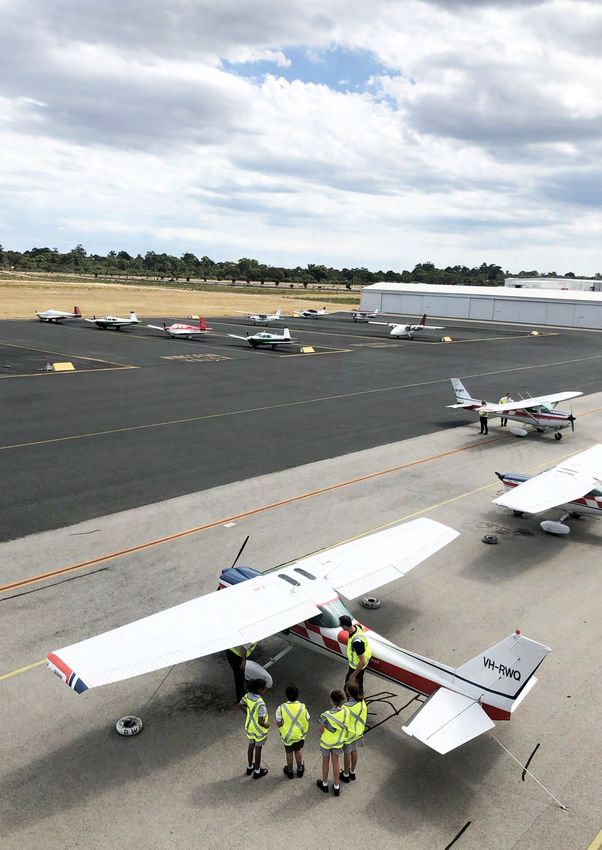
3 Course Information Handbook

Introduction
Welcome to Carey’s Secondary School. We are looking             The Year 7 program is an exciting one that offers
forward to working together in the journey ahead. Your          variety, engagement and challenge. We aim to create a
son / daughter’s education is supported by staff who            curriculum that is full of hands-on, learning-rich activities
love working with children of this age. Each teacher is         which are designed to not only engage the students,
committed to helping students develop knowledge and             but also teach them problem solving skills, creativity
skills that will help them enjoy academic achievement at        and ways of learning that will benefit their later years
Carey and beyond. We contend that it 'takes a village           of study. We aim to encourage our students to develop
to raise a child' and welcome parent’s feedback and             a growth mindset (based on the research of Dr Carol
involvement.                                                    Dweck) which leads to a desire to learn and embrace
                                                                challenges; persist in the face of setbacks; see effort as
Year 7 at Carey is a great initiation into secondary            the path to mastery; learn from feedback; and celebrate
schooling. It is a special year of transition, in which         the success of others.
students will undertake e a wide variety of different
subjects. They will experience a stimulating and                Year 7 is an ideal time for students to develop a sense
challenging year where they will gradually take increased       of discovery in their own learning, as they grow and
responsibility for their own learning. Students will            understand more about their place in the world.
develop organisational and study skills that equip them         Pastoral care is an integral part of the program, where
for the future. As they proceed through Years 8-12, they        we encourage teachers to develop a relationship with
will increasingly be able to specialise in the areas of their   their students that will enable them to understand each
greatest interest and expertise.                                student’s needs and abilities – academically, socially
                                                                and pastorally. As a College, we value your children
Carey’s learning programs are consistent with the               as individuals. Their progress and well-being is on the
W.A. Curriculum and form the foundational links to              forefront of our hearts and minds.
the curriculum of the senior years. Our curriculum is
designed to develop:                                            We challenge all of our students to work hard now to
  • Creativity.                                                 lay the foundation for their future. If you would like to
  • Flexibility.                                                discuss any of these matters, please contact the Dean of
  • Collaboration.                                              Curriculum.
  • Problem solving.
                                                                Mr R. Stirling
These are all attributes of the 21st century learner.           Assistant Principal - Curriculum

                                                                Mrs K. Lacey
                                                                Dean of Curriculum
                                                                                            Course Information Handbook 4
About Carey
  Our History                                                 Our Vision
  Established in 1998, Carey Baptist College has grown        Carey is a community of people united by a common
  into a leading Christian education provider in the south-   dream. We long for nothing less than a world
  east corridor of Perth. The campus at Harrisdale has        transformed by Christ’s love. We believe as a community
  grown to more than 1,500 students from Kindergarten         that we are called to be on mission with God to attempt
  to Year 12 and has consistently achieved exceptional        the extraordinary. Our strategy is to connect with
  educational outcomes. The College is well-known for its     the community and the world to develop community
  holistic education of students as well as its passionate    platforms through which people can:
  local community. Carey Harrisdale is also home to Carey       • Experience God’s love;
  Baptist Church, Timber Café and Jump Carey Early              • Have the opportunity to say yes to Jesus; and
  Development Centre.                                           • Demonstrate God’s compassion for the world.

  Carey’s reputation reflects a commitment to outstanding     Motto
  academic achievement, positive pastoral care, and a rich    The College motto is ‘Attempt the Extraordinary’.
  diversity of co-curricular activities, including service
  learning. Learning takes place within a faith-based         This motto is taken from the words of Professor William
  values system that encourages students to become            Carey, a British missionary to India. Carey influenced the
  independent, creative and flexible. Its Secondary           social structure of India and left a legacy of colleges and
  program features:                                           universities. He refocused missionary work throughout
    • A tradition of graduating exceptional young people      the world to help people choose to become liberated
        of character and capacity.                            from oppression, disease and hunger through education.
    • A wide selection of ATAR and Vocational pathways.       All of this came from a man who simply believed his only
    • Highly respected Arts and Music programs.               talent was perseverance. Before setting out for India,
    • GATE, STEM and Aviation programs.                       William Carey preached a sermon titled ‘Expect great
    • Year 7 Scholarships in STEM, Music Specialist and       things from God, attempt great things for God,’ and then
        Academic Excellence.                                  he went on to live out his faith and vision in God.
    • A safe, rigorous and engaging learning community
        of over 800 students.

  Our Values
  All members of the Carey Community are encouraged to
  uphold and behave according to these values:
    • Kindness: A concern for others, which compels us
        to act for their good.
    • Courage: The willingness to act well in the face of
        uncertainty and fear.
    • Respect: Sensing and honouring the God-given
        worth in another.
    • Humility: Embracing a clear perspective for one’s
        place with God and others and seeking to benefit
        others above ourselves.
    • Integrity: Being honest and consistently living out
        our moral principles.

5 Course Information Handbook
General Information
Absences                                                     Extended leave for reasons other than medical is
Students should be punctual to their Homeroom at             not advised, but if necessary, parents should advise
8.35am. They should not arrive at school before 8.00am       the College Principal in writing prior to the absence.
unless attending specially organised classes (e.g. Music)    Sometimes students stay at home for reasons that are
or training (e.g. Cheer). Likewise, students are requested   not acceptable. For example:
to leave the College grounds promptly at the end of the        • The student’s birthday.
day at 3.25pm, unless involved in a College organised          • Too tired to come to school because of a late night.
event.                                                         • Staying home with a sibling or parent who is sick.
                                                               • Staying away for the whole day when an
Any absence from school must be confirmed by the                   appointment is booked for a short time in the
student’s parent / guardian. This may be in the form of:           morning or afternoon.
  • An email to absentees@carey.wa.edu.au                      • Going to the airport.
  • A text message to 0428 031 096, including: Year,           • Family holidays.
     House, date, your name and an explanation for             • Weather conditions, for example too hot.
     your absence.
  • A response to a College generated SMS                    Please remember that we require a detailed explanation
     Attendance alert.                                       of any absences, as records are an essential part of the
                                                             legislative requirements placed upon schools.
Absences of more than three consecutive days require a
medical certificate.                                         Changing Electives
                                                             The process for requesting an elective change is as
Late Arrival / Early Departure                               follows:
  • Students are required to sign in at Student              1. An initial discussion is held with the Dean of
      Reception if arriving late.                                 Curriculum to consider the options that are
  • Parents are required to sign out a student if it              available. Options for each student will depend on
      is necessary for them to leave early during the             gridlines and class sizes.
      school day.                                            2. A Course Change Request Form needs to be
                                                                  completed and fully signed (including signatures
Attendance                                                        from teachers, Heads of Department and parents).
Attendance and participation in class is crucial to a        3. The Course Change Request Form should be
student’s achievement and success. Studies show that              submitted to the Curriculum Office (in Building J).
students who attend College regularly are more likely        4. Students must not move classes until the changes
to succeed. Students should aim for 100% attendance.              have been updated on SEQTA.
The only acceptable reasons for absences are sickness
or attendance to a College activity such as an excursion.    Changing electives is subject to the availability of
Parents who make regular school attendance a priority        places. Elective changes can only take place up to the
are helping their children to value learning, accept         end of Week 4 of Term 1.
responsibility and develop work readiness skills.
                                                             College Awards and Citations
Attendance patterns and attitudes to school and learning     Merits
are formed early. Children who develop good attendance       The College uses Letters of Affirmation and student
habits are more likely to maintain them throughout their     Diaries to positively encourage students in academic,
school years. Irregular attendance comes at a cost to        social, cultural, and sporting aspects of student life.
a student’s education and seriously jeopardises their        Examples of the types of situations in which these may
further opportunities.                                       be awarded include:
                                                               • Outstanding effort on an assignment.
Unless there are extenuating circumstances, which will         • Helping other students or teachers beyond what is
require a medical certificate, if a student’s attendance            normally expected.
falls below 90%, the College will initiate procedures          • Acts of bravery / courage.
to discuss attendance with both the student and their          • Reporting harassment.
parents.                                                       • Exemplary leadership.

                                                                                        Course Information Handbook 6
Awards                                                         Controversial Issues
The College has a range of awards that reward                  Carey Baptist College is a Christian College whose
excellence, such as:                                           mission is to serve the community. The College is
  • Medallions for Sport.                                      mandated to teach the W.A curriculum, but does so
  • Certificates of Excellence.                                within a Christian framework. It is the intention of the
                                                               College to equip students to be lifelong critical learners,
Subject Awards                                                 and provide them with a values framework, which we
These Curriculum awards are presented in an Awards             believe will assist them in dealing with the issues that will
Assembly which takes place at the end of Semester 1 and        confront them through our society, and prepare them for
Semester 2. There are two categories for these course          future studies.
awards:
  • Outstanding Achievement Award                              Many issues that could be viewed as controversial are
     This is presented to the student with the highest         covered in the curriculum. Carey enables the questions
     academic achievement in each course.                      and issues raised to be unpacked and answered by skilled
  • Outstanding Application Award                              Christian teachers in the context of a loving and caring
     This is presented to the student with the most            environment. We are focused on equipping students
     consistent application in each class. It is equally       to be critical thinkers, providing them with a positive
     important to recognise the diligence and work             framework for critical analysis.
     ethic that students bring to their studies in their
                                                               Examples of courses that contain issues which may be
     learning journey.
                                                               controversial could include:
                                                                 • Health Education (sexuality, drugs, contraception).
Medals of Excellence
                                                                 • Beliefs and Values.
These Curriculum awards recognise and honour
                                                                 • Human Biology (sexuality and evolutionary
academic excellence across all the courses a student
                                                                     processes and theory).
studies. They are achieved when a student receives at
                                                                 • English, Media and Arts (text books, reading and
least 75% of ‘A’ Grades across all of their courses in a
                                                                     viewing materials).
Semester’s report.
                                                               The W.A. curriculum mandates the topics covered, but
College Colours                                                teachers and Heads of Department ensure that they are
College Colours are presented to students who                  delivered in an age and maturity appropriate context.
demonstrate excellence in their chosen field and uphold        Our task is to teach students to be discerning and equip
the College values at all times. Colours recipients will       them with skills to interrogate the material with which
be inclusive, service-oriented leaders in any of five fields   they are presented from a position of integrity.
listed below:
   • Academic Colours.                                         Parents who have a concern with an aspect of a course
   • Arts Colours.                                             are welcome to discuss the course with the class
   • Health and Physical Education Colours.                    teacher and relevant Head of Department in the first
   • House Colours.                                            instance. All College teachers are active Christians and
   • Colours for Service to the Carey Community.               we consider this to be critical, given the need to instil
                                                               a values framework based on Christian ideals in the
College Honours                                                context of a secular curriculum.
Honours recipients will have first been recognised with
College Colours and then have given at least two years         Day (Session) Times
of service in their area, whilst also excelling in other            ROOM                           TIMES
areas of College life.
                                                                    Homeroom                       8:35 – 8:40
Recipients must demonstrate and uphold the College                  Session 1                      8:45 – 9:40
values of Kindness, Courage, Respect, Humility and                  Session 2                      9:45 – 10:40
Integrity. Honours recipients will be assessed according
                                                                    Recess                         10:40 – 11:00
to their contribution, team spirit, conduct, goodwill,
cooperation and proficiency across a range of areas.                Session 3                      11:00 – 11:55
                                                                    Session 4                      12:00 – 12:55
College Honours recipients will have competed at a                  Lunch                          12:55 – 1:30
State level or above and be a recognised leader in their
area by their peers and staff.
                                                                    Session 5                      1:30 – 2:25
                                                                    Session 6                      2:30 – 3:25

7 Course Information Handbook
Exams
Students will undergo tests in Year 7 and 8, and will begin their first formal exams in Year 9.

  YR     WHEN                                 DURATION          EXAM LENGTH                      SUBJECT

                                                                                                 Maths, English, Science,
  9      Term 4                                 4 days          1½ hrs + 10 mins (reading)
                                                                                                 Humanities
         Semester 1 (Term 2)                    4 days          2 hrs + 10 mins (reading)        Maths, English, Science,
  10
         Semester 2 (Term 4)                    4 days          2 hrs + 10 mins (reading)        Humanities, Languages

         Semester 1 (Term 2)                    2 weeks         2½ hrs + 10 mins (reading)
  11                                                                                             All ATAR courses*
         Semester 2 (Term 4)                    2 weeks         3 hrs + 10 mins (reading)
         Semester 1 (Term 2)                    2 weeks         3 hrs + 10 mins (reading)
  12                                                                                             All ATAR courses*
         Semester 2 (Term 4 & Holidays)         2 weeks         3 hrs + 10 mins (reading)

Extension Programs
The extension program is delivered to academically             Music Tuition
able students with the purpose of challenging them to          Students are invited to become part of Carey’s Music
achieve excellence. Extension students will undertake          Program. In addition to improving musical and creative
the W.A. Curriculum alongside students of similar ability,     skills, learning an instrument also develops a sense of
which provides them with the ability for them to enhance       commitment, perseverance, critical assessment and time
their knowledge, understanding and skills in a particular      management. Creating music gives enjoyment, a sense
field of study. The program is designed for students to        of achievement to students, and boosts their confidence.
develop critical thinking and problem solving through          Over 20 tutors and educators conduct more than 270
the use of various extension activities.                       weekly music tuition sessions for Carey Music Program
                                                               students.
In giving students a wide range of opportunities to
develop their understanding and knowledge of the world         The College endorses and provides learning experiences
around them and to develop their God-given talents and         and assessments in accordance with the Australian
abilities, our desire is to see them become innovators,        Music Examinations Board (AMEB) syllabi. This includes
entrepreneurs, lifelong learners and responsible global        preparing for both practical and written examinations.
citizens. This is enhanced by the streaming process            Tutors will establish programs for each student based on
whereby students are placed into one of four streams.          what is regarded as the best pathway for development.
The four streams are:
   • Extension - for students who have demonstrated a          The College also offers an extensive Co-curricular
       high capacity and potential in a particular subject.    Ensemble program, including Jazz, Contemporary and
       This stream completes the W.A. Curriculum to a          Western Art bands, a choir and vocal ensemble, and
       high level and is involved in extension activities to   ensembles specific to musical events and concerts
       further develop their knowledge and skills.             throughout the year. Students are encouraged to
   • Mainstream - the majority of students are placed          join a music ensemble to further their skills on their
       in the stream. Students complete the W.A.               instruments; learn about playing in a group environment;
       Curriculum at a pace that allows them to develop        meet new people; and engage in performances on and
       sound knowledge and skills in a particular subject.     off campus
   • Foundation - for students who have demonstrated
       that they have significantly struggled with the         Tuition is offered for the following instruments:
       subject in the past. Students complete the main           • Woodwind – Flute, Clarinet, Saxophone.
       structural elements of the W.A. Curriculum. Work          • Strings – Violin, Viola, Cello, Classical Guitar,
       and assessments are slightly modified.                        Double Bass, Acoustic Guitar, Bass Guitar, Electric
   • Support - for students who require significant                  Guitar.
       assistance or learning support. Work and                  • Brass – Trumpet, Trombone, Baritone, Euphonium.
       assessments for students in this stream are               • Percussion – Pianoforte, Keyboard, Percussion,
       heavily modified.                                             Drum Set.
                                                                 • Voice – Jazz, Contemporary, Musical Theatre.
For further details, refer to the section on Streaming.

                                                                                            Course Information Handbook 8
A certain level of musical proficiency is required for     based on design principles, incorporating 21st Century
individual tuition in these areas.                         learning strategies and focus on project / problem
                                                           solving inquiry based learning. This allows a wider
Contact Music Administration or Mr B. Thompson,            number of students interested in STEM to benefit from
(Head of Music) at bthompson@carey.wa.edu.au for           these extension activities. These electives are:
any further enquiries.                                       • Technologies: Aviation (STEM)
                                                                 The study of Aviation at Carey is not only for
Education Perfect                                                students wanting to become pilots, but for anyone
Education Perfect is an online platform designed to              interested in the aviation industry, including air
make learning fun, engaging and effective. It is used            traffic controllers, drone operators, engineers,
by over 1.200 schools for students’ daily learning,              mechanics, administrators and business operators.
revision and assessment. Through the Education                   This elective is available to all students.
Perfect Championships, students are able to join with        • Technologies: Computing – Coding (STEM)
others from all around the world to earn points towards          Coding makes it possible to create computer
individual and school awards as an incentive to their            software, games, apps and websites. When
learning. Carey uses this program in Year 7 English,             students learn to code, it helps them to develop
Science and Languages.                                           essential skills such as problem solving, logic and
                                                                 critical thinking. Learning to code encourages
In Year 7 English, Education Perfect enables teachers to         students to become creators, not just consumers,
track students’ progress against the literacy demands            of the technology they use. This elective is
of the English course. Students’ results in Education            available to all students.
Perfect provide the feedback teachers use to tailor
lessons suitable to the specific needs of each student.    Languages: Indonesian, Japanese and Mandarin
Education Perfect is also used to provide homework         Language courses are aimed at students for whom the
activities to enable students to work on their literacy    language is a second (or subsequent) language. These
proficiency at their own pace. It acknowledges students    students have usually not been exposed to, or interacted
independence as learners and encourages their              in the language outside the Language classroom and
individual work ethic.                                     have learnt about the language and its culture in an
                                                           Australian classroom context. They may have studied
Year 7 Electives                                           this language at Primary level, or may be starting the
Unlike many schools that offer a predetermined course      language for the first time.
in Year 7, Carey offers a broad range of electives
within the prescribed W.A Curriculum areas. These are      Carey students participate in an innovative and modern
designed to give students the opportunity to discover      languages program which provides a number of unique
what their skills and abilities are, and provides them     prospects in a challenging learning environment.
with subjects which will give them a hands-on, practical   Students choose to study ONE of Indonesian, Japanese
experience.                                                or Mandarin in Year 7 and study that language until the
                                                           end of Year 8 (in line with the direction taken in the W.A.
This occurs in the fields of:                              Curriculum). After this, students may choose to continue
  • Technologies, where all students can choose            the study of Japanese as an elective course in Year 9
      from a range of Design and Digital Technologies      and 10, and subsequently up to Year 12 at university
      subjects.                                            entrance level.
  • The Arts, where all students will experience both
      Visual and Media Arts, and choose between the        An immersion trip to Sayama High School in Osaka
      Performing Arts of Dance, Drama or Music.            (Carey’s sister school) is part of the bi-annual program
  • Languages, where students may choose between           for Year 10 and 11 Japanese students, along with a
      Japanese, Indonesian or Mandarin                     reciprocal visit to Carey by students of this school.

STEM Electives                                             Students with a diagnosed Learning Difficulty will
As a College, we believe that it is important to provide   participate in two sessions of Literacy support in Year 7
STEM to all students who are interested in this field of   and 8 instead of the Languages program.
study. Therefore we have chosen to develop some of
                                                           The Languages Learning Area promotes academic
our Design and Digital Technologies electives as STEM
electives, with Technology as the context.                 extension through the energy, enthusiasm and expertise
                                                           of a talented team of teachers, and through programs
These electives integrate disciplines from other fields    (like Language Perfect) and competitions which also
such as Science, Engineering and Maths. They are           support student language acquisition.

9 Course Information Handbook
There are many advantages to learning another                Musical / Drama Production
language, including:                                         Every two years, the College presents a major
  • Communicating in the language and developing             production that students from Year 6-12 can participate
      an understanding that there are many ways to           in. Auditions and rehearsals occur in Semester 2 of the
      interact with people.                                  previous year, but there are many opportunities for
  • Learning how languages work and enhancing                students to be involved.
      students’ literacy skills, as a clear link exists
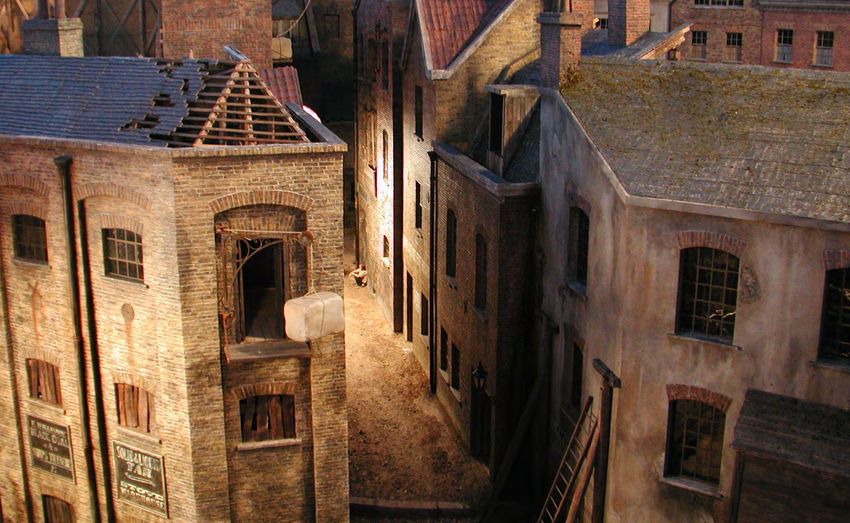
                                                             In 2021, the College will present ‘Oliver!’ from the
      between learning another language and literacy
                                                             11-13 March, 2021. This is a British musical, with music
      and grammatical development in English.
                                                             and lyrics by Lionel Bart, based on the 1838 novel Oliver
  • Analytical skills are increased along with the ability
                                                             Twist by Charles Dickens.
      to transfer skills across languages.
  • Enhancing problem-solving skills along with              Extra-Curricular Sport
      thinking laterally and working collaboratively,        Carey competes in several Inter-School competitions,
      increased self-confidence, self-esteem, resilience     including: the ACC Junior Sport Competition, known as
      and tolerance.                                         JSAS (Junior Southern Associated Schools); the ACC
  • Developing an understanding and respect for              Hockey Challenge; Australian Rules Football; and the
      other cultures, people, their ideas and ways of        State Equestrian Inter-School Championships.
      thinking which enriches global awareness and
      connections.                                           Students with limited or extensive experience are
  • Increasing career opportunities in an increasingly       welcome to come to the trials and try out for a team.
      globalised market.                                     Students also have the opportunity to compete in Inter-
                                                             School Swimming, Cross Country and Athletics.
Extra-Curricular / Special Events                            JSAS sport is an Inter-School Sport Competition
Cheer
                                                             that runs throughout Terms 1 and 2 on Wednesday
Carey Jewels Cheer and Pom Team is a competitive
                                                             afternoons. This competition gives students who love
performance team available to all students at the
                                                             sport, an opportunity to represent the College in their
College. The aim of the program is to learn new skills,
                                                             chosen sport and compete against other nearby schools.
make new friends and belong to a community of amazing
                                                             There are several team options in the JSAS Competition
people who are working together to achieve the same
                                                             including Boy’s Touch Rugby, Soccer and Basketball; and
goals. No experience is needed to join.
                                                             Girl’s Netball, Touch Rugby, Soccer and Basketball.
Cheer is a challenging and dynamic sport, which takes
an extreme amount of physical work as well as practice.      Year 7 Camp
Cheerleaders must be as graceful as dancers, and as          The Year 7 camp is a three-day camp in which students
athletic as gymnasts.                                        learn to bond and grow as a year group whilst
                                                             undergoing a variety of challenging activities. It usually
Pom is a mix of cheer and dance. It is predominantly         occurs in the first term of school and is a fantastic
dancing but with quicker, sharper, cohesive movements.       opportunity for students to get to know one another
If teams work hard and well with each other, students        and their teachers. They engage in pastoral content
will participate in other genres such as Lyrical,            regarding the effect of their words on themselves
Contemporary, Jazz and Hip Hop as the year progresses.       and others, and in a variety of physical activities that
                                                             promote teamwork and environmental awareness.
Students train two mornings per week, so a high level of
commitment is expected for all team members.                 Gifted and Talented (GATE) Programs and
                                                             Scholarships
There are several team options for students in Year          Entrance to the Carey GATE program and scholarship
7-12 at the College. Students who choose to join Carey       is selective and based on academic merit. Applicants
Jewels will have many occasions to compete in Perth:         must demonstrate ability through an academic
at the Cheer Unlimited Australia Competition Series;         entrance test and a music audition (for music
Australian All-Star Cheerleading Federation; and Aussie      applicants). Carey defines gifted and talented as:
Gold State Spectacular. In 2019 the team travelled              • Gifted, whereby a child has the potential for high
overseas to London and Paris to compete at the biggest
                                                                    ability in a certain area. A student may be gifted
competition in Europe (Future Cheer Internationals) and
                                                                    in one or more areas, such as literacy, numeracy,
won numerous trophies. The team also performed at
                                                                    sport, the arts or more.
Disneyland Paris as part of the Walt Disney Performing
Arts Program.                                                   • Talented, meaning they can demonstrate
                                                                    outstanding performance or achievement.

                                                                                       Course Information Handbook 10
The GATE program is additional to the extension classes Round 1 scholarship offers will be made at 75%
and is designed to provide Gifted and Talented students deduction of academic tuition fees for the remainder of
with a stimulating and challenging learning environment the students schooling at Carey Baptist College; while
to cater for their academic and developmental needs. Round 2 scholarship offers are made at 50% deduction.
Carey offers GATE opportunities in STEM (Science,
Technology, Engineering and Maths), in Music Specialist GATE STEM
and in Academic Excellence. GATE STEM and Music STEM integrates the disciplines of Science, Technology,
Specialist take place for two sessions per week. GATE Engineering and Mathematics into real-world, rigorous,
STEM occurs during the two Homework sessions, and relevant learning experiences as a way of engaging
while Music Specialist occurs in the Music Elective and students in imaginative and collaborative problem
includes an after-hours session. The GATE Academic
solving and reasoning.
Excellence students participate in the English and
Humanities Extension classes.
The STEM program incorporates 21st Century learning
One unique aspect of these GATE programs is that each strategies, focusing on project / problem solving inquiry
occurs at different times in the school’s timetable, based learning where students are encouraged to
which allows these students the possibility of excel in their areas of academic talent and develop a
participating in more than one of these programs. love of learning. STEM skills are crucial to innovation
Other Extension students may also be invited to and development in our contemporary technological
participate in aspects of these programs, especially those knowledge-based and competitive global economy.
involving competitions.
In the STEM program,
Gifted and Talented Scholarships • Students are explicitly supported to engage
Entrance to the Year 7 GATE program and the with the processes of investigation and problem
awarding of scholarships is based on academic merit solving.
demonstrated by performance in an academic entrance • Students engage in mathematical / scientific
test held at the start of Term 2. The HAST test has been reasoning and argumentation.
produced by the Australian Council for Educational • Students are encouraged to develop an
Research (ACER) and is used by over 100 secondary
understanding of creative problem solving and
schools across Australia and internationally.
design processes.
• Students are challenged and supported to develop
Application forms to sit this test are available at the
start of each year from curriculum@carey.wa.edu.au or their own representations as a means of explaining
from the Curriculum Office (Building J) at the Harrisdale and justifying their understanding.
campus.
The STEM program includes:
Students will be invited to sit the examination based • Partnerships with Universities and Industry.
on their applications, which includes their most recent • Participation in a range of STEM competitions,
Primary school report; a copy of their NAPLAN results; such as Science Talent Search, Big Science
and copies of any awards or certificates which the Competition, Synergy Solar Competition, Westpac
student has achieved. Mathematics Competition, Tournament of Minds,
VEX5 in Robotics.
For Music candidates, there will also be an audition, • Areas of study will be selected from: Sustainability;
which takes place on the Saturday following the Drones; Alternative Power Solutions; Coding;
academic entrance test. The minimum level of musical Rockets / Satellites; Climate Science; and
standard expected of a scholarship applicant is AMEB
Engineering.
Grade 2 or similar.
Participation in the GATE STEM class will be limited
GATE scholarships are for the duration of the student’s
Secondary education. Acceptance of a scholarship holds to a maximum of 24 students. Students in the STEM
the expectation that the student will remain at Carey program will also participate in the Year 7 Science and
until the end of Year 12. However, scholarships will be Maths Extension programs. For further details, refer to
reviewed annually and may be reduced or terminated if the section on Science.
a recipient’s progress, attitude, attendance, or conduct
is considered unsatisfactory and their ‘Good Standing’ is GATE Music Specialist
lost. The Year 7 Specialist Selective Music Program is aimed
at GATE students with the demonstrated experience and
passion to further their Music studies. Entrance to this
program is by selection, audition or invitation.
11 Course Information HandbookCarey’s highly respected Music Department offers Instruments available include: Piano; Classical Guitar;
education in a variety of genres, including: Electric Guitar; Electric Bass; Violin; Viola; Cello; Double
• Contemporary Popular Music. Bass; Clarinet; Flute; Saxophone; Trumpet; Trombone;
• Western Art / Classical. Baritone; Euphonium; Tuba; Percussion; Drum Set; and
• Jazz. Voice. For further details, refer to the section on Music.
• Musical Theatre.
GATE Academic Excellence
Students participate in a variety of Music ensembles This is a Selective Scholarship Program aimed at
and bands, and have multiple opportunities to perform students who excel in English, Humanities and the Arts.
during the year – on-site, across Perth and Western These students are streamed into the Extension
Australia, and in national competitions. programs in English and Humanities and participate in
competitions that take place in and out of class time.
Carey Baptist College has active connections with
WAAPA (Western Australian Academy of Performing
Heads of Department
Arts) and the James Morrison Academy, with many of its
At Carey, the different subject areas are organised into
Music students accepted into these tertiary institutions
ten different Departments. The Heads of Department,
following graduation from Carey. Students entering
the Assistant Principal (Mr R. Stirling) and the Dean of
the GATE Music program in Year 7 will continue in the
Curriculum (Mrs K. Lacey), coordinate the curriculum
program until the end of Year 10, before embarking on
content and assessment processes across the College in
the ATAR Music program in Year 11 and 12.
accordance with the guidelines set down by SCSA.
The Heads of Department are:
DEPARTMENT HEAD OF DEPARTMENT EMAIL ADDRESS
Beliefs and Values Mr J. Birt jbirt@carey.wa.edu.au
English Mr P. Fallon pfallon@carey.wa.edu.au
Health and Physical Education Mr C. Bolton cbolton@carey.wa.edu.au
Humanities and Social Science Mr C. Austin caustin@carey.wa.edu.au
Languages Mrs K. Bonciani kbonciani@carey.wa.edu.au
Mathematics Mrs L. Karasavas lkarasavas@carey.wa.edu.au
Music Mr B. Thompson bthompson@carey.wa.edu.au
Science Mr P. van Dam pvandam@carey.wa.edu.au
Technologies Mr R. Stirling rstirling@carey.wa.edu.au
Visual and Performing Arts Mrs S. Cuellar scuellar@carey.wa.edu.au
Homework How much time in total?
Setting homework is important for reinforcing good Students should be developing a regular homework /
working habits in students. It is also important that the study timetable from the start of Year 7, and be aiming to
level of homework is gradually increased over the years, complete 5 hours per week (1 hour + 15 minutes of
but is not too time-consuming for the age of the student. reading, four times per week).
The recommended time is a balance between reinforcing
and extending the work covered in class, while allowing This is a recommended minimum. It is important to do
for other pursuits and family time. Homework is more than these minimum requirements, rather than
assigned weekly to enable students to plan their study less, especially in the lead up to tests.
and other activities. All assessments for the term, with
the dates they are due, can be found on either SEQTA We recommend that students draw up a timetable
Learn or SEQTA Engage, under Assessments. outlining what they are planning to do each night, and
include other commitments and activities. It is important
We encourage our students to get into the habit of study to negotiate the timetable with parents so that it is as
as part of their weekly homework routines, especially realistic as possible. If the timetable is varied for some
when there is no set homework. Study and revision are reason, then the time should be made up at the end of
not only useful around test times, but are a vital part of the week, making sure that a minimum is achieved each
the learning process. Revising a chapter from their week. This pattern needs to become a habit for students
to be able to manage their time effectively.
Science book or re-reading a chapter from the English
text are good examples of helpful study exercises.
Course Information Handbook 12Extension students would typically commit to more than Homework expectations and procedures
the above homework guideline. Parents are encouraged Homework will usually be issued for completion over a
to communicate directly with teachers if students week. Students need to plan their approach to ensure
are unable to complete homework within the above completion of the tasks within the designated time
timeframe on a regular basis. frame. If students miss classes for music lessons or
external sporting commitments etc., they must see their
English, Humanities, Mathematics and Science should teacher to negotiate tasks and catch up on work missed.
comprise of an average total of 75% of a student’s
homework time. Other subjects should comprise of an NAPLAN – Year 7
average total of 25% of a student’s homework time. Literacy and Numeracy skills are developed over time
throughout the school curriculum and are tested
What is the purpose of Homework? through NAPLAN in Years 3, 5, 7 and 9. These tests
• Revision and study – to prepare for future lessons identify whether all students have the literacy and
and consolidate essential skills and content. numeracy skills that provide the critical foundation
• Completion of assignments and weekly tasks. for their learning, and for their productive and
• Developing study skills and organisational habits. rewarding participation in the community. Students
• Completion of tasks because of missed lessons are assessed using common national tests in reading,
due to illness, College events, holidays, music writing, language conventions (spelling, grammar and
lessons, sport etc. punctuation) and numeracy. Please contact Mrs L. Ong
(Director of Accessing Curriculum) at long@carey.
What is appropriate as Homework? wa.edu.au if you have any questions or concerns about
• Assignments to be done over a period of time NAPLAN testing.
before being handed in for assessment.
• Revision, study, reading and comprehension tasks. NAPLAN Year 7 Mean Scores (2015-2019)
• Activities that reinforce basic principles of subjects The student numbers in Year 7 vary from year to year,
– e.g. times tables, periodic table, vocabulary. with approximately 80 students continuing on from Year
• Catching up on missed work due to school absence 6 at Carey (from its 3 classes), and approximately 60-70
or attendance at music lessons, etc. students from other feeder Primary schools in the area.
• Finishing incomplete tasks begun in class. This Year 7 Carey NAPLAN results (as demonstrated below)
should be the exception. reflect a consistently strong trend in all five of the tested
areas when compared to other W.A. schools.
2019 (141 students)
Numeracy Reading Writing Spelling Grammar/Punctuation
Carey WA Schools Carey WA Schools Carey WA Schools Carey WA Schools Carey WA Schools
576 558 555 546 531 513 568 547 562 542
2018 (141 students)
Numeracy Reading Writing Spelling Grammar/Punctuation
Carey WA Schools Carey WA Schools Carey WA Schools Carey WA Schools Carey WA Schools
578 549 559 539 530 505 572 545 572 542
2017 (141 students)
Numeracy Reading Writing Spelling Grammar/Punctuation
Carey WA Schools Carey WA Schools Carey WA Schools Carey WA Schools Carey WA Schools
578 551 551 539 534 509 571 547 556 537
2016 (154 students)
Numeracy Reading Writing Spelling Grammar/Punctuation
Carey WA Schools Carey WA Schools Carey WA Schools Carey WA Schools Carey WA Schools
570 548 556 537 531 512 554 540 555 537
2015 (129 students)
Numeracy Reading Writing Spelling Grammar/Punctuation
Carey WA Schools Carey WA Schools Carey WA Schools Carey WA Schools Carey WA Schools
565 538 567 542 545 506 562 542 578 536
13 Course Information HandbookOther Timetabled Sessions
Homework Sessions of ways, from certificates awarded in assemblies, the
Increasingly, conscientious students are reporting attainment of leadership positions, to the awarding of
difficulty completing the amount of set homework due House Colours.
to after school commitments and the amount of set
homework. Part of the answer to this is learning to work The names of the Houses reflect the Indigenous names
‘smarter’, which is a reason why Carey has incorporated for the changing seasons in the South-West of W.A.
Study Skills Units into its House Session program (see These are:
next section). • Birak (Maroon).
• Bunuru (Orange).
Another part of the answer is Carey’s allocation of two • Djeran (Green).
homework sessions per week within the timetable. This • Makuru (Blue).
is designed to enable Year 7 students to get a head start • Djilba (Purple).
on the homework that they receive, with the support of • Kambarang (Gold).
teachers.
Along with student leaders, the House system is
Students will need to be working on homework and the overseen by the College’s six House Coordinators
use of computers will be restricted to homework tasks who develop and resource the House program so that
alone. It is important for students to be organised and students and staff can engage in and enjoy the House
make sure they plan what they are going to do and bring challenges.
the required materials to these homework sessions in
order to use the time effectively. Teachers will assist The weekly House Session incorporates units on Study
students with their homework in general terms, and Skills, which are taught by the Homeroom teacher. Study
ensure they stay on task at these times. If students claim skills are integral to every student’s success. The further
they have no homework to do, this will be reported to along a student is in their education, the ability to use
the teacher supervisor to check, and then students may essential study skills to work ‘smart’ and have optimal
use the time for reading. achievement becomes increasingly important.
Carey’s desire is that students can excel in all their
Good study skills take consistent practice and support
subjects and do their best to complete all their work
from educators and parents. We all need to be speaking
to the best of their ability. We hope to better balance
the same language to enhance the consolidation of study
student’s homework with their other family activities,
skills. Carey provides information for both our staff and
particularly as we hope to offer a greater range of extra-
parents so that we can collectively support the building
curricular activities in the future. In addition, we aim to
of these important skills. Best practice means that we
reduce student stress where we can, and assist them
are reinforcing these skills both in the classroom and at
with teacher guidance and time management in their
home.
homework.
House Session / Study Skills In Year 7, students will need to grasp new skills and
Carey has an integrated Pastoral Care and House engage in new study practices such as self-directed
System in which Homerooms and Houses are aligned. learning and research. The Year 7 study skills program
Each morning students begin their day in their will focus on:
homeroom, which is also their House. The House system • SEQTA, Google Drive.
is designed to empower students to find their place of • Effective use of the iCentre.
belonging and to foster a competitive spirit underpinned • Developing a ‘growth mindset’.
by a communal ethos within the College. • Organisation.
• Homework and Study.
Through the House system, students will compete in • Time Management.
weekly competitions and the school’s carnivals. House • Goal Setting and Planning.
competitions range from academic challenges to cultural • Listening Skills.
and sporting activities. • Note Taking.
• Problem Solving.
Within the House system, there are a range of student • Critical Thinking.
leadership opportunities, from captaining teams, helping • Research Skills.
run activities, through to leading a House and helping to
design the House challenges. Student engagement and Extended Homeroom / Assembly Session
success in the House program is recognised in a number Each Thursday morning, there will be an extended
homeroom / assembly session that takes place during
Course Information Handbook 14Session 1. A formal Assembly occurs approximately every student to experience his or her highest level of
three or four times per term, usually with two Middle achievement. Staff use humour, positive affirmation and
School Assemblies (Year 7-9) and one or two Whole encouragement as tools for promoting mental health and
School Assemblies (Year 7-12). optimal wellbeing.
Student performances, presentations, and events like As part of our Pastoral Care, we provide support for
Easter and ANZAC Day are part of these Assemblies. students who are dealing with significant health issues,
Assembly dates can be found on the College Calendar a personal or family crisis, parent separation or death
and parents are warmly invited to attend. in the family. This support may include specific plans
to assist with areas such as attendance, participation,
In the remaining sessions, there will be an extended behaviour or curriculum demands. For a student with
home room session focusing on pastoral care. At these particular diagnosed disabilities we offer Inclusive
longer home room times, students will be involved Education Plans (IEPs), and employ Education
in programs organised by the Year Managers and Assistants to provide support for these students where
homeroom teachers, including the ‘Keeping Safe’ and appropriate.
‘Wellbeing’ programs. This time may also be used for
guest speakers or for organising House Activities / We believe that every child has the right to feel
Carnivals. comfortable and safe at school, therefore, at Carey,
we have no tolerance for harassment, vandalism or
Literacy Support possession of illegal substances or materials.
Students with a diagnosed learning difficulty are
exempt from studying a Languages elective, and may Year Managers
undertake a Literacy Support program. This takes A key member in Carey’s Pastoral Care System is the
place in a small specialised class for students who Year Manager. In Year 6, students are primarily under
need intensive / extra literacy support. This program is the care of one classroom teacher. In Secondary school,
designed to assist them in other learning areas. Literacy students have different teachers for all their subjects.
is foundational to a student’s success in Secondary This creates a rich and diverse educational experience;
School, and this extra support seeks to improve however, it can be slightly harder for families to keep
outcomes in this area. track of who their child’s teachers are, and who they
need to speak to if they have questions. To simplify this
Pastoral Care process, and as part of providing holistic care for our
It is our belief at Carey that effective pastoral care students, at Carey, we appoint Year Managers to
involves strength, sacrifice and service, and we have oversee the pastoral care of each year group.
a genuine care about the wellbeing of our students.
Pastoral care is central to relationships at Carey Your child’s Year Manager will be their primary point
between students, parents and staff, and we are aware person through the year. Their purpose is to nurture
that there are many opportunities each day to express and support the wellbeing of each student as they grow
care for people in our school community. Messages socially, spiritually, emotionally and academically through
of encouragement to both individuals and groups are their adolescent years. Year Managers will provide
regularly sent by teachers across a range of activities in avenues of support and accountability when students
the daily life of the College. encounter difficulties. They are also instrumental in
developing the leadership potential within each child.
Each student is part of a Home group that meets with
their Homeroom teacher each day, and for an extended At Carey, we run annual year group camps or day trips
session on Thursdays. In addition, there is a Year overseen by the Year Managers. In addition, they have
Manager that has the overall care of each year group. developed our ‘Wellbeing’ curriculum which runs
These Year Managers often follow the students for through the Pastoral Care sessions.
multiple years of their Secondary schooling. The Dean of
Pastoral Care, Mr N. Harris, and the Assistant Principal As your child journeys through their Secondary
Pastoral Care, Dr C. Montgomery, have the oversight of education, your Year Manager will be a key member on
this area. the team running school carnivals, Beliefs and Values
days and school functions. They also oversee group
At Carey, we believe God is our creator and that we resources, like student lockers. Year Managers love to
are made in His image and that all humans are equal. help students. The Year 7-9 Year Managers are located
Therefore, we believe that each individual is worthy of in S block in Office S10.
an excellent education and we are committed to enabling
15 Course Information HandbookChaplain and School Psychologist
Students should always talk to someone and tell them If students need extra assistance, they are encouraged
how they feel, especially if they are worried or have to see their teachers. Year 7 parents and students should
concerns. The Year 7 Home Group teachers, Year 7 Year keep up-to-date on their progress through SEQTA Learn
Manager, the Chaplain, Mr K. Chidzey and the School or SEQTA Engage. Students are encouraged to ask their
Psychologist, are part of the team that are here to teachers not only how they are progressing, but also
help. Mr Chidzey can be contacted at kchidzey@carey. what could be done to improve grades and marks.
wa.edu.au. If students see someone else struggling, let
us know. We can only act and help if we are aware of Semester Reports
the problem. Semester reports are made available in SEQTA Engage
in Term 2 (Semester One report) and Term 4 (Semester
Phones 2 report). They provide an overview of achievement
Students may only access their phones and headsets (marks and grades), and a description of the attributes
before and after school, outside of school activities as we demonstrated by the student. They do not include
understand they are a prime method of communicating teacher comments.
with home and give added security when traveling to and
from school. The Semester One report focuses on progress over
Terms 1 and 2. Carey's end of year report summarises
Whilst at school or engaged in school activities, students' the year’s achievements. These reports are available to
phones should not be seen or heard at any point. view and download through SEQTA.
Students are required to store their phones in their
lockers at all times between 8.35am and 3.25pm. An explanation of the grade descriptors and the personal
attribute descriptors are included in the reports.
Students may bring their phones on extra-curricular
Carey’s system of grading in Years 7 to 10 is in line with
events. However, they should only be used as a
the WA Curriculum Guidelines:
mechanism to update parents if an excursion is not
running to the expected timing for unforeseen reasons,
such as heavy traffic causing delays. Staff will direct The student demonstrates
students when it is appropriate for them to use their excellent achievement that
A Excellent
phone in such instances. greatly exceeds the expected
standard.
Students using phones during school hours and activities The student demonstrates
without express permission from a teacher will receive B Good achievement that exceeds the
a minimum of a Level*. Students caught with a phone in expected standard.
change rooms or bathrooms will receive a minimum Zero The student demonstrates
Tolerance* consequence. C Satisfactory achievement at the expected
level.
*Please refer to the School Diary for a summary of how The student demonstrates
the Pastoral Care and Discipline System operates. D Limited achievement below the expected
standard.
Reports
The student demonstrates
Academic progress is reported continually throughout
E Very Low achievement below the minimum
the year via SEQTA Engage (parents) and SEQTA Learn
acceptable for this year level.
(students). The available information includes students
marks in comparison to the class minimum, maximum
A ‘C’ Grade indicates that the student is working at the
and averages, and may also include teacher comments.
required level for their year.
Subject teachers, Heads of Department and / or Year W.A. Curriculum grades are recorded on reports in the
Managers will keep parents informed of any academic MESH (Maths, English, Science and Humanities) subjects
or attendance concern. If parents have any general to allow relative comparisons to be made between the
concerns about their child they should contact the Year grades achieved across the different streamed classes
7 Year Manager. If the concern is about a specific subject, (e.g. an ‘A’ in a Mainstream class may correspond to a
contact the child’s teacher (in the first instance) or the W.A. Curriculum grade of a ‘B’).
relevant Head of Department.
Reports are not issued to students who have left the
College during the Semester.
Course Information Handbook 16The College Diary and SEQTA partner with the Subject teachers may communicate any concerns by
reporting process, providing opportunities for ongoing way of a Direqt message in SEQTA Engage, telephone,
information and feedback, and parents are welcome to email or by using the Diary. If parents have any general
make appointments to meet with College staff at any concerns about their child, they are asked to contact
time during the term. SEQTA Engage is an online portal the relevant Year Manager. If parents concern is about a
accessed via the College website which provides parents specific subject, please contact the child’s teacher or the
with up to date information. relevant Head of Department.
Parent / Teacher Interviews Special Provisions
Education is a partnership between parents and As a means of providing support for students with
teachers, and communication is crucial in any diagnosed conditions (documented medical and /
partnership. Reports and the Parent / Teacher interviews or learning disabilities) the College recognises that
(which follow) are an important opportunity for two individual students may need special assessment
way conversations to take place. These are intended to arrangements to allow them to demonstrate their
make it easier for parents to communicate with multiple knowledge, skills and understandings within certain
teachers at the same time. Students are encouraged to courses.
attend these interviews with their parents.
The underlying principle of special provisions is to
The first Parent / Teacher Interviews occurs in Term 1. ensure that the most appropriate, fair and reasonable
It is a good opportunity to meet the teacher, and discuss arrangements are provided. Options are available for
how the students has settled into Year 7. A focus on how students to demonstrate their capabilities where their
the student has settled in, areas where they can improve, assessment may be affected by illness, impairment or
any areas of concern or student background, and their personal circumstances. Special provisions are available
study habits is recommended. for written assessments and examinations.
The second Parent / Teacher Interviews occurs at the The College follows the WACE Special Provisions
start of Third Term, after the Semester 1 Reports have guidelines set by the SCSA when considering what
been issued. If your son / daughter is able to attend the arrangements are appropriate for students to access,
interview, they are invited to engage in the process. Any depending on their diagnosis. Some examples of special
outcomes are more likely to be successful if they are provisions for in-class assessments include:
part of the shared vision. A focus on student progress • Extra working time (10 minutes per hour).
in Semester 1, and what areas they need to focus on in • Rest breaks (non-working time).
Semester 2 is recommended. The power of the parent • Use of a computer.
/ student / teacher / interview is that it can provide a • Access to food and drink.
clear pathway for future improvements or continued
excellence. If a student who has been granted special provisions is
considering an ATAR pathway in Senior Secondary, these
SEQTA Learn and Engage same provisions can be applied for in the final WACE
SEQTA Learn is the College's Student Portal, allowing examinations in Year 12.
students to log into the College's learning management
system (SEQTA) to check their timetable, set goals, The granting of special examination arrangements is not
contact their teachers, view subject information, automatic, but is dependent on the provision of medical
assessment schedules, assignments and homework. and / or psychological and school-based evidence to
justify the decision.
SEQTA Engage is the College's Parent Portal, allowing
parents to log into the College's learning management Please contact Mrs L. Ong (Director of Accessing
system (SEQTA) and view their son's or daughter's Curriculum) at long@carey.wa.edu.au if there are any
academic results and course. Drawing from the data questions.
entered by teachers, parents can access academic
results, weekly lesson outlines and online lessons, school
notices and other school documents.
17 Course Information HandbookYou can also read


