UNESCO Chairs & UNITWIN - Handbook for UK applicants
←
→
Page content transcription
If your browser does not render page correctly, please read the page content below
United Kingdom
                                                                                National Commission
                                                                                for UNESCO
                                                              United Nations
                                                   Educational, Scientific and
                                                       Cultural Organization

UNESCO Chairs
& UNITWIN
Networks
2021
Handbook for
UK applicants

                UNESCO CHAIRS AND UNITWIN NETWORK PROGRAMME 2021 HANDBOOK                             1
United Kingdom
                                 National Commission
                                 for UNESCO
               United Nations
    Educational, Scientific and
        Cultural Organization

Front Image: The Noyam African Dance Institute working with the UNESCO Chair in Refugee
Integration through Languages and the Arts at the University of Glasgow, Professor Alison Phipps.

Published by the UK National Commission for UNESCO
UK National Commission for UNESCO Secretariat
3 Whitehall Court
London SW1A 2EL
United Kingdom
+44 (0) 20 7766 3491

www.unesco.org.uk

Copyright @ UK National Commission for UNESCO 2020

2           UNESCO CHAIRS AND UNITWIN NETWORK PROGRAMME 2021 HANDBOOK
United Kingdom
                                                                   National Commission
                                                                   for UNESCO
                                                 United Nations
                                      Educational, Scientific and
                                          Cultural Organization

Table of contents

Timeline 2021 Cycle                                                              4

UNESCO Chairs & UNITWIN Networks			                                              5

Our Process													                                                         7

								                                                                         10

UNESCO’s Guidelines								                                                      15

UNESCO in the UK							                                                          19
United Kingdom
                                 National Commission
                                 for UNESCO
               United Nations
    Educational, Scientific and
        Cultural Organization

Timeline for 2021 cycle
      Stage One:                                       Expression of Interest

                                                       Opening of UNESCO Chair and UNITWIN Network Programme application
    24 November 2020                                   process

    12, 13, 15 January 2021                            Proposed Informal Information Webinars

                                                       Deadline for Expression of Interest to be sent to the UK National Commission for
    Friday, 29 January 2021                            UNESCO (UKNC)

      Stage Two:                                       Application

                                                       Deadline for Applications to be sent to the UK National Commission for UNESCO
    Monday, 1 March 2021
                                                       (17:00)

    2 March to 6 April 2021                            Peer review of Applications (5 weeks) (NB: 2-5 April 2021 Easter Weekend)

    7 April to 12 April 2021                           Applicants provided with anonymised feedback. Applicants can respond to correct
                                                       factual information

    13 April to 16 April 2021                          UKNC Peer Review Panel to consider applications and reviews (3 working days)

    Monday 19 April 2021                               Candidates informed of outcome

    20 April to 26 April 2021                          Successful candidates to update application as appropriate from feedback provided

      Stage Three:                                     Submission to UNESCOO

    By Thursday 30 April 2021                          Full Applicactions with letter of endorsement from UKNC submitted to UNESCO

4           UNESCO CHAIRS AND UNITWIN NETWORK PROGRAMME 2021 HANDBOOK
United Kingdom
                                                                                                                         National Commission
                                                                                                                         for UNESCO
                                                                                                       United Nations
                                                                                            Educational, Scientific and
                                                                                                Cultural Organization

            UNESCO Chairs &
            UNITWIN Networks
            UNESCO Chairs & UNITWIN Networks are a global network of universities
            that carry out research in areas of UNESCO’s work

UNESCO Chair in Archaeological Ethics and Practice in Cultural Heritage, Professor
Robin Coningham, on the ruins of Kasthamandap. Photo: Durham University

                                                         UNESCO CHAIRS AND UNITWIN NETWORK PROGRAMME 2021 HANDBOOK                             5
United Kingdom
National Commission
for UNESCO
United Nations
Educational, Scientific and
Cultural Organization
The UNESCO Programme
At a glance
UNESCO Chair status and UNITWIN Network membership:
• Increase the profile and reach of their research
• Broker new partnerships
• Encourage members to engage in leadership activities
The UNITWIN/UNESCO Chairs Programme advances
research, training and programme development in higher
education by building university networks and encouraging inter-
university cooperation.
UNESCO Chairs and UNITWIN Network projects undertake training, research,
information sharing and outreach activities in UNESCO’s major programme areas
(education, natural sciences, social and human sciences, culture, and communication
and information). UNESCO Chairs and UNITWIN Networks provide an innovative
modality for international academic cooperation and capacity building (particularly
North-South and South-South), acting as think tanks and as bridge builders between the
academic world, civil society, local communities, research and policy-making.
The majority of UNESCO Chairs and UNITWIN Network projects are
interdisciplinary and intersectoral. They involve all UNESCO programme sectors, with
active cooperation with UNESCO’s Field Offices, Centres and Institutes.
UNESCO Chairs: Awarded to individual higher education institutions to initiate
programmes that further research and training in one of UNESCO’s fields of competence.
Chairs involve academics, scholars and graduate students, as well as key partners such
as NGOs, foundations and public and private sector organisations. The UNESCO
Chairholder has to hold the title of Professor or be of Professor-level.
UNITWIN Networks: Through the University Twinning and Network Scheme
(UNITWIN), UNESCO matches colleges, universities and research institutions in
industrialised countries with counterparts in developing countries to share information
and knowledge in areas of need in the development context. Scholars who participate
are often linked through web sites and portals, in addition to loaned faculty positions,
training and conferences.
6 UNESCO CHAIRS AND UNITWIN NETWORK PROGRAMME 2021 HANDBOOKUnited Kingdom
National Commission
for UNESCO
United Nations
Educational, Scientific and
Cultural Organization
Our Process
Our role
The role of the UK National Commission for UNESCO (UKNC), as directed by UNESCO, is to
carefully consider and evaluate proposals for the establishment of new UNESCO Chairs in the UK
and to select a small number of high quality proposals each year to put forward to UNESCO, with
its endorsement, for consideration. In addition, the UKNC also considers and evaluates proposals
for the establishment of new UNITWIN Networks led by UK institutions and selects high quality
proposals that it will give its endorsement for UNESCO’s consideration.
1 Stage One - Contact us
UK institutions looking to establish a UNESCO Chair or lead a UNITWIN Network
in the UK must submit an expression of interest to the UK National Commission for
UNESCO (UKNC) by 29 January 2021. Please make contact with the UKNC at
the earliest possible opportunity using the form provided on our website. You will be
asked to provide the UKNC with information about the proposed Chair/UNITWIN
Network, the name of the lead academic (please note, the lead academic must be a
Professor), an outline of the relevant area of research, alongside a working title of the
proposed Chair/UNITWIN Network.
This early contact will allow the UKNC to have appropriate reviewers with relevant
expertise in place to ensure the application advice is of the highest quality. More
information on the independent and rigorous UKNC accreditation process can be
found on the UKNC website.
UNITWIN Network proposals should also be prepared in consultation with
UNESCO staff responsible for the area of focus. More information is available at
https://en.unesco.org/unitwin-unesco-chairs-programme
Expressions of interest MUST be received by the UKNC by 29 January 2021.
Expressions of interest received after this date will be considered for the 2022
UNESCO Chairs & UNITWIN Network cycle.
Stage Two - Submission of Applications to the
2 UKNC
Applicants are invited to submit a full application to the UKNC for its consideration
by 1 March 2021. Institutions should prepare this application according to the full
proposal proforma included at the end of UNESCO’s Guidelines and procedures for
the UNITWIN/UNESCO Chairs Programme, which is also available on the UKNC
website.
Applications will be evaluated by the UKNC through a peer review process. Only a
small number of applications will be selected for endorsement and submission to
UNESCO. Not all applications will be successful.
UNESCO CHAIRS AND UNITWIN NETWORK PROGRAMME 2021 HANDBOOK 7United Kingdom
National Commission
for UNESCO
United Nations
Educational, Scientific and
Cultural Organization
3 Stage Three - Submission to UNESCO
Secretariat for Review
The UKNC will identify a small number of high-calibre proposals to put
forward to UNESCO each year. Successful proposals will be sent to UNESCO,
with the UKNC’s endorsement, for UNESCO’s consideration by its 30 April
2021 deadline.
Endorsement by the UKNC and submission to UNESCO completes the UK-
level review process. However, this is not a guarantee that an application will be
successful. UNESCO will conduct its own review process.
Important notes on the process
+ Prior to preparing and submitting the application to the UKNC, interested
institutions must carefully review UNESCO’s major priorities in education,
natural sciences, social and human sciences, culture, and communication and
information, referring to the current UNESCO Medium-Term Strategy.
Any agreement for the establishment of a UNESCO Chair or UNITWIN
Network is between UNESCO and the host institution. Strong institutional
commitment is therefore paramount. Applicants must have informed senior
management within their institution of their intention. The application will
need to be submitted to the UKNC under the signature of the institution’s Vice
Chancellor or Principal, together with a detailed letter of support from them.
UNESCO Chair and UNITWIN Network proposals must be submitted to the
UKNC by the aforementioned UK deadlines. Proposals cannot be considered
outside of these deadlines due to the high interest in the Programme from
UK institutions. The submission of an application to the UKNC does not
constitute the agreement of the UKNC to submit the proposal to UNESCO.
Applications submitted directly to UNESCO will be returned to the UKNC
and will not be processed.
It should be noted that UNESCO will pay particular attention to proposals
from: least developed countries (LDCs); Africa; small island developing
states (SIDS); post-conflict countries and E-9 (high-population developing
countries); countries having no UNESCO Chair/UNITWIN Network or
only a few UNESCO Chairs; those which involve future-orientated research
in the various UNESCO sectors; and those which are educationally innovative
in terms of new paradigms (future challenges) and forms of intervention
(e.g. open universities). In its efforts to promote gender equality, UNESCO
also encourages the nomination of women as UNESCO Chairholders and
UNITWIN Network Coordinators.
Prospective institutions whose proposals are selected and put forward to
UNESCO should note that because of the large volume of applications
UNESCO Headquarters receives, the UNESCO Secretariat review process may
take some months depending on the workloads of the professional panel which
will be reviewing each nominated proposal.
8 UNESCO CHAIRS AND UNITWIN NETWORK PROGRAMME 2021 HANDBOOKUnited Kingdom
National Commission
for UNESCO
United Nations
Educational, Scientific and
Cultural Organization
The Process
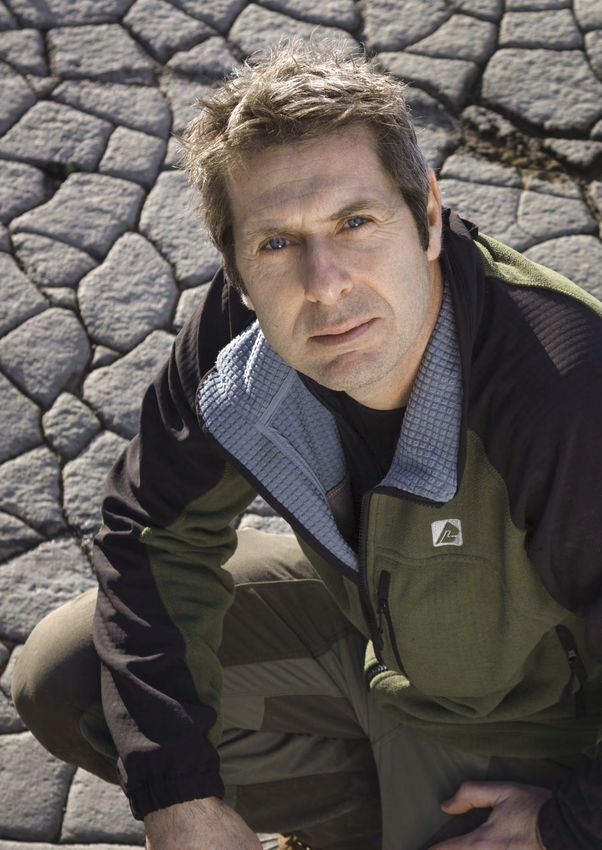
UNESCO Chair in Geoscience and Society at the University of Plymouth,
Professor Iain Stewart.
Phipps.
UNESCO CHAIRS AND UNITWIN NETWORK PROGRAMME 2021 HANDBOOK 9United Kingdom
National Commission
for UNESCO
United Nations
Educational, Scientific and
Cultural Organization
Criteria for 2021
At a glance
We are looking for applications in 2021which:
• Respond to UNESCO’s priority areas of competence including the SDGs
• Are of a high academic quality
• Support north-south and north-south-south cooperation
The role of the UK National Commission for UNESCO (UKNC), as directed
by UNESCO, is to consider and evaluate proposals for the establishment of
new UNESCO Chairs in the UK and to select a small number of high quality
proposals each year to put forward to UNESCO for consideration.
In addition, the UKNC also considers and evaluates proposals for the establishment of
new UNITWIN Networks led by UK institutions and selects high quality proposals to
give its endorsement for UNESCO’s consideration.
In line with UNESCO’s new strategic orientations for the UNITWIN/UNESCO
Chairs Programme (outlined at UNESCO’s 176th Executive Board in April 2007) a
strong emphasis is placed on high quality proposals which are relevant, strategic and
dynamic.
We will consider proposals using the UK criteria outlined in this section. This supersedes
earlier UK criteria and takes into consideration UNESCO Headquarters guidelines for
the submission of proposals as outlined in UNESCO’s “Guidelines and Procedures for
the UNITWIN/UNESCO Chairs Programme” which can be found at https://unesdoc.
unesco.org/ark:/48223/pf0000261018
10 UNESCO CHAIRS AND UNITWIN NETWORK PROGRAMME 2021 HANDBOOKUnited Kingdom
National Commission
for UNESCO
United Nations
Educational, Scientific and
Cultural Organization
In 2021, the UKNC will examine UNESCO Chair and UNITWIN Network
proposals along the following criteria:
A. In a priority programme area
Responds to UNESCO’s Corresponds to UNESCO’s overall objectives and one or more of its sectoral
priority areas of priorities, as set out in UNESCO’s Medium-Term Strategy and Programme and
competence Budget, as well as the UN Sustainable Development Goals (SDGs).
NOTE: In November 2013 UNESCO’s 37th General Conference considered a new
Medium-Term Strategy (2014-2021) and the United Nations Sustainable
Development Goals, which can be accessed here:
UNESCO Medium-Term Strategy 2014-2021 (37 C/4): http://www.unesco.org/
new/en/bureau-of-strategic-planning/resources/medium-term-strategy-c4/
United Nations Sustainable Development Goals: https://en.unesco.org/sdgs
An interdisciplinary approach is to be encouraged; as are proposals which involve
future-orientated research in the various UNESCO sectors.
Broadens range of UNESCO Avoids duplication of existing UNESCO Chair/UNITWIN Network activities in
Chair/UNITWIN Network the UK in order to broaden the range, reflect the breadth of UK excellence in higher
activities in the UK education and reflect more fully UNESCO’s areas of competence in education,
natural sciences, social and human sciences, culture and communication &
information.
To support the diversification of the programme, please note that applications from
Higher Education Institutions with existing UNESCO Chairs or UNITWIN
Networks will only be considered if its area of focus is different from those already
established in the UK.
High academic quality
Demonstrates high academic quality output.
Clear objectives Contains clearly stated objectives which demonstrate how the project is directly
related to priorities for national, regional, or international development.
Appropriate approach Identifies activities and an approach which adequately meet the objectives of the
and activities project, including adequate consideration given to evaluation mechanisms and
dissemination of the outputs and outcomes.
Potential to Proposals that are educationally innovative in terms of new paradigms (future
make a difference challenges) and forms of intervention (e.g. open universities) are encouraged.
Shows potential to make a vital, unique and innovative contribution to the field
within the context of its planned implementation
UNESCO CHAIRS AND UNITWIN NETWORK PROGRAMME 2021 HANDBOOK 11United Kingdom
National Commission
for UNESCO
United Nations
Educational, Scientific and
Cultural Organization
.
Evidence of sustainability B. Sustainable
Provides concrete evidence of the sustainability of the project, giving attention to its ability to
Access to human resources mobilise and attract resources; in particular:
Identifies sufficient numbers of highly qualified personnel to carry out the activities of the
proposed UNESCO Chair or UNITWIN Network.
In particular, a UNESCO Chair should include:
1. A Chairholder as its academic head;
2. A number of researchers from the host institution and from other domestic and
international institutions who are involved with the activities of the programme; and
3. A number of students or researchers pursuing postgraduate studies and/or high-level
training and research under the direction of the Chair.
The Chairholder or UNITWIN Network Coordinator should:
1. Have a strong academic reputation – be a renowned specialist in the domain(s) to be
covered;
2. Have the capacity and experience to promote cooperation at national, regional and
international levels; and
3. Be willing and able to mobilise resources from the private and public sectors.
Adequate institutional For UK proposals, a Chairholder should already hold a professorial chair at an Higher Education
capacity and experience Institute. This does not apply to UNITWIN Network Coordinators.
Access to financial resources Identifies funding sources and demonstrates that funding can be secured to carry out the proposed
activities. Proposals should not rely on UNESCO for funding.
Demonstrates a capacity for successfully implementing the proposed project and activities.
Ability to contribute to inter- C. North-South and/or North-South-South cooperation dimension
university cooperation
Designates partner institution(s) and an appropriate system for sharing knowledge, resources and
information.
Preference will be given to those proposals that actively support North-South and/or
North-South-South cooperation and partner/network with institutions from developing or
transitioning countries.
12 UNESCO CHAIRS AND UNITWIN NETWORK PROGRAMME 2021 HANDBOOKUnited Kingdom
National Commission
for UNESCO
United Nations
Educational, Scientific and
Cultural Organization
Potential for incorporation D. Easily integrated into an existing network or systematically grouped into priority areas
into a network or a
networking of networks Has potential to be incorporated into a network or cluster as UNESCO moves to systematically
regroup Chairs into networks (networking Chairs), and to create dynamic networks (networking
of Networks) to better promote dynamic and effective interaction.
A global portal of existing UNESCO Chairs and UNITWIN Networks (searchable by domain)
can be found at: https://en.unesco.org/themes/higher-education/unitwin
UNESCO CHAIRS AND UNITWIN NETWORK PROGRAMME 2021 HANDBOOK 13United Kingdom
National Commission
for UNESCO
United Nations
Educational, Scientific and
Understanding
Cultural Organization
UNESCO’s
Guidelines
14 UNESCO CHAIRS AND UNITWIN NETWORK PROGRAMME 2021 HANDBOOKUnited Kingdom
National Commission
for UNESCO
United Nations
Educational, Scientific and
Cultural Organization
Overview of UNESCO’s
Guidelines for UNESCO Chairs
UNESCO Chairs can be established at universities, other institutions of higher learning and
Established at Higher
Education Institutions
research institutions in higher education. UNESCO Chairs may also involve higher education
non-governmental organisations, foundations, and public and private sector organisations.
Chairs are established for an initial period of four years.
UNESCO Chair as Teaching A UNESCO Chair may be established by reinforcing an existing teaching or research
and/or Research Unit programme and giving it an international dimension, or one may be established as a new
teaching and research unit. Such a unit should include:
(i) a Chairholder as its academic head; (ii) a team of lecturers or researchers from the host
institution and from other institutions, both in the country concerned and from abroad,
(particularly developing countries and those in transition), who are associated with the
activities of the Chair; (iii) a number of students and researchers pursuing postgraduate studies
or high-level training and research under the Chair.
Relevant and Effective
Relevance and effectiveness at national, regional and global levels are among the prime goals
of the UNITWIN/UNESCO Chairs Programme. UNESCO Chairs should be sustainable
and must support UNESCO programme objectives and priorities, particularly as outlined in
the Organization’s Medium-Term Strategy (“C/4” document), as well as the UN Sustainable
Development Goals.
Details of the UNESCO Medium-Term Strategy 2014-2021 (Document 37 C/4)
Clear Objectives and The activities undertaken by a UNESCO Chair vary according to the Chair’s objectives and
Appropriate Activities available resources, but might include: programme development in non-traditional areas
at undergraduate or postgraduate levels; exchange of lecturers; lectures on relevant topics;
research; study abroad; workshops, seminars, national, regional and international meetings/
conferences; publications. Chairs should cooperate closely with ongoing UNESCO activities
and programmes.
Excellence and Results-Based Quality performance is of paramount importance to the Programme. UNESCO expects host
Management institutions to take a results-based management approach. The intention is for Chairs and
Networks to form poles of excellence and innovation along North-South and South-South
axes.
It is important to note that an Agreement for the establishment of a UNESCO Chair is
Strong Institutional Support between UNESCO and the host institution and not with an individual intellectual. Strong
institutional commitment is therefore paramount.
A Chairholder is responsible for the programming, organisation, fundraising and promotion
Chairholder as Head
of activities. The Chairholder should have: i) academic reputation – be a renowned specialist
in the domain(s) to be covered; ii) have the capacity and experience to promote cooperation at
UNESCO CHAIRS AND UNITWIN NETWORK PROGRAMME 2021 HANDBOOK 15United Kingdom
National Commission
for UNESCO
United Nations
Educational, Scientific and
Cultural Organization
national, regional and international levels; iii) be willing and able to mobilise resources from
the private and public sectors.
The host institution makes individual proposals for a Chairholder and any appointment is
UNESCO as Catalyst subject to approval by UNESCO. The appointment of a Chairholder does not necessarily
entail the creation of a specific post and does not always constitute an employment
opportunity. A Chairholder will not be appointed until the UNESCO Chair has been
officially established (i.e. after the relevant Agreement has been signed by all parties and has
therefore entered into force).
Established at Higher UNESCO, not being a funding agency, cannot be a major donor for the Programme. The
Education Institutions with Programme is a joint undertaking in which UNESCO plays the role of catalyst for the
Designated Host interested institutions. For this reason UNESCO encourages institutions to mobilise financial
partners at the time they are preparing Chair proposals and also offers its services in helping
mobilise resources.
UNITWIN Network as formal UNITWIN Networks can be established at universities, other institutions of higher learning
multilateral partnership and research institutions in higher education. Usually an institution, or co-institutions,
agreement takes the lead as host, acting as a focal point to develop the Network. UNITWIN Networks
may also involve higher education NGOs, foundations, and public and private sector
organisations. Networks are established for an initial period of four years.
Relevant and Effective A UNITWIN Network is established through a formal multilateral partnership agreement.
A group of Higher Education Institutions (HEIs) in developed and developing countries
(North-South, South-South or North-South-South) may come together to address a need in
the development context; existing inter-university networks may gear their activities towards
UNESCO’s priorities and the needs of HEIs in the developing countries; HEIs already
twinned with another HEI may decide to expand their existing bilateral agreement into a
multilateral UNITWIN one; inter-university cooperation programmes may be turned into
a more stable mechanism of cooperation with participating institutions agreeing to associate
their network activities with the objectives of the UNITWIN UNESCO Chairs Programme.
Clear Objectives and Relevance and effectiveness at national, regional and global levels are among the prime goals of
Appropriate Activities the UNITWIN/UNESCO Chairs Programme. UNITWIN Networks should be sustainable
and must support UNESCO programme objectives and priorities, particularly as outlined in
the Organization’s Medium-Term Strategy (“C/4” document), as well as the United Nations
Sustainable Development Goals (SDGs).
Excellence and Results-Based The activities undertaken by a UNITWIN Network vary according to the Network’s
Management objectives and available resources, but might include: programme development in non-
traditional areas at undergraduate or postgraduate levels; exchange of lecturers; lectures
on relevant topics; research; study abroad; workshops, seminars, national, regional and
international meetings/conferences; publications; information sharing portals; virtual
communities of practice. UNITWIN Networks should cooperate closely with ongoing
UNESCO activities and programmes.
16 UNESCO CHAIRS AND UNITWIN NETWORK PROGRAMME 2021 HANDBOOKUnited Kingdom
National Commission
for UNESCO
United Nations
Educational, Scientific and
Cultural Organization
Quality performance is of paramount importance to the Programme. UNESCO expects host
institutions to take a results-based management approach. The intention is for Chairs and
Networks to form poles of excellence and innovation along North-South and South-South
axes.
It is important to note that an Agreement for the establishment of a UNITWIN
Network is between UNESCO and the host institution(s) and not with an individual
intellectual(s). Strong institutional commitment from participating institutions is
therefore paramount.
A UNITWIN Network coordinator is responsible for the programming, organisation,
UNESCO as Catalyst
fundraising and promotion of activities. The network coordinator should have: i) academic
reputation – be a renowned specialist in the domain(s) to be covered; ii) have the capacity
and experience to promote cooperation at national, regional and international levels; iii) be
willing and able to mobilise resources from the private and public sectors. The host institution
makes individual proposals for a coordinator and any appointment is subject to approval
by UNESCO. The appointment of a coordinator does not necessarily entail the creation of
a specific post and does not always constitute an employment opportunity. Appointments
may also be made on a rotating basis among partner institutions. A coordinator will not be
appointed until the UNITWIN Network has been officially established (i.e. after the relevant
Agreement has been signed by all parties and has therefore entered into force).
UNESCO, not being a funding agency, cannot be a major donor for the Programme. The
Programme is a joint undertaking in which UNESCO plays the role of catalyst for the
interested institutions. For this reason UNESCO encourages institutions to mobilise financial
partners at the time they are preparing Network proposals and also offers its services in
helping mobilise resources.
UNESCO CHAIRS AND UNITWIN NETWORK PROGRAMME 2021 HANDBOOK 17United Kingdom
National Commission
for UNESCO
United Nations
Educational, Scientific and
Cultural Organization
UNESCO Chair in Water Science at the University of Birmingham, Professor David
Hannah, Photo: National Oceanography Centre, Southampton.
18 UNESCO CHAIRS AND UNITWIN NETWORK PROGRAMME 2021 HANDBOOKUnited Kingdom
National Commission
for UNESCO
United Nations
Educational, Scientific and
Cultural Organization
UNESCO in the UK
UNESCO promotes a culture of peace by fostering intercultural dialogue
and international cooperation through collaborative work in the fields of
education, the natural and social sciences, culture, communication and
information.
The UK is home to a diverse network of UNESCO projects. From Biosphere Reserves
to Creative Cities, Global Geoparks to World Heritage Sites, UNESCO is closer to
home than you might think. Discover UNESCO near you at www.unesco.org.uk.
The UK National Commission for UNESCO (UKNC) works to support the UK’s
contribution to UNESCO and bring the benefits of UNESCO to the UK. It is the hub
for UNESCO-related matters in the UK.
The UKNC has three core priorities:
1. We provide expert, independent policy advice to UK and devolved government on
UNESCO related issues.
2. We advise and support individuals and institutions in the UK, its Overseas Territories and
Crown Dependencies on accessing UNESCO accreditation and prizes and how to derive
more value from their involvement with UNESCO.
3. We support the UK government’s agenda in helping UNESCO to become more effective.
In carrying out these roles, the UKNC relies on advice and support from its expert network,
including specialists in the fields of education, culture, the sciences and communication and
information from across Scotland, Wales, Northern Ireland and England.
To learn more about UNESCO and how you can get involved, contact info@unesco.org.uk or
visit www.unesco.org.uk
UNESCO CHAIRS AND UNITWIN NETWORK PROGRAMME 2021 HANDBOOK 19United Kingdom
National Commission
for UNESCO
United Nations
Educational, Scientific and
Cultural Organization
20 UNESCO CHAIRS AND UNITWIN NETWORK PROGRAMME 2021 HANDBOOKYou can also read


