Pearl Mussel Programme: Information Booklet - the Pearl Mussel Project
←
→
Page content transcription
If your browser does not render page correctly, please read the page content below
Pearl Mussel Programme:
  Information Booklet
Prepared by The Pearl Mussel Project Limited, February 2019
Introduction                                                                        Contents                                      page

The Pearl Mussel Project is a pilot agri-environment programme that seeks           1. Freshwater Pearl Mussel                     3
to improve the quality of watercourses to benefit the endangered freshwater
pearl mussel. It is locally adapted, results-based and focuses on the top eight     2. Results-based approach                      4
freshwater pearl mussel catchments in Ireland.                                      -> Pearl Mussel Programme result indicators    5
Farmers will be rewarded for their environmental services whilst having the         -> Assessment of results                       6
freedom and flexibility to farm. This will in turn improve the outcomes and
long-term sustainability of agri-environment schemes for biodiversity, and for      3. Payment streams                             8
rural communities. It is hoped that this approach will form the basis for future
schemes in these areas.                                                             Results-based payment                          9
Peatland, grassland, and woodland habitats are used as result indicators. The       -> Habitat quality payment                     10
higher the quality of these habitats, the higher the payment farmers receive. The
quality of watercourses on the farm will also influence the final payment. This     -> Floodplain payment                          11
approach has the effect of creating a market for biodiversity, and provides an      -> Whole-farm payment adjustment               12
opportunity and incentive for farmers to manage their farm habitats to produce
higher quality biodiversity.                                                        -> Calculating results payment                 13
The Programme, which has a budget of €10million, is                                 Supporting actions payment                     17
being run by the Pearl Mussel Project Team,
based in counties Kerry and Mayo.                                                   4. Who can apply?                              23
Support will be provided to farmers
by their advisors, who will be                                                      5. How do I apply?                             24
trained in the Programme delivery.                                                  6. Selection criteria                          25
The Project Team will provide
support to farmers and advisors.                                                    7. Programme participation                     27
The programme will run until                                                        8. Frequently asked questions                  29
December 2023.

               The Pearl Mussel Project is an EIP (European Innovation
            Partnership) Locally Led Scheme. The Project is funded by the
             Department of Agriculture, Food and the Marine as part of
                Ireland’s Rural Development Programme 2014-2020.
1.           The Freshwater                                      The top eight catchments in Ireland support 80% of the total Irish
                                                                                             freshwater pearl mussel population. All of these catchments are

                  The
                                         Pearl Mussel                                        however, undergoing a slow population decline, and several face
                                                                                             extinction unless action is taken.
                                                                                             The main reason for this decline is the low survival of juvenile mussels, which
            freshwater pearl
                                                                      The                    are extremely sensitive to changes in environmental conditions. This is leading to
          mussel (Margaritifera
                                                                  mussels are                an ageing population. Juveniles depend on a clean, well oxygenated gravel river
     margaritifera) is a large filter-
                                                            filter feeders, inhaling                                bed, with little silt, or algal growth, and moderate flows.
    feeding bivalve, which is found
                                                         and expelling up to 50 litres                                   Activities that cause changes in river flow, increased
      in near-pristine freshwater
                                                          of water per day through                   Key pressures on       levels of silt, and increased levels of nutrients, can
     habitats. They are Ireland’s                       siphons, while retaining food            freshwater pearl mussel       contribute to the decline.
        longest living animal                           particles. This filtering activity      from farming in the top 8
         living for up to 140                                                                                                   In addition to drainage and changes to river
                                                          means that pearl mussels                 catchments include:
                 years.                                                                                                         channel morphology, increased intensification
                                                           can help to maintain                      - Drainage                 of land use in the catchments threaten future
                                                            and improve water                  - Sediment losses from           survival of freshwater pearl mussel.
                                         European                                                     farmland
                                                                    quality.
                                        freshwater                                             - Nutrient losses from
            Adult                      pearl mussel                                                   farmland
      freshwater pearl                 populations
     mussels can reach

                                                                                                                    2.
                                     have declined by
    lengths of 12-15cm,
      and live partially
                                    90% over the past
                                          century.
                                                                                                                                  Results-Based
     buried in the river
             bed.                                                                                                                 Approach
                                                                                                            Payments are linked to the nature            quality of your farm
                                                                                                            Higher nature quality = Higher payment level

                                                                                                                                                     Each plot (field) is
                                                                                                                                                     scored out of 10
                                                                                                                                                     using a scorecard that
                                                                                                                                                     captures high and low
                                                                                                                                                     quality habitat which
                                                                                                                                                     reflect past and current
                                                                                                                                                     management.

    Life-cycle of freshwater pearl mussel
page 3                                                                                                                                                                      page 4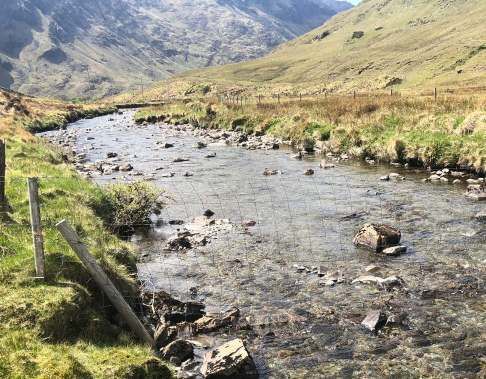
PEARL MUSSEL PROGRAMME RESULT INDICATORS

  Habitat quality                                                              Watercourses and farm management
  The management of farmland has a direct influence on the freshwater          Other farm features and activities which contribute to water quality within
  environment within pearl mussel catchments. Higher quality farmland          freshwater pearl mussel rivers include; condition of watercourses (drains,
  habitats provide better conditions for freshwater pearl mussel in the main   streams, and rivers), farmyard management, and nutrient application. The
  rivers. For this reason the three main farm habitats (grassland, peatland,   Programme has incorporated these features and activities into an overall
  and woodland) are used as results indicators for the Programme. The          farm result which determines the final results-based payment. The result is
  result is determined following a ‘habitat quality assessment’ of the farm.   determined following a ‘whole-farm assessment’.
  Habitats assessed are grasslands, peatland, and scrub/woodland:

                                                                                                ASSESSMENT OF RESULTS

                                                                               Habitat quality assessment
                                                                               Habitat quality will be assessed at the plot (field) level using a scorecard
                                                                               for each habitat. The score cards award marks for various aspects of the
         GRASSLANDS               PEATLANDS               SCRUB /              habitat which reflect quality such as; plant species, vegetation structure,
                                                         WOODLANDS
                                                                               wetness, exposed soil, and damaging activities.
  Floodplain quality                                                           Habitats achieve a final score on a scale of 0 (low) to 10 (high). Better
  Lands that flood (floodplains) along freshwater pearl mussel rivers are      quality habitats will obtain higher scores and result in higher payments.
  important for maintaining good conditions for freshwater pearl mussel
  during periods of high flow. A functioning floodplain has the effect of
  slowing the rate and reducing the volume of flow. This is best achieved                                                                          HIGH
  where high quality habitats occupy the floodplain. The provision of high                                                                         QUALITY
  quality floodplains along freshwater pearl mussel rivers will therefore be                                                                       PEATLAND
  rewarded through the Programme. The result is determined following a
  ‘floodplain assessment’ of the farm.

                                                                                                                                                   LOW
                                                                                                                                                   QUALITY
                                                                                                                                                   PEATLAND

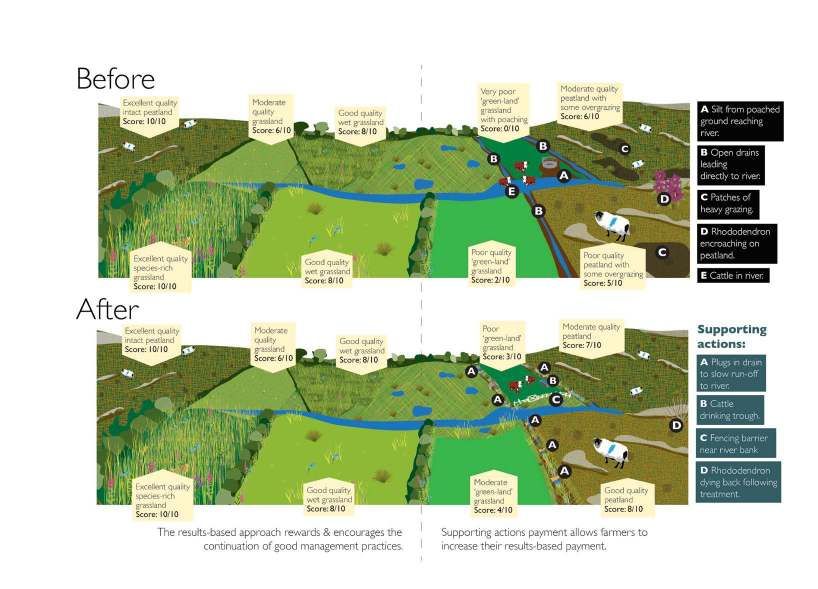
                                                                               Pearl Mussel Programme results-based payment scale
page 5                                                                                                                                                  page 6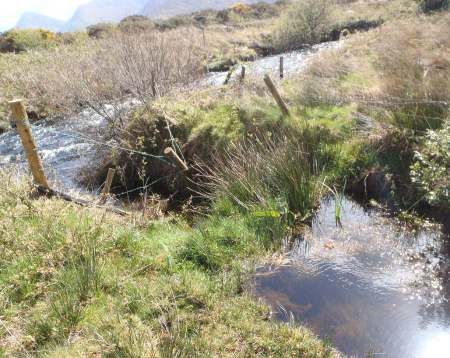
3. Payment Streams
              ASSESSMENT OF RESULTS

  Floodplain assessment
  Those lands prone to regular river flooding which occur along the
  main freshwater pearl mussel river channel qualify as floodplains in the                  Participating farmers can draw
  Programme.                                                                                from two payment streams:
  The result achieved is based on the average habitat quality score of all
  floodplain plots on an individual farm.
                                                                                            Results-based payment
                                                                                            This payment is based on the sum of habitat and
  Whole-farm assessment                                                                     floodplain quality, with an adjustment made depending
  Each farm (or parcel in the case of commonage) is subject to a whole-farm                 on whole-farm result.
  assessment of water quality impacts and risk.
                                                                                            Supporting Actions Payment
  There are three assessments that give rise to the final result:                           For farm measures completed by the farmer aimed at
    Watercourse condition. All watercourses (streams, rivers, drains)                       improving habitat quality and reducing risk of impacts
    are assessed in relation to risks arising from flow, livestock, sediment,               on downstream watercourses.
    and nutrients. Watercourses are scored according to four categories
    from poor to excellent.
    Farm nutrient balance. This assessment applies mainly to those
    farms where cattle are housed over winter. It considers the number of
    animals housed (slurry generated), appropriate nutrient application rate,
    and the extent of available spread lands. The outcome of this assessment
                                                                                              RESULTS
    is scored according to three categories from poor to adequate.                           PAYMENTS                                  SUPPORTING
    Application of chemical Phosphorus (P) within freshwater pearl mussel catchments
                                                                                                                                         ACTIONS
    presents a major risk to water quality. The use of chemical P by participants is only     HABITAT QUALITY                           PAYMENTS
    permitted following provision of soil samples demonstrating deficiency and subsequent            +
    approval by the Project Team.                                                           FLOODPLAIN PAYMENT
                                                                                                        x
    Farmyard management. This assessment identifies any risk of
                                                                                              whole-farm adjustment
    point source pollution to watercourses.
  The outcome of the whole-farm assessment fits into one of four
  categories as follows:
                poor | inadequate | good | excellent
  This result is used to determine the final results-based payment to the farmer.
                                                                                                                                FARMER
page 7                                                                                                                                               page 8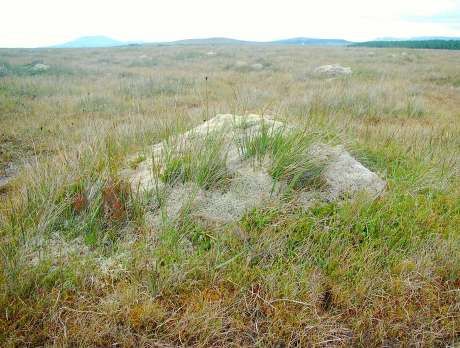
RESULTS-BASED PAYMENT                                                                    RESULTS-BASED PAYMENT

 Habitat quality payment                                                                 Habitat quality payment rates
 Where a plot scores 0 to 3, this will not receive a payment, regardless                 Payment rates decline across four bands as participant area increases
 of area.                                                                                as follows: 0-15ha, >15-30ha, >30-60ha, and >60ha.
 The payment scale increases in varying steps with, for example, the                     In calculating results-based payments, the lowest scoring lands will
 increase between 7 and 8 being much greater than that between 8 and                     be paid at the highest rate. This adds a strong incentive to improve
 9. This is to incentivise the farmer to achieve a score of 8                            lower scoring lands as any increase in habitat quality (score) will be paid
 across as much of their lands as possible.                    Top                       at the highest rate. The same payment rates apply to private lands and
 A score of 8 out of 10 represents high quality              payment of 10               commonage lands. In the case of commonages, the payment bands are
 habitat which is likely to make a significant           will only be achieved where     applied at the LPIS parcel level.
                                                       the habitat is considered to be
 contribution towards watercourses that support
                                                        in optimal condition and
 freshwater pearl mussel populations.
                                                       therefore deserving of highest
 Most plots can progressively increase their                payment for delivering
 environmental score and associated payment                environmental benefits.
 over the lifetime of the Programme.

           Payment rates for quality score achieved across four bands                    Example of high quality peatland
page 9                                                                                                                                                          page 10
RESULTS-BASED PAYMENT                                                            RESULTS-BASED PAYMENT

  Floodplain payment                                                              Whole-farm payment adjustment
  The payment rewards farmers for maintaining active floodplains on               Once the whole farm score is determined, a corresponding
  their lands where they occur along freshwater pearl mussel habitats             correction factor is applied to the total overall results-based
  (see PearlMusselProject.ie for maps), which provides an important               payment as outlined below.
  ecosystem service.
  Payment rates vary according to habitat quality, as indicated by average
  habitat quality score of relevant plots, and are paid across three bands
  related to floodplain river bank length. Payment rates across the three
  payment bands are shown in the table below:

                                                                                  Application of whole-farm assessment in calculating final results-based payment

                                                                                  In the case of commonage parcels, a modified ‘whole-farm assessment’ will
                                                                                  be completed.

     Floodplain payment for plots prone to river flooding in three length bands          Quality correction factor
                                                                                         Poor: x 0.3
    This payment relates only to farmers with plots that                                 the overall results-based payment is reduced by 70%
    regularly flood along the main river channels with
    freshwater pearl mussel habitat.Where a participant                                  Inadequate: x 0.6
    or commonage has multiple plots along the river, an                                  the overall results-based payment is reduced by 40%
    average score of all plots will be used. This payment
    will be added to the farmer’s gross payment, which
                                                                                         Good: x 1
    will then be subject to an adjustment based on the
    outcome of the whole-farm assessment (see page 12).                                  no reduction applied to the overall results-based payment

                                                                                         Excellent: x 1.2
                                                                                         a bonus payment of 20% is applied to the overall results-
                                                                                         based payment

page 11                                                                                                                                                    page 12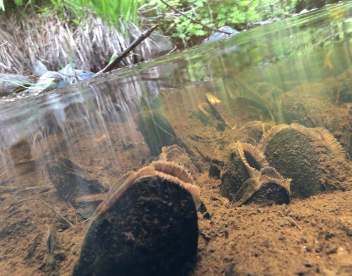
RESULTS-BASED PAYMENT                                                     RESULTS-BASED PAYMENT

  Calculation of results-based payment
                                                                                     Sample farm payment calculation:
  All farm plots will be ranked according to field score in increasing order.
  The habitat quality payment will then be calculated by multiplying area of
  lands by the corresponding payment rate (see figure below).
  Where applicable, the additional floodplain payment is then calculated
  according to the rates in the payment rates table, shown below.
  In order to calculate the final results-based payment, the sum of both
  habitat quality and floodplain payments is then adjusted according to the
  whole farm result achieved (see figure below).
  The payment for single commonage parcels will be calculated in the same way
  as for individual private farms. Shareholders will be entitled to a share of the
  final result-based payment proportional to their shareholding in the commonage.

             Payment rates for quality score achieved across four bands

     Floodplain payment for plots prone to river flooding in three length bands
page 13                                                                                                            page 14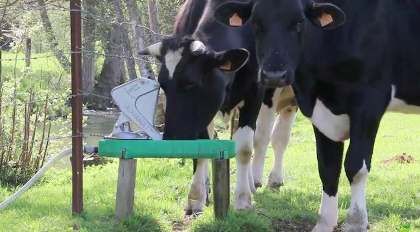
RESULTS-BASED PAYMENT             RESULTS-BASED PAYMENT

    Sample farm payment calculation:   Sample farm payment calculation:

page 15                                                               page 16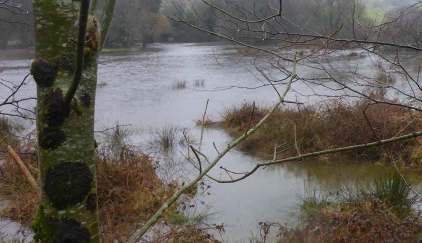
SUPPORTING ACTIONS PAYMENT                                                             SUPPORTING ACTIONS PAYMENT

  Supporting actions are voluntary measures that a                                        The Project Team will encourage and support farmers to propose innovative
  farmer may choose to undertake with the aim of improving                                bespoke solutions that may suit certain site specific situations. In certain
  habitat quality or whole-farm score.                                                    instances the Programme may allow such measures to exceed the annual
                                                                                          allowance outlined above.
  The Programme adopts a flexible and adaptive approach to farm
  management. Farmers are free to choose whether to undertake
  supporting actions or not, and can choose the most appropriate actions to                          Example of
  suit their farm.                                                                                 some supporting
  Each participant in the Programme receives an annual allowance                                      actions:
  based on their area of land within the catchment in order to                                     Fencing
  undertake supporting actions.
                                                                                               Drinking facilities
  There is a standard list of typical supporting actions that will be funded by the
  Programme such as livestock drinking facilities, fencing, invasive species
                                                                                                 Farm access
  control, re-wetting, and drain-blocking. In addition to this, the Project Team                    Drain plugs
  will consider funding other actions that are likely to help meet the project aims
  subject to value for money and the necessary consents being in place.
                                                                                                                                                 Drain plugs
  Rate of support
                                                                                          The Project Team may refuse, attach conditions, or modify a proposed action as
  The annual allowance is €50 per ha up to an annual maximum                              outlined in the Terms and Conditions document. Payment for actions are made following
  of €1,200.                                                                              declaration by the participant that the works have been delivered.

                                    Project Team approval for supporting actions is       Supporting actions on commonage
                                        required prior to works commencing.
              Actions which                                                               Applications for supporting actions on commonage are cross-checked
        directly enhance habitats
                                            The participant can submit a claim for        against the relevant Commonage Management Plan to avoid double
        which support freshwater
     pearl mussel and have little or         payment to the Project Team as soon as       funding.
    no direct agricultural benefit may       works are completed.
     be 100% funded subject to the                                                        Participants proposing actions on commonage will need to ensure that all
    overall cap on funding for actions.       Farm infrastructure that enhances the       necessary permissions are obtained from all other relevant shareholders
      A list of available actions can be     farmer’s capacity to deliver environmental   in the commonage.
       provided by the Project Team.        benefits can be co-funded by the
                                           Programme to the value of 25-50%.              The Project Team will encourage and support groups who wish to work
                                                                                          together to deliver supporting actions on commonage lands.

page 17                                                                                                                                                                 page 18
SUPPORTING ACTIONS PAYMENT SUPPORTING ACTIONS PAYMENT
Examples of some supporting actions:
Drain plugs
Fencing
Drinking facilities
page 19 page 20SUPPORTING ACTIONS PAYMENT SUPPORTING ACTIONS PAYMENT page 21 page 22
4.              Who can apply?
 All farm land within the top eight freshwater pearl mussel
                                                                               5.         How do I apply?
 catchments can be considered for payment with the                             -> Complete and submit the single page expression of
 exceptions of buildings (and their curtilage), extensive                        interest form.
 water, farmyards, quarries, and commercial forest.                            -> Prior to applying, all applicants should read this guide
 Detailed maps of the catchments can be provided by the Project Team or          and the Programme ‘Terms and Conditions’ document.
 can be viewed on the project website (PearlMusselProject.ie).
                                                                               -> Where an applicant is successful, the Project Team will
 An overview map showing the location of the catchments in Ireland is            prepare the Pearl Mussel Programme Farm Plan and
 provided on the back cover of this document.
                                                                                 issue a contract offer to the farmer. This offer must
 Lands should be declared on the applicant’s current Basic Payment Scheme        then be accepted by the farmer within one month.
 (BPS) application to be considered for the Programme. Leased or rented        Unsuccessful applicants will be notified at the end of the
 land must have been declared on the applicant’s 2018 BPS application.         recruitment period.
 Commonages
 The project team have reviewed all commonages within the
 catchments and selected those of highest priority for entry into the
 Programme during 2019. This list of commonages and the means                    The eight catchments included in the
 of selection is described in the Terms and Conditions document.                 Pearl Mussel Programme include:
 Depending on budget, commonage parcels outside of this priority list
                                                                                 Blackwater, Co. Kerry
 will be added in future years.
                                                                                 Bundorragha, Co. Mayo
 Eligible commonage shareholders in the priority
 parcels are encouraged to apply to join the                                     Caragh, Co. Kerry
 Programme during the initial recruitment window                                 Currane, Co. Kerry
 (spring 2019).
                                                                                 Dawros, Co. Galway
 On commonage lands, the fraction declared by the participant on their
 current BPS application that will be considered for payment. Where              Glaskeelan, Co. Donegal
 the catchment boundary splits a land parcel, only the proportion within the
 catchment boundary will be paid on.                                             Ownagappul, Co. Cork
                                                                                 Owenriff, Co. Galway
page 23                                                                                                                                     page 24
6. Selection
Criteria
As funding is limited, it may not be possible to
accommodate all eligible applicants.
For each catchment, applicants will be ranked by the Project Team
according to the criteria outlined below with further information in
the Programme Terms and Conditions document.
The highest ranked applicants will be shortlisted for acceptance
at regular intervals during the recruitment phase.
Unsuccessful applicants will automatically roll over to be
considered again for the next round of recruitment, therefore it
is recommended that prospective applicants submit an application
at the earliest possible time to increase their chances of being
accepted.
The proximity and connectivity to freshwater pearl mussel habitat
will be used to prioritise applicants as follows:
Main
1 freshwater
pearl mussel
river Following this, applicants will then be individually ranked
within these four categories according to the ratio of length
Watercourse of mapped watercourse to land area. This means that within
2 upstream of
main river
each category the highest rank will be assigned to the
applicant with the highest length of watercourses in relation
Watercourse to land area.
3 upstream of Participating farmers with private lands within the catchment will only
lake get paid on their commonage shareholdings where they relate to a
priority commonage parcel (see page 19 - Who can apply?).
No mapped
4 watercourses
page 25 page 267.
Nominate approved advisor
Programme
participation
Annual work plan
At contract acceptance the participant farmer must nominate an approved The farmer, supported by the advisor, may also propose supporting actions
Pearl Mussel Programme farm advisor to work on the farmer’s behalf. The in the form of the annual works plan to be submitted by the end of each
Project Team will issue a copy of the farm plan to the farmer and advisor. year. Once approved by the Project Team these actions will be undertaken
by the farmer during the following year and the associated payment will be
Farm assessment issued on satisfactory completion.
On an annual basis the advisor, working with the farmer, will carry out a
review of the farm operation, score all habitats on the farm, complete the Farmer training
whole farm assessment, and make recommendations with regards future All participants are required to attend a training course in each year of
management. the Programme, training will cover such topics as; scoring of habitats,
freshwater ecology, nutrient and farm management guidance. The
Submit results participant will receive a payment of €100 for attendance at a full day
The results of the advisors assessment will be submitted to the Project training course. Where the farmer is unable to attend then they need to
Team for review and payment. All payments will be made directly to the nominate a named representative to attend on their behalf. In the case of
farmer’s nominated bank account by the Project Team and a summary of non-attendance by farmers (or a representative), a 10% reduction on all
payment calculations will be sent to the farmer and advisor. payments in that year will be applied.
page 27 page 287. Does my land have to occur next to the river?
8. Frequently asked No. Farmers with any lands that occur within any of the eight project catchments
are eligible to apply to join the Programme. Lands that occur alongside the main
questions rivers will however be prioritised for entry to the Programme. A detailed map of
the catchments can be viewed on the project website (PearlMusselProject.ie).
8. Does my land have to be designated SAC?
No. All farm land within the catchments are included. Payments do not differ
1. How do I apply?
between designated or non-designated lands.
Submit a completed expression of interest form to the Project Team. Detailed Terms
and Conditions can be downloaded from the project website (PearlMusselProject.ie). 9. Can I apply if I only have a commonage shareholding in the catchment?
Yes. However, your shareholding must be associated with a priority commonage
2. I’m already in GLAS, will I still be eligible for a Pearl Mussel Programme
that has been selected for the Programme. The list of priority commonages
payment?
can be provided by the Project Team or downloaded from the project website
Yes, however, to avoid the risk of double payments, when the participants are in the
(PearlMusselProject.ie).
Low Input Permanent Pasture (LIPP) or Traditional Hay Meadow (THM) measures
in GLAS, there is a reduction of Pearl Mussel Programme payment by 40% for LIPP 10. Do all shareholders in the commonage have to participate?
and 20% for THM. Prior to any supporting actions being approved, the potential for No. All shareholders in priority commonages are invited to apply to join the
double payment against GLAS measures (such as Riparian Margins). Programme. The payment on commonages will be divided amongst participants in
proportion to their shareholding in that commonage.
3. Will my BPS be affected?
The payments will be in addition to other supports such as BPS, GLAS, and ANC. 11. Do I have to attend training and do I get paid to attend?
The Programme recognises the importance of farming in sustaining a high quality Yes. All participating farmers are required to attend at least one training course per
environment in the catchments. We do not foresee lands becoming ineligible for year. Courses will be delivered by the Project Team. You will receive a payment of
payment under BPS due to the Programme. €100 for attending a single day training course.
4. Do you need a farm advisor to get into the Programme? 12. What measures do I have to do?
Yes. The farmer nominates an approved Pearl Mussel Programme advisor to support This is a voluntary results-based Programme whereby the farmer gets paid
them during the Programme. A list of trained approved advisors will be provided by according to the biodiversity result achieved. The approach allows for a high level of
the Project Team. In the case of commonages, a single advisor will be nominated. flexibility for the farmer. The farmer can choose the means by which they manage
their lands in order to achieve the result.
5. Can I use my existing GLAS advisor?
Yes, provided they have completed Pearl Mussel Programme training and have been 13. How can I achieve a higher result and increased payment?
approved by the Project Team. It is ultimately up to the farmer as to how they manage their farm. The farmer will
attend annual training during the Programme. The Project Team can advise and
6. Who pays the advisor?
there are a series of voluntary supporting actions that the farmer may choose to
The farmer will pay the advisor. The cost of advisor input has been factored into the
undertake in order to help improve the result. These actions are co-funded by the
results payment.
Programme.
In the case of commonage, the advisor fee will be paid directly to the advisor prior
to farmer receiving payment. For small farms with low payments an administrative 14. Where can I get further information on the Programme?
allowance may be paid by the Programme. Further details on the Programme including, detailed Terms and Conditions
can be provided by the Project Team or are available on the project website
(PearlMusselProject.ie).
page 29 page 30Overview map showing the location of top eight
catchments included in the Pearl Mussel Programme
CONTACT
064 664 0685
info@pmproject.ie The Pearl Mussel Project Ltd.
Bell Height
PearlMusselProject.ie Kenmare
County Kerry
@pearlmusselproject V93 KD00
Ireland
@pearl_mussel
The Pearl Mussel Project is an EIP (European Innovation
Partnership) Locally Led Scheme. The Project is funded by the
Department of Agriculture, Food and the Marine as part of
Ireland’s Rural Development Programme 2014-2020.You can also read


