UNITED NATIONS POLICY EVENT AT THE - NGO Committee for Rare Diseases
←
→
Page content transcription
If your browser does not render page correctly, please read the page content below
21 February 2019                          United Nations, New York

      P OL I CY EV ENT A T TH E
      UNITED NATIONS
         Second HigH LeveL event of tHe ngo
             committee for rare diSeaSeS

        Conference Room 8 (GA-     Under the patronage of
       1B-CR08), United Nations,   HRH The Grand Duchess
           New York (NY 10017)     of Luxembourg
Morning Plenary: 9:45 to 13:30
                    1     The NGO Committee for Rare Diseases: working on a common cause at the global level
                          Mr. Anders Olauson, Chair of the NGO Committee for Rare Diseases; Chairman of Ågrenska Foundation
                    2     Remarks by the Host
                          H.E. Mr. Sven Jürgenson, Ambassador and Permanent Representative, Permanent Mission of Estonia to
 KEYNOTE                  the United Nations
                    3     Rare Diseases and the Sustainable Development Goals
ADDRESSES                 Ms. Marion Barthelemy, Director, Office of Intergovernmental Support and Coordination for Sustainable
                          Development, Economic and Social Council (ECOSOC)
    9:45-11:00      4     Human Rights of people living with a rare disease
                          Mr. Andrew Gilmour, Assistant Secretary-General for Human Rights and Head of the Office of the High
                          Commissioner for Human Rights in New York
 Leave no perSon    5     Remarks by Chair of the UN Group of Friends of Universal Health Coverage
  Living witH a           H.E. Toshiya Hoshino, Ambassador and Deputy Permanent Representative, Permanent Mission of Japan to
  rare diSeaSe            the United Nations
      beHind        6     Universal Health Coverage and Rare Diseases knowledge improvement: a journey to leave
                          no one behind
                          Ms. Pilar Aparicio, Director General of Public Health, Quality and Innovation at the Ministry of Health,
                          Consumption and Social Welfare of Spain
                    7     Universal Health Coverage for people living with a rare disease
                          H.E. Vitavas Srivihok, Ambassador and Permanent Representative, Permanent Mission of Thailand to the
                          United Nations

                   This session aims to give a clear overall view of the developments that the rare disease community
                   has made in the last two decades (in public awareness, healthcare systems, support systems and
                   in research), with the particular goal of demonstrating the need to consider rare diseases as a
                   collective grouping rather than looking solely at each individual disease. As people living with a rare
                   disease face a number of common needs and challenges, they demand a specific holistic strategy
                   and are an example of traditionally disadvantaged social groups, with the added specificity of the
  SESSION 2        ‘rarity’. This clearly demonstrate the added-value of collaborating across diseases/conditions,
   11:00-12:00     and across countries.

                   Co-Chairs:
  recogniSing           + Mr. Terkel Andersen, President of the Board of Directors, EURORDIS-Rare Diseases Europe
                        + Ms. Mandeep Dhaliwal, Director of the HIV, Health and Development Group in the Bureau of
  rare diSeaSeS
                          Policy and Programme Support at United Nations Development Programme (UNDP)
   aS a poLicy
    priority:
                    8     Raising awareness in society at the global level
  empowering              Ms. Avril Daly, Chief Executive Officer, Retina International, Vice-President of the Board of Directors,
  peopLe Living           EURORDIS-Rare Diseases Europe
   witH a rare      9     Giving existence to people living with a rare disease in health systems
     diSeaSe              Ms. Ana Rath, Director, Orphanet
                   10     A need for visibility within support systems
                          Mr. Lieven Bauwens, Secretary General, International Federation for Spina Bifida and Hydrocephalus;
                          Member of Inception Executive Board NGO Committee for Rare Diseases
                   11     Inclusion of rare diseases in scientific research
                          Dr. Irene Norstedt, Acting Director responsible for the Health Directorate within the Directorate-General
                          for Research and Innovation, European Commission and Head of Unit, Innovative and Personalised Medicine
                          Unit; Member of the International Rare Diseases Research Consortium (IRDiRC)
Comfort Break
                          This session aims to highlight policy priorities for persons living with a rare disease that are essential for
                          the achievement of Universal Health Coverage (UHC) and efficient and equitable health care
                          systems. Persons affected often suffer from marginalisation and pauperisation due to limited or
                          scattered expertise, lack of diagnosis or misdiagnosis, and disproportionate out-of-pocket spending
                          on health. But in addition, people living with a rare disease are often lost in the system, having to visit
                          different health, social and local services in a short period of time and interacting with actors that work
                          in silos. Throughout the sub-sessions, speakers will demonstrate the need for and the benefits arising
                          from policies related to diagnostic, cross-border and cross-sector collaboration, and use of emerging
                          technologies. Sub-session 3 will particularly highlight the importance of thinking beyond health
                          systems solely and promoting measures that are multidisciplinary, holistic, continuous, person-
                          centred and participative in nature. Such policies will significantly reduce the burden on everyday
                          life, prevent discrimination and stigma, and contribute to the enjoyment of fundamental rights and
                          to the fulfilment of the full potential of persons living with a rare disease as pledged by Member States
                          under the UN 2030 SDGs agenda.
   SESSION 3
     12:15-13:30          Co-Chairs:
                             + Dr. Nata Menabde, World Health Organisation NYC Office Director
                             + Mr. Alain Weill, President of World Hemophilia Federation and member of board of NGO
                               Committee for Rare Diseases
      univerSaL
       HeaLtH             3.1 DIAGNOSIS AS A DOOR-OPENER
   coverage and
    reduction of
                           12   The extreme of ‘Leave no one behind’ – undiagnosed patients
                                Dr. William Gahl, Chair, Undiagnosed Diseases Network International (UDNI); Clinical Director, National
     inequaLitieS               Institutes of Health, National Human Genome Research Institute
    for incLuSive          13   New opportunities to improve the diagnosis of children living with a rare disease
    deveLopment                 Dr. Simon Kos, Chief Medical Officer and Senior Director, Worldwide Health, Microsoft & member of the
                                Global Commission on ending the Diagnostic Odyssey of Children with Rare Diseases

                          3.2 LOCAL HEALTHCARE PROVISION AND GLOBAL NETWORKING
                           14   Rare Diseases as an opportunity for global collaboration
                                Dr. Ruediger Krech, Director, Universal Health Coverage and Health Systems, World Health Organisation
                           15   Case-Study: European Reference Networks
                                Mr. Martin Seychell, Deputy Director-General for Health and Food Safety, DG SANTE, European
                                Commission

                          3.3 HOLISTIC APPROACH: BRIDGING HEALTH AND SOCIAL CARE
                           16   The need to address the ‘Big 5’ from a lifelong perspective: healthcare, social care, school,
                                insurance and labour
                                Mr. Robert Hejdenberg, Chief Executive Officer, Ågrenska Foundation

Lunch Break 13:30 to 14:30
Buffet to be served by the stairs behind the left side of the Vienna Café
Afternoon Plenary: 14:30 to 18:15
                    This session aims to showcase national strategies, case-studies and pilots put in place in a number
                    of Member States and carried in collaboration with organisations of people living with a rare
                    disease and/or with government support. These illustrate the benefits that ensue when specific
                    national strategies for rare diseases are established and how they contribute towards inclusive and
                    equitable societies.

                    Co-Chairs:
                      + Ms. Daniela Bas, Director of Division for Inclusive Social Development, UN Department of
                        Economic and Social Affairs (DESA), United Nations Secretariat
                      + Ms. Durhane Wong-Rieger, President and CEO, Canadian Organization for Rare Disorders
  SESSION 4             (CORD); Chair of the Council, Rare Diseases International (RDI)
   14:30-17:15
                    4.1 NATIONAL COMPREHENSIVE STRATEGIES
                    17   Nan-Byo Strategy – Japan
    enSuring             Mr. Toshi Ezoe, Counsellor, Permanent Mission of Japan to the United Nations
  incLuSion and
                    18   National plan for Rare diseases - France
   participation
                    19   Implementing a national rare disease plan starting with national registry– Colombia
 of peopLe Living
                         Mr. Germán Escobar Morales, Director of Health, ProPacífico
    witH a rare     20   Establishing an APEC Rare Disease Registry Network: QUT and a framework for collaboration
diSeaSe tHrougH          Prof. Matthew Bellgard, Director of eResearch, Division of Research and Innovation, Queensland
nationaL poLicieS        University of Technology and Chair of APEC LSIF Rare Disease Network
 and StrategieS
                    4.2 INTEGRATED APPROACH BETWEEN RESEARCH AND CARE;
                        AND BETWEEN MEDICAL AND SOCIAL CARE
                    21   Networks for applying research to diagnosis and care – Canada
                         Dr. Kym Boycott, Professor of Pediatrics, University of Ottawa; Care4Rare
                    22   Rare Diseases Clinical Research Networks – United States of America
                         Dr. Marshall Summar, Director, Rare Disease Institute at Children’s National, Washington, D.C; Chairman
                         of Board of Directors of the National Organization for Rare Disorders (NORD), USA
                    23   Resource centres for rare diseases – Romania
                         Ms. Dorica Dan, President, RONARD (Romanian National Alliance for Rare Diseases); Member of Board,
                         EURORDIS-Rare Diseases Europe

Comfort Break
                    4.3 COUNTRIES EMERGING TO THE CHALLENGES OF RARE DISEASES:
                        FROM THE GRASSROOTS LEVEL TO THE POLICY LEVEL
                    24   Building a grassroots approach for persons living with a rare disease – Iran
                         Dr. Hamid. R. Edraki, Managing Director, Rare Diseases Foundation of Iran (RADOIR)
                    25   The case of rare diseases in China
                         Dr. Shuyang Zhang, Vice President of Peking Union Medical College Hospital (PUMCH), Director of
                         Clinical Pharmacology Research Center, PUMCH
                    26   The case of rare diseases in Brazil
                         Mr. Ricardo Monteiro, Minister-Counsellor, Permanent Mission of Brazil to the United Nations
                    27   Integration of rare diseases in the national health system - Philippines
                         Ms. Cynthia Magdaraog, President of the Philippine Society for Orphan Disorders, Inc. (PSOD)
                    28   Strategies for rare diseases within government’s commitment to healthcare - South Africa
                         Ms. Kelly du Plessis, Chief Executive Officer, Rare Diseases South Africa
                    29   Regional collaboration for care of people living with a rare disease – Kuwait
                         Mr. Tareq Albanai, Counsellor at Permanent Mission of the State of Kuwait to the United Nations

                    30   Call for action on rare diseases to the Members of the United Nations
                         Mr. Yann Le Cam, Chief Executive Officer, EURORDIS-Rare Diseases Europe; Member of Council and Chair
                         of Advocacy Committee, Rare Diseases International (RDI)
  CLOSING           31   Closing
                         Mr. Anders Olauson, Chair of the NGO Committee for Rare Diseases; Chairman of Ågrenska Foundation
  SESSION           32   Closing Keynote Addresses
                         Official video statement from Mrs. Tamara Vucic, Spouse of the President of the Republic of Serbia.
   17:45-18:15           Official video statement from Mrs. Michelle Muscat, Spouse of the Prime Minister of the Republic of Malta.
                         Mr. Anders Nordström, Ambassador Global Health, Swedish Ministry of Foreign Affairs
                         H.E. Mrs. Lana Z. Nusseibeh, Ambassador and Permanent Representative, Permanent Mission of the
                         United Arab Emirates to the United Nations
An event to mark the occasion of

                                   Under the patronage of

                                                                        grand-ducale / Lola Velasco
HRH The Grand Duchess

                                                                               © 2018 Cour
        of Luxembourg

                                           Co-Hosted by

  KINGDOM OF BELGIUM                                                          PERMANENT MISSION OF
  www.diplomatie.belgium.be
                                                                              THE REPUBLIC OF CYPRUS
                                                                              TO THE UNITED NATIONS

                                                                                                  PERMANENT MISSION
                                                                                                  OF JAPAN TO THE
                                                                                                  UNITED NATIONS

                                                PERMANENT MISSION OF
                                                THE REPUBLIC OF MALTA
                                                TO THE UNITED NATIONS

                                PERMANENT MISSION
                                OF THAILAND TO THE
                                UNITED NATIONS

                                      With the support of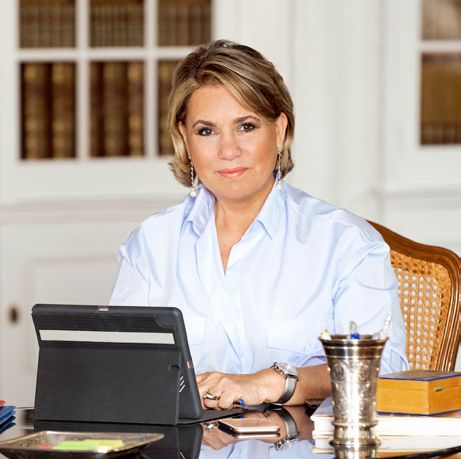
www.FabienNail.com
                                                                                Graphic design
    The NGO Committee for          The NGO Committee for Rare
  Rare Diseases is a substantive   Diseases was initiated by the Agrenska
  committee established under      Foundation and EURORDIS-Rare
the umbrella of the Conference     Diseases Europe, with the later
                                   integration of Rare Diseases International
        of NGOs in Consultative
                                   (RDI), with a view to bringing greater
   Relationship with the United
                                   political recognition of the challenges
             Nations (CoNGO).      of rare diseases at the global level. Its
                                   formation was approved by a vote of
                                   27 CoNGO member organisations in
                                   April 2014, and Its official inauguration
                                   at the United Nations took place on 11
                                   November 2016 in New York.

   ngocommiteerarediseases.org            @ngorarediseases
You can also read


