(UPR) Universal Periodic Review the 3rd cycle - 2017-2021(2022) - OHCHR
←
→
Page content transcription
If your browser does not render page correctly, please read the page content below
Universal Periodic Review
          (UPR)
            rd
      the 3 cycle
     2017-2021(2022)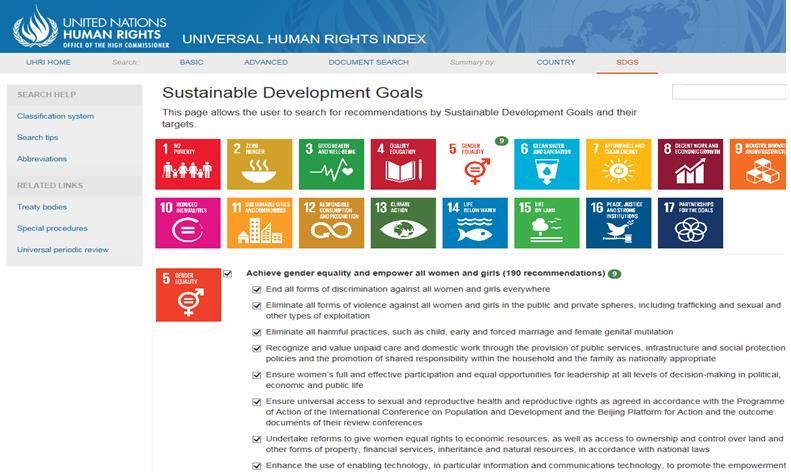
Outline / Content
•   Basic introduction
•   Objectives of the UPR
•   The UPR 3rd cycle – a new momentum and opportunities
•   Role of Governments
•   Importance of the UPR Mid-term Report
•   National Mechanisms for Reporting and Follow-up (NMRF)
•   Role of Parliaments and Judiciary
•   Role of other national stakeholders – NHRI and NGOs
•   Role of regional human rights mechanisms
•   National Human Rights Action Plan (NHRAP)
•   Recommendations Implementation Plan (RIP)
•   Letters by High Commissioner to FMs
•   Sustainable Development Goals
•   High-level Political Forum on Sustainable Development
•   Universal Human Rights Index
•   Human Rights Indicators
•   UN system support/OHCHR support through field presences
•   UPR Voluntary Trust Funds
UNIVERSAL PERIODIC REVIEW

• Created through the GA Resolution 60/251, paragraph 5.e (2006)
• Cooperative mechanism and a State-driven process which reviews
  the fulfillment of human rights obligations and commitments of all
  193 UN Member States once every four and a half years
• Provides an opportunity for States to demonstrate actions taken to
  improve their human rights situation. Reminds States of their
  responsibility to fully respect all human rights and fundamental
  freedoms
• Aims at improving the human rights situation and supports States to
  that direction
UNIVERSAL PERIODIC REVIEW

                       Stakeholders
    Government          (Summary)
  (National Report)

                UN
            (Compilation)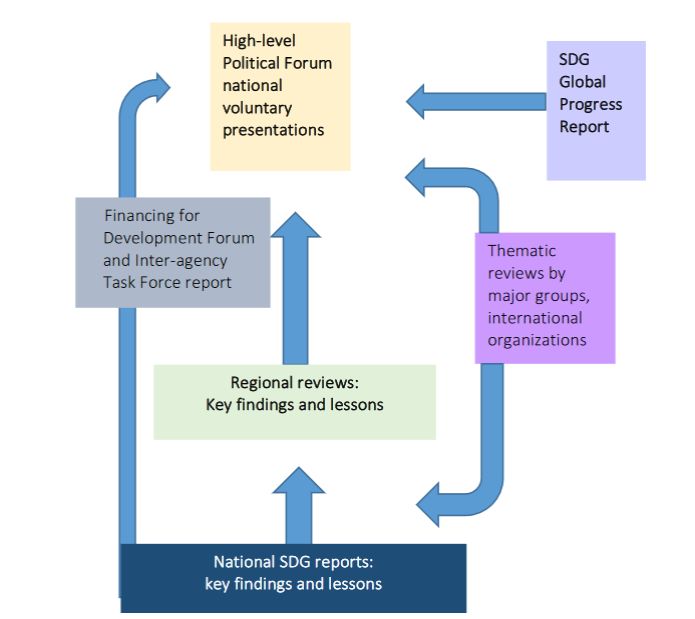
UNIVERSAL PERIODIC REVIEW: CYCLE OF
              THE UPR

              Follow-up
                                    National
                to the
                                    process
               review

    Consideration and
                                          Review in
       adoption of
                                           the UPR
       outcome in
                                             WG
         plenary

                            Post
                          session
                          written
                           views
UPR MODALITIES
(HRC Resolutions 5/1 and 16/21 and HRC Decision 17/119)
A) Interactive dialogue in the WG (the Review)
Working Group: 47 member States of the HRC
Member and Observer States participate in the review
Stakeholders attend the reviewUPR MODALITIES
(cnt’d)
The Troika facilitates the review and the preparation of the WG
report, assisted by OHCHR
3h1/2 for the review in the WG
• 70 min. for the SuR
• 140 min. for States
30 min. for the adoption of the WG reportModalities: Post-session Written Views
(HRC PRST/9/2, GA PRST/8/1 and HRC Resolution 16/21)
The SuR should have taken a position on all of the
recommendations received before the adoption of the outcome in
plenary
• Information to be sent to the HRC
• In a written format (addendum)
• Position should be clear
SuRs have increasingly used this opportunity to communicate
their position on pending recommendations, i.e. those
recommendations on which the SuR did not take position in the
UPR working groupUPR MODALITIES
(HRC Resolutions 5/1 and 16/21 and HRC Decision 17/119)
B) Adoption of the Outcome in the HRC Plenary
The SuR must state its position on the recommendations
Stakeholders and NHRIs may participate
One hour is allocated for the adoption of the Outcome divided
between SuR, States and Stakeholders:
• 20 minutes SuR
• 2 minutes NHRI of the SuR (A Status)
• 20 minutes States and UN entities
• 18 minutes StakeholdersThe Human Rights Council Plenary
Adoption of the Outcome
What constitutes the Report of the HRC Plenary
(HRC PRST/9/2)
Summary of the statement made by the SuR in the plenary,
before the adoption of the Outcome, and concluding remarks
of the SuR
Summary of the views expressed on the Outcome by Member
and Observer States
Summary of general comments made by other relevant
Stakeholders, including the NHRI and NGOs, during the
Plenary
3,210 words per countryUPR 3rd CYCLE
Mid-Point: 6.2024
2017-2021(2022)
HRC 48 HRC 49
(9.2021) (3.2022) HRC 35
HRC 47
(6.2021) (6.2017)
HRC 36
HRC 46 (9.2017)
(3.2021)
HRC 45 HRC 37
IP: 10.2020
(9.2020) (3.2018)
Mid-Point: 6.2020
HRC 44 HRC 38
(6.2020) 2019 (6.2018)
HRC 43 HRC 39
(3.2020) (9.2018)
HRC 42 HRC 40
(9.2019) HRC 41 (3.2019)
(6.2019)
IP: 7.2019Human Rights Council Universal Periodic Review (Third Cycle)
27th session (1 12 May 28th session 29th session (Jan- 30th session 31st session 32nd session 33rd session 34th session 35th session 36th session 37th session 38th session 39th session 40th session
2017) (6-17 Nov 2017) Feb 2018) (Apr-May 2018) (Oct-Nov 2018) (Jan-Feb 2019) (Apr-May 2019) (Oct-Nov 2019) (Jan-Feb 2020) (Apr-May 2020) (Oct-Nov 2020) (Jan-Feb) 2021) (Apr-May 2021) (Oct-Nov 2021)
National
report
UPR THIRD CYCLE 2017-2021(2022)
3 February 2017 7 August 2017 October 2017 February 2018 July 2018 October 2018 February 2019 July 2019 October 2019 February 2020 July 2020 October 2020 February 2021 July 2021
deadline (tentative) (tentative) (tentative) (tentative) (tentative) (tentative) (tentative) (tentative) (tentative) (tentative) (tentative) (tentative)
1 Bahrain Czechia France Turkmenistan Saudi Arabia New Zealand Norway Italy Kyrgyzstan Belarus Micronesia Namibia Suriname Togo
2 Ecuador Argentina Tonga Burkina Faso Senegal Afghanistan Albania El Salvador Kiribati Liberia Lebanon Niger Greece Syrian Arab
Republic
3 Tunisia Gabon Romania Cape Verde China Chile Democratic Gambia Guinea Malawi Mauritania Mozambique Samoa Venezuela
Republic of the (Bolivarian
Congo Republic of)
4 Morocco Ghana Mali Colombia Nigeria Viet Nam Côte d’Ivoire Bolivia Lao People’s Mongolia Nauru Estonia Saint Vincent Iceland
(Plurinational Democratic and the
State of) Republic Grenadines
5 Indonesia Peru Botswana Uzbekistan Mexico Uruguay Portugal Fiji Spain Panama Rwanda Paraguay Sudan Zimbabwe
6 Finland Guatemala Bahamas Tuvalu Mauritius Yemen Bhutan San Marino Lesotho Maldives Nepal Belgium Hungary Lithuania
7 United Kingdom of Benin Burundi Germany Jordan Vanuatu Dominica Kazakhstan Kenya Andorra Saint Lucia Denmark Papua New Uganda
Great Britain and Guinea
Northern Ireland
8 India Republic of Korea Luxembourg Djibouti Malaysia The former Democratic Angola Armenia Bulgaria Oman Palau Tajikistan Timor Leste
Yugoslav Republic People’s Republic
of Macedonia of Korea
9 Brazil Switzerland Barbados Canada Central African Comoros Brunei Iran (Islamic Guinea-Bissau Honduras Austria Somalia United Republic Republic of
Republic Darussalam Republic of) of Tanzania Moldova
10 Philippines Pakistan Montenegro Bangladesh Monaco Slovakia Costa Rica Madagascar Sweden United States of Myanmar Seychelles Antigua and Haiti
America Barbuda
11 Algeria Zambia United Arab Russian Federation Belize Eritrea Equatorial Iraq Grenada Marshall Islands Australia Solomon Islands Swaziland South Sudan
Emirates Guinea
12 Poland Japan Israel Azerbaijan Chad Cyprus Ethiopia Slovenia Turkey Croatia Georgia Latvia Trinidad and
Tobago
13 Netherlands Ukraine Liechtenstein Cameroon Congo Dominican Qatar Egypt Guyana Jamaica Saint Kitts and Sierra Leone Thailand
Republic Nevis
14 South Africa Sri Lanka Serbia Cuba Malta Cambodia Nicaragua Bosnia and Kuwait Libya Sao Tome and Singapore Ireland3rd cycle of the UPR
A new momentum for constructive and cooperative engagement
SG report A/72/351
An opportunity to
Through cooperative efforts
strengthen the engagement
and sharing of best practices
with all States on the follow-
among States and other
up and implementation of
stakeholders
the outcomes
And to provide an important
basis for States to achieve In order to create an
greater results in both the environment conducive to
implementation of the SDG addressing the root causes of
and human rights protection human rights violations
at the country levelThe UPR 3rd cycle : opportunities
Improved quality of questions and recommendations:
• In terms of substantive focus and detail
• Pointing to the areas that need strengthening in order to
address the root causes of human rights violations (i.e.
cross-section of the critical human rights gaps at the
country level)
Active engagement of all stakeholders at the national and
international levels
Report of the Secretary-General, A/72/351 (2017):
“International co-operation including through human rights
mechanisms and their recommendations provide an important
basis for States to achieve greater results in both the
implementation of the Sustainable Development Goals and
human rights protection at the country level.”Role of Governments Inter-Ministerial coordination for reporting and follow-up to the UPR (NMRF) National Consultations with all stakeholders prior to the UPR review (Parliament, judiciary, NHRI, CSOs, the UNCT, regional human rights mechanisms, and others, such as HR defenders, academia, media) Preparation and submission of the National Report Participation during the UPR review in Geneva Adoption of the NHRAP and/or Recommendation Implementation Plan Coordination and cooperation with all stakeholders following the UPR review Submission of mid-term reports or yearly updates (on a voluntary basis)
Importance of the UPR Mid-term Report
Mid-term reports are submitted on a voluntary basis
As of 28 January 2019, 73 countries had submitted mid-term reports
Argentina, Armenia, Azerbaijan, Bahrain, Bulgaria, Chile, Denmark, Finland, France,
Honduras, Japan, Kenya, Mauritius, Monaco, Netherlands, Poland, Portugal, Slovenia,
Spain, Sweden, UK and Uruguay submitted mid-term reports following both cycles
Mid-term reports:
• provide further accountability
• encourage follow-up to implementations of recommendations from the past UPR
cycles
• provide update on the status of implementation of recommendations
• focus on concrete actions undertaken to address the human rights issues of
concern
In the 3rd UPR cycle, some MS (eg UK) have also presented a yearly update which is
a most welcomed developmentNational Mechanism for Reporting and Follow-up (NMRF) A permanent governmental structure to: Coordinate and prepare reports to and engage with the international and regional human rights mechanisms (including the UPR, treaty bodies, and special procedures) Coordinate and track national follow-up and implementation of the treaty obligations and recommendations/decisions emanating from these mechanisms. The national mechanism performs these functions in coordination with ministries, specialized State bodies (such as the national statistics office), SDG implementation focal point (agency/Ministry), Parliament and the Judiciary, as well as in consultation with the national human rights institution(s) and civil society.
National Mechanisms for Reporting and Follow-up
(NMRF)
An effective NMRF (standing body) should have the following four key capacities:
Engagement capacity
Coordination capacity
Consultation capacity
Information management capacity
“NMRF have the potential to become
one of the key components of the national
human rights protection system, bringing
international and regional human rights
norms and practices directly to the national
level by establishing a national coordination
structure.”
Report of the Secretary-General A/72/351Benefits of an NMRF National coordination structure- national ownership and engagement in reporting to the UPR and other mechanisms and follow up Easier communication between ministries-efficient and maximum use of resources Systematic and rational engagement with international and regional HR mechanisms- national coherence Empowers ministerial focal points to communicate and explain the human rights system and its recommendations within their ministries Structured and formalized contacts with parliament, the judiciary, NHRI and the civil society Building human rights expertise in every State Development of Human Rights Action Plans and UPR Recommendations Implementations Plans (follow-up)
Role of Parliaments and Judiciary Ensuring follow up to human rights recommendations which require national legislation and/or legislative reforms Participating in NMRF and contributing to the NHRAPs/RIPs Oversight of human rights policies and actions by Governments, especially the implementation of recommendations from human rights mechanisms, especially accepted UPR recommendations Increased reference to international human rights norms, jurisprudence and recommendations in court decisions Increasing compliance of judges, lawyers and prosecutors with the UN principles on the independence of the judiciary Increasing parliaments’ engagement with human rights in line with A/HRC/38/25 which contains relevant draft principles (Annex)
Role of other national stakeholders, NHRIs and NGOs All stakeholders are encouraged to: Participate in the national consultations held by the State under Review Send information on the human rights situation in the country via the UPR database: https://uprdoc.ohchr.org. Take the floor at the Human Rights Council during the adoption of the report Monitor and participate in the implementation by the State under Review of the UPR recommendations
Role of regional human rights mechanisms Reinforcing universal human rights standards at the regional level Cross-referencing of jurisprudence and other documentation with UPR recommendations Greater engagement in the UPR process and sharing of best practices in a continuous, consistent and systematic manner Mainstreaming recommendations from international human rights mechanisms in the regional human rights policies and jurisprudence Send information on the human rights situation in the country via the UPR database: https://uprdoc.ohchr.org.
National Human Rights Action Plan (NHRAP)
Comprehensive, nationally owned, plan, based on comprehensive base-line study
Development involves wide consultations
Content reflects narratives on status quo, challenges, priority thematic areas,
planned programs and monitoring framework
Limited time-frame (usually 4-5 years)
HRM recommendations may inform priority issues and formulation of actions in
the NHRAP (or any other national action plan including on SDG implementation)
Methodology applied in elaborating a NHRAP may be applied to development of
other national action plans, e.g. for plans for SDG implementation
“A national human rights action plan offers a structured and
practical approach towards strengthened human rights realization,
by placing human rights improvements, as practical goals, in the
context of public policy… a baseline study may also draw upon the
concerns and recommendations as expressed by the human rights
mechanisms, including the universal periodic review.”
Report of the Secretary-General A/72/351Recommendations Implementation Plan (RIP)
Focused tool for use of Government entities
Contains all HRM recommendations, thematically clustered
Development largely an internal Government process, coordinated by the
National Mechanism for Reporting and Follow-up (NMRF)
Content reflects listings of clustered and prioritized recommendations
Open-ended time frame (new recommendations to be integrated)
Tracking its implementation will facilitate the periodic reporting to the HRMs
Clustered recommendations can easily be cross-linked to SDGs to build synergies
and linkages between the different follow-up and reporting for SDGs and human
rights
Useful tool for UNCTs to inform their CCA/UNDAF and interactions with the
Government counterparts
Report of the Secretary-General A/72/351Letters by High Commissioner to FMs Since the beginning of the 3rd UPR cycle, after the Adoption of the Outcome Report, the Foreign Minister (FM) of every States receives a letter from the High Commissioner for Human Rights. The letter is in line with the mandate of the High Commissioner for Human Rights (UN General Assembly resolution 48/141, especially operative paragraph 4 a, d, f, g, h, and i). The Annex to the letter contains areas which derive from the UPR documentation for the third cycle (National Report; the UN Compilation and Summary of Stakeholders reports); the interactive review in the UPR Working Group, the statements made during the adoption in the Human Rights Council – under item 6 – as well as available voluntary commitments and mid-term reports. Available at: https://www.ohchr.org/EN/HRBodies/UPR/Pages/CyclesUPR.aspx
NMRF

                       NHRAP

                                         NHRI    CIVIL
                                                SOCIETY

Report of the Secretary-General
A/72/351
Support to SDG implementation
Alignment
Equality and non-
with human
discrimination
rights
standards
Accountability
Participation
“OHCHR’s key priority is to ensure the
SDGs are implemented in a manner
consistent with international
human rights standards.”High-level Political Forum on Sustainable Development
Universal Human Rights Index Provides easy access to a country-specific human rights information Aims at raising awareness of recommendations from international human rights mechanisms and assists States in the implementation of these recommendations Provides information on the human rights situation worldwide, and on the legal interpretation of international human rights norms which have evolved over the past years Allows the clustering of all human rights recommendations received by States by SDG
UHRI: Linking SDGs with HRM recommendations
                 (incl. UPR)
National Recommendations Tracking Database Easily access, search and identify recommendations – through a software provided by OHCHR upon request The Database is central to monitor Governments compliance with international treaty and convention obligations on human rights The Database facilitates state reporting to treaty bodies and to the UPR but also ensures the wide dissemination of these human rights recommendations to the general public for accountability
Human Rights Indicators
Highlight operational elements of recommendations
Bridge recommendations with national policy
framework
Provide yardstick for measuring implementation /
progress
But it is only a tool, indicating something but not a substitute to
more comprehensive and qualitative assessmentsUN system support /OHCHR support through its
field presences
Support to Governments in establishing and strengthening
standing NMRF and developing NHRAP
Including the UPR recommendations in UN planning and
programming processes, such as the UNDAF and other
country level plans
Support to Governments with UN policy advisory services and
technical assistance for the UPR follow-up process
Assistance to Governments with preparations for the UPR
midterm review
Dissemination of information on the UPR review outcomesOHCHR support through its field presences Examples In 2018, three regional workshops took place in Uganda, Senegal and Cabo Verde. The workshops covered a range of topics from explanation of UPR process, to implementation and monitoring of UPR recommendations and Sustainable Development Goals In Thailand 2017, OHCHR supported a broad consultation, including 250 human rights defenders, representatives from CSOs, and affected communities across Thailand to have draft the National Action Plan on Business and Human Rights. In Tunisia, OHCHR provided technical advice on the elaboration and adoption of a landmark law on eliminating violence against women and girls, in full compliance with international human rights standards.
UPR Voluntary Trust Funds
HRC resolutions 6/17 and 16/21
The Voluntary Trust Fund for Participation in the UPR
Mechanism
Funding for travel of developing States under UPR review, in particular LDCs,
to Geneva
Funding for travel of members of `troika´ from developing countries, in
particular LDCs
Training for member states in the preparation of national reports
Request for funding should be submitted
six weeks prior to the UPR WG session
to uprstates@ohchr.orgUPR Voluntary Trust Funds
HRC Resolutions 6/17 and 16/21
The Voluntary Trust Fund for the UPR implementation
A source of financial and technical assistance to help countries, especially LDCs and
SIDSs, to:
• Implement recommendations emanating from the UPR
• Establish and/or strengthen the National Mechanism for Reporting and Follow-up
(NMRF), including implementation action plan and recommendations tracking and
monitoring database
Integration of support in the wider United Nations Country Team programme on UPR,
for instance in the context of the UNDAF
Support to implementing key thematic priority recommendations, for instance, torture
prevention, the right to health, etc.
Applications can be submitted all year around
to hrimplementation@ohchr.orgThe Voluntary Trust Fund for the UPR
implementation
Examples
In 2017, in the Republic of Moldova, OHCHR provided a training, in an effort to
strengthen the national normative and institutional anti-discrimination framework, in
order to align it with recommendations made in the context of the UPR and international
human rights standards contained in the Convention on the Rights of Persons with
Disabilities
In the Dominican Republic, an independent assessment of the Office of the Ombudsman
(Defensor del Pueblo) was initiated in February 2017 by OHCHR. In this regard, a
number of activities were planned, including two workshops aimed at gathering relevant
information and at raising awareness of Office personnel of their role and the need to
comply with the Paris Principles.
In Costa Rica, OHCHR provided technical assistance with the aim of strengthening
internal management and coordination of the Inter-Institutional Commission for the
Monitoring and Implementation of International Human Rights Obligations.
Contributions earmarked for the Fund can be made by Governments, NGOs, private and
public entities and individualsFor further information please visit Universal Periodic Review: http://www.ohchr.org/EN/HRBodies/UPR/Pages/UPRMain.aspx National Mechanisms for Reporting and Follow-up (NMRF): http://www.ohchr.org/_layouts/15/WopiFrame.aspx?sourcedoc=/Documents/Publications/HR_P UB_16_1_NMRF_PracticalGuide.pdf&action=default&DefaultItemOpen=1 National Human Rights Action Plan (NHRAP): http://www.ohchr.org/EN/Issues/PlansActions/Pages/PlansofActionIndex.aspx Mid-term Report on the UPR: http://www.ohchr.org/EN/HRBodies/UPR/Pages/UPRImplementation.aspx Human Rights Indicators: http://www.ohchr.org/EN/Issues/Indicators/Pages/HRIndicatorsIndex.aspx Universal Human Rights Index: http://uhri.ohchr.org/en/ Sustainable Development Goals: http://www.un.org/sustainabledevelopment/sustainable- development-goals/ OHCHR field presence: http://www.ohchr.org/EN/Countries/Pages/WorkInField.aspx UPR Trust Funds: http://www.ohchr.org/EN/HRBodies/UPR/Pages/UPRTrustFunds.aspx Civil society engagment: https://www.ohchr.org/EN/HRBodies/UPR/Pages/NgosNhris.aspx Parliaments: https://www.ohchr.org/EN/HRBodies/UPR/Pages/Parliaments.aspx
OHCHR/CTMD/UPR BRANCH

FOR INFORMATION PURPOSES ONLY
  NOT AN OFFICIAL DOCUMENT
You can also read


