VANCOUVER SCHOOL BOARD - CAPITAL PLAN 2012-2017 "Completing all the outstanding projects will ensure the safety of generations of Vancouver ...
←
→
Page content transcription
If your browser does not render page correctly, please read the page content below
VANCOUVER SCHOOL BOARD
CAPITAL PLAN 2012-2017

“Completing all the outstanding projects will ensure the safety of
generations of Vancouver students.”
Peggy Alca
Kitchener Elementary Seismic Committee Member
Strategic Plan
Schools in Vancouver
Background
Over half of our school buildings are over 50 years
old and 25 schools are over 100 years old.
Due to their age and construction styles, many have
been assessed by engineers as being at high risk of
serious significant structural damage in the event of
an earthquake.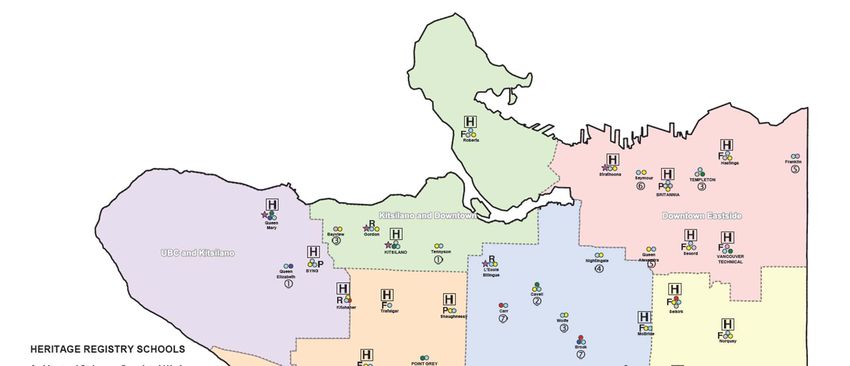
Age of Vancouver Schools
Number of Sites

                               Years Old as of 2012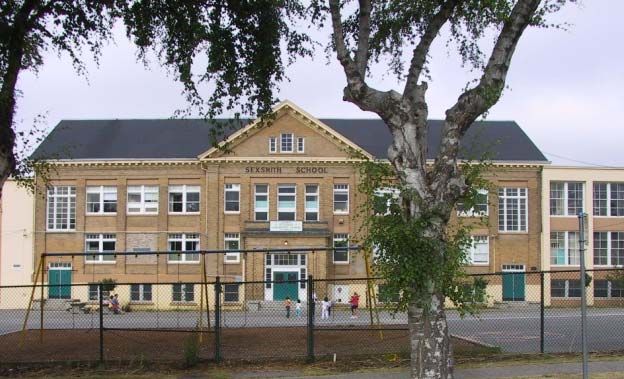
Facility Condition
Not including seismic upgrade costs, the Ministry of Education’s
Facility Condition Index (FCI) states that in many cases our
systems have reached the end of their life span. The district’s
infrastructure is at risk for serious failure.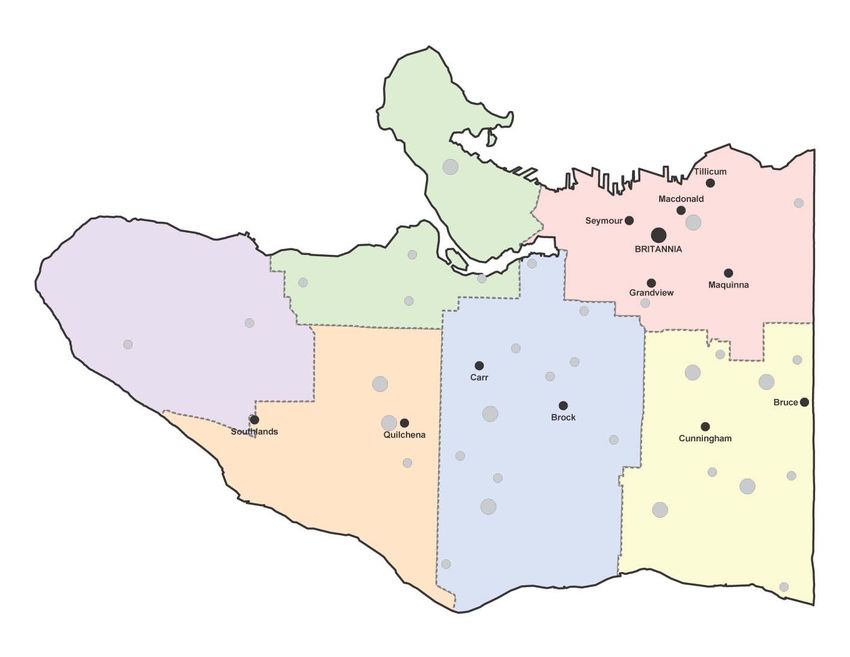
Fiscal Responsibility for the Seismic /
Maintenance Plan
To maintain the current average FCI of 0.52, $1.1 billion is
needed over the next 20 years. An additional $200 million
would be needed to reduce the FCI to a more reasonable
level of 0.2.
In addition to the urgent need to seismically upgrade buildings
to life safety standards in order to be prepared for
earthquakes, our aging stock of buildings needs at least $468
million for outstanding maintenance work.
According to the provincial government’s 2011 VFA report, this
deferred maintenance cost will grow to $632 million by 2017
if we do not address the issue now.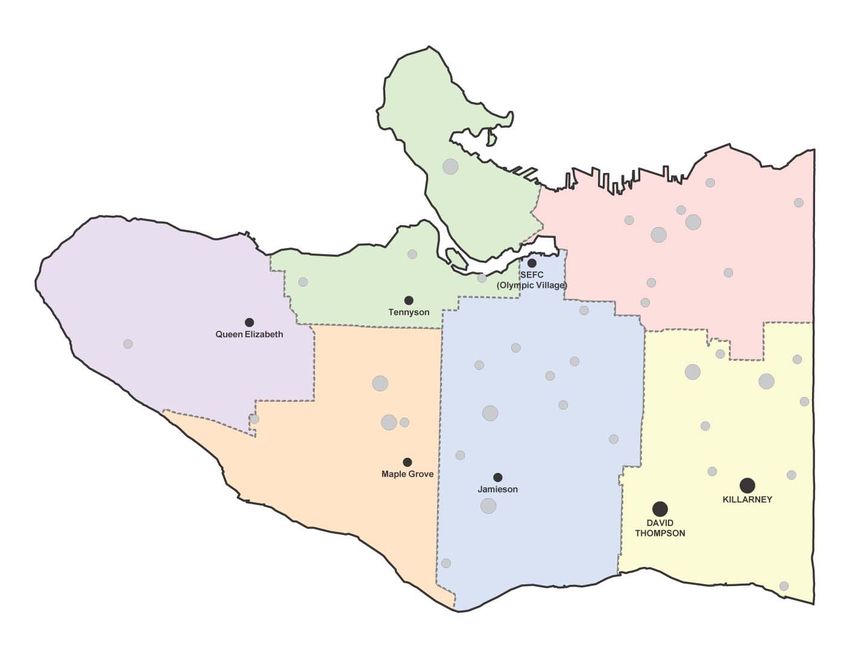
Completed Projects
Since 1996, the VSB has completed over 31 new or seismic
upgrade projects of which 16 are combined partial and full
seismic/ heritage conservation projects. With the exception of
one school, the remaining 15 were either new builds or seismic
upgrades to schools that are not heritage.
This represents approximately one heritage retention school
per year and amounts to over one million sq. ft. of heritage
space.
These projects have demonstrated the VSB’s strong commitment
to heritage conservation of it’s schools.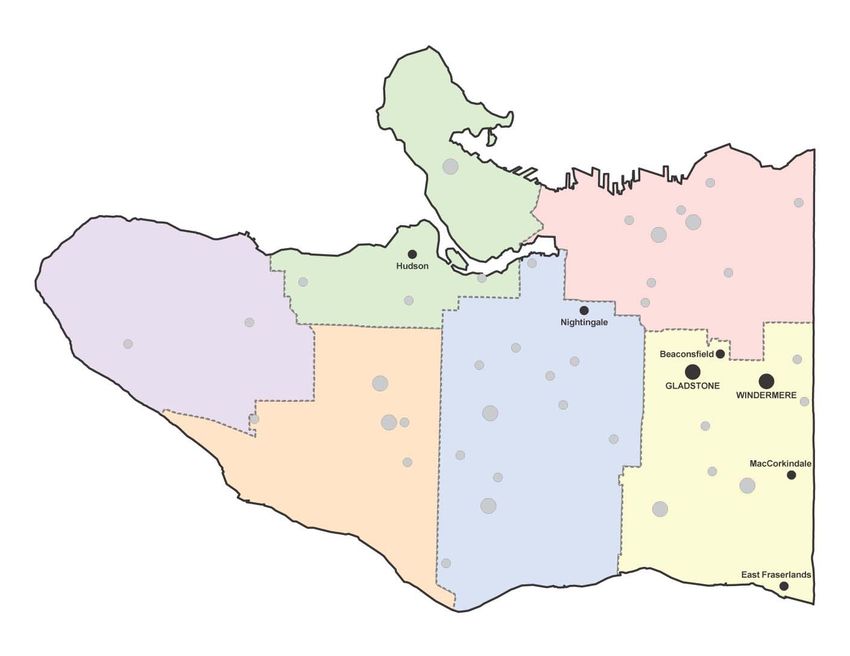
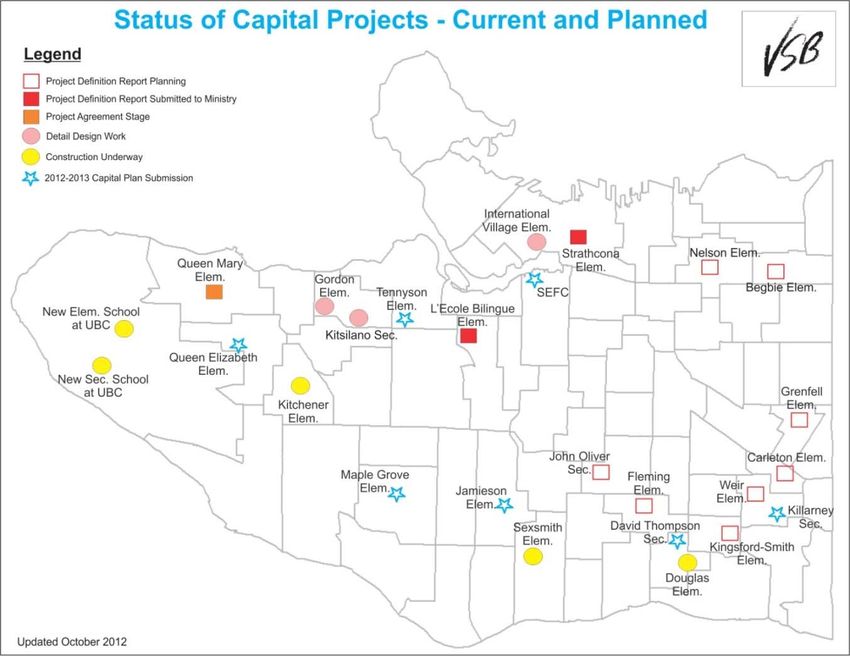
VSB Current and Planned Capital Projects

Under Construction:
 New - UBC Sec.
 New - UBC Elem.
 New - Kitchener Elem.
 New - Sexsmith Elem.
 New - Douglas Elem.
In Design:
 New - Gordon Elem.
 New - Kitsilano Sec.
 New – Int’l Village Elem.
Awaiting Approval:
 Strathcona Elem.
 New L’Ecole Bilingue Elem.
University Hill Secondary School
UBC - Acadia Road School
Sexsmith Elementary

 New school - East entry from field

                               Existing School –
                               RFP for repurposing
Douglas Elementary
North entrance of new school from 60th
Existing School –
RFP for repurposingKitchener Elementary - just occupied
Projects Currently In Design
International Village Elementary – New school
across from Rogers Arena
Kitsilano Secondary – New school with heritage
façade retention
Gordon Elementary – New school also in the
Kitsilano area
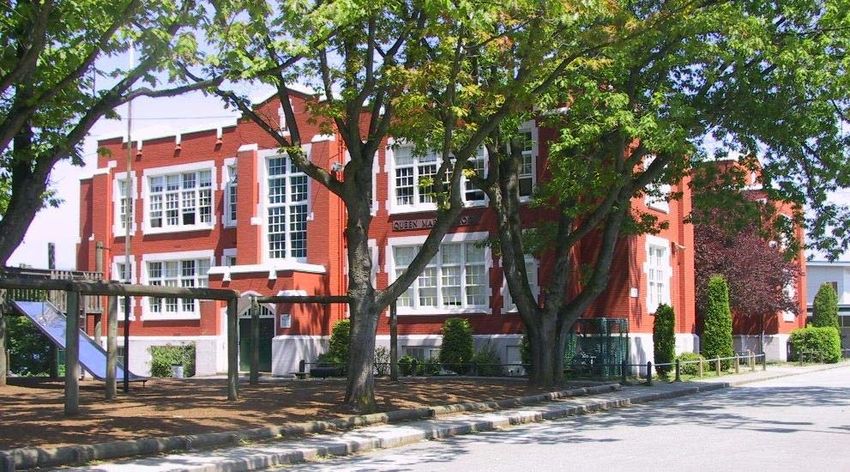
Queen Mary Elementary – Combination heritage
retention and new buildGordon Elementary
Queen Mary Elementary
Projects Currently Awaiting Announcement
Strathcona Elementary – Heritage retention with
first Base Isolation in Canada
L’Ecole Bilingue Elementary – New schoolStrathcona Elementary - Pending First example in Canada of Base Isolation to be used for Heritage Retention
Project Definition Stage – Feasibility Study Nelson Elementary – Feasibility Study Begbie Elementary – Feasibility Study Fleming Elementary – Alternate location study John Oliver Secondary – Feasibility/Development study Carleton Elementary – Feasibility/Development study Weir Elementary – Feasibility Study Kingsford-Smith Elementary – Feasibility Study Grenfell Elementary – Feasibility Study
2012/2013 Seismic and School Facilities Capital Plan OUR PLAN The Vancouver School Board has submitted an $850 million capital plan request to the Ministry of Education in order to upgrade or replace, over the next five years, 30 of the 42 schools which have a high seismic risk. In addition, our five year capital plan includes requests for three new schools as well as building envelope and mechanical upgrade projects.
Factors To Be Considered
                                              Seismic   Replace

1.   Life safety during a seismic event.       Yes       Yes
2.   Ready use of the school after a           No       Yes
     seismic event.
3.   Overall cost of replacement vs seismc     TBD      TBD
     retrofit considering existing facility
     condition and life cycle cost.
4.   Future operational, energy, and           Same      LEED G.
     maintenance costs, indoor air quality.
5.   Educational adequacy and universal        No       Excellent
     design.
6.   Heritage if applicable for school.        Yes       May
Building Code Seismic Safety
1.6
1.4
1.2
1
0.8
0.6
0.4
0.2
0
Post Disaster 1.5 New School 1.3 Commercial 1.0 Voluntary
Gymnasiums Seismic 0 .7Why Is It Such a Large Submission?
For years Vancouver students, parents and trustees advocated
for Vancouver’s many seismically at-risk schools to be
upgraded or replaced to ensure that all students and
employees are safe. The provincial government agreed and in
2005 announced that all at-risk schools would be upgraded or
replaced by 2020.
While we have made progress toward this target with the
completion of a number of projects and funding commitments
and plans are in place for several more, we still need to secure
funding for the 42 remaining high risk schools which have
not yet received funding support.CAPITAL PLAN 2012-13 – Year 1
Year 1
Killarney
David Thompson
Maple Grove
Tennyson
Jamieson
SEFC
(Olympic Village)CAPITAL PLAN 2012-13 – Year 2 Year 2 Hamber Point Grey Renfrew Mackenzie Waverley Cavell
CAPITAL PLAN 2012-13 – Year 3 Year 3 Prince of Wales Templeton Wolfe Lloyd George Bayview Livingstone
CAPITAL PLAN 2012-13 – Year 4 Year 4 Windermere Gladstone Hudson Nightingale MacCorkindale Beaconsfield East Fraserlands
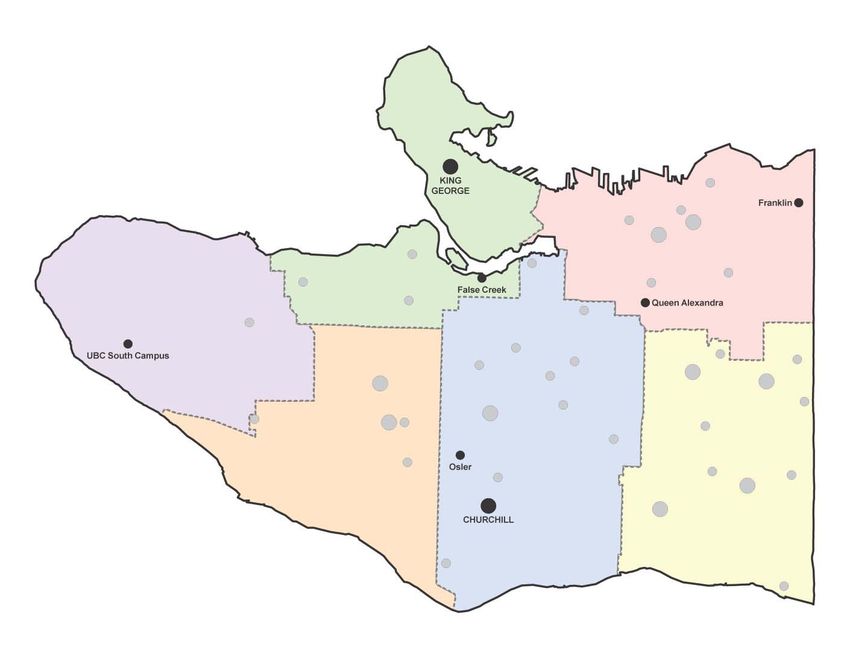
CAPITAL PLAN 2012-13 – Year 5
Year 5
King George
Churchill
False Creek
Q. Alexandra
Franklin
Osler
UBC South
CampusCAPITAL PLAN 2012-13 – Years 6 & 7 Year 6 Britannia Sec. Quilchena Grandview Bruce Seymour Tillicum Year 7 Macdonald Carr Brock Cunningham Southlands Maquinna
Heritage Value
In some cases it is more expensive to seismically
retrofit buildings than it is to replace them. New
buildings are built to greater safety standards than
retrofitted buildings and are more likely to be safe
to use immediately after an earthquake.
However, the district is also home to many significant
heritage school buildings that are valued by
communities. This creates additional challenges for
completing the seismic mitigation program.How Much Will It Cost?
According to cost estimates in the 2011 Coriolis Report
to the VSB, seismically upgrading all buildings without
any additional maintenance would cost approximately
$618 M while replacing them would cost $857 M.
Alternatively, upgrading buildings to address both
seismic and deferred maintenance could cost well over
$1 Billion.
As noted, the five year capital plan submitted by the
VSB requests $850 M in capital funding. Additional
funding would be required after 2017 to complete the
remaining projects.Proposed Guiding Principles
VSB capital plans should provide a priority for seismic
projects.
Given the educational, financial, and sustainability
advantages associated with replacing a school versus
seismic upgrades only, the VSB capital planning process
should provide a preference for school replacement.
However, the VSB should recognize and preserve the
best examples of schools on the heritage registry, within
available funding limits, in consultation with the City of
Vancouver and the Heritage Commission and the
Province.Proposed Guiding Principles (cont’d)
The priority of individual school seismic projects should
be based on the highest percentage of area
designated as H1 and H2 seismic risk and student
population.
There should be a reasonable number of schools within
each Family of Schools that can sustain a major
earthquake event and be operational afterwards.
Opportunities to improve the educational adequacy
should be a factor in replacing or upgrading schools.
Opportunities to significantly reduce the FCI for our
schools should be a factor in developing capital plans.Proposed Guiding Principles (cont’d)
There should be equity in terms of geographic
distribution within our district for seismic capital projects
over the length of the seismic program.
Opportunities to repurpose both school and non-school
properties, in whole or part, should be a factor in
completing capital plans.
All high risk projects should be completed by 2020 as
originally planned by the Ministry.
Plans for individual schools should be developed in
consultation with the local community and school
stakeholder groups.Sectorial Review Recommendations The following recommendations were proposed in the Sectorial Review: In collaboration with the City of Vancouver, the district develop a comprehensive plan to address issues of school capacity and seismic mitigation through an examination of a repurposing of school facilities in a manner that demonstrates both financial sustainability and moral stewardship of public assets.
Sectorial Review Recommendations (cont’d)
The district identify priority non-school sites for
potential long term lease or development and enter
into a public dialogue about the potential for
development of a site that would keep the land in
public domain for the long term but would benefit
the school district in the short term.
The district initiate an RFP process to seek the
further development of its properties.City of Vancouver Similarities With Vancouver School Board City – Greenest City 2020 Action Plan VSB – Greenest School District Joint Childcare Council Shared Planning knowledge MOU – Joint Space Usage Parks and School playfields rentals combined Playground usage for all children Both major landowners in the City Shared use of facilities and grounds LEED Gold or equivalent
Shared Sites / Shared Facilities Britannia Elementary & Secondary / Community Centre King George Secondary / West End Community Centre Champlain Heights Elementary / Community Centre Kitsilano Secondary / Community Centre Elsie Roy Elementary / The Roundhouse Community Centre Collingwood Elementary / Neighbourhood House Killarney Secondary / Community Centre Strathcona Elementary / Community Centre Thunderbird Elementary / Community Centre Point Grey Secondary / Artificial Field Lord Byng Secondary / Byng Pool
Neighbourhood Learning Centres All new schools receive 15% Neighbourhood Learning Centre (NLC) additional space: Queen Mary Elementary L’Ecole Bilingue Elementary Gordon Elementary Strathcona Elementary Kitsilano Secondary Nelson Elementary
Working Together
Work together with respect to heritage school sites.
Accelerate the time for development permit and
building permit approval times.
Continue to look at shared use opportunities and
repurposing of schools based on community needs.
Review the potential for land exchanges to meet the
needs of both the City and the Vancouver School
Board.Heritage Registry Schools
Current Utilization
Future Utilization
You can also read


