Energy Savings Performance Agreement - Tim Stoate, Vice President, Impact Investing - Share
←
→
Page content transcription
If your browser does not render page correctly, please read the page content below
Energy Savings Performance Agreement
                 Tim Stoate, Vice President, Impact Investing

                                                February 2014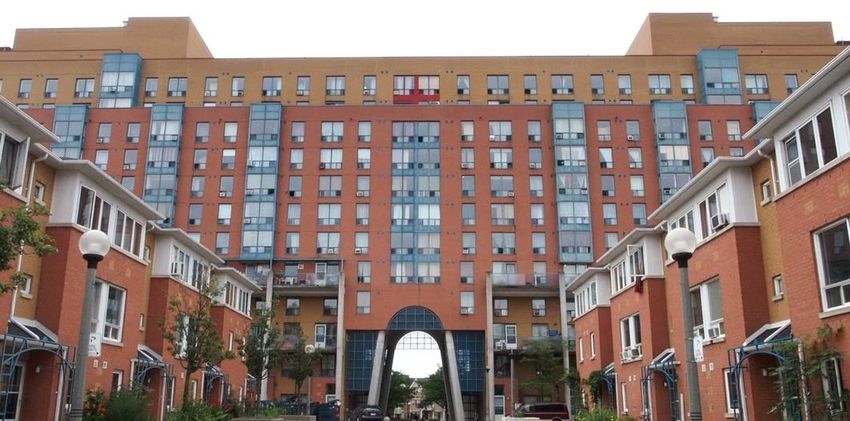
About TAF

Toronto City Council created the
Toronto Atmospheric Fund (TAF)
in 1991

First municipal climate agency in
the world

$23 million endowment for
grants & mandate-related
investments

Independent (arm’s length)
Mandate Support local initiatives that significantly reduce greenhouse gas and air pollution Toronto’s GHG reduction targets are 30% reduction by 2020 and 80% by 2050

Why is TAF investing in energy efficiency?

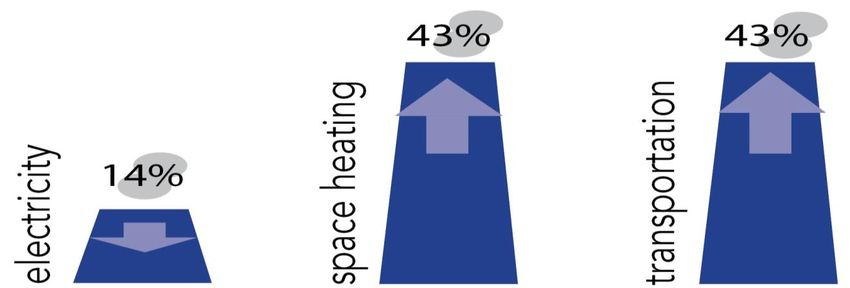
Almost 60% of GHG emissions are from buildings. TAF seeks
to accelerate energy efficiency in the high-rise residential
market by reducing financial regulatory and other barriers.

More than 6500 buildings in GTA

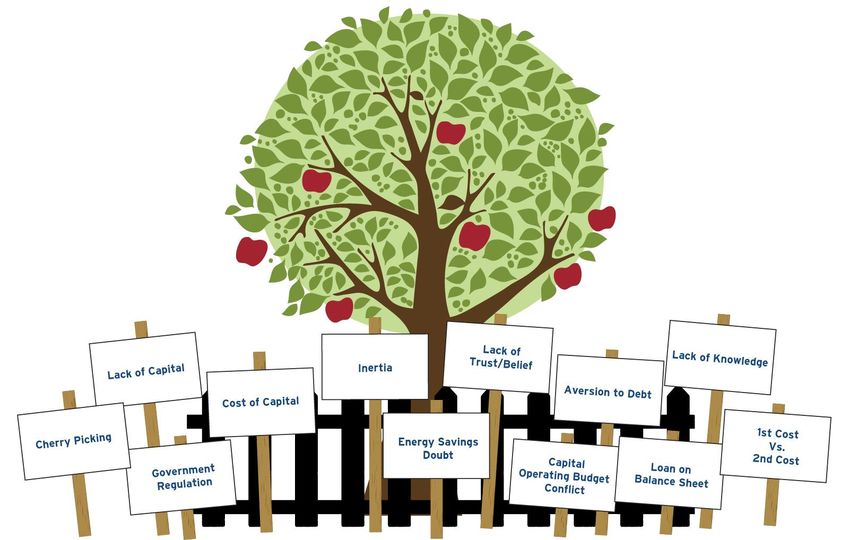
The low hanging fruit myth

Energy efficiency barriers

“What is the main barriers to pursuing
energy efficiency at your organization?”

• Lack of funding to pay for
  improvements (37%)
• Insufficient Payback ROI (21%)
• Uncertainty regarding
  savings/performance (11%)

                                                 6
Energy Savings Performance Agreement The ESPA is a new financing structure Essentially a service agreement It’s not a loan TAF will pay directly for a suite of energy efficiency measures Energy savings shared and insured Transaction minimum $250,000
ESPA vs. Loan

ESPA                                      Loan
TAF pays up to 100% - building’s capital Building’s ability to attract capital
protected                                reduced
Non-debt and no lien on property          Liability on balance sheet
Transfers much of the risk of             Responsible for technology changes
ownership, technology changes and         and equipment performance
performance to TAF
Building never pays more than savings     Building can pay more than savings
ROI to building virtually unlimited       ROI could be lower but can’t be higher
Borrowing by-law not required             Borrowing by-law required
Option to pre-pay after 3 years           Pre-payment not always an option
Features and benefits Quality. Retrofit plan optimized for savings by TAF and insurer Commissioning and re-commissioning required to ensure that new equipment is installed and operating correctly Aligns stakeholders (building owners, investors, insurer, engineers)

Return from savings

                                  Savings used to Pay Building Owner
                   Pre- Project
                   Energy Costs
                                  Savings used to Pay TAF
Energy Costs ($)

                                  Post-Project Energy Costs

                                             Financing Term

                                                  Time

                                                                       10
Too good to be true? Energy audit is the responsibility of building owner - incentives pay for a portion (up to 50%) TAF earns a return! Pre-payment has “make-whole clause” – TAF has to make a minimum return
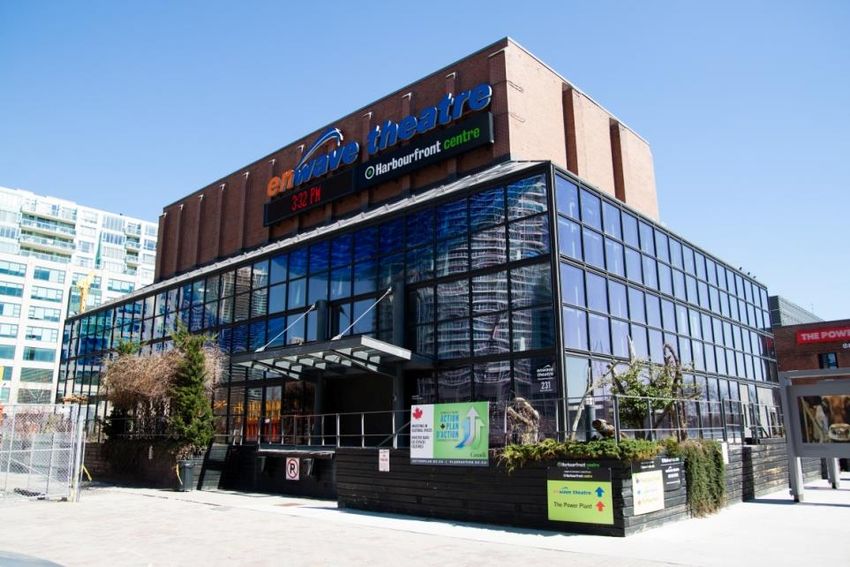
Harbourfront Centre

$117,000 in financing
9 energy efficiency measures
$54,000 annual energy savings
80% to TAF, 20% to Harbourfront
200 tonnes/yr of CO2 reduced
Robert Cooke Co-Operatives Homes

$485,000 in financing
7 energy efficiency measures
$70,000 annual energy savings
90% to TAF, 10% to Building
170 tonnes/yr of CO2 reduced
Thank You

            Tim Stoate
  Vice President, Impact Investing
tstoate@tafund.org    416-393-6368

       Toronto.ca/TAF
Looking for Honey in Other
Pots
Financing social economy projects,
the Québec
Experience
Regeneration forum, Toronto, Feb 11th 2014
15Le Chantier de l’économie sociale
Chantier de l’économie sociale: networks of collective
enterprises, local and regional development
organisations and social movements to promote and
develop the social economy
Recognition by Quebec government as a participant in
economic and social development
16Challenges
Many institutional barriers
Acces to capital
Undestanding of social economy
Commercialization strategies
Image of the social economy
17A first answer
Réseau d’investissement social du Québec:
A 12M$ fund
Contribution from:
Québec governement
Private entrprises:
Alcan
Groupe Jean-Coutu
Imasco
Caisse Desjardins
Banque Nationale, de Montréal et Royal
18A quick snapshot
Réseau d’investissement social du Québec:
• Technical assistance and capitalization components
484 projects
$11 million investment
Creation and maintenance of more than 6,000 jobs
Recreation and tourism, services, recovery-recycling,
solidarity commerce, culture, etc.
19Fiducie de Chantier de l’économie sociale
CES Trust
Contribution from:
Development Agency of Canada for the Regions of
Quebec : 22.8 M$
Fonds de solidarité FTQ: 12,0 M$
Fondaction CSN: 8,0 M$
Québec governement: 10,0 M$
Total : 52,8 M$
20Fiducie de Chantier de l’économie sociale
Operations Patient Capital
Real Estate Patient Capital:
21Fiducie de Chantier de l’économie sociale
Patient capital
Repayment in a single instalment after 15
years
Monthly paymnet of interst and fees
No security or any other guarantee
Real estate patient capital
Mortgage financing with a financial
institution
Guatentee by real estate mortgage
subordinated
22Fiducie de Chantier de l’économie sociale
Patient capital
32% in operating patient capital
39% Real estate patient capital
29% mix of both
23Housing Challenges
Need for community Housing
Response against « social bonds »
Response to the diminution of gouvernement
program
Beeing a actor in financing
24A limited partnership fund
With the actors of community Housing
In adition to governement program
Pilot of 1 200 units :
2013: 200 unités
2014: 500 unités
2015: 500 unités
31,5M$
25A limited partnership fund
Guarentee from the governement of Québec
Investments from union fund
Fonds de solidarité de la Fédération des
travailleurs du Québec (FTQ)
Fondaction, Confédération des syndicats nationaux
(CSN)
26A limited partnership fund
Integrated in the developpement program
AccèsLogis
Patient capital 15 years
Mortgage from a partner institution (SSQ a mutual
insurance group)
27 3 funds:
Réseau de l’investissement social du Québec (RISQ)
Fiducie du Chantier de l’économie social
Fond d’habitation – Capital patient
3 structures:
Non-profit organisation
Trust
Limited partnership
28 Many types of loans
Risk capital
Patient capital
Operating capital
Many investors
Governements
Private sector
Unions
2930
Looking for honey in other pots

Presentation to HSC Regeneration Forum

Derek Ballantyne

613-366-1169 info@communityforwardfund.ca
251 Bank Street, 2nd Floor, Ottawa, ON K2P 1X3
www.communityforwardfund.ca
Community Forward Fund

•   A loan and financing fund for
    Canadian nonprofits and charities
•   Targets gap in access to patient
    capital, working capital, bridge
    financing and growth capital for the
    sector
•   Builds financial capacity through
    financial reviews and coaching
    services
•   Works in partnership with regional
    funds, foundations and other
    community partners
CFF Organization Structure
Accredited Investors
Investment Assets Annual Return
Mgmt Fee
Community Forward Fund
Community Forward Fund
Assistance Corporation
(Concentra Trust)
(Registered Fund Manager)
Advise
Interest Payment
Loan Principal Principal Repayment
Loan RecipientsCommunity Forward Fund
• Operating since July 2012
• Registered for investors in 5 provinces
Lending Financial Capacity Building
• $7.8 million subscriptions • Introductory workshops
• $2.0 million commitments alternative financing
• $6.8 million loans approved • Site analysis
– 70 % drawn
• In depth financial reviews /
• 2012 return to investors 3.2%
clinicLoan portfolio • Detailed loan review process • Two-stage credit approval process • Provide secured and unsecured lending • Lending rates 5% - 8% • Average loan $270,000 • Average term 30 months
Housing loans
• $ 2,500,000
  –   Project development funding
  –   Participation in take-out lending
  –   80% secured on assets
  –   Balance secured on cash flow or GSA
• Significant demand
   – Complement to conventional lenders
   – Prepared to assess risk differently
   – Can lend when security on asset not possible
Investors

• Community Foundations / Private foundations
   – Impact investors
      • Local impact
      • Social impact
   – Return equal or above disbursement requirements
   – Third party due diligence and loan management
Sources of alternative financing • Community loan funds – Relatively small, close to capacity • Foundations – Challenge of diligence, loan monitoring – Limits related to concentration of investment class • Community bonds – Primarily retail investment, RRSP drive – Challenge of placement mechanisms • Structured investment / debt product
Why are good ideas not funded
• Investor needs not always met
   –   Ability to manage / cost of due diligence
   –   Viable business plan
   –   Quantum of risk exposure to asset class
   –   Liquidity of investment
• Limited number of intermediaries
   –   Sufficient capitalization for housing
   –   Can diversity investor risk
   –   Provide investor liquidity
   –   Generate on-going returns
You can also read


