The Road to Success - e-mobility in Primorje-Gorski Kotar County - Interreg Central ...
←
→
Page content transcription
If your browser does not render page correctly, please read the page content below
Workshop
                   Sustainable transport

The Road to Success - e-mobility in
  Primorje-Gorski Kotar County
          Assist. Prof. Vedran Kirincic, PhD

                 vedran.kirincic@riteh.hr

           Sustainable energy / Mobility expert
   Faculty of Engineering, University of Rijeka, Croatia
       https://www.linkedin.com/in/vedrankirincic/
Where are we?

                                                          Primorje-Gorski Kotar County

Number of passenger vehicles per 1k people in NUTS2
regions, 2013

2017: HR 358, EU average 497; PGZ >550

Source: Eurostat, Transport Development Strategy of the                             2
Republic of Croatia (2017-2030)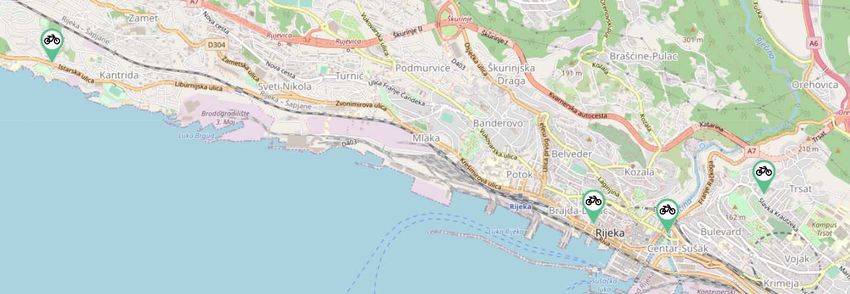
Primorje-Gorski Kotar County – charging infrastructure

  Source: ZE Mobility

                                  Primorje-Gorski Kotar County
              Area (km2)                                  3.588
              Population (2011)                         296.195
              Density (/km2)                                 83
              Charging stations                             60+
              EV and PHEV                                  ~500   3
Electric and Hybrid Vehicles in the County of Primorje-Gorski Kotar in 2017 and 2018

                                                                                                                   2017
    Category and description            Type            Year 2017           Year 2018        Change 2018/2017
                                                    Vehicle  Category   Vehicle   Category
                                                                                             Relative   Absolute
                                                    number     share    number     share
  L1 - A two-wheeled light motor
                                      Electricity     20     20.83%       43      24.29%     115.00%      23
              vehicle

        L5 - Motor tricycle           Electricity     1       1.04%       3        1.69%     200.00%       2

       L6 - Light quad bike           Electricity     1       1.04%       2        1.13%     100.00%       1

     L7 - Heavy quadricycles          Electricity     31     32.29%       39      22.03%     25.81%        8

  M1 - Motor vehicles intended for
 the carriage of passengers with a
                                      Electricity     21     21.88%       45      25.42%     114.29%      24
    maximum of eight seats in
    addition to the driver's seat

  M1 - Motor vehicles intended for
                                        Hybrid
 the carriage of passengers with a
                                     vehicle with     13     13.54%       19      10.73%     46.15%        6
                                                                                                                   2018
    maximum of eight seats in
                                       external
    addition to the driver's seat
                                       charge

 N1 - Motor vehicles intended for
  the carriage of goods with a
                                      Electricity     9       9.38%       26      14.69%     188.89%      17
 maximum mass not exceeding
           3,5 tonnes.

                      Total                           96     100.00%     177     100.00%     84.38%       81

Source: Center for Vehicles of Croatia (CVH)

The Environmental Protection and Energy Efficiency Fund (eng. EPEEP, cro. FZOEU)                                          4
2014-2019 (national figures): financial support of 14.6 M euro for 3.530 vehicles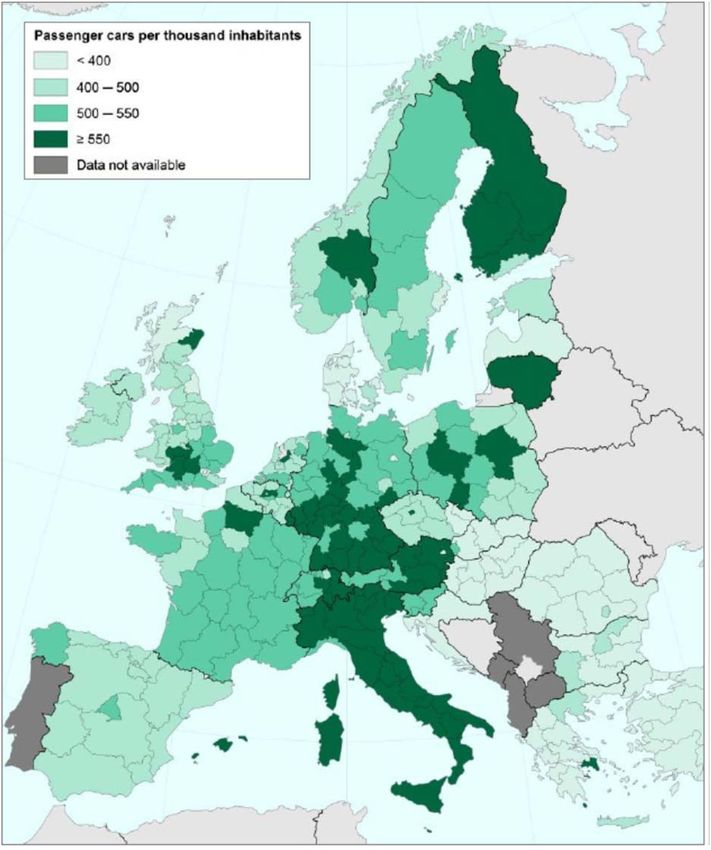
Primorje-Gorski Kotar County vs rest of Croatia
                                                                                                                     Number of sockets
                Area                       Population (2011)               Number of electric and hybrid vehicles
                  6,34%                                    6,89%                                      8,93%

                                                                                                                                 18,90%

                                                                                            91,07%

                                                                                                                     81,10%

     93,66%                                93,11%

                                                                                           PGZ       Rest of CRO         PGZ   Rest of CRO
          PGZ     Rest of CRO                  PGZ        Rest of CRO

                                                                                                                     Number of charging
            Ratio vehicles for charging /                                       Ratio vehicles for charging /         station locations
                 charging locations                                                       sockets
50,00                                                                   20,00
45,00                                                                   18,00
40,00                                                                   16,00                                                    19,85%
35,00                                                                   14,00
30,00                                                                   12,00
25,00                                                                   10,00
*
20,00
15,00
                                                                         8,00
                                                                         6,00
10,00                                                                    4,00                                        80,15%
 5,00                                                                    2,00
 0,00                                                                    0,00                                            PGZ   Rest of CRO
                PGZ          Rest of CRO            CRO                             PGZ     Rest of CRO        CRO

    * The EU’s Directive on Alternative Fuel Infrastructure – DAFI, 2014.
                                                                                                                                          5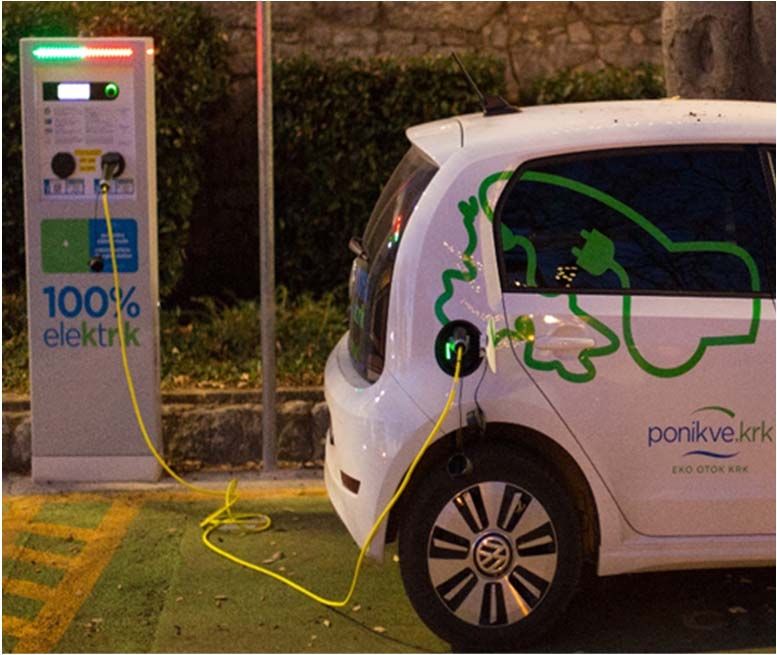
Primorje-Gorski Kotar County projections
                                                                                       Basic scenario
                                                        300

Primorje and                                            250
Gorski Kotar                                            200
county       Parameter             2020   2025   2030
                                                        150
             AC sockets             146    268    298
             DC sockets              13     21     23   100
    Basic    Total sockets          159    289    321    50
   scenario Number of charging
                                                          0
             stations (pillars)    120    231    264          2020. 2021. 2022. 2023. 2024. 2025. 2026. 2027. 2028. 2029. 2030.
             Number of locations    62    110    122                Number of charging stations (pillars)         Number of locations
             AC sockets            206    330    348
             DC sockets             27     44     46
  Moderate Total sockets           233    374    394
   scenario Number of charging                                                        Basic scenario
             stations (pillars)    180    299    323    350
             Number of locations    92    126    134    300
             AC sockets            263    402    403
                                                        250
             DC sockets             35     46     54
                                                        200
   Dynamic Total sockets           298    447    457
   scenario Number of charging                          150
                                                        100
             stations (pillars)    226    361    375
             Number of locations   116    126    164     50
                                                          0
                                                              2020. 2021. 2022. 2023. 2024. 2025. 2026. 2027. 2028. 2029. 2030.

                                                                                     AC sockets      DC sockets

                                                                                                                                 6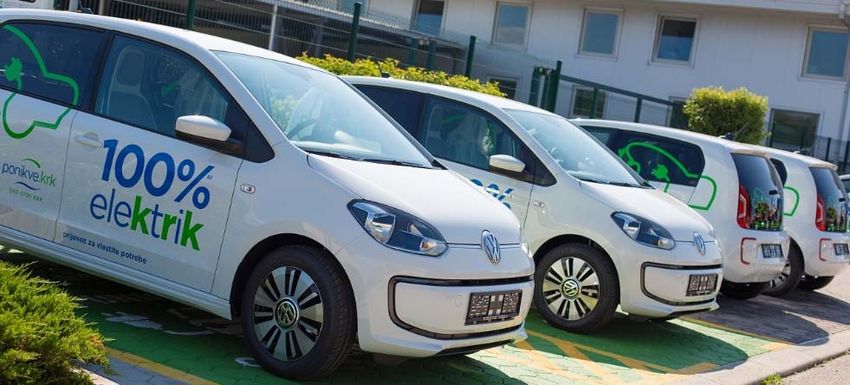
EnerMOB - Interregional Electromobility Networks for intERurban low carbon MOBility

        The project budget: 1,222,513.63 EUR
        PGZ budget: EUR 222,745.17

                                                                                                7
Source: A.Carollo: EnerMOB IPA Conference 2019 Project overview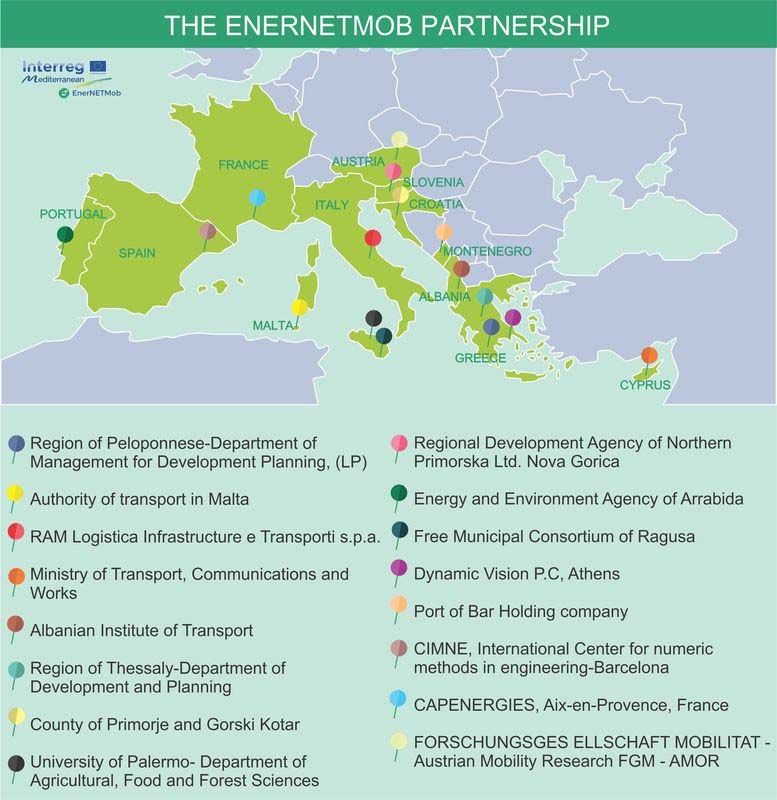
EnerMOB - Interregional Electromobility Networks for intERurban low
                                 carbon MOBility

Charging stations (2x22 kW AC) for electric
vehicles have been developed in the framework of
the EnerMOB project.
Three AC charging stations have been installed and
are operating in attractive tourist and traffic locations in
Rijeka International Airport, Municipality of Fužine
and on island Rab in the port Melak.

Installation of charging stations for electric vehicles
has created conditions for greater use of electric
vehicles in the County of Primorje and Gorski Kotar,
which leads to a reduction in carbon dioxide emissions
generated    in   road   transport,    increased    energy
efficiency and reduced dependence on other energy
sources.

With the implementation of the EnerMOB project, the
County is more accessible and enables greater
mobility of the local population and visitors.

                                                                              8
Source: County of Primorje-Gorski Kotar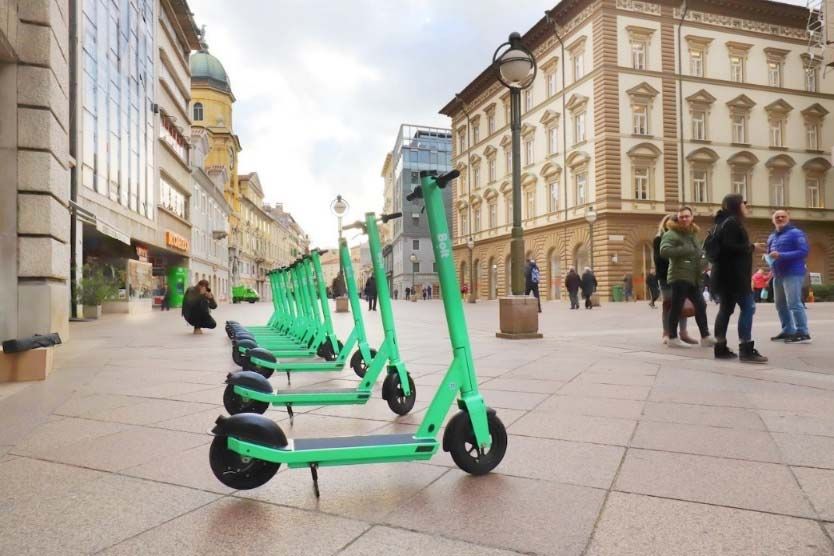
EnerNETMob - Mediterranean Interregional Electromobility Networks for
            intermodal and interurban low carbon transport systems

                                       The Mediterranean program covers many regions and cities that
                                       do not have developed policies for sustainable mobility, and
                                       given the growing growth of electric cars at both European and
                                       national and regional levels, it is necessary to systematically
                                       develop long-term strategies. So far, small infrastructure
                                       networks have not been consolidated in the EU to allow further
                                       movement     of      battery-powered   electric   vehicles.   The
                                       EnerNETMob project seeks to address the needs of these two
                                       challenges of a lack of charging infrastructure and common
                                       standards.

                                       The overall goal of the project is to develop, test and promote
                                       sustainable electromobility plans, based on common standards
                                       of the electric transport system at the transnational level, by
                                       connecting a regional network of electric charging stations, in
                                       order to achieve greater mobility between cities and regions in
                                       the Mediterranean.

The project budget: 5,742,802.10 EUR
                                                                                                     9
PGZ budget: 415,875.00 EUR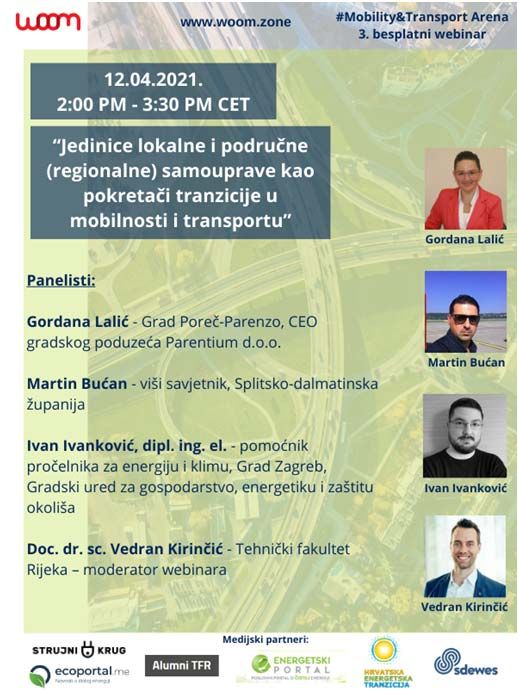
eBike-sharing system
                                            Use of e-bikes by tariffs (hours)
4 locations
28 e-bikes
1,5 Eur/h
                                                                          Total: 3758

                            Number of sessions in 2020
                                                            Total: 3758

                    March   April   May   June   July   August   September
                                                                               10
electric scooter rentals
NUMBER OF AVG NUMBER OF
10 starting locations SESSIONS SESSIONS PER SCOOTER
Free floating model
200 scooters
0,1 Eur/min
11Krk in Europe
Munich 570 km Wien 530 km
Bratislava 600
km
Bruxelles 1350
km Budapest 530
km
Belgrade 580
km
Milano 540
kmKRK in numbers
19,500 locals
50,000 owners of weekend houses (weekenders) in top season
52,000 registered nights in top season or 4 M annually
30,000 objects, 10,000 used regularly, 20,000 occasionally
Area 410 km², coastline 200 km
140.000
120.000
100.000
Number of residents
80.000
60.000
40.000
20.000
0
locals
dom. stanovništvo weekenders
korisnici vikendica tourists
turistiThe island of Krk – 2030 strategic aims
Steps towards zero GHG emissions
Total of energy saving
112 GWh/A
Energy saving by rising the public
awareness – 15%
100% 15% 15% 45%
15%
- 45%
Total of
energy
saving
Economicaly profitable
30% investments in energy efficiency
– 30%
profitable over
Energy saving
Future energy
Investments
a short term
Initial state
necessities
Necessities covered by renewable
sources (wind, sun, bio-mass)
2012 2020 2025 2030 62 GWh/A
Source: “Interdisciplinary strategy of zero emissions for
integrated development of the island of Krk”, igr AG,
14
Ponikve Eko Otok Krk, Croatia, 2012.eMobility
ELECTRIC CHARGING STATIONS
12 charging stations (7 municipalities)
127.300 Euro, EPEEP fund: 64.200 Euro (40%)
2 x 22 kW
IEC 62196 Type2 Mode 3
ELECTRIC VEHICLES
10 electric vehicles 207.452 Euro,
EPEEP 88.346 Euro (30%)
Source: Ponikve Eko Otok KrkCharging stations on the island of Krk – no range anxiety! Source: Main electrotechnical project for charging stations at the island of Krk, E.G.S.- 16 ELEKTROGRADITELJSTVO d.o.o., 2016.
Number of charging sessions
6000

5000

                                                                                                              2018: +65,24%
4000
                                                                                                              2019: +50,96%

3000

2000

1000

   0
                                             Krk -
        Baska*     Dobrinj*   City of Krk             Malinska   Omisalj   Punat   Vrbnik   Airport   Total
                                            Ponikve
 2017     147        227         484          258       225       214      309      168       25      2057
 2018     406        762         662          390       349       328      302      165       35      3399
 2019     567       1359         858          692       686       422      242      180      125      5131
 2020     686        114         869          422       347       346      307      333       99      3523

Remarks:
2019: charging station in Silo (Dobrinj) was out operation for several months
2020: 1/1/2020-30/9/2020

Source: Ponikve Eko Otok Krk
Conversion of ICEV to EV
• Established conversion team for electric
vehicles E-mobile team Krk
• Employees of Ponikve eko otok Krk and
external experts
• Equipped auto mechanic workshop for
conversion of vehicle
• EPEEP fund subvention of 7.544 Euro
• Conversion started in 2015, finished in 2016
18
Source: Ponikve Eko Otok KrkAnalysis of the transport system of the island of Krk
• Top three categories ccontribute to CO2 emissions (93.51% in total):
- M1 – small passenger vehicles (up to 8 passengers)
- N1 – transport vehicles ≤ 3500 kg
- N3 – transport vehicles >12000 kg
100,0%
90,0%
• Simulated scenarios: 80,0%
70,0% Scenarij
S1 1
- S1: EV 0-100 % in all categories, RES 0%
60,0% Scenarij
- S2: EV 0-100% in all categories, RES 0-100% S2 2
50,0%
- S3: EV 0-100 % in the category M1, RES 0% 40,0%
S3 3
Scenarij
- S4: EV 0-100% in the category M1, RES 0-100% 30,0% S4 4
Scenarij
20,0% S5 5
Scenarij
- S5: EV 0-100 % in the categories M1 and N1, RES 0%
10,0% S6 6
Scenarij
- S6: EV 0-100 % in the categories M1 and N1, RES 0-100% 0,0%
• Remarks:
- penetration of EV (S1, S3 and S5) saves CO2, theoretically up to 58.5 % (S1)
- additional penetration of RES (S2, S4 and S6) saves CO2, theoretically up to 100%
- S2 is not realistic in the short term period (technical and financial factors)
- more realistic scenarios for CO2 savings: 74,9 % (S4) and 86.7 % (S6)
• Recommendations:
- penetration of EV in the categories M1 and N1 (numerous models, standard infrastructure, funding);
- penetration of RES – PV systems, WPP – generation of EE for local consumption
19
Source: “Sustainable Urban Mobility Plan (SUMP) for the island of Krk - Interdisciplinary study of electromobility at the island of Krk
and the mobile phone application”; Faculty of Engineering, Sensum and Molekula for Ponikve eko otok Krk Ltd, Croatia, 2017.The mathematical model of the island of Krk power system – Smart Grid
A part of the mathematical model of the island of Krk power system
modeled in the software package NEPLAN
Source: D. Variola, V. Kirincic, D. Frankovic, R. Prenc, “Modeling of the power system of the island of Krk,” 20
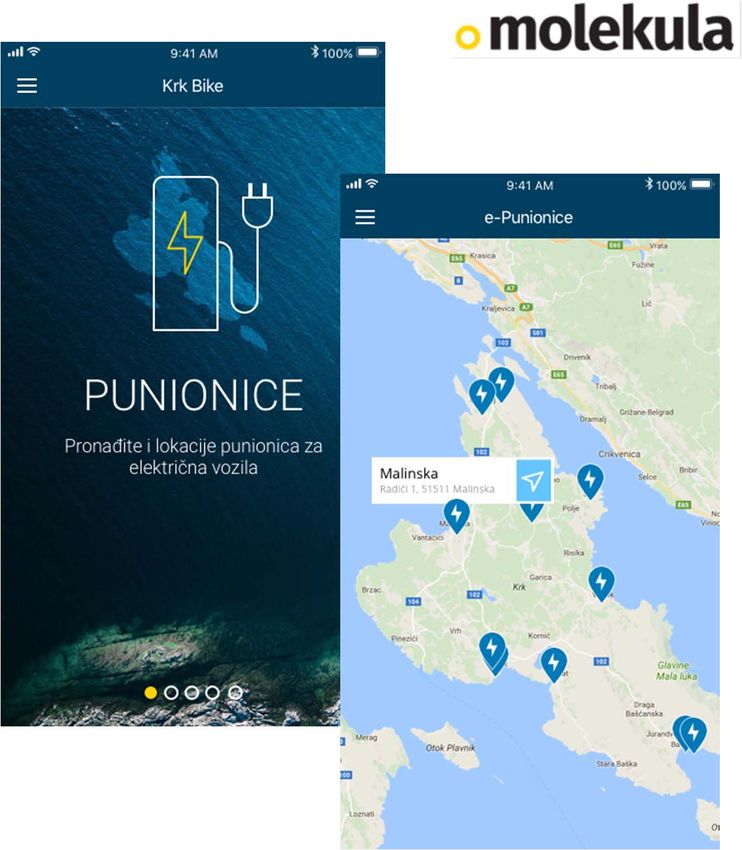
CIRED 13 – 16.5.2018, Opatija, Croatia, 2018.KRKbike
mobile app
28 bicycle routes
642 km
Source: “Sustainable Urban Mobility Plan (SUMP) for the island of Krk - Interdisciplinary study
of electromobility at the island of Krk and the mobile phone application”; Faculty of Engineering,
Sensum and Molekula for Ponikve eko otok Krk Ltd, Croatia, 2017.
Available @ Google Play, App Store, https://www.krkoutdoor.com/Bike sharing system on the island of Krk
• 8 charging locations
• 10 zones with 10 sockets
each
• Ministry of tourism
107.803 Euro
• Domestic provider –
vehicles, charging
equipment, software
Number of sessions in 2020
May June July August September October
22
Source: Ponikve Eko Otok KrkE-mobility support and strategic documents
Source: EIHP
https://woom.zone/category/topics/mobility-transport-arena/Mobility & Transport Arena
Purpose of Mobility & Transport Arena:
– Promote green, smart and efficient transport and
mobility,
– Raising the level of awareness and knowledge of the
whole society with an emphasis on politics, business
and citizens,
– Market education,
– Promotion of innovative models,
– Promotion of competencies,
– Industry development,
– Create a mobility and transport community in the EU
and the region.
– Virtual events are free for all participants and recordings
are permanently available free of charge
Some of the topics:
– Sustainable transport and eMobility as a new concept in
energy and transport
– Why we need a revolution in mobility and transport
– Investment opportunities
– Local and regional self-government units as drivers of
transition in mobility and transport
24
https://woom.zone/category/topics/mobility-transport-arena/Recommended methodology
• Actions needed to establish a low-carbon community:
– create a long-term vision and draft strategic documents
– integrate renewable energy sources to support increased electricity demand;
– establish a network of charging stations;
– equip the workshop and establish a team for the conversion of electric vehicles;
– implement energy efficiency measures in buildings and public lighting, systematic energy
management in the public sector;
– waste collection and management systems and water resources management;
– develop broadband IT infrastructure (optical network);
– establish a project team to attract funds from national and EU funds;
– continuous educational activities through the energy cooperatives and local action groups with
a plan to build an educational & research center and promotional activities for more
intensive involvement of the local population and awareness of the general public.
25Workshop
Sustainable transport
The Road to Success - e-mobility in
Primorje-Gorski Kotar County
Assist. Prof. Vedran Kirincic, PhD
vedran.kirincic@riteh.hr
Sustainable energy / Mobility expert
Faculty of Engineering, University of Rijeka, Croatia
https://www.linkedin.com/in/vedrankirincic/You can also read


