Ventilatory management of Respiratory Failure in - COVID-19 Therapeutic options 6. May 2020 - ResMed
←
→
Page content transcription
If your browser does not render page correctly, please read the page content below
Ventilatory management
                of Respiratory Failure in
                COVID-19
                Therapeutic options
                6. May 2020

110306© 2020 ResMed. 05/20 - COVID-19 - This document is based on information available at the time of publication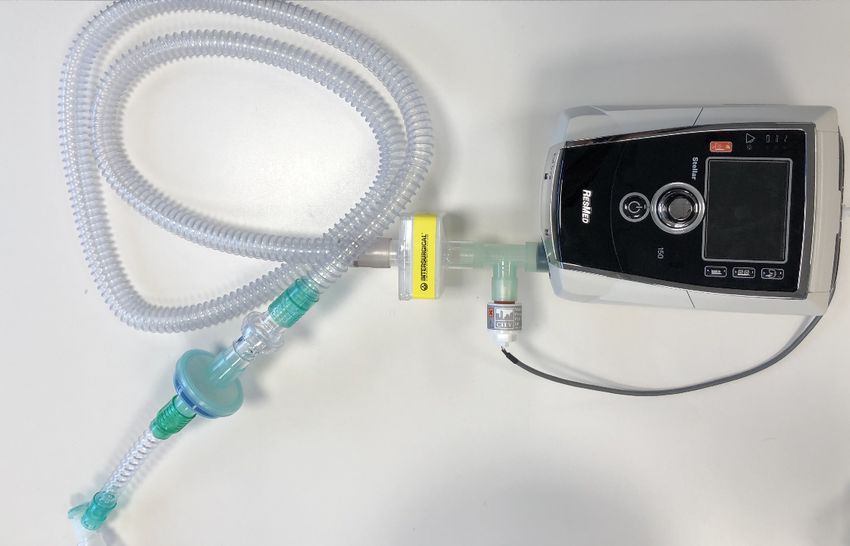
• The understanding of Covid-19 and knowledge of its
                                                                                   management is incomplete and continually evolving.
                                                                                   Meanwhile, scientists and healthcare professionals will find
                                                                                   themselves increasingly confronted by the pandemic

                                                                                 • This presentation is based on the latest published information
                                                                                   and recommendations on Covid-19, as well as practical
                                                                                   findings collected from the clinical community to date. Given

           Disclaimer                                                              that these are expected to change as new data comes to light,
                                                                                   this presentation will be regularly updated.

                                                                                 • This document aims to assist in understanding the application
                                                                                   of ResMed devices in providing ventilation support to patients
                                                                                   with clinical syndromes due to COVID-19 infection. It is based
                                                                                   on current information, which is changing rapidly. The purpose
                                                                                   is not to direct clinical practice, but to provide clear information
                                                                                   on available ResMed products and their application.

                                                                                 • As such, it can not be considered as a recommendation itself.

110306 © 2020 ResMed. 05/20 - COVID-19 - This document is based on information
available at the time of publication
Glossary

                     C PA P                      Continues Positive Airway Pressure                                       IV    Invasive Ventilation

                              EI                 Endotracheal Intubation                                                NIV     Non Invasive Ventilation

                             ET                  Endotracheal Tube                                                    NV Mask   Non Vented Mask

                            ER                   Emergency Room                                                          LS     Life Support

                     HFOT                        High Flow Oxygen Therapy                                                NLS    Non Life Support

                        HMV                      Home Mechanical Ventilation                                              RR    Respiratory Rate

                          ICU                    Intensive Care Unit

    © 2019 ResMed. Company confidential.
110306 © 2020 ResMed. 05/20 - COVID-19 - This document is based on information available at the time of publication                                        3
Pathology

110306 © 2020 ResMed. 05/20 - COVID-19 - This document is based on information available at the time of publication

Coronavirus Disease 2019 (Covid-19)

    Coronavirus disease 2019 (Covid-19) is a respiratory                                                              [1] Naming the coronavirus disease (COVID-19) and the
    tract infection caused by severe acute respiratory syndrome                                                       virus that causes it". World Health Organization (WHO).
    coronavirus 2 (SARS-CoV-2).[1]                                                                                    Retrieved 2 april 2020
                                                                                                                      [2] Hui DS et al. The continuing 2019-nCoV epidemic threat
    The disease was first identified in December 2019 in Wuhan,                                                       of novel coronaviruses to global health—The latest 2019
    the capital of China's Hubei province, and has since spread                                                       novel coronavirus outbreak in Wuhan, China". Int J Infect
    globally, resulting in the ongoing 2019–20 coronavirus                                                            Dis. 91: 264–66. doi:10.1016/j.ijid.2020.01.009
    pandemic.[2][3]                                                                                                   [3] WHO Director-General's opening remarks at the media
                                                                                                                      briefing on COVID-19". World Health Organization (WHO)
    Common symptoms include fever, cough, and shortness of                                                            (Press release). 11 March 2020. Retrieved 2 April 2020
    breath.[4]                                                                                                        [4] Symptoms of Novel Coronavirus (2019-nCoV)".
                                                                                                                      www.cdc.gov. 10 February 2020. Retrieved 2 April 2020

    © 2019 ResMed. Company confidential.
110306 © 2020 ResMed. 05/20 - COVID-19 - This document is based on information available at the time of publication                                                                5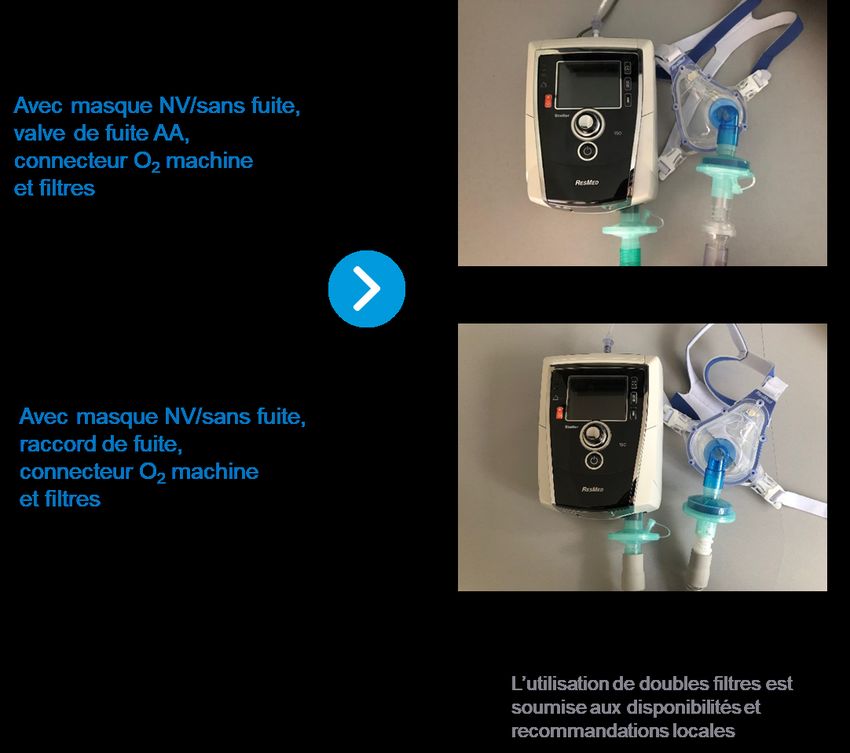
Key points about Covid-19

                        Covid-19 is a viral Infection which is                                                           sputum production), anorexia, malaise, muscle pain, sore
                        highly contagious (1)                                                                            throat, dyspnea, nasal congestion, or headache
                                                                                                                      • Pneumonia : adults with pneumonia but no signs of
    It is therefore critical to respect recommended measures to                                                         severe pneumonia and no need for supplemental O2
    avoid being exposed to the virus, such as social
    distancing, hand washing, wearing PPE, and cleaning and                                                           • Severe pneumonia : ever or suspected respiratory
    disinfecting frequently touches surfaces                                                                            infection, plus one of the following: respiratory rate > 30
                                                                                                                        breaths/min; severe respiratory distress; or SpO2 ≤ 93%
                                                                                                                        on room air
                        Clinical syndromes                                     associated                     with    • Acute respiratory distress syndrome (ARDS)
                        Covid –19 (2)
                                                                                                                      • Sepsis
    • Mild illness : Patients with an uncomplicated upper
      respiratory tract viral infection may have non-specific                                                         (1) https://www.cdc.gov/coronavirus/2019-ncov/prevent-getting-sick/how-covid-spreads.html
                                                                                                                      (2) https://www.who.int/docs/default-source/coronaviruse/clinical-management-of-novel-cov.pdf
      symptoms such as fever, fatigue, cough (with or without

    © 2019 ResMed. Company confidential.
110306 © 2020 ResMed. 05/20 - COVID-19 - This document is based on information available at the time of publication                                                                                               6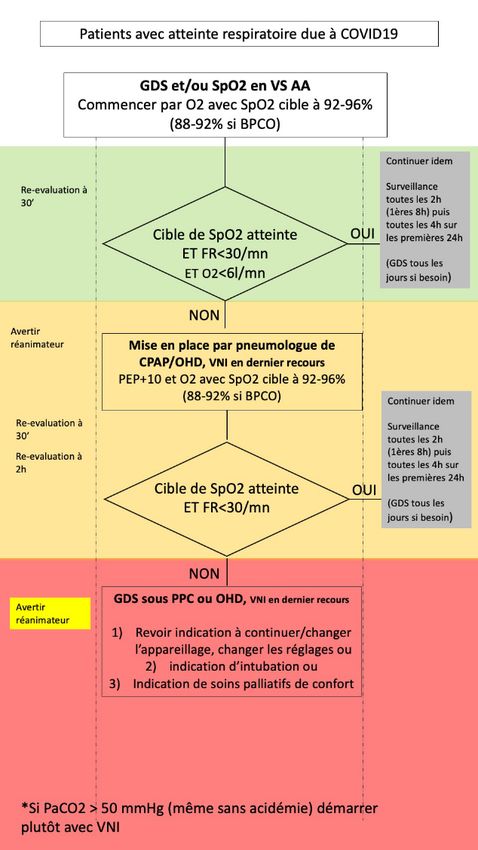
Possible evolution of the pathology over time

    • Influenza syndrome (dry cough, fever...)
    • Acute respiratory failure (ARF): dyspnea, hypoxemia,
      asthenia,…
                                                                                                                      In its severe forms, the disease predominantly causes a
        •     Usually appears between the 6th and the 11th day of                                                     default in blood oxygenation as a consequence of severe
              symptoms(1)                                                                                             hypoxemic Respiratory Insufficiency.
        •     Type I ARF mainly (Hypoxemic and not hypercapnic),
                                                                                                                      Consequently, patients predominantly present
              in the absence of severe respiratory comorbidity such
                                                                                                                      with hypoxemia and more rarely hypercapnia.
              as severe COPD, Overlap syndrome...
        •     Most rarely type II (Hypercapnic), most comonly in the                                                  Patients with respiratory comorbidities - particularly Chronic
              case of previous Chronic Respiratory Failure                                                            Respiratory Insufficiency - are more likely to present with
                                                                                                                      hypercapnia
    • Acute Respiratory Distress Syndrome ARDS: hypoxemic
      respiratory failure (1)
        •     Can be very sudden

    © 2019 ResMed. Company confidential.
110306 © 2020 ResMed. 05/20 - COVID-19 - This document is based on information available at the time of publication                                                                    7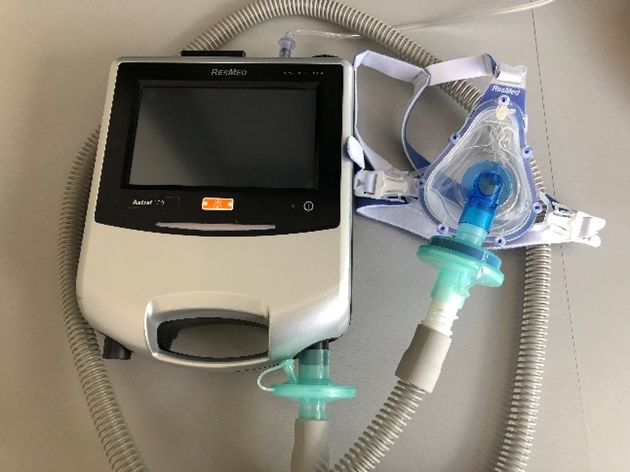
The severity of diagnosed Covid-19 cases in China

                                                                                                                        Roser M, Ritchie H, Ortiz-Ospina E (4 March 2020). "Coronavirus
                                                                                                                        Disease (COVID-19)". Our World in Data. Archived from the original on
                                                                                                                        19 March 2020. Retrieved 12 March 2020

    © 2019
110306
110306 ©
            ResMed.
       © 2020
         2020 ResMed.Company
              ResMed. 05/20
                                 confidential.
                      04/20 -- COVID-19
                               COVID-19 -- This
                                           This document
                                                document is
                                                         is based
                                                            based on
                                                                  on information
                                                                     information available
                                                                                 available at
                                                                                           at the
                                                                                              the time
                                                                                                  time of
                                                                                                       of publication
                                                                                                          publication                                                                           8
Resource sites and recommendations

110306 © 2020 ResMed. 05/20 - COVID-19 - This document is based on information available at the time of publication
Relevant guidelines
                                                                                                                      Italy
         WHO: Clinical management of severe acute respiratory                                                         •       https://www.ersnet.org/covid-19-blog/sharing-italian-
         infection (SARI) when COVID - 19 disease is suspected -                                                              recommendations
         Interim guidance - 13 March 2020                                                                             •       Managing the respiratory care of patients with COVID-19: Italian
                                                                                                                              Thoracic Society, (AIPO), Italian Respiratory Society (SIP)
         https://www.who.int/docs/default-source/coronaviruse/clinical-
                                                                                                                      •       Joint statement on the role of respiratory rehabilitation in the
               management-of-novel-cov.pdf                                                                                    COVID-19 crisis: the Italian position paper

                 US - CDC: Interim Clinical Guidance for Management of                                                France
                 Patients with Confirmed Coronavirus Disease (COVID-19)                                               •       http://splf.fr/centre-de-documentation-covid-19/
                 •       https://www.cdc.gov/coronavirus/2019-ncov/hcp/clinical-guidance-                             •       https://www.srlf.org/ https://www.srlf.org/coronavirus/#reco
                         management-patients.html                                                                     •       http://splf.fr/gavo2/
                 EU - ESICM
                 •       https://www.esicm.org/blog/wp-content/uploads/2020/03/SSC-                                   Spain : https://www.separ.es/node/1763
                         COVID19-.pdf

                 UK – NHS Specialty guides for patient management during                                              Germany : https://www.vpneumo.de/
                 the coronavirus pandemic- Guidance for the role and use of
                 non-invasive respiratory support in adult patients with
                 coronavirus (confirmed or suspected)
                 •       https://www.england.nhs.uk/coronavirus/wp-
                         content/uploads/sites/52/2020/03/CLEARED_Specialty-guide_-
                         NIV-respiratory-support-and-coronavirus-v2-26-March-003.pdf

    © 2019 ResMed. Company confidential.
110306 © 2020 ResMed. 05/20 - COVID-19 - This document is based on information available at the time of publication                                                                              10
Care management options 110306 © 2020 ResMed. 05/20 - COVID-19 - This document is based on information available at the time of publication
Usual therapeutic options for patients
    presenting with confirmed Covid-19

                                  Oxygen via nasal canula up to 10-15 l/min

                                  Oxygen plus CPAP/NIV up to 10-15l/min (NLS)

                                  Oxygen plus CPAP/NIV up to 30 l/min (NLS)

                                  HFOT High FiO2

                                  CPAP/NIV with high FiO2 oxygen (HMV
                                  with/without blender) (LS)

                                  IV with Endotracheal intubation
                                  (ICU/ER/Transport Ventilators) (LS)

    © 2019 ResMed. Company confidential.
110306 © 2020 ResMed. 05/20 - COVID-19 - This document is based on information available at the time of publication   12
CPAP and Bilevel PAP in the treatment of Covid-19
Room for NIV (CPAP for hypoxaemic respiratory • Ceiling decisions are made by clinical teams depending
failure; BiPAP for hypercapnic acute on chronic on local clinical practice and availability of care at all
respiratory failure) in the escalation path for Covid decision points of the therapeutic escalation tree. They
has been documented in several guidance resources are commonly based on age and comorbidities criteria.
(1) (2) (3) (4)
• Possible indications for NIV (CPAP for hypoxaemic
In the case of non-responders, CPAP/NIV continuation
respiratory failure; BiPAP for hypercapnic acute on chronic
depends on a series of variables: bed availability –
respiratory failure) are:
possibility of isolation –disease severity -decision about
• as a ceiling of treatment therapeutic ceiling (1)
• trial to avoid intubation
• to facilitate extubation
(1) Managing the Respiratory care of patients with COVID-19 Italian thoracic society (ITS) & AIPO & SIP; Harari SA et al Version - March 23, 2020
(2) NHS Specialty guides for patient management during the coronavirus pandemic- Guidance for the role and use of non-invasive respiratory support in adult patients with
coronavirus (confirmed or suspected) - V2
(3) Procédure de prise en charge pneumologique hors réanimation des patients hospitalisés dans le cadre de la pandémie COVID19 - GAVO2
(4) Empfehlung zur Behandlung respiratorischer Komplikationen bei akuter Virusinfektion außerhalb der Intensivstation. Herausgegeben vom Verband Pneumologischer
Kliniken (VPK) – Voshaar T. et al.
© 2019 ResMed. Company confidential.
110306 © 2020 ResMed. 05/20 - COVID-19 - This document is based on information available at the time of publication 13Triaging in patients according to 4
categories: Italien recommandation
Triage: GREEN YELLOW ORANGE RED
Patient condition and SaO220
proposed treatment: but poor response
SaO220, poor l/min and CPAP/NIV
SaO294%, RR>20 and
oxygen 10-15 l/min or presenting
RRTherapeutic escalation pathway
from the Italian experience
Managing the Respiratory care of patients
with COVID-19
Italian thoracic society (ITS) & AIPO & SIP
Harari SA, Vitacca M, Blasi F, Centanni S, Santus PA, Tarsia P
110306 © 2020
© 2019 ResMed.Company
ResMed. 05/20 - COVID-19 - This document is based on information available at the time of
confidential. 15
publicationTriaging in patients according to
4 categories: French
GAVO2 recommandation
Procedure for non-intensive care pneumological
management of hospitalized patients in the
context of the COVID 19 pandemic.
Procédure de prise en charge pneumologique hors réanimation
des patients hospitalisés dans le cadre de la pandémie COVID19
Claudio Rabec (1), Jésus Gonzalez-Bermejo (2)
(1) Service de pneumologie et Soins Intensifs Respiratoires, Centre
Hospitalier Universitaire de Dijon, Dijon, France
(2) Sorbonne université, INSERM, UMRS1158 Neurophysiologie
Respiratoire Expérimentale et Clinique; AP-HP, Groupe Hospitalier
Universitaire APHP-Sorbonne Université, site Pitié Salpétrière,
Service de Pneumologie, Médecine Intensive et Réanimation
(Département R3S), Paris, France
110306 © 2020 ResMed.Company
05/20 - COVID-19 - This document is based on information available at the time of
© 2019
publication
ResMed. confidential. 16NHS Guidelines Specialty guides for patient management during the coronavirus pandemic • Guidance for the role and use of non-invasive respiratory support in adult patients with COVID-19 (confirmed or suspected) 6. April 2020,Version 3 110306 © 2020 ResMed. 05/20 - COVID-19 - This document is based on information available at the time of © 2019 ResMed. Company confidential. publication 17
Positionspapier zur praktischen Umsetzung der apparativen Differenzialtherapie der akuten
 respiratorischen Insuffizienz bei COVID-19
 Deutsche Gesellschaft für Pneumologie und Beatmungsmedizin e.V. (DGP)

                                                                                                          The German Respiratory Society together with other important stakeholders in the field
                                                                                                          reached a consensus for the respiratory care of patients with COVID-19. The consensus was
                                                                                                          reached under the circumstance in Germany, where overcrowding of hospitals has not taken
                                                                                                          place, due to effective epidemiologic measures such as social distancing (April 14, 2020).
                                                                                                          This statement contains five different topics with the important recommendations outlined

110306 © 2020 ResMed. 05/20 - COVID-19 - This document is based on information available at the time of
 © 2019 ResMed. Company confidential.
publication                                                                                                                                                                                            18
Pathophysiology of Covid-19 according to the latest
publication from Gattinoni et al.
Specific disease whose distinctive features are severe hypoxemia often associated with near normal respiratory system compliance, a
combination almost never seen in severe ARDS. Present itselfs with strong non-uniformity
COVID-19 pneumonia, Type L
May stabilise and resolve with time
• Low elastance. The nearly normal compliance indicates that the
amount of gas in the lung is nearly normal
• Low ventilation-to-perfusion (VA/Q) ratio. Since the gas volume Or may worsen into COVID-19 pneumonia, Type H
is nearly normal, hypoxemia may be best explained by the loss
of regulation of perfusion and by loss of hypoxic • High elastance. The decrease in gas volume due to increased
vasoconstriction. Accordingly, at this stage, the pulmonary artery edema accounts for the increased lung elastance.
pressure should be near normal. • High right-to-left shunt. This is due to the fraction of cardiac
• Low lung weight. Only ground-glass densities are present on CT output perfusing the non-aerated tissue which develops in the
scan, primarily located subpleurally and along the lung fissures. dependent lung regions due to the increased edema and
Consequently, lung weight is only moderately increased. superimposed pressure.
• Low lung recruitability. The amount of non-aerated tissue is very • High lung weight. Quantitative analysis of the CT scan shows a
low; consequently, the recruitability is low remarkable increase in lung weight (> 1.5 kg), on the order of
magnitude of severe ARDS
• The normal response to hypoxemia is to increase minute
ventilation, primarily by increasing the tidal volume (up to 15–20 • High lung recruitability. The increased amount of non-aerated
ml/kg), which is associated with a more negative intrathoracic tissue is associated, as in severe ARDS, with increased
inspiratory pressure. Undetermined factors other than recruitabilitye order of magnitude of severe ARDS
hypoxemia markedly stimulate, in these patients, the respiratory • The Type H pattern, 20–30% of patients in our series, fully fits the
drive. The near normal compliance, however, explains why some severe ARDS criteria: hypoxemia, bilateral infiltrates, decreased
of the patients present without dyspnea as the patient inhales the respiratory system compliance
the volume he expects. This increase in minute ventilation leads
to a decrease in PaCO2.
Gattinoni L, Chiumello D, Caironi P et al. COVID-19 pneumonia: different respiratory treatments for different phenotypes? Intensive Care Med 2020, DOI: 10.1007/s00134-020- 06033-2
©110306
2019 ©ResMed. Company
2020 ResMed. 05/20 confidential.
- COVID-19 - This document is based on information available at the time of publication 19Covid-19 specific physiological challenges and requirements
Patient in acute hypoxemic What does that mean Which requirements
respiratory distress, present: for the patient: are needed:
à High WOB; respiratory distress,
à Verify pressure stability with device,
Very high inspiratory flow rate 80l/min accessories inspiratory muscles
especially HMV devices.
involvement
à Need devices able to deliver high
High oxygen requirement à Hypoxemic, low SpO2
FiO2 levels
High respiratory rate à above 25 breath/minutes à Monitoring
Requiring prolonged ventilation à Device
à 23/24 hours for at least 3 days
support resistance/adaptivity/stability over time
© 2019 ResMed. Company confidential.
110306 © 2020 ResMed. 05/20 - COVID-19 - This document is based on information available at the time of publication 20Conditions to avoid virus mitigation
ISOLATION WARD
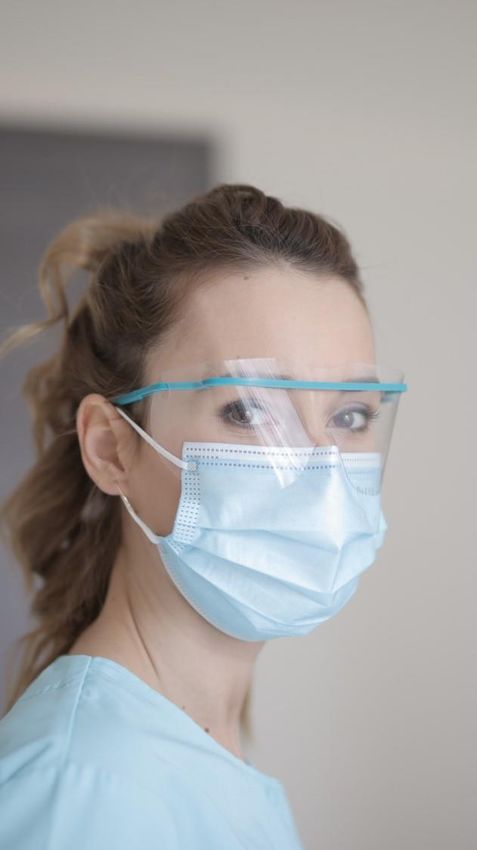
PERSONAL PROTECTIVE EQUIPMENT
• Disposable surgical cap
• Medical protective mask (N95)
• Disposable medical protective uniform
Mitigating the risk of
• Disposable latex globes
droplet dispersion when • Face shield
using invasive or non- • Goggles
invasive ventilation
LOCATION
• Suspected or confirmed cases should be isolated
• Negative pressure isolation rooms should be
utilised where possible
PATIENT SET_UP
• Full face mask NV recommended for the patient
• Ensure proper fit (e.g. good mask seal) to reduce air leakage
• Use a filter between the mask and exhalation valve /leak valve
when using a single circuit
110306 © 2020 ResMed. 05/20 - COVID-19 - This document is based on
© 2019available
information ResMed. Company
at the confidential.
time of publication 21Care organisation
• Experience from the countries most affected by Covid-19 so far highlight
the need for:
• Identification of « clean » and « unclean » areas and paths
• Isolated area for the different categories of patients
• Maximal flexibility in care organisation among units created in
response
• In general, it is recommended to deliver PAP therapies in a negative
pressure room with air exchanges greater than the regulatory threshold (10
cycles per hour) with/without a lobby. However, it is recognised that
availability may be limited.
(1) Managing the Respiratory care of patients with COVID-19 Italian thoracic society (ITS) & AIPO & SIP; Harari SA et al
Version - March 23, 2020
(2) NHS Specialty guides for patient management during the coronavirus pandemic- Guidance for the role and use of non-
invasive respiratory support in adult patients with coronavirus (confirmed or suspected) - V2
© 2019 ResMed. Company confidential.
110306 © 2020 ResMed. 05/20 - COVID-19 - This document is based on information available at the time of publication 22Examples of typically available equipment
in different types of Covid care units
INTERMEDIATE CARE
EMERGENCY/ICU ROOM
• Ventilateurs hospitaliers VI ou VNI
/ WEANING AND STEP DOWN UNITS
• Emergency or transport ventilator -
• 100% FiO2/blender
• Pression plateau monitorée en VAC avec alarme • 100% FiO2 with a blender
• Plateau pressure monitored in
associée
(A)CV with associated alarms on some models
WEANING AND STEP DOWN UNITS
• Life support ventilators, PNEUMOLOGY
valve ventilators with FiO2 cell and battery • Advanced non life support ventilators (barometric) -
• Advanced possibly with FiO2 cell
NLS ventilators (barometric) with FiO2 cell and possib • Bilevel devices
ly battery • NIV or CPAP
• IV or NIV Limited oxygen supplementation Limited oxygen supplementation
COVID-19 UNIT
• Basic bilevel devices (only one barometric mode)
• Basic CPAP
Limited oxygen supplementation
© 2019 ResMed. Company confidential.
110306 © 2020 ResMed. 05/20 - COVID-19 - This document is based on information available at the time of publication 23ResMed Solutions 110306 © 2020 ResMed. 05/20 - COVID-19 - This document is based on information available at the time of publication
Patient triage, treatments and ResMed solutions
                                                       Life Support homecare             Non life support homecare
             Ventilator classification                                                                                    Non life support homecare ventilator               Sleep devices                       Sleep devices
                                                             ventilators                          ventilator

                                                        Astral 150/100- CPAP &
                                                                                          Stellar 150/100- CPAP &                                                  AirCurve 10 VAuto- CPAP considering         AirCurve 10 VAuto-
                                                        NIV considering oxygen                                            Lumis 150/100- CPAP & NIV considering
                                                                                           NIV considering oxygen                                                  oxygen supplementation up to 15l/min     CPAP considering oxygen
                                                         supplementation up to                                             oxygen supplementation up to 15l/min
                                                                                        supplementation up to 30l/min                                                                                     supplementation up to 15l/min
                                                                30l/min

             Green (SaO2>94%, RR ResMed Solutions:
             response to oxygen 10-15 l/min,                                                                                       => ResMed Solutions:                     => ResMed Solution:
                                                                                           Elisées 350 & 250- ACV
             presenting respiratory distress with      => No ResMed solutions                                             Astral 150/100- ACV considering oxygen     Stellar 150/100- PAC considering
                                                                                      considering oxygen blender (21%-
             PaO2/FiO2No ResMed solution

    © 2019 ResMed. Company confidential.
110306 © 2020 ResMed. 05/20 - COVID-19 - This document is based on information available at the time of publication                                                                                                                       25
W I TH DUAL LI M B CI RCUI T
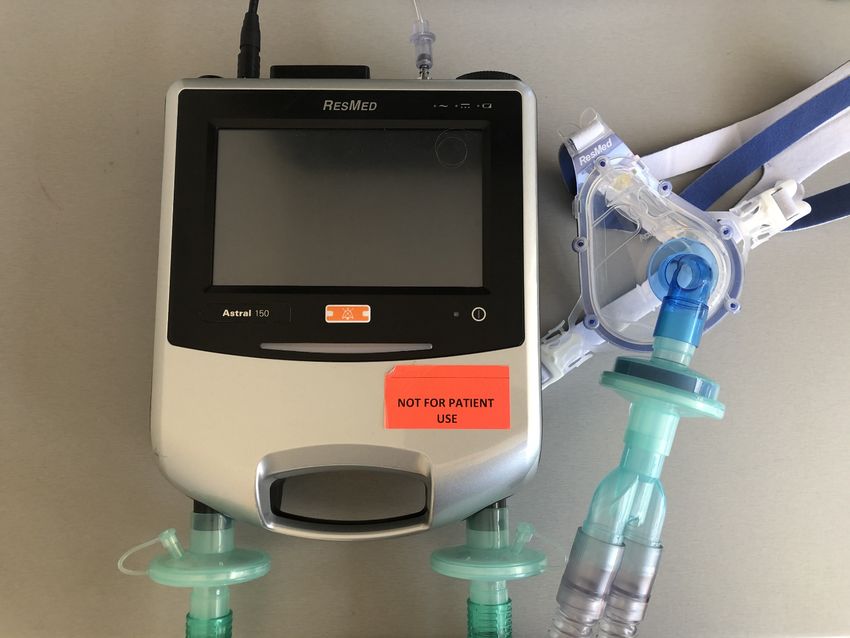
Circuit configuration
with Astral
WITH SINGLE LIMB CIRCUIT WITH LEAK
With leak valve with anti-asphyxia valve With leak port
110306 © 2020 ResMed. 05/20 - COVID-19 - This document is based on information available at the
time ©
of 2019 ResMed. Company confidential.
publication 26Circuit configuration With leak valve with anti- With leak port
with Stellar/Lumis asphyxia valve
proximal O2 &
oximetry option
SINGLE LIMB CIRCUIT
WITH LEAK
• This low dispersion circuit is not the intended use for these devices, but emerging
clinical practice in treating COVID-19 shows that it is a likely need given the ventilator
shortage and the concern of infection risk to healthcare workers during the COVID-19
pandemic. For further information, please refer to the related product “warning &
caution” section and the national guidelines.
• The use of two filters is based on availability and national guidelines.
110306 © 2020 ResMed. 05/20 - COVID-19 - This document is based on information available at the
time ©
of 2019 ResMed. Company confidential.
publication 27Special device setups for COVID-19 patients
Invasive ventilation

110306 © 2020 ResMed. 04/20 - COVID-19 - This document is based on information available at the time of publication
RED                 - ICU ventilators

             Acute phase
     •       Intubation
     •       Sedation and curarization
     •       ICU ventilator/blender/100% FiO2
     •       Protective ventilation
             • ACV mode with high PEEP
             •    Plateau pressure monitoring and associated alarm
             •    Prone position

         Weaning
     •       Sedation drop
     •       Switching to PS, FiO2
RED – transport or emergency ventilators
Acute phase
• Intubation
• Sedation and curarization
• Transport or emergency ventilator/blender/100% FiO2
• Protective ventilation
• ACV mode with high PEEP
• Plateau pressure monitoring and associated alarm
• Prone position
Weaning
• Sedation drop
• Switching to PS, FiO2RED life support ventilators
• ASTRAL in double limb with FiO2 monitoring if available
Weaning:
• Low pressure O2 supplementation max 30l/min
• Sedation drop
• Switching to AI, FiO2Example of circuit
configuration with
Astral
110306 © 2020 ResMed. 04/20 - COVID-19 - This document is based on information available at the
time ©
of 2019 ResMed. Company confidential.
publication 33RED life support ventilators
Weaning: • ELISÉE 150 in double limb with FiO2 monitoring
if available
• Sedation drop • Low pressure O2 supplementation max 15l/min
• Switching to AI, FiO2RED life support ventilators
Weaning:
• VS III in double limb with FiO2 monitoring if available
• Sedation drop
• Low pressure O2 supplementation max 8l/min or 14l/min
• Switching to AI, FiO2RED non life support ventilators
Weaning
• Sedation drop • STELLAR in leak circuit & barometric modes with FiO2
• Switching to AI, FiO2Example of invasive setting
with FiO2 measurement
110306 © 2020 ResMed. 04/20 - COVID-19 - This document is based on information
© 2019 ResMed. Company confidential.
available at the time of publication 37Non Invasive Ventilation CPAP/NIV 110306 © 2020 ResMed. 04/20 - COVID-19 - This document is based on information available at the time of publication
RED                     OR                  ORANGE                         CPAP/NIV

    • Home ventilator with low pressure oxygen supply, flow
      rate limited to 30l/min.
    • Barometric modes

               Protection of health care teams and other patients :                                                   LIMITATIONS: screen size, FiO2
                                                                                                                      may be limited and fluctuate
         •    Filters
                                                                                                                      depending on the patient's
         •    Enclosed suctioning system                                                                              respiratory mechanics and
         •    Scrubs, masks, goggles, gloves...                                                                       unintentional leaks.

    • ASTRAL in double limb circuit and FiO2 monitoring
      if available
    • Low pressure O2 supply max 30l/min

    © 2019 ResMed. Company confidential.
110306 © 2020 ResMed. 04/20 - COVID-19 - This document is based on information available at the time of publication                                    39
With NV mask
and filters
The use of
two filters is
based on
availability
and national
guidelines
© 2019 ResMed. Company confidential.
110306 © 2020 ResMed. 04/20 - COVID-19 - This document is based on information available at the time of publication 40RED OR ORANGE CPAP/NIV
• Home ventilator with low pressure oxygen supply, flow
rate limited to 30l/min.
• Barometric modes
Protection of health care teams and other patients : LIMITATIONS: screen size, FiO2
• Filters may be limited and fluctuate
depending on the patient's
• Enclosed suctioning system
respiratory mechanics and
• Scrubs, masks, goggles, gloves... intentional & unintentional leaks
• ASTRAL with single leak circuit and FiO2 monitoring if
available
• Low pressure O2 supply max 30l/min
© 2019 ResMed. Company confidential.
110306 © 2020 ResMed. 04/20 - COVID-19 - This document is based on information available at the time of publication 41With NV mask, leak
port, O2 added at the
rear of the device
With NV mask,
leak valve, oxygen
port and filters
With NV mask, leak
valve, O2 added at the
rear of the device
• The use of two filters is based on availability and national guidelines. The use of two filters is based on
availability and national guidelines
110306 © 2020 ResMed. 04/20 - COVID-19 - This document is based on
© 2019 ResMed. Company confidential.
information available at the time of publication
42RED OR ORANGE CPAP/NIV
• Home ventilator with low pressure oxygen supply, limited
to 30l/min.
• Barometric modes
Protection of health care teams and other patients : LIMITATIONS: screen size, FiO2
• Filters may be limited and fluctuate
depending on the patient's
• Enclosed suctioning system
respiratory mechanics and
• Scrubs, masks, goggles, gloves... intentional & unintentional leaks
• STELLAR with single leak circuit and FiO2 monitoring if
available
• Low pressure O2 supply max 30l/min
© 2019 ResMed. Company confidential.
110306 © 2020 ResMed. 04/20 - COVID-19 - This document is based on information available at the time of publication 43With NV mask, leak valve
with AA valve, O2 connection
at the rear of the machine
and filters
With NV mask,
leak valve, oxygen
port and filters
With NV mask, leak port, O2
connection at the rear of the
machine and filters
• This low dispersion circuit is not the intended use for these devices, but
emerging clinical practice in treating COVID-19 shows that it is a likely The use of two filters is based on
need given the ventilator shortage and the concern of infection risk to availability and national guidelines
healthcare workers during the COVID-19 pandemic. For further
information, please refer to the related product “warning & caution”
section and the national guidelines. CB#013
• The use of two filters is based on availability and national guidelines.
110306 © 2020
© 2019 ResMed.Company
ResMed. 04/20 - COVID-19 - This document is based on
confidential. 44
information available at the time of publicationORANGE CPAP/NIV
• Home bilevel ventilator with low pressure oxygen supply.
• Barometric modes
Protection of health care teams and other patients :
• Filters LIMITATIONS: screen size,
FiO2 may be limited and fluctuate
• Enclosed suctioning system
depending on the patient’s
• Scrubs, masks, goggles, gloves... respiratory mechanics and
intentional & unintentional leaks
• LUMIS with single leak circuit and SpO2 monitoring if
available
• Low pressure O2 supply max 15 l/min
• S & ST modes only, IVAPS not recommended (and 4l/min
O2 max)
• Use of more then 15 l/min O2 please refere to the risk
and caution section from the Clinical Bulletin CB#010
© 2019 ResMed. Company confidential.
110306 © 2020 ResMed. 04/20 - COVID-19 - This document is based on information available at the time of publication 45With NV mask with O2
connection , leak valve with
AA valve and filters
With NV
mask, leak valve,
oxygen port and With NV mask O2
filters connection, leak port and
filters
• This low dispersion circuit is not the intended use for these devices, but
emerging clinical practice in treating COVID-19 shows that it is a likely
need given the ventilator shortage and the concern of infection risk to
healthcare workers during the COVID-19 pandemic. For further
information, please refer to the related product “warning & caution”
section and the national guidelines. CB#010
• The use of two filters is based on availability and national guidelines.
The use of two filters is based on
availability and national guidelines
110306 © 2020
© 2019 ResMed.Company
ResMed. 04/20 - COVID-19 - This document is based on
confidential. 46
information available at the time of publicationORANGE CPAP
• "Ventilation" with home pressure generator with low flow
oxygen supply limited to 15l/min
• Continuous positive airway pressure
Protection of health care teams and other patients :
• Filters
• Enclosed suctioning system
• Scrubs, masks, goggles, gloves...
AIRSENSE 10 (Autoset ou Elite) with single leak circuit
LIMITATIONS: screen size, FiO2 may be limited
• Low pressure O2 supply max 15l/min in CPAP mode and fluctuate depending on the patient’s
respiratory mechanics and intentional
AIRCURVE 10 VAuto with single leak circuit
& unintentional leaks
• Low pressure O2 supply max 15l/min
• Use of more then 15 l/min O2 please refere to the risk and
caution section from the Clinical Bulletin CB#010
© 2019 ResMed. Company confidential.
110306 © 2020 ResMed. 04/20 - COVID-19 - This document is based on information available at the time of publication 47Exemple of circuit
configuration with
intentionnel leak
NV mask : non
intentional leak
• This low dispersion circuit is not the intended use for these devices, but
emerging clinical practice in treating COVID-19 shows that it is a likely
need given the ventilator shortage and the concern of infection risk to
healthcare workers during the COVID-19 pandemic. For further
information, please refer to the related product “warning & caution”
section and the national guidelines. CB#010
• The use of two filters is based on availability and national guidelines.
110306 © 2020 ResMed. 04/20 - COVID-19 - This document is based on
information available at the time of publicationReference: Ventilation Accessories
Catalogue
See ResMed.com for ResMed locations worldwide. Astral, Lumis and Stellar are trademarks and/or registered trademarks of the ResMed family of companies. Specifications may change without notice. Product availability may vary across regions.
110306 © 2020 ResMed Pty Ltd., 110306 / 1 2020 04You can also read


