Vision 2020 How we can contribute to feeding 9 billion people in a sustainable way: Trouw Nutrition
←
→
Page content transcription
If your browser does not render page correctly, please read the page content below

How we can

contribute to feeding

9 billion people in

a sustainable way:

Vision 2020
Contents
Introduction by Wout Dekker, CEO Nutreco                                      1
Our commitment to feeding the future                                          3
Vision 2020 at a glance                                                       6
  Creating a sustainable base for feed
     Sustainable sourcing                                                     8
     Sustainable partnerships                                                10
     Flexible formulations                                                   12
  Ensuring our own house is in order
     Reducing environmental impact in our operations                         14
     Feed-to-Food quality & safety                                           16
     Our working environment                                                 18
  Enabling the animal and the farmer to perform best
     Developing sustainable nutritional solutions                            20
     Farm & Feed performance                                                 22
     Animal & Human health                                                   24
  Involving people in the Feeding the Future challenge
     Employee engagement                                                     26
     Stakeholder engagement                                                  28
     Community development                                                   30
In October of 2011 the United Nations announced the
                         birth of the world’s seven-billionth citizen. It was a sharp
                         reminder of the task ahead for everyone occupied in
                         producing food: how to feed nine billion people sustainably
                         by 2050? Rising incomes in the growth regions of Latin
                         America, Russia, China and South East Asia add to the
                         challenge as people switch to protein rich foods such
                         as meat, fish, milk and eggs. Globally, animal protein
                         consumption is expected to reach 465 million tonnes of
                         meat and more than one billion tonnes of milk by 2050.

                         Nutreco operates at an essential link in the feed-to-food
                         value chain, adding value to ingredients by converting
Wout Dekker,
                         them into safe, nutritious feed for animals and fish.
CEO Nutreco
                         To help farmers be more productive while reducing
                         environmental impact we have computer models that
                         predict farm performance according to the choices

‘Doubling food           made and we provide management insights based on our
                         extensive knowledge and experience.

production, while        Nutreco has strong fundamentals to build upon. We are
                         one of the few global companies to cover both animal
                         nutrition and fish feed. Our animal nutrition division is one

halving the footprint’   of the pioneers in the industry and holds a global number
                         two position in premixes. Skretting is the global market
                         leader in the young industry of fish feed for carnivorous
                         species. By transferring knowledge and technologies
                         between the two divisions and between our developed
                         and developing regions we are able to maximise our
                         potential. The drive towards greater efficiency in feeds,
                         with attention to ecology and economics, is inherent in
                         the name Nutreco. Chosen in 1994 when the company was
                         formed, it stands for nutrition, ecology and economy.

                         introduction by wout dekker                               1
Our sustainability vision is based on the classical
                  Can                              How can
                                                                      combination of People, Planet and Profit and has been
                  we feed                          aquaculture        reviewed by both internal and external stakeholders.
                  9 billion                        contribute
                  people                           to feeding
                                                                      We are thankful for the feedback given and addressed
                  in 2050                          9 billion people   as much as possible in this document. However, there
                  in a                             in 2050 in a
                  sustainable                      sustainable        are also challenges to be dealt with in the future such
                  way?                             way?               as further concretizing our ambitions and balancing the
                                                                      diverse interests of our stakeholders.

                                                                      In this document we describe the key sustainability
Feeding the Future                                                    issues of our industry and highlight those where we aim
                                                                      to have the greatest impact. The 2020 horizon allows us
We believe the essence of Nutreco is expressed in three               to use an 8-year strategic framework. We can now align
words: Feeding the Future. The United Nations report*                 actions and business expectations within this framework.
estimates food production must increase by 70%. We believe            The path towards 2020 is, however, not set in stone.
that to be confident of feeding the world of 2050 sustainably         Our sustainability ambitions and critical milestones will
we need to double animal protein production and halve the             develop over the years and be updated accordingly.
footprint. Sharing ideas and knowledge and cooperating
along the feed-to-food value chain are vital for success.
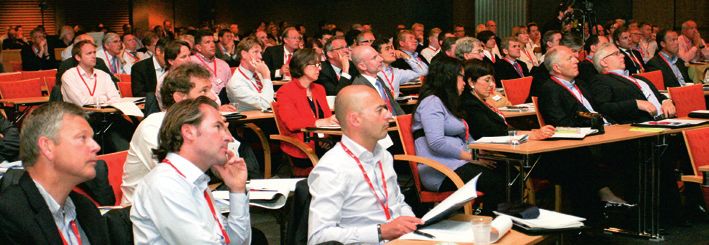
Each year, to promote action, we organise international               Conditions for success
Agri Vision and AquaVision conferences. In 2010 and 2011
we published two Feeding the Future booklets to share the             To succeed we need more than a vision. Engaging and
optimism expressed at recent conferences and to generate              empowering people, inside and outside the company, is
greater awareness of the urgency for action.                          vital. Every change depends on the efforts and commitment
                                                                      of one or more individuals. Furthermore, we have to keep
                                                                      our customers and end-users, the farmers, in mind in all
Vision 2020                                                           we do. In addition to helping them be more productive
                                                                      and environmentally and socially responsible, we need to
As sequel to the first two Feeding the Future documents,              ensure their businesses can prosper. That includes taking
this booklet explains Nutreco’s sustainability vision towards         account of regional differences because every region has
2020: how we can help to double world food production                 its own issues and challenges. Finally, we have to join forces
while halving the footprint. An objective that is integrated          with other parts of the value chain so together we can make
in our business ambition 2016 ‘driving sustainable growth’.           the differences needed to achieve our industry goals.
Through sustainable growth Nutreco aims to become the
global leader in animal nutrition and fish feed, delivering           *”State of the World’s Land and Water Resources for Food and Agriculture”, Food
innovative and sustainable nutritional solutions.                     and Agriculture Organization of the United Nations, November 2011

2                               introduction by wout dekker
Our commit m ent

to feeding the future
Sustainability challenges for our industry                                                                        Human Health

The growing world population, urbanisation, a                                                                                     Developed countries
growing middle class and changing diets will lead to
a surge in demand for protein, especially in emerging                                      Developing countries
markets. Of course, this brings opportunities for the

                                                                           Food Security

                                                                                                                                                           Environment
feed industry to grow its business. However, there
are sustainability issues. They include scarcity of
resources, food safety, animal welfare, antibiotic
resistance, pollution, climate change and loss of
biodiversity. In addition, we must cope with volatile
                                                                                           Least developing
commodity prices, as supply and demand fluctuate,                                          countries
and with unbalanced cost/price distributions in the
value chain.
                                                                                                                   Livelihood

                                                                             Priorities differ at different stages of sustainable development.
                                                                             Societal objectives must be in balance when producing food in a sustainable way.
Meat consumption growth per capita

        Index: 2000=100%
 160%                                                   Least developing
                                                        countries: 153%
 150%
                                                                             Analysing the challenges, we believe Nutreco is well placed
 140%
                                                        Developing
                                                                             to contribute to a more sustainable food chain. We have
 130%                                                   countries: 130%      global presence, extensive and progressive nutritional
 120%
                                                        Developed            know-how and high standards of feed-to-food quality
                                                        countries: 116%
 110%                                                                        and safety. These qualities are supported by excellent
 100%                                                                        innovation and technical capabilities and the ability to
 90%
                                                                             translate our nutritional solutions into practical products
    2000          2005       2010        2015        2020                    matched to local needs.
 In least developed countries there is an emphasis on income,
 employment and food security.
 In developing countries rising income is stimulating protein
 consumption and large-scale production.
                                                                               our commitment                                                             3
Identifying the issues                                      Our role in the value chain

Defining our vision began by identifying the key            The resources of the world are being over exploited. Food
sustainability issues for our industry. We used surveys     production and agriculture are partly responsible, and
conducted by parties such as FAO, the World Economic        have influence on climate change and loss of biodiversity.
Forum and the European Union, the topics raised at our      Nutreco is involved.
biennial conferences Agri Vision and AquaVision and
the local issue mapping conducted by our businesses         We buy agricultural and related products and supply feed
worldwide. Our sustainability vision relates to those key   and nutritional products to farmers producing meat, eggs,
issues where Nutreco can have the greatest impact.          dairy and fish.

      Selection of key issues

4                                        our commitment
COMMITMENT

We can control which macro- and micro-ingredients we         farms is more limited. We will establish cooperation with
buy and their conversion into feed and related products.     suppliers and customers to achieve the 2050 ambition of
But our influence over how the ingredients are produced      doubling food production while halving the footprint.
and transported and how our products are used on

Our commitment

In 2020 we will have significantly reduced our environmental footprint while contributing to feeding a growing world
population in a sustainable way. Our achievements will inspire others to do the same. Our efforts will focus on four
elements:

                                                                                                 COMMITMENT
         INGREDIENTS                                            NUTRITIONAL                      Involving people
         Creating a
                                     OPERATIONS                                                  in the Feeding
                                     Ensuring                   SOLUTIONS                        the Future
         sustainable base                                       Enabling the animal
                                     our own house                                               challenge
         for feed                                               and the farmer
                                     is in order                to perform best

                                                              our commitment                                           5
VISION 2020
at a glance

6        vision 2020 at a glance
SUSTAINABLE SOURCING                                              REDUCING ENVIRONMENTAL IMPACT IN OUR OPERATIONS
By 2020 we will have enabled our customers to purchase            We will have halved the carbon footprint of our
nutritional solutions with ingredients sourced through            manufacturing plants in 2015 and of all our operations
third party sustainably systems and promoted the use of           by 2020.
those that are endorsed by our vendor policies.
                                                                  FEED-TO-FOOD QUALITY & SAFETY
SUSTAINABLE PARTNERSHIPS                                          By 2016 we will have implemented one standardised feed-
Towards 2020 we will increase and strengthen our                  to-food quality and safety approach world-wide based on
sustainable partnerships and supply chain projects.               the highest industry standards.

FLEXIBLE FORMULATIONS                                             OUR WORKING ENVIRONMENT
By 2020 we will have lowered the barriers for increased           By 2020 we will be at the top of our industry in employee
food production through further reducing our dependency           satisfaction and labour market position.
on scarce ingredients.

                                          INGREDIENTS                   OPERATIONS

                                          COMMITMENT                    NUTRITIONAL SOLUTIONS

EMPLOYEE ENGAGEMENT                                               DEVELOPING SUSTAINABLE NUTRITIONAL SOLUTIONS
By 2016 our employees will be actively committed to               By 2016 our new nutritional solutions will be assessed on their
Nutreco’s contribution to the Feeding the Future challenge        sustainability benefits as an integral part of their development.
of feeding nine billion people in 2050 in a sustainable way.      Towards 2020 sustainability will be fully integrated in our
                                                                  innovation processes leading to an increasing proportion of our
STAKEHOLDER ENGAGEMENT                                            portfolio having specific sustainability benefits.
Towards 2020 we will strengthen our leadership in the
multi-stakeholder debate and initiatives around the               FARM & FEED PERFORMANCE
sustainability challenges of our industry.                        Towards 2020 we will further enable farmers to improve
                                                                  their performance through predictive farm models and
COMMUNITY DEVELOPMENT                                             nutritional solutions that improve production efficiency and
Towards 2020 we will enable more small farmers in our             reduce emission levels.
developing markets to raise their productivity by sharing
our knowledge on basic agriculture and aquaculture.               ANIMAL & HUMAN HEALTH
                                                                  Towards 2020 we will provide alternative technologies that
                                                                  improve animal health and performance and support our
                                                                  customers’ efforts to reduce antibiotic use.

                                                               vision 2020 at a glance                                            7
Sustainable sourcing
I N G R E D I E N T S

                        By 2020 we will have enabled our customers to purchase nutritional
                        solutions with ingredients sourced through third party sustainably systems
                        and promoted the use of those that are endorsed by our vendor policies.

                                                                       Industry trends and challenges

                                                                       • Pressure to reduce negative biodiversity impact and
                                                                         other environmental and social impacts of sourced
                                                                         ingredients.
                                                                       • Sustainability initiatives addressing this challenge
                                                                         include the round tables on responsible soya (RTRS)
                                                                         and sustainable palm oil (RSPO) and the stewardship
                                                                         councils for marine products (mSC) and aquaculture
                                                                         (ASC).
                                                                       • Consequences of sourcing through sustainability systems
                                                                         are becoming clearer. Strong preference to keep a level
                                                                         playing field while sourcing more sustainable.

                                                                       Our approach

                                                                       • New vendor policy and specific policies for soya, palm oil
                                                                         and marine products in place. Extending the number of
                                                                         specific vendor policies to other main categories.
                                                                       • Extend supplier engagement activities, including the
                                                                         auditing of critical suppliers.

                        8                       sustainable sourcing
• Strengthen our involvement in existing supply chain and Critical milestones
sector-wide initiatives to promote market demand for
I N G R E D I E N T S
2012 • Engagement with top 300 suppliers
responsible ingredients, e.g. through chairing the RTRS
• Develop specific vendor policy for services and other
and being member of the Supervisory Board of the ASC
non-raw material items
and through our commitment to the Dutch transition
• Finalise supplier audit plan, including prioritisation of
plan for responsible soy.
suppliers
• Promote sourcing through those third party
2013/2014
sustainability systems that are in line with our vendor
• Start developing specific vendor policies for grains and
policies. Actively communicate the sustainable
feed additives
alternatives available in the market to our customers.
• Global execution of supplier audits that include the
• Ensure that our customers have the opportunity
sustainability elements of the vendor policy
to include responsible ingredients in their feed
• Evaluate progress and determine sustainable sourcing
formulations. Step-by-step strengthening of our
targets for 2020
procurement, nutritional solutions, manufacturing and
logistics to respond proactively to evolving customer 2016 • Nutreco’s suppliers operate in compliance with vendor
demands in the field of sustainable sourcing. policies
2020 • Everything in place to enable our customers to
purchase nutritional solutions with ingredients that are
measuring progress sourced sustainably through third party systems
On-going
Our success will be measured by: • Assessment of third party sustainability systems based
on our vendor policies
• Results of our supplier engagement activities.
• Evolving customer demands in the field of sustainable
sourcing and our ability to respond to those demands.
Nutreco chairs Round Table on Responsible Soy in 2011-2012
In June 2011, Nutreco’s Chief Procurement Officer, RTRS certified and the market demand. Producers need to be
Jaap Oskam, was elected President of the Round convinced there will be a long term demand for certified soya
Table on Responsible Soy (RTRS). The RTRS is a and a premium to cover the added costs. Europe is the leading
global multi-stakeholder platform that promote market with strong demand from Belgium, the Netherlands,
the responsible production of soya. Our Chief UK and Scandinavia. Nutreco and other feed producers in the
Procurement Officer shares his time between Nutreco and Netherlands are committed to 100% sustainable soya in 2015,
the RTRS. He assesses the proportion of soya that will be provided sufficient is available.
sustainable sourcing 9Sustainable partnerships
I N G R E D I E N T S
Towards 2020 we will increase and strengthen
our sustainable partnerships and supply chain projects.
Key Supplier
Relationship
Management
Industry trends and challenges
business impact
High financial/
Management
• Cooperation between value chain partners, business,
Contract
Performance Strategic
government, knowledge centres and NGOs is essential to suppliers suppliers
successfully address the sustainability challenges of our
industry. The number and intensity of partnerships is
expected to increase.
• The desire to assure business continuity, with
Limited financial/
business impact
predictable and secure demand and supply, increases
Other Development
cooperation between companies and their suppliers. suppliers suppliers
Supply partnerships can boost innovation, sustainability
and cost reduction.
Not vital for business model Vital for business model
and/or no ability to influence and ability to influence
Our approach
• Our suppliers will be classified in four segments (see • We will partner with our strategic and relevant
diagram). Classification is based on two criteria: their development suppliers to develop and execute projects
financial/business impact and their importance for our for a more sustainable supply chain.
business model. The latter is determined by innovative • We will further support multi-stakeholder partnerships like
power, flexibility and sustainability. the Aquaculture Stewardship Council (ASC) that promote
the best environmental and social choice in seafood.
10 sustainable partnerships• Following the membership of the Dutch Taskforce Critical milestones
Biodiversity, we will develop concrete projects to protect
I N G R E D I E N T S
and improve biodiversity and ecosystems together with 2012 • Analyse supplier base and determine strategic and
IUCN-NL and other Dutch international companies. development suppliers
• We will partner with the primary sector, knowledge • Select suppliers for sustainable supply chain
centres and others in the research and development of projects and develop first plans
new sustainable nutritional solutions. • Start participation in IUCN-NL inspirational
programme on ecosystems
measuring progress 2013 • First new sustainable supply chain projects and
ecosystems projects running
Our success will be measured by:
2016 • Sustainable supply chain projects running with
• The intensity and success of our sustainable five strategic suppliers
partnerships and projects
2020 • Sustainable supply chain projects running with
our selected strategic suppliers
Every year
• Evaluate supplier classification
Nutreco partners with suppliers to optimize inbound logistics
In 2011 Nutreco executed a pilot project with two of its major logistics suppliers to investigate the
possibilities of optimizing the inbound logistics of soya, palm oil and other main ingredients. The aim
of the project was to identify a more efficient, flexible and predictable way of organising the inbound
logistic with an intended cost saving of more than EUR 500.000 a year. The results of the project are
very promising with a significant reduction potential for both the footprint and operational costs of
warehouse facilities and logistic movements. The initiative will certainly be scaled up in the near future.
Inspirational programme on ecosystems
Within the framework of the IUCN-NL Leaders for Nature network, Nutreco and ten other companies
committed themselves to enter into a partnership to foster joint activities aimed at conserving and
restoring ecosystems and biodiversity. Goal of this unique partnership is to contribute to an effective long term vision and
strategy aimed at halting biodiversity loss and stimulating the restoration of ecosystems inside and outside the Netherlands.
Participants will work on different kinds of projects, including the reduction of the initiators’ ecological footprints.
sustainable partnerships 11Flexible formulations
I N G R E D I E N T S
By 2020 we will have lowered the barriers for increased food production
through further reducing our dependency on scarce ingredients.
Industry trends and challenges
• Broad recognition that availability of some essential
ingredients is under potential pressure.
• Procurement and R&D departments are searching for
sustainable alternatives for these kinds of ingredients.
• Several constraints and concerns – political, legislative,
technical and societal – limit the use of alternative
ingredients, for example animal proteins and genetically
modified plants.
Our approach and usage of co-products of the food industry in our
formulations. Analysing long term trends relating to
• Company-wide quality assurance programme Nutrace® ingredients helps identifying those ingredients that may
is used to guarantee maximum efficiency and feed-to- become scarce.
food quality and safety in all our feed formulations. • The results of these analyses are translated into our
In addition company-wide feed evaluation programs procurement policy. New research programmes are
construct formulae of macro- and micro-ingredients to continuously started to find new ways of reducing our
match nutritional specifications as closely as possible. dependency on scarce ingredients. Options include
• Research programmes identify alternatives for scarce alternatives and more efficient use, for example through
ingredients and ways to increase the valorisation feed additives that improve functionality.
12 flexible formulations• Engagement with stakeholders to eliminate current Critical milestones
constraints and concerns, supported by clear Nutreco
I N G R E D I E N T S
position papers. 2012 • Strategic analysis of long term ingredient trends
• Develop short list of ingredients for research
programmes and/or engagement activities and
measuring progress define improvement targets for these ingredients
Our success will be measured by: 2013 • Development of position papers for certain
ingredients to support engagement activities
• The success of research programmes aimed at reducing
our dependence on scarce ingredients 2016 • Review first results of strategic research
• The diminishing of constraints and concerns relating to programmes
alternative ingredients linked to Nutreco’s stakeholder • Redefine research programmes based on
engagement activities evaluation and redefine short list of ingredients
microBalanceTm reduces dependency on fish meal
4.00
3.00
2.00
1.00
0.00
1990 1995 2000 2005 2008 2009 2010 Source: Skretting ARC Potential
The microBalance™ concept extends formulation flexibility in the level of fishmeal from previous typical levels of 25–30%.
fish feeds. Fish feeds can be produced with much lower levels Feeds formulated using microBalance™ were introduced
of fishmeal without compromising product performance or by Skretting companies in 2010 and have met with positive
quality. By adding essential micro-nutrients from alternative responses in markets as far apart as Norway and Australia.
sources separately to the feed, we were able to almost halve
flexible formulations 13Reducing the environmental
O P E R A T I O N S
impact of our operations
We will have halved the carbon footprint of our manufacturing plants in 2015
and of all our operations by 2020.
Greenhouse gas of total anthropogenic (from human activity) GHG emissions are from livestock activities.
emissions (GHG) are from EXTENSIVE livestock production systems (e.g. grazing cattle, sheep and goats).
from livestock are from (e.g. pork, poultry and dairy production).
activities —
All figures are crop cultivation: transport: industrial processing: animal production:
based on estimates circa circa
published in
‘Livestock’s Long
Shadow (2006)’, see
pages 13 and 47
of this report. * Contribution to total greenhouse gas emissions from intensive livestock production systems, including deforestation.
Industry trends and challenges • The carbon footprint of a company is often used as an
indicator of environmental impact. Getting employees
• Only a small percentage of greenhouse gas emissions engaged however requires more direct objectives such
from livestock activities are generated by feed as reducing energy and improving transport efficiency.
companies. Even so, companies are looking to decrease • Reduction measures are often complemented by
the environmental impact of their own operations sustainable sourcing of energy, including footprint
besides – the often more important – contribution they compensation, especially in Europe. The question is
can make in other parts of the value chain. whether companies will continue this when the costs
increase as expected.
14 reducing the environmental impact of our operationsOur approach Critical milestones
• Nutreco’s Energy Policy aims to reduce the carbon footprint
O P E R A T I O N S
of Nutreco manufacturing operations by 50% in 2015, 2012 • Full implementation of local energy reduction plans
compared with a 2009 baseline. • Assess carbon footprint of logistics and travel
• Our plants conducted an energy assessment and are and organise improvement and develop local
implementing a reduction plan. Progress is monitored using improvement plans
a central manufacturing database. • Develop new corporate travel and lease car policy
• From 2011 our power supply worldwide is carbon neutral.
• Logistics and travel form the second important part of our 2013 • Implement local improvement plans for logistics
carbon footprint. We will follow the same strategy with them and travel
as we did with for our manufacturing activities: assess, plan, • Begin implementing corporate travel and lease
implement reduction measures and monitor progress. At car policy
corporate level we will green our lease car and travel policy
and work to reduce and compensate our air travel.
2015 • 50% carbon footprint reduction at manufacturing
• Other environmental themes like waste management, water
management, land use and Green IT will be addressed in line plants (baseline 2009)
with the carbon footprint reduction initiatives. • Review and update of carbon reduction strategy
2020 • 50% carbon footprint reduction of all operations
measuring progress • Our international meetings and air travel are
carbon neutral
Our success will be measured by:
• Carbon footprint of our product delivery logistics
is reduced by 20% per tonne delivered
• The reduction in the carbon footprint of our
manufacturing activities, logistics and travel • Carbon footprint of our company cars is reduced
• The number of employees fully engaged with the topic by 20% per km driven
and taking initiatives to make improvements
Sloten significantly cuts carbon footprint
Sloten, a Dutch operating company of Nutreco, purchases by-products from cheese
production and spray dries them to produce milk replacers for young animals. Following
an energy assessment, Sloten upgraded its spray drying plant to be more energy efficient.
The gain in energy efficiency will cut the carbon footprint per ton by around 30%, which
represents more than 5,000 tonnes of CO2. The upgrade also reduced environmental
impact, raised product quality and increased operational efficiency. Further environmental
benefits come from new filters and a heat recovery system.
reducing the environmental impact of our operations
15Feed-to-Food quality & safety
O P E R A T I O N S
By 2016 we will have implemented one standardised feed-to-food quality and
safety approach world-wide based on the highest industry standards.
Industry trends and challenges Our approach
• A precondition in developed markets, feed-to-food quality • The quality and safety of our products is managed
and safety is rising fast on the priority ladder in other through our Nutrace® feed-to-food quality and safety
regions due to local demands and for exports. programme. It has five standards and protocols that are
• Food safety is an important risk in our industry. It affects applied across all Nutreco businesses. The development
animal and human health. An incident can damage of Nutrace® is guided by a platform of quality assurance
finances and reputation. The many links in the value and food safety specialists.
chain make controlling this risk complex. Companies • The Nutrace® platform established key performance
therefore build professional systems to mitigate risks indicators and a dashboard to monitor the performance
and react promptly to any incidents. of Nutreco operating companies against all five
• Industry standards and legislation are developing standards. A self-assessment tool and internal audits
rapidly worldwide. help operating companies assess their compliance with
• Consolidation of suppliers and animal feed companies Nutrace®. Newly acquired companies are expected to
leads to more stable relationships and greater comply within two years.
transparency between them, which benefits feed-to-food • Started in 2009, Nutreco’s Unite programme is
quality assurance. optimizing and harmonizing key processes for
Procurement, Supply Chain management, Finance
and Sales throughout Nutreco. Nutrace® is being
integrated in the Unite programme. This will facilitate
the consistent implementation of Nutrace® globally, with
limited regional adjustments.
16 feed-to-food quality & safetyIt will lead to standardised ingredient specifications, Critical milestones
risk assessments and supplier audits and a list of
O P E R A T I O N S
approved ingredients and suppliers. 2012 • Execution of self-assessments based on renewed
• The centralisation and professionalisation of Nutreco Nutrace® standards
laboratories complements the Nutrace® and the • Start implementation phase Nutrace®-Unite,
Unite programmes. One objective is to develop better with emphasis on procurement-related quality
techniques for assessing the quality of ingredients. processes
• Create a standardised document management
system to share best practices
measuring progress
2013 • Continue implementation phase Nutrace®-Unite
Our success will be measured by: • Further research in techniques to better assess
the quality of ingredients
• Implementation level of Unite including the extent of
Nutrace® integration 2014 • Nutrace®-Unite processes operational
• Performance on selected indicators, e.g. compliance • Renewed steering and monitoring system based
with Nutrace® standards, number of incidents, review of on indicators
ingredient and final feed monitoring data, status of risk
assessments and audit results 2016 • Worldwide compliance with highest industry
standards
Nutrace® assures feed-to-food quality and safety
Nutrace® is Nutreco’s company-wide proactive 2. Ingredient & Supplier Assessment and Management:
programme to assure feed-to-food quality e.g. only using approved feed ingredients and suppliers
and safety. Nutrace® safeguards the quality of based on common risk assessment standards
Nutreco products and services. The programme, 3. Monitoring & Control: e.g. harmonised sampling & analysis
complying with legislation and customer methods and a Nutreco-wide early warning and rapid alert
demands, is structured in five standards: system
4. Risk Management: e.g. issue and crisis management
1. Certified Quality & Food Safety: e.g. based on internal system to minimise risks and their impacts, supported by a
HACCP/HSEQ systems and external certifications such as ISO, global network of industry stakeholders
GmP and BRC; welcoming customers to check operations and 5. Tracking & Tracing: e.g. keeping records of every input and
certificates process from feed ingredient purchasing to finished product
delivery
feed-to-food quality & safety 17Our working environment
O P E R A T I O N S
By 2020 we will be at the top of our industry in employee satisfaction
and labour market position.
Industry trends and challenges • Opportunities for companies to benchmark and
market their efforts in human resource management
• There is a quest for talent and talent development, have grown. Examples include employer of choice
especially technical, as the pressure grows on agriculture competitions and certified management systems
to contribute to feeding nine billion people in 2050. (e.g. SA8000).
• Employees, governments, investors and NGOs demand
higher standards from employers in working conditions,
opportunities for development, human rights and social Our approach
responsibility. Companies must excel to be an employer
of choice. • Our HR team defines, recruits and works to retain the
people needed to fulfil Nutreco’s strategy, including
our sustainability ambitions. The HR team and strategy
will evolve in line with this objective.
• Consideration of local minimum employment
standards, e.g. compensation and benefits, working
conditions and human rights, with a special focus on
our growth markets.
• Harmonisation and optimisation of our employee
surveys, including the integration of sustainability
questions. We will compare survey results across
the organisation as well as HR data such as diversity,
health and safety.
• Maintain the low injury frequency within our
workforce. Structured approach to further improve
18 our working environmentour workers’ safety performance (assess current Critical milestones
situation, build local improvement plans, implement
O P E R A T I O N S
measures and monitor progress). 2012 • Consideration of local minimum employment
• Selection of initiatives for comparing our labour market standards (e.g. labour conditions, human rights)
position with those of our peers. In the future our • Develop and conduct a global employee survey and
companies should participate in the selected initiatives. start benchmarking selected HR KPIs
• Our companies must prepare and implement plans • Select schemes for comparing our labour market
to improve the outcome of employee surveys and of position with that of our peers
internal and external assessments.
2013 • Start comparing labour market position with
peers for selected companies
measuring progress
2016 • Companies are participating in global labour
Our success will be measured by: market positioning
• Companies have an improvement plan to progress
• The alignment of our HR strategy and organisation with towards being a top company for employee
our business ambition ‘driving sustainable growth’ and satisfaction and labour market position
our sustainability ambitions, especially in the field of
employee satisfaction and labour market position 2020 • Reduce Lost Time Injury Frequency by 50%
• Results of employee surveys and labour market position (baseline 2010)
surveys
Top labour market position Nutreco España
With approximately 3,500 employees the Nutreco España Group is responsible for over
one-third of our total workforce. In 2000 Nutreco España was far from the top in the
“best companies to work for in Spain”. But the company introduced ambitious HR plans
and managed to reach a number 10 position in 2009. Numerous actions improved the
quality of life for employees, including social benefits and policies regarding equality
and diversity. In January 2009 Nutreco España was the first company in our sector
worldwide to obtain the Social Accountability 8000 Certificate. SA8000 is a management
tool and international standard for the permanent improvement of labour conditions,
based on the International Human Rights Conventions, the International Labour
Organization, etc. In July 2011, Nutreco España and the two largest trade unions in
Spain agreed an Equality Plan for the entire group. As a result of all these actions, the
Group’s companies have received several institutional acknowledgements and awards.
our working environment 19Developing sustainable
NUTRITIONAL SOLUITIONS
nutritional solutions
By 2016 our new nutritional solutions will be assessed on their sustainability
benefits as an integral part of their development. Towards 2020 sustainability
will be fully integrated in our innovation processes leading to an increasing
proportion of our portfolio having specific sustainability benefits.
Industry trends and challenges - Expected sustainability level of the innovation scored
during idea screening.
• Stakeholders in the food chain are increasingly asking - Sustainability checklist for innovations used at the
for clear evidence that products are safe, healthy and idea screening, feasibility and development phases.
improve performance without increasing the burden on - Preparation of a short assessment report, answering
natural resources. eight key questions and supported by quantitative data
• Attention to indicators such as feed efficiency, carbon and other evidence that validates sustainability claims.
footprint, acidification and eutrophication is growing. • To ensure sustainability is permanently integrated in the
New sustainability criteria are being developed. mean- innovation process, it will become part of our quality
while the industry attempts to identify globally accepted management systems.
standards and tools to calculate the environmental and • Development of tools and models to generate data and
social impact of products. measure our performance. We are active in several
industry initiatives to create global standards and tools
to measure the environmental and social impact of
Our approach products.
• Recently established regional Application and Solutions
• Integration of sustainability in our innovation processes, Centres to improve our ability to bring innovations
from idea to post-launch evaluation. Elements include: efficiently to market.
20 developing sustainable nutritional solutionsmeasuring progress Critical milestones
NUTRITIONAL SOLUITIONS
Our success will be measured by: 2012 • Finalise sustainability checklist and measurement
system for sustainability indicators
• The extent to which we can quantify the sustainability of • Further integration of sustainability assessment in
our innovations innovation processes and management systems
• The number of sustainability assessments made for new • First set of internal sustainability assessment
or significantly renewed products and concepts and the reports for innovations
results of audits of our innovation processes and the 2013 • Audit the innovation process including the
integration of sustainability therein integration of sustainability
• The extent to which sustainability assessments are 2016 • Assessment reports for new (or significantly
translated into marketing messages and the extent to renewed) nutritional solutions
which these lead to new or increased business Every two years
• Evaluate and adjust sustainability indicators and
targets in innovation process
New innovative gut health product: PresanTm
Launched in 2012, Presan™
Ingredients supplied No specific issues. Current suppliers are being engaged on our vendor policies
delivers an integrated
responsibly? by Nutreco Procurement.
approach which optimises
microbial flora and boosts gut
Solution produced Full compliance. Tailor made solution needed for North America because of more stringent
wall integrity. This approach
responsible? regulation for specific compound. No specific issues regarding HSE and animal testing.
is a powerful formula
designed to raise profit by
Sustainable Return Sound ROI expected for both Nutreco and customer. Unique combination of
decreasing wet litter and
on Investment (ROI)? ingredients making it hard to copy. Excellent fit with business and science strategy.
improving the birds’ technical
Preliminary results sustainability assessment Presan, November 2011
performance. Furthermore Improves animal perfor- Improvement of feed-to-food production efficiency by a few percent.
Presan is not only a viable mance / feed-to-food
alternative to antimicrobial production efficiency?
growth promoters, but also
reduces the use of antibiotics. Reduced use of N.A.
PresanTm was the first scarce raw materials?
innovation to have its
sustainability aspects Helps to conserve Positive effects to be expected on carbon footprint, acidification and eutrophication
analysed using our new biodiversity? potential. Needs to be validated.
assessment method. An
extract of the preliminary Improves animal In pigs 35% less diarrhoea incidence. In broilers 10% reduction in litter moisture.
health and welfare? Through reduced litter moisture possible positive effects on foot pad lesions in broilers.
assessment – answering the
eight defined sustainability
Improves human health, Strong indication that Presan helps reduce use of antibiotics.
questions - is shown on the
safety and well-being?
right:
developing sustainable nutritional solutions 21Farm & Feed performance
NUTRITIONAL SOLUITIONS
Towards 2020 we will further enable farmers to improve their performance
through predictive farm models and nutritional solutions that improve production
efficiency and reduce emission levels.
Industry trends and challenges Our approach
• In recent decades output of meat, fish, milk and eggs • Improving farm and feed performance is linked to the
increased significantly through higher productivity of quantitative nutrition approach of Nutreco’s science
animals and better feed conversion. Animal production strategy (see illustration).
became more sustainable through a reduction of P, N and • Nutreco has predictive nutritional farm models for dairy,
ammonia emissions by over 50% in developed markets. swine, salmon and trout. models for other major farmed
However, there still is great variation in performance and fish species, beef and broilers will also become available.
feed digestibility We will integrate
Nutreco’s Science Strategy
among animals, sustainability
farms and regions. Business demands Business demands indicators such as
Science Solution Focus Science Solution Focus
• Our industry has carbon footprint in
Feed Evaluation & Least Young Animal Vitality
always worked Optimize Feed Value
Cost Formulation (LCF) & Performance
Young Animal Feeds our models.
to improve farm Predictable Better & Stable Gut Health • Continuation of
Animal Modeling
performance. Performance Gut Health Ingredients/ Programs improving livestock
Higher Performance Reduce Transition Transition Feeds
Recently, improving & Efficiency
Efficiency Additives
Problems & Programs
and fish production
environmental Sustainable Reduce Human Zoonoses &
efficiency, working
Reduce Footprint
indicators has Production Health Risks Toxin Control with our value chain
become important, partners to reduce
although not the ratio of input
Quantitative Functional
yet fully valued Nutrition Nutrition versus output (meat,
economical. fish, milk and eggs).
22 farm & feed performance• Enabling farmers to significantly reduce the emissions Critical milestones
NUTRITIONAL SOLUITIONS
of phosphates, nitrogen, trace minerals and methane
2012 • Finalise first selection of sustainability indicators
by their animals; proactively anticipating expected legal
to be integrated in our farm models
constraints and economic valuations of the emissions. We
will set reduction targets and monitor progress using our • Start integrating nitrogen and phosphorus
predictive farm models. emissions in our farm models for salmon and trout
• Adapting our models and other solutions to geographical • Start further integrating of sustainability indicators
conditions to ensure improved efficiency and in our farm models for ruminants and swine
sustainability based on locally available raw materials, • Develop reduction targets for selected animals’
climate, husbandry systems, genetics and legislation. emissions
2013 • Further develop sustainability indicators in our
farm models for fish and expand number of
measuring progress species for which models are available
• Start assessing animals’ emissions through our
Our success will be measured by:
farm models
• The availability, quality and usage of our nutritional farm 2014 • Finalise farm models for poultry and beef
models 2015 • Integrate first set of sustainability indicators in
• The improvement in feed efficiency on the farms our farm models for poultry and beef
• The reduction of emission levels achieved through our
Every 2 years
nutritional solutions
• Evaluate farm models and the sustainability
indicators integrated in them
Predictive models available for farmers
Nutreco has several predictive models available for optimising farm performance. Two of them are Watson and Newton.
Watson is an integrated swine growth Newton is a ruminant rationing
model used as a decision making model to match the feed offered to
tool to optimise farm economics. ruminants with their specific nutrient
It takes into account the genotypic potential of the specific requirements to optimise health and efficiency of production.
farm and the impacts of the animal's environment. It allows It assesses the energy content of the forages and accurately
an optimisation based on Average Daily Gain, Feed Conversion, determines the most economic ration to be used. Newton
margin Over Feed, Cost/kg Gain, Net Profit, Nitrogen and includes a feed additive module that evaluates the advantages
Phosphorus Excretion. of using such ingredients.
farm & feed performance 23Animal & Human health
NUTRITIONAL SOLUITIONS
Towards 2020 we will provide alternative technologies that improve animal health
and performance and support our customers’ efforts to reduce antibiotic use.
Industry trends and challenges Our approach
• Animal health issues currently attracting attention of the • Our animal and human health ambitions are linked
industry are related to transition periods, for example to the functional nutrition approach of Nutreco’s
milk fever in dairy cows and post-weaning diarrhoea science strategy (see illustration page 22). We have
in piglets, and other intestinal disorders in pigs and expert platforms, new technologies, specific research
poultry. New animal and human health challenges will programmes, new feed additives and other nutritional
continue to appear. solutions in place and under development to address
• Globally, antibiotics are used in animal production for current and future challenges.
disease treatment, disease prevention and growth • Special attention is given to critical periods in animal’s
promotion, depending on animal health status and life, such as transition phases, e.g. weaning. We
legislation. Bacteria that develop resistance to believe that these periods have great impact on animal
antibiotics are a potential threat to animal and human performance, as one of our concepts states: ‘Life start
health. Prudent use of antibiotics is an important factor sets Life performance’. We invest in research projects
in the control of such resistance. aimed at further understanding and improving health
• New reduction strategies for the use of antibiotics outcomes during these periods.
at farm level were recently introduced in some EU • Healthier animals are more productive and need fewer
countries. Our industry supports prudent use of antibiotics. Our primary focus therefore is to develop
antibiotics to minimise the potential for antibiotic nutritional solutions that further improve animal health,
resistance development while respecting the health and especially gut health. We invest heavily in research
welfare of animals. programmes to advance our understanding of gut disease
and develop technologies that are highly efficient on farm.
24 animal & human healthmany programmes are conducted with universities • Number and success of nutritional solutions and
NUTRITIONAL SOLUITIONS
and other agricultural and medical knowledge centres research programmes that address the desired
worldwide. Solutions may include improved feed reduction of antibiotics (on farm)
formulations, better farm management and functional • Market uptake of nutritional solutions aimed at
ingredients that reduce the need for antibiotics. improving animal health
measuring progress Critical milestones
Our success will be measured by: 2012 • Establish research programmes according to
3–5 years plans
• Number and success of nutritional solutions and
research projects that focus on improvements of human 2013-2020
and animal health, with a special focus on the critical • Launch of new nutritional solutions
periods in the animals’ life
Protec keeps fish healthy
Protec is one of Skretting’s functional feeds. Protec helps to keep the fish healthy through
support of the immune system, strengthen gut health, stabilize the intestinal microflora
and increase the fish’s anti-oxidative capacity. Our understanding of functional ingredients
helped us make substantial progress in fish nutrition and in the supply of feeds that deliver
both performance and health benefits. Continuing exploration of functional nutrition will
also enable us to contribute to the sustainable expansion of aquaculture.
Several innovation awards for CalFix
Trouw Nutrition International launched CalFix,, a dietetic compound feed formulated
to reduce the risk of (sub) clinical milk fever in dairy cows. CalFix contains a
calcium binder that prepares the cow’s metabolism for the low blood calcium
levels associated with the early stages of milk production. It can reduce incidence
rates of (sub) clinical milk fever and the costs incurred by the producer by up to
50%. Distinct from similar products on the market, it has no negative effect on feed
intake and presents no application problems. The patented technology attracted
several innovation awards.
animal & human health 25Employee engagement
C O M M I T M E N T
By 2016 our employees will be actively committed to Nutreco’s contribution
to the Feeding the Future challenge of feeding nine billion people in 2050
in a sustainable way.
Industry trends and challenges
• Employee engagement is seen as a critical factor for
achieving sustainability ambitions as it is for other
organisational change and development processes.
• Broad awareness that informing people is only a first step
in engaging and inspiring employees to take the necessary
actions. It takes a combination of top-down and bottom-up
approaches with sustainability champions at all levels to
get sustainability into the culture of a company.
Our approach
• Internal communication tools such as employee
magazines and management newsletters are used to
share information about the sustainability challenges of
our industry and how we are addressing them. Recently
we added a sustainability portal on the intranet. We also
raise awareness and engagement through management
sessions around the world to discuss global sustainability
challenges and develop local sustainability action plans.
26 employee engagement• Further steps to promote engagement will be taken. Critical milestones
After determining the level of sustainability awareness
C O M M I T M E N T
in Nutreco, we will set targets for knowledge, 2012 • Inform and engage employees on the Nutreco
attitude and behaviour. We want our employees to Sustainability Vision 2020
be fully involved in the development and execution of • System for measuring internal sustainability
sustainability plans and actions. An Internal Engagement awareness and engagement in place; define
Plan will facilitate progress. desired level of awareness and engagement
• Develop and roll-out internal sustainability
communication and engagement approach
measuring progress (Internal Engagement Plan)
Our success will be measured by: 2014 • Include sustainability awareness and engagement
in regular Planning and Control cycles
• The level of sustainability awareness and engagement • Integrate sustainability further in the recruitment,
• Assessing the internal engagement activities stated in appraisal and reward systems
the sustainability action plans • Our employees believe Nutreco’s sustainability
• Number of ‘sustainability champions’ in the vision towards 2020 make sense and want to
organisation contribute
2016 • Our employees are actively committed to the
Feeding the Future challenge
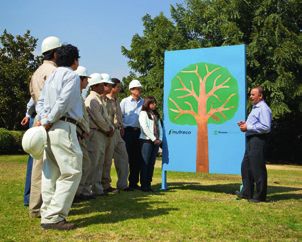
Sustainability tree to increase engagement
In 2010 twenty-five local sustainability action plans were developed.
Together they covered our whole global organisation. It was a new
start in engaging our people and in structuring our sustainability
approach.
To raise awareness of its plan, Trouw Nutrition mexico made a metal
tree for each of its three plants. The employees see the trees every
day as they enter work. Started as a trunk with bare branches, each
time a company achieves a sustainability objective a leaf is added.
Eventually the trees will be covered in leaves. Employees are invited
to share their sustainability ideas in a contest. In the first year it
already delivered 30 new ideas.
employee engagement 27Stakeholder engagement
C O M M I T M E N T
Towards 2020 we will strengthen our leadership in multi-stakeholder debates
and initiatives around the sustainability challenges of our industry.
Industry trends and challenges • To optimise our participation in other engagement
initiatives, we will implement a global issue management
• The increasing level of cooperation and partnerships and stakeholder engagement strategy based on four
within the value chain is a logical consequence of the steps:
increased degree of stakeholder engagement initiatives 1. Identify key sustainability issues and list related
that takes place all over the world. engagement initiatives
• The increased level of stakeholder engagement and 2. Ensure a continuous information flow on these issues
cooperation has side effects. There is a proliferation 3. Determine the issues we want to influence and how
of multi-stakeholder engagement initiatives, many 4. Organise issue management to ensure we continue
addressing the same issues. The challenge is to to take these steps. Instruments for this strategy
harmonise and connect the initiatives to find synergies include installing a centre of expertise, aligning with
that deliver the biggest impact. risk management and conducting risk analyses and
regular audits.
• Strengthening our visibility in the public sustainability
Our approach debate and disseminate position papers to explain our
position on important sustainability issues.
• Organisation of Agri Vision and AquaVision conferences • Conducting a reputation survey and a specific
to engage with a broad international spectrum of stakeholder dialogue every three years to assess our
stakeholders to discuss the sustainability challenges of progress in showing leadership in addressing the
our industry. Ensure that the quality of the conferences sustainability challenges of our industry.
and their participants remains at the current high level.
28 stakeholder engagementmeasuring progress Critical milestones
C O M M I T M E N T
Our success will be measured by: 2012 • Finalise issue management and stakeholder
engagement strategy
• Evaluation of stakeholder conferences Agri Vision and
AquaVision 2013 • Establish a global issue management
• The quality of the issue management organisation organisation
• Results of reputation surveys and specific stakeholder
dialogues Every year
• Organise Agri Vision or AquaVision
multi-stakeholder conferences inform and inspire
Since 1996, Nutreco organises multi-stakeholder AquaVision and NGOs from more than 30 countries world-wide, each
and Agri Vision business conferences to discuss the conference provides delegates with ideas, information
challenges of our industry. Identifying the sustainability and inspiration and give Nutreco input for our strategy
issues confronting the industry is an important aspect of development.
the organisation process. The conferences offer two days of
informative and provocative presentations interspersed with
networking events. Attended by almost 400 leaders of major
agri and aqua business companies, academics, consultants
Shifting Horizons
stakeholder engagement 29Community development
C O M M I T M E N T
Towards 2020 we will enable more small farmers in our developing markets
to raise their productivity by sharing our knowledge on basic agriculture
and aquaculture.
Industry trends and challenges
• Community development has become an integral part
of responsible business. Companies are aware of
challenges such as poor living standards in certain
regions, and invest in their development. Partly due
to the global economic crisis, companies make more
conscious choices about where and how to invest.
• Next to financial support companies increasingly enable
employees to invest time and knowledge in projects.
Transferring knowledge gives projects more potential to
become self-sustaining. A current trend is the increasing
level of cooperation between different parties in such
community development projects.
Our approach
• We will build a Community Development Strategy with
clear criteria for when and how to invest in knowledge
sharing projects to raise small farmers’ productivity. It
will define the most effective way of investing in chosen
30 community developmentYou can also read


