VMCAS 2022 APPLICANT GUIDE - AAVMC
←
→
Page content transcription
If your browser does not render page correctly, please read the page content below

VMCAS 2022 APPLICANT GUIDE
VMCAS 2022
APPLICANT GUIDE
CONTENTS

1.   About the AAVMC��������������������������������������� 4                                   8.    Biographic Information����������������������������� 13
     Accreditation�����������������������������������������������������������������������4            Current Address����������������������������������������������������������������13
                                                                                                       Permanent Address ���������������������������������������������������������13
2.   Careers in Veterinary Medicine������������������� 4                                              Phone Number�������������������������������������������������������������������13
     Career Opportunities�����������������������������������������������������������5                 Email�����������������������������������������������������������������������������������13
     Job Outlook �������������������������������������������������������������������������5           Alternate Email �����������������������������������������������������������������13
     Specialties���������������������������������������������������������������������������5          Citizenship ������������������������������������������������������������������������14
                                                                                                       Residency Information�����������������������������������������������������14
3.   How Do I Become a Veterinarian?��������������� 6                                                 Visa Information���������������������������������������������������������������14
     Education Requirements ���������������������������������������������������6                      Race & Ethnicity�����������������������������������������������������������������14
     Licensure Requirements ���������������������������������������������������6                      Ethnicity�����������������������������������������������������������������������������14
     Funding Your Degree ��������������������������������������������������������� 6                  Race�����������������������������������������������������������������������������������14
     Diversity in Veterinary Medicine ���������������������������������������6                        Parent/Guardian���������������������������������������������������������������15
                                                                                                       Other Information�������������������������������������������������������������15
4.   Prepare to Apply for Veterinary
     Medical Schools������������������������������������������7                                 9.    Schools Attended��������������������������������������16
     High School Preparation ��������������������������������������������������� 7                    High School�����������������������������������������������������������������������16
     Undergraduate Preparation����������������������������������������������� 7                       Colleges�����������������������������������������������������������������������������16
     Experiences������������������������������������������������������������������������� 7           Adding a College or University�����������������������������������������16
                                                                                                       Academic Status Definitions�������������������������������������������17
5.   What Is the VMCAS?����������������������������������� 8                                          Sending Official Transcripts to VMCAS �������������������������17
     How Does VMCAS work?���������������������������������������������������8                         Transcript Follow up ���������������������������������������������������������20
     Getting Help With Your Application�����������������������������������8                           Academic Infraction ���������������������������������������������������������20
                                                                                                       Rejected Transcripts���������������������������������������������������������20
6.   Before You Begin���������������������������������������� 9                                       Transcript Posting Delays�������������������������������������������������20
     VMCAS Submission and Deadlines ���������������������������������9
     Application Processing�������������������������������������������������������9             10.   Coursework���������������������������������������������� 20
     Verification���������������������������������������������������������������������������9         Academic Term and Year������������������������������������������������� 21
     Monitoring Your Application’s Progress���������������������������9                               Academic Status Definitions������������������������������������������� 21
     Release Statements�����������������������������������������������������������9                   Course Name and Course Number��������������������������������� 21
     Releasing Information to Advisors ��������������������������������� 11                           Enter Courses for a Completed Term����������������������������� 21
     VMCAS Account Creation ����������������������������������������������� 11                        Enter Courses for an In-Progress or Planned Term�������22
     Use an Existing VMCAS Account to Reapply����������������� 11                                     Narrative Transcripts �������������������������������������������������������22
     Accessing the Application�����������������������������������������������12                       Credit Hours�����������������������������������������������������������������������22
     Overview of the Application���������������������������������������������12                       Semester, Trimester, and Quarter Credits�����������������������22
     My Profile���������������������������������������������������������������������������12          Unit Credits �����������������������������������������������������������������������22
     Important Notes ���������������������������������������������������������������12                Lab Credits�������������������������������������������������������������������������22
                                                                                                       Test Credits �����������������������������������������������������������������������22
7.   Identifying Information����������������������������� 13                                          Special Course Types (Transcript Review)���������������������22
     Legal Name�����������������������������������������������������������������������13
     Alternate Names���������������������������������������������������������������13
     Birth Information���������������������������������������������������������������13
     Sex and Other Identity������������������������������������������������������13

2                                                                                                                      AAVMC • VMCAS 2022 APPLICANT GUIDE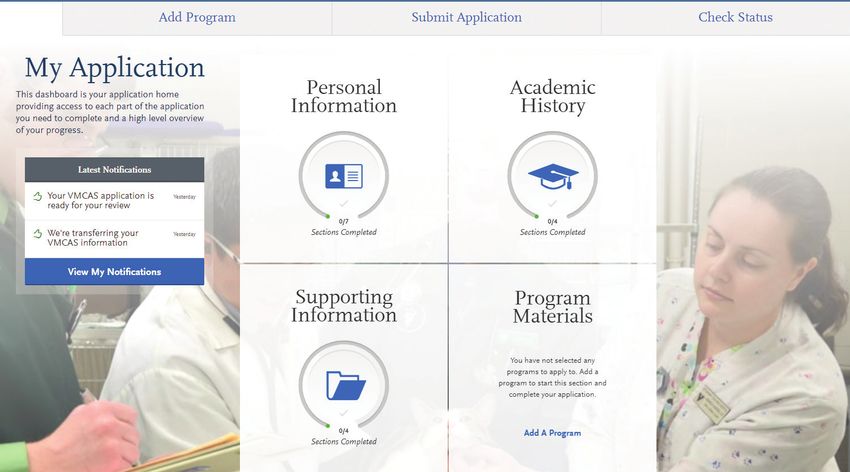
CONTENTS CONTINUED

11.   Experiences and Achievements���������������� 23                                              18.   Post-submission Changes������������������������ 30
      Experience Types �������������������������������������������������������������23
      Adding Experiences�����������������������������������������������������������24              19.   Monitoring Your
      Most Important Experiences�������������������������������������������24                            Application Status������������������������������������ 30
      Achievements �������������������������������������������������������������������24
      Adding Achievements�������������������������������������������������������24                 20.   Refunding/Withdrawing Your
                                                                                                          VMCAS Application�����������������������������������31
12.   Letters of Recommendation���������������������� 25                                                 Refund Policy��������������������������������������������������������������������� 31
      Before You Begin �������������������������������������������������������������25
                                                                                                          Withdrawing Your Application����������������������������������������� 31
      Committee Letters �����������������������������������������������������������25
                                                                                                          Credit Card Payment Disputes����������������������������������������� 31
      How to Submit a Recommendation Request�����������������25
      How to Resend the Recommendation Request�������������26
                                                                                                    21.   AAVMC Policies�����������������������������������������31
      Changing the Recommender's Email Address���������������26
                                                                                                          Acceptance Date Policy��������������������������������������������������� 31
      Waiver���������������������������������������������������������������������������������26
                                                                                                          Privacy Policy �������������������������������������������������������������������32
      Checking the Status of Letters ���������������������������������������26
                                                                                                          AAVMC Policy Regarding the Collection,
                                                                                                            Use and Dissemination of Applicant Data �����������������32
13.   Veterinary Medical Schools���������������������� 26
      Selecting the Veterinary Medical School(s)
                                                                                                    22. VMCAS Fees and
        That Will Receive Your Application�����������������������������26
      How to Select VMCAS Programs �����������������������������������26                               Fee Waiver Program��������������������������������� 32
      Deleting a VMCAS Program���������������������������������������������27
                                                                                                    23.   Additional Resources�������������������������������� 34
14.   VMCAS Essay��������������������������������������������27                                          AAVMC Cost Comparison Tool���������������������������������������34
                                                                                                          GRE Exam �������������������������������������������������������������������������34
15.   Standardized Tests������������������������������������27                                           Veterinary Medical School Admission
      GRE�������������������������������������������������������������������������������������27           Requirements Website �������������������������������������������������34
      Other Tests�������������������������������������������������������������������������28             The North American Veterinary Licensing
                                                                                                            Examination (NAVLE)���������������������������������������������������34
16.   Disputing and Correcting Your                                                                       Veterinary Debt Initiative �������������������������������������������������34
      VMCAS Course Subjects and GPAs����������� 28                                                 24.   VMCAS Glossary�������������������������������������� 34
      Disputing Course Subject Assignments�������������������������28
      Correcting an Incorrect Course
                                                                                                    25.   Application Statuses��������������������������������� 36
        Subject Assignment�����������������������������������������������������28
                                                                                                          In Progress�������������������������������������������������������������������������36
      Correcting a Vague Course Subject Assignment ���������28
                                                                                                          Received�����������������������������������������������������������������������������36
      Disputing Your GPA Calculations �����������������������������������29
                                                                                                          Complete���������������������������������������������������������������������������36
                                                                                                          Undelivered �����������������������������������������������������������������������36
17.   Correcting an Undelivered                                                                           Verified�������������������������������������������������������������������������������36
      VMCAS Application���������������������������������� 29
      Undelivery���������������������������������������������������������������������������29
      Correct and Redeliver Your Application �������������������������30
      How Undelivery Affects Your Application Timeline�������30

AAVMC • VMCAS 2022 APPLICANT GUIDE                                                                                                                                                                3
VMCAS 2022
APPLICANT GUIDE
1. ABOUT THE AAVMC The AVMA COE assures that minimum standards in veterinary
medical education are met by all AVMA-accredited colleges of
The American Association of Veterinary Medical Colleges veterinary medicine, and that students enrolled in those colleges
(AAVMC) is a non-profit membership organization working receive an education which will prepare them for entry-level
to protect and improve the health and welfare of animals, positions in the profession.
people, and the environment by advancing academic veterinary In the United States, graduation from a COE-accredited college of
medicine. The association was founded in 1966 by the deans veterinary medicine is an important prerequisite for application
of the then existing eighteen colleges of veterinary medicine in for licensure. Internationally, some veterinary schools have
the United States and three in Canada. During the 1970s and chosen to seek COE accreditation in addition to accreditation by
1980s, AAVMC’s membership expanded to include departments the competent authority in their own regions. COE accreditation
of veterinary science in colleges of agriculture, and in the 1990s of international veterinary schools provides assurance that
to include divisions or departments of comparative medicine. those programs of education meet the same standards as other
In 2008, AAVMC began accepting non-accredited colleges and similarly accredited schools.
schools of veterinary medicine as provisional members.
Learn more here avma.org/education/
Today, the AAVMC provides leadership for an academic accreditation-veterinary-colleges.
veterinary medical community that includes 54 accredited
veterinary medical colleges in the United States, Canada, the
Caribbean Basin, Europe, Asia, Australia, New Zealand, and
Mexico. The AAVMC also includes 12 Collaborative and
Provisional member institutions, four Departments of Veterinary 2. CAREERS IN
Science, three Departments of Comparative Medicine and one
additional teaching/clinical facility.
VETERINARY MEDICINE
Our Vision: Academic veterinary medicine is a trusted leader and Whether they are pets, livestock, or working animals, animals
valued partner in advancing health. matter to individuals and society. Every community needs
veterinary professionals to provide animal health care, but
Our Mission: AAVMC inspires innovation and promotes veterinarians also do many other kinds of jobs. They make sure
excellence in academic veterinary medicine worldwide. the nation’s food supply is safe. They work to control the spread
aavmc.org of diseases. They conduct research that helps both animals
and humans. Veterinarians are at the forefront of protecting the
public’s health and welfare.
Accreditation
Besides medical skills, veterinarians often take a holistic
The American Veterinary Medical Association (AVMA) Council approach to human well-being and animal welfare that,
on Education (COE) accredits DVM or equivalent educational combined with communication and problem-solving skills,
programs. The COE is recognized by CHEA as the accrediting makes veterinarians uniquely qualified to fulfill a variety of roles.
body for schools and programs that offer the professional DVM Many veterinarians, of course, provide care for companion
degree, or its equivalent in the US and Canada. The Council animals through private medical practices, but veterinarians
may also accredit foreign veterinary colleges. The COE is also are also involved in promoting the health and welfare of farm
recognized by the US Secretary of Education as authorized by animals, exotic animals, working animals (like those in the
US law. The scope of this recognition may differ from the CHEA equine industry), and those that need a healthy environment
Recognition Statement. in which to thrive, whether that environment is a rain forest, a
desert or even the ocean.
4 AAVMC • VMCAS 2022 APPLICANT GUIDEOutside of companion animal practice, the largest employer indicate an increasing need for qualified academics
of veterinarians in the United States is the U.S. Department of to teach in all disciplines of veterinary medicine.
Agriculture’s Food Safety and Inspection Service, but veterinarians
• Public health, particularly with governmental agencies such as
are found throughout government in roles where they contribute
the United State Public Health Service, which works to control
to public health, the environment, and even homeland security, as
the transmission of animal-to-human (zoonotic) diseases.
well as working in research and public policy.
• Food supply medicine, with either the government
Many veterinarians are engaged in work at the intersection of
or a food animal company.
both human and animal health. For example, veterinarians play
an important role in food safety, where epidemiological research • Global veterinary medicine, in private practice or with
is crucial to forecasting the threat of foodborne diseases and international agencies working in areas such as food
outbreaks. They work to keep cattle and other food animals production and safety or emerging diseases.
healthy by developing and testing various farm control methods
• Public policy, working for governments on animal and
that help to detect, limit, and prevent the spread of food that
zoonotic diseases, animal welfare, public health issues,
might be contaminated by salmonella, E. coli, or other pathogens.
or as consultants with nongovernmental agencies.
And they are often on the frontlines of surveillance where their
extensive medical training can help them to detect and treat the • Shelter medicine, working with communities and
outbreak of diseases that have the potential to make the jump private or public agencies to ensure the health and
from animals to humans. well-being of animal populations housed in shelters.
Career Opportunities Job Outlook
Most often when you think of veterinarians you think of them According to the Bureau of Labor Statistics1 the job market for
as clinicians in private practice working with small companion veterinarians is predicted to grow 16 percent from 2019 to 2029.
animals such as cats and dogs, or out in rural areas working This is much higher than the growth rate for all occupations,
with production animals or horses. However, veterinarians have which is 4 percent for the same timeframe. Also, there are always
careers in many other sectors as well. Below lists some of the new career opportunities for veterinarians as veterinary medicine
areas where you will find career opportunities as a veterinarian: continues to expand into areas such as cancer treatment,
radiation therapy, physical therapy, and other specialty areas that
• Private practice, where about two-thirds of veterinarians
are present in human medicine.
in the United States work. There are many types of private
practices, ranging from small animal exclusive, exotics,
equine exclusive, and food animal exclusive to mixed Specialties
animal practices that would work with all species.
The American Veterinary Medical Association (AVMA) recognizes
• Corporate veterinary medicine, for example, with many specialties within veterinary medicine. These include
corporations that provide veterinary care, test human anesthesia, animal welfare, behavior, dentistry, dermatology,
drugs for safety, or produce animal-related products. emergency and critical care, internal medicine cardiology, internal
medicine neurology, internal medicine oncology, laboratory
• The federal government employs veterinarians through
animal medicine, microbiology, nutrition, ophthalmology,
the United States Department of Agriculture (USDA),
pathology, pharmacology, poultry veterinarians, preventative
National Institutes of Health (NIH), Centers for Disease
medicine, radiology, sports medicine and rehabilitation, surgery
Control (CDC), and Food and Drug Administration (FDA)
orthopedics, surgery soft tissue, theriogenology, toxicology,
working on biosecurity, environmental quality, public
veterinary practitioners (including avian, equine, beef cattle,
health, meat inspection, regulatory medicine, agricultural
feline, canine/feline, exotic companion mammal, food animal,
animal health, or the investigation of disease outbreaks.
dairy, reptile and amphibian, and swine health management),
• The U.S. Army Corps and U.S. Air Force offer career and zoological medicine. You can find out more about these
opportunities in areas such food safety and military working specialties at the AVMA website: avma.org/public/YourVet/
dog veterinary medicine. The military also provides advanced Pages/veterinary-specialists.aspx. To become a specialist,
training in specialty areas for those who commit to service. additional training is required beyond that of the DVM degree and
additional examinations must be passed to evaluate skills in the
• Research, either in a university setting or with companies
specialty area.
that produce animal-related products or pharmaceuticals.
• Teaching, either in academia or non-professional
schools. With 40 percent of aging faculty in academia
eligible for retirement over the next 10 years, projections
AAVMC • VMCAS 2022 APPLICANT GUIDE 53. HOW DO I BECOME Funding Your Degree
A VETERINARIAN? There are many avenues to fund your veterinary education
including scholarships, federal student loans, private and
personal loans, and career-specific loan repayment programs.
Education Requirements While not every veterinarian will qualify for these programs,
you should be aware of what is available. Financial aid officers
Earning your Doctor of Veterinary Medicine (DVM) degree at colleges of veterinary medicine are also able to provide
typically takes eight years of education beyond high school. more information. Visit aavmc.org/becoming-a-veterinarian/
Although variations occur, a typical DVM graduate has attended funding-your-degree/ for more information about how to
four years of undergraduate education and then four years of fund your degree. Another resource is Explore Health Careers
professional school at a college of veterinary medicine. (explorehealthcareers.org/?s=financial+aid). You can search for
All colleges of veterinary medicine require prerequisite courses articles and information about financing your education on this
that must be completed before applying. Prerequisites are website.
typically a mix of math, science, social science, and humanities-
based courses. Every college has different requirements and Diversity in Veterinary Medicine
varying restrictions on whether they accept AP/IB credits,
community college courses, and/or online courses to fulfill those The American Association of Veterinary Medical Colleges
prerequisites. You need to do your research on different school (AAVMC) affirms the value of diversity within the veterinary
requirements. There are multiple sources of information—the medical profession. The AAVMC has been a champion of
Veterinary Medical School Admissions Requirements (VMSAR), equality since its inception. The membership is committed
individual websites for each school, and admissions offices of to incorporating that belief in its actions by advocating the
each school. recruitment and retention of underrepresented persons as
students and faculty and ultimately fostering their success in
Most schools do not require you to have a bachelor’s degree veterinary medicine.
before matriculating into a DVM program. You may be able to
apply after only two years of undergraduate education if you Contrary to societal trends, veterinary medicine remains one of
meet the prerequisite coursework. the least diverse professions in the United States. However, our
efforts to attract a student body that is more reflective of society
Almost all veterinary medicine programs in the United States and have resulted in diversification of the applicant pool. The number
Canada are four-year programs. The four years typically include of racially and/or ethnically underrepresented students currently
three years of nonclinical or didactic training and then one year is about 20 percent of total enrollment. That figure continues to
of clinical training. A few schools have two and a half years of grow and has increased substantially since the 2005 launch of
preclinical training followed by one and a half years of clinical the DiVersity Matters initiative.
training. Again, this is something to research on individual school
websites. To achieve results, we conduct career fairs, disseminate
information about veterinary career options, work to generate
interest in veterinary medicine, present at key diversity meetings
Licensure Requirements and conferences, and help lead students through the application
To become a licensed veterinarian, which allows you to practice process.
veterinary medicine in a private or public practice, you must take Read more about AAVMC’s Diversity efforts in Veterinary
and pass the North American Veterinary Licensing Examination Medicine (aavmc.org/programs/diversity).
(NAVLE). Students typically take the NAVLE in November/
December of their fourth year in veterinary college. Visit icva.net/ To learn more about diversity and inclusion programming at any
navle for more information about the NAVLE. individual college, visit their websites and search for “diversity”
or “inclusion.” Many schools have summer programs for
economically disadvantaged or URVM students, and as most of
these programs are federally or state funded, they may or not
be available on any given year. It is critical to visit the school
websites and search for any programs currently available.
6 AAVMC • VMCAS 2022 APPLICANT GUIDE4. PREPARE TO APPLY Undergraduate Preparation
FOR VETERINARY Academics
MEDICAL SCHOOLS • A bachelor’s degree is not required at
most U.S. veterinary schools.
• Maintain good grades while completing veterinary
High School Preparation school prerequisites is important. It is not necessary to
While in high school there are some preparatory things you maintain a 4.0 throughout your undergraduate years.
can do to help you prepare for a career in veterinary medicine.
• Complete the prerequisites at a pace in which you
Veterinary medicine is a career that is steeped in science.
can maximize your learning and your grades while
Therefore, in high school you should take biology, chemistry, and
participating in nonacademic activities, whether that be
physics courses to prepare for the science prerequisites which
extracurricular activities, employment, volunteer work,
you will take in college. Math is also important, so consider
clubs, research, or animal/veterinary experiences.
taking algebra, geometry, trigonometry, and precalculus or
calculus in high school. It is also important to take four years of • Your choice of major is not a factor in
English composition and courses in social sciences, and arts and veterinary school admissions.
humanities. If your high school offers a class in public speaking,
• Complete the prerequisites no matter your choice of major.
that would also be a good choice. Other things to consider:
• Most veterinary school applicants have a
• Meet with your high school counselor to discuss pursuing a
major in either animal science or biology, but
veterinary medicine career and create an academic plan.
your major is not a factor in admissions.
• Take Advanced Placement (AP) math and science classes
• Veterinary schools do not have common prerequisite
to prepare for more difficult college level coursework.
requirements. The best places to research prerequisite
• Maintain a competitive GPA. requirements are either this publication, the AAVMC
Veterinary Medical School Admission Requirements
• Be involved in school activities, clubs, or school government.
(VMSAR) website (applytovetschool.org), or the veterinary
• hold leadership positions if you can. school website. AAVMC also develops a prerequisites
chart, available online, as a guide for applicants.
• Shadow or volunteer at a clinic to obtain
animal and veterinary experience. • Advanced degree - often, applicants pursue an advanced
degree to improve their GPA. An advanced degree
• Consider volunteering at zoos or shelters.
can offer the opportunity to complete research, which
• Join your local 4-H. can be a positive addition to your application.
• Develop strong time-management and study skills. • A holistic review would value upward
academic trends in recent semesters.
• Research and attend colleges of veterinary medicine
summer programs for high school-aged students.
Experiences
• Keep track of animal, veterinary, extracurricular
activities, volunteer work, and employment. • Pursue nonacademic experiences that interest
you. Veterinary schools are looking for applicants
• Note the date, experience (organization),
who have well-documented experiences and can
what you did, number of hours, and contact
articulate why they chose those experiences and
information for the organization.
what they have learned from those experiences.
• Consider continuing to volunteer and serve your community
even after high school. Choose organizations that are
important to you and volunteer consistently. If you can
grow into a leadership role, then that is a bonus that
will add value to your veterinary school application.
AAVMC • VMCAS 2022 APPLICANT GUIDE 7• Include all extracurricular activities on your application.
Keep track of your activities and your role in any
5. WHAT IS THE VMCAS?
clubs. Look for opportunities for leadership roles Welcome to the Veterinary Medical College Application Service
in any activities in which you participate. (VMCAS). VMCAS is a centralized application processing service
• Explore opportunities to engage in research. for applying to veterinary medical colleges. You complete one
Completing research with a faculty member could application and send all your required materials through this
lead to a very positive letter of recommendation service to multiple schools. Your application is processed,
for your veterinary school application. verified for accuracy, and transmitted to the veterinary medical
colleges you designate.
• Work experience can show your work ethic, dedication,
commitment, responsibility, communication skills, VMCAS is never involved in the admission decision-making
and leadership potential. While most college jobs process. Admission decisions are made solely by each veterinary
may be customer service-based, this feeds into better medical school. The Veterinary Medical School Admission
communication skills and a better understanding of Requirements (VMSAR) is a helpful resource during the
working with diverse populations. Make the most of application process. Additionally, visit the veterinary medical
your employment experiences in your application. colleges websites to become familiar with each school’s
admissions requirements and processes.
• Obtain animal experience where possible. Consider
volunteering at shelters, 4-H, zoos, therapeutic riding
centers, nature centers, rescues, and farms, and so How Does VMCAS work?
forth. While pet ownership is also a way to gain animal
experience, most veterinary colleges would like to see some Application submitted
type of organized experience beyond pet ownership. • Online application is completed and submitted to VMCAS
• Obtain veterinary experience under the supervision • Application fees are paid (or Fee Waiver Program
of a veterinarian. To understand what a veterinarian award is used)
does you will need to shadow, assist, or volunteer for a
veterinarian. If possible, it is good to shadow more than Application Processed
one veterinarian as a veterinarian working for a large
clinic may have a very different job and lifestyle than a • All required official transcripts arrive at VMCAS
veterinarian working in a small, mixed animal practice. • Verification of coursework is completed
Before committing to veterinary school, you want to be
sure that this is the career you envision for yourself. • Calculation of VMCAS GPAs
• Most veterinary schools do not have a required Application Delivered
minimum number of hours of veterinary experience
but check the requirements for each school. • Designated veterinary medical schools
receive your application
• Most veterinary schools do require a letter of
recommendation from a veterinarian, and this means that *Note: Veterinary Medical Schools only review Verified Applications.
you must have enough hours to build rapport with a DVM
who will write you a positive letter of recommendation. Getting Help With Your Application
• Do not forget to keep track of your all your experiences. Online: aavmc.org/vmcas
• Create a chart noting the date, experience, why Visit the AAVMC website for information about the VMCAS
you choose the experience, what you did, what you application process and requirements for applying to veterinary
learned, number of hours, contact information, and medical school.
reference potential. This will come in handy when
you are looking for recommendation letter writers. For help with application-related questions, contact VMCAS
customer service by chat via the icon in the lower right corner in
the Applicant Help Center, by phone, or by email.
Phone: 617-612-2884
VMCAS Customer Support Team representatives are available
Monday through Friday from 9 AM to 5 PM ET. Please provide
your VMCAS ID when you call.
Email: vmcasinfo@vmcas.org
8 AAVMC • VMCAS 2022 APPLICANT GUIDE6. BEFORE YOU BEGIN Verification
During verification, VMCAS performs a line-by-line comparison
of the information you entered in the Coursework section of the
VMCAS Submission and Deadlines application with the information on your official transcript(s).
The VMCAS application deadline is September 15 at 11:59 P.M.
Eastern Time. Be sure to have all your transcripts received at
Monitoring Your Application’s Progress
VMCAS prior to the deadline to avoid processing delays and
missed deadlines. VMCAS makes every effort to process applications in a timely
manner. Therefore, you are responsible for:
To meet a VMCAS deadline, your application must be submitted
by 11:59 P.M. ET on the deadline date (September 15). • Checking the status of your application materials
in the applicant portal (Check Status tab)
Application materials received during peak periods (July through
September) may take longer process because of high volume. • Checking your email communication
for important information
Application Processing • Following up on any application issues
prior to the application deadline
During peak season, VMCAS verification may take upwards of 2
weeks. Once you have submitted your application and VMCAS
has received all your required transcript(s), your application will Release Statements
be listed as Complete. At this stage, your application is ready to
To submit your application, you must review and respond to
enter the Verification queue.
the following release statements. These responses may not
The most common reasons for an Undelivered application include: be edited after you submit your application. Review these
statements carefully. It is your responsibility to read and
• Unreported institution is found during verification
understand these statements before responding to them.
• Missing school transcript
Code of Conduct
• Incorrect course prefixes
In accordance with the ideals and principles of the veterinary
An Undelivered application may be corrected or changed and
profession, applicants to schools and colleges of veterinary
then resubmitted to VMCAS (only before the application
medicine are expected to conduct themselves in a manner
deadline of September 15).
that demonstrates responsibility, integrity, veracity, and good
The standard application process involves the following steps: judgment. Schools and colleges of veterinary medicine seek to
admit applicants who possess a high level of professionalism
• Electronic submission of your VMCAS application
and potential.
• Request at least 3 letters of recommendation
Applicants will demonstrate these qualities by taking ownership
• Submit all required transcripts of all aspects related to the application and admissions
processes. Applicants will follow these guidelines:
• When your application and all transcripts have
been received, VMCAS verifies your entered 1. Review the admissions requirements and
coursework against your official transcripts application procedures for both VMCAS and for
each designated veterinary medical school or
*Your application is only verified one time once all your required
college to which the applicant plans to apply.
transcripts have arrived.
2. Communicate with both VMCAS and admissions office
Applicants accept full responsibility of checking the status of
personnel in a professional and timely manner.
their application through the application portal and ensuring all
materials are submitted by the deadline. Application submission 3. Provide all required information on the VMCAS
communication will be sent via e-mail that indicates only that application accurately and by the application deadline.
your VMCAS application has been received; it does not indicate
4. Provide all required information on the
that your materials are complete or that you have met the
supplemental applications/questions accurately
deadline requirements. Omission of any necessary materials
and by the school-specific deadlines.
causes processing delays and could lead to missed deadlines.
AAVMC • VMCAS 2022 APPLICANT GUIDE 95. Regularly check the VMCAS and school-specific status Final Reminders
pages to ensure that your applications are complete and
I have read and understand the AAVMC Privacy Policy.
follow up in a timely manner on any missing items.
aavmc.org/assets/data-new/files/Students_Advisors/
6. Regularly login to the VMCAS application AAVMCPrivacyPolicy.pdf
to check for important messages.
I have registered three recommenders in the Recommendations
7. Regularly check your email for important messages section. I understand that I must at least register three
from the schools and colleges to which you applied. recommenders in the Recommendations section.
8. Notify each admissions office in a timely manner I understand that VMCAS only accepts electronic
if you do not plan to attend an admissions recommendations. I understand that it is my responsibility to
interview which has been offered to you. check with school sites to verify recommendation requirements.
9. Respond to all offers of admission by the April 15 I understand that for electronic recommendations, I will need
Common Reply Date, including the schools and to verify that my recommenders emails are correct and that
colleges you have decided not to attend. they have received the email request once I have created them
in the system.
10. Abide by all VMCAS and school-specific deadlines.
I understand that electronic Recommendations must be
Indicate your understanding and acceptance of the
submitted by the application deadline.
terms described above by checking this box.
I understand that I am required to send official transcripts of
all coursework taken prior to Fall 2021 directly to VMCAS. Test
Application Certification
scores should be sent to the appropriate GRE code, as described
I certify that all the information and statements I have provided in the VMCAS instructions. Supplemental applications and
in this application are correct and complete, including any supplemental fees (if applicable) and final Fall 2021 & Spring
statement regarding my state of residence. I certify that, as 2022 transcripts are to be sent directly to my designated colleges.
required in the application, I have read and understand all
I understand that VMCAS does not provide refunds under any
application instructions, identified all sources of information
circumstances. This includes accidentally choosing the wrong
related to my college attendance and credits, all actions by
school, missing the deadline, or materials are not received by
a university or other institution, and all information of any
the deadline.
criminal record in any jurisdiction. I have read and understand
all notices contained within the application and the VMCAS I understand that by sending payment to VMCAS, I am signaling
Web page informing me of my obligation to provide true and my intent for VMCAS to process my materials, regardless of
complete answers to all questions. I understand that withholding whether they are completed or not.
pertinent information requested on this application, or giving
I understand that if I elect to participate in and pay for the
false information, may be grounds to deny me admission to a
Professional Transcript Entry (PTE) service, that I agree to have
veterinary college participating in VMCAS or may be grounds to
ALL of my required transcripts delivered to VMCAS no later than
expel me from such college after I have been admitted. I have
August 13, 2021.
read and understand the VMCAS Application Deadline Policy
and the VMCAS Refund Policy. I understand that once I submit my application, I cannot make
any changes to my submitted information. I agree to contact
I authorize the AAVMC VMCAS to disclose my information to (a)
my designated school(s) with any changes to my contact
a limited number of third-party organizations that are involved in
information.
the application process, including AAVMC VMCAS’s third-party
service providers, and (b) tuition assistance services that request I understand that I will need to record and provide my VMCAS ID
this information, such as those that use information to identify and whenever contacting VMCAS for questions or concerns.
contact applicants who may be eligible for waivers or scholarships.
I understand that electronic Recommendations must be
Indicate your understanding and acceptance of the submitted by the application deadline.
terms described above by checking this box.
Indicate your understanding and acceptance of the
terms described above by checking this box.
I give my permission to officials at all institutions that I have
attended to release information requested by any college of
veterinary medicine to which I have applied.
Indicate your understanding and acceptance of the
terms described above by checking this box.
10 AAVMC • VMCAS 2022 APPLICANT GUIDEAdvisor Release New Account Instructions
By selecting Yes, you authorize VMCAS to release parts of To create an account:
your VMCAS application and application status to pre-health
From the application home page, click Create an Account.
advisors and advisory committees at schools you previously
attended. Your advisor can then better assist you throughout 1. Complete the required fields, agree to the terms
the admissions process. Your academic and application status and conditions, then click Create my account. *
information is shared; however, your personal, financial, and
2. A message appears that your account was
disciplinary information, as well as your personal statement, are
successfully created. Click Continue.
not shared. Once you submit your application, you cannot edit
this response. 3. Use the arrows to review helpful information. When
you are ready, click Start Your Application!
Yes
No *You must enter your first and last name. If you
only have one name, enter it in the applicable name
Applicant Data field (i.e., first name or last name), then:
I give my permission to AAVMC to utilize raw applicant data for • Enter FNU if your first name is unknown.
research purposes.
• Enter LNU if your last name is unknown.
Yes, I understand and accept the terms described above
Once your account is created, you will receive a VMCAS ID
No, I do not accept the terms described above
number. This appears in the top right corner of your application.
If you need to contact customer service, provide this number to
Releasing Information to Advisors them so they can quickly find your application.
If you wish to authorize VMCAS to release information about
your application to the designated advisor(s) at the school(s) Use an Existing VMCAS Account to Reapply
you attended, select Yes. The school-designated advisor(s)
You can use an existing account from a previous cycle to
have met VMCAS-established requirements and are bound by
re-apply in the current cycle. You also keep the same VMCAS ID
confidentiality. Transferred information includes your personal/
number from the previous cycle. To avoid processing delays and
demographic information, the veterinary medical schools to
difficulties, do not create a new account. Duplicate accounts and
which you have applied and actions those schools have taken,
any documents associated with those accounts are deleted.
and the status of your VMCAS application.
1. Log in to the application. A welcome screen appears;
In addition, selecting Yes for this option allows VMCAS staff to
confirm you want to begin the re-application
discuss your application with the designated advisor(s) at this
process by clicking Start Reapplication.
school.
2. Ensure your profile information, including
Pre-Vet/Pre-health advisors use this information to gauge the
your contact information, is correct.
effectiveness of their advising program and to improve advising
services at their school. 3. Decide if you want to copy application data.
Your selection cannot be changed.
VMCAS Account Creation If You Choose to Start a Fresh Application
When creating an account, consider the following:
The data from your previous application cycle is wiped clean and
• Create only one account to avoid processing delays you proceed with a blank application.
and difficulties. Duplicate accounts and any documents
associated with those accounts are deleted. If You Choose to Copy Application Data
• For your own security, do not share your password Information such as coursework, official test scores, attached
or account information with anyone. transcripts*, etc. can be copied into the new application. Letters
of recommendation, essays, payments, and program-specific
• Usernames and passwords are case-sensitive.
information cannot be copied into the new application.
• Use an email address that you check frequently
1. Select the information you want to carry over.
to avoid missing important updates.
Unselected items will not carry over and cannot
be recovered, so ensure your selections are
complete before clicking Save and Continue.
AAVMC • VMCAS 2022 APPLICANT GUIDE 112. A notification alerts you that every section of the application
for which you choose to copy application data will require
your review. You will need to review each application
section to confirm the data is accurate. Click Continue.
3. A second notification provides instructions for accessing
a PDF copy of your previous application. This PDF
is only available if you submitted an application last
cycle. Download the PDF before clicking Continue.
4. Your selected data will begin copying to your new
application. This can take up to 24 hours to complete and
you will receive an email once the application is ready.
To successfully copy official test scores, the name and date of
birth on your new application must match the name and date of
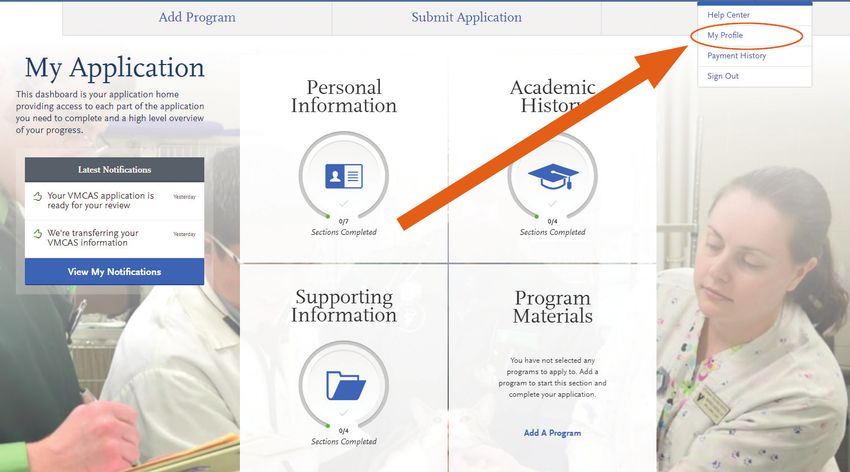
birth on your original application. Note that it can take several My Profile
days for the matching process to complete. Information you entered when you created a VMCAS account will
If you have a difference in name and date of birth, contact be available in My Profile.
customer service to have your scores manually copied into your You can make any necessary changes to your legal name,
application. preferred name, birth date, and email address (only changeable
*if you have updated coursework you will need to submit updated before submitting your VMCAS application). After you have
transcripts. Click Here to review step-by-step instructions for the submitted your VMCAS application, you can update the
re-application process, including what items can and cannot be information in your VMCAS My Profile as needed. Be sure that
carried over. your information is accurate because this email address is tied
your VMCAS application notifications.
Note that if you paid for PTE in a previous cycle, your PTE
coursework only carries forward if you submitted your application
and approved the PTE coursework entry in the previous cycle. See
Professional Transcript Entry (PTE) for more information.
Accessing the Application
You may access the VMCAS Application by visiting
vmcas.liaisoncas.com/applicant-ux/#/login.
Overview of the Application
The VMCAS application is comprised of four sections:
1. Personal Information
2. Academic History
Important Notes
3. Supporting Information
• A red asterisk (*) marks required fields throughout
4. Program Materials the application. Even though optional fields are not
required, the information may be helpful to admissions
When the application opens on January 21, 2021, applicants will
officers and, ultimately, to you. If applicable, provide the
be able to complete the first three sections. On May 12, 2021,
optional information.
the Program Materials section will be available, and applicants
will be able to select programs, complete any program specific • To make sure that you receive emails from the VMCAS,
questions, and ultimately submit their application. we recommend that you add donotreply@webadmit.org
as a “Safe Sender.” It is your responsibility to ensure
that you receive messages from VMCAS and veterinary
medical schools.
• The VMCAS application may time out after inactivity.
Remember to save your work often!
12 AAVMC • VMCAS 2022 APPLICANT GUIDE7. IDENTIFYING Sex and Other Identity
INFORMATION Sex field is required, but you may choose “Decline to State.”
Other Identity is an optional question which asks if you “Decline
to State,” do you identify with a gender not listed. This question
Legal Name is intended to provide veterinary schools information about the
This field is for your full legal name as it appears on legal, many ways an applicant could contribute to the diversity of the
government-issued documents. The fields will be automatically institution and the profession. Answering or not answering this
populated based on the First or Given Name, Middle Name, and question will not impact your application.
Last or Family Name fields entered when creating your account.
Both first name and last name are required. Full middle name is
optional but preferred in case of identical first and last names.
Title, Suffix and Display Name are optional. 8. BIOGRAPHIC
Alternate Names
INFORMATION
Alternate names are any other names, such as a maiden
name or a nickname that may appear on any of your official Current Address
transcripts, official test scores, or other information sent to Enter the address where you want to receive mail correspondence.
VMCAS. Select Yes in this section and enter the alternate name Be sure to keep this section up to date as you complete and
information. Completion of this field is optional, but VMCAS submit your application. If you anticipate a change of address,
strongly encourages you to complete this field to prevent missing enter the date through which your current address is valid.
information and delays. If you do not list alternate names in
your application, contact customer service so they can manually
match these items to your application; failure to do so could Permanent Address
cause significant delays. If your current address is different from your permanent address,
Examples of alternate names include: select No under Is this your permanent address? Then, enter
the address that you consider to be your permanent and/or
• Birth names (if different from current legal name) legal residence.
• Maiden names
• Nicknames (e.g., "Bob" for Robert, "Beth" for Elizabeth, etc.) Phone Number
• "Westernized" names Your phone number pulls in from the information entered when
you created your account. Verify that the listed phone number and
• Alternate punctuation (e.g., your name appears type are correct; click the Profile Section link to make changes.
with/without a hyphen or apostrophe)
• Alternate spacing (e.g., your name appears Email
with or without specific spaces)
Your email address pulls in from the information entered when
• Known misspellings (if a document contains a misspelling) you created your account. Verify that what appears here is
correct; click the Profile Section link to make changes.
Birth Information
Enter your birth information in this section - date of birth in Alternate Email
MM/DD/YYYY format. For example, January 7, 1999, would be Enter an alternate email where you can be reached in the event
listed as 01/07/1999. Make sure you enter your date of birth your main email is not functional.
correctly; failure to do so could cause significant delays with
matching documentation and test scores.
Then, enter your country, city, state/territory/province, and
county of birth.
AAVMC • VMCAS 2022 APPLICANT GUIDE 13Citizenship • H1-B Employee: an individual who wants to
work in the US in a specialty occupation.
Select your US citizenship status and country of citizenship, if
applicable. If you have dual citizenship, indicate your second • J-1 Student: an individual who wants to study at a US
country of citizenship. academic institution. This is generally used for students in
educational exchange programs (e.g., Fulbright Program).
When selecting your status, consider the following definitions
which are adapted from the US State Department: • J-1 Teacher, Researcher, or Trainee: an individual who wants
to teach at a US primary or secondary school, research at a US
• US Citizen: an individual who was born in the US institution, or train in an occupational field at a US business.
or attained citizenship through naturalization.
• Refugee: an individual who is located outside of the US, is
• Permanent US Resident: an individual who holds a Green of special humanitarian concern to the US, demonstrates
Card and is permitted to permanently live and work in the US. that they were persecuted or fear persecution due to
• Temporary US Resident: an individual who is an race, religion, nationality, political opinion, or membership
alien – a nonimmigrant foreign national – who is in a particular social group, is not firmly resettled in
approved to temporarily live in the US for a specific another country, and is admissible to the US.
purpose (e.g., as a student), has a permanent • Visa Waiver WB: an individual from a Visa Waiver Program
residence abroad, and does not hold a Green Card. (VWP) participating country that allows travel to the US for
• Non-resident: an individual who is a nonimmigrant business stays of 90 days or less without obtaining a visa.
foreign national and who is permitted to travel in the US • Visa Waiver WT: an individual from a Visa Waiver Program
for tourism or business for stays of 90 days or less. (VWP) participating country that allows travel to the US for
• None: an individual who has no US citizenship or tourism stays of 90 days or less without obtaining a visa.
visa (immigrant or nonimmigrant) status. • Other: an individual who has received a visa type not
Note: to ensure applicants are entering consistent data for listed. Note that this list is not all-inclusive, and more
some questions, this application uses pre-populated answer visa types may be available in the application.
options that are maintained by the International Organization for
Standardization (ISO). For example, country answer options are Race & Ethnicity
derived from ISO 3166, which is the international standard for
country codes and codes for their subdivisions. Programs fully recognize the importance of diversity in their
student body and in the workforce. Accordingly, programs
strongly encourage applications from persons from all
Residency Information socioeconomic, racial, ethnic, religious, and educational
Provide your residency information, including your legal state backgrounds and persons from groups underrepresented in the
of residence. profession. Please select all the options in this section which you
feel best apply to you. Please note that this section is used for
statistical purposes only and in no way affects your application
Visa Information or financial aid eligibility.
If you currently have a US Visa, select Yes, and enter all visa
information. Please note that we cannot advise you on your visa Ethnicity
status or any related details.
Indicate whether you consider yourself to be of Hispanic or
When selecting your visa type, consider the following definitions Latino origin. This question is optional.
which are adapted from the US State Department. Note that this
list is not all-inclusive. Refer to the US State Department for more
information. Race
• B-1 Visitor: an individual who wants to enter Select one or more of the groups of which you consider yourself
the US temporarily for business. to be a member. This question is optional.
• F-1 Student: an individual who wants to
study at a US academic institution. This is
the most common student visa type.
14 AAVMC • VMCAS 2022 APPLICANT GUIDEParent/Guardian Candidates with criminal records due to felony offenses are
encouraged to be aware of the potential impact for program
In this section, you can opt to enter demographic information acceptance and future licensure. Contact the programs you
about your parent(s) or guardian(s), including where they reside, wish to apply to and state licensing agencies where you hope to
their level of education, current occupation, and role within your practice for advice if you have a felony conviction or a criminal
household. record. If you are uncertain of the status of a charge versus a
conviction on your record, or if you are uncertain as to whether
Add a Parent/Guardian your offense was an infraction, misdemeanor, or a felony, contact
1. Click Add a Parent/Guardian. the city, county, or state jurisdiction where the incident occurred.
2. Select the relationship between you and the parent/guardian. If you are convicted of a misdemeanor or felony prior to
admission and/or matriculation, it is your responsibility to
3. Enter his/her first and last names. immediately inform your program(s).
4. Select his/her gender. Answering Yes to these questions will not automatically
5. Indicate if he/she is living or deceased. disqualify you from admission to veterinary school.
6. Select his/her occupation. Academic Infraction
7. Select his/her residency information. Indicate whether you have ever been disciplined or placed on
8. Select his/her education levels. academic probation while attending an academic institution. If
yes, enter an explanation in the spaces provided.
9. Indicate whether this parent/guardian is in your
primary household (where you lived during the Additional Information
majority of your life, from birth to age 18).
Answering these questions helps programs gather information to
10. Click Save and Continue. develop future recruitment strategies.
11. Add additional parents/guardians, as needed. • Current Student Status
• Student Reported GPA from Primary School
Other Information
• Has there been any interval longer than 3 months
Language Proficiency during which you were not enrolled as a student or
employed. If Yes, provide an explanation including
Select your native language (the language of your birth). If you the duration and how you spent the time.
speak additional languages, click Add Another Language. Then,
select the language(s) and the level of your proficiency in each. WICHE Applicants
Military Status You are a WICHE (Western Interstate Commission for Higher
Education) applicant if you are a resident of Arizona, CNMI, Hawaii,
If you have US military experience, select your anticipated status Montana, New Mexico, North Dakota, or Wyoming AND if you
at the time of enrollment from the drop-down. Select Not a have applied for and/or received notice from the certifying office
member of the military if this does not apply. in your state/territory that you are a duly certified applicant for the
Professional Student Exchange Program. For further information,
Felony and Misdemeanor Convictions contact your WICHE State Certifying Office whose contact
Indicate whether you have ever been convicted of a misdemeanor information is listed at wiche.edu/tuition-savings/psep. Additional
or felony. Note that most programs require satisfactory information about how WICHE PSEP applicants are selected for
background check results as a condition of acceptance. Failure support in veterinary medicine is located at wiche.edu/wp-content/
to disclose and provide accurate information about prior uploads/2018/10/HowWICHEselectsPSEPstudents.pdf.
convictions may have serious consequences, such as annulment
of acceptance offers, program dismissal, or other sanctions. Previous Applications
Background checks reflect all prior convictions, guilty pleas, If you previously applied to any veterinary medical colleges or
city ordinance citations (such as public intoxication), illegal universities, select the year(s) you applied. Use the entering
possession(s) including possession of alcohol under the legal year of the fall semester when you would have enrolled.
age, payments of fines (including traffic violations), and, in some Report only applications submitted before the current VMCAS
cases, prior records thought to have been expunged. Note that application cycle.
in some states, common traffic violations may be considered
misdemeanors.
AAVMC • VMCAS 2022 APPLICANT GUIDE 15You can also read


