Washington State University Modernization Initiative - ISG Prepared by: OCIO ...
←
→
Page content transcription
If your browser does not render page correctly, please read the page content below
Washington State University
                              Modernization Initiative
                              Quality Assurance Assessment –
                              January 16, 2021 – February 15, 2021

                              Prepared by:
                              ISG

                              February 22, 2021

Copyright © 2021 Information Services Group, Inc. All Rights Reserved
February 22, 2021
Stacy Pearson
Project Executive Sponsor and Vice President, Finance and Administration
Washington State University
Finance and Administration
PO Box 641046
Pullman, WA 99164-1045
Sue Langen
Deputy Director for Strategy & Management
Office of the Chief Information Officer
1500 Jefferson St SE
Olympia, WA 98504
Nicole Simpkinson
Assistant Director
Office of the Chief Information Officer
1500 Jefferson St SE
Olympia, WA 98504
Dear Ms. Pearson, Ms. Langen, and Ms. Simpkinson:
ISG has completed its Quality Assurance Assessment (the Assessment) of the Washington State
University (WSU) Modernization Initiative (the Project) for the period January 16, 2021 through
February 15, 2021. This month the Modernization Initiative Steering Committee will convene
on Wednesday, February 24. The timing of this assessment provides timely reporting to the
Steering Committee. The Assessment was completed in accordance with the requirements of
WSU and the State of Washington Office of the Chief Information Officer (OCIO).
Workday Project Moves to Support Phase
The Project team took WSU live with the Workday Human Capital Management software in
December and the Workday Financial Management software beginning in January. The
implementation continues to proceed relatively smoothly although a variety of service items
have been identified and collectively have the potential to impact the perception of the
transition. Delays in invoice payments against contracts represent a risk to the project and the
University as WSU’s vendor community registers concerns to campus, college, and central units.
The Project Management Office (PMO) meets daily to remain in close communication, assess
Project status and address critical topics.
Service Requests
The PMO reviews service desk statistics daily. These statistics include:
Copyright © 2021 Information Services Group, Inc. All Rights Reserved
Page i• Service tickets created and resolved;
• Time to resolution;
• Source group (e.g., Bursar, General Accounting, HR Services, Payroll, Purchasing);
• Workload assignments by Project team member; and
• Service tickets by priority (e.g., critical, high).
As of February 15, key service desk statistics reported the following:
Current QA Previous QA
Reporting Period Reporting Period
Service Desk Metric (1/16 – 2/15) (1/6 – 1/15)* Total Change
Service Requests Submitted 3,760 4,237 7997 -11%
Service Requests Resolved 3,594 3,621 7235 --
Resolution Rate 95.6% 85.5% -- 12%
Time to Resolution (Days) 1.38 .84 -- 64%
Satisfaction Level 4.9 4.9 -- --
*Last month’s QA report included slightly different statistics for the January period due to difference in metric
reporting period start and end dates. Trends reported in this schedule are not materially impacted by these
revisions. Green shading indicates a positive trend.
Service requests and resolution rates are trending positively. Time to resolution remains
respectable but has increased due to the time required to resolve higher priority service tickets
which are more complex. For the 30 days ending February 16, the Project team met Service
Level Agreement (SLA) standards at approximately an 83% rate.
Service tickets classified as critical and high have increased from less than ten in the January
time frame to the mid-twenties during February. These service tickets relate to a variety of
topics, each with a different breadth of impact on the WSU community. Some involve
misunderstandings and other items requiring communications with the community. Some
relate to conversions, configurations, practices, or reporting. Service tickets related to certain
types of invoice payments and particular aspects of grant processing and reporting are most
likely to have the broadest impact.
February progress has been reported against these unresolved tickets with one exception – a
service ticket directed at payroll expenses with a cost share grants worktag which do not
appear on Budget to Actual with Encumbrances comparisons. The PMO reviews service tickets
classified as critical and high daily. WSU leadership works with the relevant central offices to
prioritize resolution tasks with other project and operational tasks.
Similarly, Project team members participating in cutover met daily through January 22 to assess
progress in terms of data loads, integrations, and reporting, and to methodically proceed
through the detailed Project cutover plan. As of February 15, only 26 of the more than 1,400
action items on the plan remained outstanding. Fifteen of the 26 items were not yet due for
completion. The eleven outstanding action items primarily related to defect resolutions, bond
Copyright © 2021 Information Services Group, Inc. All Rights Reserved
Page iidebt, bank reconciliations, invoice payments on sponsored accounts, and accounts receivable
balances. The two conversion-related defects that remain outstanding are currently being
reviewed by the responsible central offices and are reported to be nearing completion. Except
for the invoice payments and accounts receivable balances, these items have limited impact on
the broader WSU community. The Project team hopes to address all the action items prior to
the departure of the Deloitte team at the end of March. ISG observed that the conversion
process continues to be professionally managed.
Members of the WSU user community have accessed knowledge base articles, which are
available through the Project website, on approximately 35,000 occasions, up from 23,000 as of
January 15.
As we noted last month, service desk requests to-date have not been as significant as
anticipated given the issue with lower than expected enrollments in Workday training courses.
Integrations and Reporting
The Project team continues to meet with the Controller’s Office and the State Office of
Financial Management (OFM) to finalize work on the Workday – Agency Financial Reporting
System (AFRS) interface. Payroll transaction processing – one of the last remaining unresolved
items -- has now been successfully addressed. The gift calculator integration has successfully
run, and quarterly distributions made.
The Project team advanced a new reporting strategy during the assessment period. The
strategy focuses on directing college and departmental users to a limited set of currently
available reports that are most useful, in preference to completing development of the
remaining lower priority report. Reporting team leadership indicates repeated requests for the
legacy Business Objects-based “webi budget statements.” Project leadership is aware of these
requests and is addressing them by suggesting alternative, Workday-based approaches to
providing the information provided previously on the webi statements.
Project leadership continues to meet with campus groups and members of the campus
community. Feedback is reportedly wide-ranging and, in some cases, reflects the impact of a
high level of change on campus, college, and central unit operations resulting from COVID
adaptations including funding and staff reductions, spring semester start-up, and the Workday
implementation, among other factors.
In our January report, we highlighted a post-cutoff observation; namely, that the backlog of
invoices awaiting payment in Accounts Payable has grown to a level requiring WSU
management attention. Invoices were and reportedly continue to be arriving for payment
faster than they can be processed. The elapsed time associated with manual processing of
invoices against legacy purchase orders and contracts is problematic and is the primary reason
for the backlog. WSU management is aware of this situation and committed to taking steps to
address the backlog which include (1) revising the business processes, (2) revising the Workday
configuration and (3) temporarily increasing staffing.
Copyright © 2021 Information Services Group, Inc. All Rights Reserved
Page iiiWe understand that the business process has been revised. We are unaware of additional
changes other than approval for recruitment of additional staff. We are also unaware of
reporting related to the University’s backlog of vendor invoices.
Although currently a risk to the Project, continuation of this trend has the potential to become
an issue that can impact the Project’s success. We note this as a risk in the report and
recommend that the PMO review statistics regarding the backlog and actions underway to
address it during the daily PMO meeting.
Sustainment
In previous reports, ISG has suggested labs to allow unit members to convene (most likely
virtually) so they could develop, confirm, and practice local procedures. These labs would be
supported by Project team members, most likely Business Analysts. Labs remain in the queue
of potential Project activities and will be available if Project resources are sufficient.
Project leadership has given considerable thought to “assisting the learning curve of end users”
and has identified three potential approaches. These include:
1. Listening sessions with the AFOs and their departmental administrators. These would
involve eight 60-minute sessions over an 8-week period. College with similar service
models could potential participate in the same session.
2. Workshops or open office hours by functional area. These 60-minute sessions would
focus on topics such as a) payroll, time and labor, and benefits; b) procurement and
expense; c) grants; d) journals – expense changes and budget transfers; and e)
recruitment and general Human Resources
3. Reporting sessions which also address security roles introduced by Workday. After
confirming the approach with participants, these sessions would provide for an iterative
process of addressing and deploying five to ten reports during each iteration.
As of February 15, consideration of these approaches remained on-going. Project leadership
and Business Analyst availability will be a primary factor in these considerations.
During the assessment period, the Project team began reviewing the Workday 2021 R1 update.
As we noted in the January report, we also suggest that Project management provide additional
consideration to the post-go live organization structure and related roles and responsibilities.
Project Status
The PMO Status Report for the week ending February 12 was reviewed during the February 16
PMO meeting. The report classifies the overall Project status rating and all components as
“green.” ISG classifies the overall Project status as “green” although we believe that invoice
processing backlog and throughput should be addressed through periodic PMO review of
backlog and throughput statistics until vendor payments are being made timely.
Project Activity
Project activities during the current assessment period have focused on:
Copyright © 2021 Information Services Group, Inc. All Rights Reserved
Page iv• Prioritizing action items;
• Resolving a subset of identified defects;
• Investigating and resolving a subset of configuration items requiring attention;
• Moving remaining financial integrations toward completion;
• Addressing tickets received through the Service Desk;
• Executing many of the last few remaining tasks in detailed cutover plan;
• Issuing the Project monthly newsletter, and preparing other communications to WSU
leadership and the WSU community;
• Engaging with WSU institutional, academic, and administrative leadership to provide
information regarding the status of outstanding items;
• Updating the Project website; and
• Updating and elaborating the Project Workplan.
Assessment Structure
This document is structured as follows:
1. Executive Summary
We summarize significant data points, progress toward the achievement of important
project activities or milestones, and our observations, findings, and recommendations
in this section. We also present a high-level dashboard overview.
2. Project Progress and Detailed Assessment by Project Management Area
As required by the OCIO and consistent with best practice, we present our initial
observations, findings, and recommendations organized by the ten practice areas of
project management as promulgated by the Project Management Institute. These ten
areas encompass the critical activities of a successful project.
3. Summary of Findings
We summarize findings from our assessment with corresponding recommendations.
This section will include new findings, as well as open and completed findings.
Thank you for this opportunity to serve WSU and the State of Washington.
I attest that ISG has prepared this report independently. Please contact me with any questions
or comments.
Sincerely,
David Hemingson, Partner
ISG Public Sector
Email: isg_usa.highered@isg-one.com
Phone: (512) 231-9212
Copyright © 2021 Information Services Group, Inc. All Rights Reserved
Page vTable of Contents
EXECUTIVE SUMMARY ......................................................................................................................................... 1
Overview................................................................................................................................................ 1
Dashboard ............................................................................................................................................. 2
ASSESSMENT OF PROJECT PROGRESS ............................................................................................................ 4
Schedule ................................................................................................................................................ 5
Budget ................................................................................................................................................... 6
QUALITY ASSURANCE ASSESSMENT................................................................................................................ 7
PMBOK Practice Area 1: Integration Management .............................................................................. 8
PMBOK Practice Area 2: Scope Management ...................................................................................... 9
PMBOK Practice Area 3: Schedule Management ................................................................................. 9
PMBOK Practice Area 4: Cost Management....................................................................................... 10
PMBOK Practice Area 5: Quality Management .................................................................................. 10
PMBOK Practice Area 6: Resource Management ............................................................................... 11
PMBOK Practice Area 7: Communication Management .................................................................... 13
PMBOK Practice Area 8: Risk Management ....................................................................................... 13
PMBOK Practice Area 9: Procurement Management ........................................................................ 14
PMBOK Practice Area 10: Stakeholder Management ........................................................................ 14
ASSESSMENT OF THE ACCURACY OF THE PROJECT’S TRACKING OF PROGRESS ......................... 17
RISK ASSESSMENT .............................................................................................................................................. 18
SUMMARY OF OBSERVATIONS ....................................................................................................................... 19
SUMMARY OF OPEN FINDINGS ....................................................................................................................... 20
ISG QUALITY ASSURANCE METHODOLOGY ............................................................................................... 21
Copyright © 2021 Information Services Group, Inc. All Rights Reserved
Page viQA Assessment for the WSU Modernization Initiative
Washington State University
February 22, 2021
Executive Summary
ISG Public Sector (ISG) presents this Quality Assurance (QA) Assessment Report for the
Washington State University (WSU or the University) Modernization Initiative for the period
January 16, 2021 through February 15, 2021 (the assessment period).
Overview
This is the thirtieth monthly QA Assessment Report presented by ISG in its role as QA
consultant for the WSU Modernization Initiative (the Project).
With respect to earlier QA Assessment Reports, we conclude that Project leadership continues
to consider the recommendations presented in the reports and is acting to address them.
Workday Human Capital Management (including payroll) went live in December 2020.
Financials and Procurement processes were activated in January 2021.
ISG classifies the overall Project status as “green” although we believe that invoice processing
backlog and throughput should be addressed through periodic PMO review of backlog and
throughput statistics until vendor payments are being made timely.
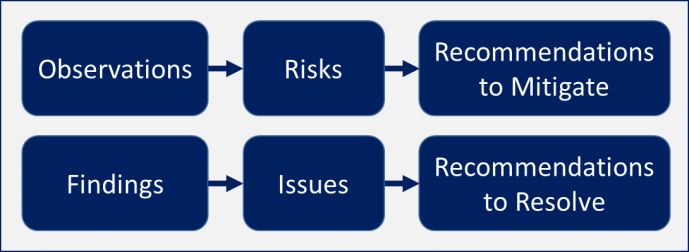
ISG reports no issue that we classify as a finding.1 We make several observations, noting several
risks that will be monitored as the Project progresses.2 We will continue to monitor these risks.
1
An issue is “a situation that is certain and that could affect Project success in a positive or negative manner.”
2
A risk is “an uncertain situation, the likelihood of the situation, and the impacts (which can be positive or
negative) that the occurrence of the situation would have on Project success.”
Copyright © 2021 Information Services Group, Inc. All Rights Reserved
Page 1QA Assessment for the WSU Modernization Initiative
Washington State University
February 22, 2021
Dashboard
This dashboard presents an overview of our assessment of the Project and the ten Project
Management Book of Knowledge (PMBOK) practice areas as of February 15, 2021.
Project Status
Change since Last Findings &
Project Management Area Area Status
Assessment Observations
1. Integration Management Risk Continues
2. Scope Management --
3. Schedule Management Risks Reduced
4. Cost Management --
5. Quality Management --
6. Resource Management Risks Reduced
7. Communication Management --
8. Risk Management --
9. Procurement Management --
10. Stakeholder Management Risks Reduced
Findings &
Traditionally High-Risk Areas* Area Status
Observations
1. Change Management
2. Integrations/System Remediations
3. Reporting**
* Areas that have proven to be high-risk during the implementations of enterprise systems at research universities
like WSU.
** Generation of dashboards, analytics, queries, and reports needed for decision-making at all levels of the
University and for compliance with regulatory and other third-party reporting. This includes reporting that is
impacted by the replacement by Workday of current HCM and Financial data sources.
ISG Monitored Areas* Rationale
1. PMO Troika Variance from best practice
2. Inter-agency Agreements Criticality to project success
3. Lack of Critical Path Variance from best practice
* Areas monitored by ISG but not rising to a level that requires Project leadership’s attention at this time.
Copyright © 2021 Information Services Group, Inc. All Rights Reserved
Page 2QA Assessment for the WSU Modernization Initiative
Washington State University
February 22, 2021
Legend
Assessment Status Change
Risks/issues being addressed
Neutral; risks/issues partially being addressed or newly listed
Risks/issues increasing
Area Status
Major finding likely to adversely impact project progress or outcome
Finding/issue requiring attention or observation/risk being addressed and monitored
No finding or observation requiring action at this time
Findings & Observations
Finding(s)/issue(s) noted
Finding(s)/issue(s) and observation(s)/risk(s) noted
Observation(s)/risk(s) noted
No finding or observation at this time
Copyright © 2021 Information Services Group, Inc. All Rights Reserved
Page 3QA Assessment for the WSU Modernization Initiative
Washington State University
February 22, 2021
Assessment of Project Progress
The Project continues to operate in a work-from-home environment. This will continue for the
foreseeable future.
ISG assigns the Project a “green” status although we believe the risks resulting from the lack of
reporting and periodic PMO review of invoice processing backlog and throughput should be
addressed. Our observation regarding invoice processing is described in the Integration
Management practice area.
The Project team continues to:
• Develop deliverables corresponding to tasks in the Project Workplan;
• Execute Support Phase tasks; and
• Elaborate the Project Workplan.
Project Staffing
The WSU Core Finance and Budget Lead role remains open. Other Project team members have
filled this role in the interim but as the Project moves past the initial Support phase this position
may need to be filled.
Several members of the project team have been out due to personal or family illness.
The Deloitte Project Manager has been out for an extended period. His leadership has been
missed. Deloitte has provided coverage in his absence.
The WSU Change Management Lead has returned from maternity leave.
Deloitte Staffing Commitment
Deloitte’s original contract was fixed cost. Current services as part of the timeline extension
provided by Deloitte under the recently modified SOW are now paid on a time and materials
basis.
Deloitte’s commitment cumulatively throughout the Project substantially exceeds the
anticipated hours presented in the SOW. With respect to the additional services that Deloitte is
providing on a time and materials basis, WSU Project management has indicated that Deloitte is
meeting WSU expectations.
Project Deliverables Status
The Deliverables Log indicates that all Support Phase Deliverable Expectation Documents
(DEDs) have been submitted to WSU and all have been accepted. WSU formal
acknowledgement of Cutover is being reviewed by WSU. The following Support Phase
deliverables remain outstanding:
• Support – Mid-phase Status Report;
Copyright © 2021 Information Services Group, Inc. All Rights Reserved
Page 4QA Assessment for the WSU Modernization Initiative
Washington State University
February 22, 2021
• Lessons Learned;
• Final Engagement Report; and
• System Acceptance Checklist.
The Lessons Learned deliverable is in development. Development of the three other document
has yet to begin.
All Project deliverables are due for completion by March 12, 2021.
ISG has not but would request the opportunity to review all Deploy Phase and Support Phase
deliverables. To-date, 3 of the 4 Deploy Phase Deliverable Expectation Documents (DEDs) and
half of the Support Phase deliverables have been made available for ISG review.
Most deliverables reviewed by ISG have been of quality. In those instances when ISG has not
found the deliverables to be of quality, ISG has presented WSU with recommendations to bring
the deliverables to a leading practice standard.
Project deliverables are being classified consistent with guidelines in the Project Charter and
are being posted on a Deliverables Log accessible through the internal Project web site
maintained by Deloitte.
Project Workplan
Project leadership routinely updates the Project Workplan.
Based on our assessment of the Project Workplan this period, we conclude that it accurately
reflects the status of the Project at this time.
Schedule
During the assessment period, the Project team:
• Prioritized action items;
• Resolved a subset of identified defects;
• Investigated and resolved a subset of configuration items requiring attention;
• Moved remaining financial integrations toward completion;
• Addressed tickets received through the Service Desk;
• Executed many of the last few remaining tasks in detailed cutover plan;
• Issued the Project monthly newsletter, and prepared other communications to WSU
leadership and the WSU community;
• Engaged with WSU institutional, academic, and administrative leadership to provide
information regarding the status of outstanding items; and
• Updated the Project website
The PMO:
• Updated the Project Workplan for current activity;
Copyright © 2021 Information Services Group, Inc. All Rights Reserved
Page 5QA Assessment for the WSU Modernization Initiative
Washington State University
February 22, 2021
• Encouraged documentation of project decisions in the Risks, Actions, Issues and
Decisions (RAID) log; and
• Actively addressed risks including those identified in earlier QA reports.
We find that the Project Workplan is being updated on a timely basis. We will continue to
monitor the Project Workplan as the Project moves forward.
The Project Workplan presents a high-level timeline for the Project with estimated completion
dates. The final phase (i.e. the Support Phase) is estimated for completion in mid-March 2021.
Budget
The Project is operating with sufficient budget.
Project Management has provided ISG with a monthly project spend plan for the current fiscal
year and an updated report of actual expenses through January 2020. The report indicates that
budget tracking is reasonably current, that WSU had allocated a contingency that we consider
reasonable and prudent for the Project timeline, and that the Project was running an overall
positive variance, before consideration of the contingency.
Copyright © 2021 Information Services Group, Inc. All Rights Reserved
Page 6QA Assessment for the WSU Modernization Initiative
Washington State University
February 22, 2021
Quality Assurance Assessment
ISG presents below its Quality Assurance Assessment for the time period January 16, 2021
through February 15, 2021 (the assessment period). We report our assessment of Project
performance for each of the ten Project Management Book of Knowledge (PMBOK) practice
areas:
1. Integration Management 6. Resource Management
2. Scope Management 7. Communication Management
3. Schedule Management 8. Risk Management
4. Cost Management 9. Procurement Management
5. Quality Management 10. Stakeholder Management
Each section below begins with a definition of the respective practice area.
Please refer to the final section of this report, ISG Quality Assurance Methodology, for a
description of the ISG Quality Assurance methodology that serves as the basis for this
Assessment.
On the following pages, ISG discusses the status of each of the ten Practice Management Book
of Knowledge (PMBOK) practice areas. As appropriate, we identify observations, findings, risks,
and issues and, for each observation or finding, we describe the impact, present our
recommendation and report status.
Risks and issues are defined consistent with PMBOK standards. A risk is “an uncertain situation,
the likelihood of the situation, and the impacts (which can be positive or negative) that the
occurrence of the situation would have on Project success.” An issue is “a situation that is
certain and that could affect Project success in a positive or negative manner.”
The OCIO requires WSU responses to issues raised in QA reports. We commend WSU for its
timely attention to both risks and issues, and for its transparency in presenting written
responses.
Copyright © 2021 Information Services Group, Inc. All Rights Reserved
Page 7QA Assessment for the WSU Modernization Initiative
Washington State University
February 22, 2021
PMBOK Practice Area 1: Integration Management
Integration management includes the processes and activities needed to identify, define,
combine, unify, and coordinate the various processes and project management activities within
the project management process groups.
Discussion
Coordination with Resources Outside the Project
Timely completion of operational tasks is dependent upon successful integration with resources
not within the direct control of Project leadership.
WSU management has concluded that the backlog of invoices awaiting payment in Accounts
Payable has grown to a level requiring attention. Invoices are arriving for payment faster than
they can be processed. The elapsed time associated with manual processing of invoices against
legacy purchase orders and contracts is problematic and is the primary reason for the backlog.
Risk
Delay in payments for an extended period has the potential to impact the University’s
reputation with the supplier and university community, impact the University’s credit
standing, and result in suppliers refusing to partner with the University.
Recommendation
We recommend that WSU and Project management continue to identify ways of
reducing the elapsed time required to process invoices against legacy purchase orders
and contracts, and monitor progress in reducing the time. We recommend that Project
leadership report the status of the backlog daily.
Status
WSU management is aware of this situation and is taking steps to address the backlog
which include (1) revising the business processes, (2) revising the Workday configuration
and (3) temporarily increasing staffing. Project management believes that the elapsed
time will be reduced as legacy purchase orders are closed. Project management has
reported steps taken to address the backlog but has not established a practice of
reporting the status of the backlog to the PMO. Status reports may include total invoice
backlog count, invoice backlog count by type (e.g., related to legacy purchase order,
related to Workday purchase order, unrelated to a purchase order), invoices received
and processed by day, and the like.
Although currently a risk to the Project, continuation of this trend has the potential to
become an issue that can impact the Project’s success.
ISG will continue to monitor this risk.
Copyright © 2021 Information Services Group, Inc. All Rights Reserved
Page 8QA Assessment for the WSU Modernization Initiative
Washington State University
February 22, 2021
Observations regarding the Project Workplan are presented earlier in the “Project Workplan”
section of “Assessment of Project Progress.” Observations regarding end user community
engagement are presented in the Stakeholder Management section below.
PMBOK Practice Area 2: Scope Management
Scope management includes the processes required to ensure that the Project includes all the
work required, and only the work required, to complete the Project successfully.
Discussion
University Stores had planned to implement a new inventory system separate from Workday
and the Project team planned accordingly. The new system has not been implemented. ISG
acknowledges that implementation of inventory functionality in Workday was not in Project
scope. Although not a Project risk, this does represent a risk to WSU.
Status
ISG has identified no reportable Project risks or issues in this area at this time.
PMBOK Practice Area 3: Schedule Management
Schedule management includes the processes required to manage the timely completion of the
Project.
Discussion
Report and Integration Development
Report development efforts have proven to be challenging for the Project team, as they are
traditionally for similar projects. The AFRS integration with the OFM is nearing completion.
Completion of the AFRS integration will likely remove integrations from the list of risk areas
next month.
Risk
Design, build, and unit test of reports and completion of a few integrations are among
the set of tasks past due and/or represent a risk area.
Recommendation
Continue to monitor these. As appropriate, apply additional Project resources in
support of resolution of outstanding operational decisions.
Copyright © 2021 Information Services Group, Inc. All Rights Reserved
Page 9QA Assessment for the WSU Modernization Initiative
Washington State University
February 22, 2021
Status
Development of reports classified as “critical” and “high” has been completed.
Ninety-four reports classified as medium and low priority remain outstanding. These
are currently projected to be fully completed by the end of April 2021. Reporting team
leadership indicates repeated requests for the legacy Business Objects-based “webi
budget statements.” Project leadership is aware of these requests and is addressing
them by suggesting alternative, Workday-based approaches to providing the
information provided previously on the webi statements.
The Project team continues to work with the Controller’s Office and OFM to complete
the AFRS integration. Payroll transactions have been addressed successfully but a
limited set of items remain outstanding. The gift calculator integration has been
completed and run, resulting in a successful quarterly distribution of gift funds.
PMBOK Practice Area 4: Cost Management
Cost management includes the processes involved in planning, estimating, budgeting, financing,
funding, managing, and controlling costs so that the Project can be completed within the
approved budget.
Discussion
Observations regarding the Modernization Initiative budget and spend plan are presented
earlier in the “Budget” section of “Assessment of Project Progress.”
Status
ISG has identified no reportable risks or issues in this area at this time.
PMBOK Practice Area 5: Quality Management
Quality management includes the processes and activities of the performing organization that
determine quality policies, objectives, and responsibilities so that the project will satisfy the
needs for which it was undertaken.
Discussion
WSU has incorporated a quality assurance process into its deliverable development process.
This process is documented in the Project Management Plan and has been accepted and put
into practice by the Project team.
Copyright © 2021 Information Services Group, Inc. All Rights Reserved
Page 10QA Assessment for the WSU Modernization Initiative
Washington State University
February 22, 2021
We have observed the Project team continuing the cadence for Project deliverable definition
and acceptance for deliverables outlined in the Deloitte SOW and included in the Project
Workplan. In our assessment, the quality of DEDs, which we review following WSU’s review,
and adherence to the definitions has been mixed. With a few exceptions that we have noted in
our assessment reports, we have found the final products to be acceptable.
Status
ISG has identified no reportable risks or issues in this area at this time.
PMBOK Practice Area 6: Resource Management
Resource management includes the processes that organize, manage, and lead the Project
team.
Discussion
ISG continues to find that WSU has staffed the team with a very professional Project team. We
commend Project leadership for the high standards it has established and maintained.
Departmental Resource Availability
The Project team has analyzed the impact of Workday on departmental operations and
continues to be cognizant of campus, college, and other unit interests.
Steering Committee members have noted that their staff are experiencing high stress levels due
to the complications of COVID-19 and other factors.
Risk
As Project Management recognizes, the Project is dependent upon resources outside
the Project team to accomplish tasks in a timely manner.
Recommendation
ISG recommends that the Project team:
• Continue providing the WSU community with effective communication of Project
plans, activities, and decisions.
• Continue to develop project plans and communicate anticipated area resource
requirements and the timing of critical project activities. Develop and
communicate support available to campus, college, and departmental units.
• Establish an internal process to identify and resolve key user constraints or other
bottlenecks in the impacted WSU community (i.e., outside the Project team).
Copyright © 2021 Information Services Group, Inc. All Rights Reserved
Page 11QA Assessment for the WSU Modernization Initiative
Washington State University
February 22, 2021
Status
WSU is aware of the risk and is acting to mitigate it.
WSU continues to update the WSU community as plans are developed. The Project
Team has held a series of Zoom-facilitated, open Workday Expert Q&A Panels to address
user community questions. Panels addressed Accounting, Grants, Payroll, Time and
Absence and Payroll.
Project leadership has given considerable thought to “assisting the learning curve of end
users” and has identified three potential approaches to future support. These include:
1. Listening sessions with the AFOs and their departmental administrators. These
would involve eight 60-minute sessions over an 8-week period. College with
similar service models could potential participate in the same session.
2. Workshops or open office hours by functional area. These 60-minute sessions
would focus on topics such as a) payroll, time and labor, and benefits; b)
procurement and expense; c) grants; d) journals – expense changes and budget
transfers; and e) recruitment and general Human Resources
3. Reporting sessions which also address security roles introduced by Workday.
After confirming the approach with participants, these sessions would provide
for an iterative process of addressing and deploying five to ten reports during
each iteration.
As of February 15, consideration of these approaches remained on-going. Project
leadership and Business Analyst availability will be a primary factor in these
considerations.
ISG will continue to monitor.
COVID-19 Impact
The COVID-19 pandemic has the potential to impact Project team members and other
significant resources necessary for Project success.
Risk
A COVID-19 infection could incapacitate a member or members of the Project team or
other significant resources necessary for Project success.
Recommendation
Continue to monitor the health and safety of Project team members. Develop a
contingency plan in case a Project resource is incapacitated.
Status
During the assessment period, a member of the Project team contracted the COVID-19
virus. The ISG team hopes for his timely and full recovery.
Copyright © 2021 Information Services Group, Inc. All Rights Reserved
Page 12QA Assessment for the WSU Modernization Initiative
Washington State University
February 22, 2021
Project Management is aware of this risk. ISG will continue to monitor it.
PMBOK Practice Area 7: Communication Management
Communications management includes the processes that are required to ensure timely and
appropriate planning, collection, creation, distribution, storage, retrieval, management, control,
monitoring, and the ultimate disposition of project information.
Discussion
The Project team is maintaining project documentation in a reasonably effective and timely
manner. The Project Deliverables Log details planned due dates for Deliverable Expectation
Documents (DEDs) and the deliverables themselves, and review responsibilities for completed
and current Project phases. As documentation reviews are completed, acceptance is noted in a
timely manner.
In addition, the Project team is maintaining the Modernization Initiative web site,
http://modernization.wsu.edu. In our assessment, the web site represents an excellent
orientation to the Project and provides an interested community member with an effective
means of understanding the Project, its future course, and setting expectations regarding the
impact of new business processes and the Workday software based on Project decisions. The
web site communicates events well into the future so that the WSU community can plan to
participate effectively in Project events.
Status
ISG has identified no reportable risks or issues in this area at this time.
PMBOK Practice Area 8: Risk Management
Risk management includes the processes of conducting risk management planning,
identification, analysis, response planning, and controlling risk on a project.
Discussion
Project leadership is conducting risk meetings approximately monthly. Participation is
meaningful and effective. In our assessment, the participants give serious consideration to
Project risks and identification of mitigating actions to address them.
In addition, key risk topics are reviewed with the Steering Committee.
Status
ISG has identified no reportable risks or issues in this area at this time.
Copyright © 2021 Information Services Group, Inc. All Rights Reserved
Page 13QA Assessment for the WSU Modernization Initiative
Washington State University
February 22, 2021
PMBOK Practice Area 9: Procurement Management
Procurement management includes the processes necessary to purchase or acquire products,
services, or results needed from outside the Project team.
Discussion
ISG believes the activities in this practice area are on track.
Status
ISG has identified no reportable risks or issues in this area at this time.
PMBOK Practice Area 10: Stakeholder Management
Stakeholder management includes the processes required to identify all people or
organizations impacted by the project, analyzing stakeholder expectations and impact on the
project, and developing appropriate management strategies for effectively engaging
stakeholders in project decisions and execution.
Discussion
The focus on OCM-specific activities has increased as Workday moves into production. Project
leadership, recognizing resource constraints, has moved local procedure workshops into the
Sustainment period that follows go live. The objective of these workshops is to increase
understanding of Workday business processes and increase user confidence in the ability to
conduct local operations after Workday goes live.
Unit Ability to Adapt to Business Process Changes
Most HCM and Finance business processes will be impacted significantly by the introduction of
Workday.
Risk
In some cases, it is not clear that academic and operating unit personnel understand how
to adopt and accept the change brought about by the Workday implementation.
Recent feedback from the user community indicates that some users are attempting to
continue legacy practices using the Workday software. These attempts, in some cases,
are creating frustration. User community frustration resulting from attempts of this
nature is not unusual when new applications supporting new business processes are
implemented. However, these frustrations are often indistinguishable by the user
community from others related to temporary, small but inevitable defects in the initial
software configuration. The Project team is addressing these defects, in most cases,
Copyright © 2021 Information Services Group, Inc. All Rights Reserved
Page 14QA Assessment for the WSU Modernization Initiative
Washington State University
February 22, 2021
timely. The amalgamation of these frustrations in an environment dealing with the
impacts of COVID increases the risk of user dissatisfaction.
Recommendation
As these units further refine their procedures, end users are likely to benefit from an
opportunity to test proposed procedures and practice them as a group. Providing the
Change Agents and Super Users the tools (e.g., practice tenant) and support to organize
these practice sessions, allows them to work through points of concern that they may not
encounter previously.
WSU Project leadership has determined that resource constraints are such that training
labs will not be available until Sustainment. Even with the delay in training lab availability,
WSU Project leadership should consider a transition workshop, held with a broad set of
units, to address key processes that are be critical to successful local operations. These
workshops might be provided to groups of similarly organized units (e.g., central units,
academic units with central school support). The Project team has used Zoom effectively
to accomplish many Project tasks. We suggest that Zoom can be used to create an
effective environment to conduct these labs.
Status
The Project team prepared a user engagement strategy and plan and departmental
impact assessment. These efforts includes tasks to validate business process changes and
impacts. The team had planned to publish business processes and anticipated that
providing access to these will provide the user community with insight that will be helpful
in addressing their interests.
WSU Project leadership, recognizing resource constraints, moved local procedure
workshops into Sustainment. This represents a risk to the Project that leadership should
monitor.
The Project Team hosted a set of Zoom-based, open Expert Q&A panels to address user
community questions and is considering other approaches to respond to user community
concerns. We noted these earlier in the Departmental Resource Availability observation.
ISG will continue to monitor it as well.
Faculty Readiness
Overall readiness in the academic units includes engaging the faculty at the appropriate level
for their system use and on a timeline that takes into consideration their academic duties.
Risk
Faculty will not be prepared for performing business processes/tasks in the new system
due to lack of engagement or required training that conflicts with key academic timelines.
Copyright © 2021 Information Services Group, Inc. All Rights Reserved
Page 15QA Assessment for the WSU Modernization Initiative
Washington State University
February 22, 2021
Recommendation
Work with change agents in academic units to fully understand faculty use of the system.
Where possible depending upon level of use (core system, self-service), provide training
options with flexibility (i.e. micro-learning).
Status
Training curriculum has been developed with multiple delivery channels. The Change
Network is in place with representation from the academic units. The Project team has
provided targeted communications to Deans regarding training sessions that are most
applicable to faculty.
Until grant conversion is complete and faculty have the opportunity to review the status
of their grants using Workday reporting, faculty readiness will remain less than fully
tested.
ISG will continue to monitor this risk.
Copyright © 2021 Information Services Group, Inc. All Rights Reserved
Page 16QA Assessment for the WSU Modernization Initiative
Washington State University
February 22, 2021
Assessment of the Accuracy of the Project’s Tracking of
Progress
In ISG’s assessment, the Project Workplan accurately tracks Project progress. Our comments in
the “Project Workplan” and “Schedule” sections of the “Assessment of Project Progress”
present additional observations regarding the accuracy of the Project’s Tracking of Progress.
We note that Status Reports presented at the PMO meeting and to the Steering Committee are
deliverable-based and do not reflect all Project tasks reported in the Project Workplan.
Copyright © 2021 Information Services Group, Inc. All Rights Reserved
Page 17QA Assessment for the WSU Modernization Initiative
Washington State University
February 22, 2021
Risk Assessment
ISG summarizes project risks and issues below which are potential or actual barriers to meeting
project objectives and milestones, the probability of occurring and impact if they occur, and
recommended and observed mitigations.
Shaded entries indicate the observation or issue has been closed.
Practice Area/Risk/Issue Probability Impact Recommended and Observed Mitigations
1: Risk: Coordination with Address slow throughput items in Accounts
Resources Outside the Payable. Track and report invoice backlog
Project Medium High until backlog is reduced.
Communicate to user community that a set
of reports will not be available at go live.
Identify key reports from among numerous
3: Risk: Reports and reports available to address post-go live
Integrations Medium Low reporting requests.
Continue to assist AFOs and departmental
users in prioritizing project-related
activities. Continue to prioritize service
ticket requests taking into consideration
departmental requests/demands. Continue
6: Risk: Departmental to monitor the level of departmental
Resource Management High Medium satisfaction.
6: Risk: COVID 19 Threat to Continue to monitor Project team health
the Project Team Low Medium and safety during COVID 19 pandemic.
Continue to respond to departmental
requests for assistance in addressing
10: Risk: Unit Ability to process and reporting concerns. Encourage
Adapt to Business Process adoption of new Workday-supported
Changes High High processes.
Leverage change agents to assess faculty
satisfaction. Provide training
recommendations tailored to faculty
10: Risk: Faculty Readiness Medium Medium interests.
Copyright © 2021 Information Services Group, Inc. All Rights Reserved
Page 18Summary of Observations
The table below summarizes risks based on observations from ISG’s QA report as of February
15, 2021.
Shaded entries indicate the observation has been closed.
Status as of
Practice Area/Observation February 15,
2021
1: Coordination with Resources Outside Project. Take steps to address delays
in processing invoices related to legacy purchase orders and contracts. Track
Monitoring
and report backlog. Engage resources outside the Project on an interim basis to
gain timely task completion.
3: Reports and Integrations. Monitor pace of development of remaining On-going:
reports and completion of the AFRS integration. Monitoring
6: Risk: Departmental Resource Management. Continue to assist AFOs and
departmental users in prioritizing project-related activities. Continue to On-going:
prioritize service ticket requests taking into consideration departmental Monitoring
requests/demands. Continue to monitor the level of departmental satisfaction.
6: COVID 19. Continue to monitor health and safety of the Project team. On-going:
Develop contingency plan in case a Project team member is incapacitated. General
Monitoring
10: Unit Ability to Adapt to Business Processes Changes. Continue to respond
On-going:
to departmental requests for assistance in addressing process and reporting
Monitoring
concerns. Encourage adoption of new Workday-supported processes.
10: Faculty Readiness. Engage faculty through change agents in academic On-going:
units. Provide targeted training for faculty. General
Monitoring
Future reports will reference previous months’ observations that remain open. Open
observations and findings closed during the reporting period will be listed and then deleted
from the list the month following closure.
Copyright © 2021 Information Services Group, Inc. All Rights Reserved
Page 19Summary of Open Findings
WSU has addressed all previous open findings as of ISG’s QA report of February 15, 2021.
Shaded entries, if any, indicate the finding has been closed.
Status as of
Practice Area/Finding February 15,
2021
Recommendation
Future reports will reference previous months’ findings that remain open. Open observations
and findings closed during the reporting period will be listed and then deleted from the list the
month following closure.
Copyright © 2021 Information Services Group, Inc. All Rights Reserved
Page 20ISG Quality Assurance Methodology
ISG offers the following description of our Quality Assurance (QA) methodology for enterprise
system implementation and organizational transformation projects.
Overview
ISG conducts QA assessments through:
• Periodic review of project progress;
• Participation in selected project activities with the objective of confirming
representative and meaningful WSU participation, evaluating activity and activity
leadership / facilitation (e.g., Deloitte, WSU) effectiveness; and
• Review of project deliverables including review of Deliverable Expectation Documents
for those deliverables.
ISG’s objective is to assess the likelihood that the project activity and the project overall will
achieve the expected outcome. This level of participation is designed to provide insight
through limited participation in representative sessions, workshops, etc. that drives
development of conclusions and recommendations more broadly applicable to the project
activity or activities as a whole.
ISG prepares monthly QA reports to assess project performance across the ten Project
Management Book of Knowledge (PMBOK) practice areas:
1. Integration management 6. Resource management
2. Scope management 7. Communication management
3. Schedule management 8. Risk management
4. Cost management 9. Procurement management
5. Quality management 10. Stakeholder management
The focus of the assessment will be forward-looking and phase specific. Development of
transition and operational planning and readiness, including planned governance following
implementation, will receive QA attention throughout the project.
ISG’s QA services are based on significant experience in managing and reviewing numerous,
large-scale systems projects for our higher education, state, and local government clients.
ISG’s intent is to bring to bear our prior project oversight and QA experience and insights in
order to prevent issues rather than reporting on issues after the fact.
Examples of process areas that we will examine and assess during our reviews are shown in the
following table.
Copyright © 2021 Information Services Group, Inc. All Rights Reserved
Page 21PMBOK Practice Area Sample topics included
• Integration management - the processes and activities needed to identify, • Governance and sponsorship
define, combine, unify, and coordinate the various processes and project • Managing the PM process
management activities within the project management process groups. • Authority / delegation / decision-making
• Scope management - the processes required to ensure that the project • Scope definition / requirements
includes all the work required, and only the work required, to complete the • Scope change control
project successfully. • Deliverables
• Schedule management - the processes required to manage the timely • Effort reporting / forecasting
completion of the project. • Progress towards milestones / gates
• Cost management - the processes involved in planning, estimating, • Budget monitoring
budgeting, financing, funding, managing, and controlling costs so that the • Estimating tools and processes
project can be completed within the approved budget. • Budget forecasting
• Quality management - the processes and activities of the performing • (Other than this QA report)
organization that determine quality policies, objectives, and responsibilities • Quality planning
so that the project will satisfy the needs for which it was undertaken.
• Resource management - the processes that organize, manage, and lead the • Staffing from Contractor and WSU
Project team. • Knowledge transfer
• Communication management - the processes that are required to ensure • Project documentation / archives
timely and appropriate planning, collection, creation, distribution, storage, • Planning and execution of
retrieval, management, control, monitoring, and the ultimate disposition of communications
project information.
• Risk management - the processes of conducting risk management planning, • Identification and ranking of risks
identification, analysis, response planning, and controlling risk on a project. • Monitoring and mitigation of risks
Copyright © 2021 Information Services Group, Inc. All Rights Reserved
Page 22PMBOK Practice Area Sample topics included
• Procurement management - the processes necessary to purchase or acquire • Contract management / SOW
products, services, or results needed from outside the Project team. management
• Software licensing
• Stakeholder management - the processes required to identify all people or • Organizational readiness – planning and
organizations impacted by the project, analyzing stakeholder expectations execution
and impact on the project, and developing appropriate management • Business process redesign, role
strategies for effectively engaging stakeholders in project decisions and definition/transition
execution. • Training including training facilities,
materials, job aids, etc.
Copyright © 2021 Information Services Group, Inc. All Rights Reserved
Page 23You can also read


