WEINBERG String Quartets - Nos 2, 5, and 8 - ARCADIA QUARTET - Chandos Records
←
→
Page content transcription
If your browser does not render page correctly, please read the page content below
VOL. ONE
           WEINBERG   String Quartets
                      Nos 2, 5, and 8

                  ARCADIA QUARTET
© Tommy Persson Mieczysław Weinberg, front right, with his teacher, Vasily Zolotaryov, front centre, and fellow students Vladimir Olovnikov, Sima Nisnevich, Henryk Wagner, Lev Abeliovich, and Ryszard Sielicki, Minsk 1940 – 41
Mieczysław Weinberg (1919 – 1996)

		 String Quartets, Volume 1

		 String Quartet No. 2, Op. 3 / 145 (1939 – 40,
		 revised 1987)                                        26:05
		 in G major • in G-Dur • en sol majeur
		      Dedicated to the composer’s mother and sister
1   I   Allegro                                          8:56
2  II   Andante – Meno mosso – Allegro –
		      Tempo I – Poco meno mosso                        8:57
3 III   Allegretto – Coda                                4:02
4 IV    Presto                                           3:59

                                                                3
String Quartet No. 5, Op. 27 (1945) 26:30
in B flat major • in B-Dur • en si bémol majeur
Dem Beethoven-Quartett gewidmet: Dmitrij Ziganow,
Wassilij Schirinsky, Wadim Borissowsky, Sergej Schirinsky
5 1 Melodie. Andante sostenuto 6:17
6 2 Humoreske. Andantino – 6:04
7 3 Scherzo. Allegro molto – 2:28
8 4 Improvisation. Lento – 5:20
9 5 Serenade. Moderato con moto – Pochissimo più mosso –
Allegro – Andante sostenuto 6:19
4String Quartet No. 8, Op. 66 (1959) 15:29
in One Movement
in C major • in C-Dur • en ut majeur
Dem Borodin-Quartett gewidmet
10 Adagio – Andante – Adagio – 7:22
11 Allegretto – Allegro – Allegretto – 5:45
12 Doppio più lento – Andante 2:21
TT 68:24
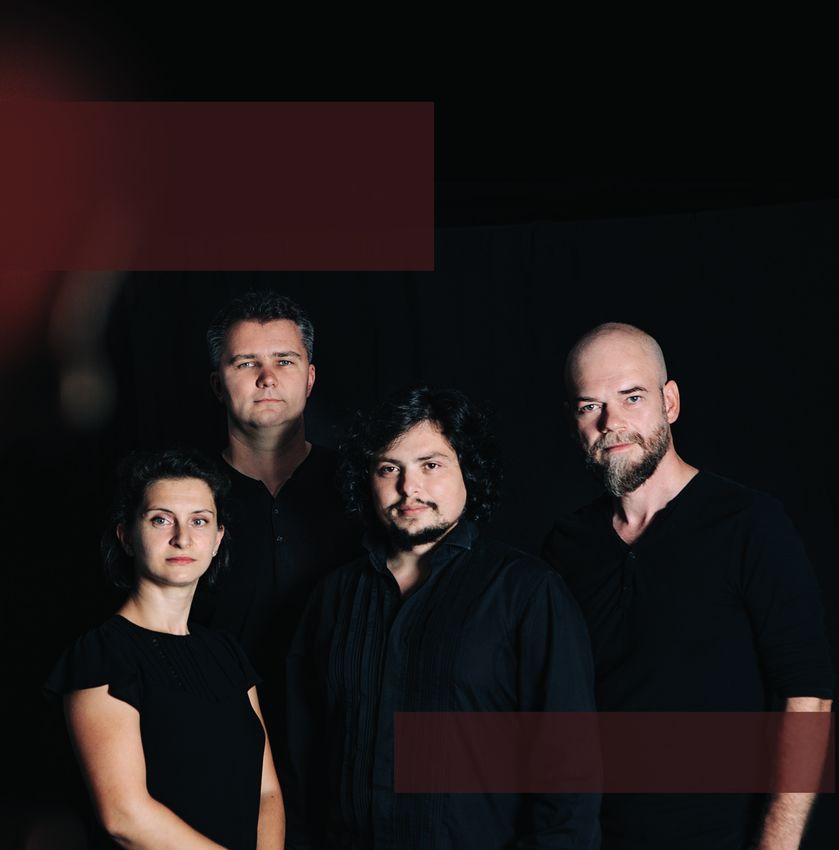
Arcadia Quartet
Ana Török violin
Răsvan Dumitru violin
Traian Boală viola
Zsolt Török cello
5Arcadia Quartet
© Raluca CiorneaWeinberg:
String Quartets, Volume 1
Introduction in his seventeen string quartets. This cycle
The extraordinary posthumous renaissance spans nearly half a century, from his student
enjoyed by the music of Mieczysław days in Warsaw until close to the end of his
Weinberg (1919 – 1996) has brought with it composing career and of the Soviet Union
vociferous claims and counter-claims over itself. The First Quartet was composed by
his identity. Unsurprisingly. Polish-born, a self-taught eighteen-year-old (Weinberg
his family background secular Jewish, he was a highly gifted piano student but
twice escaped Nazi invasions (from Warsaw received no training in composition at the
to Minsk in September 1939, from Minsk to Warsaw Conservatoire). It is a remarkably
Tashkent in June 1941), finally resettling in fluent, highly expressive work, capped by a
Moscow from September 1943 until his death particularly impressive folk-like finale that
fifty-three years later, and adapting to the would not be embarrassed in the company
pros and cons of life in a country that he of Bartók’s First. Its command of idiomatic
regarded as having saved his life. His speech string writing can only have come from
never lost its Polish accent, and a good contact with his father’s violin playing (in
deal of his music, too, has Polish or Jewish a Jewish theatre orchestra that co-opted
inflections on, or not far beneath, the surface. Weinberg himself from an early age) and
At the same time, the style of his mentor possibly from the quartets of Szymanowski
and friend Dmitri Shostakovich (1906 – 1975) and others whom Weinberg encountered in
left an indelible mark on his mature musical Warsaw’s concert life as he grew up.
language. In fact, it is pointless to reduce
him to a national or artistic allegiance. It is String Quartet No. 2 in G major, Op. 3 / 145
the balance between his multiple identities, Composed in Minsk in 1939 and 1940, String
rather than adherence to any one of them, Quartet No. 2 is in a very different world. Still
that defines his uniqueness. only twenty, Weinberg was now enrolled for
Nowhere did Weinberg more clearly the first time as a composition student, under
delineate the development of his craft than the esteemed figure of Vasily Zolotaryov
7(1872 / 73 – 1964), who instilled the solid Meanwhile the slow movement’s fast central
academic values of formal control and section is beautifully dovetailed back into the
instrumental mastery, that he himself had reprise, and its presence enables the scherzo
inherited from his teacher, Rimsky-Korsakov. to take on a more restrained guise than usual,
It seems probable that the new quartet, for all maintaining the balance of contrasting tempi
its polish and integrity, was in part a training across the work as a whole.
exercise. The captivating, serenade-like tone Generically the Quartet falls into a historical
is as distant from the claustrophobic angst line from the elegant yet passionate neo-
of its predecessor as it is from the war that classicism of Tchaikovsky’s Serenade or Grieg’s
was raging in Europe at the time. Even so, the ‘Holberg’ Suite to the more anguished, even
occasional darker shadings remind us that brutal, manner of its near contemporaries,
the work was dedicated to the composer’s such as Bartók’s Divertimento and Honegger’s
mother and sister, whose fate was unknown Second Symphony. The fact that all these
to him at the time, but who he eventually works for string orchestra come to mind makes
would learn had not survived the German it no surprise that in later life Weinberg should
invasion. have scored the quartet up for full string
The polyrhythmic layers and chromatic orchestra as his First Chamber Symphony,
congestion of the First Quartet are Op. 145 (1987), at the same time taking the
now greatly reduced. In their place is a opportunity to retouch details of the quartet
transparency of texture that allows for a freer version and prepare a new score, also styled,
flow of ideas and a more contoured large- somewhat confusingly, Op. 145.
scale musical journey, in which troubled It is highly likely that Weinberg would have
passages and climaxes now stand in more shown the Second Quartet to Shostakovich
effective relief. The four movements also soon after their first meeting, in 1943, and
react to one another more effectively. The that Shostakovich found stimulus in it when
slow movement – now more elegiac – gives he came to compose his own Second Quartet
the impression of somehow dealing with the a year later. The two works share salient
shadows cast by the first, while the wistful, motifs and expressive modal shifts in their
muted scherzo both takes into account harmony. Indeed, Shostakovich seems to have
the darkness of the slow movement and remembered the Second Quartet of Weinberg
prepares for the Presto finale’s extraversion. all the way up to his Sixth Quartet, in the
8mid-1950s, in which the famously unsettling media. In the Fifth Quartet, it lends a special
G major perfect cadences are a direct lift from restrained quality to the first movement. The
the work of the younger composer. remaining movements are as straightforward
as their titles suggest, though their tendency
String Quartet No. 5 in B flat major, Op. 27 towards internal disintegration increases as
String Quartet No. 5 of 1945 is Weinberg’s first the work progresses, and the final gesture
in which the movements carry generic titles, is a perfect cadence made wistful by the
and it testifies to the powerful affinity that searching quality of its preceding pages.
Weinberg had developed with Shostakovich After the genial ‘Humoreske’, the apex
during his first years in Moscow. Just a year of the work is the ‘Scherzo’, a tour de force
earlier, Shostakovich had himself titled the of driving energy. The most physically
movements of his Second Quartet ‘Overture’, exciting of all Weinberg’s compositions to
‘Recitative and Romance’, ‘Waltz’, and date, it sounds even more breathtaking in
‘Theme and Variations’. Another innovation this original guise than in its reworking as
for Weinberg, and one that may actually have part of Chamber Symphony No. 3, Op. 151.
passed to Shostakovich rather than from him, Another long solo for the first violin begins
is the comparative sparseness of texture, the ‘Improvisation’ fourth movement, which
especially in the opening ‘Melodie’, but also is confessional in tone, especially when
in the ‘Improvisation’, the first minute or so the first violin falls silent and the second
of which is given over entirely to the first violin sings with sobbing inflections. Finally,
violin, and in the ‘Serenade’, in which the the ‘Serenade’ builds from an unassuming
second violin does not play for the first 107 opening towards a frantic Allegro intensified
bars. Going beyond mere economy of means, by wiry counterpoint. Following a masterfully
this conscious withholding of forces would controlled move away from the crisis point,
become a characteristic expressive feature of the final gesture is a perfect cadence –
the quartets of Shostakovich, but not until the warm-sounding, yet poignant in the context
slow movement of his Fifth Quartet, composed in which it is placed. In this way each
seven years later. movement of the Fifth Quartet plays out a
Melody – as opposed to dynamic related symphonic drama, which becomes
physicality – is the premise for a large number increasingly urgent as the work progresses.
of Weinberg’s slow movements in all chamber The première was given by the Beethoven
9String Quartet on 17 May 1947 in the Chamber subtly derived from the Andante and its
Hall of the Moscow Conservatoire. klezmer-like intonations delectably heightened
in the counter-statement. This is followed
String Quartet No. 8 in C major, Op. 66 by a yearning second theme that is then
Composed in January – May 1959, String developed in a brusque 3 / 8 Allegro. At length
Quartet No. 8 is dedicated to the Borodin Weinberg refers back to his ‘first movement’
Quartet, who gave the first performance on Adagio and spins out a masterly coda in which
13 November that year, again in the Chamber previous themes are blended, recombined,
Hall of the Moscow Conservatoire. Thanks and ultimately reconciled. The search for
to its wistful, retrospective tone, structural consolation, so beautifully embodied here, was
concision, and intensely memorable turns as powerful a marker of his musical personality
of phrase, it was for many years the best as the outrage at the violation of innocence
known, if not the only known, of Weinberg’s found in so many of his larger symphonic and
quartets in the West. dramatic works.
The work is cast in a single movement with
© 2021 David Fanning
three more or less clear-cut subdivisions.
The solemn opening Adagio has the feel of
a slow introduction to the main Andante, Light in the dark: a note by the performers
in a melancholy slow-march character. A In the field of classical music, we tend to
moment of intense pathos arrives when the categorise composers into two main groups:
opening C major triad returns with sighing the well-known ones whose music is often
figures overlaid. This memorable passage played, and... the others. The first group is the
was evidently close to his heart, for Weinberg one that shaped the history of music and gave
would return to it later in life for key emotional humanity one of its most important gifts: the
moments in his Dostoevsky-based opera ability to express our soul through the power
The Idiot and in his last symphony, No. 22. In of sound. The music of these composers is
due course the music of the opening Adagio present all around us and enriches our lives
also returns to conclude this section in its with meaning, beauty, and delight.
initial mood of introspection. Although from time to time we encounter
A rondo-form Allegretto appears as a music that we have never heard before, rarely
quasi-second movement, its main theme is that music something we would listen to or
10play again. In our times, with our technology London in 2012, and Osaka International
of information, it is rather difficult to discover Chamber Music Competition in 2014, the
something meaningful and valuable that had Arcadia Quartet is one of the most exciting
been overlooked in the past, but when it does string quartets of its generation. Formed
happen it is a really special moment. in 2006, while the members were students
For us it happened when we first at the Gheorghe Dima Music Academy
encountered the string quartets of Mieczysław in Romania, the Quartet has performed
Weinberg. We felt instantly captivated by the throughout the world, making appearances
wonderful music, the deeply inspired melodies at the Budapest Spring Festival, George
and perfectly shaped structures. The joy of Enescu International Festival, Festspiele
playing his music has only proved equalled by Mecklenburg-Vorpommern, Silver Lyre
the enthusiastic response of the public every International Festival of Chamber Music in
time we present these quartets in concert, so St Petersburg, and Aldeburgh Festival, as
the obvious question arises: ‘How can it be well as at the Cité Internationale des Arts and
that we never heard about Weinberg earlier?’ Salle Gaveau in Paris, Alte Oper in Frankfurt,
His music is like a glow of light surrounded Pollack Hall in Montreal, Wiener Musikverein,
by the darkness of the unknown, and it quickly Berliner Konzerthaus, Concertgebouw in
became a goal of ours to attempt to dilute Amsterdam, Wigmore Hall in London, and
these shadows. With every recording and in Tel Aviv, besides undertaking extensive
every live performance of his music, we intend tours throughout the United Kingdom and
to shine some light on this wide-ranging, Japan. The Quartet made its BBC Radio 3
profound phenomenon, which has remained debut with a broadcast concert from the
overlooked for so long, and we hope that, with Wigmore Hall in March 2015, and in April
time, Mieczysław Weinberg will take his rightful 2015 was appointed Quartet-in-Residence
place in the history of music. at the prestigious Centrul National de Artă
Tinerimea Română in Bucharest, to play six
© 2021 Arcadia Quartet
concerts a year, broadcast by the Romanian
Broadcasting Company. The Arcadia Quartet
Winner of the International Chamber Music issued its debut CD in 2009, a recording of
Competition, Hamburg in 2009, Wigmore Hall works by Mendelssohn and Brahms, which
International String Quartet Competition, was followed, in October 2013, by a recording
11of Janáček’s Quartets, both attracting critical reviews in the most esteemed professional acclaim. In September 2017, the Arcadia publications of the world, receiving five-star Quartet began a collaboration with Chandos reviews in Diapason and Classica. The set Records, which resulted in the release, in was named Disc of the Week by BBC Radio 3, October the following year, of a recording one of the best recordings of October 2018 by of the complete String Quartets by Bartók. WQXR-FM in New York, and Disc of the Month This double CD met with commendatory by Classica in January 2019. 12
© Olga Rakhalskaya
The Borodin Quartet (Valentin Berlinsky, Dmitry Shebalin, Yaroslav
Alexandrov, and Rostislav Dubinsky), 1962, photo addressed to
‘Dear Metek’, as Weinberg was affectionately known in Russia
Weinberg:
Streichquartette, Teil 1
Einleitung                                        künstlerische Zugehörigkeit reduzieren
Die außerordentliche posthume Resonanz,           zu wollen. Es ist eher das Gleichgewicht
welche der Musik Mieczysław Weinbergs             zwischen seinen vielen Identitäten und nicht
(1919 – 1996) zuteil wurde, brachte auch          das Festhalten an irgendeiner von ihnen, das
lautstarke Ansprüche und Gegenansprüche           seine Einzigartigkeit ausmacht.
bezüglich seiner Identität mit sich. Dies ist        Nirgendwo lässt sich die Entwicklung
nicht weiter überraschend. Weinberg wurde         von Weinbergs Kunst deutlicher
in Polen in eine sekulär-jüdische Familie         nachvollziehen als in seinen siebzehn
geboren und entkam zweimal dem Vormarsch          Streichquartetten. Dieser Zyklus umspannt
der nationalsozialistischen Truppen (im           fast ein halbes Jahrhundert, von seinen
September 1939 von Warschau nach Minsk            Studententagen in Warschau bis zum
und im Juni 1941 von Minsk nach Taschkent),       Ende seiner Komponistenlaufbahn
bevor er sich schließlich im September 1943       und der Sowjetunion selbst. Das Erste
in Moskau niederließ, wo er bis zu seinem Tod     Quartett wurde von einem achtzehn-
dreiundfünfzig Jahre später lebte und sich mit    Jährigen geschrieben, der sich selbst das
den Vor- und Nachteilen des Lebens in einem       Komponieren beigebracht hatte (Weinberg
Land, das seiner Überzeugung nach sein            war ein hochbegabter Klavierstudent,
Leben gerettet hatte, einrichtete. Er verlor      erhielt aber am Warschauer Konservatorium
nie seinen polnischen Akzent, und auch ein        keinen Kompositionsunterricht). Es handelt
Großteil seiner Musik hat offenkundig – oder      sich um ein bemerkenswert flüssiges,
ganz nah der Oberfläche – einen polnischen        hoch expressives Werk, abgeschlossen
oder jüdischen Tonfall. Gleichzeitig hinterließ   von einem besonders beeindruckenden
auch die Stilistik seines Freundes und            folkloristischen Finale, das etwa Bartóks
Mentors Dmitri Schostakowitsch (1906 – 1975)      Streichquartett Nr. 1 in nichts nachsteht.
unauslöschliche Spuren in seiner reifen           Die hier zu beobachtende Beherrschung
musikalischen Sprache. Tatsächlich ist es         einer idiomatischen Kompositionsweise für
müßig, Weinberg auf eine nationale oder           Streicher kann nur durch Weinbergs Kontakt

14
zum Violinspiel seines Vaters entstanden         Komponist das Werk seiner Mutter und
sein (dieser spielte in einem jüdischen          Schwester widmete, deren Schicksal er
Theaterorchester, welches auch Weinberg          zu jener Zeit nicht kannte, die aber, wie er
selbst seit frühester Jugend von Zeit zu         schließlich erfahren würde, den deutsche
Zeit verpflichtete), sowie möglicherweise        Überfall nicht überlebt hatten.
durch die Quartette Szymanowskis und                Die polyrhythmischen Lagen und die
anderer, denen Weinberg während seines           chromatische Überfüllung des Ersten
Heranwachsens im Warschauer Konzertleben         Quartetts sind hier stark reduziert.
begegnet war.                                    Stattdessen gibt es eine Transparenz der
                                                 Textur, die einen freieren Fluss von Ideen
Streichquartett Nr. 2 in G-Dur op. 3 / 145       und eine klarer umrissene groß angelegte
Das 1939 und 1940 in Minsk entstandene           musikalische Reise zulässt, in welcher
Streichquartett Nr. 2 bewohnt eine               unruhige Passagen und Höhepunkte
ganz andere Welt. Immer noch nicht               wirkungsvoller kontrastiert werden. Die
älter als zwanzig war Weinberg jetzt als         vier Sätze reagieren auch effektiver auf
Kompositionsstudent eingeschrieben und           einander. Der jetzt elegischere langsame
studierte bei dem hoch geachteten Wassili        Satz vermittelt den Eindruck, dass er sich
Zolotarjow (1872 / 73 – 1964), der die soliden   irgendwie mit den Schatten, die der erste
akademischen Werte formaler Kontrolle und        Satz geworfen hat, auseinandersetzt,
Beherrschung des Instruments betonte, die        während das wehmütige, gedämpfte
er selbst von seinem Lehrer Rimski-Korsakow      Scherzo sowohl die Dunkelheit des
vermittelt bekommen hatte. Es scheint            langsamen Satzes berücksichtigt als
wahrscheinlich, dass es sich bei dem neuen       auch auf die Extravertiertheit des Presto
Quartett seinem Schliff und seiner Stimmigkeit   Finales vorbereitet. Gleichzeitig wird der
zum Trotz teils um eine Kompositionsübung        schnelle Mittelteil des langsamen Satzes
handelte. Der einnehmende, an eine Serenade      wunderbar mit der Reprise verzahnt, und
erinnernde Klang ist ebenso weit von der         seine Existenz erlaubt es dem Scherzo,
klaustrophobischen Angst seines Vorgängers       etwas zurückhaltender als üblich
entfernt wie von dem Krieg, der damals in        daherzukommen und so das Gleichgewicht
Europa tobte. Dennoch erinnern die zeitweilig    der kontrastierenden Tempi im gesamten
dunkleren Schattierungen daran, dass der         Werk beizubehalten.

                                                                                                15
Von seiner Gattung her steht das Quartett vollkommene G-Dur-Ganzschlüsse direkt dem
in einer historischen Reihe zwischen dem Werk des jüngeren Komponisten entnommen
eleganten und doch leidenschaftlichen sind, an Weinbergs Zweites Quartett erinnert
Neo-Klassizismus von Tschaikowskys zu haben.
Serenade oder Griegs “Holberg”-Suite und
der beklommeneren, ja sogar brutalen Streichquartett Nr. 5 in B-Dur op. 27
Manier seiner nahen Zeitgenossen wie Das 1945 entstandene Streichquartett
etwa Bartóks Divertimento und Honeggers Nr. 5 ist das erste Streichquartett Weinbergs,
Zweiter Sinfonie. Die Tatsache, dass einem dessen Sätze Gattungstitel tragen, und
all diese Werke für Streichorchester in den das Werk zeugt von der starken Affinität,
Sinn kommen, macht es wenig verwunderlich, die Weinberg während seiner ersten
dass Weinberg das Quartett später als seine Jahre in Moskau zu Schostakowitsch
Erste Kammersinfonie op. 145 (1987) für entwickelt hatte. Nur ein Jahr zuvor
Streichorchester bearbeiten sollte, wobei er hatte Schostakowitsch selbst die Sätze
gleichzeitig die Gelegenheit nutzte, einige seines Zweiten Streichquartetts mit
Details der Quartett-Version nachzubessern “Ouvertüre”, “Rezitativ und Romanze”,
und eine neue Partitur vorzubereiten, die “Walzer” und “Thema und Variationen”
er – etwas verwirrend – ebenfalls als op. 145 überschrieben. Eine weitere Erneuerung,
bezeichnete. die möglicherweise Weinberg an
Es ist sehr wahrscheinlich, dass Weinberg Schostakowitsch und nicht Schostakowitsch
Schostakowitsch das Zweite Quartett kurz an Weinberg weitergegeben hatte, ist
nach ihrem ersten Zusammentreffen 1943 die verhältnismäßige Kargheit der Textur,
zeigte und dass es diesen dazu anspornte, besonders in der eröffnenden “Melodie”, aber
dann ein Jahr später sein eigenes Zweites auch in der “Improvisation”, in der ungefähr
Quartett zu komponieren. Die beiden Werke die erste Minute ganz und gar der ersten
haben auffällige Motive und ausdrucksvolle Violine gehört, sowie in der “Serenade”,
modale Verschiebungen in ihren Harmonien wo die zweite Violine für die ersten 107
gemeinsam. Tatsächlich scheint sich Takte nicht spielt. Dieses bewusste
Schostakowitsch bis hin zu seinem Mitte der Zurückhalten der Kräfte, das über eine bloße
1950er entstandenen Sechsten Quartett, Ökonomie der Mittel hinausgeht, sollte zu
dessen berühmtermaßen beunruhigende einem charakteristischen Merkmal von
16Schostaokwitschs Quartetten werden, aber zweite in schluchzendem Tonfall singt.
erst mit dem langsamen Satz von dessen Schließlich baut sich die “Serenade” von
Fünftem Quartett, welches sieben Jahre einer bescheidenen Eröffnung durch
später entstand. drahtigen Kontrapunkt intensiviert zu einem
Melodie und nicht dynamische rasenden Allegro auf. Einer meisterhaft
Körperlichkeit ist die Prämisse für eine große kontrollierten Entfernung von dieser Krise
Anzahl von Weinbergs langsamen Sätzen folgt als Schlussgeste ein authentischer
in allen kammermusikalischen Medien. Im Schluss, warm im Klang und in diesem
Fünften Quartett verleiht dies dem ersten Zusammenhang doch schmerzlich. So
Satz eine besondere, zurückgehaltene stellt jeder Satz des Fünften Quartetts
Qualität. Die verbleibenden Sätze sind so ein zusammenhängendes sinfonisches
geradeheraus, wie es ihre Titel nahelegen, Drama dar, welches im Verlauf des Werks
obwohl sich ihre Tendenz zum inneren immer eindringlicher wird. Die Uraufführung
Zerfall im Laufe des Werks steigert und fand am 17. Mai 1947 durch das Beethoven
es sich bei der abschließenden Geste um Streichquartett im Kammermusiksaal des
einen authentischen Schluss handelt, Moskauer Konservatoriums statt.
der durch den suchenden Charakter der
vorhergegangenen Seiten wehmütig Streichquartett Nr. 8 in C-Dur op. 66
erscheint. Das zwischen Januar und Mai 1959
Der freundlichen “Humoreske” folgt entstandene Streichquartett Nr. 8 ist dem
mit dem “Scherzo”, einer tour de force Borodin Quartett gewidmet, welches das
vorwärts treibender Energie, der Höhepunkt Werk am 13. November des gleichen Jahres
des Stücks. Diese bis heute physisch ebenfalls im Kammermusiksaal des Moskauer
aufregendste Komposition Weinbergs Konservatoriums uraufführte. Dank seines
klingt in dieser Originalfassung sogar noch wehmütigen, zurückblickenden Tons, seiner
atemberaubender als in ihrer Überarbeitung strukturellen Prägnanz und seines zutiefst
als Teil der Kammersinfonie Nr. 3 op. 151. Ein einprägsamen Ausdrucks war es im Westen
weiteres langes Solo für die erste Violine jahrelang das bekannteste, wenn nicht sogar
beginnt den vierten Satz, “Improvisation”, das einzige bekannte Quartett Weinbergs.
der wie ein Bekenntnis klingt, besonders Das Werk ist in einem einzigen Satz, mit
wenn die erste Violine verstummt und die drei mehr oder weniger klar abgegrenzten
17Abschnitten angelegt. Das feierliche so wunderschön darstellt, war ein ebenso
eröffnende Adagio mit dem melancholischen starkes Merkmal in Weinbergs musikalischer
Charakter eines langsamen Marsches mutet Persönlichkeit wie die Empörung angesichts
wie eine langsame Einleitung zum Hauptteil der Verletzung der Unschuld, die sich in so
Andante an. Es gibt einen Moment von vielen seiner größeren sinfonischen und
intensivem Pathos, wenn der C-Dur-Dreiklang dramatischen Werke findet.
des Anfangs überlagert von seufzenden
© 2021 David Fanning
Figuren wiederkehrt. Diese einprägsame
Übersetzung: Bettina Reinke-Welsh
Passage lag Weinberg offenbar am Herzen,
denn er sollte später in seinem Leben für
emotionale Schlüsselmomente in seiner Licht im Dunkel: Anmerkungen der Interpreten
auf Dostojewski basierenden Oper Der Idiot Im Bereich der klassischen Musik tendiert
und in seiner letzten Sinfonie, Nr. 22, auf sie man dazu, Komponisten in zwei Gruppen
zurückgreifen. Zur rechten Zeit kehrt auch aufzuteilen: die bekannten, deren Musik oft
die Musik des eröffnenden Adagios zurück, aufgeführt wird und ... die anderen. Die erste
um diesen Abschnitt in seiner ursprünglichen Gruppe ist jene, welche die Musikgeschichte
nach innen gekehrten Stimmung zu beenden. geformt und der Menschheit eine ihrer
Ein als Rondo angelegtes Allegretto, wichtigsten Gaben geschenkt hat, nämlich die
dessen Hauptthema subtil vom Andante Fähigkeit unserer Seele durch die Macht des
abgeleitet ist und dessen kletzmerartiger Klangs Ausdruck zu verleihen. Die Musik dieser
Tonfall im Gegenthema noch köstlich Komponisten ist allgegenwärtig und bereichert
gesteigert wird, erscheint quasi als unser Leben mit Sinn, Schönheit und Freude.
zweiter Satz. Es folgt ein sehnsuchtsvolles Obwohl uns von Zeit zu Zeit Musik
zweites Thema, welches dann in einem begegnet, die wir noch nie zuvor gehört haben,
schroffen Allegro im 3 / 8 entwickelt wird. handelt es sich dabei selten um etwas, das wir
Schließlich bezieht sich Weinberg wieder ein weiteres Mal anhören oder spielen würden.
auf sein Adagio aus dem “ersten Satz” und In unserer heutigen Zeit mit der uns zur
spinnt eine meisterhafte Coda aus, in der Verfügung stehenden Informationstechnologie
vorhergehende Themen vermischt, neu ist es ziemlich schwierig, etwas Bedeutsames
kombiniert und letztlich miteinander versöhnt und Wertvolles zu entdecken, das in
werden. Die Suche nach Trost, die sich hier der Vergangenheit übersehen wurde,
18doch geschieht dies, so ist das ein ganz Seine Musik ist wie ein Lichtstrahl,
besonderer Moment. umgeben von der Dunkelheit des
Für uns war das der Fall, als wir zum ersten Unbekannten, und wir setzten uns bald das
Mal auf die Streichquartette Mieczysław Ziel, diese Schatten aufzuhellen. Mit jeder
Weinbergs stießen. Die wunderbare Musik mit Einspielung und jeder Aufführung seiner
ihren zutiefst inspirierten Melodien und perfekt Musik wollen wir etwas Licht auf dieses
geformten Strukturen schlug uns sofort in weitreichende, tiefgreifende Phänomen
ihren Bann. Lediglich die enthusiastische werfen, das so lange übersehen wurde, und
Reaktion des Publikums jedes Mal, wenn wir wir hoffen, dass Mieczysław Weinberg mit
diese Quartette im Konzert spielen, kommt der Zeit den ihm gebührenden Platz in der
der Freude gleich, die wir beim Spielen seiner Musikgeschichte einnehmen wird.
Musik empfinden. Daher die offenkundige
Frage: “Wie kann es sein, dass wir nicht früher © 2021 Arcadia Quartet
von Weinberg gehört haben?” Übersetzung: Bettina Reinke-Welsh
19© Olga Rakhalskaya
Mieczysław Weinberg, 1962, composing ‘Old Letters’, Op. 77,
eight Romances on texts by Julian Tuwim, his favourite poet,
whose Collected Poems lies in front of him, and whose portrait
hangs on the wall, next to that of ShostakovichWeinberg:
Quatuors à cordes, volume 1
Introduction à l’une quelconque d’entre elles, qui définit
L’extraordinaire renaissance posthume son unicité.
dont jouit la musique de Mieczysław Weinberg n’a dépeint nulle part la
Weinberg (1919 – 1996) a amené avec elle de progression de son art avec plus de clarté
véhémentes déclarations et dénégations à que dans ses dix-sept quatuors à cordes.
propos de l’identité de celui-ci. La chose n’a Le cycle couvre près d’un demi-siècle,
rien de surprenant. Polonais de naissance, de l’époque où le jeune homme étudiait à
issu d’une famille juive non-pratiquante, il Varsovie jusqu’à une période avoisinant
réussit à fuir, par deux fois, devant l’invasion la fin de sa carrière, et celle de l’Union
nazie (de Varsovie à Minsk, en septembre soviétique elle-même. Le Premier Quatuor
1939, de Minsk à Tachkent, en juin 1941), et fut composé par un autodidacte de dix-
finit par s’établir à Moscou, de septembre huit ans (élève de piano extrêmement
1943 jusqu’à sa mort, cinquante-trois ans doué, Weinberg ne reçut pas de cours de
plus tard, et s’adapter aux avantages et composition au conservatoire de Varsovie).
aux inconvénients de l’existence dans un Il s’agit d’une œuvre remarquablement fluide
pays qui, considérait-il, lui avait sauvé la vie. et très expressive, couronnée d’un finale
Il ne perdit jamais son accent polonais, et particulièrement impressionnant, écrit dans
une grande partie de sa musique présente le style de la musique traditionnelle, qui
aussi des inflexions polonaises ou juives, à n’aurait pas l’air gauche en compagnie du
la surface ou à peine en dessous. Pourtant Premier Quatuor de Bartók. La maîtrise de
le style de son mentor et ami Dimitri l’écriture idiomatique pour cordes trouvée ici
Chostakovitch (1906 – 1975) laissa également ne peut que provenir du contact avec le jeu
une marque indélébile sur le langage musical de son père violoniste (dans un orchestre
de sa maturité. En fait, vouloir le réduire à de théâtre juif qui s’assura les services de
une conformité nationale ou artistique ne Weinberg, dès son plus jeune âge), mais
rimerait à rien. C’est l’équilibre entre ses viendrait peut-être aussi des quatuors
identités multiples, plutôt que son adhésion de Szymanowski et autres, que Weinberg
21entendit en grandissant, au gré des concerts sont désormais fortement réduites. À leur
donnés à Varsovie. place se trouve une transparence de la
texture qui permet aux idées de couler plus
Quatuor à cordes no 2 en sol majeur, librement et à un voyage musical à grande
op. 3 / 145 échelle de se dessiner avec plus de netteté,
Composé à Minsk en 1939 et 1940, le Quatuor et dans laquelle les passages agités et les
à cordes no 2 habite un univers bien différent. sommets se trouvent plus efficacement mis
Weinberg, qui n’avait encore que vingt ans, était en relief. Les quatre mouvements réagissent
désormais inscrit pour la première fois dans aussi plus efficacement les uns aux autres.
une classe de composition, sous la direction Le mouvement lent – ici plus élégiaque –
de Vassili Zolotarev (1872 / 1873 – 1964), donne, d’une certaine manière, l’impression
personnage fort estimé inculquant les solides d’aborder les ombres jetées par le premier
principes théoriques à la base du contrôle mouvement, tandis que le nostalgique
formel et de la maîtrise instrumentale, qu’il scherzo assourdi prend en compte les
tenait lui-même de son maître, Rimski-Korsakov. ténèbres du mouvement lent et prépare à
Il semble probable que le nouveau quatuor, l’extraversion du finale Presto. Entre temps,
malgré toute son élégance et toute sa probité, la section centrale rapide du mouvement lent
fut en partie un exercice d’apprentissage. Son se trouve merveilleusement introduite dans
ton envoûtant, dans le style de la sérénade, la reprise, et sa présence permet au scherzo
se révèle tout aussi distant de l’oppressante de revêtir une forme plus mesurée que de
angoisse existentielle exprimée par le quatuor coutume, ce qui maintient une répartition
ayant précédé que de la guerre faisant alors équilibrée des tempi contrastants, à travers
rage en Europe. Le recours occasionnel à des l’œuvre tout entière.
teintes plus sombres vient pourtant nous Pour ce qui est du genre, le quatuor se
rappeler que l’œuvre était dédiée à la mère et à range au sein d’une lignée historique allant
la sœur du compositeur, dont il ignorait alors le du néoclassicisme élégant, mais passionné,
sort, mais qui n’avaient pas survécu à l’invasion de la Sérénade de Tchaïkovski et de la Suite
allemande, comme il devait finalement “Holberg” de Grieg, au style plus angoissé,
l’apprendre. voire brutal, d’œuvres qui lui étaient presque
Les couches de polyrythmie et la contemporaines, tels le Divertimento de
congestion chromatique du Premier Quatuor, Bartók ou la Deuxième Symphonie d’Honegger.
22Étant donné que toutes ces œuvres pour premier quatuor de Weinberg à donner
orchestre à cordes viennent à l’esprit, il n’y a des titres génériques à ses mouvements,
rien d’étonnant à ce que, vers la fin de sa vie, et ceci témoigne de la profonde affinité
Weinberg ait adapté le quatuor pour orchestre que Weinberg avait développée avec
à cordes complet, afin d’en faire sa Première Chostakovitch au cours de ses premières
Symphonie de chambre, op. 145 (1987). Il années passées à Moscou. Chostakovitch
profita aussi de l’occasion pour apporter des avait lui-même intitulé les mouvements
retouches à certains détails de la version pour de son Deuxième Quatuor “Ouverture”,
quatuor, en préparant une nouvelle partition “Récitatif et Romance”, “Valse” et “Thème et
aussi appelée op. 145, ce qui prête quelque Variations”, seulement un an plus tôt. Une
peu à confusion. autre innovation se remarque chez Weinberg,
Il est fort probable que Weinberg montra et il s’agit peut-être ici d’une innovation
le Deuxième Quatuor à Chostakovitch, peu qui aurait été transmise à Chostakovitch
après leur première rencontre, en 1943, et plutôt que l’inverse, c’est la sobriété relative
que Chostakovitch y trouva une certaine de la texture, plus particulièrement dans
stimulation lorsqu’il en vint lui-même à la “Mélodie” d’ouverture, mais aussi dans
composer son Deuxième Quatuor, un an plus l’“Improvisation”, dont la première minute
tard. Les deux œuvres ont en commun des (environ) se trouve entièrement confiée
motifs saillants et des changements modaux au premier violon, et dans la “Sérénade”,
expressifs dans leur harmonie. D’ailleurs, où le second violon ne joue pas pendant
Chostakovitch semble avoir conservé le les 107 premières mesures. Dépassant la
souvenir du Deuxième Quatuor de Weinberg pure économie de moyens, cette réduction
jusqu’au milieu des années 1950, époque consciente des forces allait devenir un trait
de l’écriture de son Sixième Quatuor, dont expressif, caractéristique des quatuors de
les cadences parfaites en sol majeur, au Chostakovitch, mais pas avant le mouvement
caractère notoirement troublant, constituent lent de son Cinquième Quatuor, composé sept
une citation directe de l’œuvre de son cadet. ans plus tard.
C’est la mélodie – par opposition à l’énergie
Quatuor à cordes no 5 en si bémol majeur, dynamique – qui fournit chez Weinberg
op. 27 la base sur laquelle s’appuient un grand
Le Quatuor à cordes no 5 de 1945, est le nombre de mouvements lents trouvés au
23sein de sa musique de chambre en général. Et chaleureuse, mais poignante dans le contexte
dans le Cinquième Quatuor, elle confère une où elle se trouve placée. Chaque mouvement
sobriété particulière au premier mouvement. du Cinquième Quatuor fait ainsi entendre un
Les mouvements restants sont aussi peu drame symphonique connexe dont l’urgence
compliqués que leurs titres le suggèrent, croît au fur et à mesure de la progression
quoique la tendance à la désagrégation de l’œuvre. Sa création fut effectuée par le
interne s’y accroisse au fur et à mesure de Quatuor à cordes Beethoven, le 17 mai 1947,
la progression de l’œuvre; puis, le geste final dans la petite salle du conservatoire de
est une cadence parfaite que le caractère Moscou.
inquisiteur des pages précédentes rend
nostalgique. Quatuor à cordes no 8 en ut majeur, op. 66
Après l’avenante “Humoresque”, se trouve Composé entre janvier et mai 1959, le
le grand moment de l’œuvre, le “Scherzo”, Quatuor à cordes no 8 est dédié au Quatuor
véritable prodige d’énergie et d’élan. Borodine, qui en donna la première audition le
Physiquement, la plus exaltante de toutes les 13 novembre de la même année, à nouveau
compositions jamais écrites par Weinberg, dans la petite salle du conservatoire de
il se révèle encore plus prodigieux sous sa Moscou. Grâce à son ton rétrospectif, chargé
forme originale que dans sa refonte intégrée de nostalgie, à la concision de sa structure
dans la Symphonie de chambre no 3, et à des tours de phrase profondément
op. 151. C’est par un autre long solo du mémorables, il resta pendant de nombreuses
premier violon que s’ouvre le quatrième années le plus célèbre quatuor de Weinberg
mouvement, “Improvisation”, qui adopte le en Occident (peut-être même le seul à y avoir
ton de la confession, particulièrement lorsque percé).
le premier violon se tait et que le chant du L’œuvre se compose d’un seul
second violon, par ses accents, évoque des mouvement, pourvu de trois subdivisions
sanglots. Finalement, la “Sérénade” s’amplifie à plus ou moins bien définies. L’Adagio solennel
partir d’une ouverture modeste pour devenir par lequel il débute donne l’impression de
un Allegro frénétique, intensifié par un servir de lente introduction au Andante
contrepoint nerveux. La musique s’éloigne de principal, ayant le caractère d’une marche
ce point critique avec maestria, puis lente, pleine de mélancolie. Un moment
vient le geste final, une cadence parfaite – d’un pathétique intense survient lorsque
24l’accord parfait en ut majeur, entendu au l’innocence, trouvée dans tant de ses
début, réapparaît, quasi masqué par des œuvres symphoniques et dramatiques.
motifs de soupirs. Il est évident que ce
© 2021 David Fanning
passage mémorable revêtait une très grande
Traduction: Marianne Fernée-Lidon
importance pour Weinberg, car il devait y
retourner, vers la fin de sa vie, pour exprimer
les moments clés des émotions, dans son Une lumière dans l’obscurité: note des
opéra L’Idiot, d’après Dostoïevski, et dans sa interprètes
dernière symphonie, no 22. La musique de Dans le domaine de la musique classique, nous
l’Adagio entendu au début finit par revenir avons tendance à classer les compositeurs
aussi pour conclure cette section dans son en deux groupes principaux: ceux qui sont
atmosphère d’introspection initiale. célèbres et dont la musique se trouve souvent
Un Allegretto de forme rondo fait ensuite jouée, et... les autres. Le premier groupe est
son apparition, en guise de deuxième celui qui a façonné l’histoire de la musique et
mouvement; il présente un thème principal donné à l’humanité un de ses dons les plus
subtilement dérivé du Andante et des importants: la faculté d’exprimer notre âme
intonations dans le style de la musique grâce à la musique. Présente tout autour de
klezmer, qui se trouvent délicieusement nous, la musique de ces compositeurs enrichit
intensifiées dans le contre-chant. Après ceci notre vie de sa signification, de sa beauté, et
vient un second thème plein d’ardeur, qui du plaisir intense qu’elle procure.
sera ensuite développé au cours d’un Allegro Bien qu’il nous arrive parfois de tomber
à 3 / 8 rempli de brusquerie. Enfin, Weinberg sur une musique que nous n’avons jamais
revient à son Adagio servant de premier entendue auparavant, il s’agit rarement
mouvement et file une coda magistrale, dans d’une musique que nous voudrions écouter
laquelle les thèmes antérieurs se trouvent à nouveau ou rejouer. À notre époque, avec
mêlés, combinés à nouveau et finalement la technologie de l’information dont nous
conciliés. La recherche d’une consolation, disposons, il est plutôt difficile de découvrir
si merveilleusement incarnée ici, était quelque chose de significatif et de grande
une marque profonde de la personnalité valeur, qui était passé inaperçu à une époque
musicale du compositeur, au même titre antérieure, mais quand cela se produit, c’est
que l’indignation devant la violation de un moment vraiment extraordinaire.
25C’est ce qui nous est arrivé lorsque nous Sa musique est pareille à une chaude nous sommes trouvés pour la première lumière cernée par l’obscurité de l’inconnu, fois en présence des quatuors à cordes et il est vite devenu une de nos priorités de de Mieczysław Weinberg. Nous avons été tenter de diluer ces ténèbres. Avec chaque instantanément captivés par une musique enregistrement et chaque interprétation live merveilleuse, des mélodies profondément de sa musique, nous avons l’intention de inspirées et des structures à la forme mettre en lumière ce phénomène profond parfaite. La joie que nous éprouvons à et d’une grande diversité, négligé pendant jouer cette musique n’est égalée que par la si longtemps, et nous espérons qu’avec le réponse enthousiaste du public, à chaque temps, Mieczysław Weinberg prendra la place fois que nous présentons ces quatuors en qui lui revient dans l’histoire de la musique. concert. Ceci soulève une question évidente: “Comment se fait-il que nous n’ayons jamais © 2021 Le Quatuor Arcadia entendu parler de Weinberg auparavant?” Traduction: Marianne Fernée-Lidon 26
Also available

                         Bartók
                 Complete String Quartets
                     CHAN 10992(2)

                                            27
Also available
Weinberg
Cello Concerto • Symphony No. 20
CHSA 5107
28Also available
Weinberg
Chamber Symphonies Nos 3 and 4
CHSA 5146
29You can purchase Chandos CDs or download MP3s online at our website: www.chandos.net
For requests to license tracks from this CD or any other Chandos discs please find application forms
on the Chandos website or contact the Royalties Director, Chandos Records Ltd, direct at the address
below or via e-mail at bchallis@chandos.net.
Chandos Records Ltd, Chandos House, 1 Commerce Park, Commerce Way, Colchester, Essex CO2 8HX, UK.
E-mail: enquiries@chandos.net Telephone: + 44 (0)1206 225 200 Fax: + 44 (0)1206 225 201
www.facebook.com/chandosrecords www.twitter.com/chandosrecords
Chandos 24-bit / 96 kHz recording
The Chandos policy of being at the forefront of technology is now further advanced by the use of
24-bit / 96 kHz recording. In order to reproduce the original waveform as closely as possible we use
24-bit, as it has a dynamic range that is up to 48 dB greater and up to 256 times the resolution
of standard 16-bit recordings. Recording at the 44.1 kHz sample rate, the highest frequencies
generated will be around 22 kHz. That is 2 kHz higher than can be heard by the typical human with
excellent hearing. However, we use the 96 kHz sample rate, which will translate into the potentially
highest frequency of 48 kHz. The theory is that, even though we do not hear it, audio energy exists,
and it has an effect on the lower frequencies which we do hear, the higher sample rate thereby
reproducing a better sound.
30Recording producer Jonathan Cooper
Sound engineer Jonathan Cooper
Assistant engineer Alex James
Editor Jonathan Cooper
A & R administrator Sue Shortridge
Recording venue Potton Hall, Dunwich, Suffolk; 4 – 6 March 2020
Front cover Photograph of Arcadia Quartet © Raluca Ciornea
Back cover Photograph of Arcadia Quartet © Raluca Ciornea
Design and typesetting Cap & Anchor Design Co. (www.capandanchor.com)
Booklet editor Finn S. Gundersen
Publisher Peermusic Classical GmbH, Hamburg
p 2021 Chandos Records Ltd
c 2021 Chandos Records Ltd
Chandos Records Ltd, Colchester, Essex CO2 8HX, England
Country of origin UK
31WEINBERG: STRING QUARTETS, VOL. 1 – Arcadia Quartet
WEINBERG: STRING QUARTETS, VOL. 1 – Arcadia Quartet
CHANDOS DIGITAL CHAN 20158
Mieczysław Weinberg (1919 – 1996)
String Quartets, Volume 1
1-4 String Quartet No. 2, Op. 3 / 145 (1939 – 40, revised 1987) 26:05
in G major • in G-Dur • en sol majeur
5-9 String Quartet No. 5, Op. 27 (1945) 26:30
in B flat major • in B-Dur • en si bémol majeur
10 - 12 String Quartet No. 8, Op. 66 (1959) 15:29
in One Movement
in C major • in C-Dur • en ut majeur
TT 68:24
ARCADIA QUARTET
Ana Török violin
Răsvan Dumitru violin
Traian Boală viola
Zsolt Török cello
CHAN 20158
CHAN 20158
p 2021 Chandos Records Ltd c 2021 Chandos Records Ltd Chandos Records Ltd • Colchester • Essex • EnglandYou can also read


