What retailers can expect as the new normal - Reload Media
←
→
Page content transcription
If your browser does not render page correctly, please read the page content below
What retailers can expect as the new normal
2

                                          It’s well documented how retail and commerce changed during the COVID-19 crisis, as markets and
                                          economies around the world descended into various stages of lockdowns and business closures.
Customer behaviour has shifted rapidly,
and brands have responded to serve
these consumers in new ways.
                                          Now, however, as we approach 2021 with a completely “new normal”, the question brands must
                                          answer has started to shift; what new consumer behaviours will continue well into 2021 and how
                                          can businesses stay ahead of the curve?

                                          We’ve attempted to answer some of these questions — based on published figures, actions taken
                                          from leading brands, and our own client experiences — to provide our retail and eCommerce
                                          clients with a clear direction and action list to prepare for whatever 2021 throws our way.
The changing behaviours that have been observed
right across the world.

4

                                               According to GWI’s Coronavirus Research report,         Leading the charge in the Western eCommerce world
                                              delaying big purchases remains the most common           are platforms like Instagram Shopping, as well as the
                                                  financial response to the crisis; with 80% of        newly-released Checkout on Instagram. According to
                                             consumers doing this. While under 10% admit to not         Statista 43% of global shoppers research products
                                             making any significant financial decisions, others are                 online via social networks.
                                                    using savings or waiting for promotions.
Driven by both the surge in new
customers buying online for the first time
and purchase behaviours adapting to an
online market, we expect online as a share
of retail to remain above its long-run
average growth rate.

                                                The pandemic has changed consumers shopping                During the height of the pandemic (April – June)
                                               behaviours with research suggesting that shoppers          consumers spent over $200b online, resulting in a
                                               have a renewed desire to shop locally. According to         44% year-on-year growth increase. While 70% of
                                              a Nextdoor survey, 72% of members believe they will        people are looking to reduce how much they spend
                                             frequent local businesses more often after this crisis.    on out-of-home leisure activities, the interest in online
                                                                                                           shopping continues to soar with 50% of people
                                                                                                              expecting to shop online more frequently
                                                                                                                           post-pandemic.
5

                                            Fast Food giants like McDonald’s and Dominos quickly        Driven by fear of returning to retail stores, Google’s
                                                responded to restrictions by modernising their         research shows that 70% of shoppers intend to plan
                                             technology stack to welcome the new safe purchase          their shopping earlier to avoid crowds, and 80% of
                                                                  behaviours.                          these will do additional planning and research online
                                                                                                       prior to visiting stores to ensure their visits are fewer
                                            Safeguarding stores for takeaway only, offering zero
                                                                                                                          than previous years.
                                           contact with delivery partners, and fast reliable service
                                                 were key priorities for the organisations.

It’s clear consumers are nervous about
returning to the shops. Retailers need
to show they are taking these
considerations into the way they run
their businesses, communicating new
practices around “social distance
selling” to their customers.

                                                                                                         This suggests content and other product research
                                              Shopify’s Q3 report expects both retailers and
                                                                                                            tools will increase in importance for brands.
                                           consumers to continue adapting to an omnichannel
                                                                                                       Additionally, since online and in-store traffic is sure to
                                          commerce experience, allowing people to shop safely
                                                                                                         fluctuate, retailers should ensure digital strategies
                                         in-store and online, both for selection and convenience.
                                                                                                       remain agile to meet customers where and when they
                                                                                                                           feel comfortable.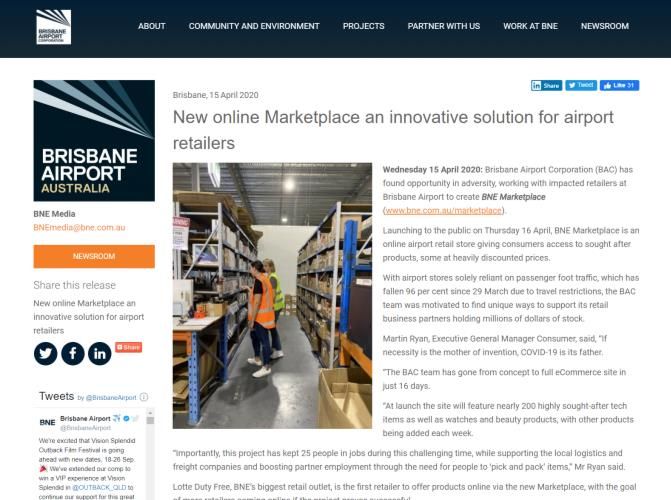
6

These trends had already begun to take shape and remain a priority for shoppers.

                                   Double-check store          Check ”live” demand to             Check stock availability to
                                     opening hours            avoid queues and crowds               avoid a wasted trip

                                 Do more research online      Check for ‘click & collect’ and   Make an appointment for a time
                                  first – reviews & ratings     other ‘no touch’ options          that suits me (if possible).
7

 Fast movers have set the bar high, whilst others have fallen behind.

 With its 56 physical stores in Canada closed in the          With plans to host a physical product launch event         Primark Europe operates without an online store,
lead-up to the all-important Easter shopping period,        scuppered, Asics pivoted to release its latest distancing   meaning when COVID-19 forced the closure of all its
 Lindt made the rapid decision to sell online for the          running shoe with a virtual-reality event instead.       stores, consumers had no way to make purchases.
     first time using the Shopify Plus platform.
                                                            The 2020 Met Gala had a different approach. Although           Since reopening in June, Primark has seen that
They were able to establish the store, in just five days,     the event was cancelled due to the pandemic, they          shoppers are now buying in a notably different way
 offering 40 of their highest selling products available     reconnected audiences through the #MetAboutTime              from before COVID-19, with sales down in its city
          online or through kerbside pickup.                exhibition, with costumes on show from October 28 –         centre shops but higher in retail parks. Overall, sales
                                                                               February 7 2021.                         across Europe are expected to be 17% down for the
                                                                                                                                    period since they reopened.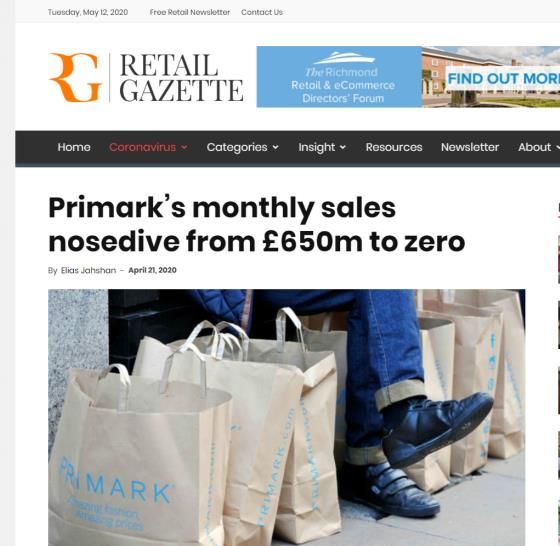
8

 That are showing how consumers are adapting to a “new normal” for retail.

Research also indicates that consumers have changed
                                                                                                                       Store closures and social distancing has prompted
   how they shop in response to health and safety
                                                             Shopify’s data also reports that shops are seeing an      consumers to adapt to the new normal and create
 concerns. This includes consumers prioritising new
                                                            increase in local customers when comparing Q1 2020         new behavioural changes such as increased online
 values around hygiene transparency, environmental
                                                            to Q2 2020. Further research also states that 82% say         orders, swapping brands, shopping local, and
     sustainability, and support for social ethical
                                                             they would rather support a local business, even if it                     changing stores.
                      movements.
                                                                              meant paying more.

                                                             The use of online direct-to-consumer (D2C) channels      Central banks and other economic bodies around the
   GWI has also said that compared to before the            to purchase consumer-packaged goods has grown by            world are predicting that the downturns caused by
outbreak, free delivery and reliable delivery (51%) is of       50% since the pandemic began, surpassing the           COVID-19 — including increased unemployment and
         most value when shopping online.                      growth of online marketplace use in key product        lower consumer confidence — may translate to lower
                                                                      categories like food and clothing.                      overall retail spending for some time.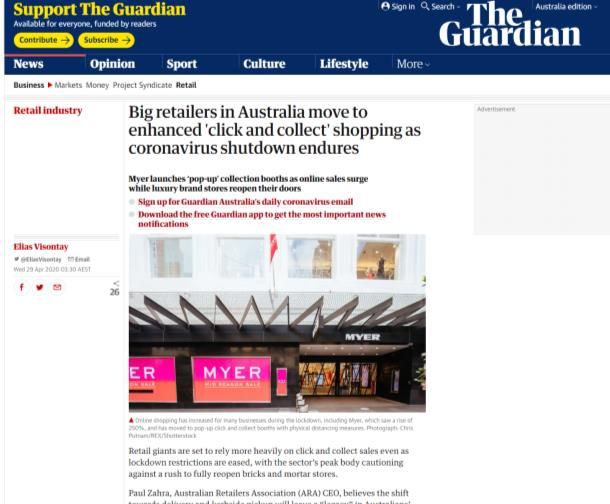
9

 The major shifts in how retailers are responding to new behaviours in a post-coronavirus world.

 Rebalancing Digital / Traditional Investments           Accelerating Digital Transformation Projects               Blended Retail & Omnichannel Given Priority
 Across marketing, infrastructure, store development     Many brands and retailers were already planning or           The line between online retail and offline retail has
 and more, brands are reweighting their investment      underway with digital transformation initiatives tied to         been blurry for some time, but COVID-19 has
    mix between digital and traditional platforms.       Customer Experience (CX), all designed to improve         removed the distinction almost entirely as demand for
                                                         specific customer journey touchpoints through the           ‘click and collect’, kerbside pickup, stock availability,
     All countries around the world are showing an
                                                                       use of digital technology.                   latest opening hours, and more has become the new
  increase in customers researching, shopping, and
                                                                                                                                              norm.
   transacting online both now and forecasting into     COVID-19 resulted in many of these being accelerated
                       the future.                       (as examples previously outlined in this deck have         More and more consumers will increase the amount
                                                           shown) as brands have realised that consumer             of time they spend shopping online, even if the final
With expectations for the coming year rewritten, many
                                                           behaviour has shifted faster than their original        part of the transaction still occurs offline. Brands need
brands are refocusing their budgets to put additional
                                                               transformation timelines had forecast.                 to ensure consumers can seamlessly transition
emphasis on digital platforms, customer service, and
                                                                                                                                     between channels.
                     advertising.
Post COVID-19 trends for Australian Retail moving forward
11

                                                                                                              Like the rest of the world, time spent online and
                                             According to GWI, Australians trail the global averages      eCommerce growth has matched or exceeded global
                                              on optimism for questions such as “my country/the           averages. However, 72% of Australians prefer to shop
                                             world will overcome the crisis”, “I expect a personal hit     in-store. For example, Roy Morgan research shows
                                              to my finances” and “my country’s economy will be           Brisbane CBD Q4 2020 visitation sits at around 66% of
In broad terms, Australian consumers are         affected.” This is surprising given the low case         pre-pandemic levels and is steadily rising. We see this
following most global trends, with some       numbers in Australia but this sentiment may have a         omnichannel trend continuing as more CBD businesses
notable exceptions.                                long-term effect on consumer confidence.                              come back to their offices.
By contrast to the rest of the world,
Australian consumers are less optimistic
about the future, despite their preference
to return to retail shops.

                                               With many Australian brands facing supply chain             Again in line with global trends, online retail and
                                             issues, and many major retailers having less mature         eCommerce has been operating throughout the crisis
                                                eCommerce offerings, Australians are showing a             at levels typically reserved for Black Friday/Cyber
                                             much greater propensity to try new brands than their          Monday weekends. Research from Australia Post
                                             global peers. According to Kantar, 41% of Australians       suggests that this won’t drop back to pre-coronavirus
                                               have switched brands during the crisis, and many                 levels even once the health crisis abates.
                                                                won’t go back.
12
Australia Post has confirmed they are continuously Across all measures of new pandemic behaviours
processing similar volumes of parcel deliveries as being tracked by GWI (working from home, virtual
during peak times over Black Friday/Cyber Monday calls, using delivery services, shopping online etc.),
and Christmas on a daily basis. This puts the number Australians are less likely to say that these behaviours
of daily deliveries at around 2 million per day. will stick around post COVID-19.
GWI reports that 36% of Australians think they won’t
exhibit any of these behaviour changes after the
outbreak, compared to the global average of just 16%.
This still suggests a majority of Australians are
expecting to change their behaviours, but it is
Like the rest of the world, Australians are noticeably lower than world averages.
embracing eCommerce as a substitute for
in-store retail. However, they’re not as
convinced about this leading them to
permanently change their shopping
behaviour as their global peers.
This has put extra pressure on brands to keep
consumers updated on expected delivery times, in
particular when delivering interstate (requiring air
freight services which are severely hampered by
limited commercial flights). It’s possible that Australia’s relatively low COVID-19
case numbers have meant Australians haven’t had to
Shopify also confirmed that Australian sales on its consider permanent behaviour change a requirement
stores are up around 109% year on year. In of life in the future as those in other parts of
combination with the Australia Post info, this suggests the world.
Australia is at the higher end of the online retail
growth figures globally.13
Findings suggest a mix of caution with a dose of realism and the need for action.
According to CBRE, Australian consumers have spent From the likes of King Living launching a virtual Homegrown brands that promote themselves as
more on household goods and food, growing by showroom to Bunnings opening up ‘Drive & Collect’ uniquely Australian are more likely to win the hearts
27.6% year-on-year. Whereas cafes, restaurants and services, many Australian retailers have embraced of local consumers with 49% of Australians preferring
takeaways spending has fallen 21.2%. Melbourne customer behaviour change and put in place systems to shop locally.
reported the lowest growth rate of only 2.2% that will serve them into the future.
compared to 8.8% nationally.
Given the substantial rise in online shopping, CBRE
By contrast to the 80% global average, around 69% of Analysis by KPMG suggests that Australia could be reports that economic uncertainty has caused a
Australians report having put off or delayed a big heading for one of the highest eCommerce growth decline in leasing activity in the retail sector, with
purchase for now, again according to GWI’s research. rates in the world, driven by its low adoption pre- occupiers opting for more wait-and-see options and
COVID in many categories, with much higher avoiding long-term commitments.
penetration in markets like the UK.14
Like the global story, some brands moved quickly whilst others have missed opportunities.
Unlike in other parts of the world where major brands Following a 96% drop in footfall, Brisbane Airport Discount department stores such as Kmart and Big W
and retailers have embraced eCommerce and Corporation successfully launched its own online have gained market share during the downturn.
omnichannel shopping experiences for some time, marketplace for affected retail tenants in just 16 days. However, digital infrastructure in some cases wasn’t
comments from the Australian Retailers Association ready to handle this, leading to customer frustration
Other major retail landlords, such as Westfield have
suggest that many brands have finally understood the and lost sales as a result.
launched their own online marketplace called Westfield
opportunity it presents.
Direct with “click and collect” options available for retail These issues seemed to plague major retailers more
Myer experienced a 250% increase in online sales tenants. than smaller operators, who often had more scalable
when it closed its physical stores, leading to the SAAS solutions in place.
launch of 22 “click and collect” booths country-wide.15
The report also shows that when looking at all of Australia,
Research from Australia Post shows that as year-on-year growth stabilised between 50%–97% across
Melbourne went into Stage 3 of lockdowns, there was different industries following the first pandemic
a significant jump in shares of online purchases from announcement and when lockdown restrictions were
27% to as high as 38% in Victoria. enforced. As restrictions started to ease in Q3 2020, some
industries have maintained stronger growth increases
Australia Post’s Q3 2020 report outlines than others.
how the second wave of lockdown
restrictions have affected state online
shares and the buying behaviours of
Victorians.
We predict to see similar trends should
other regions of Australia go into further
lockdowns in the future.
Australia Post also identifies a key difference for New industries have also taken priority in Victoria
Victoria, showing a second growth spike when Stage 3 when comparing the second-wave spikes. While
lockdown was introduced in July. This indicates that industries such as Variety Stores, and Food & Liquor
during the first spike, consumers adopted new have maintained top positions, Home & Garden, and
behaviours and the additional lockdown compounded Health & Beauty have also seen a bigger growth
that behaviour. increase compared to the first wave.16
Victoria has seen the seen some the
hardest and most prolonged lockdowns in
the world and therefore we are likely to
see substantial unmet demand as these
restricts ease.
Australia Post’s report shows that over 1 million new We are starting to see that previous purchase behaviour is
households became online shoppers between March and starting to return as these restrictions ease in some of the
September, as a result of the first wave of restrictions. As states and territories.
these now start to ease, we can see that the number of
increased households is starting to now decrease; only Reports of footfall from various sources show that some
seeing a 1.6% increase in September compared to 2019. cities are back to almost 80% of footfall traffic compared to
where they were pre-COVID. With many of these states
In anticipation of any harsher lockdowns around the having recorded no new cases of community transmission
country, it’s likely that as a nation we are starting to for several months when this paper was produced, this
approach a critical mass. Those households who were set to indicates that footfall traffic may sit at a lower average now
become online shoppers in the next 3–5 years have been as consumers permanently change their purchasing
propelled into making the transition now. behaviour away from shopping in-store.What all Australian businesses need to know to create a successful business plan for 2021.
18

 What retailers are doing to embrace changed customer behaviours.

  Distinct from the rest of the world, we predict three     It’s no secret that historically, Australian retailers have   Australian retailers have predominantly used ‘single
types of customer groups emerging in Australia; those        trailed their European, North American and Chinese            point’ local warehousing and global supply chains
    who are itching to get back to shopping, those                 peers when it comes to investment in digital           concentrated in China and South-East Asia for much
 accustomed to the “new normal” of online shopping,               infrastructure to support customer journeys.                           of the past few decades.
 and a new blend of the two, combining both in-store
                                                             Many have therefore been caught out as customers                 The lack of domestic and international air traffic
           and online research and purchase.
                                                               have expected to be able to keep shopping with              caused by closed borders and decreased passenger
 In many respects, this makes it harder for Australian      brands they trust. But, as evidenced by the high levels           demand meant that many retailers faced stock
retailers than their international peers, where online is    of brand switching when physical stores have closed          shortages, and when they did have products available,
               a more dominant majority.                       and online options not being up to standard, this           found getting them to customers in far-flung parts of
                                                              hasn’t been the case. As a result, many brands are          the country incredibly difficult. This is leading many to
   Retailers who don’t respond well to all groups will
                                                            now prioritising the need for a well-considered digital         re-think their approach to logistics moving forward.
likely find market share shifts to competitors who do.
                                                                                infrastructure.
19
Australian retailers will need to accommodate for three types of consumers
• Have adapted to the new way of shopping online. • Expect no change to their past shopping • Have welcomed new online shopping experiences
behaviours once the crisis ends. but still value in-store visits.
• Value free shipping and quick delivery.
• Expect to return to the shops “very quickly” or • Will do a combination of researching and
• Will research and explore new brands more than
“quite quickly” once restrictions continue to ease. purchasing both online and in-store.
before.
• Expect store stock levels and in-store experiences • Will prioritise best deals and store stock levels,
• Expect to use digital services like telecommuting,
to stay unchanged. helping them decide whether to purchase online or
mobile payments and home food delivery.
in-store.
• Expect more seamless online user experiences.20
Strategic, digital and in-store requirements for all retailers as part of their 2021 strategy & beyond.
With increased research occurring prior to visiting a The desire to avoid busy shops as well as
With more people shopping online, user store, brands need to create content and tools to help newly-formed customer habits has lead to this being
experience for eCommerce stores has become answer those queries. the norm and is a must for all retailers.
critical.
With so many new customers introduced to brands, Brands must allow for the adapting conditions and
the need to build a well thought out retention strategy ensure customers and staff feel safe with changed
— building customer loyalty should be prioritised. store layouts, queuing, and payment methods.
Think about in-store POS, logistics,
warehousing and how the business will
continue to scale beyond 2020.
Implementing a booking system will ensure the
From seasonal releases to educational experiences, business can handle store limits and busy periods,
the opportunity to move services online and reward and to avoid frustrating queues for customers.
digital engagement is in demand more than ever.
First-party data will take on even more
importance as brands attempt to improve their
direct connection to customers. By offering 360 degree walkthroughs, live product Customers can still be connected in-store through
reviews or 1-on-1 consultations, brands are the newly created touch and feel experiences without
in-store experience through a digital forum. long lease times.21
COVID-19 has brought unprecedented
disruption to retailers around the globe,
how they respond moving forward into Over the past five years, many retailers and brands have spent hours debating whether digital technologies and
2021 is key. changing consumer behaviours would disrupt their industry, market or business.
Almost overnight, the question of “if” has vanished, and been replaced by “how much?”
The disruption brought about by COVID-19 has not necessarily created new trends, but accelerated those already
underway at a pace not seen before. Our best estimates — based on currently available data — suggests somewhere
in the vicinity of a five-year acceleration in existing trends across a range of shopping behaviours.
The implications for retailers and brands are clear. Those who have traditionally under-invested in digital have
performed poorly against their peers during this crisis, and may find the recovery much harder as “new normal”
consumers result in the biggest single shift in consumer behaviour ever seen in retail.
But there is also an opportunity for those who respond. Market share moves much more quickly during economic
downturns, and those brands who embrace the changes across an omnichannel retail spectrum stand to make the
most of this new retail world.W: reloadmedia.com.au P: 1300 714 146 A: Level 5, 11 Finchley St, Milton QLD
You can also read


