Winter 2020 - "WE WILL PROVE OURSELVES MEN" Art at the center of Regimental Flag 127th United States Colored Troops, 1864 - Atlanta History Center
←
→
Page content transcription
If your browser does not render page correctly, please read the page content below
Winter 2020

HISTORYY MATTERS

                         “WE WILL PROVE OURSELVES MEN”
                          Art at the center of Regimental Flag
  WINTER 2018
       HISTORY MATTERS    127th United States Colored Troops, 1864   1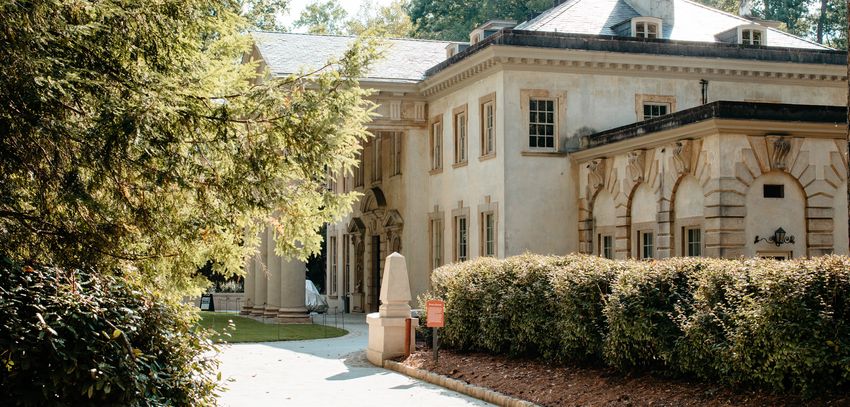
TABLE OF CONTENTS
03–07 19
As we move into a new decade, we wanted to briefly reflect on 2019. It
would not be an understatement to call it a historic year for our institution.
Throughout 2019, we continued
On Background Donor Spotlight our efforts to ensure that through
Message from the Chair
& CEO
Tamara and Ken Bazzle
all of our programs, exhibitions,
community engagement work,
20
Confronting Difficult History
Atlanta History Center
Guiding Principles research, collection development,
A Third Place for Atlanta and educational school tours and
Programs outreach, we strive to connect
08 people and stimulate thinking and
An Interview with Author
Eric Foner
dialogue about history and culture.
Midtown
Party on Peachtree
22–27 That truly means forging personal connections, as well as making
connections between our shared history and culture. In all of this, we seek
to use our reflections on the past to create a better Atlanta.
9-13
Over nine months after the grand opening of Cyclorama:
Support The Big Picture, we are pleased to report that the new experience has spurred
admission growth of 70% over the same time period last year. In addition,
28–29
the interpretation of the painting as an artifact of historical memory has
resonated with our visitors. Tens of thousands of people have experienced
Goizueta Gardens & the restored painting and accompanying film and exhibition, and we are so
grateful for the enormous show of support from our community.
Campus Updates However, we are still routinely asked: “When is the cyclorama going to be
Swan House’s New Drive
Operations & Management open?” Please tell everyone that it is here, ready, and waiting for exploration,
at least until our license from the City of Atlanta expires in 2090, so don’t
30–31
Creating a Green Campus
miss out. With tours offered seven days a week, you have lots of opportunities
From Construction Site to New to visit, bring your friends, and share your thoughts with us.
Garden: Why Soil Matters
Many more exciting things are ahead for Atlanta History Center. As we
MESSAGE
move into the 2020s, we look towards our institution’s 100th birthday in
14–18
2026. While approaching this milestone, we continue to think strategically
Volunteers, about what we want to be the next 100 years. As an important part of this
Board of Trustees, planning process, we developed Guiding Principles governing how we
explore history and interact with audiences who walk onto our campuses
& Staff
FROM THE
or encounter us out in the community every day. Through our Guiding
Exhibition Outlook Principles, we seek to approach all subjects, particularly difficult ones, with
A Tour of Any Great Change empathy and humility. These principles are at the core of all our exhibitions
Black Citizenship in the and programs, such as the interpretation in Cyclorama: The Big Picture, and
CHAIR & CEO
Age of Jim Crow we pursue this approach elsewhere, such as our Confederate Monument
Interpretation Guide.
Olympic Games Exhibition
Over 93 years of history-making does not happen without strong
community support. We offer our most sincere gratitude to our members,
donors, visitors, and friends for your commitment to our institution
Cover Artifact and mission.
Jocelyn Hunter
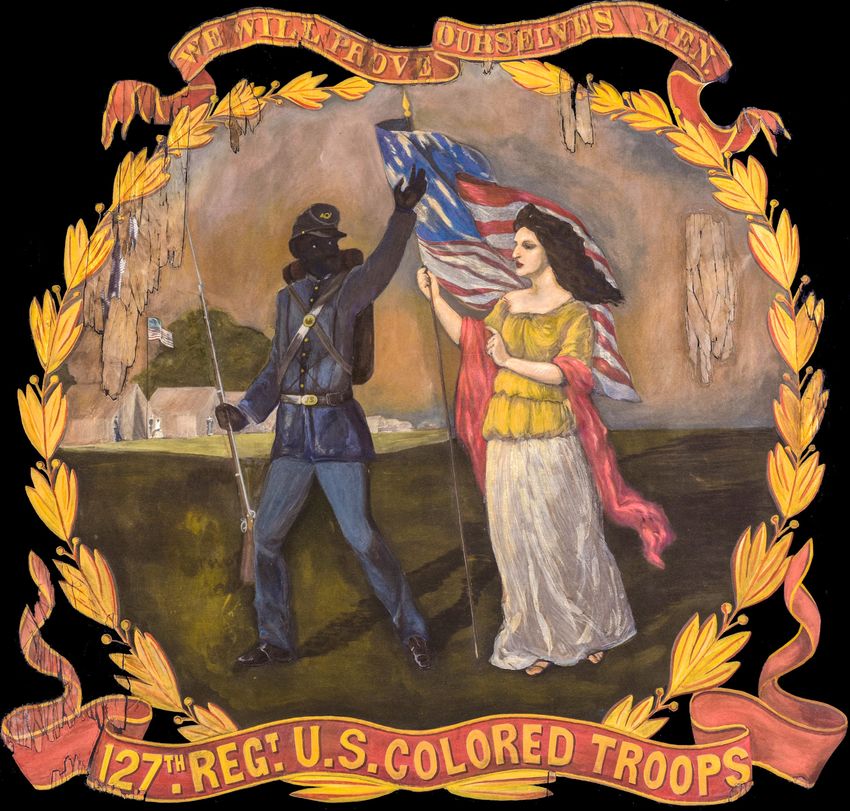
This flag was the banner of the 127th United Beneath the motto “We Will Prove Ourselves will be on display in the Atlanta showing
States Colored Troops (USCT). The USCT Men,” a USCT soldier is depicted marching of the traveling exhibition Black Citizenship Chair, Board of Trustees
was a special branch of the U.S. Army formed off to war while waving to Columbia, who in the Age of Jim Crow, which opens
after the Emancipation Proclamation of 1863. symbolizes the United States and liberty. January 18, 2020.
Nearly 180,000 African American men served The 127th USCT flew this flag in combat in The United Stated Colored Troops 127th Sheffield Hale
in the USCT. Three-fourths of those soldiers Virginia and also at the surrender of Robert E. Regimental Flag is a collection acquisition with President & CEO
had been enslaved at one time. Lee at Appomattox Courthouse. funds from the Sheffield-Harrold Charitable
The USCT soldiers vowed to prove their The flag, painted by African American artist Trust.
worth by fighting for their lives and freedom. and philanthropist David Bustill Bowser,
ATLANTA HISTORY CENTER HISTORY MATTERS 3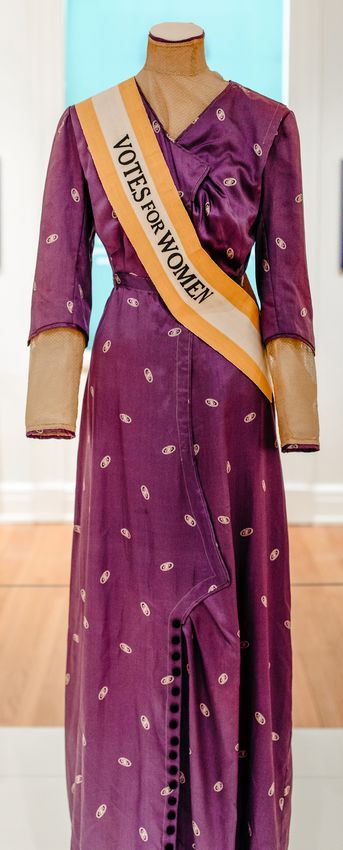
ON BACKGROUND                                                                                                                                                     ON BACKGROUND

CONFRONTING
DIFFICULT HISTORY
BY F. SHEFFIELD HALE

   At Atlanta History Center, we use our              recommendations of quality scholarship, and       Legalized segregation was implemented
historical collections, knowledgeable staff           latest updates from around the country. As the    in a series of court battles, including the
with a rich and nuanced understanding                 debate intensified, especially after the deadly   Supreme Court ruling in Plessy vs. Ferguson
of history, and passion for our mission to            rally in Charlottesville, Virginia in 2017, I     in 1896 that legalized “separate but equal”
connect people, history, and culture to               was appointed by Atlanta’s Mayor and City         accommodations based on race. During this
work towards our goal of building a shared            Council as the co-chair of Atlanta’s advisory     time, monuments of triumphant Confederate
understanding of our collective history.              committee on Confederate monuments and            generals astride horses and soldiers elevated
Confronting difficult moments in the past             street names. As an institution, we continued     on pedestals were erected in places of
that continue to influence our world today            to hone our online toolkit, have conversations    power and centers of community such as
is never easy, but it is a vital part of developing   with communities around the country, and          courthouses, state capitols, and town squares
an accurate, meaningful, and useful historical        research case studies on this issue.              in hundreds of cities and towns across the
understanding.                                           The tools on our website help explain          United States.
   In 2015, when a mass murderer motivated            the development of Civil War historical              D e c a d e s l a t e r, a n o t h e r s p i k e i n
by white supremacist ideals killed nine               memory and how that process affects our           Confederate monument-building occurred                       In broad discussions about race and civil rights in        monuments might provide one such topic for this exploration—using the online
African American church congregants in                present moment. After the conclusion of           during the Massive Resistance era following               America, we tend to talk about the Civil War and then         toolkit and scholarship, we at Atlanta History Center encourage thoughtful,
Charleston, South Carolina, communities               the war, faced with defeat and massive loss       the Supreme Court’s 1954 Brown vs. Board                  jump 100 years to the Civil Rights movement. The              inclusive, and historically grounded community discussions.
across the country were horrified. Photos of          of life, many white Southerners sought to         of Education decision outlawing school
the killer posing with Confederate symbols            redefine the meaning of the war through a         segregation. The largest Confederate
                                                                                                                                                                  Jim Crow and Massive Resistance eras have had long
                                                                                                                                                                  lasting impacts on our country today and were central          Through such community discussions
emerged, launching an intense debate over
Civil War history and its continuing influence
                                                      strain of historical memory referred to as the
                                                      Lost Cause. The historical evidence is clear:
                                                                                                        monument ever is an example of a Massive
                                                                                                        Resistance monument. Two months after
                                                                                                                                                                  to the creation of Confederate monuments. Without
                                                                                                                                                                  a full understanding of this time period, we cannot
                                                                                                                                                                                                                                and action, we can create trust,
on our lives. Confederate monuments
and symbols are directly related to what
                                                      slavery was the primary cause of secession
                                                      and the Civil War. The Lost Cause instead
                                                                                                        the landmark ruling, Georgia gubernatorial
                                                                                                        candidate Marvin Griffin made a campaign
                                                                                                                                                                  understand how and why Confederate monuments                  understanding, and the ability to work
historians call “historical memory”— the way          posits that the Confederate states seceded        promise to purchase Stone Mountain and
                                                                                                                                                                  are problematic. If left unchallenged and not put into
                                                                                                                                                                  context, monuments can continue to promote inaccurate         across differences.
we choose to remember the past. Historians            because of their commitment to states’ rights     restart the Confederate memorial carving.                 historical narratives, especially that of the Lost Cause.
at Atlanta History Center thought critically          only—omitting slavery from the narrative.         In 1916, the Stone Mountain Confederate                   We take the position that providing evidence-based
about the role of public history in this debate,      This highly influential but largely inaccurate    Memorial Association, a group with many                   history to contextualize these monuments must be done,
recognizing its complexity.                           historical memory spread throughout the           ties to the Ku Klux Klan, commissioned a                  but we leave it up to local communities to determine
   After extensive internal discussion, we            South and the rest of the country. At the         carving of Confederate leaders on the side                the best solution through an intentional, community-          IMAGES Atlanta History Center advised the City of Atlanta in the creation of
decided that Atlanta History Center has a             same time, Jim Crow segregation laws were         of the mountain. That effort was abandoned                driven process. In some cases, that solution might be         exhibition panels placed near the Peace Monument in Piedmont Park (left) and the
responsibility to engage in this debate about         implemented nationwide.                           in the late 1920s. Following Griffin’s election,          large exhibition panels, like we did in Atlanta. In others,   monument on Peachtree Battle Avenue (right). The fabrication and installation of
the meaning and presentation of history. We              Confederate monuments are tangible             in 1956 the state flag was altered to include             the solution might look like moving the monument to           these panels was made possible by a donor contribution to Atlanta History Center.
created an online Confederate Monument                representations of this process. Many             the Confederate battle flag. In 1958, Stone               a more appropriate location or removing it altogether.        These panels were the result of a 2017 City Advisory Committee, which made
Interpretation Guide to inform evidence-              monuments to mourn the dead were erected          Mountain was purchased by the state of                       History belongs to everyone. Through constructive          recommendations on these and other street names and monuments. Since Georgia
based discussions about monuments in                  immediately following the Civil War. The          Georgia. The carving was restarted in 1964                                                                              state law prohibits monument removal, these monuments were contextualized with
                                                                                                                                                                  dialogue and civil, fact-based engagement together we
local communities and how to approach                 obelisk in Oakland Cemetery is one example.       and completed in 1972.                                                                                                  exhibition panels. Atlanta became the first city in a state that prohibits removal to
                                                                                                                                                                  can all explore historical truth, but this exploration must
this issue. Through this online toolkit, we           Yet most Confederate monuments were                                                                                                                                       contextualize Confederate monuments. Since the placement of the panels in August
                                                                                                                                                                  include both pleasant and unpleasant history in order to      2019, Decatur, Georgia and Franklin, Tennessee have placed contextualization
offered a contextualization marker template,          actually erected during the Jim Crow era.                                                                     5
                                                                                                                                                                  understand   what made our country today. Confederate         markers near their Confederate monuments.

ATLANTA HISTORY CENTER                                                                                                                                            HISTORY MATTERS                                                                                      5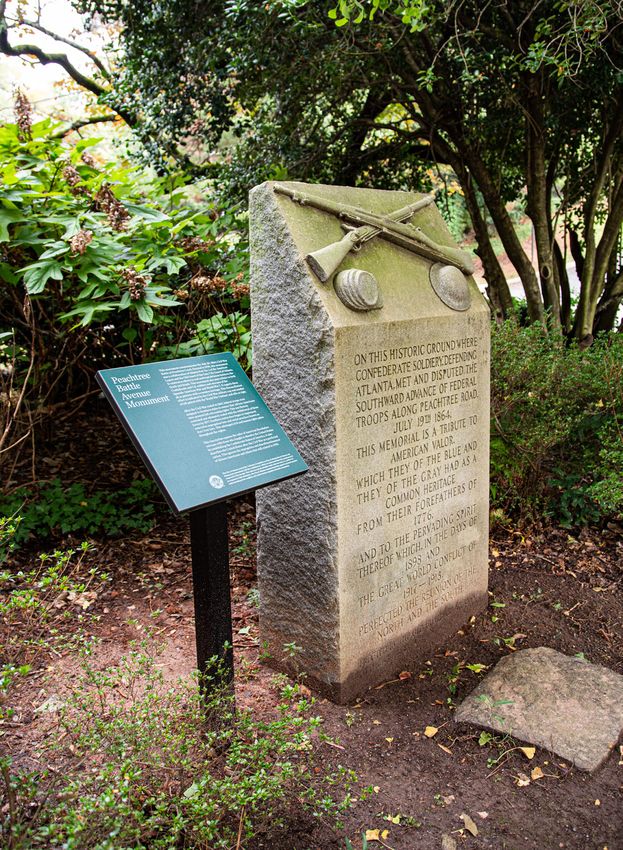
ON BACKGROUND ON BACKGROUND
ATLANTA HISTORY CENTER
LEFT Patrons of
BRASH coffee share
coffee and conversation
in the café space at
Atlanta History Center.
GUIDING PRINCIPLES
Atlanta History Center strives to be a gathering place for conservatives
and progressives, Democrats and Republicans, Libertarians, Tories,
Whigs, Greens, and all other self-identified variants willing to engage
in civil discussion to explore and better understand our shared history.
Through our mission to connect people, history, and culture, we strive
to create a better Atlanta community for all. As we begin the process
of building on our current Strategic Plan and creating a new one to
A THIRD PLACE
carry us through our institution’s 100th birthday in 2026, we developed First Place: Home
Guiding Principles to inform the process of writing our new Strategic Second Place: Work
Plan, Interpretive Plan, and developing our programs and exhibitions.
Third Place: A gathering
FOR ATLANTA
We welcome feedback on these principles, which can be directed to place for sharing
Sheffield Hale, President & CEO, at shale@atlantahistorycenter.com. conversations and ideas,
and for building community
Atlanta History Center experiences. These qualities make history a touchstone for stimulating
hard conversations, and make cultural institutions, places that still
Guiding Principles retain a high degree of public trust, an ideal place for doing it. We are
living in a time of anger and flux; rather than shy away, Atlanta History
In 1926, a group of 14 Atlantans dedicated preserving the history Kenan Research Center, and the archives gallery exhibition space.
of their city founded the Atlanta Historical Society, now known as Kenan Research Center contains a comprehensive collection of
Center wants to seize the opportunity for change.
A strong tendency to avoid opposing views while displaying Atlanta History Center. books, manuscripts, photographs, Cherokee Garden Library, and
Today, when visitors enter interpretive spaces at the Atlanta History Today, in a world defined by change, Atlanta History Center more about Atlanta and Southeastern history. The recording studio in
righteousness about individual perspectives characterizes a growing
Center, we encourage them to bring with them their own experiences, provides evidence-based history along with new ways for people to McElreath Hall functions as the home base of StoryCorps Atlanta as
part of today’s culture. Atlanta History Center, as a cultural institution,
identities, and thoughts about the past. We invite them to join us in connect with history, and with each other. Through this work, we well as all of Atlanta History Center’s oral history projects, including
is trying to create a space for visitors to engage with ideas and people
engaging with hard topics and perhaps walking away with a more hope to create a better community for all Atlantans. the Veterans History Project. Capturing stories in the person’s own
who think differently from themselves and to provide an opportunity
empathetic and broader understanding of our collective past. When you visit Atlanta History Center today, you will find offerings words is essential in documenting our past.
to confront their own blind spots.
Atlanta History Center believes in clear, thoughtful communication available to you without the purchase of a ticket, with the express Atlanta History Center Midtown, the campus at the corner of
Today, it often feels like we, as a society, are more polarized than
that will stimulate curiosity while being straightforward on the purpose of creating a third place. The café space houses the Buckhead Peachtree and 10th street that includes the Margaret Mitchell House,
ever before. While there have always been strongly held opposing locations of both Souper Jenny café and BRASH Coffee. Free WiFi also serves as a third place. Conveniently located near MARTA,
facts. We will not be neutral regarding well-documented historical
viewpoints and vocal disagreements, more people today have access and spacious seating accompanies both of these offerings, creating the campus includes both an event space and lawn that is a site for
conclusions that might be considered controversial in the public
to public platforms to express these opinions. This new reality means a much-needed space in Buckhead for meetings, a quick lunch, or a activations that bring together the Atlanta community, such as during
sphere. Through our presentation of difficult history, we do not seek
we have access to so much overwhelming information that it can be comfortable spot to knock out a work or school assignment. Guests the Pride Parade and the Peachtree Road Race.
to shame, label, or discourage visitors; rather, we seek to engage with
easier to retreat into the comforting echo chamber of those who agree can also find a carefully curated selection of thoughtful Atlanta- All of these activities and free features on our campuses show that
them through exhibitions, programming, and outreach that encourage centered gifts and books to inform their conversations or curiosities, we strive to expand the definition of what a museum can and should
with us while achieving immediate gratification by lashing out at those
discussions that are empathetic, historically-informed, and inclusive complete with recommendations from Atlanta History Center staff, do. Atlanta History Center is a community resource and connector
who do not.
of all members of the community. in the Museum Shop adjacent to the café. where people can meet and exchange ideas, all the while being
Atlanta History Center believes that history is an effective medium
for bridging these chasms; artfully told and grounded in evidence, it McElreath Hall at Atlanta History Center also contains surrounded by, and encouraged and connected by, our shared history.
several offerings free and available to the public, including
can bring us together. History is also messy. Whether realized or not, ADOPTED: JUNE 4, 2019, BY ATLANTA HISTORY CENTER
a Fulton County 4-H Extension Office, StoryCorps Atlanta,
it continuously influences our world by shaping our viewpoints and BOARD OF TRUSTEES
ATLANTA HISTORY CENTER HISTORY MATTERS 7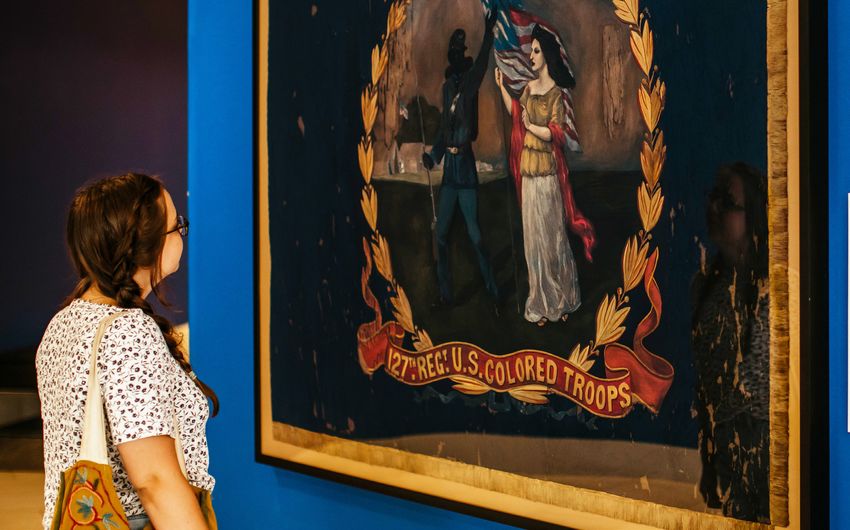
GOIZUETA GARDENS
MIDTOWN
& CAMPUS UPDATES
1
SWAN HOUSE’S
At the crest of a hill visible from Andrews Drive stands one of the
most iconic features of the Atlanta History Center: Swan House. Built
in 1928 and designed by famed Atlanta architect Philip Trammell
Shutze, the house forms the core of the large estate that became the
2 3 property of the Atlanta Historical Society. The house was built for
Mr. and Mrs. Edward and Emily Inman and featured gardens also
NEW DRIVE
designed by Shutze.
(1-2) Atlanta History Center staff join in cheering on Peachtree Road Race runners
In 1966, when the property was acquired by the Historical Society,
on July 4, 2019. (3) Visitors and runners enjoy lawn games and libations on the
the granite fines driveway in front of the house was replaced with
lawn of Atlanta History Center Midtown.
asphalt. While granite fines were aesthetically pleasing, guests would
track the material into the house on their shoes. Over time, this
material worked its way into the soft marble flooring and damaged it.
PARTY ON
Thus, asphalt was installed as a solution to spare the historic flooring That asphalt remained for the next half century as the Atlanta
To celebrate the 50th further harsh treatment. Historical Society grew and gradually became the Atlanta History
anniversary of Atlanta’s
Center. During that time, Swan House became the centerpiece of the
Swan House Ball, a crucial benefit event.
favorite Fourth of July At the 34th annual Swan House Ball in April 2019, Event Chair
Jenny Pruitt, a longtime supporter and former Trustee of Atlanta
celebration, Atlanta History History Center, made it her personal mission to surpass all previous
Center hosted a Peachtree fundraising goals set for the Ball. The Ball honored the Rollins
PEACHTREE
Family, themselves dedicated supporters of the institution in many
Road Race party at our ways, including the restoration of the Tullie Smith House and The
Battle of Atlanta cyclorama, and the Rollins Gallery housing the Texas
Midtown campus. Complete locomotive. The Ball indeed was record-breaking, including the fact
with custom swag, including that because of its success, the driveway would finally be replaced.
The material chosen for the new driveway is a special exposed
posters, stickers, and signs aggregate concrete that uses granite fines. The result is a driveway
closer to the style of the original without the damaging side effects
for cheering on the runners, of loose gravel. Now when visitors approach Swan House, they are
guests were invited to get greeted by an aesthetically appropriate driveway. It is a literal concrete
representation of the importance of maintaining and preserving
their faces painted, grab a FAR TOP The new Swan House driveway is made from a special the character of Atlanta’s historic homes, and the direct result of
philanthropy.
drink, and enjoy the race.
concrete mix containing granite fines. TOP Asphalt installed in the
1960s needed to be replaced.
ATLANTA HISTORY CENTER HISTORY MATTERS 9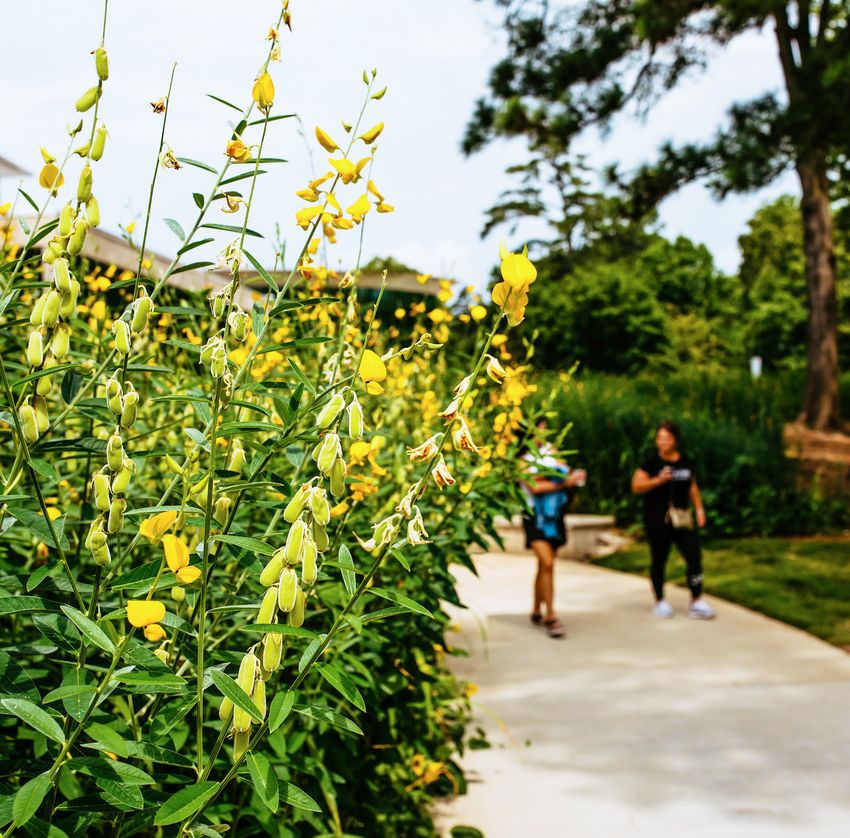
GOIZUETA GARDENS GOIZUETA GARDENS
& CAMPUS UPDATES & CAMPUS UPDATES
Reducing Waste Creating better buildings
Not only does the food and drink from Souper Jenny and Energy usage is a challenge due to strict climate control
BRASH Coffee taste delicious, but food waste also provides a needed to preserve artifacts in a museum and archives setting.
valuable source of nutrients for compost created and used at To maximize efficiency, Atlanta History Center joined the
Atlanta History Center. Food waste is combined with straw and Better Buildings Challenge and pledged to reduce energy usage.
hay from Smith Family Farm and is carefully managed through Through this program and our partnership with Southface’s
daily processes to create the most effective compost possible. Grants to Green/Gooduse programs, we have made great strides.
Using compost in the gardens builds healthy soil and grows For example, Swan House was recognized for excellence in energy
strong, resilient plants that require fewer chemicals, resulting in and water conservation, proving that preserving historic buildings
healthier ecosystems. and having green infrastructure are not mutually exclusive goals.
In addition to food waste being kept out of landfills, bottles, Thanks to lighting upgrades, more efficient air conditioning,
cans, plastic cups, and office supplies are all recycled. and other key improvements, energy usage in McElreath Hall
declined by 12 percent, Swan House declined 19 percent, and
the parking deck declined 45 percent. The parking deck was also
Water Management awarded for its efficiency. While Atlanta History Museum energy
Excessive runoff from storms and heavy rainfall can be damaging usage increased 10.9 percent, there is also a good story to tell in
to local environments. The solutions we implement include our largest building. During the same period, the square footage of
both green infrastructure and planting. Recent examples include the building increased by 25 percent due to the expansion of Allen
replacing asphalt parking at McElreath Hall with porous brick Atrium and the construction of the Lloyd and Mary Ann Whitaker
paving with an underground stormwater detention system, and Cyclorama Building.
replacing expanses of gravel or wood chips around our historic
houses with native meadows and wetland areas that capture
water. We also work to improve or maintain areas damaged
by runoff. During summer 2019, the stream bank behind McElreath
Hall was carefully restored. These varied approaches slow water
movement to reduce erosion both on our property and downstream,
and contribute to healthier streams and waterways that create a
better habitat for plants and animals throughout the entirety of the
water system.
Supporting wildlife
CREATING
Goizueta Gardens is an oasis in an urban area, providing refuge
for people and wildlife alike. The largest of the living collections
As stewards of historical artifacts is the Georgia Native Plant Collection, housed primarily in
Quarry Garden and Swan Woods, though native trees enhance
and landscapes, it’s vital that Atlanta much of the campus. We have accessioned and tagged 2,410
trees so far, with many acres left to inventory. There are also
History Center be environmentally tens of thousands of native perennial and annual plants thriving
conscious to preserve Living in meadows and woodland, visited by our own honeybees and
A GREEN
other pollinators.
Collections and our Atlanta The diverse range of habitats, species, water sources, and
ecologically minded stewardship creates a thriving ecosystem.
environs for the future. Birds are indicators of a healthy environment, and more than
60 species have been spotted on our campus, in addition to
Additionally, efficiency in power and salamanders, lizards, turtles, toads, and frogs. Atlanta History
Center is officially recognized as an Atlanta Audubon Certified
water usage enables the institution Wildlife Habitat.
CAMPUS
to spend less paying bills and more OPPOSITE PAGE FROM LEFT TO RIGHT Leftover produce and
preserving history. food waste from Souper Jenny and BRASH Coffee is transformed
into rich compost used throughout the 33-acre campus. TOP Bee
hives in the meadow adjacent to Wood Family Cabin contribute to
There are numerous ways that Atlanta History Center works to create the growth of pollinators around campus. BOTTOM A waterfall
an environmentally sustainable campus, but here are a few highlights of helps slow waterflow as the stream enters the Quarry Garden and
ongoing efforts. continues off Atlanta History Center’s property.
ATLANTA HISTORY CENTER HISTORY MATTERS 11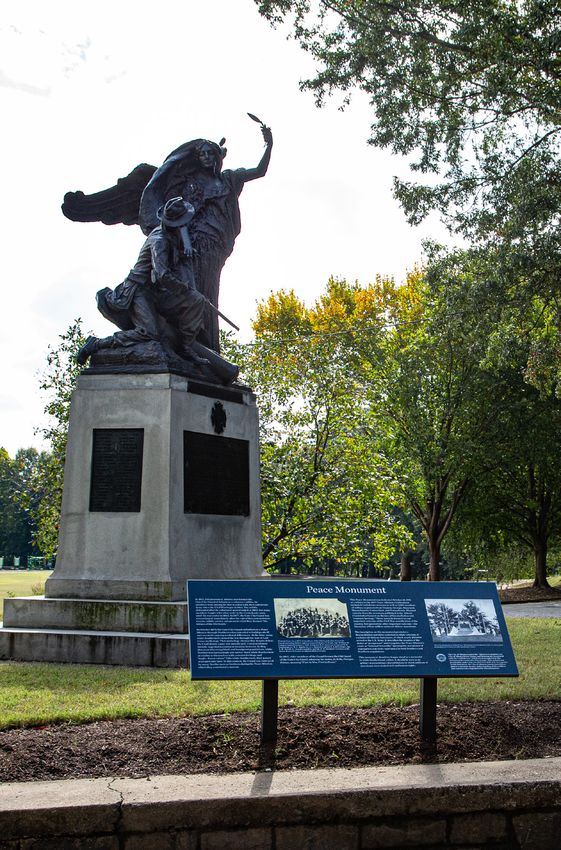
GOIZUETA GARDENS                                                                                                    GOIZUETA GARDENS
& CAMPUS UPDATES                                                                                                    & CAMPUS UPDATES

FROM CONSTRUCTION SITE
TO NEW GARDEN:
WHY SOIL MATTERS
Healthy soil is full         Since the announcement in July 2014 that Atlanta History Center would serve as
                           the new home for The Battle of Atlanta cyclorama, plans began for the construction of
of life. In one teaspoon   the Lloyd and Mary Ann Whitaker Cyclorama Building. This complex construction

of soil,there are more
                           project involved digging the equivalent of several stories into the ground, hauling
                           out 3,300 truckloads of subsoil, and many months of heavy machinery traversing the
than 1 billion bacteria    surrounding landscape. Protection measures safeguarded critical areas, but significant
                           soil compaction occurred where access was required for heavy machinery.
alone. There are also                                                                                                                                                 When soil gets compacted, all the small pockets of air and water between
fungi, nematodes,                                                                                                   Careful selection and                           soil particles are eliminated, and the soil becomes a hard, solid mass,

protozoa, and                                                                                                       management of the cover crops                   impenetrable by roots or water. Much of the microbial life in soil is also
                                                                                                                                                                    snuffed out, unable to survive in that environment.

earthworms, all                                                                                                     has allowed us to complete                        Goizueta Gardens staff continue to address the compacted soil with

                                                                                                                    thousands of years of soil
                                                                                                                                                                    a historic practice called cover cropping. A cover crop is a specific plant
of which perform                                                                                                                                                    that is grown for the benefit of the soil rather than the crop yield. Eighteen

an incredible range                                                                                                 evolution in a 2-year period.                   species were selected for use in the former construction site.
                                                                                                                                                                       Each species selected performs a different service to the soil and all

of activities that                                                                                                                                                  reduce erosion. Some plants send down long, thin roots several feet deep
                                                                                                                                                                    to hunt for nutrients and bring them to the surface, while others have a
make plant life, and                                                                                                                                                fat, carrot-like taproot that drill through the hard soil. Some create a huge
                                                                                                                                                                    amount of leafy biomass that can be tilled under to fluff the soil and add
therefore human life,                                                                                                                                               organic matter. As microorganisms break down the organic matter, nutrients

possible. Rejuvenating                                                                                                                                              are released into soil for uptake by plants. Roots of these short-lived species
                                                                                                                                                                    decompose and create channels for the movement of water, a head start
soil cannot be solved                                                                                                                                               for the next generation’s plant roots, and pathways for microorganisms.

with fertilizers; it                                                                                                                                                   From fall 2019 through spring 2020, this enriched soil will be planted
                                                                                                                                                                    following a modern design concept based on the New Perennial Movement—
requires a biological                                                                                                                                               a sweeping matrix of grasses and flowering perennials that seeks to redefine
                                                                                                                                                                    traditional aesthetics of a garden and reestablish a human connection
approach.                                                                                                                                                           to nature.
                                                                                                                                                                       A key piece of the new garden will be a gathering space for all—a common
                                                                                                                                                                    table to share conversations. What was once a dying oak on campus is in

This is soil science.                                                                                                                                               the process of being transformed into a sixty-foot-long artistic table in the
                                                                                                                                                                    shape of the tree’s original form.
                                                                                                                    LEFT AND TOP       Cover crops were planted        The new garden will serve as the first visitor experience of Atlanta
                                                                                                                    along the front of the Atlanta History Musuem   History Center—a testament to the importance of Goizueta Gardens Living
                                                                                                                    accompanied by signage explaining the process   Collections and gardens in learning our history.
                                                                                                                    to guests.

ATLANTA HISTORY CENTER                                                                                              HISTORY MATTERS                                                                13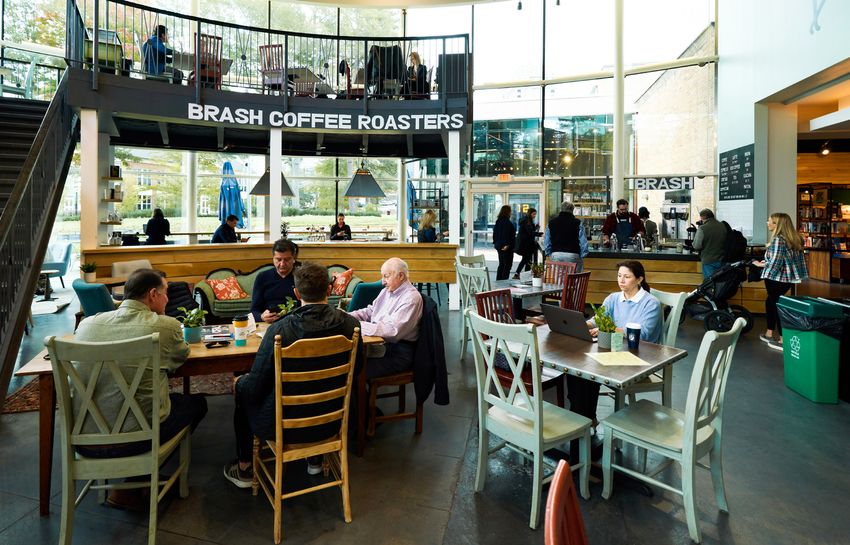
EXHIBITION OUTLOOK                                            EXHIBITION OUTLOOK

A TOUR OF
In the new exhibition
Any Great Change: The
Centennial of the 19th                                                                                                                                  2

Amendment, Atlanta                                             1                                                                2

History Center explores
the women’s suffrage
movement through the
people, stories, and
strategies of the movement.
   Featuring artifacts, historic images, and voting
activities, the exhibition asks visitors to consider the
women’s suffrage movement as one of the many voting
rights struggles in our nation’s history.
   Continuing through January 2021, the exhibition also
highlights the impact of women on the political system         3                                                                                                                    4
after the passage of the 19th Amendment, including how
they continued to work for equal access to the voting booth
during the Civil Rights Movement, election to office, and
community activism.

ANY                                                            5                                                                           6

GREAT
                                                              (1) Along with other Atlanta women, Emily C. MacDougald, mother of               for women. This Anti-Suffrage Answers flyer provided the opposition
                                                              Swan House owner Emily Inman, broke from a more traditional suffrage             with rebuttals to a list of reasons to support women’s suffrage.
                                                              group to form the Equal Suffrage Party of Georgia. As its first president,       (5) The Dunbar Speaker and Entertainer, Alice Moore Dunbar-
                                                              she urged Georgia suffragists to take a more active role throughout              Nelson, 1920, Kenan Research Center at Atlanta History Center
                                                              the state. After passage of the 19th Amendment, MacDougald                       Celebrated poet, journalist, and women’s rights activist Alice Dunbar
                                                              became the first president of the newly formed League of Women                   Nelson conducted much of her activism in Delaware. She was a field

CHANGE
                                                              Voters of Georgia. (2) Georgia Women’s Policy Institute members                  organizer for the Mid-Atlantic states during the suffrage movement.
                                                              were photographed while visiting Any Great Change. (3) Visitors can              (6) Political and cause buttons demonstrate the continued advocacy
                                                              examine the long struggle for access to the ballot box on the Voting             and activism of women, whether they chose to run for office or march
                                                              Rights Timeline. The timeline demonstrates the evolution of citizenship          in the streets.
                                                              and the importance of the vote as a responsibility of citizenship.
                                                              (4) Opposition to women’s suffrage was strong across the country—and
                                                              those opposed had different reasons why they did not support equality                                         ANY GREAT CHANGE IS GENEROUSLY
                                                                                                                                                                            FUNDED BY EMILY BOURNE GRIGSBY

ATLANTA HISTORY CENTER                                        HISTORY MATTERS                                                                                          15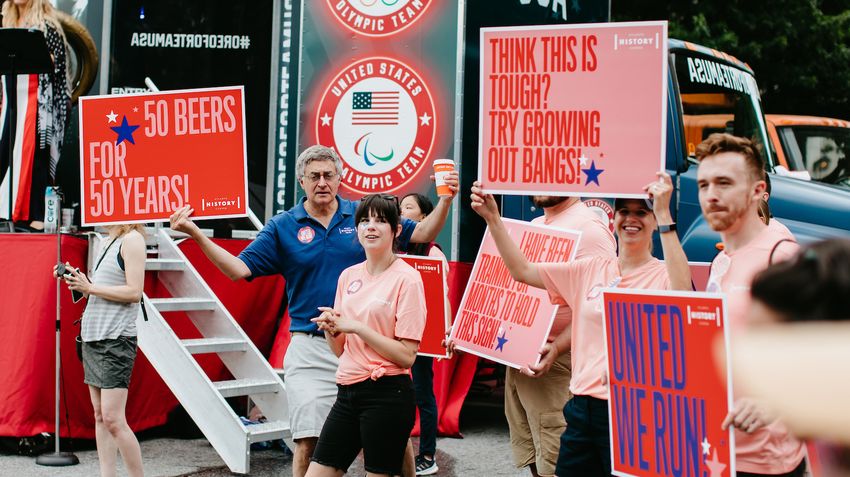
EXHIBITION OUTLOOK                                                                                                            EXHIBITION OUTLOOK

                BLACK CITIZENSHIP
January 18, 2020–

                    IN THE AGE OF
         June 30, 2020

                        JIM CROW
Many people
know about African
American efforts
to end Jim Crow
segregation in the
1950s and 1960s.            Black Citizenship in the Age of Jim Crow explores the origins and effects of
                         legalized segregation, as well as African Americans’ fight for full citizenship rights between
That struggle began      1865 and 1929.
                            Developed by the New-York Historical Society, the traveling exhibition includes artifacts                                                                Featured artifacts and archival materials include paintings and posters,
as soon as racially      and archival material that make these stories tangible from New-York Historical Society,                                                                    documents, photographs, and rare historical objects.

discriminatory           Gilder Lehrman Institute of American History, and National Museum of African American
                         History and Culture. The exhibition provides a rare opportunity for Atlantans and others to
                                                                                                                                                                                       Atlanta History Center is thrilled to showcase one of its newest acquisitions
                                                                                                                                                                                     as part of this experience: the Regimental Flag of the 127th United States

laws were enacted        see these powerful objects and images.
                            In Atlanta, the exhibition is enhanced with artifacts and archival materials demonstrating
                                                                                                                                                                                     Colored Troops (USCT), a rare artifact used by black troops in the Civil War.
                                                                                                                                                                                     Painted by African American artist and philanthropist David Bustill Bowser,
after emancipation.      the key role that black Southerners played in the fight for equality. As part of this exploration,                                                          the flag depicts an African American soldier bidding farewell to the figure
                                                                                                                                                                                     Columbia, a symbol of liberty, beneath a banner reading, “We Will Prove
                         the exhibition will highlight efforts of students and faculty in the Atlanta University complex
African Americans        (later Atlanta University Center) who wrote, picketed, held office, created art, rendered                                                                   Ourselves Men.” During the Civil War, many men who escaped enslavement
                         military service, taught, and otherwise labored for black citizenship. Spelman College and                                                                  or were freed by the advancing U.S. Army, as well as free blacks in the North,
and allies fought        Atlanta University Center Woodruff Library are working in partnership with Atlanta History                                                                  fought for regiments of the USCT. These segregated units were created
                                                                                                                                                                                     starting in 1863 and composed approximately 12% of the U.S. Army by the
for full American        Center in that effort. The exhibition will be accompanied by a range of programs, including
                         featured speakers, performance programs, and community dialogue events. These are                                                                           end of the war. Military service of African Americans continued to be an

citizenship from         developed with local partners and will take place at locations around the city.
                            Immediately after the end of the Civil War, African Americans began exercising their rights
                                                                                                                                                                                     important motivation for the advancement of equal rights, a topic explored
                                                                                                                                                                                     in the exhibition.

1865 onward using        guaranteed by the newly passed 13th, 14th, and 15th Amendments to the U.S. Constitution.                                                                      Black Citizenship in the Age of Jim Crow is open to the public January 18–
                                                                                                                                                                                     June 30, 2020.
                         African Americans enthusiastically cast ballots, ran for elected office, purchased property,
a variety of             pursued education, and, through marriage and massive missing persons searches, sought to
                                                                                                                                                                                       Lead support for the exhibition provided by National Endowment
                         solidify family bonds torn apart by enslavement.
strategies—in               With the end of federal Reconstruction in 1877, troops stationed in the South to
                                                                                                                                                                                     for the Humanities: Exploring the human endeavor. Major support provided
                                                                                                                                                                                     by the Ford Foundation and Crystal McCrary and Raymond J. McGuire. Local
the courts, in the       protect these rights were removed. Following their withdrawal, black citizenship was harshly
                         and violently contested. The pre-war racial order was reestablished through race-based
                                                                                                                                                                                     funding provided by The Rich Foundation, Victoria and Howard Palefsky, and
                                                                                                                                                                                     The Thalia and Michael C. Carlos Foundation.
streets, in the press,   violence, disenfranchisement, and Jim Crow segregation laws. As African Americans moved
                         throughout the nation, resistance to their full inclusion was implemented in the North and
through the arts,        West as well as the South. Despite this, activism to attain full citizenship rights continued.       TOP The Regimental Flag of the 127th USCT
                            Black Citizenship in the Age of Jim Crow explores the many facets of both activism and            BOTTOM Charles Gustrine, True Sons of Freedom, 1918.
and more.                segregation, including in education, military service, voting, and other political rights.           The Gildren Lehrman Institute of American History,
                                                                                                                              GLC09121

ATLANTA HISTORY CENTER                                                                                                        HISTORY MATTERS                                                                         17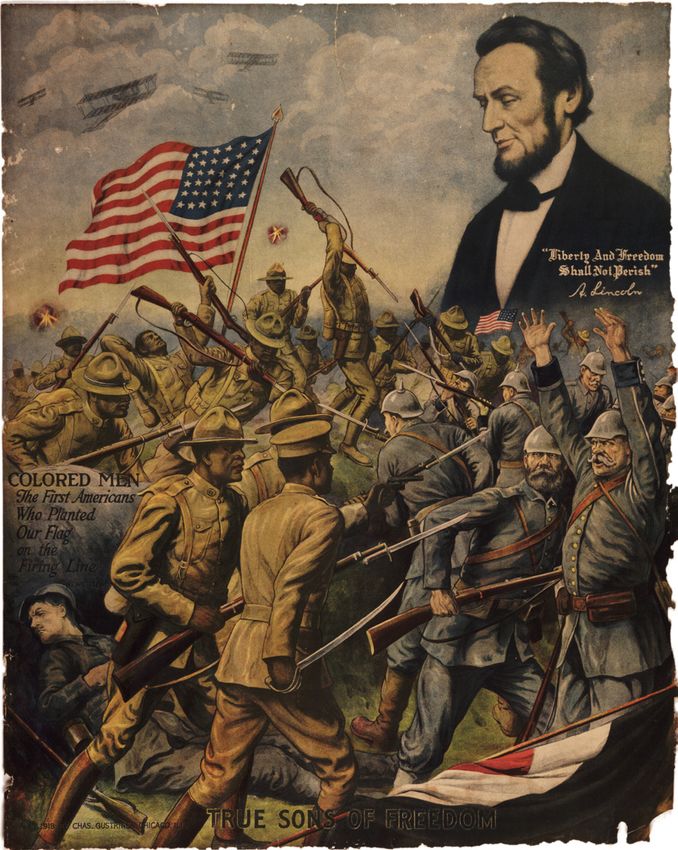
EXHIBITION OUTLOOK DONOR SPOTLIGHT
OLYMPIC GAMES TAMARA
EXHIBITION
Opens July 9, 2020 AND KEN
as the repository for the Atlanta Committee for the
Olympic Games (ACOG) collections after the close
of the Games, Atlanta History Center presented the
Centennial Olympic Games Museum (2006-2016) and
BAZZLE
Curiosity drew Ken Bazzle to first visit the Atlanta
Historical Society as it existed then in the late 1960s as a small
pursued partnerships on oral history projects. research facility. He recalls seeing documents on display
Located in the Payne Gallery in Fentener van under glass and being intrigued by the stories held within.
Vlissingen Family Wing, the exhibition will feature Atlanta History Center’s Kenan Research Center remains a
iconic and unexpected objects, photographs, and primary interest of both Ken and his wife, Tamara—and one
activities prompting visitors to think about the places that they believe is truly at the heart of the organization’s
we live and how we can change them. mission.
Vice President of Development Cheri Snyder sat down with
Next summer, the world looks to Tokyo for the
Reflecting on the the Bazzles to discuss why they believe history matters now
more than ever.
Olympic and Paralympic Games. In conjunction with the research, Dylla notes CS: You have watched the Atlanta History Center evolve
Games, Atlanta History Center will open a new signature
exhibition to examine Atlanta’s time in the Olympic
“Atlanta’s Olympic story from a small research facility to one of our region’s largest TOP Tamara and Ken Bazzle
history museums and archival repositories. Our organization
spotlight. More than 20 years later, the exhibition seeks highlights connections does a lot—what do we offer that consistently keeps you
to understand the impact of the 1996 Games on the city
and our lives. between global events coming back?
Ken: The author programs offered at the History Center
Ken: We have appreciated the History Center for many years, but
what really got our attention was the literal—and symbolic—taking
In summer 1996, Atlanta hosted the Centennial and local places. It is are always engaging and provide such a wide variety of topics down of the fences around the museum property back in 2012. We
Olympic Games and 10th Paralympic Games. The
new exhibition explores Atlanta’s late-20th-century interesting to consider and viewpoints. And the Kenan Research Center is a treasure,
an invaluable resource.
really viewed that as a welcome mat for the community to come in
and be involved and it has been exciting to see the museum become
urban landscape and regional development, and places
the Games in context with the city’s history of growth
the lasting impact of Tamara: There is so much. Goizueta Gardens is an urban the vibrant gathering place it is now.
initiatives. These include professional sports, community changes to the city’s greenspace unlike anything else in our city. The exhibits—
we loved Barbecue Nation last year. The subject matter
With over 30 years of support, the Bazzles are members of
the Atlanta History Center’s 1926 Circle annual giving group as
investment, and business incentives, stretching from the
1895 Cotton States & International Exposition all the
image, infrastructure, of the exhibits presented is such an engaging mix. And the well as the Franklin Miller Garrett Society having included the
Cyclorama’s new presentation at the History Center is so
way to the Beltline and Atlanta United team. and way of life.” well done.
organization in their estate plans with a special focus on the Kenan
Research Center.
Exhibitions are built on research, community input,
CS: The title of our publication is History Matters. Why
and creativity. Directing the development, curator Sarah Planned gifts of all levels directly benefit the Atlanta History
Major support of this exhibition is generously provided do you think history matters so much for our community?
Dylla is delving deep into 1990s Atlanta history. She has Center’s endowment and provide annual support in perpetuity. To
by The James M. Cox Foundation, The Fentener van What role do you think the Atlanta History Center can play
studied Olympic collections and identified the variety learn more about planned giving opportunities and the Franklin
Vlissingen Family, Bank of America, The Coca-Cola in building a stronger community?
of perspectives Atlantans hold about the Games. The Miller Garrett Society, please contact Cheri Snyder at 404.814.4056
Company, Mr. and Mrs. William P. Payne, the Arthur Tamara: The Atlanta History Center engages in important
impact of the Games means something different to or csnyder@atlantahistorycenter.com.
M. Blank Family Foundation, The UPS Foundation, and conversations—it is a safe space that offers wide perspectives.
everyone. People interacted with the Olympic games in
Dennis L. and Martie Edmunds Zakas. Cities and communities with a solid understanding of their
different ways, including playing a role in the bid process,
own history are inherently stronger. There is a sense of
building venues, living in impacted neighborhoods,
RIGHT Centennial Olympic Torch, 1996 shared experience that not only helps identify a city’s unique
serving as volunteers, or competing as athletes.
The Centennial Olympic Torch Relay spanned 84 days, character but it in turn provides something for newcomers
This exhibition is the next step in the Atlanta History
culminating in Muhammad Ali lighting the Olympic to embrace as well.
Center’s work with Atlanta’s Olympic legacy. Designated
cauldron in Atlanta.
ATLANTA HISTORY CENTER HISTORY MATTERS 19PROGRAMS PROGRAMS
Atlanta History Center presents nearly 60 author
talks annually, gatherings that explore a world
of topics including food, fiction, history, and
more. Here, we are pleased to present a Q&A
with Pulitzer Prize-winning author Eric Foner.
The Columbia University professor emeritus of
history appeared October 15 to discuss The Second
Founding: How the Civil War and Reconstruction
Remade the Constitution.
AN
Q: Can you explain what the title of your
new book references?
A: The phrase “Second Founding” was used during Reconstruction. It’s meant to
suggest that the constitutional amendments which I write about, the 13th, 14th,
INTERVIEW
and 15th, were more than additions to a preexisting structure. They change the
structure fundamentally. They created a new Constitution in which the rights
of individual people, regardless of race, were now central to being an American,
where the notion of equality for all was written into the Constitution for the Q: Can you define Reconstruction, Q: It’s safe to say that your
one of the most misunderstood award-winning books would
first time. In other words, the Constitution we have today depends, to a large
extent, on the Reconstruction Amendments. I use that title to indicate how
WITH
important I think these amendments were in the history of the United States.
time periods in Americans history, sell even without a book tour.
Q: Many believe the 13th in a few sentences? Why do you feel it’s important
Amendment was unnecessary since A: The term is used to describe a specific time period of American history— to do in-person events and to
President Lincoln’s Emancipation
generally, the period immediately after the Civil War, thought to end in
connect with readers?
AUTHOR
1877. But now people talk about a long Reconstruction that may have
extended to 1890.
Proclamation freed the enslaved. A: Well, it’s exactly that, connecting with readers. I am retired from
What should Americans know about Reconstruction is also a historical process by which the United States
tried to come to terms with consequences of the Civil War — the two most
teaching, but I had a long career and enjoyed teaching enormously,
and I learned a lot from my students. This is a different audience,
that amendment? important being the preservation of the nation state and the destruction mostly a non-scholarly audience, but it’s people who are interested
ERIC FONER
of the institution of slavery. That process does not have a clear ending. in the subject. I’m always interested in what people think about
In fact, you could say that Reconstruction never ended because we are history, the questions they ask.
A: While the Emancipation Proclamation was a critical document to American still battling over issues unleashed by the end of slavery. Who should
history and changed the character of the Civil War, it did not free all the slaves. be a citizen? Who should have the right to vote? How do we deal with
There were about 4 million slaves in 1860, and about three-quarters of a million terrorism—from abroad and homegrown?
of them were not affected by the Emancipation Proclamation. That still means
3 million were declared to be free, which is remarkable, but the slaves in border The people who wrote the 13th, 14th, and 15th Amendments understood
states Maryland, Missouri, Delaware, and Kentucky were not covered because Reconstruction as an ongoing project because each of those amendments
they were still in the Union. The Emancipation Proclamation was a measure ends with a section stating that Congress will have to enforce the
against the Confederacy. amendment. That’s recognition that this is a process with no end in sight.
Also, freeing individuals is not the same thing as destroying the institution of
slavery. Slavery is created by state law, and states would have to repeal those
laws or have a constitutional amendment overturn them to get rid of the LEFT Eric Foner visits The Battle of Atlanta cyclorama prior
institution all together. In fact, after the proclamation was issued, Lincoln to his talk at Atlanta History Center on October 15, 2019.
kept pushing states to abolish slavery. So, the 13th Amendment was necessary TOP Eric Foner discusses his newest book The Second Founding
to eradicate slavery in the entire United States, and that’s what it did. with author talk guests in Woodruff Auditorium in Atlanta
History Center’s McElreath Hall.
ATLANTA HISTORY CENTER HISTORY MATTERS
MATTERS 21SUPPORT SUPPORT
SUPPORT
Mr. and Mrs. Hector E. Llorens Mr. and Mrs. John M. Darden III Mr. and Mrs. John W. Lundeen III
Mr. and Mrs. George T. Manning Mr. and Mrs. F. T. Davis, Jr. Mr. and Mrs. Bert C. Madden
Gifts made between July 1, 2018 Mr. and Mrs. Michael Masters
Mr. and Mrs. Robert W. Miller
Ms. Kay Dempsey
Mr. and Mrs. Richard A. Denny, Jr.
Mrs. Gloria Mallet and
Dr. Andrea Mallet-Reece
and June 30, 2019 Mrs. William A. Parker, Jr.
Mrs. Mary Patton
Mr. and Mrs. Merritt Dyke
Mr. and Mrs. Dennis Edmiston
Mr. and Mrs. Keith W. Mason
Mr. and Mrs. George McCarty
Mr. and Mrs. Ron Quigley Mr. and Mrs. H. Alan Elsas Mr. Robert B. McClain
Mr. and Mrs. J. F. Reeves Dr. Julia V. Emmons Mr. and Mrs. Forrest McClain
2018-2019 Annual Fund Mr. James H. Landon Mr. and Mrs. T. Randolph Merrill Mr. and Mrs. John D. Snodgrass Mr. Pat Epps Mr. and Mrs. Julian B. Mohr
— Insiders Mr. and Mrs. Richard Lindsay Mr. and Mrs. Mark Miles Mrs. Laura S. Spearman Ms. Elizabeth Etoll Mr. Joseph C. Montgomery
Mrs. Henry F. McCamish, Jr. Mr. and Mrs. Christopher Millard Mr. and Mrs. John C. Staton, Jr. Mr. and Mrs. Clayton H. Farnham Mr. and Mrs. Alexander G. Morehouse
The 1926 Circle Mr. Albert S. McGhee Mr. and Mrs. Lester Miller Mr. and Mrs. Tim Tassopoulos Mr. and Mrs. William H. Ferguson Mr. and Mrs. R. Brand Morgan
Mrs. Harold E. Abrams Mr. and Mrs. John E. McMullan Mr. and Mrs. W. Thomas Mobley, Jr. Mr. and Mrs. William A. Whitaker Mrs. Dakin B. Ferris Mr. and Mrs. W. Hampton Morris
Mr. and Mrs. Frederick L. Allen III Mr. and Mrs. Wade T. Mitchell Mr. and Mrs. John L. Montag Mr. and Mrs. Charles E. Wilson III Mr. and Mrs. William C. Fowler Mr. and Mrs. Horace D. Nalle
Mr. and Mrs. Kenneth L. Bazzle Ms. Florence Lee Moran Mr. and Mrs. Dudley L. Moore, Jr. Mrs. James W. Woodruff, Jr. Mr. and Mrs. John T. Fox Mr. and Mrs. C. V. Nalley III
Mr. H. Alan Cornette and Mrs. Albert N. Parker Mr. and Mrs. C. Read Morton, Jr. Mr. and Mrs. Zachry Young Mr. David H. Gambrell Ms. Ann Starr and Mr. Kent Nelson
Mrs. Dolores Trezevant Mrs. Larry L. Prince Mr. and Mrs. Johnny Mosier Ms. Linda M. Garrett Mr. and Mrs. Floyd C. Newton III
Mr. and Mrs. Beverly M. DuBose III Mr. and Mrs. Douglas F. Reid Mrs. H. Burke Nicholson III Director’s Roundtable Mr. and Mrs. Lawrence L. Mr. and Mrs. Graham S. Nicholson
Ms. Catherine W. Dukehart Mr. and Mrs. Roby Robinson, Jr. Mr. and Mrs. McKee Nunnally, Jr. Mr. John R. Adams Gellerstedt III Mr. and Mrs. Greg Null
Mr. and Mrs. W. Douglas Ellis, Jr. Mr. Alan F. Rothschild, Jr. Mr. and Mrs. William B. Peard Mr. and Mrs. Mel Adler Mr. Jere W. Goldsmith IV Mr. and Mrs. Frank C. Owens, Jr.
Mr. and Mrs. Reade Fahs, Jr. Mr. and Mrs. Gordon P. Ramsey Mrs. Elkin Goddard Alston Ms. Virginia Gorday and Mr. and Mrs. Richard C. Parker
Mr. and Mrs. J. Rex Fuqua Chairman’s Circle Mr. and Mrs. William C. Rawson Mrs. Marge Anderson and Mr. Peter J. Gorday Mr. William A. Parker III
Mr. and Mrs. P. Alston Glenn Mr. and Mrs. David Abney Mr. and Mrs. David Schachter Mr. Richard Oliver Mrs. Henry C. Grady III Mrs. Martha M. Pentecost
Mr. and Mrs. S. Taylor Glover Mr. and Mrs. Ivan Allen IV Mr. and Mrs. Timothy C. Schroeder Anonymous (2) Mr. and Mrs. Duncan S. Gray, Jr. Mr. and Mrs. John H. Pietri, Jr.
Mr. and Mrs. Henry D. Gregory, Jr. Mr. and Mrs. John G. Alston, Sr. Mr. Allan Boyd Simpson and Mr. Shepard B. Ansley Mr. and Mrs. Bernard Gray Ms. Elizabeth B. Pittman
Mr. Robert H. Gunn Mrs. William B. Astrop Ms. Melody Mann-Simpson Mrs. Kathleen Argenbright Mr. Ronald Green Mr. and Mrs. H. Sadler Poe
Mrs. Frederick A. Hoyt, Jr. Mr. Joseph H. Boland, Jr. Mr. and Mrs. H. Bronson Smith Mr. Joel Babbit Mrs. Robert S. Griffith, Jr. Mr. and Mrs. Gene I. Poland
Jocelyn J. Hunter, Esq. Mr. and Mrs. Dan W. Boone III Mrs. Anne R. Stevens Mr. and Mrs. William T. Baker, Jr. Mrs. Louise S. Gunn Ms. Kathleen A. Powell
Mr. and Mrs. Raymond A. Jones III Mr. Thomas Burleigh Mr. and Ms. William Stovall Mr. and Mrs. Daniel S. Baldwin, Jr. Mr. Joe N. Guy Mr. and Mrs. Ernie Prickett
Mr. and Mrs. James C. Kennedy Mr. and Mrs. Tom Carlock Mr. and Mrs. Bryan C. W. Tate Mr. and Mrs. James Balloun Ms. Jo Ann Haden-Miller and Mr. and Mrs. Rowland A. Radford
Mrs. Carl W. Knobloch, Jr. Mr. Daniel J. Chen Mr. and Mrs. Robert J. Taylor IV Mr. Frank Barron, Jr. Mr. William G. Miller, Jr. Mr. and Mrs. Charles S. Rigby
Mr. and Mrs. John F. McMullan Mr. and Mrs. R. Barksdale Collins Mr. and Mrs. James S. Thomas, Jr. Mrs. Eleanor A. Barton Mr. and Mrs. Gordon H. Harper Mr. and Mrs. Alfred Ritter
Mr. and Mrs. Anthony Montag Mr. and Mrs. Ralph Connell Mr. and Mrs. William A. Vogel Mr. and Mrs. Jeffrey C. Baxter Mrs. Paul M. Hawkins Mr. and Mrs. Al Robertson
Mr. and Mrs. James H. Morgens Mr. and Mrs. Alston D. Correll, Jr. Mr. and Mrs. William F. Voyles Mr. and Mrs. C. Duncan Beard Reverend and Mrs. J. Spurgeon Hays Mrs. J. Mack Robinson
Mr. and Mrs. Howard D. Palefsky Mr. and Mrs. Edward S. Croft III Mr. and Mrs. Bill Webster Mrs. Ron Bell Mr. and Mrs. Jeffrey M. Herbert Mr. Michael Rogers and
Mr. and Mrs. Solon P. Patterson Mr. and Mrs. James L. Curry Mrs. Anne G. Weltner Mr. and Mrs. Jeffrey W. Bell Mr. and Mrs. Benjamin F. Hill IV Dr. Edith Rogers
Mr. Daniel B. Rather Mr. and Mrs. William M. Dreyer Mr. and Mrs. Robert A. Yellowlees Mr. and Mrs. Stephen M. Berman Sarah and Harvey Hill Dr. and Mrs. Rein Saral
Mr. and Mrs. John D. Shlesinger Mr. and Mrs. Merritt Dyke Mr. and Mrs. Richard Bissonnette Mr. and Mrs. Thomas D. Hills Ms. M. Alexis Scott and
Mr. and Mrs. John P. Spalding Mr. and Mrs. James C. Edenfield Benefactor’s Circle Dr. R. Dwain Blackston Mr. and Mrs. Harry C. Howard Mr. Brian L McKissick
Ms. Bentina Chisolm Terry and Dr. and Mrs. L. Franklyn Elliott Ms. Kathleen Barksdale Mr. Arthur M. Blank Mrs. Susanne W. Howe Ms. Katherine Scott
Mr. Antonio Terry Mr. and Mrs. Michael R. Flock Governor and Mrs. Roy E. Barnes Mr. Merritt S. Bond Mr. and Mrs. Peter D. Howell Count and Countess Ferdinand
Waffle House Mr. and Mrs. Carl I. Gable Mr. and Mrs. Charles E. Campbell Mr. and Mrs. Charles M. Brewer Mr. and Mrs. John H. Irby C. Seefried
Mr. and Mrs. L. Tom Gay Mr. and Mrs. J. Donald Childress Mr. and Mrs. Frank D. Brown Mr. and Mrs. Warren Y. Jobe Dr. Brandon Seigler and
Phoenix Society Mr. and Mrs. Thomas K. Glenn Mr. and Mrs. Jesse C. Crawford Mr. and Mrs. W. Wheeler Bryan Mr. and Mrs. Eric J. Joiner Dr. Wendy Wright Seigler
Mr. and Mrs. John M. Allan Mr. and Mrs. John T. Glover Dr. and Mrs. Lawrence W. Davis Reverend and Mrs. Samuel G. Candler Ms. Gay T. Jolley Mr. and Mrs. John B. Shepard
Mrs. Beaumont Allen Mr. David F. Golden Mr. and Mrs. Todd Deveau Mr. and Mrs. Bickerton W. Cardwell, Jr. The Honorable Wendy Shoob and Mr. and Mrs. Al Sherrod
Mr. and Mrs. Dameron Black III Mrs. John W. Grant III Mr. and Mrs. William W. Dixon Mr. and Mrs. James B. Carson, Jr. Mr. Walter Jospin Mr. and Mrs. Thomas L. Shields, Jr.
Mr. and Mrs. Paul J. Blackney Dr. and Mrs. John B. Hardman Ms. Diane Dudley The Honorable and Dr. William R. Kenny and Mr. Paul R. Shlanta and Ms. Mary Long
Mr. and Mrs. Russell E. Butner Mr. Robert A. Jetmundsen Mr. and Mrs. Craig P. Dunlevie Mrs. Saxby Chambliss Mr. Alfred D. Kennedy Mr. John Phillip Short
Mr. and Mrs. Paul G. Engle Mr. and Mrs. George H. Johnson Mrs. Robert S. Eldridge Mr. and Mrs. Peter C. Chatel Mr. and Mrs. James D. Kiley Mr. and Mrs. Stephen S. Sloan
Mr. and Mrs. Theodore R. French, Jr. Mr. and Mrs. William A. Jump Mr. and Mrs. Edward T. M. Garland Mrs. Carol J. Clark Mr. William D. Kilgore Ms. Suzy Smith
Mr. and Mrs. Gregory J. Giornelli Mr. and Mrs. Alan R. Kaplan Mrs. Robert S. Griffith, Jr. Dr. and Mrs. William M. Clarkson IV Mr. and Mrs. W. Theodore Kresge, Jr. Mr. and Mrs. Stanley M. Srochi
Mr. and Mrs. Richard B. Goodsell Ms. Carla Knobloch Mr. and Mrs. Thomas H. Hall III Mr. and Mrs. A. Stephens Clay Mr. and Mrs. James Landers Dr. and Mrs. Kenneth S. Taratus
Mr. and Mrs. Cleburne Gregory III Mr. and Mrs. J. Hicks Lanier II Mr. Edward H. Inman II Mr. and Mrs. F. Dean Copeland Mr. and Mrs. William C. Lanham Mr. G. Kimbrough Taylor, Jr. and
Mr. and Mrs. Robert F. Helget Mr. and Mrs. E. G. Lassiter III Mr. Baxter P. Jones and Dr. Jiong Yan Mr. and Mrs. Charles J. Crawford Mr. George H. Lanier Ms. Triska A. Drake
Mr. and Mrs. Henry L. Howell Mr. and Mrs. Will D. Magruder Mrs. Joseph W. Jones Dr. and Mrs. O. Anderson Currie, Jr. Dr. and Mrs. S. Robert Lathan Mr. and Mrs. Michael R. Thomas
Mr. and Mrs. Stiles A. Kellett, Jr. Mr. and Mrs. Frank H. Maier, Jr. Mr. and Mrs. Michael L. Keough Mrs. Overton A. Currie Mrs. Howard P. Lawrence Mr. Kendall Ward
ATLANTA HISTORY CENTER HISTORY MATTERS
HISTORY MATTERS 23
23SUPPORT SUPPORT
Mrs. Raymond M. Warren, Jr. Mr. and Ms. Bert Clark Mr. Richard E. Hodges, Jr. Mr. and Mrs. James R. Munson Mr. Frank Tichenor Gold Sponsors
Mr. and Mrs. Thomas E. Watson Dr. Benjamin C. Clark, Jr. Mr. and Mrs. Robert M. Holder Mrs. Carole Musarra Mrs. Newell Bryan Tozzer Mr. and Mrs. John A. Carlos
Mr. and Mrs. Winston E. Weinmann Mrs. Thomas H. Clarke Mr. and Mrs. Jack K. Holland Mr. and Mrs. Frank M. Mutz Ms. Agnes J. Van Ryn Georgia–Pacific, LLC
Dr. William G. Whitaker III Dr. and Mrs. Gregg Codelli Mr. and Mrs. Hilton H. Howell, Jr. Mr. and Mrs. John Muzzy Mr. and Mrs. Robert Vassey IBERIABANK
Mr. and Mrs. Donn Wright Mr. and Mrs. Carl H. Cofer Mrs. Ann Pegram Howington Mr. and Mrs. William R. Newton Mr. and Mrs. Joseph B. Vivona Mr. Richard R. Rollins
Mr. and Mrs. Chuck Young Mr. James B. Collins Mr. Richard N. Hubert and Mr. and Mrs. David Norris Mrs. Pam Wakefield Mr. and Mrs. Timothy C. Rollins
Mr. and Mrs. Cecil D. Conlee Dr. Linda Hubert Mr. and Mrs. Joseph W. Odom, Jr. Mr. John A. Wallace Wells Fargo
Patron Ms. Evelyn A. Connally Dr. Susan C. Hurt Tanner and Mr. Mr. and Mrs. J. Dudley Ottley Mr. and Mrs. Stephen M. Wasserman
Dr. Ann U. Abrams Mr. and Mrs. James E. Copeland III Robert G. Tanner Mr. and Mrs. John K. Ottley, Jr. Ms. Joy Wasson and Ms. Liz Throop Silver Sponsors
Mr. and Mrs. Edward B. Addison Mr. and Mrs. Stephen L. Cotter Mr. and Mrs. Thomas B. Hyman, Jr. Dr. and Mrs. David Owens Mr. Ben L. Weinberg, Jr. Mr. and Mrs. Sam Bayne
Mr. and Mrs. C. Scott Akers, Jr. Mr. and Mrs. Robert Cramer Mr. and Mrs. John M. Jaje Dr. Margo Brinton and Mr. and Mrs. William J. Wepfer Mr. and Mrs. Paul Brown
Mrs. Kathryn Alvelda Ms. Joan Cravey Ms. Jane P. Harmon and Mr. Eldon E. Park Mr. Wyatt Whaley and CBRE, Inc.
Mr. and Mrs. Michael Amiri Mr. and Mrs. George Darden Mr. H. Mikell Jones Mrs. Natalae W. Parker Ms. Dawn Whaley CSX Corporation
Mrs. Carol Arnall Mr. and Mrs. Michael Davis Mr. and Mrs. Craig B. Jones Mr. and Mrs. E. Fay Pearce, Jr. Mr. and Mrs. Edward L. White, Jr. Ms. Suzanne E. Mott Dansby
Mr. and Mrs. H. Ross Arnold III Ms. Myrna Dial Ms. Elena Kaplan Mr. and Mrs. Albert M. Pearson Ms. Barbara A. White Fidelity Bank
Mr. and Mrs. Jorge Arrieta Dr. D. Peter Drotman and Mr. and Mrs. James D. Kennedy Mr. and Mrs. Louie A. Pittman, Jr. Mrs. Ann S. Wilson The Home Depot Foundation
Mr. and Mrs. George W. P. Atkins, Jr. Ms. Carolyn Arakaki Ms. Mary Kesterton Mr. and Mrs. Jim Poe Ms. Catherine Hope Wilson and Jocelyn Hunter, Esq.
Ms. Vallene L. Baker Mr. and Mrs. Brian G. Dyson Ms. C. Denise Kilpatrick Mrs. James Tinsley Porter, Sr. Mr. Vincent X. Ford Mr. and Mrs. James C. Kennedy
Mr. and Mrs. Clayton R. Barker III Mr. and Mrs. Ralph G. Edwards, Jr. Dr. Anne Knutson and Mrs. Lula P. Post Mr. and Mrs. Dennis C. Winchester Dr. and Mrs. Nevin R. Kreisler
Ms. Patricia T. Barmeyer and Mr. and Mrs. Michael J. Egan III Mr. Todd Knutson Mr. and Mrs. William L. Pressly Mr. and Mrs. William D. Withers PNC Financial Services Group
Mr. Ward Wight Mr. Chance Evans Mr. Brad Kozak and Ms. Natalia Migal Mr. and Mrs. Schuyler B. Rector Mr. and Mrs. Robert G. Woodward Ms. Pamela Rollins
Mr. Greg Barnard Mr. Robert Fisher Mr. and Mrs. Matthew C. Kramer Mr. and Mrs. Robert E. Reiser Mr. and Mrs. Robert U. Wright Mr. and Mrs. Steve Simms
Mr. and Mrs. Charles H. Battle, Jr. Ms. Carolyn V. Fowler Mr. Wolfgang Kunz Mr. and Mrs. Gregory Rhodes Ms. Vivian M. Wright The UPS Foundation
Mr. John H. Beach, Jr. and Mrs. Alice Bell Fraser Ms. Linda LaManna Mr. and Mrs. Mark B. Riley Mr. and Mrs. Dennis L. Zakas Mr. and Mrs. William F. Voyles
Dr. Ann F. Beach Mr. and Mrs. Paul R. Freeman Mr. and Mrs. David P. Lanier Mr. and Mrs. Stephen H. Rogers Dr. and Mrs. David Zelby
Mrs. Ida P. Benton Ms. Susan Freeman and Ms. Dolly Laubach Ms. Susan D. Rolih Mr. and Mrs. Kendall Zeliff Bronze Sponsors
Mr. and Mrs. Mark Bergeson Mr. Don Freeman Mr. and Mrs. Nolan C. Leake Mr. and Mrs. Maurice Rosenbaum Mr. and Mrs. Carleton F. Allen
Mr. and Mrs. Matthew Bernstein Mr. and Mrs. William B. Fryer Mr. and Mrs. Richard H. Lee Mr. and Mrs. Jesse A. Sasser, Jr. Arrow Exterminators
Mr. and Mrs. G. Dennis Berry Mr. and Mrs. James Garcia Dr. J. Bancroft Lesesne and Mr. Scott Satterwhite and Swan House Ball Mr. and Mrs. Thomas J. Asher
Mr. and Mrs. Julian S. Betts, Jr. Mr. J. Michael Gearon and Mr. Randolph Henning Ms. Patricia Stern April 27, 2019 The Brookdale Group
Mrs. Shirley Blaine Mrs. Kendrick Fisher Gearon Mr. and Mrs. Bertram L. Levy Ms. Pierrette Scanavino Campbell & Brannon, LLC
Mr. and Mrs. Andrew Blaisdell Mrs. Robert Glenn Mr. and Mrs. Gary S. Lockman Mr. and Mrs. David Schlosnagle Honorees CIBC Private Wealth Management
Dr. and Mrs. Peter Block Ms. Pam Glustrom and Mr. and Mrs. Clay C. Long Mr. and Mrs. William B. Schwartz III The Rollins Family Cousins Properties Foundation
Mr. and Mrs. A. J. Block Mr. Robert Glustrom Mr. and Mrs. Gary C. Lovett Mr. and Mrs. Victor Segrest Emory University
Mr. and Mrs. W. Moses Bond Mr. and Mrs. Robert C. Goddard III Captain and Mrs. Joe Ludwikowski Ms. Marion C. Sharp Event Chair Mr. and Mrs. Richard Hubbell
Ms. Jane Fahey and Mr. and Mrs. Edward W. Godfrey Dr. Elizabeth A. Lyon Mr. and Mrs. Fred Sheats Jenny Pruitt Legendary Events
Mr. Emmet J. Bondurant Mr. Warren Gump and Mr. and Mrs. Ralph F. MacDonald III Mrs. Irving M. Shlesinger Mr. and Mrs. Michael Mansfield, Sr.
Mr. and Mrs. Elliott E. Brack Ms. Mary Elizabeth Gump Mr. and Mrs. James MacGinnitie Mr. Tony R. Smith and Presenting Sponsor Mr. Peter C. Moister
Mr. and Mrs. Milton W. Brannon Mr. and Mrs. Richard W. Haining Mrs. Cindy P. Mallard Mrs. Denise Elsbree Smith Atlanta Fine Homes Sotheby’s Northside Hospital
Mrs. Harvey B. Brickley Ms. Marion Wall Hall Mr. and Mrs. Jay Mannelly Mr. and Mrs. John W. Spiegel International Realty Mrs. Larry L. Prince
Mr. and Mrs. William R. Bridges III Mr. and Mrs. G. Marc Hamburger Mr. and Mrs. Bob Margolin Mr. and Mrs. Stanley M. Srochi and Mr. and Mrs. Robert Pruitt Printpack, Inc. and The Gay and
Mr. and Mrs. Paul Brown Mr. and Mrs. E. S. Hammack Mr. and Mrs. David S. Martin Ms. Nancy C. Stalcup Erskine Love Foundation
Dr. and Mrs. Anton J. Bueschen Mr. and Mrs. James B. Hannan Mr. and Mrs. Frank Marxer Mr. and Mrs. John H. Stanford Diamond Sponsors Mr. Daniel B. Rather
Mr. and Mrs. Fred P. Burke Mr. and Mrs. Robert S. Harkey Mr. John H. Mather Mr. William H. Stanhope and Anonymous Regions Bank
Dr. John A. Burrison Mr. and Mrs. Kent Harrington Mrs. George W. Mathews, Jr. Ms. Kristen A. Keirsey Greenberg Traurig Mr. Rob Rollins
Ms. Judy B. Byrd Ms. Holland Taylor Harris and Mr. John McAskill Mrs. C. Preston Stephens The Ruth & Talmage Dobbs, Jr.
Dr. Thomas Callaway Mr. Andrew J. Harris, Jr. Ms. Mary Beth McCahan Dr. and Mrs. John Stevens Platinum Sponsors Charitable Foundation
Mr. and Mrs. Robert W. Candler, Jr. Mr. and Mrs. Hubert L. Harris, Jr. Dr. and Mrs. William M. McClatchey Ms. Jane H. Steward Mr. and Mrs. David Abney Ms. Nancy G. See and
Ms. Cynthia Carns and Ms. Aileen Ponder Hatcher Mr. and Mrs. Allen P. McDaniel Mr. and Mrs. James S. Stokes Cox Enterprises, Inc. Mr. J. V. Quarles
Mr. Brian Casey Dr. Tom Hazlehurst and Mr. and Mrs. Michael McDavid Mr. and Mrs. Cyrus W. Strickler III Delta Air Lines Mr. and Mrs. James S. Thomas, Jr.
Mr. and Mrs. Beauchamp C. Carr Ms. Larree Renda Mr. and Mrs. Michael A. McLain Dr. and Mrs. Louis W. Sullivan Mr. and Mrs. Beverly M. DuBose III Mr. Clyde C. Tuggle and
Mrs. Carolyn Caswell Dr. and Mrs. Armand E. Hendee Dr. Arthur J Merrill, Jr. and Mr. and Mrs. Ted M. Sullivan Ed Voyles Automotive Group Ms. Mary Street
Mrs. Lana S. Cauble Mr. and Mrs. Philip C. Henry Mr. J. Benjamin Merrill Mr. and Mrs. Eugene L. Surber Georgia Power Company Mr. and Mrs. Mark C. West
Mr. and Mrs. Carlile M. Chambers Mr. Charles W. Hicks, Jr. Mr. and Mrs. Ralph R. Morrison Mr. and Mrs. J. Michael Talbert Portman Holdings
Mr. and Mrs. J. R. Chambers Dr. and Mrs. Benjamin A. Hill Mr. and Mrs. Edward Morse Mr. and Mrs. Peter A. Tartikoff Rollins, Inc.
Mr. and Mrs. Walter Cheatham Mr. and Mrs. Ashley Hodges Mr. and Mrs. Charles D. Moseley Mr. and Mrs. Robert J. Thiebaut
Ms. Mary Lynne Thompson
Ms. Mary Thurlow
ATLANTA HISTORY CENTER HISTORY MATTERS
HISTORY MATTERS 25
25You can also read


