WORK IS WHERE YOU ARE - A White Paper from Leitz - Esselte
←
→
Page content transcription
If your browser does not render page correctly, please read the page content below

WORK IS WHERE YOU ARE

    A White Paper from Leitz.
Preface
                                         As one of the leading brands in the global       We have divided our thoughts into six broad
                                         office products market, Leitz constantly         areas, beginning with an introduction on the
                                         looks ahead to the workplaces and practices      alleged death of the office, or not. We then
                                         of the future. In 2012, we published the first   explore the concept of ‘Everywhere Working’,
                                         ‘Future of Work’ White Paper. We found high      some of the drivers of this phenomenon and
                                         levels of interest in the topic, not just from   the now ubiquitous nature of work. Following
                                         our industry colleagues but also from the        that, we look at the ‘old’ office and examine
                                         wider business community.                        the problems we have created for ourselves
                                                                                          before touching on the first hints of solutions.
                                         This was not totally unexpected as whatever
                                         shape the office of the future may take,         Next, we examine the ‘Everywhere Worker’;
                                         work will always be with us. Sadly, 1950’s       the benefits they enjoy and also a new set
                                         predictions of working 3 days per week           of challenges. Moving into the home, we take
                                         with vast amounts of leisure time, seem          a look at the huge variances that pass for
                                         to have been replaced with ‘always on’ email     home-working now; from kitchen tables and
     1950’s predictions of working       exchanges and conference calls at 2am,           sofas to separate offices. Finally, we look
                                         as we struggle with international time-zones     at some of the tools an ‘Everywhere Worker’
     3 days per week with vast amounts   when doing business around the world.            will need to survive in this ‘Brave New World
                                                                                          of Work’
     of leisure time, seem to have       Leitz has once again commissioned
                                         Andrew Crosthwaite – Founding Partner            As in previous years, all of this work is based
     been replaced with ‘always on’      in Futures House and Planning Director of        on extensive research including an exclusive
                                         BLAC Agency in London, UK – to investigate       survey of 800 knowledge workers in four
     email exchanges and conference      the future of our working world. This year the   European countries (Germany, France,
                                         focus is on ‘Working Everywhere’. We were        Italy and the United Kingdom).
     calls at 2am.                       careful not to restrict our working practices    The conclusions, whilst almost certainly
                                         to either the office, the home or the now        not perfect, are evidence-based and
                                         infamous ‘third space’ that made Starbucks       represent the views of a robust sample,
                                         founder Howard Schultz his millions.             on work today and possibly tomorrow.
                                         We have moved on.

                                         A fourth space is certainly available in the     Arild Olsen
                                         cloud and others may follow but, as we           SVP Marketing, R&D and Innovation
 p                                       discuss, even the simplest concepts              Esselte Group                                      p

02                                                                                                                                           03
                                         have changed significantly.                      Stuttgart, Germany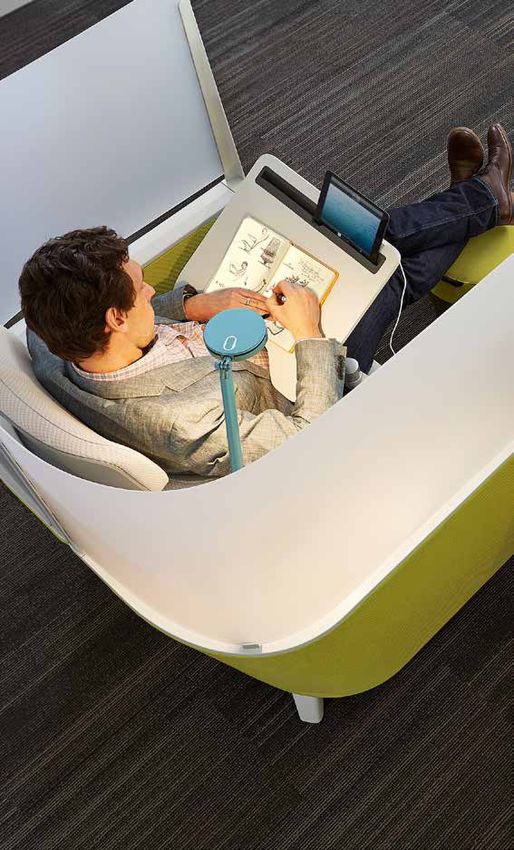
The office is dead
– long live the office
The office of the future

           If you Google ‘the office of the future’,       As part of this report, Leitz carried out       In the future, we can anticipate a bifurcation;   expressing scale and importance as
           you will learn that the office as we know       research among 800 workers across               a significant number of people remaining          a productive work environment. But even
           it will be dead in a few years. The reality     4 countries – France, Germany, Italy            office based while others will be splitting       there, there will be a change towards
           is that most work is still carried out in       and the UK – to gain insight into their         their time across a range of different places.    a more flexible, decentralised approach.
           a central location that, for the sake of        attitudes and behaviour.
           simplicity, we call ‘an office’.                                                                This latter type of behaviour was identified      Workplaces are becoming more adaptive
                                                           Of this sample, over 1/2 reported that          in Forrester’s 2013 survey ‘Workforce             to the needs of work and workers, with the

     What will develop is a richer work                    they do 80% or more of their work within        Adoption Trends’ as ‘anytime, anywhere            evolving concept that ‘work is where you
                                                           their company’s office, and nearly 1/4          information workers’. The survey classified       are’. This location neutrality can embrace
     ecosystem, with more choice,                          do all of their work there.                     29% of the global workforce in this way.          completely new environments and
     more flexibility and a modular,                                                                                                                         reconfigure spaces in traditional offices.
     rather than fixed, approach to                        This mirrors findings from The European         Meanwhile, Citrix’s ’Workplace of the Future’
                                                           Foundation for the Improvement of Living        report polled 1,900 senior IT employees           Technological advances and connectivity
     working and where we do it.
                                                           and Working Conditions, which showed            worldwide and predicted that by 2020,             mean that most of us are carrying our
                                                           that just under 70% of males and nearly         89% of companies would offer mobile               work essentials around with us: our phones
           While much of this paper is about               90% of female employees cite their business     working, with people working from various         and tablets, and their power sources
           ‘Everywhere Working’, we recognise              premises as their main place of work.           semi-permanent locations including their          and, of course, our brains. Consequently
           that for the majority of people, a central                                                      home (64%), project sites (60%) and               we now have the potential to work in
           office will remain as a base, or indeed         Against this background, it isn’t surprising    customer or partner premises (50%).               a physically unfettered way that has
           where they do most of their work in the         that research carried out by Dell in 2014,                                                        previously never been possible.
           short to medium term.                           under the title ‘The Evolving Workforce’,       Infrastructure requirements, worker attitudes,
                                                           found that over 60% of European office          company cultures, not to mention binding          One possible definition for the office
           What will develop is a richer work ecosystem,   workers believe that central offices will       long-term leases, mean that the move              of the future is ‘anywhere with an Internet
           with more choice, more flexibility and          continue to exist in their lifetime.            towards more decentralised work will be           connection’. Perhaps the workplace should
           a modular, rather than fixed, approach          This number rises to 73% for Germany.           gradual. Some industries and job functions        be characterised by connectivity, rather
           to working and where we do it.                                                                  will be more susceptible to it and more           than a physical space.
                                                           All this is likely to change over time and      adaptive than others.
                                                           we will begin to see greater diversity in the                                                     In the end, it is up to our employers,
                                                           workplace. Just as most of us are multi-media   It is unlikely that workers at the CIA’s          our customers, and not least ourselves
                                                           in our entertainment habits – we still watch    central office in Langley, Virginia, would        as to how quickly this change occurs
                                                           lots of TV, but also now consume a great deal   be encouraged to take their work home             – and how completely.
                                                           of information from online media – so we will   with them. Equally, large international
                                                           become multi-locational in the way we work.     companies will continue to require
 p                                                                                                         ‘super offices’ with real, live people                                                          p

06                                                                                                                                                                                                         07
                                                                                                           in them – which are as much about
Welcome to ‘Everywhere Working’

                                                          Work, as never before, is everywhere you          Rather than being a linear journey (as our
                                                          want it to be. And sometimes where you            careers used to be), work is perceived as a
                                                          don’t want it.                                    portfolio of activities, as predicted by Charles
                                                                                                            Handy over 20 years ago. The author of this
                                                          In the days before mobile phones became           paper recently attended a college reunion
                                                          mainstream (we’re only talking 25 years ago),     where many of the attendees reaching
                                                          a mobile office worker could be un-contactable retirement had worked for their entire careers
                                                          for an entire day, without raising comment.       not just in the same industry, but for the same
                                                          A vacation was 1 or 2 weeks spent cut off         employer. In future working environments,
                                                          from the world of work.                           this will be not just unusual, but exceptional.

                                                          Technology and changing work cultures             More people are freelancing, serving different
                                                          mean that work is within arm’s reach 24/7.        organisations. In the USA, the average
                                                                                                            freelancer is working for three or more
                                                          Most of us have become desensitised               employers simultaneously. More work
     By being ‘always on’, there                          to this over time. Younger people have            is done on a project basis – short term and
                                                          never known anything different.                   with evolving teams. This was also discussed
     is a danger that how we perform                                                                        in our previous White Paper, ‘Work Smart.
                                                          But by being ‘always on’, there is a risk         Work Mobile’.
     becomes reactive, rather than                        that how we perform becomes reactive,
                                                          rather than proactive; that we risk being         Some of these activities lend themselves
     proactive; that we risk being                        not just connected to our work, but ruled by it. more to a central office, while others
                                                                                                            are more efficiently and enjoyably done
     not just connected to our work,                      Most changes in any market are as much            in different types of locations.
                                                          the result of multiple factors in combination,
     but ruled by it.                                     as they are a single trend or driver. The world   More and more, our work lies beyond
                                                          of work is no exception.                          the confines of our own organisations
                                                                                                            as projects are shared with different parts
                                                          The nature of work is shifting, perhaps           of the business; with customers, suppliers,
                                                          faster than some of us are comfortable with.      and even competitors in short term alliances.
                                                          To some extent this is a generational effect;
                                                          those of us whose careers predate the digital     Technology is making the above possible.
                                                          age will tend to have a different outlook from    Portability and functionality in equipment
 p                                                        those who have grown up with the Internet.        and connectivity have been among the               p

08                                                                                                                                                             09
                                                                                                            principal drivers of ‘Everywhere Working’.

                       Photo courtesy of Steelcase Inc.
Smart work – Smart phone Top 10 connected countries (number of Wi-Fi hotspots)
France
France 13,096,824
13,096,824
As everyone knows, smart phone penetration Wi-Fi is almost universally available. United
has shown rapid growth across all On average, in developed countries there
UnitedStates
States 9,858,246
9,858,246
populations and among the EU5 is one Wi-Fi point for every ten people in the
United
UnitedKingdom
Kingdom 5,611,944
5,611,944
(France, Germany, Italy, Spain and the UK) population. Attention is now shifting to speed China
China 4,910,368
4,910,368
ownership stands at over 70%. of connectivity.
Japan
Japan 3,303,459
3,303,459
In 2015, research by Rotten Wi-Fi produced Netherlands
Netherlands 2,017,483
Universal Wi-Fi has resulted a global ranking where Lithuania, Croatia and
2,017,483
Belgium 2,016,641
in the growth of alternative Estonia held the top three spots for the fastest Belgium 2,016,641
spaces to conduct business. public download speeds. Brazil
Brazil 1,654,114
1,654,114
Poland
Poland 1,376,560
1,376,560
Hotels which hoped to make up lost landline
They are increasingly our first screen revenues through Wi-Fi, have had to think Germany
Germany 935,534
935,534 Source: iPass Inc.
of choice and, in a work context, this has again as customers have rebelled against
implications for how business information paying. Speed has become a factor here too,
is displayed. This is another factor in a more with services such as www.hotelwifitest.com
dashboard-style approach to reporting. allowing guests to rate not just the presence Fastest public Wi-Fi download speeds (in Mbps)
of Wi-Fi, but also its quality. Lithuania 15.40
For many of us, the mobile phone is
Lithuania 15.40
Croatia
Croatia 14.05
14.05
becoming not just the preferred, but the Universal Wi-Fi has resulted in the growth
only means of communication. The landline of alternative spaces to conduct business Estonia
Estonia 13.75
13.75
phone is now used to denote a less useful, (serviced offices, coffee shops, motorway Ireland
Ireland 11.43
11.43
fixed medium, while a ‘phone’ is something stations, hotels, and also the home). Romania
Romania 11.32
11.32
you carry with you.
United Kingdom
United Kingdom 10.97
10.97
These have positioned themselves
Denmark
Denmark 10.52
10.52
as daytime meeting places. In addition,
for true location neutrality there’s the virtual Hungary
Hungary 10.37
10.37
‘fourth space’; a workspace in the cloud Belgum
Belgum 10.07
10.07
that spans anywhere and everywhere. Slovenia
Slovenia 9.72
9.72
Bulgaria
Bulgaria 9.67
9.67
Singapore
Singapore 9.49
9.49 Source: Rotten Wi-Fi
p p
10 11
Pillars, Roamers,
                     An agile attitude                                                                                     Explorers and Pioneers

           ‘Agile Working’ is becoming a buzz phrase,        As Philip Tidd of Office Architectural Practice    People working in different ways will have         An office with fewer people at any one time
           although its origins actually lie 60 years ago    Gensler recently put it, “Your productivity        different requirements and mindsets.               can be smaller, more flexible, more efficient,
           in Deming’s approach to regenerating              is not measured by the amount of time                                                                 and provide a better return on real estate
           post-war industrial Japan. The demands            you sit behind a thing called a desk.              The Leitz research project asked people            investment. The only problem arises when
           of an agile business are very different from      It is what you do. It is about your output”        to self – classify their working style. 53%        all the Explorers and Pioneers – not to
           the ones where people are tied to their central                                                      say they are mainly based at their own desk        mention freelancers and mainly home based
           place of work.                                    The most talented, who will also be the            when they work (Pillars); 27% move around          workers – decide to turn up at the same time.
                                                             most in demand, will want to work on their         the office a lot (Roamers); 11% make frequent
     We will see how the growth of                           own terms. Increasingly, for people like this,     trips outside the office (Explorers) and 8%        Changing worker profiles and outlooks
                                                             benefits – ranging from healthcare to paid         are rarely in the office at all (Pioneers).        have also made a contribution to the
     ‘Nomadic Workers’, both voluntary
                                                             sabbaticals – are as important, if not more                                                           growth of the ‘Everywhere Working’ concept.
     and involuntary, as freelance                           so, than income. How and where they work           In the world of work this distribution will vary
     workers with no fixed working                           is part of this.                                   by industry type, and job function within each     The increase in part-time and contract

     location become an essential                                                                               industry type. There is no magic formula.          workers will serve to dilute the traditional
                                                             In 2015, research done among members               At a macro level, we can see that nearly           9-5 single location model in the future.
     part of the Agile Workforce.                            of the ‘Inc 500’ (the fastest growing US Private   half of the workforce are leading nomadic          Self-employment covers a wide span,
                                                             companies) by The Workforce Consultants            or semi-nomadic lifestyles, even if they           from IT coders to cleaners, with significant
           Like much business terminology, it is easier      found that, “Key talent will seek out work         maintain a central base.                           contrasts by country across Europe.
           to talk about than to deliver. Deloitte, for      arrangements that take into consideration
           example, believe that within the professional     the lifestyle they want to live. This includes     A key question is the extent to which              The Institute for Public Policy Research notes
           services sector, the biggest barrier to agile     more flexibility in schedules, an increase         companies recognise this and how this              that over 60% of the German self-employed
           working is the culture of presenteeism.           in remote work, and concepts such as               is reflected in their space-planning and           and over 1/2 of their British counterparts
                                                             unlimited time off and unlimited vacation”.        the virtual networks that need to be in place      work in high-skill occupations. Southern
           By definition, an ‘Everywhere Worker’                                                                to ensure that even Pioneers don’t become          and Eastern economies tend to have higher
           isn’t ‘here’; for most of the time,               Putting aside personal preferences,                isolated – or indeed unaccountable.                proportions of self-employed workers
           he or she is somewhere else. As a result,         nothing talks louder than money. Many                                                                 engaged in low and mid-skill occupations.
           it is debateable whether presenteeism             studies suggest that in a traditional office,
           has any benefits beyond a feel-good factor        the average desk is only occupied for around
           for management, which finds it hard to            50% of the time.
           loosen the reins, or simply doesn’t trust their
           workforce to do the job without supervision.      As office costs come under increased
                                                             scrutiny, companies are looking hard
                                                             at this high cost, under utilised asset.
 p                                                                                                                                                                                                                  p

12                                                                                                                                                                                                                  13
8
                                                                                                                                                                    Pioneers

                     Pillars, Roamers,
                     Explorers and Pioneers                                                                                                                                      %
           We will see how the growth of ‘Nomadic         When it comes to life stage, the attitudes
           Workers’, both voluntary and involuntary,      of current (X,Y) and future new (Z)
           as freelance workers with no fixed working     generations coming into the workforce                                                                  The star salesman may only appear
           location have become an essential part         will have a profound effect.                                                                           once a quarter and some people won’t
           of the Agile Workforce.                                                                                                                               recognise them. Nonetheless, Pioneers
                                                          Views on younger generations and their                                                                 are out there boldly going to the new

     Some commentators see                                impact on workplace location vary;                                                                     frontiers of your business.
                                                          some commentators see younger workers
     younger workers coming into the                      coming into the marketplace as more
     marketplace as more demanding,                       demanding, questioning, self-sufficient,
     questioning, self-sufficient, wanting                wanting to do things on their own terms.

     to do things on their own terms.
                                                          However, every trend has a counter trend.
                                                          Others believe there is post-financial crisis
           Different surveys have different results,      conservatism; new generation workers feel

                                                                                                                                                                                  Explorers
           but the broad trend is consistent; 25% of EU   happy or lucky to have a job and desire
           workers are classed as ‘E-Nomads’ by the       to fit in and contribute, rather than disrupt.
           European Foundation for the Improvement        In short, they play the corporate game just
           of Living and Working Conditions.              as their predecessors did.                                                                             Office-based but frequently heading out,
                                                                                                           When Pillars are at work they are at their desks.     Explorers tend to be more senior, visiting
           As with everything, beware of averages         The reality is that, depending on culture        From Receptionists to PA’s and call centre workers,   clients, suppliers or investors but still
           – the highest concentration of ‘E-Nomads’      and prevailing economic conditions,              they are often at the heart of the operation.         spending a significant time in the office.
           are in Finland, Sweden and Denmark (45%),      both will co-exist.
           compared with less than 15 % in Italy
           and Poland.

                                                                                                           That person always running from meeting
                                                                                                           to meeting – that’s a Roamer. Seldom leaving
                                                                                                           the building or campus they are always
                                                                                                           on the move, keeping the team connected.

 p                                                                                                                                                                                                            p

14                                                                                                                                                                                                            15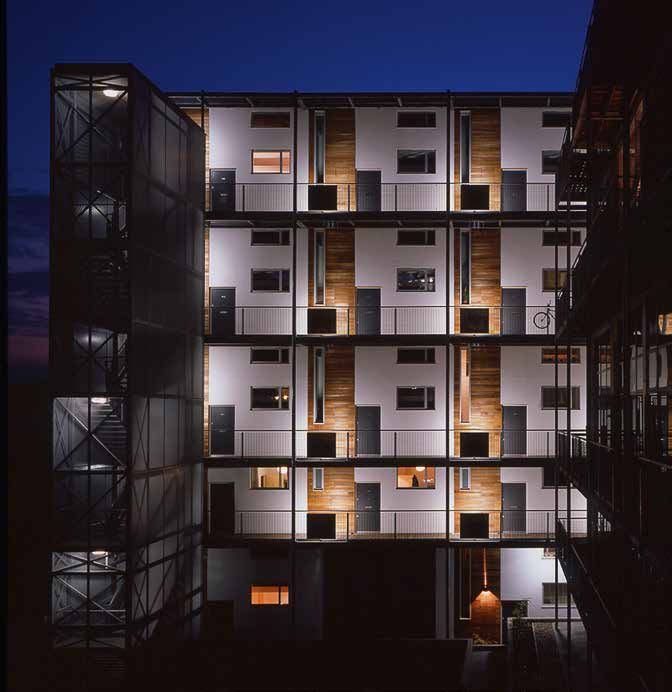
The traditional office – what went wrong?

                                          Many of us have spent more time in our              Office space is becoming smaller. Over the
                                          offices than we have at home. Most of us            last 10 years, in New York City for example,
                                          spend more time working than sleeping.              space per employee has fallen by 25%
                                                                                              with an average allocation of just over
                                          Over the course of the 20th Century,                12m2 per employee.
                                          efficiency theorists and organisational
                                          psychologists have influenced the design            In part, this is a reaction to the more nomadic
                                          and layout of the office environment.               habits of employees. But this is scant
                                                                                              consolation when you want space to think.
                                          The sheer cost of refurbishment or moving           Research by Kim and de Dear at Sydney
                                          premises is something that fills management         University suggests that adequate space
                                          with dread. However, when we look around            is the single most important factor in how
                                          our office base, if we have one, can we             much we enjoy our offices.
                                          honestly say that it is a place where we look
                                          forward to coming to every day?                     At the moment, most people in the Leitz’s
     Office space is becoming smaller.                                                        European research sample are happy
                                          ‘Everywhere Working’ means that what we             with the current space allocation in their
     Over the last 10 years, in New       do, and where we do it are now independent.         main offices. Only 25% rate their space
                                          We can take a long hard look at what might          as excellent, a further 60% rate it as good.
     York City for example, space per     have gone wrong with the office concept
                                          and what the potential remedies are.
     employee has fallen by 25% with
                                          One key issue is where offices actually
     an average allocation of just over   are located. Fixed offices in large urban
                                          areas are often remote from where people
     12m2 per employee.                   live. Equally, the relocation of offices to outer
                                          suburbs and business parks cause similar
                                          accessibility problems, with parking being
                                          an issue for both.

 p                                                                                                                                              p

16                                                                                                                                              17
Stressful space                                                                                     Work isn’t working

           The main developments in office                 Organisational psychologist Matthew Davis          Given that the main reason for being at work
           configurations over the last 40 years           found that decreased levels of concentration       is actually to do work, it is discouraging to see
           or so (cubicles and open plan)                  and increased incidence of stress are far          that research in the USA, Europe and Asia
           both have drawbacks.                            more common in open layout offices.                by Ipsos and the Workspace Futures Team
                                                           At the same time, the Queensland University        of Steelcase showed that 85% of people find
     Leitz asked their 800 person                          of Technology claims that 90% of studies           it difficult to concentrate in the office.

     sample what their preferred office                    show open plan associated with higher levels
                                                           of stress and blood pressure.                      Of those surveyed, virtually all said working
     space would look like. 25% work in                                                                       privately was important to them but only
     an enclosed single person office –                    Leitz asked their 800 person sample what           41% said they could do so. 1/3 had to leave
     a relatively senior profile – but over                their preferred office space would look like.      the office to get work completed.
                                                           25% work in an enclosed single person
     50% would have an enclosed office
                                                           office – a relatively senior profile – but over    This is in line with findings from Gallup’s
     as their preferred environment.                       50% would have an enclosed office as their         State of the Global Workplace, which found
                                                           preferred environment.                             that only 10% of workers around the world
           Cubicles depersonalise, are associated with                                                        are engaged and inspired at work, with 2/3
           battery farming and have distracting noise      In both cubicles and open plan, it’s not           feeling disengaged and unmotivated.
           issues (mainly that you don’t know where        surprising that people are increasingly
           it’s coming from) adding to the confusion.      retreating into their own internal space           At the same time, those who spend up to
                                                           created by headphones.                             20% of their time working remotely are the
           Open plan has the benefits of creating                                                             most engaged of all workers surveyed.
           an esprit des corps (in theory), as well as     Whilst only 25% of our sample said this is
           giving management a visual audit of who         acceptable where they work, it should be           No wonder, you might think, that 35% of our
           is doing what. The most widely reported         viewed in the context of the rise of millennials   Leitz sample would prefer to spend more time
           disadvantages are noise, lack of privacy, and   in the workplace. For them, headphones are         working outside the office in the interests of
           the consequences of shared light and heat.      part of an everyday work uniform.                  delivering better results.

 p                                                                                                                                                                p

18                                                                                                                                                                19
Designed and built by Space & Solutions
The new office model Less Dilbert™, more Google
The good news for people who spend the Office design in the past was functionally Offices are becoming multi-functional A word of caution here; being extreme
majority of their time at a central location is oriented. It was based on; who can fit where, locations, with innovations coming from in approach can be counter-productive.
that modern office designers are recognising and in the most efficient way. Now a more two principal areas. As designer John Ferrigan put it, “I’ll hear
the shortcomings of the conventional office. humanistic approach is evolving. Think of clients say, ‘we want to be more like Google’.
a club, but where the main activity is work. On the one hand, there are larger tech I tend to challenge them and say, ‘Is that
organisations, which use their premises really what you want, or do you want to find
On the one hand, there are larger This doesn’t necessarily mean that as an extension of their brand, so that the out how company identity is expressed
tech organisations, which use companies are putting workers first from building becomes a medium in its own right. through physical space?’ ”.
their premises as an extension a position of conscience. They realise Google, Apple and also Lego are prime
that happier workers will be more efficient, examples of this. In comparison, with offices designed and
of their brand, so that the building
less distracted. fitted 10 years ago or more, you are now
becomes a medium in its own right. At the other end of the scale, there is more likely to find a modular approach
Google, Apple and also Lego They take less time off and are more motivated innovation in the use of space from smaller, to space with greater variety and purpose
are prime examples of this. to actually turn up to work at all. They are also often creative companies, who are able to in these alternative designs. Design isn’t
likely to be prouder of where they work and take a start-up approach without the burden just about environment, it’s about mood,
who they work for. All this means they are less of existing infrastructure. behaviours and company brand culture.
likely to defect to a competitor with newer,
more user-friendly premises.
p p
20 21Form and function
What we are seeing is a greater use of Intelligent spaces that use light and sound to
zoning, so that different areas have layouts, create a desired ambience, a meeting style
equipment, mood and character to fit or project are also more commonplace.
different purposes. All future offices will have intelligence built
in, becoming digitally connected and able
More thought is going into internal to respond to individual mood. In addition,
connectivity, with areas flowing into they’ll have personalised controls for heating,
each other, mirroring the breakdown lighting and air quality.
in departmental silos and the growth
in collaborative work practices. A recent study in the journal Nature Climate
Change identified a significant difference
More thought is going into internal between the temperature requirements
of men and women. Women prefer
connectivity, with areas flowing
the average temperature in the office
into each other, mirroring the to be 25ºC, compared to 22ºC for men.
breakdown in departmental silos It’s important to note however that nearly
Photo courtesy of Steelcase Inc.
and the growth in collaborative all temperature controls favour the latter.
work practices. Social facilities are often now seen as an When Panasonic opened their UK offices Leitz asked their European sample about
important part of the work environment rather in the 1980s, discreet curtains in meeting acceptable ways of taking a break in their
than an indulgent extra. The thinking is that rooms disguised pull down beds. workplace. Over 60% said leaving the
break-times and down-times are better spent The problem was that despite the accepted premises to get a coffee wasn’t an issue,
dining, playing or exercising than staring out Japanese habit of nodding off during but only 8% said that taking a 20 minute
of the window (if you have one) or catching meetings (called inemuri, translated nap would be tolerated. Both would take
up on Facebook (if your employer hasn’t as ‘sleeping while present’), few people the same time and, arguably, the nap
blocked it). had the courage to use them. would be more beneficial - but they send
out very different signals.
Among other benefits, this type of approach Sleeping pods are still a rare sight in modern
to office design and equipment is bringing offices. Google have predictably had them
the amenities associated with remote for years and momentum is gathering, with
or home working back into the central concepts such as the EnergyPod created by
workplace, even the ability to tune out MetroNaps installed in offices by Huffington
and rest. Post, Cisco and P&G. Prevailing cultural
p beliefs go against this; is a sleeping worker p
22 23
an efficient worker?‘Everywhere Workers’
What would you rather be – an office worker Liberation is at the heart of the promise of
or an ‘Everywhere Worker’? ‘Everywhere Everyday Working. Free to work where you
Working’ sounds active and dynamic. want, where you want. Who wouldn’t want
It suggests a degree of self-sufficiency. a job like that?
‘Going to work’ used to imply a destination, ‘Workers of the world, unite! You have nothing
rather than an activity. It conjured up a mental to lose but your chains!’ is a quote attributed
picture to others of where you were and what to Marx, but we can be sure he wasn’t
you were doing. Now, work is where you are. referring to remote working when, and if,
From low flexibility and geographically tied he said it. Perhaps the modern ‘Everywhere
or fixed, to high flexibility and geographically Worker’ mantra would be ‘You have nothing
neutral or freed. to lose but your Wi-Fi’.
41%
Hours worked But the reality behind the concept is more
per week by location complex than that. Like any contract,
‘Going to work’ used to imply it has its benefits and also its drawbacks.
up to 2 hours Both parties – the employer and the
a destination, rather than an activity. up to 4 hours employee – have to be very clear what
4 – 8 hours they are letting themselves into, in this
It conjured up a mental picture 8 – 16 hours ‘Brave New World of Work’. In this section
more than 16 hours we’ll explore the issue from both sides.
to others of where you were
and what you were doing.
Now work is where you are.
p Main Home Serviced Client Travelling Coffee p
n Office
Home
d Office
ocation
avelling
e Shop
om in house
arate office
Office Office Location Shops
24 25Work from home …
The benefits … for 20% less?
‘Everywhere Working’ does bring the The average worker will also reap the benefits
possibility of liberation of a different kind. of more varied surroundings – and not just in
It’s a form of empowerment, transferring aiding their thinking. There is evidence that,
organisational responsibility to the individual. on the whole, workers who don’t always go
to a central work location are happier than
It involves doing the job on more personal, their habitually office-bound equivalents,
often better-informed terms rather than within and suffer less stress.
the command and control environment
of an inflexible, fixed office. Research published in 2015 by the University
of Montreal’s School of Industrial Relations
There is evidence that, on the showed that commuting is associated with If, for example, UK workers valued the time Alternatively, for someone like the average
higher levels of stress and a more negative they spend getting to work as highly as they UK or US worker who works from home
whole, workers who don’t always
attitude to work, with 20 minutes as the value the time they spend at work, then, at least one day a week, there are clear
go to a central work location tipping point. Those commuting into the city, according to research from global recruiter benefits: less travel, time spent in the home
are happier than their habitually rather than the suburbs or rural workplaces, Randstad, the average commute would environment, contact with the family,
office-bound equivalents, and suffer at higher levels. have an equivalent value of £5,700. and fewer irrelevant interruptions.
This represents nearly 20% of their
suffer less stress. In 2014, a report by the Office of National average annual salary. According to research done by the University
Statistics in the UK showed that, on average, of California, the average US office worker
If travel broadens the mind then so, daily commuters have lower life satisfaction, Leitz asked their 800 sample what is interrupted every 3 minutes, with around
potentially, does the stimulation of changing a lower sense that their daily activities are percentage of their current salary they half of these ‘self-interuptions’. Afterwards
and varied locations for thinking and worthwhile, lower levels of happiness, would be prepared to forego for the benefit they spend 23 minutes recovering focus
interacting. Writers often employ a change and higher anxiety than non commuters. of working at home when it suited them. and momentum.
of scenery to stimulate the creative process. They also produce pollution as 30% of Nearly 50% said they’d be willing to be
From going for a regular swim or walk, to the UK surface emissions are estimated to be paid up to 20% less to do this. The reality is that few people in an office
wholesale relocation to another country. caused by travel to and from work have a working day. Instead, they have
Of course, there is also the whole area of what Jason Fried defined in his TED Talk
work-life balance. ‘Everywhere Working’ is a ‘Why Work Doesn’t Happen at Work’
broad term. At an extreme it can involve being as ‘work moments’; short bursts of activity
continually on the move, leading a lonely, punctuated by regular distractions.
nomadic existence with no sense of place.
The rise of contract and freelance work
is making this more prevalent.
p p
26 27The challenges … The alternatives …
The lack of a sense of a work base is a major Higher up the Maslowian hierarchy of For the ‘Everywhere Worker’ a number of Not surprisingly, coffee shop working
potential issue for people spending part, or needs from these basics there is also the options other than the office are emerging. is prevalent in smaller companies (less
all of their time, remote from a central office. fear of being disconnected from the social Coffee shops are positioning themselves traditionally minded, probably with less
environment of the workplace. This can range as surrogate offices; with free Wi-Fi, space) and more likely to be adopted by
With offices being reconfigured for flexible from being out of touch with gossip (which device-charging facilities, and even business younger office workers, possibly on the
working, in many workplaces there is a is increasingly unwise to put in a work email lounges for workers who don’t want noise basis that it’s an extension of the working
decreased sense of defined territory. as many have found to their cost), to being as background to their thinking. habits they adopted as a student.
Desks become flat surfaces rather than overlooked and forgotten in favour of those
somewhere with a personal touch or stamp. who are more continuously present. 30% of the Leitz sample uses coffee shops We noted the growth of serviced offices
as a work base during an average week. in ‘Work Smart. Work Mobile’. Nearly 40%
For those who work in the For those who work in the office full-time, the 24% spend up to 4 hours there – the of the Leitz European sample use serviced
office full-time, the image of an image of an ‘Everywhere Worker’ is often that equivalent of half of a working day. offices in the course of the average week.
of someone lounging around, writing emails Dubbed the ‘Coffice’ by some, the act of 5% spend more than 2 working days there.
‘Everywhere Worker’ is often that of in their dressing gown or walking the dog working there has been identified in many
someone lounging around, writing rather than focusing on the matter at hand. studies as a productivity booster. The most common model is essentially
emails in their dressing gown a modern, but traditional office space
However, there is a different price to be They have different environments from your in a hub location, bland in feel and designed
or walking the dog rather than
paid, with a tension between flexibility and home or office, which in turn can generate to please most of the people most of the time.
focusing on the matter at hand. availability. ‘Everywhere Workers’ are often different ideas. Research by the University
seen as ‘Anytime Workers’. Their personal of Chicago showed that ambient noise In tune with modern ways of working,
Access to more mundane, although still lives become even more blurred into work, around 70dB, rather than lower levels of this model is diversifying to become
essential items, like staplers, punches, more ‘always on’ than their fixed-space- sound is proven to enhance performance more individualised, less homogeneous.
desk trays and filing - don’t forget the average equivalents, who may still be operating and support innovation. Services such as
office worker still handles 10,000 + units at a semblance of 9-5. ‘Coffitivity’ have emerged, imitating the Examples include The Office Group, WeWork
of paper a year - becomes problematic sound of a typical coffee shop so that office (whose valuation doubled to $10 billion
without a sense of place and ownership, One of the biggest challenges for HR and and home workers can reproduce that in the first 6 months of 2015 and described
and a desk drawer to call your own. the individuals themselves is switching off. environment and stay focused for longer. by its founder as a ‘physical social network’),
Fatigue becomes an issue. It probably The Clubhouse, and Second Home, in a
In the Leitz research sample, 81% of isn’t a coincidence that the growth of remote In addition, if your local coffee shop doesn’t segment referred to as “Office as a Service”.
respondents report having an assigned working in the USA has been accompanied have fast Wi-Fi, or takes issue with you using
space to sit with 19% ‘hot desking’. by 20% fall in the number of vacation more of their electricity than you spend
Interestingly, ‘hot desking’ is the preference days taken. on muffins, there’s coffice.co. Linked to
of a slightly higher proportion than currently Foursquare, it helps workers find a coffee shop
p have it, (28%). This still leaves a clear near them with the right facilities and ambience. p
28 29
majority wanting their own territory.The new world of home working
Home working means ...

           According to the old saying, ‘Home is where       In this part, we’ll explore some of the          In the 2015 Leitz survey, a reassuringly similar
           the heart is’. For most of us, it’s also where    challenges involved in letting work not just     62% of a sample of European workers said
           the work is for at least part of the time.        move into, but in some cases dominate,           that, in the course of each week, they do part
                                                             our home lives.                                  of their work at home. For most, much
     Home working means any                                                                                   of this consists of work beyond their

     number of things – from full time                       Full-time home working is embraced by only       contracted hours.
                                                             a few. Although over half the businesses
     employment off-site, to an agreed                       registered in the USA are home based, only       Many studies suggest that those who do part
     number of days a month or week,                         2.5% of people describe the home as their        of their work out of the office work longer
     to the more informal catching up                        primary place of work. Typically, they will      hours than full-time office employees.
                                                             be people in repetitive or high-end jobs,
     that most of us find ourselves doing
                                                             where a lot of deep thinking is required.        There is a difference between official and
     in the evening or at the weekends.                                                                       unofficial working at home. Most employment
                                                             However, around 50% of workers in                contracts stipulate hours to be worked, as
           In the past, taking work home could mean          developed markets work at home some              well as start and end times (although with
           that you were fiercely ambitious, ceaseless       of the time. This rises to 80% for office        flexible working in the ascendancy this will
           in your desire to perform at your best – or not   workers. This is confirmed by results from       become decreasingly common).
           up to the job, unable to cope with the tasks      The KPMG Future of Work survey. The survey
           you were given.                                   showed that just over 1/4 of HR directors        It is worth noting that in September 2015,
                                                             and 1/3 of top level executives allow their      the European Court of Justice ruled that time
           Home working means any number of things           employees to work at home at least               spent travelling to and from first and last
           – from full time employment off-site, to an       one day a week.                                  appointments by workers without a fixed
           agreed number of days a month or week,                                                             office should be regarded as working time.
           to the more informal catching up that most        Part of this is down to cost benefits but a      This could mean that many ‘Everywhere
           of us find ourselves doing in the evening         more holistic view of work and the employee      Workers’, for example sales representatives,
           or at the weekends. Using up, in fact, the        also plays a role. From saving money to what     may now be in breach of EU working
           leisure time that we were promised would          Global Workplace Analytics describes as          time regulations.
           be the main benefit of an automated and           “A greater emphasis on remote work options
           computerised world.                               as part of a holistic strategy to reduce
                                                             work-life conflict, attract and retain talent,
                                                             improve sustainability, and increase
                                                             employee engagement”.

 p                                                                                                                                                               p

32                                                                                                                                                               33
How efficient is home working?
In terms of reported behaviour, 75% of the In this research, a sample of call centre Assuming that you are working at home for part of the time,
Leitz sample believe they are more productive workers who were given the option to spend what advantages will you enjoy?
in the office than the home, although they 4 days working at home and 1 day in the
attribute different types of thinking to different office, showed a higher level of productivity Microsoft’s ‘Work without Walls’ sampled more than 4,000 information workers
environments; 46% say they are more creative (13%) than the control sample, which in the manufacturing, financial services, retail/hospitality and professional services
working at home but only 30% feel they can remained in the office full time. industries. They identified the following reasons why people like working from home.
concentrate more.
The improvement was attributed to a 100%
In this research, a sample of combination of: reductions in breaks, time
call centre workers who were off, sick days and relative peace and quiet.
Resulting in a greater number of calls taken
given the option to spend 4 days
per minute, the chosen definition
working at home and 1 day in the of productivity in this case.
office, showed a higher level of
productivity (13%) than the control As a result, Ctrip offered the option of home
working to all employees – but 1/2 of the
sample, which remained in the trial sample chose to return to the office
office full time. full-time, with loneliness and isolation cited
as the main reason. It is important to note
This may be due to personal comfort. that this is a single study, in one culture
A 54% majority find the home a more (possibly stereotypically with a higher work
physically comfortable place to work ethic than characteristic of the European
than their office. In the broader world, norm). In addition, it was done in one
there is limited empirical evidence area of business that requires very little
to support the case for, or against, interactivity with other employees and with
home working and efficiency. a self-selecting sample, many of who clearly
0%
liked the idea of working at home.
A study by Stanford University on a Chinese
travel agent, Ctrip, is the most frequently The same article in the Harvard Business
quoted example. If you Google ‘working Review claims that with most jobs “A good
from home’ and ‘benefits’, 3 of the top 4 links rule of thumb is to let employees have one
will cite this research, so there is clearly to two days a week at home. It’s hugely
a need for more studies on this topic. beneficial to their well-being, helps you attract
p talent, and lowers attrition”. In conclusion, p
34 35
it’s probably best for employers and
employees to do a little of each.The loneliness of the
Free at last long distance worker
There is an overlap, but the benefits can be Of the Leitz sample, an overwhelming Working at home one day a week or for a Working at home doesn’t mean people
grouped into three main areas: 65% said they are at their most effective few hours across evenings makes limited are less collaborative, it just means
between 8am and midday. Which leaves demands on one’s personal resources. it is done in a different way.
• Quality of personal life (a not insignificant) 35% who feel they
perform better at other times. But when it becomes part of a more formal Facetime, Skype, Google Hangout,
• Greater efficiency or frequent routine, the benefits have to be and intranet meeting places mean
There is a strong argument for organising balanced against a range of issues. that you can be as visible (or not)
• Less travel cost in time and money. your working day to focus on activities as if you were physically present.
that require your concentration or creative As noted in the Ctrip study earlier, solitude
The problem is that, while these are all inspiration at the time that best suits you. is often cited as a major drawback of home Nevertheless, concerns still exist.
motivating for the employee, only one This is a time management approach working (this is of course the flipside of not Of the Leitz research sample, over
is of interest to the average employer. used by many writers. being constantly interrupted). a 1/3 cite being out of touch, or out
of the loop as the biggest concern they
When do we do our best work? The reality is that you are only as isolated have about mobile and home working.
as you want to be. Modern work is as much
A fundamental problem with working in a about collaboration as personal projects.
central office location is that most people are What time of day are you
expected to keep similar hours. This doesn’t at your most productive?
necessarily fit with everyone’s views of when
they feel most energised and productive.
Homeworking gives people the freedom
to work when they feel most like it.
5% 65% 8% 14% 5% 3%
For some it will be the three hours after
waking. For others it will be afternoon,
when people who have been incarcerated
in offices are stampeding for the doors,
and quiet thinking has to be done against
the background of a vacuum cleaner.
p p
36 37‘Everywhere Working’
– and getting things done
Most of us have benefitted from training at Given the high level of interruptions in the Routines are usually set to match the For those who don’t have the luxury
our place of work. Whether it is learning a office (every 3 minutes on average, writer’s lifestyle and self-perceived times of rigid self-discipline, the following
new skill, being exposed to advances in our as noted earlier) it is ironic that employers of highest creativity – again quite different guidelines might help:
area of expertise, or being prepared for more are concerned about distractions when from the 9-5 mentality of most workplaces.
senior roles, training has been a constant part working remotely. Know what you need to do – make a list
of our career development. “When I am working on a book or a story of tasks for the next day the evening before.
In fact, among the Leitz sample, the lack I write every morning as soon after first This way you know what you’re going to be
of interruptions is actually the second most light as possible.” (Ernest Hemingway) doing and, in theory, should sleep better.
Given the high level of interruptions important benefit derived from home working,
in the office (every 3 minutes after not having to commute. “I work in the morning at a manual Start with the most important tasks and/
on average, as noted earlier) typewriter. I do about four hours and then or those you want to do the least
The liberation of ‘Everywhere Working’ can go running. This helps me shake off one – this means you are doing the hard stuff
it is ironic that employers are be daunting, but if your output falls in quality world and enter another.” (Don Delillo) when you are fresh, avoiding the nagging
concerned about distractions and quantity after working out and about in your brain telling you that you should be
when working remotely. or at home, someone is bound to notice. “I’m always in a hurry to get going, though doing XYZ instead.
It’s probably best for your career if the first in general I dislike starting the day. I first
person to spot it is you. have tea and then, at about ten o’clock, Cut yourself off from interruptions
Some companies, usually larger I get under way and work until one. Then – an advantage of ‘Everywhere Working’
corporations, put great store by it, but The habits of authors can be instructive. I see my friends and after that, at five is that you can decide to turn off your mobile,
there is limited evidence that even the most They tend to be self sufficient, unless they o’clock, I go back to work and continue computer and focus. The world of work is
progressive corporations have prepared need to meet the schedule of a regular until nine.” (Simone de Beauvoir) unlikely to spin off its axis if you’ve isolated
their ‘Everywhere Workers’ for a more fluid publication. While they usually work from yourself for an hour or so.
style of working. home, many have routines which the Two things to note; there is no magic
‘Everywhere Worker’ will recognise. formula for this type of independent working, Make breaks rewarding – listening to
Self-discipline to efficiently work out of the and the authors had a structure and music, going into the fresh air or even doing
office or at home is always a fundamental JK Rowling wrote in a coffee shop to save routine that worked for them. press-ups like Kurt Vonnegut isn’t something
issue for companies that decide to offer on heating, Gertrude Stein and Nabokov liked you can easily do in the conventional office
location neutral working options. to write in the car. Maya Angelou created her environment. (Perhaps in years to come,
own remote office, by renting a hotel room archaeologists will puzzle over why the
for writing in the same town she lived in. excavated bodies of ‘Everywhere Workers’
seem more muscular than the norm).
p p
38 3951 live/work units at Kings Wharf, Hackney, London | 2001
Stephen Davy Peter Smith Architects | © Nick Hufton
Space - the final frontier
Earlier, we discussed the pressure of space One interesting development to address
in offices, but having a discrete or defined issues like this is the concept of ‘workhome’, Main Office
area to work, focus and concentrate in the which combines both work and living space
home is often the biggest challenge faced together. One of the earliest of these is the
by ‘Everywhere Workers’. King’s Wharf development in London, which Home
comprises 57 live/work units alongside 13
Homes are getting smaller, with wide dedicated business premises. In a way this
Serviced Office
variations across Europe. From a miserly is nothing new – most cottage industries have
76m2 in the UK, 83m2 in Sweden, 109m2 operated like this for centuries. The difference
in Germany, 112m in France, to up
2
is that premises are now being created to try Client Location
to 137m2 in Denmark. to deliver the best of both worlds. One of the
major challenges in many countries relates to
Research carried out by Leitz across legislation and planning, with some units hard Travelling
a European sample shows that around to classify.
30% are working in their living or dining
room, and 20% in the main or spare Is this overlap between home and work
Coffee Shop
bedroom. Over 50% of ‘Everywhere Workers’ environments a good or bad thing? Many When working at home, which of the following
have no dedicated separate room at home believe that working from home can increase most closely reflects your work space?
to serve as an office area. stress if employees work in the same place
where they sleep and relax. Separate office
41%
Compromises always have to be made, room in house
especially for those with families where the Tammy Allen, a psychology professor at
Separate office room
challenge lies in building a degree of flexibility the University of South Florida, believes that 8%
in the garden/outside
into home configurations. employees working from home should create
“a specific place at home where you work Office room that doubles
as a spare bedroom 11%
It’s no wonder that the same survey shows that has a door, and that door may even be
that lack of space and the presence closed during the day if there are others in the Office room that doubles
8%
of domestic noise are the biggest issues house.” Easier said than done if you live in a as a main bedroom
for people working regularly from home. one bedroom flat the size of a tube or metro
carriage, the average size of a UK new build, Living Room 24 %
or have small children or pets demanding
your attention. Dining Room 6%
p p
Kitchen 2%
40 0 10 20 30 40 50 41Space - the final frontier
Personal organisation is an old issue. Space isn’t just about having a few flat m2
Parkinson’s Law stated that ‘work expands to lay out papers or place a laptop. Filing and
to meet the time available’. A follow-up storage are issues, as the table below shows.
might be ‘work expands to meet the Over 2/3 don’t have a filing cabinet or even
space available.’ a specific drawer for putting work stuff away.
Out of sight is out of mind – so perhaps it’s
Some people are neat and tidy, but it is no wonder that so many people have
very easy for the home office environment problems switching off.
to become disorganised, with papers and
materials spreading around the house or flat. Despite the digitisation of work, most people
still prefer paper when it comes to deep
In 2015, The Guardian newspaper in the UK reading or concentration.
invited people to send in pictures of their work
area. Many of the respondents were home Of the Leitz sample, 52% read off paper,
workers and there was a degree of similarity and 54% write on paper in their office
in the desk areas submitted, in terms of being everyday. Only 12% do it one day a week
cramped and chaotic. or less.
Easy access to materials at home is another The paperless office, as first proposed over
challenge. Despite how much most of us 40 years ago, or indeed the paperless home,
work at home, we don’t have the same remains a long way into the future. So the
equipment as we do at work as the table problem remains – where are we going
from the Leitz research shows below. to put it all?
Which of the following do you have in your office and/or home?
Have at home Have at office
Stapler 66% 75%
Hole punch 48% 72%
Lever Arch Files 48% 72%
Storage boxes 46% 73%
Filing cabinets 32% 75%
p p
Drawer for work related items 30% 75%
42 43Looking good – feeling great
In addition to space, there is the issue of The trend to BYOD (Bring or Buy Your Own A few examples: Leitz asked their sample about these
aesthetics. You’ve carefully planned the Device) is resulting in forward thinking intelligent devices. They found that
interior of your home and now you’re trying companies giving their employees budgets to Nest monitors both daily usage 23% already have them. A further 19%
to squeeze a workspace into it. Even worse, buy their own equipment. However, we seem of a person’s home and their presence. would be very keen to have them in the future.
your stapler doesn’t match your kitchen to be encouraged into thinking this is only You can forget about having to manually
accessories. This doesn’t seem to have for technology, and rarely for home specific adjust heating, because it is done for you Looking into the future, potential smart
occurred to many, but our research equipment. (and there may be personal tax benefits home innovations, which will make life
shows that: for the self-employed in working out how easier and more productive for home
24% of the Leitz sample have a formal much energy is being consumed in a workers, will include soundproofing spaces
• 70% of the Leitz sample sees BYOD policy at their place of work, a further working context). with invisible baffles to keep noise in and out.
aesthetics as more important 18% can buy products if it is signed off by This means means that the home worker’s
at home than in the office. their superior. Less than 1/4 believe it would Amazon Echo responds to voice commands professional impression will no longer be
be acceptable to spend company money to dim the lights, control temperature, undermined by the sounds of barking dogs
• 73% want their work equipment on office furniture, such as a desk lamp, or turn on your desk fan. and fighting children on conference calls.
to match the décor of their home. for home use.
Apple’s Siri will also allow you to send Space-saving will come from flat surfaces
Perhaps this explains why over half have There is a lack of logic here, as more and more voice commands to devices around the operating as screens. Intelligent furniture
a different brand of these items at home people are working at home, whether formally home. The ‘Everywhere Worker’ may find will recognise who you are, detect the mood
from the ones they have at work. or informally. The outcome is that a large the instant responsiveness of digital you are in and adjust itself accordingly.
proportion of the ‘Everywhere Workforce’ are equipment faster and less questioning All paper will be digitally scanned and then
The Leitz Style or WoW collections of desktop not only doing work outside of their contracted than administration assistants. self-destruct, solving the home filing problem
products – files, letter strays, staplers, and hours at home but are also subsidising the identified earlier.
folders – are ranges that offer aesthetic company that they work for, when buying their Samsung have pledged that everything
effects suitable for different environments, own equipment and materials. they produce will be internet-enabled by Domestic versions of workspace pods
bridging the home and office gap. 2020, domestic and personal appliances or micro lounges such as Brody (currently
Moving on to technology; most commentators are core to their offer. Their ‘Smart Things only available commercially, see images on
believe that the home has the potential to be a Starter kit’ retails at around €300; an ideal pages 9&24), may allow home working to be
more productive and rewarding place to work way to spend your BYOD budget. in a defined space, and stop the spread to
than the office. This is in terms of personal every room in the house.
control of your environment (heating, lighting,
ambience) and home audio/video. Domestic
appliances are leading the way faster than
office infrastructure, which is more costly
p and disruptive to introduce. p
44 45You can also read


