World Bank Activities in
 European Union Member States:
The What, Where, Why, and How
←
→
Page content transcription
If your browser does not render page correctly, please read the page content below

World Bank Activities in European Union Member States: The What, Where, Why, and How
Addressing
    Europe’s
    Challenges

    E  urope is facing new challenges in a world
       rendered more uncertain in the context of

    • Rapid technological change
    • Growing inequalities in opportunity
    • Demographic aging
    • Youth unemployment
    • Migration
    • Climate change

2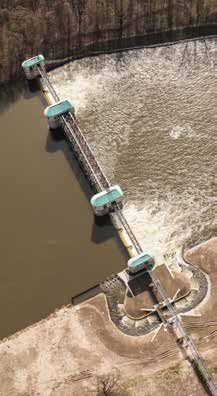
Our Value
                                                                          Proposition
T    he World Bank is a multidisciplinary
     institution        that        aspires        to   generate
cross-cutting solutions to countries’ most complex development
challenges. As a “global solutions bank” we are also present in
Europe and have developed a strong operational partnership with
many EU Member States and with the European Commission.

To achieve our twin goals of eradicating extreme poverty and promoting shared prosperity,
the World Bank aims mainly to increase opportunities for society’s most vulnerable and
helping countries reach sustained growth:

1    GLOBAL EXPERIENCE
     COMBINED WITH IN-DEPTH                        2    MULTISECTORAL,
                                                        INTEGRATED SOLUTIONS
     KNOWLEDGE OF THE EU

     from experts and teams with expertise that         that    combine     the     macro-     and
     has been derived from working “hands               microeconomic perspectives of policies
     on” across more than 180 countries at all          and programs to ensure consistency,
     income levels and a large staff dedicated          coherence, and impact, and that partner
     to working solely on EU Member States’             with European institutions and multilateral
     programs                                           development banks to leverage financing
                                                        and results

3    BROAD AND INNOVATIVE
     INSTRUMENTS                                   4    HANDS-ON SUPPORT FOR
                                                        IMPLEMENTATION

     that include program and project loans,            for governments and agencies pertaining
     results-based     financing,    guarantees,        to program and project conceptualization,
     financial market instruments (such as              design, implementation, coordination, and
     swaps), technical assistance, and in-depth         monitoring and evaluation
     analytical work

                                                                                                      3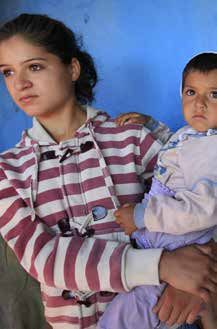
World Bank Expertise

    The World Bank offers solutions through its more than 5,000 technical experts who work
    in the following Global Practices and Cross-Cutting Solutions Areas.

            Agriculture            CROSS-CUTTING                            Poverty
                                     SOLUTIONS

         Environment &
        Natural Resources                                              Macro & Fiscal

                                             Jobs

         Health, Nutrition                                              Trade &
          & Population                                               Competitiveness

                                            Climate

         Social Protection
                                                                             Water
             & Labor
                                         Public/Private
                                          Partnerships

         Social, Urban &
                                                                   Energy & Extractives
         Rural Resilience

                                            Gender

            Education                                                      Governance

                                       Fragility, Conflict
                                          & Violence

        Finance & Markets                                             Transport & ICT

4
Our Recent Work in
the European Union
                                                                                                       Finland
                                                                                     Sweden

    Countries with a Country
    Partnership Framework (lending)                                                               Estonia
    Countries with Reimbursable
    Advisory Services and/or                                                                      Latvia
    trust funds                                                            Denmark
                                              Ireland    United                                 Lithuania
                                                                Netherlands
                                                        Kingdom
    Non-borrowing E.U. Countries

                                                                                         Poland
                                                                 Belgium Germany
                                                        Luxembourg               Czech Rep.
                                                                                         Slovak Rep.
                                                            France               Austria
                                                                                          Hungary
                                                                                Slovenia
                                                                                                       Romania
                                                                               Croatia
                                   Portugal                                                             Bulgaria
                                               Spain
                                                                                 Italy

                                                                                                   Greece

                                                                                                                   Cyprus

The World Bank offers its clients                              economic analysis or technical assistance,

in the EU two core products—                                   financed by clients themselves (known as

finance and knowledge.                                         Reimbursable Advisory Services, RAS) or
                                                               through trust funds (TFs) set up by the
Four countries currently benefit from our full
                                                               European Commission.
portfolio of instruments, including lending
and guarantees: Bulgaria, Croatia, Poland                      Lending commitments in the
and Romania. Projects for each country are                     EU totaled more than US$10
guided by a full strategy document called                      billion since 2012. Over the same
a Country Partnership Framework. Work                          period, RAS and TF activities in
with other EU Member States is primarily                       the EU totaled well over US$100
realized through advisory services, such as                    million.
                                                                                                                            5
T   he following profiles illustrate recent innovative and impactful
        projects. They showcase the kind of economic analysis and
    technical assistance that the World Bank supports within the EU.

    LENDING

      WORLD BANK FINANCIAL ASSISTANCE at attractive International Bank for Reconstruction
      and Development (IBRD) terms can take the form of (1) budget support through
      DEVELOPMENT POLICY FINANCING; or (2) project support through INVESTMENT POLICY
      FINANCING. A new instrument called PROGRAM FOR RESULTS also provides a results-based
      financing option for government programs. In addition, IBRD can deploy GUARANTEES to
      leverage significant private sector financing by utilizing its AAA rating and accompanying
      that with a targeted intervention.

                                    ROMANIA FISCAL EQUITY AND GROWTH
                                    DEVELOPMENT POLICY OPERATION
                                    To achieve sustainable development and reduce poverty, Romania
                                    faces the challenge of increasing its competitiveness, attracting
                                    investments, and achieving private sector-driven growth—all while
                                    addressing the need for improvements in health, education, and
                                    public administration. With this in mind, the World Bank’s Romania
                                    Development Policy Operation focuses on boosting Romania’s
                                    growth potential by reforming corporate governance for state-
                                    owned enterprises (SOEs); reforming the cadaster system;
                                    increasing the energy sector’s competitiveness and reducing its
                                    carbon footprint; making public spending more efficient through
                                    investment prioritization; introducing centralized procurement in
                                    health; and modernizing budget revenue administration. To help
                                    reduce poverty and social exclusion, the Development Policy
                                    Operation supports the introduction of a new law on minimum
                                    social income, which would unify a system of fragmented, poorly
                                    targeted social assistance programs into a more efficient, targeted,
                                    means-tested system that is expected to help Romania achieve its
                                    2020 poverty reduction targets agreed on with the EU.

6
POLAND ODRA FLOOD PREVENTION
PROJECTS
Devastating flood episodes have highlighted
Poland’s intrinsic vulnerability to flooding due
to a combination of its mountainous and
hilly landscape, rapid pace of urbanization
and   industrialization,   and   decades     of
neglected water resources infrastructure. Following
the catastrophic flood of 1997, the World Bank partnered with
Poland to address its flood protection efforts and update its dike
systems and river infrastructure, most of which date back to
the early 20th century. Currently, two ongoing flood protection
projects aim to secure the lives, health, and property of millions of
citizens who live in endangered areas. The project agenda includes
infrastructure support and capacity building investments. Results
have been impressive; in less than 20 years, a considerable stretch
of the Odra River has been secured, while Wroclaw—one-third
of which was flooded in 1997—is today a vibrant European city
visited by thousands of international tourists.

BULGARIA DEPOSIT INSURANCE FUND PROJECT
In 2014, Bulgaria’s banking sector experienced turbulence in the
aftermath of the fourth largest commercial bank failure. The failure
was the result of governance problems in which deficiencies in the
regulatory and supervisory environment have required significant
government support (approximately 3.8 percent of GDP).
The World Bank’s financial support for the Bulgarian Deposit
Insurance Fund (which amounted to €300 million) combines
funding with knowledge transfer to ensure financial stability and
support important institutional reforms in deposit insurance and
resolution. The World Bank brought in critical global knowledge,
some of which stemmed from its participation in the International
Association for Deposit Insures (IADI) and its full membership
with the Financial Stability Board. World Bank lending also
served as a catalyst for additional resources, such as a parallel
€300 million loan from the European Bank for Reconstruction
and Development (EBRD).

                                                                        7
ADVISORY SERVICES

       The World Bank can provide professional technical advice that supports legal, policy,
       management, governance, and other reforms needed to address a country’s challenges.
       REIMBURSABLE ADVISORY SERVICES (RAS) allow us to provide clients with high GDP/
       capita levels that do not receive free advice financed from the World Bank’s own budget
       access to customized technical assistance on a reimbursable basis. Rather than compete
       with consulting firms, however, we see ourselves only as an “adviser of last resort.”

                                     CROATIA PUBLIC FINANCE AND SPENDING REVIEWS
                                     After becoming an EU member in 2013, Croatia was subsequently
                                     put under an Excessive Deficit Procedure by the European
                                     Commission. There is also a growing recognition among policy
                                     makers, and in Croatian society, of the need to make public
                                     spending programs substantially more effective and cost efficient.
                                     To this end, Croatia conducted its first ever spending review
                                     exercise from December 2014 to February 2015. Croatia aimed
                                     to identify options for alternative levels of funding to consider
                                     in the budget process. The World Bank helped the government
                                     define the methodology, scope, and pilots for spending reviews
                                     and design a package of savings options. This new mechanism,
                                     first tested through the World Bank project, provides a basis on
                                     which to build a more standardized process for challenging fiscal
                                     policies and programs.

    CYPRUS REUNIFICATION
    The “Cyprus problem” has divided the island since 1974, with the oldest UN Blue Helmet mission
    keeping the peace between Turkish and Greek Cypriots. Negotiations under UN auspices seem
    to offer new hope for reunification. To support an economically sustainable solution, the World
    Bank is analyzing the economic impact of five critical economic areas. To do so, it is drawing
    on its global experience with conflict—such as land reform in many postconflict countries—and
    its ability to mobilize and coordinate multisector expertise. Our top global experts are providing
    confidential, impartial, and pragmatic advice to both negotiating parties on thorny issues, such as
    devising a framework for restituting or compensating property of internally displaced persons or
    what structure a federal, united Cyprus might have.

8
GREECE GUARANTEED MINIMUM
INCOME PROGRAM
Greece is still suffering heavily from the
aftermath of the Eurozone crisis. At the
same time, the country lacks a well-targeted
welfare system to deal with impacts to the
most vulnerable. To address these issues,
the World Bank has been helping authorities to design,
pilot, and roll out Greece’s first national poverty-targeted
welfare program. The program is part of the Memorandum of
Understanding Greece signed with the institutions responsible
for monitoring its economic adjustment program. The World
Bank team is financed by the European Commission and brings
unique global knowledge to the task of implementing social
safety net programs in Greece and elsewhere. It is also providing
hands-on implementation support. As of April 2017, more than
185,000 applications had been accepted by this new program,
which is called Social Solidarity Income.
ROMANIA EDUCATION SECTOR PROGRAM
Romania faces the challenge of delivering quality education that will equip students with relevant
skills for the labor market. Its education sector has the lowest level of funding in the EU (3.6 percent
of GDP in 2016), far below the EU average of 4.9 percent. Moreover, it experiences high rates
of early school leaving and poor tertiary, vocational, and lifelong learning outcomes. There are
high disparities in educational quality among urban and rural areas, and the Roma community is
particularly vulnerable to exclusion. To address these issues, the World Bank supports the education
sector through capacity building that has resulted in key strategies, which include measures for
disadvantaged groups and Roma. Collectively, these measures are expected to impact 4.1 million
people and use €3.28 billion in funds. The World Bank is currently helping the government monitor
and evaluate the implementation of education strategies and address educational infrastructure
challenges. It has also been helping the country’s Roma Education Fund implement a successful
model of community-level early childhood development interventions. Finally, it is helping facilitate
the transition of students from upper secondary to tertiary education by supporting schools and
the education system and focusing on the vulnerable and marginalized. As a result, 1.6 million
students across 1,160 schools and 300 public faculties will get help acquiring the skills they need to
succeed in the labor market or to access more advanced levels of education.
9The EUROPE 2020 PROGRAMMATIC TRUST FUND was established to allow the European
Commission to avail itself of the World Bank’s technical assistance and analytical and policy
work for the purpose of pursuing the goals of Europe 2020, the EU’s growth strategy until
2020. The program manager is based in Brussels and since its establishment in 2012, it
has received around €25 million in EU contributions from various European Commission
directorates. The trust fund is managed under the EU-World Bank Group Framework
Agreement, which is the instrument governing the cooperation between the two partners.
EU 2020 PORTRAITS OF LABOR MARKET EXCLUSIONS
Financed by the Europe 2020 Trust Fund, the World Bank, together
with the OECD, has developed the Portraits of Labor Market
Exclusion to offer a new way to profile unemployed and inactive
populations in seven EU Member States and derive targeted
policy recommendations. Each “portrait” presents profiles of
individuals who have no or limited labor-market attachment.
The profiles are created from survey information and focus on
people who define themselves as unemployed, retired, or inactive.
Photo © Dominic Chavez/World Bank
The portraits attach stories to statistics. They examine detailed
labor market, demographic, and social circumstances to identify
distinct groups of individuals who are the potential beneficiaries
of income- and employment-support policies. The analysis, which
essentially combines labor market analysis and poverty profiling,
offers a pragmatic way to look at individuals through the lenses of
both poverty/welfare status and labor market indicators.
EU 2020 SUBNATIONAL DOING BUSINESS REPORTS
Unlike regular Doing Business reports that are focused on the
national level, subnational Doing Business reports capture
differences in business regulations and their enforcement across
locations in a single country. They provide data on the ease of
doing business in each location, and rank the results. In partnership
with the European Commission through the Europe 2020 Trust
Fund, the World Bank is producing subnational Doing Business
measurements in seven EU Member States: Bulgaria, Croatia,
the Czech Republic, Hungary, Portugal, Romania, and Slovakia.
The aim is to advance regulatory reforms at the regional level
to promote peer-to-peer learning and convergence toward best
regulatory practices, and to foster private sector development.
10Contact
BRUSSELS, BELGIUM | +32 2 552 0052
ARUP BANERJI
Regional Director for
the European Union
abanerji@worldbank.org
Our Team
ROGIER VAN DEN BRINK
Lead Economist and Adviser
for Macro & Fiscal, Governance
rvandenbrink@worldbank.org
ANDREA LIVERANI
CHRISTIAN BODEWIG
Adviser for Transport, Urban,
Adviser for Social Protection,
Environment, Energy, Agriculture,
Jobs, Poverty, Education, Health
Water
cbodewig@worldbank.org
aliverani@worldbank.org
ISFANDYAR KHAN
MARCUS HEINZ
Adviser for Competitiveness,
Adviser for Engagement with
Financial Sector, Innovation
European Union Institutions
and Technology, PPP
mheinz@worldbank.org
ikhan2@worldbank.org
SOFIA, BULGARIA | +359 2 969 72-29 ZAGREB, CROATIA | +385 1 2357-230
ANTONY THOMPSON
ELISABETTA CAPANNELLI
Country Manager Bulgaria,
Country Manager Croatia, Slovenia
Czech Republic, Slovak Republic
ecapannelli@worldbank.org
athompson@worldbank.org
WARSAW, POLAND | +48 22 520 80-00 BUCHAREST, ROMANIA | +40 21 201 03 11
CARLOS PINERUA
TATIANA PROSKURYAKOVA
Country Manager Poland
Country Manager Romania, Hungary
and the Baltics
tproskuryakova@worldbank.org
cpinerua@worldbank.org
WASHINGTON, DC, UNITED STATES | +1 202 473 1000
DIRK REINERMANN ANDREA KUCEY
Country Manager Southern Europe Representation in Washington, DC
dreinermann@worldbank.org akucey@worldbank.org
11www.worldbank.org/en/country/eu
You can also read


