2018 United Nations Global Citizenship Education Seminar - Amazon S3
←
→
Page content transcription
If your browser does not render page correctly, please read the page content below
2018 United Nations
      Global Citizenship
     Education Seminar
        The Role of Global Citizenship Education
            in the 2030 Agenda and Beyond

                          Time / Date
            2 p.m. - 5 p.m. Thursday, April 26, 2018

                            Venue
Conference Room 3 at United Nations Headquarters in New York

                        Co-Organizers
Background   The Sustainable Development Goals (SDGs) reflect the global
             community’s aspirations to build a more peaceful and sustainable
             future, and its determination to take bold steps that are urgently needed
             to shift the world towards a sustainable and resilient path. Around
             the world, however, increasingly complex and protracted crises are
             affecting humanity, especially with the rise of violent extremism.
             Consequently, the need for the benefits of Global Citizenship Education
             (GCED) is ever greater.

             Situated within the SDG Goal 4–Target 4.7, GCED has a crucial
             role in fostering peaceful, just and inclusive societies. GCED aims
             to empower learners to engage and assume active roles locally,
             nationally and globally, to face and resolve global challenges and
             ultimately to become proactive contributors to a more just, peaceful,
             tolerant, inclusive, secure and sustainable world. It builds on peace
             and human rights education and emphasizes the need to foster the
             knowledge, skills, values, attitudes and behaviors that allow individuals
             to experience a sense of belonging to the global community and to take
             informed decisions. GCED is a key element of Target 4.7 of SDG 4.

             In celebration of the 70th anniversary of the Universal Declaration of
             Human Rights, this seminar aims to shed new light on GCED in line
             with United Nations activities and concerns by exploring relevant
             concepts and methodologies already applied in other areas, including
             human rights, peace, security and development; and to explore
             opportunities for GCED to enhance and advance progress toward
             realizing sustainable development through discussion among different
             stakeholders.

             Building on the discussion during the 2016 United Nations GCED
             seminar focusing on “Global Citizenship Education: An emerging
             agenda for peace and preventing violent extremism and promoting
             sustainable development and human dignity” , the connection
                                                                                        ❶

             between GCED and human rights will also be explored. This includes
             efforts to develop tools and spaces for practitioners, and efforts
             to bring stakeholders in discussion on mainstreaming and political
             leadership by highlighting best practices, and promoting commitment
             and leadership towards the implementation of GCED.

             1) http://webtv.un.org/watch/2016-un-global-citizenship-education-seminar/5118777795001?page=1
Programme   Opening

            14:00-14:30
            Welcome
            • Antje Kristin WATERMANN, Associate Public Information Officer of United Nations Academic Impact

            The Role of Global Citizenship Education in the 2030 Agenda and Beyond
            • Ambassador CHO Tae-yul, Permanent Representative of the Republic of Korea to the United Nations
            • Ramu DAMODARAN, Chief of United Nations Academic Impact
            • CHUNG Utak, Director of the Asia-Pacific Centre of Education for International Understanding
            • Marie Paule ROUDIL, Director of the UNESCO Liaison Office in New York

            Keynote Speech

            14:30-14:50
            Global Citizenship Education and the Universal Declaration of Human Rights
            • CHO Hyo-Je, Professor of Sociology at Sungkonghoe University

            Panel Discussion

            14:50-16:50
            Key Topics
            1. Global citizenship education – tensions between global values and national values in a globalized
               world. How is GCED challenged by such phenomena and how can we promote GCED under these
               circumstances?
            2. How can we better communicate the complexity of the challenges around GCED and shape
               evidence-based policy and practice to achieve SDG 4.7? What are the next steps for advancing
               GCED at the local, national, and international levels?
            3. How can GCED contribute to the realization of the values and vision of the United Nations,
               especially with regard to human rights?

            Moderator
            • Orrin F. SUMMERELL, Public Information Officer, United Nations Academic Impact

            Panelists
            • Aaron BENAVOT, Professor of Global Education Policy at the State University of New York-Albany
            • CHOI Dong Ju, Dean/Professor, School of Global Service, Sookmyung Women’s University
            • Christian COURTIS, Human Rights Officer of the Office of the United Nations High Commissioner
                for Human Rights
            • Natalie Florea HUDSON, Associate Professor of Political Science at the University of Dayton
            • Carol Anne SPREEN, Associate Professor of International Education at New York University
            • Rita VERMA, Associate Professor of Education at Adelphi University

            Q & A Discussion

            Wrap-up and Closing

            16:50-17:00
            Summation
            • Vikas SURA, Public Information Assistant, United Nations Academic Impact
            • LEE Yangsook, Head, Office of External Relations of APCEIU

            The programme is subject to change
Speakers

           Ambassador Cho Tae-Yul

           Ambassador Cho Tae-yul is the 25th Permanent Representative of the Republic of Korea to the
           United Nations. He assumed his current position on December 5, 2016 and served as the Chair
           of the UN Peacebuilding Commission (PBC) for 2017. During his over 38 years of diplomatic
           carrier, he has held various senior positions in the Korean government including, among others,
           Vice Minister of Foreign Affairs (2013-2016), Ambassador to the Kingdom of Spain (2008-2011),
           Deputy Minister for Trade (2007-2008), and Ambassador to UN Office and other International
           Organizations in Geneva (2005-2007). He received the Order of Service Merit (Red Stripes) in
           2008 and the Grand Cross of the Order of Civil Merit, Kingdom of Spain in 2012.

           Ramu Damodaran

           Ramu Damodaran is Deputy Director for Partnership and Public Engagement in the United
           Nations Department of Public Information’s Outreach Division and is Chief of the United Nations
           Academic Impact initiative, which aligns institutions of higher learning and research with the
           objectives of the United Nations and the States and peoples who constitute it. He is also the
           current Secretary of the United Nations Committee on Information. His earlier posts with the
           Organization have included the Departments of Peacekeeping and Special Political Questions,
           as well as the Executive Office of the Secretary-General. He has been a member of the Indian
           Foreign Service, where he was promoted to the rank of Ambassador, and where he served
           as Executive Assistant to the Prime Minister of India as well as in the diplomatic missions in
           Moscow and to the United Nations, and in a range of national governmental ministries.

           Chung Utak

           Chung Utak is currently the Director of the Asia-Pacific Centre of Education for International
           Understanding (APCEIU), a UNESCO Category 2 Centre based in Seoul, the Republic of Korea.
           Formerly, he served as Assistant Secretary General and Director of Strategic Programs Divisions
           at the Korean National Commission for UNESCO. Additionally, he was the Associate Expert for
           the International Commission on Education for the Twenty First Century of UNESCO Headquarters
           from 1993 to 1995, and served as a visiting scholar at Graduate School of International Relations
           and Pacific Studies, University of California, San Diego from 2000 to 2002. His teaching career
           also includes his work as Adjunct Professor at Graduate Schools of International Studies at
           Sogang University and Sookmyung Women’s University in Seoul, the Republic of Korea. His
           academic focus was on International Organizations, Official Development Assistance (ODA), and
           Global Citizenship Education (GCED). He holds Ph.D and M.A. in Political Science from Sogang
           University, Republic of Korea.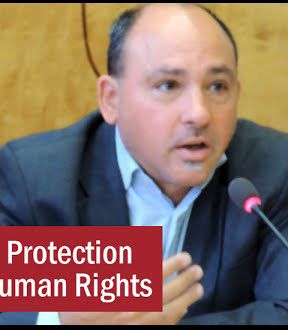
Marie Paule Roudil

             Marie Paule Roudil was appointed Director of the UNESCO Liaison Office New York effective 15
             June 2015. She previously was Head of the UNESCO Liaison Office in Brussels and the UNESCO
             Representative to the European Union having been appointed to that position in October 2010.
             She joined UNESCO in 1990, as a consultant in the Social and Human Sciences Sector. In March
             1993, she was appointed Programme Specialist within the Natural Sciences Sector. In April
             2001, she joined the International Standards Section of the Culture Sector, assisting in the final
             stages of the negotiations that led up to the adoption of the Convention on the Protection of the
             Underwater Cultural Heritage. From January 2003 to September 2010, Ms Roudil was Head of
             the Culture Section in the UNESCO Office in Venice, where she was responsible for developing
             and implementing a culture strategy for South-East Europe. Ms Roudil holds a “Licence en Droit
             public international (license in Public Law international),” a “Maîtrise de Droit privé (Master
             degree in Private Law),” and a “Diplôme d’études approfondies de Droit des affaires et Droit
             économique (Diploma of Advanced Studies of Business Law and Economic Law).”

Keynote Speaker

             Cho Hyo-Je

             Cho Hyo-Je is Professor of Sociology at SungKongHoe University in Seoul. He teaches human
             rights theory, civil society and development at both undergraduate and postgraduate levels.
             Among his works are Horizons of Human Rights (2016), Human Rights Odyssey (2015), In
             Search of Human Rights (2011), and A Grammar of Human Rights (2007). Prof. Cho served as
             commissioner of the Seoul Metropolitan Human Rights Council, founding member of the Korea
             Human Rights Commission, specialist consultant for the Justice Ministry Policy Panel, and
             adviser for Amnesty International Korean Section. Having studied at London, Oxford and LSE,
             Prof. Cho has held visiting professorships at the universities of Harvard, Berlin and Costa Rica.

Panelists

             Aaron Benavot

             Aaron Benavot is Professor of Global Education Policy in the School of Education at the State University of
             New York-Albany. His interests focus on comparative education research, international policy in education,
             and the interplay between education and sustainable development. His scholarship examines the changing
             contours of primary and secondary education, the growth of learning assessments, approaches to adult
             literacy and lifelong learning and education for sustainability. In 2007, he was elected to the CIES Board of
             Directors and later served as coeditor of Comparative Education Review and then CIES Secretary. He currently
             serves on the advisory boards of ten education and social science journals. From 2014 to 2017 Benavot served
             as Director of the Global Education Monitoring Report, an editorially independent, evidence-based annual
             report published by UNESCO. Its mandate is to monitor progress of education targets in the 2030 Agenda for
             Sustainable Development; consider effective policies to achieve quality, equitable and inclusive education and
             lifelong learning; and promote informed dialogue on education’s role in achieving sustainable development.
             As Director Aaron oversaw three reports -- Education for all: 2000-2015: Achievements and challenges (2015);
             Education for people and planet: creating sustainable futures for all (2016); and Accountability and Education:
             Meeting our commitments (2017/8). He holds a Ph.D. in Sociology from Stanford University.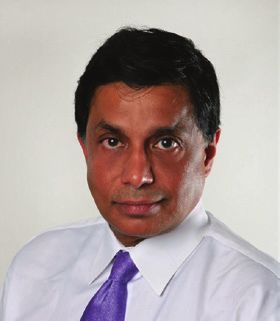
Carol Anne Spreen

Carol Anne Spreen is an Associate Professor of International Education in the Department of Humanities
and Social Sciences at New York University. Her research focuses on political and socio-cultural studies of
educational change, particularly the influences of globalization and corporate privatization on teaching and
learning. Her research has been published in a variety of leading peer-reviewed academic journals, in peer-
reviewed book chapters, and in several monographs or as published proceedings from carious consultative
groups. She received her Ph.D. in Comparative and International Education from Teachers College, Columbia
University. She also holds an M.Phil. in Educational Policy Studies from Teachers College, Columbia
University, an M.Ed. in Instructional Leadership from the University of Illinois, and a B.Ed. in International
Education Development from the American University. She is currently a Visiting Professor at the University
of Johannesburg (UJ) in South Africa, and an affiliated researcher at the Center for Education Rights and
Transformation. She also servers on various Advisory Boards, Working Groups and as a Critical Friend to
several education policy and development organizations (including Education International, the Brookings
Institution, the Right to Education Project, and the World Bank).

Christian Courtis

Christian Courtis is a Human Rights Officer with the Office of the United Nations High Commissioner for
Human Rights. Based in the OHCHR New York Office, he is a member of the Sustainable Development and
Human Rights Section, working on sustainable development issues, economic and social rights and human
rights mainstreaming. Born in Argentina, he is a former law professor at the University of Buenos Aires
Law School (Argentina) and invited professor at ITAM Law School (Mexico). He has been visiting professor
and researcher at different universities in Europe, Latin America and the United States. He has served as
a consultant for the World/Panamerican Health Organization, UNESCO, the United Nations Department
for Economic and Social Affairs (DESA), the Economic and Social Commission for Latin America and the
Caribbean (ECLAC) and the Inter-American Institute for Human Rights. He was previously the coordinator of
the Economic, Social and Cultural Rights Project of the International Commission of Jurists (Geneva). He has
published several books and articles on human rights, constitutional law, legal theory and legal sociology.

Natalie Florea Hudson

Natalie Florea Hudson is an Associate Professor of Political Science at the University of Dayton,
where she also serves as the Director of the Human Rights Studies Program and Chair of the
Political Science Department. She specializes in gender and international relations, the politics of
human rights, human security, and international law and organization. Her book Gender, Human
Security and the UN: Security Language as a Political Framework for Women (Routledge, 2009)
examines the organizational dynamics of women’s activism in the United Nations system and
how women have come to embrace and been impacted by the security discourse in their work
for rights and equality. She is a co-author of Global Politics (McGraw-Hill 2013) and numerous
articles appearing in journals such as International Studies Quarterly, International Studies
Review, Journal of Human Rights, International Journal, Simulation and Gaming, and Global
Change, Peace and Security. Her current research focuses on human rights and humanitarian
advocacy campaigns focused on sexualized violence in conflicted-affected areas.
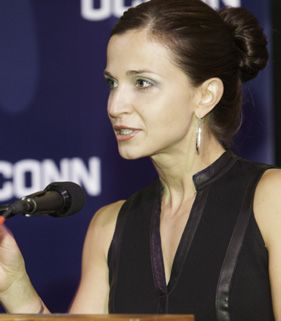
Rita Verma

                      Rita Verma is an Associate Professor in Social Studies Education and Peace Studies at Adelphi
                      University. She completed her doctoral Studies at the University of Wisconsin-Madison. Her work
                      is disseminated widely in various journals and books. In 2008 her work article on controversial
                      teaching in Radical Teacher was highlighted in Controversies in the Classroom: A Radical Teacher
                      Reader (Teachers College Press, 2008). She is the author of Backlash: South Asian Immigrant
                      Voices on the Margins (Sense Publishers 2008), Be the Change: Teacher, Activist, Global Citizen
                      (Peter Lang 2010) and most recently she has authored an award-winning book entitled Critical
                      Peace Education and Global Citizenship: Narratives from the Unofficial Curriculum (Routledge
                      2017). She collaborates with non-governmental organizations on curriculum development and
                      participates in various steering committees at the United Nations on global citizenship education.

                      Choi Dong Ju

                      Choi Dong Ju has been with Sookmyung Women’s University for the last 18 years, teaching
                      international relations, political economy and development model of less developed countries.
                      His education includes a MA in international affairs from the American University and a PhD
                      in political economy from University of London. Before he joined Sookmyung, he had worked
                      for POSCO (Pohang Steel Company) as senior researcher and for Seoul National University as
                      visiting professor. In the academic field, he was the Vice President of the Korean Association
                      of African Studies, and a Board Member of the Korean Association of Multicultural Studies. He
                      was also the Editor of International Journal, APWIN (Asia-Pacific Women’s Information Network)
                      during his mission as Executive Director of Asia-Pacific Women’s Information Network Center.
                      He has taken part in government consultation in many policy areas as member of policy advisory
                      committees in Korea. The ministries include foreign affairs, education, defense acquisition and
                      the Presidential Committee for Nation Branding. Since 2016, he has been leading the Institute of
                      Global Governance, government-funding research institute for globalization of Korean education.

Registration
It is necessary that all attendees register via Eventbrite, prior to the event. The registration will close at at 6:00 p.m. on
Monday, April 23, 2018. Please find below link.
https://www.eventbrite.com/e/the-role-of-global-citizenship-education-in-the-2030-agenda-and-beyond-
tickets-44769918030

On the day of the event, admission badges will be issued toregisteredattendees.Registerednames must match exactly
the name as it appears on a United Nations Member State-issued identification (e.g. passport, driver’s license), which
must also be presented for admission. Participants should plan to arrive at the venue no earlier than 12:30 and no later
than 1:15 p.m. on April 26, 2018. Due to security considerations, late arrivals cannot be accommodated.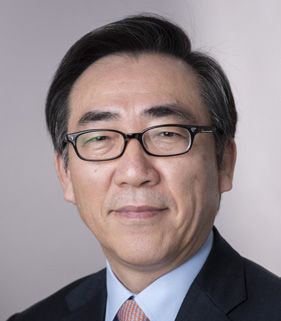
Location
Conference Room 3 at United Nations Headquarters in New York

                                                               Conference Room 3

2018 United Nations Global Citizenship Education Seminar will be
broadcast live through UN Webcast (http://webtv.un.org) starting at 2
p.m. on April 26, 2018. A recorded version will also be available after
the seminar on UN Webcast. All indicated times are New York time.
(GMT-4)
You can also read


