Your Guide to a Successful College Experience 2020-2021 - UNT ...
←
→
Page content transcription
If your browser does not render page correctly, please read the page content below
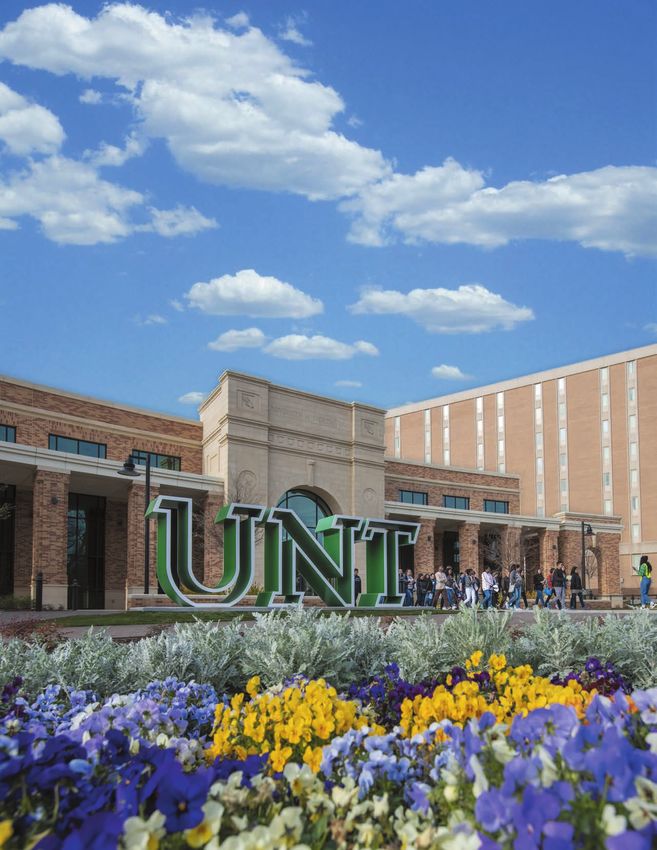
2020-2021

      Your Guide to a Successful College Experience

15TH EDITION
2020-2021                                                      Name________________________________

Advising Guidebook                                                                          Student ID____________________________

                          15th Edition

   TABLE OF CONTENTS                                                                                   advising.unt.edu

1. Welcome to UNT
     Welcome from Dr. Smatresk, President of UNT....... 2
     UNT Spirit ....................................................................... 3
     College Life at UNT....................................................... 4
     Advising at UNT ............................................................ 6

2. Building Your UNT Degree
     Elements of a Bachelor’s Degree..............................10
     UNT Awarded College Credit ..................................13
     University Core Curriculum ........................................17

3. Degree Progression and Timely Graduation
     Degree Audit/Degree Plan....................................... 24
     Grade Point Average and
   			Academic Standards .............................................. 26
     Drops, Withdrawals and Incompletes..................... 29
     Satisfactory Academic Progress ...............................31
   		Graduation................................................................... 32
     Financial Benefits of Timely Graduation ................. 32

4. Plan Your Semester and Registration
     Preparing for Registration......................................... 34
     Registration Tips ......................................................... 35
     Registration Checklist................................................. 37
     Registration Snapshot................................................ 38
     Your Student Homepage .......................................... 40
                                                                                                                          photogragh: Roy Nance © 2018

                                                                                                     Scrappy Says
                                                                                                     Look for “Scrappy Says” boxes for
                                                                                                     important notices and hints to make the
                                                                                                     most out of your college experience.
Section 1
Welcome to UNT
   • Welcome from Dr. Smatresk, President of UNT
   • UNT Spirit
   • College Life at UNT
   • Advising at UNT

                                                   Section 1: Welcome to UNT

Advising Guidebook - Welcome to UNT                           1
Dear students,

                            Welcome to UNT! College offers you the experience of a lifetime,
                            and I know you’ll thrive here thanks to the plethora of opportunities
                            afforded within our caring and creative environment. Offering the
                            best education in Texas, UNT prepares students for careers in a rapidly
                            changing world and connects you to your dreams. We have a breadth of academic programs to
                            choose from, 77 of which are ranked in the nation’s Top 100. Our ranking as a Tier One research
                            university, according to the Carnegie Classification, also adds prestige to your degree.
Section 1: Welcome to UNT

                            College is where you define yourself and gain skills for success. We want you to be prepared for
                            a lifetime of achievement, and we’re here to ensure your successful path to graduation. We have
                            outstanding faculty and staff, a great support network and career-focused resources to help you stay
                            on track. In fact, we have a one-stop site at succeed.unt.edu with tips and easy-to-access resources.
                            When you need help, don’t be afraid to ask, because #UNTCares about your success and making
                            sure you have the support to soar higher.

                            As a new Eagle, I hope you’ve taken advantage of the Save and Soar tuition plan, which enables first-
                            time students to lock in their tuition rate and obtain discounts for winter and summer session course
                            enrollment. With this plan, you’ll be able to finish your degree faster and get a head start on your
                            career. You can learn more at unt.edu/saveandsoar.

                            The sky’s the limit when it comes to your education, and we want you to engage in the limitless
                            opportunities available to you in and out of the classroom. From cheering on the Mean Green
                            athletic teams to attending performances, lectures and community events, there are plenty of ways to
                            enjoy student life on one of the most beautiful college campuses in Texas.

                            You also can stay connected to UNT and each other through social media. “Like” the University of
                            North Texas Facebook page to be a part of our social network. Follow me on Twitter @UNTPrez and
                            the university community @UNTSocial to be part of the conversation. We’re also on Instagram @unt,
                            and we want you to share your university experiences with the #UNT and #UNT24 hashtags!

                            We’re thrilled you’ve joined the UNT family and are excited to watch your future unfold. Connecting
                            with students is the best part of my job, so come visit me and say hello! We’re here to ensure you
                            receive every opportunity you need to succeed.

                            UNT Proud,

                            Neal Smatresk
                            UNT President

        2
UNT Spirit
History & Traditions
•   The “Mean Green” phrase originated from Sidney Gram, wife of
    the Eagles’ sports information director in 1966.
•   The UNT Spirit Bell was brought to Denton from Michigan in
    1891. It was originally used to signal class changes and evening
    curfew.
•   Unique to the University of North Texas, the official class ring
    displays the eagle mascot, university seal, and McConnell
    Tower.
•   Although our eagle mascot has had many name changes, the
    original eagle mascot was named “Scrappy”.

                                                                               Section 1: Welcome to UNT
•   The Marching Band provided the university with the first human
    eagle mascot costume in 1963 named Mr. Eagle.
•   The eagle hand sign, or eagle claw, is our university sign of
    pride & unity.
•   Friday is known as Pride Day, where UNT students, staff, and
    faculty wear green to show their university pride.

UNT Fight Song                              UNT Alma Mater
Let’s give a cheer for U of NT;             AKA - “Singing Glory to the
Cheer for the Green and White.                      Green and White”
Victory’s in store whatever the score,      Singing glory to the green,
Our team will ever fight!                   singing glory to the white,
Fight! Fight! Fight!                        For we know our university
Shoulder to shoulder we march along,        is striving for the right;
Striving for victory.                       Down the corridors of years,
Playing the game for the honor and fame,    we’ll forget the joys and tears,
And the glory of UNT.                       But North Texas,
U...N...T...Eagles!                         North Texas,
UNT Eagles Fight, Fight, Fight!             we love!

                                                                                          3
College Life at UNT
                            Welcome to the first few days of your UNT college experience!
                            Advice from your Orientation Team:

                             Set out some time each           College is hard, it’s tough,
                                                                                                New, exciting adventures
                             day to look over your            and sometimes frustrating.
                                                                                                are waiting for you. Jump
                             notes, even if its thirty        But the struggle is worth it.
                                                                                                out of your box, and walk
                             minutes a day.                   Find some good friends,
                                                                                                a different path!
                                                   – Marcel   find some stress-relief
                                                                                                                  – Eleonor
                              Economics & Political Science   hobbies, and buckle in
                                                                                                          Human Resources
                                                              for an amazing journey
                                                              through UNT.
                                                                                – Stephon
                                                                          Integrative Studies
                              Embrace change in your
                              newfound independence.                                            Embrace who you are,
                              Find a major and fall in                                          celebrate those different
Section 1: Welcome to UNT

                              love with it. Take                 Get involved. The more         from you, and take
                              advantage of all UNT’s             you are out in the UNT         chances. You’ll have a
                              resources and call home            community, the more            great experience in
                              as much as possible.               doors will open for you.       college once you open
                                                                                                yourself up to change.
                                                 – Valerie                        – Chelsey                          – Brett
                                                   Dance                            Biology                Public Relations

                              Use your resources. There        If you’re ever struggling        Going to class may not
                             are so many resources            in a class don’t be afraid        always be mandatory,
                             that UNT has to offer from       to go directly to your            but it is the difference
                             the Learning Center, to SI       professor. Study and get          between A’s and B’s.
                             sessions, and math labs.         good grades, but don’t            Go. To. Class. And pay
                             They’re available to help        forget to live your college       attention, there is always
                             you succeed so take              experience!                       time to take a nap later.
                             advantage of them.                                    – Janeth                        – Rachel
                             #caw #gmg                                 Speech Language and           Communication Design
                                                 – Grecia                         Pathology
                                                   Theatre

                                                                                                Go to time management
                                                              If you want to succeed            workshops and get
                             Find the thing that drives
                                                              make sure to see your             a planner. It is hard
                             you, the thing that you’re
                                                              advisor regularly. They           to keep up with your
                             passionate about, and
                                                              are there to help you. My         grades, social life, and
                             do that. You’re more
                                                              advisor keeps me on track         organizations without
                             motivated to do the things
                                                              and gives me great advice.        good time management.
                             you’re passionate about
                             doing.                                                   – Roni                         – Mau
                                                   – Sarah        Emergency Management &                         Real Estate
                                        Integrative Studies                Disaster Science

        4
College Life at UNT
Key Terms
Below is a list of common college terms that will help you be successful here at UNT.
Advanced Hours           Junior or senior courses, numbered 3000 or 4000 level. Many degrees require at
                         least 42 of these.
Blended Class            A course that uses both physical classroom and online instruction.
Canvas                   Secure, web-based course platform that supports course content delivery,
                         collaboration and assessment.
Catalog                  An online resource that includes university policies, majors/minors available &
                         course descriptions including any pre-requisites.
Classification           A way the university identifies you based upon your number of complete credit hours.
Class Number             Number (in parenthesis) that appears along with the class prefix and course
                         number on the schedule of classes. It is used to identify a specific section of
                         the course to aid in registration. Ex. ENGL 1310 (1234)
Concurrent Enrollment    Enrollment at UNT and other institution in the same semester. Requires

                                                                                                                         Section 1: Welcome to UNT
                         preapproval from your Academic Advisor.
Course Number            A four-digit number following the class prefix. The first number indicates whether
                         the class is considered lower level or advanced. Ex. ENGL 1310.
Credit Hour              The number of credits you earn for a class and the approximate number of hours a
                         week you are expected to attend each class.
Eagle Connect            The official UNT email system for students. Your UNT email address is your first
                         and last name @my.unt.edu
Greenbook or Bluebook    A small, blank pamphlet containing several sheets of notebook paper used for
                         exams that typically include one or more essays or short-answer questions.
Hold/block               This is applied to your account and may hinder your ability to register. (i.e. library
                         fines, advising holds, or the student financial obligation hold)
ID Number/EUID           An 8-digit number or user code comprised of your initials and four numbers you
                         will use for identification at UNT.
Permission Code          Access from a department offering a course to ensure all requirements have been
                         met prior to course enrollment.
Recitation               A section required by some classes used to cover coursework and answer questions.
Registration             Adding courses for next semester. The process includes choosing classes, removing
                         holds and enrolling in courses on my.unt.edu
Satisfactory Academic    The minimum requirements to maintain financial aid eligibility includes: UNT
Progress (SAP)           cumulative GPA and Pace of Progression.
Schedule of Classes      Available on the Registrar’s website, this tentative list will help you prepare for the
                         upcoming semester.
SI Leader                A student proficient in a course who facilitates effective group study sessions
                         through the Learning Center.
Syllabus                 An academic document that communicates course information and defines
                         expectations and responsibilities.
TA/TF                    A graduate student who serves under an instructor to provide general assistance to
                         the instructional process, such as grading, tutoring, etc. A graduate student that
                         teaches courses for credit under the direct supervision of a faculty member or chair.
W                        This grade may be given when a student drops a course or withdraws from the
                         university after the census date.
Waitlist                 A feature that allows students to place themselves on a list for a class section that is full
                         and will be automatically enrolled once a seat opens according to their position number.
Withdraw from Semester   When you choose to remove yourself from all your classes. Requires permission from
                         the Dean of Students office.
                                                                                                                                    5
Advising at UNT
                            UNT Colleges, Schools & Majors						                                                  *Denotes teacher certification is available

                            G.Brint Ryan College of Business                        Grades 4-8 w/ Specialization in:
                                                                                      English, Language Arts, and Reading with ESL*
                             Business Leadership Building, 110                        Mathematics with ESL*
                             (940) 565-2110 • cob.unt.edu/undergrad                   Science with ESL*
                              Accounting                                              Social Studies with ESL*
                              Accounting BS/MS                                      Recreation, Event and Sport Management
                              Aviation Logistics                                      Recreation & Event Management
                              Business Analytics                                      Sport & Event Management
                              Business Computer Information Systems              NOTE: For Secondary or All-Level Teacher Certification, students will major in the
                              Business Economics                                 college or school that offers it. (For example: to teach secondary math, you will
                              Business Integrated Studies                        be a math major in the College of Science.)
                                   International Track
                                   Sport Management Track                      College of Engineering
                                     (Exclusively UNT at Frisco)
                              Entrepreneurship                                  Discovery Park, A101
                              Finance                                           (940) 565-4201 • engineering.unt.edu/advising
Section 1: Welcome to UNT

                              Logistics and Supply Chain Management              Biomedical Engineering
                              Marketing                                          Computer Engineering
                                   Professional Selling                          Computer Science
                              Operations and Supply Management                   Construction Engineering Technology
                              Organizational Behavior and Human Resource         Cybersecurity
                                 Management                                      Electrical Engineering
                              Real Estate                                        Information Technology*
                                   Residential Property Management               Materials Science & Engineering
                              Risk, Insurance and Financial Services             Mechanical & Energy Engineering
                                   Risk and Insurance                            Mechanical Engineering Technology
                                   Financial Planning
                                                                               College of Health and Public Service
                            College of Education                                Chilton Hall, 112
                             Matthews Hall, 105                                 (940) 565-4115 • hps.unt.edu/advising
                             (940) 565-2736 • coe.unt.edu/sao
                                                                                 Applied Behavioral Analysis
                              Human Development and Family Science               Criminal Justice
                                 Non-Teacher Certification                       Public Health
                                   Community & Family Services                   Emergency Administration & Planning
                                   Individual & Family Development across        Urban Policy and Planning
                                    the Lifespan                                 Rehabilitation Studies
                                 Teacher Certification*                          Social Work
                                   Family & Consumer Sciences*                   Audiology/Speech-Language Pathology
                                   Human Development & Family Science*           Nonprofit Leadership Studies
                              Kinesiology
                                   Pre-PT/Allied Health                        College of Information
                                   Athletic Training
                                                                                Discovery Park, C232
                                   Fitness Leadership
                                                                                (940) 565-2445 • ci.unt.edu/advising
                                   Physical Education Certification*
                              Interdisciplinary Studies                          Information Science
                                   (Elementary and Middle School Education)*     Linguistics
                                 Early Childhood – 6th Grade Core Subjects       Information Science & Applied Technology
                                 w/Specialization in:
                                   Bilingual*                                  College of Liberal Arts and Social Sciences
                                   English as a Second Language (ESL)*          General Academic Building, 220
                                   Special Education*                           (940) 565-2051 • class.unt.edu/office-student-advising
                                                                                 Anthropology*
                                                                                 Communication Studies*
                                                                                 Converged Broadcast Media
                                                                                 Dance*
                                                                                 Economics

        6
Advising at UNT
UNT Colleges, Schools & Majors - cont’d					                                               *Denotes teacher certification is available

  English                                                      College of Science
       Creative Writing
       Language Arts*                                            Hickory Hall, 283
       Literature                                                940-369-8606 • cos.unt.edu/advising
       Writing & Rhetoric                                         Biochemistry*
  French*                                                         Biology*
  Geography                                                       Chemistry*
  Geographic Information Systems + Computer Science               Ecology for Environmental Science
  German*                                                         Mathematics*
  History*                                                        Medical Laboratory Sciences
  Integrative Studies                                             Physics*
  International Studies
       Intl. Business & Economics                              College of Visual Arts and Design
       Intl. Development & Humanitarian Affairs
                                                                 Art Building, 232
       Intl. Security & Diplomacy
                                                                 (940) 565-2216 • art.unt.edu/advising
       Regional Studies

                                                                                                                                         Section 1: Welcome to UNT
       Peace Studies                                              Art History
  Japanese                                                        Communication Design
  Latino Culture, Economy, and Policy                                  Graphic Design
  Media Arts                                                           User-Experience Design
  Philosophy                                                      Fashion Design
  Political Science                                               Interior Design
  Professional & Technical Communication                          Interdisciplinary Art & Design Studies
  Psychology                                                           Arts Management
  Religion                                                             Design Management
  Social Science*                                                      Open Track
  Sociology                                                       Visual Art Studies
  Spanish*                                                             (Art Education)*
  Theatre*                                                        Studio Art
       Design/Tech                                                     Ceramics
       General*                                                        Drawing & Painting
       Performance                                                     Metalsmithing & Jewelry
                                                                       New Media Art
College of Merchandising, Hospitality and Tourism                      Photography
 Chilton Hall, 385                                                     Printmaking
 (940) 565-4635 • cmht.unt.edu/advising                                Sculpture

  Digital Retailing                                            Frank W. and Sue Mayborn School of Journalism
  Home Furnishings Merchandising
                                                               Sycamore Hall, 205
  Hospitality Management
                                                               (940) 565-3365 • https://journalism.unt.edu/
  Merchandising
                                                               		 undergraduate/advising
  Retail
  Consumer Experience Management                                  Advertising
                                                                  Broadcast and Digital Journalism
College of Music                                                  Digital and Print Journalism
 Chilton Hall, 211                                                Journalism*
 (940) 565-3860 • music.unt.edu/advising                          Photojournalism
                                                                  Public Relations
  Composition
  Jazz Studies                                        New College
       (Arranging/Performance for Instrumental/Vocal)
                                                       Sage Hall, 394
  Music Education*
                                                       (940) 369- 8192 baas.unt.edu
       (Band/Guitar/Keyboard/Orchestra/Voice)
  Music                                                 Bachelor’s of Applied Arts & Sciences
  Music History & Literature                              The Bachelor of Applied Arts and Sciences (B.A.A.S.) degree
                                                          program is designed to provide a clear path to a four-year
  Instrumental Studies/Performance
                                                          baccalaureate degree for students with technical or applied degrees
       (Harpsichord/Multiple Woodwinds/Orchestral 		      or transfer students with technical, applied, or military credits from
       Instrument/Organ/Organ Church Music/Piano/         approved institutions. Please see a New College advisor for more
       Piano Pedagogy/Voice)                              information about your individualized B.A.A.S. degree plan.
                                                                                                                                                    7
Advising at UNT
                            Advising.unt.edu
                            Academic advising plays an important role in guiding you through your educational experience.

                            The UNT Advising website contains a variety of services and resources to support your academic success and
                            professional development including academic advising information, degree options, answers to frequently asked
                            questions, and links to helpful resources at the University of North Texas.

                            We invite you to explore this website to learn more about all the advising and student support services available
                            to you at UNT.

                                                                                                               Schedule an
                                                                                                               appointment with you
                                                                                                               advisor every semester
                                                                                                               at appointments.unt.edu
Section 1: Welcome to UNT

                            Specialized Advising
                            Advising Services                         Advising Services at UNT provides personalized support for students who are
                            Sage Hall 110                             undecided in their major or would like to learn more about other majors offered at
                            (940) 565-3633                            UNT. Advising Services’ academic counselors will assist you in navigating UNT majors
                            advisingservices.unt.edu                  ensuring you find your best path to graduation. We also offer Class Concierge, a
                            untadvising@unt.edu                       personalized service that documents and assists seniors who are experiencing
                                                                      institutional roadblocks to graduation, such as class time conflicts. The goal is to make
                                                                      your path to graduation as seamless as possible!

                            Health Professions Career Advising        Dentistry, Medicine, Optometry, Veterinary Medicine, Physician Assistant, Physical
                            Hickory Hall 256                          Therapy, Podiatry, Pharmacy, Occupational Therapy, and Chiropractic.
                            940-369-8606                              UNT offers most of the prerequisites for admission to the professional schools
                            healthcareers.unt.edu                     listed above. Students interested in these professions should schedule an
                            healthcareers@unt.edu                     appointment with a counselor in the Office of Health Professions. These counselors
                                                                      will provide assistance with entrance requirements, the application process,
                                                                      interview preparation, and the required letters of recommendation.

                            Pre-Law Advising                          Pre-law is not an academic major at UNT. There is no required major for those
                            Wooten Hall 153                           wanting to go on to law school; any major that emphasizes strong writing and
                            (940) 565-4413                            reasoning skills will help you prepare for law school. The pre-law advisor is
                            class.unt.edu/advising/pre-law            available to provide answers to questions about how to get into law school and
                            prelaw@unt.edu                            what you can do now to prepare.

                            Teacher Education and Certification       To become a certified teacher in Texas, students must meet state requirements,
                            Matthews Hall 105                         which include completion of an Educator Preparation Program, obtaining a
                            (940) 565-2736                            bachelor’s degree, and passing the state certification examinations. Students
                            coe.unt.edu/sao                           must be admitted to UNT’s Teacher Education Program before enrolling in most
                                                                      education courses.

                            Texas Success Initiative                  Students working toward completing the Texas Success Initiative (TSI)
                            Sage Hall 170                             requirements must complete TSI advising in the Learning Center each semester
                            (940) 369-7006                            prior to registration. The TSI Coordinator will provide assistance with questions
                            learningcenter.unt.edu/tsi                regarding TSI requirements and developmental courses.
                            tsi@unt.edu

        8
Section 2
Building Your UNT Degree
• Elements of a Bachelor’s Degree
• UNT Awarded College Credit
• University Core Curriculum
Section 2: Building Your UNT Degree
Advising Guidebook - Building Your UNT Degree 9Elements of a Bachelor’s Degree
A bachelor’s degree shows you have completed coursework and met the requirements of a specialized curriculum.
Your degree is completed when you have met all of the requirements, taken the right courses in the correct
sequence, earned enough semester credit hours and earned the appropriate grades. Navigating your way
through college means learning the basics needed to understand and progress through your academic career.
• Minimum 120 credit hours*, depending on major
• 42 credit hours* of university core requirements
• College/School requirements
• Advanced hours, 3000-4000 level (varies by major)
• Major requirements
• Minor requirements (varies by major)
• Electives (varies by major)
Examples of Bachelor’s degrees
Bachelor of Arts (BA)
Section 2: Building Your UNT Degree
Bachelor of Science (BS) Bachelor of Business Administration (BBA)
Bachelor of Fine Arts (BFA) Bachelor of Applied Science (BAS)
Bachelor of Applied Arts and Sciences (BAAS) Bachelor of Music (BM)
Bachelor of Science in Engineering Technology (BSET)
Academic Classification
Your classification is based on the number of hours you have earned. Completion of minimum hours required for
a degree does not guarantee completion of all degree requirements.
• Freshman 0-29 hours
• Sophomore 30-59 hours
• Junior 60-89 hours
• Senior 90 hours and above
*Credit hours
Every course you take is measured by units called credit hours. In most cases, credit hours represent the
number of hours each week you are expected to attend each specific class. Courses may range from
one to six credit hours.
10Elements of a Bachelor’s Degree
1. UNT Residency Requirements
• A major of at least 24 semester hours. At least 12 hours of advanced work (3000/4000 level) in the major must be
earned at UNT (except for the BAAS degree).
• A minimum of 36 semester hours of advanced work (3000-4000 level), 24 of which must be completed at UNT.
Many degrees at UNT require at least 42 advanced hours, see the college/school degree requirements of your
major in the catalog for details. A lower-level course that, when transferred, is determined to be equivalent to
a UNT upper-level course does not satisfy the requirement of advanced hours.
• Twenty-five percent of the university minimum of 120 semester hours (i.e., 30 hours) must be earned in residence.
Not to be confused with in-state vs. out-of-state
tuition, UNT Residency Requirements refer to
how many courses must be completed at UNT.
2. University Core Curriculum
Section 2: Building Your UNT Degree
The University Core Curriculum is designed to ensure that you graduate with not only the depth of knowledge you’ll
gain from courses in your major area of study, but also a breadth of knowledge which is gained through general
education courses. Each of the core curriculum courses will assist you in developing important fundamental skills
that will help you be successful in all of your classes and prepare you for life after college. These skills include
critical thinking, communication skills, empirical and quantitative skills, teamwork, personal responsibility, and social
responsibility. Through the core, you will gain an enthusiasm for learning and an intellectual capacity that you will use
throughout your life. Specific core classes will be covered on pages 17-22.
3. College and School Requirements
You must satisfactorily complete all degree requirements specified by the college/school in which the degree is
offered. In many instances, there may be college/school academic program requirements in addition to the university
core requirements. Please see the individual college/school advising office in order to determine these requirements.
4. Major Requirements
Within your degree, you will narrow your focus to a specific field of study, also known as a major. At least 24 semester
hours in a given subject are required for a major, including 12 hours of advanced work. The number of hours required
depends on the major you select.
5. Minors
• Minors are like “mini-majors” typically requiring you to complete 18 to 21 credit hours including a minimum
of 6 advanced hours
• Some majors require a minor
• View the list of minors at UNT and the requirements for each in the online catalog (catalog.unt.edu) under “Majors,
minors, certificates”
6. Undergraduate Academic Certificates
Certificates typically require you to complete 12-20 hours, the majority of which must be advanced. You can view the
list of undergraduate academic certificates at UNT and the requirements for each in the catalog (catalog.unt.edu) under
“Majors, minors, certificates.”
Certificates may be used to:
• meet workforce needs
• provide you with life/career skills and knowledge
• allow for specialization in academic disciplines
11Elements of a Bachelor’s Degree
7. Electives
• Electives are any credit hours necessary to reach the minimum number of total credit hours required for your
degree after all other requirements have been satisfied.
• Advanced electives may be required in order to meet the university advanced credit hour requirement. UNT
requires a minimum of 36 advanced hours in order to graduate. Many degrees at UNT require at least 42
advanced hours. See the college/school degree requirements of your major in the catalog for details.
General Electives 1000-4000 level courses
Advanced Electives 3000-4000 level courses
Please visit with your academic advisor about minors,
undergraduate academic certificates and electives. You may have the option of taking electives
The situation will be different for every student. Pass/No Pass. Please visit with your academic
advisor about this opportunity.
Section 2: Building Your UNT Degree
8. Transfer of Credits – How Will Previously-Earned Credit Apply to Your Major?
Transferability vs. Applicability
When you transfer credit to UNT, our Admissions office reviews all transcripts, AP, IB and CLEP scores and posts all
earned credit, regardless of how (or if) it will be used to satisfy degree requirements. This review allows you, as the
student, to know how many hours UNT has accepted. However, subtracting your earned hours from your required
degree hours (typically 120) does not always equal the amount of hours left to complete your degree. Some of
your credits may be applied to the core, while others may be pending review by the college/school of your chosen
major. In this review, the college/school will look at all of the hours accepted by Admissions and will evaluate them
specifically for the core and their individual degree programs. Your academic advising office determines applicability
of the credit to a degree program. For more information about military, vocational and technical credit, see your
academic advisor.
NOTE: Information provided is subject to change without notice and does not constitute a contract between UNT and a student
or applicant for admission. Transfer credit is subject to audit during a student’s academic career at UNT. Total hours accepted
may be increased or decreased to reflect correction of prior evaluation or consideration of additional transfer work to ensure
compliance with UNT academic policies.
It is possible that credit hours transferred to UNT
may not apply to degree plan requirements. In
this case, transfer credits may be used as electives.
9. Transfer of Core Courses
Successful completion of a 42 semester-credit-hour common core curriculum at a Texas public institution of higher
education allows you to transfer to UNT as “core complete.” You will need to work with an academic advisor in the
appropriate college/school academic advising office to determine if additional requirements will be necessary to
satisfy the 42-hour UNT core. See the UNT transfer articulation web page at registrar.unt.edu/transfer-guides and the
transfer course equivalency and degree planning guide tool, Transferology, at transferology.com for online resources.
10. Dual Credit
Most dual credit, AP and IB programs offer courses that can be used towards core requirements. Use the charts on the
next few pages to determine how your credit will transfer to UNT. Find your courses under the appropriate columns and
highlight or circle the UNT equivalent. Make sure you alert your academic advisor to the courses you completed. Please
note that dual credit transcripts must be sent from the community college or university through which the class was offered.
11. Texas Common Course Numbering System (TCCNS)
The Texas Common Course Numbering System (TCCNS) has been designed for the purpose of aiding you in the transfer
of general academic courses between colleges and universities throughout Texas. The system ensures that if you take a
course the receiving institution designates as common, then the course will be accepted in transfer and the credit will be
treated as equivalent to the course offered by the receiving institution. The TCCNS chart (on pages 15-16) lists the courses
that the associate deans at UNT have identified as common and their TCCNS equivalents.
12UNT Awarded College Credit
Advanced Placement Use the chart below to determine which AP examinations are accepted at UNT.
Please take note of the required score, hours granted, and the UNT course equivalent.
AP Examination AP Exam Credit Hours UNT Course Equivalent
Score
COMPOSITION AND LITERATURE
English Language and Composition 3 or 4 3 ENGL 1310
5 6 ENGL 1310, 1320
English Literature and Composition 3, 4 or 5 3 ENGL 2210
FINE ARTS
Art History 3, 4 or 5 3 ART 2350, ART 2360 or ART 2370
Student can choose one in consult
with an academic advisor
Studio Art - Drawing 3, 4 or 5 3 ART 1600
Studio Art - 2D Design 3, 4 or 5 3 ART 1800
Studio Art - 3D Design 3, 4 or 5 3 ART 1700
Section 2: Building Your UNT Degree
LANGUAGES
Chinese, French, German, Italian, 3 6 * LANG 1010, 1020
Japanese, Latin-Vergil, Spanish 4 9 * LANG 1010, 1020, 2040
* Subject abbreviation varies based on language. 5 12 * LANG 1010, 1020, 2040, 2050
Spanish Literature and Culture 3, 4 or 5 3 SPAN 3110
MATHEMATICS
Calculus AB 3, 4 or 5 4 MATH 1710
Calculus BC 3, 4 or 5 7 MATH 1710, 1720
Calculus AB Subscore for the Calculus BC exam 3, 4 or 5 4 MATH 1710
Statistics 3, 4 or 5 3 MATH 1680
NATURAL AND COMPUTER SCIENCES
Biology 3 6 BIOL 1112, 1142
4 or 5 8 BIOL 1710, 1720, 1760
Chemistry 3 3 CHEM 1360
4 4 CHEM 1410/1430
5 8 CHEM 1410/1430, 1420/1440
Computer Science A 3 3 CSCE 1010
4 or 5 4 CSCE 1030
Computer Science - 3, 4 or 5 3 CSCE 1010
Computer Science Principles
Environmental Science 3, 4 or 5 3 BIOL 1132
Physics 1 3 3 PHYS 1210
4 or 5 4 PHYS 1410/1430
Physics 2 3 3 PHYS 1315
4 or 5 4 PHYS 1420/1440
Physics C (Electricity and magnetism) 3 4 PHYS 1420/1440
4 or 5 4 PHYS 2220/2240
Physics C (Mechanics) 3 4 PHYS 1410/1430
4 or 5 4 PHYS 1710/1730
SOCIAL SCIENCES AND HISTORY
Economics - macroeconomics 3, 4 or 5 3 ECON 1110
Economics - microeconomics 3, 4 or 5 3 ECON 1100
Government and Politics - Comparative 3, 4 or 5 3 Political science elective hours
Government and Politics - U.S. 3, 4 or 5 3 PSCI 2305
History - European 3, 4 or 5 6 History elective hours
History - U.S. 3, 4 or 5 6 HIST 2610, 2620
History - World 3, 4 or 5 6 HIST 1050, 1060
Human Geography 3, 4 or 5 3 GEOG 2170
Psychology 3, 4 or 5 3 PSYC 1630
13UNT Awarded College Credit
International Baccalaureate (IB)
UNT awards a minimum of 24 hours of credit if you completed the IB Program and have received the IB Diploma. You
must earn a minimum score of 4 on tests that count toward the diploma. UNT Admissions will certify the examination
credit based on the qualifying scores.
If you completed a high school IB Program but have not earned the diploma and scored 5, 6 or 7 on the higher level
IB examination you will receive college credit at UNT. See chart below for details.
*The minimum score requirements for awarding credit based upon IB exams is subject to change.
Subject area IB Exam Hours UNT equivalent
Score
Arabic – Language B, AB 5 or higher 12 ARBC 1010, 1020, 2040, 2050
Art/Design 5 or higher 3 ART 2900, applied to degree audit as lower-level elective
Biology 5 or higher 8 BIOL 1710, 1720, 1760
Business Management 5 or higher 3 MGMT Elective
Chemistry 5 or higher 8 CHEM 1410/1430, 1420/1440
Section 2: Building Your UNT Degree
Chinese – Language B, AB 5 or higher 12 CHIN 1010, 1020, 2040, 2050
Computer Science/Computing Studies 5 or higher 7 CSCE 1030, 1040
Danish – Language B, AB 5 or higher 12 LANG 1010, 1020, 2040, 2050
Dutch – Language B, AB 5 or higher 12 LANG 1010, 1020, 2040, 2050
Economics 5 or higher 3 ECON 1110
English A: Language and Literature 5 6 ENGL 1310, 2210
6 or 7 12 ENGL 1310, 1320, 2210, 2220
English Language A: Literature 5 3 ENGL 2210
6 or 7 6 ENGL 2210, 2220
Film 5 or higher 3 MRTS elective
French – Language B, AB 5 or higher 12 FREN 1010, 1020, 2040, 2050
Geography 5 or higher 3 GEOG 1200
German – Language B, AB 5 or higher 12 GERM 1010, 1020, 2040, 2050
Global Politics 5 or higher 3 INST 2100
Hebrew – Language B, AB 5 or higher 12 LANG 1010, 1020, 2040, 2050
Hindi – Language B, AB 5 or higher 12 LANG 1010, 1020, 2040, 2050
History 5 or higher 6 HIST 1060, HIST elective
History – Culture of the Islamic World 5 or higher 3 HIST elective
History of the Americas 5 or higher 3 HIST elective
Italian – Language B, AB 5 or higher 12 ITAL 1010, 1020, 2040, 2050
Japanese – Language B, AB 5 or higher 12 JAPN 1010, 1020, 2040, 2050
Mathematics 5 or higher 4 MATH 1710
Math Studies 5 or higher 3 MATH 1580
Music 5 or higher 3 Music elective
Norwegian – Language B, AB 5 or higher 12 LANG 1010, 1020, 2040, 2050
Philosophy 5 or higher 3 PHIL 1050
Physics 5 or higher 8 PHYS 1410/1430, 1420/1440
Portuguese – Language B, AB 5 or higher 12 LANG 1010, 1020, 2040, 2050
Psychology 5 or higher 3 PSYC 1630
Russian – Language B, AB 5 or higher 12 RUSS 1010, 1020, 2040, 2050
Social and Cultural Anthropology 5 or higher 3 ANTH 2300
Spanish – Language B, AB 5 or higher 12 SPAN 1010, 1020, 2040, 2050
Swedish – Language B, AB 5 or higher 12 LANG 1010, 1020, 2040, 2050
Theater Arts 5 or higher 3 THEA 2340
Visual Arts 5 or higher 3 Visual arts elective
14UNT Awarded College Credit
Texas Common Course Numbering System (TCCNS) An explanation of the TCCNS
may be found on page 12.
TCCNS UNT TCCNS UNT TCCNS UNT
ACCT 2301 ACCT 2010 BIOL 2421 BIOL 2041/2042 ENGL 2328 ENGL 2328
ACCT 2302 ACCT 2020 BUSI 1307 FINA 2770 ENGL 2332 ENGL 2210
ACCT 2401 ACCT 2010 CHEM 1111 CHEM 1430 ENGL 2333 ENGL 2220
ACCT 2402 ACCT 2020 CHEM 1112 CHEM 1440 ENGR 1201 ENGR 1201
ANTH 2101/2301 ANTH 2700 CHEM 1311 CHEM 1410 ENGR 1204 ENGR 1304
ANTH 2301 ANTH 2700 CHEM 1312 CHEM 1420 ENGR 1304 ENGR 1304
ANTH 2346 ANTH 1010 CHEM 1411 CHEM 1410/1430 ENGR 2107 ENGR 2415
ANTH 2351 ANTH 2300 CHEM 1412 CHEM 1420/1440 ENGR 2301 ENGR 2301
ARTS 1301 ART 1300 CHEM 2323 CHEM 2370 ENGR 2302 ENGR 2302
Section 2: Building Your UNT Degree
ARTS 1303 ART 2350 CHEM 2325 CHEM 2380 ENGR 2307 ENGR 2405
ARTS 1304 ART 2360 COMM 1307 JOUR 1210 ENGR 2332 ENGR 2332
ARTS 1311 ART 1800 COMM 1335 MRTS 1310 ENGR 2401 ENGR 2301
ARTS 1312 ART 1700 COMM 2311 JOUR 2310 ENGR 2402 ENGR 2302
ARTS 1316 ART 1600 COMM 2339 MRTS 2010 GEOG 1302 GEOG 2170
ARTS 1317 ART 1900 COMM 2366 MRTS 1320 GEOG 1303 GEOG 1200
ARTS 2316 ASTU 2201 COSC 1315 CSCE 1020 GEOL 1101/1301 GEOG 1710
ARTS 2317 ASTU 2202 COSC 1336 CSCE 1030 GEOL 1103/1303 GEOL 1610
ARTS 2323 ASTU 2200 COSC 1337 CSCE 1040 GEOL 1401 GEOG 1710
ARTS 2333 ASTU 2601 COSC 1415 CSCE 1020 GEOL 1403 GEOL 1610
ARTS 2341 ASTU 2402 COSC 1436 CSCE 1030 GOVT 2305 PSCI 2305
ARTS 2346 ASTU 2101 COSC 1437 CSCE 1040 GOVT 2306 PSCI 2306
ARTS 2347 ASTU 2102 COSC 2325 CSCE 2610 HECO 1322 HMGT 1450
ARTS 2356 ASTU 2501 COSC 2336 CSCE 2110 HIST 1301 HIST 2610
ARTS 2357 ASTU 2502 COSC 2436 CSCE 2110 HIST 1302 HIST 2620
BCIS 1305 BCIS 2610 COSC 2425 CSCE 2610 HIST 2321 HIST 1050
BCIS 1405 BCIS 2610 CRIJ 1301 CJUS 2100 HIST 2322 HIST 1060
BIOL 1106/1107 BIOL 1760 DRAM 1120 THEA 2095 MATH 1314 MATH 1100
BIOL 1108/1308 BIOL 1112 DRAM 1310 THEA 1340 MATH 1316 MATH 1600
BIOL 1306 BIOL 1710 DRAM 1322 THEA 2351 MATH 1324 MATH 1180
BIOL 1307 BIOL 1720 DRAM 1330 THEA 1046 MATH 1325 MATH 1190
BIOL 1406/1407 BIOL DRAM 1341 THEA 2380 MATH 1332 MATH 1580
1710/1720/1760
DRAM 1351 THEA 1050 MATH 1342 MATH 1680
BIOL 1408 BIOL 1112
DRAM 2336 THEA 2051 MATH 1350 MATH 1350
BIOL 2101 BIOL 2311
DRAM 2366 MRTS 1320 MATH 1351 MATH 1351
BIOL 2102 BIOL 2312
ECON 2301 ECON 1110 MATH 1414 MATH 1100
BIOL 2106/2306 BIOL 1132
ECON 2302 ECON 1100 MATH 1425 MATH 1190
BIOL 2121 BIOL 2042
ENGL 1301 ENGL 1310 MATH 1442 MATH 1681
BIOL 2301 BIOL 2301
ENGL 1302 ENGL 1320 MATH 2305 MATH 2000
BIOL 2302 BIOL 2302
ENGL 2307 ENGL 2100 MATH 2312 MATH 1650
BIOL 2321 BIOL 2041
ENGL 2311 TECM 2700 MATH 2313 MATH 1710
BIOL 2401 BIOL 2301/2311
ENGL 2322 ENGL 2322 MATH 2314 MATH 1720
BIOL 2402 BIOL 2302/2312
ENGL 2323 ENGL 2323 MATH 2315 MATH 2730
BIOL 2406 BIOL 1132
ENGL 2327 ENGL 2327 MATH 2318 MATH 2700
15UNT Awarded College Credit
Texas Common Course Numbering System (TCCNS)
TCCNS UNT TCCNS UNT TCCNS UNT
MATH 2405 MATH 2000 MUSI 2117 MUTH 2510 PHYS 1415 PHYS 1210
MATH 2412 MATH 1650 MUSI 2166 MUAG 1225 PHYS 2125 PHYS 1730
MATH 2413 MATH 1710 MUSI 2168 MUAG 1202 PHYS 2126 PHYS 2240
MATH 2414 MATH 1720 MUSI 2190 MUAG 1221 PHYS 2325 PHYS 1710
MATH 2415 MATH 2730 MUSI 2211 MUTH 2400 PHYS 2326 PHYS 2220
MATH 2418 MATH 2700 MUSI 2212 MUTH 2500 PHYS 2425 PHYS 1710/1730
MATH 2442 MATH 1680 MUSI 2216 MUTH 2410 PHYS 2426 PHYS 2220/2240
MATH 2513 MATH 1710 MUSI 2217 MUTH 2510 PSYC 2301 PSYC 1630
MUSI 1116 MUTH 1410 MUSI 2311 MUTH 2400 PSYC 2302 PSYC 2600
Section 2: Building Your UNT Degree
MUSI 1117 MUTH 1510 MUSI 2312 MUTH 2500 PSYC 2315 PSYC 2480
MUSI 1166 MUAG 1125 PHED 1304 HLTH 1900 SGNL 1301 ASLP 1040
MUSI 1168 MUAG 1102 PHIL 1301 PHIL 1050 SGNL 1302 ASLP 1050
MUSI 1181 MUAG 1011 PHIL 1304 PHIL 2070 SGNL 1401 ASLP 1040
MUSI 1182 MUAG 1012 PHIL 2303 PHIL 2050 SGNL 1402 ASLP 1050
MUSI 1183 MUAG 1124 PHIL 2306 PHIL 1400 SGNL 1501 ASLP 1040
MUSI 1188 MUAG 1117 PHIL 2316 PHIL 2310 SGNL 1502 ASLP 1050
MUSI 1190 MUAG 1121 PHIL 2317 PHIL 2330 SGNL 2301 ASLP 2040
MUSI 1211 MUTH 1400 PHYS 1101 PHYS 1430 SGNL 2302 ASLP 2050
MUSI 1212 MUTH 1500 PHYS 1102 PHYS 1440 SOCI 1301 SOCI 1510
MUSI 1216 MUTH 1410 PHYS 1103/1303 PHYS 1062 SOCI 1306 SOCI 1520
MUSI 1217 MUTH 1510 PHYS 1104/1304 PHYS 1052 SOCI 2319 SOCI 2010
MUSI 1304 MUED 1130 PHYS 1110/1310 PHYS 1315 SOCW 2361 SOWK 1450
MUSI 1306 MUMH 2040 PHYS 1115/1315 PHYS 1210 SPCH 1311 COMM 1010
MUSI 1307 MUMH 1610 PHYS 1301 PHYS 1410 SPCH 1315 COMM 2040
MUSI 1311 MUTH 1400 PHYS 1302 PHYS 1420 SPCH 1318 COMM 2020
MUSI 1312 MUTH 1500 PHYS 1401 PHYS 1410/1430 SPCH 2341 COMM 2060
MUSI 1316 MUTH 1410 PHYS 1402 PHYS 1420/1440 TECA 1303 HDFS 2033
MUSI 1317 MUTH 1510 PHYS 1403 PHYS 1062 TECA 1318 HLTH 1100
MUSI 2116 MUTH 2410 PHYS 1404 PHYS 1052 TECA 1354 HDFS 1013
PHYS 1410 PHYS 1315
Foreign Languages
LANG 1311 LANG 1010
Courses beginning with these prefixes {American Sign Language (ASLP)
Arabic (ARBC), Chinese (CHIN), French (FREN), German (GERM), Italian LANG 1312 LANG 1020
(ITAL), Japanese (JAPN), Latin (LATI), Russian (RUSS), Spanish (SPAN)} are LANG 1411 LANG 1010
marked LANG on the equivalency chart.
LANG 1412 LANG 1020
For example: TCCNS course of SPAN 1311 is equivalent to SPAN 1010 at UNT. LANG 1511 LANG 1010
LANG 1512 LANG 1020
LANG 2311 LANG 2040
LANG 2312 LANG 2050
16University Core Curriculum
Statement of Purpose
Through the Texas Core Curriculum, students will gain a foundation of knowledge of human cultures and the physical
and natural world, develop principles of personal and social responsibility for living in a diverse world, and advance
intellectual and practical skills that are essential for all learning.
Individual academic programs may require courses contained in parts of the University Core Curriculum (fulfilling
both core and major requirements simultaneously). Check with your academic advisor for assistance in selecting
core courses.
NOTE: The university core is still in progress and some courses that are not listed here are awaiting approval to be included in
the core. Some courses, though approved, may not be offered every semester.
Communication (English Composition and Rhetoric (2 Courses/6 Credit Hours)):
The first semester of English Composition teaches you how to write an essay. The second semester teaches you how
to write a research paper, brochure or manual. A grade of C or better is required for both Communication courses.
Section 2: Building Your UNT Degree
Composition I: Composition II:
ENGL 1310 College Writing I ENGL 1320 College Writing II
ENGL 1311 Honors Composition I ENGL 1321 Honors Composition II
ENGL 1315 Writing About Literature I ENGL 1325 Writing About Literature II
LING 1312 Academic Grammar and Writing LING 1322 Research Writing and Preparation
for International Students for International Students
TECM 1700 Introduction to Professional, Science TECM 2700 Technical Writing
and Technical Writing
Interested in writing a manual or brochure?
TECM 2700 will teach you how to create both.
This class is required by some majors.
Mathematics (1 Course/3-5 Credit Hours):
This is a college-level math course. Some majors require specific and/or additional mathematics courses; see
your academic advisor for more information. Incoming freshman will be given a placement group number by the
Department of Mathematics. In some cases, a mathematics placement exam may be required or recommended.
Your math level or placement is only valid for one school year. See the math chart on the following page to
determine which math course is right for you. Please note: MATH 1100 (College Algebra) is not in the core.
MATH 1180 College Math for Business, Economics and Related Fields
Entry Level Courses MATH 1580 Survey of Math with Applications
(No placement level MATH 1680 Elementary Probability and Statistics
necessary) DSCI 2710 Data Analysis with Spreadsheets
MATH 1190 Business Calculus *
Placement Level 2 MATH 1350 Mathematics for Elementary Education Majors I *
MATH 1650 Pre-Calculus (5 hrs) *
Placement Level 3 MATH 1710 Calculus I (4 hrs) *
^Courses listed in more than one core category may only apply toward one core requirement.
*Courses with an asterisk have pre-requisites and/or may be restricted to specific majors. See current undergraduate catalog for details.
** These courses are still awaiting approval to be included in the core.
1718
Section 2: Building Your UNT DegreeUniversity Core Curriculum
Life & Physical Sciences (2 Courses/6 Credit Hours):
This category consists of two courses from the Natural & Life Sciences and/or the Physical Sciences. Some majors
require specific and/or additional laboratory science courses. Some physical science courses require knowledge of
mathematical concepts. **Laboratories are required as a co-requisite for science lecture courses, but are not required
to meet the core requirements.
Natural and Life Sciences Physical Sciences
ANTH 2700 Introduction to Physical Anthropology CHEM 1360 Context of Chemistry
(same as BIOL 2700) CHEM 1410/1430 Gen. Chemistry (Science Majors) */ Lab**
ARCH 2800 Archaeological Science CHEM 1412/1430 Gen. Chemistry (Honors College) */ Lab**
BIOL 1082 Biology for Educators CHEM 1413/1430 Honors General Chemistry * / Lab**
(for elementary education majors only) CHEM 1415/1435 Gen. Chemistry for Engineers * / Lab**
BIOL 1112 Contemporary Biology CHEM 1420/1440 Gen. Chemistry (Science Majors) */ Lab**
BIOL 1132 Environmental Science CHEM 1422/1440 Gen. Chemistry (Honors College) */ Lab**
BIOL 1142 Microbes and Society CHEM 1423/1440 Honors General Chemistry * / Lab**
Section 2: Building Your UNT Degree
BIOL 1710 Biology for Science Majors I PHYS 1052 The Solar System
BIOL 1720 Biology for Science Majors II PHYS 1062 Stars and the Universe
BIOL 1760 Lab must be taken with either 1710 or 1720** PHYS 1210 Conceptual Physics *
BIOL 1711 Honors Biology for Science Majors I (for Elementary Education majors only)
BIOL 1722 Honors Biology for Science Majors II PHYS 1270 Science and Technology of Musical Sound *
BIOL 1761 Honors Lab must be taken with either 1711 PHYS 1315 Introduction to the World of Physics
or 1722**
BIOL 2301/2311 Human Anatomy & Physiology I / Lab** PHYS 1410/1430 General Physics I * / Lab**
BIOL 2302/2312 Human Anatomy & Physiology II / Lab** PHYS 1420/1440 General Physics II * / Lab**
PHYS 1510/1530 Gen. Physics w/ Calculus I * / Lab**
BIOL 2700 Human Evolution and Physical PHYS 1520/1540 Gen. Physics w/ Calculus II * / Lab**
Anthropology (same as ANTH 2700)
PHYS 1710/1730 Mechanics * / Lab**
GEOG 1710 Earth Science
PHYS 2220/2240 Electricity and Magnetism * / Lab**
GEOL 1610 Introduction to Geology
HMGT 2460 Introduction to Nutrition Science
Courses shaded in green are
recommended for Non-STEM majors
(Science, Technology, Engineering,
You will begin seeing courses in this section with and Math majors).
different classification levels.
Freshman/Sophomore courses: 1000/2000 level
Junior/Senior courses: 3000/4000 level
Creative Arts (1 Course/3 Credit Hours):
This category expands your appreciation of the arts; you will not be performing.
ART 1300 Art Appreciation for Non-Art Majors ^ MUMH 2040 Music Appreciation
ART 1301 Honors Art Appreciation ^ MUMH 2060 History of Rock**
ART 2360 Art History Survey II MUMH 3000 Nineteenth-Century Music
ART 2370 Art History Survey lll MUMH 3010 Twentieth-Century Music
COMM 2060 Performance of Literature MUMH 3500 Music History & Literature to 1750
DANC 1200 Appreciation of Dance as a MUMH 3510 Music History & Literature Since 1750
Contemporary Art Form THEA 1340 Aesthetics of the Theatre throughout
DANC 2800 Survey of Dance the World
MUJS 3400 Understanding and Appreciating Jazz THEA 2340 Theatre Appreciation
in US and World History and Culture THEA 3030 World Theatre to 1700
MUMH 1610 Music as Communication THEA 3040 World Theatre after 1700
^Courses listed in more than one core category may only apply toward one core requirement.
*Courses with an asterisk have pre-requisites and/or may be restricted to specific majors. See current undergraduate catalog for details.
** These courses are still awaiting approval to be included in the core.
19University Core Curriculum
Language, Philosophy and Culture (1 Course/3 Credit Hours):
This category focuses on how ideas, values, beliefs and other aspects of culture affect the human experience.
AGER 2250 Images of Aging in Film and FREN 3040 France Today*
Literature^ FREN 4060 Studies in French Literature*
ANTH 3101 American Culture and Society FREN 4310 Contemporary French Civilization*
ANTH 3110 Indigenous Peoples of North America GERM 3040 Topics in German Culture*
ANTH 3120 Indigenous Cultures of the Southwest GERM 3050 Topics in German Literature*
ANTH 3140 Latinos in the U.S. HDFS 2313 Courtship and Marriage
ANTH 3200 Latin America HIST 1050 World History to the Sixteenth Century
ANTH 3210 Meso America HIST 1060 World History from the Sixteenth
ANTH 3220 Mayan Culture Century
ANTH 3300 Peoples and Cultures of the Pacific ITAL 3040 Topics in Italian Culture*
ANTH 3400 Peoples and Cultures of Africa ITAL 3050 Contemporary Italian Culture Through
ANTH 3500 Cultures and Civilizations of the Film*
Section 2: Building Your UNT Degree
Middle East ITAL 3070 Introduction to Italian Literature*
ANTH 3700 Peoples and Cultures of South Asia JAPN 3020 Advanced Japanese I*
ART 2350 Art History Survey I MUET 2000 Global Perspectives in Popular Music
ENGL 2210 Survey of World Literatures from MUET 3030 Music Cultures of the World
Antiquity to 1700 PHIL 1050 Introduction to Philosophy
ENGL 2220 Survey of World Literatures from 1700 PHIL 1400 Contemporary Moral Issues
to the Present PHIL 2050 Introduction to Logic
ENGL 2321 British Literature** PHIL 2070 Great Religions
ENGL 2326 American Literature** PHIL 2100 Introduction to Judaism
ENGL 2331 World Literature** PHIL 2310 Introduction to Ancient Philosophy
ENGL 2351 Mexican American Literature** PHIL 2600 Ethics in Science
ENGL 3450 Short Story WLLC 3810 Russian Popular Culture
Before you enroll in a Language, Philosophy
and Culture class, it is recommended that
you successfully complete the first semester
of English Composition.
American History (2 Courses/6 Credit Hours):
This category focuses on the consideration of past events and ideas relevant to the history of the United States.
HIST 2610 United States History to 1865 or HIST 2675 Honors United States History to 1865*
HIST 2620 United States History since 1865 or HIST 2685 Honors United States History since 1865*
HIST 4700 (Texas) may apply towards HIST 2610 or 2620. This is an advanced course (senior level).
Government/Political Science (2 Courses/6 Credit Hours):
This category focuses on the consideration of the Constitution of the United States and the constitutions of the states,
which special emphasis on the state of Texas.
PSCI 2305 US Political Behavior and Policy or PSCI 2315 Honors US Political Behavior and Policy*
PSCI 2306 US and Texas Constitutions and Institutions or PSCI 2316 Honors U.S. and Texas Constitutions
and Institutions*
^Courses listed in more than one core category may only apply toward one core requirement.
*Courses with an asterisk have pre-requisites and/or may be restricted to specific majors. See current undergraduate catalog for details.
** These courses are still awaiting approval to be included in the core.
20University Core Curriculum
Social and Behavioral Sciences (1 Course/3 Credit Hours):
This category focuses on the application of empirical and scientific methods that contribute to the understanding
of what makes us human. Courses involve the exploration of behavior and interactions among individuals, groups,
institutions and events, examining their impact on the individual, society and culture.
AGER 4560 Minority Aging HLTH 2200 Family Life and Human Sexuality
AGER 4800 Social Context of Aging: Global JOUR 1210 Mass Communication and Society^
Perspectives MDSE 2750 Consumers in a Global Market^
ANTH 1010 Introduction to Anthropology PADM 2100 Cultural Competency in Urban
ANTH 2300 Culture and Society Governance
BEHV 2300 Behavior Principles I PSYC 1630 General Psychology I
CJUS 2100 Crime and Justice in the United PSYC 1650 General Psychology II
States (same as SOCI 2100) PSYC 3620 Developmental Psychology
COMM 2020 Interpersonal Communication RHAB 3100 Disability and Society
EADP 4050 Social Vulnerability in Disasters SOCI 1510 Introduction to Sociology
Section 2: Building Your UNT Degree
ECON 1100 Principles of Microeconomics SOCI 2100 Crime and Justice in the United States
ECON 1110 Principles of Macroeconomics (same as CJUS 2100)
GEOG 1200 Global Societies SOWK 1450 Introduction to Social Work
HDFS 1013 Human Development
Core Option Courses (2 Courses/6 Credit Hours):
Core Option courses are designed to help you further develop the tools necessary for full engagement in the
undergraduate experience. Students must complete an additional six hours of coursework from the courses above or
from Core Option A or Core Option B courses listed below.
Please note that only three hours of this requirement may be satisfied by courses designated as Core Option B.
Consult with your academic advisor to determine whether specific Core Option courses are necessary to make timely
degree progression in your chosen field of study.
Core Option A
AGER 2250 Images of Aging through Film and GEOG 1500 Geospatial Technology and Urban
Literature^ Environments
ANTH 1100 World Cultures HDFS 3423 Family, School and Community
ANTH 1150 World Cultures through Film HMGT 1450 Principles of Nutrition
ANTH 2070 Introduction to Race and Ethnic HNRS 1100 The Good Society*
Studies (same as SOCI 2070) HNRS 1500 Introduction to Research:
ANTH 2200 Gender in Cross-Cultural Perspective An Interdisciplinary Perspective*
ART 1200 Art Appreciation ITAL 1610 Italian Influences in the United States
ART 1300 Art Appreciation for Non-Art Majors ^ of America
ART 1301 Honors Art Appreciation*^ JOUR 1210 Mass Communications and Society^
BIOL 1000 Discover Life Science JOUR 2250 Media Literacy
BIOL 1750/1755 Introductory Biology Research Lab I & II MATH 1720 Calculus II
BUSI 1340 Managing the Business Enterprise MDSE 2750 Consumers in a Global Market^
COMM 2040 Public Speaking MDSE 3370 Social Psychology of Dress and
COMM 2140 Advocating in Public Appearance
COUN 2620 Diversity and Cultural Awareness MKTG 2650 Culture and Consumption
ENGL 3000 Introduction to Literary Analysis and MKTG 3010 Professional Selling
Interpretation Skills MTSE 1100 Discover How and Why Materials
ENGR 1030 Technological Systems “Matter”
^Courses listed in more than one core category may only apply toward one core requirement.
*Courses with an asterisk have pre-requisites and/or may be restricted to specific majors. See current undergraduate catalog for details.
** These courses are still awaiting approval to be included in the core.
21University Core Curriculum
Core Option A (continued)
MUMH 1610 Music as Communication PHIL 4150 Feminism
MUMH 2050 Sounds and Cinema PHIL 4200 Science, Technology and Society
MUMH 2060 History of Rock PHIL 4300 Philosophy of Food
MUMH 3100 Music, Gender, Sexuality PSCI 1010 Politics and Pop Culture
MUMH 3200 Music as Politics SOCI 2070 Introduction to Race and Ethnic
PHIL 1800 Philosophy of Self Relations (same as ANTH 2070)
PHIL 2400 Religion and American Society SOWK 4540 Human Diversity for the Helping
PHIL 2500 Introduction to Contemporary Professions
Environmental Issues
Core Option B
Section 2: Building Your UNT Degree
COMM 1010 Introduction to Communication LING 2050 The Language of Now: Pop Culture,
COMM 1440 Honors Classical Argument* Technology and Society
CSCE 1010 Discovering Computer Science** LING 2070 Language and Discrimination
ENGL 2341 Literature, Media and Popular Culture MGMT 3330 Communicating in Business
HDFS 2033 Parenting in Diverse Families MKTG 2650 Culture and Consumption
HLTH 2000 Introduction to Public Health PHED 1000 Scientific Principles and Practices of
INST 2100 Introduction to International Studies Health-Related Fitness
JOUR 2000 Principles of Advertising and Public RHAB 3000 Microcounseling
Relations TECM 1500 New Media Experience
JOUR 2300 Principles of News WGST 2100 Introduction to Women’s and
Gender Studies
PLEASE NOTE: Only 3 hours from the 6 hours required to “Core Option Courses” may be satisfied by courses designated as
Core Option B. Consult with your academic advisor to determine the best selection of courses.
^Courses listed in more than one core category may only apply toward one core requirement.
*Courses with an asterisk have pre-requisites or may be restricted to specific majors. See current undergraduate catalog for details.
22Section 3
Degree Progression and Timely Graduation
• Degree Audit/Degree Plan
• Grade Point Average and Academic Standards
• Drops, Withdrawals and Incompletes
• Satisfactory Academic Progress
• Graduation
Section 3: Degree Progression and Timely Graduation
• Financial Benefits of Timely Graduation
Advising Guidebook - Degree Progression and Timely Graduation 23Degree Audit/Degree Plan
Why am I thinking about graduation now? There is a process to graduation and that process starts today! You should
be thinking about the big picture from your first day at orientation to your graduation day. Timely graduation at UNT
means graduating with your bachelor’s degree in four calendar years. By using a 4 year plan/academic map and
planning ahead, you can spare the expense of additional costs, requirements, and/or fees. Your undergraduate
catalog, schedule of classes, degree plan, and advising staff will help you create and review your timely graduation
plan. Please visit your advising office for the best route to your academic goals. Academic advisors are here to help
you from orientation through graduation.
Timely graduation includes knowing degree requirements, how to sequence classes, and departmental policies such
as admission or exit criteria. Request an official degree audit/degree plan from your Academic advisor to guide you
through your major. The audit/plan shows all requirements necessary for your degree. You should get an updated
Section 3: Degree Progression and Timely Graduation
audit/plan each semester and chart your progress. You can view an unofficial online audit at mydegreeaudit.unt.edu.
mydegreeaudit.unt.edu
An online degree audit lists all your degree requirements in a user-friendly format referred to as the “interactive audit”.
It is a great tool for helping you stay on track for graduation and preparing for advising appointments.
Your audit will show you:
• Credit hours earned and credit hours in-progress
• How courses you take will apply to your degree requirements
• UNT, overall, and major GPAs
• “What if” degree audits, if you are considering a change of major
As grades post and requirements are completed at the close of each semester, your audit will update automatically.
The online degree audit is not an “official” document. An official degree audit is a document which can be requested
in your academic advising office.
Using this tool in collaboration with your academic advisor will help you make the most of your time, money and course
selection while attending UNT. For more information about the audit, please contact your academic advising office to
schedule an appointment.
How to run your online degree audit
1. Go to mydegreeaudit.unt.edu
2. Log in with your EUID and password
3. Request an Audit
• Current Program (Official Major)
• Selected Program (What-If)
4. Select an Audit
5. View your Audit For step-by-step instructions on how to run and read an audit visit:
http://registrar.unt.edu/registration/online-degree-audit-instructions
24You can also read


