Zanidatamab (ZW25) in HER2-expressing Gastroesophageal Adenocarcinoma (GEA): Results from a Phase 1 Study
←
→
Page content transcription
If your browser does not render page correctly, please read the page content below
Zanidatamab (ZW25) in HER2-expressing
Gastroesophageal Adenocarcinoma
(GEA): Results from a Phase 1 Study
Funda Meric-Bernstam1; Erika Hamilton2; Murali Beeram3; Diana Hanna4; Anthony El-Khoueiry4; Yoon-Koo Kang5;
Keun-Wook Lee6; Jeeyun Lee7; Sun Young Rha8; Jose Chaves9; Do-Youn Oh; Rachel Goodwin11; Jaffer Ajani1; Todd
Gray12; Joseph Woolery12; Elena Elimova13

1 TheUniversity of Texas MD Anderson Cancer Center, Houston, TX, USA;2Sarah Cannon Research Institute and Tennessee Oncology, Nashville, TN,
USA;3The  START Center for Cancer Care, San Antonio, TX, US;4USC Norris Comprehensive Cancer Center, Los Angeles, CA, USA;5Asan Medical
Center, Seoul, South Korea;6Seoul National University College of Medicine, Seoul National University Bundang Hospital, Seongnam, Korea;7Samsung
Medical Center, Sungkyunkwan University School of Medicine, Seoul Korea;8Yonsei Cancer Center, Yonsei University College of Medicine, Seoul,
Korea;9Northwest Medical Specialties, Tacoma, WA, USA;10Seoul National University Hospital, Seoul National University College of Medicine, Seoul,
Korea;11University of Ottawa Cancer Centre, Ottawa, ON, Canada;12Zymeworks Inc., Vancouver, BC, Canada;13Princess Margaret Cancer Centre,
Toronto, ON, Canada

Corresponding author: fmeric@mdanderson.org

                                                                                               (Data extracted on Nov 16, 2020 from an unlocked database and subject to change)

                                                                      PRESENTED BY:   Funda Meric-Bernstam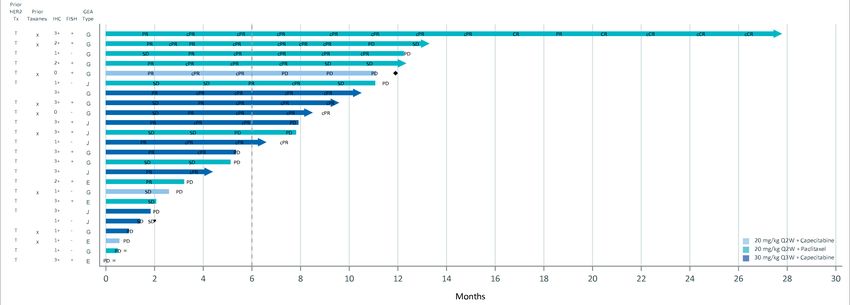
Background
 • Human epidermal growth factor receptor 2 (HER2) is overexpressed in ~20% of gastroesophageal
   adenocarcinoma (GEA)1,2
 • For patients with HER2-overexpressing metastatic gastric or gastroesophageal junction
   adenocarcinoma:
     • trastuzumab in combination with chemotherapy is the only approved HER2-targeted therapy3
     • treatment options are limited if disease progression occurs after HER2-targeted therapy
                                                                                                                                                         H
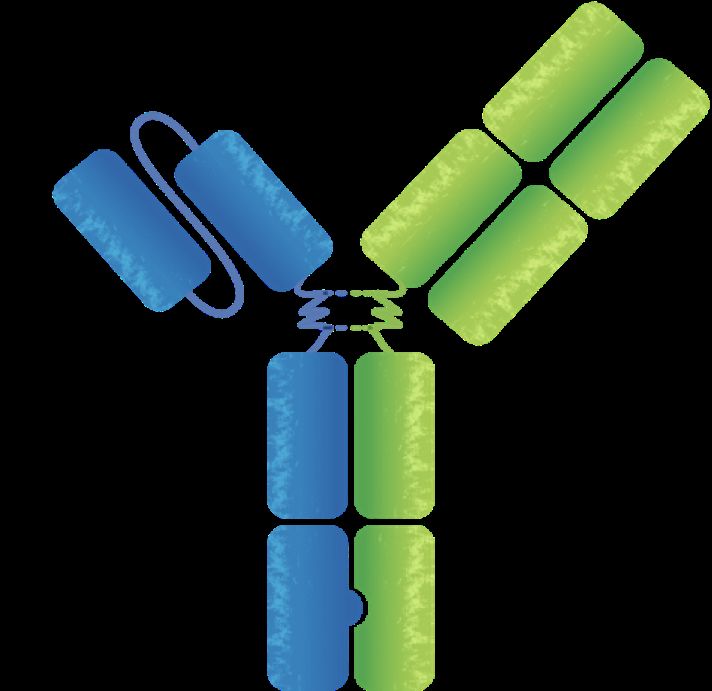
 Zanidatamab: Bispecific HER2-targeted Antibody                                                                                                        EC ER2
                                                                                                                                                         D2
                                                                                                                                                 R2
 • A biparatopic antibody that simultaneously binds two distinct sites on HER2:                                                                HE D4
                                                                                                                                                 EC
   ECD4 (trastuzumab-targeted domain) and ECD2 (pertuzumab-targeted domain)
 • Unique trans-binding results in multiple mechanisms of action by zanidatamab,
   including enhanced receptor clustering and internalization

 ECD=extracellular domain.
 1, Abrahao-Machado, et al. World J Gastroenterol . 2016 May 21;22(19):4619-25; 2, Van Cutsem, et al. Gastric Cancer. 2015 Jul;18(3):476-84;
 3, HERCEPTIN® (trastuzumab). South San Francisco (CA): Genentech, Inc.; 2018. Prescribing Information.

                                                                                         PRESENTED BY:   Funda Meric-Bernstam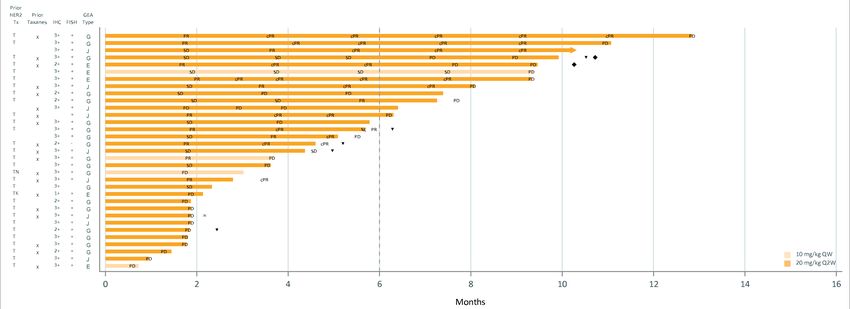
ZW25-101 (NCT02892123)
Key Study Objectives
• To characterize the safety and tolerability, and potential anti-tumor effects of zanidatamab, both as
  monotherapy and in combination with select chemotherapy

Patient Population
• Patients with HER2-expressing cancers, including GEA
• Progression after standard of care therapy
• ECOG performance status of 0 or 1
• Measurable disease per the Response Evaluation Criteria in Solid Tumors (RECIST) version 1.1
• Fresh or archived tumor tissue available for central review of HER2 status

                                                     PRESENTED BY:   Funda Meric-Bernstam
Study Design (GEA Focused)

BID=twice daily; DLT=dose-limiting toxicity; GEA=gastroesophageal adenocarcinoma; IV=intravenous; MTD=maximum-tolerated dose; PS=performance status; QW=weekly; Q2W=every 2 weeks;
RECIST=Response Evaluation Criteria in Solid Tumors; RD=recommended dose; wks=weeks.

                                                                                         PRESENTED BY:   Funda Meric-Bernstam
GEA Patient Characteristics
• The majority of patients had received at least two prior systemic regimens, including trastuzumab
Zanidatamab Zanidatamab + Chemotherapy Combination
Monotherapya Zanidatamabb + Pac Zanidatamabc + Cape
(N = 35) (N = 11) (N = 17)
Median age, year (range) 62 (24–86) 61 (25–80) 63 (26–79)
Sex: Male, n (%) 28 (80) 10 (91) 12 (71)
Race, n (%)
White 19 (54) 7 (64) 10 (59)
Asian 12 (34) 4 (36) 7 (41)
Other 5 (14)d 0 0
Initial diagnosis, n (%)
Esophageal 5 (14) 2 (18) 2 (12)
Gastroesophageal junction 9 (26) 2 (18) 6 (35)
Gastric 21 (60) 7 (64) 9 (53)
HER2: IHC3+ or IHC2+/FISH+, n (%) 31 (89) 7 (64) 8 (47)
Median prior systemic therapies (range) 3 (0–7) 3 (1–7) 2 (1–5)
Patients with prior HER2-targeted therapies, n (%) 32e (91) 10f (91) 15f (88)
Note: Data extracted on: Nov 16, 2020 (data are from an unlocked database and subject to change). Cape= capecitabine; Pac=paclitaxel.
a, included 10 mg/kg QW and 20 mg/kg Q2W; b, 20 mg/kg Q2W; c, included 20 mg/kg Q2W and 30 mg/kg Q3W; d, included Black or African (n=2), American Indian or Alaska Native (n=2), and
unknown (n=1); e, all of these patients received prior trastuzumab, 1 patient each also received prior neratinib and T-DM1; f, all received prior trastuzumab.
PRESENTED BY: Funda Meric-BernstamSafety: Treatment-relateda (AEs)
• The majoritya of treatment-relatedb AEs were Grade 1 or 2 in severity and manageable in the outpatient setting
Zanidatamab Zanidatamab + Chemotherapy Combination
Monotherapy Zanidatamab + Pac Zanidatamab + Cape
(N = 35) (N = 11) (N = 17)
Any Grade 3 Any Grade 3 Any Grade 3
Grade or higher Grade or higher Grade or higher
Patients with treatment-emergent AEs, n (%) 34 (97) 17 (49) 11 (100) 9 (82) 17 (100) 10 (59)
Patients with treatment-related AEs 25 (71) 4 (11) 11 (100) 7 (64) 15 (88) 2 (12)
Most common AEsc
Diarrhea 16 (46) 1 (3) 7 (64) 0 10 (59) 0
Infusion-related reaction 12 (34) 0 3 (27) 0 0 0
Nausea 4 (11) 0 4 (36) 0 3 (18) 0
Fatigue 4 (11) 0 7 (64) 2 (18) 3 (18) 0
• Treatment-related serious AEs reported in 3 patients: Grade 3 diarrhea (zanidatamab monotherapy), Grade 5
pneumonitis (zanidatamab + paclitaxel), and Grade 2 creatinine increased (zanidatamab + capecitabine)
AE=adverse event.
a, 95% of treatment-related AEs with zanidatamab monotherapy or zanidatamab + capecitabine, and 80% with zanidatamab + paclitaxel, were Grade 1 or 2 in severity; b, related to zanidatamab and/or
chemotherapy; c, zanidatamab-related AEs occurring in ≥ 10% of patients in the zanidatamab monotherapy group.
PRESENTED BY: Funda Meric-BernstamAnti-tumor Activity: Zanidatamab Monotherapy
Tumor shrinkage observed in majority of patients with response-evaluable measurable disease
E=esophageal; FISH=fluorescence in situ hybridization; G=gastric; IHC=immunohistochemistry; J=gastroesophageal junction; K=T-DM1; N=Neratinib; T=trastuzumab; Tx=treatment.
33 (94%) patients were response-evaluable; 3 patients had no post-baseline tumor measurements and are not included in this plot.
PRESENTED BY: Funda Meric-BernstamDuration of Treatment: Zanidatamab Monotherapy
Duration of Treatment
(c)PR=(confirmed) partial response; E=esophageal; FISH=fluorescence in situ hybridization; G=gastric; IHC=Immunohistochemistry; J=gastroesophageal junction; K=T-DM1; N=Neratinib;
PD=progressive disease; SD=stable disease; T=Trastuzumab; Tx=treatment.
▼, Clinical progression; *, Death; ◆, Continued study treatment for clinical benefit.
PRESENTED BY: Funda Meric-BernstamAnti-Tumor Activity: Zanidatamab + Chemotherapy
Tumor shrinkage observed in majority of patients with response-evaluable measurable disease
E=esophageal; FISH=fluorescence in situ hybridization; G=gastric; IHC=immunohistochemistry; J=gastroesophageal junction; K=T-DM1; N=Neratinib; T=Trastuzumab; Tx=treatment.
24 (86%) patients were response-evaluable; 2 patients had no post-baseline tumor measurements and are not included in this plot.
PRESENTED BY: Funda Meric-BernstamDuration of Treatment: Zanidatamab + Chemotherapy
Duration of Treatment
(c)PR=(confirmed) partial response; CR=complete response; FISH=fluorescence in situ hybridization; IHC=Immunohistochemistry; PD=progressive disease; SD=stable disease;
T=Trastuzumab; Tx=treatment.
▼, Clinical progression; *, Death; ◆, Continued study treatment for clinical benefit.
PRESENTED BY: Funda Meric-BernstamDisease Response per RECIST 1.1 in Response-
Evaluablea Patients
Zanidatamab Zanidatamab + Chemotherapy Combination
Monotherapy Zanidatamab + Pac Zanidatamab + Cape Combo Total
(N = 33) (N = 10) (N = 14) (N = 24)
Confirmed objective responseb, n (%) 11 (33) 5 (50) 8 (57) 13 (54)
Complete response 0 1 (10) 0 1 (4)
Partial response 11 (33) 4 (40) 8 (57) 12 (50)
Stable disease 9 (27) 4 (40) 2 (14) 6 (25)
Progressive disease 13 (39) 1 (10) 4 (29) 5 (21)
Disease control rate, n (%) 20 (61) 9 (90) 10 (71) 19 (79)
Duration of response,c months (N=11) (N=5) (N=8) (N=13)
Median (95% CI) 6.0 (1.9, 9.2) 9.1 (5.6, NE) 5.8 (3.5, NE) 8.9 (5.6, NE)
PFS, months (N=35d) (N=11e) (N=17f) (N=28g)
Median (95% CI) 3.6 (1.9, 6.2) 10.9 (3.4, 12.4) 5.4 (1.5, 7.7) 5.6 (3.0, 10.9)
PFS=progression-free survival; NE=not estimable.
a, all treated patients with measurable disease who had at least one evaluable, post-baseline disease assessment (per RECIST 1.1) or discontinued study treatment due to death or clinical
progression; b, per investigator assessment using RECIST 1.1; c, in response evaluable patients who had a confirmed complete or partial response followed by ≥1 response assessment; d, safety set
(5 pts were censored); e, safety set (3 pts were censored); f, safety set (6 pts were censored); g, safety set (9 pts In total were censored).
PRESENTED BY: Funda Meric-BernstamConclusions
• Zanidatamab is well tolerated with promising anti-tumor activity in patients with HER2-expressing GEA that has
progressed after prior therapies, including HER2-targeted agents
• The majority of the treatment-related AEs were Grade 1 or 2 and manageable in the outpatient setting
• Durable responses and disease control with zanidatamab as monotherapy and in combination with
chemotherapy
• Zanidatamab monotherapy: Confirmed ORR: 33%; DCR: 61%; median DOR: 6.0 months
• Zanidatamab + chemotherapy: Confirmed ORR: 54%; DCR:79%; median DOR: 8.9 months
• Based on these data, zanidatamab is being further evaluated in patients with HER2-expressing GEA in 2 global
studies:
• ZW25-201 (Phase 2; NCT03929666): zanidatamab + 1st line chemotherapy in patients with HER2-expressing
GEA
• BGB-A317-ZW25-101 (Phase 1b/2; NCT04276493): zanidatamab in combination with chemotherapy
with/without tislelizumab in patients with HER2+ GEJ adenocarcinoma and breast cancer
DOR, duration of response; DCR=disease control rate; GEJ=gastroesophageal junction, NE=not estimable; ORR=objective response rate.
PRESENTED BY: Funda Meric-BernstamAcknowledgments and Other Information
Acknowledgments
We sincerely thank all patients and their families. Thanks to all the investigators, clinical trial researchers, personnel and
staff who contributed to the trial in any way.
Thanks also to Dr. Michael Press and Ms. Ivonne Villalobos at USC Medical Center Pathology Lab for support of HER2
testing.
Sponsor
ZW25-101 study is sponsored by Zymeworks Inc.
ZW25-201 study is sponsored by Zymeworks Inc.
BGB-A317-ZW25-101 study is sponsored by BeiGene, Ltd.
PRESENTED BY: Funda Meric-BernstamYou can also read


