ZURICH RISK WATCH Recovery and growth in the post-COVID-19 world - March 2020 - PARIMA
←
→
Page content transcription
If your browser does not render page correctly, please read the page content below

ZURICH RISK WATCH
           Recovery and growth in the
           post-COVID-19 world
           March 2020
© Zurich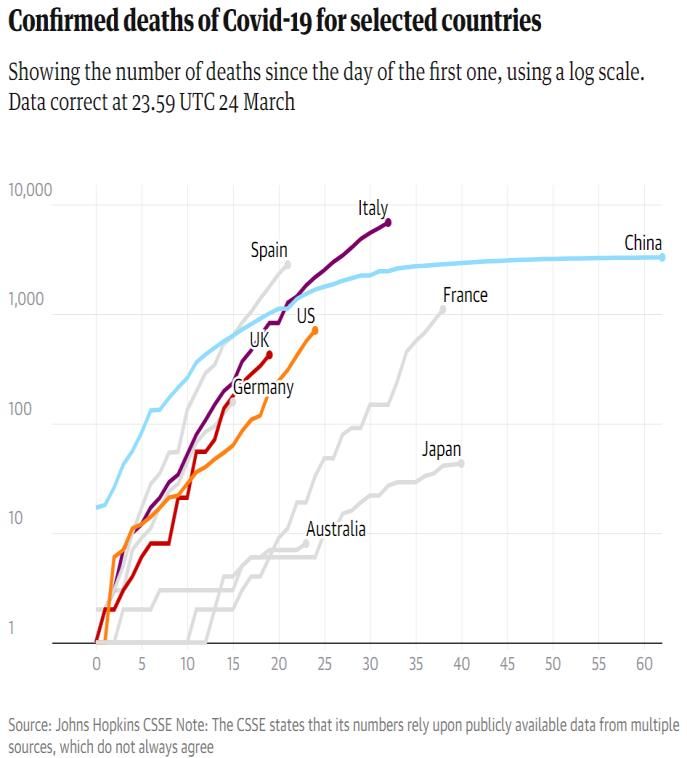
Welcome to the March edition of the Zurich Risk Watch, your Zurich Risk Room newsletter!

           In this edition we take a deeper look at COVID-19 and its implications for the business sector. We look at the currently required
           immediate response actions, as well as on potential long-run recovery and growth strategies for the post-COVID-19 world. Using the
           Zurich Risk Room, we aim to provide senior managers, C-suite and Board members with COVID-19-specific country risk insights in order to
           facilitate strategic decision making. Using the Zurich Risk Room, these scenarios can be further modified according to each organization’s
           corporate environment and strategy.

           If you would like more information, please contact us at riskroom@zurich.com and we’ll be happy to help you.

           Enjoy this edition of the Zurich Risk Watch!

           Your Zurich Risk Room team

           For further information about the Zurich Risk Room, please also visit our website.

           Zurich Insurance Group (Zurich) is a leading multi-line insurer that serves its customers in global and local markets. With about 55,000 employees, it provides a
           wide range of property and casualty, and life insurance products and services in more than 215 countries and territories. Zurich’s customers include individuals,
           small businesses, and mid-sized and large companies, as well as multinational corporations. The Group is headquartered in Zurich, Switzerland, where it was
           founded in 1872. The holding company, Zurich Insurance Group Ltd (ZURN), is listed on the SIX Swiss Exchange and has a level I American Depositary Receipt
© Zurich

           (ZURVY) program, which is traded over-the-counter on OTCQX. Further information about Zurich is available at www.zurich.com.

                                                                                                                                                                           2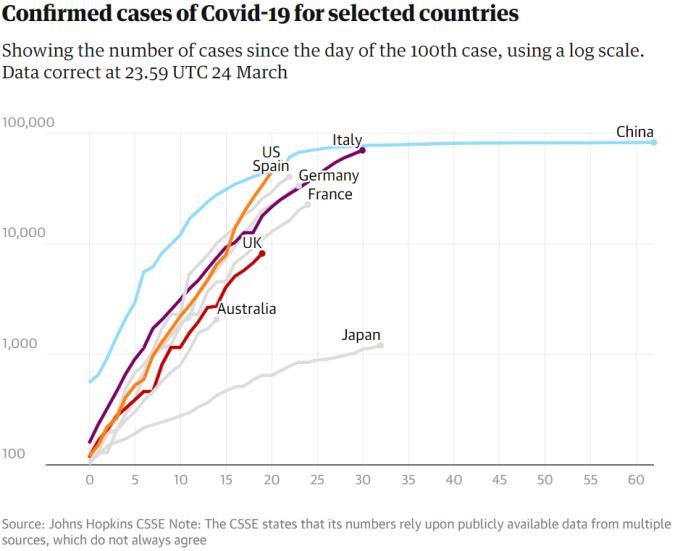
COVID-19: A global crisis

                                  COVID-19 became a global crisis with drastic
                                  social impact…
                                  • Outbreak started in China, now spreads around
                                    the world
                                  • World Health Organization declared Coronavirus
                       OVERVIEW

                                    outbreak a “pandemic” on 11 March
                                  • More than 430’000 reported infections, more
                                    than 19’000 deaths as of 25 March…and
                                    numbers increasing.
                                  • But also more than 110’000 people already
                                    recovered!
                                  • China, U.S. and various European countries
                                    currently most affected by COVID-19, Italy now
                                    with highest number of deaths                             Source: The Guardian; 25 March 2020

                          • Macron declares France “at war” with
                                                                                • USD 1 trillion global economic loss                          • Supply chain disruptions around the
                            virus, as E.U. proposes 30-day travel
                                                                                  expected in 2020 (United Nations)                              world, full impact yet to come

                                                                                                                                                                                        IMPACT
                            ban (New York Times)
                                                                                • Slow-down in global GDP growth to
                                                                     Economic

                                                                                                                                                 (McKinsey)

                                                                                                                                    Business
           Political

                          • Stress test for the U.S. and the E.U.
                                                                                  1-1.5 percent and recession risk                             • Falling passenger demand to cost
                            (Washington Post)
                                                                                  expected (S&P Global)                                          airline industry up to USD 29.bn in
                          • Xi Jinping sought to portray China’s
                                                                                • Substantial economic stimulus                                  2020 (The Guardian)
                            efforts as an example for the world as
                                                                                  packages in the U.S: (Washington                             • US small businesses at verge of
                            infections spread globally (New York
                                                                                  Post), Europe (Financial Times) and                            collapse: “Please send money fast or
                            Times), Iran to struggle (New York
                                                                                  other parts of the world                                       we'll be out of business” (NPR)
                            Times)
© Zurich

                                                                                                                                                                                                 3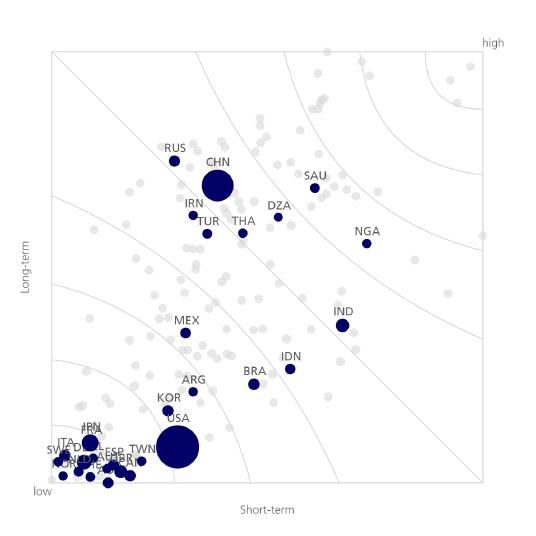
Recovery and growth in the post-COVID-19 world
           Zurich Risk Room country risk insights to facilitate strategic planning
           As senior decision-maker in your organization, the current COVID-19 crisis confronts you with the challenge to understand the COVID-19 risk environment
           and how this impacts on your business. You also need to implement prompt actions to manage and steer through the crisis, and at the same time conduct
           long-term strategic planning for subsequent recovery and growth. In order to help you managing these challenges, we provide you with COVID-19-specific
           risk insights and how these impact across your countries of operation by using the Zurich Risk Room. You can reconcile and further amend these risk insights
           according to your company-specific requirements by using your version of the Zurich Risk Room. We also provide you with a number of possible, immediate
           response actions, which we derived from a recent Gallup survey across 100 of the world's largest companies. Finally, we also provide you with potential
           implications to be considered for your long-term strategic planning.

                              COVID-19 risk
                                                                      Risk assessment                                                 Business implications
                               categories

                          Define COVID-19-specific                  Assess COVID-19 risks                                              For each COVID-19 risk
                               risk categories                     across selected countries                                            category, provide…

                                                                                                               …immediate response                       …potential long-term
            METHODOLOGY

                                 Healthcare and                                                                     actions                              strategy implications
                                 wellbeing
                                                                                                                                                                 In which countries are
                                                                                                                     How can we protect our
                                                                                                                                                                 we most at risk, where
                                                                                                                               employees?
                                                                   Choose 30 largest countries                                                                    do we need to focus?
                                 Governance,
                                 institutions and                   worldwide based on their
                                 sovereign risks                              GDP                            How and what do we                        How can we keep our
                                                                                                             communicate internally                    customers and win new
                                                                                                             and externally?                           ones?

                                 IT infrastructure
                                 and technology                                                                         How do we keep our                      What does this imply for
                                                                                                                        operations running?                      our supplier network?

                                                                   Rank countries according to               How can we rearrange                      What did we learn and
                                 Crisis response and
                                                                   COVID-19 risk category and                our supply chain and                      how can we protect us
                                 resilience
© Zurich

                                                                      across all categories                  production processes?                     against future crises?

                                                                                                                                                                                           4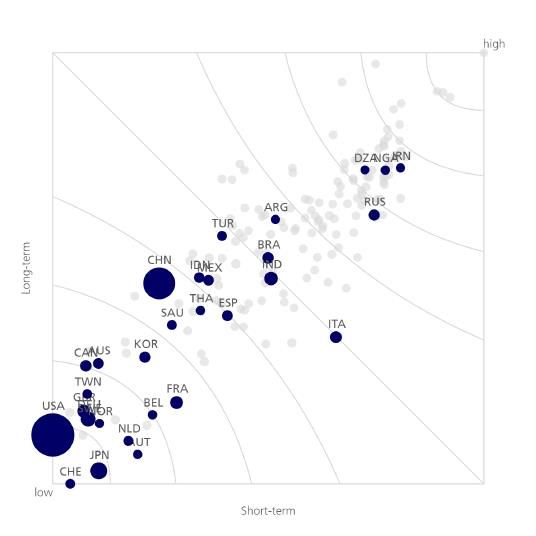
Recovery and growth in the post-COVID-19 world
Overview
The following overview ranks the 30 largest economies in the world (as measured by their GDP) according to their COVID-19 exposure – both at the level of
each COVID-19 risk category and overall. You find details for each risk category as well as potential implications for your business on the following pages.
Governance,
Healthcare and IT infrastructure Crisis response
Country risk* institutions and Overall
wellbeing and technology and resilience
sovereign risks
Max
India Thailand
Argentina Algeria Argentina Russia Brazil Nigeria
Turkey China
HIGH
Mexico Brazil Iran Algeria Russia
Nigeria Russia
Turkey Nigeria Algeria Nigeria Iran
Iran Saudi Arabia
Iran Nigeria Iran Algeria
Algeria
Q2
MEDIUM
South Korea Brazil Spain Indonesia Indonesia India Mexico Italy Indonesia Mexico
Argentina Saudi Arabia Thailand Turkey Turkey Argentina Italy India
Mexico China India Mexico India Thailand Turkey
Indonesia Italy Russia Brazil Brazil Saudi Arabia Argentina
Q1
U.S. Norway
Norway France Norway Kingdom Switzerland Canada Switzerland Austria
Germany Australia
Australia Italy Switzerland Belgium U.S. Australia Norway Taiwan
China Canada
Switzerland Spain Netherlands Taiwan Japan Belgium Germany Belgium
LOW
Sweden Belgium
Netherlands Taiwan Sweden South Korea Germany France Sweden France
Japan Austria
Sweden Japan Germany U.S. Sweden South Korea Netherlands South Korea
Netherlands Saudi Arabia
Austria U.S. Canada France U.K. Saudi Arabia U.S. Spain
U.K. Spain
Germany Australia Norway China Japan China
France Thailand
U.K. Austria Netherlands Thailand U.K.
Switzerland Italy
Canada Japan Taiwan Spain Australia
Taiwan Russia
Belgium U.K. Austria Indonesia Canada
South Korea
Min
© Zurich
* Country risk is measured by “ZRR Rank” which is the rank of each country among all 174 countries in the Zurich Risk Room. Countries in the first (rank 1-43) and second quartile (rank 44-87) of the total 5
country distribution are considered low and medium risk respectively. Countries in the third and fourth quartiles (rank 88-174) are considered high risk.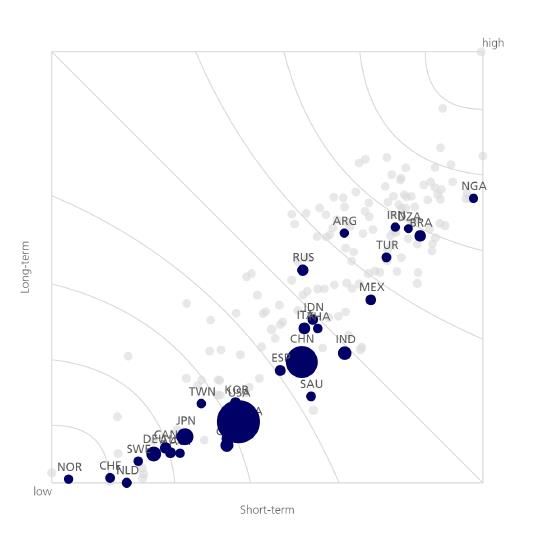
Recovery and growth in the post-COVID-19 world
           Healthcare and wellbeing
                                              COVID-19 affects healthcare systems worldwide, pushes these close to (and often beyond) their capacity limits,
             DESCRIPTION

                                              and severely threatens their ability to care for their patients – affected by COVID-19 and other diseases alike.
                                              Countries, which already had poor healthcare systems before the crisis, generally higher health risks in
                                              combination with a relatively old population are usually most affected by the current outbreak. Likewise, a
                                              country’s social capital, including its degree of social cohesion and engagement, and community and family
                                              networks, is a key factor that impacts on how well the current crisis can be managed. When operating in such
                                              markets, you need to be aware of such factors in order to understand how you can best protect your
                                              employees, both in getting medical help if required and in being socially integrated to go through the crisis.

                                                                                    Immediate response actions
                                                •   Promote social distancing in the office space and adopt flexible work schedules in order to avoid busy
             IMPLICATIONS FOR YOUR BUSINESS

                                                    commutes and enable childcare if schools are closed.
                                                •   Promote home office, restrict business travel and advise against personal travel.
                                                •   Establish protocols to be followed if an employee is diagnosed with COVID-19. Ask employees to log
                                                    contact in order to inform others about potential exposure.
                                                •   Offer options for paid or unpaid time off, and consider employee mental health services for stress
                                                    management.
                                                •   Approve budget for additional paid time off while revising employee compensation and benefits.

                                                                                  Long-term strategy implications
                                                                                                                                                                  Source: Zurich Risk Room
                                                •   Implement employee hygiene and disease awareness programs, incentivize employees for participation.
                                                •   Identify key people risks to ensure that every employee has at least one fully qualified deputy, facilitate
                                                                                                                                                                                Short-term risks       Long-term risks
                                                    documentation of key operational processes and periodic handover exercises.
                                                •   Address the needs and requirements of employees with potentially higher disease exposure, for example

                                                                                                                                                                  FACTORS
                                                                                                                                                                  ZRR RISK
                                                                                                                                                                              Workers' Rights        Social Capital
                                                    by assigning less exposed office space and more flexible working models.                                                  Access to Healthcare   Human Rights
                                                •   Revise your company’s physical infrastructure, such as air ventilation systems, air conditions, office,                   Overall Health Risk    Life Expectancy
                                                    factory and canteen spaces, etc. in order to limit exposure to bacteria and virus circulation.                            Demographic Shifts
                                                •   Invest in onsite medical teams – depending on your company size also in collaboration with other
                                                    companies residing in proximity – for immediate medical support, screening and testing.
© Zurich

                                                                                                                                                                                                                         6
Recovery and growth in the post-COVID-19 world
Governance, institutions and sovereign risks
The role of governments is key in times of crises such as the current COVID-19 pandemic. Governments around
DESCRIPTION
the world are taking drastic measures to restrict or at least slow down further spreading of the virus.
Governments’ ability to act is not only bound by their budget, but also by the quality and stability of political
institutions and their populations’ willingness to follow official rules. The political environment, including the
risk of politically motivated unrest, but also sovereign debt risks will critically impact a country’s ability for
managing the crisis. As a company you often strongly depend on local governments in helping the economy
survive the crisis financially as well as ensuring a politically stable environment for recovery. It will be key that
businesses are able to access state instruments effectively and that the measures taken are sustainable.
Immediate response actions
• Utilize short-term disability, family leave or other existing benefits.
IMPLICATIONS FOR YOUR BUSINESS
• Use back-up care programs, childcare subsidies or other dependent care benefits.
• Pay for time spent under quarantine.
• Adjust work schedules due to school closures.
• Issue FAQ guides, including links to authorities and external organizations such as the Centers for Disease
Control and Prevention, the World Health Organization, Johns Hopkins University, local governments
and outbreak maps.
• Remind workers to get information from credible organizations and urge employees not to panic or
spread rumors.
Long-term strategy implications
Source: Zurich Risk Room
• Monitor your exposure to sovereign debt and inflation risks.
• Assess your business’ dependency on state aid and put countermeasures in place in order to offset
declining financial support and adverse measures imposed by local governments. Short-term risks Long-term risks
• Effectively engage in industry groups and other bodies in order to keep dialogue with local governments
FACTORS
ZRR RISK
and regulators ongoing, and go through times of crises, recovery and subsequent growth together. Political Violence Independence of Judicial
System
• In case you deem political violence to be a possible outcome, put measures in place that will keep your Government Effectiveness
Good Governance Rule of Law
employees safe and enable them to work remotely.
Future Orientation of
• Raise awareness among your employees to the dangers of corruption and crime during fragile economic Fiscal Austerity Risk
Government
recovery.
Public Debt Dynamics
© Zurich
7Recovery and growth in the post-COVID-19 world
IT infrastructure and technology
COVID-19 has drastically changed our current way of living and working across most countries worldwide.
DESCRIPTION
Social distancing and remote working have become the “new normal”, at least for months to come. This
emphasizes the importance of information technology to enable continued communication and collaboration,
as well as reliable electricity supply. You need to be aware of technology factors, such as coverage with
internet access, available bandwidth and mobile phone subscriptions, in your countries of operation in order
to understand how well your company can navigate through the current crisis. Likewise, you need to consider
aspects of a country’s innovation openness and capacity, and its capability to adopt new technologies as these
will be critical factors for how quickly a country can navigate through and out of the crisis by new innovations.
Immediate response actions
• Conduct business using virtual, video or audio capabilities.
IMPLICATIONS FOR YOUR BUSINESS
• Enable technological (e.g. remote work) capabilities, emergency notification systems and update
employee contact information.
• Instruct employees to take their laptops or other portable equipment home each night.
• Devote IT staff to help employees set up remote connections at home, if necessary on employees’
personal computers.
Long-term strategy implications
Source: Zurich Risk Room
• Implement a long-term IT innovation strategy, including earmarked innovation budget and a Chief
Information Officer reporting directly into the Executive Board of your company.
• Stress test your IT infrastructure by conducting periodic, holistic home office / remote working exercises. Short-term risks Long-term risks
Identify IT weaknesses and critical interdependencies, resolve these by additional IT investment and
FACTORS
ZRR RISK
infrastructure diversification. IT resilience shall become a regular part of your BCM exercises. IT Infrastructure Innovation Capacity
• Scrutinize your entire supply chain for potential innovation bottlenecks, ensure that your supply chain Electricity Supply Openness for Innovation
can accommodate short-term capacity constraints and adjustments to production processes. Telecom Infrastructure Government Procurement
of Advanced Technology
• Engage with industry peers, government agencies, universities and other research centers in order to Capacity of Technology
Adoption Products
build innovation clusters in order to enable mutual IT and other technology support, as well as joint
© Zurich
innovation in times of crises and beyond.
8Recovery and growth in the post-COVID-19 world
Crisis response and resilience
The nature and flexibility of a country’s business environment and its financial sector impacts on how well
DESCRIPTION
crises such as COVID-19 can be managed by your business and how quickly recovery could take place.
Recognizing potential opportunities and anticipating upcoming challenges is key to successfully manage and
grow out of the crisis. You need to be aware of the local, regional and global supply chain exposures of your
business, the competitive structure as well as financial markets in your countries of operation. This will enable
you to start revising your supply chain, maintaining your customer base and adapting to the nature of the
business environments in which you operate. After the COVID-19 crisis, and once consumption and the overall
economy will reboot this will enhance your companies’ ability for timely delivery at the right level of quality.
Immediate response actions
• Set up task forces for COVID-19 awareness, prevention, management and hygiene practices.
IMPLICATIONS FOR YOUR BUSINESS
• Internal and external communication related to organization’s COVID-19 response.
• Reduce to business-critical operations only, move critical operations to unaffected regions.
• Document business-critical processes or procedures and cross-train team members to perform critical
functions.
• Develop succession contingencies for all major executives, establish management protocols and business
continuity plans for current and future responses.
• Prepare for shortages, additional budget for supplies, transportation delays or communication delays.
Long-term strategy implications
Source: Zurich Risk Room
• Diversify supplier base, consider insourcing of business critical functions.
• Monitor your supply chain to identify potential upcoming gaps, ensure forward looking and diversified
capacity planning and stock building. Short-term risks Long-term risks
• Define and invest in your competitive advantages, related to your customers, employees and competitors.
FACTORS
ZRR RISK
• Proactively communicate with investors, banks and credit facilities, reassuring them of your strategy and Financial Market Nature of Competitive
Development Advantage
business model to convince them of continued support even in periods of prolonged distress.
SME Financing Production Process
• Continuously update existing customers to keep them during the crisis and for the time beyond. Sophistication
Logistics Performance
• Diversify your customer base, explore new business opportunities and flexible operating models.
Non-performing Loans Soundness of Banks
• Periodically assess your exposure to finance partners and monitor indicators such as your banks’ and
Quality and Quantity of
© Zurich
trading partners’ solvency, which enables you to react timely in case of increased default risks. Local Supply
9This document has been prepared by Zurich Insurance Group Ltd and the opinions expressed therein are those of Zurich Insurance Group Ltd as of the date of the release and
are subject to change without notice. This document has been produced solely for informational purposes. All information contained in this document has been compiled and
obtained from sources believed to be reliable and credible but no representation or warranty, express or implied, is made by Zurich Insurance Group Ltd or any of its
subsidiaries (the ‘Group’) as to their accuracy or completeness. This document is not intended to be legal, underwriting, financial, investment or any other type of professional
advice. The Group disclaims any and all liability whatsoever resulting from the use of or reliance upon this document. Certain statements in this document are forward-looking
statements, including, but not limited to, statements that are predictions of or indicate future events, trends, plans, developments or objectives. Undue reliance should not be
placed on such statements because, by their nature, they are subject to known and unknown risks and uncertainties and can be affected by numerous unforeseeable factors.
The subject matter of this document is also not tied to any specific insurance product nor will it ensure coverage under any insurance policy. This document may not be
distributed or reproduced either in whole, or in part, without prior written permission of Zurich Insurance Group Ltd, Mythenquai 2, 8002 Zurich, Switzerland. Neither Zurich
Insurance Group Ltd nor any of its subsidiaries accept liability for any loss arising from the use or distribution of this document. This document does not constitute an offer or
an invitation for the sale or purchase of securities in any jurisdiction.
© Zurich
Zurich Insurance Group
10You can also read


