1530/1540 Pomeroy Avenue Residential Project - APPENDIX DECEMBER 2020 - City of ...
←
→
Page content transcription
If your browser does not render page correctly, please read the page content below
CITY OF SANTA CLARA, CALIFORNIA

1530/1540 Pomeroy Avenue
    Residential Project

                INITIAL STUDY &
        MITIGATED NEGATIVE DECLARATION
                        APPENDIX

                     DECEMBER 2020

Douglas Herring & Associates
Environmental, Polley, and Planning Services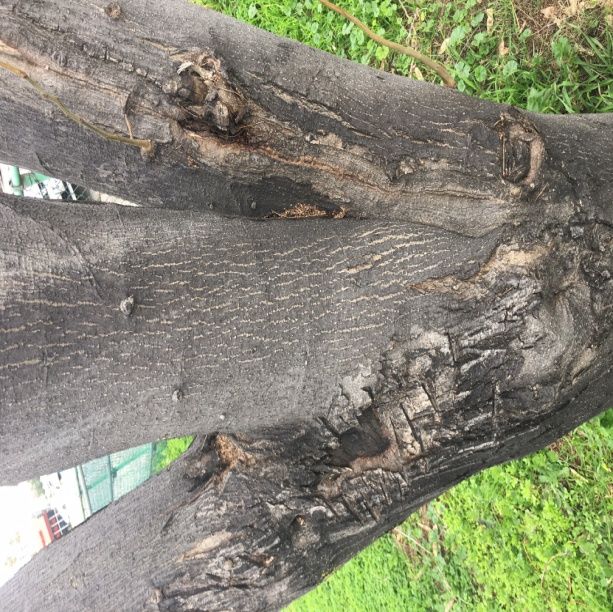
Appendix A
Arborist Report
Kielty Arborist Services LLC
                                  Certified Arborist WE#0476A
                                          P.O. Box 6187
                                      San Mateo, CA 94403
                                          650-515-9783

February 9, 2017

The Ridgecrest Group
Attn: Omid Shakeri
2898 Joseph Avenue
Campbell, CA 95008

Site: 1530-1540 Pomeroy Avenue, Santa Clara CA

Dear Mr. Shakeri,

As requested on Wednesday, February 1, 2017, I visited the above sites to inspect and comment
on the trees. New development is planned for these sites and your concern as to the future health
and safety of the trees and neighboring trees on site has prompted this visit.

Method:
All inspections were made from the ground; the trees were not climbed for this inspection. The
trees in question were located on a “To-Scale” map provided by you. The trees were then
measured for diameter at 48 inches above ground level (DBH or diameter at breast height). The
trees were given a condition rating for form and vitality. The trees condition ratings are based on
50 percent vitality and 50 percent form, using the following scale.

                                 1   -    29 Very Poor
                                50    -   69 Fair
                                70    -   89 Good
                                90    -   100 Excellent

The height of the trees was measured using a Nikon Forestry 550 Hypsometer. The spread was
paced off. Comments and recommendations for future maintenance are provided.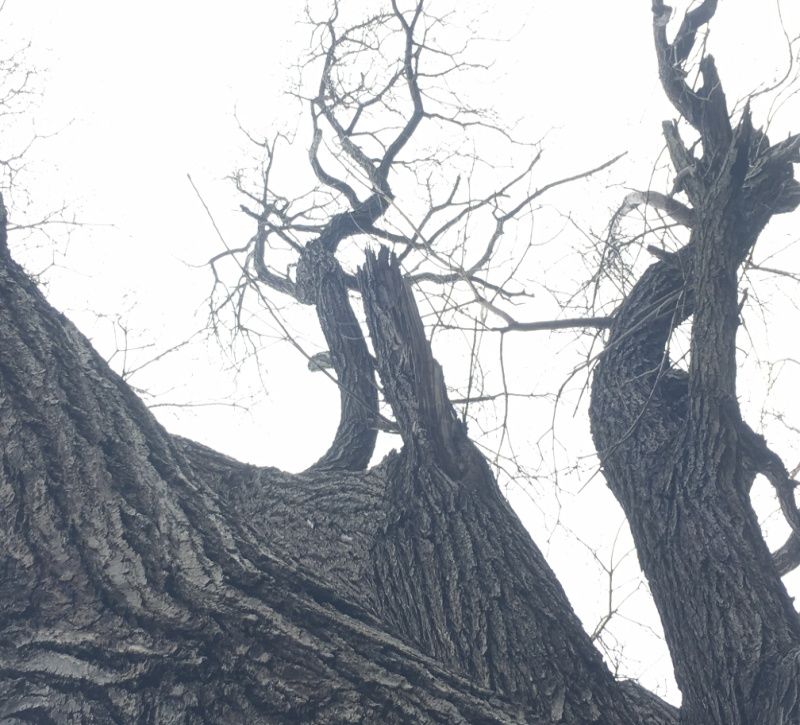
1530-1540 Pomeroy Ave /2/9/17       (2)
Survey:
Tree# Species               DBH CON HT/SP Comments
1*P American sycamore 29.1 45       20/30 Fair vigor, poor form, topped for utilities,
      (Platanus occidentalis)             damage to surface roots from lawn mower,
                                          10 feet from property line, street tree.

2P    Mulberry               16.3    60   30/20 Fair vigor, fair form, abundance of sprout
      (Morus alba)                              growth, abundance of deadwood.

3*P   Avocado                25est 65     40/35 Fair vigor, fair form, codominant at 6 feet,
      (Persea americana)                        heavy into property by 10 feet.

4*    Lemon                  6est    50   12/10 Fair vigor, fair to poor form, multi leader.
      (Citrus spp.)

5*P   Spanish dagger 8"x4est         50   12/10 Fair vigor, poor form, multi leader at base,
      (Yucca gloriosa)                          decay at base, 1 foot from property line.

6*P   Spanish dagger 8"x4est         50   12/10 Fair vigor, poor from, multi leader at base,
      (Yucca gloriosa)                          decay at base, 1 foot from property line.

7P    Silk tree       8.1-7.2-7.7    40   25/20 Poor vigor, poor form, decay at base, decay
      (Albizia julibrissin)                     on limbs, multi leader at 3 feet with included
                                                bark, history of limb loss, in decline.

8P    Black walnut           16.3    50   40/25 Fair vigor, fair form.
      (Juglans nigra)

9P    Black walnut           35est 45     40/30 Fair vigor, poor form, codominant at 10 feet,
      (Juglans nigra)                           history of limb loss.

10P   Black walnut           60.1    40   45/35 Fair vigor, poor form, codominant at 6 feet,
      (Juglans nigra)                           decay at 5 feet, history of limb loss.

11    Almond               5.1-4.2   30   10/6   Poor vigor, poor form, heavily decayed in
      (Prunus dulcis)                            decline.

12P   Black walnut           16.5    40   15/10 Fair vigor, poor form, topped, large hanger
      (Juglans nigra)                           in canopy.

13P   Persimmon              12.8    40   15/20 Poor vigor, poor form, in decline, topped.
      (Diospyros kaki)

14P   Persimmon              12.1    40   15/20 Poor vigor, poor form, in decline, topped.
      (Diospyros kaki)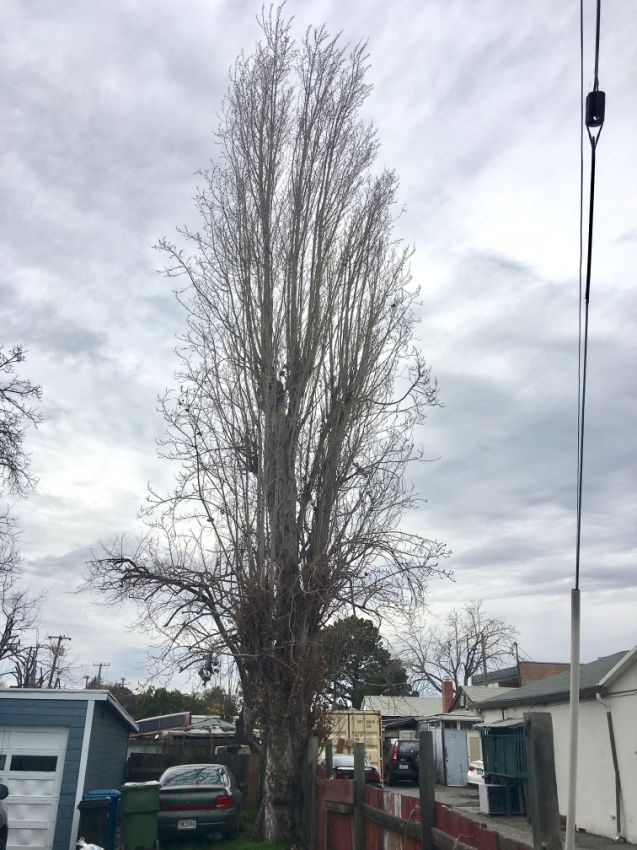
1530-1540 Pomeroy Ave /2/9/17     (3)
Survey:
Tree# Species             DBH CON HT/SP Comments
15    Persimmon           11.1 45 25/20 Fair to poor vigor, poor form, multi leader at
      (Diospyros kaki)                  2 feet, topped.

16P    Lombardy poplar        36.1    45      50/15 Fair vigor, poor form, topped at 25 feet.
       (Populus nigra 'Italica')
*indicates neighbor’s trees

Summary:
The trees on both sites are a mix of imported trees. Trees at two properties that are side by side
from each other were surveyed, as well as neighboring trees in close proximity to the property
line. The majority of the trees on the properties are in poor condition. All of the trees on site are
proposed for removal in order to facilitate the proposed construction. In the city of Santa Clara
there is a conservation policy that states the following about trees: 5.10.1-P3- Require
preservation of all City-designated heritage trees listed in the heritage tree appendix 8.10 of the
general plan, 5.10.1-P4- Require all healthy cedars, redwoods, oaks, olives, bay laurel, and
pepper trees of any size, and all other trees over 36 inches in circumference(11.4 inches in
diameter) measured from 48 inches above grade on private and public property as well as in the
public right-of-way. On this site there are no heritage trees. Trees with a diameter of 11.4
inches in diameter are protected in the city of Santa Clara. Trees #2 and #8 are the only trees on
site that are in fair condition. Both of the sites have not received any maintenance for a long
period of time. Any property improvements proposed would greatly benefit the surrounding area
as the property looks in disrepair.

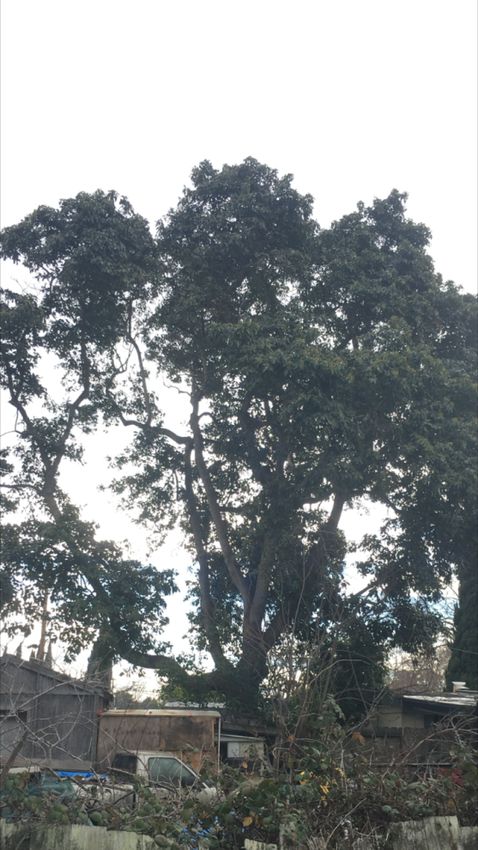
                                         A large avocado tree is located on the neighbors property
                                         to the south in close proximity to the property line. This
                                         tree is in fair condition and is heavy into the property by
                                         10 feet. The proposed plan shows a new structure to be
                                         built at an estimated 12 feet from the property line. The
                                         foundation for the home near this tree is recommended to
                                         be a pier and grade beam type of foundation with a grade
                                         beam no lower than 6 inches below grade. This way the
                                         majority of the roots can be bridged over. Pier locations
                                         must be hand dug to a depth of 3 feet. The grade beam
                                         areas also must be hand dug. During the digging of the
                                         foundation near the neighbor's large avocado tree the site
                                         arborist must be on site in order to document the work.
                                         All encountered roots shall be exposed and must remain
                                         damage free for the site arborist to view. The pier
                                         locations shall have the ability to be moved if large roots
                                         are encountered. If roots are to be cut, the contractor
                                         must first get the site arborist's consent to do so. All
                                         roots to be cut must be cut cleanly using a hand saw or
                                         loppers. By hand digging the pier and grade beam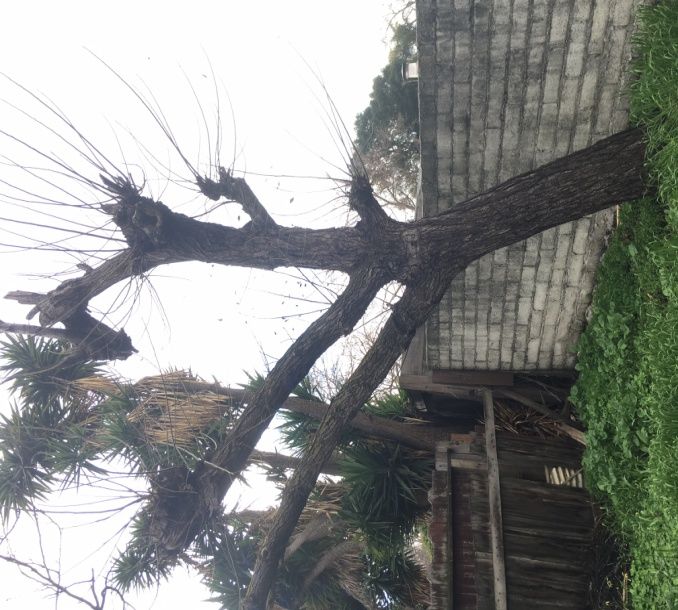
1530-1540 Pomeroy Ave /2/9/17                 (4)

foundation as described above, with the ability to move pier locations if large roots are
encountered, the impact to the neighbor's large avocado tree are expected to be minor.

In order to mitigate the minor impact a soaker hose shall be placed as close as possible to the
proposed foundation and be turned on every 2 week for 5 hours at a time during the dry season.
It is the contractors responsibility to contact the site arborist 48 hours before the foundation work
is to take place near this tree. Kielty Arborist Services can be reached at (650) 515-9783
(Kevin), (650) 532-4418 (David), or by email at kkarbor0476@yahoo.com.

Tree protection fencing for the neighbors avocado tree must be in place before the start of the
demolition and must stay in place during the entire length of the proposed construction. Tree
protection fencing for the avocado tree must extend off of the property line fence and be placed
as close as possible to the proposed foundation. The width of the tree protection fencing shall be
35 feet with the tree on center. Below is a diagram showing the recommended tree protection
fencing location.

                Indicating tree protection fencing for neighbors avocado tree

The neighbors American sycamore street tree #1 will need to be protected throughout the entire
length of construction. This tree is located 10 feet from the property line. Construction site
fencing at the property line shall suffice as tree protection fencing for this tree. No impacts are
expected to occur to this tree from the proposed construction.

Spanish dagger trees #5 and #6 are located on the neighbors property to the west. These trees
have been heavily pruned in the past and likely have a minor amount of decay, as this species
usually decays from old pruning cuts. These trees are 1 foot from the property line. A parking
area is proposed on the property near these trees. Roots in this area will need to be cut. This
species responds well to root cutting. All roots will need to be cleanly cut. The area should be
hand dug to expose the roots in order to cleanly cut them. After root cutting has taken place a
soaker hose shall be placed as close as possible to where the roots were cut. The soaker hose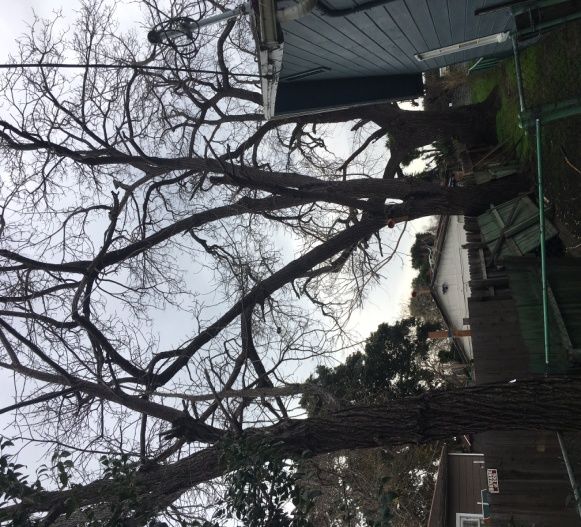
1530-1540 Pomeroy Ave /2/9/17                 (5)

shall be turned on for 5 hours at a time every 2 weeks during the dry season. Impacts to these
trees are expected to be minor. The existing property line fence shall suffice as tree protection
fencing.

Protected trees(over 11.4 inches in diameter) proposed for removal:
#2-Mulberry tree #2 is one of the only trees on site in fair condition. This tree has fair vigor, and
fair form. An abundance of deadwood was visible in the tree's canopy and sprout growth was
visible. This species is generally a short lived species in the landscape. Because sprout growth
was visible this could be a sign of decline in the tree. During my site visit no leafs were visible
as the tree is deciduous.

                                             #7-Silk tree #7 is in decline. This tree has poor vigor
                                             and poor form. Decay is visible at the base of the
                                             tree and decay was visible on the limbs. The tree is a
                                             multi leader tree at 3 feet with included bark. A
                                             history of limb loss is also visible throughout the
                                             tree's canopy. No mitigation measures are expected
                                             to improve the trees condition.

                                             Showing decay and included bark

                                       #8- Black walnut tree #8 is the only other tree in fair
                                       condition. This tree has fair vigor, and fair form.

                                       Showing walnut trees #8-10, these trees are on the
                                       property line separating the two properties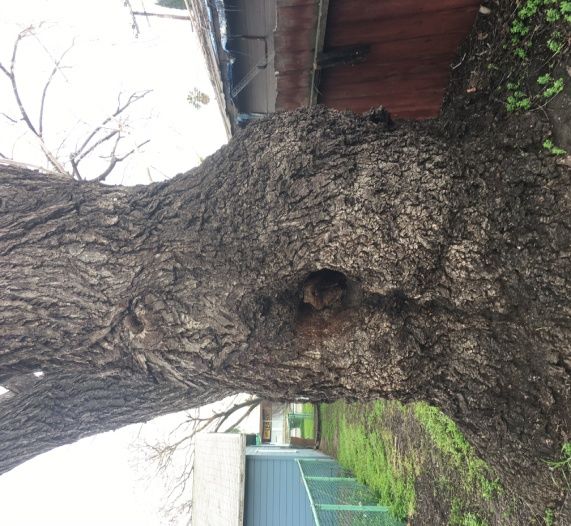
1530-1540 Pomeroy Ave /2/9/17        (6)

                                              #9- Black walnut tree #9 has an estimated
                                              diameter of 35 inches. This tree is in poor
                                              condition as a history of large limb failure
                                              was evident throughout the tree's canopy.
                                              This tree should be removed as it is a
                                              hazard to the property. More limbs are
                                              likely to fail. The failed areas are now
                                              open to decay and insect attack. This tree
                                              should be removed regardless of
                                              construction.

                                              Showing failed limbs

                                #10- Black walnut tree #10 has a diameter of 60.1 inches.
                                A large decay pocket was observed at 5 feet. The tree is
                                codominant at 6 feet. Because the decay is located just
                                below the union of the 2 leaders, the risk of a large leader
                                failure is high. This makes the tree a hazard to the
                                property and it should be removed regardless of
                                construction. Also, a history of limb loss is visible
                                throughout the tree's canopy.
                                Showing decay at 5 feet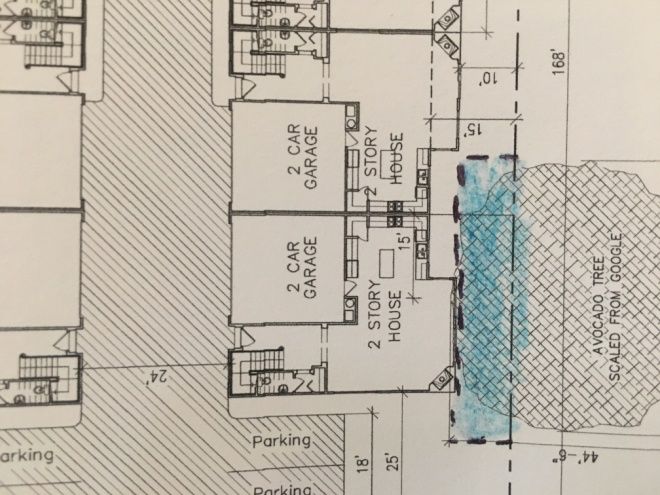
1530-1540 Pomeroy Ave /2/9/17         (7)

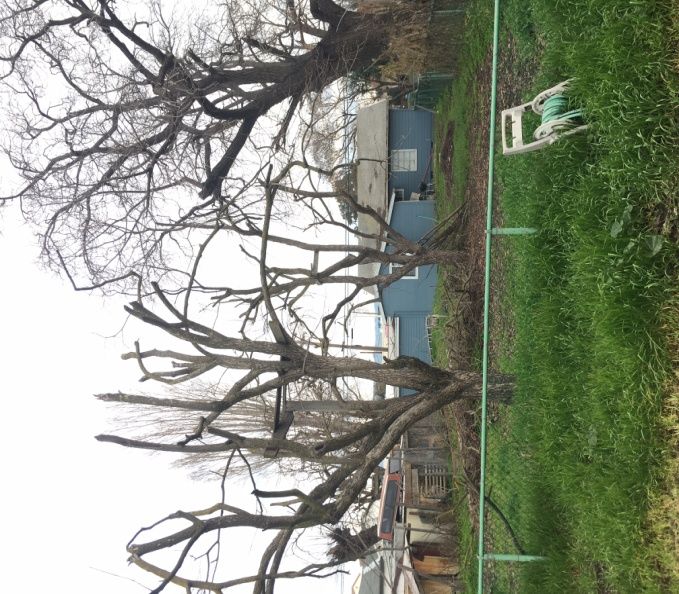
                                 #12- Black walnut tree #12 is in a state of decline that no
                                 mitigation measures would be expected to reverse the
                                 trees state of health. The tree has been heavily topped
                                 and a large hanger (dead limb) is visible in the tree's
                                 canopy. Topping trees is never recommended as the
                                 growth after the topping cut has been made will not form
                                 proper branch to trunk unions. As a result all growth
                                 after topping cuts have been made have a high risk of
                                 failure. This tree should be removed regardless of
                                 construction.

                                 Showing topped black walnut

                                       #13 and #14- Persimmon trees #13 and #14 have
                                       poor vigor, and poor form. Both of these trees
                                       have been topped in the past. No mitigation
                                       measures are expected to improve the trees health.
                                       Topping trees is never to be recommended as it
                                       creates poor structure within the tree that makes the
                                       trees prone to failure.

                                       Showing topped persimmon trees

                                #16- Lombardy poplar tree #16 is in poor condition. In the
                                past this tree was topped at a height of 25 feet. This
                                species is prone to branch failure. The past topping cuts
                                have elevated the risk of branch failure. Cal Poly Select
                                Tree website rates the wood of this species as weak.
                                Because of the poor past maintenance to this tree, the tree
                                is now a hazard to the property and should be removed
                                regardless of construction.

                                Showing poplar tree
1530-1540 Pomeroy Ave /2/9/17                 (8)

Tree Protection Plan:
Tree protection zones should be established and maintained throughout the entire length of the
project. Fencing for the protection zones should be 6 foot tall metal chain link type supported by
2 inch diameter metal poles pounded into the ground to a depth of no less than 2 feet. The
support poles should be spaced no more than 10 feet apart on center. The location for the
protection fencing should be placed at 10X the trees diameter where possible. Where not
possible tree protection should be placed as close as possible to the proposed work while still
allowing room for construction to safely continue. Signs should be placed on fencing signifying
“Tree Protection Zone - Keep Out”. No materials or equipment should be stored or cleaned
inside the tree protection zones. Areas outside the fencing but still beneath the dripline of
protected trees, where foot traffic is expected to be heavy, should be mulched with 4 to 6 inches
of chipper chips.

Landscape Buffer
Where tree protection does not cover the entire root zone of the trees(10X diameter), or when a
smaller tree protection zone is needed for access, a landscape buffer consisting of wood chips
spread to a depth of six inches with plywood or steel plates placed on top will be placed where
foot traffic is expected to be heavy. The landscape buffer will help to reduce compaction to the
unprotected root zone.

Tree Trimming
During construction any trimming will be supervised by the site arborist and must stay
underneath 25% of the trees total foliage

Root Cutting
Any roots to be cut should be monitored and documented. Large roots or large masses of roots
to be cut should be inspected by the site arborist. The site arborist may recommend irrigation or
fertilizing at that time. Cut all roots clean with a saw or loppers. Roots to be left exposed for a
period of time should be covered with layers of burlap and kept moist.

Trenching and Excavation
Trenching for irrigation, electrical, drainage or any other reason, should be hand dug when
beneath the dripline of desired trees. Hand digging and careful placement of pipes below or
beside protected roots will dramatically reduce root loss, thus reducing trauma to desired trees.
Trenches should be back filled as soon as possible using native materials and compacted to near
original levels. Trenches to be left open with exposed roots shall be covered with burlap and
kept moist. Plywood laid over the trench will help to protect roots below.

Irrigation
Normal irrigation should be maintained throughout the entire length of the project. Irrigation
should consist of surface flooding, with enough water to wet the entire root zone. If the root
zone is traumatized this type of irrigation should be carried out two times per month during the
warm dry season. A soaker hose shall be placed underneath the dripline of the neighbors
1530-1540 Pomeroy Ave /2/9/17                (9)

avocado tree and the neighbors Spanish dagger trees. The soaker hose should be turned on for 5
hours every two weeks during the dry season.

Inspections
It is the contractors responsibility to notify the site arborist when construction is to start, and
whenever there is to be work preformed within the dripline of a protected tree on site at least 48
hours in advance. The contractor also must notify the site arborist when the foundation work is
to take place near the neighbors avocado tree so the site arborist can document the work. During
the site visits the site arborist will offer mitigation measures specific to the work completed.
Kielty Arborist Services can be reached at 650-515-9783(Kevin), 650-532-4418(David), or by
email at kkarbor0476@yahoo.com

This information should be kept on site at all times. The information included in this report is
believed to be true and based on sound arboricultural principles and practices.

Sincerely,
Kevin R. Kielty                                      David P. Beckham
Certified Arborist WE#0476A                          Certified Arborist WE#10724A

Conservation Policies in the city of Santa Clara-
5.10.1-P3-Require preservation of all city-designated heritage trees listed in the Heritage Tree
Appendix 8.10 of the General Plan.

5.10.1-P4- Protect all healthy cedars, redwoods, oaks, olives, bay laurels, and pepper trees of any
size, and all other trees over 36 inches in circumference measured from 48 inches above grade on
private and public property as well as in the public right of way.

Below is the Heritage Tree Inventory for the city of Santa Clara

TABLE 8.10-1: HERITAGE TREE INVENTORY Location/Property Description Record # or
Tree Plaque Tree Description Agnews State Hospital land Elms and Palms Alviso and Franklin
Street between Lafayette and The Alameda and East Lafayette between Alviso and Santa Clara
Street (both sides) Sycamore trees Brokaw Road between Coleman Avenue and Santa Clara
Railroad Station (both sides) Eucalyptus trees City Park properties Each tree to be evaluated 500
El Camino Real - Santa Clara University Trees on campus
Fremont Park – north of the intersection of Fremont and Madison Streets
17 Two Linden Trees
1303 Fremont Street – Senior Center 16 Dawn Redwood 2566 Homestead Road –Rumbolz
property at Homestead Road and Caldwell Place 8 Oak and redwood trees 373 Jeff erson Street –
Berryessa Adobe Plaque Olive tree
1098 Lexington Street Branch Library 3 European Elms, Bill Wilson Plaque, Vietnam Veteran
Memorial Tree 1000 Lincoln Street – Carmelite Monestary 6 Each tree to be evaluated
Pomeroy Avenue (between Pruneridge and Forbes Avenue)
9 Oak in Planter
1530-1540 Pomeroy Ave /2/9/17              (10)

1149 Santa Clara Street – Warburton Property – Santa Clara and Main
11 Magnolia Tree
1000 Scott Boulevard Oaks Coast live tree 3346 Solano Court 22 White Oak tree 3260 The
Alameda – Santa Clara Woman’s Club Adobe 13, Plaque Redwood tree, large deodora cedar,
large olive tree Washington Street and Benton Street (northwest corner) – Dr. Paul House Crepe
Myrtle
1124 Washington Street - between Benton and Fremont Street – west side of street.
18 Large Bay Leaf tree Removed 2000 due to disease 1866 Washington Street 1 2 Live Oaks
Page 8.10-4
SANTA CLARA GENERAL PLAN
TABLE 8.10-1: HERITAGE TREE INVENTORY Location/Property Description Record # or
Tree Plaque Tree Description Wilson School - Homestead Rd. 14 Redwood trees - Documented
but not photographed
420 North Winchester Boulevard - City of Santa Clara Cemetery
2 Various trees (each to be evaluated)
(,~,- •••   ,t\   11'1
                                                                                                                                                       ..., .... ·~            goo 1 LaO-C:::0--06? Nd\'
                                                                                                                                                                                V:J 'V~Vl:> V.1.fNS
f-----..J...__ _ _ _                                                                                                                                                         31\V AOij3tl0d 0>!H 1 OC~i
                                                                                                                                            Sl:133Nl~N3 dV\IS
      V~Vl:> VJ.t-NS ~0 A.11 :)
                                                                    rrm
                                              .tl\'Jjij .IUIUYIII:>
                                                                                                             ,   ,.,., ,,, .
                                                                                                             }                       't:,
                                                          i,n,~.-,..,..,,,..e-u                              I                   I C)
        ..,,..,,.,c.. ..... .. ~wt,,l':"t""' ._._,,__,111:'°IU
           l,,~DH .. I ..                  1,i;_,.,_;,..,~,UIIAIIO- J-.M
       .-, • .•• , , ..,,
       ,,..n,>4..,. . ~, ...-111,,.1
                              , -•, _,..,,..
                                     ••~ , u "'"°"""'•--    --
                                             _, ,,...,,...,_,,_
               ... 4 ' " ' •        J • .,- Ml',.....,-.>. n {l,o,o,,rc)o ,._
~.,e ua ,o-,t1 ••• c;u-1•• c:aJ " •
•.1,
... .. # 1 , ~ - tollv,,;.r,,iNo • ll • Hf - JU ; I
iO••~,,.,.-,.iYou can also read


