2018-2019 Community Regional Digital Media Advisory - CRY ROP
←
→
Page content transcription
If your browser does not render page correctly, please read the page content below

2018-2019
Regional Digital Media Advisory
          Community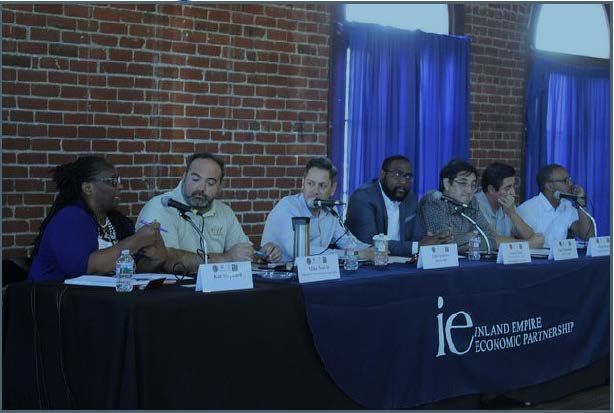
TABLE OF CONTENTS

I NTRODUCTION                               1

I NDUSTRY A DVISORS                         2

O NLINE S KILLS S URVEY P ARTICIPANTS       3

B USINESS P ANEL Q UESTIONS & R ESPONSES    4-10

REGIONAL S MALL W ORKGROUP R ESPONSES      11-17

L ABOR M ARKET S TATISTICS                 18-19

EMPLOYABILITY S KILLS S URVEY              20-26
2017-2018 Regional Digital Media Advisory
Community (10/26/2018)
CRY-ROP Administrators and Arts Media and Entertainment Instructors attended
the Regional Digital Media Advisory Community at the Life Arts Center in
Riverside, CA. This event was funded by the Strong Workforce Program and
coordinated by the Inland Empire Economic Partnership, in collaboration with the
Inland Empire Desert Regional Consortia. This regional format allowed for a
collective gathering of advisors to share their knowledge and expertise without
taxing them with multiple advisories throughout the year. The advisory was
successful with seven industry advisors in attendance. In addition to the advisors
in attendance, twenty-seven industry professionals completed the online skills
survey. During the event, Arts Media and Entertainment instructors had the
opportunity to learn about current industry trends and the technical and
interpersonal skills that are being required in their industry sector and pathway.
Also discussed at this meeting, was how to connect students to education, training
and certification that is recognized and required by industry.

                                                                               1
Industry Advisors
Kat S., KimShepherd.com

Michael T., Tukes Films

Mike N., Cherished Memories Photography

Tim J., Mind & Mill

John R., Social NetworX Inc.

James F., San Bernardino County Superintendent of Schools

Dan W., Deputy Sector Navigator – LA/OC

                                                            2
The following companies participated in the online skills survey.

343 Industries / Microsoft

Amber/Warren Inc.

Archaius Creative

Brave New Films

Cherished Memories Photography

Corona Norco Unified School District

Creative Impact Agency

Devonvp Photography

Duane Loose Design

Game Designer & Writer (Freelance)

Gateway Church of the Nazarene (Production)

Girl Scouts of San Gorgonio

Group 1 Productions

JDS Studios

LA Valley College

Mindful Mammoth

Motion Picture Sound Editors

Mt. San Jacinto College

Redzone Creative

Rim of the World High School

San Bernardino County Superintendent of Schools

Say Design

Sports Television Producer (Freelance)

Tukes Films

Urban Surfaces

Visual Effects Artist (Freelance)

                                                                    3
Regional Digital Media Advisory
Community
Industry Professional Panel

Question 1: What does your hiring process look like?

  •   James: There are more jobs posted on Edjoin – education jobs — than any
      other in the state of California. We post that the job requires a bachelor’s
      degree and this type of experience. After that, we look for soft skills. Having
      someone who is moldable. Education speaks its own language and so if you
      have been at an education event they use 5,000 acronyms for every district,
      department or program. We are looking for someone that can learn that
      language. Education, soft skills and right now EdJoin in this area.
  •   Michael: People skills and understanding their reliability. Be a production
      assistant and from there see what their skills they are shining in, what they
      are doing right, things we can tweak and if their reliability is really there
      Then, I know I can help them grow and shape them and make them better on
      set.
  •   Tim: Our hiring process is less concerned with your academic pedigree than
      what you can produce. We really, really care about your portfolio that
      demonstrates examples of their past work. That evolves into the hiring
      process. We have an interesting high rate of full-time employees as well as
      contractors and freelancers.
  •   Kat: I see many “solopreneurs”. There are many solopreneurs out there who
      are doing it on their own. They are out there selling and doing whatever they
      are selling but they cannot do everything. Solopreneurs are hiring many
      people that are low on the radar. I had two customers this week ask me if I
      have somebody else I can pull-in and hire because they needed other services.
      If I were able to provide them with someone who has the skill set, they would
      have hired them on right away.

Question 2: What interpersonal skills are most important in your
industry?

  •   Dan: The number one thing is listening.
  •   Mike: Teach accountability. I personally work with nine different high
      schools, I am saddened by the lack of accountability teachers, and staff are

                                                                                 4
able to hold them to. Therefore, when they do not complete a project it's not
      that big deal. They just get a slap on the wrist, they get a low grade but they
      didn't fail. If I don't complete a project, I am in trouble. If I don't complete a
      project for a company, I can be sued. If I don't complete a project for a parent,
      I am blasted all over FB Yelp and I have social media to combat with. Yet we
      have a whole generation of students who don't complete projects and yet they
      continue to graduate and move on and get a certification. So accountability is
      huge. Soft skills are huge, so accountability is huge. We need to teach our
      young people better customer service.
  •   John: Be a good listener. We do a lot of sales training with our staff. Our staff
      is technical when it comes to editing or creating cool stuff that looks great but
      at the end of the day as a digital marketing firm, we are paid to help our
      client sell their product and service. Communication skills understanding
      and just a fundamental foundation of selling itself is something that is
      extremely valuable in our field in what we do.
  •   Tim: When clients come to a certain agency, they know they want to grow
      their business typically looking for revenue. They are looking for opportunity
      to build campaigns and channels and videos and other marketing initiatives
      to do that. If you make an error, you need to be able to take one step back
      instead of 10 steps back. If you can really get into the mind of that human
      being, you have a better shot at that. That is a difficult interpersonal for a
      human being especially in the early stage of their career to do.
  •   James: A big thing is patience. It's really understanding in education how we
      work — in a service industry if we are not willing to sit down with certain
      people to grind out their needs, students and parents have needs. We work
      with a bunch of stakeholders whether that is the fire department or health
      and safety. A big thing is molding the mindset that we are a customer service
      industry. It is a big skill to have patience to get the job done.

Question 3: What foundational/technical skills are necessary for entry-
level positions within your industry?

  •   Kat: Today, storytelling is a big part of that and video is really at the top
      of the tier. Its video in social media whether it’s live stream or planned
      videos on the website.
  •   Dan: Know the history of your industry because a lot of times that is the
      way you get a job. If you happen to have some antidotal fact that no one
      else was expecting, that leads to your promotion.
  •   Mike: Understand what it is that you have been asked to do. We go out
      and photograph high school sports. It’s like baseball and football everyone
      understands generally how those games are played. Well, you have 16
      other sports that are going on we have to teach them. Fundamentally,
      they have to understand what they are going to photograph. It is not
      simply click a button and take a picture. We teach them to look outside

                                                                                    5
the box, to look at everybody as an individual. Our job is to make you look
      your best as a photographer or capture that one moment.
  •   Kat: We all teach people how to make websites and the technical skills.
      What is missing is the marketing message. We have to make sure that
      website speaks to the visitor that has a great marketing message. That it
      is optimized. They have to know Search Engine Optimization, those
      technical skills that work for the customer, not just to just put it up there.
      Make sure it is a functional working website.

Question 4: What skills/knowledge is being required of new employees
to address the latest trends in technology, equipment, regulations, laws,
etc.?

  •   Michael: Adobe Premiere is really important when it comes to editing.
      Having the whole Adobe suite. The subscription is a cheaper option for
      colleges or even high schools. It's not about the equipment getting better I
      think it is better to understand what the equipment can do for you. If you
      don’t like it, you don't like it. There are people who go to Home Depot and can
      make a set look good. There are people who can shoot with the iPhone and
      make it look good. A camera you should go for is Cannon, Sony and
      Panasonic. Those are some good cameras to start off with if you are going to
      be teaching students the fundamentals of DSL interchangeable lenses just
      knowing that and letting them know about trade shows like different events
      NAB National Association of Broadcasting.
  •   Dan: Teach the students the foundational skills. The particular interface we
      use whether it is AVID or Premiere are secondary to knowing the
      foundational skills. The second thing they need to know is safety because
      there are too many students who go out to a set for the first time or use a
      piece of equipment for the first time or they don’t know how to use the
      equipment and they use it wrong or they plug something in correctly and
      someone gets hurt.
  •   Tim: We can spend the entire day discussing the tech we use. I will focus on
      video since that is what we are chatting about now. We usually edit in
      Premiere and animate in After Effects. We film with many cameras and we
      are filming with the red (camera brand) now. What I would encourage your
      students to be less concerned at what they are holding in their hand and
      more about learning to be that talented, artistic and creative in that space.
  •   Mike: Follow the trends of social media. For example, if you look at
      Instagram or Facebook they are favoring shorter, more concise, and straight

                                                                                 6
to the point video productions. With students, importance of details. We focus
      down in the details. Even something as simple as continuity in their
      PowerPoint slides.
  •   Michael: As a photographer, we are in a unique business that if you have a
      Costco membership you can walk in and get the same camera I have. You
      have a nice camera and lens is so big you must be able to take great photos. I
      will hand them the camera and tell them to try to do what I do. I run into
      people every day that have the same equipment that I do, and I figure that
      they just have income that is more expendable. They can do that, but they
      cannot do what I do. The camera is just a tool. Understanding lighting,
      posing, what ISO and dynamic range and why should I never take pictures
      out in the high school quad at noon. A dark room on campus is still relevant.
      If you can teach how to create picture using film, then digital is great. My
      keeper rate is 90-95%. I don't take garbage, I know what I what I am looking
      for and I know how to get it.

Question 5: What skills or practices have become obsolete in your
industry due to changes in in technology, equipment, regulations, laws,
etc.?

  •   Michael: Stay up to speed with You-Tubers. They are constantly doing tech
      reviews. It's not like a year later or two years later all of sudden the camera
      is going to be shooting holograms. Be up to speed with trends. Ask your kids
      because they are going to know.
  •   Tim: On a really high level to encourage your students to utilize software as a
      service as opposed to stand-alone ones that are installed on the machines. We
      use, build and implement a lot solutions similar to our clients as well. We are
      a strong, strong advocate of the rental economy, subscription based services
      and software as a service online. Especially with students because it allows
      them to enter the space with less of an upfront investment. It defends the
      issue of what to look out for because it is not a long-term commitment.
  •   Kat: Freeware for social media is Creddle, Canva and Ripple.

Question 6: What types of training, education, certifications, or
credentials are desirable of entry-level positions in your industry?

  •   John: One of the things we look at is education with bachelor’s degrees. That
      is a kind of a first door opener for us but if we have someone who is a bit
      aggressive and they do not have the education they can still get our attention

                                                                                 7
just by submitting their actual work. It's not necessarily any set of
certifications as much as it is experience.
• Mike: We are actually looking for people who don't have a lot of certifications
but have the heart and desire to want to learn and get experience on the job.
What we found was that kids coming straight out of high school photography
classes where a lot are more successful. Then, they moved onto community
college where we were able to train them as they go. So for us, certifications
don’t mean anything. We want someone who has people skills and a
willingness to learn.
• Dan: MS Office because that will get you in the front office. About 70% who
graduate from a 4-year university fail the Outlook test.
Question 7: Does your company offer internships? If so, what are the
technical/non-technical skills needed? Also, what type of work do
interns participate in?
• John: We have an internship program running right now that was
promoted at UCR. We had close to 70 people who applied for the position.
We have four full-time employees now that are big part of our team who
started off as 90 day interns.
• Kat: My interns are developing social media plans. They are creating web
commercials, websites, social media marketing. They go on cruises with
me to do the social media marketing. They are working chat boxes,
artificial reality, web site, commercials, they are doing everything for me.
• Mike: Interns at my company will do everything our office has. Depending
on their skill sets their interest level. All of our employees start off as
interns first. We have 34 of them. 30 of them came from nine of the high
schools we work with. We do not pay our interns until there becomes a
paid position, they will get a position eventually. 90 - 120 days is to
evaluate them if we like them. As a business owner, I don’t hire someone I
don't like. You come in the door and you have to represent well, you have
to be the person I want you to be. If you do, then you get an opportunity to
stay.
Question 8: Where do you see the field of Digital Media going from
here? Important trends?
8• Kat: Facebook Spaces, Augmented Reality, Chat Box. I wish some
school would run some kind media business right in the school.
• Mike: We are doing a lot of Chroma key a lot of green, blue and white
screens. Senior banners team banners. How to compose and light pose
a group of 150 people without them being in the same room is a trend
our industry is moving. It started in the Midwest and has exploded
here in California. We are pushing knowledge of Photoshop. I am not
the only one who talks to their high school photo teacher 28 years
later. I am sure you make a difference in their lives and I thank you for
your commitment to our kids.
• Tim: AR is one of the trends right now. The cost of producing AR
content is plummeting very fast which is opening up the opportunity
for smaller and medium size businesses to utilize that channel in
digital marketing strategies. Another trends is marketing automation.
Building out processes and tools in tech to help set up client to be able
to take those channels internally without having massive internally
marketing and tech teams. While I was at that university, I developed
an internship program and brought most of the interns into my
business. We ended up hiring over the course two or three years of that
program about 25 interns on a full-time basis.
• James: Education moves slower than in the public sector. Some of our
trends are social media being able to find cost efficient ways to
communicate whoever it is. If that is finding your way to connect with
parents or students or different stakeholders. It's finding those
avenues. Its interactive magazines, its Facebook live where you can
have your superintendent or your principal doing a talk with the
parents. Online phone conversations like town hall meeting where
parents can call in and ask certain questions. It's finding those
avenues that open up minds of communications. Those are some of the
trends going on in education. That is what we are doing an online
magazine for our superintendent and use Constant Contact to send out
to our different groups. Finding ways to communicate more efficiently
and on different levels.
• Dan: Here is what is coming up in the industry. More personal
narratives, lower budgets more domestic focus. Most importantly be
flexible in terms of what you are willing to do because a job will open
up and you are not going to know where it is and it will probably be
better that what you thought you wanted to do.
9• John: Importance of communicating digitally. When we are taking
about communicating or promoting video content, social media, what
have is you. When you get a client to respond being able to have an
interchange of thoughts and ideas back and forth with the client
without getting them on the phone is really important. Communication
skills. Being able to communicate articulate your values. When we are
talking with interns or students they may be able to work behind the
camera or computer but may be challenged with being able to
communicate peer to peer. Assessment of your own work. It's ok for
your project to be torn apart it needs to be because if we don't do it the
market will do it. They will go to other companies if we are not doing
our job. When you tell somebody that it may be a punch in the gut but
it is also a great opportunity to make ourselves better.
• Michael: Businesses are doing content monthly or even weekly.
Business owners want to brand themselves, want to speak on behalf of
their companies, about their services or products. Everyone wants to be
their own Steve Jobs. There are a lot of opportunities for students to
work directly with business owners because of this.
10Regional Small Workgroups
Question 1: What changes are currently taking place in your programs
on your campus?
Animation, Motion, & Gaming-
• Working towards animation and motion graphics for advertising.
• Fine arts has the animation component of character driven stories in big
formats.
• Norco currently has video game design.
• Development of a course in collaboration with the business department
possibly prototype driven in which the students would create a product that
could be marketed. This would be a collaborative certificate of some type.
Graphic Design-
• Collaboration and projects with other programs.
• Academic cross-over work-based projects.
• No peer pathway classes – scheduling.
• Losing CTE Growing IB and AP programs – CTE is growing to other school
sites.
• Curriculum changes to meet the CTE Model Curriculum Standards.
• Rebuilding pathways - Aligning CBED codes/pathways with teacher
credentials.
Photography-
• Summit High School: CTE Digital Photography and Advanced Digital
Photography is now being offered.
• Vista Murrieta High School: Three levels of photography classes are offered
for their Visual & Performing Arts programs; beginning, intermediate and
advanced.
• Riverside City College: Eight courses are offered in Film, TV, Video and
Photography.
Radio/TV/Film/Editing-
• Alvord: 7th – 8th Grade Isolation Booths/Partnerships with business
programs in High School.
11• Redlands East Valley High School: CRYROP – Digital Video Program just
returned.
• AB Miller/Summit HS: Improving/Upgrading equipment w/ CTEIG grant
• Victor Valley High School: Articulation meeting with San Bernardino Valley
College.
Social Media and Marketing-
• As a classroom reach out, one teacher mentioned they use Buffer. You can
also schedule posts, analyze performance, and manage all their accounts in
one place.
• Hootsuite was mentioned, this program will help manage all your social
media in one place.
• Opening a social media account (Facebook, Twitter, Instagram, Linkedln).
Question 2: What technology are you currently using in your programs?
Animation, Motion, & Gaming-
• Oculus Rift
• 3D Printer
• Thingyverse.com
• Maya
• Adobe Animate
• Cura.com
Graphic Design-
• Adobe CC 2018.
• Mac lab.
• Screen printing.
• Blender (Free) for 3D Modeling, Stencil, Flash web or IOS.
• Serif Affinity (less expensive than Adobe) has workbooks, apple app, ipad
versions, learning tutorials.
• Sketch up 3D, Tinker CAD (free) robust for student skill level.
• Laser engravers.
• Free app that allow MACs to be used as a second monitor.
• Maya (free version).
• Digital printing, heat press, and large format printing.
12• Wix.com – 1st level website building, Wordpress – will teach skills for content
management, Square Space.
Photography-
• Summit High School: Adobe Creative Cloud/Suite and Lightroom with Canon
cameras.
• Vista Murrieta High School: Adobe Creative Cloud/Suite, Learning
Management System (LMS), Lightroom, Illustrator, Fusion Auto Desk; 3D
printers.
• Riverside City College: Adobe Creative Cloud/Suite, Mac computers, Canon
cameras, high end printing technology and Nikon Lenses.
• Mike Norton: Adobe Creative Cloud/Suite. Canon cameras and Canon gear.
Adobe Bridge (Lightroom was too slow), Camera Raw, Dropbox (approx. 20
TB). 100% Mac computers with Windows dual boot on all (to run Windows
programs.
Radio/TV/Film/Editing-
• Banning High School: Adobe Premiere/ CertiPort Certification.
• Fontana Unified School District: Adobe Suite Site licenses, broadcast
programs, switchboards.
• Redlands East Valley: Adobe/Resolve (color correction software), Celtex for
script/storyboarding, call sheets.
• Rim of the World: Final Cut – Storyboarder App
• Jurupa Hills: Avid/Pro Tools.
• Riverside City College: Adobe Suite, Final Cut Pro, Isotrope Studio.
• Michael Tukes: Storyboards uses pencil/paper along with photos of friends or
wood figures, and YouTube videos.
Social Media and Marketing-
• Adobe Sparks - Create and share visual content.
• Adobe Suite – Design, marketing, business solutions.
• Adobe Video – Video editing for film, TV and the web.
• Canva – Design logos, posters, flyers resume, infographics, and business
cards.
• Facebook, Twitter, Instagram, Linkedln.
• Google Docs - Create, edit, and share documents online and access them from
any computer with an internet connection.
• Ripl – Video creation, designer templates, customization, personalized advice,
posting to all social accounts at once.
13• Buffer will automatically connect to your social media accounts. (You only
have to send out once).
• Suggestion was made to build social media to your website.
Question 3: What new courses and technology do you see in your
departments in the next five years?
Animation, Motion, & Gaming-
• CRY-ROP: Video Game Design 2 Honors which has a marketing component
embedded into the curriculum.
• Norco College: Cinema 4D Lite is currently used and available in the after
effects software (may use the full version if available).
Graphic Design-
• Currently teachers can only teach 2nd level Social Media Marketing because
the students are locked out by schools.
• Administration needs to hear from industry that to teach social media
marketing they need access.
• Present social media marketing at a school board meeting.
Photography-
• Drones, telescope for Astronomy and “space” photography; 3D printers.
• Mirrorless cameras (ex: Sony A7).
• Hybrid certificates. Adapt more classes to newest technologies as they
become available.
Radio/TV/Film/Editing-
• Redlands East Valley: You Tube course.
• Banning Unified: Split Screen template w/ google classroom with goal of
script writing.
• Michael Tukes: Online courses by industry filmmakers (Up-to-date info on
YouTube).
Social Media and Marketing-
• Coding
• DHP
• CSS Wordpress - create your own website.
14• WIX – create your own website.
Question 4: What advice would you give to ROP and high school
teachers that would help them better prepare students for transition to
community college?
Animation, Motion, & Gaming-
• Soft skills- punctuality and passion for the job.
• Exposure to multiple career options with in the field.
• Exposure to a variety of Adobe software.
Graphic Design-
• Students are coming well prepared.
• Need counseling to push community college instead of directly going to a 4
year and get your AA first and BA later. AA will help with employment to
pay for school loans.
Photography-
• Students create their own online blogs, where they can upload their work and
explain how and what they did to achieve their product. It gives student the
opportunity to share their work while letting them express themselves. Allow
students to express themselves and let them run their own website.
• Academic dishonesty is huge. Students will steal pictures from the Internet
and use them as their own work. Emphasis on academic honesty.
• Emphasis on reading, writing and communication skills.
Radio/TV/Film/Editing-
• Chaffey: Understand basics of the creative process.
• College of the Desert =: Already have a portfolio and be open/flexible to all
media platforms. Need to be able to adapt to different audiences.
• Riverside City College: Content is king. Specialize in one are but be familiar
with a vast majority of different programs. Pay close attention to social media
and the importance it has on society.
• Michael Tukes: System management (Hand signs/walkie talkies). Mood
boards for visual imagery/cinematography.
15Social Media and Marketing-
• Suggestion was made to run their course like a business. Students can also
add it to their resume.
• Google Docs allows users to copy and paste content between Google Docs,
Sheets, Slides and Drawings.
• Dropbox - Dropbox simplifies your work, with a central place to access and
share files.
• Office 365 – Track your students work and jump in as you see a problem.
• Behance.net Showcase & discover creative work.
Question 5: What are some of the biggest skills gaps that you have
identified within the incoming student population?
Animation, Motion, & Gaming-
• The art of storytelling should be incorporated into HS courses.
• Embedding motion graphics into the animation class.
• Try to create open lab time for student who cannot afford the student priced
Adobe software.
Graphic Design-
• More teachers able to teach CTE.
• Have students get a driver’s license.
• CUE conferences and AMD conference are good for teachers to go to for
current industry information.
Photography-
• People skills (how to look someone in the eyes and shake their hand),
communication skills, social skills (how to speak to people politely and
respectfully).
• Knowing how to work with others and in groups.
• Reading, writing / basic skills. Students need to know how to write in
complete sentences, using proper grammar.
• Learn appropriate behavior in the workplace. Students should show up to
work on time (if not a little earlier), keep track of time and don’t take too
many breaks or go on lunch too early.
• Appropriate attire in the workplace.
16• Cell phones are a huge problem (Mike Norkin has his employees put their cell
phones in lockers during work hours, so it is not a distraction).
• Accountability: students need to take accountability of their actions and
work. Time is money and there are deadlines, and working extra hours is
necessary in order for things to get done.
• Do not ask about money or pay. Students need to show that they have
passion in photography and are willing to learn and take constructive
criticism.
Radio/TV/Film/Editing-
• Banning High School: Students cannot communicate in-between one another
due to reliance on cell phone
• Rim of the World: Students do not know basic functions on computers/email
• Victor Valley USD: No child left behind act was a catalyst to the lack of soft
skills that students have nowadays. Employers do not comfort you so why
should the education system
Social Media and Marketing-
• Sales & Marketing
• Getting to know the client was mentioned as a skills gap
• With shy students, have them make a video of themselves
17Camera Operators, TV, Video, & Motion Pictures
State and National Trends
Percent Projected Annual Job
National Employment Change Openings*
2014 2024
Camera Operators 25,400 25,900 2% 280
Percent Projected Annual Job
State Employment Change Openings*
2014 2024
Camera Operators 7,000 7,200 3% 80
Audio & Video Equipment Technicians
State and National Trends
Percent Projected Annual Job
National Employment Change Openings*
Audio & Video 2014 2024
Equip. Technicians 70,900 79,400 12% 2,190
Percent Projected Annual Job
State Employment Change Openings*
Audio & Video 2014 2024
Equip. Technicians 14,600 16,900 16% 510
Multimedia Artists & Animators
State and National Trends
Percent Projected Annual
National Employment Change Job Openings*
Multimedia Artists & 2014 2024
Animators 64,400 68,300 6% 1,590
Percent Projected Annual
State Employment Change Job Openings*
Multimedia Artists & 2014 2024
Animators 21,800 25,100 15% 740
18Graphic Designers
State and National Trends
Percent Projected Annual
National Employment Change Job Openings*
2014 2024
Graphic Designers 261,600 265,200 1% 6,580
Percent Projected Annual
State Employment Change Job Openings*
2014 2024
Graphic Designers 37,000 41,500 12% 1,340
Video Game Designers (Software Developer & Apps)
State and National Trends
Percent Projected Annual
National Employment Change Job Openings*
2014 2024
Video Game Designer 718,400 853,700 19% 23,800
Percent Projected Annual
State Employment Change Job Openings*
2014 2024
Video Game Designer 121,200 172,700 43% 6,880
Advertising & Promotions Manager
State and National Trends
Percent Projected Annual
National Employment Change Job Openings*
Promotions & 2014 2024
Advertising Manager 31,000 32,400 5% 1,140
Percent Projected Annual
State Employment Change Job Openings*
Promotions & 2014 2024
Advertising Manager 4,100 4,700 15% 200
1920
21
22
23
24
25
26
You can also read


