2018-2023 Investing in Our Future - ACTION PLAN FOR OFFICIAL LANGUAGES - Gouvernement du Canada
←
→
Page content transcription
If your browser does not render page correctly, please read the page content below

Investing in Our Future
    2018–2023
 ACTION PLAN FOR
OFFICIAL LANGUAGES
© Her Majesty the Queen in Right of Canada, 2018
ISBN 978-0-660-25787-7
Catalogue no. CH14-39/2018

TABLE OF CONTENTS
PRIME MINISTER’S MESSAGE.........................................................................................................................................................6

MINISTER’S MESSAGE....................................................................................................................................................................7

OFFICIAL LANGUAGES IN CANADA............................................................................................................................................8

    Population Trends: Government Action................................................................................................................................ 8

    Listening to Canadians........................................................................................................................................................... 9

OUR GOVERNMENT’S COMMITMENT TO A NEW ACTION PLAN: INVESTING IN OUR FUTURE................................................... 12

PILLAR 1
STRENGTHENING OUR COMMUNITIES.......................................................................................................................................... 15

    Empowering Community Voices........................................................................................................................................... 16

         Increasing core funding for organizations....................................................................................................................... 16

         Solidifying economic development efforts...................................................................................................................... 18

         Supporting community media and the next generation of media professionals....................................................... 18

         Creating a dedicated fund for English–speaking communities in Quebec................................................................ 20

         Welcoming the Government of Quebec’s new Secretariat for Relations with English-speaking Quebecers........ 21

         Empowering community organizations to seize new opportunities............................................................................. 21

    Investing in More Community Gathering Spaces................................................................................................................ 22

    Investing In Early Learning and Child Care: Better Access for Families............................................................................ 23

    Investing in Culture................................................................................................................................................................. 25

         Increasing local and regional cultural activities in communities and minority schools.............................................. 26

         Renewing collaboration for the development of arts and culture............................................................................... 28

         Launching the Corridor patrimonial, culturel et touristique francophone................................................................... 28

Enhancing the Vitality of Francophone Minority Communities Through Immigration: A National Strategy....................... 28

    Moving toward a consolidated Francophone integration pathway................................................................................ 29

    Creating a new Welcoming Francophone Communities Initiative.................................................................................... 30

    Building the capacity of the Francophone settlement sector............................................................................................ 30

    Adapting language training for French-speaking newcomers.......................................................................................... 31

    Increasing coordination at IRCC: creation of a Francophone Immigration Policy Hub................................................. 31

                                                                                                                                      Investing in Our Future
                                                                                                                                      2018–2023
                                                                                                                                      ACTION PLAN FOR OFFICIAL LANGUAGES
PILLAR 2
STRENGTHENING ACCESS TO SERVICES......................................................................................................................................33

    Supporting Minority-Language Education...........................................................................................................................33

         Enriching civic community schools with identity-building and cultural activities........................................................ 34

         Investing in teacher recruitment strategies...................................................................................................................... 35

         Ensuring access to quality education in British Columbia.............................................................................................. 35

    Improving Access to Justice..................................................................................................................................................36

    Expanding Access to Health Services..................................................................................................................................37

         Expanding access to French-language health training programs............................................................................... 37

         Increasing English-language health networks in rural and remote Quebec regions................................................. 37

         Developing innovative projects to better address health needs................................................................................. 38

         Enhancing early childhood health promotion................................................................................................................ 38

    Rethinking Government’s Offer of Services to Communities.............................................................................................. 38

    Improving Access to Provincial and Territorial Services..................................................................................................... 39

PILLAR 3
PROMOTING A BILINGUAL CANADA...........................................................................................................................................41

    Officially Recognizing the Bilingual Character of Canada’s Capital................................................................................ 42

    Learning for Free – Anyone, Anywhere in Canada.............................................................................................................43

    Ensuring Language Quality....................................................................................................................................................44

    Investing in Teacher Recruitment Strategies – Second-Language Learning.................................................................... 44

    Providing Opportunities for Young People...........................................................................................................................45

    More opportunities for language and culture exchanges................................................................................................. 46

ENHANCING THE EVIDENCE BASE WITH STATISTICS CANADA................................................................................................... 47

MOVING FORWARD......................................................................................................................................................................47

    Annex 1: Summary of Government Investments.................................................................................................................49

    Annex 2: Transparency in Our Actions.................................................................................................................................53

Investing in Our Future
2018–2023
ACTION PLAN FOR OFFICIAL LANGUAGES
MINISTERS PARTNERING IN
THE ACTION PLAN

Mélanie Joly
Minister of Canadian Heritage

Navdeep Bains
Minister of Innovation, Science and Economic Development

Jean-Yves Duclos
Minister of Families, Children and Social Development

Patty Hajdu
Minister of Employment, Workforce Development and Labour

Ahmed Hussen
Minister of Immigration, Refugees and Citizenship

Ginette Petitpas Taylor
Minister of Health

Jody Wilson-Raybould
Minister of Justice and Attorney General of Canada

Amarjeet Sohi
Minister of Infrastructure and Communities

Scott Brison
President of the Treasury Board

Carla Qualtrough
Minister of Public Services and Procurement

                                                           05   Investing in Our Future
                                                                2018–2023
                                                                ACTION PLAN FOR OFFICIAL LANGUAGES
MESSAGE FROM THE PRIME MINISTER
                                                            promoting our official languages. I have asked her to
                                                            work with her colleagues in Cabinet to ensure that all
                                                            Canadians can expand their horizons, enrich their lives
                                                            through others and participate in Canada’s prosperity,
                                                            in English and French.

                                                            The Action Plan for Official Languages 2018–2023:
                                                            Investing in Our Future reflects our government’s
                                                            broad vision of a strong Canadian Francophonie, of
                                                            Quebec’s vibrant English-speaking communities and a
                                                            bilingualism that encourages exchange and recognizes
                                                            our English and French linguistic heritage.

                                                            This plan reaffirms our government’s commitment
                                                            to official languages. It is the result of the efforts of
                                                            numerous dedicated Canadians over many years.
                                                            On a personal note, I am proud that the plan builds on
                                                            a legacy that is important to me, as my father, Prime
                                                            Minister Pierre Elliott Trudeau, introduced the Official
                                                            Languages Act in the House of Commons. He said,
                                                            “We believe in two official languages and in a pluralist
 The Right Honourable Justin Trudeau
                                                            society not merely as a political necessity but as an
English and French, our two official languages, are at      enrichment.” Our government believes this as well and
the heart of our identity as a country. The contributions   will spare no effort to ensure that our official languages
of official-language minority communities are vital to      continue to play an important role for the benefit
Canada’s success.                                           of all Canadians.

Throughout their history, official-language minority
communities have faced considerable challenges.
As a French immersion teacher in Vancouver,
I witnessed these challenges myself. In fact, I met many
people whose quality of life, sense of belonging and
hope of a promising future relied to a great extent
upon having access to services, resources
and community activities in French.

I am convinced that all Canadians can benefit from
having the chance to know and celebrate their two
official languages. That’s why I have entrusted the
Minister of Canadian Heritage with the responsibility of

06        Investing in Our Future
          2018–2023
          ACTION PLAN FOR OFFICIAL LANGUAGES
MESSAGE FROM THE MINISTER
                                                           This plan, supported by our 2018 Budget, maintains
                                                           current funding levels while also adding a historic
                                                           investment of nearly $500 million over five years in
                                                           support of official languages. It also includes additional
                                                           financial resources for successful programs and
                                                           promising initiatives. This plan supports organizations
                                                           that, over the past decade, have tirelessly served
                                                           members of their communities and have remained on
                                                           course despite the challenges and lack of resources.
                                                           It also encourages bilingualism while reminding us
                                                           that our official languages are of great relevance to
                                                           Canada, today and tomorrow.

                                                           The first action plan put in place by the Government
                                                           in 2003 included the tools and structure necessary
                                                           to support the vitality of minority communities across
                                                           the country. Our new plan follows that same spirit,
                                                           confirming our commitment to protecting official
                                                           languages. It strengthens the Canadian Francophonie
                                                           and recognizes the unique characteristics of
      The Honourable Mélanie Joly                          official‑language minority communities in Quebec
                                                           and across the country. Our communities will be able
Throughout its history, Canada has created an identity     to continue to grow, develop and contribute to the
all its own—one built on diversity, on reconciliation      pride of our citizens. The plan also aims to bring people
with Indigenous Peoples and on linguistic duality.         together, encouraging Canadians to discover the
Today, our two official languages, English and French,     richness of bilingualism and the diversity of both cultures.
are both an asset and a source of pride.
                                                           I have met thousands of Canadians who have told
As Minister of Canadian Heritage and Minister              me their stories and expressed how fundamental their
responsible for official languages and a French-speaker,   language is to their identity. This plan is action-oriented,
I am strongly attached to our official languages           with an aim to ensure the sustainability of linguistic
and I am aware of the realities of our official-language   communities across the country. On the eve of
minority communities. I am committed to building           the 50th anniversary of the Official Languages Act,
the vitality of these communities and to promoting         our government reaffirms the importance of our
English and French in all regions of the country.          linguistic duality and bilingualism as the foundation
                                                           of the social contract that brings us together.
I sincerely thank all Canadians, as well as all those
involved in civil society and the public service, who
have worked together to develop the Action Plan
for Official Languages 2018–2023.

                                                                      07        Investing in Our Future
                                                                                2018–2023
                                                                                ACTION PLAN FOR OFFICIAL LANGUAGES
OFFICIAL LANGUAGES IN CANADA

Canada’s two official languages, English and French,          POPULATION TRENDS: GOVERNMENT ACTION
are at the heart of who we are as Canadians. They
are at the centre of our history. Along with Indigenous       In Canada, we have more than 1 million Francophones
languages, they are a powerful symbol of our country’s        living outside Quebec and over 1.1 million Anglophones
diverse and inclusive society. And that is why Canadians      living in Quebec. While these populations are vibrant
across our country — in communities large and small           and continue to grow, some of the trends are
— celebrate our linguistic heritage while continuing to       concerning, including:
build a strong future by writing, speaking and working in
both of Canada’s official languages.                            • A decline in the percentage of Francophones
                                                                  outside Quebec.
Canada was founded with the principle of linguistic
duality at the heart of Confederation, signaling                • Challenges facing English-speaking rural

the commitment of English- and French-speaking                    communities in Quebec.

Canadians to work together to make our country
                                                                • Slow growth of bilingualism among English-speaking
thrive. This is why language rights for all Canadians are
                                                                  Canadians outside of Quebec.
enshrined in law through the Constitution, the Canadian
Charter of Rights and Freedoms and the Official               Despite a sustained government commitment
Languages Act. This is why we support the vitality of         to support official languages in Canada, existing
official-language minority communities and celebrate          investments are not enough to reverse these trends.
the voices they bring to our country’s landscape. This is     We need to take further action. That is why the Prime
why we believe the Government of Canada must do               Minister has instructed the Minister of Canadian
more to support our Canadian Francophonie, which              Heritage, the Honourable Mélanie Joly, to develop
is a source of pride for our country. This is also why        a new action plan for official languages to invest in the
we provide services in Canadians’ official language           future of our linguistic duality and our bilingualism.
of choice. This is why we support and encourage
second‑official-language learning — because we
believe that a more bilingual Canada better respects
our official-language minority communities, enriches our
culture and enhances our economic competitiveness.

In 2018, on the eve of the 50th anniversary of the Official
Languages Act, Canada’s official languages are more
relevant than ever. They bring us together and set us
apart from other places in the world. They are languages
we use at home, at the office and the hockey rink
— and as we forge ahead in the 21st century, our
two official languages will remain essential tools for
integration, inclusion, learning and dialogue.

 8        Investing in Our Future
          2018–2023
          ACTION PLAN FOR OFFICIAL LANGUAGES
LISTENING TO CANADIANS

                                     Our Action Plan for Official Languages 2018–2023:
                                     Investing in Our Future is inspired by what we heard
                                     during our cross-Canada consultations, which we
Decline in the percentage of         held from June to December 2016. More than 6,500
Francophones outside of Quebec       Canadians joined the conversation through 22
Statistics Canada projections show   roundtables in various cities, as well as through an
                                     online survey and written submissions. We also took
the percentage of Francophones
                                     parliamentarians’ views into account.
outside of Quebec declining from
                                     As presented in Canadian Heritage’s Final Report on
 4% in 2011 to 3% by 2036.
                                     2016 Cross-Canada Official Languages Consultations
                                     released in June 2017, Canadians told us what they
Slow growth of bilingualism          were worried about. Their concerns included
Statistics Canada projects that      the escalating costs that need to be borne by
                                     community organizations, the lack of community
the national bilingualism rate
                                     spaces, and difficulties by minority media outlets as
will go from 17.5% in 2011 to        they adapt to digital communications. We also
18.5% in 2036, while the rate of     heard about ongoing challenges with

bilingualism of Anglophones          delivering public-and private-sector services for
                                     minority‑language speakers.
outside of Quebec will go from
6.6% to 6.7% for the same period.

                                              9        Investing in Our Future
                                                       2018–2023
                                                       ACTION PLAN FOR OFFICIAL LANGUAGES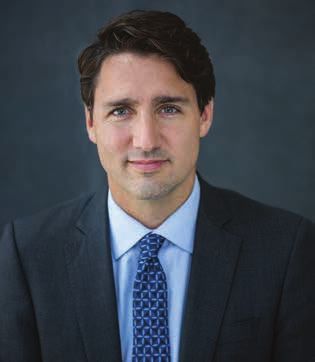
From Francophone communities, we heard about
                                          the challenges they face because of the declining
 More than 350 people and                 percentage of Francophones in communities
                                          outside Quebec. They suggested the need for
 130 observers attended                   more immigration, especially the integration of
 22 roundtables held in our               French‑speaking immigrants into Francophone
 country’s main regions, six of           communities, to reverse the trend. They also told us
                                          they would like to see enhanced Francophone child
 which were also live webcasts.
                                          care opportunities to tackle the issue.

 Nearly 6,375 people voiced their         At the same time, we also heard about the challenges
 perceptions and comments                 that English-speaking communities in Quebec are
 through a digital online interface       facing, particularly outside Greater Montréal.

 with a short questionnaire.              Canadians of all backgrounds told us that they
                                          wanted to see greater promotion of bilingualism by
                                          the Government, including tools to learn a second
 More than 100 briefs and letters
                                          official language at any age. They also applauded
 were submitted by representative         the role of official languages in bringing Canadians
 and community organizations,             together and providing unique opportunities for
                                          dialogue and cultural exchange.
 people, experts and institutions.

 The three networks of
 representative organizations
 and other stakeholders attended
 a one-day event of discussions
 with the Minister of Canadian
 Heritage and her parliamentary
 secretary.

10   Investing in Our Future
     2018–2023
     ACTION PLAN FOR OFFICIAL LANGUAGES
« “The language of Canada is French; the language of
Canada is English. Both of them. I like to think that I can go
to Vancouver and meet Francophones there that I can speak
French with, and vice versa, across Canada, and speak
English here. I would like to think the federal government
shares that vision. It’s a vision I hope doesn’t get eroded.”
«
Matthew Farfan,
Executive Director of the Quebec Anglophone
Heritage Network, Sherbrooke Roundtable,
August 5, 2016
11 Investing in Our Future
2018–2023
ACTION PLAN FOR OFFICIAL LANGUAGESOUR GOVERNMENT’S COMMITMENT
TO A NEW ACTION PLAN:
INVESTING IN OUR FUTURE
Since the fall of 2015, we have met regularly with to deliver on existing programs, but to seize new
official-language stakeholders to hear their concerns. opportunities to grow, invest and strengthen services.
The discussion led to our Action Plan for Official Our Action Plan announces the first real additional
Languages 2018–2023: Investing in Our Future, which investment in official languages since 2003. Together
rests on the following commitments: with the resources we already announced in 2017, we
will add $499.2 million over five years to the ongoing
• Strengthening partnerships with official-language
$2.2 billion to set the course for stronger, more vibrant
stakeholders, communities and organizations.
communities across Canada. This includes nearly
• Investing new funding for official languages to $90 million in initiatives that we have introduced over
address the concerns raised in the consultation the last two years — and brings the total planned
and through our analysis of the data. federal investment for official languages to a historic
$2.7 billion over five years starting in 2018–2019.
• Demonstrating greater transparency and
accountability in government funding and favouring Over the last two years, we have taken tangible
evidence-based and grassroots-driven policy actions that will help official languages and minority
decisions. communities. This includes:
These commitments will continue to guide our Reinstating a modernized Court
government-wide approach as the Minister of Canadian Challenges Program.
Heritage continues to improve coordination of official
Restoring the long-form census.
languages issues, together with the Privy Council Office,
the Treasury Board Secretariat and the Department Appointing bilingual judges to
of Justice. the Supreme Court.
In 2003, the Government of Canada introduced the Prioritizing the immigration
first Action Plan for Official Languages, which laid the of French-speakers to Canada.
foundation for investing in education and government
services. These investments were maintained in the 2008
Launching a review of the regulations
governing access to federal government
and 2013 Roadmaps. Since then, the Government has
services in both official languages.
continued to support official languages with permanent
funding for dedicated programs and initiatives in some Restoring the Collège militaire royal in St-Jean
15 government departments and agencies, for a total as a full degree-granting institution.
of $2.2 billion over a five-year period.
Our new Action Plan builds on this foundation —
offering communities the tools they need not only
12 Investing in Our Future
2018–2023
ACTION PLAN FOR OFFICIAL LANGUAGES Launching the Corridor patrimonial, culturel Our new Action Plan will help Canada achieve
et touristique francophone app and mobile measurable, evidence-based goals supporting the
site to boost tourism and the discovery of vitality of official-language minority communities and
our communities. the bilingualism of Canadians. It presents new initiatives
and key investments under three pillars:
Prioritizing organizations that support
opportunities for official-language minority
communities through the 2018 Canada 1. STRENGTHENING OUR COMMUNITIES
Summer Jobs program.
2. STRENGTHENING ACCESS TO SERVICES
New investments were committed to:
o Community and educational infrastructure 3. PROMOTING A BILINGUAL CANADA
($80 million over 10 years).
o French-language services in the three
territories ($60 million).
o Green jobs for young people working in their
second official language ($1.2 million).
Action Plan Roadmap Roadmap Action Plan
2003–2008 2008–2013 2013–2018 2018–2023
2003–2004 2008–2009 2013–2014 2018–2019 2023–2024
$1.9B over 5 years $2.2B over 5 years $2.2B over 5 years $2.7B over 5 years
Total Investments
13 Investing in Our Future
2018–2023
ACTION PLAN FOR OFFICIAL LANGUAGESPILLAR 1
PILLAR 1

STRENGTHENING OUR COMMUNITIES
In 1971, Francophones in minority communities outside     2036. We are taking action to stabilize this proportion
Quebec made up 6.1% of the population. In 2016,           at 4%, by supporting a strong, stable, secure Canadian
that number fell to 3.8% — the first time it had dipped   Francophonie. Our new Action Plan will also support
below 4%. Statistics Canada projects that, unless we      the vitality of English-speaking communities in Quebec,
take action, there will be a further decline to 3% by     especially those outside the Greater Montréal area.

           Over the last 150 years, Canadians have gathered together in towns
           and cities across our country to create community organizations
           to advocate for their rights. They have fought to gain access to
           education, institutions and services in their official language.
           Today, there are now over 350 national, provincial, territorial
           and local community organizations working directly to build up
           official‑language minority communities, promote bilingualism and help
           people learn a second language. These networks include 130 cultural
           organizations, 24 youth groups and 13 parent associations. There
           are also 20 English‑speaking community health networks in Quebec
           and 16 Francophone networks in the other provinces and territories,
           which work with health institutions and service providers to improve
           people’s access to health services in minority communities. There are
           also organizations in each province and territory that help promote
           entrepreneurship, skills and economic development in minority
           communities. And there are close to 120 community radio stations
           and newspapers in every province and territory — and about 100
           community and cultural centres across our country.

                                                                    15         Investing in Our Future
                                                                               2018–2023
                                                                               ACTION PLAN FOR OFFICIAL LANGUAGES
PILLAR 1
EMPOWERING COMMUNITY VOICES INCREASE CORE FUNDING
Increasing core funding for organizations TO COMMUNITY ORGANIZATIONS BY
During our consultations, we heard that the lack of
investment in official-language community organizations
$70 MILLION:
over the past decade was a pressing problem. The last
time community organizations got an increase in their
core funding was in 2003. This has made it hard for those
organizations to carry out their important roles.
As a result, our new Action Plan will increase the core
CH
funding of organizations by $70 million over five years,
to more than $320 million. This will help build up the
not-for-profit organizations that develop English- and
$57.37
French‑speaking minority communities and the people MILLION
who are promoting and supporting second-language HC
$4.4
learning.
Of the additional funding, $57.37 million over five
years will go to Canadian Heritage’s (CH) envelope to MILLION
ESDC
$4.5
increase existing core funding for organizations working
in community development, cultural and second-
language learning networks. We will work closely with
these community organizations to determine how best MILLION
to distribute the additional funds. JUSTICE
Health Canada (HC) and Employment and Social
Development Canada (ESDC) will provide increases
$3.75
to existing core funding for organizations working MILLION
to support minority-language community health
and economic development. In addition, Justice
Canada will establish core funding for eligible justice TOTAL OF
$320 MILLION
organizations.
We have also streamlined and accelerated our
grants and contributions processes — to cut red tape
IN COMMUNITY SUPPORT
OVER 5 YEARS
for community organizations. We have introduced
multi‑year funding agreements and new service
standards.We are also putting a simplified and seamless
online funding application process in place.
16 Investing in Our Future
2018–2023
ACTION PLAN FOR OFFICIAL LANGUAGESPILLAR 1
« “At the present time, the community sector does not have the
means to reach everyone to meet their needs, develop new
programs, and succeed in continuing to encourage the vitality
of the Francophone community. We often cover a fair amount,
whether in smaller communities, because there is proximity,
or in larger centres, because there are numbers. But I think
we serve a fraction of the Francophone population, and the
«
Francophone community deserves better than that.”
France-Emmanuelle Joly,
President of Réseau-Femmes
Colombie-Britannique
17 Investing in Our Future
2018–2023
ACTION PLAN FOR OFFICIAL LANGUAGESPILLAR 1
Solidifying economic development efforts Supporting community media and the next
generation of media professionals
Without a strong local economy, communities do not
grow, flourish and attract new and talented workers. Community radio, newspapers and other media
Those flourishing local economies create the conditions outlets are an important way communities hear their
necessary for community vitality. own voices and tell their own stories.
That is why, with our new Action Plan ESDC will increase We are creating a $10 million Community
existing core funding by $4.5 million over five years Media Strategic Support Fund over the next
for community organizations working in economic five years to give financial support to projects
development such as the Réseau de développement that help sustain official-language minority
économique et d’employabilité (RDÉE Canada) community media — both radio
and the Community Economic Development and and newspapers.
Employability Corporation (CEDEC). We will also
continue to invest $80.5 million over five years in
We are increasing funding by $4.5 million
over five years to Young Canada Works at
programs to increase local capacity, develop literacy
Building Careers in English and French, which
and essential skills, and support economic development
will create 35 internships at English- and
projects in official-language minority communities.
French‑language minority community radio
As well, our government, through its regional economic stations or newspapers. This will enable students
development agencies, will continue to invest and recent graduates to hone their skills as the
$30.5 million over five years towards the economic next generation of media professionals.
development of official-language minority communities
across the country. As a key economic development
We will also continue to support
official-language minority community print
initiative we will continue to strengthen innovation,
publications through the Canadian
entrepreneurship, partnerships and diversification
Periodical Fund.
of economic activities in official-language minority
communities.
$14.5 MILLION
IN COMMUNITY MEDIA:
TS
C
JE
$10
ITY MEDIA PRO
$4.5
TO SU
MILLION MILLION
UN
PP
IPS
OR
TC
M
TO
C
SH
RE N
M
OL O
LABO TIVE C ATE T ER
RA MEDIA IN
FOR THE NEXT GENERATION
OF MEDIA PROFESSIONALS
18 Investing in Our Future
2018–2023
ACTION PLAN FOR OFFICIAL LANGUAGESPILLAR 1
« “In a linguistic minority context, it is extremely important
to highlight the wonderful variety inherent in the French
language; to hear the different French accents all across
Canada or read the various turns of phrase that provide such
richness to our language. We have our local media to thank
for our ability to keep our accents, which are a true treasure
of our French language.”
«
Sue Duguay,
young adult in New Brunswick
(and Vice-President of the Fédération
de la jeunesse canadienne-française (2017–2018))
19 Investing in Our Future
2018–2023
ACTION PLAN FOR OFFICIAL LANGUAGESPILLAR 1
Creating a dedicated fund for
English-speaking communities in Quebec
Members of the English-speaking communities of
MORE THAN
$5M
Quebec — particularly the more than 215,000 people
who live outside of the Greater Montréal region — have
mentioned the unique challenges they face to maintain
a community life.
We will create a new dedicated fund of $5.3 million over
five years for English-speaking communities in Quebec
TO SUPPORT INITIATIVES
that will support community initiatives. The fund will FOR ENGLISH-SPEAKING
help community organizations identify needs and find COMMUNITIES IN
sustainable ways to deliver services to English speakers QUEBEC
in various regions and sectors. This could include helping
rural communities and vulnerable populations improve
access to youth employment, home care, mental
health services and end-of-life care.
« “[Programs are] officially available to the English-speaking
community of Quebec […] but they’re not specifically
designed for them. We really need programs that address
local realities and local challenges and local opportunities.”
«
Grant Meyers,
Vice-President of the Quebec Anglophone
Heritage Network, Sherbrooke Roundtable,
August 5, 2016
20 Investing in Our Future
2018–2023
ACTION PLAN FOR OFFICIAL LANGUAGESPILLAR 1
Welcoming the Government of Quebec’s
new Secretariat for Relations with
English-speaking Quebecers
The Government of Canada applauds the Government
of Quebec’s creation of the Secretariat for Relations
with English-speaking Quebecers. We will cooperate
with this new body and continue to work with the
Government of Quebec on ways to support Quebec’s
English-speaking minority communities.
Empowering community organizations to
seize new opportunities
It is important for communities to have the ability
to seize opportunities as they arise. In the past, this
has resulted in the creation of such major events as
the Congrès mondial acadien and the Jeux de la
francophonie canadienne, exceptional community
mobilization efforts, and promotional projects like the
Corridor patrimonial, culturel et touristique francophone
that will help multiple communities across our country.
Our new Action Plan will provide the Official Languages
Support Programs at Canadian Heritage with
$10 million in new funding over five years for
strategic investments.
$10
MILLION
TO STRENGTHEN STRATEGIC
INVESTMENT CAPACITY
21 Investing in Our Future
2018–2023
ACTION PLAN FOR OFFICIAL LANGUAGESPILLAR 1
INVESTING IN MORE COMMUNITY
GATHERING SPACES
Another theme we heard was that people want more
places to gather together. Canadians feel — and we
agree — that bringing people together to celebrate
and converse is one of the best ways we can help our MORE THAN
cultures and languages thrive.
$95 MILLION IN
That is why our new Action Plan will invest $67.3 million COMMUNITY
in new funding over five years for the construction of
community educational and cultural infrastructure SPACES
in official-language minority communities. This is in
addition to the 2017 Budget announcement of
$80 million over 10 years for community infrastructure
($28 million for 2018–2023) in these communities.
This increased funding will help communities build
new educational centres and cultural community
centres, renovate and upgrade existing community
infrastructure, and add multi-purpose spaces in more
community centres. This will create more spaces for skills
training, daycare services, community programming
and cultural performances.
« “I can’t put into words how important it is to have a physical
space where Francophones can gather, such as a cultural
centre. A place like that, which brings together organizations,
«
is somewhere everyone wants to go, to interact and live
life en français.”
Noah Rondeau,
Member of the Board of Directors of the Francophone
Youth Council of British Columbia, Victoria Roundtable,
July 5, 2016
22 Investing in Our Future
2018–2023
ACTION PLAN FOR OFFICIAL LANGUAGESPILLAR 1
INVESTING IN EARLY LEARNING AND
CHILD CARE: BETTER ACCESS FOR FAMILIES
For Francophone parents in a minority setting, passing NOUVEAU
their language on to their children can be challenging.
This is especially true if only one of the parents is fluent in
French. To help children learn their language, develop
$20M
IN CHILD
language skills and gain fluency, we need to provide CARE
child care in French. It is also a matter of nurturing
culture and identity building.
That is why in June 2017, federal, provincial and
territorial ministers responsible for early learning and TO SUPPORT PROFESSIONAL
child care agreed to a historic Multilateral Early
LEARNING OPPORTUNITIES
Learning and Child Care Framework. The framework
AND TRAINING FOR EARLY
will help improve quality, accessibility, affordability,
CHILDHOOD EDUCATORS
flexibility and inclusivity in early learning and child
care across our country. We will provide provinces
and territories with $1.2 billion over three years. This will
improve the availability of Francophone early learning
and child care services outside Quebec. For example,
TO SUPPORT ENTREPRENEURS
IN OPENING MORE
FRANCOPHONE DAYCARES
New Brunswick has committed to increasing access
AND CHILD CARE SERVICES
to spaces in early learning and child care by 10%, of
which 40% will be for the Francophone population of
New Brunswick over the next three years. Prince Edward
Island will also invest in increased Francophone early
learning supports.
The Government will also provide $20 million over five
years for early childhood development daycares and
child care services in French in minority communities.
In conjunction with organizations like the Association
des collèges et universités de la francophonie
canadienne, the Commission nationale des parents
francophones and the Réseau de développement
économique et d’employabilité, Employment and
Social Development Canada will support professional
training and capacity-building for child care workers
and foster the development of start–up capacities by
early childhood educators to open more daycares and
child care services in French in minority communities.
23 Investing in Our Future
2018–2023
ACTION PLAN FOR OFFICIAL LANGUAGES«
PILLAR 1
“Studies clearly show that the ability to pass on the French
language remains as difficult as ever in Canada’s minority
communities. Among British Columbia’s Francophones, four
out of five children will be assimilated before kindergarden.
This is huge.”
«
Marie-Pierre Lavoie,
Fédération des parents francophones de la
Colombie-Britannique, Vancouver Roundtable,
September 9, 2016
24 Investing in Our Future
2018–2023
ACTION PLAN FOR OFFICIAL LANGUAGESPILLAR 1
INVESTING IN CULTURE
FEDERAL NEW
Arts and cultural initiatives help bring communities —
INVESTMENTS FUNDING
and our country — together. They act as catalysts,
IN CULTURE SINCE 2016
strengthening the vitality and identity of communities.
CBC / Radio-Canada $675.0 M
In our 2016 Budget, we announced that we would
invest in the Canadian Broadcasting Corporation/ Canada Council $550.0 M
Radio‑Canada to better serve audiences across for the Arts
our country, including official-language minority
National Arts Centre $114.0 M
communities. The Canada Council for the Arts, the
National Arts Centre, Telefilm Canada and the National Telefilm Canada $22.0 M
Film Board — all of which have dedicated programs
and policies to support arts and culture in both official National Film Board $13.5 M
languages — also received additional funds. And we
announced new investments for the Canada Cultural
Cultural Spaces Fund $468.2 M
Spaces Fund and funding to showcase Canada’s
Cultural Export Strategy $35.0 M
cultural industries to the world. We also made new
investments in the Canada Media Fund in our Canada Media Fund $172.0 M
2018 Budget.
We will continue to invest in the following:
$2.75 million over five years for the Canada
Council for the Arts’ Market Access Strategy
for Artists from Official-Language Minority
Communities, which improves access to
diverse markets and audiences for community INVESTISSEMENTS NOUVEAUX
professional artists and artistic organizations. FÉDÉRAUX DANS FONDS
LA CULTURE DEPUIS 2016
$5.75 million over five years for Canadian
Heritage’s Music Showcases Program for Radio-Canada/CBC 675,0 M$
Artists from Official-Language Minority
Communities, which promote local artists Conseil des arts 550,0 M$
du Canada
and increase communities’ access to musical
performances in their language. Centre national des arts 114,0 M$
$4 million over five years for the National
Téléfilm Canada 22,0 M$
Translation Program for Book Publishing to
translate more books by Canadian authors Office national du film 13,5 M$
from one official language to the other, giving
Canadians broader access to our culture. Fonds du Canada pour 468,2 M$
les espaces culturels
Stratégie en matière 35,0 M$
d’exportations culturelles
Fonds des médias 172,0 M$
du Canada
25 Investing in Our Future
2018–2023
ACTION PLAN FOR OFFICIAL LANGUAGES«
PILLAR 1
“Arts and culture is much more than the lifeblood that allows
our society and our communities to flourish. Each work of
art, performance and speech is a reminder of how viscerally
important it is to hear stories, to truly see and recognize ourselves
and to rediscover ourselves, reflected in a mirror that shows an
infinite possibility of bright futures. Whether you are 6 or 66, it is
«
an essential part of your individual and collective existence!”
Joël Beddows,
Artistic Director, Théâtre français de Toronto
Increasing local and regional cultural
activities in communities and minority schools
MORE THAN
Our Action Plan will increase the current number of
local and regional cultural activities by adding $11
$11.2 million starting in 2019–2020 to double the MILLION
Community Cultural Action Fund, for a total investment
of $21.2 million over five years. This investment will
help members of minority-language communities TO DOUBLE
participate in arts, culture and heritage activities and
THE COMMUNITY
CULTURAL
learn about their history and culture while sharing it with
ACTION FUND
others.
The fund will introduce new micro-grants for FOR A TOTAL
cultural activities for minority schools, organized by INVESTMENT OF
$21.2
community and cultural organizations with the 900
minority‑language schools throughout our country.
This will contribute to identity-building and community
vitality, and support the concept of civic community MILLION
schools. The micro-grants will make funding easily OVER FIVE YEARS
accessible through an easy application process.
26 Investing in Our Future
2018–2023
ACTION PLAN FOR OFFICIAL LANGUAGES«
PILLAR 1
“As a community development officer for several years in
a rural area and mother of three teenagers, I can say that
participation in artistic and cultural events — starting at a
very young age — points to a direct correlation between
[children’s] sense of belonging to a proud and talented
minority and a voluntary commitment, by the young adults
they become, to the various organizations and programs
available to them in French in Alberta versus the same
opportunities in English. Young people grow confident that
their potential and cultural identity has just as much value
to society as that of the majority language community.”
«
Mireille Lavoie-Beaupré,
Community Development Officer,
Bonnyville-Cold Lake Association canadienne
français de l’Alberta
27 Investing in Our Future
2018–2023
ACTION PLAN FOR OFFICIAL LANGUAGESPILLAR 1
Renewing collaboration for the development ENHANCING THE VITALITY OF FRANCOPHONE
of arts and culture MINORITY COMMUNITIES THROUGH
IMMIGRATION: A NATIONAL STRATEGY
We will renew the Collaboration Agreement for the
Development of Arts and Culture in the Francophone We are committed to supporting the vitality of
Minority Communities of Canada with the Fédération Francophone minority communities and increasing
culturelle canadienne-française. Signatory federal the proportion of French-speaking immigrants outside
institutions include Canadian Heritage, the National Quebec, working toward a target of 4.4% of all
Arts Centre, the Canada Council for the Arts, the immigrants by 2023.
National Film Board of Canada, CBC/Radio-Canada
We have already introduced changes to temporary
and Telefilm Canada. This agreement encourages the
and permanent programs in order to attract
development of Canada’s Francophone minorities
French-speaking immigrants.
and promotes their contribution to our country’s rich
arts and culture sector. We will also continue the In March 2018, federal, provincial and territorial
important collaboration with the Working Group on ministers responsible for immigration and the
Arts, Culture and Heritage with the English-speaking Canadian Francophonie announced the Action
communities of Quebec. Plan for Increasing Francophone Immigration.
Launching the Corridor patrimonial, culturel In 2017, improvements to the Express Entry
et touristique francophone system were made to make it easier for
French-speaking temporary foreign workers
A major Canada 150 legacy project, the Corridor
and international students to become
patrimonial, culturel et touristique francophone is
permanent residents.
an online tool showcasing more than 350 key tourist
attractions, all linked to Francophone heritage and At the 2017 inaugural Forum on Francophone
culture. We recently invested $2.4 million for the Immigration, we announced additional points
creation of the corridor, which will be a solid economic under Express Entry for strong proficiency
development tool for local communities and businesses in French to increase the proportion of
around our country. The project emerged from the 2015 French‑ speaking immigrants coming to
Ministerial Conference on the Canadian Francophonie, Canada through economic programs.
which brought together federal, provincial and
territorial ministers responsible for Francophone affairs.
In 2016, we reintroduced the Mobilité
Francophone stream which helps employers
hire French-speaking workers from abroad to
undertake skilled work outside Quebec.
We increased promotional and recruitment
efforts significantly to market Canada as a
destination of choice for French-speaking
immigrants, including successful “Destination
Canada” fairs in Europe and targeted initiatives.
28 Investing in Our Future
2018–2023
ACTION PLAN FOR OFFICIAL LANGUAGESPILLAR 1
Building on this progress and sustained cooperation Moving toward a consolidated Francophone
with numerous Canadian and international partners — integration pathway
including provinces, territories, employers and
Francophone communities — our new Action Plan will We are exploring opportunities to strengthen the
increase investments by $40.8 million over five years connection between French-speaking immigrants,
to support a consolidated Francophone integration improve the provision of Francophone settlement
pathway and coordinated Francophone immigration services and build the capacity of the Francophone
policies and programs. settlement sector.
These actions will be part of a new overarching Under our new Action Plan, we will support
Francophone Immigration Strategy that will be a consolidated Francophone integration pathway
developed by Immigration, Refugees and Citizenship to make sure French-speaking newcomers obtain
Canada (IRCC), in consultation with Francophone complete information regarding Francophone
minority communities. As part of this strategy, we will communities and high-quality services from
continue our international promotion, communication Francophone settlement organizations. This will span
and recruitment work. Together with language-testing from pre-arrival to citizenship, to ensure the successful
organizations, we will increase the availability and integration and retention of French-speaking immigrants
reduce the cost of French language tests required for within Francophone communities and to enhance
economic immigration. the vitality of these communities. This will include
initiatives such as Francophone settlement services
in international airports across Canada — for example,
at the Toronto Pearson International Airport, a major port
MORE THAN of entry for new immigrants to Canada.
$40M
FOR FRANCOPHONE
IMMIGRATION
TO ATTRACT AND RETAIN
FRENCH-SPEAKING
IMMIGRANTS
COORDINATED EFFORTS
WITH FRANCOPHONE
MINORITY COMMUNITIES
AND EMPLOYERS,
PROVINCES AND TERRITORIES
29 Investing in Our Future
2018–2023
ACTION PLAN FOR OFFICIAL LANGUAGESPILLAR 1
Creating a new Welcoming Francophone Building the capacity of the Francophone
Communities Initiative settlement sector
A new initiative, Welcoming Francophone Communities, To support the Francophone integration pathway, we
will support targeted communities in creating an will increase the availability of professional development
environment in which French-speaking newcomers in French to Francophone settlement service providers
will feel welcome, and enhance capacity to integrate and provide greater opportunities to exchange best
and retain French-speaking newcomers. Through practices. We will also explore ways to build capacity
partnerships, communities will be able to identify of Francophone service providers and improve service
and implement projects, by and for Francophones, provision by Francophone communities.
to address current gaps and develop innovative
solutions adapted to their specific needs and those
of the French‑speaking newcomers settling in their
communities.
« “I love living in Yellowknife. The community is great. The
connections that unite Francophones up here, in the territories,
are indivisible… I don’t know, everyone has a feeling of pride
«
there, and it brings us all together. I really love that.”
Rod Brian Tuyishime Muvunyi,
student, Northwest Territories,
originally from Rwanda
30 Investing in Our Future
2018–2023
ACTION PLAN FOR OFFICIAL LANGUAGESPILLAR 1
Adapting language training for Increasing coordination at Immigration,
French-speaking newcomers Refugees and Citizenship Canada: Creation
of a Francophone immigration policy hub
Our new Action Plan will increase the availability and
accessibility of official-language training adapted Our new Action Plan will reinforce the capacity of
to the needs of French-speaking immigrants. IRCC to improve and centralize coordination of policy
This will address the need for both French- and and programs that favour Francophone immigration.
English‑language instruction for effective economic This will support IRCC’s ability to ensure sustained
and social settlement and integration. It will also cooperation with provinces and territories in the
include curriculum adapted to the realities of these context of the Action Plan for Increasing Francophone
communities. The expansion of online learning tools Immigration, announced by federal, provincial and
and resources, and an emphasis on better linkages to territorial ministers responsible for immigration and the
Francophone communities, will offer greater flexibility Canadian Francophonie in March 2018.
for French-speaking newcomers to access the learning
Accountability, reporting and performance measures
opportunities they need to achieve their settlement
will also be enhanced through the implementation of
goals and integrate into their new communities.
a new and comprehensive Francophone Immigration
Strategy.
« “How would I describe Saskatchewan’s Francophone
community? Well, it’s a very proud community. I’ve never met
young people, or people in general, as welcoming as they are
there. I only knew Spanish when I went to school, but it was so
easy to learn French, because my teachers helped me so much.
«
The community welcomed us, when no one else wanted to.”
Gabriela Quintanilla,
badminton coach, Saskatchewan,
originally from El Salvador
31 Investing in Our Future
2018–2023
ACTION PLAN FOR OFFICIAL LANGUAGESPILLAR 2 Investing in Our Future 2018-2023 ACTION PLAN FOR OFFICIAL LANGUAGES
PILLAR 2

STRENGTHENING ACCESS TO SERVICES
The Government of Canada has a long history of            For nearly 50 years, the Government of Canada
providing support, generally through provinces and        has provided funding to provinces and territories
territories, to make services available for people in     to support minority-language education. We will
the official language of their choice. To this end, we    renew these agreements for the period of 2018–2023,
will fund a series of initiatives to improve access to    totalling $149.1 million a year or $745.5 million over
quality education, health and justice services.           five years. The Government also has a long history
                                                          of supporting and cooperating with organizations
SUPPORTING MINORITY-LANGUAGE
                                                          that work to promote and enrich minority education.
EDUCATION
                                                          The Government is committed to ensuring that these
                                                          significant federal investments continue to address
Minority communities have had to fight long and
                                                          clear community needs and deliver impact on the
hard to have their education rights recognized. The
                                                          ground. To this end, in July 2017, Canadian Heritage
Canadian Charter of Rights and Freedoms protects
                                                          signed an agreement the Fédération nationale des
the right of official-language minority parents to have
                                                          conseils scolaires francophones, the Fédération
their children educated in their language and to
                                                          des communautés francophones et acadienne du
manage their public educational institutions.
                                                          Canada and the Commission nationale des parents
                                                          francophones, committing the Department to share
                                                          their priorities in its discussions with provincial and
                                                          federal education partners.

            “Education […] is the cornerstone of our community’s
            development. Without French schools, there is zero chance
            that our community would survive. We have six schools
            attached to community centres and early childhood centres.
            As a result, we have excellent partners and the community
            has great potential for development.”

            Émile Gallant,
            President, French Language School Board,
            Prince Edward Island

                                                                     33         Investing in Our Future
                                                                                2018–2023
                                                                                ACTION PLAN FOR OFFICIAL LANGUAGES
PILLAR 2
As well, through Pillar 1 of our Action Plan, Canadian
Heritage will increase core funding for organizations
working to promote and support minority-language
education. This will empower organizations to encourage
more rights-holders to choose minority education and
facilitate the dissemination of knowledge, methods and
tools to support minority-language educators.
Enriching civic community schools with MORE THAN
$5M
identity-building and cultural activities
LS
To enrich school environments with identity-building
FOR
OO
activities, our Action Plan will provide $5.3 million over
EN
four years, starting in 2019–2020, for the creation of
CH
IC S
H
R
a new micro-grant program (over and above the ING IT Y
cultural micro-grant initiative mentioned in Pillar 1) COMMUN
that will enable Francophone minority community
organizations to partner with local minority schools to
lead community school projects and other activities.
Over 600 Francophone minority schools across Canada
will have access to this initiative.
« “By enabling young people to participate in civic activities at
school, or in their community, we encourage their interest in
engagement. Though we can teach concepts and theories in
classrooms, it is when young people are given the opportunity
to put these things into practice in the field that we really see
the impact. Communities and schools have everything to
gain by working together to allow young people to plan and
participate in civic activities.”
«
Justin Johnson,
young adult in Manitoba and President
of the Fédération de la jeunesse canadienne-française
(2016–2018)
34 Investing in Our Future
2018–2023
ACTION PLAN FOR OFFICIAL LANGUAGESYou can also read


