The Draft New Zealand Rail Plan 2019 - Ministry of Transport
←
→
Page content transcription
If your browser does not render page correctly, please read the page content below
December 2019

The Draft
New Zealand Rail Plan
2019
Ko te pae tāwhiti, whāia kia tata
      Ko te pae tata, whāia kia tīna!

Seek out the distant horizons, while holding
   fast to those achievements at hand.
CONTENTS        THE DRAFT NEW ZEALAND RAIL PLAN   3

Contents
Rārangi Take

Foreword                                                                              04
Overview of the Draft New Zealand Rail Plan                                           06

       Strategic Context                                                              09
 1     Ko tō te Rautaki Horopaki
       Rail contributes significant value to New Zealand                              10
       Why change is needed                                                           15

       Strategic priorities for Rail             19
  2    Ko ngā tino whāinga a te rautaki tereina
       Part A                                                                         20
       Establishing a new long-term planning and funding framework
       under the Land Transport Management Act 2003
       Part B                                                                         24
       Investment priorities for Rail
           Strategic Investment Priority: Investing in the national rail              25
           network to maintain freight rail and provide a platform for
           future investments for growth
           Strategic Investment Priority: Investing in metropolitan rail to           32
           support growth in our largest cities
       Supporting investment – Enabling regional development and                      41
       connectivity through the PGF

       Measuring the benefits of investment                                           45
 3     Me pēhea te whakawāriu i ngā painga huhua noa

       What next?                                                                     47
 4     He aha kei te whai ake?
4   THE DRAFT NEW ZEALAND RAIL PLAN   FOREWORD

Foreword
Kupu Whakataki

                                                 This draft New Zealand Rail Plan outlines the
                                                 Government’s vision and priorities for rail. Our
                                                 long-term vision is for New Zealand’s national
                                                 rail network to provide modern transit
                                                 systems in our largest cities, and to enable
                                                 increasing volumes of freight to be moved off
                                                 the roads and onto rail.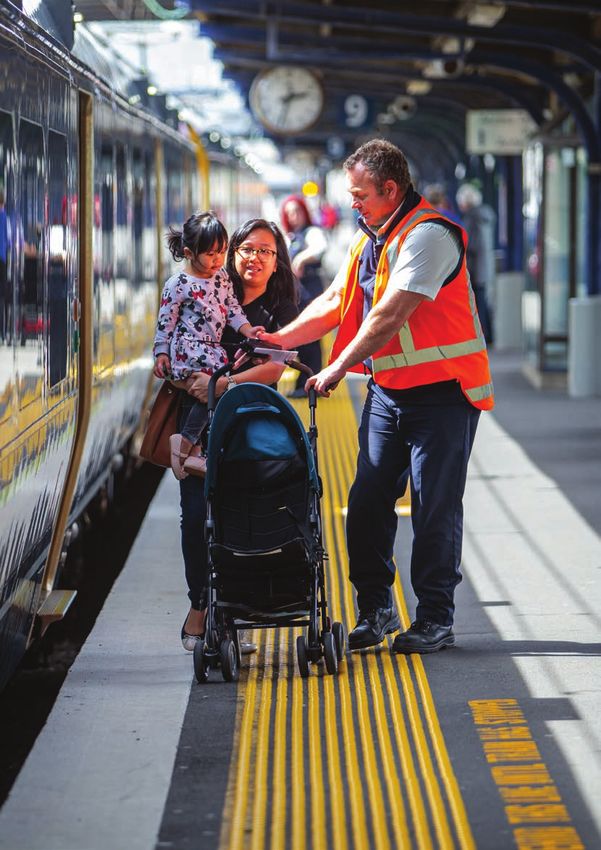
FOREWORD                     THE DRAFT NEW ZEALAND RAIL PLAN       5

    Rt Hon Winston Peters                Hon Grant Robertson                 Hon Phil Twyford                    Hon Shane Jones
    Minister for State                   Minister of Finance                 Minister of Transport               Minister for Regional
    Owned Enterprises                                                                                            Economic Development

Enabling alternative transport options for       In our biggest cities we are already seeing    funding rail. This draft Plan is the first
people and freight is a key part of providing    the benefits of earlier investment in rail.    product of a new long-term planning and
a multi-modal transport system. It will          Significant investment has been made in        funding system for rail. We are also making
support us to achieve the Government’s           our metropolitan rail networks in Auckland     changes to the Land Transport
objectives to reduce carbon emissions, the       and Wellington. Passenger growth has           Management Act 2003, which will improve
numbers of deaths on our roads, and              continued to outstrip expectations.            integrated planning and investment
congestion, as well as delivering jobs           Increased capacity in Auckland is being        decisions across road and rail.
and economic development in our cities           provided through $4.4 billion in funding
                                                                                                This is a significant programme of change
and regions.                                     from the Government and Auckland Council
                                                                                                for the land transport system. It is
                                                 in the City Rail Link (CRL) to transform the
The freight task in New Zealand is growing,                                                     important that we start on this journey
                                                 Auckland network. This is in addition to the
and will continue to grow in nearly all                                                         now to build a better and more integrated
                                                 funding we have put aside in the current
regions. We expect freight tonnage in                                                           transport system.
                                                 Government Policy Statement on Land
New Zealand to increase more than 55
                                                 Transport. We have allocated $815 million      We welcome your views on this draft Plan
percent by 2042, and all parts of the
                                                 in funding from the National Land              through the engagement process in 2020
freight system will need to play their part
                                                 Transport Fund (NLTF) to improve our           on the draft Government Policy Statement
to support this growth. The network has
                                                 urban rail passenger networks in Auckland      on Land Transport 2021. Rail is a
suffered from under-investment and
                                                 and Wellington, and support inter-regional     significant long-term asset, and changes
significant parts of the network are facing
                                                 passenger services. The investments we         now will positively influence the future of
a state of managed decline. Over the next
                                                 are making in Auckland will help deliver on    our transport system and the wellbeing of
decade we need to invest to retain the
                                                 the Auckland Transport Alignment Project.      all New Zealanders.
current level of service from our national
network and achieve a reliable and resilient     With this investment, over the next decade,
national freight rail network. This will         rail patronage in the Auckland metro
provide a platform for further investment to     network is expected to more than double
support growth in rail freight. This requires    to over 46 million passenger trips per
a long-term commitment to investment in          annum by 2028. Wellington’s public
the national freight rail network.               transport is expected to reach 20 million
                                                 passenger trips by 2030.
We have already begun the investment
required with $1.042 billion of funding to       However, what is clear is that funding alone
the rail freight network in the Wellbeing        will not be sufficient to improve the
Budget 2019. $741 million of that funding        outcomes we want to see, particularly in
is the first phase of investment required to     freight rail. While the passenger network is
start restoring a reliable, resilient and safe   already supported through the National
freight and tourism network. The Provincial      Land Transport Fund, the freight rail
Growth Fund (PGF) is also contributing           network has continued to suffer from
funding for regional rail projects to support    under-investment and short-term
growth and jobs in the regions.                  decision-making. We cannot continue to
                                                 take the current approach to planning and
6       THE DRAFT NEW ZEALAND RAIL PLAN                OVERVIEW

Overview of the draft
New Zealand Rail Plan

This is the first draft                   Our strategic priorities for rail are in        In order to better integrate long-term
                                          two parts:                                      planning on road and rail investments, we
New Zealand Rail Plan (the                                                                are also making changes to the Land
                                          ∂ Part A: Establishing a new long-term
draft Plan). It outlines our                planning and funding framework under
                                                                                          Transport Management Act 2003 (the
long-term commitment to                                                                   LTMA). The investment priorities outlined
                                            the Land Transport Management Act
                                                                                          in the draft Plan and GPS 2021 will inform
the significant investment                ∂ Part B: Investment priorities for a
                                                                                          the detailed investment decisions as part
                                            reliable and resilient rail network
needed to achieve a reliable,               - Strategic Investment Priority: Investing
                                                                                          of the new planning and funding
                                                                                          framework for rail. They will also underpin
resilient and safe rail network.              in the national rail network to maintain
                                                                                          future Budget considerations for Crown
                                              freight rail, and provide a platform for
                                                                                          investment. The draft Plan does not
                                              future investments for growth
                                                                                          provide a definitive list of investments for
                                            - Strategic Investment Priority:
                                                                                          rail over the next decade, nor does it
                                              Investing in metropolitan rail to
                                                                                          provide a funding commitment for any of
                                              support growth in our largest cities.
                                                                                          the projects outlined. However, it does
                                          Separate lead investments are being made        send a strong signal of this Government’s
                                          in regional rail to support regional            commitment to rail to inform future
                                          development and jobs through the                funding decisions.
                                          Provincial Growth Fund.
                                                                                          The Auckland Transport Alignment Project
                                          This draft Plan is a product of the Future of   and the Wellington Regional Rail Plan have
                                          Rail Review (the Review). The Review            provided the basis of the investments
                                          recognised that significant parts of the        outlined for the metropolitan rail networks.
                                          national rail network are facing a state of     We will be seeking feedback on this draft
                                          managed decline. Investment alone will          Plan as part of the engagement on the
                                          not allow rail to play the role the             draft GPS 2021, which will take place in the
                                          Government wants to see it play in the          first half of 2020. This will allow you to see
                                          transport system. Alongside remedial            where funding for rail sits within the overall
                                          investment, a new long-term integrated          priorities for the land transport system. It
                                          land transport planning and funding             also allows time for councils to consider
                                          framework for rail is required.                 the priorities we have outlined for rail
                                                                                          against their regional priorities. We are
                                          This draft Plan is the first component of
                                                                                          also continuing work on the Future of Rail
                                          the new planning and funding framework
                                                                                          Review, which will support the final Plan.
                                          for rail. In the past, investment in rail has
                                          been made on a year-by-year basis. This is      We will issue the final Plan, alongside the
                                          not sufficient when making investments in       final of GPS 2021, in the second half of
                                          long-life infrastructure assets such as rail.   next year. We will refresh and update this
                                          The draft Plan sets out our intentions for      Plan alongside the GPS in future years.
                                          the first decade of investment needed to        This will enable us to reflect changes in
                                          achieve a reliable, resilient and safe rail     investment priorities for rail as required.
                                          network. Our investment priorities will         As this is our first draft Plan, we expect it
                                          inform the development of the draft             to evolve and develop over time.
                                          Government Policy Statement on Land
                                          Transport 2021/22–2030/31 (GPS 2021).
OVERVIEW                      THE DRAFT NEW ZEALAND RAIL PLAN   7

The draft Plan has four sections:
                                                                          This is the draft New Zealand Rail
        Section 1: Strategic Context – this outlines the                  Plan. We have timed release of this
  1     contribution of rail to our transport system and broader          Plan prior to the engagement on the
        outcomes, the Future of Rail Review, and why changes are          draft of the next GPS, to ensure that
        required to our current system                                    our vision for rail can be considered
                                                                          in GPS 2021 and future Budget
        Section 2: Strategic Priorities for Rail – this outlines the
  2     new planning and funding framework for rail and the
                                                                          decisions. We welcome your
                                                                          feedback on the draft Plan. We will
        investment required to achieve a reliable, resilient and
                                                                          be undertaking formal engagement
        safe rail network, as well as future investment
                                                                          on the draft Plan as part of the
        opportunities
                                                                          engagement on the draft of GPS
        Section 3: Measuring the benefits of investment – this            2021, which will take place in the
  3     outlines how we will monitor performance in delivering            first half of 2020. Your feedback will
        these investments to ensure they are achieving the                help inform the final Plan and GPS,
        outcomes                                                          which are due out in the second half
                                                                          of 2020.
        Section 4: What next? – this outlines how these changes
  4     will be implemented.                                              Alongside engagement on the draft
                                                                          Plan, we are also progressing
Remedial funding, alongside a new integrated land transport               amendments to the Land Transport
planning and funding framework for rail, will enable rail to play its     Management Act 2003 (LTMA). The
role in the land transport system and achieve positive social,            legislative process will allow for
economic, and environmental benefits for New Zealand. These               public feedback on the changes
changes will also provide a platform for KiwiRail to grow as a            proposed to the LTMA to enable the
commercial business.                                                      new planning and funding framework
                                                                          outlined in Section 2, Part 2.
This Plan and the new planning and funding framework applies
to the heavy rail network in New Zealand. It does not apply to light      If you would like to provide feedback
rail investments.                                                         ahead of the formal engagement in
                                                                          2020 you can email:
                                                                          DraftNZRailPlan@transport.govt.nz.
                                                                          The Ministry will update its website
                                                                          regarding the formal engagement
                                                                          process through the GPS and
                                                                          timelines for formal feedback.
8 THE DRAFT NEW ZEALAND RAIL PLAN SECTION ONE: STRATEGIC CONTEXT
1     2    3     4                  SECTION ONE: STRATEGIC CONTEXT         THE DRAFT NEW ZEALAND RAIL PLAN   9

Section one

Strategic Context
Ko tō te Rautaki Horopaki
Rail is an integral part of the
transport system in New Zealand

Rail transports people and goods to where               This section outlines the contribution the
they need to go, supporting productivity                current rail network makes to New Zealand
and business growth, reducing emissions,                and why change is required to support the
congestion and road deaths, and                         Government’s vision for rail.
strengthening social and cultural connections
between communities. It is a key part of a
multi-modal transport system for both
freight and passengers in New Zealand.
10      THE DRAFT NEW ZEALAND RAIL PLAN   SECTION ONE: STRATEGIC CONTEXT

Rail contributes
significant value to
New Zealand
Rail has a long and proud history in                    KiwiRail owns and operates the rail network in New Zealand and
                                                        provides freight, tourism and property rail services. KiwiRail has
New Zealand, stretching back over 150 years.            3,700 staff operating in more than 50 towns and cities across the
Today, the national rail network consists of            country; it is a significant employer in New Zealand.
3,700 km of track, covering 18,000 hectares             The following types of traffic use the network:
of land, crosses more than 1,300 bridges and            ∂ import-export freight to and from major ports
                                                        ∂ domestic freight between major cities
includes almost 100 tunnels. The network                ∂ bulk commodities for processing or export, such as logs
links most major cities, ports and freight hubs           and coal
and connects the North and South Islands                ∂ passengers on the Auckland and Wellington metropolitan
                                                          networks
through the Cook Strait ferries.                        ∂ freight and passengers across the Cook Strait
                                                        ∂ tourism and other passenger services.
                                                        Rail is a key part of New Zealand’s freight supply chain and
                                                        supports distribution of high volumes of goods between key
                                                        transport nodes. It is also well suited to support mass transit of
                                                        people in urban areas, and provides rapid transit links as part of
                                                        our public transport networks in dense urban environments. It
                                                        serves freight customers, commuters and tourists.
                                                        Urban passenger rail services operate in Auckland and
                                                        Wellington. In these metropolitan rail networks, urban passenger,
                                                        inter-regional passenger and freight trains all share the same
                                                        rail network.
                                                        Rail provides the rapid transit backbone of the public transport
                                                        systems in these cities, providing access to jobs and shaping
                                                        urban development and future growth. Auckland Transport (AT)
                                                        and Greater Wellington Regional Council (GWRC) are responsible
                                                        for planning and funding metropolitan rail services in these
                                                        regions. They own the passenger rolling stock and related
                                                        infrastructure required to support passenger operations (i.e.
                                                        station buildings and maintenance depots), and are responsible
                                                        for procuring the operator of passenger services. Transdev
                                                        Wellington and Transdev Auckland are currently contracted to
                                                        provide passenger rail services. KiwiRail owns and maintains
                                                        the network.
                                                        KiwiRail provides tourist-oriented passenger services, including the
                                                        TranzAlpine, Coastal Pacific and the Northern Explorer. Dunedin
                                                        Railways operates tourist trains, and a number of heritage
                                                        operators run charter specials across the national rail network.
                                                        KiwiRail also operates the inter-regional passenger services
                                                        between Wellington and Palmerston North, and will operate the
                                                        Hamilton to Auckland service when it is expected to begin next year.
1 2 3 4 SECTION ONE: STRATEGIC CONTEXT THE DRAFT NEW ZEALAND RAIL PLAN 11
KiwiRail has 3,700 staff operating in
more than 50 towns and cities across
the country; it is a significant employer
in New Zealand
Otiria
Whangarei
The national rail network Dargaville Waiotira
Wellsford
The bold lines show the major network rail routes, the regular lines
North Auckland Line
show the minor network routes, and dotted lines show mothballed Helensville
AUCKLAND
Westfield
(disused) routes. There are also busy metropolitan networks in
Mission Bush Pukekohe
Auckland and Wellington used by commuter and freight trains.
Tauranga
Rotowaro Mount Maunganui
North Island Main Trunk Hamilton East Coast Main Trunk
Te Awamutu Kawerau
Te Kuiti Kinleith
Murupara
Kinleith Branch Line
Gisborne
New Plymouth Taumarunui
Wairoa
Stratford National Park
Kapuni Karioi
Whareroa
Napier
Hastings
Marton – New Plymouth Line Whanganui
Marton Waipukurau
Palmerston North –
Palmerston North Oringi
Pahiatua Gisborne Line
Waikanae
Masterton
Wairarapa Line
WELLINGTON
Picton
Spring Creek
Ngakawau
Lake
Westport Grassmere
Stillwater – Ngakawau Line Reefton
Rapahoe Ikamatua
Greymouth Kaikoura
Hokitika Otira
Main North Line
Midland Line
Rolleston Lyttelton
Ashburton
CHRISTCHURCH
Main South Line Temuka
Timaru
Oamaru
Palmerston
Taieri Port Chalmers
Ohai Gore Dunedin
Wairio
Balclutha
Edendale
Bluff
Invercargill12 THE DRAFT NEW ZEALAND RAIL PLAN SECTION ONE: STRATEGIC CONTEXT
Rail delivers positive Environmental sustainability ∂ Investment in rail safety
enhancements including level crossing
social, economic and ∂ Moving more people and products by rail improvements and automatic train
will help the transport system play its part
environmental benefits in reducing carbon emissions, supporting
protection is expected to further reduce
the risk of deaths and serious injuries on
the Government’s objectives to reduce our rail network.
Rail contributes to the overall wellbeing green house gas emissions overall. ∂ Higher levels of physical activity are
of New Zealanders, by helping deliver the ∂ On average, every tonne of freight associated with public transport use
following outcomes.1 moved by rail produces 66 percent less than with trips by private vehicles,
carbon emissions compared with heavy supporting healthier travel patterns.
road freight.
∂ The electrified commuter rail networks
in Auckland and Wellington also deliver “In 2016, two or three trains a
emissions savings from the efficient week were moving containers to
mass movement of people and avoided and from Midland to the Port. Now,
car trips. KiwiRail operates up to 16 return
∂ Even greater environmental benefits can services a week from Midland. Not
be achieved through further investment only is this taking at least 120
in rail, for example new modern rolling trucks off the road each day, it is
stock and ferries and further ensuring that containers are moved
electrification of the rail network. to and from the Port efficiently
without traffic delays and at lowest
cost to customers. A number of
Healthy and safe people containers moving through Midland
∂ The wellbeing of every New Zealander is Port never touch the road, making
at the heart of this Government’s vision, Midland Port a key part of reducing
and healthy and safe people is a critical our customers’ carbon emissions
outcome for the transport system. and providing a sustainable
∂ Increased use of rail transport for logistics solution.”
passengers and freight will support the
Simon Munt, Marketing Manager,
Government’s Road to Zero Strategy and
Lyttelton Port Company, 2019
aid in reducing road deaths by lowering
the number of trucks on the road and by
individuals choosing to use public
transport as opposed to driving.
∂ In its 2016 study, EY has estimated that
rail eliminates around 271 safety
incidents per year by reducing the
volume of heavy transport on the road.3
1
T hese five outcome areas are based on the Transport Outcomes Framework, which identifies what Government is seeking to achieve through the transport system. This
framework is available on the Ministry of Transport’s website via the following link: https://www.transport.govt.nz/multi-modal/keystrategiesandplans/transport-outcomes-
framework/.
2
The Value of Rail in New Zealand, EY for the Transport Agency (2016).1 2 3 4 SECTION ONE: STRATEGIC CONTEXT THE DRAFT NEW ZEALAND RAIL PLAN 13
$1.5 BILLION
RAIL CONTRIBUTES MORE
THAN $1.5 BILLION PER
YEAR IN BROADER BENEFITS
Economic prosperity ∂ Rail makes a significant contribution to Inclusive access
the functioning of our biggest cities with
∂ Rail enables the efficient movement of the metropolitan rail networks in ∂ Metropolitan passenger trains play an
large volumes of goods and people. Rail Auckland and Wellington providing more important role in providing people with
enables people in our cities to commute than 35 million passenger trips a year.6 access to places for learning, earning,
and engage in employment ∂ Congestion in cities, particularly and participating in society. Rail is one
opportunities. Rail connects our ports to Auckland, constrains national of the most efficient and sustainable
regions, enabling goods to get to productivity, reduces people’s access forms of mass transit. There has already
international markets. This contributes to job markets, and affects people’s been significant investment to support
to both national economic productivity health and quality of life. Moving more patronage growth in Auckland and
and regional economic growth, people and goods by rail will help us to Wellington over the last decade and we
supporting people, businesses, manage congestion across the expect this growth to continue.
producers and tourism. transport system and mitigate these ∂ Rail networks shape cities, encouraging
∂ The freight task in New Zealand is problems. In particular, in Auckland and urban intensification along rail corridors
growing, and will continue to grow in Wellington, where passenger rail and around passenger rail stations.
nearly all regions. We expect freight provides an alternative to car journeys ∂ Better long-term planning of rail will
tonnage in New Zealand to increase by for commuters. support more integrated land-use and
55 percent by 2042.3 This will impact all ∂ Over 1 million tourist passengers also transport planning.
transport modes. use the rail network each year,
∂ At present the national freight rail contributing to jobs and prosperity in
network is facing managed decline our regions.7 Resilience and security
in many areas, making it difficult for ∂ In addition in financial year 2019, more ∂ Rail supports resilience in the transport
it to support this growth. Rail hauled than 825,000 passengers and 260,000 network and can provide an alternative
3.5 billion tonne kilometres of goods cars were also carried across Cook Strait transport option for both goods and
in 2017/18; this is approximately 12% on the Interislander ferries. The passengers in emergency situations.
of the total freight task (based on tonne Interislander also carried nearly ∂ This was highlighted following the
kilometres).4 In recent years rail’s mode 1.2 million lane metres of trucks and Kaikōura earthquake, where the rail line
share has been impacted by the 560,000 lane metres of rail freight, was re-opened first and was able to
Kaikōura earthquake, and a reduction including road bridged freight.8 transport supplies needed to reinstate
in coal traffic.
State Highway One.
∂ Investment in a reliable and resilient rail
∂ The Interislander ferries also provide a
network will enable it to continue to
vital lifeline connection for the
provide freight services at current levels.
transportation of people and goods
It provides a platform for future
between the North and South Islands.
investment to support growth in freight
rail and enable KiwiRail to grow As part of the new planning and funding
commercially in the long-run. framework for rail, we will be monitoring
∂ In certain sectors, rail’s contribution is and measuring the benefits of our
significantly higher. KiwiRail hauls investments in line with these outcomes.
26 percent of all exports, playing a This is discussed further in section 3.
significant role in the movement of dairy
products, meat, pulp and paper exports,
coal and logs.5
3
inistry of Transport, Transport Outlook Future State (November 2017). The Ministry is in the process of updating these projections based on the National Freight Demand
M
Study 2017/18.
4
Ministry of Transport, National Freight Demand Study 2017/18 (September 2019).
5
KiwiRail Integrated Annual Report 2019.
6
KiwiRail Integrated Annual Report 2019, with data from Auckland Transport and Greater Wellington Regional Council.
7
KiwiRail Integrated Annual Report 2019.
8
KiwiRail Integrated Annual Report 2019.14 THE DRAFT NEW ZEALAND RAIL PLAN SECTION ONE: STRATEGIC CONTEXT
In 2016, an EY report quantified the non-monetary societal benefits The Ministry of Transport is working with EY to update the
of rail.9 This study looked at the benefits generated by rail, including Value of Rail report to take into account changes in the rail and
reduced congestion (in Auckland and Wellington), lower emissions, road network since 2016. The Ministry is also updating previous
fewer road accidents, and less road damage from heavy vehicles. work on domestic costs and charges of transport.
The value of these benefits was conservatively estimated at
$1.5 billion per annum as outlined below:
$1.47B-
value of rail is: $1.54B
EVERY YEAR
Total value is
derived from: $1.3B
reduced
$8.5M
reduced
$60M
improved
$63M
reduced road
9
The Value of Rail in New Zealand, EY for the Transport Agency (2016).
2246_Kiwirail_Brochure_26Nov_PRESS.indd 5 26/11/17 11:01 PM1 2 3 4 SECTION ONE: STRATEGIC CONTEXT THE DRAFT NEW ZEALAND RAIL PLAN 15
Why change is needed
The railway system in From the late 1800’s Today KiwiRail operates as a commercial
to 1982 State-Owned Enterprise. KiwiRail has been
New Zealand has faced a unable to fully fund the level of investment
number of long-term Rail in New Zealand was mostly needed to sustain the full national rail
controlled by the central freight network. Many core operational
challenges Government under the Railways assets are at the end of their economic
The Government is committed to ensuring Department lives and need to be replaced, for example
a resilient and reliable rail network as an Interislander ferries, rolling stock and
integral part of the transport system. A maintenance depots.
resilient and reliable railway is the first 82 1982
Operational restrictions, increased failure
step towards achieving the transport and Railways Corporation created as rates across the network and unplanned
wider outcomes for New Zealand, and statutory corporation from disruptions limit rail’s contribution to the
providing a platform for KiwiRail to grow as Railways Department transport network. The full potential for
a commercial business.
commercial growth in freight and logistics
The realisation of these benefits has 93 1993 propositions has not been able to be
been hampered by a lack of long-term realised. Despite these challenges, the
sustainable investment in rail, and The rail network was sold commercial disciplines and focus of
inadequate planning and funding for $328 million to a joint KiwiRail have been important to support
frameworks. While there has been past New Zealand-US private efficiency in asset management, and to
investment in both rail freight and consortium, led by drive commercial returns from the
passenger networks, it has not been New Zealand merchant bank provision of freight, property and tourism
consistent or sustainable. Fay Richwhite services to customers.
This has resulted in a backlog of deferred In metropolitan areas, demand for
maintenance and renewals, with 02 2002 passenger rail services has been
significant parts of the national freight rail increasing. Previous investment in rail in
Auckland metro rail – bought Auckland and Wellington has successfully
network facing a state of managed decline.
back by the Government for delivered the intended outcomes, and rail
$81 million patronage growth has continued.
The history of the railway in Investment in the metropolitan rail
networks is now moving on to the next
New Zealand has also 04 2004
phase of expansion, as well as addressing
created challenges Toll takes over Tranz Rail, selling any remaining legacy issues.
the track infrastructure back to
Over the last 40 years, rail has experienced
the Government for $1
a series of changes, which has affected its
ability to provide services to support
growing freight and passenger demands. 08 2008
Rail has changed ownership models from
Government to private and back again: The Government buys Toll's rail
and ferry assets for $690 million,
and reintegrates the business
with the rail network infrastructure16 THE DRAFT NEW ZEALAND RAIL PLAN SECTION ONE: STRATEGIC CONTEXT
The Future of Rail The review recommended that rail network
investment should be planned and funded
Review considered the under the long-term land transport
challenges faced by rail planning and funding framework in the
LTMA. This change will mean a long-term
approach to funding the rail network. It will
The Future of Rail Review (the review) enable rail network investments to be
considered these challenges and considered as part of a more integrated
recommended significant changes to the approach to land transport investment
way we plan, fund and invest in rail. decisions. Over time this will allow better
The review recognised that our current investments in complementary modes.
planning and funding framework for the Section Two of this plan outlines the new
rail network: planning and funding rail framework for
∂ involves short-term funding decisions, rail, and the investment priorities for a
which are inadequate for long-lived assets remedial investment programme over the
∂ isolates road and rail infrastructure next 10 years.
decisions from each other, which makes
it difficult to deliver a coordinated land
transport investment programme.
To realise the wide-ranging and long-term
benefits of rail, the review recognised that
there needed to be remedial investment,
and that this investment should be
accompanied by a substantial change to
the existing planning and funding
frameworks for rail.1 2 3 4 SECTION ONE: STRATEGIC CONTEXT THE DRAFT NEW ZEALAND RAIL PLAN 17
18 THE DRAFT NEW ZEALAND RAIL PLAN SECTION TWO: STRATEGIC PRIORITIES FOR RAIL
1      2     3      4              SECTION TWO: STRATEGIC PRIORITIES FOR RAIL           THE DRAFT NEW ZEALAND RAIL PLAN   19

Section two

Strategic priorities for Rail
Ko ngā tino whāinga a te
rautaki tereina
The Government is committed to making the                          Our strategic priorities are in two parts:
changes that are required to recognise the role                    ∂ Part A: Establishing a new long-term
of rail in a multi-modal transport system. Our                       planning and funding framework under the
first priority for rail is to achieve a resilient and                Land Transport Management Act
reliable rail network over the next decade.                        ∂ Part B: Investment priorities for a reliable
Investment in a reliable and resilient rail                          and resilient rail network
network will take it out of a state of managed                       - Strategic Investment Priority: Investing in
decline and enable it to continue to provide                           the national rail network to maintain
services at current levels. It provides a                              freight rail, and provide a platform for
platform for future investment to support                              future investments for growth
growth in passenger and freight rail services.                       - Strategic Investment Priority: Investing in
                                                                       metropolitan rail to support growth in our
                                                                       largest cities.
                                                                   This section details each of these strategic
                                                                   priorities.
20 THE DRAFT NEW ZEALAND RAIL PLAN
Part A
Establishing a new long-term
planning and funding framework
under the Land Transport
Management Act 2003
We are changing the way The new approach will see rail network investment
decisions taken under the LTMA. This will result in the
we plan and fund rail in national rail network being planned and funded
New Zealand by moving alongside the rest of the land transport system,
from a short-term to a including the road and public transport networks.
long-term focus These significant changes to the land transport
system will take until 2021 to implement and will
require amendments to the LTMA. Further information
about the timing of implementing the new framework
is outlined in Section 4.
The following sections outline how the new planning
and funding framework will work in practice, including
the roles and responsibilities of key organisations in
the framework.1 2 3 4 SECTION TWO: STRATEGIC PRIORITIES FOR RAIL THE DRAFT NEW ZEALAND RAIL PLAN 21
This approach provides greater
certainty for KiwiRail, local
government and other rail
participants to enable long-term
planning and investment in rail.
Integrated and long-term planning Agencies with rail responsibilities
Integrated and long-term planning and funding of road and rail The new planning and funding framework will require the Ministry
investments will: of Transport, Waka Kotahi NZ Transport Agency (the Transport
Agency), KiwiRail, Auckland Council, Auckland Transport and
∂ improve the transparency of Government investment decisions
Greater Wellington Regional Council to work together to plan and
on the land transport network
fund New Zealand’s rail network infrastructure. This includes
∂ see investments being made on a more mode-neutral basis, for
working with other councils who have responsibility for inter-regional
example, road and rail projects will be assessed on a similar
rail services.
national benefits basis
∂ facilitate a medium to long-term approach towards investment Planning, operating, and maintaining the rail network and
in rail, consistent with other land transport networks, reflecting providing the associated freight, tourism and property services
that rail investment provides benefits long into the future. remain the core business and responsibility of KiwiRail.
This approach provides greater certainty for KiwiRail, local Auckland Transport and Greater Wellington Regional Council will
government and other rail participants to enable long-term remain responsible for planning and operating the metropolitan
planning and investment in rail. It should also enable increased passenger services in their regions.
customer confidence to support increased volumes on rail,
The Ministry of Transport will continue to provide strategic policy
providing commercial and wider benefits.
advice to the Minister of Transport on rail. This role will include
developing the New Zealand Rail Plan (this document) on behalf of
the Minister of Transport. The Ministry will also play an important
role in coordinating the implementation of the Future of Rail
Review, including the new planning and funding framework.
The Transport Agency will be responsible for advising the
Minister of Transport on how rail network activities align with the
outcomes in the GPS and fit with the overall land transport
investment programme. The Transport Agency will be responsible
for advising the Minister that the activities represent good value
for money. The Transport Agency will also continue to be the rail
safety regulator.
The following sections describe the key components of the
new framework.22 THE DRAFT NEW ZEALAND RAIL PLAN SECTION TWO: STRATEGIC PRIORITIES FOR RAIL
The New Zealand Rail Plan Rail Network Investment Auckland and Wellington
The Rail Plan is a non-statutory planning Programme Auckland Transport and the Greater
document that will guide investment for Under the proposed planning and funding Wellington Regional Council are major
the rail system over the longer-term by changes, KiwiRail will be required to develop users of the rail networks in Auckland and
setting out the Government’s strategic a 3-year investment programme for the rail Wellington because they operate extensive
vision and priorities over a 10-year network.11 The Rail Network Investment urban passenger rail services, and own
investment programme. Programme (RNIP) will also include a rolling stock and station assets. It is
10-year forecast. The Rail Plan, and the essential that investments in the rail
The Rail Plan will guide investment in the
funding envelope and signals in the GPS, network take into account the needs of
overall rail system, including future National
will guide development of the RNIP. these urban passenger rail services, as
Land Transport Fund (NLTF) and Crown
well as freight and inter-regional
funding decisions. The Rail Plan will also The Minister of Transport will approve the passenger services that also use the
influence the GPS, which the Minister of RNIP. This enables Ministers to take a networks. To recognise the need for
Transport issues under the LTMA. The GPS is holistic view of rail investment to ensure it integrated rail planning in these regions,
an important strategic document that achieves their goals around the restoration regional rail network activities will go
governs investment made from the NLTF. of rail. This is particularly important at through their regional land transport
present, while the Crown is investing planning processes before they are
separately in KiwiRail to enable included in the RNIP.
A new funding model for rail intergenerational replacement of key
Under the new framework, rail network assets, such as locomotives and ferries. KiwiRail will work jointly with Auckland
funding will be channelled through the NLTF, Transport, Auckland Council and Greater
The Transport Agency will be responsible Wellington Regional Council to agree a
with funding coming from NLTF revenue, for advising the Minister of Transport on
track users and the Crown. This will support programme of proposed rail network
how the proposed RNIP, and the activities investment and these activities will be
rail to be funded on the same basis as other under it, fit with its broader land transport
land transport modes. This funding will be included in each region’s Regional Land
investment programme under the National Transport Plan (RLTP). This will create a
spent on continuous programmes of Land Transport Programme. This involves
maintenance, renewal and management of formal opportunity for the Auckland and
confirming that the rail network activities Wellington Regional Transport Committees
the network with additional improvement are aligned with the LTMA’s purpose, and
projects considered where an investment to provide a regional view on priorities
the GPS. The Transport Agency will also before the RNIP is finalised, and provide for
case is demonstrated. Rail network monitor the delivery of the RNIP.
activities will be outlined in a Rail Network public consultation on the proposals.
Investment Programme. Funding for continuous programmes, such KiwiRail will become a non-voting member
as renewals and maintenance, will be of these Committees.
Further work is underway to establish track approved via the RNIP. Assessment of this
user charges to ensure KiwiRail and other This approach to rail investment in the
programme will include consideration of Auckland and Wellington regions will
track users contribute to the cost of the rail key documents including KiwiRail’s asset
network in a fair and transparent way.10 support the development of a better-
management plan. In the near term, the integrated regional view of transport
KiwiRail’s freight and tourism services and focus of funding is likely to be on
ferries will continue to be funded as they investments in these metropolitan areas,
continuous maintenance and renewal. considering passenger, freight, and
are now, from commercial revenue and
financing, and Crown investment. Any significant improvement projects in the inter-regional needs. It is important that
RNIP will be assessed by the Transport the metropolitan networks are planned
Auckland and Wellington passenger trains Agency as they become ready to progress and funded considering all demands on
and services will also continue to be and will then be submitted for Ministerial the network.
supported by a number of funding sources, sign off. This process will help to ensure
including passenger and council The proposed legislation will allow the
value for money. Auckland and Wellington planning
contributions and funding for public
transport that comes from the NLTF. approach to be extended to other regions
in future on a case-by-case basis.
The Crown may also invest for outcomes
outside of transport and purchase those The following diagram outlines the new
directly from KiwiRail or other providers; planning and funding framework.
for example, investing through the
Provincial Growth Fund to support regional
economic development outcomes, or as
10
e recognise that there are existing track access arrangements in place in Auckland and Wellington. The
W
intention is not to make changes to these arrangements in the near term.
the owner of KiwiRail. Rail network activities refers to what is commonly referred to as “below rail”, such as track, overhead power
11
supply, signals and platforms.1 2 3 4 SECTION TWO: STRATEGIC PRIORITIES FOR RAIL THE DRAFT NEW ZEALAND RAIL PLAN 23
New Planning and Funding System for Rail
Government Policy Statement on land transport (GPS)
Land Transport Management Act
∂ Sets out the strategic direction for land transport investment,
including allocating the National Land Transport Fund to different
types of land transport investments
∂ Approved by the Minister of Transport
New Zealand Rail Plan
Non-statutory – New Rail Network Investment Programme (RNIP)
Land Transport Management Act – New
∂ Sets out Government’s 10-year vision and
investment priorities for rail ∂ KiwiRail’s 3-year investment programme for the rail network
∂ Prepared by KiwiRail and approved by the Minister of Transport after
∂ Issued by the Minister for State Owned considering the Transport Agency’s advice
Enterprises, the Minister of Finance, the ∂ Includes Auckland and Wellington network proposals informed by RLTPs
Minister of Transport and the Minister
for Regional Development
Auckland and Wellington Regional Land Transport
Plans (RLTP)
Land Transport Management Act
∂ Sets out the proposed land transport activities for Auckland and
Wellington regions
∂ Prepared by the Auckland and Wellington Regional Transport
Committees and, for the relevant region, approved by Auckland
Transport and Greater Wellington Regional Council24 THE DRAFT NEW ZEALAND RAIL PLAN
Part B
Investment priorities for rail
The new planning and The Government’s investment priorities There are also lead investments through
centre on restoring a resilient, reliable and the PGF, including in Northland rail, and
funding framework will safe freight and passenger rail network for tourist rail expansion through the
support significant New Zealand over the next decade. This TranzAlpine and Coastal Pacific.
investment in rail over the means first focusing our investment on
This will drive a balanced programme to:
restoring our existing rail network in order
next decade and beyond to maintain freight rail and passenger rail, ∂ restore resilience and reliability to core
and provide a platform for future rail freight assets as a foundation for
investment to support growth. This future investment to support growth in
investment is vital to provide confidence the level of freight being carried on the
and support customer needs in freight and national network, and to enable
passenger markets, and to enable KiwiRail’s commercial growth
continued growth in rail. ∂ support current and future growth in
Auckland and Wellington metropolitan
The focus of our investment for restoring a
rail networks by first completing the
resilient and reliable network is:
programme of rail investments
∂ Strategic Investment Priority: Investing committed through ATAP and the NLTF
in the national rail network to maintain transitional rail funding, and then
freight rail, and provide a platform for considering the next tranche of projects
future investments for growth ∂ support growth in the regions through
∂ Strategic Investment Priority: Investing completing rail investments committed
in metropolitan rail to support growth in through the Provincial Growth Fund,
our largest cities. particularly investments in Northland
rail, and then considering the next
These priorities will guide investment
tranche of projects
considered through the new planning and
∂ ensure that safety is enhanced
funding framework, and the development
throughout the freight and passenger
of the rail network investment programme.
networks, and health and safety
In addition, there is investment in some obligations continue to be met.
inter-regional services provided from the
The following section provides further
NLTF, specifically for the Capital
detail on our investment priorities to
Connection from Wellington to Palmerston
restore a reliable and resilient rail network,
North, and the Hamilton to Auckland
and potential future opportunities.
start-up service. Crown funding has also
been provided to the mandated ‘Hamilton
to Auckland Intercity Connectivity business
case’, which will consider the potential for
rapid rail between the two cities.1 2 3 4 SECTION TWO: STRATEGIC PRIORITIES FOR RAIL THE DRAFT NEW ZEALAND RAIL PLAN 25
Strategic Investment Priority
Investing in the national rail network to maintain
freight rail and provide a platform for future
investments for growth
Rail is an integral part of freight supply Despite performing well in certain areas, significant parts of the
network are facing a state of managed decline.
chains in New Zealand and has potential
We need to invest to provide a reliable and resilient rail freight rail
to play a greater role network to enable rail to maintain its current services at a reliable
level. This investment will provide a platform for future investment
Rail is an important part of New Zealand’s freight supply chain and
to support growth in freight rail. This will take time given the state
helps ensure resilience by providing an alternative transport
of the current network and significant investment is required over
option for distributors and exporters.
the next decade, and beyond.
Freight tonnage in New Zealand is expected to increase more
In the long-run shifting freight off the roads and onto rail will have
than 55 percent by 2042 (from 237 million tonnes in 2012/13 to
significant safety, congestion and environmental benefits. In
366 million tonnes by 2042/43)12, and all parts of the transport
particular in terms of environmental benefits, on average every
will need to play their part.
tonne of freight moved by rail delivers a 66 percent reduction in
Rail plays a major role transporting New Zealand’s exports, hauling carbon emissions compared with heavy road freight.
26 percent of exports to ports.13 Rail makes a critical contribution
to particular sectors, and in particular regions of New Zealand.
In 2017/18, for example, some 40 percent of dairy product export “With rail infrastructure built into
movements were hauled by rail, mostly for export. For meat, the many of our manufacturing sites
figure was slightly higher at 43 percent. In addition, 76 percent of and distribution centres, shifting
all pulp and paper exports were carried by rail, as well as 100 percent freight from road to rail is an
of export coal.14 Rail also makes a significant contribution in other important aspect of our strategy to
areas, such as logs, wood panels and steel. reduce carbon emissions from
freight transport.”
Rail moves significant freight between the Ports of Tauranga and
Auckland, lessening the load on the roads. Up to 3 million tonnes Brendan Miller, GM Global Supply
flow between the two regions, both imports and exports.15 It also Chain Network, Fonterra, 2019
handles containers to and from all major container ports in New
Zealand (except Nelson and NorthPort), reducing the demands on
the road network and alleviating congestion.
12
inistry of Transport, Transport Outlook Future State (November 2017). The Ministry is in the process of updating these projections based on the National Freight Demand
M
Study 2017/18.
13
KiwiRail Integrated Annual Report 2019.
14
KiwiRail data and the National Freight Demand Study 2017/18 (September 2019).
15
Ministry of Transport, Freight Information Gathering System.26 THE DRAFT NEW ZEALAND RAIL PLAN SECTION TWO: STRATEGIC PRIORITIES FOR RAIL
Case Study
Kaimai Tunnel
The Kaimai Tunnel is an example of the
benefits of past transformational
benefits through direct, shortened and
speedier rail links. It has reduced 25
investment in the rail network. Opened travelling times between Hamilton and UP TO 25 WEEKDAY FREIGHT TRAIN
in 1978, and the longest tunnel in the Port of Tauranga by approximately MOVEMENTS PER DAY THROUGH THE
KAIMAI TUNNEL
New Zealand at 8,879 metres, the an hour and a half, and has enabled
Kaimai Tunnel links the Bay of Plenty to
the Waikato, Auckland and beyond. It is
heavier trains, running at greater
frequencies. This is much safer than 19
an essential component of the East putting all this traffic on road, and UP TO 19 MOVEMENTS PER DAY DURING
THE WEEKENDS
Coast Main Trunk rail route between avoids the use of the difficult road over
Hamilton and Tauranga, linking key
customers such as Fonterra and the
the Kaimai range.
5,000,000+
Today, there are up to 25 weekday freight OVER 5 MILLION NET TONNES OF FREIGHT
Port of Tauranga, and is essential to
train movements per day through the IN 2018/2019
support KiwiRail’s freight business.
Kaimai Tunnel, and up to 19 movements
Before the tunnel opened in September per day during the weekends. Freight 4
1978, the East Coast Main Trunk route, transported includes inter-port container A RISE OF ALMOST FOUR TIMES THE VOLUME
which passed through the Karangahake traffic, timber and timber products, coal, THE OLD ROUTE HANDLED IN 1978
and Athenree Gorges, was constrained manufactured goods, and petroleum. The
by its length, difficult grades, and volume of freight goods has grown
inadequate rail, which prohibited the use significantly since its opening, and has
of the more powerful diesel locomotives. now increased to over 5 million net
tonnes in 2018/2019, a rise of almost
The Kaimai Tunnel was constructed to
four times the volume the old route
service this increasing traffic between
handled in 1978.
Hamilton and Tauranga. The rail link has
brought significant change in the
distribution economics of the North
Island, conferring regional economic1 2 3 4 SECTION TWO: STRATEGIC PRIORITIES FOR RAIL THE DRAFT NEW ZEALAND RAIL PLAN 27
Investment pipeline The key priorities for investment over the next decade are:16
Over the next decade, the key investment priority will be to restore ∂ network renewals and maintenance programme – investment in
the freight network to a resilient and reliable state. This will enable tracks, bridges, tunnels and signals across the national network
a better service offering to freight customers, supporting to improve service levels
increased volumes and providing a platform for KiwiRail to grow as ∂ level crossing safety improvements
a commercial business over time. Intergenerational asset ∂ locomotive and wagon replacement programme – replacing end
investment is required to address areas of decline and to support of life locomotives and wagons with a modern, reliable and
a resilient and reliable level of service. efficient fleet
∂ installation of automatic train protection for all trains operating
Investment will be required to support a longer-term sustainable in metropolitan rail areas and supporting alignment between
programme of maintenance and renewal of the national rail Auckland and Wellington systems
network. Funding will come through the NLTF under the new ∂ mechanical depot upgrades and renewals – improved workshop
planning and funding framework, with support from the Crown and layouts, safety and productivity enhancements and seismic
track users. strengthening of a number of maintenance facilities, including
In addition, the Crown and KiwiRail will continue to invest in the Hutt Valley, Auckland and Christchurch
programme of intergenerational replacement of locomotives, ∂ design and procurement of two ferries to replace the ageing
interisland ferries, wagons and shunts, and modernisation of Interislander fleet and associated landside assets, enabling
maintenance facilities reaching end of life. greater reliability, efficiency and resilience for this vital link in
the freight supply chain between the North and South Islands
∂ core asset renewals, such as mechanical overhauls and parts
replacement for the existing fleet of locomotives and wagons,
freight handling equipment, hoists, generators, and enabling
technology.
These investments will be the core focus over the next decade.
Investments that relate to Auckland and Wellington metropolitan
areas are primarily outlined in the next section.
16
T his investment will be aligned with asset management plans and will support the principal operating parameters for the network (e.g. axle load, line speed etc.). This covers
the current network only, and does not cover extensions to the rail network or major upgrades such as the expansion of rail in Northland. These types of projects will require
separate funding beyond the resilient and reliable investment scenario, potentially through the Provincial Growth Fund, which recognises the enabling role of rail in the regions.28 THE DRAFT NEW ZEALAND RAIL PLAN SECTION TWO: STRATEGIC PRIORITIES FOR RAIL
Future opportunities
There are many opportunities for investment in growth and
transformation, to support an increased role for rail in the freight
and tourism sectors. Future priorities could include:
∂ more regional routes and improved logistics hubs
∂ improved integration and greater resilience in ferry terminals
and ports, which could include considering moving the
Wellington Ferry Terminal from Kaiwharawhara to a more
resilient site
∂ additional infrastructure and rolling stock to support growth
opportunities and regional initiatives
∂ more extensive network upgrades to enable accelerated and
increased levels of service including:
- Upper North Island – double track Auckland to Hamilton,
re-open Stratford to Okahukura line, increase axle weight to
20 tonnes plus Auckland to Tauranga and 18 tonnes plus
elsewhere, complete upgrade of rail in Northland
- Lower North Island – standardise loop lengths from
Palmerston North to Waikanae
- South Island – increase axle weight to 18 tonnes plus
∂ further investments to support the Government’s commitment
to emissions reduction, such as further electrification (as
discussed in the Case Study).1 2 3 4 SECTION TWO: STRATEGIC PRIORITIES FOR RAIL THE DRAFT NEW ZEALAND RAIL PLAN 29
Case Study
Electrification for a lower carbon future
The transport sector, and rail in
particular, presents a huge opportunity
the track infrastructure. Due to the cost
involved, this kind of investment can 2050
to help meet the Government’s generally only be justified on high GOVERNMENT’S COMMITMENT TO
commitment to transition to a carbon volume routes, such as the heavily TRANSITION TO A CARBON NEUTRAL
ECONOMY BY 2050
neutral economy by 2050. utilised routes of the North Island Main
At present, freight carried by rail saves
Trunk (NIMT) between Auckland and
Wellington, and the East Coast Main 66%
approximately 66 percent of the carbon FREIGHT CARRIED BY RAIL SAVES
Trunk (ECMT) between Auckland and
emissions compared to heavy road APPROXIMATELY 66% OF THE CARBON
Tauranga. The section of the NIMT
transport, so each tonne of freight that EMISSIONS COMPARED TO HEAVY ROAD
between Hamilton and Palmerston North TRANSPORT
moves from road to rail makes a
is already electrified.
tangible difference to New Zealand’s
carbon footprint. There is much more Outside of these areas, alternative
that could be achieved, and choices to zero-emissions propulsion systems will
be made on whether to pursue a more be considered as the technology and
aggressive carbon reduction strategy. necessary infrastructure develops. Low
particulate emission diesels are the only
At present, the most credible low carbon
option currently available for KiwiRail’s
alternative to diesel for mainline
upcoming South Island locomotive
long-haul freight is electrification.
replacement programme. For
Further electrification of locomotives
replacement shunt fleets some sites can
requires investment in electrification of
consider battery technology.30 THE DRAFT NEW ZEALAND RAIL PLAN
Strategic Investment Priority
Key Priority
Investing in the national rail network Restore resilience and
to support growing freight demand reliability to freight and
tourism rail assets as a
platform for growth
Above or below rail Investment Priorities 2019-21
Above rail ∂ Start locomotive and wagon replacement programme
(900 wagons)
∂ Start mechanical depot upgrades programme
∂ Refurbishment of electric fleet
∂ Core asset capital renewals
Below rail ∂ Renewals and maintenance programme for existing network
∂ Complete Main North Line reinstatement and resilience
Benefits of investment
Provides platform for growth: Supports Transport Outcomes Framework:
∂ Improved resilience, reliability and safety ∂ Economic Prosperity
∂ Must secure core network first as foundation to add
∂ Environmental Sustainability
new services
∂ Provides better service level for customers ∂ Healthy and Safe People
∂ Moves more freight by rail with benefits of reduced congestion,
∂ Resilience and Security
improved safety and lower emissionsYou can also read


