2018 HALF YEAR CORPORATE SUSTAINABILITY UPDATE - ANZ Shareholder Centre
←
→
Page content transcription
If your browser does not render page correctly, please read the page content below
2018 HALF YEAR CORPOR ATE
    SUSTAINABILIT Y UPDATE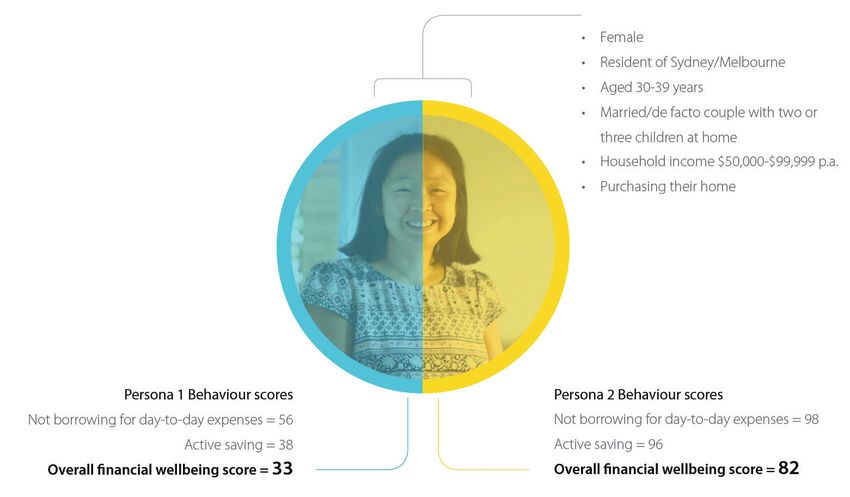
ANZ 2018 HALF YEAR CORPORATE SUSTAINABILITY UPDATE

                                                    CEO’S MESSAGE
                                                    SHAYNE ELLIOTT

         I am here again firmly committing to the changes we are making —
         to governance, accountability and systems — to build an ANZ worthy
         of the community’s trust and respect.
         At the Royal Commission we have heard customers who                                       My hope is the Royal Commission serves as a watershed
         have suffered financial harm and emotional distress. There is                             moment in restoring the trust of customers and the
         no doubt that our conduct has at times been unacceptable.                                 community in our bank and the sector. I recognise we have
         We are making changes, some of which are discussed in                                     much to do but I am confident that with the continued
         this report, to fix these matters and reduce the risk of them                             dedication of our people we will deliver on our purpose
         happening again.                                                                          to shape a world in which people and communities thrive.

         Transparency on our financial performance is critical —
         as important is open dialogue about how we are managing
         the environmental, social and governance (ESG) risks and
         opportunities facing the bank. Beyond our own reputation
         and social licence to operate, it is also well recognised that
         organisations with a strong focus on ESG issues are likely                                Shayne Elliott
         to perform better in the longer term financially.                                         CEO

         OUR SUSTAINABILITY PERFORMANCE

         Towards the end of last year we decided on three issues that we believe we can have a positive impact on —
         financial wellbeing, environmental sustainability and housing. A number of the sustainability targets we set for 2018
         and beyond are focussed on helping us progress our work on these issues. While we are making good progress and
         will achieve most of our targets by the end of this reporting year, some of them are longer term targets, requiring
         focus and sustained effort.
         Highlights for the year to date include:
         •• together with our community partners, we have now reached more than 533,000 people through
            our MoneyMinded, MoneyBusiness and Saver Plus financial inclusion programs;
         •• the release of a report on the Financial Wellbeing of adults in Australia and New Zealand, the findings
            of which will inform development of products and services and other initiatives to build financial wellbeing
            of our customers, communities and employees;
         •• the launch of our first Sustainable Development Goals bond, raising €750 million to support
            sustainable lending; and
         •• our low carbon and sustainable finance commitment, which was raised from $10 billion
            to $15 billion by 2020 at the end of last year, has seen us continue to support the transition to a low
            carbon economy. Since 2015 we have financed more than $8 billion in a diverse range of projects,
            ranging from ‘green’ buildings to renewable energy generation.

         Note: The information provided in this half year update covers the period 1 October 2017 to 31 March 2018. It has not been independently assured.
         KPMG will provide assurance over ANZ’s annual Corporate Sustainability Review, to be released in December 2018. Monetary amounts in this document
         are reported in Australian dollars, unless otherwise stated.

                                                                                                                                                               1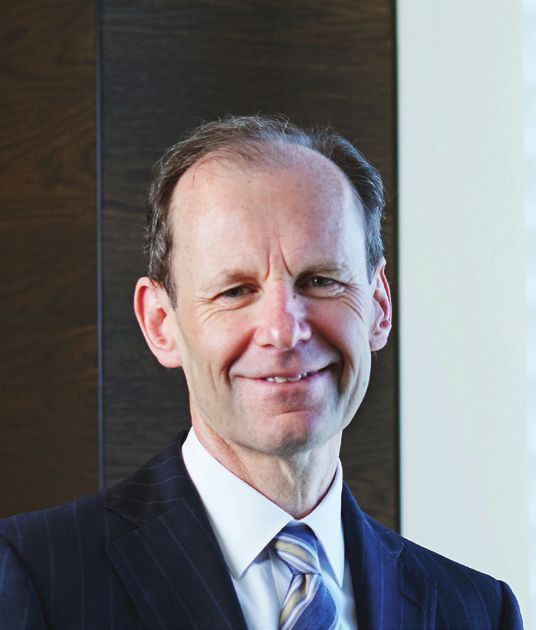
ANZ 2018 HALF YEAR CORPORATE SUSTAINABILITY UPDATE

         2018 SUSTAINABILITY TARGETS
         AND PERFORMANCE

         Each year we set public sustainability targets and a corresponding
         Group-wide program of work to support the delivery of our business strategy
         and respond to our most material, environmental, social and governance
         issues. Progress against our targets1 is reviewed quarterly by the Responsible
         Business Committee, and twice a year by the Board Environment, Sustainability
         and Governance Committee.

                      37%                                               53%                                    10%
                      On track to achieve                               In progress                            Off track

         OUR CORPORATE SUSTAINABILITY AGENDA

         As part of our strategic priority to drive a purpose and values-led
         transformation of the bank, we are prioritising our efforts
         on issues relating to environmental sustainability, financial
         wellbeing and housing. Our Corporate Sustainability Framework
         supports our business strategy and is aligned with the bank’s
         purpose. The Framework has three key areas of focus:

                     Fair and Responsible Banking                                     SUSTAINABLE               FAIR AND
                                                                                        GROWTH                 RESPONSIBLE
                     Earn trust by keeping pace with the changing                                                BANKING
                     expectations of our stakeholders, maintaining high                           SHAPE A
                                                                                               WORLD WHERE
                     standards of conduct and understanding the social                          PEOPLE AND
                     and environmental impacts of our business decisions.                      COMMUNITIES
                                                                                                   THRIVE
                     Social and Economic Participation
                     Build strong customer relationships and connect with
                     our communities, supporting a diverse and inclusive
                     society in which everyone can participate.                                   SOCIAL
                                                                                               AND ECONOMIC
                     Sustainable Growth
                                                                                               PARTICIPATION
                     Create opportunities for all of our customers and
                     enable sustainable growth for individuals, businesses
                     and industry.

         1.   Unless stated targets are at Group level.

                                                                                                                             2
ANZ 2018 HALF YEAR CORPORATE SUSTAINABILITY UPDATE

                           FAIR AND RESPONSIBLE BANKING

         Targets                                                                                   Commentary

         Create the best experience for our customers, measured                                    Australia
         by improving Net Promoter Score relative to peers (Retail,                                •• Retail: Ranking increased to 3rd from 4th at the end of 2017.2
         Corporate and Commercial and Institutional customers).
                                                                                                   •• Corporate and Commercial: Ranking of 4th remained steady
                                                                                                      from end of 2017.3
                                                                                                   •• Institutional: Ranked 2nd in 2017 (2018 results will be
                                                                                                      available in our annual Corporate Sustainability Review).4
                                                                                                   New Zealand
                                                                                                   •• Retail: ranking of 4th remained steady from end of 2017.5
                                                                                                   •• Corporate and Commercial: ranking of 4th remained steady
                                                                                                      from end of 2017.6
                                                                                                   •• Institutional: Ranked 3rd in 2017 (2018 results will be
                                                                                                      available in our annual Corporate Sustainability Review).7

         Improve senior leaders’ role modelling of ANZ values                                      Results for senior leaders’ role modelling of ANZ values will
         by 2% to 74% in 2018.                                                                     be available in our annual Corporate Sustainability Review.

         Extend ANZ’s cyber security education and awareness program in 2018 by:

         •• embedding cyber security information into key business                                 We are providing our frontline banking staff with educational
            processes (e.g. security tips when establishing new                                    materials enabling them to have conversations with customers
            customer accounts) and customer ‘touchpoints’                                          about cyber security and protecting personal information.
            (e.g. ANZ website); and

         •• collaborating with others (e.g. government, universities                               We are engaged in several cyber security partnerships,
            and industry) to help build a ‘pipeline’ of cyber security                             including with:
            professionals and raise community awareness
                                                                                                   •• the Australian e-Safety Commission to support global
            of cyber security.
                                                                                                      ‘Safer Internet Day’ Campaign in February 2018;
                                                                                                   •• the TAFE sector in Australia to develop a national, consistent
                                                                                                      cyber security curriculum; and
                                                                                                   •• CERT Australia (the Australian Government’s national
                                                                                                      computer emergency response team) to provide intelligence
                                                                                                      and knowledge sharing with the Australian Joint Cyber
                                                                                                      Security Centre.
                                                                                                   We are also delivering customer and community cyber
                                                                                                   security education sessions across Australia at conferences
                                                                                                   and client presentations.

         Implement strengthened due diligence for our                                              •• We implemented our updated Social and Environmental
         Human Rights Standards by end 2018.                                                          Risk screening tool (including zero tolerance for land grabs)
                                                                                                      in October 2017.
                                                                                                   •• Our updated online Social and Environmental Risk training
                                                                                                      program commenced for staff in February.
                                                                                                   •• We also continue to pilot our strengthened human rights
                                                                                                      customer due diligence, involving up to three locations
                                                                                                      in Asia in the second half of the year. We commenced the
                                                                                                      pilot in Thailand in 2017.

         2.   Roy Morgan Single Source. Base: Australian population aged 14+, Main Financial Institution, six month rolling average to Mar’18. Ranking based
              on the four major Australian banks.
         3.   DBM Business Financial Services Monitor. Base: Corporate & Commercial Banking (
ANZ 2018 HALF YEAR CORPORATE SUSTAINABILITY UPDATE
SOCIAL AND ECONOMIC PARTICIPATION
Targets Commentary
Help enable social and economic participation of 1 million •• MoneyMinded delivery is currently on track to reach 76,000
people by 2020 through our initiatives to support financial participants this year and, to date, 2,178 participants have
wellbeing, including our financial inclusion, employment been recruited to Saver Plus. Since 2003, more than 533,000
and community programs, and targeted banking products people have been reached through our financial inclusion
and services for small business and retail customers. programs MoneyMinded, MoneyBusiness and Saver Plus.
•• The number of people assisted through programs other
than our financial inclusion and employment programs will
be available in our annual Corporate Sustainability Review.
Build an engaged, diverse and inclusive workforce by:
•• increasing the representation of Women in Leadership Group-wide representation of Women in Leadership has
by 3% to 34.1% by 2020; increased to 31.9% (up from 31.1% as at September 2017)8.
•• maintaining an organisation inclusiveness score of at least Results for organisation inclusiveness will be available in our
93% in 2018; annual Corporate Sustainability Review.
•• recruiting >1,000 people from under-represented groups We have recruited 115 people to date (against an annual
including Indigenous Australians, people with a disability target of 250):
and refugees9; and
•• 43 students have accepted our offer of an Indigenous
School Based Traineeship; 11 Indigenous full time trainees
have been employed and we have appointed 10 Indigenous
employees directly;
•• 7 refugees have been employed via our refugee employment
program; and
•• 44 people with disability have been employed.
•• improving employee engagement by 6% to 80% by 2020 Results for employee engagement will be available in our
(against 2016 baseline score of 74%). annual Corporate Sustainability Review.
Increase employee volunteering participation rate in 2018 We are progressing towards this target with a volunteering
to 30%. participation rate of 11%.
8. Employee headcount is used for the basis of this disclosure. Includes all employees regardless of leave status excluding contractors (which are included in FTE).
9. This will also contribute to the ‘Help enable social and economic participation of 1 million people’ target.
4ANZ 2018 HALF YEAR CORPORATE SUSTAINABILITY UPDATE
SUSTAINABLE GROWTH
Targets Commentary
Fund and facilitate at least $15 billion by 2020 in low carbon ANZ has funded and facilitated $8.3 billion in low carbon and
and sustainable solutions including renewable energy sustainable solutions, such as green buildings, renewable
generation, green buildings and less emissions intensive energy (wind, solar and geothermal), low emissions transport
manufacturing and transport. and efficient irrigation since 1 October 2015.
By end 2018, ensure emerging issues and leading practices are reflected in the policies and procedures guiding our business
lending decisions by:
•• reviewing and, where necessary, updating our Social We have identified a set of priority issues and sectors to focus
and Environmental Risk Policy (including sensitive on in the review and are engaging with stakeholders for
sector standards); and feedback on our current policy.
•• amending our risk appetite and customer assessment Climate change risk has been added to the Group and
processes to increase emphasis on climate change risks Institutional Risk Appetite Statements.
and management.
By 2020, reduce the direct impact of our business activities on the environment by10:
•• reducing scope 1 and 2 emissions by 24% by 2025 Scope 1 and 2 emissions have decreased by 13% against
and by 35% by 2030 (against a 2015 baseline); a 2015 baseline, tracking ahead of the required reduction
to meet our targets. This has been achieved through
ongoing improvements in energy efficiency and consolidation
of our property portfolio.
•• increasing renewable energy use in our Australian We have entered into a Power Purchase Agreement to ‘off-take’
operations by 13% by 2020 (against a 2017 baseline); power from a windfarm under development in Murra Warra
(Victoria), due for completion in 2019. Once operational,
this is forecast to increase our renewable energy use by
approximately 18% by 2020.
•• reducing paper consumption in Australia and New Zealand Paper consumption has decreased by 28% (against the
(office and customer paper use only) by 40% by 2020 2015 baseline) due to ongoing digitisation and changing
(against 2015 baseline); work practices.
•• increasing recycling rates in our Australian commercial Recycling rates have decreased by 7% (compared to the
offices (> 20,000m2) by 12% by 2020 (against a 2017 2017 baseline). Plans to design and implement new waste
baseline); and receptacles and to improve staff engagement with respect
to recycling are currently under investigation.
•• reducing water consumption in our Australian Water consumption is off track with a reduction of
commercial offices (> 10,000m2) by 15% by 2020 approximately 2% since July 2015. A review is underway to
(against a 2015 baseline). identify high usage areas and determine initiatives to mitigate.
10. Environmental reporting year is 1 July–30 June in line with Australian regulatory reporting year.
5ANZ 2018 HALF YEAR CORPORATE SUSTAINABILITY UPDATE
FAIR AND RESPONSIBLE BANKING
TITLE TO COME
AUSTRALIAN BANKING INDUSTRY REFORMS — UPDATE ON PROGRESS
We continue to implement important changes to support efforts
to ensure the trustworthiness of our products and services.
The new Banking Code of Practice will apply from early 2019 As part of our process for hiring staff we now check with other
and has been rewritten in ‘plain english’ with new sections banks whether their past employees have left because of poor
dedicated to small businesses and inclusive banking. The Code conduct. This aims to ensure that individuals with a history
articulates the banking industry’s values and links these with of poor conduct do not move around the banking industry.
standards of conduct for how we deal with individual and
We have also established a Responsible Banking team
small business customers. It is unique amongst industry codes
in our Australian Retail and Commercial business, focussed
because its provisions are contractually enforceable.
on delivering products and services that meet our customers’
We have made changes to our small business lending contract, needs and ensuring customers are appropriately treated
to make it shorter, simpler and fairer for small business when things go wrong (discussed below).
customers. The new contract has been externally certified
We remain committed to reporting publicly on our progress
as ‘plain english’ and has been reduced from 100 to 52 pages.
through our bi-annual sustainability reporting.
We continue to make changes to how we remunerate our
staff and have recently moved business banking leaders from
a business unit specific incentive plan onto the bank’s main
incentive plan. The banking industry also continues to work
with brokers and related parties to make changes under
an agreed action plan, with volume-based incentives being
removed from broker and introducer commissions.
ANZ’S RESPONSIBLE BANKING TEAM
We have created a Responsible Banking team in our Australian Retail and Commercial business, with approximately
150 people under a senior ANZ Executive. The team will be responsible for three things:
1. large scale customer remediations, so that if we get things wrong we compensate customers, we fix the
underlying issues and we share the learnings and incorporate those into the design and delivery of our products,
systems and processes. There will also be an increased focus on building tools and capabilities to improve the
cadence and consistency with which we compensate customers;
2. product suitability, to continue to ensure we provide our customers with suitable products and they are using
those products as intended; and
3. working with teams across our Retail and Commercial business to ensure we continue to lend to our
customers responsibly.
ANZ is moving to agile ways of working and the Responsible Banking team will comprise a number of multi-disciplinary
‘squads’ including members with a mix of skills across product, frontline banking, remediation, data and technology.
This will deliver faster outcomes and better value for our customers.
6ANZ 2018 HALF YEAR CORPORATE SUSTAINABILITY UPDATE
SOCIAL AND ECONOMIC PARTICIPATION
BEHAVIOUR A KEY FACTOR IN DETERMINING FINANCIAL WELLBEING
Since 2002 we have been collaborating with a range of stakeholders
to understand financial literacy, behaviours and attitudes in Australia.
This year we conducted the sixth in our series of surveys – with a wider focus
on financial wellbeing. Financial wellbeing is a term that recognises that
finances are inextricably linked with our individual and social wellbeing.
The study identified that behaviour has a major impact on These findings are consistent with those from recent similar
financial wellbeing. Behaviour accounted for 45% of overall research internationally suggesting that encouraging positive
financial wellbeing in Australia and 43% in New Zealand. financial behaviour (particularly active saving and where
Financial behaviours tested included spending restraint, possible, not borrowing to cover everyday expenses) will
not borrowing for daily expenses, active saving, planning improve overall financial wellbeing. This is a shift from the
how to use your income, monitoring finances and making previous focus on improving financial literacy and knowledge.
informed product choices. The two behaviours to emerge
In addition to providing insights for a range of stakeholders,
as most important with respect to people’s financial wellbeing
the research will inform ANZ’s initiatives to improve financial
were active saving and not borrowing for everyday expenses.
wellbeing for our customers, employees and communities.
Between them, these two behaviours accounted for 35% We have a team dedicated to redesigning our products and
of the explained variation in people’s financial wellbeing services to respond to the challenges raised through the
scores. Participants who scored highly on ‘active saving’ and research and, in particular, will be examining ways in which
‘not borrowing for everyday expenses’ recorded financial to build people’s savings behaviours. This includes helping
wellbeing scores significantly higher than participants who customers to name, visualise and track goals and to create
scored lower on these behaviours. Not everyone is in a position a plan for large goals like buying a home. Importantly, we will
to save or to avoid borrowing for everyday expenses. However provide a proactive communications program for customers
for many people, being in a position to start saving can lead to help them actively save and stay on track with their goals
to an improvement in their financial wellbeing. via notifications and nudges.
This graphic shows how two respondents
in the survey (with essentially the same
income and socio-economic context)
achieved very different financial wellbeing
outcomes, based on their financial
behaviours. The person who scored highly
on ‘active saving’ and ‘not borrowing for
everyday expenses’ recorded a financial
wellbeing score of 82, significantly higher
than the person who scored lower on
these behaviours (financial wellbeing
score of 33).
Further information and the full survey report can be downloaded from bluenotes.anz.com/financialwellbeing
7ANZ 2018 HALF YEAR CORPORATE SUSTAINABILITY UPDATE
SOCIAL AND ECONOMIC PARTICIPATION
IMPROVING THE AVAILABILITY OF SUITABLE AND AFFORDABLE HOUSING OPTIONS
Home ownership has long been at the core of identity for both Australians
and New Zealanders. Having a home provides both safety and security.
It allows individuals and families to establish themselves and grow within
their community.
In establishing our role to support the creation of suitable and We are undertaking a review of both the opportunities and
affordable housing options, we have engaged with a range challenges associated with this issue and will set priorities
of internal and external stakeholders to understand where in the remainder of this year. We will report externally
we can have the most impact. Initiatives we are examining on our progress.
include supporting more new entrants into the home
market, helping increase the availability of homes to rent
and collaborating with government and the not-for-profit
sector to assist the homeless or those at risk of homelessness.
HELPING WOMEN FACING DOMESTIC VIOLENCE
ESTABLISH FINANCIAL INDEPENDENCE
When a woman leaves an abusive relationship she often has nowhere to go. This is particularly true of women with few
resources. When families are forced to leave home to escape violence, they frequently struggle to gain access to affordable
housing. This leaves many women and their children forced to choose between abuse at home or living on the street.
With at least one in 100 people experiencing homelessness, and one in three women experiencing physical and/or sexual
violence from a partner in New Zealand, there are clear linkages between the number of women and children experiencing
both domestic violence and being at risk of homelessness.
According to Women’s Refuge New Zealand Chief Executive Dr Ang Jury, often women who flee their homes with
no possibility of returning cannot open a bank account because they leave without the necessary identification.
“You can’t get into a house without having a bank account,” she explained. “You can’t get onto a benefit without
having a bank account. No one hands over cash anymore.”
In a New Zealand first, women who are referred by Women’s Refuge can now set up an ANZ account, even if they
have no identification or do not have a permanent address.
“We need this documentation by law but by being more flexible about when we require the documents,
we’re helping women set themselves up faster and keep them safe,” said Antonia Watson, ANZ’s Managing Director,
Retail and Business Banking.
The new approach was successfully trialled with ANZ staff in Wellington and has now been rolled out across
all branches in New Zealand.
“Anything we can do to help someone in a dangerous relationship push towards independence and feel confident
about how they’ll move forward is important,” Watson said.
8ANZ 2018 HALF YEAR CORPORATE SUSTAINABILITY UPDATE
SUSTAINABLE GROWTH
CASE STUDY
SUPPORTING CUSTOMERS TO IMPROVE
ENVIRONMENTAL SUSTAINABILITY
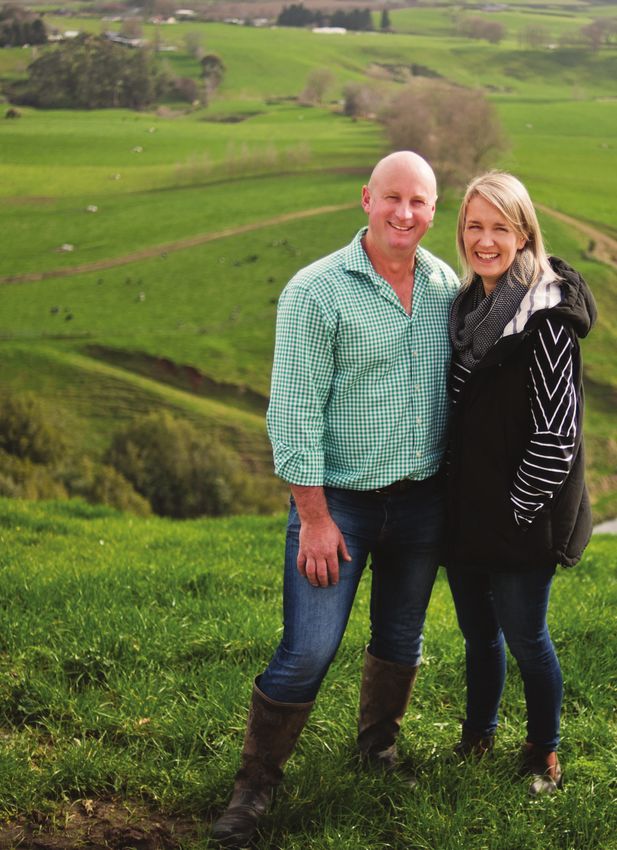
John and Susan from Judge Valley Dairies in the Waipā Zone
of the greater Waikato River Catchment, New Zealand, are
conscious of the environmental impact of their 245 hectare farm.
Through careful consideration of land use, strategic
management of livestock and the introduction of new
technologies, they are managing their farm to ensure the
long term sustainability of their business.
One of the first things John and Susan did when they set out
to improve the environmental sustainability of their practices,
was to develop an environmental plan, including a detailed
land use capability assessment. They identified areas on their
land that were suitable for a variety of uses and classes of stock.
Over time, they have added 11 wetlands, two sediment dams,
planted five hectares of pine trees and 15 hectares of Mānuka
plantings to their farm. Land previously considered unprofitable
now adds real value to their business.
Banking customers like Judge Valley Dairies aligns with
our commitment to support customers to improve the
environmental sustainability of their operations — an issue
particularly relevant for agri-businesses.
According to Mark Hiddleston, ANZ’s Managing Director of
Commercial Agriculture in New Zealand, “Judge Valley Dairies
is a great example of a business making the transition to more
sustainable farming, while remaining profitable and preserving,
if not growing, the value of their land.”
9ANZ 2018 HALF YEAR CORPORATE SUSTAINABILITY UPDATE
SUSTAINABLE GROWTH
IMPROVING OUR CLIMATE RISK DISCLOSURES
The focus by investors and other stakeholders on carbon disclosures
continues, with many companies, governments and regulators committing
to adopt the recommendations of the Financial Stability Board’s Task Force
on Climate-related Financial Disclosures (TCFD). While voluntary, the TCFD
has become the key framework to guide disclosure on the financial risks
and opportunities associated with climate change, including how risks
are identified and managed.
Consistent with our commitment to improve our disclosures, We will use the outputs to have more informed discussions
we were the first bank to report using the TCFD in our 2017 with our customers, as we seek to identify and support those
Annual Review. We also released a standalone ‘Climate-related customers with business strategies aimed at managing the
financial disclosure’ document which contains information on transition risks for their companies. UNEP FI has released
our carbon strategy, governance, management, metrics and a report (unepfi.org/tcfd-for-banks) that describes the
targets, in line with the TCFD requirements. methodology.
We are encouraged that a number of our customers have also In particular, the work seeks to overcome some challenges
issued reports in line with the TCFD framework, helping to frame facing banks in modelling transition risks, for example:
our ongoing engagement with them on how they are managing
•• translating climate change scenarios into economic outputs
the transition to a low carbon economy.
that can be used to ‘stress test’ banking portfolios; and
We are also one of 16 banks participating in a United •• assessing the potential impact of these risks on the probability
Nations Environmental Programme for Financial Institutions of default over a longer period than the usual 2-3 years.
(UNEP FI) working group focussed on applying the TCFD
The physical risks of climate change are those associated
recommendations for financial institutions. We have worked with
with changing weather patterns, rainfall variability, extreme
UNEP FI, other banks and specialist consultants to develop and
weather events such as cyclones or floods, and the impacts
pilot new tools and approaches to inform our risk management,
on our customers, e.g. residential housing or large infrastructure
and to identify opportunities to support our customers.
projects. We expect to progress a methodology for assessing
Our working group has considered both ‘transition risks’ and physical risk by July, and initially will seek to apply that in parts
‘physical risks’ associated with climate change. Transition risks of our agriculture portfolio.
are the technology, policy and regulatory changes that may
Banks’ most material climate change risks and opportunities arise
affect our customers’ businesses as governments act on their
from lending to business and retail customers. Our TCFD work
pledges to reduce carbon emissions under the Paris Agreement.
will strengthen our engagement with our customers, assisting
We have developed tools that enable us to look at a particular
them to be — or to become — climate resilient.
sector, e.g. metals and mining, and to conduct portfolio-wide
analysis to look at the potential impacts on customers’ risk
profiles and how that might change over time.
WHAT’S NEXT?
In our 2017 Corporate Sustainability Review we expanded our climate risk disclosures to describe how we used scenario
analysis to test the resilience of our thermal coal customers to transition risk. We also included information on the emissions
intensity of our project-financed power generation portfolio, and emissions intensity relative to our industry exposures
for Australia and New Zealand.
We will update these metrics later this year in our annual Corporate Sustainability Review, along with a more detailed
description of the outcomes of our collaboration with other banks in the UNEP FI working group.
From a governance perspective, the CEO and Board are engaged in this process and continue to oversee the bank’s
approach to climate change.
10FEEDBACK
To provide feedback on ANZ’s sustainability performance or for any queries about
our sustainability reporting, please email corporate.sustainability@anz.com
For 2018 Half Year Results visit anz.com/results
anz.com
Australia and New Zealand Banking Group Limited (ANZ) ABN 11 005 357 522.You can also read


