2018 Year-End Customer Guide - Dayforce - Ceridian
←
→
Page content transcription
If your browser does not render page correctly, please read the page content below
2018 Year-End
Customer Guide

 Dayforce

© Ceridian HCM, Inc.

2018 Year-End
Customer Guide
  Welcome to the 2018 Dayforce Year-End Customer Guide. This guide is the
  primary reference for the Year-End process. The information contained in this
  customer guide is up to date as of Thursday, November 8, 2018.

  The following additonal information and resources are available:
  • Appendix A: Resources for Year-End, provides additional Dayforce resources
     as well as links to legislative information.
  • Appendix D: Year-End Questions and Troubleshooting, contains answers to
     common year-end questions and troubleshooting.

  This guide and other resources are available in the Ceridian Support Portal at
  https://support.ceridian.com. To access articles:
  • Search for knowledge articles by entering key words or the name of the article
     in the “How can we help you?” field.

  •   Choose the Knowledge Base menu item at the top of the Home page. Select
      Year End > Canada Year End.

  Please be advised that the Year-End Customer Guide is a national document
  distributed to Ceridian customers across Canada. Differences may occur with
  respect to provincial and/or regional processes and procedures.

                                   2

                                                          Year-End Customer Guide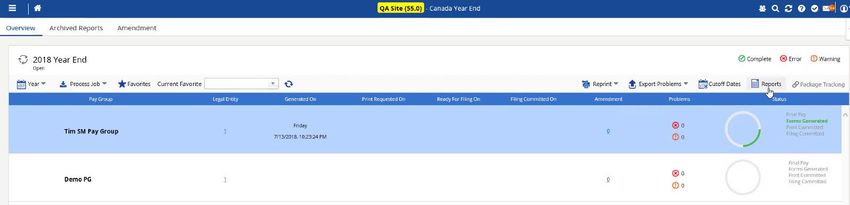
The information in this guide is provided by Ceridian Canada Ltd. as a
convenience. Ceridian does not warrant the accuracy or completeness of the
information. Contents may be subject to change. Always check with the proper
authority for the most current information available

                                3

                                                       Year-End Customer Guide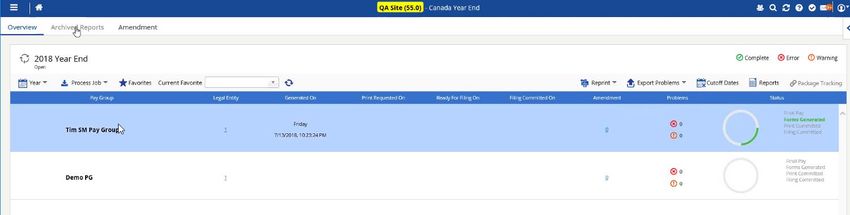
Table of Contents
2018 Year-End Customer Guide ............................................................................................... 2
Important Topics to Review ....................................................................................................... 6
   New in Dayforce Version 55................................................................................................... 6
   New Legislation in 2018 ......................................................................................................... 6
   New Legislation for 2019 ....................................................................................................... 7
Checklist of 2018 Year-End Activities ........................................................................................ 9
   September - November 2018 ................................................................................................. 9
   December 2018 ................................................................................................................... 13
   January – February 2019 ..................................................................................................... 15
   March 2019 .......................................................................................................................... 18
Important Year-End Dates and Deadlines ............................................................................... 19
   Important Tax Form/Statement Dates and Deadlines .......................................................... 19
      Cut Off Dates .................................................................................................................................................. 19
      Missed Tax Form/Statement Processing Deadline ......................................................................................... 20
      Tax Forms/Statements .................................................................................................................................... 20
Year-End Reports and Processing .......................................................................................... 21
   Running Year-End Adhoc Reports ....................................................................................... 21
   Accessing Year-End Archived Reports ................................................................................ 22
   Reviewing Important Information Required by Ceridian ....................................................... 23
      Required Employee Information ..................................................................................................................... 23
      Required Employer Information ...................................................................................................................... 24
Processing Year-to-Date Corrections ...................................................................................... 26
   Making Corrections to Year-to-Date Values ......................................................................... 26
      Year-to-Date Corrections (Using the Adjustments Tab) ................................................................................. 27
      Year-to-date Corrections (Using the Checks Tab) .......................................................................................... 28
      Moving Employee YTDs From one Province to Another ................................................................................ 29
      Correcting Employees with the Same ID and multiple countries .................................................................... 29
      Entering Pension Adjustments (PA)................................................................................................................ 30
Provincial Health Care Levies & WCB ..................................................................................... 31
   Ontario Employer Health Tax (EHT) .................................................................................... 31
      Filing a Return for EHT ................................................................................................................................... 31
      Debit or Credit Balance ................................................................................................................................... 32
      EHT Annual Year-End Return – Monthly Remitters ....................................................................................... 32
      Balancing EHT Payments – An Example........................................................................................................ 32
   Manitoba Health and Post-Secondary Education Tax.......................................................... 34
                                                                                  4
                                                                                                                             Year-End Customer Guide
Filing a Return ................................................................................................................................................. 34
   Québec Health Services Fund (QC HSF) ............................................................................ 34
      Filing a Return ................................................................................................................................................. 34
   Newfoundland and Labrador Health and Post-Secondary Education Tax (HAPSET).......... 36
      Filing a Return ................................................................................................................................................. 36
   Northwest Territories/Nunavut Payroll Tax........................................................................... 37
   Workers’ Compensation (WCB) ........................................................................................... 37
      Workers’ Compensation Maximum Assessable Amounts for 2018 ................................................................ 38
      Filing a Return ................................................................................................................................................. 38
   Filing Québec CSST (Commission des normes, de l'équité, de la santé et de la sécurité du
   travail) .................................................................................................................................. 39
Initiating the Year-End Process ............................................................................................... 40
   Year-End Role Configurations ............................................................................................. 40
   Processing Tax Forms/Statements ...................................................................................... 41
      Preview Employee Tax Forms/Statements ..................................................................................................... 42
   How to Initiate Tax Form/Statement Printing and Delivery ................................................... 45
   Tax Form/Statement Delivery Package ............................................................................... 48
      Self Service Tax Form/Statement Availability ................................................................................................. 49
Tax Form/Statement Filing and Amendments ......................................................................... 51
   Submission of Tax Forms/Statements ................................................................................. 51
   T4/RL Filing Deadline for 2018 ............................................................................................ 51
      Electronic Filing and Revenu .......................................................................................................................... 51
   CRA Summaries .................................................................................................................. 52
   Making Amendments After Tax Forms/Statements Have Been Printed............................... 52
Appendix A: Resources for Year-End ...................................................................................... 54
   Resources for Year-End Information.................................................................................... 54
Appendix B: Coding “Other Information” on the T4.................................................................. 55
   Coding the “Other Information” Area of the T4 ..................................................................... 55
      CRA Codes ..................................................................................................................................................... 56
Appendix C: Tax Form/Statement Sort Options....................................................................... 60
   Tax Form/Statement Sort Options ....................................................................................... 60
Appendix D: Year-End Questions and Troubleshooting .......................................................... 61
Appendix E: Year-End Reports................................................................................................ 64

                                                                                  5
                                                                                                                             Year-End Customer Guide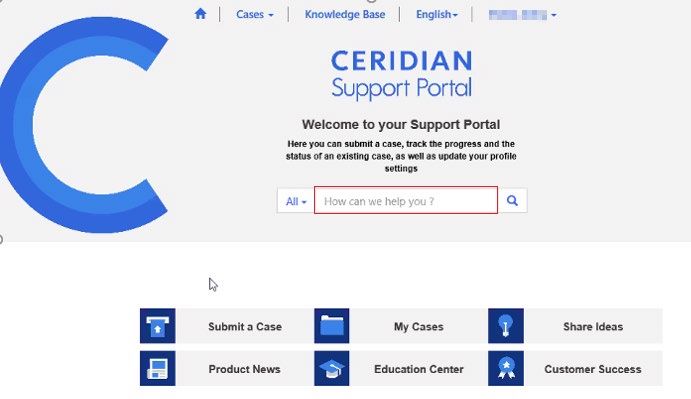
Important Topics to
Review
     This section of the year-end guide introduces new enhancements, legislations and
     offers tools to enhance year-end processing.

     During the year-end process, please take the time to review the following sections
     of the year-end guide:
     • Checklist of 2018 Year-End Activities, page 9
     • Processing Year-to-Date Corrections, page 26
     • Provincial Health Care Levies & WCB, page 31
     • Appendix D: Year-End Questions and Troubleshooting, page 61.

New in Dayforce Version 55
     Limited and Total Taxable Wages
     • The Checks tab is updated so Dayforce now generates the limited and total
       taxable wages for the employee and employer taxes that are applicable for the
       earnings on a manual cheque without clicking Calculate Check. Previously,
       Dayforce only generated limited and total wages when Calculate was clicked
       in the Check Entry tab.
     • The Adjustments tab is updated so that when a tax entry for an adjustment is
       added without creating one for its corresponding employee or employer tax,
       Dayforce now automatically generates a tax entry for the corresponding tax.
       For example, if an entry is only created for employee EI, the application
       generates an entry for employer EI as well.

     On the Support Portal, search for the knowledge (KB) article Limited and Total
     Taxable Wages or navigate to Knowledge Base > Year End > Canada Year End.

New Legislation in 2018
     •   Federal:
         •   Home relocation loan deduction eliminated effective January 1, 2018

                                      6

                                                               Year-End Customer Guide
New Legislation for 2019

         •   Social events – threshold for reporting employee benefits derived from
             employer sponsored social events is increased from $100 to $150
     •   Alberta and Ontario – Employment Standards amendments were made
         effective January 1, 2018. In Alberta, the changes impacted holiday
         pay/eligibility, overtime banking, and leaves. In Ontario, they impacted
         holiday pay (until June 30, 2018), overtime for multiple rate employees,
         vacation and leaves.
     •   Provincial Parental Leaves – Extended to align with 18-month EI benefit
         option. Currently available to federally regulated employees and employees
         working in Ontario, Alberta, New Brunswick, British Columbia,
         Newfoundland, Manitoba.
     •   Saskatchewan – the Labour-sponsored Venture Capital Tax Credit rate was
         reduced from 20 percent to 17.5% for the 2018 taxation year. The maximum
         individual annual tax credit that can be earned declined from $1,000 to $875.
     •   Québec:
         • Health Services Fund – There were 2 rate reductions and a threshold
             change in 2018. Revenu Québec intends to offer tools to assist employers
             with RL-1 Summary completion. It is critical that employers enter
             worldwide wages correctly in Dayforce and update that figure annually.
         •   Source Deductions Return (TP1015.3) – The method of calculating the
             Québec employee basic/spousal amount and other amounts changed in
             2018. The basic/spousal amount increased from $11,635 to $15,012 and
             other amounts were increased and indexed.
         •   Fondaction – Despite earlier announcements, the rate of the tax credit for
             the purchase of shares issued by Fondaction remained at 20% throughout
             2018.

New Legislation for 2019
     •   CPP and QPP –The new 2019 employee contribution rates are 5.10% (CPP)
         and 5.55% (QPP). Dayforce automatically updates to the new rates with the
         first 2019 payment date.
     •   Ontario:
         • Employer Health Tax – Exemption is set to increase from $450,000
             (inflation adjustment) and there is a potential change to exemption
             eligibility so that it would only to be available to individuals, charities, not‐
             for‐profit organizations, private trusts and partnerships, and CCPCs.
         •   Employment Standards – The 3 Hour Rule provisions were amended by
             Bill 148 to increase on-call and call-in pay obligations effective January 1,

                                         7

                                                                    Year-End Customer Guide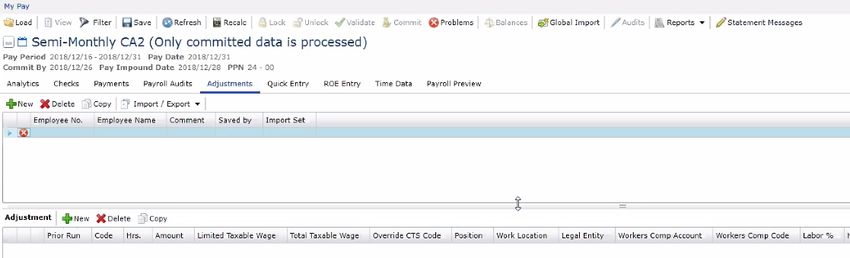
New Legislation for 2019

        2019. Bill 47 was introduced in October 2018 and may remove some
        requirements.
•   British Columbia:
    •   Employer Health Tax – An annual or quarterly tax on BC Payroll was
        announced in Budget 2018. There is a $500,000 exemption for employers
        with BC Payroll below $1.5M and a calculated rate for employers between
        $500,000 and $1.5M. Employers with BC Payroll above $1.5M will pay
        1.95%.
    •   Family Day – 2019 holiday will be on the third Monday in February (rather
        than the second Monday in February)
•   Newfoundland –Starting January 1, 2019, the threshold for Health and Post-
    Secondary Education Tax (Payroll Tax) will be increased by $100,000, from
    $1.2 million to $1.3 million.
•   Québec:
    • Labour standards – Bill 176 modified a number of labour standards
       requirements and entitlements. This includes equal treatment provisions,
       changes to staggering agreements and broadening holiday indemnity
       eligibility. In addition, as of 2019:
    •   vacation entitlement increases to 3 weeks after 3 years (rather than 5
        years)
    •   there are 2 days paid leave associated with bereavement, family, sick,
        organ donation and domestic leaves
    •   Health Services Fund – The upper total payroll threshold (beyond which
        the rate is 4.26%) is increasing for 2019 from $5.5M to $6.0M.
•   Manitoba – Budget 2018-19 announced an end to the 15% Labour-Sponsored
    Funds Tax Credit on shares acquired after 2018.

                                   8

                                                            Year-End Customer Guide
Checklist of 2018 Year-
End Activities
    This checklist provides sequentially ordered references for processing Year-End
    with Ceridian Dayforce. Use this checklist to ensure that all necessary tasks are
    completed in order and on time.

September - November 2018
          Action                                                           Deadline

          Register for Year-End Training. Live Membership includes         September
          unlimited training offerings. Login to Live Membership
          account at https://education.ceridian.com and search for
          Year-End to review course descriptions, training guides,
          and session offerings.

          Ensure Year-End is enabled.
          On the Support Portal, see the related knowledge (KB)
          article, Year-End Reports (CAN).

          It is best practice to validate and correct discrepancies that
          appear on the Canada CPP/QPP Discrepancy Report after
          each pay. By making corrections regularly after each pay or
          before the final pay of 2018, a PIER (Pensionable and
          Insurable Earnings Review) Report and/or a credit balance
          in the remittance account may be avoided.

          It is best practice to validate and correct discrepancies that
          appear on the EI/QPIP Discrepancy Reports after each pay.
          By making corrections regularly after each pay or before the
          final pay of 2018, a PIER (Pensionable and Insurable
          Earnings Review) Reports and/or a credit balance in the
          remittance account may be avoided.

                                      9

                                                                Year-End Customer Guide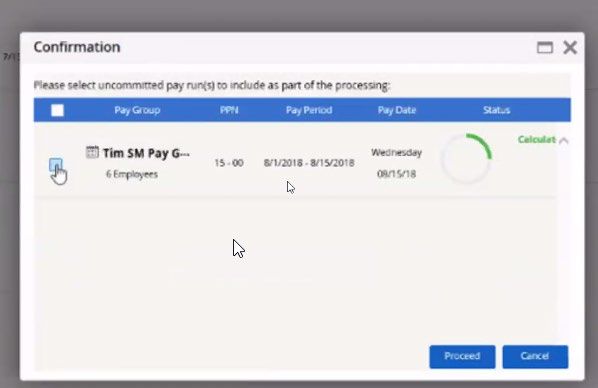
September - November 2018

Action                                                        Deadline

Update Payroll Calendars to ensure employee payments are      November 1
processed in a timely manner. Banks will be closed on
Tuesday, December 25, 2018, Wednesday, December 26,
2018, and Tuesday, January 1, 2019. Payrolls must be
processed earlier than usual to guarantee employee
payments are made on time. Any payments dated on or
after January 1, 2019 are considered income for 2019 tax
purposes.
On the Support Portal, see the related knowledge (KB)
article, Important Dates, Deadlines and Holidays (CAN).

Validate the Canada Earning and Deduction Matrix
Validation Report from Year-End. This report lists all Tax
Form boxes that earnings and deductions are reported in. If
changes are required, contact Customer Support.

Review the T4/T4A/ Releve 1/Releve 2 Management Reports
from Year-End. These reports detail wages, taxes, and
amounts reporting in all boxes on employee tax forms.

Review the T4/T4A/ Releve1 / Releve 2 Exception
Management Reports from Year-End. These reports
highlight issues that may impact Tax Forms.

Use mapping from the Canada Earning and Deduction
Matrix Validation Report to reconcile the tax form
Management Reports with the Payroll Register.
Management Reports are available for T4, T4A, Releve 1
and Releve 2.

For each employee, verify for accuracy, the name, address,
S.I.N. and province(s) of employment for 2018. Primary
Residence addresses for all Canadian employees must not
be greater than 30 characters, must not contain special
characters and must have a valid postal code.

                          10

                                                   Year-End Customer Guide
September - November 2018
Action Deadline
If payroll includes employees for any of the provincial taxes
listed below, access Org Setup > Organization > Legal Entity
> Tax Authorities > Tax Setting to ensure that start and end
dates are populated for the current and next year:
• Québec Health Services Fund (QC HSF)
• Manitoba Health and Education Tax Number
• Ontario Employer Health Tax Number
• Newfoundland and Labrador Health and Post-
Secondary Education Tax Number
• Northwest Territories/Nunavut Payroll Tax Number
QC HSF Note: The upper income threshold for QC HSF
changed in August 2018. Employers should be reminded
that Ceridian products calculate QC HSF for the current
year based on the previous year’s worldwide payroll as
entered by the employer. It is critical that the amount
entered is accurate and includes remuneration both within
and outside Québec.
If payroll has employees in any of the provinces or
territories that have medical/payroll tax plans (NL, ON,
MB, QC, NT, NU), and the projected earnings for these
jurisdictions is changing in the new year, update the Gross
Annual Payroll field in Org Setup > Organization > Legal
Entity > Tax Authorities > Tax Setting.
BC EHT Note: Legislation to introduce BC EHT was tabled
in October 2018. New reports are being developed to assist
employers to isolate their 2018 T4 Box 14 income for BC
employees. Although Ceridian cannot calculate or remit the
tax owed, the report will provide the information necessary
to determine the 2019 liability.
11
Year-End Customer GuideSeptember - November 2018
Action Deadline
If applicable, verify:
• WCB/CSST at Org Setup > Organization > Legal Entity >
Workers Comp
• If set up for remittances, only the following two
jurisdictions are remitted by Ceridian:
o Nova Scotia: WCB
o Revenu Québec: CSST
• If Dayforce calculates WCB/CSST, ensure that the new
rates are updated using a January 1, 2019 start date for
each Province.
If applicable, verify:
• Deferred Profit Sharing Plan Number(s). Payroll Setup
> Payee Setup > Third Party Payee > Parameters (type –
Pension Plan Number).
• Registered Pension Plan Number(s) (plan # must be 7
numeric digits). Payroll Setup > Payee Setup > Third
Party Payee > Parameters (type – Pension Plan
Number).
• RRSP Group plan numbers. Payroll Setup > Payee
Setup > Third Party Payee > Parameters.
IMPORTANT: Prior to selecting Recalc (My Pay)/Calculate December 1
(Payroll) of Pay Period 01 of 2019, ensure that the 2019 Tax
Tables are updated. Performing a Recalc (My Pay)/Calculate
(Payroll) before the 2019 Tax Tables are updated will result
in incorrect Statutory Deductions.
Verify EI rate groups (RP numbers), with associated
Business Number (BNs) for 2019 and update Reduced Rate
if applicable.
On the Support Portal, see the related knowledge (KB)
article Limited and Total Taxable Wages.
12
Year-End Customer GuideDecember 2018
Action Deadline
Workers’ Compensation Rates typically change on an
annual basis. The rates must be changed before the first pay
of 2019 is processed. Changes can be made by end dating
the current year record and entering the new rate with an
effective date of January 1, 2019.
On the Support Portal, see the related knowledge (KB)
article, Updating Workers’ Compensation Rates-2019
(CAN).
December 2018
Action Deadline
Update Pay Calendars to ensure employee payments are December 1
processed in a timely manner.
On the Support Portal, see the related knowledge (KB)
article, Important Dates, Deadlines and Holidays (CAN).
Watch for the Pay Period One Supplement advising of the
2019 Tax Table updates.
It is NOT RECOMMENDED to commit the first pay of the
new year until the 2019 tax tables are updated.
For weekly or biweekly payroll, ensure that the pay
calendars account for 27 or 53 pay periods.
On the Support Portal, see the related knowledge (KB)
article, How Do I Address Additional Pay Periods in the
Year?
Before the first pay of the new year, review all employee
Federal and Provincial Total Claim Amounts.
All employee basic Total Claim Amounts will automatically
update to the new 2019 values. All other employee Total
Claim Amounts will remain the same as 2018.
On the Support Portal, see the related knowledge (KB)
article, Tax Tables and TD1-XX (CAN).
13
Year-End Customer GuideDecember 2018
Action Deadline
TD1/TD1X updates are effective-dated as soon as the
workflow is approved.
IMPORTANT: If the workflow does not have an approval, do
not make TD1/TD1X forms available until after the last pay
of 2018 is processed. 2019 TD1/TD1X records do not have
effective dates, therefore the new values will overwrite the
2018 values prior to the last pay.
If 2019 TD1/TD1X forms are available to employees, do not
approve those workflows until after the last pay of 2018 is
processed.
Does payroll have employees in the following provinces or
territories that have medical/payroll tax plans (NL, ON,
MB, QC, NT, NU)? If the projected earnings for these
jurisdictions for the new year are changing, update the
Gross Annual Payroll field in the Tax Settings.
If Ceridian remits Provincial Health Care Levies, ensure
that Start and End dates are populated for the current and
next year by navigating to Org Setup > Organization > Legal
Entity > Tax Authorities > Tax Setting.
On the Support Portal, see the related knowledge (KB)
article, Provincial Health Care Levies & WCB (CAN).
Note: If an active Tax Setting record is not found, the
application will not calculate Provincial Health Care Levies
for associated pay runs.
14
Year-End Customer GuideJanuary – February 2019
Action Deadline
If WCB/CSST is calculated in Dayforce, and the rates are
changing, navigate to Org Setup > Organization > Legal
Entity > Workers’ Comp. For each province, End Date the
current record and Add a new record with the new 2019
rate.
On the Support Portal, see the related knowledge (KB)
article, Provincial Health Care Levies & WCB (CAN).
For employees outside of Nova Scotia and Québec, WCB
payments must be remitted directly to the respective
agencies. Ceridian remits for the following 2 jurisdictions
only if configured in Dayforce:
• Nova Scotia: WCB
• Revenu Québec: CSST
Employees will receive a paper copy of Tax
Forms/Statements unless they opt out using Employee Self
Service.
This option must be configured in Dayforce.
On the Support Portal, see the related knowledge (KB)
article, How Do I Allow Employees to Opt Out of Printed
Tax Forms? (CAN).
January – February 2019
Action Deadline
Ceridian will remit Statutory Remittances for prior Year-To-
Date Corrections when Year-End runs are committed by
midnight Friday, January 11, 2019.
Depending on remittance threshold deadlines, penalties
may be incurred.
15
Year-End Customer GuideJanuary – February 2019
Action Deadline
Be aware of Year-End deadlines. Any prior Year-To-Date
Corrections (Year-End Runs) must be processed by midnight
Monday, February 11, 2019.
Request Print and Ready for Filing of 2018 Tax
Forms/Statements must be completed by midnight Friday,
February 15, 2019.
If year-to-date corrections are processed using the
Maintenance Off-Cycle, all Statutory Remittances must be
paid directly to the appropriate agencies by the specified
deadlines.
Ceridian DOES NOT remit any Statutory Remittances when
Maintenance Runs are processed.
If Pension Adjustments (PAs) are being calculated outside of
Dayforce, ensure that they are entered in Dayforce prior to
processing Tax Forms/Statements.
PAs are entered using an Off Cycle run and they must be
processed by Monday, February 11, 2019.
After processing and validating all required year-to-date
corrections, run and validate all Year-End reports.
Once all information on the Year-End Reports has been
validated, use the flyover feature on the Year-End page to
Preview individual Tax Forms/Statements.
Verify that the information reported on Tax
Forms/Statements is correct.
If there are any discrepancies and corrections are required,
on the Support Portal, see the related knowledge (KB)
article, Prior Year-to-Date Corrections (CAN).
16
Year-End Customer GuideJanuary – February 2019
Action Deadline
After verifying that the Tax Forms/Statements are correct,
Request Print of Tax Forms/Statements and distribute to
employees.
Note: Failure to distribute Tax Forms/Statements to
employees before February 28 may result in penalties (fines)
being levied by CRA/Revenu Québec.
On the Support Portal, see the related knowledge (KB)
article, Processing Year-End Tax Forms (CAN).
Verify and reconcile Statutory Remittance amounts
submitted by Ceridian using the Back Office Reports with
the reports from the appropriate government agencies.
Back Office Reports are found in:
• Payroll > Back Office Reports > Canada GRS Data
Report, or
• Reporting > Back Office Reports > Canada GRS Data
Report
Ceridian submits electronic Tax Form/Statement
Summaries to CRA by February 28, however these
summaries are not available to view in Dayforce.
The Payroll Register and Management Reports found in the
Year End module can be used to determine Tax
Form/Statement totals if required.
If payroll contains employees in Québec, it is the employer’s
responsibility to submit the RL Summaries (RLZ-1.S-V) to
Revenu Québec. February 28
On the Support Portal, see the related knowledge (KB)
article, Electronic Filing and Revenu Québec (CAN).
17
Year-End Customer GuideMarch 2019
March 2019
Action Deadline
For any of the provinces or territories that have
medical/payroll tax plans, file the returns for Health Levies
and WCB.
On the Support Portal, see the related knowledge (KB) article,
Provincial Health Care Levies & WCB (CAN).
Consult the individual Provincial agencies for due dates.
18
Year-End Customer GuideImportant Year-End
Dates and Deadlines
Year-End processes and legislative requirements have a number of important
dates and deadlines.
Important Tax Form/Statement Dates
and Deadlines
Activity Deadline Date
Deadline: Year-To-Date Corrections Monday February 11, 2019
Deadline: Tax Form/Statement Print and Ready Friday February 15, 2019
for Filing
Cut Off Dates
Important dates are available in Year-End by clicking on Cutoff Dates.
1. Navigate to Year-End > Canada Year-End.
2. On the right side of the page select Cutoff Dates and the 2018 dates are as
below:
19
Year-End Customer GuideMissed Tax Form/Statement Processing Deadline
In order to meet CRA’s Tax Form/Statement deadline, the Dayforce Tax
Form/Statement processing deadline is Friday February 15, 2019. Tax
Forms/Statements created after February 15 could be subjected to penalties for
late filing.
If there are outstanding issues at this time, it is recommended that the Filing
process be completed (Request Print and Ready for Filing) and Amended forms
be processed after February 28, 2019.
Tax Forms/Statements
Important: Original Tax Forms/Statements sent to CRA after the deadline may
incur penalties.
If a form has been missed after the electronic filing has been submitted, please
contact CRA/RQ and advise them immediately.
Issuing of penalties regarding tax filing is at the discretion of CRA/RQ and there
may be situations where an assessment is issued (by CRA/RQ) due to
circumstances not related to Tax Form/Statement activities handled by Ceridian.
20
Year-End Customer GuideYear-End Reports and
Processing
It is important to begin reviewing and correcting employee information as early
as possible. Where possible, it is best practice to make corrections throughout the
year to ensure that all information is accurate and complete for the final pay
submission of the year.
• Year-End reports can be generated throughout the year via the Year-End
module and viewed in the Message Center
• Year-End reports are also generated automatically with each committed pay
run as long as they are enabled.
To see a complete list of Year-End report descriptions, see Appendix E: Year-End
Reports, page 64.
Running Year-End Adhoc Reports
Year-End Reports can be generated at any time throughout the year via Year-End
> Canada Year-End > Overview > Reports and viewed in the inbox of the Message
Center.
To run these and other Year-End reports:
1. Select Year-End > Canada Year End > Overview > Reports.
2. Select Overview, with the current year (2018), then select Reports.
3. Select the criteria as required, then scroll down.
21
Year-End Customer Guide4. Select Run Report.
Accessing Year-End Archived Reports
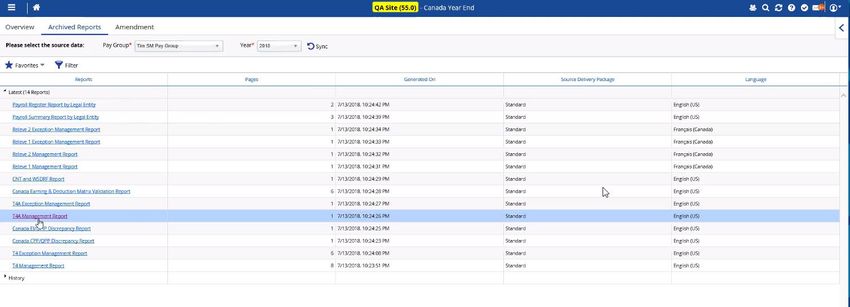
Year-End reports that are processed with every pay run, can be reviewed in Year-
End > Canada Year End > Archived Reports:
1. Select Archived Reports > Select the current year (2018).
22
Year-End Customer Guide2. Select the Pay Group, and the current year (2018). Then select the required
report.
Reviewing Important Information
Required by Ceridian
It is necessary to have the following information on file, where applicable. Review
the relevant reports to ensure that all information listed below appears correctly.
Required Employee Information
Ensure the following fields are validated:
• Current address, including province and postal code. Primary Residence
addresses for all Canadian employees cannot be greater than 30 characters,
cannot contain special characters and must have a valid postal code. The
postal code for Québec employees must be 6 characters and cannot include
spaces.
• Social Insurance Number (SIN) is the one truly unique identifier of a person
in a country. There should never be two employee records in the same
database with the same SIN.
23
Year-End Customer Guide• Ensure employee Primary Work Assignments are continuous for each
employee.
Note: An invalid Social Insurance Number may result in a penalty imposed by
CRA.
Required Employer Information
Canadian Legal Entities must have unique and valid Business Numbers (BNs).
• Confirm these numbers are correct by comparing them to the CRA PD7A
form.
PD7As are available online through CRA’s My Business Account.
Note: If the BN number is invalid, Tax Forms/Statements are not produced.
To validate/update the employer information access Org Setup > Organization >
Legal Entity > Tax Authorities in Dayforce.
• Confirm the Province of Québec Remittance Account Number is correct by
comparing to the Revenu Québec Form TPZ-1015.R.14.#-V.
• EI reduced rates, with associated BN reference numbers, for 2018
• Manitoba Remittance Number for Health and Education Tax
• Ontario Employer Health Tax Number
• Newfoundland and Labrador Health and Post Secondary Education Tax
Number
• Northwest Territories/Nunavut Payroll Tax Number
• Nova Scotia WCB account number and rate
• Deferred Profit Sharing Plan Number(s)
• Québec Health Services Fund (QC HSF)
• Registered Pension Plan Number(s) must be 7 numeric digits. Confirm the
accuracy of these numbers by comparing them to the policy plans.
24
Year-End Customer Guide25
Year-End Customer GuideProcessing Year-to-
Date Corrections
All year-to-date corrections and updates must be completed BEFORE processing
Tax Forms/Statements.
Note: It is recommended that any tax impacting year-to-date corrections are
made before the last pay of 2018. Employer and employee year-to-date tax
corrections entered in 2019 on a 2018 Prior-Period Adjustment run, will be
remitted up to and including Friday, January 11, 2019.
No taxes for 2018 will be remitted to Government agencies after Friday, January
11, 2019. Late fees and/or penalties may be imposed by the Government agencies
depending on when year-to-date corrections are processed.
Making Corrections to Year-to-Date
Values
Prior to the last pay of 2018, use the regular Pay Cycle or Off-Cycle Pay run to
update year-to-dates.
After the last pay of the year has been processed, but before the first pay of the
new year has been committed, a Normal Off-Cycle can be used to make required
updates.
• This run will act like a regular pay run with all features available.
• After BOTH the last pay of 2018 and AFTER the first pay of the new year
(2019) have been committed, normal Off-Cycle is no longer available for 2018
year-to-date corrections. A Prior Period Adjustment run must be used to make
any year-to-date corrections on the prior year, except in the case of RP
movements.
• In the case of RP movements, an Off-Cycle Maintenance run is used.
• The Off-Cycle Maintenance run will only allow entries on the Adjustments
tab.
26
Year-End Customer GuideMaking Corrections to Year-to-Date Values
• When using a Maintenance Run, no remittances are made for year-to-date
corrections that affect any Government agencies. Any discrepancies in
remittance must be reconciled directly with Government agencies.
• Payment dates for Prior Period Adjustments must be in the previous year
(2018).
• It is recommended that December 31, 2018 be used as the payment date.
• If a Pay Group has been End Dated, any Off-Cycles must be created using the
last committed Pay Period End Date.
Year-to-Date Corrections (Using the Adjustments
Tab)
The Adjustments tab in My Pay/Payroll is used to move off-setting values of the
same taxability from one earning or deduction definition to another. Most Year-
to-Date corrections should be completed in the Checks tab of Dayforce.
See section Year-to-date Corrections (Using the Checks Tab) on page 28 for
instructions on how to use Checks in Dayforce.
• All entries processed against 2018 payroll have no effect on 2019 payroll.
• All Gross to Net entries must net to zero.
• Definitions MUST be of the same tax setup. Meaning, if one definition is
pensionable, insurable, applicable to Health Levies, and Workers’
Compensation, the other MUST be as well.
• New in Version 55 SP 2: The Adjustments tab is updated so that when a tax
entry for an adjustment is added without creating one for its corresponding
employee or employer tax, Dayforce now automatically generates a tax entry
for the corresponding tax. For example, if an entry is only created for
employee EI, the application generates an entry for employer EI as well.
On the Support Portal, see the related knowledge (KB) article Limited and
Total Taxable Wages or navigate to Knowledge Base > Year End > Canada
Year End.
• No employee net payment is created when the Adjustment tab is used.
IMPORTANT: When using a Maintenance Run, no remittances are made for
year-to-date corrections that affect any Government agencies. Any
discrepancies in remittance must be reconciled directly with Government
agencies.
27
Year-End Customer GuideMaking Corrections to Year-to-Date Values
• Make entries on the My Pay/Payroll > Adjustments tab.
My Pay
Payroll
Year-to-date Corrections (Using the Checks Tab)
To record earnings paid outside of Dayforce (by Accounts Payable, for example),
manual cheques issued by the organization should be entered in MyPay/Payroll >
Checks tab to ensure that the employee’s YTD amounts are reflected accurately.
28
Year-End Customer GuideMaking Corrections to Year-to-Date Values
On the Support Portal, search for the knowledge (KB) article Recording YTDs for
Payments Outside of Dayforce (Net Pay Not Impacted) or navigate to Knowledge
Base > Year End > Canada Year End.
• For Employer taxes (CPP/QPP, EI/QPIP) to automatically calculate on a
manual check, earnings must be entered along with the corresponding
employee applicable taxes. The system automated employer tax calculation
can be overridden by recording the employer tax and selecting the Replace
checkbox.
• The Checks tab is updated so Dayforce now generates the limited and total
taxable wages for the employee and employer taxes that are applicable for the
earning on a manual cheque without clicking Calculate Check. Previously,
Dayforce only generated limited and total wages when Calculate was clicked
in the Check Entry tab
• Employer and employee year-to-date tax corrections entered in 2019 on a
2018 Prior-Period Adjustment run, will be remitted up to and including
Friday, January 11, 2019. No taxes for 2018 will be remitted after January 11.
Late fees and/or penalties may be imposed by the Government Agency
depending on when year-to-date corrections are processed and the remittance
frequency.
• Maintenance Runs DO NOT remit taxes to Government Agencies. Any
discrepancies in remittances must be reconciled directly with Government
agencies
Moving Employee YTDs From one Province to
Another
If employees worked in different provinces during the year, earnings have been
stored in Dayforce according to their province at the time of processing.
Correcting entries are made through the Checks tab.
On the Support Portal, search for the knowledge (KB) article Correcting
Historical Transactions Using Auto Void (CAN) or navigate to Knowledge Base >
Year End > Canada Year End.
Correcting Employees with the Same ID and multiple
countries
If an employee is paid in multiple countries with the same employee number, this
will stop Year-End processing. If employees have been paid in multiple
countries, unique employee records must be created to separate the earnings by
country.
29
Year-End Customer GuideMaking Corrections to Year-to-Date Values
Contact Customer Support for additional assistance with employees paid in
multiple countries.
Entering Pension Adjustments (PA)
Refer to CRA’s Pension Adjustment Guide (Publication No. T4084) for a detailed
explanation of the PA calculation for each different type of plan (i.e., money
purchase, deferred profit sharing, defined benefit). The maximum reportable
pension adjustments for 2018 are:
• $26,500 for Money Purchase plans
• $13,250 for Deferred Profit Sharing plans
• $25,900 for Defined Benefit plan [( $2, 944.44 x 9) - $600]
Note: If pension adjustments are calculated outside of Dayforce, ensure that the
information is available prior to processing Tax Forms/Statements. Refer to the
Canada Earnings and Deductions Matrix Validation Report to confirm that a code
exists to report the PA amounts on Tax Forms/Statements.
30
Year-End Customer GuideProvincial Health Care
Levies & WCB
The following provincial health care/payroll levies may apply if payroll includes
employees who report for work in these jurisdictions:
• Ontario Employer Health Tax
• Manitoba Health and Education Tax
• Newfoundland and Labrador Health and Post-Secondary Education Tax
• Northwest Territories/Nunavut Payroll Tax
• Québec Health Services Fund contributions
Access Org Setup > Organization > Legal Entity > Tax Authorities > Tax Setting.
Ensure that start and end dates are populated for the current and next year.
Ontario Employer Health Tax (EHT)
Filing a Return for EHT
Each Ontario employer must file an annual return for each calendar year. The
annual return for 2018 is due on March 15, 2019. The purpose of the annual
return is to reconcile the annual tax due with the instalments paid. For monthly
remitters, the instalments paid are calculated on the previous month's payroll
and are attributed to the month in which the instalment is paid.
For employees in Ontario, an annual EHT return must be completed and submitted
to reconcile the annual tax due against the instalments made. This is an
employer’s responsibility, even if Ceridian remits the EHT.
An Annual EHT return must be filed by:
• All employers who received their EHT Annual Return
• Eligible employers whose “Total Ontario Gross Remuneration” is greater than
their available exemption for 2018
• Eligible employers with annual “Total Ontario Gross Remuneration” that does
not exceed their available exemption amount if the employer:
• was a member of an associated group on December 31, 2018; or
31
Year-End Customer GuideOntario Employer Health Tax (EHT)
• made EHT instalment payments in 2018
• New eligible employers whose annual “Total Ontario Gross Remuneration” is
greater than their allowable prorated exemption amount
Debit or Credit Balance
If the completed EHT return reflects a balance owing, a payment must be
submitted to the Ministry of Finance with the Annual EHT return.
If the completed EHT return reflects a credit balance, and Ceridian is currently
remitting to the Ministry of Health, request Ceridian to reduce the next EHT
payment by the credit amount. In order to do so, provide Ceridian with a copy of
a recent EHT statement displaying the credit and confirm that a refund cheque
has not been requested from the Ministry of Finance (via the filing of the Annual
return).
• If the credit is for a previous tax year, before Ceridian can make a reduction in
payment, a request must be made to the Ministry of Finance to transfer the
credit to the current tax year.
• Note that the Ministry of Finance has advised that it reserves the ‘right to
offset’ any EHT credit balance with a debit balance on a related Ontario tax
account. Therefore, the EHT tax office may refuse to transfer the credit or
allow the refund.
EHT Annual Year-End Return – Monthly Remitters
For employers making monthly instalments, the amount owing for a year is
based on the payroll from January 1 to December 31.
ACTION REQUIRED: If the payroll includes employees in the province of Ontario,
SUBMIT an Annual EHT Return by March 15, 2019 (deadline).
Balancing EHT Payments – An Example
Month Gross Paid Actual Monthly Gross Pay Accumulative EHT Remitted Date EHT
Gross for Used to Gross Pay in 2018 Remittance Made
Calendar Year Determine @1.95%
Monthly
Remittance
January 2018 $76,000 $76,000 $76,000
February $58,000 $58,000 $134,000
2018
32
Year-End Customer GuideOntario Employer Health Tax (EHT)
Month Gross Paid Actual Monthly Gross Pay Accumulative EHT Remitted Date EHT
Gross for Used to Gross Pay in 2018 Remittance Made
Calendar Year Determine @1.95%
Monthly
Remittance
March 2018 $52,000 $52,000 $186,000
April 2018 $60,000 $60,000 $246,000
May 2018 $55,000 $55,000 $301,000
June 2018 $54,000 $54,000 $355,000
July 2018 $102,000 $102,00 $457,000 $136.50 Aug. 15/18
0
August 2018 $50,000 $50,000 $507,000 $975.00 Sept. 15/18
September $56,000 $56,000 $553,000 $1092.00 Oct. 13/18
2018
October 2018 $60,000 $60,000 $623,000 $1170.00 Nov. 15/18
November $52,000 $52,000 $675,000 $1014.00 Dec. 15/18
2018
December $80,000 $80,000 $755,000 $1560.00 Jan.15/19
2018
Totals $755,000 $755,000 $755,000 $5947.50
*Annual exemption of $450,000 exceeded in July - EHT remittances begin
August 15/18
Gross pay Jan. 1 - Dec. 31, 2018 $755,000
Less EHT exemption 450,000
Amount owing 305,000 x 1.95% = $5947.50
Amount paid Jan. - Dec. 2018 $5947.50
Balance due $0.00
33
Year-End Customer GuideManitoba Health and Post-Secondary Education Tax
Manitoba Health and Post-Secondary
Education Tax
Filing a Return
For employees in Manitoba and the Manitoba gross earnings for 2018 are
$1,250,000 or greater, report and remit this amount on a Provincial Summary.
For employees in Manitoba, report the year-to-date Manitoba gross earnings on
the 2018 Health and Education Tax Levy Annual Report and Schedule. This must
be completed by March 31, 2019 and forwarded to:
Manitoba Finance Taxation Division
101 - 401 York Avenue
Winnipeg, Manitoba
R3C 0P8
The rates are:
Total Yearly Payroll Tax Rate
Less than $1,250,000 Exempt
$1,250,000 - 4.3% on the amount in excess of $1,250,000
2,500,000
Over $2,500,000 2.15% of the total payroll
ACTION REQUIRED: If the payroll includes employees in the province of Manitoba*,
SUBMIT a Summary (for Health & Education Tax) by March 31, 2019 (deadline).
* 2018 gross earnings > $1,250,000
Québec Health Services Fund (QC HSF)
Filing a Return
To calculate the Worldwide Wage amount to determine the QC HSF rate, add the
total salaries and wages paid in the year and the total salaries and wages paid by
any associated employer (even if the associated employers carry out their
activities outside Québec).
34
Year-End Customer GuideQuébec Health Services Fund (QC HSF)
There were 2 QC HSF rate reductions and a threshold change in 2018. Since the
rate applied at source in 2018 may be higher than what was required, a QC HSF
credit maybe received as part of the year-end reconciliation. The following rates
apply to the Québec Health Services Fund for 2018:
• If total worldwide payroll for 2018 is equal to or less than $1 million, the rates
are:
January 1 March 28 August 16
2.30% 1.95% 1.75%
• If total worldwide payroll for 2018 is greater than $1 million but less than $5.5
million, rates are based on the following formula:
January 1 March 28 August 16
1.8644% + (0.4356% x 1.4367% + (0.5133% x 1.1922% + (0.5578% x
TP/1,000,000) TP/1,000,000) TP/1,000,000)
*TP is total payroll*
The rate calculation must be rounded to the second decimal. If the third
decimal is equal to or greater than 5, the second decimal must be rounded to
the nearest second decimal.
• If total worldwide payroll for 2018 is over $5.5 million, the rate will be 4.26%.
If an employer is eligible for a reduced rate because they are in the primary or
manufacturing sectors, the contribution rate is determined as follows:
• If total worldwide payroll for 2018 is equal to or less than $1 million, the rates
are:
January 1 March 28 August 16
1.50% 1.45% 1.25%
• If total worldwide payroll for 2018 is greater than $1 million but less than $5.5
million, the rates are based on the following formula:
January 1 March 28 August 16
0.8867% + (0.6133% x 0.8256% + (0.6244% x 0.5811% + (0.6689% x
TP/1,000,000) TP/1,000,000) TP/1,000,000)
• If total Worldwide Wages for 2018 are over $5.5 million, the rate is 4.26%.
35
Year-End Customer GuideNewfoundland and Labrador Health and Post-Secondary Education Tax (HAPSET)
Dayforce calculates QC HSF for the current year based on the previous year’s
worldwide payroll as entered by the employer. It is critical that the amount
entered is accurate and includes remuneration both within and outside Québec.
Note: The actual contribution rate is determined by using the TOTAL worldwide
payroll amount for 2018. The Health Services Fund contributions reconciliation
at year-end may indicate that remuneration, subject to QC HSF, is more than was
originally estimated for the purpose of establishing the correct contribution rate.
Employers are then expected to modify their QC HSF rate, and make any
required year-to-date corrections, before the last remittance of the year.
Employers who have under-remitted should not wait until they file the Summary
of Source Deductions and Employer Contributions–RLZ-1.S-V or interest will be
added to the amount payable and a penalty may be imposed. For further details,
see the back of the RL-1 Summary.
A Québec Health Services Fund reduction was introduced for employers who
create positions for or hire new employees in certain specialized fields after June
4, 2014. Employers who are eligible for this reduction must manually submit a
form LE-34.1.12 to Revenu Québec.
Newfoundland and Labrador Health and
Post-Secondary Education Tax
(HAPSET)
Employers with employees in Newfoundland and Labrador are subject to the
Health and Post-Secondary Education Tax (HAPSET) when the cumulative
payroll exceeds $1.2 million exemption threshold.
Filing a Return
For employees in Newfoundland and Labrador and the Newfoundland and
Labrador gross earnings for 2018 are $1,200,000 or greater, an Annual
Declaration Return form must be filed by April 1, 2019. The Annual Declaration
Return is sent directly to employers. The Department of Finance may levy
penalties for payments or returns that are filed late or when full payment is not
made by the due date.
Employers whose cumulative payroll will not exceed the $1.2 million exemption
threshold are not required to pay this payroll tax.
36
Year-End Customer GuideNorthwest Territories/Nunavut Payroll Tax
Employers who are associated with other corporations or who are in partnership
with other employers are required to file an allocation agreement for the
purposes of allocating the exemption threshold.
ACTION REQUIRED: If payroll includes employees in the province of
Newfoundland and Labrador*, submit the Annual Declaration Return by April 1,
2019.
*If 2018 gross earnings >$1,200,000
Starting January 1, 2019, the threshold will be increased by $100,000, from $1.2
million to $1.3 million.
Northwest Territories/Nunavut Payroll
Tax
Payroll Tax in the Northwest Territories (NT) and Nunavut (NU) is levied as a 2%
deduction from the gross remuneration of employees. These payroll taxes apply
to all employees who work, perform duties, or provide services in NT or NU,
regardless of the province or territory of residence of the employee or employer
or the employee's age. There is an exemption available to employees who
normally work outside the territory.
For additional information, see the websites for Northwest Territories
Department of Finance and Nunavut Department of Finance.
Workers’ Compensation (WCB)
If WCB/CSST is calculated using Dayforce and a new rate is announced, for each
province, ensure that rates are updated and that a new record is created with the
start date for the new year.
Note that if set up for remittances, only the following 2 jurisdictions are remitted
by Ceridian:
• Nova Scotia: WCB
• Québec: CSST
37
Year-End Customer GuideWorkers’ Compensation (WCB)
Workers’ Compensation Maximum Assessable
Amounts for 2018
The 2018 Workers’ Compensation Maximum Assessable earnings are
automatically updated in Dayforce.
Province Maximum Assessable Amounts for 2018
BC $82,700
AB $98,700
SK $82,627
MB $127,000
ON $90,300
QC $74,000
NB $63,600
NS $59,800
PE $53,400
NL $64,375
YT $86,971
NT/NU $90,600
Filing a Return
The provincial WCB should communicate the rates at which to calculate the
premiums.
If there are employees:
• In the provinces of Québec and Nova Scotia, Ceridian will remit the
provincial WCB if set up to do so.
• In provinces other than Québec and Nova Scotia, it is the employers
responsibility to file the provincial WCB reports and remittances for 2018.
38
Year-End Customer GuideFiling Québec CSST (Commission des normes, de l'équité, de la santé et de la sécurité
du travail)
Filing Québec CSST (Commission des
normes, de l'équité, de la santé et de la
sécurité du travail)
Employers paying employees in the province of Québec must pay CSST insurance
premiums to Revenu Québec instead of to the CNESST office. These payments
are based on actual insurable wages paid to employees.
If paying Québec employees, file CSST payments with RQ (Revenu Québec)
source deductions and employer contributions (weekly, twice monthly, monthly
or quarterly as per the existing remitting schedule). Even if not subject to source
deductions or employer contributions (i.e. no permanent establishment in QC),
CSST payments must still be sent to RQ.
It is an employer’s responsibility to balance and submit an annual Statement of
Wages to the CNESST. Employers are required to complete and return the annual
Statement of Wages by March 15, 2019.
The CNESST reconciles the total premiums paid during the year to the premium
amount due, based on actual insurable wages reported. If there is a balance
owing, the CNESST invoices the employer directly and will issue an assessment
notice. Employers will also receive an assessment notice for the payment of an
annual Administration fee.
For more information, visit Revenu Quebec or visit the CNESST website.
39
Year-End Customer GuideInitiating the Year-End
Process
Year-End Role Configurations
Note: When Year-End is enabled using the configuration below, ALL users
assigned the role WILL HAVE ACCESS TO ALL YEAR-END FUNCTIONS FOR
ALL PAY GROUPS, regardless of Pay Group or Location security.
To add Year-End to a role, navigate to System Admin > Roles > Features and add
the Year-End feature to the role as shown in the image below, expand and enable
functionality.
1. Click System Admin > Roles.
2. Select the Role that has access to Year-End.
3. Select the Features tab.
4. Expand Year-End > Canada Year-End.
5. Expand Archived Reports and select each report as required.
6. Expand Overview and select each report as required.
7. Expand Year-End Reports and select each report as required.
40
Year-End Customer GuideYou can also read


