2019 Ice Racing Rules - Adirondack Motor Enthusiast Club
←
→
Page content transcription
If your browser does not render page correctly, please read the page content below
2019 Ice Racing Rules

Page 1 of 34     2019 AMEC Ice Racing Rules Revision 0
                           Issued November 12, 2018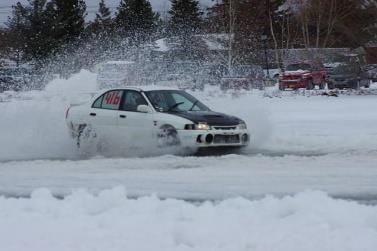
Table of Contents
1.     Adirondack Motor Enthusiast Club ................................................................................................................4
          Introduction ................................................................................................................................................4
          Membership ...............................................................................................................................................4
2.     Driver Eligibility & Requirements ...................................................................................................................5
          Minimum Age .............................................................................................................................................5
          Driver Equipment .......................................................................................................................................5
3.     Car Classes ......................................................................................................................................................6
          Street Legal Class ........................................................................................................................................6
          Street Legal Modified .................................................................................................................................8
          Stock Sportsman Class ............................................................................................................................. 10
          Modified Class ......................................................................................................................................... 13
          Class B – Super Modified Closed (SMC) ................................................................................................... 16
          Class A – Super Modified Open (SMO) .................................................................................................... 19
          All-Wheel-Drive (AWD) Class ................................................................................................................... 23
          Open Class ............................................................................................................................................... 23
4.     Car Numbers ................................................................................................................................................ 23
5.     Race Day Procedures ................................................................................................................................... 24
          Registration & Race Fees ......................................................................................................................... 24
          Driver Entry.............................................................................................................................................. 24
          Tech Inspection........................................................................................................................................ 24
          Pit Equipment .......................................................................................................................................... 25
          Race Officials ........................................................................................................................................... 25
          Race Day Schedule................................................................................................................................... 25
          Driver’s Meeting ...................................................................................................................................... 26
          Race Gridding .......................................................................................................................................... 26
          Practice .................................................................................................................................................... 27
          Track Time ............................................................................................................................................... 27
          Race Starts ............................................................................................................................................... 27
          Protests .................................................................................................................................................... 27
          Violation of the Rules .............................................................................................................................. 28
          Event Conduct ......................................................................................................................................... 28

     Page 2 of 34                                                                                         2019 AMEC Ice Racing Rules Revision 0
                                                                                                                    Issued November 12, 2018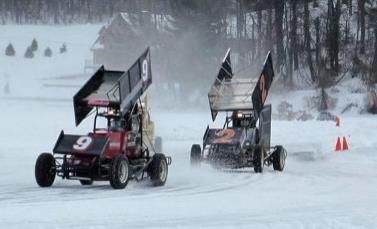
Work Assignments ................................................................................................................................... 28
          Flags ......................................................................................................................................................... 29
6.     Points ........................................................................................................................................................... 30
          Race Day Points ....................................................................................................................................... 30
          Class Championship Points ...................................................................................................................... 31
          Finale Championship Points .................................................................................................................... 31
7.     The Dos and Don’ts for Racers .................................................................................................................... 33
8.     AMEC Contacts ............................................................................................................................................ 34

     Page 3 of 34                                                                                           2019 AMEC Ice Racing Rules Revision 0
                                                                                                                      Issued November 12, 2018
1.     Adirondack Motor Enthusiast Club
                 Introduction
               1.1.1. The Adirondack Motor Enthusiast Club, Inc., (AMEC) is a not-for-profit club
                      established in 1954 to provide motor enthusiasts and their families with a
                      variety of affordable motor sports and related activities for fun and
                      courteous competition. While we strive to promote safe and “gentlemanly”
                      competition, we expect that all members, participants and spectators assume
                      full responsibility for their own conduct, personal safety and damage to their
                      own property during any event. We therefore also require that any driver,
                      worker, or other participant read and sign a Release and Waiver of Liability
                      and Indemnity prior to participating in an event.
               1.1.2. AMEC strives to provide a reasonably safe environment for all of its
                      members, their families, and any spectators attending its events by
                      instituting rules and guidelines that apply to its drivers, workers, and
                      spectators. This, however, does not signify nor imply any liability on the
                      club’s part if injury or damage should occur. AMEC and its individual
                      members assume no responsibility for bodily injury, death, or property
                      damage due to the negligence or error of any club member, competitor,
                      promoter, official, worker, spectator, sponsor, etc. Nor will AMEC assume
                      responsibility while an individual is within an area of competition or other
                      activity, and/or while competing, officiating, observing, working for, or for
                      any purpose participating in or associated with, any given event.
                 Membership
               1.2.1. All drivers and workers must be a current member of AMEC. Annual
                      membership dues are $40.00 for individual memberships and $50.00 for
                      family memberships (to include only one driver) per calendar year (January
                      1st through December 31st). Membership dues are non-refundable unless
                      otherwise specified by the AMEC officers.
               1.2.2. Membership renewals and dues are due no later than the first Saturday
                      following New Years Day of each calendar year (as corresponds with the
                      AMEC Annual Meeting). Any dues received after the date of the Annual
                      Banquet will be subject to a $20.00 late fee.
               1.2.3. Member-for-a-Day membership – non AMEC members can race with the
                      Club on a specific race day by completion of a Member-for-a-Day registration.
                      This special registration makes the racer a Club member for the race day and
                      subject to the AMEC Rules and Bylaws. Registration for Member-for-a-Day is
                      an additional $20.00 to the normal registration fees. Members-for-a-Day will
                      be scored in season championship points. Member-for-a-Day drivers will be
                      assigned a car number from a list of numbers available and must come to the
                      event prepared to apply this temporary number on their car. Subsequent
                      participation at AMEC events does not entitle the Member-for-a-Day to reuse
                      the temporary number from a previous event.

     Page 4 of 34                                               2019 AMEC Ice Racing Rules Revision 0
                                                                          Issued November 12, 2018
2.      Driver Eligibility & Requirements
            Minimum Age
          2.1.1. Drivers must be at least 18 years of age and possess a valid driver’s license.
          2.1.2. Drivers 16 or 17 years-old with a valid driver’s license may enter a Modified
                 or Stock Sportsman class vehicle in an Open class race only provided a parent
                 or legal guardian is in attendance at registration and for the duration of the
                 race day. The parent or guardian and must sign the release located on the
                 registration form.
          2.1.3. Talented, experienced drivers 14 to 16 years of age without a driver’s license
                 may enter a Modified or Stock Sportsman class car in Open Class only. To do
                 so, the following conditions must be met:
               2.1.3.1.   A copy of the driver’s birth certificate must be provided and will be kept on
                          file with the registrar.
               2.1.3.2.   The driver must be experienced and have at least one letter of
                          recommendation from an official racing institution or racetrack stating the
                          level of experience attained and overall driving skills in motor sports such as
                          go-kart, stockcar, slingshot, or other form of racing.
               2.1.3.3.   Driver must have written consent from either both parents or legal
                          guardian(s); if one parent or guardian is deceased or otherwise unable to
                          provide consent due to location or disability, then one parent’s consent will
                          suffice.
               2.1.3.4.   A parent(s) or guardian(s) must sign the liability waiver at registration each
                          race day.
               2.1.3.5.   At least two AMEC officers must provide written approval for the driver to
                          participate.
               2.1.3.6.   All track officials will provide strict supervision of the driver at each race
                          attended. Until the driver reaches 16 and/or obtains a driver’s license, s/he
                          will be on probation. The driver may be directed to leave the track at any
                          time by way of a black flag or be prevented from starting in a heat race or
                          entering on a race day if they have been deemed a hazard to themselves or
                          other drivers. A suspension of participation may also be imposed as
                          appropriate until the driver is able to participate at a level sufficient for safe
                          competition.
               2.1.3.7.   A SNELL 2005 or newer full-face helmet, neck brace, safety-approved racing
                          uniform and safety-approved set of racing gloves must be worn at all times
                          while driving in the race car or in the pits.
               2.1.3.8.   All other general and class rules apply.
            Driver Equipment
          2.2.1. SNELL 2005 or newer helmets are required and must be worn at all times
                 when on the race course. The helmet must be presented at tech inspection.
                 An AMEC sticker will be issued for application on approved helmets. Sticker
                 must be affixed to the left side of the helmet so that it is clearly visible from
                 the outside of the car.

Page 5 of 34                                                      2019 AMEC Ice Racing Rules Revision 0
                                                                            Issued November 12, 2018
3. Car Classes
AMEC has established the following Classes of cars for ice racing;
Street Legal – Two wheel and four wheel drive with and without studs – Section 3.1
Street Legal Modified – Section 3.2
Stock Sportsman – Section 3.3
Modified Class – Section 3.4
Super Modified Closed – Section 3.5
Super Modified Open – Section 3.6
All Wheel Drive – Section 3.7
Open – Section 3.8
Street Legal Class
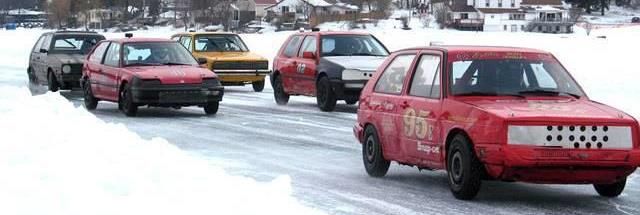
The Street Legal Class is a race venue that allows for cars to be driven to an event,
prepped as necessary, raced, and then driven home. This race format allows for a
wide range of cars to participate. For these reasons it is important to minimize the
potential for car damage from car-to-car contact. It is important for Street Legal
Class racers to understand the “No Contact” rule and the enforcement and
repercussions for failing to adhere to it.
3.1.1. General Requirements
3.1.1.1. Street Legal classes include any original production cars able to pass NYS
safety inspection for street use.
3.1.1.2. All cars must start each season with a neat and clean appearance. The Tech
Inspector and Race Officials can disqualify a car that they deem is not
compliant or acceptable for competition.
3.1.1.3. All cars must display the AMEC website address (www.icerace.com) in the
form of an approved bumper sticker.
3.1.1.4. All cars must be self-starting.
3.1.1.5. Any pump fuel or race fuel is allowed. No “exotic” fuels will be permitted.
Only additives whose purpose is recognized to be as a gas line antifreeze,
octane booster, or engine lubricant (2-cycle) will be permitted.
3.1.2. Car Requirements
3.1.2.1. Entry is restricted to four-wheel vehicles, foreign or domestic, conforming to
the Class specifications. 2 wheel and 4 wheel drive cars are eligible. No
pickup trucks, sport utility vehicles, mini-vans, or similar high center of
gravity vehicles are acceptable to race.
3.1.2.2. Batteries must be securely mounted. Batteries located in the passenger
compartment must be an approved battery containment box with a cover to
prevent spillage in case of accident.
3.1.2.3. Locked differentials are not allowed.
3.1.2.4. The exhaust system may be replaced with an open system and muffler that
runs in the stock location and exits in the stock location. Maximum dB at 25
feet is 95 dB under racing conditions. Fumes must not be allowed to reach
the driver. System approval is to be up to the discretion of the Chief Tech
Inspector.
3.1.2.5. It is permitted to remove the interior.
Page 6 of 34 2019 AMEC Ice Racing Rules Revision 0
Issued November 12, 20183.1.2.6. Neither AMEC nor tow vehicle operators will accept responsibility for any
damage to racecars with or without tow hooks as a result of towing.
3.1.3. Safety Equipment
3.1.3.1. Stock type 3-point belts may be used. All belts must be securely mounted
and be used whenever the car is on the racecourse. Competition harness
MUST be 2007 SFI or newer tagged harness. All seat belts are subject to tech
inspection at every event. Worn or faded seat belts may be rejected at the
discretion of the inspector.
3.1.3.2. A rear view mirror is required in all cars. Mirrors may be mounted inside or
outside the car.
3.1.4. Tires and Wheels
3.1.4.1. All Class cars may run any size wheel and any tire. Tires and wheels may be
of any width, diameter and offset, as long as the shoulder of tire tread
remains within the bodywork.
3.1.4.2. Street Legal Class cars requires a dedicated winter tire. NO All Season radials
may be used. These dedicated winter tires may be identified by a
mountain/snowflake symbol such as Blizzak, Nokian, etc. without studs on
all four wheels with at least 50% tread depth remaining.
3.1.4.3. Unstudded Classes SL and SL4 tires shall be run as delivered from the
manufacturer. No modifications to the tires are allowed, including any kind
of tractionizing.
3.1.4.4. Studded Classes SLS & SLS4 require Nokian Hakkapeliitta 7, 8 or 9 as the
specified tire. The tire must be used as manufactured and may not be altered
in any way.
3.1.5. No Contact Rule
3.1.5.1. The rule is all drivers will maintain adequate racing room between cars
under racing conditions to avoid contact.
3.1.5.2. In the event of contact between cars, the drivers involved must exit the race
course the next time around and leave the race. This is an "honor system
rule" and applies whether the cars were black flagged or not! If you have
contact with another car, you and they must leave the race!
3.1.5.3. Any and all contact between Street Legal cars will be subject to penalty at
the discretion of the Class Coordinator and Chief Flagger. Contact can be
penalized at any time throughout the ice racing season or even into the next
season. Penalties can include: race disqualification, loss of points, ejection
from event, and outright ban from AMEC competition.
3.1.5.4. Repeated violations or clear disregard for the No Contact Rule will result in
suspension of the driver in remaining events for the season or even
subsequent seasons up to and including permanent expulsion.
Page 7 of 34 2019 AMEC Ice Racing Rules Revision 0
Issued November 12, 2018Street Legal Modified
Street Legal Modified (SLM) Class provides an intermediate option for racers
between Street Legal Class and Modified Classes. Like Street Legal Class cars, SLM
Class cars may be driven to the event and prepped as necessary for racing. SLM
Class permits use of specialty ice racing studs. The “No Contact” rule applies to SLM
Class.
3.2.1. General Requirements
3.2.1.1. SLM Class includes any original production cars able to pass NYS safety
inspection for street use.
3.2.1.2. All cars must start each season with a neat and clean appearance. The Tech
Inspector and Race Officials can disqualify a car that they deem is not
compliant or acceptable for competition.
3.2.1.3. All cars must display the AMEC website address (www.icerace.com) in the
form of an approved bumper sticker.
3.2.1.4. White or other light colors as the predominate color of the car are not
permitted. The visible front and rear of a car must be over 50% of a medium
or dark color so the car can be seen in a white out during the race.
3.2.1.5. All cars must be self-starting.
3.2.1.6. Any pump fuel or race fuel is allowed. No “exotic” fuels will be permitted.
Only additives whose purpose is recognized to be as a gas line antifreeze,
octane booster, or engine lubricant (2-cycle) will be permitted.
3.2.1.7. SLM will race with SS and Open class and pay the same entry fee.
3.2.2. Car Requirements
3.2.2.1. Entry is restricted to four-wheel vehicles, foreign or domestic, conforming to
the Class specifications. 2 and 4 wheel drive cars are eligible. No pickup
trucks, sport utility vehicles, mini-vans, or similar high center of gravity
vehicles are acceptable to race.
3.2.2.2. Engine updates within same vehicle manufacture is allowed as long as
remaining stock appearing.
3.2.2.3. Locked differentials are not allowed.
3.2.2.4. SLM Class cars must be equipped with stock bumpers. Stock bumpers may
be trimmed as long as the remaining section has no sharp or dangerous
edges.
3.2.2.5. All fuel tanks must be in a safe position and firmly mounted. Fuel tanks and
filler necks must be completely enclosed, and behind a firmly mounted metal
partition away from the driver.
3.2.2.6. Batteries must be securely mounted. Batteries located in the passenger
compartment must be an approved battery containment box with a cover to
prevent spillage in case of accident.
3.2.2.7. Mufflers are required on all cars. Maximum dB at 25 feet is 95 dB under
racing conditions.
3.2.2.8. Whatever the location of the exit location of the exhaust system, fumes must
not be allowed to reach the driver. System approval is to be up to the
discretion of the chief tech inspector.
3.2.2.9. The exhaust system may be replaced with an open system and muffler that
runs in the stock location and exits in the stock location.
Page 8 of 34 2019 AMEC Ice Racing Rules Revision 0
Issued November 12, 20183.2.2.10. Neither AMEC nor tow vehicle operators will accept responsibility for any
damage to racecars with or without tow hooks as a result of towing.
3.2.3. Safety Equipment
3.2.3.1. SLM cars must have a 55w (or greater) YELLOW QUARTZ HALOGEN LIGHT
(fog light) mounted outside at the lower rear window level or higher and
clearly visible to any following car. If you do not have a working quartz
halogen light you will not race.
3.2.3.2. All cars must have a bright red LED properly operating stoplight mounted
outside the car. Brake light must be mounted at a minimum height of the
base of the rear window (or roof) and mounted outside the car. This light
must be operational at all times. Other than original equipment, rear lights
may be substituted on all class cars but must be clearly visible to any
following car. Original equipment lights may be removed, but the holes must
be covered with solid, durable material.
3.2.3.3. SLM cars must have a roll bar with two rear facing braces.
3.2.3.4. At least one side bar on the driver’s side is mandatory.
3.2.3.5. Disconnecting the air bag is optional.
3.2.3.6. Fire extinguishers are mandatory in SLM class cars and must be in good
operating condition, fully charged, and securely mounted within reach of the
driver. It must be at least a 2½lb dry-type, Halogenated, or Clean Agent
extinguisher mounted in a fire extinguisher holder with a steel strap and
latch.
3.2.3.7. All Class cars must have a minimum of a 4-point competition harness. All
belts must be securely mounted and be used whenever the car is on the
racecourse. All seatbelts MUST be 2007 SFI or newer tagged harness. All
seat belts are subject to tech inspection at every event. Worn or faded seat
belts may be rejected at the discretion of the inspector.
3.2.3.8. A rear view mirror is required in all cars. Mirrors may be mounted inside or
outside the car.
3.2.4. Tires and Wheels Options
3.2.4.1. All class cars may run any size wheel and any tire. Tires and wheels may be
of any width, diameter and offset, as long as the shoulder of tire tread
remains within the bodywork.
3.2.4.2. All tires that were allowed in the 2017 ice race season are legal along with
the tires listed below. The tires below are to be used “as is” and sold by the
manufacturer.
Michelin Tires with max stud size of "Swedish" style
Michelin NA00
Michelin GE00
Black Rocket with max stud length 20mm
BR110
BR90
BR50
BR41
Pirelli with max stud length 7mm
SA15
WR5
Page 9 of 34 2019 AMEC Ice Racing Rules Revision 0
Issued November 12, 2018Sottozero Ice
Sottozero
S16
J
WR5
WX 2
Menard
Pryme
If the tire you want to use is not specifically listed in the rules you must
contact club officials for approval before racing with the tires.
If the tires listed above lose a stud(s) while racing it is acceptable to replace
the missing stud(s) with a #10 AMA Kold Kutter screw or #12 Canadian Kold
Kutter screw, inserted from the outside with nut on the inside.
It is also allowable to build your own screw tire using any tire carcass with
up to 40 #12 Canadian Kold Kutter ice race screws per foot of linear tread
inserted from the outside with nuts on the inside. You can also use up to 60
of the #10 AMA Kold Kutter screws per linear foot inserted from the outside
of the tire with nuts on the inside.
3.2.5. No Contact Rule
3.2.5.1. The rule is all drivers will maintain adequate racing room between cars
under racing conditions to avoid contact.
3.2.5.2. In the event of contact between cars, the drivers involved must exit the race
course the next time around and leave the race. This is an "honor system
rule" and applies whether the cars were black flagged or not! If you have
contact with another car, you and they must leave the race!
3.2.5.3. Any and all contact between Street Legal cars will be subject to penalty at
the discretion of the Class Coordinator and chief Flagger. Contact can be
penalized at any time throughout the ice racing season or even into the next
season. Penalties can include: race disqualification, loss of points, ejection
from event, and outright ban from AMEC competition.
3.2.5.4. Repeated violations or clear disregard for the No Contact rule will result in
suspension of the driver in remaining events for the season or even
subsequent seasons up to and including permanent expulsion.
Stock Sportsman Class
The Stock Sportsman (SS) Class provides a venue for racing fully stock 4 cylinder
cars used in other racing activities such as entry level dirt tracks events and
enduros. The SS Class permits use of specialty ice racing studs. The “No Contact”
rule applies to SS Class.
3.3.1. General Requirements
3.3.1.1. All cars must start each season with a neat and clean appearance. The Tech
Inspector and Race Officials can disqualify a car that they deem is not
compliant or acceptable for competition.
3.3.1.2. All cars must display the AMEC website address (www.icerace.com) in the
form of an approved bumper sticker
Page 10 of 34 2019 AMEC Ice Racing Rules Revision 0
Issued November 12, 20183.3.1.3. White or other light colors as the predominate color of the car are not
permitted. The visible front and rear of a car must be over 50% of a medium
or dark color so the car can be seen in a white out during the race.
3.3.1.4. All cars must be self-starting.
3.3.1.5. No race fuels allowed, pump gas only, maximum 93 octane.
3.3.1.6. SS will race with SLM and Open class and pay the same entry fee.
3.3.2. Car Requirements
3.3.2.1. Entry is restricted to four-wheel vehicles, foreign or domestic, conforming to
the Class specifications. Only 2 wheel drive cars are eligible. No pickup
trucks, sport utility vehicles, mini-vans, or similar high center of gravity
vehicles are acceptable to race.
3.3.2.2. All cars retaining the original body shape. Cars must be based on eligible
stock class cars with stock engines and stock suspension.
3.3.2.3. All full bodied SS Class cars must either be equipped with stock bumpers or
no bumpers at all. Stock bumpers may be trimmed as long as the remaining
section has no sharp or dangerous edges. If bumpers are removed, their
supporting brackets must be removed also so as to leave no sharp edges.
Bumpers that have cut ends or stock blunt ends must have a smooth end cap
of durable material (i.e., metal or a cut section of a tire)
3.3.2.4. All fuel tanks must be in a safe position and firmly mounted. Fuel tanks and
filler necks must be completely enclosed, and behind a firmly mounted metal
partition away from the driver.
3.3.2.5. Batteries must be securely mounted. Batteries located in the passenger
compartment must be an approved battery containment box with a cover to
prevent spillage in case of accident.
3.3.2.6. All cars must be only 4 cylinders with a maximum displacement of 2600 cc
(2.6 liters) .
3.3.2.7. Adding of ballast to SS Class car is not permitted.
3.3.2.8. No rotary engines.
3.3.2.9. No turbo or superchargers allowed.
3.3.2.10. Suspension geometry must be unmodified. Stock or OEM type replacement
shock absorbers allowed.
3.3.2.11. Sway bars are unrestricted.
3.3.2.12. Strut area supports front and rear are unrestricted.
3.3.2.13. Methods for adjusting camber/caster are free.
3.3.2.14. No internal or external engine modifications permitted.
3.3.2.15. Stock air box or cold air intake is allowed.
3.3.2.16. Exhaust must have the stock exhaust manifold and front pipe MUST remain,
no headers allowed.
3.3.2.17. Mufflers are required on all cars. Maximum dB at 25 feet is 95 dB under
racing conditions.
3.3.2.18. Whatever the location of the exit location of the exhaust system, fumes must
not be allowed to reach the driver. System approval is to be up to the
discretion of the chief Tech Inspector.
3.3.2.19. No locked (welded or spool) differentials allowed. Factory installed stock
limited slips allowed.
3.3.2.20. SS class cars may not have external nerf bars.
Page 11 of 34 2019 AMEC Ice Racing Rules Revision 0
Issued November 12, 20183.3.2.21. Stock glass windshield can stay, or be replaced with Lexan, or you may
remove the windshield but you MUST have a safety screen which in
construction should either have an outer "ring" made from no less than 3/8
inch round stock including a center rod OR the screen must be riveted to the
A pillars, roof and cowl area. The screen must have openings no larger than
1"x1". No chicken wire.
3.3.2.22. If running with no windshield, the rear window may be removed. Side glass
may be removed. Lexan or Plexiglas may be substituted for glass on rear
window but only Lexan can be used to replace the front windshield.
3.3.2.23. Neither AMEC nor tow vehicle operators will accept responsibility for any
damage to racecars with or without tow hooks as a result of towing.
3.3.3. Safety Requirements.
3.3.3.1. SS cars must have a 55w (or greater) YELLOW QUARTZ HALOGEN LIGHT
(fog light) mounted outside at the lower rear window level or higher and
clearly visible to any following car. If you do not have a working quartz
halogen light you will not race.
3.3.3.2. All cars must have a bright red LED properly operating stoplight mounted
outside the car. Brake light must be mounted at a minimum height of the
base of the rear window (or roof) and mounted outside the car. This light
must be operational at all times. Other than original equipment, rear lights
may be substituted on all class cars but must be clearly visible to any
following car. Headlight and any other glass lenses should be taped. Original
equipment lights may be removed, but the holes must be covered with solid,
durable material.
3.3.3.3. The drivers’ seat may be replaced with a racing seat. Any seat must be
securely attached to either a part of the roll cage or on non-rusted solid
factory mounting locations.
3.3.3.4. SS class cars must have a minimum of a 4-point competition harness. All
belts must be securely mounted and be used whenever the car is on the
racecourse. All seatbelts MUST be 2007 SFI or newer tagged harness. All
seat belts are subject to tech inspection at every event. Worn or faded seat
belts may be rejected at the discretion of the inspector.
3.3.3.5. All air bags should be removed or MUST be completely deactivated if they
remain in the car.
3.3.3.6. Fire extinguishers are mandatory in SS class cars and must be in good
operating condition, fully charged, and securely mounted within reach of the
driver. It must be at least a 2½lb dry-type, Halogenated, or Clean Agent
extinguisher mounted in a fire extinguisher holder with a steel strap and
latch.
3.3.3.7. A rear view mirror is required in all cars. Mirrors may be mounted inside or
outside the car.
3.3.3.8. Roll Cage
3.3.3.8.1. Roll cages must be made of regular steel tubing (.095 hot roll) and
not less than 1½" O.D. tubing.
3.3.3.8.2. Corner welds must have steel gusset plates of no less than ⅛" thickness.
The cage must be full width and not lower than the driver’s helmet.
3.3.3.8.3. The minimum required roll cage is a 6-point cage that includes a front and
a rear hoop connected top and side with a diagonal on top from right front to
Page 12 of 34 2019 AMEC Ice Racing Rules Revision 0
Issued November 12, 2018left rear (unless head clearance necessitates left front to right rear). The rear roll
hoop will be braced back to structure in the rear of the chassis with two angled
rear bars.
3.3.3.8.4. SS Class cars are required to install a minimum of one door bar.
3.3.3.8.5. All roll cages must be padded in the head, arm and leg area of cage.
3.3.3.8.6. Prefab and bolt in kits are at the discretion of the head Tech Inspector.
3.3.4. Tires and Wheels
3.3.4.1. All class cars may run any size wheel and any tire. Tires and wheels may be
of any width, diameter and offset, as long as the shoulder of tire tread
remains within the bodywork.
3.3.4.2. Menard & Pryme tires are allowed. It is also OK to build your own screw tire
using any tire carcass with up to 40 #12 Canadian Kold Kutter ice race
screws per foot of linear tread inserted from the outside with nuts on the
inside. You can also use up to 60 of the #10 AMA Kold Kutter screws per
linear foot inserted from the outside of the tire with nuts on the inside.
3.3.5. No Contact Rule
3.3.5.1. The rule is all drivers will maintain adequate racing room between cars
under racing conditions to avoid contact.
3.3.5.2. In the event of contact between cars, the drivers involved must exit the race
course the next time around and leave the race. This is an "honor system
rule" and applies whether the cars were black flagged or not! If you have
contact with another car, you and they must leave the race!
3.3.5.3. Any and all contact between Street Legal cars will be subject to penalty at
the discretion of the Class Coordinator and Chief Flagger. Contact can be
penalized at any time throughout the ice racing season or even into the next
season. Penalties can include: race disqualification, loss of points, ejection
from event, and outright ban from AMEC competition.
Modified Class
Modified Class (MC) cars are modified production cars using ice racing studs in
specialty tires.
3.4.1. General Requirements
3.4.1.1. All cars must start each season with a neat and clean appearance. All
previous damage such as dents and rips must be smoothed out as much as
possible. Duct tape is not permissible. Paint should be applied as necessary
to achieve a satisfactory appearance.
3.4.1.2. All cars must display the AMEC website address (www.icerace.com) in the
form of an approved bumper sticker.
3.4.1.3. Car color - White or other light colors as the predominate color of the car are
not permitted. The visible front and rear of a car must be over 50% of a
medium or dark color so the car can be seen in a white out during the race.
3.4.1.4. All cars must be self-starting.
3.4.1.5. Any pump fuel or race fuel is allowed. No “exotic” fuels will be permitted.
Only additives whose purpose is recognized to be as a gas line antifreeze,
octane booster, or engine lubricant (2-cycle) will be permitted.
3.4.2. Car Requirements
3.4.2.1. Entry is restricted to four-wheel vehicles, foreign or domestic, conforming to
the Class specifications. Only 2 wheel drive cars are eligible. No pickup
Page 13 of 34 2019 AMEC Ice Racing Rules Revision 0
Issued November 12, 2018trucks, sport utility vehicles, mini-vans, or similar high center of gravity
vehicles are acceptable to race.
3.4.2.2. All cars retaining the original body shape. Cars must be based on eligible
stock class cars with the exception of modified engines and modified
suspension.
3.4.2.3. MC Class includes any two wheel drive car with stock un-altered full body
with engines up to 3600cc.
3.4.2.4. 2, 3, and 4 valve engines and rotary engines allowed. No forced air induction
allowed, i.e.: No turbo or superchargers or the like. (i.e. no leaf blowers).
Any forced air induction engine will be classed as Super Modified Closed,
SMC.
3.4.2.5. Engine upgrades permitted however engine must be same manufacturer as
car body.
3.4.2.6. Maximum race weight for MC Class cars is 3000 pounds.
3.4.2.7. Adding of ballast to a car in MC Class cars is not permitted.
3.4.2.8. MC Class cars must not have modifications to sheet metal other than
flattening of the inner lips of wheel wells and modifications covered in the
engine and exhaust section. Flaring of stock fenders is allowed specifically
for tire clearance only. Cars must retain a stock appearance.
3.4.2.9. All full bodied MC Class cars must either be equipped with stock bumpers or
no bumpers at all. Stock bumpers may be trimmed as long as the remaining
section has no sharp or dangerous edges. If bumpers are removed, their
supporting brackets must be removed also so as to leave no sharp edges.
Bumpers that have cut ends or stock blunt ends must have a smooth end cap
of durable material (i.e., metal or a cut section of a tire).
3.4.2.10. All fuel tanks must be in a safe position and firmly mounted. Fuel tanks and
filler necks must be completely enclosed, and behind a firmly mounted metal
partition away from the driver.
3.4.2.11. Batteries must be securely mounted. Batteries located in the passenger
compartment must be an approved battery containment box with a cover to
prevent spillage in case of accident.
3.4.2.12. Electric fuel pumps inside the passenger compartment must be completely
enclosed with a half-inch drain hole leading outside the car.
3.4.2.13. MC Class windshields and rear glass may not be removed. Side glass may be
removed. Lexan or Plexiglas may be substituted for glass on rear window
but only Lexan can be used to replace the front windshield.
3.4.2.14. Locked or limited slip differentials are permitted.
3.4.2.15. Suspension up grades permitted. Mount locations may be moved. NO
reconstruction of suspension mounting via tube framing or reframing of any
kind. If tube frame modifications exist, car will be place in SMC.
3.4.2.16. MC Class cars may be updated within make and model line. For example: any
engine ever used in any VW Rabbit in the US may be installed in any Rabbit.
In addition, an engine may be substituted from the same manufacturer even
if it comes from a different model as long as the number of cylinders and
valves per cylinder remain the same. The corresponding fuel injection
system to the engine being installed may also be used: example, an engine
used in a VW Jetta may be used in a VW Rabbit as long as the number of
cylinders and valves/cylinder remain the same. The model line extends only
Page 14 of 34 2019 AMEC Ice Racing Rules Revision 0
Issued November 12, 2018until the model is redesigned. This often but not in all cases evidenced by a
significant body change.
3.4.2.17. Mufflers are required on all cars. Maximum dB at 25 feet is 95 dB under
racing conditions.
3.4.2.18. Whatever the location of the exit location of the exhaust system, fumes must
not be allowed to reach the driver. System approval is to be up to the
discretion of the chief Tech Inspector.
3.4.2.19. MC class cars may not have external nerf bars.
3.4.2.20. Neither AMEC nor tow vehicle operators will accept responsibility for any
damage to racecars with or without tow hooks as a result of towing.
3.4.3. Safety Requirements
3.4.3.1. MC Class cars must have a 55w (or greater) YELLOW QUARTZ HALOGEN
LIGHT (fog light) mounted outside at the lower rear window level or higher
and clearly visible to any following car. If you do not have a working quartz
halogen light you will not race.
3.4.3.2. All cars must have a bright red LED properly operating stoplight mounted
outside the car. Brake light must be mounted at a minimum height of the
base of the rear window (or roof) and mounted outside the car. This light
must be operational at all times. Other than original equipment, rear lights
may be substituted on all class cars but must be clearly visible to any
following car. Headlight and any other glass lenses should be taped. Original
equipment lights may be removed, but the holes must be covered with solid,
durable material.
3.4.3.3. MC class cars must have a minimum of a 4-point competition harness. All
belts must be securely mounted and be used whenever the car is on the
racecourse. All seatbelts MUST be 2007 SFI or newer tagged harness. All
seat belts are subject to tech inspection at every event. Worn or faded seat
belts may be rejected at the discretion of the Tech Inspector.
3.4.3.4. Fire extinguishers are mandatory in MC Class cars and must be in good
operating condition, fully charged, and securely mounted within reach of the
driver. It must be at least a 2½lb dry-type, Halogenated, or Clean Agent
extinguisher mounted in a fire extinguisher holder with a steel strap and
latch.
3.4.3.5. A rear view mirror is required in all cars. Mirrors may be mounted inside or
outside the car.
3.4.3.6. Roll cages
3.4.3.6.1. Roll cages must be made of regular steel tubing (.095 hot roll) and not
less than 1½" O.D. tubing.
3.4.3.6.2. Corner welds must have steel gusset plates of no less than ⅛" thickness.
The cage must be full width and not lower than the driver’s helmet.
3.4.3.6.3. The minimum required roll cage is a 6-point cage that includes a front and
a rear hoop connected top and side with a diagonal on top from right front to
left rear (unless head clearance necessitates left front to right rear). The rear roll
hoop will be braced back to structure in the rear of the chassis with two angled
rear bars. Minimum of two side bars driver side and one bar passenger side.
3.4.3.6.4. All roll cages must be padded in the head, arm and leg area of cage.
3.4.3.6.5. Prefab and bolt in kits are at the discretion of the head Tech Inspector.
3.4.4. Tires and Wheels
Page 15 of 34 2019 AMEC Ice Racing Rules Revision 0
Issued November 12, 20183.4.4.1. All class cars may run any size wheel and any tire. Tires and wheels may be
of any width, diameter and offset, as long as the shoulder of tire tread
remains within the bodywork.
3.4.4.2. All tires that were allowed in the 2017 ice race season are legal along with
the tires listed below. The tires below are to be used “as is” and sold by the
manufacturer.
Michelin Tires with max stud size of "Swedish" style
Michelin NA00
Michelin GE00
Black Rocket with max stud length 20mm
BR110
BR90
BR50
BR41
Pirelli with max stud length 7mm
SA15
WR5
Sottozero Ice
Sottozero
S16
J
WR5
WX 2
Menard
Pryme
If the tire you want to use is not specifically listed in the rules you must
contact club officials for approval before racing with the tires.
If the tires listed above lose a stud(s) while racing it is acceptable to replace
the missing stud(s) with a #10 AMA Kold Kutter screw or #12 Canadian Kold
Kutter screw, inserted from the outside with nut on the inside.
It is also allowable to build your own screw tire using any tire carcass with
up to 40 #12 Canadian Kold Kutter ice race screws per foot of linear tread
inserted from the outside with nuts on the inside. You can also use up to 60
of the #10 AMA Kold Kutter screws per linear foot inserted from the outside
of the tire with nuts on the inside.
Class B – Super Modified Closed (SMC)
Super Modified Closed Class cars are heavily modified production cars using ice
racing studs in specialty tires.
3.5.1. General Requirements
3.5.1.1. All cars must start each season with a neat and clean appearance. All
previous damage such as dents and rips must be smoothed out as much as
possible. Duct tape is not permissible. Paint should be applied as necessary
to achieve a satisfactory appearance.
Page 16 of 34 2019 AMEC Ice Racing Rules Revision 0
Issued November 12, 20183.5.1.2. Car color - White or other light colors as the predominate color of the car are
not permitted. The visible front and rear of a car must be over 50% of a
medium or dark color so the car can be seen in a white out during the race.
3.5.1.3. All cars must be self-starting.
3.5.1.4. All cars must display the AMEC website address (www.icerace.com) in the
form of an approved bumper sticker.
3.5.1.5. Any pump fuel or race fuel is allowed. No “exotic” fuels will be permitted.
Only additives whose purpose is recognized to be as a gas line antifreeze,
octane booster, or engine lubricant (2-cycle) will be permitted.
3.5.2. Car Requirements
3.5.2.1. Entry is restricted to four-wheel vehicles, foreign or domestic, conforming to
the Class specifications. Only 2 wheel drive cars are eligible. No pickup
trucks, sport utility vehicles, mini-vans, or similar high center of gravity
vehicles are acceptable to race.
3.5.2.2. SMC Includes all heavily modified cars retaining the original body shape.
3.5.2.3. Cars must be based on eligible stock class cars and retain minimum 1/3 of
the original floor pan and both rocker panels. Firewalls may be modified as
needed.
3.5.2.4. SMC Class cars must not have modifications to sheet metal other than
flattening of the inner lips of wheel wells and modifications covered in the
engine and exhaust section. Flaring of stock fenders is allowed specifically
for tire clearance only. Cars must retain a stock appearance.
3.5.2.5. All full bodied SMC Class cars must either be equipped with stock bumpers
or no bumpers at all. Stock bumpers may be trimmed as long as the
remaining section has no sharp or dangerous edges. If bumpers are
removed, their supporting brackets must be removed also so as to leave no
sharp edges. Bumpers that have cut ends or stock blunt ends must have a
smooth end cap of durable material (i.e., metal or a cut section of a tire).
3.5.2.6. No restrictions on suspension. Tube-chassis cars with stock bodies added
are not permitted.
3.5.2.7. Naturally aspirated, supercharged, and turbo-charged engines up to 360ci
may be used.
3.5.2.8. Maximum race weight for SMC Class cars is 3000 pounds.
3.5.2.9. Locked differentials, engine conversions, turbo or super charging are
permitted.
3.5.2.10. Adding of ballast to a car in SMC will not be permitted.
3.5.2.11. Removal of interior upholstery, trim and seats will be permitted. The
interior of the driver’s door on all cars must have no sharp or dangerous
edges.
3.5.2.12. Batteries must be securely mounted. Batteries located in the passenger
compartment must be an approved battery containment box with a cover to
prevent spillage in case of accident.
3.5.2.13. Electric fuel pumps inside the passenger compartment must be completely
enclosed with a half-inch drain hole leading outside the car.
3.5.2.14. All fuel tanks must be in a safe position and firmly mounted. Fuel tanks and
filler necks must be completely enclosed, and behind a firmly mounted metal
partition away from the driver.
Page 17 of 34 2019 AMEC Ice Racing Rules Revision 0
Issued November 12, 20183.5.2.15. SMC Class cars windshields and rear glass may not be removed. Side glass
may be removed. Lexan or Plexiglas may be substituted for glass on rear
window but only Lexan can be used to replace the front windshield.
3.5.2.16. SMC Class cars may NOT have EXTERNAL nerf bars.
3.5.2.17. SMC Class cars will not be allowed the use of an overhead wing. SMC cars
will run in the finale under their own scoring and class championship.
3.5.2.18. Mufflers are required on all cars. Maximum dB at 25 feet is 95 dB under
racing conditions.
3.5.2.19. Whatever the location of the exit location of the exhaust system, fumes must
not be allowed to reach the driver. System approval is to be up to the
discretion of the chief Tech Inspector.
3.5.2.20. Neither AMEC nor tow vehicle operators will accept responsibility for any
damage to racecars with or without tow hooks as a result of towing.
3.5.3. Safety Requirements
3.5.3.1. SMC cars must have a 55w (or greater) YELLOW QUARTZ HALOGEN LIGHT
(fog light) mounted outside at the lower rear window level or higher and
clearly visible to any following car. If you do not have a working quartz
halogen light you will not race.
3.5.3.2. All cars must have a bright red LED properly operating stoplight mounted
outside the car. Brake light must be mounted at a minimum height of the
base of the rear window (or roof) and mounted outside the car. This light
must be operational at all times. Other than original equipment, rear lights
may be substituted on all class cars but must be clearly visible to any
following car. Headlight and any other glass lenses should be taped. Original
equipment lights may be removed, but the holes must be covered with solid,
durable material.
3.5.3.3. Fire extinguishers are mandatory in SMC Class cars and must be in good
operating condition, fully charged, and securely mounted within reach of the
driver. It must be at least a 2½lb dry-type, Halogenated, or Clean Agent
extinguisher mounted in a fire extinguisher holder with a steel strap and
latch.
3.5.3.4. A Lexan window on a SMC Class car may substitute for a window net.
3.5.3.5. SMC Class cars must have at least a full 5-point competition harness. All belts
must be securely mounted and be used whenever the car is on the
racecourse. All seatbelts MUST be 2007 SFI or newer tagged harness. All
seat belts are subject to tech inspection at every event. Worn or faded seat
belts may be rejected at the discretion of the Tech Inspector.
3.5.3.6. A rear view mirror is required in all cars. Mirrors may be mounted inside or
outside the car.
3.5.3.7. Roll Cage
3.5.3.7.1. Roll cages must be made of regular steel tubing (.095 hot roll) and not
less than 1½" O.D. tubing.
3.5.3.7.2. Corner welds must have steel gusset plates of no less than ⅛" thickness.
The cage must be full width and not lower than the driver’s helmet.
3.5.3.7.3. The minimum required roll cage is a 6-point cage that includes a front and
a rear hoop connected top and side with a diagonal on top from right front to
left rear (unless head clearance necessitates left front to right rear). The rear roll
Page 18 of 34 2019 AMEC Ice Racing Rules Revision 0
Issued November 12, 2018hoop will be braced back to structure in the rear of the chassis with two angled
rear bars. Minimum of two side bars driver side and one bar passenger side.
3.5.3.7.4. All roll cages must be padded in the head, arm and leg area of cage.
3.5.3.7.5. Prefab and bolt in kits are at the discretion of the head Tech Inspector.
3.5.4. Tires and Wheels
3.5.4.1. All class cars may run any size wheel and any tire. Tires and wheels may be
of any width, diameter and offset.
3.5.4.2. The shoulder of the tire on SMC Class cars may extend up to three inches
past the body work or side protection bars.
3.5.4.3. All tires that were allowed in the 2017 ice race season are legal along with
the tires listed below. The tires below are to be used “as is” and sold by the
manufacturer.
Michelin Tires with max stud size of "Swedish" style
Michelin NA00
Michelin GE00
Black Rocket with max stud length 20mm
BR110
BR90
BR50
BR41
Pirelli with max stud length 7mm
SA15
WR5
Sottozero Ice
Sottozero
S16
J
WR5
WX 2
Menard
Pryme
If the tire you want to use is not specifically listed in the rules you must
contact club officials for approval before racing with the tires.
If the tires listed above lose a stud(s) while racing it is acceptable to replace
the missing stud(s) with a #10 AMA Kold Kutter screw or #12 Canadian Kold
Kutter screw, inserted from the outside with nut on the inside.
It is also allowable to build your own screw tire using any tire carcass with
up to 40 #12 Canadian Kold Kutter ice race screws per foot of linear tread
inserted from the outside with nuts on the inside. You can also use up to 60
of the #10 AMA Kold Kutter screws per linear foot inserted from the outside
of the tire with nuts on the inside.
Class A – Super Modified Open (SMO)
Page 19 of 34 2019 AMEC Ice Racing Rules Revision 0
Issued November 12, 2018Super Modified Open Class cars are purpose built race cars using ice racing studs in
specialty tires.
3.6.1. General Requirements
3.6.1.1. All cars must start each season with a neat and clean appearance. All
previous damage such as dents and rips must be smoothed out as much as
possible. Duct tape is not permissible. Paint should be applied as necessary
to achieve a satisfactory appearance.
3.6.1.2. All cars must display the AMEC website address (www.icerace.com) in the
form of an approved bumper sticker.
3.6.1.3. White or other light colors as the predominate color of the car are not
permitted. The visible front and rear of a car must be over 50% of a medium
or dark color so the car can be seen in a white out during the race.
3.6.1.4. All cars must be self-starting.
3.6.1.5. Any pump fuel or race fuel is allowed. No “exotic” fuels will be permitted.
Only additives whose purpose is recognized to be as a gas line antifreeze,
octane booster, or engine lubricant (2-cycle) will be permitted.
3.6.2. Car Requirements
3.6.2.1. SMO Class cars must have a maximum weight of 3,000 lbs. and a minimum
weight of 1,000 lbs. Scratch-built cars must produce weight slip if requested
by a Tech Inspector.
3.6.2.2. SMO Class cars are scratch-built or tube frame cars so modified as to be no
longer recognizable. For example, cars using only the floor pan of the
original car.
3.6.2.3. Naturally aspirated, supercharged, and turbo-charged engines of any size
engine may be used.
3.6.2.4. Firmly anchored ballast is permitted. Ballast must be painted black in color
and have the race car number noted on the ballast.
3.6.2.5. SMO Class bodies are free of restriction.
3.6.2.6. Batteries must be securely mounted. Batteries located in the passenger
compartment must be an approved battery containment box with a cover to
prevent spillage in case of accident.
3.6.2.7. Electric fuel pumps inside the passenger compartment must be completely
enclosed with a half-inch drain hole leading outside the car.
3.6.2.8. All fuel tanks must be in a safe position and firmly mounted. Fuel tanks and
filler necks must be completely enclosed, and behind a firmly mounted metal
partition away from the driver.
3.6.2.9. Mufflers are required on all cars. Maximum dB at 25 feet is 95 dB under
racing conditions.
3.6.2.10. Whatever the location of the exit location of the exhaust system, fumes must
not be allowed to reach the driver. System approval is to be up to the
discretion of the chief Tech Inspector.
3.6.2.11. Rear bumpers are required on all SMO Class cars. Bumpers must extend to
within at least 3" of the outside of the tires.
3.6.2.12. Scratch-built cars without a full body must have a “flag” vertically mounted
on the top of the roll bar with numbers on each side.
3.6.2.13. SMO Class cars with professionally built chassis such as that used in a sprint
car or dirt modified with 1⅜", 0.090 Chrome Moly tubing will be allowed to
Page 20 of 34 2019 AMEC Ice Racing Rules Revision 0
Issued November 12, 2018compete. A manufacturer’s tag must be visible on the chassis to be eligible.
These chassis must include an equally sized nerf bar of 1⅜", 0.090, in a
triangulated design similar to that used in dirt competition.
3.6.2.14. Scratch-built SMO Class cars on which the body has been cut or altered so as
to reduce the structural integrity of the car must have a full roll cage
consisting of a front and rear roll bar and side rails tied together at left and
right top and with side interior bars. The entire cage will be braced into the
frame front and rear and will be of welded construction not less than 1½"
OD round steel tubing with a minimum wall thickness of 0.090". Sidebars are
required in SMO Class cars.
3.6.2.15. When sidebars are installed in closed wheel cars they must be within the
bodywork of the car. The top bar should be no lower than 20" from the
ground and the lower bar at or near frame level. The middle bar should be
either above or below hip level. The driver’s compartment should be no less
than 30" wide at the narrowest point. Professionally built chassis less than
30" wide must be approved by the Tech Inspector.
3.6.2.16. Scratch-built cars should conform to the general specifications for width,
weight, and engine size. Lightweight (¾" tubing or equivalent) rear bumpers
are required on scratch-built cars. ¾" minimum side protection bars are
required on all open wheel cars. This structure should be installed between
front and rear wheels on each side of the car and should extend out to within
3" of the outside edge of the tires. This structure cannot extend past the
outside edge of the tires.
3.6.2.17. A 3/16" hole must be provided in a non-critical but accessible location in the
roll cage for the purpose of confirming tubing thickness.
3.6.2.18. If there is any doubt as to whether a car conforms to the above rules, the
driver must contact the chief Tech Inspector. The chief Tech Inspector must
approve all scratch-built cars.
3.6.2.19. SMO cars only will be allowed one wing overhead with a total maximum size
of 25 sq. ft. The performance of cars with wings in excess of 12 SQFT will be
monitored and may be subject to wing inclination limits and removal of the
wickerbill if a consistent advantage is determined by race officials.
3.6.2.20. The use of a front wing with a total maximum size of 6 sq. ft. is allowed.
3.6.2.21. Neither AMEC nor tow vehicle operators will accept responsibility for any
damage to racecars with or without tow hooks as a result of towing.
3.6.3. Safety Requirements
3.6.3.1. All SMO Class cars must have a clear quartz halogen light facing forward and
mounted at roll bar height or wing height if the wing is higher. These lights
must be lit any time the cars are on the race course.
3.6.3.2. All cars must have a 55w (or greater) YELLOW QUARTZ HALOGEN LIGHT
(fog light) mounted outside at the lower rear window level or higher and
clearly visible to any following car. If you do not have a working quartz
halogen light you will not race.
3.6.3.3. All cars must have a bright red LED properly operating stoplight mounted
outside the car. Brake light must be mounted at a minimum height of the
base of the rear window (or roof) and mounted outside the car. This light
must be operational at all times. Other than original equipment, rear lights
may be substituted on all class cars but must be clearly visible to any
following car. Headlight and any other glass lenses should be taped. Original
Page 21 of 34 2019 AMEC Ice Racing Rules Revision 0
Issued November 12, 2018equipment lights may be removed, but the holes must be covered with solid,
durable material.
3.6.3.4. A rear view mirror is required in all cars. Mirrors may be mounted inside or
outside the car.
3.6.3.5. Fire extinguishers are mandatory in SMO Class cars and must be in good
operating condition, fully charged, and securely mounted within reach of the
driver. It must be at least a 2½ lb. dry-type, Halogenated, or Clean Agent
extinguisher mounted in a fire extinguisher holder with a steel strap and
latch.
3.6.3.6. SMO Class cars must have at least a full 5-point competition harness. All
belts must be securely mounted and be used whenever the car is on the
racecourse. All seatbelts MUST be 2007 SFI or newer tagged harness. All
seat belts are subject to tech inspection at every event. Worn or faded seat
belts may be rejected at the discretion of the Tech Inspector.
3.6.3.7. Roll bars must be padded in the area of the driver’s head and arms.
3.6.3.8. All roll cages must be padded in the head, arm and leg area of cage.
3.6.4. Tires and Wheels
3.6.4.1. All class cars may run any size wheel and any tire. Tires and wheels may be
of any width, diameter and offset, as long as the shoulder of tire tread
remains within the bodywork.
3.6.4.2. All tires that were allowed in the 2017 ice race season are legal along with
the tires listed below. The tires below are to be used “as is” and sold by the
manufacturer.
Michelin Tires with max stud size of "Swedish" style
Michelin NA00
Michelin GE00
Black Rocket with max stud length 20mm
BR110
BR90
BR50
BR41
Pirelli with max stud length 7mm
SA15
WR5
Sottozero Ice
Sottozero
S16
J
WR5
WX 2
Menard
Pryme
If the tire you want to use is not specifically listed in the rules you must
contact club officials for approval before racing with the tires.
Page 22 of 34 2019 AMEC Ice Racing Rules Revision 0
Issued November 12, 2018You can also read


