SMALL WORKING GROUP NOMINATION FORM
←
→
Page content transcription
If your browser does not render page correctly, please read the page content below
2019 International Pressure Injury/Ulcer Guideline

         SMALL WORKING GROUP NOMINATION FORM
                                            and
                CONFLICT OF INTEREST STATEMENT

The European Pressure Ulcer Advisory Panel (EPUAP), National Pressure Ulcer Advisory
Panel (NPUAP) and Pan Pacific Pressure Injury Alliance (PPPIA) are starting the development
of a third update of the International Pressure Injury/Ulcer Guideline to be published in 2019.

For this edition of the Guideline, the following associate organizations are also involved:
 • Chinese collaboration of: Chinese Nursing Association and Jiangsu Nursing Association
 • Indonesian collaboration of: Indonesian Wound Ostomy and Continence Nursing
     Association and Indonesian Wound Care Clinician Association
 • Canadian collaboration of: Canadian Association for Enterostomal Therapy and Wounds
     Canada
 • Japanese Society for Pressure Ulcers
 • Korean Association of Wound Ostomy Continence Nurses
 • Malaysian Society of Wound Care Professionals
 • Philippine Wound Care Society
 • Saudi Chapter of Enterostomal Therapy
 • Taiwan Wound Ostomy and Continence Nurse Association
 • Thai Enterostomal Therapy Society
 • World Council of Enterostomal Therapists

A joint Guideline Governance Group (GGG) with representatives from the NPUAP, EPUAP
and PPPIA has reviewed the guideline development process and now seeks expressions of
interest from individuals who would like to nominate themselves or others for the Small Working
Groups (SWG).

Members of the SWGs are responsible for:
  • Conducting critical appraisal on the published research within a given topic (chapter).
  • Contributing to data extraction.
  • Making recommendations to the GGG for guideline revision and inclusions, based on
     their review of relevant evidence.

The SWGs will be composed of equal numbers of qualified individuals selected from
nominations received from the participating organizations (NPUAP, EPUAP, PPPIA, and
associate organizations). This broad representation of expertise will enhance the quality of
SWG discussions and the quality of the guideline as a whole. We anticipate that SWGs will
meet electronically by Webex and Zoom from 2018 on.

All SWG members are expected to participate at each stage of the process. In a collaborative
process each SWG member must contribute sufficiently and in timely manner. It is not sufficient
for a SWG member to limit their contribution to reviewing the work of others – this is the role
                                                                                             1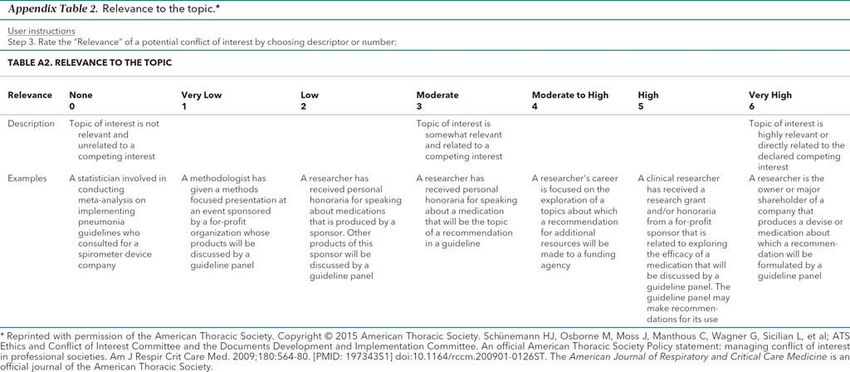
2019 International Pressure Injury/Ulcer Guideline

of stakeholder reviewers. SWG members who are unable to meet the contribution expectations
cannot be acknowledged in the Guideline. If a SWG member realises they are unable to meet
contribution expectations this is to be discussed with the team as soon as possible.

Small Working Group Member Qualifications

The SWG members will:

1.   Possess expertise in the SWG content area and a working knowledge of research
     methods sufficient for conducting critical appraisal.

2.   Be a member of one of the participating organizations (e.g., member, trustee, board
     member, former trustee or board member [alumni]), or be a nominated representative of
     a participating organization.

3.   Be free of major competing or conflicting interests, and must disclose the nature of any
     potential conflicts of interest, and if they exist, excuse themselves from related decisions.
     The SWG members and others involved in the actual development of the guideline are
     screened for potential conflicts of interest (COI). In the interest of transparency, SWG
     members will be required to complete a form identifying potential conflicts of interest on a
     yearly basis. Declarations of potential conflict will be requested prior to each meeting and
     will be published with the guideline.

4.   Not have their primary employment in industry.

5.   Have sufficient computer literacy to use word processing software, a web-based interface
     for document sharing and web-based conferencing applications. SWG members will
     require regular access to a computer with internet access, ability to access Word and PDF
     documents and an email address that is accessed on a regular basis. Some technical
     support will be provided by the methodologist and a web administrator; however, it is the
     responsibility of SWG members to ensure they have appropriate equipment and onsite
     support as required. The SWG members are expected to be responsive to communication
     from other members of their SWG, the GGG and the methodologist. It is reasonable to
     respond to email within five business days when working on a collaborative project.

Nominations for Small Working Groups

Persons wishing to nominate for the SWGs must submit:
   • A 2 page resume outlining their expertise within the nominated SWG topic/s.
   • Complete an SWG Nomination Form (see attached).
   • Complete the COI form (see attached).

Please also decide, whether you are willing to translate primary research papers into English.

                                                                                                2
2019 International Pressure Injury/Ulcer Guideline
Based on the geographic region or the association of the applicant’s nominations should be
addressed to:
EPUAP Please send the applications via email to:
Dr. Dominique Sigaudo-Roussel:
dominique.sigaudo-roussel@univ-lyon1.fr
with cc to Dr. Jan Kottner: jan.kottner@charite.de
NPUAP Please send the applications via email to:
Jennifer Wood: jwood@npuap.org
with cc to Dr. Janet Cuddigan: jcuddiga@unmc.edu
PPPIA Please send the applications via email to:
Pam Mitchell: Pamela.Mitchell@cdhb.health.nz
Associate Please send email to local collaboration co-ordinator. To identify your
Organization local co-ordinator email:
Dr Emily Haesler: admin@internationalguideline.com
Closing date for nominations is 22 December, 2017.
Successful nominees will be notified by 8 January, 2018.
All nominees will be invited to participate in the draft guideline online review process.
Sincerely,
Jan Kottner, PhD Keryln Carville, PhD Janet Cuddigan, PhD
GGG Chair, EPUAP GGG Chair, PPPIA GGG Chair, NPUAP
32019 International Pressure Injury/Ulcer Guideline
SMALL WORKING GROUP NOMINATION FORM
Name: ____________________________________________________________________
Organization membership/association: ________________________________________
Postal Address: ___________________________________________________________
Country: __________________________________________________________________
Email: ____________________________________________________________________
Phone Number: ____________________________________________________________
Professional Qualifications: _________________________________________________
Place of Employment: ______________________________________________________
Position: _________________________________________________________________
Translation volunteer
Translators may be called on to screen scientific papers without English abstract
against the inclusion criteria, or to undertake critical appraisal and data extraction for
papers in languages other than English.
Are you available to perform translations: Yes No
List languages: _____________________________________________________
___________________________________________________________________
___________________________________________________________________
___________________________________________________________________
42019 International Pressure Injury/Ulcer Guideline
The Guideline Topics/Chapters for Small Working Groups
Nominees for small working groups (SWGs) can nominate three topics, but no one
will be assigned to more than two groups. (Please tick/check topics of interest)
Background
Pressure injury/ulcer etiology
Pressure injury/ulcer classification
Prevention
Risk factors and risk assessment
Skin and soft tissue assessment and management
Medical device -related pressure ulcers/injuries
Prevention and Treatment
Nutrition
Support surfaces
Repositioning and mobilization
Heel pressure injuries
Patient consumer involvement
Treatment
Assessment of pressure injuries/ulcers and methods to monitor healing
Pain assessment and management
Cleansing, debridement and topical agents
Wound Dressings
Assessment and treatment of infection and biofilms
Biophysical agents (e.g., light and energy therapies such as electrical stimulation,
UV light, negative pressure wound therapy)
Growth factors
Biological dressings
Surgery
Pressure Injuries/Ulcers in Specific Populations
Individuals in the operating room
Individuals requesting palliative care
Individuals with spinal cord injury
Children and neonates
Individuals in critical care settings
Bariatric individuals
Individuals in community/home care settings
Facility Levels Considerations in Implementing Best Practice
Facilitators and barriers to guideline implementation
Health professional education
Consumer issues, including quality of life, involvement in care and education
52019 International Pressure Injury/Ulcer Guideline
CONFLICT OF INTEREST FORM
(Version 5, 21 November, 2017)
In order to participate in the guideline development and update process group members must
declare whether they have any potential conflict of interest. A conflict of interest arises in
any situation in which a group member has a direct or indirect pecuniary or personal (e.g.
academic advancement, community standing) interest in the way the guideline is developed,
how decisions are made or how statements and/or recommendations are framed. Not all
financial relationships with industry or other funding bodies represent true conflict of interests
but nevertheless actual or potential conflicts of interest must be declared to enhance
transparency and credibility of our guideline. The declarations will be published with the
guideline.
Potential conflicts of interests (COI) will be declared and managed based on an adapted
version of the Guidelines International Network Principles (Schünemann et al. 2015).
(1) Every GGG and SWG member must declare any potential COI according to the
Disclosure Form on an annual basis during the guideline development.
(2) The conflict of interest statements are kept with the Chair persons of the NPUAP, EPUAP
and PPPIA and the methodologist, and are valid for one year. Emergent conflicts of interest
during the year must be declared immediately within the working process or meetings and on
an updated COI form.
(3) Every person (SWG member, GGG members, GGG chairs) with a ‘moderate’ to ‘very high’
COI according to Appendix Table 2 in Schünemann et al. (2005) must:
- not review and/or critically appraise any papers in the area of the COI
- be excluded from any group discussions, statements and chapter preparations, and
strength of evidence ratings.
Every COI is topic specific.
For now, please list all (actual and potential) conflicts of interests regarding the development
and update of the 2019 International Pressure Ulcer Guideline 2019 that may arise from the
following payments or services from industry for you or your institution within the past 3
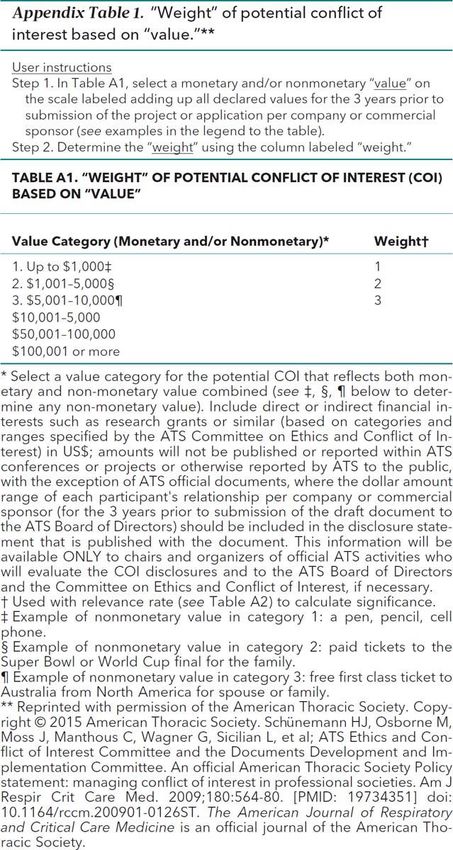
years. In the appendix you find a more detailed explanation about the weight assignment
and the relevance rating. The "weight" of your potential COI will be evaluated in conjunction
with "relevance to topic".
Reference
Schünemann HJ, Al-Ansary LA, Forland F, Kersten S, Komulainen J, Kopp IB, Macbeth F, Phillips SM,
Robbins C, van der Wees P, Qaseem A; Board of Trustees of the Guidelines International Network.
Guidelines International Network: Principles for Disclosure of Interests and Management of Conflicts in
Guidelines. Ann Intern Med. 2015;163(7):548-53.
62019 International Pressure Injury/Ulcer Guideline
Name:
Organization:
Type of Nil/no Interest to declare* Topics
Interest interest Money Money paid Name of entity Weight (1, List all guideline
paid to to your 2, or 3)** topics to which this
you institution COI relates
Grants
Consulting
fees or
honoraria
Board
memberships
Payments/
honoraria for
lectures or
publications
Payments/
honoraria for
development of
educational
presentations
Patents
Support for
travel to
meetings for
the guideline
development/u
pdate
Payment for
writing or
reviewing the
guideline or
parts of it
Provision of
other
assistance for
guideline
development
/update
Other (e.g.
academic)
*Please tick the relevant boxe(s); **Up to $1,000 weight = 1, $1,000 to 5,000 weight = 2, $5000 and more weight
= 3, includes nonmonetary values (e.g. travel, tickets etc.) (see next page) (refer to Appendix Table 1)
________________________ _____________ _____________
Name of signatory Date Signature (electronic is acceptable)
72019 International Pressure Injury/Ulcer Guideline
82019 International Pressure Injury/Ulcer Guideline
9You can also read


