HUMAN RIGHTS & ROAD SAFETY - A GRSP Positioning Paper - Global Road Safety Partnership
←
→
Page content transcription
If your browser does not render page correctly, please read the page content below
Hosted by

                                                                                                                      1

  HUMAN
  RIGHTS
  & ROAD
  SAFETY
  A GRSP Positioning Paper
  This paper is one of a suite of Positioning Papers
  from the Global Road Safety Partnership (GRSP).
  These papers are designed to create an understanding   According to the World Health Organization, more than
  of the scale of road traffic deaths and injuries and   1.2 million people die each year, and up to 50 million are
  their linkages to other humanitarian and development   injured, on the world’s roads. Ninety percent of these
  issues. The Positioning Papers seek to highlight       deaths and injuries occur in low- and middle- income
  that road safety is a multidimensional issue that      countries.4 Given that the majority of road crash deaths
  requires an urgent and sustained contribution across   and serious injuries are preventable, road safety and
  many sectors.                                          access to safe and sustainable transport systems
                                                         must be considered a global human rights issue.
  There are a number of evidence-based interventions
  aimed at reducing road traffic deaths and injuries,
  including designing safer roads, strengthening
  vehicle safety standards, improving road safety        ROAD SAFETY IS A HUMAN RIGHTS ISSUE
  management, implementing effective post-crash
                                                         ●● The International Covenant on Economic, Social
  care, and ensuring the passage, implementation and
  enforcement of comprehensive laws to protect road
                                                            and Cultural Rights obligates signatories to protect
  users. GRSP Positioning Papers primarily focus on
                                                            and fulfill human rights.5 The growing global
  the role of road users and the need for strong laws
                                                            epidemic of road traffic deaths and injuries can only
  that help protect them.
                                                            be addressed with a combination of government
                                                            commitment, civil society engagement and private
                                                            sector participation.6
                                                         ●● The 2030 Agenda for Sustainable Development
OVERVIEW                                                    strives to “combat inequalities within and among
                                                            countries.”7 The divide between rich and poor
The Universal Declaration of Human Rights recognizes
                                                            countries is evident in relation to road safety
a right to life, yet millions of lives are lost every
                                                            because low- and middle-income countries
year to preventable injuries suffered from road
                                                            overwhelmingly bear the burden of global road
crashes.1 The UN High Commissioner for Human
                                                            trauma. Whilst low- and middle-income countries
Rights cites poverty, unsafe environments and the
                                                            account for only 54% of the motorized vehicles, 90%
denial of the right to health as just a few of the
                                                            of the world’s road deaths occur in these countries.8
interlinked root causes of mortality and morbidity.2
Furthermore, these issues are highlighted by the         ●● The Universal Declaration of Human Rights
inclusion of targets related to reductions in road          recognizes a person’s right to a standard of
traffic deaths and injuries under Goal 3 and Goal 11        living adequate for the health and well-being of
of the Sustainable Development Goals (SDGs).3               themselves and of their family.9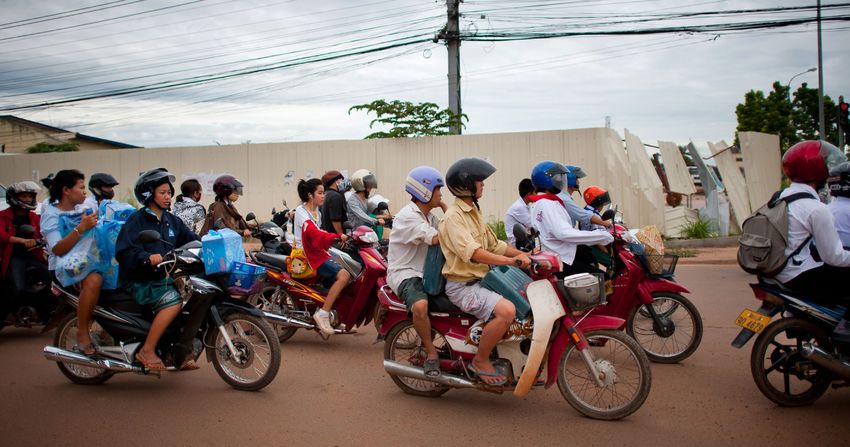
HUMAN RIGHTS & ROAD SAFETY                                                                                         2

ESSENTIAL FACTS                                     CASE STUDY

●● Globally, an estimated 3% of GDP is lost to      Advocating for road safety
   road traffic deaths and injuries. However,       in South Africa
   low- and middle-income countries can be
   more acutely affected losing up to 5 % of
   GDP as a result of road traffic crashes. 10
   The significant economic impact on GDP
                                                    T   HE DEATH OF ZINDZI MANDELA’S GRANDDAUGHTER
                                                        IN A ROAD CRASH IN 2010 OPENED HER EYES TO
                                                    THE NEGLECT OF HUMAN RIGHTS ON THE WORLD’S
   directly impacts individuals and families. The
                                                    ROADS. Her granddaughter—Zenani—had just turned 13
   GDP losses also restrict the level of revenue
                                                    two days before she was killed in a crash caused by a
   collected by governments for investment in
                                                    driver who had been drinking. The launch of the Zenani
   priority social and economic infrastructure.11
                                                    Mandela Scholarship gave Zindzi the opportunity to commit
●● Globally, road traffic crashes are the main      herself to advocating for basic human rights on every
   cause of death among those aged 15 – 29          road in the world, so that other families did not have to
   years, and a major cause of death among all      suffer the tragedy that had befallen her own family.22
   young people.12
                                                    South Africa has one of the world’s worst road safety
●● Nearly 85% of the world’s countries lack         records. Each year, almost 14,000 people are killed as
   adequate laws to counter the growing rates       a result of road traffic crashes in South Africa, with
   of road traffic deaths and injuries.13           thousands more injured. While national seat-belt laws are
                                                    in place, enforcement of the law is extremely poor – only
                                                    33% of drivers have been recorded as wearing seatbelts.
                                                    Additionally, even with drink-driving laws in effect, 58% of
                                                    road traffic deaths are still reported to involve alcohol.23

                                                    The Zenani Mandela Scholarship for Road Safety has been
                                                    set up to inspire the young leaders of South Africa to join
                                                    the road safety global movement as represented by the
                                                    United Nations Decade of Action for Road Safety (2011-
                                                    2020)24, which aims to save millions of lives over 10 years.
                                                    The purpose of the Scholarship is to offer young South
                                                    Africans the opportunity to learn with and from other
                                                    talented professionals from around the world, with the
                                                    common aim of improving road safety in their communities.
HUMAN RIGHTS & ROAD SAFETY                                                                                                3

SOLUTIONS                                                       both the risk of being in a road traffic crash, as
In response to the road traffic fatality crisis, the            well as the severity of the injuries that result from
United Nations General Assembly proclaimed the                  crashes. For example, for an adult pedestrian, the
UN Decade of Action for Road Safety (2011-2020),                risk of dying if struck by a car travelling at less than
which serves as the primary vehicle by which road               50km/h is below 20%. Those odds rise substantially
safety is being addressed at the global level. The              as vehicle speed increases. The same adult
Global Plan of the Decade of Action is organized                pedestrian has a 60% risk of dying if hit at 80 km/h.17
around five pillars, which detail a series of recognized
                                                             ●● Seatbelts: The simple act of buckling a seatbelt
interventions: improving road safety management;
                                                                is one of the most effective ways to save lives.
designing safer roads; strengthening vehicle safety
                                                                Correctly wearing a seat-belt reduces the risk of a
standards; ensuring the passage, implementation and
                                                                fatal injury by up to 50% for front seat occupants
enforcement of comprehensive laws to protect road
                                                                and by up to 75% for rear seat occupants.
users; and implementing effective post-crash care. 14
                                                             ●● Child restraints: Children wearing an appropriate
Reducing the burden of road traffic deaths and injuries
                                                                restraint for their size and weight are significantly
around the world requires multiple players working
                                                                less likely to be killed or injured than unrestrained
together. While each element of the road system
                                                                children. Rear-facing restraints for children aged 0
(vehicle, road, and person) contributes to any given
                                                                to 23 months have been shown to reduce the risk
road crash, road user related factors make a significant
                                                                of death or injury by over 90% and forward facing
contribution and, therefore, require ongoing attention.15
                                                                child restraints by almost 80% compared to being
The Global Road Safety Partnership’s Advocacy and
                                                                unrestrained.18
Grants Programme focuses primarily on advocating
for stronger road safety policies and improving the          ●● Motorcycle helmets: Wearing a motorcycle helmet is
effectiveness of road safety law enforcement. According         a proven way to decrease death and serious injury.
to international best practices, adopting and enforcing         Helmet usage decreases the risk of injuries by 69%,
strong road safety laws on five key risk factors can            and deaths by 42%.19
significantly reduce road traffic death and injury.16
                                                             ●● Drinking and driving: Driving while impaired by
                                                                alcohol increases both the risk of a crash and the
●● Speed management: Setting and enforcing
                                                                likelihood that a death or a serious injury will occur.
   appropriate speed limits is one of the most effective
                                                                Strictly enforcing an effective drink-driving law can
   measures in reducing road traffic injuries, influencing
                                                                reduce the number of road deaths by 20%.20
HUMAN RIGHTS & ROAD SAFETY 4
ENDNOTES
1 Universal Declaration of Human Rights, UN General Assembly, 10
December 1948, 217 A (III), (http://www.un.org/en/universal-declaration-
human-rights/ accessed 30 May 2016)
Global Road Safety Partnership secretariat
2 Technical Guidance on the application of a human rights-based
approach to the implementation of policies and programmes to c/o International Federation of Red Cross
reduce and eliminate preventable mortality and morbidity of children
under 5 years of age, United Nations General Assembly, 2014 (http:// and Red Crescent Societies
www.ohchr.org/Documents/Issues/Children/TechnicalGuidance/ Route de Pré-Bois 1 | 1214 Vernier | Geneva, Switzerland
TechnicalGuidancereport.pdf accessed 25 April 2016)
Tel: +41 (0) 22 730 42 49 | Fax: +41 (0) 22 733 03 95
3 Sustainable Development Goals Knowledge Platform (https://
sustainabledevelopment.un.org/ accessed 17 November 2016). E-mail: grsp@ifrc.org | Website: www.grsproadsafety.org
4 Global Status Report of Road Safety, World Health Organization,
2015 (http://www.who.int/violence_injury_prevention/road_safety_
status/2015/en/ accessed 26 April 2016)
Global Road Safety Partnership
5 General Assembly resolution 2200A (XXI), International Covenant on
Economic, Social and Cultural Rights, 1966 (http://www.ohchr.org/EN/ The Global Road Safety Partnership (GRSP) is a hosted
ProfessionalInterest/Pages/CESCR.aspx accessed 25 April 2016)
programme of the International Federation of Red Cross
6 Report on improving global road safety, United Nations General and Red Crescent Societies and is a voluntary association
Assembly, 2007 (http://www.unece.org/fileadmin/DAM/trans/roadsafe/
of governments, businesses and civil society organisa-
docs/A-RES-62-257e.pdf accessed 25 April 2016)
tions.23 GRSP works to reduce deaths and serious injuries
7 Transforming our world: the 2013 Agenda for Sustainable Development,
United Nations General Assembly, (https://sustainabledevelopment.
as a result of road crashes in low- and middle-income
un.org/post2015/transformingourworld/ accessed 25 April 2016) countries in a number of ways. One important way to
8 Global Status Report of Road Safety, World Health Organization,
address this humanitarian crisis is to ensure that strong,
2015 (http://www.who.int/violence_injury_prevention/road_safety_ evidence-based laws are in place and effectively imple-
status/2015/en/ accessed 26 April 2016) mented and enforced in order to protect road users.
9 General Assembly resolution 217 A, The Universal Declaration of Human
Rights, 1948 (http://www.un.org/en/universal-declaration-human- GRSP is looking to partner with government and civil so-
rights/ accessed 25 April 2016) ciety organizations committed to reducing this unaccept-
10 Global Status Report of Road Safety, World Health Organization, able rate of road injuries and fatalities by advocating for
2015 (http://www.who.int/violence_injury_prevention/road_safety_ stronger road safety policies. For more information on our
status/2015/en/ accessed 26 April 2016) work – and the Road Safety Grants Programme – please
11 Watkins, K., The missing Link: Road traffic injuries and the Millennium visit our website at www.grsproadsafety.org/advocacy.
Development Goals (http://www.fiafoundation.org/media/46107/the-
missing-link-lr.pdf accessed 7 June 2016)
12 Global health estimates. Geneva: World Health Organization; 2014 CREDIT: Front page image courtesy of Bloomberg Philanthropies
(http://www.who.int/healthinfo/global_burden_disease/en/ accessed
30 May 2016)
13 Helping to save lives through proven interventions that reduce road
traffic fatalities, Bloomberg Philanthropies (www.bloomberg.org/
program/public-health/road-safety/ accessed 26 April 2016)
14 Global Plan for the Decade of Action for Road Safety 2011-2020, World 23 Global Status Report on Road Safety, World Health Organization,
Health Organization (http://www.who.int/roadsafety/decade_of_ 2015 (http://www.who.int/violence_injury_prevention/road_safety_
action/plan/en/ accessed 9 June 2016) status/2015/en/ accessed 26 April 2016)
15 Goodwin, A., Thomas, L., Kirley, B., Hall, W., O’Brien, N., & Hill, K., 24 United Nations Decade of Action for Road Safety (http://www.who.int/
Countermeasures that work: A highway safety countermeasure guide roadsafety/decade_of_action/en/ accessed 17 November 2016)
for State highway safety offices, Eighth edition. Washington, DC:
National Highway Traffic Safety Administration, 2015 25 Global Status Report on Road Safety, World Health Organization,
2015 (http://www.who.int/violence_injury_prevention/road_safety_
16 Global Status Report on Road Safety, World Health Organization, status/2015/en/ accessed 26 April 2016)
2015 (http://www.who.int/violence_injury_prevention/road_safety_
status/2015/en/ accessed 25 April 2016)
17 Global Status Report on Road Safety, World Health Organization,
2015 (http://www.who.int/violence_injury_prevention/road_safety_
status/2015/en/ accessed 25 April 2016)
18 Elvik R et al. The handbook of road safety measures, 2nd ed. Bingley,
UK: Emerald Group Publishing Limited; 2009.
19 Liu B et al. Helmets for preventing injury in motorcycle riders. The
Cochrane Database of Systematic Reviews. 2009.
20 Drink- Driving: The Facts, World Health Organization, 2015 (http://www.
who.int/violence_injury_prevention/road_safety_status/2015/en/
accessed 30 May 2016)
21 Global Road Safety Partnership (http://www.grsproadsafety.org/about-
us/our-purpose accessed 16 January 2017).
22 FIA Foundation. “Zenani Mandela Scholarship launched to support UN
Decade of Action for Road Safety.” (https://www.fiafoundation.org/
blog/2011/april/zenani-mandela-scholarship-launched-to-support-un-
decade-of-action-for-road-safety?year=2011&month=4 accessed 21
January 2017)You can also read


