MAHINDRA WORLD CITY, JAIPUR CLIMATE POSITIVE ROADMAP SUMMARY
←
→
Page content transcription
If your browser does not render page correctly, please read the page content below
Climate Positive Roadmap Summary

MAHINDRA WORLD CITY, JAIPUR
CLIMATE POSITIVE ROADMAP SUMMARY

 INTRODUCTION

 As a pioneer of the concept of an Integrated         and environmentally viable manner. In turn, the
 Business City in India, the Mahindra World City      project shall not only reduce its on-site greenhouse
 Jaipur (MWCJ) represents a unique ecosystem for      gas emissions but also improve the emission profile
 working and living; aiming to create sustainable     of the community at large.
 urban communities by establishing integrated
 business cities which enable the transformation of   C40’s Climate Positive Development Program
 ‘Life, Living and Livelihood’.                       sets out a framework that helps guide a project’s
                                                      journey to achieve a net-carbon negative outcome,
 The Mahindra World City project in Jaipur is a       encouraging developers to create a revolutionary
 development project of Mahindra World City Jaipur    new model of ambitious sustainable development.
 Limited, a subsidiary of Mahindra Lifespaces. As a   As a founding member of C40’s Climate Positive
 Participant in C40’s Climate Positive Development    Development Program (CPDP), Mahindra World
 Program, Mahindra World City Jaipur strives to       City Jaipur seeks to plan for, measure and verify
 be a model urban project, to implement climate       this positive environmental impact though tracking
 change mitigation strategies for a large scale       and monitoring the development’s operational
 development project and do so in an economically     carbon impact and implementing measures to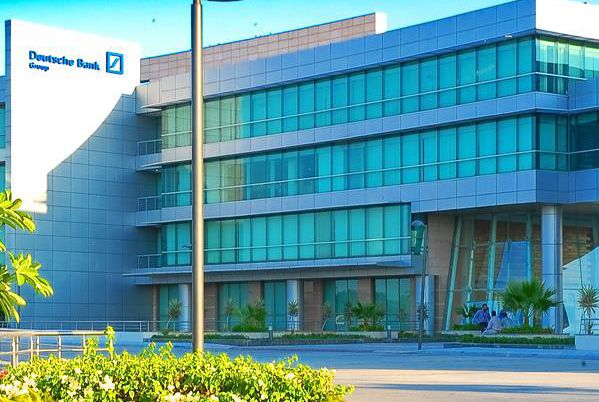
Climate Positive Roadmap Summary

reduce and offset this impact. At project completion,
Mahindra World City Jaipur will have had a net           Two key strategies in Climate Positive to
impact of reducing over 60,000 tons of CO2e              offset emissions:
per year. Compared with their business as usual
baseline of over 800,000 tons of CO2e, the impact        Efficiency/Impact Reduction measures: These
of this development being built is enormous! The         are measures that reduce the carbon impact from
social and economic impact of the development            Energy, Transport and Waste, thereby reducing
of MWCJ and neighbouring communities are also            the total operational annual carbon emissions
a key concern and will be monitored with the help        on site. These Carbon savings through efficiency
of periodic social impact assessments at various         measures are necessary to reduce the baseline
stages of the development but is not covered in the      emissions impact but are not sufficient to achieve
scope of the Climate Positive Roadmap.                   a final climate positive outcome.

This brief document represents a summary of              Credits: These measures often have an impact
the Mahindra World City Jaipur Climate Positive          that extends beyond the boundary of the
Roadmap, which details and quantifies the journey        site. Credits help offset the remaining carbon
the project will take to achieve net carbon negative     emissions, resulting in net-negative emissions
outcomes, as required under the Climate Positive         (Climate Positive Outcome). These measures
Framework.                                               involve reducing the emissions of the adjacent
                                                         community or creating additional carbon sinks
More detail on each of the strategies and                through carbon sequestration measures.
calculations presented in this document can be
found in the complete Roadmap located here
[LINK].

PROJECT OVERVIEW & CONSTRUCTION TIMELINE

Located just off National Highway 8 (Jaipur-Ajmer                                             10,960,576 sq m
Highway) in the North-Western state of Rajasthan,
                                                                               8,220,432 sq m
the 3000-acre Mahindra World City in Jaipur
(MWCJ) is a joint venture between Mahindra Group                        4,932,259 sq m

                                                                                                                           Percent Completion
and Rajasthan State Industrial Development
                                                              2,192,115 sq m
Corporation (RIICO), an agency of the Government        548,028 sq m
of Rajasthan. When completed, Mahindra World
City Jaipur will house and employ nearly 300,000
people. The development is projected to be
completed by 2025.
                                                                                                                   -2025
                                                                                                          -2023
                                                                       -2013

                                                                                               -2020
                                                                                   -2017
                                                                   2008

                                                                                                                  2023
                                                                                                        2021
                                                                                             2018
                                                                               2014

                                                                               FIGURE 1: CONSTRUCTION TIMELINE

Page 2
Climate Positive Roadmap Summary
DETERMINING BASELINES
As the first step in setting the strategies for A complete chart of the calculated projected impact
achieving net carbon negative, Mahindra World City can be found in Figure 2 below. For more detail on
determined the annual baseline emissions from the methodologies used to calculate the baselines
operations energy use, transportation and waste projections see the Mahindra World City Climate
generation to determine the Total Baseline Carbon Positive Roadmap.
Impact of the project under a business-as-usual
scenario where no efficiency measures are put in ANNUAL PROJECTED IMPACT
(tCO2e)
place.
Energy Use 681073.9
Water Supply 3622
• Baseline energy demand is projected to be
Wastewater Treatment 9513.2
roughly 875,000 MWH per year; with a CO2e of
Waste Disposal/ 33583.2
680,000 tons. Treatment
Transport 102465.6
• Transportation projections were projected to TOTAL 830258
include a baseline of 214 million KMs traveled
by two wheeler; 258 million KMs traveled FIGURE 2: ANNUAL PROJECTED BASELINE IMPACT
annually by car; and 10 million KM traveled by Note: Emissions from construction activities on site will not be
incorporated as part of the Baseline Carbon Impact of the site. Key
bus, calculated to be around 100,000 tCOe per Impact Reduction Strategies during the construction phase will also
annum be included in the scope of this report but will not be used to offset
baseline operational emissions.
• Waste baseline was projected at a total of
13,000 metric tons of waste annually
STRATEGIES FOR ACHIEVING CLIMATE POSITIVE
With the baseline established, the following section Jaipur focuses on three key initiatives:
summarizes strategies presented in the Mahindra
World City Jaipur Climate Positive Roadmap to 1) efficient use of energy in buildings (vertical
maximize efficiency onsite and abate emissions infrastructure),
offsite to achieve net carbon negative results in 2) efficient use of energy for utilities (horizontal
energy, transportation, water and waste. Much more infrastructure)
detailed information on each of these strategies 3) use of renewable energy (solar).
can be found in the complete Mahindra World City
Jaipur Roadmap. These strategies are designed to be flexible in
order to accommodate any changes in technology,
ENERGY IMPACT REDUCTION energy supply and town planning, which are likely
in a long-term development project of this scale. A
As energy accounts for 82% of the total carbon breakdown of the energy strategies is found below
emissions, the strategies presented work to and a detailed breakdown on the energy impact and
significantly reduce energy through a wide range of savings from buildings and utilities can be found in
technology and infrastructure strategies. The energy Figure 3.
impact reduction strategy for Mahindra World City,
Building strategies for 30% reduction include:
• Optimal insulation and HVAC improvement
Page 3Climate Positive Roadmap Summary
measures
• Lighting energy efficiency strategies
• Energy efficiency pumps and motors
• Other strategies including efficient elevators and
water controls on water tanks
• Utilities including energy efficient pumps and
motors and water supply pumping system
provided with variable speed drive to converse
energy
• Use of LED energy efficient street lighting
• At least 50% of all rooftops on buildings on site
will be dedicated to rooftop solar, off-site on-grid
solar energy solutions and energy efficiency LED
IMAGE 1: DEUTSCHE BANK BUILDING AT MWCJ
street lighting
IMPACT REDUCTION ENERGY SAVINGS ENERGY USE tCO2E IMPACT tCO2E ABATED
TARGET (MWh) AFTER SAVINGS ANNUALLY
(MWh)
Buildings 30% 261,951.5 611,220.2 476,751.7 -204,322.2
Utilities 20% 3,358 13,472 166.8 -2627
TOTAL 2,653,19.5 624,692.2 476,918.5 -206,949.2
FIGURE 3: EXPECTED ENERGY IMPACT REDUCTION
WASTE IMPACT REDUCTION in substantial CO2 impact reduction when
compared to the current baseline scenario
The Waste Impact Reduction strategy for Mahindra where 87.5% of waste is disposed in landfills.
World City Jaipur addresses the management of
the various types of waste (Municipal Solid Waste, TRANSPORTATION IMPACT REDUCTION
Industrial waste, E-waste) generated on site in the
most environmentally and economically sustainable The sustainable transport strategy for Mahindra
way. As the majority of the waste generated on World City, Jaipur utilises the Avoid, Shift and
site is expected to be Municipal Solid Waste, Improve approach for developing a sustainable
reduction strategy for MWCJ therefore focuses on transport plan for MWCJ. The sustainable transport
the reduction of MWS and its effective segregation, strategy incorporates a variety of non-motorised
treatment and disposal. The strategy for MSW and public modes of transport, thereby reducing
includes the following actions: the overall CO2 impact from transport on site and
• Implementation of education programmes to focuses on three main strategies:
promote resident/employees to “Reduce, Reuse,
and Recycle’ waste AVOID/REDUCE
• Collection/Treatment of Segregated Waster This strategy focuses on the need to improve
• Engagement of third party agency for collection the efficiency of the transport system. In MWCJ
of paper, glass, metal and plastics segregated efficiency will be accomplished through integrated
on site for treatment at off-site recycling facilities transport and land use planning to achieve
• Engagement of third party agency to collect successful transit oriented development which
biodegradable waste for treatment in biogas reduces the need for travel within the district by
plant and composting - 78% of the MSW is co-locating housing, jobs and open spaces around
expected to be biodegradable waste. This is transit stops.
a significant improvement which will result
Page 4Climate Positive Roadmap Summary
“Thus, the Avoid/Shift/Improve approach
seeks to avoid long motorized and
unnecessary trips, shift the tendency
away from trips in individual motorized
vehicles and improve the technology and
operational management of transport
activities.” – EMBARQ India
SHIFT/MAINTAIN Extension of Jaipur Metro Line
Shift instruments seek to improve trip efficiency by • Expansion of the current rail line under
shifting individuals from an energy consuming mode construction by an additional 16 km to reach
(i.e. cars) towards more environmentally sustainable Mahindra World City Jaipur, providing residents
modes of transportation. In MWCJ, there are and employees with direct access to Jaipur
three main strategies to achieve the modal shift: and the surrounding area through a low carbon
focus on connectivity, walkable neighbourhoods transportation option.
and development of integrated networks of open
space, pedestrian walkway and cycling paths. Installation of LED bulbs in surrounding community
In addition, MWCJ will work with businesses to streetlights
shift workers away from private transportation • The project will replace street lighting in the
and towards sustainable modes of transportation surrounding area, reducing the overall energy
through education, incentives, and targeted sector use of the lighting and helping the community
strategies. adopt new, more efficient technologies which
are currently not used. The LED street light
IMPROVE initiative is projected to reduce nearly 10,000
The improve strategy focuses on vehicle and fuel tons of CO2 per year.
efficiency along with the optimization of transport
infrastructure through the implementation of a Bus Off-site solar power installation
Rapid Transit network and the use of low-emission • Installation of solar plants off-site to provide
fuel. solar power sold back to regional electrical grid
ABATING EMISSIONS: SITE-WIDE Carbon Sequestration
INITIATIVES & CLIMATE POSITIVE CREDIT • Provision of Green Space and use of Native
PROJECTS Plants: The landscaping design in the master
plan incorporates the provisions of green
One of the key components of the Climate space through the development, totaling
Positive Development Program is quantifying the approximately 10% of the total developed area.
project’s ability to reduce carbon emissions in The landscaping will include native plants which
the community.. In addition to all of the efforts to require less watering.
maximize efficiency within the development, the • Tree Planting Drive: An initiative will support the
developers are also pursuing the following initiatives planting of trees by on-site employees into the
as part of their sustainability plan include: adjoining villages. To date, 13,200 trees have
been planted in the neighboring community,
and over 10,000 trees have been planted within
Mahindra World City Jaipur
Page 4You can also read


