2020 SUSTAINABILITY REPORT - Cromwell Property Group
←
→
Page content transcription
If your browser does not render page correctly, please read the page content below

SUSTAINABILITY REPORT
2020

CONTENTS
    03
    ABOUT THIS REPORT
                                                                                       34
                                                                                       PEOPLE PILLAR

    06
    RESULTS SNAPSHOT
                                                                                       41
                                                                                       ENVIRONMENT PILLAR

    08
    CEO’S LETTER
                                                                                       53
                                                                                       FY21 MATERIALITY MATRIX

    10
    OUR APPROACH TO SUSTAINABILITY
                                                                                       54
                                                                                       MATERIAL TOPICS AND DEFINITIONS

    16
    ECONOMIC PILLAR
                                                                                       56
                                                                                       GRI CONTENT INDEX

    22
    GOVERNANCE PILLAR
                                                                                       64
                                                                                       TCFD CONTENT INDEX

    28
    STAKEHOLDER PILLAR
                                                                                       65
                                                                                       MANAGEMENT APPROACH

2   CR O M WE L L P R O P E R T Y G R O UP I   2 0 2 0 SU ST AI NAB I LITY R EPO R T
ABOUT THIS REPORT
This report covers Cromwell Property Group’s sustainability performance for the year ending 30 June 2020 (FY20).
Cromwell Property Group (Cromwell, or the Group) reports sustainability performance on an annual financial year cycle,
with the previous report dated 30 June 2019.

This report has been prepared in accordance with GRI Standards (core) and follows the GRI reporting principles for
defining report content and quality. Further details on GRI standards are available at www.globalreporting.org. The 2020
GRI index can be found on page 56 of this report.

Additional ESG disclosures are available for download from the Group website, including policies, previous reports and the
annually published data pack. The accompanying data pack for this report can be downloaded at
www.cromwellpropertygroup.com/sustainability/reports.

Cromwell plans to obtain external assurance over disclosures in its 2021 Sustainability Report. Ernst & Young (EY) was
engaged to conduct pre-assurance procedures over select FY20 non-financial performance metrics within the People and
Environment pillars.

THIS DOCUMENT IS ISSUED BY
Cromwell Property Group
consisting of
Cromwell Corporation Limited ABN 44 001 056 980 and
Cromwell Diversified Property Trust
ARSN 102 982 598 ABN 30 074 537 051
(the responsible entity of which is
Cromwell Property Securities Limited
AFSL 238052 ABN 11 079 147 809)
Level 19, 200 Mary Street, Brisbane QLD 4000
Phone: +61 7 3225 7777
Fax:     +61 7 3225 7788
Web:     www.cromwellpropertygroup.com
Email: invest@cromwell.com.au

ENQUIRIES
All enquiries and correspondence regarding this report or
sustainability disclosure should be directed to the team at
sustainability@cromwell.com.au

GRI102-1, GRI102-50, GRI102-51, GRI102-52, GRI102-53, GRI102-54,   C ROMWE LL P ROP E RTY GROU P I   2020 SUSTAIN ABIL ITY R EP OR T   3
GRI102-56
Report Boundaries
    Cromwell’s business is complex and this year’s report                                   Operational control varies based on the individual
    provides greater insight into Cromwell's reporting                                      asset and established lease agreements.
    boundary, identifying where we are able to affect change,                            • European Funds Under Management: across some
    exert influence and address material ESG risks and                                     funds, Cromwell's property services may be limited by
    opportunities.                                                                         funds that have pre-established mandates that do not
                                                                                           support the direct management, or benchmarking of
    Where Cromwell does not have direct ownership of the
                                                                                           sustainability performance. Similarly, some tenants
    property assets, the decision to support Cromwell’s
                                                                                           hold a lease with full management control over the
    sustainability reporting objectives is wholly dependent
                                                                                           entire premises that they occupy. In these instances,
    upon the willingness and capacity of the fund manager and
                                                                                           Cromwell is unable to directly set policy or implement
    tenants to disclose consumption and performance data.
                                                                                           change and our engagement is therefore limited,
    Moreover, different leasing and reporting standards across
                                                                                           along with Cromwell’s capacity to obtain and disclose
    different countries further restricts our capacity to collect
                                                                                           performance data.
    and uniformly disclose operational data.
                                                                                         • Cromwell European REIT (CEREIT): CEREIT is
    The boundary for this report is therefore defined around                               managed by a subsidiary of Cromwell, Cromwell
    the level of ownership and management control through                                  EREIT Management Pte. Ltd., which operates within
    which Cromwell are able to implement its Sustainability                                the listing rules imposed by the Singapore Stock
    Framework or influence ESG outcomes. The boundary                                      Exchange. CEREIT has its own independent Board and
    covers:                                                                                prepares separate financial and sustainability reports.
                                                                                           As such, Cromwell is considered able to exert
    1. Corporate Operations – Cromwell’s workforce,                                        significant influence, but not control, over the entity.
       corporate policies, training, emissions and other                                   For more information on CEREIT’s sustainability
       impacts associated with managing business operations;                               performance visit
                                                                                           www.cromwelleuropeanreit.com.sg/sustainability
    2. Direct Investment Portfolio (Cromwell Diversified
       Property Trust) – directly owned property assets are                            4. Property Assets in Transition – Cromwell’s ‘Invest to
       divided into two management groups - operational                                   Manage’ Strategy includes the purchasing of assets
       control and non-operational control. Control is                                    for the purpose of realising value and repositioning
       determined by the level to which Cromwell has the                                  opportunities. Similarly, for some existing assets,
       capacity to implement its Sustainability Framework.                                opportunities for adding value and repositioning may
      • Operational Control – where Cromwell is responsible                               also form part of the strategic asset management plan.
        for setting operational standards for the property                                Typically, from purchase until operations are stabilised,
        services and performance as well as for setting and                               or for up to two years prior to redevelopment, assets
        delivering capital works and investment strategies to                             may become increasingly vacated and prepared for
        reduce energy and improve the asset.                                              repurposing. For property assets deemed to be ‘in
                                                                                          transition’, it is not practical or meaningful to include
      • Non-Operational Control – across some property
                                                                                          the operations and performance data into long
        assets, the tenant-customer holds a lease with full
                                                                                          established reporting metrics. Exceptions that have
        management control over the entire premises that
                                                                                          occurred are noted throughout the report.
        they occupy. In these assets, as Manager, Cromwell
                                                                                       5. Other Exclusions – Disclosure at the group level
        is unable to directly set policy or implement change.
                                                                                          does not include other operational businesses where
        Non-operational control property assets are excluded
                                                                                          Cromwell does not have a majority ownership of
        from the reporting boundary of this report.
                                                                                          > 51% and/or does not have operational control (Phoenix
    3. Funds and Asset Management (marketed ‘Cromwell’                                    Portfolios, LDK Healthcare, Oyster Property Group).
       products) – where Cromwell provides asset and
       property services to funds in which it has a financial
       interest or alternatively to funds managed by third
       parties:
      • Australian Funds Under Management: our funds
        management business covers property assets
        where Cromwell is both Fund and Asset Manager.

4   CR O M WE L L P R O P E R T Y G R O UP I   2 0 2 0 SU ST AI NAB I LITY R EPO R T                                              GRI102-9, GRI102-46
Other
                     -0.4%

         FY20 Revenue by business segement
         (as at 30 June 2020)

                                                            Direct                                                               Directly Owned
                                                      investments                                                                Investments
                                                            55.5%                                                                8.4%

                                                      Retail Funds                                                               Cromwell
                                                      Management                                                                 European REIT
                                                              1.5%                AU                              EU             17.3%
                                                                                 60%                              39%
        FY2019 TARGET

                                                     Joint Ventures                                                              Funds Under
                                                              3.2%                                                               Management
                                                                                                             NZ                  14.0%
                                                             Other                                           1%
                                                            -0.4%                                                                Joint Ventures
                                                                                                                                 -0.3%
                                                                                                                        Joint Ventures
                                                                                                                         0.7%

         Reporting Boundary

                          Cromwell       Stapled
                         Diversified                                                               Cromwell Corporation Limited
                                         ASX:CMW
                        Property Trust
Reporting Boundary

                                                   AU Property Manager                     Fund Manager                    REIT Manager                    EU Property Manager
                                                     Cromwell Property                     Cromwell Funds                  Cromwell EREIT                   Cromwell European
                                                         Services                           Management                   Management Pte Ltd                      Holdings

                                                           AU                          AU Unlisted Funds
                                                     Property Assets
                                                                                           Cromwell Direct
                                                                                            Property Fund                                              CEREIT            EU
                                                                                                                                                      Property        Property
                                                                                    Cromwell Riverpark Trust
                                                                                                                                                       Assets          Assets
                                                                                     Cromwell Ipswich City
                                                                                         Heart Trust
                                                                                       Cromwell Property
                                                                                           Trust 12

                                                                      AU Equities Funds                                       Joint Ventures                 EU Other products,
                                                                                                                                                            mandates and services
                                                                     Cromwell Phoenix                                     LDK Healthcare Unit Trust
                                                                  Property Securities Fund                                         (50%)
                                                                      Cromwell Phoenix                                     Oyster Property Group
                                                                      Opportunities Fund                                           (50%)
                                                                                                                             Phoenix Portfolios
                                                                                                                                  (45%)

                                                                                                  C ROMWE LL P ROP E RTY GROU P I            2020 SUSTAIN ABIL ITY R EP OR T        5
FY20 SNAPSHOT
ECONOMIC PEOPLE GOVERNANCE
COMPLIANT
STATUTORY PROFIT COVID-19 EMPLOYEE CASES ASX Corporate Governance Council’s
$181.1 million 1 of 1
[GLOBAL] Corporate Governance Principles and
Recommendations (3rd edition)
( 13.3%) recovered COMPLIANT
SGX and MAS Guiding Principles and
LOST TIME INJURY FREQUENCY RATE Recommendations
$221.2 million
OPERATING PROFIT [AUSTRALIA ONLY]
3.98
MAINTAINED
Clean Governance and Compliance
( 27.0%) Record
EMPLOYEE ENGAGEMENT SURVEY
PARTICIPATION [GLOBAL] LAUNCHED
92%
Property Council Australia (PCA)
7.5 cps
DISTRIBUTIONS PER SECURITY
supplier database - Modern Slavery
participation DEVELOPED
( 3.4%)
66 Score Group Procurement Policy
aligned with ISO20400 sustainable
procurement principles
CO2-E (SCOPE 1 & SCOPE 2) PER $MILLION REVENUE EMPLOYEE TURNOVER [GLOBAL]
17%
ATTAINED
- CARBON INTENSITY
39.37 tonnes
ISO27001 Information Security
Management certification
ABSENTEE RATE [GLOBAL] ENVIRONMENT
Submitted 1.28% 14%
REDUCTION IN SCOPE 1 & 2
CDP CLIMATE CHANGE BENCHMARK TRAINING PER EMPLOYEE [GLOBAL]
10.3 hrs
EMISSIONS INTENSITY
PARTICIPATION YEAR - FULL ASSESSMENT
for natural gas & electricity from FY19
[OPERATIONAL CONTROL]
[directly owned, operational control]
TENANT ENGAGEMENT SURVEY:
STAKEHOLDER
TENANT CUSTOMERS INVESTOR CONTACTS
7%
REDUCTION IN ENERGY INTENSITY
OVERALL PERFORMANCE [AUSTRALIA] Institutional Investors for natural gas & electricity from FY19
+3.1% 82%
[global, listed & unlisted] [directly owned, operational control]
participation 16,277 36%
( 39.4%) WASTE DIVERTED FROM LANDFILL
[operational control]
TENANT ENGAGEMENT SURVEY: NET PROMOTOR SCORE (HNW)
YEAR-ON-YEAR NET PROMOTOR SCORE CHANGE RETAIL INVESTORS
TENANT CUSTOMERS - [EUROPE]
Biennial Retail Investor Survey
2020
Certified
6 +31 NPS
CARBON NEUTRAL ORGANISATION
through Climate Active [Australia only]
6 CR O M WE L L P R O P E R T Y G R O UP I 2 0 2 0 SU ST AI NAB I LITY R EPO R T
ESG DISCLOSURES
Cromwell is a real estate investor and manager with operations on three continents and a global investor base.

As the value of Sustainability and Environment, Social and Governance (ESG) strategy management increases in
demonstrating strong risk management and business resilience, so has the level and number of reporting obligations and
benchmark performance indices that Cromwell is required to respond to.

Cromwell actively participate across the following ESG benchmark platforms in a concerted effort to broadly and
accurately measure year-on-year sustainability performance against relevant peer organisations.

                                  SAM Corporate Sustainability Assessment (CSA)
                                  Used to evaluate Group level sustainability practices.

                                  Global Real Estate Sustainability Benchmark (GRESB)
                                  Used to evaluate asset level performance at the fund level, benchmarked by asset location and
                                  type, for all Australian and select European entities.

                                  CDP - Climate Change
                                  Used to evaluate our management practices of carbon and climate change risk relating to
                                  Cromwell's directly owned and managed assets in Australia.

    PARTICIPATORY BENCHMARKING
                                                           OVERALL                 Environment         Social            Governance        benchmark
                                                                                                                                           as at
                                                                     CHANGE
    SAM CSA                 Group                  47                              44                  43                55                Sep-19
    GRESB                   AU                     861                             83                  89                92
                            EU                     631                             65                  41                77                Sep-19
                            CEREIT                 67                n/a           61                  55                92
    CDP                     AU                     Benchmark         n/a                                                                   Sep-19
                                                   year
    THIRD-PARTY BENCHMARKING
                                                                     CHANGE
    Sustainalytics          Group                  68                n/a           71                  62                71                Jun-19
    ESG Risk                Group                  14.8                                                                                    Sep-19
    ISS Quality Score       Group                  n/a                             3                   2                 6                 Jun-20
    MSCI   2
                            Group                  AA                                                                                      Oct-19
    ACSI                    Group                  Leading           n/a                                                                   Aug-19
1    Aggregated portfolio average (GAV weighted)
2    The use by Cromwell Property Group of any MSCI ESG Eesearch LLC or its affiliates (“MSCI”) data, and the use of MSCI logos, trademarks, service
     marks or index names herein, do not constitute a sponsorship, endorsement, recommendation, or promotion of Cromwell Property Group by MSCI.
     MSCI services and data are the property of MSCI or its information providers, and are provided ‘as-is’ and without warranty. MSCI names and logos are
     trademarks or service marks of MSCI.)

GRI102-12                                                                    C ROMWE LL P ROP E RTY GROU P I          2020 SUSTAIN ABIL ITY R EP OR T        7
CEO’S LETTER
                                      Welcome to Cromwell’s 12th annual Sustainability Report.

                                      2020 has been a year unlike any of the previous eleven. COVID-19 continues to have a significant
                                      impact on economies, real estate markets, tenant-customers, friends, families and loved ones
                                      around the world. Its ramifications are likely to take some time to fully unfold.

                                      We experienced the impact of COVID-19 earlier than most with our Milan office moving to
                                      working from home in February 2020. We took the opportunity then to plan and prepare for
                                      what was to come and take action to ensure the safety and wellbeing of our people and their
    PAUL WEIGHTMAN,                   families, to minimise and mitigate the commercial and financial impact of any potential
    CHIEF EXECUTIVE                   pandemic on the Group, and to safeguard the interests of our securityholders and investors.
    OFFICER
                                      The advent of a pandemic like COVID-19 is one of the key reasons why we established our
                                      Sustainability Framework in 2017. At the core of the Framework is the desire to ensure that
                                      Cromwell is a resilient business and is ready to weather any storm. I’m delighted that our focus
                                      on Sustainability and investment in IT, systems and people over the years has enabled us to
                                      operate smoothly throughout everything that has happened so far.

                                      Cromwell’s people, despite long stretches working remotely, continue to demonstrate a strong
                                      commitment to our mission and values. This has been reflected in our FY20 financial results,
                                      presented to the market on 27 August 2020, which has reinforced our belief in the importance
                                      of the Sustainability Framework and that the business will continue to perform as economies
                                      and markets recover.

                                      It remains difficult to predict exactly how this recovery will unfold. Nevertheless, with 45%
                                      of gross passing rent in Australia coming from government sources we are confident that
                                      Cromwell is resilient and well placed to manage whatever challenges might come our way.

                                      Organisational Changes
                                      Cromwell acquired all third-party investment interests in the Cromwell Polish Retail Fund
                                      (CPRF) in late October 2019. At acquisition, CPRF had a gross asset value of approximately
                                      €600 million and consisted of seven assets anchored by the French Grocery giant, Auchan.

                                      Cromwell is currently warehousing CPRF, which has, albeit temporarily, substantially increased
                                      the size of Cromwell’s balance sheet. CPRF is considered to be ‘transitioning’ for the purposes
                                      of our Sustainability boundaries. The process to restructure CPRF to become an alternative
                                      investment fund, managed by Cromwell’s Luxembourg regulated manager, was paused when
                                      COVID-19 restrictions were announced in Poland. The process is expected to restart in 2021 and
                                      Cromwell is targeting an eventual long-term co-investment stake of 20%.

                                      There were no other substantive organisational or supply chain changes during the year.

                                      Organisational Outlook
                                      COVID-19 will continue to cause market disruption and impact economies for the foreseeable
                                      future. Cromwell is well positioned to take advantage of this disruption through the execution
                                      of its ‘Invest to Manage’ strategy. The strategy has a number of initiatives under consideration
                                      that are aligned to key investment themes we believe will provide long term value for
                                      securityholders.

8   CR O M WE L L P R O P E R T Y G R O UP I   2 0 2 0 SU ST AI NAB I LITY R EPO R T                                  GRI102-10, GRI102-14
The key themes include:

1. Quality office assets with long leases and secure income streams;

2. Increased investment in logistics and warehousing as companies' ‘on shore’ supply chains and move away from just in
   time delivery;

3. Greater demand for higher quality and greater care ‘at home’ for seniors;

4. Increased demand for data and data centres; and

5. Resilience of grocery stores, hypermarkets and hardware ‘big box retailers’ as compared to discretionary and specialty
   retail.

Cromwell’s ongoing priorities remain maximising long-term securityholder value, protecting the interests of all
securityholders equally, and safeguarding the health and wellbeing of its employees, tenant-customers and the local
communities in which they work and live.

Cromwell recognises the need to continue to strive for continuous improvement, to be resilient and remain agile. We know
securityholders value the consistency and reliability of our distributions and our policy is to ensure that they benefit from a
sustainable distribution policy generated by a sustainable business.

Paul Weightman
CEO, Cromwell Property Group

Cromwell Polish Retail Fund
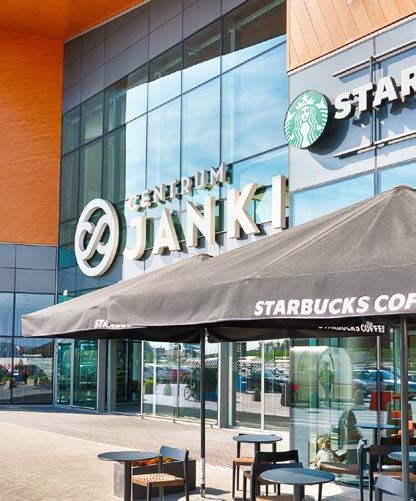
 STER, SZCZECIN                 RONDO, BYDGOSZCZ               JANKI, WARSAW                    KOMETA, TORUN

                                KORONA WROCLAW                  URSYNOW, WARSAW                 TULIPAN, LODZ

                                                              C ROMWE LL P ROP E RTY GROU P I    2020 SUSTAIN ABIL ITY R EP OR T   9
OUR APPROACH TO SUSTAINABILITY
                                       In a year defined by unprecedented disruption, events have served to reinforce the importance
                                       of community, collaboration and the benefits of our Sustainability Framework in supporting our
                                       commitment to building a resilient business.

                                       Like so many organisations, our people and systems have been truly tested this year. From the
                                       bushfires in Australia in September 2019 to the global COVID-19 pandemic that led to the rapid
                                       deployment of our Business Continuity Plans in March to initiate 100% work from home in every
                                       country of operation. Throughout these events and even as COVID-19 continues into the second
                                       half of 2020, our teams continue to support business operations and maintain our sense of
     PHIL COWLING,                     community, supporting each other our stakeholders, board and investors.
     CHIEF SUSTAINABILITY
     OFFICER                           Despite overcoming some exceptional challenges, we have continued to make significant progress
                                       against many of our FY20 objectives notably the attainment of formal ISO accreditation covering
                                       our environmental and information technology management practices in Australia, maintaining
                                       the safe and efficient operations across our property assets and the certification of Cromwell’s
                                       Australian operations as a carbon neutral business under the Federal Government Climate Active
                                       scheme.

                                       In line with the introduction of our life long training and development programmes and the global
                                       roll out of the Workday human capital platform, this year we have been able to access dynamic
                                       data across every country to support the implementation of personal development plans, training
                                       and performance reviews.

                                       For our Australian properties, our NABERS energy and water ratings were completed pre
                                       COVID-19 and results demonstrated that we were also able to meet our reduction targets and
                                       achieve further reductions in energy and water consumption and emissions.

                                       However, from March 2020 the impacts from COVID-19 on occupation clearly affected operations
                                       across many of our property assets. This has led to some anomalies across our portfolio with
                                       some assets seeing a reduction in occupancy (and energy consumption) whilst others, providing
                                       essential services, increased occupation and operating hours.

                                       These effects will also be varied across the property industry and will lead to a period of
                                       inconsistency in comparing performance against our peer groups as well as our own year on year
                                       ratings for NABERS and other building performance metrics until we see a return to 12 months of
                                       normal operation and occupation.

                                       In this year’s sustainability report we have highlighted where our full year performance data
                                       is likely to have been impacted as a consequence of COVID-19 and we will continue to do so
                                       into FY21. In order to align with the Task Force on Climate-related Financial Disclosure (TCFD)
                                       recommendations we have also set out to further quantify our short, medium and long term
                                       targets in order to provide a more consistent report on our progress.

                                       We hope to provide a clearer picture of the trajectory of our progress and place into context
                                       unexpected short term impacts such as COVID-19 and the continuous evolution and regular
                                       changes to scoring and methodologies of many of our performance benchmarks.

                                       These changes continue to present challenges, as does the need to respond to ever increasing
                                       regulation and reporting obligations. It has become increasingly apparent that more and
                                       more organisations facing similar challenges are turning to the United Nations’ Sustainable
                                       Development Goals (SDG’s) to identify, manage and communicate environmental and social
                                       impacts.

10   CR O M WE L L P R O P E R T Y G R O UP I   2 0 2 0 SU ST AI NAB I LITY R EPO R T
The SDG’s provide a broad framework for organisations to report against global challenges, supporting global action to
address global challenges and improve and sustain the quality of life for all.
Cromwell is committed to reducing the negative impacts of its activities whilst maximising those that create positive change.
To this end, we believe the SDG’s will help to frame and place our objectives into a broader context and have commenced a
process to integrate the SDGs into our ongoing reporting.
From FY21, our aim is to provide a further level of transparency to enable stakeholders to understand and compare our
actions and long-term targets against both our peer groups and to a global reference.
In this year’s report I am delighted to be able to share some of the many collective and individual successes that our
FY2019 TARGET
FY2019 TARGET
teams have made. The support from our Board and leadership team and their commitment to continuous improvement
demonstrates that whilst there will always be much to be done, our sustainability framework has become an integral and
essential part of business.
Phil Cowling
CSO, Cromwell Property Group
Targets Materiality & the SDG’s –
opportunity to contribute
NET ZERO DJSI
2050 INCLUSION
CARBON EMISSION 2024
TARGET
FOR ASSETS WHERE WE HAVE DOW JONES SUSTAINABILITY INDEX -
OPERATIONAL CONTROL AUSTRALIA
GRESB CDP A List
TOP 20% 2024
OF BENCHMARK FOR DIVERSIFIED CLIMATE CHANGE
PROPERTY TRUST
TOP 25% OF BENCHMARK FOR AU FUM
FY2019 TAR
FY2019 TAR
GRI102-12, GRI102-15 C ROMWE LL P ROP E RTY GROU P I 2020 SUSTAIN ABIL ITY R EP OR T 11Sustainability Management GLOBAL SUSTAINABILITY FRAMEWORK
Established in 2017, Cromwell’s Sustainability Framework
VALUES DRIVEN ORGANISATION (the Framework) was introduced to align our values, with
Cromwell is a values driven organisation and our our enterprise risks, and corporate strategy, to underpin
management priorities fundamentally flow from this the development of a resilient business through strong
basis. At Cromwell we continually aspire to act in a corporate social governance. The Framework continues to
principled, respectful and responsible manner regardless evolve, responding to emerging legislation and challenges
of circumstance, obstacle or location. Our global whilst maintaining focus on improving performance
sustainability strategy, management framework and through a structured, responsible and balanced pathway to
supporting policies are the direct result of Cromwell's sustained success.
values in action.
Cromwell Values
Principled
We are principled. We set the
standards and have the
courage to do what is right,
when we think it is right
Respectful Responsible
We are respectful of others. We are accountable to
We are humble and our stakeholders. We are
empathetic, working diligent and committed to
collegiately to look after continuous improvement
our stakeholders and building a sustainable
and resilient business
12 CR O M WE L L P R O P E R T Y G R O UP I 2 0 2 0 SU ST AI NAB I LITY R EPO R T GRI102-16FRAMEWORK GOVERNANCE Pillars that form the Sustainability Framework. Each Pillar
The Framework has been approved by the Board and is represented by a senior leader within the business who
responsibility for oversight has in turn been delegated by are responsible for implementation of the sustainability
the Chief Executive Officer (CEO) to the Chief Sustainability strategy and overseeing the delivery of Cromwell’s
Officer (CSO), who is responsible for the Group Group Sustainability Policy. Regular progress reports are
sustainability strategy and leads the Group Sustainability submitted to the Board as well as to the Audit and Risk
Committee. Committee. The Framework provides a holistic approach
towards managing ESG risks, identifying opportunities and
The Group Sustainability Committee is responsible for ensuring consistency across Cromwell’s evolving business
setting ESG objectives within each of the Sustainability platform globally.
Sustainability Structure
BOARD OF DIRECTORS
AUDIT AND RISK COMMITTEE
EXTERNAL CHIEF SUSTAINABILITY OFFICER
CONSULTANTS
GROUP SUSTAINABILITY COMMITTEE
ECONOMIC GOVERNANCE STAKEHOLDERS PEOPLE ENVIRONMENT
PILLAR PILLAR PILLAR PILLAR PILLAR
RESPONSIBILITY RESPONSIBILITY RESPONSIBILITY RESPONSIBILITY RESPONSIBILITY
Michael Wilde, Lucy Laakso, Rob Percy, Jodie Clark, Bobby Binning,
Group CFO Company Secretary Chief Investment Group COO Head of Property AU
Officer
Robin Macpherson, Wouter Zwetsloot,
Head of Risk EU Head of Property EU
GROUP SUSTAINABILITY COMMITTEE RESPONSIBILITIES:
Annual materiality review Establishment of objectives and targets Preparing the Annual Sustainability Report
GRI102-18, GRI102-20, GRI102-32 C ROMWE LL P ROP E RTY GROU P I 2020 SUSTAIN ABIL ITY R EP OR T 13MATERIALITY REVIEW provide insight for our strategic focus and to guide our
performance objectives for the coming year.
Rapidly Evolving Marketplace
Each year Cromwell conducts an annual materiality Over the last three years we have progressively expanded
assessment. The materiality review provides a structured this exercise to provide greater insight into how current,
approach to review through a different lens the emerging future and emerging challenges could impact Cromwell.
disrupters that may impact our Enterprise Risks and the
material topics that create opportunities and respond to Materiality Development
evolving market conditions.
62 invited survey participants
FY21
The materiality review has become an increasingly important Executive managers, senior managers
tool to ensure that Cromwell is responding appropriately to and topic experts
emerging stakeholder concerns, responding to legislative
requirements and maximising our ability to adapt in light 81% participation
of emerging market conditions. The materiality review is
Megatrend Research
FY20
conducted annually to ensure the Framework’s ongoing
objectives are appropriate and able to respond to the
dynamic environment in which Cromwell operates.
34 invited survey participants
65% participation
In December of 2019, over 60 senior managers and topic
experts from across the business participated in the
annual materiality review. The results of this review are
FY19
used to identify where there may be material exposure to Material topics defined and ranked
economic, environmental and social sustainability risks by Executive managers
or opportunities. Identified material topics are used to
GROUP MATERIALITY MATRIX
Material topics presented inCromwell's FY20 materiality matrix are organised by management pillar and sized
according to their relative impact timeframe, from short-term (large) to long-term (small). This year’s annual
Sustainability Report is a direct response to the material impact areas identified through the FY20 review.
Please see appendix for Cromwell’s latest FY21 materiality matrix, topics and definitions.
Materiality topic definitions detailed in this year’s GRI index
FY20 Group Materiality Matrix
Climate Rapidly Economic
change evolving Performance
- direct marketplace
Accessing Trust and
Importance to external stakeholders
impacts
sustainable Climate change - transitioning to Transparency
finance Human a zero-carbon future
Rights Digital
Innovation
Resourceful Stakeholder
Community buildings and Engagement
Contribution operations
Cyber-
readiness Creating the Attract and
Enhancing
leaders of retain the
Create and occupant
tomorrow right people
embrace a experience
diverse and
inclusive
workforce
Improving health
Unified global and wellbeing
approach
Keeping our people
and communities safe
Impact/disruption for Cromwell
Emerging Shorter Sustainability Pillars
Impact Term
Impact Economic Governance Stakeholders People Environment
14 CR O M WE L L P R O P E R T Y G R O UP I 2 0 2 0 SU ST AI NAB I LITY R EPO R T GRI102-15, GRI102-31, GRI102-42Report Overview
Technical Building Assessments
Asset Level Risk Assessments
TCFD
Net Zero-Target Invest to Manage Strategy
Carbon Neutral Opertaions COVID-19 Impacts
t ra n
Climate
sitio carbon
Global Real Estate Sustainability Benchmark
C l i m g t o a z u re
direct impact
Energy, Water, Waste: Targets & Performance
nin
ate
Energy Efficiency & Ratings
ch
ch a n r o -
Re
an
so
Materiality Management
ge
ur and
nce
per omic
ge -
fut
ce o
Mega-trends
e
s
-
ma
fu pe
l b ra
New Employees & Turnover
ng
n
for
lvi
Eco
ui tio
ld ns
Employee Engagement o
ev
in
Att e
gs
y
ra
the ct an idl lac
onment
p tp
Rig d Re Ra ke
vir
Human Capital r
ht
Peo tain Ec ma
En
C re a
Leadership Framework
ting
the L ple o
of To eaders
no
morr
Physical, Mental & ow Green Finance
mi
Improvin Accessing sustainable Opportunities
Financial Wellbeing g Health
c
and Well
being PRINCIPLED finance
People
COVID-19 Keeping Our People and
Health & Safety Communities Safe RESPECTFUL
ovation RESPONSIBLE Trust and Risk Management
e
Digital inn transparency Framework
an c
Agile & Connected Workforce e
ivers Anti-Corruption
Technology Investment
r a c e a D k f o rc e Compliance Record
rn
b or
d Em ve W
te an clusi St
ve
Diversity & Inclusion Action Plan C re a a n d I n
A p pro
a ch
ak
ehol Go Cy
be
bal rea r-
Awareness & Training
d Glo d er din
ess
ifie
en r
e
Un
old
Hu ts
t
Flexiable and Integrated Workforce
eh
Rig
ma
m
ak
Digital Governance
ge
h
Human Capital Systems
pant
n
St
e
ga
Customer Privacy
rienc
contribution
Community
en
occu
Business Continuity Planning
ex p e
Stakeholder Overview
ncing
Impacts on Strategy and Opertaions
Enha
Value Chain
Tenant Engagement Ethical Procurement
Risk Mangement Framework
Foundation donations
GRI102-16 C ROMWE LL P ROP E RTY GROU P I 2020 SUSTAIN ABIL ITY R EP OR T 15ECONOMIC Introduction
Cromwell’s ‘Invest to Manage’ strategy continues to deliver
PILLAR robust results.
Cromwell reported a statutory profit of $181.1 million for
the year ended 30 June 2020, up 13.3% compared to the
prior year statutory profit of $159.9 million. Operating
profit, considered by the Directors to best reflect underlying
FY20 Achievements earnings, was $221.2 million, up 27.0% compared to the
prior year result of $174.2 million. This equated to 8.50
Overview of FY20 Objectives cents per security (cps) (2019 8.21 cps) for the financial
year, above Cromwell’s original earnings guidance of 8.30
MATERIALITY TOPICS cps by 0.20 cps.
Cromwell delivered distributions of 7.50 cps during the
Economic
Performance 6 1 1 year ended 30 June 2020, an increase of 3.4% compared
to the prior year of 7.25 cps. This was in line with original
guidance. Despite the testing external environment,
Rapidly Evolving
Marketplace 3 Cromwell’s strategy has continued to deliver exceptional
results for securityholders and we are delighted that
their distributions were unaffected by this unprecedented
Accessing Sustainable
Finance 1 pandemic.
Cromwell has strong cashflows which are subject to robust
cash management processes and underpinned by high-
quality tenants and customers. Collections of rental and
Overview of FY20 Targets other income was relatively unimpacted by COVID-19 due
to the strong skew towards government and ASX-listed
Operating profit of Operating Profit
entities tenants.
no less than per security
8.30 cps 8.50 cps Cromwell’s weighted average borrowing rate for the year
(3.5% above FY19 - ended 30 June 2020 was 2.84% (2019: 3.35%), reflecting
8.21 cps) the cost of debt being at historically low levels. Cromwell
currently has no material upcoming debt expiries within
Distributions of Distributions the next two years and has substantial headroom with
no less than per security respect to debt covenants. During the year Cromwell’s
7.50 cps 7.50 cents gearing increased from 35% to 42%, being outside of the
(3.4% above FY19 - target gearing range of 30% – 40% (however, it is expected
7.25 cps) Cromwell’s gearing will oscillate around the target range
depending upon investment deployment).
Going forward the application of Cromwell’s ‘Invest to
Manage’ strategy should continue to provide the business
with further growth opportunities including Victoria Avenue
LEGEND
in Chatswood, Cromwell Polish Retail Fund (CPRF),
NOT Cromwell European Logistics Fund and the proposed
COMPLETE ONGOING
ACHIEVED Stratus Cromwell Data Centres Fund.
ECONOMIC PERFORMANCE
Cromwell’s economic objective is to ensure we can
continue to provide our investors with secure, stable and
growing distributions derived from sustainable business
practices and the dynamic allocation and deployment of
capital to our three business segments.
16 CR O M WE L L P R O P E R T Y G R O UP I 2 0 2 0 SU ST AI NAB I LITY R EPO R TInvest to Manage Strategy
Cromwell adopted its “Invest to Manage” strategy in 2018. The strategy uses existing balance sheet liquidity to fund a
range of initiatives including asset and capital recycling that build enterprise value, add to medium-term earnings and
generate higher total securityholder returns.
Cromwell is executing the strategy by deploying capital to its three business segments:
Core Defensive government base, long WALE, strong covenants, low capex and structured growth
Direct
Property Core+ Generate leasing upside and take advantage of short term market trends
Investment
Active/
Drive outperformance from repositioning and asset enhancement or alternatively capital recycling
For sale
Cromwell European REIT
CEREIT CEREIT provides stable and growing distributions, access to Asian capital
Indirect LDK Healthcare Trust
Property LDK Significant opportunity to scale-up LDK JV and establish a sizeable Seniors Living business
Investment
Cromwell Polish Retail Fund
CPRF
Temporarily warehoused as part of ‘Invest to Manage’ strategy. Targeting eventual 20 to 30% stake
Platform repositioning complete and ready to deploy operational leverage
Funds Europe New opportunities to scale-up platform – European Logistics and proposed Data Centres Funds
and Asset Deliver continued growth in quality and resilience of CEREIT portfolio
Management
Cromwell Funds Management and Oyster Property Group
A/NZ Consistent long term recurring revenue within A/NZ FM and high margins from retail syndicates
‘Through the cycle’ target gearing range of 30% to 40% with leverage capacity to be used on a
Capital Management
short term basis to execute the ‘Invest to Manage’ strategy
Results for the year
Key results for the financial year ended 30 June 2020 are:
Earnings and Distributions Platform Financial Position
Underlying operating profit Direct Property Investment NTA per unit Liquidity(2)
↑ $221 million $3.0bn value 6.2 year WALE $0.99 $667
5.6% WACR $1.1bn development
up 27.0% (FY19 $174 million) pipeline
(FY19 $0.97) million
Underlying operating profit Indirect Property Investment Debt tenor Gearing
per security CEREIT CPRF (1)
3.2 years 41.6%
↑ 8.50 cents €394 million
book value
€452 million
independent
3.5% above FY19 (8.21 cps)
(30.7% interest) external valuation Interest rate Next debt
hedging maturity
Distributions per security Funds and asset management
↑ 7.50 cents $8.2bn total AUM $5.8bn AUM in 66% / March
3.4% above FY19 (7.25 cps) $2.4bn AUM in Europe (78%
recurring)
2.6 years 2022
AU/NZ
1 Excludes equity accounted interest in Ursynow
2 Cash and cash equivalents plus undrawn commitments
For a more detailed overview of Cromwell’s FY20 performance visit
www.cromwellpropertygroup.com/securityholder-centre/annual-reports.
C ROMWE LL P ROP E RTY GROU P I 2020 SUSTAIN ABIL ITY R EP OR T 17DIRECT AND INDIRECT ECONOMIC IMPACTS
Cromwell‘s activities create direct and indirect economic benefits for our stakeholders through:
DIRECT INDIRECT
TENANTS AND Provisions of • Provision of lettable space that Healthy • Creating modern and attractive
OCCUPIERS service is safe, accessible and fit for workspaces workspaces which encourage
purpose. work-life balance and support
engagement, productivity and
lifestyle improvements for our tenant
customers.
• Social connection, both at the intra
and inter business levels.
COMMUNITY Placemaking • Activiation of street frontage. Building • Supporting the revitalisation and
• Increase foot traffic via offered Refurbishment long-term growth of our urban
services and amenities. centres though asset refurbishment
and major development projects.
Philanthropy • Directly supporting the Building • Provision of common areas for charity
community through charitable activations and promotional events.
donations, advisory services and • Support of the creative industry
community partnerships. through the availablity of space.
Supply Chain • Creating employment through Supply Chain • Encouraging transparency of ESG
the procurement of goods and risks & impacts in our supply chain.
services.
INDUSTRY Memberships • Annual fees to industry Time • Participation on industry committees,
organisations. contributions & support of advocacy focus areas and
benefit-in-kind event sponsorships
Disclosure of • Participation in and promotion of ESG
performance benchmarks & rating schemes.
information • Support knowledge building towards
creating a more sustainable industry.
EMPLOYEES Job creation • Provision of fair wages, Economic • Fair wages the support broader
and stable professional development stimulus societal economic activity.
employment opportunities and ongoing
Networking • Exposure to personal and
secure employment for our
professional development through
people.
formal & informal meetings,
corporate and industry events.
INVESTORS - Secure returns • Directly increasing the wealth Provision of • Developing responsible investment
RETAIL of our investors through responsible products which encourage investors
secure, stable and increasing investment to make informed decisions regarding
distributions with potential for opportunities the impacts of their investments.
capital growth.
Business • Material disclosures are accurate,
transparency balanced, clear, comparible, reliable
and timely.
Client • Direct access to Cromwell's dedicated
relationship inhouse funds management team.
management
INVESTORS - Secure returns • Providing risk adjusted returns Business • Material disclosures are accurate,
INSTITUTIONAL that meet or exceed investors transparency balanced, clear, comparible, reliable
expectations. and timely.
FINANCIAL Debt • Interest on debt with ultimate
INSTITUTIONS repayment of amount borrowed.
18 CR O M WE L L P R O P E R T Y G R O UP I 2 0 2 0 SU ST AI NAB I LITY R EPO R T GRI203-2ACCESSING SUSTAINABLE FINANCE In response to global concerns around organisational
Cromwell has integrated sustainability considerations preparedness, the Financial Stability Board established
into its financing decisions and is actively participating in the Task Force on Climate-related Financial Disclosures,
industry sector groups whose sole aim is to create market who in 2017 published their recommendations (TCFD
efficiencies for investors and issuers in the sustainability recommendations www.fsb-tcfd.org). The objective of the
finance space. recommendations are to establish a voluntary framework
for disclosing organisational climate-related financial
Cromwell is actively investigating opportunities, utilising risk to support informed and efficient capital-allocation
its demonstrable ESG performance, to better access decisions.
sustainable finance tools, such as green finance and
bonds. FY21 will see Cromwell’s Global Sustainability Cromwell is a registered supporter of the TCFD
Finance Working group implementing Green Financing recommendations, publishing an annual TCFD statement
Frameworks with a view to applying this knowledge to the which sets out the business’ approach to identify climate-
Funds it manages. based risk and how actions support the identification of
vulnerabilities, reduce exposure and minimise the impact
from climate change in our operations.
CLIMATE CHANGE - TRANSITIONING TO A ZERO-
CARBON FUTURE
Climate-related Risk & Opportunity
Climate-related Financial Disclosure Cromwell’s response to climate change includes
Understanding the risks and potential impacts that identifying the underlying risk throughout the property
climate change presents to businesses, economies, acquire, build, own, operate and sell cycle. Identifying
communities and ecosystems continues to increase in geographical and asset level vulnerabilities to current and
importance. Understanding Cromwell’s exposure to these future impacts supports the development of appropriate
unfolding risks and identifying opportunities that support capital improvement plans, insurance coverage and asset
a transition to a low carbon economy frames the evolution protection strategies.
of Cromwell’s business strategy, supporting the business’
Cromwell have adopted scenario testing to consider the
long-term resilience.
short medium and long-term impacts of climate change to
Risk from climate change are two-fold in nature, namely our property operations. As part of Cromwell’s acquisitions
transitional risk and physical risk. and operations strategy, scenarios that include long-term
increasing weather severity due to climate change and
• Transitional risk is associated with changes in alternatives where investment in transition to a low carbon
relevant regulatory frameworks, legal responsibilities, economy reduces these impacts are tested.
technological change, market disruption and other
societal responses to respond. Insights are used to inform strategic asset plans, long-
• Physical risk includes acute risk, resulting from term capital works and refurbishment plans as well as
projected variance in the severity and frequency of our emissions reductions strategies. Through active and
extreme weather events, and chronic risk, that are the continued participation in global reporting initiatives such
result of longer-term changes in climatic patterns. as GRESB, CDP and TCFD, Cromwell continues to build
operational and financial resilience and adapt to emerging
Projections in regional climatic patterns will have a direct risk and opportunities.
impact on the day-to-day operations of assets, investment
priorities, portfolio structures, customer preference and
the configuration of supply chains.
Please find Cromwell’s 2020 TCFD Index
located on page 64 of this report.
GRI102-12 C ROMWE LL P ROP E RTY GROU P I 2020 SUSTAIN ABIL ITY R EP OR T 19Summary of Climate-related Risks and Opportunities
Relative Financial
Climate-related Risk Impact relative by risk Climate-related Driver
Energy price increase • Grid supply and demand for renewables
Energy costs are likely to rise from the introduction of a cost of carbon, • Cost for decarbonisation of the grid and potential
the impact of increased capacity demand due population growth as well for a carbon levy.
as demand for a limited renewable energy availability. • Access to grid based low emission/renewable energy
Efficiency requirements • Mandates on products and services
Increasing performance expectations from the market drives increasing
efficiency and performance standards. Ongoing investment and the
potential for major refurbishment further drives compliance requirements
to meet new regulatory standards.
Building service capacity • Increasing temperature extremities as a consequence
Insufficient capacity to meet cooling, heating or air distribution of forecast increased global mean temperature
requirements to meet the increased building loads.
Increased insurance claims liability • Rise in risk-based pricing of insurance policies (beyond
Continuing impacts from increased global insurance events leading to demand elasticity)
substantial increases in the cost of cover.
Capital availability • Inability to attract debt and equity financiers and/or
Reduced access to capital & competitive finance options at preferential investors due to uncertain risks related to the climate
rates due to changing market perception of risk and increasing ESG
performance requirements.
Acquisition risk exposure • Mandates on and regulation of existing products and services
Ineffective due diligence in acquisitions and failure to adequately
determine vulnerabilities or the likelihood that an asset is at risk of
becoming stranded.
Reputational Risk • Increased stakeholder concern or negative stakeholder feedback
Decreased revenues due to reduced demand for products and services
lead to reputational damage.
Carbon Pricing • Carbon pricing mechanisms
Reduced profitability of investment portfolios due to Government lead
energy policies.
Asset Impairment • Loss of investors and shareholders due to a poor
Decreased asset value or asset useful life leading to write-offs, asset environmental performance outcomes
impairment or early retirement of existing assets.
Demand for quality space • Shift in consumer preferences
Increased revenues resulting from increased demand for efficient and
health promoting products and services.
On-site renewables • Use of lower-emission sources of energy
Identify opportunities and responding to regulatory and market drvers to
increase stand alone on-site renewable generation.
Data management & analysis • Reputational benefits resulting in increased demand for goods/services
Investment in detailed energy and data management systems, linked with
data collection and analytical tools, to reduce indirect (operating) costs
though asset tuning and peak demand management.
20 CR O M WE L L P R O P E R T Y G R O UP I 2 0 2 0 SU ST AI NAB I LITY R EPO R T GRI201-2Origin & Impacts Impact Impact Horizon Climate-related Opportunity
Upstream Cromwell Downstream Short- Medium- Long-
Pre- Operations Post- term term term
operations operations
• Reduce the impact of cost increases by maximising operational efficiency
O X X • Reduce grid dependency through investment in on-site renewables
Life of the
Likely • Identify strategic upgrade and refurbishment opportunities to deliver increased
asset
origin impact impact performance, improve ESG ratings & performance indicators and increase asset
value
• New development and refurbishment projects design in adaptability and stretch
boundaries
Investment • Strategic asset plans consider future market expectation, competition and regulation.
O X O Very likely
Horizon Planned refurbishment and investment on existing assets ensure they remain
relevant and attractive and attract premium occupation and value
• Capacity and climate scenario testing is undertaken at acquisition and as part of
ongoing operations to determine the suitability and longevity of major services and
More
Life of the building fabric
O X X likely than
asset • Property assets are audited to determine whether identified vulnerabilities have
not
focussed strategies and investment plans to minimise costs associated with
unnecessary early retirement and replacement of unsuitable plant and equipment
• Collaboration with insurers on acquisitions and operations to reduce insurance cover
risk
More
Investment • Climate impact scenario testing undertaken routinely to understand physical impacts
O X X likely than
Horizon and to address vulnerabilities
not
• Reducing exposure and risk underpins insurers confidence and underpins
competitive cover
• Demonstrating leadership in sustainability and management of climate risk
More underpins best practice and provides confidence to financiers and investors.
Life of the
O X likely than • Competitive access to multiple streams for debt enables increased options for
asset
not acquisitions & management, providing increased security to investors
• In house expertise, strong governance processes combined with detailed
About as comprehensive tests, inspections and assessment of vulnerabilities undertaken by
Investment
O X X likely as independent specialists supports the identification of risks and realisation of value
Horizon
not add repurposing opportunities
• Delivering our values and demonstrating our strong commitments and positive
Life of the outcomes protects and strengthens our reputation and the trust placed in us by our
O X X unlikely
asset Stakeholders
• Ensuring impacts are minimised by delivering leading energy performance and long-
About as
Investment term emissions reduction targets
O X X likely as
Horizon • Experienced in-house expertise with a track record of improving and repurposing
not
underperforming assets where others have not found value
• Avoiding material risks and minimising impacts by considered management
More
Life of the strategies, delivered by in house experienced teams minimises exposure and
O X likely than
asset provides opportunities to improve value through leadership in climate risk
not
management
• Levering of our extensive in house experience and expertise to deliver refurbishment
Impact and repositioning of assets to meet and exceed industry performance metrics
OX OX Very likely
now • Ensuring our assets meet the highest expectations enables access to an increasing
demand within a restricted market and offers opportunity to maximise yield and value
• Implementation of on-site solar PV supports increased energy performance ratings,
Virtually Investment reduces impacts from rising energy costs and supports emissions reduction efforts
OX OX
certain Horizon towards limiting global temperature rise this century to well below 2 degrees Celsius
above pre-industrial levels
• Embracing the IoT & investing in smart building operations will unlock access to
further maximise efficiency in operations and reduction of energy and emissions.
Virtually Impact
OX X
certain now • Our Envizi data management platform enables the collation of over 3 million data
points per annum to support our property assets and deliver ongoing financial
savings and efficiencies
C ROMWE LL P ROP E RTY GROU P I 2020 SUSTAIN ABIL ITY R EP OR T 21GOVERNANCE
PILLAR
FY20 Achievements Introduction
Cromwell’s Governance Pillar objective is to manage risk
Overview of FY20 Objectives
and protect investors’ interests through best practice
governance process and procedures.
MATERIALITY TOPICS Cromwell measures performance against local and global
indices and compliance standards to provide a transparent
Trust and Transparency 1 4 reporting framework as a demonstration of best practice
corporate governance.
Cyber-readiness 5 CORPORATE GOVERNANCE
The Board is committed to Cromwell meeting securityholders’
and stakeholders’ expectations of good corporate governance.
Human Rights 2 The Board is proactive with respect to corporate governance
and actively reviews developments to determine which
corporate governance arrangements are appropriate for
Overview of FY20 Targets Cromwell and its securityholders and stakeholders.
As at 30 June 2020, the Board comprised six Directors,
Continue to comply with the Achieved - including the Chief Executive Officer (CEO). The Board is
ASX Corporate Governance ongoing responsible for overall corporate governance and adopts
Council’s Principles and appropriate policies and procedures to guide all company
Recommendations (3rd Edition) functions. Day-to-day management of Cromwell’s affairs
and implementation of agreed strategic objectives,
Prepare for implementation of Ongoing including those in relation to sustainability, are delegated
the ASX Corporate Governance by the Board to management, under the direction of the
Council’s Principles and CEO, via the Delegation of Authority Policy.
Recommendations (4th
Edition) Risk Management Framework
The Board understands that identifying and managing risk
Maintain a clean compliance Achieved - is central to the successful delivery of the Group’s strategy.
record against targets set out ongoing Cromwell has an Enterprise Risk Management Policy and a
in data pack supporting framework to promote an understanding of risk
and the opportunities to manage identified risks for the
Maintain GRESB Public Ongoing benefit of securityholders and other stakeholders.
Disclosure Score of ‘A’
Risk management is addressed in all management
processes, compliance documentation, due diligence, asset
ISO27001 Information Security Achieved
plans, property management reports, debt plans and capital
Management certification
and maintenance programs.
Full compliance with all Ongoing
FY2019 TARGET
Activities undertaken include a combination of:
relevant Modern Slavery • Monitoring of enterprise-wide risk through regular
legislation meetings of the Audit and Risk Committee (a Board
Committee);
LEGEND
• Maintaining a risk register outlining risks, risk ratings
NOT and controls;
COMPLETE ONGOING
ACHIEVED • Testing of adherence to established processes for all
functions;
• Implementation of risk focused software program - Protecht
22 CR O M WE L L P R O P E R T Y G R O UP I 2 0 2 0 SU ST AI NAB I LITY R EPO R T GRI102-19, GRI205-1• Reviewing documentation and processes on a regular Audit and Risk Universe
basis; The Group’s Audit and Risk Universe, aligned with the
• Outsourcing of risk to contractors and service providers Sustainability Framework, sets out each risk description
in areas which are not seen as core functions, including and auditable focus area. The Audit and Risk Universe
professional advice; details three internal levels of control: Level One
• Designing processes to meet industry accepted or best (management oversight, and operational controls, policies
practice; and processes); Level Two (monitoring governance,
• Maintaining appropriate insurance coverage; and compliance, risk management and reporting); and Level
• Allocating dedicated internal and external resources to Three (functionally independent assessments and reviews).
conduct audits and review processes with a focus on risk Level Four under the Audit and Risk Universe comprises
management and continuous improvement. external audit, assurance and verification of processes.
Risk Management Framework
CROMWELL BOARD
Set risk appetite
Key
AUDIT & RISK COMMITTEE
Reporting
line Oversee, assess and monitor enterpise risk management and Sustainability frameworks
COMPLIANCE GROUP LEADERSHIP TEAM
• Delivery of invest to mange • Take ownership of risks • Implement and execute risk
• Conduct independent
strategy management throughout Cromwell
examinations and
evaluations of risk
mitigation plans
(policies, procedures, RISK MANAGEMENT FRAMEWORK SUSTAINABILITY FRAMEWORK
systems) and review • Company Secretary, AU, Chief Sustainabilty Officer
to assess the Head of Risk, Europe
appropriateness of
• Manage the development and
the risk identification MATERIALITY SUSTAINABILITY
implementation of Enterprise Risk
and measurement ASSESSMENT OBJECTIVES
Management Framework
methodology
• Identify and • Actions and metrics
• Promote a strong
prioritise risks and • Business Plans
governance culture
opportunities
RISK AND AUDIT UNIVERSE
• Senior Management Group • Integrate risk management into normal business activities
• Implement procedures to identify, assess, treat, report and monitor risks • Report risk incidents (losses/impacts and near losses/impacts
ECONOMIC PILLAR GOVERNANCE PILLAR STAKEHOLDERS PILLAR PEOPLE PILLAR ENVIRONMENT PILLAR
• Capital Management • Risk Management • Investor Relations • Health & Safety • Property Portfolio
Debt
• Compliance • Retail Funds • Succession Planning • Asset Management
• Capital Management Management
• Insurance • Talent attraction &
Equity
• Governance retention
• IT Strategy
GRI102-18 C ROMWE LL P ROP E RTY GROU P I 2020 SUSTAIN ABIL ITY R EP OR T 23You can also read


