2023 SOYBEAN SEED GUIDE - www.snobelenfarms.com
←
→
Page content transcription
If your browser does not render page correctly, please read the page content below
www.snobelenfarms.com

     2023
SOYBEAN SEED GUIDE
Table of Contents

   1           The Snobelen Farms Difference
   2           Our Seed Team
   3           Soybean Variety Description
   4           Soybean Characteristics
   8           Seeding Rates
   8           Optimum Planting Dates
   9           Seeds Per Food Row
   9           Seeding Depth
  10           Maturity Map
  12           Seed Treatment
  15           Diseases
  19           Insects
  22           Metric & Imperial Conversion Charts
  23           Soybean Growth Stages

       Lucknow                             Palmerston

Head Office
Food Grade Soybean Facility
Commercial & I.P. Receiving Facility     I.P. Receiving Facility
Cleaning, Processing, & Packaging Seed   Cleaning, Processing,
Seed Treating                            & Packaging Seed
                                         Seed Treating
THE SNOBELEN FARMS
     DIFFERENCE
  Snobelen Farms Ltd. is an independent, family-owned
   company that was founded in 1971. We specialize in
 commercial grains, pedigreed seed, and the production,
processing and sales of food grade soybeans for markets
   across Canada and internationally. We take pride in
 combining years of experience with attentive customer
    service to complement the premium quality of our
agricultural products. With eight locations we are able to
        serve the needs of growers across Ontario.

                                   We specialize in:
                       Multiplying, processing, and selling the best
                                   genetics for our area
                       Testing and growing the varieties that work
We are CIPRS + HACCP        for the farmer and the end users
      Certified           Selling certified seed to farmers and
                              3  retailers across Ontario
                                                                       1
The Seed Team

    JODIE EADIE                         BRENDAN ZETTLER
    Seed Business Manager               Grain Originator &
    Masters in Environmental            I.P. Program Coordinator
    Studies; University of Waterloo     B. Sc. Agriculture;
    jeadie@snobelenfarms.com            University of Guelph
    Office: 519-343-3630                CCA-ON
    Cell: 519-524-0713                  bzettler@snobelenfarms.com

       @snobelenseeds                   Office: 519-528-2092
                                        Cell: 519-389-7591
                                            @formosafarmer

    SHERRI HALDENBY                     TERESA TEUNE
    Sales Rep & Lucknow                 Palmerston Seed
    Seed Administrator                  Administrator
    shaldenby@snobelenfarms.com         B. Sc. Agriculture;
    Office: 519-528-2092                University of Guelph
    Cell: 519-525-1367                  tteune@snobelenfarms.com
       @haldenbysherri                  Office: 519-343-3630

Lucknow 1-800-582-5669                Palmerston 1-877-343-3630
2
Soybean Variety Description

                          Food Grade

                          Yellow Hilum

  OAC Malory                OAC Kamran               OAC Strive
SCN Resistant              SCN Resistant           Impressive
Excellent yield            Excellent lodging       emergence and
potential                  score                   early season growth
Excellent field            Short to medium         Ideally suited for 7"
appearance                 plant stature           to 15" rows

                                                     Dark Hilum
  OAC Bruton               OAC Lakeview
Tall plant height          High yielding, stable    OAC Wallace
and Phytophthora           performance across      High yielding
root rot resistance        most environments       variety in both wet
Well suited for clay       Excellent tolerance     and dry areas
soils                      to Phytophthora         performs well in
SCN resistant              root rot                conventional and
                                                   no-till operations

                        Technology Traited
                           R2 + R2X + XF

                             Ramage XF               Mahony R2
  Altitude R2              New XtendFlex           Bushy plant type
Top yield potential        variety with three      Good podding
Good Podding               modes of action         height
height and no pod          SCN Resistant           An aggressive high
shatter                    Excellent               yielding early
                           standability            variety

 Orr R2X *NEW
Good white mold           Savage R2X *NEW
rating                     SCN Resistant
SCN Resistant              High yield potential
Moderate field             Strong performer in
tolerance to               drought situations
Phytophthora root rot                                                      3
Food Grade Yellow Hilum
                 Characteristics

                           OAC Strive   OAC Lakeview    OAC Kamran

        CHU Rating           2650          2700            2725

      Maturity Group          0.4           0.5             0.6

                           Imperfect                    Imperfect
       Hilum Colour                       Yellow
                            Yellow                       Yellow

       Plant Height      Medium-Tall      Medium       Short-Medium

      Plant Canopy
                          Semi-bushy      Medium        Semi-bushy
          Type

         Lodging*              1.8          1.7             1.1

        Row Width
                            7" - 15"      7" - 15"        7" - 15"
     Recommendation

         Soil Type
                               All          All             All
     Recommendation

       Protein (%)            44.0          39.9           42.4

       White Mold
                        Above Average     Average          N/A
        Ratings

           SCN                 No           No             Yes

        Seed Size
                             2000          2250            2200
     (Seeds / pound)

    *Lodging: 1=excellent, 5=poor

4
Food Grade Yellow Hilum
             Characteristics

                      OAC Malory   OAC Bruton    OAC Wallace

    CHU Rating           2800        2975           2750

  Maturity Group           1.2         2             0.7

   Hilum Colour         Yellow      Yellow         Brown

   Plant Height      Medium-Tall    Medium      Medium-Tall

  Plant Canopy
                        Medium      Medium       Semi-bushy
      Type

     Lodging*              1.6        1.3            1.7

    Row Width
                        7" - 30"    7" - 30"       7" - 15"
 Recommendation

     Soil Type
                           All       Clay            All
 Recommendation

   Protein (%)            42.6        42.5          38.2

   White Mold
                          N/A         N/A       Above Average
    Ratings

       SCN                Yes         Yes            No

    Seed Size
                         2400        1900           2200
 (Seeds / pound)

*Lodging: 1=excellent, 5=poor

                                                                5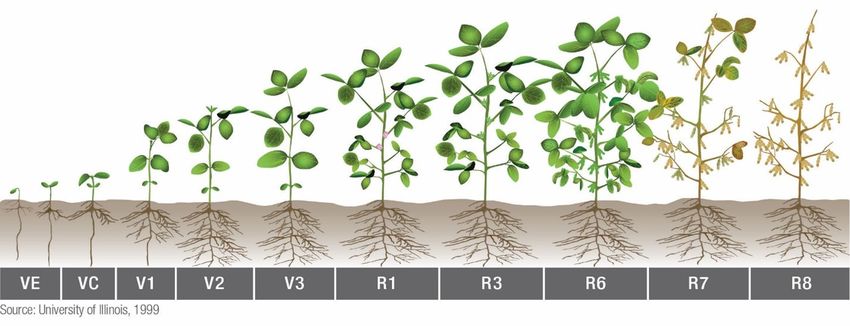
Technology Traited
                        Characteristics

                           Mahony R2   Savage R2X   Ramage XF

        CHU Rating            2350       2675         2675

      Maturity Group          0.3         0.5          0.5

                                                    Imperfect
       Hilum Colour          Black       Black
                                                     Yellow

       Plant Height         Medium        Tall      Medium

      Plant Canopy
                             Bushy       Bushy      Medium
          Type

         Lodging*              1.5        N/A          1.5

        Row Width
                            7" - 30"    7" - 30"     7" - 30"
     Recommendation

         Soil Type
                               All        All          All
     Recommendation

       White Mold
                            Average      Good       Average
        Rating

           SCN                 No         Yes          Yes

    *Lodging: 1=excellent, 5=poor

6
Technology Traited
                  Characteristics

                                  Altitude R2     Orr R2X

       CHU Rating                    2725          2750

     Maturity Group                  0.6            0.8

      Hilum Colour                 Brown          Brown

      Plant Height                  Short       Medium-Tall

   Plant Canopy Type             Semi-Bushy       Bushy

        Lodging*                      1.3          N/A

       Row Width
                                   7" - 30"       7" - 30"
    Recommendation

        Soil Type
                                      All           All
    Recommendation

   White Mold Rating            Above Average    Moderate

          SCN                        No             Yes

*Lodging: 1=excellent, 5=poor

                                                              7
Seeding Rates

                        7.5" Row       15" Row         22" Row         30" Row
                        194,000        177,000         172,000         162,000
      Number of
                      seeds/acre     seeds/acre      seeds/acre      seeds/acre
      Seeds/Lb
                      (2.8 seeds/    (5.1 seeds/     (7.2 seeds/     (9.3 seeds/
                        ft. row)       ft. row)        ft. row)        ft. row)

         1800               108           98             96               90

         2000               97            89             86               81

         2200               88            80              79              74

         2400               81            74              72              68

         2600               75            68             66               63

         2800               69            63              62              58

         3000               65            59             58               54

                        157,000         143,000        139,000          131,000
                      plants/acre     plants/acre    plants/acre     plants/acre
                      (2.3 plants/    (4.1 plants/   (5.9 plants/    (7.5 plants/
                         ft. row)       ft. row)        ft. row)        ft. row)

    Seeding Rate in pounds/acre for each common row spacing and recommended
    seeds/acre (seeds/ft. of row)
    Seeding rates are based on having a germination of 90% and an emergence of 85-
    90% (plant stand of 76-81% of seeding rate)
    Derived from: PUB 811, Table 2-11

                 Optimum Planting Date
                                        Yield              Percent of Full Yield
          Planting Date
                                      (bu/acre)                    (%)

         April 15 - May 5                63.8                       100

         May 6 - May 20                  63.3                       80

         May 21 - June 5                 58.3                       92

8
Seeds Per Foot Row
Linear Desired Plant Population per Acre
Row
Feet of
Spacing 105,000 110,000 130,000 150,000 175,000 200,000 225,000
Row Per
(inches)
Acre Seeds per Foot Row
30 17,424 6.0 6.3 7.5 8.6 10 11.5 12.9
22 23,760 4.4 4.6 5.5 6.3 7.4 8.4 9.5
15 34,848 3.0 3.2 3.7 4.3 5.0 5.7 6.5
10 52,272 2.0 2.1 2.5 2.9 3.3 3.8 4.3
7.5 69,696 1.5 1.6 1.9 2.2 2.5 2.9 3.2
Derived from: Mississippi State University Extension Service
Seeding Depth
Soybean seed is very sensitive to planting depth. Under most conditions,
soybeans should be planted around 1.5 inches deep. However, since
soybean seed has a high water demand for germination, it is important to
plant ½ inch into moisture. It is also important to achieve good seed-to-
soil contact and to close the seed slot.
As a general rule you can plant shallower when:
Early planting
High residue conditions
Fine textured soils
Moist soils
You may have to plant deeper when:
Late planting
Coarse textured soils
Dry soils
The range of planting depth, depending on the conditions, is 1” – 2.5”.
9Ontario Soybean Maturity Map
Source: Ontario Soybean and Canola Committee, 2019
Population Reduction/Yield
Potential Relationship
Plants Per Acre Optimum Stand Optimum Yield
157,000 100% 100%
118,000 75% 98%
78,000 50% 90%
39,000 25% 75%
10MULTI-ACTION
LIQUID INOCULANT
FOR SOYBEANS
LALFIX® PROYIELD Liquid Soybean
is a new leading formulation liquid
inoculant in an easy to use single
package, no mixing required.
The two unique strains of Bradyrhizobium elkanii bring soybean growers an innovative
inoculant with higher rhizobia survival and competitiveness.
In addition, Delftia acidovorans increases root growth, nutrient and water uptake –
ultimately
leading to enhanced nodulation and nitrogen fixation, early vigor and higher soybean yields.
Delftia acidovorans is also known to produce a significant amount of chaperone molecules
that help solubilize iron and sulfur for soybean availability.
Microbial By Nature
www.lallemandplantcare.com
11Fortenza Vayantis IV
Seed Treatment
Fortenza Vayantis IV is a new non-neonicotinoid soybean seed
treatment that can be applied as a commercial seed treatment.
Four active ingredients deliver control of European chafer, June
beetle, wireworm and seed corn maggot, while protecting
growing soybean seedlings from the following diseases:
Seed rot, damping off and Seed rot and seedling blight
seedling blight cause by caused by Phomopsis spp.
Fusarium spp., Pythium spp. Early season root rot
and Rhizoctonia spp. caused by Phytophthora
Seeding root rot caused by megasperma var. sojae (1)
Fusarium spp.
Even under heavy insect and disease pressure, Fortenza
Vayantis IV helps producers build a strong soybean stand with
faster, more uniform growth.
In seed corn maggot trials conducted at the
Honeywood Research Farm in Plattsville,
Ontario, soybean stands treated with Fortenza
fared better than infested checks treated with a
fungicide base.
Fungicide base (infested check) Fortenza @ 50g + Fungicide base
Photos taken at the Honeywood Research Farm in Plattsville, Ontario, in July 2016.
N=12 Performance evaluations are based on field observations and public information.
Data from multiple locations and years should be consulted whenever possible.
Individual results may vary depending on local growing, soil and weather conditions.
1 Vayantis IV RFC provides early season protection against Phytophthora root rot for
tolerant varieties of soybeans.
Courtesy of Syngenta Canada
12Vayantis IV
Seed Treatment
The broadest Phytophthora and Pythium
protection available
Contains 4 active ingredients - with one completely new
mode of action
Provides an average yield bump of 1.6 bu/acre when
compared to Vibrance® Maxx RFC in trials
Faster emergence and improved stand with better root
growth in high phytophthora pressure
Source: Syngenta trial near Jarvis, ON, 2021
Broad-spectrum disease activity
Vayantis IV protects soybeans against:
Phytophthora megasperma var. sojae (early season root rot)
Rhizoctonia spp. (seed rot/pre-emergence damping-off,
post-emergence damping-off, seedling blight)
Pythium spp. (seed rot/pre-emergence damping-off, post-
emergence damping off, seedling blight)
Fusarium spp. (seed rot/pre-emergence damping-off, post-
emergence seeding blight and seedling root rot)
Seed-borne Phomopsis spp. (seed rot and seedling blight)
13SOYBEANS SYNGENTA SOYBEAN SEEDCARE™
Protect your investment
With NK seed, we tap into the latest Seedcare™ innovations from Syngenta, so you can protect your investment against
early- season insect and disease threats.
We’re offering a choice of two soybean Seedcare packages with the option to add Saltro® on select varieties.
DISEASES CONTROLLED CAUSED BY INSECTS
European chafer
Bean leaf beetle
Sudden death
Black cutworm
cyst nematode
Phytophthora
megasperma
June beetle
Rhizoctonia
Seed corn
Phomopsis
Wireworm
syndrome
var. sojae
Fusarium
Soybean
Pythium
maggot
PACKAGE 1
PACKAGE 2
1
ADD-ON OPTION
Legend
Control
1
Use for early season feeding damage
from bean leaf beetle.
For more information, contact your Syngenta Representative, our Customer Interaction Centre at 1-87-SYNGENTA
(1-877-964-3682) or visit Syngenta.ca/NK
14Diseases
Rhizoctonia Seedling Soybean Cyst
Blight Nematode
Rhizoctonia seedling blight is Symptoms initially begin with
caused by the fungus slow canopy closure often
Rhizoctonia solani. The mistaken as a herbicide failure
characteristic symptom of this early in the season. Plant height
seedling blight is reddish brown is affected, resulting in short
lesions on the seedling’s lower plants next to tall plants. Poor
stem or hypocotyl, usually at the fertility can enhance above-
soil level. Lesions on the ground symptoms and are
diseased stem appear sunken similar to potassium deficiency
and dry. and sometimes nitrogen
deficiency. Poor stands and
death are possible. Young
female SCN can be found on
Agronomic Tip plant roots in the field most
Soybeans remove a readily when plants begin to
tremendous amount of flower. There is a common
potassium (approximately
interaction with Sudden Death
70 lb/acre for a
Syndrome.
50 bu/acre crop)
15Diseases
Pythium Seedling Phytophthora
Blight Root Rot
Many Pythium species can cause Phytophthora root rot is caused
soybean seedling blight and by the oomycete Phytophthora
appears similar to Phytophthora sojae. Infected plants appear
root rot. Pythium seedling blight alone or in patches. The
symptoms include rotten, mushy disease causes a stem rot
seeds or seedlings with poorly characterized by chocolate
developed roots. Water-soaked brown stem lesions, but the
lesions may be present on the symptoms of the seedling
hypocotyl or cotyledons. phase resemble the symptoms
Pythium seedling blight can of many other seedling
occur across a range of diseases. Phytophthora
temperatures, but high soil infected seedling stems are soft
moisture increases disease and water-soaked. Overall,
severity. Consequently, infected seedlings will wilt and
symptoms are most severe in be stunted. Phytophthora root
poorly drained soils and areas rot occurs across many
prone to flooding. environments, but is most
common in warm (15 degrees
Celsius) and in wet conditions.
16Diseases
Frog Eye Leaf Spot Sudden Death
Syndrome (SDS)
Typical symptoms are leaf This is a disease that is starting to
lesions that are circular with a show up in Huron & Bruce.
purple margin around an ashy- Symptoms usually begin during the
flowering stage and get
white/gray center. Lesions begin
progressively worse by the R6
as dark, water-soaked spots on
growth stage. Small yellow spots
the younger leaves. As the first appear on the upper leaves
lesions age, the centers become and progress into yellow streaks
ash-gray or light brown. Lesions and eventually become necrotic
often coalesce to form larger, with only the veins remaining
irregular spots. Timely fungicide green. Roots of infected plants are
applications, when thresholds usually rotted, and plants can be
have been observed, will control easily pulled out of the soil. The
pith tissue will remain white, while
frog eye leaf spot.
the water-conducting tissue
(xylem) will have a gray to brown
colour. Many times SDS symptoms
Diseases derived from: Crop Protection Network, will be more severe in the
University of Tennessee Extension, Cornell University, presence of soybean cyst
North Dakota State University, Mississippi State
University Extension, University of Nebraska-Lincoln, nematodes and may be worse after
OMAFRA Pub. 811 a rotation with corn that had
severe stalk rot the previous year.
17Diseases
White Mold
White mold is caused by the fungus Sclerotinia sclerotiorum.
The fungus is easily recognized by the presence of fluffy white
mycelium (the vegetative body of the fungus) that is the source of the
name white mold. Each year, the occurrence of white mold is heavily
dependent on weather conditions during soybean flowering and early
pod development. Rain, moderate temperatures (less than 28° C), high
relative humidity and moist soil favour the growth of the fungus if it is
present.
Sclerotia germinates to form mushroom-like structures called
apothecia. Apothecia are tan coloured, have a sponge-like texture and
are 1/4 to 1/2 inch wide at maturity. They are found on the soil surface
and form from sclerotia when the soil is moist and dim light is filtered
through the crop canopy. Under the cap of the apothecia, microscopic
spores (ascospores) are produced and forcibly ejected. The disease
cycle of white mold begins when ascospores germinate and colonize
on senescing flower petals that adhere to emerging pods. Infection
eventually progresses from pods to other nodes and stems, resulting
in a premature death of stems. If adjacent plants come into contact
with an infected plant, they may also become infected, but plant to
plant spread of the pathogen is minimal and not as important as
infection of blossoms.
Sclerotia are formed from the white mold fungus growing on and
inside stems and pods. Sclerotia that are formed on stems and pods
eventually fall to the soil surface. Those formed inside stems and
pods are released when plants pass through the combine at harvest
and are deposited on the soil surface.
18Insects
Seed Corn Maggot Wireworm
The seed corn maggot is a pale, Wireworms are slender, hard-
yellowish-white larva found bodied, wire-like beetle larvae that
burrowing into soybean seeds. can damage young soybean plants.
They are shiny yellow to brown in
Full grown maggots are legless,
color and range in size from 1/2 to
about 6 mm long, cylindrical,
1-1/2 inches long. Wireworms can
narrow, and tapered. The maggot feed on and damage one or more
lacks a defined head and legs, portions of a soybean seed or can
but has small black mouth completely hollow it out, leaving
hooks at the front of its body. only the seed coat. Wireworms may
Fields in which animal or green also cut off small roots or tunnel
manure crops have been used into the underground portions of
have a greater potential for seed young soybean plants. These
plants will appear stunted or
corn maggot attack than fields
wilted. Damage to either the seed
not using these manures.
or seedling can result in gaps in
However, non-manured fields the rows. Soybean fields likely to
are also at risk from seed corn be attacked by wireworms are
maggot damage. Plant injury is those in which sod or small grains
especially prevalent during cool were grown the previous year(s), or
and wet springs. which have a history of wireworm
damage.
19Insects
Bean Leaf Beetle Soybean Aphid
Bean leaf beetles (BLB) vary in Soybean aphids are small,
colour, but are usually reddish yellowish-green, soft-bodied insects
with 2 distinctive appendages
to yellowish-tan. They are about
(cornicles) on the tip of their
5-8 mm long and commonly abdomen. They may be winged or
have two to four black spots and wingless. If present, aphids can
a black border on the outside of easily be found on newly unfolding
each wing cover. These spots leaves and the under surface of the
may be missing, but in all cases uppermost leaves. In high
populations soybean aphids can
there is a small black triangle at
also be found on stems, petioles,
the base of the wings near the pods and the under surface of lower
thorax. The BLB overwinters in leaves. Indications of a soybean
the adult stage, and resumes aphid infestation can include
activity in the spring. It will be stunting of plants, yellowing and
miss-shaped or contorted leaves, an
found feeding on soybean
obvious presence of natural
foliage soon after soybean enemies such as lady bird beetles or
emergence. ants in the uppermost canopy, and a
charcoal gray discolouration of
leaves indicating presence of sooty
mould. Yield loss is greatest when
soybeans are in the early R stages.
20Insects
Two-Spotted Spider Mite
The adults are very small, about 1/60 of an inch, and can be
white, green, orange or red. They have four pairs of legs, which is a
characteristic that distinguishes them from insects that have three
sets. A set of reddish to brownish spots on their back give the species
its common name. The larva and nymph look similar to the adult but
are smaller. The larvae have only three sets of legs. Early symptoms of
spider mite injury appear as leaves with a yellow stippled look along
the field margins. As the populations continue to build and injury
increases, the yellowing spreads across the field and the area of
yellow leaves expands and may turn red. The underside of leaves will
have significant silk webbing and small, white spots that are the cast
skins of the mite. If the population is not controlled, the yellow leaves
will turn brown as the leaf loses moisture and dries up. Continued dry
conditions and increasing mite populations can result in the
significant loss of leaf area and death of plants.
Insects derived from: University of Minnesota
Extension, University of Nebraska-Lincoln, University of
Wisconsin Extension, Iowa Soybean Association, and
Iowa State University Extension.
21Metric & Imperial Conversion Charts
Length Volume
1 millimeter (mm) 0.04 in 1 cubic cm (cu cm) 0.06 cu in
1 centimeter (cm) 0.39 in 1 cubic decimeter 61.02 cu in: 0.04 cu ft
1 meter (m) 3.28 ft : 1.09 yd 1 cubic meter (cu m) 35.32 cu ft: 1.31 cu
1 kilometer (km) 0.62 mi 0.26 U.S. gal : 1.06
1 inch (in) 0.30 m : 0.33 yd 1 liter ( L ) 0.22 imp gal: 0.88
1 foot (ft) 0.30 m : 0.33 yd 61.02 cu in : 1,000
1 yard (yd) 3 ft : 0.91 m 1 cu in (cu in) 16.29 cu cm
1 mile (mi) 1.6 km 1 cu ft (cu ft) 28.32 L
1 cubic yard (cu yd) 0.76 cu m: 764 L
Area
1 quart (U.S.) 0.95 L
1 sq cm (cm2) 0.16 in2
1 quart (British) 1.14 L
1 sq m (m2) 10.76 in2 : 1.2 yd2
1 gallon (U.S.) 3.79 L
1 hectare (ha) 2.47 ac: 10,000 m2
1 gallon (British) 4.55 L
1 sq km (km2) 0.39 mi2 : 247.11ac
1 sq inch (in2) 6.45 cm2 Product Conversion Factors
1 sq ft (ft2) 0.09 m2 : 929 cm2 BU/MT Lbs/Bu
1 sq yd (yd2) 0.84 m2: 8361cm2 Wheat 36.74 60
1 acre (ac) 0.40 ha Oats 64.84 34
1 sq mile (mi2) 2.59 km2: 258.9 ha Barley 45.93 48
Rye 39.37 56
Weight
Canola 44.09 50
1 gram (g) 0.035 oz
Soybeans 36.74 60
1 kilogram (kg) 2.205 lbs
Buckwheat 45.93 48
1 metric ton (MT) 1,000 kg : 2,205 lbs
Corn 39.37 56
1 US ounce (oz) 28.35 g
1 pound (lb) 0.454 kg
1 ton (2,000 lbs) 907 kg 22Soybean Growth Stages
23Notes
snobelenfarms.com
Lucknow                       Palmerston
323 Havelock Street, Box 29   5220 King's Hwy 23
Lucknow Ontario               Palmerston Ontario
N0G 2H0                       N0G 2P0
Phone: 1-800-582-5669         Phone: 1-877-343-3630
Fax: 519-528-3542             Fax: 519-343-2037
You can also read


