A forward-looking community of Learners, Thinkers and Leaders - Ministry of ...
←
→
Page content transcription
If your browser does not render page correctly, please read the page content below
A forward-looking community
    of Learners, Thinkers
         and Leaders.
PRINCIPAL’S
               We are
         also proud to be
                                              MESSAGE
         an Institute of                      A Place of Opportunity
         excellence with a
                                              At MI, we pride ourselves as a place of opportunity where
         unique business                      students are provided with various platforms to engage,
         focus. Our future-                   explore and experience learning and growth, so as to achieve
                                              their aspirations in a world that is growing increasingly more
         oriented curriculum                  volatile, uncertain, complex and ambiguous. When the
         and holistic teaching                journey gets tough and turbulent, the Institute’s core values
                                                                                                                     1
                                              of Integrity, Responsibility, Respect and Resilience will be
         and learning                         their internal compass.
         framework will
                                              We are also proud to be an Institute of excellence with a
         develop in students a                unique business focus. Our future-oriented curriculum
         spirit of innovation                 and holistic teaching and learning framework will develop
                                              in students a spirit of innovation and enterprise, as well
         and enterprise, as                   as the emerging 21st century competencies. Our students
         well as the emerging                 are empowered to seize every opportunity to take risks,
                                              learn from failures and succeed in diverse ways beyond the
         21st century                         academic in a globalised and digital world, while keeping a
         competencies.                        strong Singapore heartbeat and a positive growth mindset.

                                              Yes, we have our own success stories. Many of our students
                                              enrol in the local autonomous universities, just like students
                                              in the junior colleges and integrated programme schools.
                                              Almost all are also eligible to join private universities locally
                                              and overseas. Some students have won scholarships and
                                              others have graduated from the NUS University Scholars
                                              Programme.

                                              Check us out as you navigate your way around our website.
                                              Come visit us at our campus. Let us help you chart your
                                              journey towards your aspiration with greater autonomy,
                                              mastery and purpose!

                                              Tan Wan Yu
                                              Principal, Millennia Institute

                                       2021
                                       2020
Information is accurate as at December 2019                                                    Millennia Institute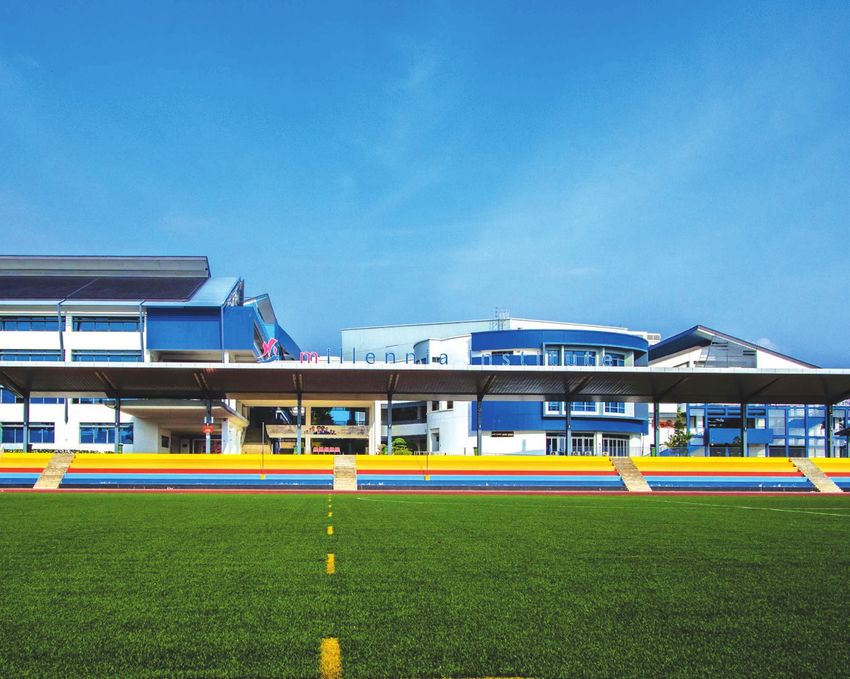
CONTENTS
      ABOUT US                                             SUBJECT
      Mission, Vision, and Core Values                3
                                                           DESCRIPTIONS
      Strategic Thrusts                               4
      Admission Criteria                              5    Subject Assumed Knowledge                          22
                                                           Subject Combinations                               23
      Financial Matters                               6
                                                           Course of Study in Autonomous Universities         27
      Physical Facilities                             7
                                                           Subject Descriptions                               28
      Campus Life                                     9
                                                           H2 Art                                             29
                                                           H1 Biology                                         31
                                                           H2 Biology                                         33
2                                                          H1 Chemistry                                       37
                                                           H2 Chemistry                                       38
      KEY INSTITUTE                                        H1 China Studies in English                        41
      PROGRAMMES                                           H2 Chinese Language and Literature
                                                           H1 Economics
                                                                                                              43
                                                                                                              45
                                                           H2 Economics                                       47
      Character and Citizenship Education             10
                                                           H1 General Paper                                   49
      Education and Career Guidance (ECG)             12   H1 Geography                                       51
      The Year Head System                            13   H2 Geography                                       53
      SkillsFuture Programme                          14   H1 History                                         55
      MI.World Programme                              15   H2 History                                         57
      Innovation and Enterprise Programme             17   H1 Literature in English                           59
      Leadership Development Programme                19   H2 Literature in English                           61
      A-Level Structure                               21   H2 Malay Language and Literature                   63
                                                           H2 Management of Business                          65
                                                           H1 Mathematics                                     67
                                                           H2 Mathematics                                     69
                                                           H1 Mother Tongue Languages                         71
                                                           (Chinese Language/Malay Language/Tamil Language)
                                                           H1 Non-Tamil Indian Languages and                  73
                                                              Foreign Languages
                                                           Physical Education                                 74
                                                           H1 Physics                                         75
                                                           H2 Physics                                         76
                                                           H2 Principles of Accounting                        80
                                                           H1 Project Work                                    82
                                                           H2 Tamil Language and Literature                   83
                                                           Mother Tongue (Syllabus B)                         85

                                                           Contact Us                                         87

       Information
    Millennia       is accurate as at December 2021
              Institute                        2020                    Information is accurate as at Millennia
                                                                                                     DecemberInstitute
                                                                                                               2019
OUR MISSION
         Nurture Talents, Achieve Success

         OUR VISION
         A Forward-looking Community of
         Learners, Thinkers and Leaders.

         OUR                                  Our mission is to nurture talents in our

         CORE VALUES                          students to achieve success. This is done
                                              by providing a variety of programmes
            Integrity                         and opportunities which are grounded on
            Resilience                        strong core values, in partnership with our
                                              stakeholders. We premise all we do on our
            Respect
                                              core values of INTEGRITY, RESILIENCE,
            Responsibility
                                              RESPECT and RESPONSIBILITY.

                                                                                                     3
                                              We strive to provide a broad-based
                                              learning experience and space for
                                              students to pursue their passion. A wide
                                              range of subject combinations and CCAs
                                              are offered to cater to their interests
                                              and needs. Ultimately, our vision is to
                                              develop a forward-looking community of
                                              LEARNERS, THINKERS and LEADERS.

                                       2021
                                       2020
Information is accurate as at December 2019                                    Millennia Institute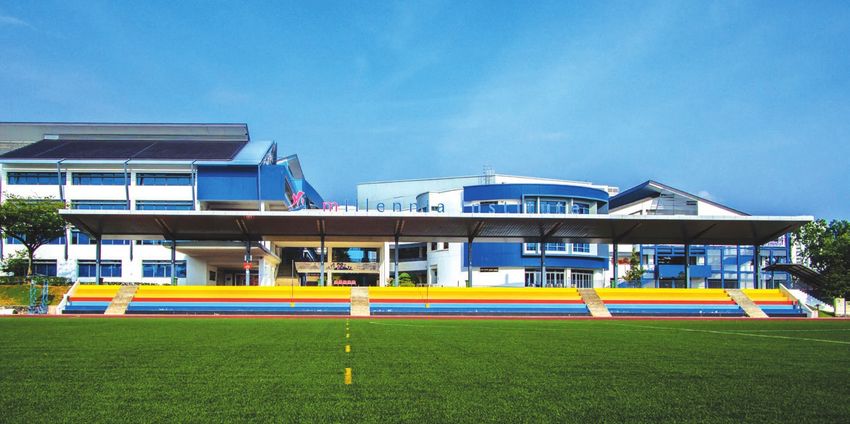
STRATEGIC
                 THRUSTS
                 Quality Student Outcomes

                 ✓ Achieving Academic Excellence
                 ✓ Developing Future-Ready Thinkers
                 ✓ Developing Leaders of Character and Values
                 ✓ Creating Quality School Experiences

                 Engaged Professionals

                 ✓ Developing Professionals
                 ✓ Enhancing Staff Engagement

                 Effective Partnerships
4                ✓ Establishing Strategic Partnerships for
                   Quality Education

       Information
    Millennia       is accurate as at December 2021
              Institute                        2020             Information is accurate as at Millennia
                                                                                              DecemberInstitute
                                                                                                        2019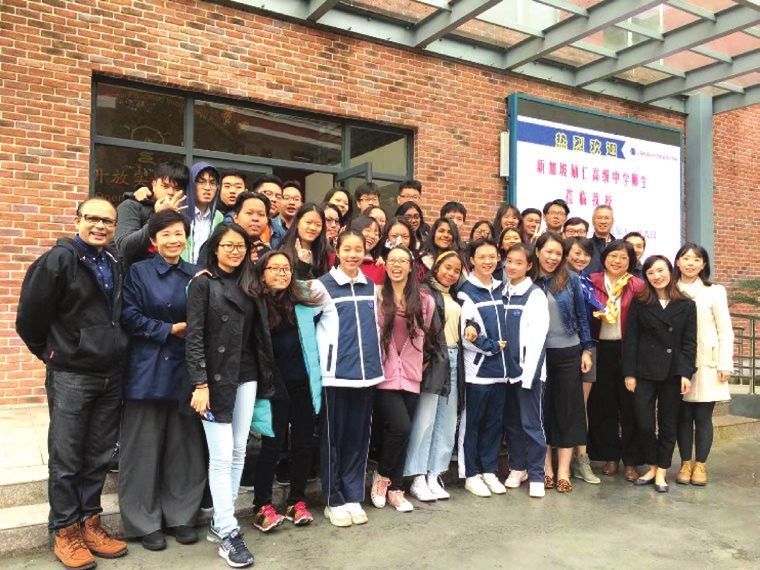
ADMISSION CRITERIA
Local Students
All local students currently studying in secondary            The point of admission for international students
schools (Government, Government-Aided and                     is Pre-University Year 1. Direct admission to Pre-
Independent Schools) who are eligible for the                 University Year 2 or Pre-University Year 3 is
JAE (Joint Admissions Exercise) will receive                  not encouraged as the student would not have
Form A from their secondary schools on the day                sufficient time to prepare for the GCE A-Level
of the release of the Singapore-Cambridge GCE                 Examinations held towards the end of the year
O-Level Examination results. Form A will inform               for these levels.
a student if he or she is eligible for courses
available at Millennia Institute. Applications for            đƫ  ƫ
courses under the JAE should be submitted                     International students are required to sit for the
online through the JAE Internet System (JAE-                  Junior College-Principals Academy Certification
IS). Please refer to the Ministry of Education’s              Test (J-PACT) to certify their proficiency in
website for details.                                          English and Mathematics before the start of the
                                                              new academic year in January/February. Details
đƫ  ƫ                                             of the test can be found on the website of the
All Singapore Citizens or Singapore Permanent
                                                              Principals Academy (www.pact.sg). The J-PACT
Residents (SC/SPR) with valid GCE O-Level
Examination results will be eligible to participate           results are to be submitted together with the           5
in the JAE. However, any SC/SPR who was                       application for admission.
previously admitted to a JC, MI, Polytechnic,
or ITE should not apply for an institution in the             Shortlisted applicants will be required to attend
same category through the JAE.                                an interview conducted in English with the
                                                              school’s Admissions Officer/Vice-Principal.
đƫ  ƫ
Students who have not been posted to Millennia
                                                              Applicants offering certain subjects will need
Institute after participating in the JAE in the
                                                              to undergo placement tests in addition to
current year may appeal to be considered for
                                                              the J-PACT admission tests. For instance, an
admission to Millennia Institute, subject to
meeting the eligibility criteria, by submitting               applicant who intends to offer H2 Physics will
the Admission Appeal Form available at www.                   be required to undergo a placement test for
millenniainstitute.moe.edu.sg.                                Physics. Applicants offering H2 Mathematics
                                                              are required to undergo a placement test for
International Students                                        Additional Mathematics. Applicants offering H2
                                                              Mother Tongue Language and Literature are
All international students must               satisfy   the
                                                              required to undergo a proficiency test. The tests
following admission criteria:                                 are of a comparable difficulty level to the GCE
đƫ                                                         O-Level Examination. The Institute charges a fee
International students must not exceed the                    of $44 for the first placement test and $22 for
correct age for admission by more than two                    every additional test.
years. The minimum age of admission to
Millennia Institute is 16 years. Exceptional cases
below this age will be referred to the Pupil                  More details on the application procedure can be
Placement Section (PPS) of the Ministry of                    found at www.millenniainstitute.moe.edu.sg.
Education for consideration.

                                       2021
                                       2020
Information is accurate as at December 2019                                                     Millennia Institute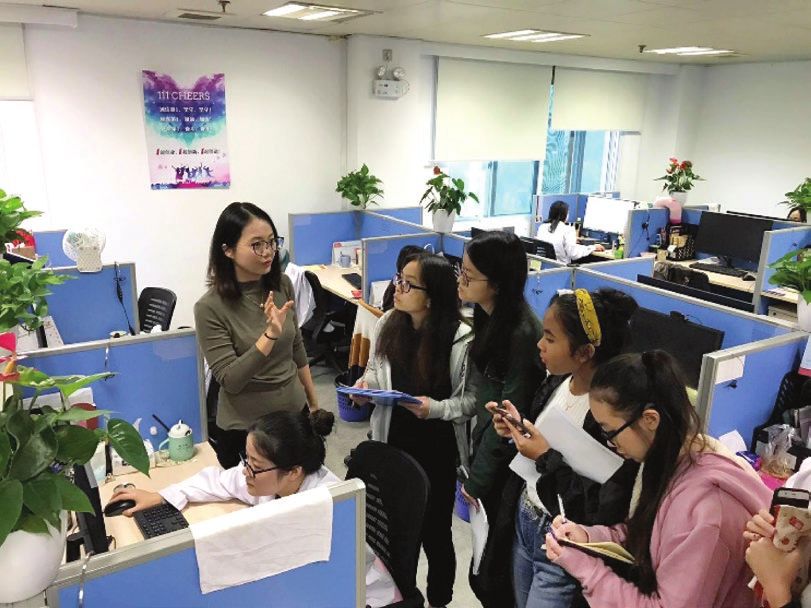
FINANCIAL MATTERS
!!/
Standard 2nd Tier
School Fees Total ($)
Nationality Miscellaneous Miscellaneous
($) (per month)
Fees ($) Fees ($)
Singapore Citizen 6 13.50 13.50 33
Permanent Resident 460 13.50 13.50 487
International Student
1,040 13.50 13.50 1,067
(ASEAN)
International Student
1,750 13.50 13.50 1,777
(non-ASEAN)
6
%*
* %
(ƫ//%/0
* !
MOE Financial Assistance Scheme Students who do not meet the above criteria will
be considered for financial assistance schemes
Criteria: offered by other bodies such as the Buddhist
đƫƫƫ((ƫ
,,(%
*0/ƫ)1/0ƫ
!ƫ%*#
,+.!ƫ%0%6!*/ Lodge, Management Development Institute of
đƫƫƫ((ƫ
,,(%
*0/ƫ)1/0ƫ
!ƫ".+)ƫ$+1/!$+( /ƫ Singapore (MDIS), Institute Advisory Committee
with a Gross Household Income of $2,750 (IAC) etc.
or below per month OR Gross Per Capita
Income of $690 or below per month
NEU PC Plus Programme
Successful applicants will be given: The NEU PC Plus Programme is now under
đƫƫƫĸĊĀĀƫ
/$Ď Infocomm Media Development Authority (IMDA).
đƫƫ
ƫ 3
%2!.ƫ +"ƫ / $++(ƫ "!!/ƫ Ĩĸćĩƫ
* ƫ /0
*
. ƫ The NEU PC Plus Programme offers students
)%/ !((
*!+1/ƫ"!!/ƫĨĸāăċĆĀĩĎƫ
* and persons with disabilities from low income
đƫƫƫĸāĂĀƫ0.
*/,+.0ƫ .! %0ƫ,!.ƫ
**1)ƫ"+.ƫ/01 !*0/ƫ households the opportunity to own a brand new
taking public transport computer at an affordable price. Application
forms are available at the Institute library and
administrative office.
Information
Millennia is accurate as at December 2020
Institute 2021 Information is accurate as at Millennia
DecemberInstitute
2019
PHYSICAL FACILITIES

                                                                                                            7

Millennia Institute, located on the western         discussions or project work. The Library also has
fringes of Bukit Batok Town, sits on a vast         two instructional rooms that can accommodate
undulating terrain covering an area of 60,000       36 students each for teaching and learning.
square metres. It has a total gross floor area
of 27,000 square metres and a wide range of         There are a total of four fully air-conditioned
learning facilities which include a 470-seat        classrooms specifically designed for learning
Auditorium, six Science Laboratories, two Lecture   through ICT and one classroom for Audiovisual
Theatres, a 1000-seat Stadium equipped with an      Projection.
eight-lane running track and an AstroTurf field.
The Institute is designed to provide a conducive    Block B - Students’ Activity Centre
environment for students’ holistic learning and     The hub of visual and performing arts is located
their all-rounded character development.            at the Block B Students’ Activities Centre.

Block A - Administration Block                      The Auditorium, Art Gallery, Drama, Music, Dance
The Institute’s main Administrative Block houses    Rooms and Fitness Gym are brought together
the Principal’s and Vice-Principals’ offices,       in the same building to synergise and foster an
General Office, Heads Of Departments and Staff      environment that promotes the arts and students’
Rooms, library, air-conditioned learning venues     co-curricular activities.
and classrooms equipped with Information and
Communications Technology (ICT) .                   The Institute’s Bookshop is located at Block B.

The Institute’s Library has a collection of over    The Fitness Gym is fully equipped with up-to-
35,000 books and is able to comfortably             date fitness workout machines complemented
accommodate about 120 students. Students can
                                                    by a full range of barbells and dumbbells.
use any of the five discussion rooms located at
the Library’s upper level for small-group study,

                                       2021
                                       2020
Information is accurate as at December 2019                                           Millennia Institute
PHYSICAL FACILITIES
Block C - Canteen Block (+ 'ƫƫĢƫ 1(0%,1.,+/!ƫ(+ '
Block C houses the Multi-Purpose Hall, air- The Multipurpose Block houses six new
conditioned learning venues and the Canteen. classrooms, each unique in their designs.
The Institute’s Multi-Purpose Hall is the primary ,+.0/ƫ
%(%0%!/
venue for the Institute’s assembly programmes
The centrepiece of the Institute’s first class
and examinations. It is fully air-conditioned and
sports facilities is the purpose-built stadium
can also be converted into four indoor badminton
equipped with a FIFA Two-Star AstroTurf field
courts. Located below the Hall, the Institute’s
and an eight-lane running track. The stadium
Canteen has eight stalls offering a wide variety of
also has a mini hockey pitch and an outdoor
reasonably-priced Asian fare.
fitness corner. Apart from the stadium, the
Institute has two basketball courts, two full-
The Student Council room is located at the Canteen
sized tennis courts and one half-sized tennis
Level.
court for self-practice.
8
Block D - Tutorial Block
.,
.'ƫ
%(%0%!/
The Tutorial Block is the fulcrum where most The entire institute is able to accommodate 130
learning activities take place. It houses a total of cars.
40 conventional classrooms and two 170-seat
Lecture Theatres.
Block E - Science Block
The Science Block houses two Physics, two Biology
and two Chemistry Laboratories, all of which are
fully equipped.
Information
Millennia is accurate as at December 2020
Institute Information is accurate as at Millennia
DecemberInstitute
2019
CAMPUS LIFE
Millennia Institute seeks to be a place of opportunity for students to establish a connection between
what is happening in the real world and learning within the classrooms. Our vision to establish a
forward-looking community of Learners, Thinkers and Leaders underpins how we organise campus
life at MI.
their ideas and learning to new contexts beyond
the classroom. MI seeks to inculcate creativity
and an innovative mindset in our students
through programmes that foster the spirit of
entrepreneurship. Our teachers also work closely
with parents and the community to provide
learning environments for students to grow
holistically in order to fulfil their potential.
Learners
MI offers students a place to develop cognitive
competencies necessary and relevant for future
university studies and employment, moving
9
beyond academic mastery. We want our learners
to develop a passion for life and for learning,
and to understand that learning does not stop
at formal education. We aim to motivate the
students and equip them with the necessary
attitudes and strategies for lifelong learning, so Leaders
they can direct their own learning after they have Students at MI are moulded to be leaders of
graduated from the Institute. good character and strong values. Through
infusing leadership development intentionally
in all that we do, students learn self-leadership
by embracing and exhibiting the Institute’s core
values and by developing positive Habits of
Mind for good performance and development
of character. When students put these values
and habits into action in their academic pursuits
and beyond, they achieve personal growth, self-
mastery and personal effectiveness. We believe
that every MI student can be developed as a
leader who will contribute positively to society,
and every MI student should be developed as a
Thinkers
leader of the self, team and community.
Beyond the classroom learning of academic
subjects, the Institute believes that a student
Key Programmes
should be provided with experiences and
Some of the key programmes that provide the
opportunities that allow them to become future-
above experience and opportunities include:
ready thinkers who are prepared to succeed not
đƫ$
.
0!.ƫ
* ƫ%0%6!*/$%,ƫ 1
0%+*ƫĨĩ
just in the university, but also in the globalised
đƫ 1
0%+*ƫ
* ƫ
.!!.ƫ1%
* !ƫĨĩ
workplace. To this end, MI seeks to develop
đƫ'%((/101.!ƫ.+#.
))!
students’ 21st Century Competencies through
đƫ ċ+.( ƫ.+#.
))!
the full curriculum, so that students become
đƫ **+2
0%+*ƫ
* ƫ*0!.,.%/!ƫĨ Ēĩƫ.+#.
))!
critical and inventive thinkers who can connect
đƫ !
!./$%,ƫ!2!(+,)!*0ƫ.+#.
))!
2021
2020
Information is accurate as at December 2019 Millennia InstituteCHARACTER AND
CITIZENSHIP EDUCATION
OVERVIEW
The character development of every child is critical in nurturing them to be responsible and concerned
citizens of Singapore. It is with this emphasis on character and citizenship development that the
Institute aims to instil sound values and build competencies in students, and promote activism for social
and/or environmental causes in Singapore and beyond.
Programme Objectives Key Components in Programme
• Character and Citizenship Education Lessons
The Character and Citizenship Education • Values in Action (VIA) Programme
Programme aims to inculcate values and build - Structured Local VIA Programme
competencies in our students to: - Student-initiated VIA Projects
• Make responsible decisions and choices amidst
the complexity and ambiguity of the current • National Education (NE) Programme
global environment; - Commemoration of NE events
• Be purposeful in the pursuit of their education, - Experiential Learning Journeys
career and life goals; - Dialogues with ambassadors, senior civil
10 • Seek to understand and appreciate multiple servants and office holders
perspectives;
• Be resilient, adaptable and optimistic in the
face of adversity;
Character and Citizenship Education
• Demonstrate social responsibility and make
Lessons
meaningful contributions to the community by
leading through service; and
One hour a week is set aside, during curriculum
• Be proud Singaporeans who are committed to
time, as the Home Tutor Period (HTP) to teach
building the future of Singapore and who
Values, Knowledge and Skills for Character and
understand Singapore’s role in the world.
Citizenship. A progressive approach is adopted
in planning the HTP schedule to meet the
Alignment to Strategic Thrusts and Institute differing needs of our students over the three
years. Lessons cover values, Socio-Emotional
Values
Learning skills, Sexuality Education, Education
and Career Guidance, Cyber Wellness, National
Strategic Thrust 1: Quality Student Outcomes
Education as well as planning and reflections
To develop Character, Sound Values, Civic Literacy,
for Values in Action activities and projects.
• Global Awareness and Cross-Cultural Skills.
Institute Core Values: Values in Action Programme (VIA)
To develop positive Habits of Mind for inculcation of
performance character and active citizenry, the A structured local VIA Programme and
Institute provides a range of experiences and sets of student-initiated VIA projects are key platforms
skills and knowledge that aim to nurture students to of the Institute’s VIA programme that encourage
be confident leaders and active citizens with integrity, the spirit of volunteerism among students, as
respect, responsibility and resilience. well as help to foster civic responsibility and
cross-cultural literacy skills. Through these
learning experiences, students develop their
self-management, social awareness and
relationship management skills, and demonstrate
the Institute’s core values of Integrity, Respect,
Responsibility and Resilience.
Information
Millennia is accurate as at December 2020
Institute 2021 Information is accurate as at Millennia
DecemberInstitute
2019CHARACTER AND
CITIZENSHIP EDUCATION
• Structured local VIA Programme
All students will participate in a class-based VIA
project on a yearly basis. Based on the
Service-Learning framework, students will acquire
the knowledge and skills to propose and
implement plans to meet needs in their community
through their VIA project. Guidance and support
from Home Tutors and teachers in the VIA
Committee are provided during this journey. Past
projects include an outreach to pre-school children
on the importance of environment conservation,
and student-initiated VIA projects to various social
service agencies.
National Education (NE) Programme
11
• Commemoration of NE events
The four core NE events (i.e. Total Defence Day,
International Friendship Day, Racial Harmony Day
and National Day) are linked to four defining
moments of Singapore history. Commemoration of
these events promote multicultural and social
awareness among students, and contribute to
efforts to nurture them into responsible citizens
with the senses of belonging, hope, reality and the
will to act.
• Student-initiated VIA Projects • Experiential Learning Journeys, Dialogue
To provide ownership, engagement and Sessions and Discussion of Contemporary Issues
empowerment, students are encouraged to These experiences aim to deepen students’
champion and lead community involvement and understanding of Singapore’s policies and
environmental projects. This promotes student principles of governance. They help students to
activism for social and environmental causes that better understand and appreciate how Singapore
improve the lives of others. Past projects included has overcome her constraints to achieve First
a buddy reading programme with Delta Senior World standing, as well as her current
School, monthly befriending visits to All Saints achievements and challenges. In addition,
Home (Jurong), the HP Make IT Green Initiative discussion of contemporary issues during Home
E-Waste Donation Drive, and fund-raising for a Tutor Period creates space for students to
cause as part of the annual Citi-YMCA Youth for understand the facts of an issue and make sense of
Causes in 2017, 2018 and 2020. the different perspectives around it.
Information is accurate as at December 2019
2021
2020 Millennia InstituteEDUCATION AND CAREER
GUIDANCE
Another core component of Character and Citizenship Education in MI is Education and Career
Guidance (ECG). A variety of experiences, such as My Roadmap to Success, Job Experience
Programme, and interaction with professionals from different fields, are designed for our students to
obtain a better understanding of self as well as more information about available pathways. These
experiences also support students in strengthening their sense of purpose while making informed
decisions for future education and career paths.
• My Roadmap to Success • Job Experience Programme
In MI, Home Tutors guide students to reflect MI strives to inculcate the correct workplace
upon and develop a deeper understanding of ethics and a strong drive for excellence among
their career interests, strengths and values students to prepare them for the future. The
through our My Roadmap to Success school establishes partnerships with external
Programme. organisations to offer job experience
opportunities for students to get a better
During Orientation, students attend subject talks understanding of a sector they are interested
by HODs, sharing by seniors and classroom to find out more about, and see how the values
experience before they choose the subject and curricular concepts they encounter in
12 combination that better cater to their strengths school are applied in the working world.
and interests. Students will also be guided in areas such as
job application, interview skills as well as
Students also undergo Career Profiling, which reflection of their learning from the experience.
begins with the identification of their interests,
abilities, work preferences and work values after SFP-ECG for PU3
working out their RIASEC codes. See PU3 module in the chapter on MI
SkillsFuture Programme for more details (p.14).
PU2 students get to explore problems,
challenges and opportunities that are involved in
various career options. Given today’s context,
there is a need to move away their focus on
traditional job titles. Students are also
encouraged to be open-minded when presented
with different opportunities.
Throughout their 3 years in MI, students work out
their career goals and learn more about the skills
and competencies needed to address the
challenges that they are interested in. Students
find out about the academic and student
development opportunities available and draw *Photo taken in 2019 with our JEP partner
up a personalised roadmap for themselves to
make the most of their stint in MI, so that they are
better positioned to achieve their aspirations
upon graduation.
Information
Millennia is accurate as at December 2021
Institute 2020 Information is accurate as at Millennia
DecemberInstitute
2019THE YEAR HEAD SYSTEM
OVERVIEW
Introduced in 2015, the Year Head System serves to enhance the Institute’s ability to deliver a student-
centric and values-driven education and create a quality school experience.
The team, comprising the Year Heads and Assistant Year Heads, works with the staff to ensure that
the needs of the students are addressed and to promote better student engagement and learning.
The Year Head team supports Home Tutors in providing strong socio-emotional support for students.
The team also engages students directly to address their needs and seek their feedback.
The Year Heads, assisted by at least one other Assistant Year Head, each take charge of a cohort.
The Year Heads also oversee all programmes and matters relating to the holistic development of the
students across the three different levels.
Level focus
would then monitor and follow-up with
Pre University 1: Transitioning into MI different groups of students based on their
Pre University 2: Exploring and Experiencing overall performance for the examinations. This
Leadership is complemented by the mentoring by the
Pre University 3: Preparing for University/World Subject Tutors.
of Work
Ăĩƫ !*0+.%*#ƫ
* ƫ
%(%0
0%*#ƫ+ %+ġ)+0%+*
(ƫ
13
Alignment To Strategic Thrust & Institute (SE) Learning
Values Millennia Institute recognises the importance
of developing the students’ social-emotional
Strategic Thrust 1: Quality Student Outcomes: competencies of Self-awareness, Self-
đƫ+ƫ%),.+2!ƫ
)%//%+*ƫ.
0!ƫ+"ƫ0$!ƫ/01 !*0/ƫ0+ƫ0$!ƫ Management, Social Awareness, Responsible
local autonomous universities. Decision Making and Relationship Building.
đƫ+ƫ !2!(+,ƫ,+/%0%2!ƫ$
%0/ƫ+"ƫ)%* ƫ"+.ƫ
!)% ƫ
success. As each student’s SE learning is unique,
đƫ+ƫ!)
.
!ƫ
* ƫ!4$%
%0ƫ0$!ƫ */0%010!Ě/ƫ +.!ƫ2
(1!/ċ Home Tutors mentor and facilitate SE
đƫ+ƫ#.+3ƫ0$!ƫ/01 !*0/Ěƫ(!
!./$%,ƫ +),!0!* %!/ċ learning through individual and small-group
đƫ+ƫ/0.!*#0$!*ƫ/ $++(ƫ,.% !ƫ
* ƫ
þ(%
0%+*ċ pastoral care and mentoring sessions. This is
complemented by the Year Heads’ dialogues
Institute Core Values: and feedback sessions with the students about
Respect, Resilience, Responsibility and Integrity their needs/expectations. Students are also
guided to reflect on their personal growth and
Areas of focus write these reflections in their MI Journals. Year
In delivering a student-centric and values-driven Heads also create opportunities for students to
education, the role of the Year Heads is focussed exercise their leadership and further develop
on: their SE competencies. Year Heads continually
engage the students to co-create memorable
1) Academic Target Setting, Reviewing and school experiences through their involvement
Monitoring in level and school programmes and activities.
Millennia Institute believes that all students should
be focussed in striving for academic excellence ăĩƫ01 !*0ƫ!("ġ
*
#!)!*0ƫ
and preparing themselves for tertiary education. Year Heads, together with the Home Tutors,
Using the MI Journal, students set their own work with the Student Management team to
targets for their subjects and devise their action guide and educate students on the importance
plan to achieve these targets for the internal of self-management with regard to adherence
tests/examinations that lead to the A-Levels. to and respect for the Institute rules.
Students also do reflections on their examination
performance and revisit the targets which they Millennia Institute’s Core Values of Respect,
have set. Resilience, Responsibility and Integrity form
the basis of the Institute’s rules. These rules aim
At the school level, the cohort academic to set a standard of behaviour expected of all
performances are reviewed and shared with the students to maintain a conducive environment
students after each examination. Year Heads for learning and live out the Institute’s values.
2021
2020
Information is accurate as at December 2019 Millennia InstituteSKILLSFUTURE
PROGRAMME
The MI SkillsFuture Programme (SFP) is an integral part of the institute’s Total Curriculum that seeks to nurture
future-ready individuals, who will become the learners, thinkers and leaders of tomorrow.
To prepare pre-university students to navigate the new world, the SFP develops their growth mindset,
motivates agency for deep learning and builds other key competencies necessary for lifelong learning.
Fundamentally, students are given the autonomy to chart their growth and mastery, while teachers facilitate
their journeys in uncovering personal strengths and provide opportunities to transfer learning between the SFP
and relevant academic as well as non-academic areas.
Programme Objectives
The SkillsFuture Programme aims to develop self-motivated students by:
• equipping students with the necessary mindsets and competencies for lifelong learning;
• providing opportunities for the deepening and transferring of relevant skills to academic and non-academic areas;
• enabling students to make informed decisions about their learning and future career pathways.
14
Overview of SFP Focus Areas
Discover: Adapting Mindsets, Growing Strengths
The SFP lays the foundation for PU1 students to identify personal areas of strengths and growth by
emphasising Growth Mindset, multiple intelligences and the importance of applying effective effort through
practicing the Habits of Mind. Through relevant programmes and other facilitated platforms, these positive
mindsets and habits will be reinforced for students’ learning.
Innovate: Broadening Perspectives, Developing Solutions
Another cornerstone of the SFP modules lies in developing info-literacy skills and utilizing the human-centred,
iterative process of Design Thinking to sharpen students’ critical thinking abilities and encouraging them to
ideate solutions for real-world problems. Holistically, these skills and competencies are quintessential to
lifelong learning and also highly applicable to Project Work at the PU2 level.
Pursue: Exploring Interests, Deepening Passions
The PU3 SFP’s Education and Career Guidance focus guides students in making informed decisions in charting
their next course of study and career pathways. Students are given the opportunities to attend talks by
professionals and industry experts as well as take part in learning journeys to gain broader perspectives about
prospective fields of study and career options. The SFP also supports and synergises with other key institute
programmes to promote students’ exploration of interests and pursuit of mastery, towards the goals of
achieving deeper learning, complex thinking and advocacy for the good of society.
Information
Millennia is accurate as at December 2021
Institute 2020 Information is accurate as at Millennia
DecemberInstitute
2019MI.WORLD PROGRAMME
OVERVIEW
The Internationalisation Programme, MI.World, was conceptualised in 2008 to equip MI students
with a global perspective. These educational overseas trips allow students to experience authentic
learning beyond geographical boundaries, network with their peers overseas and enable them to
make connections between what they learnt in the classroom and the real world. To expose students
to community work and service-learning, the Overseas Values In Action (OVIA) programme forms a
complementary component in the Institute’s Internationalisation Programme.
With globalisation, the need to possess multi-cultural literacy skills is important and the driving force
behind MI.World is experiential learning. As such, the knowledge, skills and values imparted to our
students are central in the planning of MI.World trips. This structured reflective learning is in tandem
with our Institute’s strategic thrust of developing Future-Ready Thinkers through developing global
awareness and cross-cultural skills in all Millennians. It also allows our students to develop an awareness
of Singapore’s position and place in the global arena and be better equipped to be ambassadors of
the Institute and of Singapore.
We envision our students to possess the relevant skills to interact and engage with a network of peers
across geographical boundaries beyond their time in MI. 15
Programme Objectives Key Components in Programme
With globalisation, the need to possess multi-
cultural literacy is important and MI.World was đƫƫ!ý! 0%2!ƫ(!
.*%*#
conceptualised to develop in students a greater To formalise their learning, students are
awareness about the world around them through required to pen their reflections about their
trip on a daily basis. They should highlight
đƫƫ 1
0%+*
(ƫ
* ƫ ))!./%+*ƫ.+#.
))!/ƫ what they have learnt about the host country
đƫƫ !
.*%*#ƫ +1.*!5/ with regard to its culture, language, lifestyle
and aspirations. Students should also include
how the trip has influenced their perceptions
Alignment to Strategic Thrusts and about their own country and its place in a
Institute Values globalised world.
Strategic Thrust 1: Quality Student Outcomes đƫƫ1(01.
(ƫ
,,.! %
0%+*ƫ
* ƫ1* !./0
* %*#
đƫ +ƫ !2!(+,ƫ %2% ƫ %0!.
5Čƫ (+
(ƫ 3
.!*!//ƫ The best way to learn is not just to read or listen
and Cross-Cultural Skills. but to experience and be immersed. Hence,
students are given opportunities to interact
Institute Core Values: with citizens of the countries they visit, and
đƫ !/,+*/%
%(%05 experience their ways of life. Such interactions
đƫ !/,! 0 will develop students’ understanding and
perceptions of another country, and also
develop in them a desire to contribute to the
well-being of the international community.
2021
2020
Information is accurate as at December 2019 Millennia InstituteMI.WORLD PROGRAMME
We were extremely grateful to Shanghai Zhenhua Foreign MI students had an engaging session at one of the E-Commerce
Trade Professional School for arranging the wonderful organisations in Shanghai. They witnessed how doctors
MI.World Shanghai Programme for 26 students and teachers conducted online prescription via video cams with their clients.
of MI.
16
MI.World India Programme: Teachers and students at Vijawada Vietnam Trip: Student discussion at Vietnam University in
Airport. Hanoi, Faculty of Tourism Studies.
Information
Millennia is accurate as at December 2020
Institute 2021 Information is accurate as at Millennia
DecemberInstitute
2019INNOVATION AND
ENTERPRISE
Key Highlights
• Design Thinking and its Applications
A critical part of enhancing Millennians’
future-ready competencies is the Design
Thinking (DT) toolset that the SkillsFuture
Programme offers to develop innovative and
creative thinking amongst all PU1 students.
The DT processes, such as: explore, discern,
ideate, prototype and test, provide students
with a framework to solution for real-world
problems. Through the module, students will
understand that an important aspect of
designing is developing empathy for the
product users. Collaborative learning is also
another element of the module, which allows
students to hone their team management
skills to contribute ideas towards school 17
improvement projects or projects with social
causes, including green initiatives. Many past
successful iterations of this module have
reaped proposals in the areas of social
innovation and social entrepreneurship.
PU2 students will apply Design Thinking skills in their Project Work. Students will be encouraged to use
these tools whenever opportunities arise in their CCAs and class projects.
• Student-Initiated Projects
Student Reflections
“All of us, as a group, learnt a lot about the cause that we are passionate about through this SIP
Journey, as we had to take the first step to educate ourselves and correct prior
misconceptions…”
“The experience has been fun as we were able to plan with like-minded schoolmates. I think in
the future, I might do more projects, as I have gained the courage to take the first step and carry
out something on my own.”
The Student Initiated Projects (SIP) was launched in Jan 2020 to encourage Millennians to
conceptualise, plan and execute projects in their area of interest as part of their leadership journey.
This platform provides students with opportunities to create meaningful experiences where they can
“customise” their own journey of growth, by designing and implementing an initiative that positively
impacts others, while also speaking of their values and beliefs. Through this, students also have the
opportunity to apply, as well as hone their leadership knowledge and skills.
The SIP culminates in Term 3 where students can showcase their projects and advocate for their
initiative via an exhibition.
Information is accurate as at December 2020
2021 Millennia InstituteINNOVATION AND
ENTERPRISE
• MI Social Bazaar
The MI Social Bazaar is a student-run bazaar organised by the Entrepreneurship Club that aims to raise
funds for charity while promoting entrepreneurial spirit amongst the students through the clever use
of Design Thinking in the process.
Key Achievements
• HDB Cool Ideas Students’ Design Competitions: 2014 (2nd Prize), 2016 (3rd Prize)
• JRStartathon : 2016 (3rd Prize), 2017 (Most Socially Impactful Entrepreneur Award and Special
Mention), 2019 (1st Prize, Best Business Pitch and People’s Choice)
• SMU Youth Innovation Challenge: 2017 (Best Innovation Technology Award)
• MOE ExCEL Fest Buildathon: 2017 (2nd Prize and People’s Choice Award)
• LTA Transport Ambassador Programme 2018 (2nd Prize)
• Prudential Young Trialblazers: 2019 (Finalist), 2020 (Overall Champion and Best Innovation)
• Young Technopreneurs For A Sustainable 2030: 2019 (Finalist and Most Innovative)
• SUSS SBIZ Business Plan Competition: 2020 (Finalist)
18
Information
Millennia is accurate as at December 2020
Institute 2021 Information is accurate as at Millennia
DecemberInstitute
2019LEADERSHIP
DEVELOPMENT
OVERVIEW
Inculcating values and guiding principles in students are the duties of each one of us. In MI, we believe
that every student can be developed as leaders who contribute positively to the society. With that in
mind, we adopt the Social Change Model (Astin, 1994) to facilitate positive social change in the Institute
and the community. It grooms leaders who are able to lead positive change whether they hold
traditional roles of leadership, or not. This is in alignment with the school’s vision of developing Leaders
of values and character and the Desired Outcomes of Education to develop students as an active
contributor and a concerned citizen.
Students go through differentiated levels of training and mentoring to prepare them for different levels
of leadership responsibilities. As part of the developmental process, students are given opportunities to
exercise leadership through formal and ad-hoc leadership appointments. They are also given platforms
to reflect on their experiences. In addition, teachers provide students with formative feedback through
conversations to affirm their strengths and encourage them to work on their areas for growth.
Programme Objectives Alignment to Strategic Thrusts and
The vision behind our work in developing Institute Values
students as leaders is to develop within them Strategic Thrust 1: Quality Student Outcomes 19
21st Century Competencies. Students go • To develop Leaders of Character and Values.
through a self- reflective journey to understand
what is involved in leadership, and to assess Institute Core Values:
and develop their own abilities. They grow to
• Every Millennian can and will become the ideal
be more confident and ready to be leaders of
MI student leader with integrity, respect,
today and tomorrow.
responsibility and resilience. He / She can
make a positive change for the betterment of
Key Components in Programme self and others.
The above diagram depicts the various foci over three years of a student’s leadership development in
becoming the ideal MI student leader.
Self-Leadership sets the foundation for developing leadership potential by focusing on self-mastery and
personal effectiveness. It entails developing in students the desire, confidence and capacity to take
ownership of one’s own growth and learning based on a keen knowledge of self.
Team Leadership focusses on developing the students’ social skill of influence such that they are able to
lead others with competence and care. A successful team leader strikes a good balance between being
people-oriented and task-oriented; he or she inspires productive team performance towards a common
goal, by managing conflicts and enabling members to see how they can collaborate and contribute
meaningfully to the task.
Community Leadership focuses on honing students’ capacities to influence and create value through
quality insight and innovation, particularly through making a positive change to society. Students are
expected to be able to apply fresh perspectives to authentic tasks that are critical to achieving positive
outcomes for the community.
Information is accurate as at December 2020
2019
2021 Millennia InstituteLEADERSHIP
DEVELOPMENT
Key Highlights • Student-Initiated School Activities
Platforms are provided for student leaders at the school
Student leaders in MI level and beyond, to develop and hone their leadership
• Every MI student skills through engagement in authentic projects. Student
• Class Committee members leaders are guided by teacher-mentors to conceptualise
• House Leaders and organise school activities and events. Examples of
• CCA leaders such activities and events include Orientation, A-Division
• Student Councillors Cheering, Class Learning Day, Teachers’ Day, and National
Day. Other opportunities to develop students as
community leaders include participation in the Keep
Singapore Clean movement and the National Day Parade.
20
• Senate
The Senate comprises of student leaders from all CCAs, Student Councillors and House captains. The
purpose of the Senate is to encourage the Institute’s student leaders to be active Learners, Thinkers and
Leaders, by working collectively with the student body to achieve a common goal of enhancing our
school culture.
• MI House
The 4 Houses in MI are GARNET, ONYX, SAPPHIRE, ZIRCON. The
House system promote healthy competition, school spirit and
bonding among students. It also encourages positive interactions
between seniors and juniors. House leaders are guided by House
masters to conceptualise and organise House-based activities
such as Transcendence, MI Play Fiesta, etc.
• Student Leadership Experience
This annual event is specially designed for potential CCA leaders
and current class leaders. During this event, students participate
in both indoor and outdoor team building activities to build and
strengthen their collaboration, communication and management
skills. After the event, students extend their learning when they
apply these skills in planning and executing their CCA action
plans. Some student leaders also step up and exercise their
leadership skills in the planning and execution of PU1 bonding
related activities in the following year.
Information
Millennia Institute 2021
is accurate as at December 2020 Information is accurate as at Millennia
DecemberInstitute
2019A LEVEL STRUCTURE
Students read the following subjects at H1 and H2 levels for the GCE A-Level curriculum:
3 H2 content-based subjects#
1 H1 content-based subject#
Students are required to read
H1 Mother Tongue Language (MTL)
3 H2 + 1 H1 + MTL + GP + PW
H1 General Paper (GP)
H1 Project Work (PW)
# At least one H1 or H2 subject from a contrasting discipline.
Project Work (PW) and General Paper (GP) are compulsory H1 subjects. All subject combinations
must include one contrasting subject, taken either at the H1 or H2 Level.
A contrasting subject is a content-based subject taken outside a student’s main area of specialisation.
The contrasting subject helps to broaden learning in order to prepare a student to do multi-disciplinary
in the Institute, excluding General Paper, Mother Tongue and Project Work, are categorised into either
the Arts or Science discipline according to the following table:
Discipline / Level H1 H2 21
Economics Art
Geography Economics
History Management of Business
China Studies in English Geography
Arts Literature in English History
Literature in English
Chinese Language & Literature
Malay Language & Literature
Tamil Language & Literature
Biology Biology
Chemistry Chemistry
Science Physics Physics
Mathematics Mathematics
Principles of Accounting
Examples:
the following combination is not allowed:
H2 subjects: Accounting, Chemistry, Mathematics with H1 subject Biology => All Science subjects, no
Arts discipline
PU2 PU3
PW, H1 Content
3H2 and GP
and H1 MTL
Information is accurate as at December 2019
2021
2020 Millennia InstituteSUBJECT
ASSUMED KNOWLEDGE
Subject Assumed Knowledge from GCE O-Level
Subject H1 H2
MATHEMATICS Mathematics Knowledge of the content of Knowledge of the content of
AND SCIENCES O-Level Mathematics O-Level Mathematics and
(^read additional syllabus is assumed in this part of Additional
notes below) syllabus. Mathematics is assumed in
this syllabus.
Biology Students will be assumed to Students will be assumed to
have knowledge and have knowledge and
understanding of Biology at understanding of Biology at
O-Level, either as a single O-Level, either as a single
subject or as part of a subject or as part of a
balanced science course. balanced science course.
Chemistry Students will be assumed to Students will be assumed to
have knowledge and have knowledge and
understanding of Chemistry understanding of Chemistry
22 at O-Level, either as a single at O-Level, either as a single
subject or as part of a subject or as part of a
balanced science course. balanced science course.
Physics Students will be assumed to Students will be assumed to
have knowledge and have knowledge and
understanding of Physics at understanding of Physics at
O-Level, either as a single O-Level, either as a single
subject or as part of a subject or as part of a
balanced science course. balanced science course.
Information is accurate as at December 2021
2020 Millennia InstituteSUBJECT COMBINATIONS
H2 - 1 H2 - 2 H2 - 3 H1 Contrasting*
ARTS
GEO/HIS ART/LIT/MTLL (Choose any 2) MAT
GEO/HIS ART/LIT/MTLL ECO/MOB MAT
CSE/BIO/CHE/ECO/
GEO/HIS ART/ECO/LIT/MTLL MAT
GEO/HIS/LIT/PHY
ART/LIT/MTLL
ECO/MOB MAT
(Choose any 2)
ART/ECO/LIT/MTLL CSE/BIO/CHE/ECO/
MAT GEO/HIS/LIT/PHY 23
(Choose any 2)
COMMERCE
ECO MOB PAA MAT
ECO/MOB/PAA (Choose any 2) GEO/HIS/ART/LIT/MTLL MAT
CSE/BIO/CHE/ECO/
ECO/MOB/PAA (Choose any 2) MAT
GEO/HIS/LIT/PHY
SCIENCE
CSE/ECO/GEO/
MAT CHE/PHY/BIO (Choose any 2) HIS/LIT
ART/ECO/GEO/HIS/LIT/ CSE/BIO/CHE/ECO/
MAT CHE/PHY
MOB/MTLL GEO/HIS/LIT/PHY
CSE/ECO/GEO
MAT CHE/PHY PAA /HIS/LIT
ART/ECO/GEO/HIS/LIT/
CHE BIO/PHY MAT
MOB/MTLL
ART/ECO/GEO/HIS/LIT/
PHY BIO MAT
MOB/MTLL
Note
• * A student can only take a subject at either H1 or H2 level. All subject combinations must include one contrasting subject,
taken at either H1 or H2 level. For example, a student cannot read both H2 Physics and H1 Physics.
• The Institute reserves the right not to offer subject combination(s) that does not meet the critical mass.
2019
2021
Information is accurate as at December 2020 Millennia InstituteSUBJECT COMBINATIONS
Subject
H2 H1 Contrasting
CODE
A1 ART ECO MAT CSE/GEO/HIST/LIT/BIO/CHE/PHY
A2 ART GEO MAT CSE/ECO/HIST/LIT/BIO/CHE/PHY
A3 ART HIST MAT CSE/ECO/GEO/LIT/BIO/CHE/PHY
A4 LIT ART MAT CSE/ECO/GEO/HIST/BIO/CHE/PHY
A5 LIT ART ECO MAT
A6 LIT ART MOB MAT
A7 LIT ECO MAT CSE/GEO/HIST/BIO/CHE/PHY
A8 LIT GEO ART MAT
A9 LIT GEO ECO MAT
A10 LIT GEO MAT CSE/GEO/HIST/BIO/CHE/PHY
A11 LIT GEO MOB MAT
A12 LIT HIST ART MAT
A13 LIT HIST ECO MAT
A14 LIT HIST MAT CSE/GEO/HIST/BIO/CHE/PHY
A15 LIT HIST MOB MAT
24
A16 GEO ART ECO MAT
A17 GEO ART MOB MAT
A18 GEO ECO MAT CSE/HIST/LIT/BIO/CHE/PHY
A19 HIST ART ECO MAT
A20 HIST ART MOB MAT
A21 HIST ECO MAT CSE/GEO/HIST/BIO/CHE/PHY
A22 MTLL ART MAT CSE/ECO/GEO/HIST/LIT/BIO/CHE/PHY
A23 MTLL ART ECO MAT
A24 MTLL ART MOB MAT
A25 MTLL ECO MAT CSE/GEO/HIST/LIT/BIO/CHE/PHY
A26 MTLL GEO ART MAT
A27 MTLL GEO ECO MAT
A28 MTLL GEO MAT CSE/ECO/HIST/LIT/BIO/CHE/PHY
A29 MTLL GEO MOB MAT
A30 MTLL HIST ART MAT
A31 MTLL HIST ECO MAT
A32 MTLL HIST MAT CSE/ECO/GEO/LIT/BIO/CHE/PHY
A33 MTLL HIST MOB MAT
C1 ECO MOB ART MAT
C2 ECO MOB LIT MAT
C3 ECO MOB GEO MAT
C4 ECO MOB HIST MAT
C5 ECO MOB MAT CSE/GEO/HIST/LIT/BIO/CHE/PHY
C6 ECO MOB MTLL MAT
C7 ECO MOB PAA MAT
C8 ECO PAA ART MAT
C9 ECO PAA LIT MAT
C10 ECO PAA GEO MAT
Information
Millennia Institute 2021
is accurate as at December 2020 Information is accurate as at Millennia
DecemberInstitute
2019SUBJECT COMBINATIONS
Subject
H2 H1 Contrasting
CODE
C11 ECO PAA HIST MAT
C12 ECO PAA MAT CSE/GEO/HIST/LIT/BIO/CHE/PHY
C13 ECO PAA MTLL MAT
C14 MOB PAA ART MAT
C15 MOB PAA LIT MAT
C16 MOB PAA GEO MAT
C17 MOB PAA HIST MAT
C18 MOB PAA MAT CSE/ECO/GEO/HIST/LIT/BIO/CHE/PHY
C19 MOB PAA MTLL MAT
S1 BIO PHY ART MAT
S2 BIO PHY ECO MAT
S3 BIO PHY LIT MAT
S4 BIO PHY GEO MAT
S5 BIO PHY HIST MAT
S6 BIO PHY MAT CSE/ECO/GEO/HIST/LIT
25
S7 BIO PHY MOB MAT
S8 BIO PHY MTLL MAT
S9 CHE BIO ART MAT
S10 CHE BIO ECO MAT
S11 CHE BIO LIT MAT
S12 CHE BIO GEO MAT
S13 CHE BIO HIST MAT
S14 CHE BIO MAT CSE/ECO/GEO/HIST/LIT
S15 CHE BIO MOB MAT
S16 CHE BIO MTLL MAT
S17 CHE MAT ART CSE/ECO/GEO/HIST/LIT/BIO/PHY
S18 CHE MAT ECO CSE/GEO/HIST/LIT/BIO/PHY
S19 CHE MAT LIT CSE/ECO/GEO/HIST/BIO/PHY
S20 CHE MAT GEO CSE/ECO/HIST/LIT/BIO/PHY
S21 CHE MAT HIST CSE/ECO/GEO/LIT/BIO/PHY
S22 CHE MAT MOB CSE/ECO/GEO/HIST/LIT/BIO/PHY
S23 CHE MAT MTLL CSE/ECO/GEO/HIST/LIT/BIO/PHY
S24 CHE MAT PAA CSE/ECO/GEO/HIST/LIT
S25 CHE PHY ART MAT
S26 CHE PHY ECO MAT
S27 CHE PHY LIT MAT
S28 CHE PHY GEO MAT
S29 CHE PHY HIST MAT
S30 CHE PHY MAT CSE/ECO/GEO/HIST/LIT
S31 CHE PHY MOB MAT
S32 CHE PHY MTLL MAT
S33 PHY MAT ART CSE/ECO/GEO/HIST/LIT/BIO/CHE
S34 PHY MAT ECO CSE/GEO/HIST/LIT/BIO/CHE
Information is accurate as at December 2021
Millennia Institute 2020 Information is accurate asMillennia
at December 2019
InstituteSUBJECT COMBINATIONS
Subject
H2 H1 Contrasting
CODE
S35 PHY MAT LIT CSE/ECO/GEO/HIST/BIO/CHE
S36 PHY MAT GEO CSE/ECO/HIST/LIT/BIO/CHE
S37 PHY MAT HIST CSE/ECO/GEO/LIT/BIO/CHE
S38 PHY MAT MOB CSE/ECO/GEO/HIST/LIT/BIO/CHE
S39 PHY MAT MTLL CSE/ECO/GEO/HIST/LIT/BIO/CHE
S40 PHY MAT PAA CSE/ECO/GEO/HIST/LIT
26
Information
Millennia is accurate as at December 2021
Institute 2020 Information is accurate as at Millennia
DecemberInstitute
2019Course of Study
in Autonomous
Universities (AU) 27
Please visit the website of the
autonomous universities (AU) to
find out the latest list of courses
offered and the admission pre-
requisites.
2021
Information is accurate as at December 2019
2020 Millennia InstituteSUBJECT DESCRIPTIONS
Subjects
autonomous universities.
• H2 Art • H2 Literature in English
• H1 Biology • H2 Malay Language and Literature
• H2 Biology • H2 Management of Business
• H1 Chemistry • H1 Mathematics
• H2 Chemistry • H2 Mathematics
• H1 China Studies in English • H1 Mother Tongue
• H2 Chinese Language and Literature • H1 Non-Tamil Indian Language and Foreign
• H1 Economics Languages (at language centres)
• H2 Economics • Physical Education*
• H1 General Paper • H1 Physics
• H1 Geography • H2 Physics
28 • H2 Geography • H2 Principles of Accounting
• H1 History • H1 Project Work
• H2 History • H2 Tamil Language and Literature
• H1 Literature in English • Mother Tongue (B Syllabus)
*Unless there is medical exemption, Physical Education is compulsory for all students from Pre-University Year 1 to
Pre-University Year 3.
The syllabus for the A-Level subjects can be downloaded from the SEAB website:
https://www.seab.gov.sg/pages/nationalExaminations/GAL/School_Candidates/syllabus/2018_GCE_A
Information
Millennia is accurate as at December 2020
Institute Information is accurate as at Millennia
DecemberInstitute
2019H2 ART
The H2 Level Art syllabus is designed to provide opportunities for students at the pre-university level
to broaden their engagement in the visual arts. The syllabus aims to cultivate in students a greater
understanding of and sensitivity towards artworks, so as to develop a citizenry that is more able to
syllabus will investigate artistic conventions and concepts through the study of artists and artworks.
Visual literacy skills such as the perception of and response to visual images as well as the critical
analysis of visual information are also developed.
Prerequisite for University Admission Lesson Delivery and Expectations
H2 Art is not a mandatory prerequisite for any
university course education in both the theory and practice of art.
mediums such as drawing and painting, as well
Instructional Objectives as experimental genres of photographic imaging,
On successful completion of this subject, videos and installation art. The curriculum
students should be able to: includes modules such as painting, photography,
• Develop an art portfolio that consists of a installation art and video making. The programme
wide range of artistic media; encourages innovation and experimentation in
• Create works that are able to express various art forms combined with a solid education 31
29
themselves and comment on a larger social in the craft. Designed to provide students with
or cultural context; fundamentals in both the theory and practice of
• Make connections between visual expressions art, the philosophy of the programme emphasises
creativity, imagination and critical thinking with
• Make inferences and draw relationships the aim of giving students the conceptual and
between issues/problems encountered by creative tools necessary for their development
artists and one’s own culture and experience; as artists, creative thinkers and change makers.
• Generate, conceptualise and articulate
independent interpretations of artworks; Lessons for H2 Art will usually take the form of
• Critically appraise artists/artworks and their studio and tutorials in a classroom setting. An
ideas/concepts; overview in the form of a concept map will be
• Communicate with precise working provided at the start of each new topic. Mini
vocabulary on the processes of art making projects, class discussions and presentations are
and one’s responses to artworks; some regular activities that take place during
• Employ imaginative and innovative ideas to lessons. H2 Art students are expected to keep
create works of art; and an Art Journal to document their creative art-
• Create and value local artworks as part of a making process and personal reflections. There
country’s history and cultural heritage. will also be practical art-making activities for
students to help concretise their learning, as
well as compulsory onsite lessons conducted
at art exhibition venues (such as museums and
galleries) for experiential learning. Students will
be required to read the necessary class notes
before the lesson and participate actively in
all class discussions. Submission of take-home
assignments must be punctual, as required by
the subject tutor.
Information is accurate as at December 2019
2021
2020 Millennia InstituteH2 ART (9750)
Enrichment Opportunities H2 Art Student Portfolio
H2 Art students can look forward to the following Each student will be required to maintain their
enrichment opportunities: own art portfolio which will consist of the
đƫ .!ġ*%2!./%05ƫ!
.ƫāƫġƫƫ,
%*0%*#ƫ following:
competition, Art Stage, Affordable Art Fair, đƫ *ƫ
.0ƫ
(+#
Singapore Biennale đƫ ƫ2%/1
(ƫ
.0ƫ %
.5
đƫ .!ġ*%2!./%05ƫ!
.ƫĂƫġƫ
&! 0%"/ƫ 1*%+.ƫ đƫ ƫ2%/1
(ƫ
.0ƫ,+.0"+(%+
Photography Competition, Creative Video
Awards, UOB Painting Competition, Art Subject Coverage
Stage, Singapore Biennale
đƫ .!ġ*%2!./%05ƫ!
.ƫăƫġƫ.0ƫ0
#! .!ġ*%2!./%05ƫ!
.ƫāƫĨĩč
đƫ %/0+.5ƫ+"ƫ.0
Reference and Learning Materials đƫ !
(%/0% ƫ!,.!/!*0
0%+*
There are no textbooks for H2 Art, but students đƫ
/0.
0ƫ!,.!/!*0
0%+*
will be issued relevant resources. đƫ *0.+ 1 0%+*ƫ0+ƫ!3ƫ ! %
ƫ!,.!/!*0
0%+*
đƫ .!ġ*%2!./%05ƫ!
.ƫāƫġƫƫ!/+1. !ƫ
Package and Workbook 1 (Art History, .!ġ*%2!./%05ƫ!
.ƫĂƫĨĩč
Realistic, Abstract and New Media đƫ !3ƫ ! %
ƫ!,.!/!*0
0%+*
Representation) đƫ
+10ƫ!+,(!
30
32
đƫ .!ġ*%2!./%05ƫ!
.ƫĂƫġƫƫ!/+1. !ƫ đƫ
+10ƫ+ %!05
Package and Workbook 2 (About People, đƫ ġ !2!(ƫ.!,
.
0%+*/
Society and Culture)
đƫ .!ġ*%2!./%05ƫ!
.ƫăƫġƫ+* !*/! ƫġ !2!(ƫ .!ġ*%2!./%05ƫ!
.ƫăƫĨĩč
Preparation Package đƫ
+10ƫ1(01.!
đƫ !2%!3ƫ+"ƫ
((ƫƫ0+,% /ƫĨ!.)/ƫĂƫġƫăĩ
Mode of Assessment đƫ ġ !2!(ƫ .!,
.
0%+*/ƫ Ĩ01 !*0/ƫ
.!ƫ .!-1%.! ƫ
Students’ learning will be assessed based on to attend all compulsory extra lessons and
their level of preparedness for class, quality of consultations)
submission for class studio projects and ability đƫ ƫġ !2!(ƫĂƫ.0ƫ
,!.ƫĨ
0!ƫ+2!)
!.ĩ
to apply the knowledge learnt in class writing
assignments. .!ġ*%2!./%05ƫ!
.ƫāƫĨ ĩč
đƫƫƫ !
.*%*#ƫ0+ƫę!!Ěƫ!4!. %/!/
ġ !2!(ƫ4
)%*
0%+* đƫƫƫƫ,
%*0%*#ƫ,.+&! 0
H2 Art students will sit for two papers - Paper 1 đƫƫƫ++'ƫ)
'%*#ƫ,.+&! 0
(Study of Visual Art) and Paper 2 (Coursework). đƫƫƫ(0!.*
0%2!ƫ)! %1)/
Paper 1 (Study of Visual Arts) is a compulsory .!ġ*%2!./%05ƫ!
.ƫĂƫĨ ĩč
3 hour paper that is divided into three sections đƫƫƫ */0
((
0%+*ĥ% !+ƫ +((
+.
0%2!ƫ,.+&! 0
according to the following structure: đƫƫƫ * !,!* !*0ƫ/!("ġ %.! 0! ƫ,.+&! 0
Section A: Two structured questions, each .!ġ*%2!./%05ƫ!
.ƫăƫĨ ĩč
accompanied by a visual stimulus. đƫƫ ġ !2!(ƫ+1./!3+.'
Section B: Two structured comparison question,
each accompanied by a pair of visual stimuli.
Section C: Two essay questions.
Students must answer one question from each
section.
Paper 2 (Coursework) is a project unit comprising
the finished artwork and not more than eight A2
sheets of preparatory studies.
Information
Millennia is accurate as at December 2021
Institute 2020 Information is accurate as at Millennia
DecemberInstitute
2019You can also read


