A Revolution in Mind May 2019 - Helius Medical Technologies
←
→
Page content transcription
If your browser does not render page correctly, please read the page content below
A Revolution in Mind May 2019
Legal Disclaimers
This presentation contains forward-looking statements, including statements about: uncertainties regarding the FDA regulatory approval process, including whether the results of our clinical trials will be sufficient to
support an FDA, CE Mark or TGA approval of the PoNS™ device for marketing or whether the agencies may require that the Company conduct future clinical trials; future economic, competitive, reimbursement and
regulatory conditions; new product introductions; ability to commercialize its PoNS Treatment™; demographic trends; the intellectual property landscape; financial market conditions; continued availability of capital and
financing, including its ability to continue as a going concern; and future business decisions made by the Company and its competitors. These statements involve substantial known and unknown risks, uncertainties and
other factors that may cause our actual results, levels of activity, performance or achievements to be materially different from the information expressed or implied by these forward-looking statements. We may not
actually achieve the plans, intentions or expectations disclosed in our forward-looking statements, and you should not place undue reliance on our forward-looking statements. Actual results or events could differ
materially from the plans, intentions and expectations disclosed in the forward-looking statements we make. Factors that may cause actual results to differ materially from any future results expressed or implied by any
forward looking statements include the risks described in the “Risk Factors” section of Company’s Annual Report on Form 10-K for the period ended December 31, 2018 and the Company’s Quarterly Report on From
10-Q for the period ended March 31, 2019, as well as those set forth from time to time in the Company’s other SEC filings, available at http://www.sec.gov. The forward-looking statements in this presentation represent
our views as of the date of this presentation. We anticipate that subsequent events and developments will cause our views to change. However, while we may elect to update these forward-looking statements at some
point in the future, we have no current intention of doing so except to the extent required by applicable law. You should, therefore, not rely on these forward-looking statements as representing our views as of any date
subsequent to the date of this presentation.

Certain data in this presentation was obtained from various external sources. Neither the Company nor its affiliates, advisers or representatives have verified such data with independent sources. Accordingly, neither
the Company nor any of its affiliates, advisers or representatives make any representations as to the accuracy or completeness of that data or commits to update such data after the date of this presentation. Such data
involves risks and uncertainties and is subject to change based on various factors.

              www.heliusmedical.com | Nasdaq:HSDT | TSX:HSM
                                                                                                                                                                                                                              2
We are a neurotech
company in the medical
device industry focused
on neurological wellness.

                                                3
www.heliusmedical.com | Nasdaq:HSDT | TSX:HSM
Helius Leadership Team:
Experienced Leadership With Healthcare and Commercialization Expertise

      Philippe                              Joyce                                  Dr. Jonathan                       Jennifer
      Deschamps                             LaViscount                             Sackier                            Laux
      President,                            Chief Financial Officer                Chief Medical Officer              Chief Commercial
      Chief Executive                       and Chief Operating                                                       Officer
      Officer & Chairman                    Officer
  •   30+ years in the health           •   29+ years in the health sciences   •   30+ years in the health        •   22+ years in the health sciences
      sciences industry                     industry                               sciences industry                  industry
  •   Former CEO at MediMedia           •   Accomplished                       •   Trained surgeon and            •   Former VP of Commercial at Inovio
      Health                                pharmaceutical/healthcare              pioneer of new medical             Pharmaceuticals
  •   Former President and CEO at           public company CAO                     technologies                   •   Former VP of Cardiovascular
      GSW Worldwide (Division of        •   Former COO and CFO at MM           •   Has helped build several           Marketing at Boehringer Ingelheim
      inVentiv Health)                      Pharmaceutical Solutions               companies including medical    •   Former Executive Director of
  •   Former Director of                •   Former Executive                       technology, research and           Cardiovascular Franchise at Merck
      Neuroscience Marketing at             Director/Group Controller at           product-design and medical
      Bristol-Myers Squibb                  Aptalis Pharmaceuticals                contract sales organizations

            www.heliusmedical.com | Nasdaq:HSDT | TSX:HSM                                                                                                 4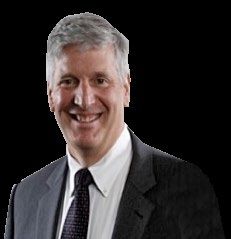
Investment Highlights

  Platform Technology                                •   First in class, non-invasive neurotechnology with broad potential
                                                         for treating symptoms of neurological disease and trauma

  Large Initial Market                               •   Over 350K people with chronic balance deficit caused by mild-to-
                                                         moderate traumatic brain injury (mmTBI) in Canada1

                                                     •   “First mover advantage” with demonstrated safety and efficacy in
  PoNS Treatment™                                        a market with few viable treatment options

                                                     •   Cleared in Canada. EU and TGA submissions under review.
  Regulatory Progress
                                                         Efforts to resubmit to FDA in process.

  Clinical Pipeline                                  •   Pilot studies completed in Stroke, Multiple Sclerosis, and
                                                         Cerebral Palsy

   Robust IP                                         •   Method Patent portfolio coverage extends to 2028; utility and
                                                         design patents to 2035

     www.heliusmedical.com | Nasdaq:HSDT | TSX:HSM                                                                           5
Large and Growing Addressable Market

Chronic balance
deficit is a long-term
disability associated
                                                                  >1.5M                     ~420K US
with neuro trauma
                                                                                            ~13K CA
and disease

Functional status,
capacity to return to                                             >350K
work, and quality of
life is frequently
                                     People worldwide who         People living with      New cases annually of
affected in individuals               experience new TBI       chronic balance deficit    chronic balance deficit
with balance deficit                    cases annually1        following an mmTBI in       caused by mmTBI in
                                                                the US2 and Canada3        the US4 and Canada5

                                     After the initial medical event, mmTBI can present significant long-term
                                         disabilities and challenges to the individual, family, and society

       www.heliusmedical.com | Nasdaq:HSDT | TSX:HSM                                                                6
Clinical Support for PoNS Treatment™:
RCT Enrollment Criteria for Mild-to-Moderate TBI with Chronic Balance Deficit
• Safety and efficacy of PoNS Treatment demonstrated in two double-blind randomized controlled trials (RCTs)1
• Enrollment criteria included patients with persisting balance deficit, despite treatment with physical therapy
(PT), the current standard of care
Inclusion Criteria
Aged 18-65 years at screening
Balance disorder as a result of mmTBI
≥ 1-year since mmTBI
Plateaued in recovery with current PT rehabilitation regimen
SOT score > 16 points below normal
PT = physical therapy; SOT = Sensory Organization Test; TBI = traumatic brain injury.
7Clinical Support for PoNS Treatment™:
Significant, Sustained Improvement
In patients with Long-term Treatment Study in mmTBI
mmTBI, mean Sensory Organization Test (SOT) Score Comparison
balance scores were 90 12 weeks washout – no stimulation
Normal
significantly better at 80 Range
SOT Score
2 Weeks, 14 Weeks 70
and 26 Weeks
∆ 33.8
∆ 29.8
60
∆ 21.0
50
SOT
The majority of 40
those patients 30
maintained normal 20
SOT scores during 10
12 week washout 0
period. Baseline Week 2 Week 14 Week 26
HFP+PT N=221
1Patients treated with high frequency pulse (HFP) device.
Low frequency pulse (LFP) data not shown since it was not statistically different from HFP.
www.heliusmedical.com | Nasdaq:HSDT | TSX:HSM 8Global Regulatory Strategy
Canada:
• Canadian authorization received 10/17/18
• The PoNS™ device is intended for use as an acute treatment of chronic balance deficit due
to mild-to-moderate traumatic brain injury (mmTBI), and is to be used in conjunction with
physical therapy (PT). The device is limited to prescription use.
EU:
• EU: Submitted CE Mark application 12/7/18
Australia:
• Australia: Therapeutic Goods Administration (TGA) filing submitted 5/6/19
US:
• FDA declined request for de novo classification April 2019
• FDA recognized there were no device-related serious adverse events in either RCT and acknowledged that participants in both arms of the study demonstrated
improvements from baseline in all pre-specified clinical endpoints
• FDA noted that it did not have sufficient information to discern the relative independent contributions of the PoNS Device and physical therapy on the improvements
from baseline in the effectiveness endpoints observed in the Company’s clinical studies
• Efforts to resubmit to FDA ongoing
www.heliusmedical.com | Nasdaq:HSDT | TSX:HSM 9Commercializing PoNS Treatment™ in Canada (Slide 1/2)
• Cleared by Health Canada 10/17/18
• Patients began treatment in Q1 2019
• Over 350K people living with chronic balance deficit due to mmTBI1
• Regulatory, quality management and post-market surveillance systems for PoNS
Treatment™ in place
• Heuro Canada established to develop network of neuroplasticity clinics
• Partnership with HTC to deliver PoNS Treatment™
• Two neuroplasticity clinics established in Montreal and Surrey
• Expect to add three additional neuroplasticity clinics in Canada during 2019
Focused on expanding commercial efforts and treating patients in Canada
www.heliusmedical.com | Nasdaq:HSDT | TSX:HSM
10Commercializing PoNS Treatment™ in Canada (Slide 2/2)
• Deploy geographically targeted campaign to target patients in proximity of certified PoNS™
neuroplasticity clinics
• Targeted patient segments at launch are cash pay and workers compensation
• Tactics include direct-to-patient digital campaign and partnership with patient advocacy groups
• Build KOL and professional society advocacy, with goals to:
• Incorporate PoNS Treatment™ into Canadian guidelines
• Reinforce the scientific basis for PoNS Treatment™
• Pave the way to reimbursement among commercial and government payers
www.heliusmedical.com | Nasdaq:HSDT | TSX:HSM
11Raising Awareness of the PoNS Treatment™
Establishing Thought Leadership at Key Medical Meetings
• American Physiotherapy Association- January 23-26 Washington, DC
• KOL meetings / peer insight dinner
• North American Neuromodulation Society- January 17-20 Las Vegas, NV
• KOL meetings / peer insight dinner - podium presentation - Alain Ptito -
Dinner Session - Presentation: Treatment of Chronic Symptoms of
Mild/Moderate Traumatic Brain Injury with the PoNS
• International Brain Stimulation Conference- February 24-27 Vancouver,
BC
• Workshop “Teach In” for PoNS Treatment
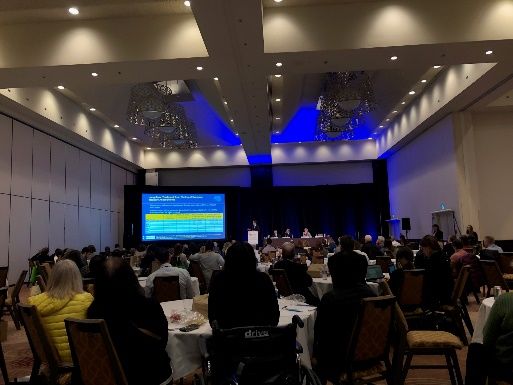
• World Congress on Brain Injury- March 13-16 Toronto, ON
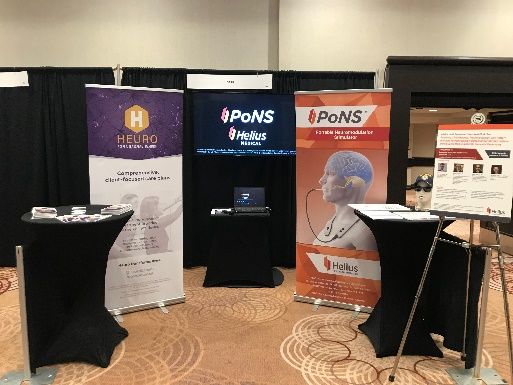
• Platinum sponsor
• Hosted Plenary Panel discussion
• TBI Conference- May 15-17 Washington, DC
• International Neuromodulation Society- May 25-30 Sydney, AU
www.heliusmedical.com | Nasdaq:HSDT | TSX:HSM 12PoNS Treatment™
Additional Clinical Progress and Potential Opportunities
Indication and Target Population - US*
Multiple Sclerosis (1M People)
Cerebral Palsy (764K People) Pilot Studies
Completed
Stroke (7M People; 795K new each year)
Potential for Future PTSD (25M People)
Development
Facial Nerve Palsy (75K People)
Depression (17.3M People)
Parkinson’s Disease (1M People; 60K new each year)
* See slide 18 for references
www.heliusmedical.com | Nasdaq:HSDT | TSX:HSM 13Financial Overview
• November 2018: Completed registered public offering with net proceeds of $18.3M, led by BTIG and
Oppenheimer
• $18.7M cash and no outstanding debt as of March 31, 2019
• First Quarter Revenue: $0.7M, from sales of PoNS in Canada
• First Quarter Operating Expenses: $7.3M in 2019 vs. $4.8M in 2018
• Year-over-year increase driven primarily by an increase of $2.4M in general and administrative expenses due
primarily to higher headcount in preparation for the anticipated US launch
*Note: Changed functional currency from $CAD to $USD, effective April 1, 2018.
Financial statements prior to and including the period ending March 31, 2018 have not been restated for the change in functional currency.
www.heliusmedical.com | Nasdaq:HSDT | TSX:HSM
14Full Year 2019 Outlook
2019 Guidance:
• For 2019, we expect total revenue in a range of $1.6M to $2.0M U.S. dollars.
Assumptions Supporting 2019 Guidance:
• 2019 revenue guidance assumes an exchange rate of CAD $1 to US $0.75.
• We expect all revenue will be generated only from contributions by the two founding neuroplasticity clinics
that are operational and treating patients in Canada.
• We anticipate generating revenue of approximately CAD $18,000 per device delivered to the Canadian
clinics in 2019.
• We expect to engage three additional neuroplasticity clinics in Canada during the course of the year, one in
each of the last three quarters of the year, to end 2019 with a total of five clinics.
www.heliusmedical.com | Nasdaq:HSDT | TSX:HSM
15Extensive IP Portfolio
Exclusively licensed from inventors (4% royalty):
• 8 US Medical Method Patents Issued
• Patents expire 2028
Patents owned by Helius (no royalty):
• 27 US Patents Issued
• 20 Foreign Patents Issued
• Patents expire 2035
Helius Patents Transferred to China Medical System Holdings (CMS):
• 3 Chinese Design Patents
Independent Verification of Patents and Freedom to Operate Opinion – September 2017
A Significant Barrier to Competitor Entry
www.heliusmedical.com | Nasdaq:HSDT | TSX:HSM 16References
Slide 5: Investment Highlights
1. Brain Injury Canada. Acquired Brain Injury (ABI) - The Basics. https://www.braininjurycanada.ca/acquired-brain-injury/. Accessed March 18, 2019.
Ma VY, Chan L, Carruthers KJ. Incidence, prevalence, costs, and impact on disability of common conditions requiring rehabilitation in the United States: stroke, spinal cord injury, traumatic brain injury,
multiple sclerosis, osteoarthritis, rheumatoid arthritis, limb loss, and back pain. Arch Phys Med Rehabil. 2014;95(5):986-995.e1.
Kleffelgard I, Roe C, Soberg HL, Bergland A. Associations among self-reported balance problems, post-concussion symptoms and performance-based tests: a longitudinal follow-up study. Disabil Rehabil.
2012;34(9):788-794.
Calculations 1.5M x 90% (have a traumatic brain injury) x 85% (mmTBI) 31% (suffer Chronic balance disorder) (1.5M x .90 x .85 x.31)= 356K
Slide 6: Large and Growing Addressable Market
1. *Maas et. Al. (2017). Traumatic brain injury: integrated approaches to improve prevention, clinical care, and research. The Lancet Neurology. 16. 10.1016/S1474-4422(17)30371-X.
https://www.researchgate.net/publication/320898726_Traumatic_brain_injury_integrated_approaches_to_improve_prevention_clinical_care_and_research [accessed Jul 22 2018].
2. Selassie AW, Zaloshnja E, Langlois JA, Miller T, Jones P, Steiner C. Incidence of long-term disability following traumatic brain injury hospitalization, United States, 2003. J Head Trauma Rehabil.
2008;23(2):123-131. 3.
Helius Medical Technologies Data on File. Global Data.
Ma VY, Chan L, Carruthers KJ. Incidence, prevalence, costs, and impact on disability of common conditions requiring rehabilitation in the United States: stroke, spinal cord injury, traumatic brain injury,
multiple sclerosis, osteoarthritis, rheumatoid arthritis, limb loss, and back pain. Arch Phys Med Rehabil. 2014;95(5):986-995.e1.
Kleffelgard I, Roe C, Soberg HL, Bergland A. Associations among self-reported balance problems, post-concussion symptoms and performance-based tests: a longitudinal follow-up study. Disabil Rehabil.
2012;34(9):788-794.
3. Brain Injury Canada. Acquired Brain Injury (ABI) - The Basics. https://www.braininjurycanada.ca/acquired-brain-injury/. Accessed March 18, 2019.
Ma VY, Chan L, Carruthers KJ. Incidence, prevalence, costs, and impact on disability of common conditions requiring rehabilitation in the United States: stroke, spinal cord injury, traumatic brain injury,
multiple sclerosis, osteoarthritis, rheumatoid arthritis, limb loss, and back pain. Arch Phys Med Rehabil. 2014;95(5):986-995.e1.
Kleffelgard I, Roe C, Soberg HL, Bergland A. Associations among self-reported balance problems, post-concussion symptoms and performance-based tests: a longitudinal follow-up study. Disabil Rehabil.
2012;34(9):788-794.
4. Helius Medical Technologies Data on File. Global Data.
Ma VY, Chan L, Carruthers KJ. Incidence, prevalence, costs, and impact on disability of common conditions requiring rehabilitation in the United States: stroke, spinal cord injury, traumatic brain injury,
multiple sclerosis, osteoarthritis, rheumatoid arthritis, limb loss, and back pain. Arch Phys Med Rehabil. 2014;95(5):986-995.e1.
Kleffelgard I, Roe C, Soberg HL, Bergland A. Associations among self-reported balance problems, post-concussion symptoms and performance-based tests: a longitudinal follow-up study. Disabil Rehabil.
2012;34(9):788-794..
Taylor CA, Bell JM, Breiding MJ, Xu L. Traumatic brain injury–related emergency department visits, hospitalizations, and deaths — United States, 2007 and 2013. MMWR Surveill Summ. 2017;66(9):1-16.
5. Ma VY, Chan L, Carruthers KJ. Incidence, prevalence, costs, and impact on disability of common conditions requiring rehabilitation in the United States: stroke, spinal cord injury, traumatic brain injury,
multiple sclerosis, osteoarthritis, rheumatoid arthritis, limb loss, and back pain. Arch Phys Med Rehabil. 2014;95(5):986-995.e1.
Kleffelgard I, Roe C, Soberg HL, Bergland A. Associations among self-reported balance problems, post-concussion symptoms and performance-based tests: a longitudinal follow-up study. Disabil Rehabil.
2012;34(9):788-794.
Helius Medical Technologies Data on File. Global Data.
www.heliusmedical.com | Nasdaq:HSDT | TSX:HSM 17References
Slide 7: Clinical Support for PoNS Treatment™
1. Helius Medical, Inc Clinical Study Report data on file. Executive summary of TBI-001
Slide 10: Commercializing PoNS Treatment™ in Canada
1. Brain Injury Canada. Acquired Brain Injury (ABI) - The Basics. https://www.braininjurycanada.ca/acquired-brain-injury/. Accessed March 18, 2019.
Ma VY, Chan L, Carruthers KJ. Incidence, prevalence, costs, and impact on disability of common conditions requiring rehabilitation in the United States: stroke, spinal cord injury, traumatic brain injury,
multiple sclerosis, osteoarthritis, rheumatoid arthritis, limb loss, and back pain. Arch Phys Med Rehabil. 2014;95(5):986-995.e1.
Kleffelgard I, Roe C, Soberg HL, Bergland A. Associations among self-reported balance problems, post-concussion symptoms and performance-based tests: a longitudinal follow-up study. Disabil
Rehabil. 2012;34(9):788-794.
Slide 13: Disease State Prevalence
• Multiple Sclerosis - http://www.nationalmssociety.org/About-the-Society/MS-Prevalence
• Cerebral Palsy: http://www.cerebralpalsy.org/about-cerebral-palsy/prevalence-and-incidence
• Stroke – http://www.strokeassociation.org/STROKEORG/LifeAfterStroke/Life-After-Stroke_UCM_308546_SubHomePage.jsp
• https://www.cdc.gov/dhdsp/data_statistics/fact_sheets/fs_stroke.htm
• PTSD – http://www.ptsdunited.org/ptsd-statistics-2/
• Bells Palsy: https://www.news-medical.net/health/Bells-Palsy-Epidemiology.aspx - US rate of 23 cases per 100,000 persons – (326 Million US Population /100,000 * 23 = 75,000)
• US Population: http://worldpopulationreview.com/countries/united-states-population/
• Depression - http://www.nimh.nih.gov/health/statistics/prevalence/major-depression-among-adults.shtml
• http://www.cdc.gov/nchs/fastats/depression.htm
• Parkinson’s - https://parkinsonsnewstoday.com/parkinsons-disease-statistics/
www.heliusmedical.com | Nasdaq:HSDT | TSX:HSM 18Helius Medical Technologies, Inc. │642 Newtown Yardley Road, Suite 100 │ Newtown, PA 18940
215 944-6100 │ investorrelations@heliusmedical.com │ www.heliusmedical.com
US-PoNS-1900047 v 2.1
May 2019You can also read


