REPRESENTATION, POLITICS AND MONEY: A SCREENING GUIDE - Knock Down The House
←
→
Page content transcription
If your browser does not render page correctly, please read the page content below
REPRESENTATION, POLITICS AND MONEY: A SCREENING GUIDE
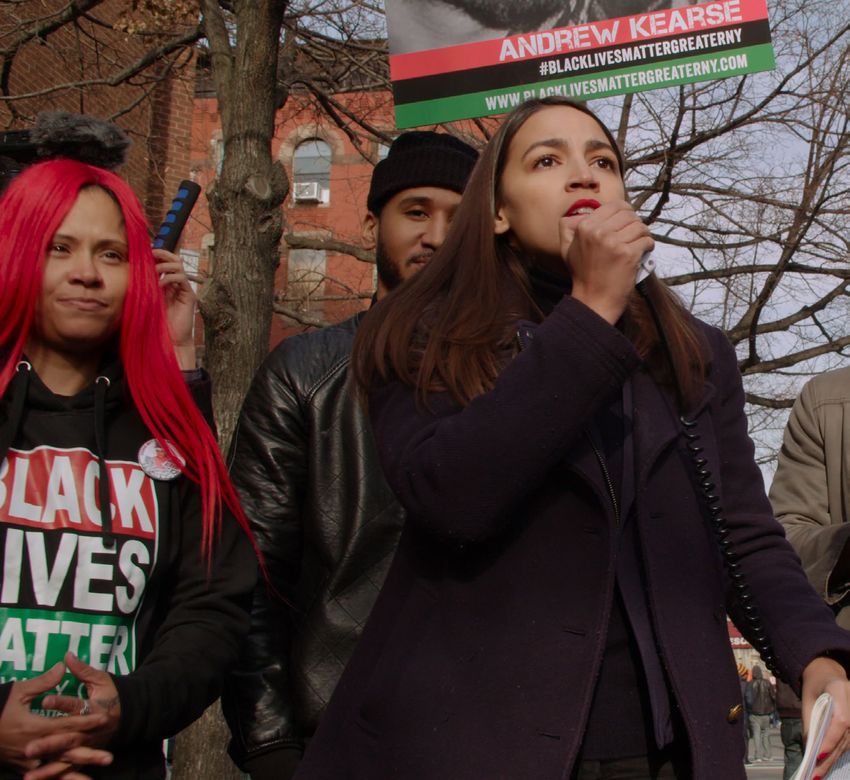
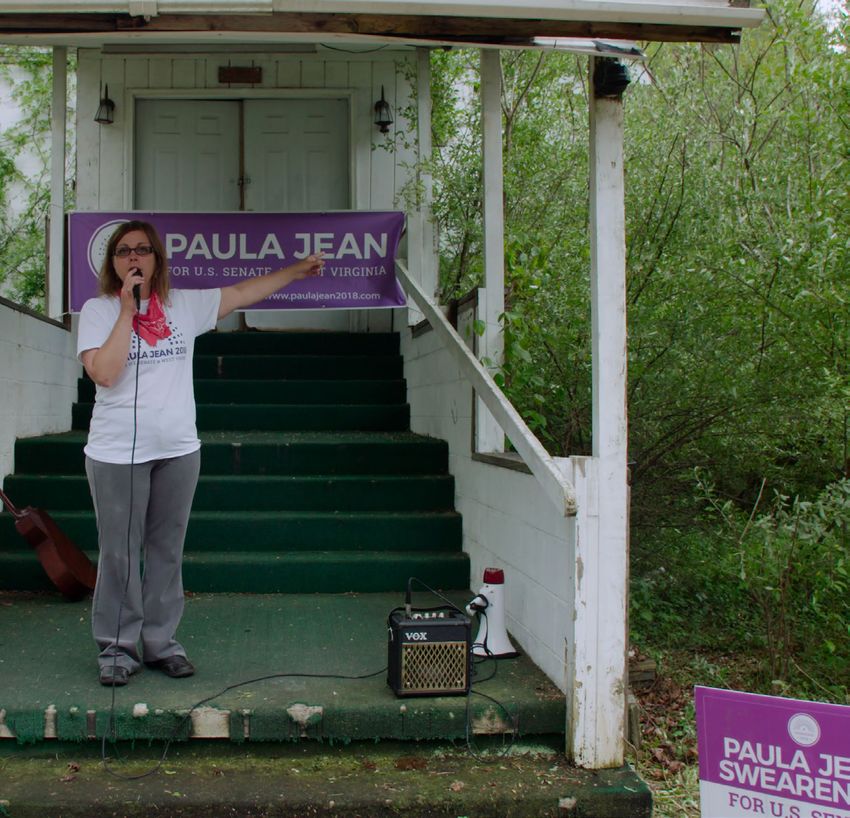
“I’m running because of Cori Bush. I’m
running because of Paula Jean Swearengin.
I’m running because everyday Americans
deserve to be represented by everyday
Americans.”
					 - Alexandria Ocasio-Cortez

TABLE OF CONTENTS
4 About the Film
5 Letter from Director, Rachel Lears
6 Using the Guide
     Tips for Leading Conversations
     Pre-Screening Discussion Questions
9 Post-Screening Background and Context
     Who Knocked in 2018?
     Representation: Who is in Congress and
       Why it Matters
     How Money Works in Elections
     The Politics of Elections
25 Get Involved
     Share the Film
     Spark Conversations Across Party Lines
     Vote and Get Out the Vote
     Support a Candidate
     Run for Office
33 Resources for Further Learning

                                              3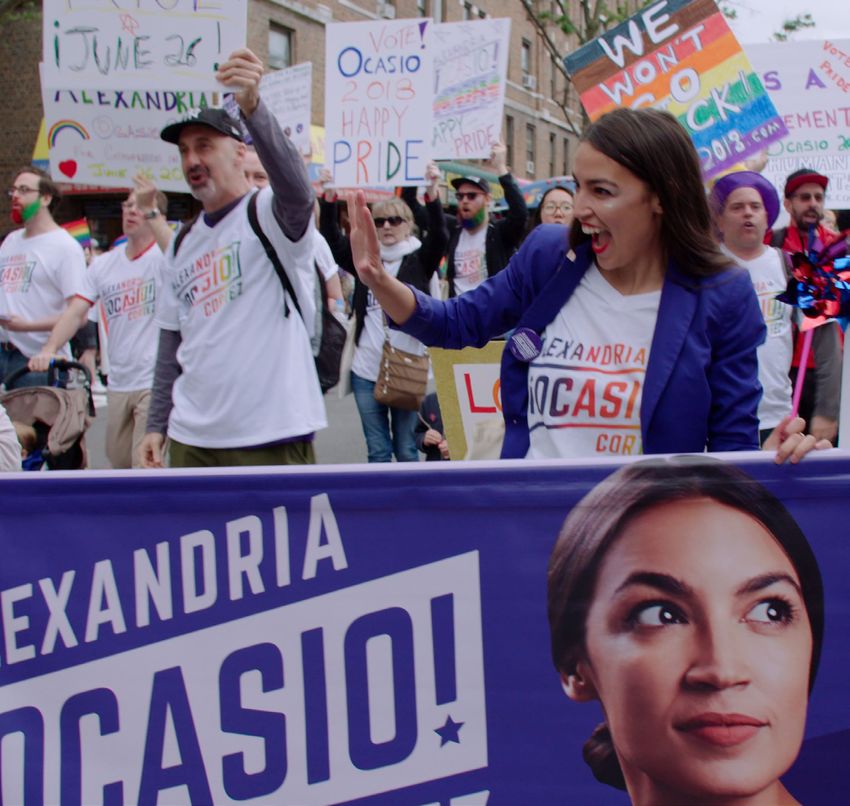
ABOUT THE FILM
Knock Down the House is the story of four working-class women who
embraced the challenge of running for Congressional office in the 2018
midterm elections. They are four of the record numbers who organized
grassroots campaigns, rejected corporate PAC money and challenged the
notion that everyday people cannot run successful campaigns against
sitting incumbents. Collectively these candidates herald a cultural and
political shift to transform the process of running and electing our
representatives. Such changes do not occur in a vacuum, nor are they about
a singular issue. Rather they are about changing the attitudes, behaviors,
terms, and outcomes of existing and entrenched norms and building to-
wards a more inclusive and representative government.

                                                                             4
LETTER FROM THE DIRECTOR, RACHEL LEARS

I’ve been making films about politics since the days of Occupy Wall Street. After having a
baby in 2016, I thought I might take a break from political filmmaking—but the day after the
election, I knew I had no choice. I wanted to tell a big story in this new political reality about
people working across cultural and geographical divides to change American politics in big
ways. That same day I contacted the progressive organizations Brand New Congress and
Justice Democrats to propose a documentary project about their plan to forge a new path to
Congress for “extraordinary ordinary” working people. That project has become Knock Down
the House.

While I did not set out to make a film focusing on women running for Congress, during the
casting process it became clear to me that the stories of Alexandria, Paula Jean, Cori, and
Amy would resonate not only with the larger zeitgeist of women’s empowerment, but also
with deeply personal aspects of my own experience. As a woman, I identify strongly with
these candidates’ struggles to overcome self-doubt and the underestimation of others, and
to turn adversity, pain, and loss into a new vision of leadership. As a mother of a young child,
I have to believe that a better world is possible—and I’m deeply moved and inspired by the
fierce drive of these four women to protect their children and their communities. And as a
working mother who, at times in my life, has struggled to make ends meet, the issues our
characters address such as access to affordable healthcare, child care, and housing have
affected me directly in ways that have shaped my adult life.

For over a decade I’ve investigated the way power and social change work. Too often,
communities operate separately in silos and their struggles end up pitted against one another
in media narratives. We won’t have systemic change until we overcome this. At this critical
and volatile moment, Knock Down the House presents a story of people working tirelessly to
unite the struggles of all Americans.

                                                                                                     5
USING THE GUIDE

                  6
This guide is a tool to support house and community screenings of the acclaimed Netflix
   documentary Knock Down the House. The film, guide, and conversations it aims to foster are
   an opportunity for communities to have nonpartisan exchanges on what it takes to win an
   election, what it means to have transparent fundraising and campaigns, and, ultimately, how
   to elect a Congressional leadership that truly reflects all of America.

    TIPS FOR LEADING CONVERSATIONS

   Knock Down the House comes at a time when our nation feels deeply divided along party lines,
   and even within the major parties themselves. The hope is that the film and the conversations it will
   engender can galvanize people toward engagement in many ways, not for one end or any particular
   party, but in the interest of promoting democracy. Reviewing these guidelines beforehand will help
   you prepare for your event and lead a productive conversation.

                                 The candidates in this film run for Congress against great odds. Their
SPOTLIGHT HOPE                   energy and motivations are an inspiration. Though not all of the
                                 candidates won, focusing on what they did well, what they achieved,
AND SOLUTIONS                    and the different avenues to involvement their stories revealed will
                                 help your group carry the energy from the film into their own lives.

                                As facilitator, your passion and energy will set the tone for the
SHARE YOUR                      conversation. As you watch the film and read through this guide,
PASSION                         consider what you hope your event will achieve and share that with
                                your group.

                                People at your screening event will likely arrive with varying
ALLOW FOR                       feelings about the issues that are raised in the film. You can keep
                                your conversation moving forward by focusing, as the film does,
DIFFERENT                       on the motivations of the individuals in the film and on the themes
                                of representation, money, and political structures in elections. All
PERSPECTIVES                    of these issues are currently being questioned and explored across
                                party lines.

                                                                                                       7
When different perspectives do come up, invite your group to see
FOCUS ON                            the conversation as one that is meant to create understanding,
                                    rather than change minds. In order to do that, ask them to focus on
LISTENING                           listening with the intention of understanding before responding with
                                    their own point of view.

INCORPORATE                         Inviting a diverse panel of community stakeholders is a proven
EXPERT AND                          way to engage your group after a screening. Local activists, prior
                                    candidates, elected officials from the school board to the state
COMMUNITY                           legislature, community-based organizations, and academics focused
                                    on politics and elections are a great place to start when looking for
VOICES                              panel participants.

  PRE-SCREENING DISCUSSION QUESTIONS

  Before starting any screening event it can be helpful to engage the group with opening questions to
  focus attention and seed their thinking with the topics you plan to return to following the film. Here
  are a few suggestions:

          •W hat are three essential things candidates need to win an election today?
          • Alternatively, what are three reasons why candidates do not win their election?
          • What role do you think money plays in electing candidates today?
          • What are the differences in tactics and strategies between a grassroots movement and the
            “machine” of a political party?

                                                                                                       8
POST-SCREENING
BACKGROUND
AND CONTEXT

                 9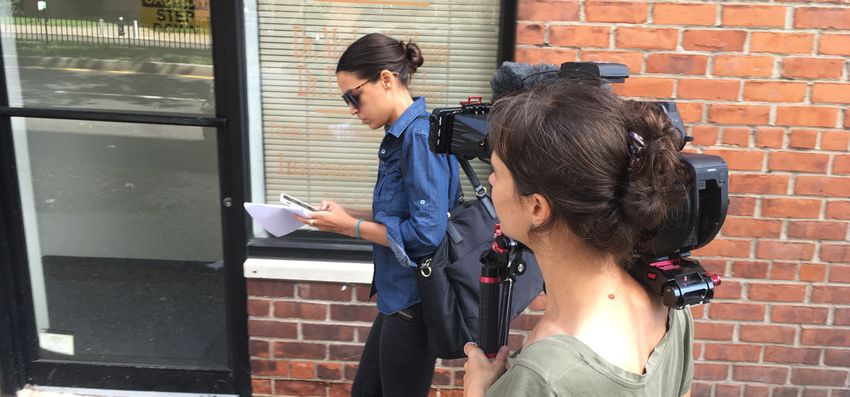
POST-SCREENING DISCUSSION QUESTIONS
          Before delving more deeply into the specific topics of representation, money, and politics, consider
          posing some general questions for your group to share their immediate reflections.

                           •W
                             hat did this film make you think about the future of the American Congress?
                           •D
                             id the film change your ideas about what it takes to win an election today?
                           •W
                             hat moments stood out to you in the film as new or surprising?
                           •W
                             hat traits did you see in the candidates in this film that you’d like to see in your
                            representative?
                           •W
                             hat did you see in the film that made you skeptical or concerned about the current
                            election process?
                           •W
                             hat did you see that made you feel hopeful for the future?

Who Knocked in 2018?

                                           The candidates we meet in Knock Down the House hope to change the U.S. Congress
                                           so that it looks more like the nation it serves. They are all women. They all come
                                           from working-class families. Two of them are women of color. In these ways, they
                                           are representative of many ways in which the 2018 election broke ground and broke
                                           records:1

                                                Voter turnout was higher                                More women, people                 The youngest woman
                                                than in any midterm                                     of color, and LGBTQ                was elected to
                                                (non-presidential)                                      people were elected                Congress, Alexandria
       women ran for                            election since                                          to Congress than ever              Ocasio-Cortez, at age
       Congress. 255                                                                                    in the history of the
       in the general
                                                                                                        nation.
       election. The
       previous record
       during 1992’s
       “Year of the
       Woman” was 117.2
                                                              AND THERE WERE SEVERAL FIRSTS:

                  The first NATIVE                                                         The first MUSLIM                                 The first openly
                  AMERICAN women                                                           women elected to                                 BISEXUAL woman
                  elected to Congress                                                      Congress.                                        elected to Congress.

                                        This interactive graphic shows how the 2018 elections increased the diversity of the
                                        House of Representatives in terms of race, age, gender and sexual orientation.

 1. Grace Panetta, S. G. (2018, November 07). 12 records the 2018 midterm elections smashed. Retrieved from https://www.businessinsider.
com/2018-midterm-election-records-early-voting-women-lgbt-candidates-2018-11
2. Kamarck, E. (2018, November 08). 2018: Another ‘Year of the Woman’. Retrieved from https://www.brookings.edu/blog/
fixgov/2018/11/07/2018-another-year-of-the-woman/

                                                                                                                                                               10
THE CANDIDATES — WHY THEY RAN
CORI BUSH
MISSOURI 1ST CONGRESSIONAL DISTRICT
“I’m a registered nurse. I’m an ordained pastor, and I’m the mother of two
teenagers. I wasn’t trying to become an activist. Didn’t set out to do that. This
is the district where Mike Brown was murdered. I only live six minutes from
Ferguson. It was like a battle zone at home. I took to the streets to lend a hand
as a nurse. What I was wanting to see was justice happen. It didn’t happen
so, I just kept going back again and again. This district was able to affect the
entire world. Just regular everyday people.”
ALEXANDRIA OCASIO-CORTEZ
NEW YORK 14TH CONGRESSIONAL DISTRICT
“My Dad had passed away. Working in a non-profit just wasn’t enough for our
family, because we were about to lose our home. You’re trying to make a three
hundred dollar student loan bill here, and your foreclosure installment here...
You just do your best to survive. That’s been the reality for millions of people
in this country. That feel like they’re just hanging by a thread. And they feel
like no one’s fighting for them, and everyone’s just in it for themselves.”
PAULA-JEAN SWEARENGIN
U.S. SENATE CANDIDATE FROM WEST VIRGINIA
“This was my house, where I raised my kids. My neighbor’s daughter ended
up with a rare form of bone cancer. I know this lady had cancer. There’s a
person in that house that has cancer. And our leadership’s not hearing us.
They’re in bed with the industries.... If another country come in here, blew up
our mountains and poisoned our water, we’d go to war. But industry can. My
name is Paula Jean. I am a coal miner’s daughter, running for the U.S. Senate,
and I am mad as hell.”
AMY VILELA
NEVADA 4TH CONGRESSIONAL DISTRICT
“It’s not just our family. It’s thirty thousand families a year. Thirty thousand of
us... a year... that are losing loved ones because they don’t have insurance. No
one in this great country should be dying because they don’t understand the
intricate system of insurance. And why is it difficult? Because of algorithms,
because of risk assessment, because the CFOs that work in that field are
sitting there figuring out ways to make optimum profit for their shareholders.
This is a commodity. My daughter’s life wasn’t.”
11DISCUSSION PROMPTS
•W
hat aspects of each candidate’s story did you find compelling?
•H
ow would you describe each candidate’s motivations for running?
•E
ach of these candidates takes strong and specific stances on issues important to them like
policing, Medicare-for-all, immigration, and environmental protections. What is the effect
of taking these kinds of stances on controversial issues rather than more moderate, general
or incremental approaches? What kind of policy proposition appeals most to you?
“Right now our Congress is 81% men, it’s
mostly white men, it’s mostly millionaires, it’s
mostly lawyers.”
- Corbin Trent, Justice Democrats
12REPRESENTATION:
WHO IS IN CONGRESS, AND WHY IT MATTERS
DEMOGRAPHICS
In the United States, candidates are elected by the people in the belief that each will represent the
best interests of their constituents. It stands to reason, then, that the makeup of the legislative bodies
would reflect the voting population. But that is not the case.
325 MILLION
total U.S. population3
General Population 2019 Congress
49% Men 76% Men
51% Women 24% Women
61% White, Non-Hispanic 78% White, Non-Hispanic
22% People of Color
39% People of Color
These disparities — though still pronounced — have changed over time. The 116th Congress sworn
into office in 2019 includes more diversity in terms of race and class than any Congress in history. It
was also more diverse in terms of sexual orientation, gender identity, nation of origin, and religion.
3. U.S. and World Population Clock. (n.d.). Retrieved from https://www.census.gov/popclock/
13
4. A Rising Tide? (n.d.). Retrieved from https://wholeads.us/2018-report/INCOME
Despite these gains, issues of class and income remain major barriers to running for office and
winning elections. More than half of the American economy is made up of working class people,
which is defined as those employed in manual labor, the service industry or clerical jobs, and yet
members of Congress who were working class prior to holding office only hold two percent of seats
in Congress.
Overall in 2017, the median net worth of members in Congress was $511,000, roughly five times higher
than the average American’s net worth of $97,600.5
https://www.vox.com/policy-and-politics/2018/10/24/18009856/working-class-income-inequality-randy-bryce-alexandria-ocasio-cortez
Research shows that income is a major influence over how Congress members vote. Wealthier
members of Congress tend to vote for policies that protect or promote the interests of wealthy
people, so a rich Congress tends to govern in the interest of rich people. Yet, one of the biggest
barriers to working class people running for Congress is campaigning itself. Working class people
are less likely to be able to give up their jobs in order to run. They are also less likely to have social
connections to major donors, party leadership, and other social networks that promote successful
campaigns.6
“If it takes $3 million to run a campaign, who’s going to have that $3 million historically in
our country? It’s not something you can easily do if you’re from a working class
background or you’re not a self-financed millionaire or you don’t have a Rolodex of people.
It’s not something that you can do easily if you’ve been historically disenfranchised. There’s
a major wealth gap between communities of color and white Americans. There’s still a
huge wealth gap between women and men in this country… And the same old same old is
going to continue to win if we continue to function under this set system and regulations.”
— Shannon Thomas, Fundraising Director for Amy Vilela
5 Hawkings, D., & Hawkings, D. (2018, March 02). Wealth of Congress: Richer Than Ever, but Mostly at the Very Top. Retrieved from https://
www.rollcall.com/news/hawkings/congress-richer-ever-mostly-top
6. Carnes, N. (2018, October 24). Working-class people are underrepresented in politics. The problem isn’t voters. Retrieved from https://
www.vox.com/policy-and-politics/2018/10/24/18009856/working-class-income-inequality-randy-bryce-alexandria-ocasio-cortez
14WHY DOES REPRESENTATION IN CONGRESS MATTER?
“Medicare-for-all is a great example [of why representation matters]. 64% of American
voters [from all parties] want Medicare-for-all. And yet somewhere around 19% of Congress
approves of Medicare-for-all. We shouldn’t have that disconnect between the will of voters
and what Congress is doing.”
— Corbin Trent, Justice Democrats
Representation matters because it’s the heart of a representative democracy — the assurance that
elected officials will represent all of their constituents’ interests. Though identities such as race, class,
and gender do not have to be shared in order for an elected official to represent them — the total
absence of those identities is deeply felt, especially for people whose interests have not traditionally
been served by Congress.
“We don’t see people who represent us, whether that means your gender, your sexual
orientation, your religion or your values. We don’t see those people running our government
and we don’t have trust in the people who are running our government. So, young
people like me, women like us, people of color, in many cases we’ve become apathetic. We
don’t believe that one person means one vote. We don’t believe that we actually are
empowered by our Constitution to take elected office.”
— Shannon Thomas, Fundraising Director for Amy Vilela
DISCUSSION PROMPTS
•W hat interests are your priorities?
•W ho do you want to represent your interests?
• I n what ways do you think Congress’ actions would change if members accurately reflected
the percentage of the population in terms of gender, race, age, class, and other identities?
•W hat characteristics make an elected official an effective advocate for his or her
constituents?
• Can you think of an example of a Congressmember who is not from a historically
marginalized group but effectively advocates for their interests? What successes and
challenges have you noticed in their work?
• Do you think it’s more important for your candidate to represent some aspect of your
identity, or some aspect of your political beliefs?
15“I think rejecting corporate money is a pretty
big signal ... and I think it’s stronger than the
word ‘progressive.’”
- Saikat Chakrabarti, Justice Democrats
16HOW MONEY WORKS IN ELECTIONS
Campaign finance laws currently allow for unlimited funding for political campaigns through
anonymous channels. Known as “dark money,” those donations may come from wealthy individuals,
private interest groups or others. Dark money spending increased tenfold from 2012 to 2016, when
more than $300 million was spent in the presidential elections.7 There is a strong perception that
candidates who are elected with dark money are more likely to represent the interests of their large
donors than the everyday people in their constituencies.
As a result, many who ran in 2018 announced they would reject corporate Political Action Committee
(PAC) funding. Though corporate PACs are different than dark money, candidates who reject the
corporate PACs want to bring attention to the influence of big money in politics and emphasize
the importance of bringing in small donations from many individuals. Turning down money from
corporate PACs became a shorthand way of saying that a candidate rejects the influence of big
money, and is committed to the individuals and communities they represent.8
“Everybody that knows me knows that on day one, I will
co-sponsor HR-676 Medicare-for-all. It’s time to join the
other Democrats in office right now that are standing
up and saying, “Enough is enough! We’re not gonna
accept any more money from the hospitals, the insurance
companies, and pharma, and we can have the people
behind the party again.”
- Amy Vilela
7. The Center for Responsive Politics. (n.d.). Retrieved from https://www.opensecrets.org/darkmoney/dark-money-basics/shadow-
infographic.php
8. Godfrey, Elaine. (2018, August 23.) “Why So Many Democratic Candidates are Dissing Corporate PACs, https://www.theatlantic.com/
politics/archive/2018/08/why-so-many-democratic-candidates-are-ditching-corporate-pacs/568267/
17According to The Center for Responsive Politics the following amounts were raised by Joseph
Crowley and Alexandria Ocasio-Cortez during the 2018 campaign.
*These totals are not comparable because the funds were raised at different times in the election cycle, but it is interesting to note the
candidates’ reliance on different funding sources.
NEW YORK, DISTRICT 14
Joseph Crowley
TOTAL RAISED: $3,219,073
54.37%
33%
10.84%
.88% 0%
Individuals Individuals PAC Self-Funded Other
< $200 > $200
Alexandria Ocasio-Cortez
TOTAL RAISED: $2,084,838
61.6%
36.3%
3.62% 0% -1.53%
Individuals Individuals PAC Self-Funded Other
< $200 > $200
18HOW DOES MONEY INFLUENCE THE OUTCOME
OF THE CAMPAIGNS?
Research is conflicted about whether money invested in elections actually results in wins. There are
some clear findings, however, that suggest that money matters a great deal:
1. From 2000-2016, between 85-90% of campaigns that raised the most money won the
election. However, that may be not because money leads to votes, but rather a sign that big
donors are more likely to invest in candidates they believe will win, an assessment they
make based on dollars raised. Candidates are rarely measured by metrics like volunteer base,
phone calls made and doors knocked, number of people donating, and other hallmarks of
grassroots campaigning.
2. As the average amount of money spent on campaigns increases, the less likely it is that
people who are not independently wealthy will run, meaning that lower or middle class people
are less likely to be represented in the legislature.9
HOW DO CAMPAIGNS USE MONEY?
The Federal Elections Commission (FEC) tracks how campaigns spend the money they raise. In order
to increase transparency, the FEC requires that candidates report every expenditure over $200.
OpenSecrets.org, a non-profit organization that tracks campaign fundraising and spending offers this
breakdown of how campaigns spent money in 2018. These numbers do not include advertisements or
mailers sent by political action committees (PACs), LLCs, or other groups (including dark money) not
directly associated with campaigns.
https://www.opensecrets.org/expends/index.php
9. Koerth-Baker, Maggie. (2018, September 10). How Money Affects Elections. Retrieved from https://fivethirtyeight.com/features/money-
and-elections-a-complicated-love-story/
10. Borman, David. (Aug. 3, 2016) What can politicians do with unused campaign funds. Retrieved from https://ballotpedia.org/What_can_
politicians_do_with_unused_campaign_funds%3F
19When campaigns end, either because the candidate lost or the election is over, candidates are legally
barred from using funds for personal use. They can return the money to contributors, roll it over
for future elections, donate it to a nonprofit organization, contribute a limited amount to another
campaign, or contribute an unlimited amount to national committee activities.10
DISCUSSION PROMPTS
•W
hat do you think is the ideal way for candidates to raise funds?
•D
iscuss how the candidates in the film used money during their campaigns.
•W
hat do you notice as you compare the fundraising sources of the incumbent candidate
Joseph Crowley and Alexandria Ocasio-Cortez?
“We’re running to organize. We’re running to redefine
the political landscape in New York City. And here’s
the best part about all of this... we’re not running to
make a statement. We’re not running to pressure the
incumbent to the left. We’re running to win.”
- Alexandria Ocasio-Cortez
20THE POLITICS OF ELECTIONS
Fair and free elections are an essential part of a representative democracy - where anyone who
meets the requirements for office can run, and citizens elect representatives who are responsive to
their interests. In the United States all Federal offices, except for the President of the United States,
are decided by popular vote.
WHAT IS A PRIMARY?
A primary election is the process by which voters select their preferred candidate for the general
election. A primary may be closed (partisan), allowing only declared party members to vote, or open
(general public), enabling all voters to choose which party’s candidate they wish to vote for without
having to declare any party affiliation. In Knock Down the House all four campaigns are in closed
primaries.
COMPETITIVE AND HERE’S WHY:
ROBUST PRIMARIES ARE
•A
new candidate introduces themselves to their constituents;
A CRITICAL AND HEALTHY •A
robust exchange of policy and priorities are debated
PART OF THE between candidates;
DEMOCRATIC PROCESS. • I t strengthens and prepares candidates for the general
election;
• I t ensures incumbents are responsive and held accountable as
the risk of a primary is always present;
• I f an incumbent has not been responsive, a primary is the time
to endorse a new candidate;
• I deally after a primary everyone in a party unites behind their
nominee to see them through the general election.
The Importance of Midterm Elections
Midterm elections take place at the midpoint of a president’s four-year term. The
2018 midterms elected:
435
House of Representative seats
35 out of 100
Senate seats
Midterm elections also include state-level seats including governor’s races, seats
in state legislature, ballot initiatives, or municipal and local elections.
21
21WHAT CHALLENGES DO NEW CANDIDATES FACE
WHEN CHALLENGING AN INCUMBENT?
“We’re a country that’s supposed to be set up where the people have the final say. What
happens is those who are already entrenched select people. It’s going up against the
establishment in a true sense of the word.”
— Joanne Whitehead, Community Organizer, Queens, NY
A new candidate navigates many dynamics when entering a Congressional race, especially when
running against an incumbent. Some of the most common include competing against established
funding sources, name recognition, tradition or loyalty to the candidate, history of low voter turnout,
or fear for their job if it’s a term-dependent appointment. Despite these challenges, in 2018 a
wave of midterm candidates across the political spectrum embraced the opportunity to challenge
incumbents, take back their government, and ignite a wave of new energy and ideas into Congress.
2018 Results
87.1% of Congressional seats were up for reelection in 2018.
17% of U.S. Senate incumbents seeking reelection were defeated.
1.1% of U.S. House Democratic and
reelection were defeated.
15.3% of U.S. House Republican incumbents seeking
38
In total, incumbents—two Democratic House incumbents, four Democratic senators, 31 Republican
House incumbents, and one Republican senator—lost their reelection bids. (North Carolina’s 9th district
faces a special election.)
“You look at the first Congressional district, where they’re #1 in murder per capita. We’re
in the top three in African American poverty. We’re talking about mass incarceration.
We’re talking about the African Americans who are almost 50% of the district. To have a
black congressman as long as they have had and still have not made any significant gains?
This is Cori Bush’s time.”
— Reverend Darryl Gray, Civil Rights Veteran
22“Everybody in this room knows five to 10
people. And then those five to 10 people know
another five to 10 people. Frankly, big money
is very lonely, and we’ve got people on our
side.”
- Alexandria Ocasio-Cortez
23WHAT IS A GRASSROOTS CAMPAIGN?
In Knock Down the House each candidate relies on grassroots efforts to get elected and challenge
the political establishment, or “the machine” of the Democratic Party. Grassroots work is both
a philosophy to political organizing work and a strategy to achieve a goal. Regarding elections,
grassroots campaigns prioritize and depend upon the local community to work on behalf of the
candidate, including fundraising, get-out-the-vote efforts, staffing town hall meetings, and more.
While leadership in grassroots campaigns varies, it can often be less hierarchical and more diffuse
with decision making based upon a consensus model.
DISCUSSION PROMPTS
•W hat observations can you make about the reactions of the incumbents to primary
challengers from the film?
•W hat do we learn from the film about political strategies and tactics used in current
campaigns?
•W hat distinctions do you make between a grassroots campaign and more traditional
approaches to campaigning?
• I n what way do you think the experience and political power of incumbents should be
weighed against the fresh ideas of newcomers to politics?
• Where do you stand on the continuum of those who believe in supporting a candidate who
seems likely to win over a candidate who truly represents your beliefs?
24GET INVOLVED
25KNOCK THE HOUSE DOWN
There are countless ways for every American to participate in our representative democracy — from
voting in every election, to running for office, to writing letters to the editor, to engaging with a family
member or neighbor who sees an issue differently from ourselves. This section of the guide offers a
few recommendations for ways to get involved.
SHARE THE FILM USE THE FILM
to spark conversations
across parties.
VOTE SUPPORT A CANDIDATE
and get out the vote.
“It’s time for ordinary people to do extraordinary things.
Let’s raise some hell, and take our lives back.”
- Paula Jean Swearengin
26SHARE THE FILM
Knock Down the House is a great tool to get conversations started
about elections and our democracy with friends in your living room
or at a community event. Beginning May 1, the film will be available
for screenings worldwide via Netflix. Sign up to host a screening at
knockdownthehouse.com
In order to screen the film, you must have a Netflix account. If you
do not already have an account, you can sign up for a free, 30-day
trial at netflix.com.
You have two options to access the film:
STREAM THE FILM ON NETFLIX
• In order to play from the Netflix platform, your home or
venue must have an internet connection with at least 5
Mbps download speed. You can test the internet speed by
visiting a site like fast.com. Learn more about Netflix’s
internet speed recommendations.
• Allow the film to load before hitting play to improve
playback.
• If you are hosting a community screening, don’t forget to
do a tech check at your venue, with the equipment and
internet connection you plan to use for your screening—
ideally a week before your event.
• Problems with streaming? Consult the Netflix Help Center to troubleshoot network
connection issues.
DOWNLOAD THE FILM ON THE NETFLIX APP
• Using the Netflix app, you can download the film to play it offline. This feature is available
for mobile phones (iPhones and Androids), tablets, and computers running Windows 10.
• If you are hosting a community screening, run a tech check at your venue after you
download the film, using the equipment you will use during your screening—ideally a week
before your event.
• Need help with the app? Learn more about the app on the Netflix Help Center.
27SPARK CONVERSATIONS ACROSS PARTIES
“It’s not about red state issues, it’s not about blue state issues, it’s about people issues.”
— Paula-Jean Swearengin Campaign Staffer
A screening of Knock Down the House is a great opportunity to bring people who hold different
points of view together to create a constructive dialogue about how elections are run, the role of
money in politics, and the state of our representative democracy across partisan lines.
Precisely because Knock Down the House is character-driven and tells the personal stories of the
candidates and why they are running for Congress, it’s a useful tool for sparking conversation,
notwithstanding personal political views. Multiple studies show that arguments that rely on data,
graphs, facts, and figures do not change minds, and may in fact cause people to dig deeper into
their own beliefs. Rather, what does change minds is personal understanding of a different point of
view, deeply understanding not only what another person believes, but why it is important to them.11
If you choose to host an event with people from across the aisle, you can encourage dialogue by
inviting people to share not only what they believe, but why they hold the beliefs they do, and why it
matters to them.
There are many resources available to help facilitate these discussions:
In this 2016 article in The New York Times, the writer details the advice of the Dalai Lama for difficult
cross-partisan conversation:
•S
olutions begin with the individual, not the institution. We must change our own behavior
and be willing to engage despite our differences before we demand the same of our
institutions.
•W
armheaterdness — being respectful and fair to those with whom we disagree.
Better Angels is a non-profit, non-partisan organization that facilitates gatherings of cross-partisan
dialogue across the nation.
The University of California at Berkeley hosts these research-driven exercises and tools for
encouraging people to cross across divides.
11. Kolbert, E., & Kolbert, E. (2017, June 19). Why Facts Don’t Change Our Minds. Retrieved from https://www.newyorker.com/
magazine/2017/02/27/why-facts-dont-change-our-minds
28VOTE AND GET OUT THE VOTE
“Voting is the foundation stone for political action.”
— Dr. Martin Luther King Jr., Selma, AL, 1965
Voting is the foundation of a representative democracy. Though the turnout for the 2018 midterm
elections was the highest since 1966, only 49.3 percent of eligible voters actually voted.
What is clear from the multiple very close races in 2018 is that every vote matters. Yours. Your
neighbor’s, the people in the park and across town. Every candidate that increases representation in
Congress needs votes in order to get them there.
There are many non-partisan organizations actively seeking volunteers to help register voters and
help get out the vote on and near election days:
League of Women Voters F
airVote.org RocktheVote.org
“I’m not sorry. I’m not sorry that I’m here. I’m not
sorry that we ran the campaign that we ran. The same
reason that all of us are here, that hasn’t gone away.
The Primary ended, the injustice has not. We have a
lot of work left to do, and I for one am not gonna stop
doing it until we fix some things.”
- Shannon Thomas, Amy Vilela’s Fundraising Director
29SUPPORT A CANDIDATE
“We don’t care about party. We just want to get stuff done. If we elect working people,
working people can have representation in Congress, we can change the way we see
government, change the way we see politics in this country.”
— Isra Allison, Brand New Congress
There are a lot of ways to go about choosing a candidate to support, and many ways to support
them. In a sea of social media and conflicting print media stories, getting to know candidates can be
complicated. Here are some helpful questions to begin the process:
•W
hat sources do you use to find out about candidates in your area? How can you expand
your sources of information?
•W hat would you like to understand and explore about each candidate?
•W here do they stand on your priority issues?
• I n this age of social media and conflicting stories in news sources, how will you decide
which sources to trust?
SUGGESTED DISCUSSION QUESTIONS
• How does gaining personal insight into a candidate influence your opinion of that person?
• Would you have voted (or did you vote) for the candidates in the film? Why or why not?
• What did you see in the film that you don’t normally get to understand about a candidate?
30GET INVOLVED IN A CAMPAIGN
Volunteers are the lifeblood of any grassroots campaign. If there is a particular candidate you are
interested in supporting, they will be happy to hear from you. From donating, to door-knocking,
posting a yard sign or putting a sticker on your car, there are many ways to support a candidate you
believe in.
Additionally, there are many organizations that train volunteers in grassroots skills like telling your
story, public speaking, crowdsource fundraising, organizing and strategy, conflict management,
and more. Many of these training organizations are funded through national parties or single-issue
funding sources. TrainingforChange.org is an example of a non-partisan training organization.
RUN FOR OFFICE
In his farewell speech in January 2017, President Barack Obama famously challenged Americans,
“If you’re disappointed by your elected officials, grab a clipboard, get some signatures, and run for
office yourself.” There are thousands of offices to run for on the local, state and national levels.
Many organizations across the country are helping everyday people to run for office for the first time.
Brand New Congress and Justice Democrats, who supported the candidates in the film, focus on
electing working class people to Congress, and supporting candidates to run on a platform of
rejecting corporate PAC money.
You can explore many organizations that support candidates in their own parties, or support women,
LGBTQ people, immigrants, veterans or other specific groups. The following are general, non-partisan
organizations supporting first-time candidates:
• RunforOffice.org: A non-profit, nonpartisan resource to find offices to run for and the tools
to help.
• CrowdPac.com: A non-partisan crowd funding site with a feature that allows potential
candidates to create a campaign website as a risk-free way to test your social network and
your financial viability as a candidate.
31“For every ten rejections you get one
acceptance. And that’s how you win
everything.”
- Alexandria Ocasio-Cortez
32RESOURCES FOR
FURTHER LEARNING
2018 MIDTERM ELECTION ANALYSIS
https://www.pewresearch.org/fact-tank/2018/11/08/the-2018-midterm-vote-divisions-by-race-
gender-education/
https://www.apmresearchlab.org/stories/2018/06/26/representing-us#h2.midterms_2018:_how_
close_was_the_u.s._house_race?
REPRESENTATION IN CONGRESS
https://www.pewresearch.org/fact-tank/2019/02/15/the-changing-face-of-congress/
https://wholeads.us/
MONEY IN POLITICS
https://indivisible.org/resource/how-states-can-fight-money-politics
CENTER FOR RESPONSIVE POLITICS
https://www.opensecrets.org/
POLITICS OF ELECTIONS
https://www.aascu.org/programs/adp/votingresources/politicalparties.pdf
GET INFORMED
http://www.aascu.org/programs/ADP/VotingResources/InformedVoting.pdf
33WWW.KNOCKDOWNTHEHOUSE.COM
Guide produced by BlueshiftEducation.comYou can also read


