AAA NATIONAL ROAD SAFETY PLATFORM - September 2017 - Australian Automobile Association
←
→
Page content transcription
If your browser does not render page correctly, please read the page content below
AAA NATIONAL
ROAD SAFETY
PLATFORM

               September 2017

Table of contents

      Foreword                                                                                                              4

      Section One Introduction                                                                                              5

                    What role does the Australian Government currently play in road safety?                                 5

                    Why is a renewed focus on road safety needed at the Federal level?                                      5

      Section Two   Road safety actions required by the Australian Government                                               8

                    1. Measuring success and identifying gaps in road safety through improved data
                    collection                                                                                              8

                    2. Leadership in road safety through promoting best practice research                                   10

                    3. Delivering road safety outcomes through funding land transport infrastructure                        12

                    4. Supporting the introduction of safer vehicles into the Australian fleet                              14

                    5. Facilitating national change through relevant intergovernmental bodies and better
                    monitoring and tracking of the National Road Safety Strategy                                            16

      Footnotes                                                                                                            18

AAA                                                       3                                      National Road Safety Platform
Foreword

The Australian Automobile Association (AAA) is Australia’s peak motoring organisation. Ensuring
Australians are safe on our roads is central to our work and that of our member clubs.

Sadly, after decades of improvement, Australia’s roads are becoming more dangerous. We have
seen increases in fatalities in each of the past two calendar years.

Under the National Road Safety Strategy (NRSS) Australian Governments agreed to reduce road
deaths and serious injuries by at least 30 per cent between 2011 and 2020. With three years to
go, and the road toll increasing, it’s clear the NRSS will fail to meet these goals.
                                                                                                    Michael Bradley
The reasons for the increase in deaths and injury are not clear, with illicit drug use and driver
distraction potentially playing a growing part, along with higher traffic volumes and aging
transport infrastructure.                                                                           Chief Executive
                                                                                                    Australian Automobile Association
What is clear is the need for a renewed national focus on road safety.

The AAA has worked with member clubs, the Royal Australasian College of Surgeons (RACS), the
Australasian New Car Assessment Program (ANCAP) and the Australasian College of Road Safety
(ACRS) to develop this Platform as part of our ongoing efforts to bring such a national focus to
road safety and we thank them for their contribution.

An early and important step in improving road safety is to better define the role of the national
government and to have it show leadership in areas where it can best play a role. This would
include ensuring we have accurate national data on the underlying causes of road trauma and
the true extent of death and injury on our roads; supporting best practice research and driver
education; linking Commonwealth road funding to safety outcomes; working more closely with
state and territory governments; and, ensuring Australians have improved access to safer cars.

Australia is at a crossroads. As a nation, we can’t ignore the lessons to be learned from the
failings of the NRSS and embark on the next decade with no clear plan to reduce road deaths
and trauma. We must start by learning from the past and we must develop evidence-based
policies that will help keep Australians safe on our roads.

The AAA hopes this National Road Safety Platform will make a meaningful contribution to
renewed national efforts to improve road safety.

AAA                                                                            4                                National Road Safety Platform
Section One

Introduction

Road safety is a national issue. Almost 1,300 Australians were killed on        What role does the Australian Government currently play in road
our roads last year and many thousands more were injured.                       safety?

This has significant economic and social implications across the nation.        Under the Australian Constitution the Australian Government does not
Recent analysis commissioned by the AAA, estimates that the 2015                have specific powers for constructing and maintaining roads1. However,
economic cost of road trauma in Australia is almost $30 billion and the         over many decades successive federal governments have increasingly
direct cost to government budgets is more than $3.7 billion.                    acknowledged the important role that investing in land transport and
                                                                                road safety has in relation to national economic development and
The AAA believes all levels of government must play a part in reducing          social wellbeing.
this toll. If we are to make a meaningful difference to this loss of life
and livelihood, the Australian Government must play a leadership role.          Today, in Australia’s federal system, government responsibilities
Commonwealth leadership is central to ensuring that reducing the road           for road safety vary across jurisdictions. Federal responsibilities
toll is a priority at all levels of government.                                 have been reduced over recent years to a number of key program
                                                                                areas. According to the Department of Infrastructure and Regional
The AAA’s National Road Safety Platform sets out the expectations the           Development’s website:
AAA and member clubs have of the Australian Government with regard
to road safety.                                                                 The Australian Government is responsible for:

The National Road Safety Platform details the tools and levers available              •   regulating and administering safety standards for new
to the Australian Government across a broad range of areas and how                        vehicles;
these can bring about improved road safety outcomes.                                  •   allocating infrastructure resources, including for safety,
                                                                                          across the national highway and local road networks;
In particular, the AAA’s National Road Safety Platform advocates for the              •   administering the National Black Spot Program and
Australian Government to play a greater role in road safety in key areas                  other road funding;
including:                                                                            •   administering the keys2drive program;
                                                                                      •   producing national road safety statistics; and
   1.    Measuring success and identifying gaps in road safety through                •   coordinating the National Road Safety Strategy
         improved data collection                                                         2011–2020.
   2.    Greater national leadership in road safety through promoting
         best practice research and education                                   State, territory and local governments have a broader remit in
   3.    Delivering road safety outcomes through funding land                   relation to road safety, being largely responsible for:
         transport infrastructure
   4.    Supporting the introduction of safer vehicles in the Australian              •   funding, planning, designing and operating the road network;
         fleet                                                                        •   managing vehicle registration and driver licensing systems;
   5.    Facilitating national change through relevant                                    and
         intergovernmental bodies and better monitoring and tracking                  •   regulating and enforcing road user behaviour.
         of the National Road Safety Strategy

AAA                                                                         5                                              National Road Safety Platform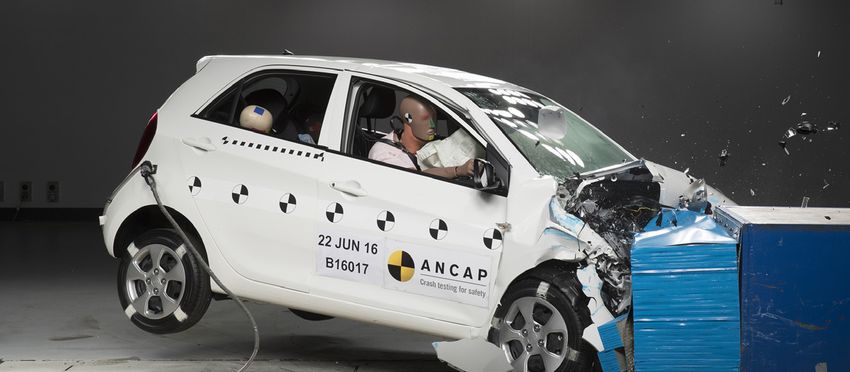
Why is a renewed focus on road safety needed at the Federal level?               b. The economic cost of road trauma is significant

The AAA believes Australia cannot continue to take a fragmented                  In response to the upward trend in fatalities over the past two calendar
approach to road safety. A number of factors exist to underscore the             years, the AAA commissioned research to quantify the cost that the
need for federal leadership to reinstate road safety as a priority for           Australian community incurs each year as a result of road crashes.
governments at all levels. These factors include:                                Economic Connections Pty Ltd (ECON) was commissioned to undertake
                                                                                 an analysis of the cost of road crashes in Australia for the 2015 calendar
a. Australia is falling behind its target on road safety                         year (the ECON 2015 report).

In 2011 all Australian governments signed up to the National Road                The analysis updates the Cost of road crashes in Australia 2006 report
Safety Strategy 2011–2020 (NRSS). This is Australia’s road safety                published by the Bureau of Infrastructure, Transport and Regional
blueprint, which sets out to reduce both deaths and serious injuries on          Economics (BITRE) in 2009 (BITRE 2009). Since the BITRE 2009 report
Australian roads by at least 30 per cent by 2020.                                was published, a number of factors have changed - namely road
                                                                                 fatalities have fallen by 25 per cent, from 1,598 in 2006 to 1,205 fatalities
Unfortunately, the trendline is heading in the wrong direction. The              in the 2015 reference year, notwithstanding increases in each of the
12-month road toll has declined by just 13 per cent since the start              calendar years 2015 and 2016. However, hospitalised injuries increased
of the NRSS - from an average of 1,427 fatalities per year prior to              by 22 per cent over the nine years to 2015 from 31,204 to 37,964.
commencement of the NRSS (over the baseline years 2008, 2009 and
2010) to 1,241 in the year ending June 2017 - far short of the targeted 30       The report finds the total economic cost of road trauma is estimated at
per cent reduction.                                                              $22.2 billion for the 2015 year only, equivalent to 1.3 per cent of gross
                                                                                 domestic product. Using the revised ECON 2015 estimate ($22.2 billion)
The trauma on our roads extends further than fatalities. In addition to          the cost per fatality was $4.34m, while the cost per hospitalised injury,
those killed, around 42,000 Australians were hospitalised from traffic           including persons disabled as a result of road trauma, was $239,000.
crashes in 2014-15, an increase from 39,000 in 2010-112. With around             However, using the willingness to pay approach used in BITRE 20093,
800 Australians seriously injured and 24 killed on our roads each                the 2015 cost of road trauma is estimated at $29.7 billion.
week and with the national road safety strategy failing, the need for
Australian Government leadership is clear.                                       The ECON 2015 report also estimates the direct cost of road trauma
                                                                                 to government for 2015 at more than $3.7 billion. More than three
                              National road fatalities
                                                                                 quarters of this cost comprises the present value of many future years
                               Target     Actual     Trend

                       1450
                                                                                 of forgone taxation revenue and additional income support payments
                                                                                 arising directly from road crash fatalities and disabilities. The health
                       1400
                                                                                 services area is also a significant contributor at 11.8 per cent.
                       1350
Fatalities per annum

                       1300

                       1250

                       1200

                       1150

                       1100

AAA                                                                          6                                               National Road Safety Platform
Cost to Government for 2015 road trauma                             c. Federal Government resourcing for road safety is in decline
                   ($3.7 billion net present value)

                                                                                    Over the past two decades, federal resourcing for road safety policy,
                                  $44.11m
                       $100.12m                                                     research, and programs has declined. This reflects a level of inertia that
               $216.76m
                                                                                    has come about following significant road safety gains in the decades
                                                                                    through to the 1990s and the low priority that road safety is now
          $441.55m
                                                                                    afforded at the federal level.

         $58.93m                                                                    The AAA is concerned that internal departmental resourcing is
                                                                                    diminishing. The Department of Infrastructure and Regional
                                                                                    Development’s appropriation for road safety is expected to fall from
                                                                                    a high of $18.2 million in 2016-17 to $16.3 million in 2020-21 at a time
                                                                                    when the national road safety strategy is failing and leadership is
                                                                                    needed.5
                                                         $2,870.11m

                                                                                                  Road safety departmental appropriation
      Taxation and income support         Disability care                                                   2017-18 Budget ($m)
      Health services                     Emergency services                         $18,500

      Vehicle-related                     Legal and other
                                                                                     $18,000

                                                                                     $17,500
Of the total cost of $3.7 billion, $945 million is incurred in the first year
                                                                                     $17,000
alone.4 First year costs primarily comprise the immediate systemic
responses to road trauma in health, emergency services and other                     $16,500

areas. The significant direct cost to government budgets, for only one               $16,000
year of road trauma, is an important reminder for policy makers that
                                                                                     $15,500
investing in road safety not only saves lives, but saves governments
money too.                                                                           $15,000
                                                                                                 2016-17      2017-18     2018-19      2019-20       2020-21

Importantly, the ECON 2015 report shows that despite a significant                  Previously, all revenue generated through the motor vehicle
reduction in fatalities since 2006, the cost of road trauma in 2015                 identification plate fee of $6 per vehicle was dedicated to road safety,
was only 6.8 per cent or $1.6 billion lower than the cost in 2006 when              however this transparent link is no longer in place.
expressed in 2015 prices. The report also shows that although fatalities
have fallen, hospitalised injuries continue to increase contributing                The AAA urges the Australian Government to commit to increasing
to the significant cost imposed on the economy and the Australian                   departmental resourcing to levels that existed when the former Federal
community.                                                                          Office of Road Safety was responsible for road safety strategies at
                                                                                    the federal level. This would require a funding increase to around $25
                                                                                    million per annum (based on 1995 resourcing adjusted for inflation).

AAA                                                                             7                                               National Road Safety Platform
Section Two

Road safety actions required by the
Australian Government
1. Measuring success and identifying gaps in road safety
through improved data collection

In Australia, there is currently no national system for the measurement         Data collected at crash scenes
of serious road crash injuries, despite the National Road Safety Strategy
2011- 2020 including the specific KPI of reducing serious injuries by           In addition to improved reporting and collection of injury data, the
at least 30 per cent over the decade. Similarly, there is no open or            AAA calls on the Australian Government to lead a review into the
consistent data available on the condition of the road network. The             data collected by first responders at crash scenes. The review would
ability for governments to identify and act on emerging trends that             identify whether sufficient data is consistently collected by police
may contribute to road crashes is also limited.                                 and other enforcement agencies which would assist policy makers in
                                                                                identifying emerging issues in road safety. For example, there may
To monitor Australia’s progress in improving road safety, governments           be opportunities to improve on the collection and reporting of data at
and industry must have access to accurate, timely and readily available         crash scenes that identifies mobile phones or other driver distractions
data on road deaths, serious injuries and the economic cost of road             as a contributing factor in a crash. This could include identifying new
trauma. The availability of consistent, up to date data on Australia’s          enforcement and investigation methods to determine whether a driver
road network in an open source platform would also better inform                was distracted at the time of a crash, such as through mandatory
road safety policy development, road safety programs as well as                 reviewing of phone activity logs.
infrastructure delivery and maintenance.
                                                                                Cost of road trauma
The AAA has identified a number of data sets that should be available at
a national level, on a timely basis and through open source platforms:          As noted in the introduction, the AAA recently commissioned a research
                                                                                report into the economic cost of road trauma in response to the recent
Injury data                                                                     increase in fatalities and serious injuries on Australian roads. The last
                                                                                such report was produced by the Australian Government in 2009 using
The AAA welcomed the Government’s commitment to fund the                        2006 data. The New Zealand Government produces similar reports
Australian Trauma Registry as an interim solution for measuring                 on a yearly basis providing the community and policy makers with an
serious road injuries. The Registry will gather data on the number and          important reference point to benchmark road safety priorities and
type of severe injuries due to road crashes, and help make Australia’s          programs.
roads safer through better planning and more targeted investment.
However, the Australian Trauma Registry provides data for severe                The AAA understands that such reports cannot be published in
injuries only. There is a need to gather national data on injuries across       Australia until a national ‘willingness to pay’ study is finalised,
a range of severities and to link these to data on individual road              which would underpin such a report, however this work has been
crashes. The AAA is very supportive of the project being undertaken             underway as part of the NRSS for some years. The study would
by Austroads to assess the feasibility of linking the National Hospital         provide for a nationally consistent approach and an agreed set of
Morbidity Database with crash data. However, the Austroads pilot                values for evaluating safety. Consequently, the AAA considers that the
project has a timeframe of at least several years, and the project’s            Australian Government should prioritise the national willingness to
outcomes remain uncertain.                                                      pay methodology work within Austroads that would allow for yearly
                                                                                reporting of the cost of road trauma.

AAA                                                                         8                                               National Road Safety Platform
Action 1

Geospatial data                                                                 To better manage and track success in road safety the AAA is calling
                                                                                for the Australian Government to ensure: timely, consistent and high-
The AAA and member clubs produce the Australian Road Assessment                 quality reporting of key road related fatality and injury statistics; open,
Program (AusRAP) report, which analyses the network of major                    timely access to other critical public data sets; and consistent reporting
highways and motorways in Australia, as defined in the National Land            of data between jurisdictions. In addition, the AAA urges the Australian
Transport Act 2014. In compiling the AusRAP analysis the AAA utilises a         Government to:
range of data sources including:
                                                                                      1.1 Maintain a continued focus on developing a national database
      •   Geospatial data describing the national network of highways                      that accounts for and tracks all serious injuries across
          from Open Street Maps (OSM);                                                     Australia either by broadening the Australian Trauma Registry
      •   Traffic volumes per road segment supplied by road                                to include a wider range of serious injuries or expediting work
          authorities;                                                                     on linking the National Hospital Morbidity Database with
      •   Start and end points of road segments supplied (in some                          crash data.
          cases) by road authorities
      •   Crash data supplied by road authorities; and                                1.2 Lead a review into the data collected by first responders at
      •   Imagery of the national network at 100 m intervals,                              crash scenes to ensure emerging trends, such as mobile
          calibrated for image-based measurement and analysis, and                         phone use, are consistently reported and monitored across
          with associated geospatial coordinates, supplied by road                         states and territories.
          authorities.
                                                                                      1.3 Expedite and prioritise work underway that would establish a
During the latest AusRAP risk mapping process, basic, high level data                      nationally agreed methodology for valuing safety through a
sets on fatalities and casualty crashes on the National Highway Network                    national willingness-to-pay study. The study would establish
were requested from all jurisdictions. A number of jurisdictions                           nationally consistent values based on estimates for travel
found it difficult to provide the requested data and in many cases a                       time, reliability and safety and allow for economic evaluations
considerable amount of time was needed to “cleanse” the data sets                          of the cost of road trauma to be produced by the Australian
to ensure consistency at a national level. Given this data is critical to                  Government annually.
informing road safety programs and decision making, the AAA believes
it needs to be reported in a timely manner, available all year round, and             1.4 Produce an annual report using nationally agreed values for
provided in a consistent form, on an open access platform.                                 evaluating road safety, similar to the ‘counting the cost of
                                                                                           road crashes’ report in New Zealand6, so that governments
                                                                                           and the community can better understand the social and
                                                                                           economic cost of road crashes. The last similar report
                                                                                           produced in Australia was released in 2009 and relies on data
                                                                                           from 2006.

                                                                                      1.5 Encourage regular publication of high-quality geospatial
                                                                                           data in a consistent format from the state and territory road
                                                                                           authorities regarding locations of roads, key road features,
                                                                                           speed limits, traffic volumes and crashes, which would greatly
                                                                                           facilitate stakeholder analysis, and assist governments to
                                                                                           target their road safety investments.

In addition, the Department of Infrastructure and Regional
Development provides a PDF map of the roads in the National Land
Transport Network, but does not supply the underlying data, while
the ‘roads’ data set, supplied by Geoscience Australia, is available,
the National Map contains only dual carriageways and therefore only
covers part of the network.

AAA                                                                         9                                               National Road Safety Platform
2. Leadership in road safety through promoting best practice
research
The recent increase in fatalities against the longer-term downward The ability for the Australian Government to conduct national road
trend is a national phenomenon and is consistent across the majority safety education and awareness campaigns is also limited under
of Australian states and territories. The concerning trend is also being the current federated model. Pooling resources and developing a
experienced across many other developed countries including the federal communications message would be valuable where an issue is
United States, the European Union, Canada and the Netherlands.7 consistent across states and territories and where the message does
not need to be tailored to specific jurisdictions.
As the causes of the underlying trend are largely unknown, the AAA
believes the Australian Government has an important leadership role Co-ordinated research and education programs that could benefit from
in funding research to better understand the trends, and to inform federal intervention include:
the development of enforcement best practice and other road safety
programs. • improving the safety of older drivers through education and
consistent re-training programs;
The AAA welcomed the Australian Government’s announcement that it
would be conducting an inquiry into the National Road Safety Strategy • educating international drivers about Australian driving
and the commitment to undertake research into drug testing and conditions and national road rules on arrival, similar to
driver distraction.8 The AAA understands the research will look at: the New Zealand Government’s ‘Driving in New Zealand’
education campaign;
• a range of issues related to the use of mobile phones while
driving, including current regulatory and enforcement • encouraging states and territories to adopt standardised
practices in Australia; and ‘fitness to drive’ guidelines so motorists with various driving
impairments are treated equally across states and territories;
• options to enable more roadside testing, at a lower cost to
governments while also reviewing current practices, looking • awareness and education that promotes safety outcomes of
at the most effective drug testing regimes and investigating the protection of elderly vehicle occupants given Australia’s
the impediments to a more effective and efficient drug- aging population;
testing regime.
• promoting the benefits of driving newer vehicles with
While the AAA is supportive of the Australian Government’s recent automated vehicle technologies such as Autonomous
announcements, the AAA is concerned that national road safety Emergency Braking, Lane Departure Warning and Intelligent
research is delivered on an ad hoc basis and does not form part Speed Advisory systems to assist in driving technology uptake
of a strategic road safety research program. The AAA believes the as well as promoting ANCAP safety ratings and Used Car
Australian Government has a role to play in funding and delivering best Safety Ratings;
practice research which explores issues such as road safety trends,
best practice enforcement models, innovative vehicle technology, • research and development of best practice infrastructure
driver behaviour, and infrastructure design. This research could then design to improve the safety outcomes of major projects, and
underpin national education programs, consistent state and territory improve safety in local areas through technology and other
enforcement activities, and improvements to vehicle design through low-cost infrastructure improvements; and
the Australian Design Rules.
• young driver training, including awareness of driver
distraction and sharing the road with heavy vehicles.
AAA 10 National Road Safety PlatformAction 2
To ensure that all states and territories are equipped with the tools to
address emerging and critical issues in road safety the AAA is calling on
the Australian Government to:
2.1 Establish a dedicated unit within the Australian Government
that has a transparent funding source to coordinate federal
road safety activities and fund critical research projects in
road safety.
2.2 Commit to resourcing the dedicated unit at the same levels
as existed when the former Federal Office of Road Safety was
responsible for developing and implementing integrated road
safety strategies and programs at the federal level - around
$25 million per annum (equates to the 1995 resourcing level
adjusted for inflation).
2.3 Establish a funding mechanism to allow the Federal
Government to undertake national education campaigns
in consultation with states and territories where a national
response is possible.
2.4 Demonstrate leadership in driver behaviour research and
education through the development and implementation of
programs targeted at young drivers and other user groups
including older drivers while also promoting the benefits
of a nationally-consistent approach to driver and trainer
education.
AAA 11 National Road Safety Platform3. Delivering road safety outcomes through funding land
transport infrastructure
The Australian Government plays an important role in providing The AAA also calls on the Government to amend the IA Statement
funding to states and territories for national highway and local road of Expectations to specifically include road safety or broader safety
networks and for other nationally significant infrastructure. and community objectives. For example, in addition to ‘promoting
best practice in reforming strategic infrastructure planning’ the
Infrastructure Australia statement of expectations could also direct IA to promote ‘best
practice infrastructure design that prioritises road safety objectives’ in
Infrastructure Australia (IA) provides a critical role in the Australian recognition of the significant economic and productivity benefits that
Government’s funding of infrastructure by providing robust, are generated from a reduction in road trauma.
independent and evidence-based advice on future infrastructure needs.
Driving safer roads through targeted funding
In order to facilitate robust project selection, Infrastructure Australia
formally assesses submissions as Initiatives and Projects for inclusion In addition to IA’s Assessment Framework the Australian Government
on the Infrastructure Priority List. Submissions are considered against has several additional levers available to ensure road safety is
three assessment components: prioritised through the investment process. These could include:
• Strategic fit; • linking grant payments to specific road safety project
• Economic, social and environmental value; and milestones;
• Deliverability.9 • setting aside a small amount of project funding as incentive
payments linked to other project related road safety
The AAA acknowledges that ‘safety impacts’ are considered within the programs; and
economic, social and environmental value assessment component • mandating the use of road safety audits using proven,
of IA’s Assessment Framework. However, the AAA considers the IA objective risk assessment methods when undertaking project
assessment process could provide a stronger mechanism for states selection of smaller scale projects.
and territories to prioritise and develop projects which deliver safety
outcomes. Australian Road Assessment Program (AusRAP)
AusRAP is a program run by the AAA and the state and territory
motoring clubs. The latest ‘Risk Mapping’ report released in December
2016 was based on casualty crash data supplied by state and territory
road authorities.
The AusRAP Risk Mapping report identified the worst ten sections
of the National Land Transport Network. Where funding has been
directed into roads previously identified as ‘worst sections’, significant
reductions in crash rates have been achieved. The Bruce Highway,
for example, has consistently rated as one of Australia’s highest-risk
highways. The section from Cooroy to Gympie was identified in 2011 as
especially dangerous: over a five-year period, 155 casualty crashes and
24 fatalities had occurred.
For example, rather than simply assessing the ‘economic value Funding of $388 million from the Australian Government and $125
arising from a reduction in the number of accidents, deaths and million from the Queensland Government led to the opening of a
security incidents’, the Assessment Framework could include specific new 12-kilometre section with major safety enhancements. Since the
assessment metrics which encourage state and territory governments upgrade, the number of crashes has been reduced by around 50 per
to include additional road safety measures in their proposed projects to cent on the improved section. This example shows that with the right
further bolster the safety benefits attributed to the project. investment even the worst stretches of road can be made significantly
safer. The challenge is to replicate this success across the rest of
Australia.
AAA 12 National Road Safety PlatformAction 3
Further, the AAA’s AusRAP Star Rating (released in 2013) analysis found To deliver road safety outcomes the Australian Government could use
that an investment of just $4.7 billion would bring 85 per cent of the its role in providing infrastructure funding to states and territories by:
national highway network to a standard of 3 star or above and save
36,000 lives and serious injuries over a 20-year period. This investment 3.1 Making road safety a greater priority in Infrastructure
would return $3.50 for every dollar10 invested. Australia’s Assessment Framework as well as referencing
road safety objectives in IA’s statement of expectations.
The AAA’s view is that the Australian Government should undertake
AusRAP analysis at regular intervals to establish objective, cost- 3.2 Creating incentive payments in infrastructure agreements to
effective, guidance on where safety improvements are most needed on incentivise road safety outcomes and objectives with states
our highways to inform investment decisions and set policy targets. and territories for individual projects.
Black Spot Program 3.3 Permanently increasing funding to the Black Spot program to
at least $100 million per year.
The AAA supports the Australian Government’s Black Spot Program,
which has achieved significant reductions in road trauma over many 3.4 Improving and reviewing the Black Spot program guidelines
years preventing over 4,000 crashes including 30 fatal crashes per to ensure funding does not continue to be underspent.
annum. The program has also performed well in economic terms,
achieving an estimated benefit–cost ratio of 7.7. 11 3.5 Demonstrating leadership in innovative congestion
management solutions or intelligent transport systems that
can be easily replicated across states and territories.
3.6 Encouraging states and territories to utilise proven risk
assessment methods such as AusRAP in order to effectively
prioritise projects requiring road safety investment.
3.7 Undertaking regular AusRAP style assessment of the national
land transport network to inform investment decisions and
set policy targets.
Considering the significant benefits, the AAA strongly supports the
continuation of the Australian Government’s Black Spot program, and
calls on the Government to increase the annual allocation to a guaranteed
minimum of $100 million. The AAA also remains concerned at the recent
under-spends in the program and recommends the program guidelines
be urgently reviewed to ensure funding can be allocated to projects in a
timely and efficient manner.
AAA 13
1 National Road Safety Platform4. Supporting the introduction of safer vehicles into the
Australian fleet
Improved vehicle safety has been central to much of the improvement In addition to the development of regulatory standards, which is
in road safety over recent decades. The Federal Government has a critically important, the AAA considers other non-regulatory levers
critical role to play in the area of vehicle standards - ensuring that could also be utilised by the Australian Government to incentivise
vehicles imported into Australia provide the greatest safety benefit to manufacturers to install key safety features in new vehicles as standard
consumers. features.
To ensure Australian motorists have access to the safest possible For example, in the United States the Department of Transportation’s
vehicles, the AAA calls on the Government to ensure sufficient National Highway Traffic Safety Administration and the Insurance
resourcing for the Department of Infrastructure and Regional Institute for Highway Safety reached an agreement with 20 automakers
Development to effectively undertake this work program. to ensure automatic emergency braking is included as a standard
feature on virtually all new cars by no later than September 1, 2022.13
According to evidence provided to the 2017-18 budget estimates
committee, Australia has 13 standards in the Australian Design Rules ANCAP’s safety ratings are also an important non-regulatory lever. For
that are not yet harmonised internationally. Whilst a number of example, ANCAP has announced it will not be possible for new vehicle
regulatory impact statements are underway, these processes can take models to achieve a 5-star ANCAP safety rating without an effective
several years and require sufficient internal resourcing so that they can AEB system fitted as standard from 2018 to encourage take-up of this
be completed. potentially life-saving technology.
The AAA understands the Department of Infrastructure and Regional Other options that do not directly involve updating vehicle standards
Development’s design rule priorities over coming years will be could include the Australian Government incentivising consumers to
established through the development of the NRSS action plan for the purchase safer vehicles by:
period 2018-2020 and are likely to include:
• lowering the cost of new vehicles by removing import taxes;
• Advanced Emergency Braking (AEB) for heavy and then light • ensuring information provided to consumers on vehicle
vehicles; safety is accurate, consistent and independent;
• Reviewing occupant protection standards against the latest • ensuring ANCAP continues to receive adequate government
available UN Regulations; funding to deliver and promote the results of its vehicle safety
• Adopting future UN Regulations for Intelligent Transport assessment and rating program; and
Systems/Autonomous Driving; and • ensuring the Australian tax regime encourages the purchase
• Continuing to promote the market uptake of new vehicle of safer vehicles.
technologies with high safety potential.12
Many of these actions directly influence fleet renewal and also reduce
In addition to the above priorities, the AAA also considers the Australian the average vehicle fleet age in Australia. Reducing the age of the
Government should prioritise safety improvements in the light vehicle fleet is also a high-level direction outlined in the NRSS, however
commercial vehicle fleet by better aligning the safety standards of light the most recent NRSS progress report noted that the national average
commercial vehicles with passenger vehicles. This work is becoming fleet age for 2015 of 10.1 years was slightly greater than the average
increasingly important given the significant increase in light commercial in the baseline period of 10.0 years. Further, the progress report
vehicle sales in Australia. noted that ‘no specific action has been undertaken aimed at reducing
fleet age, beyond the promotion of safer vehicles’. Consequently, the
The AAA is strongly of the view that the work on the design rules needs AAA urges the Australian Government to prioritise actions that seek
to be prioritised and adequately funded within the Department of to reduce the vehicle fleet age given the significant productivity and
Infrastructure and Regional Development, preferably within the newly economic benefits to be derived from having a safer vehicle fleet.
formed dedicated road safety unit referred to in Action 2.
AAA 14 National Road Safety PlatformAction 4
To ensure Australians benefit from the newest developments in vehicle 4.7 Review other tax levers available to the Australian
safety the AAA calls on the Australian Government to: Government that may incentivise the uptake of newer, safer
vehicles for example Fringe Benefit Tax (FBT) arrangements
4.1 Provide sufficient resourcing to engage in more proactive or tax incentives for small businesses that may incorporate
assessment of international developments that may affect the minimum safety standard purchase requirements.
Australian Design Rules.
4.8 Investigate options that better align the safety standards
4.2 Work in close consultation with industry to explore other of light commercial vehicles with passenger vehicles given
non-regulatory incentives, such as voluntary agreements, that the significant increase in light commercial vehicle sales in
seek to expedite the introduction of Autonomous Emergency Australia.
Braking (AEB) as standard on all vehicles by at least 2022
while also exploring mandatory mechanisms.
4.3 Commit to long-term funding of the Australasian New Car
Assessment Program (ANCAP) at, at least, $1.25 million
ongoing from 2018-19 with future funding indexed in line
with CPI as per ANCAP’s 2017-18 budget submission.
4.4 Direct the ACCC to develop a new advertising guideline for the
portrayal and display of vehicle safety information. The new
guideline would strengthen the Competition and Consumer
Act 2010, meaning statements about vehicle safety made
by vehicle brands, either at the point-of-sale or in general
advertising, would need to reference the independent ANCAP
safety rating.
4.5 Continue to mandate 5-star cars for Australian Government
fleet purchases, similar to policies in a number of states and
territories.
4.6 Urgently review Australian Government taxes and charges
that can decrease the cost of new vehicles to encourage fleet
renewal. For example the removal of the 5 per cent tariff on
imported vehicles and the Luxury Car Tax (LCT) would save
consumers $2.2 billion and $2.7 billion respectively over the
forward estimates and encourage thousands of Australians
into safer cars.
AAA 15 National Road Safety Platform5. Facilitating national change through relevant
intergovernmental bodies and better monitoring and tracking
of the National Road Safety Strategy
The AAA believes the Federal Government has a strong role to play in The AAA also notes that statistical measures are still missing from key
working with the states and territories to track and report on national safety performance indicators in the NRSS, meaning that progress
progress in delivering road safety objectives. against targets cannot be measured. For example, data is not available
for the following statistical measures:
In this vein, the AAA welcomes the Australian Government’s recently
announced inquiry into the NRSS and looks forward to playing an • number of deaths from crashes where speed was a
active role in that inquiry. The AAA believes it is important to review contributory factor;
the current progress against the NRSS objectives, and ensure that • average speeds at designated sites across the network;
the forthcoming NRSS Action Plan and the next national road safety • percentage of vehicles speeding by vehicle type and offence
strategy (post 2020) are able to build on the successes and failures category; and
of the current plan. However, in order to successfully build on the • percentage of new vehicles sold with key safety features.
current NRSS a number of data and reporting deficiencies need to be
addressed. In combination with better tracking and monitoring of the NRSS, other
intergovernmental bodies such as the Transport and Infrastructure
The AAA acknowledges that the implementation status report released Council, the National Transport Commission and Austroads could be
in November 2016 provided an assessment of the overall progress better utilised to develop incentives and other mechanisms for states
of the NRSS against statistical measures as well as providing a and territories to implement best practice road safety programs,
comprehensive report on the nineteen priority actions including simple standards and regulations.
‘traffic light’ indicators of progress.
This could be achieved through jurisdictional progress reports
(following up on recommendations in key reports) or other methods
that seek to draw attention to areas requiring further attention across
jurisdictions. For example, Austroads recently released the Assessing
Fitness to Drive 2016 Guidelines which detail the medical standards
for driver licensing for use by health professionals and driver licensing
authorities. While the report is important, the benefits are eroded if
road authorities are not audited on their compliance and take-up of the
guidelines.
The Australian Government could also use incentive payments to
achieve additional outcomes under the NRSS. This method has been
deemed as an effective tool in incentivising action in a range of policy
areas over recent decades when the federal government has pursued
key national policy reforms. Road safety incentive payments could be
tied to high priority actions in a future NRSS action plan and paid to
However, the November 2016 report is based on 2015 data; this makes state and territories once milestones are delivered and reported on.
it difficult for governments to be proactive in targeting key road safety
trends as the reporting timeline has a 12 month lag. By the time key
national actions to address trends are developed, programs would be
more than 18 months behind current trends.
Consequently, the AAA considers that the 12 month NRSS progress
reports need to utilise current data and track individual state and
territory progress against specific NRSS actions rather than referring
to ‘most jurisdictions’, ‘some states’ or ‘several jurisdictions’ when
reporting on key deliverables. Progress could be highlighted using
a traffic light reporting system, much like other federal reports
monitoring the progress of intergovernmental agreements.
AAA 16 National Road Safety PlatformAction 5
To help enact change and promote best practice across states and
territories the Australian Government should better utilise key
intergovernmental bodies by:
5.1 Regular tracking or ‘benchmarking’ of the performance
of individual states and territories in the NRSS strategy
through a ‘traffic light system’ that creates a higher level of
visibility of key actions that have not been delivered in certain
jurisdictions.
5.2 Considering incentivising states and territories by allocating
incentive payments when key deliverables in the NRSS are
met.
5.3 Better utilising Austroads and the Transport and
Infrastructure Council to target national road safety priorities
and seek to promote best practice regulation and reform
across states and territories.
AAA 17 National Road Safety PlatformEndnotes
1
History of Commonwealth Government Legislation Relating to Roads and Road Transport 1900 – 1972, Burke R.H., https://bitre.gov.au/publications/1977/
files/op_008.pdf
2
Productivity Commission: Report on Government Services 2017, Table 6A.37 available at: http://www.pc.gov.au/research/ongoing/report-on-
government- services/2017/justice/police-services
3
The BITRE 2009 report (Cost of road crashes in Australia 2006, https://bitre.gov.au/publications/2010/files/report_118.pdf) included, as a sensitivity
test, alternative valuations based on the willingness to pay for a reduction in the risk of death on the roads. BITRE estimated that the annualised
cost of crashes using a modified human capital approach was $17.85 billion in 2006; and that using a willingness to pay based value of a life of
approximately $6 million (Estimating the willingness to pay and value of risk reduction for car occupants in the road environment, Hensher et al 2009,
Transportation Research Part A, Volume 3, Issue 7) increased this to $27.1 billion. The willingness to pay approach, while providing for valuation
based on individuals’ choices, has been updated by Economic Connections in line with current Australian Government guidelines.
4
The ‘first year’ cost encompasses 2014-15 (second half), 2015-16 and 2016-17 (first half), allowing for a period of up to 12 months following all road
crashes that occurred during 2015.
5
Portfolio Budget Statements accessed at: https://infrastructure.gov.au/department/statements/2017_2018/budget/files/2017-18_PBS-infrastructure.
pdf
6
Social cost of road crashes and injuries 2016 update, available on the NZ Ministry of Transport’s website: http://www.transport.govt.nz/socialcost
7
International Technical Conference on the Enhanced Safety of Vehicles - Government Status Report Presentations accessed at: https://www-esv.
nhtsa.dot.gov/ESV Government Status Report Presentations.htm
8
Media Release: Drug driving and mobile phone use to be targeted in road safety research http://minister.infrastructure.gov.au/chester/ releases/2017/
may/dc115_2017.aspx
9
Infrastructure Australia: Assessment Framework June 2017 accessed at: http://infrastructureaustralia.gov.au/policy-publications/publications/files/
Assessment-Framework-June-2017.pdf
10
Star Rating Australia’s National Network of Highways, 2013 http://www.aaa.asn.au/storage/ausrap-star-rating-report.original(2).pdf
11
Bureau of Infrastructure, Transport and Regional Economics (BITRE), 2012, Evaluation of the National Black Spot Program Volume 1 BITRE Report 126,
Canberra ACT
12
Department of Infrastructure and Regional Development: Government Status Presentation to the Enhanced Safety of Vehicles Conference accessed
at: https://www-esv.nhtsa.dot.gov/files/ESV Government Status Report Presentations/25th ESV 2017 GSR Australia.pdf
13
US Insurance Institute for Highway Safety: March 2016 accessed at: http://www.iihs.org/iihs/news/desktopnews/u-s-dot-and-iihs-announce-
historic- commitment-of-20-automakers-to-make-automatic-emergency-braking-standard-on-new-vehicles
AAA 18 National Road Safety PlatformAAA 19 National Road Safety Platform
Mailing Address:    P   02 6247 7311                       Address:
GPO Box 1555        T   @aaacomms                          103 Northbourne Ave
Canberra ACT 2601   W   www.aaa.asn.au                     Canberra ACT 2601

                                       PRINTED AND AUTHORISED BY M.BRADLEY,

                    AUSTRALIAN AUTOMOBILE ASSOCIATION, 103 NORTHBOURNE AVE CANBERRA ACT 2601.
You can also read


