Aboriginal Education Enhancement Agreement 2014-2019 - Skwxwú7mesh Nation Aboriginal Peoples in West Vancouver Schools West Vancouver School ...
←
→
Page content transcription
If your browser does not render page correctly, please read the page content below
Aboriginal Education
Enhancement Agreement
2014-2019

                       Skwxwú7mesh Nation
                       Aboriginal Peoples in West
                       Vancouver Schools
                       West Vancouver School District
                       British Columbia Ministry of
                       Education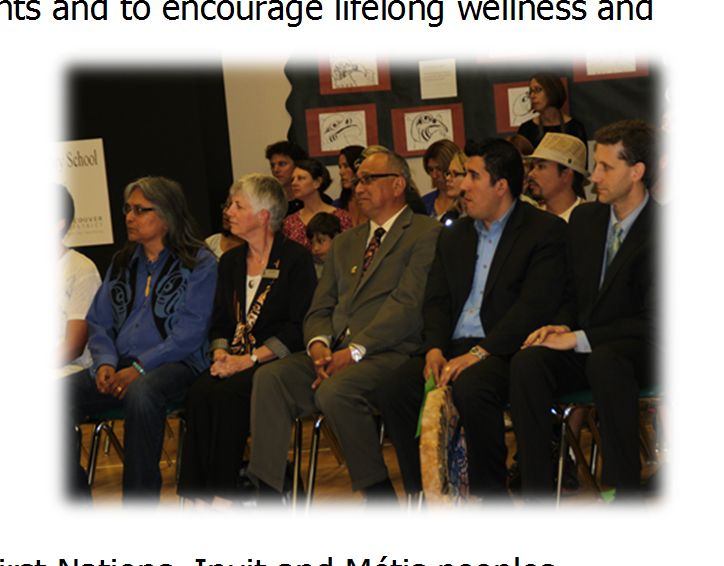
________________________________________
Table of Contents
Signatories
Preamble
Acknowledgements
Learning through the
Journey of the Canoe
Guiding Principles
Partners and Definitions
Overview
Goals and Strategies
We are grateful to our First Nations, Métis and Inuit friends
and families who have guided this journey and shared their
thoughts about the importance of healthy partnerships to help
our students achieve their best and to foster wellness of spirit,
body and mind throughout their lives.
Chen kw’en mantúmi
________________________________________
Signatories
                                      The parties of this agreement commit to
                                      developing an ongoing partnership to
                                      ensure the success of all First Nations,
                                      Métis and Inuit students attending school
                                      in the West Vancouver School District.

                                 This Aboriginal Education Enhancement
                                 Agreement will provide direction for the
                                 parties, as they work together to provide
the finest possible learning opportunities for our students.

This Agreement also recognizes the importance of the role of families,
caregivers, guardians and the Elders of our students, and we hereby
commit to strive to provide opportunities for their positive involvement in
West Vancouver Schools.

It is with a mutual respect for one another and a combined commitment to
work together in exercising our responsibilities to enhance education
opportunities, that we sign this document today. This Aboriginal Education
Enhancement Agreement hereby confirms our commitment to work
respectfully together to develop appropriate and meaningful programs
which will benefit all of our First Nations, Métis and Inuit students.

__________________                                 _________________
Skwxwú7mesh Nation Chiefs and Council, Co-chair    BC Ministry of Education

__________________                                 _________________
Skwxwú7mesh Nation Chiefs and Council, Co-Chair    Superintendent of Schools, SD45

__________________                                 _________________
Skwxwú7mesh Nation Education Department Head       Trustee, WV School District

                                            3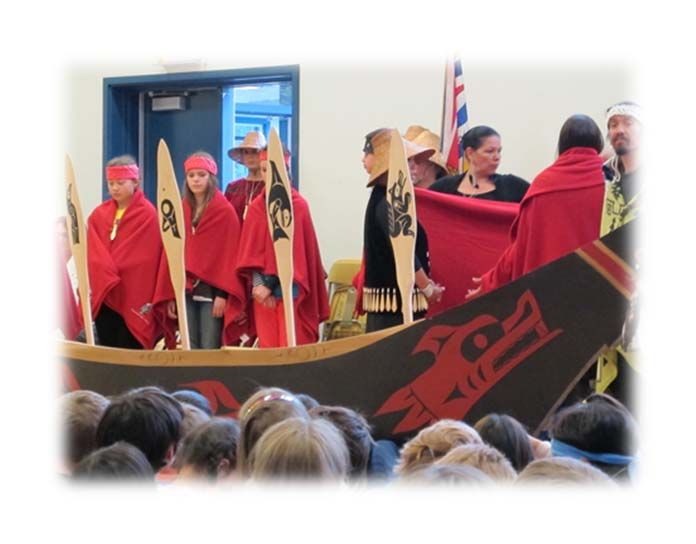
________________________________________
Preamble
Our Journey/nexw7iỷáỷulh
O Siẏáṁ

The West Vancouver School District respectfully honours and acknowledges
the history and culture of the Skwxwú7mesh Nation, in whose territory we
reside, learn and work. Further, it is recognized that a successful
partnership in education between the Skwxwú7mesh Nation and the West
Vancouver School District is critical to the academic, social and emotional
growth of our students. We greatly appreciate the time and support
provided by our community and bordering district educational partners who
shared feedback and guided our thinking in the development of this
document.

To begin the process of developing an Aboriginal Education Enhancement
Agreement, the West Vancouver Aboriginal Education Committee (WVAEC)
has been in close consultation with the Skwxwú7mesh Nation Education
Department. Our goal is to work together to support student learning and
ensure that all Aboriginal students in West Vancouver achieve success and
graduate with dignity, purpose and opportunities. In addition, we have
endeavored to provide opportunities for education for all of our students
and families that would honour and reflect the rich history, current issues
and culture of the Skwxwú7mesh Nation, other First Nations, Métis and
Inuit people.

This has been a very positive journey to date, with collaborative sessions,
Circle Gatherings, Family Feasts, student lunch meetings, and more formal
committee meetings for our First Nations, Métis and Inuit families, students
and Elders to communicate, work together and provide input toward the
goals and objectives of school programs and structures in West Vancouver.

                                     4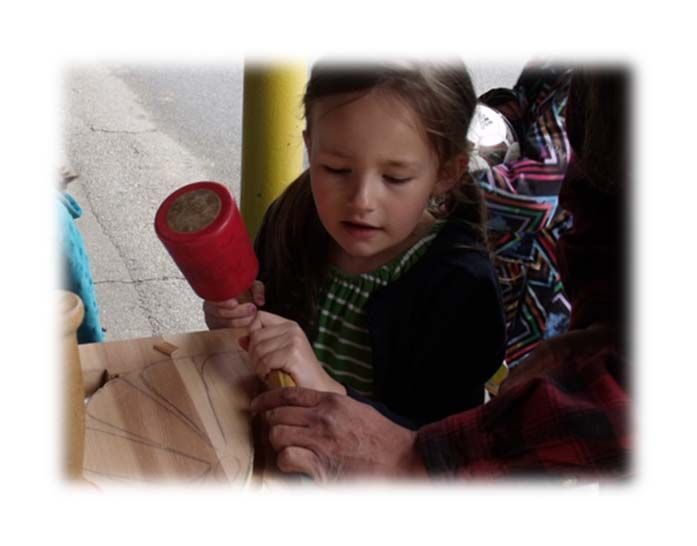
________________________________________
We are grateful that many adults and Elders from our Aboriginal
community are directly involved with the learning activities and
celebrations at our schools; often providing the leadership for these events.

The Skwxwú7mesh Nation Education Department has provided excellent
guidance to our committee and has kindly worked with our senior staff,
administrators and teachers to ensure mutual understanding and that
learning activities are appropriate and reflect the needs of our students.
We will continue to work with the Education Department as we develop
school programs and resources to enhance student learning and improve
student achievement.

This marks the first time that a formalized Aboriginal Education
Enhancement Agreement has been developed in West Vancouver. The
goals of this agreement are to ensure that school district employees, First
Nations, Métis and Inuit students, parents, families and school communities
work together to foster student success. This agreement has been created
between the School District and the Skwxwú7mesh Nation, the WVAEC
Advisory Committee and the Ministry of Education. It will be brought
forward to the Skwxwú7mesh Chiefs and Council, the Ministry of Education
and the West Vancouver Board of Education for recognition and a
commitment to work toward and support these goals together.

We are excited by this formalized commitment to an ongoing partnership
which will share in decision-making, goal-setting and support strategic
programs and initiatives to enhance academic and social opportunities for
success for all First Nations, Métis and Inuit students in West Vancouver.

Chen kw’enman-túmiyap (thanking you for your kind attention)

West Vancouver Aboriginal Education Committee (WVAEC)

                                      5
________________________________________
Acknowledgements
D’Angelo Baker – Student, WVSD

Jody Billingsley – Vice Principal, WVSD – WVAEC Advisory

Juanita Coltman – District Principal, SD48

Spelexiíh, Anjeanette Dawson – Elementary School Counsellor - Skwxwú7mesh Nation – WVAEC Advisory

Mike Finch - Principal, WVSD – WVAEC Advisory

Warren Hicks - Aboriginal Education Consultant, WVSD

Jane Kellet - Trustee, WVSD – WVAEC Advisory

K’etxίmtn, Alroy Baker – Skwxwú7mesh Nation Language Support

Sa7plek Lanakila, Bob Baker – Skwxwú7mesh Nation Cultural Worker – WVAEC Advisory

Carol Langley – Caring Community Coordinator, WVSD – WVAEC Advisory

Caroline Mahlmen – District Principal, Aboriginal Education – SD46

Flora Michaels - Student, WVSD – WVAEC Advisory

Sean Michaels – Parent, WVSD – WVAEC Advisory

Steve Rauh - Principal, WVSD – WVAEC Advisory

Snίtelwet, Deborah Jacobs– Skwxwú7mesh Nation Education Department Head – WVAEC Advisory

Lynne Tomlinson - Director of Instruction, WVSD – WVAEC Advisory

Tsnomot, Brad Baker – District Principal, SD44 – WVAEC Advisory

Scott Wallace – Principal, WVSD – WVAEC Advisory

Piaoutenaat, Jackie Williams - Elder, Skwxwú7mesh Nation – WVAEC Advisory

Sesemiya, Tracy Williams – Secondary School Counsellor – Skwxwú7mesh Nation – WVAEC Advisory

Chapkolanoth, Henry Williams – Elder, Skwxwú7mesh Nation – WVAEC Advisory

Xwalacktun, Rick Harry – Skwxwú7mesh Nation Cultural Support – WVAEC Advisory

Yeltsilewet, Faye Halls – Skwxwú7mesh Nation Employment and Training Department Head – WVAEC
Advisory

                                                    6
________________________________________
Learning through the Journey of the Canoe
The work of the Aboriginal Enhancement Committee in the West Vancouver
School District recognizes the
traditional lessons realized through
the canoe culture of the
Skwxwú7mesh people. As if on a
canoe journey, this agreement
seeks to build a strong foundation
of support for one another, and
collaboration and mutual respect
through the lessons we have been
taught by the Elders, parents and
community members with Aboriginal ancestry.

With thanks, we have focused on four major lessons taught and recorded
by the Skwxwú7mesh Coast Salish People. We respectfully strive to build a
strong foundation to work toward the goals of this agreement.

They are as follows:

  1) The Gift of Each Enriches All
     Every story is important. The bow, the stern, the skipper, the power
     paddler in the middle – everyone is part of the movement.

  2) We All Pull and Support Each Other
     Nothing occurs in isolation. The family is prepared to be supportive,
     planned and committed to engage and help the canoe move forward.
     The family will never let itself sink. When we know we are not alone
     in our actions, we also know we are lifted up by everyone else.

                                    7
________________________________________
 3) The Journey Is What We Enjoy

   Although the start is exciting, and the conclusion cause for
   celebration, it is the steady process toward our goals we remember.
   The journey requires great preparation, awareness, and on the
   journey together, we are much more than ourselves.

 4) A Good Teacher Allows The Student To Learn
   We will strive to create a learning atmosphere to support learning,
   but we must allow each paddler to gain their awareness through the
   ongoing journey. Nothing sustains us like that sense of potential we
   gain by dealing with things. Each paddler learns to deal with the
   person in front, the person behind, the water, the air, the energy,
   and the blessing of the eagle.
                                        With thanks to Sa7plek Lanakila, Bob Baker
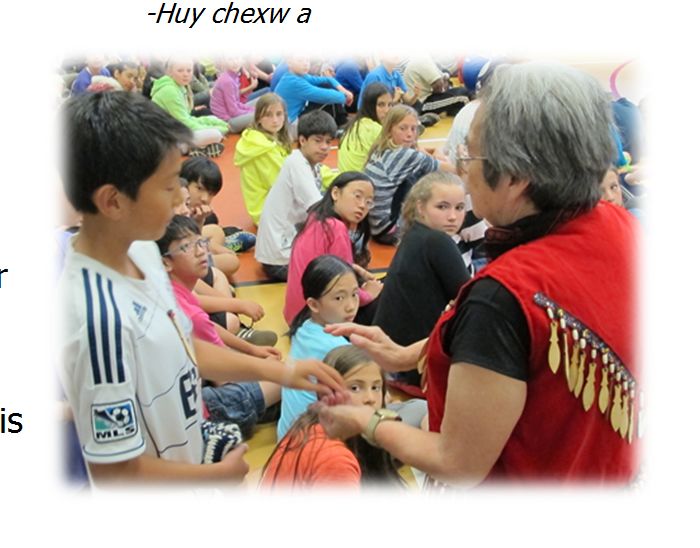
                                               -Huy chexw a

   This Journey Together

   Leadership for Aboriginal
   Education programs and
   activities in the West Vancouver
   School District will be shared
   between the Skwxwú7mesh
   Nation, other First Nations, Métis
   and Inuit people in West
   Vancouver and the West
   Vancouver School District. Activities and programs will respect the
   culture and traditions of all First Nations, Métis and Inuit students
   throughout the classrooms of the school district and engage and
   encourage success for all students.

                                    8
________________________________________
Guiding Principles
To ensure that our journey remains true to its purpose we must paddle
together and continue to learn from one another. Through our work on this
journey, we will enhance the lifelong opportunities for all students.

The parties to this Agreement support the following principles:

Improving cultural awareness – We will continue to create
opportunities and activities for West Vancouver School District staff to build
a greater understanding of First Nations, Métis and Inuit history, culture
and context. This will facilitate an improved learning environment for all
students in the district.

Developing relationships – We are deeply grateful to the Skwxwú7mesh
Nation Education Department and First Nations, Métis and Inuit parents,
Elders, caregivers and students in our district who are working with us to
better understand how best to support our learners.

Collaborating with all educational partners – We are all responsible
for our children’s well-being. As a community of learners and educators,
we will work together to develop programs and partnerships that will help
to improve their achievement.

Inspiring our learners – When students feel safe and respected, they
are able to engage in their learning and reach their full potential. We will
work to support and inspire each student so that we may enhance student
achievement and a sense of well-being.

                                      9
________________________________________
Partners
The West Vancouver Aboriginal Education Committee recognizes the
importance of the partnership between the Skwxwú7mesh Nation, other
First Nations, Métis and Inuit people and the West Vancouver School
District. Our goals are to enhance learning opportunities for our First
Nations, Métis and Inuit students and to encourage lifelong wellness and
success. Our partners include:
Skwxwú7mesh Nation
Other First Nations, Métis and Inuit
West Vancouver School District
BC Ministry of Education
Definitions
Aboriginal First Nations, Inuit and Métis peoples
Caregiver Parents, grandparents, aunts, uncles, adult
siblings, step-parents, foster parents, and
guardians
Community Those responsible for and contributing to the
care, well-being and advancement of
Aboriginal youth
School Community Those who are part of a school, including
students, staff and parents
Aboriginal Peoples All off-reserve and urban First Nations, Métis
and Inuit peoples who are not affiliated with
the Skwxwú7mesh Nation
10________________________________________
Overview of Our Goals
This Aboriginal Education Enhancement Agreement is designed to enhance
the educational success of our First Nations, Métis and Inuit students. We will
focus on three main goals to ensure that our students are supported
intellectually, emotionally and spiritually.
Throughout the process of developing this agreement, we have understood
the importance to the community of holistic and place-based learning within
a circle of communication and respect. We continue to learn from the many
parents, Elders, caregivers, educators and students in our Aboriginal
community who have spent hours with us on this learning journey. We are
grateful for their wisdom and patience in the consultation process.
Goal One To improve the sense of belonging and presence of
students of Aboriginal ancestry.
Rationale: This goal focuses on the emotional and spiritual development of
each student. We have taken the lessons learned from our Aboriginal
educators who have shared with us the importance of recognizing that all
Aboriginal peoples have a thriving community. Our schools need to recognize
and celebrate these communities and provide welcoming learning
environments for students and families. The development of cultural
awareness in our schools is an important enhancement for our Aboriginal
students, but will also help our non-Aboriginal students to better understand
the rich traditions and history of the Skwxwú7mesh Nation and other
Aboriginal people in our community.
11________________________________________
Goal Two To improve the academic achievement of Aboriginal
students.
Rationale: This goal focuses on the intellectual development of each student
who may be struggling academically. With a relatively small population of
Aboriginal students in West Vancouver, we have tracked each student’s
individual progress and are able to determine appropriate programs and
support needed. We will use ongoing formative classroom assessments and
district assessment tools to monitor student achievement and plan for
educational programs. Increasing the academic success of students of
Aboriginal ancestry is critically important to helping them progress beyond
graduation and realize their hopes and dreams into adulthood.
Goal Three To increase the use of accurate, authentic and relevant
First Peoples’ Resources
Rationale: The Ministry of Education is co-developing a comprehensive new
curriculum that includes the First Peoples Principles of Learning as a guiding
tool for teachers. The new curriculum also includes the current and historical
context of Aboriginal Education with supporting resources. With a majority of
our students being non-Aboriginal, it is very important that they follow
curriculum with accurate, authentic and relevant materials to support
learning.
12________________________________________
Appendix A
Goal 1
To improve the sense of belonging and presence of students of
Aboriginal ancestry
Strategies:
a) Maintain and develop activities for student and parent voices to be
heard.
b) Assign resources, undertake and celebrate activities that heighten
awareness of aboriginal culture and tradition for all students at our
schools.
c) Encourage Elders, parents and community members of Aboriginal
ancestry to participate and, where appropriate, provide leadership
at the schools.
d) Ensure ongoing collaboration, consultation and communication
with the Skwxwú7mesh Nation Education Department.
e) Ensure staff members are advised where and how to access
assistance for students of Aboriginal ancestry, and professional
development for themselves.
f) Ensure District and school counsellors are aware of our students
with Aboriginal ancestry, and that these students are personally
contacted by counsellors assigned to them, so that they receive
appropriate support.
13________________________________________
g) Ensure the West Vancouver Board of Education receives regular
updates throughout the year and are invited to attend activities
undertaken at our schools and classrooms designed to enhance
education for our First Nations students and the understanding of
all students attending our schools.
h) Assess the success of this goal by interviewing Aboriginal students
in secondary school and their parents at least once per school
year. Support the School Completion and Beyond efforts in each
school, focused on giving student voice in their educational
journey.
i) Continue to develop the connections between Skwxwú7mesh
Nation social justice programs and the use of Restorative Justice
practices in schools.
j) Provide ongoing staff development in the area of Aboriginal
Education to increase cultural education and awareness.
k) Develop authentic community-based projects through consultation
with the Skwxwú7mesh Nation.
l) Develop a West Vancouver Aboriginal Education website including
cultural and educational information, student highlights, targeting
funding information and links for resources and upcoming events.
14________________________________________
Evidence of Success
Increased satisfaction reported by Aboriginal students and parents on
the Ministry Satisfaction Surveys – Gr 4-12
Increased attendance rates of Aboriginal students as reported each
term – K-12
Increased satisfaction reported by Aboriginal students that they feel
welcome and have a sense of belonging in our schools as indicated
on the District Aboriginal Education Survey – Gr 8-12
Increased satisfaction reported by Aboriginal students that they feel
safe and happy at school as indicated on the District Comprehensive
School Health Surveys – Gr 5-12
Goal 2
To improve the academic performance of Aboriginal students
Strategies:
a) Assign staff resources to review each student’s education profile
and make professional contacts as required for student success at
least three times per year, coinciding with reporting issued by the
school.
b) Assign staff to review the individual student education plans, and
make contacts as required for each student of Aboriginal ancestry
to ensure resources are properly deployed to support the student
for academic, social and emotional success.
15________________________________________
c) Develop data collection that will allow for easier analysis of the
academic success and attendance records of our Aboriginal
students.
d) Utilize resources from the Skwxwú7mesh Nation Education
Department as required.
e) Provide staffing to support “At Risk” aboriginal students through
Student Support Services or through the Aboriginal Success
Teacher model.
Evidence of Success
1. To increase the number of students who are fully meeting or
exceeding expectations in the following:
FSA results – Grades 4 and 7
District Literacy Assessment results including DART, RAD and Early
Screeners – K-7
Numeracy - Report cards Gr 4-7
Satisfaction Survey results – Gr 4-12
2. To increase the following:
Transition rates from Gr 3-12
English and Mathematics course marks and participation – Gr 8-12
Participation in and completion of high school trades and
apprenticeship programs
16________________________________________
Goal 3
To increase the use of accurate, authentic and relevant First
Peoples’ Resources
Strategies:
a) Review current resources and learning activities used by teachers
and administration at the subject department meetings at the
secondary level, and at the primary and intermediate team
meetings at the elementary level.
b) Ensure our Caring Communities Coordinator and/or the Director of
Instruction with responsibility for Aboriginal Education is in
attendance at the secondary department and elementary team
meetings, or failing that, another resource person will attend who
is approved by the Director of Instruction (Aboriginal Education).
c) Where appropriate, utilize resources from the Skwxwú7mesh
Nation within classrooms, and at school-wide functions and
events.
d) Identify activities that may be undertaken at other sites, or in
other districts that may benefit our students of Aboriginal
ancestry, and arrange for them to attend if appropriate.
e) Liaise at least three times per year with Aboriginal Coordinators
and/or administrators from North Vancouver, Sea to Sky and
Sunshine Coast School Districts.
17________________________________________
f) Continue to develop the Aboriginal School Plan model to annually
track each school’s progress and planning in the area of Aboriginal
Education.
g) Support the inclusion of Aboriginal content and ways of knowing in
courses, programs and curriculum.
h) Increase professional development for teachers to support the
new curriculum on Residential Schools in BC, with specific focus on
the Grade 5, 10, 11 and 12 Social Studies curricula.
i) Connect teachers with workshops on Aboriginal Education.
Evidence of Success
Aboriginal students and parents will report an increased
satisfaction that the historical and current context for Aboriginal
resources is accurately presented in West Vancouver
classrooms (District Aboriginal Education Survey).
Grade 5 and 10 classroom teachers will attend workshops on
Residential Schools and use the resources provided for
instruction in Social Studies.
West Vancouver classrooms will have clear evidence of the use
of the First People’s Principles of Learning embedded
throughout the curriculum as reported in Aboriginal School
Plans.
18________________________________________
Elementary Social Studies and English programs will be literacy-
based, including current First People’s resources available
through the Ministry of Education, First Nations Education
Steering Committee and other sources.
Teachers will be encouraged to use the District Aboriginal
Education website to share resources and exemplars.
19You can also read


