Addressing subcontracting issue to improve timber production - Alain Karsenty, Senior Scientist (economist) - AFORPOLIS
←
→
Page content transcription
If your browser does not render page correctly, please read the page content below
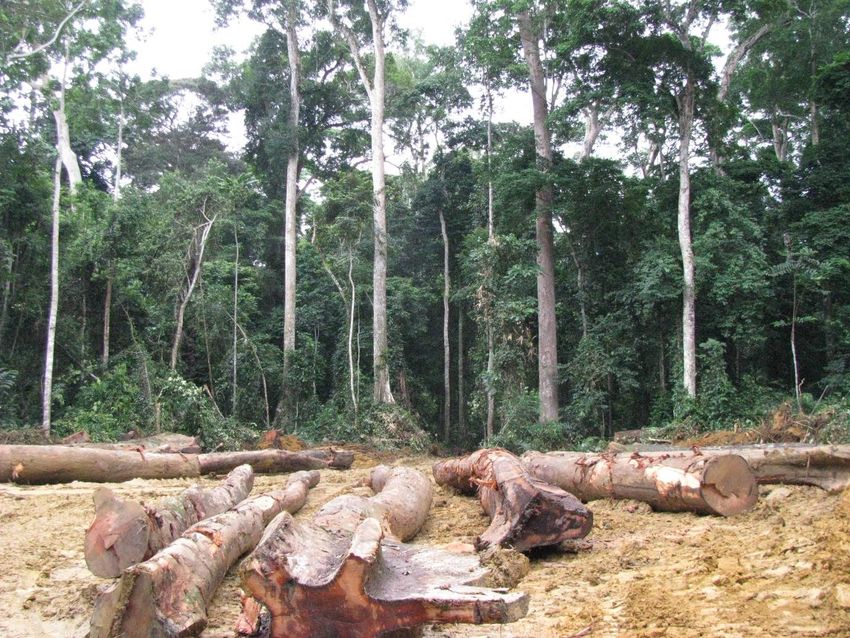
Addressing subcontracting issue
 to improve timber production
      Alain Karsenty, Senior Scientist (economist)
                alain.karsenty@cirad.fr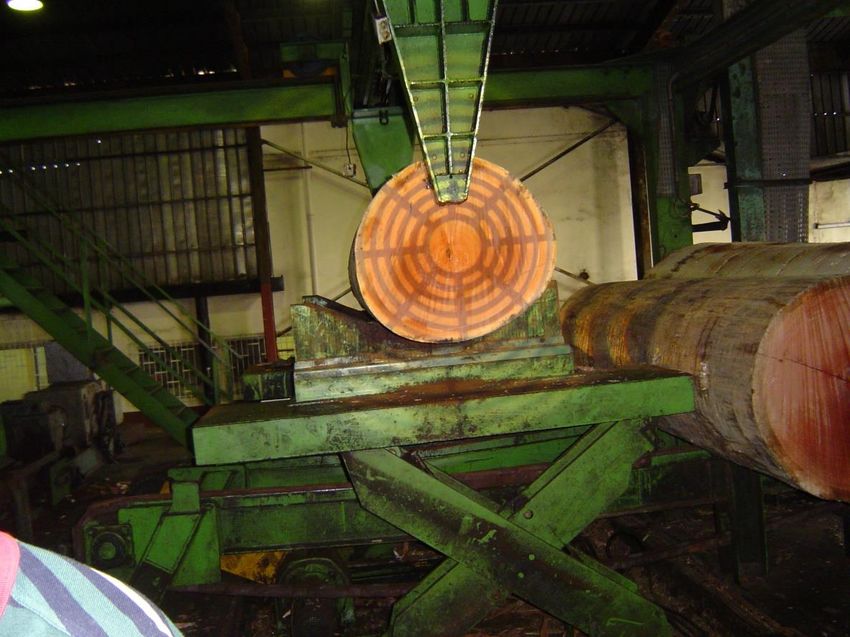
A shift in the international timber trade
                                                                             China's imports of tropical logs and sawnwood
                                                                    14 000

                                                                    12 000

                                                                    10 000

                                                                     8 000

                                                       (x1000 m3)
                                                                                                                                               Logs
                                                                                                                                               Sawnwood
                                                                     6 000

                                                                     4 000

                                                                     2 000

                                                                        0
                                                                         2009   2010   2011   2012   2013   2014   2015   2016   2017   2018

Exports in EU declining, China have become the first client, India and Vietnam more active on African markets
In 2017, Gabon exported 420 000 m3 of sawnwood to China, more than Indonesia or Malaysia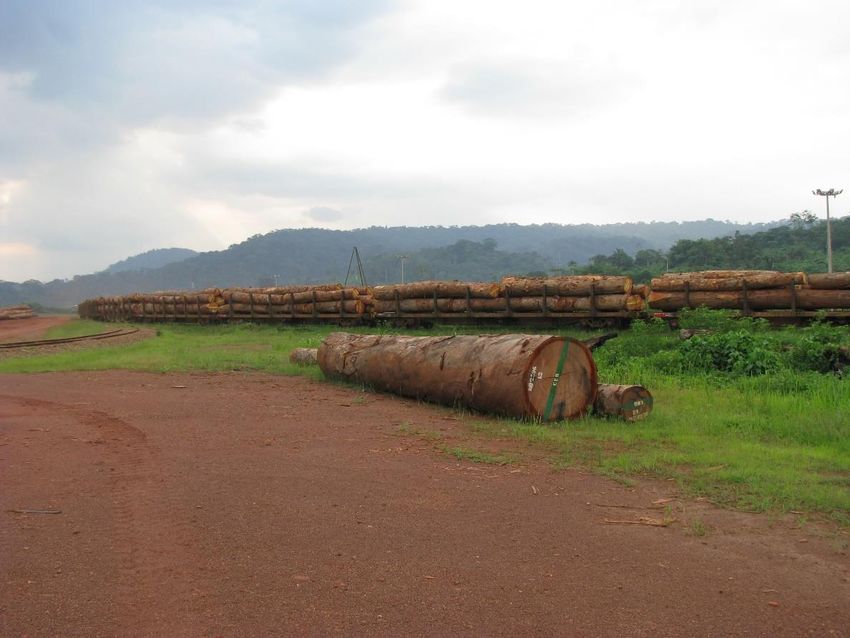
Crisis of EU companies
• In early 2018, the Africa branch of Rougier announced its bankruptcy
   • Rougier sold its concessions in Cameroon and CAR to a Cameroonian company, and
     will focus on Gabon (Congo Bzvl ?)
   • FSC certificates in Cameroon not renewed before the sale
• Wijma (the first company FSC certified in C. Africa) sold two concessions
  to Vicwood (China), one to SFE (China) and one to a Cameroonian
  company
   • FSC certificates suspended
• The Italian Cora Wood in Gabon, had to sell one of its concessions to a
  Chinese company to pay off its debts
• Total area of FSC certified had declined in the last two years from 5.5
  million hectares to 4.8 million ha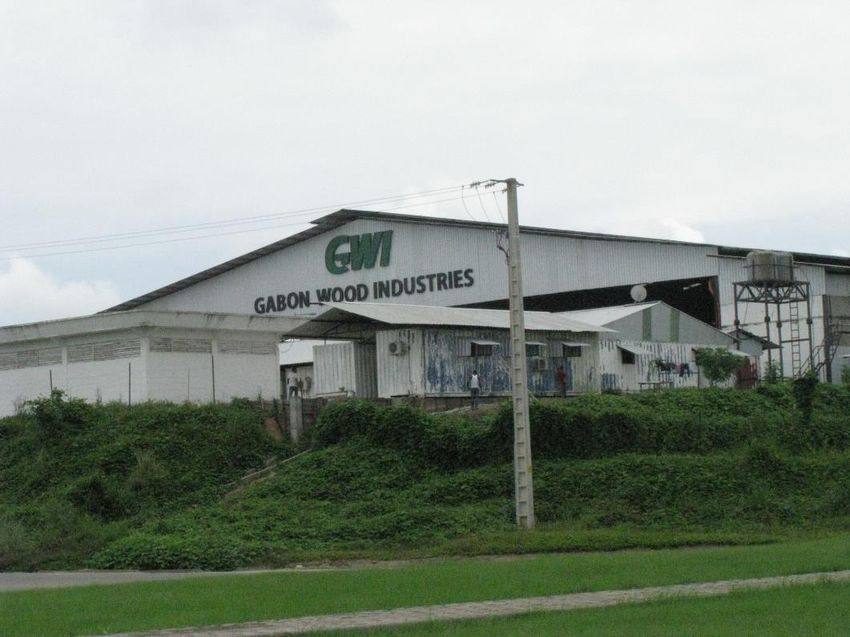
The end of a cycle?
• Difficulties closely linked to the deficit in main
  commercial species (Sapelli for Rougier in
  Cameroon, Azobé for Wijma) by the end of the
  first felling cycle (less productive AAC entering
  in production)
• Shift to “lesser known species” not achieved,
  plantations lagging behind, investment in
  technical/marketing innovation not sufficient
• Markets for “Forest Management” certified
  timber narrowing with the new trade flows
  and the competition with “legality certificates”
  for due diligence requirements for EUTR              But not all certified companies in economic turmoil:
                                                       some successful companies (Precious Wood, CBG) in
                                                       Gabon and a wealthy Olam (2 million ha) in Congo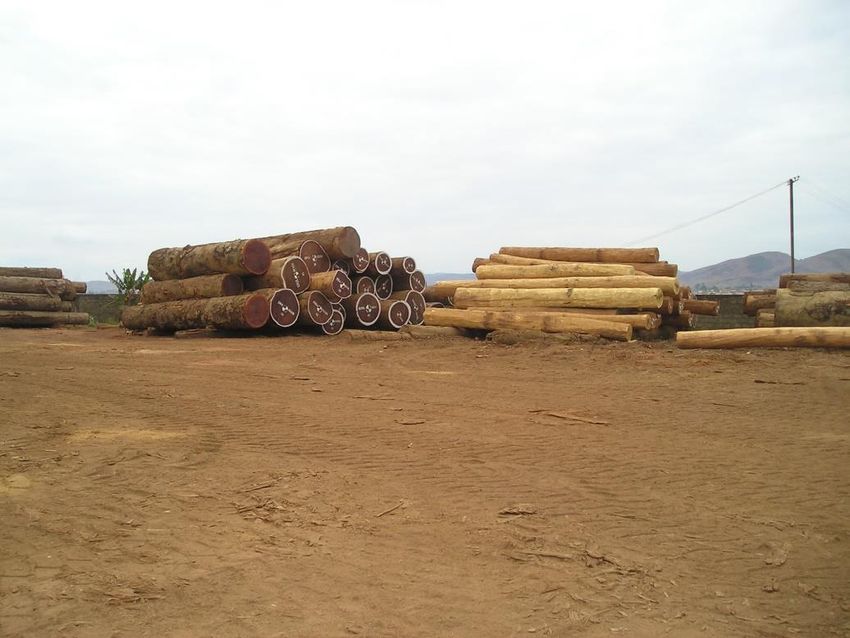
Uneven playing field
• Large European companies have gradually complied with legal standards
  by preparing Forest Management Plans (FMPs) and get certified
• Apart from Olam (2 million ha in Congo, 1,3 M certified), no Asian
  company has seriously sought to become FSC-certified, so far.
   • Asian companies often pinned for illegal activities, as in Gabon, recently.
   • The export of timber, logs included, in containers randomly inspected, facilitates
     trafficking.
   • Law enforcement is poor, partly explaining the differences in profitability between
     companies
• European concessionaires gradually selling their assets to Asian investors
   • Emerging national companies to compete for exports (e.g. Cameroon), but often
     with Asian partners (e.g. “ventes de coupe” in Cameroon)
• But, likely difference in behaviour between Chinese state-owned
  companies and private Chinese companies
   • State-owned companies under scrutiny from Beijing’s government
   • Some of them look for certification (PAFC or FSC)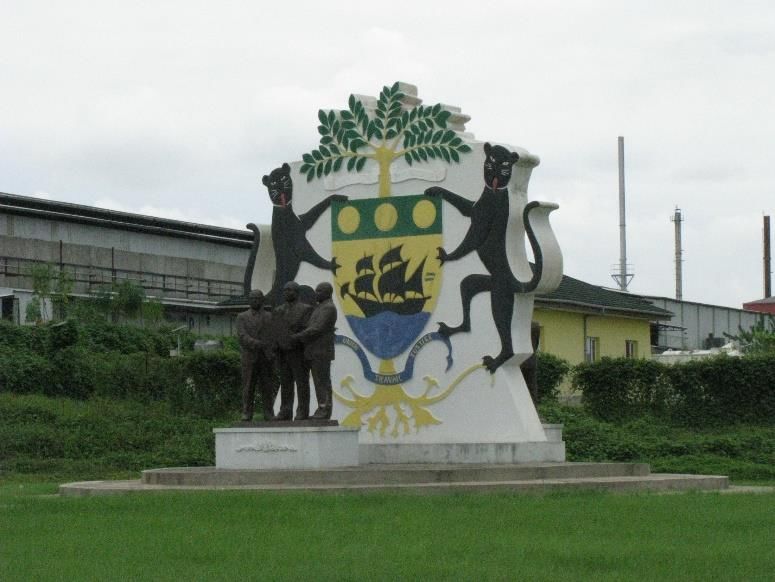
Subcontractors : the Achille’s heel of many
Asian companies
• Outsourcing to contractors is a typicall feature of current capitalism
• Allow to reduce costs, by removing large companies’ obligations to
  provide social advantages and give high flexibility in case of economic
  downturn (no need to fire staffs…)
• Dilute responsibilities within the production process, especially when
  remunerations are oriented toward volume delivered rather vthan
  quality of work
• Some instutional arrangements create « perverse incentives », such
  as I found in 1993 in East-Kalimantan (Indonesia)

Progressive payment for quantities supplied by contractors
                   (Indonesia, 1990’s)
       $/m3
                   An incentive for fast harvesting, disregarding wastes and
Purchase                                                                               In SE Asia (e.g.
                             damages (and rotation constraints…)                       Indonesia) the
price
of timber to                                                                           “contractors” are
contractors                                                                            operating on the
                                                                                       concession itself

                                                                                       Is such a system
                                                                                       used by Asian
                                                                                       companies in
                                                                                       Central Africa?

                                                                           m3/year
                                                             …
               0              5000   6000   7000   8000
                                                          Quantities supplied by the
                                                          contractor to the concessionaire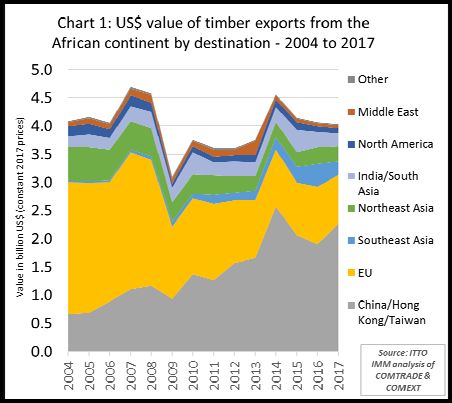
Designing the right incentives
• For companies using
  subcontracting, financial
  incentives to contractors
  should be linked to their
  compliance with forest
  and labour regulations
  (rotation, minimum
  diameters, wastes, social
  specifications…) rather
  than on the volume
  delivered
Special Economic Zones: from vertical
integration to “contractors-based” system?

  • Traditionally, forest enterprises tended to be
    vertically integrated, combining log harvesting
    and wood processing
     • A model encouraged by public policies, for
       employment and economic activities in remote
       regions
  • A new trend since the setting of the Gabon
    Special Economic Zone, close to Libreville (to
    be followed by Congo)
     • Several new processing industries without forest
       concession: “log buyers”
     • Better conditions for achieving downstream
       processing (skilled labor, less spare part stocks,
       possibility of industrial clusters…)
     • Can work only with log suppliers (“Italian model”),
       opposite to vertical integration
Special Economic Zones: additional considerations
• Specialization has theoretical advantages:
investment can be concentrated on efficiency
improvement in wood processing
• But, given the log export ban, specialization can
also prevent adaptation of the processing
activity to the diversity of species and qualities
of the stand (diversification)
• In Gabon, GZES demand is focused on high-quality
Okoumé (for peeling), which is reflected by its high
prices
• In Gabon, all the logs entering the GSEZ must be
certified (legality), which can be seen as a one
way to address the risk associated with
inadequate practices of subcontractors.What public policies can do? • Prohibiting all subcontracting might prove difficult and not relevant, as outsourcing is sometimes an appropriate solution for specific activities • A more promising avenue would be to provide incentives for forest management certification • If the demand (price premium) is not sufficient to increase certified tropical forest areas, incentives might be considered upstream, in terms of costs
The Compensated Reduction of Forest Taxation for
certified concessions (CRFT) proposal
• Compensating governments granting tax cuts for certified concessions
  (CRFT)
   • In Africa, forest taxes (area fees and felling taxes in priority) could be reduced
     significantly for certified surfaces
   • Governments will consent to do so only if fully compensated for their budget
   • Full compensation (by a coalition of donors) could be guaranteed for Public
     Treasury for a given period (6-7 years?), than reduced progressively or supressed
• A reduction in costs would provide an incentive even for companies (e.
  g. State-owned Chinese companies) whose markets do not demand
  (yet?) certified wood
• A proposal considered with interest by various donors: the feasibility
  study is on tracks
You can also read


