Benefit Analysis of an Electronic Road Use Charge System - Steven Newman, CEO EROAD New Zealand
←
→
Page content transcription
If your browser does not render page correctly, please read the page content below
Benefit Analysis of an Electronic
Road Use Charge System
Steven Newman, CEO EROAD
New Zealand
steven.newman@eroad.com

IBEC Session 1: Developments in Benefits, Evaluation and Costs of Road Charging

www.ibec-its.com
About EROAD
• EROAD is a fully integrated technology, tolling and services
  provider. Our advanced technology provides road charging,
  compliance and commercial services with the same platform to
  lower overall client and delivery costs.

• First company to implement a GNSS/cellular-based road
  charging solution across an entire country (New Zealand)

• Operations in New Zealand, Australia, Oregon, Washington
  and Idaho

• Sole heavy vehicle technology supplier for California Road User
  Charge Pilot

• 40,000 units across three countries

• EROAD’s services offered include:
  1. Tax (RUC, WMT, IFTA)
  2. Compliance services (ELOGS, ELD, HOS)
  3. Commercial services

• EROAD is listed on the New Zealand Stock Exchange (NZX:ERD)
                                                                    1
The EROAD Technology Platform
One advanced technology platform, multiple applications

    New Zealand           Australia               Oregon              North America
         Tax                                        Tax                         Tax
  Road User Charges                            Weight Mile Tax        International Fuel Tax
        (RUC)                                     (WMT)                       (IFTA)
                          Compliance
     Compliance         Health and safety        Compliance                Compliance
   Health and safety                             Safety, HOS        Electronic Logging Device
                            Commercial                                     (ELD) / HOS
      Commercial          Fleet tracking,         Commercial
    Fleet tracking,     telematics services     Fleet tracking,            Commercial
  telematics services                         telematics services        Fleet tracking,
                                                                       telematics services

                                                                                                2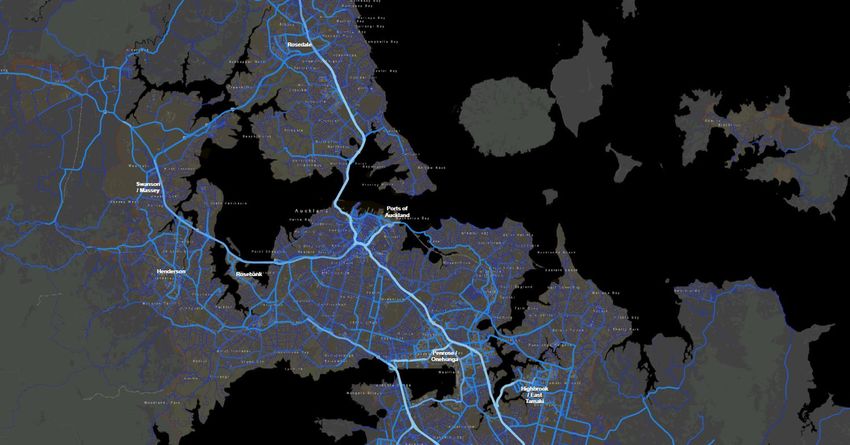
The EROAD Technology Platform

EROAD’s end-to-end technology platform consists of:
1. Electronic distance recorder called Ehubo (in-vehicle hardware)

2. Driver application and logbook application (mobile software)

3. Cloud based, highly available, SaaS platform called Depot

4. Online applications portal (SaaS)

5. Bank grade payment gateway

6. A regulatory interface

                                                                     3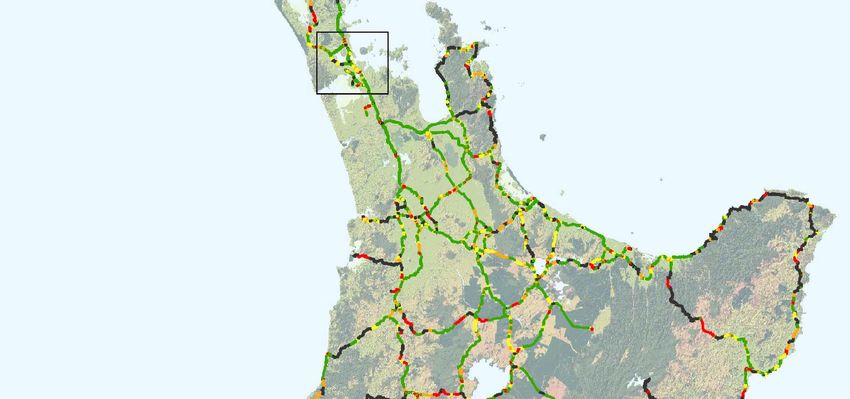
The EROAD Technology Platform

                                4
The EROAD Technology Platform
• EROAD’s in-vehicle hardware, the Ehubo, measures
  distance travelled with a high degree of accuracy, and
  captures location, route, driver behaviour and
  operational data.

• The Ehubo records, stores and continuously transmits
  encrypted data to the web-based application called
  Depot, where users access information and services
  online

• The tax application displays and reports distance and
  location travelled by vehicles, calculates taxes owed
  and generates supporting records. Tax reports are
  automatically generated in the correct format. The
  application also supports online tax filing where
  available.
                                                           5
New Zealand – Introduction of Electronic Road User Charges

• Electronic RUC was launched by
  EROAD in February 2010.

• ERUC is now 45% of Total Heavy
  Vehicle RUC.

• Manual RUC dropped from $900
  million to $520 million.
                                                             Source : New Zealand Transport Agency

• Growth opportunities remain strong
  with $520 million of Heavy Vehicle RUC
  still collected manually.
                                                                                        6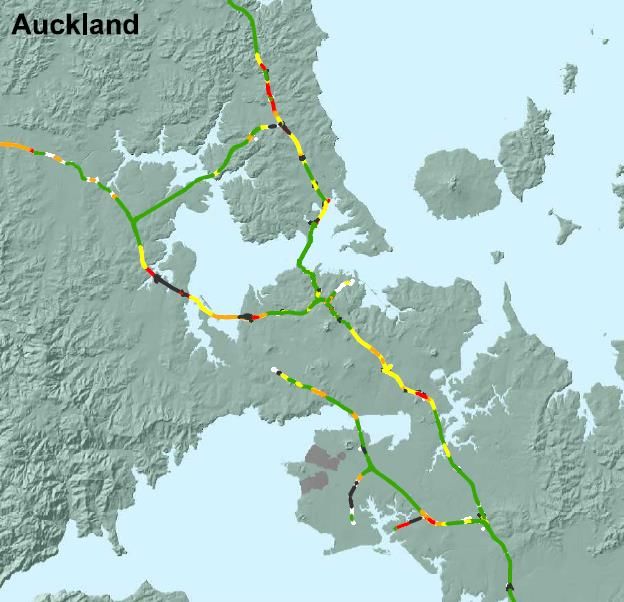
EROAD in New Zealand
• To 31 March 2016 EROAD has collected $1.1
  Billion in RUC for NZTA.

• Continuing to grow in both Heavy and Light
  vehicles.

• 32,452 contracted units, at March 2016

• 50% growth rate per annum

• 97% customer retention rate
                                               Source : New Zealand Transport Agency

• RUC still an important driver of demand

• Health and Safety the “new driver”.
                                                                        7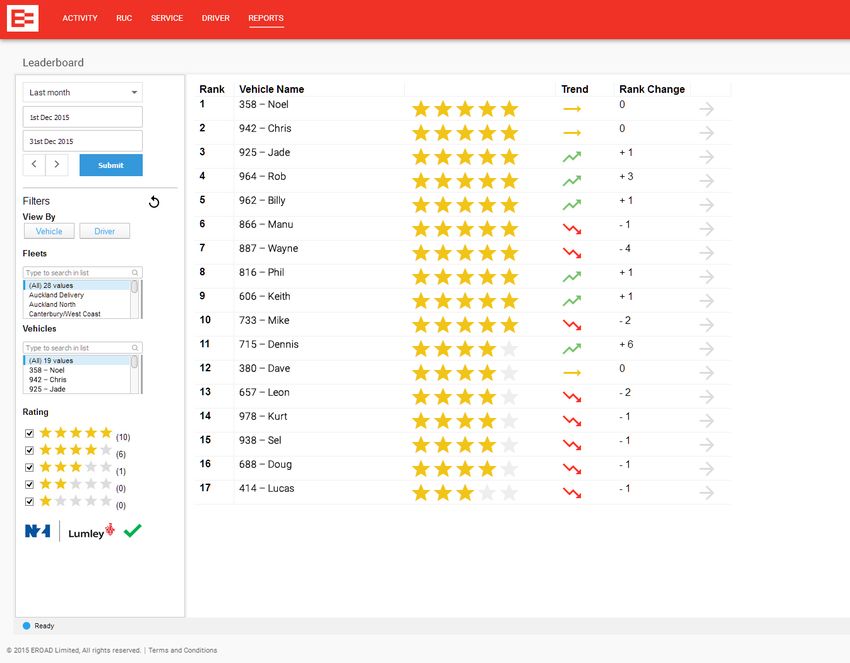
ERUC  delivers
  EROAD           downstream
        in New Zealand
benefits
  • Market leader having collected $1.1 Billion in RUC.

  • Continuing to grow in both Heavy and Light vehicles.

  • 32,452 contracted units, at March 2016.

  • 50% growth rate per annum

  • RUC still an important driver of demand.

  • Health and Safety the “new driver”

                                                           Source : New Zealand Transport Agency

                                                                                         8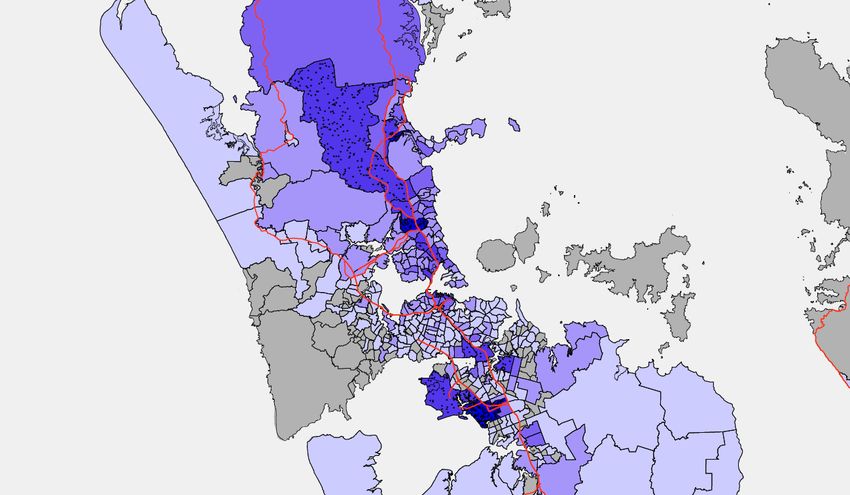
ERUC delivers downstream benefits
• Beyond the primary direct benefits of an electronic road use charge system in terms of
  enabling tax reporting, there are secondary downstream benefits flowing from the:
  • Ability to deliver new tax, compliance and commercial services to the platform.

  • Accumulated unique data collected that can be used to deliver a wide range of new services and
    analytics insights.

IMPORTANT to note that the carrier owns their own data. EROAD guarantees
confidentiality of individual carrier data and only makes anonymized summary data
available for users other than motor carriers under strict terms of data use and retention.

                                                                                                 9
New Zealand – Health and Safety Reform – April 2016
1. Health and Safety at Work Act (HSWA) introduced 4th April 2016
• Defines motor vehicle as a workplace
• Requires employer to provide a safe workplace
• Requires employer to manage and monitor driver behavior and vehicle safety in the workplace
• Employer must take all reasonable and practical steps
• Note : Fatigue and speed are two practical areas of focus of corporates’ health and safety managers
2. EROAD was able to provide a suite of Health & Safety Products to supports its customer with these new
compliance obligations. These ranged from an electronic logbook and driver management to ability to share
visibility of sub-contractor vehicles.
Telematics is a reasonable and practical way to manage and monitor driver and vehicle safety
10New Zealand - Health and Safety
• The day the Health and Safety reform became law in April this year EROAD was able to provide its
suite of H&S products to 34,000 vehicles across New Zealand. The power of the platform.
11New Zealand - Health and Safety
• Collaboration with NZI Lumley: Safe
Driving Rewards Programme.
• Star rating compares drivers with
EROAD driving population.
• If a company is in the top 25% of
EROAD customers for driving
behaviour and is also a customer of
NZI Lumley, it may qualify for excess
waiver in the event of an accident.
12New Zealand – Health and Safety
• Congestion monitoring
• Identify possible new toll route
• Predict freight transit times
• Calibrate economic models
• Improve safety of road network
• Enhance insurance underwriting
• Substantiate road investments – demonstrate forecasted cost benefits were achieved.
• Lower greenhouse gas emissions reporting
• Quantify economic impact of congestion
• Data on freight demand movements can predict regional GDP and economic downturn
13Health & Safety : Driver Behaviour - helping drive safety
Customer introduces
EROAD Drive Buddy
14ERUC delivers downstream benefits – power in the data
• The data collected is order to calculate and manage RUC includes;
• Distance, time, location, RUC class, industry classifications, weight (nominated or GMW).
• Data collected is also collected to provide Health & Safety and commercial service;
• Speeding, harsh braking, cornering and acceleration, geo-fence situational activity.
• From this data origination and destination travel, routes travelled and travel times can be calculated.
• EROAD has developed data sharing protocols with BECA in New Zealand to unlock the value of the data while
ensuring the confidentiality of customers.
• EROAD provide anonymized data to BECA, BECA provide insights to government to improve capability, safety ad
productivity of the transport network.
IMPORTANT to note that the carrier owns their own data and EROAD guarantees confidentiality of individual carrier
data and only makes anonymized summary data available for users other than motor carriers under strict terms of data
use and retention.
15ERUC delivers downstream benefits – power in the data
The data can be used to:
• Monitor congestion and determine its economic impact
• Freight movements can predict regional GDP and economic downturn
• Predict freight transit times
• Identify possible new toll route
• Calibrate economic models
• Improve safety of road network
• Enhance insurance underwriting
• Substantiate road investments – demonstrate forecasted cost benefits were achieved.
• Lower greenhouse gas emissions reporting
New uses continue to evolve and are only limited by one’s imagination.
1617
About EROAD

              18
About EROAD
19Steven Newman
CEO - EROAD
steven.newman@eroad.com
20You can also read


