ADELAIDE IMPLEMENTATION PLAN - CIT Y DEAL NOVEMBER 2019 - Department of ...
←
→
Page content transcription
If your browser does not render page correctly, please read the page content below
ADELAIDE
      CIT Y DE AL

IMPLEMENTATION PLAN
    NOVE MBE R 2019
Foreword
The Adelaide City Deal, signed
on 19 March 2019, is a ten‑year
partnership between the
Australian Government, the
Government of South Australia
and the City of Adelaide to grow
Adelaide as an innovative and
vibrant city.
The City Deal delivers $551 million in joint investment
— $174 million from the Australian Government,
$364 million from the Government of South Australia
and $12.6 million from the City of Adelaide —
to realise projects and initiatives that grow the state’s
skilled workforce and industries at the forefront of
innovation as well as enhancing the city’s reputation
as a great place to live, visit, study, work and do
business.
Through the City Deal, each government has made
commitments that support shared objectives of:
• Growing Adelaide’s innovation economy
• Supporting Population Growth in Adelaide and
  South Australia
• Boosting Adelaide’s Cultural and
  Tourism Economy
The Adelaide City Deal can be found at
www.infrastructure.gov.au/cities/adelaide
This Implementation Plan sets out the commitments
and delivery milestones for City Deal projects.
Annual Progress Reports will provide updates on
the delivery of key commitments and performance
against agreed indicators. Formal three-yearly
reviews will assess whether the City Deal is
delivering in line with the initial vision and
objectives of the Deal.
Acknowledgement of Country
We acknowledge the Traditional Owners of country throughout
South Australia, and their ongoing connection to and spiritual and cultural
relationship with their land and waters. We pay our respects to the current
generation, as well as Elders past and present and future leaders.

Progress since signing
    Since the City Deal was announced on
    19 March 2019, progress on the commitments
    is already evident.
    At Lot Fourteen, more than $100 million in construction contracts have
    been awarded and the majority of the Heritage Building refurbishment
    program is underway. Around 450 people, in new industries such as artificial
    intelligence, cyber security, smart sensor networks, robotics, big data,
    defence and space technologies, media and creative industries, are already
    working at Lot Fourteen, with many more to come. With over 35,000 visitors
    across more than 70 public events, Lot Fourteen is already adding economic
    opportunities and vibrancy to Adelaide.
    The Adelaide City Technology and Innovation Advancement Designated
    Area Migration Agreement (DAMA) and the Supporting Innovation in
    South Australia (SISA) pilot are underway, helping to bring in workers
    in emerging high-tech industries and attracting budding entrepreneurs.
    To date, the SISA pilot has resulted in the lodgement of 37 applications.
    These commitments are supported by the release of the Government of
    South Australia’s Entrepreneurship Strategy, Future Industries Exchange for
    Entrepreneurship (FIXE) in June 2019, providing the foundation for growing
    entrepreneurship across the State.

4   Adelaide City Deal—Implementation Plan
The next 12 months
The City Deal will deliver exciting new activities over the
next twelve months.
Lot Fourteen will be well on its way to becoming a leader in future industries,
innovation and creativity. The Australian Space Agency will set up its Headquarters
in the newly refurbished McEwin building, supporting new jobs and business
opportunities in the space sector in Adelaide. New businesses and entrepreneurs will
have 300 work spaces available on site. Significant progress will also have been made
on the design of new buildings including the Innovation Centre – which will ultimately
house the balance of start-up work spaces and provide facilities for business, industry
and research collaboration – as well as the new Aboriginal Art and Cultures Centre and
the International Centre for Food, Hospitality and Tourism Studies. The refurbishment
of heritage buildings will be complete, with over 1,000 people working on site.
A Science and Innovation Strategy will be released by the Government of
South Australia to complement the FIXE Entrepreneurship Strategy and guide the
growth of Adelaide’s innovation economy.
Adelaide will also be well positioned for a growing population, with the completion of
key steps in the reform of the Government of South Australia’s planning system and
the release of South Australia’s first 20-year State Infrastructure Strategy to guide
infrastructure development.

                                                      Adelaide City Deal—Implementation Plan   5
Monitoring and Measuring
    Performance
    This Implementation Plan is designed to both monitor
    the delivery of commitments under the Adelaide City
    Deal, and measure the Deal’s performance in meeting its
    broader objectives.
    The Implementation Plan does this by establishing:
    • a framework to monitor City Deal commitments that includes:
        -- how it will be delivered though project milestones
        -- identifying who will deliver the commitment
        -- any funding arrangements
    • performance indicators to evaluate whether the broader objectives are being met.
    Twelve indicators, across five key focus areas, have been identified to report annually
    on the progress of the Adelaide City Deal. Adelaide’s productivity and progress will
    also be monitored through the National Cities Performance Framework, which provides
    a snapshot of Australia’s largest 21 cities against more than 50 progress and contextual
    indicators. For more information on the Framework visit:
    https://smart-cities.dashboard.gov.au/all-cities/overview

    Focus area: The City Deal will support economic growth, productivity and job creation
    in Adelaide and South Australia’s leading innovation sectors.
    Indicators:
    •   Gross Regional Product
    •   Employment growth
    •   Participation rate
    •   Proportion of workers employed in professional service, information technology
        or financial sectors

    Focus area: The City Deal will support productivity, new jobs and businesses and
    cultural activities at Lot Fourteen.
    Indicators:
    • Number of jobs in the Lot Fourteen precinct
    • Number of start-up jobs in the Lot Fourteen precinct
    • Level of investment in the Innovation Hub within the Lot Fourteen precinct

6   Adelaide City Deal—Implementation Plan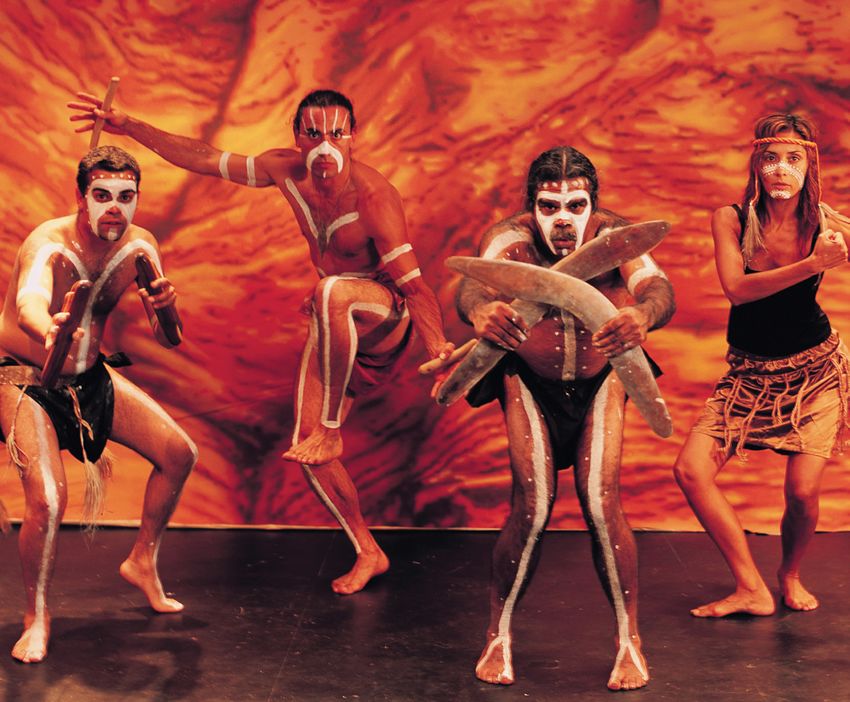
Focus area: The City Deal will support population growth in Greater Adelaide through
tailored visa programs. The growing population will be supported by effective urban
planning and renewal.
Indicators:
• Population growth

Focus area: The City Deal will support the growth of Adelaide’s visitor economy and
increase visitor spend in Adelaide city and Greater Adelaide.
Indicators:
• Total visitor spend
• Hotel occupancy
• Number of attendances at cultural institutions

Focus area: The ten-year partnership between three levels of government will achieve
effective collaboration between all partners and with joint accountability for the
governance and implementation of the City Deal.
Indicators:
• Participation or collaboration surveys

   Indigenous participation
   The Adelaide City Deal also committed governments to work together to identify
   and implement measures to support Indigenous participation. The three levels of
   government have agreed that the Adelaide City Deal will increase economic and
   employment opportunities for Indigenous Australians on projects funded under
   the Deal and that this will be consistent with the Government of South Australia’s
   Industry Participation Policy or the Australian Government’s Indigenous
   Procurement Policy where relevant.
   The Australian and South Australian Governments will include Indigenous
   economic participation objectives in Adelaide City Deal projects which is planned
   to deliver a minimum of 1.4 per cent (full time equivalent) Aboriginal employment
   outcomes and a minimum of 3 per cent of contract value for Indigenous
   businesses in the supply chain. Opportunities for local Indigenous workers
   and businesses will be a priority and these outcomes will be incorporated,
   as appropriate, into Tailored Industry Participation Plans and monitored and
   reported to the State’s Industry Advocate on a project-by-project basis.

                                                      Adelaide City Deal—Implementation Plan   7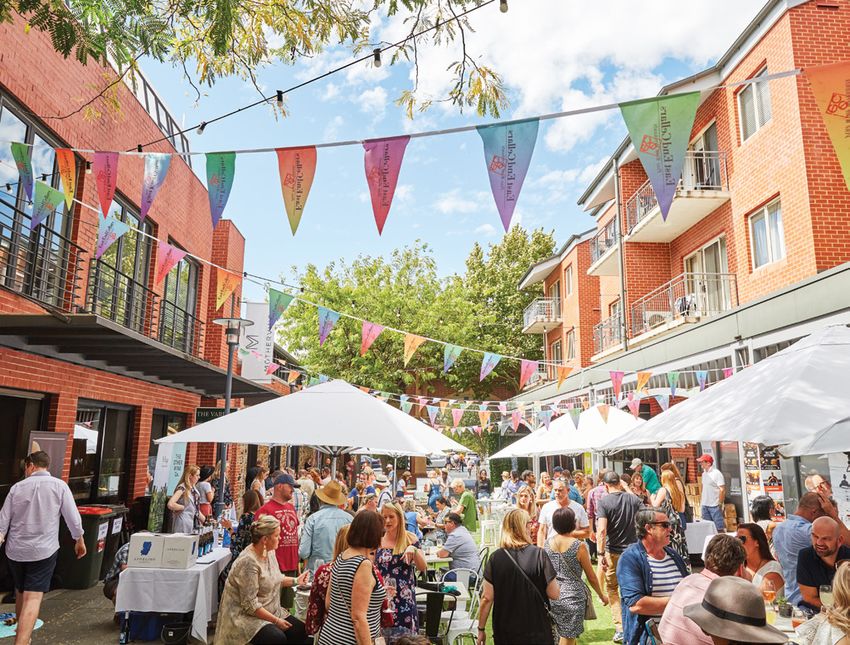
Implementing the
             City Deal

8   Adelaide City Deal—Implementation Plan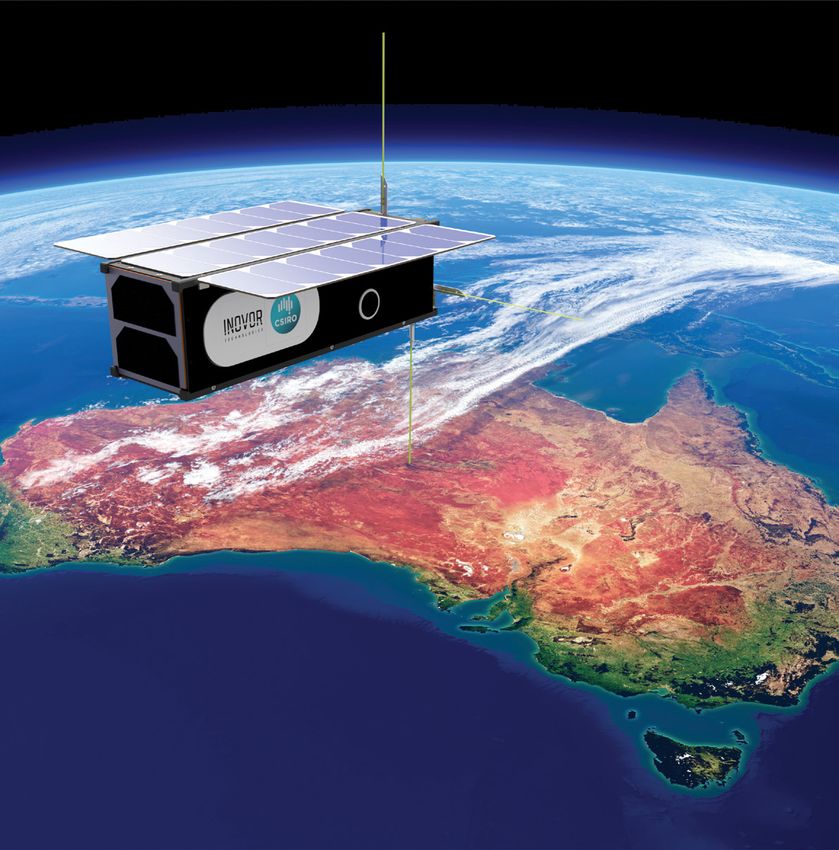
Adelaide City Deal—Implementation Plan 9
Growing Adelaide’s
     Innovation Economy
     The Adelaide City Deal aims to make Adelaide a centre of
     innovation, supporting knowledge intensive industries and
     entrepreneurialism and transforming the economic future
     of South Australia.
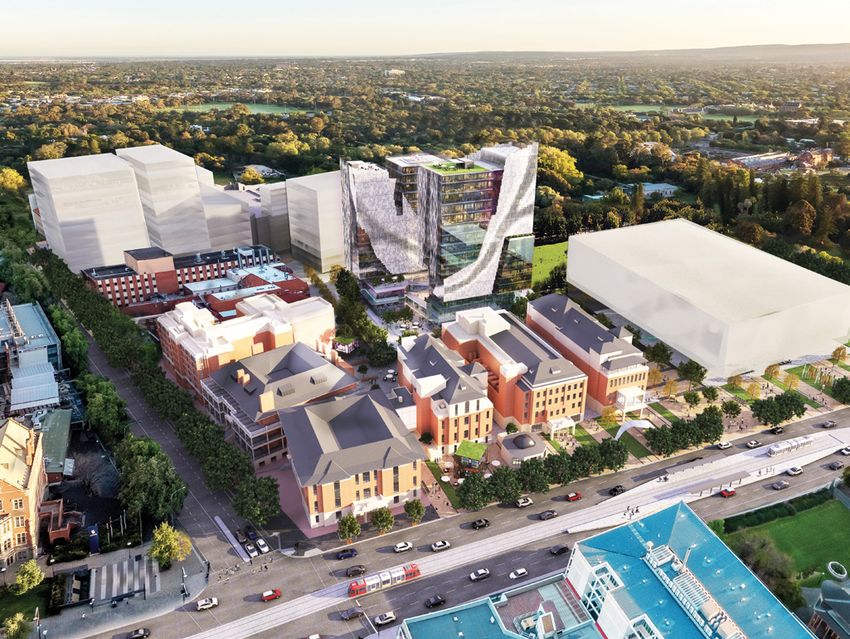
     Lot Fourteen, on the former Royal Adelaide Hospital site, will be the centrepiece –
     attracting investment and generating new highly-skilled and high-paying jobs that will
     form the basis of a prosperous future for South Australia.

     Deliver Lot Fourteen to create future-oriented jobs
     and new business opportunities in Adelaide
     1.     Lot Fourteen Development
     The Government of South Australia is investing $364 million to develop Lot Fourteen.
     Key activities include site preparation, demolition, public realm works, infrastructure
     and services, heritage building refurbishments, operation and management, and
     support for start-up spaces through the establishment of the Start-up Hub.
     Further detailed information about development at Lot Fourteen, including the
     Master Plan, can be found at the Lot Fourteen website
     https://renewalsa.sa.gov.au/projects/lot-fourteen/.
     The Lot Fourteen site is connected to the GigCity network and in the future aims to be
     a Green Star and WELL Community, supporting environmental, health and wellbeing
     outcomes.

     Milestones and next steps:
      Due          Milestone
      Q4 2019      Finalise precinct strategy
      Q4 2020      Heritage building refurbishment complete
                   Public Realm works completed (Stage 1)
      Q1 2021      Stage 2 demolition works completed for the Innovation Centre and the
                   International Centre for Food, Hospitality and Tourism Studies
     Responsibility:
     The Government of South Australia through the Department of the Premier and
     Cabinet and Renewal SA

     Financial commitments:
     $364 million – Government of South Australia

10   Adelaide City Deal—Implementation Plan
2. Innovation Hub
The new Innovation Centre at Lot Fourteen will be a space dedicated to bringing
together entrepreneurs, established industry, universities and the public to create the
next generation of businesses and jobs for South Australia.
Within the Innovation Centre, the Innovation Hub will be the central part of the ground
floor collaborative space that will foster the convergence of academics, industry, and
the public to support greater commercialisation of ideas and technology.
Milestones and next steps:
Due Milestone
Q4 2019 High level concept design finalised by the Government of South Australia
Q1 2020 Acceptance of business case by the Australian and
South Australian Governments
Q2 2020 Project Plan agreed by the Australian and South Australian Governments*
*Future milestones will be outlined in the Project Plan and identified through the City Deal reporting
process.
Responsibility:
The Government of South Australia through the Department of the Premier and
Cabinet and Renewal SA in collaboration with the Australian Government.
Financial commitments:
The Australian Government will provide up to $20 million towards the capital costs
of establishing the Innovation Hub, subject to a business case. The Government of
South Australia will be responsible for identifying additional funding required to
complete the Innovation Hub and Centre.
Adelaide City Deal—Implementation Plan 113. Australian Space Agency Headquarters
The Australian Government has established the Australian Space Agency to transform
and grow a globally respected space sector in Australia. The Agency’s operating
centre will be located in Adelaide, in the McEwin Building at Lot Fourteen. The Agency
will open doors for Australia to access the global space industry and will build on the
strong technology and defence industry sectors already existing in South Australia.
Milestones and next steps:
Due Milestone
Q4 2019 Fit out complete and lease by the Australian Space Agency commences
Q1 2020 Official opening of the Headquarters
Responsibility:
The Australian Space Agency with Defence SA
Financial commitments:
Not applicable.
4. Mission Control Centre
The Australian and South Australian Governments will establish a Mission Control
Centre at Lot Fourteen to complement the Australian Space Agency’s work. It will
be co-located on the ground floor of the McEwin Building with the Australian Space
Discovery Centre.
The Mission Control Centre will provide a platform for small and medium-sized
enterprises to observe satellite missions and provide access to space-enabled data for
use in agriculture, oil and gas, mining, emergency services and maritime surveillance.
The Centre will also support the space start-up industry’s investment in satellite
infrastructure in South Australia and nationally, and provide educational opportunities
to the public on Australia’s space capabilities and missions.
The Australian Space Agency held public consultation on the design of the Mission
Control Centre Grant Opportunity in September 2019.
Milestones and next steps:
Due Milestone
Q4 2019 The Mission Control Centre Grant Opportunity is open for applications
Q2 2020 Successful grantee identified and funding agreement executed
Mission Control Centre construction and fit out commences
Funding arrangements finalised with the Government of South Australia
Q4 2021 Construction and final testing of systems completed
Q2 2022 Mission Control Centre operational
Responsibility:
The Australian Space Agency
Financial commitments:
• $6.0 million – Australian Government through the Space Infrastructure Fund
• $2.5 million – Government of South Australia subject to the finalisation of a
business case
The successful grantee will also contribute funding and in-kind resources.
12 Adelaide City Deal—Implementation PlanAdelaide City Deal—Implementation Plan 13
14 Adelaide City Deal—Implementation Plan
5.       The Australian Space Discovery Centre
The Australian Space Discovery Centre will provide Science, Technology, Engineering
and Mathematics (STEM) education, engagement and inspiration for young Australians.
Through the Centre, the Australian community, students and visitors will also have a
unique opportunity to engage with the latest innovations in space technologies and
expand their understanding of Australia’s role in national and global space activities
and missions. The public will be able to engage with the work of the Australian Space
Agency and all facets of Australian space activities.
The Centre will be co-located with the Mission Control Centre in Lot Fourteen.

Milestones and next steps:
 Due           Milestone
 Q1 2020       Australian Space Agency and Questacon agree to the scope of the Centre
 Q3 2021       Construction of the Centre commences
 Q2 2024       Centre opens

Responsibility:
The Australian Government through the Australian Space Agency and Questacon

Financial commitments:
$6 million – Australian Government

Plan for and invest in Adelaide’s innovation economy
to drive new investment and job creation
6.     Strategies for Innovation and Entrepreneurship
The Government of South Australia will deliver a comprehensive Science and
Innovation Strategy to guide the growth of Adelaide’s economy and secure the
long‑term benefits of joint investment at Lot Fourteen and other innovation
neighbourhoods such as Tonsley, Waite, Mawson Lakes and BioMed City.
The Government of South Australia released the FIXE strategy, in June 2019. The
strategy aims to create the right culture, improve the capability and mobilise the capital
required to make South Australia a global leader in entrepreneurship.
See https://www.fixe.org.au/.

Milestones and next steps:
 Due           Milestone
 Q4 2019       Draft Science and Innovation Strategy released for consultation
 Q1 2020       Science and Innovation Strategy launched*
* Future milestones will be outlined in the final Science and Innovation Strategy and identified through the
City Deal reporting process.

Responsibility:
The Government of South Australia through the Department of Innovation and Skills

Financial commitments:
Funded through existing agency resources.

                                                                    Adelaide City Deal—Implementation Plan     15
7. Smart Technology
The City Deal will deliver a series of projects to invest in smart city technology and
infrastructure to improve connectivity and safety in the Adelaide city centre1. Projects,
including closed circuit television, smart lighting and digital wayfinding will focus on:
• Improving the city experience for residents, visitors, workers and businesses
• Boosting Adelaide’s reputation and advantage as a connected city
• Ensuring integration of services between Lot Fourteen and the wider Adelaide city
centre.
Milestones and next steps:
Due Milestone
Q4 2019 Initial scoping work completed by the City of Adelaide
Q1 2020 Business case completed and provided to City Deal partners
Q2 2020 Project Plan agreed by City Deal partners*
*Future milestones will be outlined in the Project Plan and identified through the City Deal reporting
process.
Responsibility:
Led by the City of Adelaide
Financial commitments:
• $12.6 million – City of Adelaide
• $10 million – Australian Government
1 The City of Adelaide complies with legal obligations under the Privacy Act 1988 and implements this
through the standards set in the City of Adelaide Privacy Policy.
16 Adelaide City Deal—Implementation Plan8. Integrated Plan for Digital Service Delivery
The Government of South Australia and the City of Adelaide will develop and deliver
a plan for digital service delivery, enhanced connectivity and data capacity to offer a
range of digital experiences to residents and businesses. This will build on the National
Broadband Network, the Government of South Australia’s GigCity, and the City of
Adelaide’s Ten Gigabit Adelaide and provide a platform to market digital services and
promote connectivity for businesses across Adelaide.
Milestones and next steps:
Due Milestone
Q1 2020 Draft plan provided to Government of South Australia and
the City of Adelaide
Q3 2020 Plan for digital service delivery released
Responsibility:
The Government of South Australia through the Department of Innovation and Skills in
collaboration with the City of Adelaide.
Financial commitments:
Funded through existing agency resources.
9. Aboriginal Entrepreneur Hub
The Aboriginal Entrepreneur Hub will provide for an Aboriginal specific service that will
complement and coordinate with the broader innovation activities at Lot Fourteen.
The initiative will be delivered through three phases:
• Phase 1: Design – Operational Modelling and Hub Design
• Phase 2: Establishment – Establish the Hub for full operation
• Phase 3: Delivery – Hub operation and maintenance.
Milestones and next steps:
Due Milestone
Q4 2019 Phase 1 completed*
*Future milestones for Phases 2 and 3 will be outlined in the recommendations from Phase 1, and identified
through the City Deal reporting process.
Responsibility:
The Government of South Australia through the Department of the Premier and
Cabinet, in conjunction with the Office of the Industry Advocate and in collaboration
with other state agencies and the Australian Government.
Financial commitments:
$3 million – Australian Government
Adelaide City Deal—Implementation Plan 17Support population
growth in Adelaide and
South Australia
South Australia is well positioned to accommodate a
growing population.
The City Deal brings together strategic investment, changes to migration settings and
integrated transport and land-use planning to drive healthy population growth and
make Adelaide a desirable place to live and work.
Attracting skilled overseas workers and international
students to Adelaide
10. Designated Area Migration Agreement
A five-year Adelaide City Technology and Innovation Advancement DAMA commenced
on 1 July 2019 to allow the Australian and South Australian Governments to target
the need for skilled workers in emerging industries. Employers in the defence, space,
advanced manufacturing and technology industries will have the ability to sponsor
skilled overseas workers for positions they are unable to fill with local workers. The
recruitment of highly skilled, experienced and specialised overseas employees will
increase commercial opportunities and build the capability of the local workforce.
Milestones and next steps:
Due Milestone
Q1 2020 First annual review, followed by a review each year for five years
Q1 2025 DAMA concludes
Responsibility:
The Government of South Australia through the Department for Innovation and Skills in
collaboration with the Australian Government.
Financial commitments:
Not applicable
18 Adelaide City Deal—Implementation Plan11. Supporting Innovation in South Australia (SISA) program
The Australian and South Australian Governments launched the pilot of the SISA
program on 22 November 2018 to attract budding entrepreneurs, with the aim of
fostering business growth and investment and making Adelaide the nation’s start-up
capital. The SISA provides emerging, early-stage entrepreneurs with a temporary visa
up to November 2021 to grow and scale their business from South Australia.
Applicants have the option to have their business concepts assessed by one of five
incubator organisations in South Australia or by the Office of the South Australian
Chief Entrepreneur. The five participating organisations are the New Venture Institute
(Flinders University), ThincLab (University of Adelaide), Moonshine Laboratory, the
Innovation and Collaboration Centre (University of South Australia) and Stone and
Chalk (start-up ecosystem builder). The Government of South Australia provides
the official endorsement to the Australian Government based on advice from
these organisations.
Milestones and next steps:
Due Milestone
Q4 2021 SISA pilot concludes
Responsibility:
The Government of South Australia through the Department for Innovation and Skills in
collaboration with the Australian Government.
Financial commitments:
Not applicable
Adelaide City Deal—Implementation Plan 1912. Marketing Strategies
The Australian and South Australian Governments will work with local education
and training providers to promote Adelaide as a premier education destination to
international markets. Austrade and StudyAdelaide will collaborate on joint digital
marketing activities, including social media campaigns and channels showcasing
Adelaide and South Australian institutions.
Milestones and next steps:
Due Milestone
Q4 2019 Social media campaign launched targeting potential international
students to study in Adelaide and regional centres
Refresh of the Study in Australia website with South Australia and
Adelaide specific content
Q2 2020 Evaluation of campaign*
* Opportunities for future marketing collaboration to be determined following the campaign evaluation and
identified through the City Deal reporting process as required.
Responsibility:
The Australian Government through Austrade in collaboration with the Government of
South Australia through StudyAdelaide.
Financial commitments:
Funded through existing agency resources.
20 Adelaide City Deal—Implementation PlanSupporting urban renewal and planning for
a growing population
13. 30-Year Plan for Greater Adelaide
The Government of South Australia is committed to the long term growth and urban
renewal of Adelaide and its surrounds through the strategic land use plan, the 30‑Year
Plan for Greater Adelaide (the 30-Year Plan). The 30-Year Plan was first prepared
in 2010 and was subsequently updated in 2017 to respond to new challenges and
opportunities.
The 30-Year Plan forms a Regional Plan under the Government of South Australia’s
new planning system, the Planning, Development and Infrastructure Act 2016.
Progress on implementing the actions and meeting the targets in the 2017 Update
of the 30-Year plan will be monitored annually and reported to the State Planning
Commission.
Milestones and next steps:
Due Milestone
Q4 2020 First annual report prepared for the State Planning Commission, followed
by a report each year
Responsibility:
The Government of South Australia through the Department of Planning, Transport,
and Infrastructure.
Financial commitments:
Funded through existing agency resources.
Adelaide City Deal—Implementation Plan 2114. Plan for Urban Renewal
The Government of South Australia will develop a plan for urban renewal, informed by
the Metropolitan Growth Management Program.
The Metropolitan Growth Management Program will analyse population projections,
land supply and housing demand to identify areas for population growth and urban
renewal that are supported by infrastructure capacity. This will include centres and
urban areas across Adelaide, including around precincts identified in the Science and
Innovation Strategy. The Government of South Australia will also explore urban renewal
opportunities to enable residential infill and greater flexibility of use in selected centres,
including from joint Australian and South Australian Government investment in the
electrification of the Gawler Rail Line.
Milestones and next steps:
Due Milestone
Q1 2020 Release of the pilot Adelaide North component of the
Metropolitan Growth Management Program
Q2 2020 Complete the rezoning of sites adjacent to rail stations along the
Adelaide to Gawler line
Release of the full Metropolitan Growth Management Program
Q4 2020 Identify new growth precincts consistent with the 30 Year Plan for
Greater Adelaide – 2017 Update
Responsibility:
The Government of South Australia through the Department of Planning, Transport,
and Infrastructure.
Financial commitments:
Funded through existing agency resources.
22 Adelaide City Deal—Implementation Plan15. Reforms in the Planning, Development and Infrastructure Act 2016
The Government of South Australia will deliver a new and contemporary planning
system to plan for and manage projected population and economic growth over the
medium and long term. The new planning system will deliver:
• State Planning Policies, which identify South Australia’s overarching goals and
planning priorities to respond to current and future opportunities and challenges
and enable policy responses to be directed at both the regional (Greater Adelaide)
and local scale
• New regional Joint Planning Boards to strengthen collaboration and partnerships
with local government. The key role of the Joint Planning Boards will be to
update and implement the Regional Plans and provide a long term (15-30 years)
land‑use vision for a planning region, including integration of land use, transport
and infrastructure
• A new state-wide Planning and Design Code to set out consistent and
transparent planning policy and assessment processes for all new development in
South Australia.
Milestones and next steps:
Due Milestone
Q4 2019 Establish the Joint Planning Boards and commence development of new
Regional Plans
Phase 3 of the Planning and Design Code to apply to metropolitan and
Greater Adelaide released for public consultation
Q2 2020 Phase 3 of the Planning and Design Code for metropolitan and
Greater Adelaide implemented
Fully digital online ePlanning solution delivered
Responsibility:
The Government of South Australia through the Department of Planning, Transport
and Infrastructure.
Financial commitments:
Funded through existing agency resources.
Adelaide City Deal—Implementation Plan 2316. Protecting Defence Precincts
Through the South Australian planning system the Australian and South Australian
Governments will work to protect Defence establishments within Greater Adelaide,
and throughout the state, by preventing incompatible civil land-use encroachment,
securing public amenity and protecting current and future Defence capability. This
includes the Port of Adelaide, Osborne Naval Shipyard, Edinburgh Defence Precinct
and other South Australian Defence establishments, including bases, training areas
and ranges.
Renewal SA is also leading a master planning project to review future desired
land uses for the Northern LeFevre Peninsula to support naval shipbuilding at the
Osborne Shipyard and other required land uses on the Peninsula.
Milestones and next steps:
Due Milestone
Q4 2019 Completion of the Master Plan for the Northern LeFevre Peninsula
Q2 2020 Planning and Design Code reviewed and updated to ensure that state
planning rules respond to changing technology and markets
Q4 2020 Review and update land-use planning policies to ensure that Defence
training and operational activities, and Defence establishments, training
areas and ranges, along with industry activities are protected from
encroachment and conflicting land uses
Q2 2021 Review and update planning policies to support Defence, industry and
commercial clusters and precincts and inform updates and changes to
the Planning and Design Code
Responsibility:
The Government of South Australia through the Department of Planning, Transport
and Infrastructure in collaboration with the Australian Department of Defence.
Financial commitments:
Funded through existing agency resources.
24 Adelaide City Deal—Implementation Plan17. 20-year State Infrastructure Strategy
Infrastructure SA (ISA) is leading the development of South Australia’s first 20‑year
State Infrastructure Strategy (Infrastructure Strategy) to guide Adelaide and
South Australia’s future infrastructure needs to support a growing population. The
state‑wide Infrastructure Strategy will detail the State’s challenges and opportunities,
and identify the future infrastructure needs for industries, businesses and communities
to thrive. The Infrastructure Strategy will consider a broad range of economic and
social infrastructure funded and delivered by all levels of government and the private
and not-for-profit sectors.
The Infrastructure Strategy will inform the preparation of a Capital Intentions
Statement — a five-year rolling annual plan that will identify specific major projects
(costing more than $50 million) to be undertaken as a priority.
Milestones and next steps:
Due Milestone
Q1 2020 Infrastructure Strategy and Capital Intentions Statement released by ISA
Responsibility:
The Government of South Australia through ISA.
Financial commitments:
Funded through existing agency resources.
Adelaide City Deal—Implementation Plan 25Boosting Adelaide’s Cultural
and Tourism Economy
Lot Fourteen will house two significant new infrastructure
projects that will support the precinct’s role as a
year‑round global attraction – an Aboriginal Art and
Cultures Centre and an International Centre for Food,
Hospitality and Tourism Studies.
Through the Adelaide City Deal key tourist sites will also be revitalised to improve the
visitor experience and provide a boost to the local visitor economy — further driving
investment and growth.
Paitya Dancers
South Australian Tourism Commission/Adam Bruzzone
26 Adelaide City Deal—Implementation PlanDeliver key cultural and educational facilities at Lot
Fourteen to support the precinct’s role as a hub for
hospitality and culture
18. Aboriginal Art and Cultures Centre
An Aboriginal Art and Cultures Centre will be built at Lot Fourteen to recognise and
celebrate one of the world’s oldest continuous living cultures. The Centre will be a
globally recognised immersive experience of Aboriginal art and cultures and drive
year-round cultural tourism to Adelaide.
As an important first step, a stakeholder engagement process has commenced with
South Australian Aboriginal communities, the South Australian Museum, the Art Gallery
of South Australia and other key stakeholders to begin to define the vision and scope
of the Centre.
Milestones and next steps:
Due Milestone
Q4 2019 Government of South Australia completes initial stakeholder
engagement study
Q2 2020 Project scope and design brief finalised by the Government of
South Australia
Project Plan, including stakeholder engagement strategy, agreed by the
Australian and South Australian Governments*
*Future milestones will be outlined in the Project Plan and identified through the City Deal reporting
process.
Responsibility:
The Government of South Australia through the Department of the Premier and
Cabinet and Renewal SA in consultation with the Australian Government.
Financial commitments:
Through the City Deal, the Australian Government has committed $85 million to
support the construction of the Centre, with the Government of South Australia
confirming an additional $65 million through its 2019–20 Budget.
• $85 million – Australian Government (City Deal funding)
• $65 million – Government of South Australia (additional funding)
Adelaide City Deal—Implementation Plan 2728 Adelaide City Deal—Implementation Plan
19.    International Centre for Food, Hospitality and Tourism Studies
An International Centre for Food, Hospitality and Tourism Studies will be built
at Lot Fourteen to create a world-class facility of excellence, in a brand new,
fully integrated centre. The centre will maximise the economic potential of a
CBD‑based, internationally renowned hospitality education and training facility to
attract a greater number of national and international students and enable stronger
industry connections.
As a first step the Government of South Australia has commissioned a scoping study
to lead the development.

Milestones and next steps:
 Due           Milestone
 Q1 2020       Scoping study completed
               Business case completed and provided to the Australian and
               South Australian Governments
 Q2 2020       Project Plan agreed by the Australian and South Australian Governments*
*Future milestones will be outlined in the Project Plan and identified through the City Deal reporting
process.

Responsibility:
Led by the Government of South Australia through the Department of the Premier and
Cabinet and Renewal SA in consultation with the Australian Government.

Financial commitments:
Through the City Deal, the Australian Government has committed $30 million to
support the construction of the centre:
• $30 million – Australian Government
  (City Deal funding)
• $30 million – Government of South Australia (additional funding)
Private investment will also be sought to support the project.

                                                                    Adelaide City Deal—Implementation Plan   29
Invest in renowned cultural and environmental sites in
Adelaide’s suburbs
20. The Heysens at Hahndorf
The Australian Government will support the construction of the Heysens Gallery at
Hahndorf, as a dedicated space to display art by renowned Australian artists Hans and
Nora Heysen, as well as other Australian and international exhibitions.
Milestones and next steps:
Due Milestone
Q1 2020 Project plan provided by the South Australian Government to the
Australian Government*
Signed contract with the Lead Professional Services Contractor
(Architect) to deliver the design and obtain planning approvals*
*Future milestones will be outlined in the Project Plan and identified through the City Deal reporting
process.
Responsibility:
The Hans Heysen Foundation in collaboration with the Australian and South Australian
Governments.
Financial commitments:
$9 million – Australian Government
21. Carrick Hill
A pavilion will be constructed at Carrick Hill to provide visitor services such as an
Information Centre and amenities for international, national and local patrons. The
pavilion will also offer retail options in the form of a Gift Shop and a function area
with flexibility in its design to allow for hosting events to return commercial value.
Community engagement will be promoted through access to recreational walks and
children’s activities stemming from the pavilion.
Milestones and next steps:
Due Milestone
Q3 2020 Project plan provided by the South Australian Government to the
Australian Government*
Concept design completed*
*Future milestones will be outlined in the Project Plan and identified through the City Deal reporting
process.
Responsibility:
The Government of South Australia through the Department of Premier and Cabinet in
collaboration with the Australian Government and the Carrick Hill Trust.
Financial commitments:
• $3 million – Australian Government (City Deal funding)
• $0.5 million – Government of South Australia (additional funding)
30 Adelaide City Deal—Implementation Plan22. Mitcham Hills Trail and Glenthorne Loop
The Mitcham Hills Trail and Glenthorne Loop will link major natural and cultural
attractions in southern Adelaide. The overall project is comprised of distinct activities
that deliver upgrades to sites and improve their access through digital tools and
wayfinding encouraging residents and tourists to navigate and experience Adelaide’s
cultural landscape.
Some projects, such as weed removal and revegetation at Belair National Park and
O’Halloran Recreation Park are already underway.
Activities as part of the Mitcham Hills Trail will include:
• construction of a nature playground and garden upgrades at
Wittunga Botanic Gardens
• restoration of the garden and kitchen at Old Government House
• weed removal and revegetation and a kitchen upgrade in the Volunteer Centre
at Belair National Park
• funding for works at Colebrook Blackwood Reconciliation Park.
Activities as part of Glenthorne Loop will include:
• building heritage preservation works at Kingston House
• maintenance of the Marion Coast Walking trail at Hallett Cove Conservation Park
• conservation and access works at Stanvac Cliffs and lookout
• construction of an ocean viewing platform, trail and carpark upgrades at
Marino Conservation Park
• heritage studies, cultural assessment and preservation works at Glenthorne Farm
• design of a nature play space at Glenthorne National Park
• weed removal and revegetation at O’Halloran Hill Recreation Park
• improvements to local council managed open space in the Glenthorne precinct.
Milestones and next steps:
Due Milestone
Q4 2019 Completion of activities at Hallett Cove Conservation Park and
O’Halloran Hill Recreation Park
Q2 2020 Completion of activities at Marino Conservation Park
Technology and support solutions for the whole Glenthorne Trails Loop
developed
Q3 2020 Completion of activities at Old Government House and
Colebrook Blackwood Reconciliation Park
Q4 2020 Completion of activities at Belair National Park, Kingston House,
Glenthorne Farm, Glenthorne National Park and Glenthorne Parks
Q1 2021 Completion of activities at Stanvac Cliffs and lookout
Q2 2021 Completion of activities at Wittunga Botanic Gardens
Adelaide City Deal—Implementation Plan 31Responsibility:
The Government of South Australia through the Department for Environment
and Water.
Financial commitments:
$2 million – Australian Government
As part of the development of the Glenthorne Precinct, the Government of
South Australia is investing $12.5 million.
32 Adelaide City Deal—Implementation PlanStrengthening collaboration
to support a successful
City Deal
23. City Deal Governance
All three levels of government will work to deliver objectives and commitments of the
Adelaide City Deal. The collaborative processes and relationships established through
the implementation of the Adelaide City Deal over the next ten years will support
future local-state-federal partnerships.
The Minister for Population, Cities and Urban Infrastructure, the Premier of
South Australia and the Lord Mayor of Adelaide are responsible for the City Deal.
The Implementation Board, consisting of senior officials from the Australian
and South Australian governments and the City of Adelaide, provides strategic
oversight of the delivery of the City Deal and is responsible for briefing the Minister,
Premier and Lord Mayor on progress, emerging risks and opportunities as required.
The Implementation Board are also responsible for reviewing and endorsing the
Annual Progress Report before it is sent to responsible Ministers for approval.
The Implementation Board will meet at least twice yearly. Targeted working groups
for particular activities may be stood up on an as needed basis.
Representatives from the three South Australian universities (Flinders University,
the University of Adelaide and the University of South Australia) will form the
Adelaide City Deal Advisory Group. The Advisory Group will meet twice a year and
provide independent and expert advice to the Implementation Board on the progress
and strategic direction of the Adelaide City Deal.
Parties to the Adelaide City Deal will ensure appropriate resourcing allocations to
facilitate management, administration and oversight of commitments under the Deal,
particularly to ensure that effective, collegiate and collaborative relationships are
maintained through the life of the Deal.
Milestones and next steps:
Due Milestone
2020 First annual report released
2022 Three yearly review
Responsibility:
The Australian Government, the Government of South Australia and the
City of Adelaide.
Financial commitments:
Funded through existing agency resources.
Adelaide City Deal—Implementation Plan 33Copyright statement
Adelaide City Deal Implementation Plan
© Commonwealth of Australia 2019
ISBN: 978-1-925843-32-3
Ownership of intellectual property rights in
this publication
Unless otherwise noted, copyright (and any
other intellectual property rights, if any) in this
publication is owned by the Commonwealth
of Australia (referred to below as the
Commonwealth).
Disclaimer
the material contained in this publication is
made available on the understanding that the
Commonwealth is not providing professional
advice, and that users exercise their own skill and
care with respect to its use, and seek independent
advice if necessary.
Other uses
The Commonwealth makes no representations This publication is available in PDF format at
or warranties as to the contents or accuracy of www.infrastructure.gov.au/cities. For enquiries
the information contained in this publication. To regarding the licence and any use of this publication
the extent permitted by law, the Commonwealth please contact:
disclaims liability to any person or organisation in
respect of anything done, or omitted to be done, Director, Publishing and Internal Communications,
in reliance upon information contained in this Communications, Parliamentary and Governance
publication. Branch Department of Infrastructure, Transport,
Cities and Regional Development
Creative commons licence GPO Box 594 Canberra ACT 2601 Australia
With the exception of (a) the Coat of Arms, Email: publishing@infrastructure.gov.au
and (b) photos and graphics, copyright in this Website: www.infrastructure.gov.au
publication is licensed under a Creative Commons
Attribution 4.0 Australia Licence.
Image Credits
Creative Commons Attribution 4.0 Australia Cover page: Aerial of Adelaide, Airborne Media
Licence is a standard form licence agreement that p. 2-3: South Australian Tourism Commission
allows you to copy, communicate and adapt this Joshua Pathon
publication provided that you attribute the work to p. 4: Lot Fourteen
the Commonwealth and abide by the other licence p. 5: Renewal SA
terms. p. 8-9: Michael Waterhouse Photography
The licence terms are available from p. 11: Renewal SA
. p. 14: NBN
p. 16: Picture courtesy of the City of Adelaide
This publication should be attributed in the p. 19: Picture courtesy of the City of Adelaide
following way: ©Commonwealth of Australia 2019. Ryan Cantwell
Use of the coat of arms p. 20: University of Adelaide
p. 22: Picture courtesy of the City of Adelaide
The Department of the Prime Minister and Adam Lihou
Cabinet sets the terms under which the Coat of p. 26: South Australian Tourism Commission
Arms is used. Please refer to the department’s Adam Bruzzone
Commonwealth Coat of Arms and Government p. 28: South Australian Tourism Commission
Branding web page and John Montessi
in particular, the Commonwealth Coat of Arms – p. 31: South Australian Tourism Commission
Information and Guidelines publication. Ben Stevens
34 Adelaide City Deal—Implementation PlanAdelaide City Deal—Implementation Plan 35
You can also read


