AIB | MBA STUDY AUSTRALIA'S LARGEST ONLINE MBA - aib.edu.au - Australian Institute of Business
←
→
Page content transcription
If your browser does not render page correctly, please read the page content below

AIB | MBA
STUDY AUSTRALIA’S
LARGEST ONLINE MBA

                     aib.edu.au
                      UPDATED OCTOBER 2021
WHAT MAKES OUR
2

    MBA DIFFERENT?
    Unlock your potential and drive your career forward with the AIB MBA.

    STUDY ANYTIME, ANYWHERE                                    INDUSTRY-FOCUSED                                            COMPLETE IN AS LITTLE
                                                               PRACTICAL LEARNING                                          AS 14 MONTHS
    Delivered 100% online, the AIB
    MBA gives you genuine flexibility to                       With a strong industry focus, the AIB                       We can help you reach your dreams
    study anytime from anywhere, with                          MBA provides practical learning and                         faster. You can accelerate your AIB
    interactive bite-sized content and                         relevant skills you can immediately                         MBA by studying up to 2 subjects
    personalised support provided every                        apply in business and the workplace.                        concurrently, subject to meeting our
    step of the way.                                           You’ll learn from industry guest                            eligibility criteria.
                                                               lecturers from leading companies
                                                               around the world.

    STUDY AT YOUR OWN PACE                                       HIGHLY ACCESSIBLE                                            ACCREDITED AND HIGHLY
                                                                                                                              REGARDED INTERNATIONALLY
    With 6 start dates per year you                              We value real-world experience, so
    can study at your own pace and                               if you haven’t studied in a while or                         AIB’s programmes are fully
    take a break whenever you need.                              don’t have a degree chances are you                          accredited in Australia, highly
                                                                 can still gain entry to our MBA.                             regarded internationally, and
                                                                                                                              industry aligned.

    ENTRY REQUIREMENTS
    Applicants who wish to undertake the AIB MBA must meet the minimum criteria for the first stage of the MBA, namely the Graduate Certificate in Management.

         A MINIMUM                                     A BACHELOR’S                               AN ADVANCED                                    MINIMUM GMAT
        OF FIVE YEARS                                  DEGREE +2YRS                            DIPLOMA ASSOCIATE                                  SCORE OF 550
       RELEVANT WORK                                                                              DEGREE +3YRS
         EXPERIENCE
       Which includes at least             OR           (AQF Level 7) and                OR     (AQF Level 6) or learning             OR       Graduate Management
     three years management                             at least two years                         equivalent to an AQF                       Admission Test (GMAT)
      experience or significant                           relevant work                          Level 6 qualification and                    with a minimum score of
        technical experience.                               experience.                             at least three years                    550 and at least three years
                                                                                                relevant work experience.                    relevant work experience.

    Alternatively, applicants may receive direct entry into the MBA; for further details refer to https://www.aib.edu.au/courses/aib-mba/mba-entry-requirements/
    Applicants must meet the English language requirements; for further details refer to https://www.aib.edu.au/courses/aib-mba/mba-entry-requirements/#english-requirements.
INDUSTRY GUEST
                                                                                                                                 3

LECTURERS
Insights from some of the most inspiring business leaders and experts.
A major benefit of the AIB MBA is the chance to supplement your learning journey through the experience and insights of
our Industry Guest Lecturers.
They’re a group of influential business experts from top performing companies that strengthen the practical linkage for our
valued student community.
You’ll gain a unique understanding of how MBA theories and principles are applied directly to the workplace. They’ll bring the
latest industry insights to life through integrated video content across a range of specialised topics throughout your MBA.

Our group of Industry Partners and Industry Guest Lecturers is
always growing and includes entrepreneurs from the world’s leading
businesses.

                                                   “Learning is the best way to discover your
                                                   next challenge, stay relevant and bring
                                                   value to the organisation you are in.”
                                                   Olivier Legrand
                                                   Managing Director and Vice President
                                                   LinkedIn Asia Pacific and Japan
                                                   AIB Industry Guest Lecturer
4

    COURSE STRUCTURE
    The AIB MBA is divided into 3 equal stages: Graduate Certificate in Management (GCM), Graduate Diploma
    in Management (GDM) and Master of Business Administration (MBA). This allows for people who may not
    meet the direct MBA entry requirements to utilise the GCM as an entry pathway into the MBA.

          4 SUBJECTS                                               4 SUBJECTS                                              4 SUBJECTS
          GRADUATE
          CERTIFICATE
                                                                   GRADUATE
                                                                   DIPLOMA*                                                MBA
                                                                                                                                            *Offered as an exit point only.

          SUBJECTS                                       Complete all 8 core subjects

          › Leadership (First Subject)                      › Marketing Management                                  › Strategic Human Resource
                                                               (Second Subject)                                       Management
          › Corporate Governance
                                                            › Operations Management
                                                                                                                    › Strategic Management*
          › Financial Management
                                                            › Project Management*

                              Complete 1 stream or specialisation (comprises 3 subjects)

        GENERIC:                                                                         MARKETING MANAGEMENT
        Choose any three electives as long as all prerequisites are                      › Consumer Behaviour*
        met. In addition to elective subjects listed under specialisation
                                                                                         › Digital Marketing*
        areas, the following electives are also available:
                                                                                         › New Product Design*
        › Artificial Intelligence for Business
        › Business Analytics for Managers
                                                                                         FINANCE
        › Cyber Security for Managers
                                                                                         ›     Corporate Finance*
        › Directed Study*
                                                                                         ›     Financial Markets and Institutions*
        › Managing in the Not for Profit Sector*                                         ›     Investment Management*

        HUMAN RESOURCE MANAGEMENT
                                                                                         LOGISTICS & SUPPLY CHAIN MANAGEMENT
        › Organisational Learning and Development
        › Managing People in a Global Context*                                           › International Business
                                                                                         › Integrated Logistics Management*
        › Managing Change*
                                                                                         › Strategic Supply Chain Management*
        ENTREPRENEURIAL MANAGEMENT
        › Entrepreneurship (compulsory), and
        Any two of the following three subjects:
        › Digital Business Startup
        › New Product Design*
        › Business Consulting

                                   Complete the final project (Capstone Subject)*

                                *Please note: some subjects have prerequisites that must be completed prior to commencing these subjects.
CORE SUBJECTS                                                                                                                            5

      Leadership
      Gain a scholarly and in-depth knowledge of the dynamics of leadership and how it applies to contemporary leadership
      practice. Modules covered include: nature and importance of leadership, leadership traits, behaviours and attitudes,
      leadership styles, leadership culture, ethical issues, leadership when creating change in organisations.

      Marketing Management
      Discuss the importance and strategic role of marketing in today’s globalised and digital business environment. Students learn
      practical skills that impact on business growth, like how to analyse the market context in which a business or enterprise is
      operating, segment the market, select an appropriate target market and strategic and tactical plans that co-create value for
      the selected target market(s).

      Strategic Human Resource Management
      Understand the formal relationship between the employer and the employee and of the techniques and methods aimed at
      making that relationship more effective so that organisational goals and objectives are achieved. Modules covered include:
      introduction to strategic HRM, global labour markets, the changing nature of work, work design and diversity management,
      workforce planning, Talent management and selection, Talent retention and development, performance management,
      Remuneration and rewards, Evaluating HRM and return on investment.

      Operations Management
      Develop an in-depth knowledge of issues critical for the efficient and effective management of operations in service, public,
      manufacturing, not-for-profit, and other sectors. The subject covers operations management principles, frameworks, and
      contemporary topics including: process perspective; operations for strategic impact; designing process and operations;
      delivering services and goods through the supply chain; simplifying and improving operations; risk, resilience, and
      sustainability in operations and, operations digitalisation.

      Financial Management
      Learn about effective and efficient planning and management of financial resources in organisations. The subject considers
      how a manager can utilise understanding of accounting and finance concepts in decision-making. Modules covered include
      Understanding and evaluating financial statements, cost management concepts, and break-even analysis, working capital
      management, time value of money, risk and return, basic capital investment decisions, capital structure and the cost of
      capital.

      Corporate Governance
      Examine the development, concepts, and significance of the concepts and practice of Corporate Governance, and
      organisational governance within the context of organisational capacity building. Modules covered include: the
      governance partnership (investors, companies and directors); regulatory frameworks to ensure good governance; theory
      and principles of corporate governance; director capabilities and responsibilities; corporate risk management, compliance
      ; ethics; ethical behaviour in organisations, and corporate social responsibility.

      Strategic Management*
      Gain in-depth knowledge of the strategic management process and gives an exposure to the concepts and theories of
      competing in domestic as well as international markets. Modules covered include: strategy development; internal and
      external environment; an organisation’s competitiveness; generic competitive strategies; competing in international markets;
      groups of businesses, diversification and strategy execution etc.

      Project Management*
      Develop the skills and knowledge required to successfully manage projects in service, public, not-for-profit, private and
      other sectors. The subject covers various practical frameworks and emerging topics including: contemporary approaches to
      project success; defining the project; project estimation, scheduling and strategies for reducing project duration; project risk
      management; managing project teams; project progress and performance evaluation; project closure and benefits realisation;
      project governance and ethics in project management; introduction to non-traditional project management methodologies
      and approaches such as agile project management and critical chain; and, overview of project management software tools.’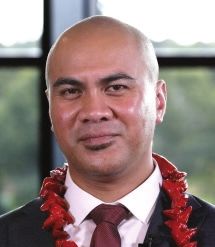
6
    ELECTIVE SUBJECTS
         Organisational Learning and Development
         Develop the knowledge and skills to support and critically evaluate contemporary organisational
         learning and development practices. Modules covered include e-learning, workforce planning and HR metrics, talent
         management, coaching and mentoring, and its application in the workplace. Students will gain an understanding of
         how organisations:
         - Proactively respond to contemporary challenges such as artificial intelligence, robotics, machine learning and
          platform work within the learning ecosystem, and
         - Foster capabilities for the development of human capital for a sustained competitive advantage.

         Managing People in a Global Context*
         Explore how globalisation has influenced and impacted human resource management practices
         in multinational enterprises (MNEs). Modules include: the cultural context of international HRM (IHRM), crossborder
         alliances, human resource planning, international performance management, training and development, career
         management, compensation, industrial relations in the global institutional context and future trends in IHRM.

         Managing Change*
         Focus on organisational change: why it occurs, how it occurs, how it can be managed, and what forms it can take. The
         complexities of change present real challenges for managers and leaders, and hence, challenges for managers and
         leadership in times of change are also addressed. Modules include: change capability, organisational change strategies,
         leaders and followers as change agents, organisational culture, as well as technological disruption and sustainability.

         Entrepreneurship
         Gain scholarly, practical and in-depth knowledge of contemporary entrepreneurial professional practice, the
         entrepreneurial mindset and how these applies to a dynamic and complex global environment. The subject uses
         experiential and collaborative learning to build and strengthen entrepreneurial capabilities that support an individual
         in identifying an entrepreneurial opportunity and developing the resource base needed to pursue it. Modules covered
         include: the development of 21st Century entrepreneurship; entrepreneurial mindset, cognition and career; designing
         entrepreneurship from opportunity identification to business modelling; and, strategic entrepreneurial growth planning.
         Therefore the subject provides a foundation for lifetime learning on the key life cycle stages of an entrepreneurial venture
         as well as how leaders can foster an entrepreneurial culture.

         Digital Business Startup
         Understand how to build a digital enterprise by recognising and validating an entrepreneurial idea and converting this into
         a viable digital enterprise. Students will be introduced to theories and practices for validating the idea, developing value
         propositions, discovering market desirability and feasibility, business model development and digital brand management.

         International Business
         Explore how and why countries trade with and invest in each other, and the global monetary system. It examines the
         strategies and structures of international businesses and assesses the special roles of an international business’s various
         functions. It also provides a critical approach that presents the arguments for and against economic theories, government
         policies, business strategies, organisational structures, and their managerial implications.
7
Business Consulting
Develop scholarly and practical in-depth knowledge of the business practices, processes and management for

                                                                                                                               ELECTIVE SUBJECTS
consultants, managers and owners of consulting firms and those with expertise considering consulting as a profession.
Modules covered include: Starting a consulting business including financial and legal considerations; tips on surviving
the first year, which include networking, database building and digital marketing initiatives; the actual process, which
includes agreements, strategies, interviewing techniques and tips, agreements and strategies; creating a consulting
relationship with clients; developing effective systems including negotiating fees, billing, contracts and insurance and
finally, growing the business and productivity considerations.

Consumer Behaviour*
Recognise the importance of consumer behaviour and customer experience concepts and theories in understanding the
consumer decision making process as well as the customer journey. The subject addresses knowledge and analytical
skills to assess the influence of various factors in consumer decision making and understand the importance of integration
and measurement of customer experience.

Digital Marketing*
There is an expectation that modern enterprises engage in digital marketing providing positive brand experiences for
their customers and other stakeholders. Digital marketing is increasingly important to understand, because customers
engage online and offline with brands. This subject is designed to provide students with an understanding of digital
marketing. Students will learn about the various types of digital marketing as well as to how to plan, deploy, manage and
evaluate a digital marketing strategy.

New Product Design*
Work your way through new product design from conception through to the launch of a new product or service. The
objective of this subject is to provide in-depth knowledge of new product design from conception through development to
the launch of a new product or service. The subject uses a combination of traditional and innovative approaches in new
product development and design.

Integrated Logistics Management*
Logistics significantly contributes to the economy given its sizable share in GDP in many countries. A well-integrated
logistics creates value for small-sized businesses such as a local grocery store and café as well as large-sized providers
of services and goods such as a global e-commerce platform. This subject mainly focuses on functional areas within
Logistics and Supply Chain Management and explores how the functions could be integrated better. Modules covered
include: logistics for the 21st century, integrating procurement, customer relationship management and operations with
logistics, transportation, warehousing and emerging technologies, logistics performance objectives and measurement
and, supply chain and logistics network design.

Strategic Supply Chain Management*
Today’s business and economy happens in the supply chain. Successful organisations in various sectors (e.g. service, public,
manufacturing) strategically collaborate with their local and/or global supply chain partners to gain competitive advantage
and create more value for the end customers. Supply chain management helps them achieve and sustain business growth.
This subject takes a strategic approach to Logistics and Supply Chain Management and covers key principles, frameworks,
and contemporary modules including: supply chain strategy; responsive and agile supply chain; supply chain integration and
collaboration; supply chain risk and resilience; managing global supply chain; simplifying supply chain complexity; creating
a sustainable supply chain; and, emerging mega-trends and the supply chain of the future.
8
Corporate Finance*
ELECTIVE SUBJECTS
The objective of the subject is to provide an integrated framework and analytical tools that are used by the firm managers
to make financial decisions that improve firm value. The modules covered include valuations of bonds and shares,
advanced capital budgeting techniques, estimation of cost of capital, optimal capital structure, and firm payout policy.
Financial Markets and Institutions*
Gain an overview of the features of the modern financial and monetary systems and enables an in-depth understanding
of complex institutions, markets, and securities are part of them. The subject covers banking, payment systems, financial
regulators and institutions, fundamentals of fund management as well as money and capital and foreign exchange markets
Investment Management*
Develop comprehensive theoretical and practical knowledge on investment management. The subject covers major
theoretical concepts, namely, modern portfolio theory, diversification, and equilibrium models of security prices. The
subject also includes macroeconomic and industry analysis, pricing of main financial derivatives, and evaluation of portfolio
performance.
Artificial Intelligence for Business
An essential overview of Artificial Intelligence (AI) types and their strategic application and
integration in industry that is transforming business practice. In the context of organisational leadership in the age of
digital disruption, this subject explores the challenges and opportunities of AI as well as the capabilities, limitations and
ethical considerations.
Business Analytics for Managers
This subject provides an overview of business analytics concepts and their applications in the business environment.
Modules covered include: Definitions and the importance of business analytics; business analytics in practice; designing
data-oriented decision problems and working effectively with data experts; overview of different business analytics
methods and understanding what they can do for a business; communication of data-driven decisions; pitfalls of data-
driven decisions; and the ethical implications of business analytics.
Managing in the Not for Profit Sector*
Managers in the Not-for-Profit (NFP) sector are required to have a mix of broad-base managerial skills and specialist
skills in understanding current issues, emerging trends, and best practices within the sector to navigate, lead, and
manage effectively. Managing in the NFP sector is also further confounded by the need to effectively engage and manage
stakeholders under more of a resource-constrained context compared to the for-profit sector. This subject is designed
to provide students with an understanding of management and operations within the NPF sector. It covers contemporary
models of management in the NFP sector, including advocacy, governance, management of revenue streams, volunteer
management, grant writing, social marketing, and measuring social impact.9
Directed Study*
Directed Study requires students to undertake a specific project to further their disciplinary study and theory application
ELECTIVE SUBJECTS
in addition to the final MBA Project. The Directed Study is an individual project which is supervised by academic staff
member(s), based on topics that are aligned with electives offered at AIB. The topic and assessment pieces are developed
in consultation with the academic supervisor(s). Meetings between the student and the staff member(s) are periodic and
at the request of the student or the staff member(s). The staff member(s) may set milestones and timelines for the student
to meet. The subject provides scaffolding for the design and development of an individual research project and for the
application of theory in a practical workplace context.
Cyber Security for Managers
Develop in-depth insight into the increasing dangers and frequency of cyber attacks on businesses and government
and how best to prevent or mitigate the damaging outcomes. The likely sources of attacks will be outlined along with
the methods more commonly used, inherent weaknesses in systems, examine the risk factors and outline manager’s
responsibilities. How to create policies designed to mitigate attacks and how to manage them are included along with
disaster planning and recovery. This is not a technical subject on the detailed workings of attacks but rather a management
approach to cyber resilience, disaster planning and recovery methods.
Project (Capstone subject)*
This subject focuses on designing, conducting and reporting of findings from a business research project. The objective
of this subject is to undertake a project related to the chosen area of professional focus. Students will identify
an appropriate workplace or industry related research problem or opportunity, conduct a small literature review,
engage in identifying secondary data, analyse the data and present findings in a formal business research report.
*Please note: some subjects have prerequisites that must be completed prior to commencing these subjects.
“The role of strategic HR is to make it
possible for people to perform at their
best and to help the company succeed.”
Zena Boakes
Chief Human Resources Officer,
Audi Australia
AIB Industry Guest LecturerCOURSE FEES
10
We’re committed to keeping education affordable so you can pay back your
course fees and see a return on your investment faster.
PER SUBJECT TOTAL COST
UPFRONT PAYMENT OPTION
You could enjoy considerable savings by paying your NZD NZD
$ 2,217 26,604
course fees upfront. Paying upfront also protects you
from future price increases. $
MONTHLY PAYMENT OPTION:
A 3-year payment plan which includes initial deposit of $2000 NZD and then monthly instalments.
TOTAL COST
PER SUBJECT 1st Year 2nd Year 3rd Year (12 COURSES)
NZD NZD NZD NZD NZD
$ 2,463 .33
12 x $731 12 x $768 12 x $806 $ 29,660
DON’T PAY FOR THINGS YOU DON’T NEED
The AIB MBA is amongst the most affordable in Australia because of our global scale and fully online
delivery. We don’t incur many of the infrastructure costs commonly associated with traditional
universities, like lecture theatres and sports fields. Instead, we invest where it matters most – in high
quality education, high calibre academic teams, student support services and AIB’s innovative Online
Student Learning Portal.
AIB MBA ROI CALCULATOR “The benefits I got out of the MBA have
really pushed my career. I can now
Ever wondered what an MBA could be worth to you?
Based on our graduate data, you can now see what understand the rationale at a higher
the AIB MBA might mean for your income with our management piece as to why they make
new MBA ROI Calculator. Remember, before you make
certain decisions.”
any financial decisions, you should get information
and advice from qualified
professional regarding your
personal circumstances and
Ioane Afoa
financial affairs.
Head of Community Engagement,
Auckland Transport
Calculate Your ROI AIB MBA GraduateTHE SUPPORT AND
11
EXPERT ADVICE OF
130 ACADEMICS,
FACILITATORS AND
PROFESSIONALS
PASSIONATE ACADEMICS
Delivering a life-changing experience to our students
is at the centre of everything we do. That’s why the AIB
academic team continually strives to develop innovative ”I am committed to maintaining the high level of quality
learning resources and techniques. in AIB’s programmes, so that you can be assured that you
are receiving qualifications of the highest standard to lead
Our highly qualified academics not only have a wealth of you and your business into the future.
experience, they’re also highly regarded in their field. This, I look forward to welcoming you to AIB and helping you
combined with their passion for teaching and sharing reach your career goals.”
their knowledge and experience, ensures you become
Emeritus Professor Hilary Winchester
irreplaceable. Chair of the Academic Board
ACCREDITED & RECOGNISED
Accreditation is one of the most important things to consider when choosing an MBA, that’s
why the AIB MBA is fully accredited.
The AIB MBA is fully accredited by the Tertiary Education Below is a snapshot of AIB’s memberships and listings
Quality and Standards Agency (TEQSA) within the Australian
› Independent Higher Education Australia (IHEA)
Qualifications Framework (AQF) and highly regarded
internationally. › Australian Human Resource Institute (AHRI)
This accreditation ensures all our qualifications are equivalent › Financial Services Institute of Australasia (FINSIA)
in standing to qualifications issued by Australian universities. › Australian and New Zealand Academy of Management
Details of AIB’s registration status and accredited programmes (ANZAM)
can be found at the National Register maintained by TEQSA at:
› Association to Advance Collegiate Schools of Business
teqsa.gov.au/national-register/provider/australian-institute-
(AACSB)
business-pty-ltd
› International Quality Group of the Council for Higher
AIB’s MBA is also accredited by the National Centre for
Education Accreditation (CIQG)
Management Accreditation (NCMA) of the Canadian Institute of
Management (CIM). › Canadian Chamber of Commerce
› International Association of Universities (IAU)65% of Alumni wish they
began their MBA sooner.
Start yours today
APPLY NOW
+61 8 8212 8111 courseadvisor@aib.edu.au aib.edu.au
Entry criteria, fees, assessment methods and services are correct at time of printing 05 October 2021 (AIBNZMBA-V01). Australian Institute of Business reserves the right to alter the details without
prior notice. All 2019 AIB MBA Alumni Insights report information contained in this publication is self-reported by the alumni and is for general information only. The Australian Institute of Business
makes no representation about the content, suitability, accuracy or completeness of this information for any purpose whatsoever. It is provided “as is” without any express or implied warranty or
guarantee whatsoever. Information and data reported in this report was self-reported by MBA alumni between 19 Sep to 13 Oct 2019. Institute of Higher Education PRV12090You can also read


