An Exploratory Study Combining Eye-Tracking and Virtual Reality: Are Pulses Good "Eye-Catchers" in Virtual Supermarket Shelves?
←
→
Page content transcription
If your browser does not render page correctly, please read the page content below
ORIGINAL RESEARCH
                                                                                                                                                published: 31 May 2021
                                                                                                                                         doi: 10.3389/frvir.2021.655273

                                              An Exploratory Study Combining
                                              Eye-Tracking and Virtual Reality: Are
                                              Pulses Good “Eye-Catchers” in Virtual
                                              Supermarket Shelves?
                                              Juliana Melendrez-Ruiz 1*, Isabelle Goisbault 2, Jean-Christophe Charrier 2, Kevin Pagnat 2,
                                              Laurence Dujourdy 3, Gaëlle Arvisenet 1 and Stéphanie Chambaron 1
                                              1
                                               Centre des Sciences du Goût et de l’Alimentation, AgroSup Dijon, CNRS, INRAe, Université Bourgogne Franche-Comté, Dijon,
                                              France, 2Strategir—R&D and Image and Technology departments, Bordeaux, France, 3AgroSup Dijon-Service d’Appui à la
                                              Recherche, Dijon, France

                                              Despite numerous health and environmental benefits, the consumption of pulses (i.e.
                                              lentils, chickpeas . . . ) in France has decreased over the past few decades. One potential
                                              barrier to pulse consumption may be their shelf placement in French supermarkets. We
                                              studied gaze behavior toward pulses in a virtual supermarket. Products from four food
                          Edited by:          categories (animal-based, pulses, starches, and vegetables) were randomly presented on
                    Daniel Thalmann,
     École Polytechnique Fédérale de
                                              four shelves (canned, dried, ready-to-eat, and refrigerated). Then, a composite super-shelf
               Lausanne, Switzerland          combined the canned, dried, and refrigerated shelves. Gaze behavior was recorded for the
                      Reviewed by:            108 participants in two screening phases: i) the four shelves one-by-one, ii) the super-shelf.
                      Florian Daiber,
                                              Pulses were not strong “eye-catchers”: gaze behavior toward pulses varied from shelf to
German Research Center for Artificial
       Intelligence (DFKI), Germany           shelf. Similarly, visual attention was different for each food-group during super-shelf
           Marco Fyfe Pietro Gillies,         screening. These results could be used to implement specific strategies that should be
   Goldsmiths University of London,
                    United Kingdom
                                              developed in supermarkets to encourage the choice of pulses by consumers, and thus
                   *Correspondence:
                                              increase pulse consumption.
                Juliana Melendrez-Ruiz
                                              Keywords: gaze behavior, consumer, immersive environment, plant-based food, implicit method
         Juliana.melendrezruiz@inrae.fr

                     Specialty section:
          This article was submitted to       INTRODUCTION
  Virtual Reality and Human Behavior,
                 a section of the journal     Pulses are considered as foods particularly adapted to contribute to a more healthy and sustainable
              Frontiers in Virtual Reality    diet. However, in France, their consumption is very low despite the recommendations of Public
          Received: 18 January 2021           Authorities. Consequently, the barriers and possible levers to their consumption need to be explored.
            Accepted: 17 May 2021             Barriers to pulses consumption were found at different levels of the food chain (production,
            Published: 31 May 2021            transformation, preparation at home, consumers attitudes), but so far, they have not really been
                               Citation:      studied at the level of distribution, because of methodological issues. The use of virtual reality is a real
        Melendrez-Ruiz J, Goisbault I,        opportunity to tackle this question.
  Charrier J-C, Pagnat K, Dujourdy L,            In French supermarkets, pulses do not benefit from specific shelves, whereas in the
Arvisenet G and Chambaron S (2021)            United Kingdom or the United States, retailers dedicate shelves specifically to plant proteins
An Exploratory Study Combining Eye-
                                              (Magrini, 2016). In France, pulses can be found in several different shopping areas in a
Tracking and Virtual Reality: Are Pulses
       Good “Eye-Catchers” in Virtual
                                              supermarket, with different types of presentation: in the fresh fruit and vegetable area
                Supermarket Shelves?.         (uncooked pulses); beside the starch food-group in the dry-shelf (uncooked pulses); next to
         Front. Virtual Real. 2:655273.       ready-to-eat dishes, in the canned food area (canned pulses); or even on the shelf specifically
       doi: 10.3389/frvir.2021.655273         dedicated to international foods (Rio, 2017). Such a spreading could reduce the visibility of pulses

Frontiers in Virtual Reality | www.frontiersin.org                                   1                                            May 2021 | Volume 2 | Article 655273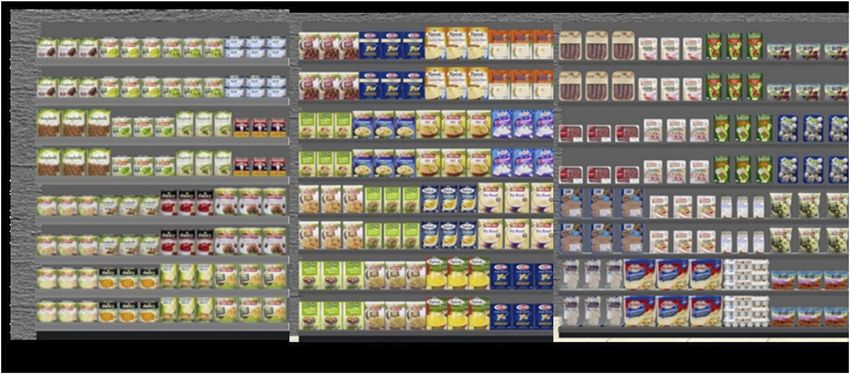
Melendrez-Ruiz et al.                                                                                               Are Pulses Good Eye-Catchers?

and thus represent a barrier to their choice among French people.           motivations, or choices, and thus avoid potential biases linked to
As a consequence, this could contribute to the low consumption              direct questioning. Eye-tracking devices have lately been used in
of these sustainable products.                                              the retail environment to assess the visual attention of consumers
    The position of products on supermarket shelves and its                 (Bialkova et al., 2020). Eye-tracking devices measure eye
consequences on consumers’ attention and food choices have                  movement, either through the position of the eye relative to
been previously studied. For instance, within a category, the               the head, or the orientation of the eye in space (Duchowski,
product located in the center is chosen more often than                     2007). When participants are not aware of the goal of the study,
products located on the left or right in the shelf (Atalay et al.,          measurement of their gaze behavior is informative about their
2012). Similarly, shelf position on the vertical dimension can              behaviors: “eye tracking can be regarded as an implicit
influence brand evaluation: when the brand is on the top of the              measurement capturing automatic, involuntary, and
shelf, it can strengthen the positive impact of higher attention,           unconscious reactions, which are not biased by conscious
while if the brand is in the middle shelves, it can weaken this             cognitive thinking” (Duerrschmid and Danner, 2018, p. 281).
positive impact (Chandon et al., 2009). Furthermore, an increase            Visual attention can be influenced by many other factors (Orquin
in the number of options on a shelf, also known as “choice                  and Mueller Loose, 2013), which may be bottom-up (e.g. image
overload”, could impact negatively consumer motivations or                  saliency, shape, color, number of images, etc.) or top-down (goal-
satisfaction toward the final choice (Scheibehenne et al., 2010).            driven attention, task instruction, individual preference). In an
The authors mentioned that choice overload can result from the              eye-tracking study, Van der Lans et al. (2008) found that in a
structure of the assortment in the shelf. Different factors can             supermarket display, bottom-up factors (salience—package color
contribute to this overload, such as a lack of clear categories             and brightness) guide visual attention and search among brands
among the choice set, a need for comparison, or time pressure               twice more than the consumers’ search goals (top-down factor).
(i.e., too much information to process in a short time). Besides,           This finding goes in accordance with Chandon et al. (2009) who
the perception of the assortment (variety and satisfaction with             found that in-store factors do influence visual attention more
product choice) depends on the persons’ familiarity with the                than out-of-store factors. Consequently, combining VR with eye-
category. It is important to match the assortment layout to the             tracking devices has been identified as an opportunity to better
consumer’s internal scheme, especially for consumers that are               understand consumer behavior in a shopping environment
more familiar with a category (Morales et al., 2005). Other factors         (Meißner et al., 2017). To our knowledge, only one study to
that influence the visual attention of consumers, when exposed to            date, carried out by Siegrist et al. (2019), has combined VR and
a shelf, are the number of facings and brand evaluations                    eye-tracking measures. These authors compared the purchasing
(Chandon et al., 2009). Overall, the assortment organization                behavior of consumers toward breakfast cereals, in front of a
within a shelf has been identified as a form of choice                       real-life supermarket shelf, and a VR supermarket shelf, by
architecture that can influence consumer behavior, simply                    measuring the impact of nutritional information on
through exposure in a shopping context and without explicit                 consumers’ gaze behavior. Results showed that participants
instructions (Lamberton and Diehl, 2013).                                   had similar gazing behaviors in both real-life and virtual
    Conducting a study in a real-life retail environment, such as a         supermarkets.
supermarket, is a complex procedure, with many constraints (e.g.,               This exploratory study aimed to capture the behavior of
negotiating an agreement between researchers and store                      French consumers toward pulses, in a virtual food-shopping
managers, having some control over the many possible                        environment. Using a VR setting, we immersed participants in
environmental cues, etc.). To overcome these issues, Virtual                a virtual supermarket and studied their gaze behavior by eye-
Reality (VR) can be used to control the environment for each                tracking technology. Our objectives were 1) to understand if
participant, while creating a higher ecological validity than in a          consumers’ gaze behavior is affected by the composition and
laboratory setting (Hartmann and Siegrist, 2019). Virtual reality           organization of different shelves in front of them; 2) to compare
is a scientific and technical domain that uses computer science              the gaze behavior of consumers toward pulse-based products and
(both hardware and software) and behavioral interfaces                      toward products from other food groups. We hypothesized that
(recording sensory-motor information) to simulate a virtual                 (H1) the gaze behavior of consumers toward pulses would vary
world that interacts with the user in real-time (Fuchs and                  according to the content and organization of the shelf presented
Guitton, 2011). In the last few years, virtual supermarkets                 to them. We also hypothesized (H2) that the visual attention of
have been developed to understand consumer food choices                     consumers would be lower toward pulses than toward other food-
and purchases and represent valid tools to measure consumer                 groups when all food-groups were present in equal quantities on
behavior. The results obtained are comparable to those in real-life         the shelf.
store settings (van Herpen et al., 2016; Pizzi et al., 2019; Siegrist
et al., 2019).
    The types of products selected, the amount of money spent,              MATERIALS AND METHODS
the consumers’ responses to price promotions (van Herpen et al.,
2016), the products purchased, and the amount of time spent in              Participants
front of a given shelf can all be measured in VR environments               Participants (N  120, aged between 20 and 65) were recruited from
(Pizzi et al., 2019). With such approaches, researchers can obtain          the Chemosens Platform’s PanelSens database. This database complies
data without directly asking consumers about their behavior,                with national data protection guidelines and has been examined by

Frontiers in Virtual Reality | www.frontiersin.org                      2                                      May 2021 | Volume 2 | Article 655273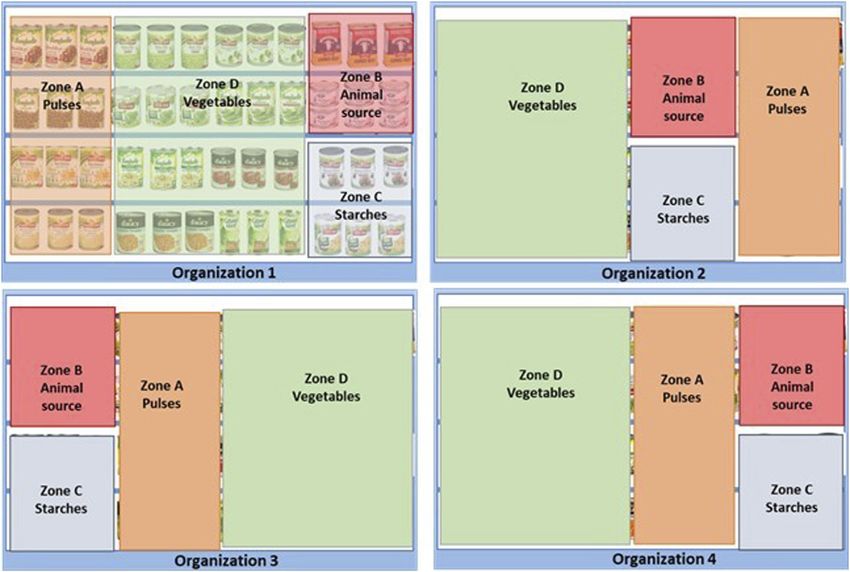
Melendrez-Ruiz et al.                                                                                                               Are Pulses Good Eye-Catchers?

TABLE 1 | Distribution of participants in the study, by age range, and sex.               local ethical committee of INSERM N°18-506. Institutional Review
Age                       Women                      Men                      Total       Board INSERM (CEEI/IRB) (IRB00003888, IORG0003254,
                                                                                          FWA00005831).
20–35                         17                     15                        32             The inclusion criteria for the study were to be resident in
36–50                         24                     20                        44
                                                                                          Dijon, to read, write, and speak French fluently, and to buy food
51–65                         16                     16                        32
Total                         57                     51                       108         in a supermarket at least once a month. The exclusion criteria
                                                                                          were to have visual problems, to need thick eyeglasses with strong
                                                                                          corrective lenses, to be prone to dizziness, or to follow a restrictive
                                                                                          food diet (e.g. vegetarian, vegan, without gluten, without
French National authorities (Commission Nationale Informatique et                         lactose, etc.).
Libertés—CNIL—135 n  1,148,039). The study was conducted in                                  Participants were convened to the study under false pretenses
accordance with the Declaration of Helsinki and was approved by the                       (i.e., to participate in a virtual reality study), to avoid having

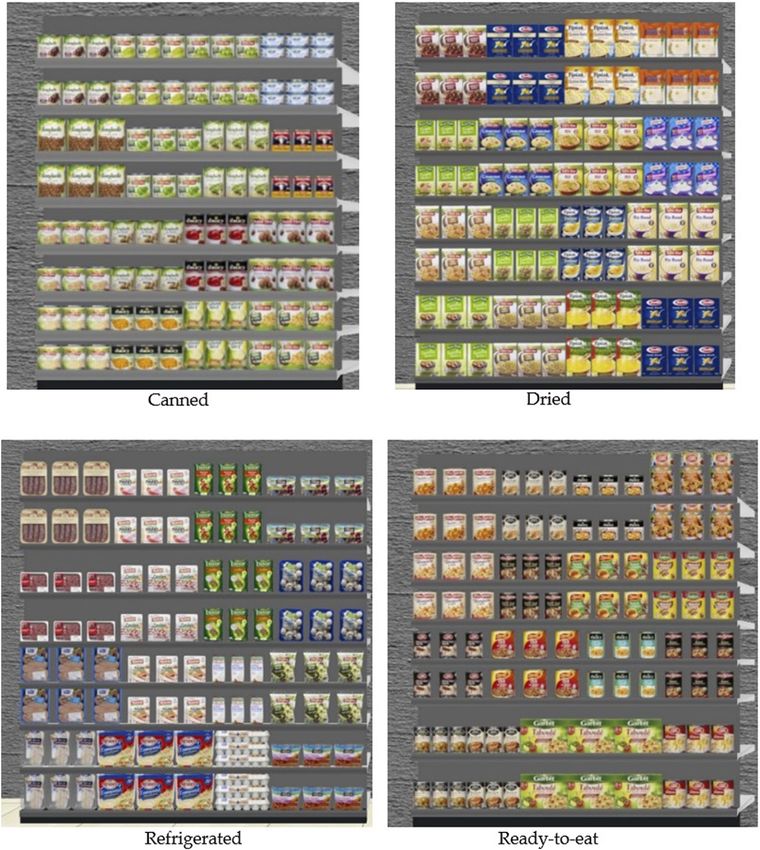
  FIGURE 1 | An example of the visual design of the four shelves built for the experiment.

Frontiers in Virtual Reality | www.frontiersin.org                                    3                                        May 2021 | Volume 2 | Article 655273
Melendrez-Ruiz et al. Are Pulses Good Eye-Catchers?
TABLE 2 | Construction of the canned, dried, and refrigerated shelves. integrated into the virtual supermarket using a specific 3D
Food-groups Canned shelf Dried shelf Refrigerated shelf Total software program. All indications about the expiry date and
price were removed. All the products were presented in
Animal-based 2 — 10 12 multiple exemplars, to fill a shelf seemingly as large as a real-
Pulses 4 6 2 12
life supermarket shelf.
Starches 2 10 — 12
Vegetables 8 — 4 12 The products in the four different shelves were balanced
Level of transformation according to the food group they belong to “canned,” “dried”
Unprocessed — 15 9 24 and “refrigerated” shelves contained products from a single food-
Processed 16 1 7 24 group (starches, animal-based, pulses, or vegetables), either
unprocessed or processed (Table 2). On the ready-to-eat shelf,
products were all based on two major ingredients, belonging to
participants focus on pulses, which could bias their gaze behavior. different food-groups (Table 3), and were all classified as ultra-
At the end of the study, participants were given full information processed, according to the NOVA classification.
about the real objectives of the study and were also given a €20
voucher. Creation and Composition of Virtual Shelves
Twelve participants were excluded from the study, after data The position of a food product on the shelf may influence
collection. For ten of them, a technical problem prevented the consumers’ visual attention (Duerrschmid and Danner, 2018).
data from being recorded. Another participant did not follow the To avoid any potential order-effect bias, we designed four product
instructions correctly, and one participant guessed the real aim of organizations for each shelf, by changing the respective position
the study. Table 1 shows the characteristics of the 108 of each food-group on the shelf (Figure 2). The R planor Package
participants finally included in the study. (Kobilinsky et al., 2016) was used to balance presentation order,
and the four-shelf organizations across participants, using a
Construction of the Virtual Environment superposition of two orthogonal Latin squares to obtain a
Selection of the Food Products Placed on Each Virtual Greco-Latin square.
Shelf To test the second hypothesis in our study, a “super-shelf” was
Field observations in French supermarkets allowed us to identify constructed by placing the canned shelf on the left, the dried shelf
the types of pulse-based food products and their location. Four in the center, and the refrigerated shelf on the right (Figure 3).
shelves were identified where the presence of pulses was more The shelves were always presented in this order, but the
prominent: the canned goods shelf, the dried goods shelf, the organization within each shelf was different across
refrigerated shelf, and the ready-to-eat shelf. A virtual participants, as previously explained (Figure 2). Here, 48
environment was created to reproduce each of these shelves, different products composed the super-shelf. When divided
(Figure 1). into food-groups, the super-shelf contained an equal number
All the products presented on the virtual shelves were products of animal-based products, pulses, starches, and vegetables.
actually available in supermarkets at the time of the study. In
total, 64 products were included in the experiment, sorted by Virtual Reality (VR) Set up
food-group as follows: The Virtual Reality set up consisted of a Gear VR headset
powered by Oculus, using a Samsung Galaxy S8. A Samsung
− Foods from animal sources (including meat, fish, chicken, hand controller was connected via Bluetooth. The field of view in
sausage, cheese, eggs, and cream), which will be referred to the headset was 101°, with an image resolution of 1480 × 1440 for
as animal-based products throughout this paper. each eye. The Strategir team developed a specific application to
− Pulses (including lentils, dried beans, chickpeas, and dried record the virtual eye-tracking data.
peas) An innovative technique called “VR tracking” was used in this
− Starches (including pasta, rice, wheat, quinoa, and potatoes) study. It differs from classical “eye” or “head” tracking, in the fact
− Vegetables (including lettuce, tomatoes, carrots, green beans, that it uses a point at the center of the screen to catch the attention
mushrooms, spinach) of the participant and allows him to interact with the
environment. This approach is similar to the one used in
The products used in our study were selected to represent video games: the point is always in the center of the screen
each food-group equally. The level of transformation was also
taken into account, following the NOVA classification
(Monteiro et al., 2018) (Table 2). When several references TABLE 3 | Construction of the ready-to-eat shelf.
were available for a specific product, the selected product was
Food-groups Total
chosen so that its color and shape would not be too different
from the other products on the virtual shelf, in order to limit Animal-based + pulses 4
some attentional bias, linked to bottom-up effects related to the Animal-based + starches 4
color or shape of the product. Animal-based + vegetable 4
Plant-based Starches + vegetable 2
Products were purchased from several French supermarkets.
Vegetables + pulses 2
All products were photographed in high definition and then
Frontiers in Virtual Reality | www.frontiersin.org 4 May 2021 | Volume 2 | Article 655273Melendrez-Ruiz et al. Are Pulses Good Eye-Catchers? FIGURE 2 | Example of the four organizations of the canned shelf used in the test, to balance the position of food-groups across participants. Red is used for animal-based products, green for vegetables, blue for starches, and orange for pulses. FIGURE 3 | Example of organization of the “super-shelf.” From left to right: canned shelf, dried shelf, and refrigerated shelf. and this gaze pointer is managed by the movement of the This system does not record the xy coordinates (vs. what eye- participant’s head. The field of vision of participants wearing trackers would do), but the objects (products) that will be the headset is more restricted than usual (60°), and this requires identified as an area of interest. Thanks to this technology, not respondents to naturally move their head more. only we were able to track that point but also a certain area Frontiers in Virtual Reality | www.frontiersin.org 5 May 2021 | Volume 2 | Article 655273
Melendrez-Ruiz et al.                                                                                              Are Pulses Good Eye-Catchers?

around that point, so that it reflects what the eye usually “catches”        products, and/or to see one particular part of the super-shelf
when looking at a shelf. A specific product is considered as seen if         more closely.
at least a part of it belongs to this “tracking area”. We developed a
short video to show the technique used in the study                         Measures
(Supplementary Material). In the left side of the video, we                 Each zone delimitating a food-group on a shelf was determined as
have the headset 360° vision (what participants sees), while in             an area of interest (AOI). Each shelf contained four AOIs, as did
the right side is the preview of the VR application (record data),          the super-shelf. From the screening phases (individual shelves,
the red square represents the gaze of participants by the                   and super-shelf), the following measures were obtained for each
movement of the head.                                                       participant through the eye-tracking device:
    The distance between the virtual position of the participant
and the shelves is limited to 1 m thanks to a virtual and invisible           − The first fixation (first F): the first Area Of Interest (AOI)
wall behind the participant. At this distance, participants are able            seen by each participant
to observe all the products contained in a simple shelf. When a               − Time to first fixation (first TF): time from the start of
larger shelf was used (“super-shelf”), the number of items in the                measurement until the beginning of the first fixation, for
field of view depends on the participants’ decided distance. In this              each AOI (in seconds)
case, participants were able to get closer to the products using the          − First fixation duration (first Du): time spent on the AOI first
hand controller.                                                                fixed (in seconds)
                                                                              − Total fixation duration (Du F): sum of all fixation durations
Session Organization                                                            within an AOI (in seconds)
Instructions to Participants and Familiarization With                         − Total number of fixations (Nb F): number of fixations within
the Device                                                                      an AOI (frequency)
A researcher received one participant at a time, in a neutral room
of the laboratory, for a session that lasted about 15 min. Before              Gazes shorter than 200 ms were not considered as fixations
starting the experiment, participants signed a consent form and             (Widdel, 1984). A fixation duration was calculated when
were given a brief explanation regarding the material to be used            participants gazed at the same AOI at least two consecutive
(headset and hand controller). Participants were seated in a chair          times for a period of 200 ms. All these gaze measures were
throughout the study. Participants were able to move freely in the          obtained during the screening phase.
virtual space by using the hand controller connected via
Bluetooth.                                                                  Statistical Analysis
   The researcher helped the participant to put on and adjust the           Calculations used RStudio Version 1.2.5042 (RStudio Team,
headset. Once ready, the participant was asked to read aloud the            2020) with R-4.0.0 (R Core Team, 2020) with packages: “ez”
instructions that appeared in the virtual environment. This                 (Lawrence, 2016), “agricolae” (de Mendiburu, 2020), “PMCMR”
precaution was taken to ensure that all participants read all               (Pohlert, 2014) and XLSTAT for Windows (Addinsoft, version
the instructions carefully. The session was divided into two                2020-1).
phases: a screening of each shelf individually, and a screening
of the super-shelf.                                                         Gaze Behavior
   Before starting the study, a training phase was proposed to              Descriptive statistics were used for data obtained during the
teach the participant how to use the controller and to move                 screening phase of each shelf, as the number of food-groups
through the virtual environment. The shelf used for this training           within each shelf was not equal (Table 2). Each measure was
phase contained hair-care products with neutral bottles (no                 transformed into a ratio, obtained by dividing the raw measured
brands, pictures or names).                                                 value by the total number of food-products within each AOI.
                                                                            Indeed, the size of a zone is proportional to the number of
The Screening Phase for Each Shelf Individually                             products it contains.
Participants had to observe the four different shelves (Figure 1)              For data obtained during the screening of the super-shelf, we
for a time-lapse of 20 s per shelf. A standardized visual distance of       focused on the total fixation duration and the total number of
1 m was fixed between each shelf and the participant. Participants           Fixations. For the time measures, a one-way repeated-measures
were stopped in front of the center of each shelf at this distance.         ANOVA was performed, with total fixation duration as the
The instruction: “Observe the shelf in front of you” was displayed          dependent variable, AOI (food-groups) as the independent
before each shelf appeared.                                                 variable, and participant as within-subjects. ANOVA was
                                                                            applied after checking that 1) observations were independent
The Screening Phase for the Super-Shelf                                     (or, more precisely, independent and identically distributed
Once the participants had finished looking at the four shelves,              variables), 2) the variables followed a multivariate normal
they had to observe the super-shelf (Figure 3) for a                        distribution in the population (this assumption is not
standardized time of 40 s. When the super-shelf appeared,                   necessary if the sample size≥25), and 3) sphericity. When
participants were placed opposite its center, but participants              applicable, multiple pairwise comparisons were carried out
were then able to move along the super-shelf in the virtual                 with a Tukey test. For the total number of Fixations,
supermarket by using the hand controller, to get closer to the              Friedman tests followed by Nemenyi pairwise comparisons

Frontiers in Virtual Reality | www.frontiersin.org                      6                                     May 2021 | Volume 2 | Article 655273
Melendrez-Ruiz et al. Are Pulses Good Eye-Catchers?
TABLE 4 | Gaze behavior in seconds converted into ratios (eye-tracking measures) of consumers toward each AOI (food-group) in the screening for the canned, dried, and
refrigerated shelves. First fixation (1st F, in %), Time to First Fixation (1st TF, in sec), First Fixation Duration (1st Du, in sec), and Number of fixations (NbF).
Food-groups (AOIs)
Shelf Measures Animal-based Pulses Starches Vegetables
Canned 1st F 10.61% 21.33% 31.82% 36.25%
1st TF 2.45 0.7 0.25 0.14
1st Du 0.9 0.5 4.15 0.34
Du F 1.8 1.65 7.5 1.28
Nb F 8.45 7.78 35.15 5.98
Dried 1st F — 53.71% 46.29% -—
1st TF — 0.45 0.05 —
1st Du — 0.32 0.83 —
Du F — 0.93 1.50 —
Nb F — 4.40 7.03 —
Refrigerated 1st F 32.93% 2.67% — 64.41%
1st TF 0.13 2.65 — 0.93
1st Du 0.46 0.8 — 0.38
Du F 1.23 2.05 — 0.98
Nb F 5.78 9.5 — 4.60
were run to determine if the differences between the total fixation duration, and the total number of fixations were higher
numbers of fixations were significant for a given food-group. for pulses than for products from other groups. The time to the
A significance level of 0.05 was set for all the analyses. first fixation was shorter for animal-based products than for other
products, and the three other indexes were lower for vegetables.
As the ready-to-eat shelf contained products combining
RESULTS multiple food-groups, the results were analyzed independently
(Table 5). The first fixation of participants was more frequent
Gaze Behavior of Consumer Toward Each toward pulses–vegetables and less frequent toward
Shelf starches–vegetables. The time to the first fixation and the first
In the screening phase, the visual attention of consumers toward fixation duration were longer toward starches–vegetables, and
each food-group was studied for each shelf independently. shorter for animal-based products–starches and animal-based
Table 4 shows the results obtained and transformed into products–pulses. Finally, the total fixation duration and the total
ratios, taking into consideration the number of products number of fixations were higher for starches–vegetables and
within each AOI, for the canned, dried, and refrigerated lower for animal-based products–starches and animal-based
shelves. The number of products from each food group was products—vegetables.
not the same in each shelf, because each food group does not exist
in each type of shelves. For this reason, this paragraph will only be Gaze Behavior Toward the Super-shelf
descriptive. In a second step of the screening phase, consumers had to
For the canned shelf, we can note that 36% of consumers observe the super-shelf, where products from the four
looked first at the vegetables, while many others looked first at categories were presented in equal numbers. The first
starches. The time to the first fixation was shorter for vegetables fixation was often for pulses and starches, and less
and longer for animal-based products. The first fixation duration, frequently directed toward vegetables. This result needs to
the total fixation duration, and the total number of fixations were be considered with caution, because the dried shelf, composed
all shorter for vegetables, and particularly high for starches of pulses and starches, was positioned in the center of the
compared to other canned products. super-shelf for all participants. Therefore, participants had
On the dried shelf, there were only pulses and starches, these products just in front of them when they “stood” in front
because vegetables and meat are not products sold dried in of the middle of the shelf, and the first fixation for these
French supermarkets. Here, the first fixation of participants products could perhaps be explained by a positioning effect.
was a little higher for pulses than for starches. The time to the Unfortunately, this positioning bias could not be avoided when
first fixation was also higher for pulses than for starches. On the designing the experiment, because of technical limitations that
contrary, the first fixation duration, the total fixation duration, prevented any possibility of randomizing the position of the
and the total number of fixations were all shorter for pulses than individual shelves within the super-shelf. Thus, in this case, the
for starches. first fixation may not be informative and needs to be
The refrigerated shelf did not contain starches, like considered with caution, as well as the time to first fixation
refrigerated shelves in French supermarkets. For this shelf, and first fixation duration, which directly depend on the first
two-thirds of the participants looked first at vegetables. The fixation. Here, the first fixation duration was similar across
time to the first fixation, the first fixation duration, the total food-groups.
Frontiers in Virtual Reality | www.frontiersin.org 7 May 2021 | Volume 2 | Article 655273Melendrez-Ruiz et al. Are Pulses Good Eye-Catchers? TABLE 5 | Gaze behavior in seconds converted into ratios, eye-tracking measures of consumers toward each AOI (food-group) in the screening of the ready-to-eat shelf. First fixation (1st F, in %), Time to First Fixation (1st TF, in sec), First Fixation Duration (1st Du, in sec), and Number of fixations (NbF). VR measures Starches–Vegetables Pulses–Vegetable Animal-based–Starches Animal-based–Vegetables Animal-based–Pulses 1st F 2.96% 33.06% 24.84% 18.09% 21.05% 1st TF 2.2 1.8 0.7 0.9 0.78 1st Du 0.7 0.5 0.43 0.53 0.43 Du F 2.1 1.5 1.3 1.35 1.5 Nb F 9.95 7 6.1 6.3 7 FIGURE 4 | Mean time of total fixation duration. Products with the same letter were chosen with a comparable frequency (pairwise Tukey test; p < 0.05). FIGURE 5 | Mean number of fixations for each food-group. Letters indicate a comparable number of fixations across food-groups (two-tailed Nemenyi test; p < 0.05). Consequently, to address this drawback and to measure if total duration of fixation and the total number of fixations. The there were differences in the gaze behavior of participants toward repeated measures ANOVA showed significant differences the different food-groups on the super-shelf, we focused on the between the total fixation duration and the food-groups Frontiers in Virtual Reality | www.frontiersin.org 8 May 2021 | Volume 2 | Article 655273
Melendrez-Ruiz et al.                                                                                             Are Pulses Good Eye-Catchers?

(p < 0.0001). Pairwise comparisons obtained by a Tukey test                 In our study, based on the total fixation duration and the total
(Figure 4) show that participants spent significantly more time           number of fixations, pulses had lower visual attention in the dried
looking at the products from the starch’s food-group, compared           and canned shelves, whereas there was higher visual attention in
to the animal-based (p  0.013) and vegetable food-groups (p <           the refrigerated shelf. Consequently, our results highlighted that
0.0001). Participants observed for a longer time the pulses (p          participants in our study looked at pulses differently on each
0.000) and the animal-based food-groups (p  0.013) compared             shelf, either for long or shorter periods, showing that with the
to the vegetable food group.                                             same instructions and the same time of screening, visual attention
   Regarding the total number of fixations, results were converted        changed across shelves. These results suggest that shelf
to ranks and analyzed by a Friedman test. This analysis showed           organization and presentation have an impact, yet some
significant differences among food-groups (p < 0.0001). Figure 5          differences were observed between the different measures (first
shows that the starches had a higher number of fixations than the         fixation, the total number of fixations, and the total duration of
animal-based and vegetable food groups. Pulses had a higher              fixation).
number of fixations than the vegetable food group.                           These differences in visual attention in relation to the
                                                                         composition of the shelf may also be explained by the
                                                                         duration of the screening phase, set at 20 s. In a previous eye-
DISCUSSION                                                               tracking study Potthoff and Schienle, (2020) investigated visual
                                                                         attention toward high calorie, low-calorie food, and non-food
The main objective of this study was to understand the gaze              products for a standard duration of 6 s, the authors found an
behavior of French consumers toward pulses in front of virtual           overall visual preference (longer fixation) toward high-calorie
shelves.                                                                 food only in the first second, followed by a shift in visual attention
                                                                         which developed toward the low-calorie products. This could
                                                                         explain why we found differences between the first fixation and
Does Visual Attention Change Depending                                   the other measures, and it highlights the need to study first
on the Shelf Presented?                                                  fixations with caution. Based on these considerations, we think
Participants in this study had to perform a screening of four            that our first hypothesis (H1: the visual attention of consumers
different shelves, to understand how their visual attention is           toward pulses would vary according to the content and
affected by the composition and organization of shelves. The             organization of the shelf presented to them) can be validated.
first fixation for a specific type of product seemed to change              The visual attention of French consumers toward pulses varies
across shelves. In the two individual shelves where vegetables           according to the type of shelf on which pulses are presented. This
were present, vegetables were fixated first by many participants.          could be explained by the characteristics of pulses products
In these individual shelves, the attention is primarily oriented         themselves, but also by the characteristics of the other
toward vegetables whereas pulses are rarely fixated first. By              products of the shelf.
contrast, on the dried shelf, where there were no vegetables,
about half the participants directed their first gaze toward pulses
and the other half toward starches. Knowing that on this shelf,          Does Visual Attention Differ Toward Pulses
there were only unprocessed pulses and starches, this result             and Foods From Other Groups?
suggests two possible explanations: 1) participants’ visual              In our study, participants had to perform a screening of a super-
attention was attracted by unprocessed pulses more than by               shelf, composed of three out of the four shelves (canned, dried,
cooked and prepared pulses, or/and 2) the attention toward a             and refrigerated) to compare the gaze behavior of consumers
certain category of products depends on the other products               toward pulses and other food-groups. The design of the super
presented on the same shelf. This is in line with Burke and              shelf allowed us to compare the gaze behavior of consumers
Leykin (2014), who stated that some key drivers of attention             toward pulses with their gaze behavior toward the other food-
toward a product, when shoppers are just browsing at a shelf, are        groups. The super-shelf was constructed so that the number of
proximity between categories, shelf position, product                    products was equal for each food-group (starches, pulses,
presentation, and visual distinction. Regarding the ready-to-eat         vegetables, and animal-based products). Participants had a
shelf, the first fixation of participants was more frequently              different gaze behavior toward each food-group. They
directed toward products that combined pulses and vegetables.            observed pulses more often and for a longer time than they
This result seems surprising because we expected that products           observed the vegetable food group. Thus, our second hypothesis
combining pulses and animal-based products would attract                 (H2: the visual attention of consumers would be lower toward
participants’ visual attention more than products combining              pulses than toward other food-groups when all food-groups were
pulses and vegetables, as ready-to-eat products containing               present in equal quantities on the shelf) is not validated. A recent
pulses are generally combined with animal-based products in              study (Gere et al., 2020) has shown that the product group
French supermarkets. One potential explanation of the visual             influences gaze behavior (top-down processes) more than the
attention toward vegetables on all shelves could be based on a           perception of the color or size of a product (bottom-up
particularly strong mental representation of vegetables for French       processes). A previous eye-tracking study also found that
consumers. Indeed, in the recent decade, there has been a lot of         participants had different fixation durations toward two
public health communication promoting vegetables.                        different food-groups (milk chocolate and orange juice). The

Frontiers in Virtual Reality | www.frontiersin.org                   9                                       May 2021 | Volume 2 | Article 655273
Melendrez-Ruiz et al. Are Pulses Good Eye-Catchers?
authors observed longer fixations toward the nutritional table for browse, it may be useful to provide in-store display cues (i.e.
the orange juice, whereas for milk chocolate, participants looked arrows, labels . . . ) to suggest shopping goals (Morales et al.,
longer at the brand (Steinhauser et al., 2019). This result suggests 2005). Other strategies like nudging have been identified, to
that participants spend more or less time on a product depending impact consumer behavior. A nudge is defined as “any aspect
on the characteristic of the products that interest them the most. of the choice architecture that alters people’s behavior
Besides, it arises the question of the role of bottom-up and top- predictably, without forbidding any options or significantly
down factors in visual attention. In our study, participants were changing their economic incentives. To count as a mere
only asked to look at/to screen the shelf, without any other task nudge, the intervention must be easy and cheap to avoid”
instruction (top-down factor). We also erased specific (Thaler and Sunstein, 2008).
information such as price and expiry date from packaging,
thus lessening this bottom-up effect (visual characteristics). Strengths and Limitations
But it cannot be excluded that participants in our study could One strength of our study is the use of Virtual Reality (VR) in the
pay more or less visual attention to a particular food-group, food domain thanks to the building of a virtual supermarket
focusing on a characteristic meaningful to them. It has also been which allowed us to study participants’ gaze behavior toward a
shown that personal preferences toward food with different forms diversified offer of products. The use of the VR allowed us to
(regular, chopped, or blended) can increase the total number of study the context in which choices are done. Indeed, it has been
fixations and the total fixation duration (Yasui et al., 2019). Thus, shown that the role of context on food choice cannot be neglected
we could imagine that the personal preference of consumers (Sester et al., 2013). Studying this effect in a real supermarket is
toward the products on the super-shelf may have influenced their particularly difficult and does not allow to control the different
gaze behavior. Similarly, familiarity with the products presented variables, thus the virtual supermarket is a good compromise
(brands) could have also influenced the gaze behavior of between a laboratory setting and a real context of choice. Previous
participants. Indeed, in an eye-tracking study, Atalay et al. study showed similar behavior in real and virtual supermarket,
(2012) presented to participants brands that did not exist, where the issue of not walking was not identified as a barrier (van
arguing that previous exposure or purchase could impact gaze Herpen et al., 2016).
behavior. Thanks to this protocol, they demonstrated that eye Our study followed rigorous methodological aspect
fixations can result from memory-based factors. Regarding the concerning the building of the virtual shelves. Four different
visual attention toward pulses, perhaps the low consumption of shelves were identified in the French supermarkets and re-
pulses in France [1.7 kg per person per year (ANSES, 2017)] could created in a virtual environment. Participants were asked
induce a low level of familiarity of participants toward pulses only to observe each shelf for a limited time but were not
based products in the retail environment. Indeed, participants not asked to choose a product. While participants were screening
consuming pulses often could result into an infrequent exposure each shelf, eye-tracking measures were obtained. One of the
to these products on the market and a low familiarity with pulses advantages of this type of assessment is that it can provide
packages. This could even lead to a vicious circle, with pulses no information about the possible reasons for consumer choices
catching consumer’s attention because they are not familiar, and when exposed to a specific shelf organization, without any
not being chosen because they do not catch attention, which explicit instructions.
results in low consumption and a low familiarity. In this sense, To protect against bias linked to a tendency to look
retailers have to make an extra effort to make pulses more visible preferentially at a specific zone, we balanced the position of
for French non-vegetarian consumers in their shelves. the four groups of products on each individual shelf between
participants, so that the measured differences in gaze behavior
cannot be the result of product positioning. Our results showed
Perspectives: Is it Possible to Make Pulses that the first gaze of participants tended to be directed toward the
More “Eye-Catchers” in French zone located on the upper left side of the shelf (results not shown).
Supermarkets? Products positioned in this zone tend to be looked at first. Thanks
With our experimental design, we constructed different shelves to the balanced design of our study, we were able to overcome this
that reflect what can be found in French supermarkets, but with a tendency, and could therefore compare gaze behavior toward
limited number of products. Our results highlighted that the gaze each zone of interest without any bias. Unfortunately, one of the
behavior of participants toward pulses on each shelf was different. limitations is that the dried shelf was always placed in the center
In two out of the four shelves, visual attention was lower for of the super-shelf. As a consequence, we were not able to study the
pulses than for other food-groups, whereas for the super-shelf, first fixation for the super-shelf. This limit will probably be
participants looked at pulses less often than at starches. overcome as technology progresses.
From a practical point of view, our study raised different In our study, product visual characteristics were controlled on
possible perspectives. It has been shown that consumers find each shelf to reduce bottom-up effects as much as possible: on the
specific products on a shelf faster when they have in mind a clear canned shelf, only metallic cans were presented; in the dried shelf,
picture of the desired brand (Burke and Leykin, 2014). Thus, only cardboard; on the refrigerated shelf, only products with
consumers can be oriented in decision-making about pulses by transparent plastic presentation, and on the ready-to-eat shelf,
reducing their mental effort (i.e., with national brands, mainly canned products (with one exception). Comparatively to
association in a single shelf . . . ). For consumers who tend to what is commonly done in marketing studies, we also tried as
Frontiers in Virtual Reality | www.frontiersin.org 10 May 2021 | Volume 2 | Article 655273Melendrez-Ruiz et al. Are Pulses Good Eye-Catchers?
much as possible to balance the different colors of product considered as an opportunity in the forthcoming development
packaging on each shelf so as not to attract visual attention. of virtual reality. In particular, in the research field, new implicit
Our study also highlighted that the other products presented methodologies would benefit from being implemented in
on the shelf can also influence the gaze behavior of consumers environments as close to a real life context but with a strict
toward the product of interest. Consequently, to observe more control of the different factors.
realistic behavior with eye-tracking and virtual reality studies, it is
necessary to pay attention to the surrounding products besides
choosing the products of interest carefully. DATA AVAILABILITY STATEMENT
Anyway, the virtual design did not allow us to consider as
many product references as currently proposed in real The datasets presented in this study can be found in online
supermarkets. For this reason, the set of studied products was repositories. The names of the repository/repositories and
sparse in comparison to the products really available in a real accession number(s) can be found below: https://doi.org/10.
grocery store. Additionally, and because of this global low 6084/m9.figshare.13574567.v1.
number of products, the proportion of pulses in our study was
higher than that of real supermarkets, because we wanted to
present a balanced number of products in each food group. In a ETHICS STATEMENT
real supermarket, the number of food products is greater and
pulses products could become lost amongst all the other products. The studies involving human participants were reviewed and
approved by the INSERM N°18-506. Institutional Review Board
INSERM (CEEI/IRB) (IRB00003888, IORG0003254,
CONCLUSION FWA00005831). The patients/participants provided their
written informed consent to participate in this study.
Overall, the implicit measures by eye-tracking allowed us to
identify the gaze behavior of French consumers toward pulses in
different shelves of a virtual supermarket. We found that pulses AUTHOR CONTRIBUTIONS
were not great eye-catchers, especially for the dried and canned
shelves. Yet, they created visual interest (consumers looked at Conceptualization of the study: JM-R, SC, GA, IG, J-CC, and KP.
them for some time) on the refrigerated shelf and on the ready- Data curation and formal analysis was carried out by JM-R and
to-eat shelf, revealing that visual attention toward pulses LD. Investigation and methodology by JM-R, SC, and GA.
changes according to the composition and organization of Resources by IG, J-CC, and KP. Validation SC, GA, and KP.
the shelf to which a consumer is exposed. In the screening of Writing—original draft by JM-R and SC. Writing—review and
the super-shelf, pulses attracted more visual attention than editing: JM-R, SC, GA, LD, IG, J-CC, and KP. Supervision, SC and
vegetables but less than starches and animal-based products, GA. Funding acquisition and project administration by GA.
which suggests differences in gaze behavior in relation to food
categories. Participants allocated visual attention differently to
each food-group. There is a need to develop adapted strategies FUNDING
in French supermarkets to incentivize consumers to choose
pulses more frequently in their shopping behavior. For instance,
a specific shelf for pulses could result in a more salient visual
This work was supported by the Carnot institute Qualiment ®
option for pulses, making them easy to find and identify,
creating cues such as arrows marking the presence of a pulse ACKNOWLEDGMENTS
product on a shelf, or implementing nudging strategies inside
the retail environment. From a more technical point of view our The authors thank Cecile Schneider in the collection of data.
study highlighted that the use of virtual reality is challenging Carmela Chateau-Smith is particularly acknowledged for English
and can still be improved, especially when studying consumer proofreading. We thank the other colleagues of Strategir, Hélène
behavior toward food. For instance, it will be possible in the Aubrier and Alexiane Luc for their help.
future to increase the complexity of the virtual environment by,
adding more food products. In addition, it would be interesting
to improve the interaction and feeling of immersion of SUPPLEMENTARY MATERIAL
participants in the virtual environment, by allowing a better
grasping of food products or an easier mobility of participants in The Supplementary Material for this article can be found online at:
the environment. Considering the challenges that have to be https://www.frontiersin.org/articles/10.3389/frvir.2021.655273/
overcome in the food domain, this area of application should be full#supplementary-material
Frontiers in Virtual Reality | www.frontiersin.org 11 May 2021 | Volume 2 | Article 655273Melendrez-Ruiz et al. Are Pulses Good Eye-Catchers?
REFERENCES Internal and Retailers’ External Organization. J. Retailing 81 (2), 159–169.
doi:10.1016/j.jretai.2005.03.007
Orquin, J. L., and Mueller Loose, S. (2013). Attention and Choice: A Review on Eye
ANSES. (2017). INCA 3: Evolution des habitudes et modes de consommation, de Movements in Decision Making. Acta Psychologica 144 (1), 190–206.
nouveaux enjeux en matière de sécurité sanitaire et de nutrition [Dossier de doi:10.1016/j.actpsy.2013.06.003
presse]. Pizzi, G., Scarpi, D., Pichierri, M., and Vannucci, V. (2019). Virtual Reality, Real
Atalay, A. S., Bodur, H. O., and Rasolofoarison, D. (2012). Shining in the Center: Reactions?: Comparing Consumers’ Perceptions and Shopping Orientation
Central Gaze Cascade Effect on Product Choice. J. Consum Res. 39 (4), 848–866. across Physical and Virtual-Reality Retail Stores. Comput. Hum. Behav. 96,
doi:10.1086/665984 1–12. doi:10.1016/j.chb.2019.02.008
Bialkova, S., Grunert, K. G., and van Trijp, H. (2020). From Desktop to Pohlert, T. (2014). The Pairwise Multiple Comparison of Mean Ranks Package
Supermarket Shelf: Eye-Tracking Exploration on Consumer Attention and (PMCMR), R Package. Available at: https://CRAN.R-project.org/
Choice. Food Qual. Preference 81, 103839. doi:10.1016/j.foodqual.2019.103839 packagePMCMR.
Burke, R. R., and Leykin, A. (2014). “Identifying the Drivers of Shopper Attention, Potthoff, J., and Schienle, A. (2020). Time-course Analysis of Food Cue Processing:
Engagement, and Purchase”. Review of Marketing Research. Editors D. Grewal, An Eye-Tracking Investigation on Context Effects. Food Qual. Preference 84,
A. L. Roggeveen, and J. NordfÄlt (Bingley: Emerald Group Publishing Limited), 103936. doi:10.1016/j.foodqual.2020.103936
Vol. 11, 147–187. doi:10.1108/S1548-643520140000011006 R Core Team (2020). R: A Language and Environment for Statistical Computing. R
Chandon, P., Hutchinson, J. W., Bradlow, E. T., and Young, S. H. (2009). Does In- Foundation for Statistical Computing. Available at: https://www.R-project.org/.
Store Marketing Work? Effects of the Number and Position of Shelf Facings on Rio, C. (2017). Les légumes secs, aliments de choix à valoriser. Cahiers de Nutr. de
Brand Attention and Evaluation at the Point of Purchase. J. Marketing 73 (6), Diététique 52 (2), 71–77. doi:10.1016/j.cnd.2016.11.006
1–17. doi:10.1509/jmkg.73.6.1 RStudio Team (2020). RStudio: Integrated Development for R. RStudio, PBC.
de Mendiburu, F. (2020). Agricolae: Statistical Procedures for Agricultural Available at: http://www.rstudio.com/.
Research. Available at: https://CRAN.R-project.org/packageagricolae. Scheibehenne, B., Greifeneder, R., and Todd, P. M. (2010). Can There Ever Be Too
Duchowski, A. (2007). Eye tracking methodology: Theory and practice (2. ed). Many Options? A Meta-Analytic Review of Choice Overload. J. Consum Res. 37
London: Springer. (3), 409–425. doi:10.1086/651235
Duerrschmid, K., and Danner, L. (2018). “Eye Tracking in Consumer Research,” in Sester, C., Deroy, O., Sutan, A., Galia, F., Desmarchelier, J.-F., Valentin, D., et al.
Methods in Consumer Research. Volume 2: Alternative Approaches and Special (2013). “Having a Drink in a Bar”: An Immersive Approach to Explore the
Applications. Editors G. Ares and P. Varela-Tomasco (Cambridge, MA: Effects of Context on Drink Choice. Food Qual. Preference 28 (1), 23–31.
Woodhead Publishing, an imprint of Elsevier). doi:10.1016/j.foodqual.2012.07.006
Fuchs, P., and Guitton, P. (2011). “Introduction to Virtual Reality,” in Virtual Siegrist, M., Ung, C.-Y., Zank, M., Marinello, M., Kunz, A., Hartmann, C., et al.
Reality: Concepts and Technologies. Editor G. Moreau (Boca Raton, FL: CRC (2019). Consumers’ Food Selection Behaviors in Three-Dimensional (3D)
Press). doi:10.1201/b11612-3 Virtual Reality. Food Res. Int. 117, 50–59. doi:10.1016/j.foodres.2018.
Gere, A., Danner, L., Dürrschmid, K., Kókai, Z., Sipos, L., Huzsvai, L., et al. (2020). 02.033
Structure of Presented Stimuli Influences Gazing Behavior and Choice. Food Steinhauser, J., Janssen, M., and Hamm, U. (2019). Consumers’ purchase Decisions
Qual. Preference 83, 103915. doi:10.1016/j.foodqual.2020.103915 for Products with Nutrition and Health Claims: What Role Do Product
Hartmann, C., and Siegrist, M. (2019). Virtual Reality and Immersive Approaches Category and Gaze Duration on Claims Play? Appetite 141, 104337.
to Contextual Food Testing. In CONTEXT: the effects of environment on doi:10.1016/j.appet.2019.104337
product design and evaluation. Available at: http://search.ebscohost.com/login. Thaler, R. H., and Sunstein, C. R. (2008). Nudge: Improving Decisions about Health,
aspx?directtrue&scopesite&dbnlebk&dbnlabk&AN1908134. Wealth, and Happiness. New Haven: Yale University Press.
Kobilinsky, A., Bouvier, A., and Manod, H. (2016). An R Package for the Automatic van der Lans, R., Pieters, R., and Wedel, M. (2008). Research Note-Competitive
Generation of Regular Fractional Factorial Designs. INRA, UR 341, Unité MIAJ Brand Salience. Marketing Sci. 27 (5), 922–931. doi:10.1287/mksc.1070.0327
(Math ématiques et Informatique Appliquées - Jouy). van Herpen, E., van den Broek, E., van Trijp, H. C. M., and Yu, T. (2016). Can a
Lamberton, C. P., and Diehl, K. (2013). Retail Choice Architecture: The Effects of Virtual Supermarket Bring Realism into the Lab? Comparing Shopping
Benefit- and Attribute-Based Assortment Organization on Consumer Behavior Using Virtual and Pictorial Store Representations to Behavior in a
Perceptions and Choice. J. Consum Res. 40 (3), 393–411. doi:10.1086/671103 Physical Store. Appetite 107, 196–207. doi:10.1016/j.appet.2016.07.033
Lawrence, M. A. (2016). Easy Analysis and Visualization of Factorial Experiments. Widdel, H. (1984). Operational Problems in Analysing Eye Movements. in
Available at: http://github.com/mike-lawrence/ez. Advances in Psychology. North Holland: Elsevier, 22, 21–29. doi:10.1016/
Magrini, M.-B. (2016). Les légumes secs en France (LES LÉGUMES SECS, QUELS S0166-4115(08)61814-2
DÉVELOPPEMENTS POSSIBLES À L’ÉCHELLE DES TERRITOIRES ?) Yasui, Y., Tanaka, J., Kakudo, M., and Tanaka, M. (2019). Relationship between
[Synthèse des débats - Journée d’échanges organisée par le Réseau action Preference and Gaze in Modified Food Using Eye Tracker. J. Prosthodontic Res.
climat et Solagro au Ministère de l’environnement, de l’énergie et de la 63 (2), 210–215. doi:10.1016/j.jpor.2018.11.011
mer]. Available at: https://solagro.org/images/imagesCK/files/publications/
f78_actes_-legumes-secs-2016.pdf. Conflict of Interest: The authors declare that the research was conducted in the
Meißner, M., Pfeiffer, J., Pfeiffer, T., and Oppewal, H. (2019). Combining Virtual absence of any commercial or financial relationships that could be construed as a
Reality and mobile Eye Tracking to Provide a Naturalistic Experimental potential conflict of interest.
Environment for Shopper Research. J. Business Res. 100, 445–458.
doi:10.1016/j.jbusres.2017.09.028 Copyright © 2021 Melendrez-Ruiz, Goisbault, Charrier, Pagnat, Dujourdy,
Monteiro, C. A., Cannon, G., Moubarac, J.-C., Levy, R. B., Louzada, M. L. C., and Arvisenet and Chambaron. This is an open-access article distributed under the
Jaime, P. C. (2018). The UN Decade of Nutrition, the NOVA Food terms of the Creative Commons Attribution License (CC BY). The use, distribution
Classification and the Trouble with Ultra-processing. Public Health Nutr. 21 or reproduction in other forums is permitted, provided the original author(s) and the
(01), 5–17. doi:10.1017/S1368980017000234 copyright owner(s) are credited and that the original publication in this journal is
Morales, A., Kahn, B. E., McAlister, L., and Broniarczyk, S. M. (2005). Perceptions cited, in accordance with accepted academic practice. No use, distribution or
of Assortment Variety: The Effects of Congruency between Consumers’ reproduction is permitted which does not comply with these terms.
Frontiers in Virtual Reality | www.frontiersin.org 12 May 2021 | Volume 2 | Article 655273You can also read


