ANC contribution to IFRS 17 - IFASS Meeting Buenos Aires 29 March 2019
←
→
Page content transcription
If your browser does not render page correctly, please read the page content below
ANC contribution to IFRS 17

                           IFASS Meeting
              Buenos Aires 29 March 2019
Introduction
Introduction
The Autorité des Normes Comptables (ANC) is the French accounting
standard setter responsible for (1) adopting French accounting standards,
(2) contributing to international accounting standard-setting and (3)
encouraging and promoting accounting research.
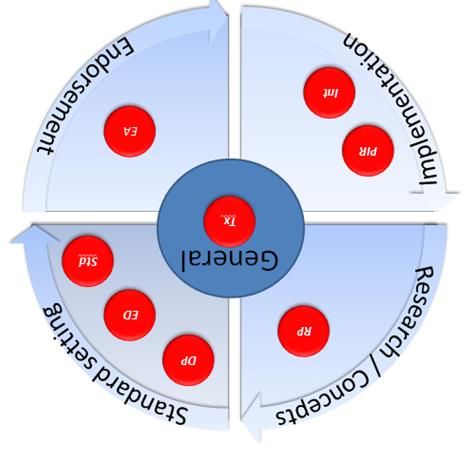
As member of EFRAG (Board and TEG), ANC actively contributes to the
endorsement of IFRS in Europe and intends to do so at all stages of the
“Accounting standard-setting cycle.”
ANC has put in place a working group
dedicated to the IFRS 17, gathering all
interested   stakeholders     (preparers,
auditors, users, actuaries, regulators,…)
and meeting monthly.

                                                                       3
Introduction
ANC is committed to the development of high quality financial reporting
standards that meet the needs of all stakeholders.
We therefore fully support the implementation of a genuine international
Insurance standard (by contrast with IFRS4 which is a “weak” standard).
However since significant concerns have been identified and since the
standard should be “built to last”, ANC considers it is essential to address
all identified concerns prior to implementation.
Our purpose is therefore to contribute to improving a standard designed to
last.
The following analysis is limited because it represents one contribution
among others and because the standard itself is still debated at this stage
of the analysis.
Only the final wording of the amended standard will provide the full picture
supporting a comprehensive and fair assessment as to whether concerns
have properly been addressed.
4Introduction
The purpose of this session is to share and discuss ANC contribution to
IFRS17 that:
results from an ongoing dialogue with IASB, EFRAG, other NSS
and our stakeholders in the last three years;
provides views and suggestions on the current discussions and
questions raised on IFRS17, by EFRAG in particular;
summarises insights and analyses on the current topics that are
further detailed in separate draft documents for discussion;
will continue during the consultation process while welcoming
dialogue on challenges emerging from other experiences and fact
patterns in order to ultimately improve a crucial standard.
5Current status
ANC-IASB ongoing dialogue in the last 3 years
Time period      IASB & EU activity                 ANC contribution
Feb.-Dec. 2016                                      ANC outlines key concerns in a number of letters and
                                                    meetings
Dec.2016-        Editorial review of IFRS17 draft   ANC communicates on 5 reported key concerns (Feb. 2017)
Feb.2017
May 2017         IFRS17 issued
Feb.-June 2018   EFRAG testing (case studies)       ANC issues a progress report identifying concerns (June
                                                    2018)
Sept. 2018       EFRAG letter to IASB on 6 topics
                 raising concerns
Oct. 2018        IASB starts to address 25 topics
                 reported by various stakeholders
Nov. 2018-                                          ANC sends 2 letters (to EFRAG/IASB) accompanying 6
Feb 2019                                            “draft for discussion” documents (V1) providing analysis,
                                                    examples and suggestions)
April 2019                                          ANC expects to issue a V2 of its documents.
                                                    ANC expects to send an additional letter accompanying a
                                                    “draft for discussion” document (on the relationship between
                                                    IFRS9 and IFRS17).
                                                    ANC expects to send a letter on the interpretation of its
                                                    example related to the level of aggregation concerns.

                                                                                                            7
ANC assessment on concerns relating to EFRAG’s topics
Concern as addressed by ANC IASB tentative Remaining concern
Topic
decision
1 Clarify that top-down approach is paramount Not addressed Yes
Level of 2 Improved information to users Not addressed Yes
Aggregation
3 Introduce exception to annual cohorts in case of Change rejected Yes
intergenerational mutualisation (BC138)
Recognise an asset for acquisition cash-flows on Change proposed No
Acquisition
new business expected to renew outside the
cash-flows
contract boundary
Authorise considering investment related services Change proposed Partial: may be limited
CSM
in the CSM allocation of non-VFA contracts to certain contracts
1 Retrospective approaches are too restrictive and Change rejected Yes
rules-based
2 OCI mandatorily set to nil Change rejected Yes
3 Risk mitigation cannot apply retrospectively Change proposed Yes
Transition (addresses new
derivatives in N-1)
4 Disincentive restating comparative information Change rejected Yes
5 Option to change measurement date of contracts Change proposed No
acquired before transition
8ANC assessment on concerns relating to EFRAG’s topics
Topic Concern as addressed by ANC IASB tentative decision Remaining concern
1 Reinsurance held: unclear Not addressed Yes
provisions
2 Reinsurance held: initial recognition Change proposed to Still a concern for non-
when underlying insurance contracts proportionate reinsurance proportionate reinsurance
are onerous (impact to be assessed)
3 Reinsurance held: ineligibility for the Change proposed: reinsurance New concern at transition?
Reinsurance variable fee approach held assimilated to financial risk
mitigation
4 Reinsurance issued: ineligibility for Not addressed Yes
the variable fee approach
5 Reinsurance held: contract Change rejected Yes
boundaries expected cash flows
arising from underlying insurance
contracts not yet issued
1 Remove the asset/liability Change proposed: presentation Still conceptual and
B/S presentation at group level at portfolio level operational concerns
presentation 2 Require separate presentation of the Change rejected Yes
major accruals in the B/S
9ANC assessment of status of other concerns
Concern as addressed by ANC IASB tentative Remaining
Topic
decision concern
1 Create a scope exception to insurance embedded in credit Change proposed No
cards or loans
2 Equity investment for non-VFA contracts Not addressed Yes (to be dealt
with IFRS9)
Interactions
3 IFRS17 implies FV measurement to assets (under IFRS9 Not addressed Yes
with IFRS9
or IAS40)
4 Risk mitigation non applicable to non-VFA contracts Not addressed Yes
5 Locked-in rate Change rejected Yes (to be dealt
with scope of VFA)
10Status of other concerns not yet addressed by ANC
Concern not yet addressed by ANC IASB tentative Remaining
Topic
decision concern
Mutual entities Mutual entities may have equity and CSM Not addressed Yes
Scope VFA VFA criteria to be extended to constructive obligations Change rejected Yes
Business combination Accounting depends on the acquisition date, not on initial Change rejected Yes
and transfers characteristics of a contract
Interim FS Current requirements do not comply with IAS34 Change rejected Yes
11Key points on remaining concerns
Level of aggregation (1/2)
Tentative Board decisions Key points remaining ANC suggestions
Concern 1: Clarify that top-down approach is paramount
The applicable A disaggregation at too low a level Clarify that top-down
methodology to define would not reflect or may even affect the approach always applies
the proper level of accepted mutualisation that is derived to the level of aggregation
aggregation (top-down from regulatory or contractual process in order to prevent
or bottom-up) is obligations and creates fully accepted disaggregation at too low a
ambiguous. Concern “social glue” (relevance, public good) level (amending IFRS17.17 and
not addressed by IASB IFRS17.19)
Concern 2: Improved information to users
Information provided to Limited information provided by annual Extend disclosures on
users may improve cohorts. Transfers (necessary to reflect historical data on new
without cohorts. the appropriate profitability of mutualised business/ inforce for
Concern not addressed groups) also permit aligning profitability mutualised portfolios
by IASB among cohorts and so neutralise the (amending IFRS17.109)
“averaging” issue (relevance, cost).
13Level of aggregation (2/2)
Tentative Board decisions Key points remaining ANC suggestions
Concern 3: Introduce exception to annual cohorts
The annual cohort’s In an Introduce an exception to the annual cohorts
requirement is not intergenerational requirement for a portfolio where “risks are
necessary for contracts mutualised portfolio, fully shared”. “Risks are fully shared” among
that “fully share risks” annual cohorts do policyholders when policyholders share a
between policyholders. not provide useful significant amount of the financial returns
(AP2A 2019-03) information and are and of the insurance risks across
burdensome generations so that no set of contracts within
(relevance, cost). the group could possibly become onerous
alone (amending IFRS17.22 considering IFRS17.BC138).
14CSM and investment services
Tentative Board decisions Key points remaining ANC suggestions
Concern: Considering investment related services in the CSM allocation
Clarify that “coverage” includes The current (broad) Include in Appendix A the
“investment-related/ investment- definition of an definition of “investment-return
return services” provided the investment component services” as defined by IASB
contracts includes an investment limits the extent of the staff (in AP2E.27 2019-01)
component (a necessary, albeit not improvement proposed (adding definition)
sufficient, condition). in the tentative IASB
decision (relevance, Amend IFRS17 according to
If there is no “investment component” comparability) the tentative Board decision
(because benefits are not paid in all but without the requirement
circumstances), an “investment return that “an investment
service” does not exist. (AP2B 2018-06 component exists”
and AP2E 2019-01) (amending IFRS17.B119)
15Transition (1/3)
Tentative Board decisions Key points remaining ANC suggestions
Concern 1: Retrospective approaches are too restrictive and rules-based
Retrospective approaches are too Retrospective approaches Clarify when estimates
restrictive and rules-based: understood to apply as if the stop and become a
retrospective approach does not standard had always been departure to applying
prohibit making estimates, applied appears retrospective approaches
modifications address the lack of impracticable. Modifications (amending IFRS17.C8)
information not a methodology for in the MRA are not sufficient
estimates (AP2D 2019-02) (trade-off relevance &
comparability vs. cost)
Concern 2: OCI mandatory set to nil
OCI mandatory set to nil OCI mandatorily set to nil “Allow” instead of
(IFRS17,C19(b)): applying the may have a material and “require” to set OCI to nil.
discount rate at transition date there long-standing undue Otherwise, suggest to
is no difference left between current (positive) impact on future recalculate OCI using the
and inception rate so that OCI periods if OCI on assets still rate the entity is expecting
should be nil. (AP2C 2019-02) exists (relevance) to be committed to
(amending IFRS17.C19)
16Transition (2/3)
Tentative Board decisions Key points remaining ANC suggestions
Concern 3: Risk mitigation cannot apply retrospectively
Risk mitigation applicable Risk mitigation (and Remove the prohibition
prospectively from the application consequently reinsurance held) to retrospectively apply
date on: retrospective application cannot apply retrospectively risk mitigation (that
prohibited in order to prevent even where current hedging would then be subject to
“cherry picking” (AP2C 2019-02 & AP2E would meet the standard’s the same conditions as
2019-03) requirement. Complexity to those set in
restate as if no risk mitigation. IFRS17.B115-B116 of
Disincentive to mitigate risks the standard) (removing
(relevance, comparability, cost) IFRS17.C3(b))
Concern 4: Disincentive restating comparative information
Restating comparative information Disincentive restating Make optional the
is an option. Entities not applying comparative information if exception introduced in
IFRS9 before transition will have IFRS9 and IAS39 should IFRS9 regarding
to apply simultaneously both simultaneously apply: financial instruments
standard (IFRS9 and IAS39) in burdensome and conceptually derecognised during the
the comparative period. Concern inconsistent (trade-off relevance comparative period
not yet addressed by IASB (sweep & comparability vs. cost). (amending IFRS9.7.2.1)
issues to come)
17Transition (3/3)
Tentative Board decisions Key points remaining ANC suggestions
Concern 5: Option to change measurement date of contracts acquired before transition
Tentative amendment to allow for using inception date No No further
instead of acquisition date for measuring acquired
insurance contracts (AP2D 2019-02)
18Reinsurance (1/4)
Preliminary Remark
Wording of IFRS17 provisions related to reinsurance are limited and “by
reference”. The provisions are very difficult to understand. It would be probably
better to have a fully autonomous section. Reinsurance is key in economic and
public good terms (ultimate level of risk sharing and capacity to insure). In addition
it is very global and crucial in terms of financial stability.
Tentative Board decisions Key points remaining ANC suggestions
Concern 1: Reinsurance held: unclear provisions
Level of aggregation’s Unintelligibility of standard’s Reword the modifications
requirement regarding provisions on the level of prescribed for reinsurance contracts
reinsurance are not aggregation applied to held (amending IFRS17.60-70) especially
intelligible: Concern not reinsurance held when incompatible with grouping
addressed by IASB (intelligibility) requirement (IFRS17.14-24) when
onerous or when “there is a net gain
on initial recognition”, or making
reference to “liabilities and
unearned profits” (IFRS17.40-43).
19Reinsurance (2/4)
Tentative Board decisions Key points remaining ANC suggestions
Concern 2: Reinsurance held: initial recognition when underlying contracts are onerous
Reinsurance held: recognise a gain Accounting mismatch Amend IFRS17
when the entity recognises losses on remains for non- according to the
onerous underlying insurance proportional reinsurance tentative Board decision.
contracts, to the extent that reinsurance contracts held covering Consider removing the
is proportionate. Non-proportionate onerous underlying limitation set by “on a
reinsurance contract is not addressed insurance contracts. proportionate basis”;
for practical reasons since it does not Impact to be assessed (amending IFRS17.66(c)(ii))
relate to one contract only but to (relevance, comparability).
several (possibly issued at different
times or in different portfolios) (AP2B-2C
2019-01)
Concern 3: Reinsurance held: ineligibility for the variable fee approach
Reinsurance held – non eligibility to Assimilating reinsurance Remove the prohibition
VFA: the scope of the risk mitigation held to risk mitigation for reinsurance contracts
provisions for VFA contracts has been should not prohibit held to retrospectively
expanded to also include reinsurance retrospective application apply the risk mitigation
contracts held to mitigate financial risk (IFRS17,C3(b)) provisions; (removing
(AP2D 2019-01) (relevance, comparability); IFRS17.C3(b))
20Reinsurance (3/4)
Tentative Board decisions Key points remaining ANC suggestions
Concern 4: Reinsurance issued: ineligibility for the variable fee approach
Reinsurance issued – The prohibition from applying the VFA Revisit VFA criteria in
non eligibility to VFA: to reinsurance contracts may stem from order to not unduly
VFA requirement for their specificities (change in value linked encompass reinsurance
contract issued (entity with underlying items) that could make contracts that would not be
committed to them meet the VFA criteria even when “in-substance VFA” or
policyholders) are not not being “in substance VFA”. However, replace prohibition by
suitable to reinsurance some reinsurance contracts issued adding additional VFA-
issued (entity actually include commitments against criteria to reinsurance
committed to insurer); primary insurers and their policyholders contracts (Removing or
(AP2D 2019-01) and are genuine VFA (relevance, amending IFRS17.B109)
comparability);
21Reinsurance (4/4)
Tentative Board decisions Key points remaining ANC suggestions
Concern 5: Reinsurance held: contract boundaries
Reinsurance held – contract Including estimated underlying Amend contract
boundaries: measurement future new business within the boundaries of reinsurance
includes future cash-flows in reinsurance asset leads to contracts to include cash-
order to be symmetrical to the disproportionately complex flows relating to
reinsurance contract issued, disclosures as well as to recognised underlying
rather than promoting symmetry unnecessary adjustments when contracts (amending
with the underlying contracts. discount rates varies (costs). IFRS17.63)
(AP2E 2018-12)
22Balance-sheet presentation (1/2)
Tentative Board decisions Key points remaining ANC suggestions
Concern 1: Remove the asset/liability presentation at group level
The presentation of insurance Presentation offsets assets and Even if the tentative
contract assets and liabilities liabilities of different nature and with decision solves the
is determined using portfolios different counterparts in asset/liability
rather than groups of contradiction with the conceptual presentation, providing
contracts. At portfolio level, framework (relevance, net amounts at portfolio
virtually all insurance comparability). level still raises
contracts will be presented as Unnecessary complexity in operational concerns:
liabilities (i.e. very similar to providing net amounts at portfolio remove the reference to
presenting at entity level) (AP2A level where IT systems are on a groups instead of
2018-12) “due-date” basis not on a cash replacing it by portfolios
basis (costs). (amending IFRS17.78)
23Balance-sheet presentation (2/2)
Tentative Board decisions Key points remaining ANC suggestions
Concern 2: Require separate presentation of the major accruals in the B/S
Main accruals (e.g. premium Useful information Introduce requirements to present the
receivables, liability for provided by accruals main accruals on the face of the
remaining coverage, liability presented in the face balance sheet (instead of in the
for incurred claims) are not of the balance sheet is notes).
required to be presented missing (relevance). Suggest a common definition of
separately. But they may be A unified definition of premium receivables. This could be
presented as subline-items “premium receivables” based on the IFRS15.105 definition of
within an insurance contract would improve the the “unconditional rights to
liability. There is no unified comparability consideration” taking into account the
definition of premium (relevance, effective (not the theoretical) period
receivables (AP2A 2018-12) comparability). before policyholder’s rights (to
coverage) actually lapse (amending
IFRS17.78 and supplementing appendix A).
24Interactions with IFRS 9 (1/3)
Tentative Board decisions Key points remaining ANC suggestions
Concern 1: Create a scope exception to insurance embedded in credit cards or loans
Create scope exceptions in IFRS17: No No further
- allowing to apply another standard to insurance
contracts embedded in loans (covering the
settlement of the remaining policyholder’s
obligation) (AP2A 2019-02, AP2F 2019-03)
- requiring to apply another standard to insurance
contracts embedded in credit cards (as long as not
specifically priced for the customer) (AP2D 2019-03)
25Interactions with IFRS 9 (2/3)
Tentative Board Key points remaining ANC suggestions
decisions
Concern 2: Equity investment for non-VFA contracts
Non recycling OCI VFA provides an adequate Non-recycling OCI on equity investment
on equity answer to the non-recycling and the accounting treatment of funds
investment for non- OCI on equity investment, (UCITS, AIF) is a broader issue than
VFA contracts: that is not available to non- IFRS17 and may better be addressed at
Concern not VFA contracts; (relevance, IFRS9 level (amending IFRS9)
addressed by IASB comparability)
Concern 3: IFRS17 implies FV measurement to assets (under IFRS9 or IAS40)
IFRS17 implies fair IFRS17 might imply the “fair- Facilitate the alignment of the
value measurement value-P&L” measurement to measurement of underlying assets with
to assets under assets the business model of the measurement of the insurance
IFRS9 or IAS40: which would have rather led contract (at current value, possibly with
Concern not to applying another OCI option). For instance by allowing
addressed by IASB measurement under IFRS9 measuring loans at FVOCI even if the
or IAS40; (relevance) IFRS9 business model is held-to-collect
(amending IFRS9); or splitting investment
property providing returns to different
types of contracts (amending IAS40.32B).
26Interactions with IFRS 9 (3/3)
Tentative Board Key points remaining ANC suggestions
decisions
Concern 4: Risk mitigation non applicable to non-VFA contracts
Risk mitigation only Risk mitigation provisions are Risk mitigation provisions relate to the
applies to derivatives too limited to prevent hedging CSM mechanism (rather than to VFA)
hedging financial risk strategies put in place by and therefore should also be available
in VFA contracts (AP2C insurers from generating in the general model (amending IFRS17.44)
2018-12) mismatches (e.g; for non
financial risks or in the Risk mitigation should also address
general model); (relevance, non-financial risks (e.g. weather
comparability) derivatives) (amending IFRS17.B115-B118)
Concern 5: Locked-in rate
Locked-in rate creates Locked-in rate creates OCI- “Locked-in rate” required for
OCI-volatility in volatility in participating participating contracts in the general
participating contracts contracts not meeting the model raises concerns that could be
not meeting the VFA VFA criteria. (comparability) solved by reconsidering and extending
criteria. (AP2B 2018-12) VFA criteria. (amending IFRS17.B101)
27Summary of impact of remaining concerns
Topic Concern addressed by ANC Operational Conceptual
1 Ambiguity top-down / bottom-up approach X
Level of
2 Improve information provided to users X X
Aggregation
3 annual cohorts not necessary under certain circumstances X X
CSM Investment service not in CSM of non-VFA contracts X
1 Retrospective approaches are too restrictive and rules-based X X
2 OCI mandatorily set to nil X
Transition
3 Risk mitigation cannot apply retrospectively X X
4 Disincentive restating comparative information X X
1 Reinsurance held: unclear provisions X
2 Reinsurance held: gain on onerous underlying contracts X
Reinsurance 3 Reinsurance held: ineligibility for the VFA X
4 Reinsurance issued: ineligibility for the VFA X
5 Reinsurance held: contract boundaries X X
B/S 1 Asset/liability presentation at group level is too granular X X
presentation 2 Major accruals are not separately presented in the B/S X X
2 Equity investment for non-VFA contracts X
3 IFRS17 implies FV measurement to assets (IFRS9 or IAS40) X
IFRS9
4 Risk mitigation non applicable to non-VFA contracts X
5 Locked-in rate X
28You can also read


